This Recruiter hit $1.8 Million in his SECOND year of business (Here's how)
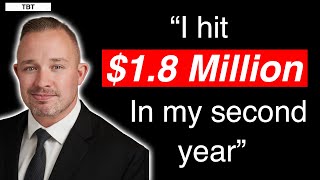
In this Top Billers Toolkit episode, host Sam Miller (joined by co‑host Ben) interviews Justice Peterson, founder of the Peterson Group, an award‑winning engineering and construction recruitment firm in Canada. Justice recounts his rapid growth from $500K in year one to $1.8M in year two, attributing the leap primarily to a digital brand‑building strategy. He explains how his first hire was a social‑media specialist, the shift from cold‑calling to content creation, and the development of several proprietary marketing frameworks – the "Hum‑Sing‑Shout" cadence and the "3‑2‑1 LinkedIn engagement" system. Justice also shares his personal journey overcoming daily weed use and weekend alcohol, detailing his sobriety milestones, AA involvement, and why he chose to publicize his recovery to inspire others. The conversation covers concrete tactics such as video‑based candidate attraction, mixed‑media content mixes, data‑driven posting, a spreadsheet‑based engagement tracker, and a pricing strategy that replaces the industry‑standard 20% fee with custom decimal‑point percentages after a value‑focused client meeting. Throughout, Justice emphasizes mindset shifts, authenticity, humility, and the inevitability of digital adoption for recruiters. The episode ends with actionable advice for listeners: start writing, leverage social media, and prioritize genuine storytelling to stay relevant.
Chapters
Hey guys, welcome back to yet another episode of Top Billers Toolkit, where me and my twin brother interview top billers from all around the globe to unlock the secrets to their success. Today's guest is Justice Peterson. Justice is the owner of the Peterson Group, an award-winning recruitment company in Canada that specializes in engineering and construction. In his first year of business, Justice hit $500,000, and in his second year, he jumped to 1.8 million. Insane growth for any recruiter. And he says the majority of this growth came from building his brand online. In fact, his very first hire was not a 360 recruiter, it was a social media manager. Someone to immediately help him demonstrate his expertise online and allow him to get more immediate inbound business. On today's episode, we're gonna be talking about Justice's journey with weed and alcohol and how conquering his demons has helped him Become a Happier, More Productive Human. We're going to be going into detail of how Justice built his brand online and the impact it's had on his business, and he's also going to be sharing with us some specific tactics he's used to massively up his prices and charge more for his services. Guys, me and Ben absolutely love this podcast. Justice is an amazing human and he really is doing some new and refreshing things in recruitment. We hope you enjoy this podcast as much as we did. And as usual, grab a cuppa or a glass of wine depending on when you're listening to this, and let's get into it, shall we? Hey Justice, how are you, my friend?
I'm great, thanks for having me here, gentlemen.
Yeah, pleasure, dude. I have been subtly stalking your content for quite a few years actually, and you probably have no idea, um, without sounding too creepy, but I love what you're doing, man. I know you've done some great things over the last couple years. And your story is really fascinating to me, so, uh, I wanted to bring you on the pod to share it, Justice.
So thanks for coming on today, dude.
Yeah, thanks. I'm looking forward to it. It's gonna be fun.
Awesome.
We start the first, um, we start with the first question all the time, which is what's the number one tool in your toolkit, whether it be a strategy, mindset, or software? What would you say, Justice?
Yeah, I know it's a kind of a rhetorical question for you there, Sam, but, uh, for me it's mindset. Uh, you know, I've watched a lot of your episodes, and I know most people say mindset, but I, I'm the same way. For, but for me, I think it's a mindset that, you know, starts out in recruitment and, and the mindset has to develop over time. I think like over years of experience and career maturity, your mindset changes. I, I think, you know, a lot of people to change their mindset have to go through something seismic in life, like a life-altering event. You know, they, you know, whether it's go through a breakup or a divorce or they lose their job or they quit or they get fired Or they get married and have kids, you know, something that kind of changes their internal perspective or internal lens on the way that they're doing things. So that's, that's kind of what I look at for us. Like, I think, you know, to be successful in recruitment anyway, you need to have a high degree and a high level of accountability and a low level of, I would say, blaming others, right? You need to have a high level of resourcefulness and a low level of dependency on other people. And then also a high level of humility and a low level of ego. I think that's kind of the recipe to be a good recruiter.
Totally.
I really, I love that response and the mindset, Justice. And I think you, you hit the nail on the head there. I feel like you have to have that life-altering moment. You have to have this really painful experience or something that's happened that shifts your perspective in a way that really gets you to take action because people always talk about mindset, and it's like, you— it's really difficult to just switch your mindset into this, this like killer instinct unless you have this experience. So I think it's just a really good thing. I was just— I'm glad you brought that up because I think when you look at all these top billers, they've normally had those experiences at some point to really shift their perspective. Um, so yeah, like I had a few in my life.
Like, just to give you a couple examples, uh, from my perspective, when I first got into recruitment I was a door knocker before that and I went to work for a company called Hayes, who I'm sure obviously you're familiar with. They had opened up an office in Canada and, you know, I went 6 months without billing anything, zero deals my first 6 months. And then from month 6 to month 18, I became the top biller in Canada. And I remember this very specifically because I still have a plaque. They gave me a plaque. It said you billed $679,000, top biller Canada. But they used to do this thing where they would sit down with you at the end of every year and talk to each office about what was the profitability of your office individually, right? And so I had billed $679,000, but I only, I had only made just over $100,000. So they said like, hey, we profited over $500,000 off of you individually. And so that, you know, got me thinking, oh, you know, instead of having a base of $28,000 a year, I think I'd like a little bit more money, right? So I asked for a bit more money, got rejected, and it made me feel really bad. Like I felt rejected. I felt low self-worth. I felt like they didn't value me anymore. So that was my first experience. And that's when I left. Actually, I left Hayes and went to a larger local firm. Same similar type of thing happened where I just didn't feel like I was being treated well. And I kind of felt like I was stuck in, you know, a loveless marriage, so to speak, with my employer. So I left and started my own company. And, you know, those were different periods of life where I went through like significant mindset changes for sure.
Really interesting. And how do you think your mindset has shifted now that you started your own company, Justice? I can probably relate in some ways because me and Ben have our own company, but what would you say?
Yeah. Now, I mean, I'm, I'm a lot more focused and I'm a lot more dialed in. Now I understand that I have not just the responsibility of myself, but I'm responsible for other people's careers as well. Like, we're growing a team here internally. The clients we hire for, I want them to come back to us. So having a mindset of delivering the best quality service we possibly can and helping other people out is, is kind of what I'm focused on.
Awesome, man.
Can I just go back to that? I find that insane that you made, you know, 6, 7, 9, $500,000 profit for the business. Can I have more money?
No.
I'm just like, it blows my mind that these companies are so greedy that they refuse to give their consultants more profit or more of, you know, a slice of the pie. Is that why it blows my mind when I hear stuff like that?
Yeah, it was, it was incest greed for sure. And like, I still remember the conversation to this day, Ben. I asked for $5,000 more my base. and I asked them to pay for my parking and they said no. And they don't even have an office here anymore. Like, 2 years after I left, they shut down. So, you know, that speaks for itself.
Yeah. I mean, I thought you might have gone on— like, in my mind is like, hey, can I have, like, I don't know, 50% or 30%? But what you asked for wasn't even a big— that's crazy. I mean, that just really highlights the mentality of some companies out there, which is crazy. Um, but I guess in some way it was a good thing because it forced you to go out and do better and bigger things, which is, uh, maybe you should thank them in some way, I guess, in a weird way.
Yeah, yeah, I, I have forgiven them.
We forgive you, Hayes, we forgive you.
Um, that's right.
Cool.
Um, I've got so many questions here. One of the things that, um, I found quite interesting just observing your content, Justice, is that you're quite And not many people are open with personal things online. I would say if there's anything a lot of humans struggle to do, not everyone, but a lot of people don't like sharing personal stuff online, especially recruiters, I would say. They're slightly more reserved. But you're quite open with your troubles with weed and alcohol. What was your thinking around wanting to share that stuff? 'Cause I'm sure it happened at one point. Like an idea, but why do you share that stuff and what was the thinking behind that?
Yeah. So I kept it pretty reserved, I'd say, for probably my first year. I don't think I actually made a post on it until I was 1 year sober because I wanted to make sure that I could, you know, do it and not fail. 'Cause yeah, you're right. Like public humiliation is pretty demeaning. And so my thinking behind it, I suppose, was I had, cut something out of my life that was very negatively impacting my life. I knew that there was other people around struggling with it. And I guess that the point of me posting for it was just to give, you know, dudes or like people that have fucked up hope, you know, sorry to swear and you can bleep that out, but I feel like it's, you know, it's, it's, I feel like it's kind of, you know, necessary in that situation. So my thought behind it was like, you know, when I first quit drinking, I was really struggling with like, low self-worth, feeling rejection. And, you know, I was a daily weed smoker from the age of 15 until 31, I believe. My drinking was more on the weekends and Thursday, Friday, Saturday nights type of thing, but still going overboard with it. But marijuana and weed was like a daily habit for me. And these are things that helped me like kind of numb the pain. But, you know, the real issue was like how I was feeling internally. So I started going to meetings, AA meetings. I went to, you know, 100 meetings in 90 days. And I saw from meeting with these people that, you know, I wasn't alone in this and there was people out there that were struggling with the same thing as I was. So, you know, going to those meetings and building up my own confidence and being able to get through these problems without having to use substances was really important for me. And then I started chairing meetings. So after, after 3 months of sobriety, you can start to chair meetings at AA. And that really helped me A, build my confidence in dealing with my issues, but also keep me accountable, right? And I was able to share my experience with people in the room. And if I could share my experience with people in the room, why can't I share it with people online as well? I think the only thing worse than like not telling anybody is sort of the worst, you know, not what's worse than everybody knowing. Well, nobody knowing because people suffer in silence, right? You know, they say that, what is it? A silent mind is, or an idle mind is the devil's workshop, right? So that kind of hit home for me. So instead of smoking weed or drinking or going out and partying, I just replaced those things with things that were really healthy for me, right? Like, if I didn't recreate something within that positive feedback loop, I probably would have just went back to you know, the, the bad habits I developed over many, many, many years.
Makes sense, dude. And I can massively relate to your journey because I, I had a problem with weed as well. Um, I was smoking, I think similar age, maybe a bit older. You say 10 years old? Was it 10, did you say?
Just 15 to 31.
Okay, yeah, that sounds about similar to me actually. I was smoking from about 15 on and off for most of my life and then quit it about 5 years ago. Um, but yeah, my life has absolutely changed since I've cut out my life. And you're coming up to 1,000 days sober, uh, Justice. I don't know if you've already hit that, but that was our last call. Um, and how do you, uh— we're going to move on to other questions now, but I'm just wondering, how do you feel 1,000 days sober? How has life changed now?
Yeah, so I just checked my I Am Sober app actually before hopping on this call, and I'm 948 days sober, so not quite 1,000 yet. But yeah, I mean, it's, it's, it's elevated my life in every way, man. Like My business is better. My relationships with my family and friends are better. My, my self-worth is better, right? It's elevated my life in every way, and I'm definitely, definitely not going back to it.
Awesome, man.
Love that. I feel like weed, just because me and Sam had experience, weed is one of those— I feel like those dangerous drugs that you can still function on it, but it really messes with your head. Like, I remember I got massive anxiety. That was the biggest thing for me when I was smoking weed. And when I was doing it excessively, it was like my anxiety was through the roof and I was just always anxious and always like— I think they call it— oh, there's a, there's a term for it which is— I forgot the term, I'm gonna sit here and waste time. But, um, yeah, it's— I feel like it's a really dangerous drug because it's one of those silent— it chips away at your mind over many, many months to the point where you're like, what the hell, where am I? Or like, what's going on? Kind of thing. It's crazy.
Yeah, weed and alcohol both do the same thing for sure. And I was at a point where like, there were times I felt like I couldn't even go into a client meeting without maybe getting high before or having a drink before. But then I would do that and be like, well, damn, now I can't even run this client meeting. You know, like it doesn't actually work the way you think it's going to. The interesting thing about like getting sober and alcoholism and stopping weed and stuff is like, it's the actually the only disease where if you quit it, you get way better. If you have any other disease in the world, if you're trying to get better, you can only hope to ever get back to where you were before. But with alcohol, weed, when you quit those things, your life immediately becomes a lot better.
Yeah, really interesting, man. We should do a separate podcast on your journey, Justin, but I want to get into some of the strategy now because I find your business journey equally as fascinating. Um, and I know you've scaled from $500K in your first year to hitting $1.8 million in your second year, which is insane numbers.
How did you do that?
For any other recruiter looking in, being like, what the hell, how did you make that jump?
Yeah, so we did a number of different things. Um, I would say like, you know, the biggest transition for us was going, uh, going through like a digital transition, right? So we took our business and went from a one-to-one business, a cold calling business, where I pick up the phone, I call Sam, ask him for business, and I hang up again, to, hey, we're going to become subject matter experts and we're going to start posting content online and we're going to start talking to people, to a larger population of people that do not know us, demonstrate our expertise, and prop up the industry while doing so in the hopes that, you know, people are going to come to us when they do need work done. Um, So that's probably the biggest change that's happened for us. And as a result of that, obviously, like our brand has gotten much better, our content has gotten much better. Pretty much everything that we've done has increased and gotten better over time, resulting in obviously better fees, more repeat business, clients coming to us that, you know, aren't local. They're in other cities and other jurisdictions that we don't have any like boots on the ground there, but they see us online, they contact us. right? So that's probably the biggest thing that's impacted our business, Sam.
Awesome, man. And yeah, I remember you telling me some crazy— it's like social media alone is probably, you said like 7, it's hard to put an exact number in it, but 7 figures is not unrealistic to say that that's the impact that it's had on your business, which is pretty nuts.
Yeah, it's had many different impacts on our business though. Like obviously money, that's great. But here's a few other things that have happened to us since we've started doing this. And I was actually looking through my QuickBooks the other day and we had a client that 2 years ago was sending us a cease and desist letter because we were headhunting out of their firm. And I checked my QuickBooks the other day and they've become our second biggest client because they've appreciated what we've been doing online. We have— every time we go to industry events, we have people coming up to us saying like giving us accolades, hey, we love your content. This article was interesting. It's cool what you guys are doing. You know, anytime you go into somewhere when there's like a video camera with you, people are interested, right? Obviously we're getting lots of repeat business. Yeah. We also just hired a creative director for our marketing team and she came to us because of what she saw us doing online. So we're attracting people for not only our clients but internally too.
That's awesome. That sounds amazing. I'd love to jump into that in a little bit more, um, detail, just if that's okay. So you've been on this amazing journey, you've realized content was valuable, and you started from the beginning and watched it, um, grow over time. I'm sure you've learned a lot of things and spotted the things that work, the things that don't work. If there was— because normally you can, you can put— I know it's difficult, but you can put these things down to some really key lessons or key fundamentals if you were to give other recruiters you know, who might be on the edge of posting some lessons. What are the biggest lessons you've learned throughout the time of posting content and what are the biggest needle movers with content, do you think?
Yeah, so I think obviously being consistent with it is like the number one thing. We're, we're not only building my personal brand, but more importantly, like our company brand so that when people come to us, they're applying through the website or driving inbound lead to our website. But I think that one of the biggest things is when people post, they think they need to brag, you know, they think they need to tell everybody about like how good they're doing or how much money they made last month. Like, I'll be honest, when I see a recruiter post online about what they billed last month, I just scroll right by it because I don't care. So I think like showing some humility and then, you know, showing people, telling people kind of things that resonate with them. Those are probably the major things that have been like needle movers for us. I also find that, you know, mixing up your content tends to give you better results. So if you do a written post today, maybe try a graphic tomorrow, you know, if you're up for it, maybe try a video the next week. But I mean, content comes in all different forms, shapes and sizes, right? Like there's short-form content, there's written content, there's long-form content, articles, blogs, videos, graphics. So we try to hit it all with our marketing strategy. Just to keep people like mixing it up.
You're probably not going to like our content then, Justice, because we talk about numbers all the time. It's probably like a weekly occurrence on our content.
Well, you know what, I think it's different though for your audience, right? Because your audience is for recruiters. Yeah, right. So I understand that.
Yeah. Yeah. Just going off that, your first hire was actually a social media specialist. So you're one of the only recruiters or recruitment business owners I've ever met out of, you know, my 7 years in this business of working with other recruiting business owners, of your first hire being social media strategist. That usually comes 5, 6, 10 hires down, and usually they hire billers instantly to, you know, increase revenue, um, or clients. What made you do that? Because that's quite a gamble, I would say, if you were going to spend money in an area to do that first. Um, what made you do that as a first decision— or first step, I should say?
Yeah, so I guess there was a couple things. I decided to kind of just step back from our business and look at the bigger picture first and like what I wanted out of our company. What I didn't want was I didn't want to build out a one-to-one business like an analog function company where I just hire a bunch of recruiters, they just all cold call day. I've been in that business before, I've seen the turnover and I just wasn't something I was attracted to. So I wanted to think about like how could we do things a bit differently? right? So I wanted to start creating content around our clients and their stories and their companies. So, you know, when I was telling my, my wife, who's also my business partner about this, she kind of looked at me like a little funny at first and she's like, why would we hire a social media person instead of a recruiter? Like, we need to generate business, we need to find candidates. That's through cold calling. So, you know, I explained to her like, if we put away the analog function business and we start creating content, and post it, demonstrate that we're experts in our field. First of all, we are experts in construction recruitment. We're going to demonstrate it online to people. But I don't know how to use Adobe. I don't know how to do video editing. So this has got to be our first hire. We also kind of framed it in a, in, I would say, like a longer form type of hire. Like we were not expecting anything in return within the first 30, 60, 90 days. We did take the risk that like in order to effectively influence a market, you have to post consistently for like 6 months to a year. And that's if you're even doing things properly, right? If you're posting bad content, it actually, it can actually do your harm more bad than good. So the way that I looked at it is I said, okay, you know, how does any, you know, 5-desk or 10-desk office become that? Well, it starts with one. So I hired Cass. She was a relatively recent grad from Red River. I'd say she had about 5, 6 years experience doing videography, graphic design. And I said, okay, well, let's, let's take a gamble on this. We looked at the different pillars of social media. And for me, and you may think of this differently, but I look at a few different items in social. So I look at writing, obviously, we look at graphic design work, and then we look at video. Now, to find somebody that has experience in all of those things is, is a unicorn in itself. But Cass was extremely experienced within video and graphic design. So she hit 2 of those 3 things on the head perfectly. And those are the 2 of the 3 things that I had zero experience with. I can write. So we hired her and decided that her weaknesses and my strengths and her strengths and my weaknesses are all going to complement each other. And we're going to create content. Now, when I first hired her, I kind of thought, you know, okay, I'll hire a social media manager and I'll have to do no more social media management myself. But what I actually found is I was probably putting in more time after hiring her because we had to figure out how to work well together. We had to figure out how to create content together. You know, we had to figure out kind of the ins and outs of creating a media department. So again, kind of going back to my question is like, how does a 5-desk office become a 5-desk office? Well, just, it started with one and we did this for a year. And after the, let's just call it $100,000 in profit we made after the first year, instead of going out and buying a stupid car like a Lamborghini or something, we put it back into our business. Then we grew it to 2. And then after the second year, we started creating content. We started Bringing in more, more, a lot more clients, a lot more awareness around this attention campaign. And instead of going out and spending the extra profit we made, we put it back into our business. We bought, you know, we got a better office space of the studio. We bought better video, video cameras. We hired another person. Now the nice thing about this kind of media machine is that it's driven so many inbound leads to our business. Now we can actually add to our recruiting floor. So now we also have 2 recruiters that work for us. So the machine is feeding our people. And the nice thing about the marketing machine is it doesn't have to get that much bigger once we figure out the perfect way to execute these things. So we hired a creative director. I think we'll probably end up hiring 2 or 3 more media assets to our team that'll then be able to feed a large team of recruiters over time. Awesome.
Such a great mindset and strategy you have with the, with the business, because it's completely unique to to what we've heard. I'm going to go a little bit more granular. Okay, Justice, in terms of content, because I'm just curious, you may or may not have the answer to this, but have you noticed two things? Have you noticed what particular types of content, you know, when you get these inbound leads, what are your potential customers talking about? Like what topics are they interested in and/or what posts tend to trigger more inbound leads? Have you kind of looked at any of the data around that and figured out if there's a common theme between that?
Yeah, we have looked at the data actually. We just did that about a month, month or two ago. And we find that it, like a lot of it is pretty hit and miss, but we find that the things that are a little bit more visually appealing to people are the ones that tend to get a bit more engagement now. But you know, just as well as I do though, that engagement doesn't necessarily lead to leads. Yeah. Right. Like I've had, you know, we've put videos out there where you get like you know, you spend 3 hours making a video and you get like 6 people looking at it, right?
Yeah.
Or, or you write something and you utilize the 1,300 characters on LinkedIn with, without any video or graphic and you get 1,000 people liking it.
Mm-hmm.
Right. So it, it can be pretty hit or miss. What we like to do is just make sure we keep mixing it up, but we do keep analyzing that data to make sure that the things that do pop out for engagement are things that we, you know, kind of circle back to for sure. Um, interesting. Yeah.
And I'm guessing— I know this is a hard one— unless you have like a direct offer, it's difficult to say, oh, I get X amount of inbound leads from this type of post. But have you noticed there's a common theme between what posts trigger more inbound, or is that, is that quite hard to— I know it's hard to like track directly, but have you got any kind of intuition or data around that yet?
Yeah, I think like the posts where we're specifically talking about, uh, clients that we've worked with or roles that we filled or adding value to the industry in one way or another are typically the, uh, the where we hope to drive leads from, right? But, you know, it's interesting because like when I made my last post about being sober, I had a construction hiring manager from a different province reach out to me and say, hey, you know, I've gone through very similar things, can we meet, right? So I find that like even talking about your personal things online can sometimes lead to business as well. As you know, I think the key here is like people need to resonate with your content.
Yeah, right.
I absolutely love that you said that. Sorry, Sam, I'll let you jump in a second. I just, I remember I, I try to like, because this is the thing that most recruiters are really, you know, they really struggle with sharing personal stuff. And because they don't see the connection, they're like, why would I share personal stuff? It's not business. It's not going— like, they, they don't see the connection between being vulnerable and being authentic and sharing your story to business. But that is a perfect example And we had another example from an $800K biller. She released something about her being diabetic, and like a VP of sales was— her son was diabetic, and so she got business from that. And it's like, you just never know what people are going to resonate with or what they're going to find attractive in a personality to want to do business with you, which is, uh, I'm glad you mentioned that.
Oh, it's absolutely true. People want to buy from people they resonate with. Right. Like, I think a lot of the reason we post our other content on our Peterson Group page that's more construction related is just so that we're staying top of mind. It's not necessarily to drive inbound leads, although that would be great. But I kind of find like, you know, if you— if the market can feel any type of like inauthenticity within your messaging, like if you're just solely out there to make money or solely out there to be transactional, the market's going to pick that up. and I feel like that's where you kind of start to see like a, a major decrease in the types of leads that you generate.
Yeah, it's really interesting, man. Um, one thing I want to get into is, um, the, the fact that you started making videos for your clients. Again, really interesting concept that I haven't heard of any other recruitment company doing. Can you tell me what these videos are, Justice, for other people that have no idea what I'm talking about, and, and why you— why and how you decided to do that? If that's okay.
Yeah, absolutely. So we, the reason we started to do it is because we wanted to be different than any other search firm. That's why. And to this day, I still don't know of any search firm in Canada, at least that's doing that within their own four walls. But we try to keep the video short when we, you know, when we do a shoot for a client video or even an industry event, we try to keep it from, you know, anywhere between like 30 to 90 seconds because, you know, Well, Sam, when's the last time you've ever watched anything longer than 90 seconds on LinkedIn, right? Like you're not gonna do it. What, what we try to do is when we go to clients and do videos, we like to shoot their, their job sites. We like to shoot maybe the types of people that they're gonna be working with, but more importantly, like who are they gonna become when they work for that company? Because they're gonna work for that company for a career, not just a job, right? So you may start as a carpenter, but you can work your way into a supervisor. You may start as an engineer, but you can work your way into a, professional engineer, project manager, kind of shooting like some cool scenes as to what you'll be doing day to day, but also who you can become if you stay there for a career. Right. So, so the nice thing about it is it shows like, you know, it's good marketing for us because we're in the industry. It's good marketing for them because they're hiring. So all in all, it's just beneficial for everybody. Now, of course, like, you know, we've had situations where we've posted something online and people will be like, you know, take shots out of left field at you. Uh, you know, any post you make, there's going to be haters. But we find that our clients that are utilizing this video strategy with us are the ones that are winning.
And just to confirm— sorry, Ben, just for listeners to understand a bit more context—
you create—
you wanted to start doing these videos for clients to, to help them attract more candidates. Am I right in saying that? Just as that was the, the goal of this video, to show prospective candidates and to get them excited about the client?
Yeah, yeah. So for our industry, we're in construction and engineering. There is a major skill shortage out there for good carpenters, supervisors, project managers, things like that. So to be honest, like, I don't have a lot of problems. I don't have any problems bringing in clients. Where we run into struggles is finding the right candidates to fill these jobs with. So the intention of creating these videos was for Yeah, you're right. Like candidate attraction. We find that, you know, if people can see what they're gonna be doing in a job, it's gonna make them kind of like feel an emotion, right? And much more likely for them to be interested or to at least go for an interview with the client. Like our job is to facilitate introductions, right? Once we get that candidate in the door, then it's the client's job to sell them on that role.
I wanna give you kudos for doing this justice because I think it's brilliant. I think it's very clever. I think it's an amazing value proposition. Um, and it's just like, I've never heard of a recruiter putting this much effort into advertising a role before. So I think it's— you're definitely onto something here, I think. And there's— and I think this is what— this is what I think recruitment is gonna start looking like in the next 10, 15, 20 years. Um, maybe even sooner than that, maybe in the next few years. But yeah, very cool. I absolutely love that.
Yeah, and of course, like, we don't do this with every client. right? Like not every client wants a video. Some clients wanna fly under the radar.
Mm-hmm.
But we're just saying like the ones that are interested in this type of service are typically the ones that are, they've got a bit of a wider window in terms of hiring. Like they don't need somebody in a week, right? Mm-hmm. Because as, as you two know, like video is, is time consuming and it's expensive. So making sure that we can like finesse the process. So that's kind of why we also shifted our business from like contingent to retained recruitment is it kind of came at the same time as this digital transition as the video. So, uh, we find that like the clients that are more willing to work with us and partner with us are much more open to this idea.
And my next question is, what has been the impact of these videos? Like, you— it's— I know there's multiple impacts in the business, but in terms of attracting more candidates and the impacts the clients see, can you tell us a bit about that, Justice? I'm just interested in understanding.
Yeah, I mean, it definitely helps us attract candidates. Uh, it helps us scale our business as well because when we post these things online for us or our clients, people all over are seeing it. It's not just the people that we're cold calling about a job that are hearing about it. It's everybody. So we get more candidates as a result. Don't get me wrong, there are some people that are unqualified, obviously, that see a video and they want to apply for it because it looks cool, right? But we're getting more candidates. We're getting a lot more referrals, which is actually very interesting. And then the other thing is hiring managers from other companies are leaning in and seeing this and they say, oh, these guys are doing that, maybe they can do it for us. Or, oh, they have a video about recruiting for a project manager. We need a project manager, maybe we should call them.
Yeah.
Whether we need a video or not. Right. So it's definitely had a good impact on the business.
This is, this is a really, another, this is a really interesting point that I've, I've just been thinking more about cuz we just had a client come on board um, and he wins a lot of his business from great job ads. And so I think, again, what most recruiters are missing is that you can win a lot of business from demonstrating how you attract candidates. Like, that is such a great example, and it's kind of not been part of my thinking for recruiters to improve, but it is now because I'm seeing way more recruiters who are good at ads attract a ton of business from it as well. So it's just really interesting. It's like, actually If you get better at advertising roles for candidates, you could inadvertently attract more business, which is a great tactic.
Yeah, it's great for like emailing marketing campaigns too, right? Like, you know, we do send emails out to a lot of clients that we don't necessarily do business with, and it's like, hey, you know, I noticed you have a project manager role posted online. We recruit for project managers. We also do video to attract the right people for your company. Here's a link to a client we just did a video for. It's under a minute long, but I guarantee you'll feel that it's awesome for your company.
Yeah.
And we send them right over, right? So yeah, there's many different ways that you can utilize video.
Yeah, absolutely. Ben, do you have another question?
I just wanted to jump into because we're coming— we've got— I just want to be conscious of time. We've got about 20 minutes. I'd love to jump into the two strategies. Sam, I don't know if you think what you're thinking, but the hum, sing, shout strategy, can you tell us about What is that, Justice? Can you tell us a bit about it?
Yeah, so I've got like a bit of a visual here that I can hold up, but our Hom Sing Shout is our marketing strategy. And this isn't something that I just came up with, by the way. This is like a very fundamental marketing strategy that's out there in the open for anybody to see. Just Google it. The reason that we came up with this is because when we decided we want to put the marketing strategy together, well, I didn't know anything about marketing. So I was like, what is an easy marketing strategy to follow? Right? So hum, sing, shout is essentially the first thing is the hum. So the hum is the lower level and that's something that you would post every day. So on our Peterson Group page, we have a post going out pretty much every day, whether it's a graphic about a job, a posting about roles we've filled, an industry, something we've gone to. So that's the daily, the hum. The sing is the amplitude rises a bit. And those are less frequent. I would say maybe one a week, maybe one every other week where it's a bit of a bigger announcement. Hey, we've made a hire here. We have partnered with this client there. So that's the sing. And then the shout is, again, the amplitude rises and we're looking at probably once, maybe twice a month where we do this. And it's a larger announcement. Like an example would be like when I, you know, if third, sorry, 1,000 days sober, that would be a shout. We've made, we've hired a creative director, that would be a shout. We went to this industry event. Here's a cool video of it. That would be a shout. So we followed that hum, sing, shout marketing strategy. And I feel like for, you know, it worked really well for us from the beginning of starting media to now, and it still works well. And I just feel like, you know, when you are taking on something that you don't know much about, it can be really easy to become overwhelmed. So finding something that's easy to work with and can like break it down easy for you, that, that's what really helped us.
Awesome, love that. And, and I actually haven't heard of— I've heard of a similar strategy, but I haven't heard of hum, sing, shout in particular. Did you create that, or was that actually the term that you found online, uh, Justice? Is that actually a marketing—
Yeah, just if you just Google hum, sing, shout marketing strategy, there's many people that use that. I did not come up with that myself.
Brilliant. Well, so that's great. So other recruiters listening just can just jump straight online and, and basically copy what you're doing, Justice, which is, uh Maybe not exactly what you're doing, but following the same footsteps, which is awesome.
Um, another thing that you are doing is the 3-2-1 LinkedIn engagement strategy, Justice, which is more about, you know, actually engaging through comments and, and other things. Can you tell us about that? Because I'm sure that's played a part in a bit of success as well.
Yeah, so that's something that we kind of just, I guess, uh, freestyled on our own, was We're posting a lot of content online and people are coming to us. So what happens if we start actively engaging with other people, right? Clients and candidates. So we came up with this, you know, kind of informal strategy called 3-2-1 where it's 3 likes, 2 comments, 1 repost or reshare. So let's say there's an engineering company that I've never worked with before, but I'm interested in working with them. Well, I will look on LinkedIn to see who their hiring managers are, their president, and I will follow them. Every time they post something, I'll like it. So 3 likes. If they, if they post something, I'll also comment on it and not just like good insight. I'll actually make like a, like a genuinely good comment on their post showing that I read the full article and I'm interested in their content. And then the one is for a repost. So maybe if they share an article, I'll repost it with my own original thoughts as to why I think it's interesting. So what that kind of does for us is that turns cold calls into warm calls. So after I've done the 3-2-1 and I call that client, they already know who I am because they're like, oh, who's this guy liking my stuff? Who's this guy commenting on my stuff? Oh, we're an engineering firm. He's an engineering recruiter. That makes sense. But it's funny because like the longer that we've done that for, I find that I'm not even calling them. By the time I've done my 3 likes and like 1 comment, they're already reaching out to me, which I think is pretty interesting. Yeah. Yeah. That's crazy. And just, just like a little example, Sam, is like, you know, think about how you and me connected, right? I liked a couple of your posts. I sent you a message just saying, hey, really like your content. It's awesome what you're doing for recruiters. You guys are building a ton of value and it, it's great. And then you'd message me back, hey, would you like to come on the podcast? Right? So it's almost like, you know, we utilize the 3-2-1 on you, right? Yeah, yeah, you did in another sense.
You've got us, Justice. You've got us.
Yeah, but, but I mean, I think like, you know, that 3-2-1 strategy is great for clients, it's great for candidates, uh, it's just great for connecting with people. It puts you on their radar.
Awesome.
Yeah, I love it, man.
That's really cool.
Did you have a question, Ben?
Well, yeah, I just— I think it's a great strategy. I'm just wondering, just behind the scenes again, getting more kind of granular, how do you organize? Because that— I can imagine if you're busy recruiting and you've got all these other specs, like, doing that 3-2-1 in practice might be really— I don't know, it could be really time-consuming or confusing, or keeping track of all these things. How does— how do you keep organized with that? And like, how would you start and finish? Can you just talk us through the process in a little bit more detail, Justice, from like lead gathering to then keeping organized with everything?
Yeah, so I mean, I just keep everything in a spreadsheet personally myself. That's how I do it.
Cool.
Like target companies, who might be the target clients, and then I keep their names there. And then I put, you know, there's a column for likes, comments, reshares, and I just keep track of it that way. Like I'm pretty granular with that in terms of fundamentals, just spreadsheets for things like that. But I will also say, like, for me it's 3, 2, 1, but for a new recruiter in a market, it might be 20, 10, 3, right? Like those numbers, like just because you like somebody's stuff 3 times doesn't mean they're gonna come back to you for business. Like they come to us because we have a solid brand behind us that we've been building for years now. If you are a new recruiter, there's a good chance that that 3, 2, 1 is gonna be a 20, 10, 2. But those numbers are different. But the, the common denominator is you're going to get onto people's radar and that's the important thing.
Yeah, and I love that. And I think it's good, you know, simplicity for me is key. So like Google Sheets, I love Google Sheets and like simple, simple kind of spreadsheets or systems for me are the best. So interesting. So just target customers in a spreadsheet and then you then likes, comments, and I'm guessing not everyone's going to be posting, right? So am I right in saying that maybe 50% of that list is posting, the other 50% aren't? Or how do you get around that?
Yeah, typically I'm just like, I'm putting all the people's names on there, but I'm just doing that to the people that are actually posting online. Um, myself. Yeah. But yeah, I'm the same way. I'm a meat and potatoes type of guy. So like, keep it simple for me.
Yeah. What percentage have you found in your market of people from that list are actually posting, do you think, Justice? Is it quite high or is it like normally quite low?
It's pretty low. Yeah. But I do find it's usually the decision makers are the ones doing the posting, which is interesting.
That is interesting.
Like, I do kind of feel like people that run their own companies that make the decisions, that do the hiring, are the more likely the people that are actually going to be online. Educating people on maybe like what their product or service is, right? And if they're online, they're probably more receptive to other people that are online as well.
Yeah, very interesting.
Interesting, man. One thing we spoke about on the pre-call, Justus, was your pricing strategy. I know that you had a tip from— I completely forgot the lady's name that you mentioned who I want to reach out to and get on the pod, but can you tell us about that and then how because I just found that really interesting.
Yeah, yeah. So, um, this is one of the benefits of being in the Pinnacle Society is obviously going to the, to the conferences is great where you learn a lot. But, um, one of the biggest things that I've learned for my business was in like a 10-minute conversation with, uh, Jen Meyer, who works for, um, in Phoenix for a search firm. She is, uh, an amazing business development manager. But, uh, one thing that we've utilized in the last, I'd say, 6 months or so is how to increase our fees. So for the longest time in recruitment here in Canada anyway, it's, it's a 20% fee and kind of has been for a number of years. So if a client called, asked me for price, or I visit a client, it's 20%. But what I've started doing is I've started increasing our fees. And the way I've been doing that is I go to a client meeting and they'll ask me, so what's your fee? And I'll say, okay, well, let's talk about the problems you, you're having, like what type of role you're recruiting for, how you're having problems finding it, what can we do to help. So we'll do all that. It's kind of like a doctor can't diagnose you unless they talk to you about your problems, right? Well, it's the same with a recruiter. We can't really diagnose what the problem is unless we've talked to you about what your recruitment problems are here. After I talk to them about that, I say, okay, this is great. What I'll do is I will take this back to our office and I'll have a proposal out to you within 2 hours. Now what I do is I'm gonna go back to the office and see how many touchpoints we need. See, you know, who needs to touch this? Is it, is it our coordinators? Is it our BD? Is it our media? Is it our marketing? And we'll come back to the exact number that we need in order to fill this role. And when I send them that proposal, I'm not sending 20% anymore. What I'm doing is I'm picking a completely random number, 23.86%, 32.7%. 26.8%. There's always a decimal point in there. Now, it's interesting because clients and hiring managers will think we went back, we calculated it, and this is the number.
I love that.
So since we've done this, and when Jen told me about this, I was skeptical, to be honest with you. I was like, there's no way. But we've done this over and over and over and over again since that's happened, and not a single person has countered on our feeds.
Wow.
That is ins—
I love Yeah, we're landing fees that are like, you know, from 20% to 28%, from 20% to 37.9%. Wow.
So I love that.
And I'm not saying that you can do that with clients you already have, but, you know, we implement that with clients that are calling us, that are coming inbound to us. They need us more than we need them, so they must be willing to pay a higher fee.
Yeah, that's so clever. I like— can't I can't believe how simple but how brilliant that is. And how are you— so I completely get how you're doing this, but I'd like to again just go a little bit more granular. How are you framing that to the client? Because you obviously, you're saying this is, you know, 28 or, you know, 24.5%, whatever, because of this reason. So how are you framing it just for them to be like, oh yeah, that makes sense?
Well, on our proposal, it's 2 pages, and our front page of the proposal is all like the services that we provide. So the fee actually goes at the very end of the second page. So it's at the very bottom. So the first two pages of the proposal are kind of like building the value. But also when I've met with the client, I'm also knocking that meeting outta the park before I send them that proposal, right? Like I could, I, I will leave that client meeting knowing exactly what they need, exactly the type of person I'm gonna talk to. I'm quietly confident that we can fill that role and I've got them feeling the same way. Like this is our guy. So don't get me wrong, like not anybody's just gonna sign that proposal, but like when I go to that client meeting, I'm making sure that I leave, that making sure that they feel confident in me first.
Interesting.
So that's it.
You're interested. So then the question is how much of it is your sales compared to the technique of the bullet point, if that makes sense? That's kind of what's going through my mind now.
Yeah, yeah. I mean, I'm kind of a soft seller. Like I don't, I'm not the type of guy that's like ABC, always be closing. That's, Definitely not me. I'm the type of guy that tells you how we're going to do the role. I'm just very confident in like, I know my industry like the back of my hand, so I can go and talk with engineers, I can go and talk with consultants, and I speak their language. Plus, we've been doing this for so long, like, you can't come to me with a role that I haven't filled before, you know?
Interesting.
And, you know, once people kind of feel that, I think they just know that we're the right people for the job. So whether it's 20% or 28%, like, it— that doesn't matter. It's about getting the right person in place, right? Yeah, I'm sure, I'm sure the two of you have heard of like Price's Law.
Mhm.
Yeah, I can't remember what the concept is though. Price's Law, right?
And I run through that every client meeting because it's such a good selling feature. But Price's Law states that if you take the square root of the number of the people within your organization, that number is responsible for the majority of the output within your organization. Mm.
Okay.
So let's just say we take a 9-person company. The square root is 3. Well, 3 of those 9 people are probably doing the majority of the work within your company.
Mm-hmm.
Or if we scale that a little higher, let's say it's a 100-person company, 10 people out of 100 are doing most of the work within your company. Now, why is that important for a recruiter to know? Because if we can add 1 or 2 A-players to your team, it can completely change the trajectory of your business.
Yeah, yeah, that's a great way to frame it.
That, um, concept in most meetings, Justice. So you do— you, you stay every meeting. Oh, that's so cool.
Brilliant. It's really clever.
Wicked.
Very powerful.
Um, cool, man. What a great pod. I have no more questions. Um, Ben, do you have any more questions? And just, is there, is there anything else you want to share that we've missed?
No, I, you know, I think we've covered a lot today, and I, and I know that you guys have, have a deadline as well. This has been a lot of fun though, and I really appreciate you guys having me on.
I've got one more question. It's like, just, uh, just this, um, just because I feel like, um, yeah, genuinely the things that you're doing are just completely unique, and I love— I absolutely love meeting people that are doing different, like something genuinely different. And it sounds like it's actually scattered throughout your whole business, and it's your way of thinking that's affecting this, which is really interesting. Um, but just going to the— because I feel like this percentage thing is really interesting. I've never heard of this before. Um, in, in the proposal, are you kind of mapping out— because it's 2 pages, so it's not that detailed, is it? So you're mapping out— what would you say is the biggest needle mover in that proposal? Because I know most of it is going to be sales, but then a portion of it is going to be this proposal. If there was one thing in this proposal that you're doing that's getting them convinced about this percentage, what is it, do you think?
It's not the proposal, Ben, and it's not the percentage. It's, it's, it's the meeting. Like I'm telling you, like when I go to that meeting, when I leave there, it doesn't matter what the percent is basically. Like we're kind of in a market that we own. There isn't somebody that does what we do as well as we do out there. And I make the client feel that. But I also talk about the proposal while I'm at the client meeting. So I'll say like, these are our, this is our guarantee. These are the services we cover. We'll do a video for you to help you attract the right people. Not only will we do that, but that, that becomes your work. So you can reuse that the next time you wanna hire somebody, even if it's for a different position. Right? So then we do send the proposal over and I highlight the key points like the Cole's notes or whatever of the proposal. But, you know, to be 100% honest, like, I don't think our proposal is what's landing us any work. It's the knowledge of the industry and the relationship that we're nurturing with the person.
Yeah, no, that makes perfect sense. So what do you think? Just what do you think? Because there's obviously something that she brought to the table with this idea of the 24. What do you think that— how does that change the dynamics of your sales process then, do you think?
Well, I think people look at a random number and they just assume like, oh, they went back and they calculated this, like they actually took their time. They didn't just spit out a 20%.
Yeah, interesting, right?
It's like, oh, he said 24.72%. So it must actually be more effort than what this other company proposed us.
Yeah, that makes sense. It's so funny. I love it.
It's a simple psychological trick, isn't it? But I totally agree. That's probably what people are thinking.
Yeah, yeah, it is. And like I said, we haven't had a single person come back to us and fight us on that fee since we've done it.
Awesome. Is there anything that we haven't mentioned, Justice, that could from a recruiter listening to this right now that's like, I really would love to be in Justin's position, like earning a lot of money, thinking differently, you know, making waves in the industry. Is there anything we haven't talked about that can give other recruiters the best chance of success in the next 12 months?
Well, I think like, I think that recruiters that start to get on digital and start to post online are going to replace recruiters that just cold call all day. I really do. I don't think it's going to happen in the next year, but I think You know, it's inevitable down the road. So I think in order for people to stay relevant, they do need to start getting online. Now, I don't think that means you necessarily have to have the capital runway to hire an entire media department to take it over, but just, just get good at writing. Like, if you can write posts or hire somebody who can write posts for you, that's going to be a major game changer for you down the road because it helps you communicate better. If you can write posts, if you can write job specs, you can communicate that to your clients and candidates so much better than people that can't write or communicate effectively. So I think, you know, we're doing a lot of video and graphics, don't get me wrong, but they are the most time-consuming and expensive. So I think like just to get started on this, just start getting you teaching how to write basically.
Great advice. Really great advice. And Just an amazing podcast. Thank you so much, Justice. I've genuinely loved this one because you've had so many great nuggets. So thank you so much for joining us. I really appreciate it.
Yeah, thanks for having me on, guys, and hopefully we can connect offline sometime.
100%. Cheers, Justice. Hey guys, thanks for tuning into this episode. If you enjoyed it, please don't forget to subscribe on YouTube and Spotify. Tune in for another episode next week, and we look forward to seeing you again very soon. Peace and love.
More from Sam




The difference between a $200K biller and a £1,000,000 Biller (full Breakdown video)

how to go from agency recruiter to Lone wolf (Advice from a $2.4 Million biller)



This Recruiter has billed $750K+ for 30 years straight. (Master of Consistency)

How to increase your candidate response rate by 25-30% (Whats app messaging system)


This recruiter has billed $1,000,000 for 5 years straight! (Master at Enterprise deals)