This Recruiter is hitting £100K months using an RPO Model. Here's how...
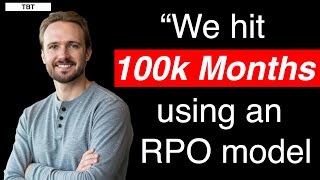
Joe Walsh grew his four-person recruiting firm from $3K to $100K monthly revenue in nine months using an RPO model. He embeds contract recruiters at client sites, runs rigorous vetting that includes scenario-based exercises, and tracks conversion rates across interview stages to find process breakdowns. His playbooks live in Notion and he treats clients as long-term investments rather than one-off placements.
Chapters
Hey guys, welcome back to yet another episode of Top Billers Toolkit, where me and my twin brother interview top billers from all around the globe to unlock the secrets to their success. Today's guest is Joe Walsh. Joe is the founder and managing partner of Mural Group, and in just 9 months with a small team of 4, Joe's company has gone from making $3K every month to $100K months. They did this by capitalizing on 2 main strategies. Building a successful RPO model and systemizing their business to make everything more predictable and repeatable. In today's episode, we're going to be talking about the main systems that Joe and his team designed to really move the needle forward. We're going to be discussing elements of how to build a successful RPO model, and we're going to be talking about the journey that the company's been through from going from $3K to $100K months and what it takes to get there. I hope you enjoy today's episode, guys. As usual, grab a cuppa or a glass of wine depending on when you're listening to this, and let's get into it, shall we?
Joe, thank you for joining us today, my friend. I am really looking forward to this conversation. How you doing?
Doing well. How are you guys?
Yeah, really good. Thank you, mate. Actually, lovely weather in the UK. Feel good, man.
No, I was saying it's really, uh, it's lovely weather in the UK, which is very rare, Joe, but I was actually able to walk out in a t-shirt, so it was lovely.
Yeah, that's awesome. It's starting to kind of pick up here in Denver as well.
Nice.
Um, but yeah, that's awesome.
Awesome. Joe, let's jump in with the very first question, which is what's the number one tool in your toolkit, whether it be a mindset, strategy, or software?
Yeah, I think, um, it's probably the scientific method, which sounds like pretty simple, because we all learn this framework in like the third grade, right? Of like how to like, you know, do an experiment. But, you know, when I went to Uber and kind of my first couple of months there, one of the people that I was working with explained to me that like the way that we approach problems is kind of like through the scientific method. And that kind of stuck with me. And I asked a couple of other people about that and When you have a framework like that, that allows you to kind of think from first principles, it allows you to solve a variety of different problems. And I think that that's something that we don't really talk about out loud at, at the Mural Group, but it's definitely something that carries over into like everything that we do, whether it's internally thinking about operations or how we're going to approach a conversation with a client. To actually how we handle engagements with clients and how we're thinking about the different roles that we're working on and how this, this person is going to impact their business objectives. It all comes down to that, like, foundation of the scientific method, basically.
Great answer. It's also a very different answer to—
Yeah, I want to congratulate you, Joe. You're the first person of 20 people who haven't said mindset and said something different.
So That's not that we mind. We don't judge. We like all doctors, but it's just, it's nice to have a different one. I really love that as well, Joe, because, um, I suspect you solve problems faster and get to the core of a lot of issues by thinking in this way. But it sounds like, it sounds really basic, and you said that at the beginning, but I, I suspect there's still a lot of people that don't think or do things in the way that you just mentioned. So for complete noobs like me and Sam and maybe other people listening, How does one think in a more scientific way? How do you work on first principles? Maybe you can kind of just give us a little crash course, if that's okay. Yeah.
So, I mean, you start with like your observation, right? And then, and then you, you start asking questions and then you, you start to form like a hypothesis of like what might make sense. And then you, you, you know, experiment and you test your hypothesis. And like in the context of recruiting for a role, right? Like you're basically doing this all the time as a recruiter. You're getting the requirements of the role. You're asking some questions about like, you know, what is the role? And, you know, what, what are we trying to work on here? And then you're, you're, you're going out to market, you're finding candidates you think might be the right fit. And then you're putting them through a process and you're, you're testing your hypothesis of what a good candidate looks like.
Yeah.
So, I mean, it's, you know, it can be really applicable to any type of problem that you're solving. But I think when you apply it to something like recruiting, it's like it becomes kind of like a, like a superpower.
Interesting. And when, when you're doing like experiments, because I guess that's, that makes sense. And that makes perfect sense. Are you testing multiple different things at one time or are you testing one thing at a time? Like, how does it work? How are you testing and then looking at the results? Like, what's that process look like normally?
Yeah. So staying with the same kind of like example, when we enter into an engagement, one of the first things that we do kind of post like intake and whatnot is we do a calibration session and we'll like purposely throw some candidates in there that are maybe just a little bit different than what we talked about, just to kind of see, like, what does the hiring team gravitate towards? Are there things on that profile, that outlier profile, that kind of stand out to them? So, and then that helps us really kind of narrow in on, on who we're actually going after.
Awesome. Gotta jump into the next question, Joe, because I think a lot of people will be very impressed by this, which is you grew— correct me if I'm wrong—
but you grew from $3K to $100K months in under a year, which is insane growth.
Really interested, you know, a lot of people, you know, don't achieve that in a lifetime, let alone in a year. So the fact that you did it so quickly is quite amazing. And I'd love to know what, what do you think if there was like a few core things that allowed you to get to that level so quickly? What were they, do you think? What were the kind of, what's the 80/20 rule in that growth, do you think? What do you think had the biggest needle mover?
So I think first would be like operations just on the back end. We got kind of lucky and landed a client that was probably like a little out of our league, like pretty early on and we cracked in They're one of like our RPO clients. But initially what they asked us to do was what I would call like a pass-through. Like they had a contract recruiter there. They were contracting through another company. They needed to move them to a different company for, for whatever reason. And they asked us if we could do that. And so we said yes. And then we figured out how to do it operationally, like later. So like the operations to be able to scale. Is really important, especially I think like with RPO engagements because there's a little bit more that goes on behind the scenes that you need to make sure are buttoned up so you can like maintain those engagements over time. The, and those deals are also like large deals, like they, you could land one RPO client and it'd be like $100,000 or $200,000 or like a million dollars a month, right? So that was something I think that we, we invested in a little bit, like the operations making it happen. The other thing that was really helpful is both Kyle, my, my partner and I had really good networks from hot startups. He was the first recruiter at Sixth Sense, you know, led the global recruiting team there. Had a really big network of hiring managers who went on to build companies or be executives at other companies or invest in companies. I was at Uber, not super early, but early enough to work with some, some really great people who went on to start VCs and, and be founders of companies. So we, when we started, we had like a nice, like inbound trickle of people who wanted to work with us. And then it sort of snowballed from there, you know, got some good referrals and word of mouth started to happen. And we've been able to lean on that until we've really been able to dial in our, our sales motion. And which I think we're in a really good place with now. But, you know, those sales cycles can be 6 months, 12 months, like 18 months. I mean, you know, when I've been an in-house talent leader before, You know, there's this guy who calls me to this day to talk about like business and like maybe work on business together. But he called me like, you know, a couple of times a month or like a month here, a month there for like a year, year and a half. And then finally we do a deal together when I was an in-house talent leader. But, you know, that sales cycle takes a long time. So we got a, we got kind of a head start with our network from, from the startups that we had worked at.
Nice.
Got it. Go ahead, Sam.
No, sorry, Ben, you were going to just follow up from that question?
No, I was going to say I've got to give kudos to that guy who was following up with you once every month for like a year. That's insane. Or even twice a month for a year. That's kudos to him. That's all I'm going to say.
Yeah. Consistent.
Yeah, 100%. He, he's great too. And always had like good like information about the market. And, um, you know, he made it, uh, I would say worthwhile to have the conversation with him, which I think, uh, something that I've like kind of learned from that experience.
That's awesome.
I just want to jump into the RPO model, Joe, because, um, I have met some recruiters that have implemented it, but it's quite rare. It's quite rare for recruiters to implement an RPO model from, from the conversations I've had. So Would you mind walking us through, um, one of your current RPO models just so a noob coming in understands like how you've positioned yourself, how it's set up, and what the com— what the client is expecting on a month-to-month basis? I'm just really interested in that.
Yeah, so usually when we sit down with a client or we're going to like do our outreach or our pitch, Mural Group We're not necessarily pitching like RPO or contingent or retained or exec search. We, uh, say like, hey, these are the things that we do that we feel like we're really good at. And then when we sit down with the client, we've listened to what their problems are. And then sometimes we'll pitch them like, hey, you have, um, you know, 25 roles that you need to hire over the next 3 months. It probably doesn't make sense actually for you to do those on retainer. It makes, makes a lot of sense for us, but, you know, probably doesn't make any sense for you. And, and, you know, I always think like you want to treat your clients like investments. You don't want to like bleed them for all the cash that you can get out of them. That's not, I think, the right approach to it. So a lot of times we'll, we'll kind of craft, um, you know, hey, here's this, uh, this other option that you could take, which is we can put, you know, 3 or 4 really good recruiters at your company and they'll be employees of Mural Group. You know, we'll handle the payroll and everything. And then we can even put like a project leader in, you know, as well, if you don't have like a talent leader or something like that. And then You know, they, they operate like just like in-house recruiters, just on a contract basis. Um, we're pretty hands-off in like most of those scenarios, but we'll be as hands-on as, as the client like wants us to be. Um, and we have regular check-ins with the client to make sure that everything's going well. You know, people are having challenges or they're, you know, struggling with filling their roles. Will, you know, touch base with those contractors and try to figure out what's going on and try to help them, you know, be successful ultimately. Um, but, um, I mean, that's basically how it operates.
Interesting.
That's so— that's really interesting. And my next question is, so you hire— you're essentially hiring contract recruiters to go into this company and sort out their recruitment. How do you— because it's that Yeah, are they new people? Are they people that you, you know, you've just met?
Are these people within your company?
Because the first thing that went into my brain is if they are new people, you're giving them a lot of responsibility for a new client that could be worth hundreds of thousands if not millions, and then just sending them in. So I'm just curious how you navigate that.
Yeah, I think that would really depend like on what, what structure they have in place. Like, because we, we do it differently. Like, we have One client where we have an internal person who's like pretty hands-on. I mean, they, they're like actually like kind of leading the engagement and like managing the team and they're essentially like a part of Mural.
Okay, cool.
And, and then we have another engagement where we're pretty hands-off. We're not like filling roles or, or anything like that, but they have a really good like structure in place. They're a later stage company. They have a really great head of talent, so they don't really need us to be like super in the weeds with them.
Cool.
That's interesting. Interesting.
So, Ben, did you have a question? Yeah. And if you're not in the weeds, what's the main— what's— what role are you having then, Joe? What kind of value you bring to the company at that point?
Yeah, I think the value is when you're thinking about your recruiting capacity and especially in the like context of a startup, it fluctuates, it varies. Sometimes these startups are not even doing like headcount planning cycles, you know, and so you need to be able to scale up that capacity really quickly. And the one of the best ways to do it, I think, is like working with a firm like Mural who, has built talent teams in the past, knows what good recruiting looks like, and knows what recruiting looks like in the context of a startup, and can build your, your team that you can kind of like turn up and turn down, um, based on like your, your capacity needs.
Interesting. And these contractors that you're bringing into the company, Joe, are they working under your company name but just contracting for that company? Am I right in saying that?
Yeah, yeah. So we, we pay— yeah, their paychecks like basically come from us.
Cool. Okay.
And then they're just sitting in an office in that company but under your company name.
Cool.
That's really interesting. Um, and so my— I guess my, my other question was, um, how do you know you're hiring the right people to go in there? I'm guessing that's a, you know, the, the art of being a good recruiter. But like I said, that it's still putting a lot of if they are new people, it's still putting a lot of responsibility on them. So I'm still unsure of how— are you— yeah, how do you guarantee, or at least limit your chances, that a new recruiter is going to go in and do a great job or screw it up? Out of interest.
Yeah, so I think it helps that both Kyle and I have built recruiting teams before, but we We, we, we kind of, so we have a good network of recruiters who, you know, and right now there's so many really good recruiters on the market or kind of like work. Um, so, you know, it might be people that we've worked with in the past. Um, but a lot of times it's actually people that we, you know, we haven't worked with. Um, and so how do you like assess them and make sure that they're like good? We actually, we put them through. Like a process, like a recruiting process. And one of the key parts of the process is typically an exercise. And it's, it might be a little bit different based on the company, but it's essentially 3 components. So one is like a little sourcing exercise. We want to see that, you know, you can go and source candidates. You know what good looks like. The second part is typically like, hey, pitch this company with the information that you have externally and then specifically give me the equity pitch because that's a lot of the time the difference in like a recruiter for like in the context of a startup is the startups are not paying you know, the salaries that like the FANGs are paying and you have to have a really nice clean pitch on the equity and sell the upside of what that might look like. So we want them to do that and we want them to show that they know the mechanics of equity too. Like to understand options versus RSUs. Are they going to get themselves and your company in trouble if they're saying things about, you know, the equity that you wouldn't want to say, like, you know, guaranteeing that their strike price is going to be a certain amount or something like that. So that's part 2. And then part 3 is we usually draft up like a hypothetical email that they would get from like the CEO or the CTO or the founder or something like that. And it's usually something along the lines of like, hey, I have this great referral. I want to make them an offer tomorrow. You know, the role is not budgeted. But, you know, I've already cleared it with the founders. So can you, can you draft me up like like some offer numbers and a couple of other like tricky, you know, questions like that. I wanna see how they, how they respond to those questions. Because the recruiter that like I would not wanna hire in a startup environment is the recruiter who's like, we can't do that. Like we, we can't do, we, we have to post the role and we need to make sure that we are, Following all the rules, and it's like sometimes you gotta throw the rule book like out the window. Um, start with the scientific method and ask the questions and figure out what's going on, and then like approach the situation, um, with, with nuance. And, and so like, that's like the one recruiter that we want to watch out for. The other recruiter that we try to watch out for is like the recruiter who's like, sure, whatever you want. We don't want the order taker either. So we want to see like what kind of questions are they asking as they write back to the CEO or whoever it is. And then, you know, that tells us a lot about like how good is this recruiter in the context of this company.
Really interesting, man. So you've got a basically a vetting process before you place them in to see how good they are, which sounds really detailed.
It's awesome. I'd love to get into this next question, um, Joe, because I feel like it's so important, um, about intake calls. And you said something that really, um, really struck a chord with me, which is I think a lot of the reason why recruiters don't close or do a good job— do a good enough job at pitching themselves— they don't understand how to tie the problems into the business and really understand what the business problems are. And I still to this day, I'm amazed that when I speak to recruiters and I ask them questions how honed in they are on recruitment. And when I ask them problems about the business, they're like, they have no clue. They just don't understand how they're— how the, the people that they're placing affects the business. And I'm like, I'm— it kind of blows my mind. It's like, that's the whole reason why you're placing people, is to impact the business in some way. Anyway, so I'm waffling on, but I'd love to know, like, how did you learn this in the first place? And then, like, what's the process now? What kind of advice and/or kind of Tips can we give to people who might not understand this very well?
Yep. So when I started off as an agency recruiter, like fresh out of college, I definitely did not understand this. I kind of was like, the candidate hits the, hits the boxes, you know, checks the boxes and they're willing to have an interview. And, you know, you can have success like up to a certain point doing that. But where I really learned this was that was at Uber, because when I first got to Uber, I was really not very good at all. I was pretty bad. And I was like, every day I would walk into the office and I'd be like, man, is this the day that I'm like getting fired? Or like, what's— and finally, you know, I had I just sat down with like, you know, one of our recruiting leaders and he was like, look, like you need to go and spend time with the business and really understand like what they do. So like we were building the early like Uber Eats teams and I didn't really know much about like food delivery other than it was like, You know, car picks up food, brings it to person, and there's this like whole dynamic of this three-sided marketplace where, you know, the restaurant has incentives, the, the person, the eater has incentives, the driver has incentives. And if you're trying to hire a general manager for, you know, one of the early Uber Eats cities, you need to understand how the three-sided marketplace works and how business is going to incentivize those, those three sides to capture market share. So spending a lot of time with the businesses is like, is key. But we, you know, oftentimes like run into businesses that we are like super unfamiliar with. And And they maybe even have roles that like we've never really worked on before. And we have an intake like form that we built. It's very similar to the one that was built at Uber by someone. And we, we start with like the basics, like, okay, what, you know, what is the level of the role? Where do they sit at within the organization? What's the salary band? You want to get all of that like basic info out of the way. And then you want to start asking about like, okay, like, what does your team do? What are they really responsible for? Because a lot of times you might like see their title, maybe they're like VP of product or something like that, but they might also have like data science underneath them and, you know, they might have design underneath them. And so if you're hiring somebody for their team, you have to understand like that what their scope is and what their mandate is as an executive and how all of those teams, you know, play into each other. So we sit down, we ask about the team, the structure of their team and what everyone does, all the different verticals are responsible for. And then we ask about how this role is going to play a part in, you know, their, their business objectives. And we'll just flat out ask them like, what are your OKRs for this quarter? Are you, you know, what's going to stop you from like hitting your, your OKRs? And then we try to get some examples of like actual work that this person is going to do. And then we try to understand who's doing that work today. Because whoever's doing that work today is probably closest to the work. And then, and we want to go and talk to them too and really dig into it.
Interesting. And what usually happens when you go and speak to that second person, Joe? Are you getting more pain and then you sell, sell directly to them, or is it about taking that information and coming back? What is, what happens then?
Yeah. So I mean, this is mostly like post-sale, I would say, but.
Okay. See, sorry.
Yeah. Yeah. But we are really like understanding like the tactical things and understanding what we need to listen to in like a recruiting screen to make sure that we're, we're like on the right track. You know, are they, are this person who I'm interviewing talking about the same types of problems that this person is like telling me that they have? Yeah.
So cool.
Yeah, that makes perfect sense. Just going deeper.
So yeah, it, it's super— it sounds— you've definitely simplified it, but it's just about asking the right questions, isn't it, Joe? It's about asking the right questions, digging deeper. And I feel like a lot of recruiters aren't doing that. Um, just from the, just from the questions I'm asking them, I know they're not doing it because whenever I ask them, oh, what, what kind of problems are they struggling with, they typically resort to recruitment-related problems. And it's like, okay, but what are the business problems Anyway, that was really helpful. Um, awesome. And then what difference has, in your opinion, what difference has, like, what's the biggest impact doing a proper intake call and asking those better questions? What difference has that made to your business, do you think? Like, what impact have you seen, um, from doing that intake call and asking those questions?
I think first it, it builds credibility with the client. It's like you should, it's, it's a signaling to them that you actually care about their business and that you're not just trying to figure out how to get a commission check. Because, you know, the way that we think about our clients is like, we want to work with them from like seed stage to IPO. I mean, that would be awesome. Like, we would love to scale with our clients like that. And in order to do that, you play a role in that as a recruiter by making sure that you place the right person who's gonna have material impact at that company and, and going to be instrumental in their success. So I think the intake form with the questions that we ask shows that we care about their business. It helps us build, you know, a stronger relationship with the, with the client. I think it also just cuts through so much noise and gives us a really clear, like, framework to go to market and, like, find the right, the right talent. You know, I would also say, like, you mentioned, like, a lot of recruiters are— they talk about, like, recruiting challenges and things like that. I don't think that we really even think about, like, recruiting challenges, like, very rarely. Like, we don't, we don't really ever talk about like, man, I can't find the right candidate for this role, or I'm having a hard time getting people on the phone. You know, like those are challenges that we don't even have. I think it's because we're going after the right people. Because when you're, when you're reaching out to the people who are like, who are not right, they, they know that they're not right for the role when you like send them the role and And it, uh, yeah, you're just like wasting your time. So it cuts through a bunch of BS and helps you get to market faster and get to the right talent, like a lot quicker. Um, the other part I would say is, um, in that intake session, we outline a process with the client. If they don't have a recruiting process, or their recruiting process is like too long or is not getting the right signal. That is so important to hiring somebody because without a good process where you are, you know, it's very defined what competencies you're interviewing for, how you're actually interviewing for them, you are going to really have a hard time getting somebody to the offer stage. The client is going to really struggle getting to a decision, they're going to have a lot of like misfires on people who are probably great, but they just can't, they don't have the like vehicle in place to, to know that they're great or like total opposite. They really just jam with the candidate and then they like end up hiring them and they end up being like, you know, a really poor hire for the company. So the process I would say is absolutely essential. And that's where we spend a lot of time on in that intake session. If their process looks a little off to us.
Interesting. And what, what tends to be the biggest changes you make when you, when you ask about and you dig deeper into the process? What's typically the biggest gap that you see in these processes?
The biggest thing is that it's either way too long You know, they have like 3 or 4 gated one-on-ones with like, you know, all of the leaders of the team that are basically the same interview. And that's a total, total waste of time. I mean, you can bake in basically a week for each interview if you're talking about interviewing with like a senior manager, director level person. The other thing is, um, there's no, like, the reason why we ask about their business objectives is because we're going to translate that into, you know, competencies that map to the talent market. And then we're going to put together a framework of questions or interview materials that allow us to assess for those competencies. And most of the time when what we see is like there, there are no— they haven't really thought deeply about like the competencies or the interview questions or anything like that.
Wow, that's, that's quite insane, isn't it, that these companies who have these huge budgets and these people that they need to grow— so they haven't— I'm sure, you know, I'm sure some of them have done a great job, but it sounds like there still is a big gap even with great companies between their understanding of what they really need in the right candidate, which is quite interesting.
I think we see it a lot with like earlier stage companies who are like first-time founders or, yeah, they just haven't like they haven't built and hired a ton of people yet. So they, you know, they haven't done that quite yet.
Yeah, that makes sense. It's all, it's all a new world for them, isn't it?
Yeah.
The other thing I was, I was thinking just out loud about what the intake call would be useful for.
Is marketing.
I'm guessing the level of info you're getting in those intake calls, like, would be useful in DMs, would be useful in content, would be useful in literally any marketing material to, like, go out and find more of those people, I'm guessing. Um, have you, uh, have you thought about that, Joe? I'm guessing you have. Is it something that's helped with marketing at all, or have you kind of, uh, implemented anything that would just suggest that?
Yeah, like marketing to, to to the talent market, like candidates?
Um, not necessarily. I was thinking to other, other clients actually, because, you know, I'm guessing you're learning a hell of a lot about this business now, about their problems, objectives, competencies. Like, I'm guessing you're learning a lot about them. For me, that's like absolute gold for like marketing material for other clients. I don't know what you think.
Yeah, I would say we, um, are, you know, want to be conscious of like what we share with other companies about like our clients and everything like that. But, you know, definitely certain situations and like, hey, we just worked with, you know, this client and saw these changes that they need to make in their interview process and were able to help them hire faster. We do some of that stuff, but it's probably a muscle that we haven't built as, as much yet. Yeah.
But But it sounds like you haven't needed to because I'm guessing this kind of goes back to the question that I missed, which is a huge portion of your business is referrals, isn't it? Your, your process sounds so efficient and so good that you're getting people coming to you from referrals for a lot of your business at the moment, I'm guessing.
Yeah, definitely. I would say, yeah, I mean, most of our business really comes from like word of mouth referrals, our network of people that we've worked with before. And you'd be surprised at like how many people that we, we sit down with them and we actually had 2 conversations just maybe 2 or 3 weeks ago. Both companies, one company used an exec search firm to hire a CFO and said they had a terrible experience, cost them $150,000.
Wow.
The person that they hired, uh, ended up being like a total sham and they actually did not, you know, that was a guaranteed search. So when the person left in like 6 months, they could have went back to that firm and got the search for free. And yet they were sitting down and talking to us and would rather spend money on the search because they had such a bad experience. Same exact almost conversation that we had with another firm for their head of engineering. It's a really terrible experience where the firm was super pushy and they ended up, they knew at the time they weren't making the right hire and they ended up making that hire and that person was gone in like 9 months.
Oh no, it's terrible.
Yeah. Well, I guess it's good for you, Joe, because you can swoop in and say, hey, we do things differently. Um, so I guess it's, it's not good for companies, but it's good for people like you can come in and change things up. Um, yeah, I'd love to go into another question, which is— and this is, this might be a strong overlap, but I'm just interested because, um, we talked about recruiters having an adversarial relationship with a lot of hiring managers, um, because they don't understand the business objectives. Is there anything we've missed in terms of what we talked about that helps to bridge that gap? And I know you talked about a mindset shift as well that recruiters need to make, but How are you or how are you observing a difference in how recruiters should be building relationships with hiring managers?
Yeah. So I was definitely like this when I was on the agency side of recruiting and before I had worked in-house, you know, there'd always be these like situations that would happen where, you know, they'd want to add another step to the interview or the— they would lose budget for the rule. Or, you know, something crazy happens and you're always— I was always like, man, this client doesn't know what they're doing. It's a terrible client, you know? And then when you— when I got to be in-house, I started to, you know, you peek behind the curtain a little bit and you see like, oh, okay, there's reasons why these things are happening. It's not because the hiring team is incompetent or the business is incompetent. It's like they have to make the right decision for their business. Like things do change in a business. That require you to pull back on headcount, or, you know, maybe you hire a head of that team and you at the last minute need to have the candidate talk to the person that they're going to be reporting to as like a final step. So if you take some time to understand and really build a good relationship with, with your clients, they're going to give you a little bit more of that info on like what's actually happening behind the scenes. I'd also say like anybody who's like early in their career right now who's on the agency side and you're thinking about going and starting your own firm, um, go and work in-house a little bit. I would— I think that it's just great experience to have like in-house experience. I think it's going to just change your perspective on, um, on, on how to recruit. Um, I think in the agency world it's like a little bit maybe too focused on like, like closing the role and like landing the deal. And like in, in-house, it's actually like you, you did a good job or just as good of a job if you prevented the hiring team from hiring the wrong person. You know, so I would, yeah, challenge folks like go work in-house a little bit and then go start your firm, you know.
It's really, it's really interesting. Never had that advice, but I can see why that would be super useful. And what would you say in terms— because you've actually had— yeah, it's really interesting that you've gone in-house, Joe, and because you've kind of seen both sides, as you say, you've got a peek behind the curtain. What was the biggest mindset shift for you? You kind of maybe already touched upon it, but for you, once you went in-house and then, you know, you started recruiting for these guys again, what was the biggest mindset shift for you in terms of how you changed your approach?
I think it was probably with sourcing, I would say, really understanding that interviews cost money and that you have to be really dialed in when it comes to putting candidates on the calendar for the team. That like when you kind of go beyond, you know, bringing 4 people to a final round and still no hire is made, like you're wasting the company money. That was a big thing. And then I think the other thing was having a much more data-driven approach to recruiting and understanding how different conversion rates throughout the, the interview process, um, are telling you that something is maybe going really well or not going very good at all, like within your process.
Um, oh, that sounds very juicy, Joe. I've got to ask questions around that. Um, I suspect— I'm not expecting you to throw all the data to me, but again, if there was like an absolute noob recruiter listening to this and they didn't have a data-driven approach and they didn't really know what numbers to look for, what are the kind of basic metrics that you go through that you, you keep an eye on at the moment, you think?
So with, with regards to conversion rates, like let's, let's say that you have, um, a 3-step process after the recruiting screen. So maybe the, the first step is the hiring manager screen. The second step is an exercise, live exercise of some sort, maybe like a case study or something like that. And then the final round is like, let's say, 3 one-on-ones with the team. And you're noticing that there's a really high pass-through rate once we get to that like third stage, the assessment stage. And then there's a huge drop-off at the final stage. So the final stage is You know, you're 0 for 5 or you're 0 for 7, but you're like 9 for 10 or, you know, 6 for 7 at like the third, the third stage. Something, something is happening at that third stage that is not assessing for the right signal that is going to lead to success in the final stage. Or what other could be happening, and maybe this, this is also happening in tandem, is in that final stage, there's like total misalignment amongst like the interview panel, and you maybe need to sit down with everyone and like get everyone on the same page and make sure that we are, uh, aligned on what the actual role is. Mm-hmm. Um, yeah, but that, that's like one example. Um, another example is like if you're you know, 9 for 10 on your recruiter phone screen, and then you're like, you know, 2 for 10 on the hiring manager screen. Well, you're like, there's something wrong in your, in your recruiting screen, you know.
It's really, yeah, really, really cool. Um, I'm, I'm— Sam, did you want to have a— did you have a question? Um, I always like to ask this question, Joe. It's not on the question list, but I would like to think you've, you've built a successful business very quickly. Again, if there was a noob recruiter or young recruiter listening to us right now that wanted to pick your brains and get maximum value from this, um, from this, um, podcast episode, is there anything that we've missed today that you think other people should know about in terms of what you've done to achieve such great success?
Man. Well, I think, I think building a business is really hard. And I think if you, you know, if you want to go and build a recruiting business, I think you have to be ready for it to be kind of rocky, you know, probably especially like early on. I think you need to, like, dedicate yourself to your craft, get really good at whatever it is that makes you different from everyone else in the market. And I think you have to love it. There's never been really any days that I've, like, you know, gone to work over the last 10 years and been like, man, I don't want to go to work today. Oh, really?
Wow.
Yeah. I mean, like, I, I love, like, I love recruiting. I love the companies that I've had a chance to work for. I've been super lucky in that. Um, and now I love, like, building the business. It's probably the most fun I've ever had, ever. I love the team that we've built. Um, so you really do, you have to love it. You have to, like, really want to work on your craft and you have to be just down with the, with the with the, with the struggle a little bit here and there. This is not always going to be super, super highs.
That's great, great advice. I'm also interested in the operate. Whenever someone says they're good at operations, I'm always interested in that because I feel like, again, me and Tam are going for this amount. We're like working with operations managers and people that can come in and really help us with systems and operations because it's not— I wouldn't say it's our natural forte. Um, But I know from recruitment, speaking to other recruitment businesses as well, it's not a natural skill that comes, you know, it doesn't come naturally to a lot of people, like being able to build really robust systems and, and, you know, build replicable— is that the right word— systems that other people can use.
Yeah.
Like, again, if you had any advice on your experience with operations, what, what can people do to get better at it? What can people do to build better systems? What can people do to get better results around that side of things?
I would say like the first thing is to like understand, like, like prioritize what your, your biggest efficiency losses are. Like, where do you spend the most time doing manual work where you could be like impacting the business in some capacity? Either for us, it's like either sales or like delivery to clients. So, you know, early on it was like, man, we got to pay all these contractors now. We got like these RPO things and we got to figure out like how to pay these contractors and make sure that like their invoices come in on time and make sure that our invoices go out on time. And so, you know, we sat down and we kind of like built a system for that and You know, there's tools that exist that like make that really easy. But you know, just simple things like, you know, having an email alias that's like invoices@themuralgroup.com. Like, you know, contractors can like send it to us and it goes to, you know, me and Kyle. And so Kyle's like gone one day or, you know, I'm gone one day, like one of us can like handle those things. So I would say like we're like, you know, elite operators, but it's definitely like something that we focused on to gain efficiency so we can spend more time doing sales or delivery to clients.
Go ahead, Sam.
Sorry, Ben and Joe. I'm just curious, Joe, if there was one or two things that you have built from an operation standpoint that's had the biggest impact on time? Because like you said, you're, you're probably working on the biggest time suckers to begin with, aren't you? And then all those little bits kind of probably trickle in afterwards. But what systems have you built that have saved you the biggest amounts of time, do you think, if you were to speak about one or two?
Well, I'll talk about something that I think is, is not necessarily gonna— is like saving us time today, but I think it's going to save us time in the long run as we start to scale our company. And that's like we have, we got Notion pretty early on. We started documenting kind of like how we do things and we just about have like a playbook for like when we, we go to hire, you know, 3 or 4 recruiters that we haven't worked with before who, you know, will be like full desk recruiters in our team. I feel pretty confident that we have like the playbook in place that we, we can like hand off to them and they can have like a ton of success at our company. So I'm, I'm super excited to see how that plays out like over the long term because we've, we've kind of like slowly started to invest in like over time just like the playbook of how we operate and like who we, who we are and how we approach engagements with clients and Um, you know, our cultural values and things like that.
Awesome. And you do that all on Notion, Joe? That's your like hub for storing all your SOPs and where all the operations live?
Yeah, yeah. Notion is kind of like our, our home, home base.
Interesting. We were thinking about Notion and I know Ben doesn't really, um, well, you do like Notion, don't you, Ben?
But not, not, uh, not as much as me. Yeah, and I, I like Notion. Um, I'm just more of a, I just have a Um, I, I'm not one of those people that likes a very simple, like dead simple. Um, like it needs to be kind of like a, an 8, if an 8-year-old can use it, I like it, if that makes sense. And I feel like maybe Notion is for like a 10-year-old.
So you look like a Google, like a Google Docs, Google Drive.
Yeah, yeah, exactly. That's exactly, I'm that kind of person. I just like really simple stuff.
Yeah, but that's interesting. So that what you said, Joe, was, um, you're, you're— firstly, you're storing everything in one place in an easy-to-use software like Notion. But the one of the biggest time savers that you think is going to be useful is when you're onboarding new recruiters and having everything laid out about your business. It's already there, like how to do this, how to do that, how to do this. Am I right in saying that?
Yeah, I, I think 100%. I think, um, uh, that will allow recruiters to to, you know, have success faster. I think it's just also going to allow us to, to scale faster too.
Yeah, awesome.
Anything— love that. I feel like anyone listen to this, that was gold, Joe. So it's like, look at what's sucking up time in your business. What are you doing right now that you shouldn't really be doing? Create a playbook, like, create SOP systems around how it works, either in Notion or Google Docs, and then pass it on to someone else if you can. Or do it yourself, but I guess find a way to do it more efficiently that doesn't suck up your time. Anything to add to that, Joe?
I would add a caveat to that. I would say that like you don't wanna be spending a bunch of time like building systems and process though either. Like if that becomes the result, then it's like detrimental to your business. So I would say watch out for that and especially like you're, you know, if you're small firm like ours, like, we don't try to over-process, you know, things. Yeah, too much. But, um, you know, uh, just to make us faster.
Yeah. I feel like the problem is most of the time though, it's the, you know, we're looking at extreme levels. Most people are probably sit on the extreme end of not doing it as opposed to doing it too much where it's time-consuming. That's just, I don't know, from my experience being through recruits, it's like they spend very little time building systems and so they end up in this like the same place, if that makes sense, kind of spinning their wheels. Um, but yeah, no, it's a good point, Joe. Um, and yeah, thank you so much, mate. I think I, um, I've, um, I've run out. We've— I think we've finished all the questions now, Joe, unless you have anything else you'd like to add for the pod.
No, I really appreciate, uh, being on, and, um, I've seen, uh, you know, quite a few episodes and really enjoy, like, all the conversations that you guys have had, so It's exciting to be on and you'll have to have Kyle on next. Awesome.
I would love to, mate.
He's awesome as well and it's been great working with him and we've seen a lot of success together and hopefully more success in the future for the Mural Group.
Awesome, Joe. Yeah, thank you so much, mate. It was so nice to have your perspective and a different perspective today and different topics to speak about. So thank you so much for coming, mate. Really appreciate it.
Yeah, absolutely.
Hey guys, thanks for tuning in to this episode. If you enjoyed it, please don't forget to subscribe on YouTube and Spotify. Tune in for another episode next week, and we look forward to seeing you again very soon. Peace and love.
More from Sam




The difference between a $200K biller and a £1,000,000 Biller (full Breakdown video)

how to go from agency recruiter to Lone wolf (Advice from a $2.4 Million biller)



This Recruiter has billed $750K+ for 30 years straight. (Master of Consistency)

How to increase your candidate response rate by 25-30% (Whats app messaging system)


This recruiter has billed $1,000,000 for 5 years straight! (Master at Enterprise deals)