This Recruiter JUMPED from 500k to $2 Million, Here's how:
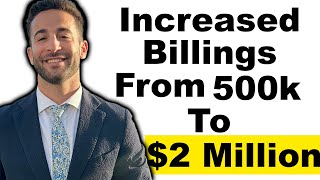
Recruiter Dylan Cohen grew his billings from $500K to nearly $2 million by shifting from quick deals to long-term partnerships and expanding his territory to the entire US and Canada. He targets Microsoft-focused accounts using LinkedIn and ZoomInfo, builds case studies as sales assets, and maintains 2-4 touchpoints per week with systematic follow-up. His split is roughly 60-70% contract placements and 30-40% permanent roles.
Chapters
Hey guys, welcome back to yet another episode of Top Billers Toolkit, where me and my twin brother interview top billers from all around the globe to unlock the secrets to their success. Today's guest is Dylan Cohen. Dylan is a $1.94 million biller. Dylan started off as a $500K biller and then made a humongous jump to nearly $2 million in just the space of a few years. On today's episode, we're going to be talking about how Dylan made such a humongous jump in billings, how he goes about executing great BD campaigns, and he'll also talk us through his powerful sales sales process that he uses to increase win rates. As usual, guys, grab a cuppa or a glass of wine depending on when you're listening to this, and let's get into it, shall we? Hey Dylan, how are you?
Great, how you guys doing?
Very good. People don't know what happened behind the scenes. We've been planning this on and off for about a month or maybe even 2 months, but we finally made it together. The podcast gods are in our favor, so Thank you for joining us, mate. You are a top biller. You've built a lot of— you've built a lot, full stop, and you've just done some great work. So thank you for coming on and sharing your wisdom today. Really appreciate it.
Yeah, looking forward to the conversation and thanks for having me on, guys.
So we always start the pod with this same question, which is what's the number one tool in your toolkit, whether it be a mindset, strategy, or software? What would you say, Dylan?
I think first thing comes to mind is probably more of a a mindset piece. I think you have to be very confident to be successful in this business. And obviously there's a lot of bad days. There's hopefully, you know, a good amount of good days as well. But I think for me personally, it's probably a combination of, you know, my confidence and also the network that I've built over the last 8 years, you know, doing mainly Microsoft recruitment. And I do think those things sort of go hand in hand. Uh, you're obviously going to be very, uh, confident when you have, you know, a fantastic candidate you've worked with before that you know has done good work versus, you know, someone you maybe don't know that well or just qualified, you know, that morning. So I think it's a combination of the network that myself and my team have built over the years, uh, my confidence in my abilities, and also just really believing in the service and the value that you can provide to your clients. I think, you know, a lot of people maybe outside of recruitment, or even people that do recruitment, you know, they, they don't maybe fully believe in the value they're adding. And I think You have to really believe that you're providing a value to your clients and they should be working with you because of all the value you could bring and how much you can help them. So I think a combination of a lot of those, but yeah, I think confidence is definitely number one.
That's really interesting. We've never had confidence or we've never had it vocalized in that way. Have you always had that confidence, that unwavering confidence, or was that built through a specific experience, do you think?
Uh, I think, I think I, it is a bit inherent to my, to my personality, but obviously you have to kind of build that up. And, you know, when things aren't going, you know, that well, you know, people, you know, talk about imposter syndrome and things like that. So, you know, certain weeks you're gonna be maybe feeling a bit more confident than others, but I feel like, yeah, personally I feel like I, I've kind of always had that even, you know, since, since, you know, growing up. My family tells stories about I was always very independent and confident in, in, you know, anything I kind of set out for, but I think again, being in a specialist area and doing it for the last 8 years and, you know, you're dealing with very similar problems with all your customers. So when you solved, you know, 50 to 100 of the same types of scenarios, obviously you feel a bit more confident, you know, going out and repeatedly doing it again. And not to say that every client's scenario is the same, but a lot of times the Dynamics ERP space, it's the same horror stories over and over that you're hearing. And, you know, when you've helped the same type of stories, you know, get to where they want to go, you're very confident doing it again.
Love that, man. I want to get straight into your billings, Dylan, because they are very impressive just for the viewers so they understand. From '21 to '22, $1.94 million. '22 to '23, 2022 to 2023, $1.85 million. 2023 to 2024, $1.46 million. So very healthy, respectable figures, mate. Very cool indeed. I guess the question on from that is, I remember you telling me that at your previous company you were a $600,000 to $700,000 biller, which in itself is still very impressive. But when you moved company, without— to my, to my knowledge, without changing too much, just the, the one thing of that you could go after different territories absolutely shot your billings up. I'm sure there were other things to it, but would you mind giving me a rundown of like what, how did you make that jump? What else was it? Was it just the territories? Was there other things involved? How did you make that jump from $700K to, to the millions?
Yeah. Yeah, it's a good question. I think, again, it's a combination of probably a lot of different things. And I guess I'll preface that with the fact, in my opinion, anyone that can do over $500K USD, they're typically, you know, a good recruiter. That's very impressive numbers. So obviously, you know, I'm proud of the work that, you know, myself and my team have done over here, and I couldn't have done it alone, but I guess to answer your question, yeah, I mean, you know, former company, giant firm, so, you know, it's extremely saturated. So you're naturally limited in how high you can go. So I joined Talent International as our third employee in the US. So we are a giant global firm, mainly out of Australia and New Zealand. We have about 300+ recruiters out there. And the reason I joined was to kind of kickstart our growth in the US. And it's been going very well the last 4 years and a few months. But Yeah, I think, did I change too much about my approach? I mean, yes and no. I think one, it may sound maybe counterintuitive to the Billings, but I think looking at things from more of a long-term success approach versus trying to get quick wins and short-term success. When you, I think, structure your approach to a specific market in building it out for the long term, again, you do things the right way. You're not looking for those low-hanging fruits that you just to get the deal in for that month. You know, you're looking to really build partnership with your clients for the long term. So I think that kind of mindset approach definitely helped a lot. Clients kind of appreciate that, that, you know, you don't just have to scramble just for the one deal or push someone in. You really want to get to know them and be an extension of their business per se. But I think, yeah, when you obviously have the ability to go after all of US and Canada versus just recruiting in the state of Florida, you're, you know, you have a lot more opportunity. That said, I think you guys have probably heard the term, you know, don't boil the ocean. You can't just go after, you know, all these, you know, 50 states plus Canada without a plan and expect to deliver because then your quality will probably go down. You don't have a local expertise in the market. So our approach was, as opposed to doing a local specialism, it was more the technical specialism around Microsoft Dynamics, Azure, and M365. I had the network, you know, it's really all I've done my entire professional career. So I kind of already had the network. Um, but I think to, to answer your question, the reason why was just, you know, having a really organized plan and how I was gonna kind of build up this business from scratch, leveraging my network and kind of the abilities that I'd already kind of created over the years. But yeah, I think the fact that you obviously, you can go after a lot more business, you know, obviously helps. And the fact that I do now both the contract recruitment and direct hire recruitment, obviously being able to do direct hire recruitment, you know, gives you more ability to to put some more numbers on the board as well. Uh, I'm inherently a contract recruiter at heart. It's kind of where I started, but now my billings are basically split half and half, probably a bit closer to 60/40— 60% contract, 40% firm.
Wicked, man. So, um, it's— I completely get that. It's the short-term mindset to the long-term mindset, and you, you shifted from getting low-hanging fruit to then nurturing relationships. What, what actually changed in your strategy? Because I feel like there are lots of great recruiters that talk about long-term strategy, long-term thinking, and everyone has a slightly different approach on how they do it, whether it be the, you know, the language they use, whether it be the amount of touch points they have, whether it be how patient they are. Would you mind telling us what changed in order to develop more long-term, uh, relationships? What, what did you change?
Yeah, I think, I think it was targeting the right accounts, you know, not just pulling up a list of companies that are, you know, a list of Microsoft partners and just, you know, ripping through them. You You really having a targeted approach based on research and analytics, understanding like, okay, are these companies that we could be doing, you know, 10 to 20 different placements a year? Are these companies that we can only do 1 or 2? And I think just changing the mindset where from a business development focused, I guess, perspective where you have to just have, you know, 50 different clients to be a million dollar biller. You know, I really don't have that many, you know, active, you know, customers, but the ones that I do are giving us, you know, a lot of repeat business. So I think just Combination of, you know, doing the right research into clients that, you know, are, you know, growing or either got, you know, investment, you know, what have you. But just targeting the right clients is probably the main first step and recognizing the ones that are scaling and the ones that, you know, will always kind of have active hiring needs and have certain headcount targets for, you know, each year. Outside of that, I think in regards to like if I changed my approach per se, I think I've always tried to be very transparent, you know, very direct. No nonsense. And I think it gets a bit more to the point when you're actually engaging with the customers and doing some placements. So I guess maybe a real example could be, you know, let's say a candidate that you placed, you know, very rarely do our candidates not work out, but obviously sometimes, you know, they don't. And let's say, you know, we have a 12-week rebate period. And if it's a great client you work with, you like working with a lot, and the candidate leaves in like the 13th week, you know, technically our fee is is due, you know, they have to pay it. It's not a free replacement. But for the right clients, I think a lot of agencies would look at that and say, you know, nope, sorry, you have to stick to the terms of the business. It is what it is. You owe us the fee and we'll, you know, we'll charge you another fee. Whereas in these scenarios, you know, I will still— I don't just give things up, but I think in those scenarios, I understand. I kind of level with them. You want to put yourself in their shoes. You know, they just paid a $30K fee for a candidate that, you know, left after 3 months, basically, you want to figure out a way to make all parties happy. You know, we obviously want to, you know, still keep our fee for the hard work that we've done. We were paid to identify and attract the candidate. It's on the client to, you know, retain them. But at the end of the day, if the candidate leaves, you know, a day after the rebate period, you want to figure out a way to show your client that you understand the pain they're in. They just paid that fee. Now they don't have the candidate and figure out a way to make it work. So I'm not saying I would just, you know, do a free replacement in that instance, but maybe we'd renegotiate the next couple fees down and discount them. And when clients kind of see that, I think a lot of recruitment agencies, especially the bigger corporate ones, again, they're like, nope, terms are that, you signed it, this is what it is, sorry, you still owe us a new fee. In those instances, I think an example would be understanding, like I said, their scenario and figuring out a way where maybe you can kind of give them a discount the next two, being that, you know, they just lost out on someone they paid a good fee for. And when you kind of Do those things, clients recognize, yes, we have a business to run, but okay, they gave us a break on the next two. They're good people. Let's continue working with them. Where again, if you didn't do that, they probably wouldn't want to work with you again. So I guess that's a real, I guess, example of how you can kind of demonstrate the fact that you kind of understand the pain they're in and maintain those long-term partnerships. Because again, if you didn't do that, yeah, great, you get to keep the fee that you have, but then you're probably missing out on hundreds of thousands of fees in the next few years. So I guess that Bit, bit long-winded on a tangent, but I hope that makes sense.
Yeah, definitely.
Thank you for that, uh, Dylan. Um, one of the most popular topics for most recruiters— and there's probably 2 to 3, but one of them, probably the most popular, has to be business development. And what I find fascinating is that— so you were refined to just Florida, and then the floodgates open and you've got access to all these different clients or these opportunities. You touched upon a few areas in terms of how you kind of discovered the targeting or focused on who you want to speak to. What was that initiation process? What was that thing that you did in order to start a conversation with net new clients, if you don't mind me asking?
Right, so I guess I'll try and keep it short, but at a high level, you know, joining a brand new business, you know, no one knew who Talent International was, you know, in, in, in the US. I was the third employee, uh, you know, we're at 16 now, we're doing quite well, but building a business from scratch and you have no rep at least the brand doesn't have a rep, is tough. So my sort of ideation was, again, you know, I've been in the Microsoft channel for quite some time, especially in the Dynamics space. You know the players, you know the good ones, you know the bad ones. Yeah, there's, there's new ones that are popping up, but there's only so many. It's a very, very specialist small world, and it's sort of a revolving door per se. So I already had the kind of market knowledge in regards to the Dynamics space as well as the Azure and the M365 space. So kind of just leveraging knowledge that I kind of built up over the years and then kind of mapping out, okay, who are the right ones to go after? And then also utilizing mainly, I think, would be two things. Candidate knowledge, you know, that's number one, I think, to get market insights of who's growing, who's interviewing, who's doing really great, who isn't. Candidates are got to be king. So I think the combination of getting the candidate knowledge of, you know, where we should be targeting, who the big dogs are, who's doing well, combined with standard research. I think many recruiters probably utilize it, but LinkedIn Insights truly is a really, really great tool. I don't know if you've had any other guests talk about that, but I think a lot of old school recruiters, myself included, you know, we kind of forget about all these, you know, new great tools that we have, you know, at our fingertips. And, you know, back in the day, I wouldn't think to look at those things, but it really does tell a story about where people are hiring from, you know, who's getting investment. We use ZoomInfo as well. So Yes, the traditional candidate-led, I guess, recruitment where you're getting the knowledge from them and what's going on in the market is definitely number one. But you supplement that with, you know, LinkedIn Insights, ZoomInfo, and just kind of doing the proper research. And then from there, kind of building out your target list of who you're going after, you know, and why. So my kind of ideation per se in growing the Microsoft recruitment practice here at Talent was let's start with the consulting companies, the Microsoft partners. Let's get the repeat business for them. Let's do some fantastic recruitment for them, get them the best people in the business, build up the reputation, and then create some case studies around that. So then we have some really good sales collateral, and then it allowed us to go after other partners, but also the end users and saying, look, you know, these companies hire from them, you know, why, why, or these companies hire from Talent, you know, why shouldn't you? So I guess that's sort of kind of like the research and then, you know, the approach. But in regards to just, you know, opening up, you know, the brand new ones, I, again, I led with the fact that I've, been in the space for a while, I know the best people, you know, here's why you should work with me. And, you know, we go into it. So I hope that answers the question.
It does.
Yeah, very well. And I love— I feel like it's, it's probably understated the fact that you do an amazing job for some of the best players in the game and use them as case studies because it's such a powerful way to approach net new clients. It's like, hey, I've just hired some great people for your competitors. Do you want to work with me? I'm curious as well. And if you don't mind me asking, Dylan, So this approach, it sounds like you leverage a lot of your experience, and I'm sure in your vocabulary and how you were approaching these clients, that stood out. Did you ever spec in candidates when you first, you know, when you first spoke to a net new client? Did you say, hey, look, I've got this really good candidate, what do you think? Or was it just mainly leveraging your kind of experience in the market? What's your feeling?
Yeah, absolutely. Uh, again, I think it's a very common tool in recruitment, but if you know— absolutely. Client has a need that they're struggling with and you have the actual candidate they're looking for, then it'd be silly not to spec someone in. So yeah, that's, that's, you know, always a part of kind of our outbound outreach to clients is, you know, sending them, you know, a fantastic, you know, profile, someone that, you know, they're looking for, or you maybe don't know they're looking for, but it's in their industry or, you know, whatever. You can then think that you're not just speccing out to a list, that, oh, Dylan actually thought of us when they were talking to this candidate because he fits what we do, whether it's industry or technology or even just culture. So yeah, always, almost always leading, you know, with candidate profiles. But then it's not the only thing we lead with. You know, you don't want to just send candidates, say, hey, I saw you got a job, I have a candidate. You don't want to do that. You know, every time you should be backing it up with other, you know, market insights, doing your research on them, you know, really tailoring your approach to not just the company but the individual you're targeting. But yeah, I think almost all the clients that I've won, I definitely shared with them many multiple profiles of people that I think could be a fit. And most of those profiles ended up becoming placements as well.
Awesome, awesome.
Sorry, I just want to jump in, Ben, before you ask. I just want to go back to the testimonials, uh, Dylan, because I— out of every single recruiter we've had on, not, not one person has mentioned doing a great job getting testimonials and then using that as leverage in the sales process. So, you know, it's very simple, but like Ben said, I think it's, it's very powerful. When you ask for testimonials, how do you ask for them? Is it a video? Is it text? And then How do you take that content and then use it in the sales process? Like when is it most effective on the sales call, in an email? Do you mind just telling us a bit about that?
Yeah, yeah, really, really good question. And again, that's not something I traditionally, you know, used to do. You know, a lot of times you would in an email perhaps name drop a competitor, but you have a legitimate testimonial that's a really beautiful PDF that's got some, you know, just great images, really, you know, short but just gets to the point. That, that, that's a different level. It shows that the client also kind of agreed to do this, you know, testimonial there along with the stats and like why they utilized us. So yeah, it's a differentiator for sure. I think if you're doing great business with your customers, they should be happy to provide you, you know, these testimonials. You know, they should want you to succeed as well. So I guess to answer your question, can you repeat it again? Sorry.
Yeah, no, you answered the first part, mate. So sounds like you collaborated with your clients and created a beautiful PDF Now I'm wondering, okay, where did Dylan use this PDF? Did you just send it to him?
Yeah.
Yeah. On the sales call.
Yeah. So I guess to finish off the first question, to give you, I guess, a better answer. So how we typically do it is, you know, after we've done really great work with the client, you know, it's not after just doing, you know, one deal. It's typically after doing, you know, at least 4 or 5 and helping them solve a unique problem that they had. That's, you know, I guess the type of client. But usually what we do is say, hey, it's been a pleasure working with you, you know, Mr. and Mrs. Client. You know, I'd love to create a case study on our success. It's great marketing information for you as well. That's something that they like to hear too, because, you know, we're out there in the market talking about them. It's free advertising for them, per se. Yeah, good one. But basically, we ask their permission to, you know, provide a case study. Like, 90% of the time they'll say yes. There are certain clients that, you know, they're a bit, you know, they don't want their clients to know they're using agencies depending on the industries they're in. But for the most part, they're happy to do So, and then we make it as simple as possible for them. We'll give them two options. We'll send them a list of questions for them to complete or do like a video interview with my marketing team. I prefer the latter for, you know, obvious reasons. It gets a little bit more intimate. It opens it up. And so ideally we'll do a quick video interview. And thankfully, you know, I'm, I'm horrid at marketing. I'm not a creative type at all. So thankfully I have my marketing person here who's fantastic and helps us with these types of things. But Yeah, we'll just do a quick video interview with the client, kind of understand, okay, you know, where were you at before you used Talent and like, where are you at now and why, what was the value add? You know, where, why did they specifically help you? What were your challenges and how did the partnership with Talent help overcome that? And then we have all the details. We got all the stats around the placements, not just, just the numbers, the challenges, you know, DEI initiatives, things like that. And then we create just a PowerPoint and then make it a PDF. So that's how we do it. And then to answer your second question, can you repeat it one more time?
Yes. So that was a lot of detail. I love that. So we now know how you collect it and that's really valuable. How do you then use that PDF in your sales process? Where do you introduce it?
Good question. So typically it's something we just want to spam out to everyone. And I think the most useful way is off the back of a cold call, the back of a off the back of a business development call. And you can also use it when you're reaching out as well.
Awesome.
But usually it's, you know, the first call you make to a new customer, you know, very rarely are you getting a job rec right away. You kind of got to build that relationship, then start to follow up with them. You know, it's typically a 3-month sales cycle, but it's usually off the back of a positive client conversation. You send them a follow-up, send them information, hey, check out this case study, it'll help you help this company. And they're typically a competitor. And then you follow up with them, you know, a week later, hey, did you have a chance to review the case study? You know, what are your thoughts? I love to replicate the success we've had with, you know, X company, you know, with you guys. So it's typically that. But what we also do with our marketing team is outside of how we use it in that sense, we will create specific campaigns where, you know, it is automated, but it's very tailored to, again, a specific industry. So we're not just like blasting it out. So it's a select few clients that maybe our business development team, you know, has tried to work with, you know, we're still calling, but then we add on that marketing campaign where it says, I mean, I can even give you a few examples of what the headlines look like, but, you know, company names, success, and, you know, whatever. And it's like, you know, they used us, you know, why shouldn't you? And then just kind of send it out. And then with the marketing campaign, we have the stats of like who's engaging with it. So who's opening it, who's clicking. And then obviously we prioritize the business development. On the ones that are, you know, really, really excited by it. So that's actually an initiative that my team's doing today is chasing all those because we had a really good campaign go out on Tuesday and today's Thursday and we've had some really good positive engagement on it. We've actually already booked 2 calls off the back of it for next week. It's always really exciting because, because again, to be honest, historically, I've never been a big believer in like those marketing campaigns. I've always been big on, you know, taking your time, taming those emails, but when you set up the campaign the right way and it goes to the right audience, you know, it should work out. So it's kind of a combination of, you know, those two. But the former is really off the back of a positive client call, you know, showing them, you know, that example and then following it up from there. It gives you an excuse to follow up on what they thought about the case study.
Love it, man. Thank you for the detail, dude. Ben, did you have a question?
I did.
Yes.
Thank you, Sam.
Always got to make sure.
I love— so it's interesting because a lot of the best billers that we speak to also have a pretty robust follow-up process. Um, and they do probably— I'm not sure about you, Dylan, but they probably attribute a large portion of their business to the follow-up process as opposed to that initial interaction. So I'm curious for you, when do you typically get the most business? Is it the first month? Is it the first 2 weeks? Is it the first 3 months? Maybe you could kind of give us an idea of when, and then also what that follow-up process looks like.
Yeah, for sure. I think that's, uh Being organized in your follow-ups and maintaining a relationship or at least an open communication with a client you've had a positive call with is a big differentiator. And it's easy to forget about certain things, but I think, A, you have to be really organized with who you're going after, who you're following up with. Nothing kills me more when I see a note in the system that, you know, someone on my team had a really good conversation with someone, you know, 4 or 5 months ago and there's only like a couple follow-up emails from there. So clearly something went wrong in like the organization, but I think they forgot about it. So A, you have to organize your opportunities, your leads, your positive client conversations, just have a cadence of like when you do the follow-up. So I try and have my team, I try, you know, most people are pretty senior, so I try and give them autonomy and how they structure their kind of, you know, approach. But we still have some team activities where every 2 weeks, you know, we're looking at our past client calls from the previous month and just making sure we're not really missing out on anything. But to directly answer your question, it's usually the second or third month of a conversation when we get some, you know, some roles on. Again, there's clients that take over a year to have, you know, one. There's clients that you get in the first week of, you know, talking to them. But I think on average, again, it's usually a 3-month sales cycle. And yeah, typically how I follow up is, you know, I have a quote, it's kind of cheesy, but I think persistence beats resistance. A lot of recruiters can take no for an answer. They take the first no for an answer. Or they take a no from someone who doesn't even have the authority to say no. I think that's a big mistake. And again, as long as you're following up with relevant information and I'm not just being a pest and saying, hey, you got any jobs? Hey, you got any jobs? You know, you don't want to do that. But as long as you're following up with relevant information and asking the right questions, you know, clients don't get bothered by that. So typically, let's say I have a really great call with a client on a Tuesday afternoon. You know, I'll send them that sort of follow-up that we sort of just talked about. And then I'll probably check in on Friday over email. Hey, you know, did you have a chance to review that? You know, what are your thoughts? No response. Again, I'll probably try and give them a call the morning of, you know, Tuesday. You know, I'm always saying salespeople are dangerous on the phone. So I'm always trying to get my clients on the phone to open up conversations. But then again, you follow up on an email, you know, hey, you know, not sure if you reviewed that. I saw you guys were doing X, Y, and Z. Here's another profile of someone that could do that and just maintain that follow-up and sending relevant information. And then look, if you follow up with the client, I say for a good 4 to 5 weeks and you're having a lot of touchpoints a week and you're not getting anything, probably something you should dead and, you know, move on. But you have to give it a good go before you really realize, okay, it's probably not the right time for these guys. So I'm pretty persistent, but it's not just an annoying pest. It's sending relevant information and again, you know, explaining to them why they should work with you or why it's a good time to talk to you about whatever they're doing.
Interesting. So it sounds like a minimum of like 2 to 3 touchpoints per week, or if I'm wrong, with a mixture between calls and emails. Is that right?
Yeah, I would say again, it depends the, you know, the type of conversation you had or how hot of a lead it is. So if I had a conversation with a company that's, let's say they just got rid of their Microsoft partner because they had a really poor phase 1 of their D365 implementation and they're still planning, you know, what they're going to do next. Now that's a very, very hot lead. I'm going to want to be on top of that people, that company or that person, you know, for quite a few weeks. Whereas if there's one where it's, yeah, you know, we've used Recruiters in the past, we got nothing going on right now, you know, check in with me in 3 months. I'm obviously gonna spend more of my time on the, on the first example. Yeah. Yeah.
Yeah.
But yeah, it's usually, yeah, 2 to 4 touchpoints a week. Again, you kind of use your best judgment. Make sure you're not just, you know, it depends the size of the company. Are you talking to the right people? Are you, do you have the right audience even in your, your database? Is there someone else you could talk to even though you did have a positive conversation with, let's say, the application director, you know, are you talking to the infrastructure director as well? I'm kind of getting you know, multi-threaded. But yeah, usually 2 to 4 touch points, I'd say, a week. Interesting.
Thank you.
Um, I'd love to get into the, um, into the actual sales call now, Dylan, because, uh, when we spoke off, uh, camera, you mentioned something that I always love hearing about because it's amazing how many recruiters don't actually dig into a lot of pain on a sales call. They kind of I think a lot of salespeople in general do this, but recruiters I definitely know do this. Um, and I fell into that trap early on in my sales career, um, which is kind of being an order taker as opposed to, as opposed to actually digging into pain. So can you tell us, um, a bit about how you dig into pains? Like, what are you looking for? And you mentioned something as well, like you won't pitch too early, you'll make sure that you'll dig for enough pain. I guess— sorry, my— I guess the question is, how do you know when you've dug for enough pain? That's, that's, uh, kind of what I would love to know.
Yeah, it's interesting question. I mean, how do you know? I guess my gut response is it's never enough, per se. So I, I guess I was trained like really early on, and I kind of like quickly realized that was something I was really good at, and where I got success was Finding that pain, identifying it, expanding on it, and then obviously getting all that pain before you jump to the sell per se. So you mentioned it before. I always say a lot of rookie recruiters, rookie salespeople, they hear one buying signal and they jump right to the sell. Oh, you're doing this. I have this candidate, yada yada. And you know, that, that, that could work, but your pitch is not gonna be as accurate or related to their pain points if you jump right into it. So the moment I start to uncover some sort of pain, whether it's related to time, quality, or cost, you know, these are the 3 kind of levers you could pull from in any sort of sales, not just recruitment. So let's say there's a pain around, you know, the timing of the project, you know, they start, you know, talking about it. I'll ask a number of open-ended, you know, questions around that. How is it affecting the business? And how is that affecting, you know, your day-to-day? What's the impact on not having it done on time? And like, just asking as many relevant questions that you can't really plan out. You just have to be a good listener and have a normal conversation with someone and ask the relevant question, you know, they're on. But once you kind of dig into all that pain, you, you land on that, you continue to expand on it until, yeah, you realize, okay, I've got like a number of things right here that I'm writing down that I could then sell back to. So you only have really one example of a pain point, you sell back to that, that might work. But if you have, you know, 6 examples, your pitch to them is going to be very accurate, very well received, and they're going to want to work with you because you're listening to what, what their problems are, per se.
Love that, man. I feel like it's such an art to not only dig for pain, but then tie it into a pitch on the fly and then make it sound like really fluid. I like— I just think it's such an art for people that can master.
Yeah, I don't know if mine sounds very fluid. I do.
I'm sure they do.
But no, and I— that's what I enjoy. Like, that's what gets me excited in doing recruitment. I think, again, a lot of people have a disdain towards recruiters, but at the end of the day, we're helping companies solve, solve their problems. And that's what excites me, is when I can really talk to a client and uncover their pain and provide that solution. That's, that's exciting. That's why I love this job, is helping companies and providing that value. And, you know, they, they appreciate that. So, uh, yeah, that's kind of my, my main style, is really uncovering the pain, getting all that information, and then pitching back to it once you think you have enough information.
Love that, man. Um, you mentioned time, quality, and cost. This is quite a difficult question, but have you noticed when— have you noticed, um, which one is more painful for your clients most of the time? Like, if you see one of them, are you like, yes, that's probably going to close, or is it a complete mixture?
It's a good question. Um, I think cost is— I would say no, it wouldn't be one, because I mean, someone can always be cheaper. Clients are complaining about cost, but I think it's either time or quality, probably time. That's the one where we can probably get in a bit quicker because if you're up against a deadline, that's probably what's giving people— what's keeping people up at night the most.
Yes. Okay.
And by time, and then secondary would probably be, you know, the quality of the people they're working with.
And again, it always—
we always try and relate it back to cost as well. But I would say probably time.
Cool. And I'm guessing you have a string of questions to dig into time. And then you just go ahead and cover. Yeah.
Cool.
And again, for me, you know, I start, you know, I had a script per se, but you know, again, I've been doing this a while. I'm confident in what I've done and I try not to plan out these things ahead of time. What I, what I do when I go into a call is like, okay, what are the minimum things I'm trying to get out of this conversation? What are the minimums? What are the maximums? That usually helps. But I find that if, if a lot of recruiters go into a call with a fixed kind of idea of how they want it to go, it's, it's not gonna work. And then when it doesn't go for that type of conversation, then they kind of freeze up. So yeah, I have an idea of what I want to get out of it or what I need to, but I try not to kind of prescribe it beforehand.
Yeah, it's so funny when you said that, it brought me back to some of my old sales calls where it's like it didn't, they didn't answer that question at that point. I'm like, oh shit.
Yeah. And then you just feel stuck. It's just quite funny. I had a, that just reminded me of a scenario when I was a rookie, same exact thing. Yeah. Client just answered it and my thought was, I said, Cool. My manager looked at me, he goes, this ain't cool. So yeah, you live and you learn, I suppose.
Yeah, 100%, man. That's awesome. Cool. Um, one thing I'd love to get into is, and we don't talk about it enough on this podcast, I really, I really should create like a separate section just to speak about it, but it's, I know you do half, or you said 60/40, 60%, uh, perm and 40%, uh, contract. Did I get that right, or is it the other way around?
Yeah, it's been so The years you mentioned, so we're on the Aussie calendar, I guess, for the audience in case they care. So our 2024 just finished last month. Obviously 2023 to 2024 was, I think, a down year across the market, which is why I wasn't able to get close to the $2 million that I did the years prior. But where we saw the decrease was actually more in the perm billings. So my billings dropped off dramatically compared to the years prior where contract kind of stayed around the same. So the first 2 years that I mentioned, the billing figures you referenced, that was almost like 55-45. 55, 45 perm, whereas this past year is probably closer to 70% contract, 30% perm. Um, I'm expecting it to kind of get back to that 55, 45 split.
Wicked, man. And, and my question was, I know again we spoke about this off camera, but you, you take a lot of pride in your nurturing process and how you look after candidates on the contract side. Um, would you mind telling us for other recruiters who maybe aren't sure how to nurture candidates or don't know where to start, what would, what would you say to them? Dylan?
Yeah, I think it's really a forgotten art even in the recruitment industry. And again, you know, when I first started recruitment, you're taught to follow up with your contractors, you're taught to make sure things are going well. But inherently, let's say, you know, a good contractor recruiter has 20 or 30, some 40, you know, contractors out. It is quite hard to stay on top of every single one of them when you have your business development responsibilities, everything else, you know, going on. But you cannot forget that piece of it because again, the candidates are our product per se, you know, and the moment we treat them as, I guess, commodity or just a transaction, that's when you lose your touch and kind of your differentiator in the market. So content care is something that talent specifically really, really prides himself on. So in Australia, we're, we're primarily a contract, uh, recruitment agency. So we actually have out there, uh, in each office a contractor care manager that does a lot of these things, uh, you know, for the recruiter because, you know, they're doing a lot more, um, you know, high-volume recruitment. So some of the recruiters having over 120 contractors out. So we have, you know, contractor care managers out there where, as we grow in the US, we will eventually look to hire one person for that. We're not— we're not as big where we can justify that. So But again, the fact that we have that kind of shows, you know, the importance and how much we value it. But to any recruiter that, you know, doesn't have the luxury of having a contractor care manager, I think it's just critical that you have at least biweekly check-ins with your contractors to see where the, how the project's going, see how they're feeling, getting market insights. But again, like candidates are king, I say. So there's so much value that you get outside of just having the contractor feel that, you know, they're being taken care of and that you care about the project success. But when you do contractor care, you get so many benefits out of it. I.e., you learn about what's actually going on on the project that you're doing for your client, and you can pick up leads from that conversation. You pick up information. You also pick up the bad information, like what's not going well, what the contractor is dissatisfied about. And again, at the end of the day, this is what I tell my team, you know, we're our contractor's agent. That's how you have to look at these things. So they want to feel that like we're their agent, we're taking care of them, and any issues they have, they should come to you first and they shouldn't let it fester. When you don't have a relationship with your contractor, that's when things fester and they're not going to feel comfortable coming to you. And that's when all of a sudden on a Friday at 4 PM, they'll say, Dylan, I'm quitting. I took a huge contract. And you're like, what happened? Everything was going well. But then you look at it and it's like, well, I haven't talked to John in 2 months. I don't, I don't know what's going on. So when you lose that relationship, they're not going to feel like they even, they don't want to even think to call you and kind of vent to you or talk to you. So when you have that relationship, A, when things are going wrong, they'll feel more comfortable to talk to you. That gives you a chance to triage it per se. You get the client information so you can go back and sell, hey, I spoke to so-and-so, I hear this is going on, I have someone else that can do that. So I think it's a lot of things, but it's just maintaining that continuity of care. You know, people buy off people and when they feel as though you're being very genuine, you care about their success, they're going to want to help you as well. They're going to want to introduce you to their friends that are looking for jobs. They're going to want to introduce you to clients that hit them up that maybe they don't want to help or they can't help. So again, it's all about building that relationship. That's really what recruitment is, is relationship selling. And I think too many people look at it as relationship selling just to clients. You're selling every day. You're building that relationship with your candidates as well. So a commitment to contractor care is huge. Um, you know, we try and, you know, follow up with them, you know, send them certain things when they hit their year mark. So we'll, you know, try and send them like a, you know, a water bottle, you know, nothing crazy, but it's kind of thought that we're appreciative of their services and, you know, we're thinking of them.
Love that.
These little, um, touch points, even sending little gifts, are very powerful in the other person's mind. It's like they seem really small, but I've, I've been on the receiving end of that, and I've also spoken to a lot of other companies to do it, and the people remember those little gifts that you send them. Um, I think it's a really lovely touch. Um, Ben, I know I've been asking lots of questions, so, uh, butt in if, um, if—
Yeah, can I just buy in one more time? Because, uh, you invited me, so I'm gonna do it. Just a quick one. Um, well, it's more of a statement, I think, for the, for the listeners as well, because for me it sounds like, well, the epiphany that I got, or the lesson that I'm getting from this, is even if you're not as confident, as charismatic as Dylan is, and you don't have this amazing ability to sell, good systems and processes for following up are probably key to maintain that relationship. And that's kind of what I'm getting from this as well. Good systems, good processes, reminders to constantly have touch points with your clients and candidates so that they feel like you care. So, you know, I feel like you don't even need to say anything amazingly different or unique, but as long as they can see you're trying, that, that for me in itself is really powerful. That's kind of my, my lesson from this. So I just thought I'd mention that.
Yeah, yeah, I, I completely agree. It's getting in the right habits from the get-go. And so especially with junior recruiters, you know, maybe they don't have the same ability as someone's been doing it for 10 years, but there's no reason they can't have similar success, you know, pretty quickly. So it's about getting in the right habits from the get-go. And even for senior recruiters as well, you know, I've been guilty of, you know, taking shortcuts sometimes because you've been doing it for a while. But, you know, when things are starting to get a bit rocky, I always say, let's, let's go back to the basics. Let's make sure we're sticking to our systems and processes that have given us the success, you know, in the past. So yeah, I completely agree. You got to have a good cadence and you got to stick to your habits and It's a bit monotonous, some people think, but I kind of enjoy knowing that each day I'm doing X, Y, and Z, and I can not have to think about what I have to do. It's already kind of—
Yeah, I like that as well. Um, I'm kind of putting you on the spot, Dylan, but have you got a specific story in mind that comes to mind when you think of the candidate conversations that you have, and maybe a piece of information that you got that maybe saved a deal, or maybe got you another deal, or just kind of showed you Would you mind sharing one that comes to mind?
Yeah. I mean, honestly, yes, because it happens like almost every, every few weeks.
Oh, really?
Wow.
Because I'm sticking to that. Trying to think of, I guess the most recent one is an example where it's not the best scenario, but it's helped me consult the client. And I knew of it as soon as the client reached out to me. They kind of beat me to it because the client, the candidate kind of gave me the information. But long and short of it, working with the consulting company, I have a really great developer I've worked with that's doing a lot of work. I know his personality pretty well. You know, they can be a bit tough at times, but they do really good work. They care a lot about the work they're doing and their clients. And he's just kind of being blocked to be doing some sort of development, you know, with the end client. And he's not getting an update from, you know, the PM, you know, the consulting company, or he just feels as though he's not really like pushing it along. And, you know, he felt as though he's like, look, if I don't get these updates, I got to look for other work. The hours have dropped down from 40 down to 20 a week. I got to fill my time. So in that scenario, I just, you know, the client actually reached out to me before I did because he kind of felt the pain, I guess, as well. And knowing that I already had the candid conversation, I already knew what it was going to be about. And I explained it and just had the head who the PM reports to— I just said, you have to get the PM on side to get the developer what he needs from your customer, per se. So not, I guess, the most exciting story. That's just the one that, I guess, you know, came to mind.
And who, man?
The one before that was a recent one, another contractor, you know, chat. You know, he just mentioned that this client that I'm working with I had no idea they were doing like heaps of Azure data work, which we do quite a lot of recruitment as well. And to my, you know, it's my fault. I didn't think about expanding where else I could help this company. And I had no idea they were doing all this BI and data work. So he was like, oh yeah, they're doing this. I'm actually helping so-and-so with that. I got the guy's name, reach out to him, and hopefully we're getting some interviews going for some data work there as well. So that's more of a positive one we're getting.
Yeah, interesting.
Yeah, it's amazing. Just a few questions to the right candidates, how can it open up doors? Like, we've interviewed so many, uh, £1 million billers, £2 million billers, and that kind of following the candidate information to either win deals, save deals is just so common. So I love that you shared that, mate. Um, we are coming towards the end of the pod, mate. Um, I've just got one more question, and it's around— I know you're a manager as well as a biller, which I think is one of the toughest jobs you can be asked to do. Manage people, you know, be in charge of their performance essentially, and continue billing. I know a lot of recruiters struggle with this. I don't know in the US, but I know in the UK, and some even get, you know, very burnt out from doing it. You seem very relaxed, Dylan, and very chilled, so you— I feel like you're doing it very well. But like, for, for a billing manager, or for an aspiring billing manager, what advice would you give them in order to like maintain a good team and maintain good numbers? Is there anything you learned along the way?
Yeah, it's a really good question. I think, yeah, it's a common conundrum in the recruitment space overall is, well, A, a lot of the best billers get pushed into becoming a billing manager. So I think before you even, I guess, answer that question, I think it's one of those things, well, you should reflect on why do I even want to be a billing manager and is this something I, I really want to do, or would I be a lot happier being just a principal consultant doing my own thing, maybe having a candidate manager support me? Um, I think that's the big thing. So I've seen a lot of really good salespeople get put pushed into that billing manager role in a firm like you alluded to, and then they actually get out of recruitment because they feel as though that's like the final step is becoming a director. Whereas I know heaps of recruiters, one of my colleagues here, he's not on my team, he's one of the best perm billers I've ever met. He's a bit older than me and he's, you know, making amazing money just doing nothing and he's quite happy. Yeah, he's a bit less stressed. So I think it's one of those things, well, A, reflect on why you want to be a billing manager in the first place. But to answer your question, you know, how can I guess you, I guess, succeed as a billing manager? I guess if I can summarize it to that.
Yeah.
I think it's, well, time management, number one. Well, maybe not number one, but time management for me is the thing that I always need to make sure I'm prioritizing the things that need to get done. And again, it goes back to having the systems and the processes and just the kind of normal cadence. So I do the same thing with my team every Monday, every morning. At the end of the day, I have the same kind of things I'm just doing as a habit. But I think really the main thing is that you have to put your people first. And that's really hard for people, especially like myself. It's no secret. I'm very money motivated. I want to do deals. I want to make a lot of money and build this business. But a lot of billing managers can feel like, oh, I didn't have a really good month. I have to focus on BD. I have to focus on my billings. And they kind of then leave the team by the wayside. Depending on the level of the team and seniority, it doesn't really matter. You still have to always put your people first, because when your people are bought into you, when they know that you're out there, you know, fighting for them and putting them first, then they buy into you obviously a bit more, you know, as that leader. So I think you have to be putting the people first and not being selfish. Again, when you're a principal recruiter, you can be really selfish and that's, you know, a great part of that role. But in this role, you have to put your people first and you have to manage your time accordingly. And you also have to put the right team in place. You can't have people on your team that you don't believe in or that are holding the team back or just aren't bought in, aren't collaborative. I've seen it, you know, both I've experienced and I've seen in other teams where, you know, one bad actor can really make your life difficult and make the other team's life difficult and ruin that culture, ruin the collaboration. So I think you have to have the right team in place first off, and you should be able to make the decisions on your own team, who's right, who the type of person is that you want to you want to hire. But I think it's having the right team, putting them first, and then just making sure you have your setups for them and you have your targets and you have the time that you're spending on doing your own stuff and the time that you're spending reviewing, you know, what you're helping the team with. So as an example, on Thursday mornings, what I try and do is review my team's, you know, leads and like who they're chasing and helping them out. And that takes me about 30 to 45 minutes. That's something that I try and do every Thursday morning. I don't always get around to it, you know, recruitment's crazy, if I have a contractor, you know, thing that's happening, I might have to deal with that. But I will almost always try and do that on Thursdays. So that's just an example of just the kind of minimum basics you have to do on a weekly basis to make sure you're doing the right thing as a manager while also still being responsible for bringing a lot of business into your company. So I hope that answers the question, but I don't know if you have any other, I guess, prompts for me that you want me to elaborate on.
We're actually coming to the end of the pod, mate. We need to jump, jump off in a second and prepare for another call. But thank you so much for coming, mate. I felt like we could do another podcast just on being a billing manager and go into like how you manage that. But lots of pearls of wisdom. Thank you so much for coming and sharing your advice and your experience and just— and lovely to meet you, mate. So thank you. Really appreciate it. Yeah.
No, Sam, Ben, thank you guys very much. This was a fantastic conversation and yeah, I appreciate you having me on and hopefully people can take a few things and apply right away and help their business. But no, it was a great conversation and looking forward to talking to you guys again.
Hey guys, thanks for tuning in to this episode. If you enjoyed it, please don't forget to subscribe on YouTube and Spotify. Tune in for another episode next week, and we look forward to seeing you again very soon. Peace and love.
More from Sam




The difference between a $200K biller and a £1,000,000 Biller (full Breakdown video)

how to go from agency recruiter to Lone wolf (Advice from a $2.4 Million biller)



This Recruiter has billed $750K+ for 30 years straight. (Master of Consistency)

How to increase your candidate response rate by 25-30% (Whats app messaging system)


This recruiter has billed $1,000,000 for 5 years straight! (Master at Enterprise deals)