This Recruiter Scaled His Business to Seven Figures in 18 months!
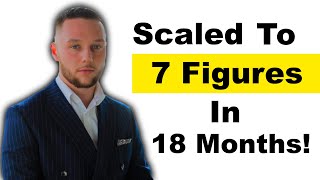
Charles Steele built Your Next Hire to seven figures in 18 months by obsessing over client experience and relationship-building. He uses impact assessments to tie candidate value to salary, maintains a 3 CVs to 3 interviews placement rate, and relies on systematic BD scripts and storytelling to land high-value accounts.
Chapters
Hey guys, welcome back to yet another episode of Top Billers Toolkit, where me and my twin brother interview top billers from all around the globe to unlock the secrets to their success. Today's guest is Charles Steele. From working as a waiter in his teens to being handed a business card by one of his customers, Charles began his career in recruitment at just 18 years old. He's now gone on to building a 7-figure recruitment business, and he's mastered the art of landing high-value accounts and nurturing relationships. In today's episode, we're going to be talking about Charles's journey in recruitment and how he maximized every opportunity to perform to a high level. We're going to be talking about why Charles is so bloody good at nurturing his relationships and maintaining high-value accounts for long periods of time. And we'll be talking about some of the most successful BD tactics that Charles uses to start more conversations with decision makers. As usual, grab a cuppa or a glass of wine depending on when you're listening to this, and let's get into it, shall we? Hey Charles, how are you, my friend?
I'm very good, thank you, mate. No, uh, no complaints on a Friday. Awesome.
Thank you so much for joining us, mate. I think, um, if I'm not mistaken, you, you were watching our podcast or a few of them from the background. You reached out to me, you told me your story. I found it absolutely fascinating, and I was like, Charles, we've got to get you on. Um, and which is also really cool, this is your first podcast, so you haven't been anywhere around the internet. This is your first one, and we have the pleasure of hosting it. So, uh, really appreciate it. You being here, mate.
Thank you.
Thank you very much, mate. It's a pleasure.
Wicked. And so, um, a tradition is we always start the podcast with this same question, which is: what's the number one tool in your toolkit, whether it be a mindset, strategy, or software? What would you say, Charles?
I don't know if it would be a mindset. No, strategy. I think it would be a strategy. It'd be the ability to create memorable experiences. In all avenues of my life, in personal life and work life as well. A good book for that is How to Win Friends and Influence People, and I'd only been recommended and read the book more recently, but when I was reading it, a lot of stuff was clicking. But if anyone wants to look at that a little bit more, yeah, that's a solid book for it.
It's a great book. It sounds like you had that ethos before you read the book though, right, Charles?
In some sense, yeah. I think I get it from my mum. She does, she She does a lot for other people. She always cares about everyone else and stuff that's going on in their lives. So I just started taking interest in other people because I wanted to be liked by them as well, especially like clients, like friends. Like, why don't you want to be liked? Why don't you stand out a little bit and go the extra mile? So yeah, it's been a good ethos that served me well.
Love that, man. Really love that. I would love to now get into a bit of your journey, Charles, and kind of take people along your journey of recruitment. I know you started in recruitment quite young, at 18 years old. You went into healthcare. I won't, I won't say any more, but can you just tell us about your journey getting into recruitment at that age and maybe some of the key lessons you learned?
Yeah, to be fair, again, I think showing an interest in people is what got me the job in healthcare recruitment because I worked in a restaurant. I started one of the first Copper Cups, if anyone knows the Copper Cup brand, as a young waiter.
And what is the Copper Club, bro?
I was about to ask. Heard of it?
Oh, you haven't been? Yeah, there's a couple around London and stuff. It's like English-Italian food. It's nothing too fancy, but it's nice. Nice interior decor and stuff. It's a good vibe inside if you ever pass through. But they trialled the first one in Sonnen. So, yeah, I opened that. I was part of the whole, like, founding of the restaurant and the menus and stuff. And I started to get to know the locals. Really well. And a lot of them were quite wealthy because it's in the Soling area. So I was starting to take an interest to like, what do these people do? I mean, like, some of them drive really nice cars, had great, like, like, some people have been like yacht brokers, someone was an art dealer. And everyone kept saying to me like, you should, you should get into sales. Like, you got the gift of the gab, you're good at entertaining people. I love being like the host as well. I love sitting people down and saying like, sir, madam, and like being a bit different. I did really well for tips as well. I was great at getting tips. Um, and then yeah, one night someone passed me a, uh, a business card and said, um, I worked in this guy's house more recently, he's got a recruitment company, I think you'd be good, hit him up. So yeah, I did that, and then that's, uh, that's how I got into recruitment.
So that's so funny. So that's how you, you got your first job, where someone just gave you their card and said, hey, I know this person in recruitment, and then you got hired by that person?
But the hint that— yeah, and I did, I did. But the hint was I did public services at college I was a bit of a naughty kid in school, so my mum was like, you got, you got to do something like this in college to ground you. I had good role models as well, like ex-Army and stuff like that, so it helped me get a bit more like regimented in life. But one of my tutors was like, he was like, yeah, you know, I got a job as a recruitment consultant, salary was like £60,000. And I had literally had this, this careers page in front of me, and some of the jobs are like £17 grand, £23 grand starting salary. And I was like '60 looks good.' Like, I'm money motivated at the time. I've been working my ass off in the restaurant as well as going college, and I was like, 'Is the writing on the wall for like recruitment? That sounds like— it sounds interesting.' And then literally a couple of months later, I get given a business card who's a founder of a recruitment company. So I was like, 'Sod it.' So interesting, the stars were aligning.
The universe was like, 'Hey, Charles, this is your opportunity.' In some sense, yeah.
It's, uh, I guess what I get from that as well is like you know, doing like kind of shining wherever you are. Even like, you know, you were working in a restaurant but you were doing your best and like trying to do things different. And, and if you didn't, that opportunity might not have arisen, do you know what I mean? I just find that interesting how you made the most out of that situation and it led to something else. But not everyone would do that. They would be like proper miserable and like, oh, what the fuck am I doing here? And you know, this is bullshit. Or do you know what I mean?
100%. It's, it's— I say it's a lot of the, the younger consultants that I mentor, but, um, even on like a paper round, my paper round, I'd give everyone like Christmas cards. I'd write everyone. There was like an old lady who couldn't— if I posted it through the door, she wouldn't be able to get to it. So they'd leave the door, they'd leave a key under the mat for me. So I'd, I'd go in, I'd leave it on the side for her. And then my mum found out about that, so she was like, we need to go around with flowers one day and stuff like that. So From, from like, I don't know, from a young age I was doing wholesome stuff, backed by my mum. I'll throw my hands up. She definitely, definitely pushed me in that direction. Um, but then come around to then, like, Christmas time, I'd have tips from everyone. Everyone would know my name. So I think it's important to do that. It doesn't matter if you're a waiter, if, if you're on a paper round, you should always go the extra mile. I think there's a lot to gain from it.
I love that, man. That's so cool. I really, really love that. It's such a simple thing, but And it's obviously something that was installed in your brain from a very young age, like, how do I care about people? How do I stand out? How do I go the extra mile? And then your awards will come as a result. I love that, man. Um, so I think we got— can we go, um, into your first— so you just, you got the card, you started recruitment. Um, can you tell us a bit about the company? I know it was quite different to how you do recruitment now. Can you just give us an insight into the market you were working and how you went about doing things?
Yeah, so, um, first job was healthcare recruitment. So if anyone has worked in it, they would know, like, very fast-paced recruitment. Um, the company I joined was quite well established. They had like 30 consultants, been around for 6, 7 years. It had healthcare recruitment. If the database is built, you've got terms agreed with, uh, all of the nursing homes and the private hospitals. So it's literally just a job. You find a candidate and then you sell them in to those clients. It's very much candidate-led. It's very easy, like BD is non-existent. You call a nurse and own them up. If you don't have terms, they'll agree terms because they need to get a nurse. So, um, yeah, very much candidate-led. Um, but what you're doing is, is I'm up against 30 other consultants that are similar ages to me in an office. We've got 3 job boards and you were literally just sat there all together just refreshing the job boards. And as soon as a nurse comes up, you're literally up against 30 other consultants to get hold of that candidate. And then when you get the candidate, you find out hourly rate, you found that, you find out the specialisms, so what types of nursing homes they want to go to. You literally print out a CQC. It's like, even though I'm like modern day, this is old school type recruitment. I'm printing out a CQC with all of the homes at distance order, and then you have to call through those homes and sell them in. And the idea is to book them for an interview on the day, and if things go well, obviously deal on the day as well. So like Fast-paced, you get like that instant gratification, which I absolutely loved. That might be very—
sorry, man. Sorry, go ahead, Charles.
Good. No, I was gonna say, but it's very dog eat dog. I'll explain why in a minute.
But I just had this image of like 30 consultants all refreshing a page trying to get the same guitar.
It's like, no, it's mine. It's political. It is so political. And people, people like would be a bit snidey and send around a nurse that they haven't spoken to but to protect them, they'd put qualified. So then you'd have to work out, have they really qualified them? Should I call their bluff? Yeah, it was a boiler room setting. That's where I come up in for sure. It was a, it was good.
Am I right in saying, because it sounds like you said that was BD was virtually non-existent, so did you learn any BD skills from that, or was it more when you kind of set up your own business you learned from scratch from there?
I think because BD was non-existent, people would be very blasé with creating relationships with those nursing home managers. Um, I do the complete opposite and I create solid relationships. I take advantage of the fact that I could get to know them like easily, they're up for a chat. Um, and that definitely, like, from my billings compared to other consultants over time, definitely paid off. So interesting. So you're finding— Go on, sorry.
No, you go ahead, mate.
No, I was gonna say, if you compare that to technology, um, recruitment in terms of business development, you, you could say it's non-existent. So yeah, it wasn't really there.
Yeah, but that's interesting because your, your skill set of nurturing and landing and expanding kind of was showing itself in the early days there, even when I guess you didn't need to, which was interesting. So yeah, that's cool. That's really interesting.
I think for me the job would have been like, even when speaking to nurses, I realized after a week I was like, I could probably do something a little bit more stimulating than this. Um, so for me to spice it up I'd just have funny conversations. I'd have balls of energy on the phone. And I think by doing that, I started to like the job more. I can have a laugh with people. People would listen, they'd be like, this guy's a bit nuts. But I just, I wanted to stand out. And I think by doing that, I could actually have a laugh. I could have fun. I could create better relationships. So I think I only did it out of boredom, to be completely honest. It worked. It worked.
But a theme I'm starting to spot as well, Charles, is that again, you're like, wherever you are, you're trying to make the best of a situation. The restaurant the next job, which sounded pretty tough, you were trying to not only stand out but have fun and make the best of a situation. Again, it's a very powerful mindset thing that I think a lot of people don't have that probably helped you throughout your career and just life. But it's just a theme that I'm spotting, like making the best out of everything.
Yeah, I don't know. Yeah, nothing to add to that. I think, I think definitely so.
Yeah. Yeah.
And that's what I've spotted. Cool. So that's really interesting. You started then. Let's jump forward to the next company. Now, you said you were 19, 20 years old. You moved to a company and built out their perm software engineering and tech division. So complete shift in market. And if I'm not mistaken, you told me that they sat you down, gave you a piece of paper with like 6 client names and said, this is a hot desk, go and build it.
Oh yeah, I had the, I had the luxury of a hot desk.
I did.
So that was, um, yeah, that was a surprise. But no, coming from healthcare. We were on the outside of the town centre, but inside the town centre was all the big like tech recruitment companies. And that's where all the more mature builders were, the people that kind of like built a brand and name for themselves in recruitment. And I was like, I want a piece of that. Do you know what I mean? Even I was thinking, I was thinking of it, the big city, it was about 200 metres from our office. But I was like, I want to be in Reading central. I want to work for those larger companies. I want to do tech recruitment. I want to go work for companies like Virgin, Zoopla, like companies like that, which was to me super interesting. So yeah, joined a really well-renowned, yeah, really well-renowned brand in Reading. Sat down, given a piece of paper with, I think it's about 10, 12 names on. I looked on the CRM and it turned out we'd worked with them 3, 4 years ago. Hadn't placed with them, but someone had sent a CV and an interview request, so that was considered hot. But I tackled it with enthusiasm and How did you—
because you, you literally, you went into a completely new industry, Charles, and you had to build a desk from scratch. And, you know, you're making it sound quite blasé, but that sounds freaking difficult. How did you—
yeah, do you know what, your brain even start with that?
Like, what did you do?
You know, my brain started with putting my ego aside. And now looking back at it, I was like super proud of what I did. But I, at the time, was a principal lead consultant, um, and I'd been— I hadn't been top biller at the previous company, but I got second, you know, I built near 200. I built up about 175, 180, um, and I took a step back when joining that company. So I said to them, I'm a principal lead at the moment, but in your business being 360, I'd probably only be a senior. So take me as a senior consultant, skill me up, and then I'll look to try and progress back to principal and head of, rather than doing what a lot of consultants do now and try and jump 2, 3 steps ahead, have loads of pressure on them. I kind of alleviated that pressure, took a step back, and then became the underdog, which I think served me really well. So that was actually before even starting, that was a good move. I love that. Just looking back on it, I'm actually quite proud of saying that was a good move.
And what did that, you know, stepping back and being the underdog, what did that allow you to do on a day-to-day basis? Like, how did that change the day-to-day?
Well, I think it's frustration that drove me because I think in recruitment, you kind of, especially now, I've gone into from an office of like 30, 40 of my mates because everyone was my age and in that previous office. I've then stepped into an office of, you know, 200-300 people at this very different environment. It's a lot more corporate now. It's not very much boiler room. It's a beautiful office here. They've got actual HR teams, finance teams. I'm like, okay, this is like, this is the big leagues now. And now being around principal consultants that had joined from other companies that I just knew didn't have my work rate, or like, there's that competitiveness in me. I want them to win, but I'm like, I'm now being degraded by my name. I'm not a principal anymore. I always had that title and always loved the title. And I was like, now I'm a senior, I've got to prove my worth. So I just went militant in terms of hours and stuff, I'll be honest. Yeah, I did 7 days a week. I did everything I could to, to try and like feed off of other people, see how they're working. I was going into CRM to look at the top billers and how they were sending emails to clients and candidates, just doing all the stuff that— because these people wouldn't knowledge share. So I'd have to do all the little bits where I piece it together as an outsider, um, and be a bit cheeky with trying to see, like, you know, is there recorded calls and stuff? Like, can I have a look at stuff? So yeah, did that for a bit. Um, but yeah, that's what I love about—
I mean, that's the power of drive and motivation. It's like you find ways to make it work, which is what I'm getting from that. It's like other consultants who didn't have the drive, they wouldn't have gone into that detail and the nuances and you know, the back street doors and the alleyways to find the answers, which you did, which is fascinating. Again, that for me comes back to what a lot of the top billers talk about on our podcast, which is drive, motivation, and mindset, which is really interesting.
And I think the most— the another interesting point is every recruitment company that I've worked at, majority of like directors, managers, and, you know, some really strong consultants, they don't really know their market. At all. Like, as a rookie, when I was asking questions to, you know, some of the top billers in like tech and stuff like that who'd done really well for the business, they didn't understand the technologies, they didn't understand stuff when I asked them about like architecture design because I was trying to get my head around the role. So then I was sort of forced to be like, okay, well, if these can't help me, like, if these— if my consultants can't help me, who can? And like, naturally, I can't get on the phone to a client and start asking them questions. So naturally, it's candidates. So it was candidates, Google, and YouTube. And all candidates would say the same thing to me. They were like, go look at Programming for Dummies. Go and do— go get an app and go look at var and var, which is like the basics in programming. Just like, just do it. Like, you don't have to be proficient in it, but just throw yourself into it for a couple of hours. And I guarantee you'll start to understand a little bit more about what you're speaking about. And I did that. And I didn't build for the first like month or two. I was still like really struggling to get my head around the tech, the terminologies. But once I'd done that, I was then asking candidates, and I was asking them to explain their experience, explain their skills, how they applied those skills, and just not stop asking questions. Just like you guys really do on a podcast, I was doing that. I'd ask a question, get an answer, and I'd question the answer again and again and again and again until I was finished and I had all the information that I needed. And I come away from the call, and then I think, right, and I just got stronger and stronger each call. Yeah, I learned the market quickly.
So that's sick, man. I absolutely love that. I, I'm— I love your obsessive mindset, um, Charles. That's the kind of mindset I kind of get speaking to you off the call and on. It's like this obsession and drive to do whatever it takes to just get the job done, you know what I mean? And I love it.
And that's good, and it's good because there's speed and there's lots of information going on, but I'm also a little bit disorganized.
So all of that is always a double-edged sword, right?
Yeah. But my memory is amazing, so I'm just like, I'm super stressed because I'm like, it's cluttered but it's accessible, so I can always get there when I need the information, which is good.
I get you.
That's cool. I feel like we should talk about the next thing, which is you sound like you're a bit of a master at landing and expanding with accounts, high-growth accounts, so startups moving up to scale-ups.
Yeah.
How do you, one, get in with those types of companies, and then two, nurture those relations to the point where they trust you as their go-to recruiter?
Yeah, well, I think at, um, that the last company that I'd worked at before I founded Your Next Hire, um, I think the— there was one really important client relationship for me, or like an account that I landed, um, which took me from 100th in the business to, to the top biller. And wow, I'd say 80% of my billings was due to that account. I'm not happy, you know, I'm happy to throw my hands up and say that. And I've replicated with similar-sized clients, but that was a great life lesson for me. And to be completely honest, I landed that from classic recruitment. So at that business, they drove the classic ways of stripping interview leads, speccing into those clients, and then calling those leads 3 times a day. We know that doesn't work in today's market, so naturally I've had to adapt as I founded a company. But at the time, to be completely honest, that was, that was my only BD process. And the one thing that led me to landing that client, and at the time I met with the founder in person and props to my last company, but they would drive every Thursday, get out, get on the road, go and meet your clients. And I did. I went and met this client in person, a little fresh-faced 19-year-old. He drew on a napkin what a REST API was to start to explain to me what these systems where I didn't have a clue what he was talking about. I was trying to process it and I was trying to be like, oh my God, I've come away from the meeting, I was like, I've hit gold. And like, I know some of the lead and principal consultants around Reading, they're good friends of mine now, but I was actually up against them. So some of those consultants had put that on their, uh, their BD walls to be like, this is going to be a gold, uh, account for our company. I've met the founder, I've specced them, I went up against them. And I asked him, because I've worked with this CTO and founder for the last 5, 6 years now. I said, what was the one reason that you partnered with me over those companies? Because at the time I definitely didn't have more experience than them. I didn't know anything about tech. It's because I went down, I saw him in person, and he could see that there was going to be a hunger and want to service his roles.
I love that. That's brilliant.
What a fantastic lesson. What a great story as well.
It is amazing. It kind of contradicts some of the stuff I say because more recently I hadn't really thought— I think everything's transitioned to like video calls and I've been able to develop some good relationships on just video and stuff like that. But I do think we should be reminded of the importance of face-to-face. Is it— is— yeah, it's powerful.
100%, man. And just so people know, these, um, those types of clients in terms of the, um, the high-growth partnerships for, for startups, you haven't just done this once, you've done this like 12 times. Maybe not placing 80 people, but you know, you've still landed quite key accounts quite consistently within that. Space. How do you go about landing those accounts? Can you— can we start with that, um, Charles? Like, how did you actually start the conversations with these people and then persuade them to do business with you?
Yeah, so because I was doing, um, classic recruitment in the sense that I've got interview leads, I know these companies are hiring for, you know, X developer in X skill set, um, instead of just calling them 3 times a day and then when I get through to them, you know, for most people is you know, can you work with the business? Can you not? If they're like no, it's like, right, next business. It's just like a burnt relationship. I was, I was doing that for months and I was like, I'm not really winning here. So I then transitioned to be like, even if they said no, I'll still call them, you know, once a week, once every other week. And I'll go back to what I used to do with the nursing home managers. If they didn't have vacancies, I'll find out something personal about them. So I'd have a call and literally for the first couple of months, how I was taught in this tech company was you know, speaking to HR managers, have you got roles at the moment? I'm just checking in, just all the crap that you wouldn't want to do nowadays. And these people, these ladies, for some reason took my call and I was just like, I'm having the same chat and I was getting really cringed out by it because it's just not nice having those discussions, asking the same questions. So then what I started to do was transition that and say, oh, what are you doing today? I mean, it's like, it's Friday, what are we doing? And then over, over time, in the next couple of weeks, I really start to like break into them in terms of like 'Oh, it's my daughter's birthday,' or 'I'm going to the O2 with my son to go watch this.' And then I check back in with them, 'Oh, how was this? How was this?' And I start finding that common ground whilst they're not hiring. So I transitioned that kind of energy into my BD, and I started speaking to these HR managers and directors and saying, 'Do you need any kind of insights? Do you want any help with the market? Would you like to speak about hiring process at the moment? I've just helped design one for this company.' I just started stepping out a little bit into I think what everyone starts to say now, to like solution selling. And that landed really, really well with a lot of those like HR managers. And to be honest, I think the only reason why they came to me to then say, yeah, we do want some, you know, can I get some salary insights of XYZ, is because I had a good relationship with them. You know, they started to understand a bit about me. And I think the tip and the key was I wasn't just asking them loads of questions. I was actually taking an interest, but I was also sharing with them. I was being authentic. And like, I would say if I had a date on the weekend, I would generally be like, oh, Helen, like, oh, I've got a date. Like, this is the third date. Like, I've got all in. I'm like, and then they'll ask questions, and the relationship you build with that— I think these people are like, this is refreshing. Like, you don't get to have normal chats with people.
I absolutely love that. And I really want people to take note of this because this is almost identical to what— not— I don't want to shift the conversation, but I want people to understand that we interviewed a top biller who's doing $2 million, like ridiculous, one of the biggest billers we ever had, like on the— at the top of his game. And he, you know, in terms of his approach, it was almost identical to what you were talking about there, uh, Charles, which is, you know, not asking for a job straight away but building a relationship, getting little pieces of information first and gaining their trust and then becoming a consultant and, and helping them past that point. So If more recruiters can start doing what you just said there, Charles, I think they will be a lot more successful and make a lot more money. Brilliant, brilliant tip.
And a side note to help people on that, I've mentored some principals and leads, um, that have joined my business. Some people really struggle, um, with forming those relationships because they don't have enough things to talk about. They don't have common ground. And the reason why I say this, when I first started that tech company, I'll be honest, every weekend I was just going out with my mates. I was drinking, I was going to the club. I wasn't doing anything that I would speak to a HR manager, a CTO, of an established business, who's well-educated, who likes wholesome activities. So I had no common ground. I don't really like sports and stuff. I throw my hands up. I don't watch football. So I had nothing to speak to these people about. And it forced me to like look internally and be like, okay, well, what do they do? So I'd ask questions and people are, oh, we're going on a hike. I'm running a marathon this year. So then I was like, right, I'm going to start doing more wholesome activity. I'm going to go on a hike. I'm going to go to a restaurant that I've never tried before so I can then recommend it to them. And just by doing those little things, you can then have those more interesting conversations. So if you feel like you're struggling to have those conversations and develop those relationships, think, what can I do outside of work on the weekend to then have an interesting conversation with someone?
Shows you the dedication you have to connecting with your clients. Like, you will go out of your way to do stuff you haven't done before just to connect with them. And that's, you know, what— how many people do that? Like, it's so— I've is that I find that is so telling about your personality and how much you care about the people that you work with. So that's wicked. We, we kind of understood how you got through the door, which was using a mixture of being personable, relating to them, and then being a problem solver or offering them solutions that they actually cared about. Now I would love to understand, because you're— you've retained a lot of your clients over many, many years and had many roles from them, which I think a lot of Some recruiters know how to do well. I think it's actually harder than it looks from the outside. What— I'm guessing from what you've said, Charles, that a lot of the retention comes from, again, that personable thing, knowing what they like and kind of showing them that you care. Can you give us some other examples of how you've done that to clients over the years to kind of connect with them and keep them? Um, yeah, that's okay.
I don't know if I'm right in saying this, and the only reason why I'm saying that is because I think a lot of people try and say the opposite, but I have a different view on it. But I think that, um, by me working like 7 days a week, and like now getting older, I realize I burn out when I work 7 days a week. So I'm not saying do that if you can't, but if you show a client that you are willing to go above and beyond to prioritize their workload, to work your ass off majority of these companies that I'm working with, their founders are in the trenches. When people talk to me about work-life balance and stuff like that, I was saying that to my consultants, like, you know, all for that. But my clients are messaging me at like 3 in the morning or like 11 in the morning, 11 in the evening. If you're a founder of like a high-growth tech company, like, those CTOs are working hard. And I think if someone can see that, and, you know, I'm pitching to win their business, for them to invest all their time and energy into me. If I could be a nice person, work my ass off, and show them that I would do what you do for your clients, for you, in terms of recruitment and like talent solutions, why wouldn't you want to keep that relationship on? And I think when I'm emailing them, like, if I get a job on Friday and I'm happy to go drop everything, I'll make a joke of it. I always say to me, like, the sleeping bag on my desk is eyeing me up. So guys, I'm going to get on this this weekend. I'll work the night tonight and I'll get you candidates by Monday. I think when they do then get candidates by Monday, it's kind of like, no, I'm cementing to you guys I'm working my ass off because I want to work with these clients. I need to work with these clients. I love the job when it's busy. When recruitment's not busy, get me out of recruitment. I don't want to work in recruitment. It's terrible. Do you know what I mean? So I'm saying, give me like a sexy job, a cool business where they'll invest time in me. I'll work the weekend. I'll work some evenings. And I show them that, you know, give that dedication, that work rate, that commitment. I think when they then look at, great, he can deliver, 'This guy works his ass off and, you know, we like him. There's a great relationship here. We want him to win.' Because they know a little bit about me, then that's a solid partnership. I don't need to wrap them up with exclusivity and stuff. Like, I'd hope that they'd be singing my praises to our agencies and say, 'No, we've got someone that takes care of us.' Yeah. That's my formula. That's my formula. Yeah, yeah.
It's obviously working.
And it's like, yeah, 100%.
I love that.
Again, it's simple. And something that a lot of people aren't prepared to do, I think, this kind of go above and beyond, work extra hours, work until 11, 12. Like, a lot of people don't have that mentality. And so that's a superpower you have, Charles, that you, you're willing to do that and able to do that.
But, and I think I got anxious with it. I still get anxious because I need to know, like, where not to, to overstep. But yeah, I think you should do that, but you should also get the recognition from doing it as well. So like I will say like tongue-in-cheek stuff like, get your oven gloves on, I've been working all night, I've got some hot candidates coming your way. And like by saying that, it's memorable. Like what I've just said to them is, oh, he has, he's just worked the whole night and then these amazing candidates come through. That's part of the service. If I just did this, I didn't tell them I was working until 11, 12 at night, I don't think I'd have those types of partners. It's a perception, do you know what I mean?
Interesting.
I think it's important. I think work your ass off if you're going to, And if you do go above and beyond in some way, subtly show that client like you are putting in that time. Yeah, I mean, that's another level. I love that. On another note, because I don't want to waffle too much on like that, you're not waffling at all, mate, because you know what, someone could probably do my job within, you know, within the 9 to 5, and, and some billers can. And if you can do that, your life's good. Um, for me, I just needed to work the extra hours sometimes.
I think it's rare though, right? Like, I mean, I think you can only get to that point probably if you've worked for many, many years and your skill set I mean, you're probably at the top of your game as well, Charles. I mean, I just never heard of a top biller.
No, I'm not. I think I am years off the top of my game. I am still learning.
Oh cool, well, you're, you're probably still very— I just, I've never heard of a top biller that, that— well, I say it's rare for a top biller to be still working 9 to 5. I don't know, I don't know what you guys think, but it's—
no, no, I agree, I agree. Um, I think being prepared to, to work your ass off if you have to, like then you're cool. If you don't have to, then it's a win-win. But I think on the flip side, um, what I was trying to get at but probably not saying enough of is going above and beyond. Yeah. And there's some— I'll probably include this in some tips and tricks, um, a little bit later. But what were we— what, what question was I answering, Sam? Just—
it was— I actually can't remember what question you answered, but maybe let's transition to the next one, Charles, which is— yeah, I think you were about to answer it anyway, which was the Um, you've developed a BD playbook. Um, can you talk us through your current approach? And you might have already mentioned a few of the tactics, uh, Charles, but could you talk us through your, your current approach to BD? Like, what if you were to sit down right now and land another high-value client? How would you go about doing it? And how do you teach your consultants how to do it as well?
Let's say, for example, I want to go after SaaS companies that are going to go from startup to scale up. So like the average ICP for our client is, um, they are probably Series A and they're about to go. And I've got skeletons. If you look at online, like what a Series A company looks like, um, and then where they would need to be when scaling up, you can actually see the, like, the tactical hires they would make at leadership level, the amounts of engineers that they would scale by. So I could maybe have a conversation with the CTO and say, well, if you're gonna go through Series A, this is what your average Series A looks like in your market. So you're probably gonna need to scale up by 15 engineers in the dev team, 3 in data. You're gonna need to build out with a head of product. So I'm already starting to solution sell just by understanding where that resource, where the resource planning may be. So let's say I wanted to go after companies that have just landed Series A in the fintech markets. Any tech stack. I would put together a list of obviously everyone's numbers, and what I would do is go at that list with a really open approach. And what we do is we would understand the business's challenges, the impact of those challenges, and whether they're worth solving. And every consultant in here, so everyone on the sales floor now, has a sticky note that says challenges, impact, worth solving. And love that, the really open approach which just takes all of the, the weight out of BD with like trying to think about a hyper-specific pitch. And I used to do it and I used to prep 5 minutes before every call. I finished the day, I've made 20 BD calls, when nowadays maybe one person picks up, it's not enough to start converting clients. So it needs to be a more open or like systematic approach to be able to call anyone, and that is essentially solution selling. So it's understanding the gap, which is the challenge. Um, go on, sorry.
No, I'm just going to say, um, I think that's brilliant, Charles. Would you mind just for listeners to give us a very simple example of that? Like maybe an example of that? Awesome. Maybe you could just— yeah, that would be great. Thank you.
So I'd hit you up and I'd be like, Ben, it's, um, it's Charles from Your Next Hire. Some people could do permission-based openers, you know, if you want to. I think for HR directors, CTOs, I like it. I think it's respectful of time. So I might say 'Can I grab 30 seconds of your time?' Or, 'If you're busy, feel free to hang up.' 9 times out of 10, people give you 30 seconds. And then the pitch would be, 'I'm working with CTOs that have just landed Series A in the fintech space at the moment. They are currently running into challenges when it comes to the quality of hire and the time it's taking them to hire those engineers due to them not being able to hit the mark.' The impact that that challenge is having on the business means that the team's under-resourced, there's burnout culture which is becoming real within the engineering function, and because morale is low, they're not hitting deadlines, which is of course creating a bad perception for them with their clients. I just wondered, by any chance, are they some challenges you're struggling at the moment, or is the grass greener on, uh, whatever the company's name is? I love that.
Masterclass.
Yeah, there's another one I have, but I'm not going to give you the—
Don't worry, that was enough.
That was enough.
That's really— I love that.
And what's the— so that is brilliant. What's the response you usually get? If you get— like, I'm sure it's varied, but typically how do people respond when you, when you present that solution?
This is it. This is it. So the playbook has then spins. So a spin for us is when someone gives you I see, I've now called it SPIN so much, I don't know what it's called. So when someone gives you a— what's it like, a reservation?
Objection.
Objection handling. Yeah, there's— if someone says, for example, um, no, no, we don't suffer with those challenges, but cool. Normally when CTOs say no because they don't have the budget or, uh, they just haven't found the, the right recruiter for them yet, is that the case yourself? And it's just, it's not assuming anything because I think before when I used to do BD, I used to assume stuff. It'd be like No. I'd be like, okay, no worries, take care. Or I'd be like, have you considered this? It's just keep questioning and questioning and questioning. And then what you do is you keep coming back to that problem menu. And it might not be that challenge. So it's like, okay, what are the other challenges? And there's lots of PSL, like we've got a PSL. That's obviously a common objection. A good spin for the PSL is normally a lot of the CTOs that we work with, have tried PSLs, and it's the tried element. It's like you're saying that they have tried PSLs, but since working with us on XYZ, it didn't solve those challenges. Just because someone has a PSL doesn't mean the challenge doesn't exist. And if it does exist, how is that PSL encountering that challenge or remedying it? Absolutely love that.
One thing I have to say, because me and Ben preach about this till the cows come home, and it's all fundamental to marketing, and getting inbound leads and connecting with the audiences. In order for that approach to be successful, you've had to understand the exact pains, problems, and desires that your— those, those CTOs are going through, or those clients are going through. Um, Charles, well, I just want to say that out loud because that's the foundation of that, isn't it? If you didn't have that information, if you didn't understand their pains, their problems, you wouldn't have all this data to then play off and start conversations.
The most, the most, for me, it's the most fun thing I've ever done is in every interview I have with seniors and principals, I say put down 3 challenges that CTOs have, HR managers like potentially have when it comes to recruitment. And then I say write down top 5 objections. And then people are pretty good at answering that. Like they're normally, like normally in the right place. And then to the objections, which is always the best one to to focus on. I say, now what is your response to those objections? So how do you spin them? Every single consultant that's doing business development is— we're all having the same objections. Peer sales, XYZ. I guarantee you 95% of consultants have never written down those objections and then come together with their managers and written down specific answers to how they could then spin those objections. Yeah, no one thinks about it from the companies I've worked in. Yeah, you would think that these managers sit down and say, listen here, boy, these are going to be said to you day in, day out on these BD calls, and we are going to teach you how to, how to respond to these objections. Yeah. Instead, no, I, I just get told to— I'm not even going to mention the frameworks I've been taught previously, feel, felt, found, or some stuff like that. Other CTOs have felt, this is it, and they felt, and it's just like, come on. Yeah, that's a big focus is to, again, it's that prep work. Before I started in that tech company, I did the prep. I looked at what are these technologies, how are they applied, how are they used, who are my personas, who are— and it's easy, man. It takes a couple of days, like, and writing down these objections like we just said there takes 15 minutes. If you're serious about BD, you want to get better responses, start noting them down. Start seeing which spins work, which don't. Yeah, I won't get too passionate about it.
That's great. That's really good.
Throw the screen on the floor.
Give me a pen and a whiteboard and we're off.
I just want to clarify as well, um, Charles, I'm right in saying that the best trigger point to actually start that conversation— because that's often— I feel like there's two phases to beat. It's like the actual trigger point, getting them to see your message or hear your message.
I'm guessing that first thing is a call, a cold call or a warm call.
Am I right in saying that that's the first point of contact?
Yeah, I am still on my journey with, um, emails and LinkedIn as to to really what works, because I feel like it's just so bloody, so bloody varied. But I think that telephone call, yeah, it works a treat. And these businesses are normally passive. You want these businesses to be passive. You don't want them to be hiring right now. You want them to hear you out. You want them to be projected to be hiring people. That is every single time I've won a successful partnership. I've been, I've had the relationships months before they've hired. So that's really around the hiring. The client is ring-fenced. They're not already in bed with lots of different agencies. They don't have messy relationships going on.
This is key. This is really key. I feel like I'm so glad you said that, Charles. And so how many months in advance typically would your best clients be out of hiring, do you think? Like, how many months in advance would you be approaching them?
Well, I mean, it's a different ball game if you, if you have a client that's a couple of months out, because then maintaining that relationship is then a completely another skill set in itself. So if you land someone that's like, oh, we're about to sign off on X role next week, it's normally quite a fluid process to be like, all right, I'll check in with you on Friday, they've had sign-off, you can land them exclusive. So I think I've been quite lucky with timings-wise. I've normally nailed people a couple of weeks before they're about to hire. But a good thing which has worked well for our consultants is if they are active in hiring and they have interview processes, but they resonate with the challenges, it's to discuss those challenges, understand the impacts, understand if these current recruitment drives are aiding all those challenges or actually creating them, and then creating a bit of time between the next time that you speak with them. So you say, look, go through these hiring drives and then we'll do a recap together on how successful these hiring drives were. Try and get some stats together for me in terms of like delivery of CVs, how many people you interviewed, how many people you offered, and then together we'll just go through that. And you know what, if you're willing, like, cancel, cancel the meet. Like, life's good for you, that's fine. Yeah. But if you're not, let's go back to these challenges, discuss them. And then you kind of leave, and it's kind of like the girl you meet in the club, you never see her again for a couple weeks, months, you're thinking, shit, I liked her, man. Yeah, that's the vibe.
That's so funny.
One little thing I mentioned you do which I really love is you ask them for data in terms of, you know, um, time it takes to hire, the amount of CVs they're getting, maybe irrelevant CVs, That's fuel for the next conversation. And that's like written right in front of you of what is working, what's not. That's really clever. How many people have that data when you ask for it, Charles? Do a lot of them come back and they're like, oh shit, Charles, I haven't got it? Or do a lot of them come back with something that you can use? I'm just interested.
I'm doing that because all of my case studies and the part reason why a lot of those businesses have stayed exclusive for X amount of years, for X amount of hires, is our, my ability to deliver. I can work any role across product, engineering, architecture. If I send 3 CVs, I'll get a hire. And that's purely down to knowing the client and asking really thought-provoking questions, really understanding the purpose behind the hire, the skill set, and then how they're going to apply that skill set, because it's contextual to different companies and environments. But by nailing that, I then turn around, I'm like, I recap my client and say, look, I sent 3 CVs, We had 3 interviews, we've made an offer, and it's taken 14 days. And then by them seeing that, that's happened once, do that 20 times, 30 times. This is a great partnership, do you know what I mean? It's an awesome company. I love working with you guys because we're killing it. Like, we've never had someone who's not accepted. They love me because they're like, yeah, we're seeing the best candidates in the market. That's a fruitful relationship. And then going to market with that data, you can say to other businesses, look, is this what you're receiving? And if you're not, like, talk to me. And some people will turn around and be like, look, it's taken us 3 months to hire a mid-level engineer. And when my consultants now hear that, we're not straight away jumping down their throat, but we know that there's other businesses for this skill set that we could reference. You know, we've made 6, 7 placements the last 6 months, time to hire has been 12 days. You've got this challenge. If we could hire someone in 12 days, that challenge wouldn't exist. Yeah, absolutely.
Yeah, wicked. Well, coming to the end, I can't— I, again, I say this in every pod, I can't believe how quickly it's gone. Last thing I just want to touch upon, Charles, that we haven't done is that, um, I don't think we've mentioned it, but you've obviously set up your own business. Um, the first year you made $110K from a standing start, pretty good. But then the following year you hired 2 consultants, you upskilled them, and then you hit 7 figures in your second year. I think that's quite a big jump, and I think a lot of founders or recruitment companies that have a small team are wondering how the hell did Charles do that. Like, how did you go from such a big jump? Can you, can you tell us a bit about that journey, if that's okay?
Yeah, the, um, that first year I essentially had 6 months from August to December, um, to create all of my back office, like my admin start getting my, like, my database books. Technically, I wasn't really in a position to start consulting, um, so a bit of a light start. Managed to build some relationships with, uh, with some old clients, um, and then naturally went full steam ahead. Obviously, the year after, um, we tendered and won one of the biggest.NET, um, hiring drives within the SaaS space that isn't an enterprise client. So we placed just, just shy of 65 people with them in about 14 months. So that was high impact. That was like really embedded within the business. Lots of different tribes, um, squads. That's— yeah, it was awesome. Like, that was kind of like the NRG client, um, all over again. And that, that gives consultants working on that in here like a passion and fire for it because you're like, you're, you're in there, you're working with these clients, you're working with different hiring managers. And then when you hit the markets, we're doing business development, you can reference that, that project. So I think that's what helped sort of snowball effect within the business when it came to BD. Naturally, it was a great year for us all in recruitment as well, so I'm not gonna lie, that definitely propped me up. Um, but yeah, was that—
yeah, no, that's perfect, mate. Sorry, Ben, did you have a question? I was going to jump in with one more.
No, I was going to say, um, I was gonna say, so I'm guessing from that, I mean, there was probably— there's a multitude of things that you said there that probably had an impact, but I would say to me the biggest impact is you chose the right clients and embedded yourself into them to become the go-to recruiter so you could just get these huge volume of roles without having to go anywhere else. Am I right in saying that, Charles?
Yeah, I think I kept my standards incredibly high, um, on candidate delivery. So my— I would hope— I'm definitely a pleasure to work with. We are, we have, we have a great culture. We will have a laugh. But the standard I've made sure everyone prided themselves on, we need to, we need to be able to, to send them 3 CVs, you get 3 interviews. And if you get one interview and things aren't going well and people are wasting time reviewing CVs, you can't place 60 people in a business, they're not going to go exclusive with you. You need to, you really need to understand technology recruitment. I sat down with my consultants and I bred that into them from day one. And I think by doing that, every time everyone landed a partnership, they sent 3 CVs, they get 3 interviews. Like, we were known for fast delivery.
That's really interesting. I mean, what I'm learning from this just for myself is which is not surprising, but for me it's like, it's interesting. It's like, if you can hone in a service that is so good, when you do get these opportunities, you're going to monetize them and you're going to benefit from them. And I know it sounds really simple, but for me it's a bit of an epiphany. It's kind of like, if you just have an outstanding service, the opportunities— you can go with basically ammo into any business you want and have the confidence that you can deliver and make a lot of money from them, which is just, I think, a brilliant way to work and think about business.
Uh, Charles, I've held back from a lot of the stuff that we, we offer, which I think would be super insightful. But if we, we ever have a round 2, I'd love to go into it. But the real reason how we deliver in these businesses, and the reason why they, they've gone exclusive with us, is because we do 3 things. We do full market coverage of active and passive talent. Um, so that's a 3-day search going above and beyond to ensure that when I represent a shortlist of say 3 to 5 candidates, they're gonna be the best for your budget, but also the most diverse. And we really pride ourselves in that. And if you do go above and beyond, you'll win from that because people will see better diversity in them shortlists. They'll see great quality engineers and they'll be like, yeah, he has ripped apart the job boards. And if you wanna go out to another agency, do so. I am confident that these are gonna be the 3 best candidates for that skillset and that budget. That's number 1. The other 2 is value proposition. We have a Storytellers Award internally, so we push the fact that we can tell stories. I love that. I and the other consultant, I can tell a story. I've got Best Picture the last couple of businesses. I pride myself on it. I create awesome value propositions, um, for the businesses, which will be their mission, their product, be the role, the opportunities in the role, the skill set, and then the purpose behind the hires. Like I said before, how they apply that skill set. And when you do all of that, the engagement from candidates is another level. And if I can add in founding stories with the founders that I've worked with, and I can say that I've been sat across the desk from the CTO, he wrote on a napkin, I've taken him to this many people, I can give them like an understanding of the mission, the vision. It's another level, man. People don't do it. Some people do that, but not everyone does it.
I love that. You remind me of one of my mates, Charles, that can tell really good stories. I'm sure you've honed it in over many years, but there's a mate, we were speaking about it in a podcast yesterday actually, that We go to the pub and there's like 15 of us and he can just instantly encapsulate people with one simple story. And me and Ben are like, how the fuck does he do that? Like, and it's just his ability to tell engaging stories where you're like, you feel like you're in it with him.
I feel like you have that ability and you know, I've got those mates as well. I'm not that mate. That's why I'm so good at telling candidate stories because they'll bloody listen to me.
I feel like you're probably being a little bit modest there, Charles, but that's interesting. So storytelling, was that, was that the last thing on the list or was that the second thing? I can't remember, Charles. There was, there was storytelling.
I would do impact assessments and stuff like that, which sets us apart from other agencies in terms of, like I said before, you know, if anyone's technical, you can hire a C# developer. Every business is hiring a C# developer. They might have the same skill sets, but the way in which they apply that skill set is completely different. And we create an impact assessment which is completely separate to like a job description to assess key skills for them to make an impact in role. And then what we can do is if you mix that with a salary, so if I say this candidate's £40k, here's his impact assessment, so this is where he could make an impact in role, and someone's £50k, that hiring manager can look at that, understand the strengths and weaknesses, and weigh up whether they're worth the salary. So it's empowering the hiring manager at the interview process before they even go through to interview. So I'm not getting through to final stage and they're going, we'll offer him £45K instead of £50K because he doesn't have X. That's really clever.
I love that. How did you come up with that? Was that just your own process that you developed or did you get that from someone?
Because I've been a young founder, I've had to sit in front of companies like Zoopla, like Virgin, and to be taken seriously. I can't just be like, oh, I'm a kid that set up a— so I can fill roles really well, work with me. Do you know what I mean? I've had— I've then looked at other businesses which are leading in our markets with founders at 20, 30 years deep, and I started to see, okay, what services do they offer? And then I kind of span off the back of that. So love that, mate.
I love all of those things, but for me, the one that, that really got me was storytelling, I have to admit, because it's just such a powerful skill. And yeah, I feel like Probably all the best recruiters are storytellers in their own right, because they have to, right? They have to sell the role, they have to sell themselves, they have to paint a picture of this company, the culture. And it's just— I love it that you vocalized it, because storytelling is such a powerful skill and something that I think everyone should learn how to hone. Did you have— do you have any specific tips on how to tell better stories, or do you think it's just a skill you've honed over like hundreds of conversations?
Um, yeah, there's a lot of techniques of storytelling. I think another one, just to not give it to everyone on a plate, I think if you're hungry and you want to get better at storytelling, there's a hell of a lot of stuff online, like basics of storytelling and stuff like that. But I think the real, the real key to storytelling is an interest. Like, if you speak to consultants and you ask them, tell me a story about the business you're working with, if they're only interested in the salary, the skill set, the role because they're trying to find candidates, they're not going to tell you the best story. If I'm actually interested in the founder, the founder's background, I'm in awe that he's started this company, he's worked with this, and I've asked these types of questions and I've taken an interest, and I'm generally like, this is a sick company, like, these are, these are challenger brands of this business, this is how they built the foundations, that's the stuff I'm going to be asking on, on a call. And I think that's how you develop it, it's just being interested. If you're not interested, you're going to be a crap storyteller.
That's a really good tip, mate. That's probably the best tip you could have given because you're right. I think when you're naturally more passionate about something, you will tell us a better story because you're passionate about it. So that is a very quick and very good tip.
So that's—
yeah, really good, mate.
We're at the end of the pod now, lads. Charles, I feel like we could get you on for round 2 and go so much deeper, man. But can I just say, you need to be doing more pods because this was brilliant. Absolutely loved having you on and so much value today. So thank you so much for coming, mate. I really, really appreciate it.
Thank you guys. It's, uh, yeah, been a pleasure for my first. So, um, yeah, thank you very much. It's been awesome.
Hey guys, thanks for tuning in to this episode. If you enjoyed it, please don't forget to subscribe on YouTube and Spotify. Tune in for another episode next week, and we look forward to seeing you again very soon. Peace and love.
More from Sam




The difference between a $200K biller and a £1,000,000 Biller (full Breakdown video)

how to go from agency recruiter to Lone wolf (Advice from a $2.4 Million biller)



This Recruiter has billed $750K+ for 30 years straight. (Master of Consistency)

How to increase your candidate response rate by 25-30% (Whats app messaging system)


This recruiter has billed $1,000,000 for 5 years straight! (Master at Enterprise deals)