This sales guy broke the internet with his funny videos
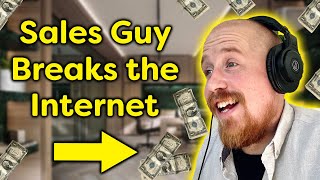
Tom Bostyn, a former SDR at Salesloft, went viral on LinkedIn with comedy sketches instead of thought-leadership posts, then built a consulting business from the inbound leads. He says it takes 6 to 18 months of consistent weekly videos to see real traction, and that humor works as a pattern-interrupt in cold calls.
Chapters
Hey guys, welcome back to yet another episode of Top Billers Toolkit, where me and my twin brother interview top billers from all around the globe to unlock the secrets to their success. Today's guest is a comedy sales legend, Tom Bostyn. Tom is renowned for his insanely hilarious videos. He racks up hundreds of thousands of views on each piece of content. He's accumulated countless hours of watch time. He's built a huge audience of salespeople that absolutely adore his content, but most importantly, he's transformed the way that he does sales. Today, Tom is going to be walking us through his journey, starting off as an SDR at Salesloft and why he decided to start making videos. He'll be delving into his love of comedy and how this has been one of his superpowers throughout his sales career. We'll also be discussing how he manages to create his ideas that go viral. So as usual, guys, grab a cuppa or a glass of wine depending on when you're listening to this, and let's get into it, shall we? Hey Tom, how are you, my friend?
I'm very well, thank you. So good to be here, and thank you so much for, for having me on. This is, uh, this is exciting. Been looking forward to this one.
Thanks, Tom. Yeah, and I was saying to you before, um, off the recording, that I've been watching your content for a while, um, and you're, you're— there's very few content creators where I will literally stop what I'm doing to watch their content because I know it's going to bring me a laugh and I know it's going to be great content. It's just entertaining, funny. I think you agree with that, Ben, don't you?
Yeah, there's only two people that make me do that. Will, uh, Will, who we interviewed previously.
Yeah, yeah.
And Tom, your content. I've literally been sitting on the toilet laughing my head off. It is honestly, it's so—
your content is brilliant, mate. Honestly, I think you're, you're a gifted content creator and a comedian.
Well, that's very, very kind, and thank you, thank you so much. I had a message from someone actually earlier this week, and he said, Tom, I I don't watch your videos in the office anymore because I'm laughing and people are looking over, you know, it looks like I'm not doing any work. So that really made me smile, this idea that you have to watch them in secret, you know, in case it makes you laugh. I got a kick out of that.
Brilliant.
I love that.
That's so good. Cool. So thanks again for joining us, mate. This is really, really cool to see you in person and to meet you. And we always start the podcast with this question, which is, What's the number one tool in your toolkit, whether it be a strategy, mindset, or piece of software? What do you think, Tom?
Well, I was joking before the recording that, you know, Salesloft would be the perfect plug here, right? And I'd be daft not to mention it as a piece of software. But I also think mindset, you know, you talk there about having mindset in your toolkit. I think genuinely positivity and an attitude that kind of reflects that, right? So that like it's not all doom and gloom. And yes, we've got targets, and yes, work is hard, and yes, life is hard. But actually having a positive mindset and trying to approach the day by going, okay, well, what's, what's the worst that can happen, right? What is the, what is the worst thing that can happen? Actually, that's helped me out massively, um, to be more optimistic and to, and to be more successful ultimately. And, uh, sounds a bit cheesy, sounds a bit simple, but I think, you know, it works for me and I'm a huge advocate of that kind of positive attitude.
Yeah, it's funny you mentioned mindset and positive attitude because I feel like the last 3-4 weeks, um, Tom, I've been on a bit of a journey with meditation and kind of visualization and starting the day with like 15 minutes meditation and visualizing what I want for the future has made such a difference to my belief system, my work ethic, like just everything. It's having a knock-on effect with everything. So, um, it's just really cool that you, you said that, because I feel like I'm, I'm going through that journey right now again. Been through it many times. Um, what I'd love to dive into is what you're famous for is your brilliant content, um, your comedy, the way you've built your brand over the years, um, I believe you started your first LinkedIn video 4 years ago. Why did you decide to start making content in the first place? What was the trigger out of interest?
Yeah, so 4 years ago is right, probably, probably nearly 4 years to the day that I did my, my first LinkedIn video. And openly and honestly, it was to make my job easier. I'd, I started a job at Salesloft. As an SDR, and previously I wasn't based in London. I was working for a company that wasn't really relevant to, to the industry, and LinkedIn was just such a huge part of my sales role. It was my first step on my cadence. It was the first time I would introduce myself to a prospect. I kind of looked at my profile and I was like, I need to get something on there. I need to get some personality on there. I need to get something about sales on there because there wasn't any of that. And my answer to that was to pick up my phone and commit to recording a video every week. And I didn't really know how that would pan out. But what I did know is that on the very least, I'd humanize my LinkedIn profile and the prospects that I was reaching out to would look at it and go, okay, yeah, this person I can see in there is in the office, kind of bringing that SDR role to life because you see sales, you see salesperson, whatever it might be, and it might be a little bit off-putting. So I was like, okay, how do I leverage video to hopefully humanize myself and be more appealing to, to people I want to book meetings with. That, that was it really.
It's really cool and makes perfect sense. Um, and what made you go into— what made you choose comedy, um, specifically, Tom? Because I think a lot of people firstly veer away from being comedy, uh, comedic because maybe they want to be more corporate and put on that persona. But also it's actually harder to do good comedy. I find it's actually really hard to do good comedy.
So what was—
why did you decide to do that specifically?
Yeah, I mean, it's an interesting one, you know, this, this kind of commitment to doing videos every week. I was just making it up as I was going along, and a lot of the early ones— are they still on there if you scroll back far enough?— it's just me in a WeWork meeting room just looking at the camera going, okay, well, um, let me tell you about sales, uh, you know, when, when you're selling this and selling that and blah blah. Because that's just kind of what everyone else was doing, right? Thought leadership video content. I was like, I'm gonna be the guy, the sales thought leader. And after about kind of 2 months of, you know, zero likes or people kind of just commenting, oh yeah, well, this is okay, you know, I was like, I think I can do something a little bit stronger than this, right? And I was sending out these prospect videos every day. I'd send video emails out to people all the time and I'd put little jokes in there, right? I'd try to make them smile. I'd try to fill them with personality and then it just made sense to me. Okay, well, why don't we try and do that on LinkedIn? Like I'm already doing it anyway. I'm already telling jokes to prospects because that's something I've used my whole life, right? Humor. To connect with people. I can't really stay away from it. It's followed me for my whole life. So I was like, right, I'll do that on LinkedIn. And I made a video which was about the excuses that salespeople give for not filling out the CRM, right? So it was all those excuses. Oh, I think it got lost in the cloud somewhere, or I've got it all on a spreadsheet. So don't worry about that. It's all, but it's a very secret spreadsheet, you know, and That video did so well.
Wow.
So many comments. It got thousands and thousands of impressions and I kind of went, okay, so the audience have decided for me really that that's what they want to see. So I'm, yeah, I kind of tried a bit of comedy. It way outperformed anything I'd ever done before. I felt more comfortable doing it and I also had years of experience in sales to go, okay, well, there's lots of material here, you know.
Mm.
That's so cool.
That, that word you just saw, that little phrase, the audience decided for me, that, that is brilliant. That's gold. And I think that is such a good example of, I think, doing content long enough, testing and evolving and looking at, you know, what do the audience want to listen to? What, what are they engaged with? I think that's just such good advice. It's like just looking at the audience and seeing how— because I found the same with my vlogs. I'm doing vlogs not to the same degree that you're doing, But every single vlog I do, it gets about 600 to 700 minutes watch time. Not that much engagement, but a lot of watch time compared to my other videos. It's unbelievable how much it performs. And not surprisingly, it's more natural, authentic, just about my life. So I'm doing more vlogs because of that. I'm listening to the audience and just doing more.
So yeah, it's really interesting.
Yeah, I mean, it's about, it's about being brave enough to try different things, I guess, right? And not being afraid to, to look stupid or sound stupid or whatever it may be. Uh, and I think that's, that's a huge part of it. Just, just try different things, and if you see a spike, then okay, well, let's lean into that. I mean, that's certainly what I did.
Yeah, you, you did it for the first couple months and you didn't get much traction. You could have given up then. Um, Tom, like, what made you like rethink it and be like, okay, I'm going to try something else, I'm going to keep going? What was going through your head during that point?
Yeah, I mean, I, I guess I, I knew it could be good. I know that sounds a bit, a bit strange because how can you, how can you know? But I was like, I, I, I knew, I certainly knew it could be better than what I was doing. I, you know, in my, in my past, past lives, I'm a a failed YouTuber, right? I did a YouTube channel years ago. It was just me in London and that was the content, right? I'd not really thought about it. I just thought this will be great. I'll film myself, you know, walking down the Thames. People will love that. And obviously they didn't, right? And I look back at that, it's because I didn't really have anything to say. And when I joined Sales Loft and I looked at LinkedIn, I thought, well, actually now I really do have something to say and I do have a purpose. I also, again, 4 years ago scrolling through on LinkedIn, just saw a lot of bad content, right? To put it nicely. And there was something inside me that thought, okay, well, then maybe I could actually offer something to this platform and be and be something that, you know, people get a kick out of and enjoy that. So, uh, yeah, I guess to answer your question, I had some kind of, some kind of inner belief that it could be a lot better. I mean, it certainly couldn't, couldn't be any worse. Some of those, some of those earlier videos, my first video, I just talk about the fleece that I'm wearing. I'm wearing a, I'm wearing a fleece. I talked about that for a lot. That was, that was 60% of the video. So like I think, yeah, knowing it can be better, that was a huge driver.
That's cool.
Awesome.
And, um, what I'd love— because I, I was— I've been following your journey, Tom. I've been looking at your content. I have the feeling that you started off at one position and staying consistent with content, building up this brand, has, has impacted your life and your business and probably your income in a lot of different ways. Can you just give us, for someone kind of looking in to see how much your life has changed, can you just give us an idea of how much impact this brand building exercise has had on your life, your personal life, your business, your belief system, your vision. Is that okay?
Yeah, I mean, it's changed it, you know, more than I ever thought that it could. It started by prospects recognizing my accent, right? Because maybe they've seen a video on LinkedIn and I was like, oh, this is a cool way to do my job, right? I'm no longer a stranger. They go, oh, it's Tom. Oh, it's Tom calling. You know, they were almost happy for me to call them. And I remember saying to my missus, okay, well, this is very different from other roles that I've had in the past where you're a stranger or you're a nuisance or whatever that might be. Then the inbound leads started coming in, right? And again, that kind of magical moment where I I'm in an outbound role and I've got inbound leads as a result of the content felt like a real game changer. And then as my journey progressed, moved into a marketing role. So kind of thought that I'd want to stick down that sales route, but the team at Salesloft understood that maybe I had some more things to offer. Joined the brand team, launched a podcast, now get to speak to industry leaders, which has been something I'd never been able to do. And I feel really honored to do that. And then also been able to train other people, right? So that's opportunities that I'd never have had if it had not been for that kind of content creation. So working with the likes of Pavilion Sales Impact Academy as their lecturers and then launching my own consultation business and working with teams to help them leverage social. Like, it sounds mad when you list it all out, but it's all come from that consistency of building a following and creating weekly content.
That's awesome, mate.
I wish I could be as funny as you, but I think comedy is this very rare thing that you, I think you either have Maybe you can get better at it, but I think your personality, your look— I think there's so many things that makes a good comedy or good comedian. And I've had to lean into kind of my strengths. I'm really curious when you're training people, and this is quite a tough question, so I don't expect a full answer, Tom. How do you get people to kind of lean into their natural strengths? How do you spot that?
What advice do you give?
Because, you know, we couldn't replicate you and I wouldn't dream of trying to because it would just fail miserably. But how do you kind of tap into that with the people that you work with?
Yeah, I mean, it's a good question and I certainly don't want to breed an army of Tom Bostons, right? I mean, that would be a nightmare.
We're quite close. He's got a bald head like you.
I feel like the kind of message that I talk to people about a lot, right? And you've already mentioned it there, is leaning into your strengths. I think one of the reasons that my content has done well is I'm very comfortable recording myself and I really enjoy making people smile. So those two things, that's kind of filtered all the way through my content and it's something I've always enjoyed doing, right? Weirdly, when I was a kid, I had a little camera, VCR camera, I'm showing my age now. And, you know, while all the kids were outside playing football, I was recording videos, right? Silly little videos and kind of presenting and all that kind of stuff. So like, I love it and it's something that I've always loved. When we use that word authentic, I think the reason that's often associated with what I do is because you can tell that I'm having a really good time. So what I always say to people I work with is like, look, How do you enjoy the content that you put out and get other people to see that? And I think it's about, like you said, leaning into your strengths. So if you hate video, don't record video, right? Unless you really want to push yourself through, you're just going to be a deer in the headlights. You're going to cringe. It's not, it's not for you, and that's okay. But start looking at, okay, what else could I do, right? Could I look at memes? Could I be the meme person, right? Do I look at writing articles? Do I launch a podcast? Can I maybe focus on audio content? There's so much you can do and there's so many avenues you can go down. It doesn't have to be comedy. And, you know, the thought leadership on LinkedIn is huge, and those people are not making weekly skits and telling jokes, right? They're just adding value. But that value, the V word I always talk about, The value can come in many, many ways. You just have to think, how can I add value and how can I do it in a way that's authentic to myself? And that's different for every single person who'll be listening to this. So a lot of things I do with the people I train is I'll actually get them to, before we do anything, talk about their strengths and what they like. And they'll be like, well, I just want to, you know, I want to get more followers and get more leads. I want to be this and that. Well, actually, we need to start right at the beginning. What you're passionate about, what content do you engage with, what do you like, what would your friends say is your biggest strength? Because it's these kind of things that you want to bring into your personal brand, to use that buzzword, to, you know, to your, to your content. It's all about self-reflection before you even start to put anything out there, you know.
Really good advice.
Yeah, really great advice, Tom. I'm curious, back to the moment when you were in an outbound role, Tom, and you started releasing these comedy videos and you started seeing results, were there other people around you being like, oh shit, Tom's starting to get some great results now, I gotta jump on that bandwagon? Or is it quite a— were people still quite, you know, shut off to it and maybe not ready for it? What was going on then?
Yeah, I mean, there were certainly conversations at Sales Loft, and I can think of a couple with my teammates, right, who sort of sat there going, should I do this now? Should I go and do some comedy? But again, if it's not something that you want to do, it's that kind of, as we talked about there, deer in the headlights thing. But I think what it did for a lot of our team is it the penny kind of dropped in the value of building a brand and using LinkedIn when they started to see some of the results I was getting. I think it certainly spurred them on to go, okay, how can I do it in my way? And hopefully I've inspired other people, maybe not on my team, but other people who were maybe on the edge of doing video content or maybe even comedy to do it. But certainly the people on my team, Yeah, they weren't inspired to grab a flat cap and do some sketch comedy. That would have been cool.
Yeah. One of the biggest things that I feel like people need maybe some support, education and maybe a little touch of realism is the amount of effort it takes to build a brand where you're getting inbound. Like people love the idea of inbound. But when they really understand how much work it takes, I don't think they're really up for the challenge, a lot of them, because I don't think they understand how much work it takes. So we try to educate people and just understand that, you know, it probably will take at least 3 to 6 months before you start seeing traction. That could be sooner for some people, it could be longer. But I'm curious, when was it then where you saw— maybe you got results a little bit sooner than the average time, but when was it that inbound for you started to become really consistent, or at least more consistent, if that makes sense?
Yeah, I mean, it was probably longer than that. It was, it was probably about 6 to 8 months of, of constantly changing, adapting, creating, creating content. Um, but you know, realistically, 18 months I would say before I was— I had that kind of steady, steady stream. Um, I had the luxury of time. I think that's something that we don't have, you know, the in the modern seller and the world of Netflix and Uber and all that, you know, everything needs to be right now. I'd started a role and I'd understood I'm gonna be here for a while, you know, when you land a job and you think this is the one for me, I definitely sort of unpacked my stuff and that was really refreshing because I was like, I've got time, you know, I don't have to, do this kind of personal brand project and in 3 months prove that it's worked. I can just run it alongside what I'm doing. Also, if it doesn't work, it wasn't a requirement of the role. So I wasn't gonna let anyone down or anything like that. And again, I found that really, really freeing and that luxury of time, the freedom to do whatever I wanted. But yeah, I certainly agree with you. The realization that it's an absolute slog. Oh, that's, if I could, if I could hammer that home to anybody, I think that's so important because the people I work with, I tell them it's gonna be really bad, really bad for about 6 months and your content, you're gonna cringe when you look back, you're gonna go, oh, I can't believe I posted it. But that you have to just embrace that. Like we're not doing it for now. You know, we're doing it for future self, we're doing it for you in 2 years. That's who this content is for.
That's awesome. With that in mind, Tom, knowing kind of salespeople, knowing the sales world, knowing how much time it takes, do you think all salespeople should be building a personal brand, or do you think it's only certain people that should be doing it?
What's your feeling?
I don't know if I'd say that I think all salespeople should be building a personal brand because I think that that word, you think about— for me, that rings true to like video content. And I think about like, okay, so I've got to pick up the camera and I've got to do this and that. But I certainly think that all salespeople should be creating content consistently. And I certainly think that all salespeople should be having a voice on social that mirrors and complements the organization that they work for because we're living in a world of, you know, AI and robots and who's real and what's going on. So to humanize yourself as a seller, like content is the way to do that. And we're not talking about taking some marketing material and reposting it or copying and pasting what your organization posted and put it out on your own channel. Your opinion, your view, your perspective, your take, the conversation you might have with a prospect but brought to life on social. I think it's needed, right? I can't think about how you could be successful in sales without at least leveraging social as part of the process.
What you just said there is really interesting because the most frustrating thing is when people think they're building a personal brand, but then— or producing value, but it's just like sharing articles, or it's just so dull, it's unbelievable. It's like the most dullest content I've ever seen. And good on them for trying. I'm not trying to slate people that are trying, but then I question, are you actually trying? I don't think you are. Like, I honestly don't think they're trying when they're doing that. I think they're trying to do the bare minimum. And this is another thing that I want to try and get across, is that If you truly want to stand out, you absolutely can't do the bare minimum. You have to— what you've done and what we've done and a lot of our clients is constantly innovate and figure out how can you stand out and how can you— I hate to say this, but be the best, you know, at least aim to be the best. Can we— I don't think any of us will ever, you know, be the best, but strive to be the best in your field. And that means putting work and energy into it. I'm going off on one, Tom. I don't even know what this point's about, but it's just, it's inner frustration, I think, when I look at people.
Yeah, I get that. I see it all the time, you know, people posting things that have clearly been written by the marketing team. And again, if we're talking about being authentic, like, and you hear this from how I speak, I don't use big words, right? I don't use fancy marketing terminologies. Especially all these sales terminologies that you hear. So it's not gonna sound real. It's not gonna sound like me if that's the kind of content that I put out. So I'd challenge anyone who's listening, if they're looking back at their posts and it feels like they're trying to be professional, actually, it's more important to sound like you're a real person because at the end of the day, especially in sales, all we're looking to do is connect. That was the aim of my content. All I wanted to do was book meetings with people. And how do you do that? You come across more relatable, you add value to them, and you don't sound like a robot. You sound like a person. Love that.
Great advice, Tom. You, some of you, I mean, most of your ideas are absolutely brilliant, but there's some when I'm like, how the hell did Tom think of this? This is absolute bloody genius. I feel like one thing that I hear a lot is idea generation is one of the most difficult things for people. Like, what the hell do I post? What do I write about? How do you come up with your ideas, Tom? I'm sure it's been an evolution. Is there like a solid process? Is it more of a creative spur that comes into your brain? Like, can you talk us through your process?
Yeah, I mean, I often say that my years in B2B sales, I look back at those, those times you know, the call center that I used to work at in Newcastle, calling these businesses and trying to sell them gas and electricity. And I look back at those miserable days of going home with a headache and saying to my wife, I can't, I can't do this anymore, right? I know we've got a wedding coming up. I can't do this anymore. I now look back at that and go, oh, that was the research phase. I understand now why I was there. That was me doing my research because I've lived and breathed every bad sales scenario there could be. You know, I've had the worst meetings in the world, the worst pipeline reviews meetings in the world, the worst conversations ever, you know, all that stuff. I've been through it. So I'm able to draw on that pain. Like, I know that sounds a bit morbid, but a lot of comedy is tragedy, right? That's just like a basic fundamental of comedy. So now I look back and go, okay, yeah, so that was just me researching for this content. I'm very, very fortunate that Sales Loft solves a lot of the problems that I faced in my life. So I'm able to kind of present those as problems. And then tie in Salesloft as the solution, right? So helping sellers to sell better, to book more meetings, to leverage AI to make sure that they know what's next in the sales process, setting themselves up for success with coaching, with forecasting, whatever it may be. I've done all the opposite of that in my life. So I've got like a, a whole back catalog of stories that I can use. But to touch on your point there, you know, where should I think of ideas? If you're sitting there as a content creator, where do I start? I always say, well, just look at the pain points that you solve for, right? Because that's all I do. I look at what Salesloft solves for And I think, how can I bring the pain to life? I use comedy to do that, but you don't have to. I think that is a fundamental, you know, when you start thinking, I'm running out of ideas, or what should I post about this week? Where do I start? Start with the pain points. Don't start with the solution because everyone's talking about the solution. Everyone's the answer on LinkedIn, aren't they? Everyone's got the golden key and everyone's gonna fix you and save you and don't do that. Focus on the pain points that your ICP are going through so that they look at you and go, oh, this person gets it. This person gets it. They know what I'm going through and maybe I'll speak to them about how they could fix it, you know.
Love that, Tom. That's such great advice. Something that me and Ben preach a lot, but you put it in beautiful words. I'm interested, Tom, you've done so much content now, you've had so many impressions, so many likes, built up your brand massively. Were there specific videos that you found got more inbound leads than others? Or was it just a process of posting consistently and being consistent with the videos? Did you track any of that stuff or figure out any of that data?
Yeah, it's, it's, um, it's a tough one, right? We talk a lot about, yeah, like dark social and when has someone seen this and yeah, you know, the amount of times I've been on a discovery call and someone has said, oh, I sent that video you did 4 weeks ago to my entire team and they shared it around and that was the reason that we decided to jump on the call. But I'm never gonna know that. And a lot of the people who maybe saw the video, they've not engaged with it, right? They've not commented, they've not liked, which is why I always talk about not getting too caught up on, oh, it only got 50 likes, it only got 200 likes, whatever it might, whatever your kind of level is. Yeah, because actually you've got no idea how many Slack groups that's been shared into. You've got no idea. How many teams have watched that in a room together, which is the kind of messages that I started getting, right? So yeah, so difficult to track, but I certainly found, especially at the height of my SDR role, I would get people who would message me and say, oh, okay, then go on, let's have a conversation about that, right? Which often made me think they've they've probably seen at least 2, 3, 4, 5 videos, you know, this is not— and again, I'd love it if you could just create one piece of content that generated a lead that same day. Very, very, very unlikely, right? So again, we've mentioned the word consistency. I think that's the answer. It's about showing up every week, adding value, showing how you can solve a pain point, bringing that story to life. And that, that's when you'll start to see people drop into your DMs. Hey Tom, I've seen a couple of your pieces of content now. It's almost like they've joined the dots, right? And that's, that's triggered them to, to get in touch. I, I tried putting kind of call to actions on the early videos, especially when they started doing well, right? I was like, oh, here we go, I'll just put at the bottom of the video book a demo. Fantastic. I won't have to make a, I won't have to make a cold call ever again. I'll just do a viral video, book a demo with Tom, and I'll just, you know, put the kettle on and I've cracked it. It didn't work, right? And again, trial and error, it made me understand. Now look, you can't, you can't expect it to be a magic wand. It has to be part of a, of a process and and something bigger. And I often say that, you know, a lot of my social selling, we talk about social selling, would be on the phone because it'd be referencing something they'd seen on social media.
Yeah.
Or it'd be an email back and forth and we'd be talking about content or sending a piece of content. So it's about always being active as well as kind of putting content out there. And not thinking, oh, this is going to solve all my problems, you know.
100%. And never stop the outbound as well. I think that— I don't know if that's something you agree with, Tom, but never, you know, no matter how big you get, you can't rely just on inbound. You have to consistently do outbound as well. It's just a little thing that me and Ben have learned along the years, along the way. If you were to go back in time, Tom, like if there were a few key moments in time that you could jump through a portal and just give your, your younger self a little nudge and be like, okay, mate, try doing this differently, you'll speed up the journey, or, you know, veer away from this because it will just, it will just save you a lot of time. Are there any key kind of things that come to mind when I say that?
Yeah, certainly. I, I think back to kind of projects that I've done in, in the past, right? So once upon a time I thought I was a blogger and I was doing all these weekly blogs and I would go to restaurants and I would eat a meal and I would review them, right? And all that kind of energy, I think back, it got quite big at one point, especially in the northeast.
Yeah.
And all that energy, I look back and go, okay, well, how could I have maybe put that into something that was actually kind of leading towards something that I'm passionate about. I, you know, I like a nice meal, but I'm certainly not passionate about being a restaurant critic. And I kind of weirdly found myself doing it through this blog that I created. And I don't know if you've ever done that in your life where you kind of go down a path Yeah, 100%. How did I end up here? You know, sort of doing burger reviews.
Um, why didn't you continue doing that then, Tom? Like, if it wasn't your passion, you were in it, you obviously was quite successful. What was in your brain like that made you kept on doing something that you weren't that passionate about?
Yeah, again, I think it was like, it was that idea of, um, I'm not using my skills, right? So you ever done that in the past where you, you may be doing something and you feel, you feel like, oh, I've got more to give? So I was doing a role that wasn't a very creative role at all. So my side project was, was doing a blog and doing, you know, videos and kind of creating a website and doing restaurant reviews. And it was the idea of this is a place that I can be creative, that I can have a voice because again, the articles that I used to write were very kind of jovial and had jokes in and, you know, I wanted people to kind of get a kick out of them. So I think that like it was that idea of, yeah, I've got more to give, right? Probably I can probably do more than just make cold calls for a company. So it was that kind of creative outlet and that's kind of why I kept doing it. I see. But I think what I was very lucky when I joined Salesloft. I was able to go, oh, maybe I could do both here, you know. Maybe I could take that creative spirit and that passion for creating something but actually tie it into my, my day-to-day role. And, and everything kind of married up like that. So yeah, that was, uh, that was something I would go back and tell myself. You know, do you really want to be writing this burger review? Like, the burger's nice, you know, don't get me, don't get me wrong, but, but actually, um, where's that going? And, and I think about that a lot now in any, anything that I do. I, if I start a project or anything, I think, well, actually, where's this going to be in 5 years' time?
Interesting.
Is it earlier on in my early 20s, I would just do anything? No, yeah, I'll try that, do that, you know, why not? I had a t-shirt business at one point. Selling t-shirts. Oh, that's a good idea. You know, I've made a lot of mistakes, but you learn from them. You know, you have to make those mistakes.
100%, mate.
Totally agree.
And I can testify that I've had many a moment going down little rabbit holes where I probably shouldn't have, but they're all experiences in their own right. One thing I want to go back to, Tom, because I think it's so— you've already kind of spoken about it and alluded to it, but I think it's so important just to delve a little bit deeper. When I look at your content, it's so on point with what salespeople are experiencing. And you use the word, you're mirroring back their experiences. And, you know, majority of salespeople that watch that will be like, Tom absolutely bloody gets me, he understands me. Why is that so important to do that in your content, as opposed to posting anything else, you know, random stuff? Why is it so important to feel like you're getting in the mind of your customer?
Yeah, I think what it does is it just aligns what they're going through with what you've got to offer. And in a really basic way, I mean, the people that I get on most with in my life are people who I think, oh, they're a bit like me, or like they find the same things funny that I do, or maybe they've got the same life experiences as me. Like, so I think aligning in that way is is so crucial. And yeah, that's where I've seen my success. My favorite pieces of content that I'll put out is if I write something that I know salespeople will have heard in their past, I like to just do a little look to camera, you know, and just kind of look straight down the lens and almost be like, you know, you've been there, you get that. That's my favorite type of content because I like to make the audience feel like they're part of it, right? And if they can kind of throw their hands up in the air and go, oh, I had that conversation this morning, or, ah, that was me 5 years ago, then why not? And that kind of connection piece, that's so important. And that's taken me a long time to learn. You know, for a long time I thought, no, I do the videos and and it's all very separate. And then I've realized, actually, no, the comment section, that's the most important part. You know, it's not, not really even about the video, it's about the reaction to the video. And the, the best way to get a reaction is to create a connection.
Love that, Tom. Really great answer, mate. Um, my bloody email just went off, so sorry about that.
God, that was like the worst timing. I should have turned it off. Sorry, Tom, I didn't hear anything.
Ben? No, no, I just made it worse mentioning it now. Good.
All right, so good.
We're coming to the end of the pod, mate. I just want to ask two more questions, uh, one around— because you've done a few posts about this— the fun you have making content. And I can see even by the content itself, like, the amount of fun you probably have doing it is insane. And how important has that fun factor been for you during the four years of creating content? And do you think you would have gotten to your to the point now without that fun? Do you think you could kind of push through it? Do you mind touching upon that?
Yeah, I mean, I think it's so important to, to have fun when you're creating content, and that doesn't necessarily have to be when you're creating comedy, right? That's just, that's just anything. So if you're writing an article or you're creating a LinkedIn post, if you're not enjoying what you're putting out how can you expect other people to, to enjoy it too? I've got— had the luxury of really bringing that into my, my content, right, to the point where if I make myself laugh, I'll probably leave that in. I'll probably leave that in the video, right? It's not, it's not Netflix. We, you know, it's social media at the end of the day. If, uh, if there's a blooper in there, it's probably gonna go in. Um, and again, if, if I can if I can show how much I'm enjoying doing it, I think that's going to help massively as well. And, uh, you know, I didn't enjoy making those early videos. I didn't enjoy trying to be a thought leader, but I certainly enjoy making people smile now, you know.
Definitely, mate. And that kind of brings me back to what you said before, Tom, which was if you don't find the first thing fun, keep on testing until you find something that you enjoy a bit more. So don't stop at the first hurdle and be like, oh, content isn't for me. 'Cause exactly what you did, Tom, first stage wasn't fun, found something that you thought was amazing and more fun. And so people need to test this to find something that's a bit more fun.
That's it. Yeah, if you're gonna create, for example, thought leadership content and you're gonna give advice every week, that's not something that would necessarily be really fun for me, but there's certainly people out there who will be going, you know what, that would actually be ideal for me. If I could, you know, add value by being a thought leader and creating content that people get value from, and it's tips and tricks or whatever it may be, and you get that engagement, that's where your kind of joy could come from, and that's gonna spur you on. But yeah, again, if we're thinking about this as a project for people to do for the next 6, 12, 18 months, whatever it may be, 3 or 4 years, Your heart's got to be in it, you know, otherwise how could you possibly create weekly content if your heart wasn't in it? You would go insane, you know.
100%, mate. Yeah, well said. Last question, and I think you'll be a great person to ask this, Tom, because you've been through the thick of it. Cold calling, yes or no? Bit of a cheesy question, but I'm interested in your opinion. Is there a place for it for someone who's still using content and building a massive personal brand? Should they still be using it? What's your opinion? Cold calling in, in today's modern day?
Well, you got to talk about cold calling because, you know, if I ever create content about cold calling, it does so well on the platform. It's such a hot topic. But my take is that it's absolutely alive and well, and you can, you can be so successful by getting it, getting it right. Um, my phone rarely rings. I don't know, I don't know about yours. And I'll try and give people the time of day just because of the industry that I'm in. And if someone says something interesting, then I'll, you know, I'll look to explore that. And that's not me necessarily having seen their content, knowing their organization. I'm very open to that. And I think that, yeah, it's not dead. It's not dead at all. You just, can't use those old broken lines of we're going to save you time, save you money, you know, save your business, whatever, whatever it may be. Yeah, you just have to be more, more real. Um, I think, yeah, success on the phone comes from, comes from being real. That's what they used to say at the, uh, in the call center. My nickname, I used to work in the a lot of jordies. And, uh, I'd, uh, I'd be on the phone and I'd come off the phone and my teammates would say, he's some boy, he's some boy on the phone, you know. And that, that became my, my name. Some, some, some boy, that lad. Um, why did they say that?
Oh, sorry. Good.
Yeah, so, so it was, you know, it was gas electricity, so it was really boring.
Yeah.
And everyone's approach in the organization was to ring up and say, we're gonna give you some cheap gas and cheap electricity, and everyone will get told to sling the hook. Whereas to stand out, I tried to make people laugh within the first 10 seconds of a call. That's cool. Which was really successful and allowed me to have a better conversation. So I think people would hear me on the phone, for example, for 10 minutes with a prospect and they've maybe had 100, you know, 100 no thank yous. So that's why I became known as some boy. I think it translates as, oh, he's good at chatting to strangers.
That's wicked, mate.
So you started using the comedy before the videos in your cold calls to improve it?
Oh yeah, all the time. I would ring people up and I would tell them we're the most expensive solution out there and they can get a much cheaper price if they Googled it. That would make people kind of, what are you talking about, right? And I'd get a lot of smiles from that and it would allow me to then go, well, let me talk, let me tell you why, because we offer XYZ. People don't get a lot of calls from people saying they're the most expensive solution on the market. And it's like brutal honesty that you don't get from salespeople. And I would just lean into that massively. Nothing better than telling someone they can get it cheaper online. Well, why should I listen to you then? Well, let me tell you. And then then you're in, you know.
Yeah, what I got from that, Tom, is like anything you can do to pattern interrupt people that have been stuck in a daze of the same thing, the same thing. Pattern interrupts, like, the most powerful thing. And that's what you were using, weren't you? Basically a pattern interrupt.
Yeah, sounded— how do you sound different? How do you sound unlike anyone else? Some of the best salespeople that I've ever worked with had a strange accent, a weird way of speaking to people, right? They might be quirky, like all these things that, you know, for me in my life, I've always gone, well, that's a negative, you know, because I don't wanna be weird. Actually, when it comes to like sales, weird is brilliant. Weird is fantastic because no one wants to sound like that. Everyone wants to sound professional. Everyone wants to sound like the best salesperson in the world, whatever that may be. But weird grabs your attention. Weird is memorable. Weird is good.
Absolutely love that. And I couldn't agree more, Tom. Thank you so much for coming today, mate. Honestly, it was such a pleasure to meet you after all these years of following you and feeling like I know you in person, which must be a bit weird for you. But, um, uh, thank you so much, mate. Really appreciate your time.
You're very welcome. Thanks for having me.
Hey guys, thanks for tuning in to this episode. If you enjoyed it, please don't forget to subscribe on YouTube and Spotify. Tune in for another episode next week, and we look forward to seeing you again very soon. Peace and love.
More from Sam




The difference between a $200K biller and a £1,000,000 Biller (full Breakdown video)

how to go from agency recruiter to Lone wolf (Advice from a $2.4 Million biller)



This Recruiter has billed $750K+ for 30 years straight. (Master of Consistency)

How to increase your candidate response rate by 25-30% (Whats app messaging system)


This recruiter has billed $1,000,000 for 5 years straight! (Master at Enterprise deals)