Uk's Most HATED Sales Trainer Is laughing all the way to the Bank....
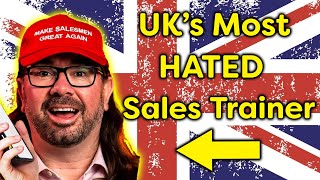
Benjamin Dennehy built a 50k LinkedIn following and "most hated" personal brand by posting daily sales content since 2016, then monetized it with his Sales Matrix framework. He teaches cold-calling, prospect disqualification, and charging for consults, arguing that detaching from outcomes and treating sales like continuous weight-loss keeps you sharp.
Chapters
Hey guys, welcome back to yet another episode of Top Billers Toolkit, where me and my twin brother interview top billers from all around the globe to unlock the secrets to their success. Today's guest is Benjamin Dennehy, otherwise known as the UK's most hated sales trainer. Benjamin has been on quite the journey. He was broke, £45,000 in debt, and was struggling to keep his business afloat. Fast forward to today, and Benjamin is now one of the most sought-after sales trainers in the UK. He's racked up an insane following online, 23,000 subscribers on YouTube and 50,000 followers on LinkedIn. He's achieved what every salesperson dreams of. He's got a line of people queuing up round the block waiting to do business with him. Today we're going to be diving into Benjamin's journey. He'll share some of his most significant lessons in sales, the platforms that he's used to build his business and why, and he's going to be revealing what the Sales Matrix is. Once you see it, you can't unsee it. So grab a cuppa or a glass of wine depending on when you're listening to this and let's jump into it, shall we? Hello Benjamin, how are you?
I'm very well, thank you for inviting me onto your podcast. I'm excited to be here.
Yes, there are a few guests that I'm— that come on that I'm like a bit giddy with excitement that they've come on because I've been watching their content. I love what they do, I love what they stand for, and you are one of them, Benjamin. So thank you very much for joining us, really appreciate it.
I'm honored, thank you.
Um, so we always start the podcast with this same question: what's the number one tool in your toolkit, whether it be a mindset, strategy, or piece of software?
What As much as I hate giving free advertising, for me, I would say LinkedIn.
Oh really?
Yeah, I would because I took a course back in 2016 on how to use LinkedIn. So we're going back a long time now. It's quite a while, 2016, and this is when LinkedIn was quite different back in 2016 too. But Like any training course you go on, there's one thing you really take away that resonates, and it hit me hard. The guy that was doing the training, the one thing I took away is he basically said you have to post every day, post content, only write about what you know. And it hit me, I go, well, that's just like prospecting. You have to prospect every day. If you don't have a business, you have to prospect. And I suddenly thought, well, I'm already prospecting every day, um, so this has to be the next strategy. And I remember saying to myself that you're going to make no money off of LinkedIn for a long time because it's going to take a— I was a nobody in 2016 pretty much, and I remember thinking at least 2 years, it's going to take probably 2 years before you start to see any benefits. So I was committed to a long-term strategy, which is one thing I'd give to everyone. You have to have a long-term strategy. Everyone's so short-term in this modern 24-hour society. It's got to make— yeah, you know, everyone thinks Mark Zuckerberg made billions like that. It's like, no, it takes a long time, right? So I was committed to it and that's all I did. And I had a rule: only write about sales. So no politics, no religion, no social, none of all the stuff you want to get sucked into. Um, never call yourself an expert. That was the other rule.
Okay, cool.
Yeah, because I think if you have to call yourself number one or the best or top, you can't be. Hmm. Yeah, it should be external recognition. So I thought, I have to get to a point where people are tagging me and saying, you should talk to Benjamin, or Benjamin's the expert on this. And I knew that would take a long time for that to sink in. And so it'll tie into another question you're going to ask me about how I came up with the title, because they're all interlinked. So it's up to you if you want to ask that now. But yeah, so, so LinkedIn for me, now YouTube. Okay, moving on to YouTube. And thirdly is my platform for selling my materials, and they're all connected because each one's designed— see, like I said, I don't want to be a salesman, I want to be an order taker. Yeah, who— yeah, I'd rather sit back and people send me money rather than we have to go out and find it. Now I know that seems odd for a sales trainer, but the purpose of every business is to get to a point where people just give you money.
Yeah, yeah.
So all the hard stuff you do to get to that point, then once you're there, you sit back and you enjoy your life.
That's really interesting. We've kind of—
we—
you've kind of nearly answered like 3 questions ahead, Benjamin, which is great. But you said LinkedIn was your favorite tool, then YouTube. If you had to put— if you had to say one— if you had to choose one of the platforms that's been your most useful in terms of pushing your business forward, which one would that be if you had to choose, do you think?
Well, I'd still say LinkedIn, and currently, because LinkedIn has the most subscribers, the most followers, it's got the bigger base. But the YouTube channel in the last 6 months has really, uh, uh, taken off because I invested time and money in creating content. Um, I've been quiet for the last 3 months. I've had a lot of people contact me. I put up a video literally just today.
I saw it, I saw it.
Yeah, and I wanted to see how good the content I'd done would be, if it would stick. If I didn't post anything new, would the site just sort of die off? And, um, so obviously you do get a dip because you're not feeding the beast, but I was impressed with how many people were still coming to it every month. Within a 3-month period of not posting anything. It was to just to test. So now I filmed a load of new stuff and it's going to be getting released going forward. I'm not going to do another 3-month hiatus, put it that way. Cool.
Yeah, interesting. So I'd love to get into understanding a bit more about who you are, Benjamin, because I've been following your content for ages. I've seen it, seen a few of your like more personal posts. I'm really fascinated with your journey because I'm sure, I'm sure a lot of people can relate to it. And there was one post that really caught my eye. You said It was the pic— it was the post of you standing in front of your old house, and you said how difficult it was growing up, and it sounded quite difficult. Can you just tell us a bit about what it was like growing up? Yeah, in the house and the conditions you kind of had to live through?
Yeah, so that was an interesting moment because, um, I, I went back to New Zealand in July. I had a 5-week holiday, took my wife and daughter. Um, we've been before, but We hadn't been since COVID The last time we were there was 2018, 2019, the Christmas. Um, and we just hadn't had time, you know, to go to New Zealand. It takes a bit of time. So anyway, um, we went there for 5 weeks. My daughter turns 10 in a few weeks, and we visited Nelson, my hometown. But before we moved to Nelson, we lived in a little, little town out of it called Motueka. And I said, let's go to Motueka. And as we're driving there, I said, oh, you know, when I was 10, Oriana, there was a— we lived in a shitty little batch thing. I said, in fact, I remember it because we arrived on my birthday. That's why it's burned into my brain. On my birthday was the day we arrived. And this is 1987. And what is it now? 2023. And I said, uh, it was on an orchard. And I said, I'm gonna— I said, I'm just gonna turn up. I said, the odds of it being there the shitty building all this time later. It can't be possible, right? So we turned up, drove down the driveway, and there it was sitting on this property. And there was a woman coming out of it. She was carrying out trash. And obviously they stare at you. And I got out and I just said, hey, my name's me. I said, you won't know me, but I lived in this building, uh, back in 1987. They go, no. And he goes, that must have been when the Avis owned the property. Yes, that's right, I remember that. He goes, oh yeah, yeah, yeah, no, they sold up, oh, 10 years or or so ago, and then we've come in and, um, and they let me have a look around. And it was just— this was built with cinder block, just that basic sort of block. So there's no, like, um, what you call it, um, ah, what's the word?
Uh, like foundations warm, um, oh, insulation.
Insulation, right. Yeah. So come the wintertime, obviously the heat, you'd get the dew, and then the dew— and so we had mold would form on the wall. We had to scrub— I remember this, Mum, me, we had to scrub mold off of this wall all throughout winter. And I used to go to bed every night praying, God, please, can we have a nice house one day? Please, please, please. So I think we were there— again, I'm young, but I know we moved to Nelson before I was 11. So I think we're only there for about 8, 9 months, but it felt like obviously a long time. And that was, um, we were broke. My dad's business had sort of failed and we were doing something new. And it just struck me when I took my daughter there and her life is so different. She goes on skiing holidays, she's at a private school. You know, I take her flying because I'm getting my pilot. It's hard. I just try to explain to her how my life was at her age. You know, I didn't get trips to the other side of the world for 5 weeks at a time, you know, like she had. So it was just good to show her where I've come from and where she's not experiencing Um, yeah, so, so it wasn't the tough childhood. It wasn't, you know, really rough. It was a nice childhood. I had a decent family. There was no badness. It was a loving family, but we were broke. But my dad would always say, we're broke, not poor. Yeah, we're currently broke, we're not poor. Poor is a mindset. Poor is a victim status. Poor is what— no, broke is we just don't have money. We'll make money, we'll figure it out, but we are not poor. And so that always stuck with me. That being broke is a condition, whereas being poor is a mindset. And I've always said I'll never be poor. I don't mind being broke because I can fix that, but I will never be poor. And only you can make yourself poor.
Love that, Benjamin. That's such a, such a great point. Um, and so what I'm—
did that—
did that— I might be overthinking this and digging too much into it, but did that period of your life have any impact on how you how you conduct yourself later on down the line? Benjamin, did it have any impact on you mentally?
I'd like to say yes, but I don't think it did. Um, I think when you look back, you could superimpose events and read into it certain things. So when I look back at it, it certainly— um, I, I've thought about it a lot. That's— I'm so glad that that's not the life I have now. I have a lot more respect for what my parents did, because now I see— you forget when you're a kid, your dad and your mum seem like proper grown-ups, and I'm now the same age as they were, and I, I don't feel any different than when I was like a young punk, right? So now I realize how unresponsible parents were, so how they just got to make their own way. So you have a lot of respect for that. It must have been tough. But, um, yeah, no, I think, um, My childhood just motivated me to want to get better, to do something. Yeah, yeah. But no, not— it didn't— it's not a pivotal moment where I suddenly saw the light and realized that never again. Yeah, no, no, nothing like that.
I've got a bit of an off-track question, but I'm always curious about this. When was the first point, Ben— or do you prefer Ben or Benjamin, by the way? Benjamin, because my name is Benjamin as well, actually, but I prefer Ben. But Benjamin is a lovely name. Benjamin, when was the first time that you realized that, you know, sales was your career? When was the first time you realized you had that epiphany that you wanted to be a salesman?
Oh, well, there are two. I was always selling. So as a kid, we used to sell these to raise money for school. You had to go from door to door selling these cheap plastic products. Like plastic lunch bags and plastic pegs and all this just rubbish, right? You wouldn't— nowadays it'd probably be a hate crime to go around selling plastic goods, right? But back in the '80s you could sell this stuff. So I, I did that. I used to do the 40-hour famine, which was something you'd fast from 6 o'clock Friday to midday Sunday, and you get sponsored, and then the money would go to feed starving kids in Africa. I used to do that every year. So you had to go around and collect sponsorship, 20 cents an hour, 10 cents an hour. So I was always selling. And then I never wanted to be in sales though, like 95% of people. And so I didn't want to know. I wanted to be a lawyer.
Oh wow, interesting.
So I went to law school and I read law and I graduated and then I did the qualification. So I was called to the bar. I'm qualified as a barrister. In New Zealand. So I was supposed to be a lawyer, that was a plan. But I have this personality where I achieve something, I kind of get bored with it. And I'd sort of done what I wanted, or I hadn't really practiced. It was like, I'm going to do travel now, I'm going to see the world, that's the next thing I want to do. Yeah, so the plan was never to stay in England, it was never to get in sales. And after years of bumming around doing bar work and partying I've got to grow up. Yeah. Now what do you do when you're educated but you have no real skills? I'd never worked in an office really. I mean, it was bizarre, right? So what does a guy do? Nothing. There's only one job, sales. What else, right? I can string a sentence together. I don't dribble. I'm pretty affable. There's nothing else for me to do unless I retrain. Sales will hire you. And that's it. I got into recruitment. First port, straight into it. Didn't know recruitment was sales. I remember the guy used to phone me up offering me jobs, and I'd say, fuck, you got such an easy job. You just phone people up and offer them work. I mean, how— I said, I want to do that. And he said, it's not quite like that. I said, well, it can't be, it can't be worse than what I do. Turns out it was worse than what I do. I hated it, but it was all sales. But that was never really The way they taught you to sell was so bad. And then I met a guy that you guys know quite well, Marcus, and I was introduced to him by a client. And a client of mine said, you're very good at what you do. He goes, but do you know why what you do works? Do you know why you're good? I said, absolutely. I said, the— I said, no, I have no idea why I'm good at what I do. He goes, if you knew why you do what you do, he goes, I think you'll make a lot of money because I want to introduce you to a guy that might be able to help you. And then I met Marcus and he explained certain concepts and psychology and suddenly stuff that I'd been doing intuitively. Suddenly I now realize now, so that's why it works. So that's why this does that. And then once you know why something works, you can then start doing it deliberately and consciously and you can develop and grow it. So that began my love affair. And I met Marcus back in 2010 or 2011.
Oh, wow.
Like that. And it was at that point that I realized, um, the lawyer in me said selling is just like the law. I suddenly saw it as a process. I suddenly saw it as a system, a methodology, whatever you want to call it. There are so many different systems and methodologies out there, and I think all of them in their own ways are good. But I found getting the bits of each that applied that I liked and then putting it all together, creating my own little structure seemed to work very well and now I teach it. But yeah, so I guess around 2010 is when I decided I'm gonna be in sales because I can make as much money, probably more than being a lawyer, and no one goes to prison if I fuck up. So it's a bit of a win.
Love that. And so you kind of, as you said, Benjamin, kind of fell into sales. What made you want to— because when I read your content and I watch what you do, I sense that you have a true love for sales and you really want to become the best. And so what's— what has made you want to become the best as opposed to just coasting? You know, you could have coasted, you could have probably made a decent amount of money just being average. What made you kind of dive headfirst and want to become really bloody good?
I guess it's my personality type. It's just I wanted to get really good at it, and this is ironic, I wanted to get really good at it so I could quit And just— and that's the thing, it's like, why do people build up businesses? Because I want to sell it one day. So the goal is to always be able to get out. And I thought, I want to be able to achieve something where people will be able to look at me and say, yeah, he's actually quite good at what he did. Now, I had no idea it was going to be this good. I knew I would do as well financially. I just didn't think this whole brand and character and all of this that I created would do so well. And it's weird because I get spotted out and about all the time. It is a bizarre thing. You know, I can be at a restaurant and someone will come up, 'Sorry, I don't mean to interrupt, but excuse me, are you Benjamin?' I go, 'Yeah.' 'Oh, I love your stuff.' I get it all the time. And my wife and daughter find it hilarious. I'm a Z-list celebrity. I don't know how people, you know, but I've never been on TV or anything, but people spot me. And it's quite nice. It's also very weird because they talk to me like they know me, because they kind of do. And so it's quite— they just, hey, Peter, how are you? It's like, who the fuck are you? I know you. Yeah, yeah.
So that could be interesting.
But yeah, so it's done, it's done as well as I'd hoped. And maybe— but the, the actual character that I've created, that has surprised me because I didn't expect it quite to be, uh, that, um, it liked or enjoyed by people so much.
That's so interesting. Can you tell us a bit more about this character you've created and how that's played a part in building your business and your brand?
Yes. So this has been one of the most important things. So when I was first starting out, I ran into a guy you might know called Brad Burt.
Yes.
And he's known as the UK's number one motivational business speaker. He saw me speaking at an event and he made a beeline for me. Yeah, and it was ironic because I went to this event specifically to meet him. I didn't want to go. It was— I had to get up at like 6 AM, drive to this meeting, give this talk, and I didn't really want to do it. I was lying in bed thinking, I can't be arsed. And then this voice said, this is your fucking job. You don't have— you've got to do this until you, you don't. So I went, and I'm glad I went because he, he was there. And I gave my speech and he made a beeline for me. He goes, how come I've never heard of you before? I said, uh, because I'm a nobody. He goes, no, you've got something, but you've got to figure out a way to capitalize on this. And I said, well, how did you become the UK's number 1 motivational speaker? He goes, page 26, I think it was, of my book. Great way to get me to buy his book, right? So I bought his book, page 26, how did I become the number 1 motivational business speaker? I made it up. I love that. Oh yeah, you know, it's beautiful, right? And then I remember phoning him and he said, he goes, he goes, okay, if I was to say to you, I am the greatest, I am the greatest, who do you think of? Muhammad Ali. I go, yeah. He goes, yes, yes, but he wasn't the greatest boxer. He just kept saying it. And now, because if any ever anyone else in boxing ever comes along, he says, I am the greatest. No, you're not. That belongs to Muhammad Ali. So all you— so he said, you need to find some way of marketing yourself that's distinct, that will stand out. And I came up with the second best motivational speaker. That was my first roll of the dice. And he said, that's quite funny. I said, yeah, because whenever someone says, why aren't you number one? I can't be asked. You know, a bit of humor. But it wasn't me. I'm not a motivational speaker. So then I thought, fuck, well, if I want to grow this business as a trainer, What am I going to do? So I went on LinkedIn, obviously, and I looked at it. I suddenly realized, see, the one thing I teach is salespeople have this pathological need to be loved and liked. And but when you go on LinkedIn and you look at all the people that sell to them, how do they describe themselves? Number one, the best, top performer, guru, expert, leader. And I thought, they all want to be loved too. No one wants to be hated. I thought, well, that's the space I can take and own if I stamp my flag in that sphere. And so that's where I came up with the UK's Most Hated Sales Trainer, and it made no logical sense. There's no rhyme or rhythm to it. When I go to events, the hardest thing for the first few months was, hi, my name's Benjamin, I'm the UK's Most Hated Sales Trainer. It's what the— what does it mean, you know? Then Trump came along with his hat, and as soon as I thought— everyone hates Trump, it seems, and I, I always quite like the guy. I remember I put a bet on him winning the election when he was like 40 to 1. I remember saying he's gonna win because he's appealing to the emotion, and people vote just like they buy emotionally. And this guy, he's gonna win. So I saw his hat and I thought, well, I'm nicking that. And I thought, I'll put salesman because that'll wind up all the people that say it should say salespeople. And it does every now and then. What about salespeople? What about so? And so the whole thing was create this larger-than-life character who could pretty much say what he wanted, and that was it. So, so the hat, the UK's most hated trainer, it meant I got to brand with the Union flag again. A lot of people don't like— oh, looks terrible if you use it. So I thought, I can become a kind of hated character. Um, and yeah, and it's worked really well. It's, um, done surprisingly well actually. And I know no one else can come along and say, no, no, I'm more hated. But you just— That's just stupid. You can't do that. So that was why I did it, to create something that no one else can sort of nudge in on. And then someone may try it, but it just would look weird, right? So that's how it came about. It's purely marketing. I gave a speech which got a lot of oohs to, but it was after that awful incident with a woman being killed by a police officer. But I said, people always ask me, how did I become the UK's most hated salesperson? I made it up. I go, like Nike, just do it, or McDonald's, I'm loving it. Or Metropolitan Police protecting women. Yeah, I said it's all made up.
How much does— because you're, you're, you kind of say what you want, Benjamin. That's one of the things I do love about you. How much does your character help you kind of fall into that? Are you naturally kind of like that, or is your character kind of giving you more confidence to be able to say what you want, do what you want, kind of? And with that persona, what do you think?
No, I think it's just added to my persona. Um, okay, true story, not a lot of people know this, but I was voted by my colleagues as most likely to be disbarred. Yeah, so at the end of the professional training, all qualified for barristers have a big slap-up meal and everyone's getting a— it's like a mock award ceremony, and I was literally most likely to be disbarred because I had a reputation for being quite fiery Um, I'd run arguments that people thought were offensive. I said, I don't care, I'm trying to win. And I'm not— so, so I figured that's one reason I'm still a barrister, because I reckon I would have been struck off by now, uh, or, or I'd still be in prison for contempt, because I found it very hard to humble myself and bite my tongue, which you have to do in law. Yeah. And that, that— and this is, this is what's annoyed me. I wish they do personality profiling at a university before you do your studies. Because I don't have the right personality to be a lawyer. Uh, yeah, and maybe in America where you could be, you know, batshit crazy, right? But in the English system, um, no. Uh, it's still there though. I may go back to it. You know, I could become New Zealand's most hated barrister. I thought of that. That's not bad. It wouldn't take long to do either.
But, uh, yeah, that's really fascinating.
I'd like—
I feel like I've gotten to know you a lot more in these last 20, 20 minutes, uh, Benjamin, I'd love to like move over to the sales side now. If you could, what are some of your biggest aha moments that you've had throughout your sales career? Would you say like moments where you've been like, oh shit, I'm so, I shouldn't have done that, shouldn't have done that, I'm gonna start doing this. Just a few aha moments, what do you think, Benjamin?
Aha moments. I think the first thing that really hit me was realizing that when we're out selling, we're up against two systems at play. And prospects have a way of behaving and sellers have it, and they've lined up. And once I saw that, I call it the sales matrix because it is like the Matrix. Salespeople are locked into a way of behaving and they don't know they're locked into it until you see it. Then when you see it, it's so obvious, but you keep doing it because it's comfortable. And so when I realized that whenever I was out selling, I was competing when I realized that everybody was lying to me. Now, I knew from law that everybody lies, but I didn't really translate it into the sales world because I was so obsessed with trying to be liked that I never heard for the reasons why this wouldn't work. And when I started to appreciate that prospects would deceive you— I prefer deceive than lie because lie, they deceive, and by deception I mean they omit things, they leave things out, they hold things back. They don't give you the full picture. They exaggerate or they embellish. So they do these things, and if you're not attuned to that, you can get sucked into the narrative that they're feeding you. Second thing I discovered is that they want to nick as much from you for free as possible. And then I look at my own buying behavior. If I could get something for free, why would I pay for it? So my job is to pump people with knowledge for as much information as I can for free in the hope that they give me enough so that I don't have to pay them. And that's why you get 3 or 4 different people in from the same sector, because between all 4 of them, the odds are they'll give you the answer, because each one doesn't know what the other one's not told you. And so you, you play them off, right? And sometimes it works, or it helps you, you know, it helps you reinforce a decision that you'd already made and you just needed external experts to basically confirm what you were going to do. So when I realized that was happening, you know, so all these little things, I realized this is a game and it's a system. and you need a stronger process. You need to be one that's in control. That was the other thing— lack of control. I didn't realize how little control most people had in sales until I realized how little they had. And when I listen to salespeople now, when I watch them, it's really uncomfortable because you realize, oh my gosh, your life must suck. I can see it now. You spend your whole life trying to please people, trying to get them to like you, trying to, trying to encourage them with creds, pretty, and all of this, and you're constantly subservient almost. Or they go to the extreme and become arrogant. Yeah. And they come across as rude, and it's like, there's got to be an in-between. So that was it. And the other big thing was detachment from outcomes. Um, That was a deal breaker for me. That fundamentally, when I realized the purpose of a cold call wasn't to get a meeting, because that's what you're always taught. Why do you cold call? Get meetings, get appointments. So that's what people think the purpose is. No, that's an outcome. Just like a qualified out is an outcome, a qualified in is an outcome, but they're not the purpose. Like, I always use the example of a trial. So I see law and sales as very similar now. That's why I've really taken to this, because I say, what's the purpose of a trial? It's not to just get an acquittal or to get a conviction or to get a hung jury or to get. Those are outcomes. What's the per? And the purpose is this grand, noble cause, you know, for truth. Right. Same in prospecting. Why am I prospecting? Well, the purpose is to get someone emotional about whatever it is that I fix. If I can't get them there, there's no point in meeting with them. So I need to get a little bit of. So the purpose is try to get emotion. Then I started to structure my calls and my conversations around how do I get someone to feel emotion about what I fix. And if I can't get them there and I don't get a meeting, I haven't failed. It's quite possible they don't need what I have now. That's not a failure. It's not my job to get everyone to buy from me now. I'm looking for people that can buy now, and there are less of them than there are those that won't. So when I— that got through my head, no attachment to the outcome. So I don't try to get appointments, I don't try to sell anymore. My job is to figure out why the hell we shouldn't work together, because there are more reasons why you shouldn't give me money than there are. So I'm going to spend my whole time trying to convince you that you don't need me and I don't need you. And if we get through that, the odds are you're going to give me money. And it's incredibly empowering because I'm no longer subservient. I'm not there trying to impress everyone. Now convince me, why do you need sales training? Convince me, because I don't believe you need it and I don't believe you guys are going to do it. You convince me that It's amazing how the prospect suddenly has to work for the expert, whereas before you just give it to them for free in the hope they like you enough that they come back. So no, it's incredibly liberating.
Would you say that is the biggest problem for the people that you've trained as well, Benjamin, that they're too subservient? Would you say that's the biggest problem or is it something else?
Well, the underlying problem, and I say this quite candidly to everyone, is the underlying problem is most people in sales don't want to be there. That is the fundamental problem. Yeah, I, I say this, I do it all the time. You meet a lawyer or a doctor at a party, you ask them, so how'd you become a lawyer? Why'd you become a lawyer? They can tell you. They got a— I always wanted to be a lawyer, I've always wanted to be a surgeon, my dad was this, I'd be— and then I had to go and study 7 years, I had to study to become a doctor, 4 years at law school, then I started off as a junior Their whole thing has been a controlled 100% I'm in, committed, because I want this. You ask the average person, it starts to— how'd you get into sales? Uh, you know, I kind of needed a job, right? And, and so because deep down most people don't want to be there, would you really spend a lot of time and money trying to get really good at something if doing just enough will get you by? And so this is the biggest problem with most sales training, is I have a rule, I don't work with companies unless they get their salespeople to pay towards the training themselves. I love that, because what's the point? Yeah, and I get a lot of companies say, well, I don't want to charge them. I go, fine, I'll still take your money on one condition: the odds of any of this working are virtually zero. Because if they're not willing to pay to make themselves better, then why should you? And why would they change? So it's interesting, and this is why I prefer the one-to-one stuff, my coaching clubs, because everyone on that It's paid from their own pocket and they desire to get better. And their results always outweigh any corporate training that I ever do because deep down, most of it, like I say, average salesmen, what, last about 3 or 4 years in a role, then they shift to another one. They just go sideways all of the time, maybe a little bit more money, and they're exactly the same at this job as they were at the last. And yeah, you see someone that's been doing sales for 10 years and they sound just like someone that's been doing it for a year almost. So I wouldn't hire a lawyer that sounds like a freshly minted graduate after 10 years of practice.
Yeah, it's so interesting, Benjamin, that you had the same experience. We've worked with bigger recruitment firms and we found the exact same thing. They had absolutely no attachment to wanting to get results because it wasn't out of their pocket, as opposed to smaller companies, you know, one-man bands or just smaller companies. They have a lot more skin in the game and the results and the passion and the the fun that we have with them is just night and day different. So it's really interesting. I was really fascinated when you said that you spend most of the sales call like disqualifying them. Benjamin, how in terms of percentage, how much of your call is spent actually trying to disqualify them? Just I'm really curious.
Most of it.
Really? Wow.
That's interesting. Yeah, because there are more reasons not to hire me and I have to get them to realize that all the other options they rule out, you know. So one of the first things I say is, I'll be upfront with you, why don't you just fire your worst sales performers? Just fire the losers, take the money you're spending on them in salary, and hire better people. I go, that is the quickest way to fix yourself. No, we don't want to do that. We want to invest in them. We want to— yes, okay, fuck. I go, well, why don't you hire better ones then? No, we don't want to. We got a recruitment freeze. Why don't you outsource it? No, we've tried that. It doesn't work. Well, maybe you just had a bad experience. No, we don't. So I get them to rule out all the alternatives. Yeah, sometimes I hit one and I go, that's a good idea. I go, so go away and try it. See, I told you you don't need me. And then they go, yeah, I know, but I'm not— no, look, go away. No, no, no, be— yeah, I guess so. It is. So my job is to get them to realize, I don't need you. And if I can't act and behave like that, how am I— I've won a lot of business because the CEOs contacted me and said, I want to work with you. I go, we don't know that. He goes, no, I do. I go, why? He goes, you've charged me to talk to you. And he goes, and it just makes it— if you are doing that, then you must do everything you teach. I mean, he goes that— because I've never paid to talk to someone about buying their services before. I go, I do that because 85% of people that approach me, when they say, can we have a chat, I'm really interested, I tell them go book a call, they disappear. Because what they wanted was to brain rape me, as I say, for half an hour over a coffee, right? That's what it's all about. You're really very interested, would love to have a chat. No, no, no, no, no, this is just— yeah, but by charging people, what they demonstrate is, well, we know we need help, we just don't know if you're the guy. So this makes it easier. So I've made— yeah, so I don't know other sales trainers that charge for people to speak to them. I haven't seen it, but I do it and I stick to it. I had a big company that made me laugh because it's funny how prospects try and manipulate you. It's a big, well-known British brand. One of their directors contacted me, said, I've been following you on LinkedIn, I'd love to get you in. I said, sure, book a consult call. He said, no, I'm not booking a call, I'm not going to pay $150 I said, well, that's the process. He goes, look, Benjamin, this could be a really big deal for you. And that's like, what the— so you're haggling over £150 for something?
I know what's going to end.
And I said, and also, I'm not even going to get through your HR checks. I said, it's going to take you 5 minutes to find something I've posted that's going to upset the millennials that you employ. I said, so there's no point in us moving forward. Never heard from him again, you know. And to me, that's a win. Because I got rid of someone that would have wasted my time for half an hour, 45 minutes, and then it would have gone nowhere. And then some people say, oh well, you should have— I live by the attitude you can't lose something you never had. I've never lost anything in my life, I never had it. So people, you lost the deal, then I didn't fucking lose, I never had it. So I attach no value to nothing, and salespeople attach value to someone sniffing their panties.
Yeah, I feel like everyone listening should really, um, heed this because I feel like, um, one of the biggest things recruiters struggle with— I don't know if it's the same with general salespeople— is working with shitty clients.
Yes.
Um, Benjamin, and you literally— those two things, disqualifying them, actively disqualifying clients or prospects, and removing emotional attachment from the deal, are two things if they implement today will eliminate probably 80% of the shitty clients they bring on. So I just think— can I add to that? I'm guessing, Benjamin, that your consistent prospecting gave you more options and allowed you to have that detachment, which again is another problem, is that, you know, I don't think you can have detachment unless you have— well, it's a lot harder unless you have more options. And prospecting kind of goes hand in hand.
Absolutely. You have to be getting in front of more people than you can sell to. Yeah, and that is a problem a lot of salespeople have. They do enough. And I like, I call most salespeople what I call at-leasters. At least I just hit target. At least I didn't miss target. At least I'll be on. And it's at least they operate on a 6 to 7 out of 10. And for most companies, it's fine. Because as long as you get near or around that magical made-up figure that they plucked out of thin air, then, then they don't care. And that's one of the reasons why I don't like working with big corporates because they don't care how you hit target, hit it. So then there's no ethics, it's a discount. IT sector, you know, software, you know, every quarter they suddenly close deals in the last week. Why? Because all the prospects know you just got to sit and wait and they'll get desperate. They've got to hit their targets. All you got to do is sit and wait for the end of the quarter and say, oh well, look, we, we give you $100,000 instead of $110,000. All right, we'll do it. Yeah, because they've got to hit their figure. And so when you set arbitrary figures, you encourage behavior that's designed to hit it. So you've got to be prospecting. So I wanted to get in front of more people so that if I got in front of someone, it's like, I don't care, I've got another 80. I need 2 of you to buy from me this month. And that was it. I know I've got more, so I can fuck up, I can make mistakes. And that was how I learned, by getting in front of more people than I could sell to. It gave me the freedom to behave as I wanted in the way that I felt I should. And, uh, yeah, it's paid dividends in the long run.
That kind of moves on to my next question, uh, Benjamin. You've obviously— you kind of touched upon at the beginning of the call, but you've obviously invested huge amounts of time and effort into marketing and personal branding. You've built, um, you've got nearly 50,000 followers on LinkedIn, 23,000 subs on YouTube, which is mental. Um, how important has marketing been um, throughout your sales journey, especially as it started to kick in and, and you start to see the fruits of your labor come to fruition?
It's been essential, um, because we live in a very crowded world. Everybody's got a message, everybody's screaming something, um, and how many sales traders are there in the world? Fucking thousands, right? I mean, it's to stand out You have to do something. And so the strategy was, and it goes back to that original 2016 LinkedIn, was people need to see me as an expert. I cannot— so you could go through anything I've written since 2016, not once have I ever called myself a sales leader. I hate, I hate, I even hate the term sales leader, you know. What the fuck does that mean, sales leader? So I hate that. So you'll never see I'm an expert. It's always been hated. That's all I've stuck with. That's my moniker. I'm just hated. But other people say Benjamin's the expert. And so the goal was to get to a point where people recognize that. And then once I've developed that credibility, I also needed to know who I was writing to. So when I originally started, my audience was CEOs and MDs. So I spent my whole time slagging off salespeople because I knew these guys don't interact They just lurk. And so I'm writing, they're shitty, they crap, they suck, they do this. And eventually you get them reaching out, say, hey, Benji, and I've been following you for a few months. You describe my salespeople. Yeah, I know, because I'm writing to you. And this is why when I first started, I used to get so many salespeople used to hate me. This guy's an asshole. I can't believe you'd say that. I'm not appealing to you. I couldn't give a toss about you because you're not going to buy my stuff. It's your boss that's looking at you thinking, yeah, he describes my people. So I had clear strategies, but I was committed. Like I said, I knew this would take years. And I think everybody, particularly in the modern world of social media, someone, you know, you go on Instagram and you could have one video, somebody has 2 million views or something, and people think it's instant success. Those are few and far between, and very rarely. There's got to be more follow-up. It's a lot of work that goes into feeding this beast. So you have to be— slowly but steady wins the race, as they always say. And so my goal was be patient, just like you have to be patient in selling. Yeah, I'm not in a rush. I'm in no hurry to get to the sale. We'll get there. But if I rush it, I'll screw up. So it's all— yeah, it's been very important to me.
That's awesome. And just so people— because I feel like time management during the day is one of the things that salespeople, recruiters really struggle with. They're always like, I'm so bloody busy, I haven't got time. How much time did you dedicate towards marketing and personal branding even though you knew it might not get anything for 1, 2 years? Like, what were you putting in every day?
Okay, so I guess it's a bit— in the early days, the goal was— I do a bit less of it now, and some was on LinkedIn. So the rule was I would write every single day, Monday to Friday, 5 days a week, post something. And I did that religiously for, oh yeah, for a long, long time. And that works. So yes, you have to set aside, just like with prospecting. I would set aside— I don't now because I don't have to prospect because I've built the business, people come to me. But when I was building the business, it was 8:30 to 10:30 Monday to Friday. That was it. And I had a condition that wasn't the time was important, it was I had to talk to so many decision makers. And I set my target was 5. I have to talk to 5 managing directors in this 2 hours. If I hit it within an hour, I'd quit. I don't have to do an arbitrary another hour. Yeah, I need 5. 5 a day, 5 times a week, that's 25 a week. If I haven't got 2 or 3 meetings from 25 conversations, either something I'm saying doesn't resonate or the way I'm saying it's poor. So then I can look at what I'm doing and tweak it and change it. And that was always the goal. So I never measured anything that didn't have a learning capacity. And the only thing you learn from is, did I talk to people? Why did it not work? That's got nothing to do with dials. Some mornings I could do 5 in a row, get 5 MDs in a row. Yeah, didn't happen a lot, but it was nice. You'd be done by maybe 9:30. Yeah, some days I had to do the full 2 hours. Yeah, some days had to extend it because if I didn't hit the 5, I was allowed to take a break, but I had to end the day on 5. And that would be 100 a month. If you can't get 10 to 12 meetings from 100 conversations at the decision maker level, you're in the wrong job. Yeah.
If you were to go back in time, Benjamin, to say the Benjamin 5 or 10 years ago and say, Benjamin, start doing this and you'll get a lot more results, or stop doing this and you'll see success a lot quicker, what advice would you What would you say to the, to the, to the younger Benjamin?
I'd say it, but he wouldn't listen because it's a concept that you can't grasp until it finally happens. But it would be, you got to detach from the outcome.
Okay.
Uh, that is— and it's because it's easy to say. All these things are easy to say, and it's a process, it's a journey you go on where you get to a point and you learn to let go. And I remember this point, it must have been around 2017. I was hocked up in debt. Um, I think it was like £45,000 in debt. I was living on credit cards because I was adamant I was going to make this work. Um, I was at rock bottom. I was at rock bottom. And, um, sometimes I was in tears. I— it got so bad that my creditors insisted I get a job. And it's— I lied. I said, yeah, I'll look for a job. But no, it's like, no, it's either I 'Cause when I first set this up, what I said to my wife, 'cause I quit my job, and I said, I'm gonna make this work. And I said, now there are two outcomes. It either works or we go bankrupt. Am I willing to live with bankruptcy as an outcome? Okay, so I'm not, we're not gonna live on the streets. We live in a first world country. We have family, we have friends. So the odds of me ending up on the street shooting crack under a bridge are pretty slim, right? That would be a lifestyle choice, not something that happens to me. If you can stomach the worst possible outcome of what you're gonna do, then do it. And that was it. I said, I'm willing to go bankrupt. I said, because I said, all bankrupt does is reset to zero. And so I was willing to face bankruptcy. I nearly did. I nearly did. That was— but it was when— and it was, it was when I got to the bottom one day. I just, I remember sitting at my desk one day, feeling in despair. This isn't working. I'm not meeting it. I'm just not And, and then this little voice said, fuck it, just fuck it. And it was that, it was just this little trigger inside of me said, you know what, you can't actually get any lower, this is pretty much it, so you have nothing to lose now. So you've really gotta do— and it was something in the brain just snapped, and I just started going out and I started being more blunt, more direct, um, and it, and it started to, it's, it started to work. And then The greatest moment was I got in front of a guy, a CEO of a big company, and I cold-called him in a session actually with a room full of people. And I had no idea how big his business was when I booked the appointment. And I confirmed the appointment like a few weeks later, and he said yeah. And I met this guy, very successful, very, you know, worth a lot of money, drives Lamborghinis. And we were talking, and, um, at the end of the 2 hours he says, I want to work with you. I said, really? He said, yeah, he goes, I've been in business, what, 20, 25 years? He goes, I find you fascinating. I find your whole approach and your whole way of dealing with people remote. He goes, I don't even know what you're going to charge. He goes, but I'm sure it'll be fair. He goes, so can we do it? And I remember walking out of that meeting thinking, this guy is the epitome of success in British society, and he's literally said to me I want to work with you. You got something going. There's something about you. And so, so all these little things built up by belief— what I'm doing must be right. And that was a pivotal one. That was, again, that was around 2018, I think that happened. Yeah, it was around 2017, '18. And it was just— I had external validation from an extremely successful person that he wanted to work with me. And that was— and then this voice just said, you know, you are actually good. So you slowly get there. So I think if you come in too arrogant, you'll fall. So I had to get to a point where I actually believed what I was doing. And now I know, I have to keep check though, because it's very easy, you know, to become complacent. And I've noticed at times I've become complacent. And when I've lost something that I felt I should have won, then I go back and think, I know why. This, this, this. You didn't do it. Why are you not— so you've got— because I say sales training is like losing weight. The moment you stop doing what's required to keep the weight off, the weight goes back on. The programming, the, the original programming always wants to take over, and it will. And I've said the day I leave sales, I will, without knowing it, will slip back. Unless I constantly— so the reason I do everything I teach is because if I don't, I'll slip back. And I'm acutely aware that if someone phones me, I have to do everything I teach. When I meet people, I have to do it because I don't know if it's a trick, if I'm being tested. I get people ask me for discounts and I go, what is this? Is this a test? Is this some sort of, you know, are you trying to see if I say one thing on LinkedIn and then do another thing in So that's one of the suck things about being me. Everything that I pontificate about, I actually have to do. And sometimes even I don't want to do it.
Thanks for sharing that, mate. It's a crazy story. We're coming to the end of the pod and you are the perfect person to ask this, Benjamin, which is, what do you think of cold calling? Is it dead? Does it work? If so, what's the best way to do it?
This conversation, I suppose a good thing, it just keeps people talking about cold calling. The only people, it's like anything in life, the only The only people that say cold calling is dead are people that can't do it well. Yeah, it's like I got a physical trainer and he looks the part, right? Six-pack, everything. Yeah, I'm sitting there saying, you know, this training, like, he doesn't work. No, it doesn't work because you don't look like this. Yeah, yeah. So, and that's the same thing. So I've lost my train of thought. Cold calling does work, but you need to know why you do it. Most people don't know why. They're just given a list of phone numbers, they're given a script, and they're told, get a meeting, get an appointment. Yeah, imagine doing that to a young lawyer. Just, there's a courtroom, there's a judge, just go in and win. What? It doesn't work. So it does work if you do it well, but I've said for a long time, and this is before AI and how the world's changed, because cold calling is a process, you get the structure of the call right, you know, you got a pattern interrupt, you do a good 30-second pitch, and then you try to ask questions designed to get them to open up and move to emotion. I said, because I do the same thing over and over again, just like a Ford production line, I don't vary it. I said, if you could train a robot to do this, then it would do it because it doesn't have any emotion. I could hold back emotion because I'm a human, yeah, but, but I can't do what a robot would— has no feelings whatsoever. It could just hit the phone non-stop without getting tired. So this is why I do believe sophisticated AI, eventually you will be able to— all cold calling could be done by robots. People would never know because that one I put up a few weeks ago was really good, but it's still got its infancies. But what was most ironic was how the guy continued to engage with it even though he knew it was a robot. And we're going to get so used to it. We're so used to talking to non-people and doing everything else. So I think this is a threat to cold calling because I genuinely believe it will eventually remove the need for people to do it. In some ways it's not bad. I suppose it's like getting rid of certain factory jobs in the Victorian age because most people hate it. It does. I hate it, by the way. I've never professed to like it. I'm good at it. Yeah, but I hate it. And I always said the day I don't have to prospect is the day I know I've finally made it. Yeah. And you made it. I remember the day. I just remember one day thinking, I haven't prospected in a while. Yes, yes, yes, yes. So I don't regret it for a second. But I— the reason I'm so big on cold calling, and I teach, and I still do it when I work with clients, and I still do it every now and then to keep my skills up. But the reason is, is there's no better way to learn how to interact with a real human being in real time. You hiding behind keyboards, hiding behind email, you don't get that real time. And you got to think fast if you want to be a good salesman. You got to adapt, you got to evolve, you got to think think. Can't get any of that hiding behind email or sending fancy packages. And yes, you'll get success, but you're not learning anything. Yeah. And, and that's the problem. If you're doing all this work, you should actually be getting better, not just getting results. So that's why I'm so big on it. But it does work, but it's not pleasant.
Yeah, 100%. Thank you, Benjamin. And that AI thing I saw on LinkedIn was mental. That was absolutely crazy.
It was.
Thank you so much, mate. It's been an absolute pleasure to meet you. Um, following your content and meeting you has been better. You have exceeded expectations for me anyway, Benjamin. So thank you, mate.
Well, I, I'm pleased to hear that, guys. Oh yeah, yeah, I'm glad I don't let people down when they meet me, so that's nice.
Hey guys, thanks for tuning in to this episode. If you enjoyed it, please don't forget to subscribe on YouTube and Spotify. Tune tune in for another episode next week, and we look forward to seeing you again very soon. Peace and love.
More from Sam




The difference between a $200K biller and a £1,000,000 Biller (full Breakdown video)

how to go from agency recruiter to Lone wolf (Advice from a $2.4 Million biller)



This Recruiter has billed $750K+ for 30 years straight. (Master of Consistency)

How to increase your candidate response rate by 25-30% (Whats app messaging system)


This recruiter has billed $1,000,000 for 5 years straight! (Master at Enterprise deals)