Young mum at 18 Now runs £6Million Recruitment Business
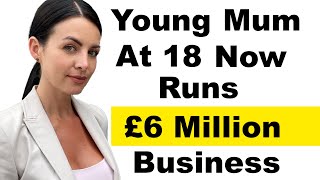
In this Top Billers Toolkit podcast episode, hosts Sam (Speaker A) and Ben interview Stephanie Bateman, a former teenage mother who founded and now runs a multi‑million‑pound recruitment agency. Stephanie recounts her challenging early life—leaving home at 15, being kicked out of college, and raising a daughter at 18— and how those hardships forged a resilient mindset. She describes the personal development work (e.g., gratitude journaling, positive‑thought exercises, Landmark course) that reshaped her outlook. The conversation then shifts to concrete recruitment tactics: the importance of a growth‑oriented mindset, consistent business development (BD) routines, balancing candidate‑ and client‑focused outreach, quantity vs. quality BD, gate‑keeper handling, and daily scheduling. Stephanie shares hiring and scaling insights, emphasizing clear core competencies, structured interview stages, induction processes, and the value of storytelling as a competency for recruiters. She discusses the role of external consultants (operations, finance, technology) in building scalable systems and the impact of therapy on her communication and stress management. Throughout, the hosts probe her "addiction to success" and the lessons learned from both failures (over‑reliance on a single client) and successes (structured management layers). The episode blends personal narrative, mindset philosophy, and actionable recruitment strategies for listeners seeking to grow their own businesses.
Chapters
Hey guys, welcome back to yet another episode of Top Billers Toolkit, where me and my twin brother interview top billers from all around the globe to unlock the secrets to their success. Today's guest is Stephanie Bateman. Stephanie's story is nothing short of extraordinary. From leaving home at 15 to then getting kicked out of college and struggling to hold down a job, her life seemed to be going in a downward spiral. But then she had her beautiful baby girl And in her words, as soon as I had my daughter, it completely changed everything. I now had someone else that relied on me. Fast forward to today, and she runs a multi-million pound recruitment firm. Today's episode is all about her story. So grab a cuppa or a glass of wine depending on when you're listening to this, and let's get into it, shall we? Hey Steph, how are you?
Hey, yeah, really good, thank you. How are you guys?
Yeah, very good. Um, I've been wanting to get you on the pod for ages. I've been kind of stalking you in the background. Sounds really weird, but I've been looking at you on podcasts. You have a really cool story and you've done very well for yourself. You've got a brilliant business and I wanted to get you on so you could share your wisdom. So thank you very much for joining us today. I really appreciate it.
Thank you. Thank you for having me. Um, I love talking about recruitment, so I'm happy to be here.
Awesome. So we always start the pod with this same question and it's what's the number one tool in your toolkit, whether it be a mindset, strategy, or software? What would you say, Steph?
Mindset, definitely.
A lot of people that say mindset is insane, like everyone says mindset, but it shows you how important it is. Sorry, Steph, go ahead. What specifically around mindset?
Mindset is the forefront of everything that you do. So you could have the software and you could have a strategy, but if you don't have the right mindset then neither of them will work. And it's every day in recruitment you're faced with problems. So, if you can have the mindset to focus on the solutions and not be derailed by the negatives that come up throughout the day, you know, it's a rollercoaster that if your mindset's in the right place, you'll always be able to overcome everything that's put in front of you. So, I, yeah, I definitely say mindset. Like other people.
Yeah, and it makes so much sense, Steph. What I'm interested about mindset— I was interviewing a, a million-pound biller yesterday, and the interesting thing about his mindset is he kind of had this built-in mindset. He just was quite resilient, he was obsessed, and he didn't need to do much in order to kind of maintain a good mindset. I'm the opposite. My habits are like— if my habits slip, my mindset slips. So as long as I have good habits, my mindset's at the top of its game, if that makes sense. But I'm interested, yeah, how does your mindset work? Are you— did you need to develop it over many years? Are you kind of just naturally quite strong-minded? What's your take on that?
I think, um, it's definitely developed over the years, um, and that's been something that I've, I've invested in myself and spent time on because you like along the way from, I guess, when I first started in, or had any challenges in life, it was how do I deal with it? How do I keep on track? How do I move forward from, from this place? And so working on it helped me understand like little tricks. So it could be something is one thing that sticks with me quite a lot is if there was a something negative that happened, or I had a negative thought about something, I'd write down a positive to it. And there's always something that you can write down as a positive. And by doing that over a period of time, your mind just naturally does it itself. And so you don't have to keep writing it down. And I think that was something that helped a lot. I, I did courses. There's one course which I personally, I had a great experience from doing it and it really changed my life around how I used to do deal with situations and how I would approach things personally, professionally. Um, and it was a company that's called Landmark. Um, and it's, it's something that just everybody has their own experience doing it, but something that helped me see things from me rather than looking at someone else and thinking, well, that person should be doing that, or this person should be doing that. Actually what can you do and what's controllable for you to be able to actually adapt or change a situation rather than expecting outcomes from other things that perhaps are out of your control. And so that was really, really helpful. It helped me work on my communication. And so definitely mindset is something that I've had to work on. And I think people that would have met me 10 years ago at the beginning of my recruitment career and would meet me now would say that I'm quite a different person.
Yeah, sorry, Ben, go ahead.
I was gonna say, I love that tip as well. I, um, I feel like it's so simple but it's so important to program your mind to think of the positives. I do the same thing like every morning. For some reason, when I get in the shower— sorry for people to envisage that, don't envisage it— but When I get in the shower, it's— that's when I possibly— that's when negative thoughts start to creep in first thing in the morning for some reason. I don't know why. It's when my guard is down. That's when it's the most important time for me to think of 5 positive things in my life, and it really helps. Just doing that every day makes such a big difference. And it sounds like— it sounds almost silly saying it to some people who probably aren't used to it, but it makes such a big difference. It really does. So yeah, really great tip, um, Steph. Really, really like that one.
Yeah. And I've said this like 1,000 times on the podcast, but I have a gratitude journal and every day before I start work, I just write down as many things as I can before I get bored of what I'm grateful for. And that is— and I was driving in the car on the way to get a coffee this morning and that just— the gratitude just popped into my head randomly. And it was, it was quite fascinating. It's like my brain is training itself, or I'm training my brain just to naturally gravitate towards being grateful. And I was like, oh, I'm grateful I have a car. I'm grateful that I'm going to go buy a latte and I have money to buy a latte because in some parts of the world they can't do that, you know what I mean?
So it was like, it's everything. Yeah, it's so true. I think journaling is something else I didn't even think about. That is something that I do as well and it's super simple. I find I don't do it every day because people are like, oh, you know, do you do that every day or how do you do it? I don't do it every day. I'd say I do it at the times where I'm finding things a little bit challenging and I just need to kind of recheck what's happening and sort of re-go back to the basics of what I know helps. And one of the parts of a part of that journal is what are you grateful for? And literally the things that you said, Sam, you know, the thing being able to have money to buy— like, I don't drink coffee, but tea for me. Yeah, it's just like I'm grateful for doing that. Like you said, people don't have that. Um, so yeah, there's so many things, and that does really help channel out the, the kind of things that you're focused on at that time that perhaps are a little bit negative or you're a bit stopped by.
Definitely.
Um, I would love to jump into your story now, Steph, because one thing I, one thing I was fascinated about is your story. I feel like some people start their career with a, you know, a bit of an easier journey. I feel like you had a bit of a tougher journey. But I'm fascinated with people that go through a bit of a tougher journey and how that impacts their mindset, you know, and, and then how they kind of climb out of that and work their way to the top. And I feel like you're a perfect example of that. So for people that don't know, um, and correct me if I'm getting any of these facts wrong, Steph, but you became a young mum at 18 years old, and I believe you started your recruitment career at 18 as well. Can you just tell us a bit about that period? Because I've got a 5-month, 6-month-old now. I'm 30, and I still— it's like one of the— it's— I love her to pieces, but it's definitely been a massive challenge while running a business. So I can only imagine— at 18, I didn't know how to tie my shoelaces, so I can't imagine going through that similar thing. What was that like during that period, and how did you— yeah, could you just give us some insight into what that period of your life was like?
Yeah, thank you. It's funny because when you say it, describe it how you do, I look back and I just think, oh, you know, it's just part of life. And I guess when you speak to people, it is different. You know, not that many people have a child that young and then, you know, go on and make a career and stuff like that. So I guess I look back and I'm, I'm proud of it. I think it was when some of the key things that helped me through that period is I was going in a direction in my life which wasn't great. You know, I left, I left home at the age of 15. My family life at home was at a point where I wouldn't say it was very stable and I didn't enjoy being at home and I was kind of grasping onto anything around that I could that I thought was a bit more of a normal life. And was naive in having a child that young, but it was that, you know, everyone says that classic saying of everything happens for a reason. And I genuinely believe it did because I don't know where I would be if I didn't have my daughter at 18, because I was on a road to doom. Like, I got kicked out of college. They wouldn't let me back because I didn't attend enough. I had been in trouble quite a bit, and I was like struggling to hold down jobs. I didn't have any money. And then when I had my daughter, I was like, oh my God, I actually have to look after a human being. And it just completely changed my mindset. It took time, absolutely, because it wasn't just like I had her and then I was suddenly a new person. It was just a realization that I had a responsibility for someone else that made me start to think, okay, what do I need to put in place to actually make my life work? There was other factors as well, like I hated the thought that other people just thought that I was just going to kind of go on like benefits and stuff and that would be it. And I wanted to prove people wrong as well. But at the crux of it, it is you need to have money to be able to put, you know, to eat, to be able to put a roof over your head. And so that was like my first driver was like, okay, I just need to make money. So In order to do that, I had to— I was like, right, I need to finish my degree. So I did that. And then the second thing was, whilst I was doing my degree, I needed to do a job that would work around childcare. So I used to work nights so that she was asleep. I was with her dad at the time, so he was there in the evenings. And it was basically like a commission-only job. So those people used to sell shots and stuff in nightclubs. I was literally doing that, but it like, it paid the bills and it helped. And then I finished my degree and then after finishing my degree, I already knew I wanted to get into a career and I'd been researching it and looking at what it was I wanted to do. And actually doing a degree helped that. A lot of people say degrees can be a waste of time, but it helped it because it helped me understand how to research, how to put together a business plan, for example, how to do things that I've actually used in my future life. Then I tried to go into one of the kind of career routes I looked at, because I was quite good at maths, was management consultancy. I only tried a couple of companies, I didn't get into them, it was graduate schemes. And I was looking around what other people were doing, and my sister was in recruitment and she was doing quite well financially. And so I didn't know much about it, but I was like, okay, let me try this. She gave me a bit of advice as to what companies to go to. And all throughout that kind of period of me choosing the career and bringing up my daughter, yeah, like it absolutely was tough. But I think it's just about making a choice, being disciplined and sticking to it. And people are great at making excuses, you know, the reason why they're not going to do something and the reason that they decide to not stick to the thing that they were set out— setting out as a goal. And it's just really simple. You just need to do it and you just need to— some people will stop and think, right, oh, there's a reason that I can't. Let's say, for example, it's the evening. Okay. We know our energy is low in the evening. So you've got an excuse as to why you haven't gone to the gym or you haven't been able to sort out, for example, if you've got kids where you can't get childcare. I mean, we're living in the 21st century. There is so many options. Just don't give up. Like, just keep, keep looking and finding that solution because it does exist. And I think that was my driver, was just like, yes, it was money because I didn't have it, but it was like, I'm not going to let this go. I'm not just going to stop and this not be the, be something that I can do. And on like kind of the childcare side, for people that do have kids and, you know, wanting to go into a career or into recruitment, I had split up with her dad. And so managing childcare did become really difficult. But then I thought, right, well, what do I need to do? And just kind of broke it back. And I went to the extent of buying a house. I bought my first house. It was, it was not great. It was not very nice. It needed loads of work, but it was a 3-bedroom, like, maisonette. And so it had a spare room. So it meant that I could have a live-in au pair. So it was financially much more viable for me to do that. And there was someone always there for my daughter. She didn't like it. It wasn't great for her. For a while, but she looks back now and she's— she literally said to me, she came to work with me the other day and she was just like, I'm so thankful and inspired by you. And I was like, that is like the best, most amazing thing that I could have out of all of this process and journey. And yeah, people would describe it as hard work, but it is what you make it.
Do you look back at your journey, Steph, and you're like, I can't believe like how much I've accomplished? Like Because I'm just thinking now, like, people don't understand the success you have now. Like, you're making millions of pounds in your business, um, you've, you've built a substantial amount. But you're telling me that story of, like, buying the house, which is still an accomplishment. But do you look back and you're like, shit, I've done so much? Do you have those moments a lot? Or—
I think I don't really, but the other day, it was probably about a couple of months ago, my mum, um, forwarded me an email that I sent her, and it actually brought tears to my eyes because I was like, oh my God, sometimes you just forget, you know, you're in the mix of everything that you're doing. And it was an email that I sent to her about a family party. It was like one of the kids were— it was their birthday and I'd just emailed back to her and I said, oh, Mum, I can't afford to go. I was like, I don't have any money. I don't have any money for my travel. I can't even buy— I think it was my nephew or my— and I would have been my niece and I don't even have any money to buy them a present. And, and she just folded to me and she was like, look at where you are now. And I was like, oh my God, that's just crazy. Like, I think about— I didn't even have money to eat. Like, it was, it was that bad at times. But that was all my own doing. I chose to leave home, you know, I chose my mom. My mom and dad weren't terrible people. I chose to make all the decisions that I did. So I do. Okay, not in everyone's situation, but most of the time you create the life that you live.
Yeah, I love that. Get that, get me goosebumps when you, when you read out the email thing. I literally got goosebumps. That was crazy. Um, we're gonna get into some BD strategy soon. I know people are sitting at the end of their desk like, come on, give us the BD. We're going to get into that in a second, but I love your story. The last thing I just want to touch upon with your story, Steph, is there, there was a point when, um, you started to see more success, and the word you use specifically was you had an addiction to success. Um, why an addiction to success? I mean, it kind of makes sense in terms of, you know, your story, but can you just go a bit deeper into that? Like, how did that play out in your life, that kind of addiction to success?
Yeah, so I think, um, it derives from like me always wanting to be the best. So I think the, the addiction is like, if you're, if you're in a position or you have an aspiration to to build your own company, if you're not trying to be the best at doing that, you're probably going to struggle. Well, not even you're probably, you just, you're just going to struggle and it's probably not going to happen. Because the reason why that became such an important part for me is because it's every part of what it was that I would do. It has to be the best. It has to be the best I know, like better than any the service that we provide, the, the every consumer that I would, the candidate, the client that I would come into contact with, I would do my very best to make sure that they had what they needed. And I think that is what I almost described as being the addiction to success, because I just wanted it to be the best. And yeah, there were like, there's been like loads of challenges along the way. Absolutely. There's been times where I felt like it's not going to work, or, you know, being successful is just too difficult. And I still, I still feel like that now. I think, you know, the business is in a great place, but there's so much more for me to, to get from where— from, from the business and the people in it. And there's so much more to come. But it's just not giving up, you know, not, not giving up, not stopping, not becoming complacent. Thinking that even if you get to a business of my size, so we've got, I think it's 26 staff now, even at that stage, don't become comfortable. You've got, you've got 26 people in the business that rely on you. You're paying their salary, their wages every month. And yes, they're bringing something to the company as well, but people rely on you. And I think that's one thing that's helped me through me through that kind of addiction to success is knowing that people are relying on me.
That's really interesting.
Even if it's just a candidate or a client that's relying on you, that you're not letting them down. Um, and that would be the thing that I would work all night sometimes, or I'd work until like 2 in the morning because I didn't want to let people down. I wanted to be able to provide the candidates and clients the services that they need. But additionally to that, because I was a billing consultant for years in the business as well, and but additionally to that, people needed to have their reviews, people needed to know when the next salary review is going to be, people needed to know how they're getting on, people needed coaching. So like all of that sort of stuff had to be fitted in as well. So it's— and I was like, well, I've said I'm going to do that. I can't let somebody down. So I think that helps as well.
Really interesting. Was there like, um, was there like something that happened that started the spiral to the addiction to success? Was it like, did you buy something, or did something happen, or did you bill like a really high amount? Was this— was it like a moment in time?
Um, that's a really good question. I think— I don't think there was a moment in time that stands out that made me think like, right, okay, this, this is the— this is like my, my addiction. I think, well, maybe there was— if I go back to when I started recruitment, um, initially I definitely wasn't addicted to it. Like, in my first year and a half, I remember thinking about how I was as a consultant, and on reflection, I was shit, if I can say that out loud.
Yeah, of course.
I wasn't— I wasn't good. And, um, I didn't have a passion or a love for it. And it was when I realized that I was good at it that I started to get like people telling me, oh, like, oh, Steph, like, you're really good at this. Or people used to then start to praise me and I started to believe in myself. So perhaps it was that that made me more passionate about what it was I did. And I think the addiction to success probably came from when I had a Lia and people were telling me that, oh, you're not even going to go back to work. And me just wanting to be like, probably growing up with thinking that I'm not the best. So I needed to almost prove it to myself that perhaps it was a little bit derived a little bit from that.
Yeah, really interesting how many successful people draw energy from that kind of chip on their shoulder to prove people wrong. I've heard it so many times, but it's so powerful if you use it to your advantage and you don't let it, you know, get you down and you use it as you did, Steph, like as a 'I'm going to prove you wrong' kind of thing.
So yeah, I love it. Yeah, it is. I listen to a lot of podcasts and it's interesting listening to people's stories because you do come across a lot of stories where people have had an experience in their life that they're trying to change because it was quite significant what might have happened or how they might have felt. So yeah, it's It's interesting.
Yeah. So we've, uh, thank you for sharing your story, Steph. I, I could speak about this like for the whole podcast, but I know our audience love to hear like specific BD tactics. I'd love to, um, move on to that side of the pod now. For people that don't know, I'm not sure if you're billing currently, Steph. I didn't ask that stupidly, but I know, uh, that you're a $600K biller. You know, it's substantial numbers, very successful. Um, what were some of the— what were some of your go-to BD strategies that you use, and maybe some that you teach your, your consultants as well?
So I think the first thing, um, which might sound a little bit vague, but you have to be consistent. So even if you're job heavy or you're candidate heavy, you can't let the other one go because you won't have a pipeline. So being consistent, first of all. The other side, the other BD tip is who are you going to ring and who are you going, or who are you targeting as your client base and your candidate base? Because sometimes people think, oh, the candidate targeting isn't as important, but you need, if you're gonna focus on your BD, then you need to know who you're calling and why. And if you're just picking up the phone willy-nilly because you wanna, make sure you're getting your BD calls done, you're gonna be less effective. There's different types of BD that you, that I'll go through with my team and that I would do. So you've got your quantity BD, which is you've got a candidate, for example, and you just wanna get them out to the market. So you've sent out, for example, a mail out, but you also are on the phone and you wanna quickly just identify, does this client want this person? You might not be getting through to the right person all the time and it's quick, quantity calls. You've just downloaded them because you've picked up that at the right time this person is— this client is looking for someone. Then you have your more quality side of the BD. So those are your really focused target clients. So if you have an area that is your focus area, and so it might be location, it could be specialism, for example, and but you've got to say 20 clients that are your focus, those are the ones that you want to be calling weekly, biweekly, and going out to visit so that you're actually building a picture of how their recruitment strategy works. Because without that, when you're doing business development, you can't provide a solution. So you're just selling something really cold. You don't even know— it's probably not going to fit what they want because you don't know what they want. And so sometimes people get a little bit stuck with that BD because they don't know where to go next. So it's building on like you've got one bit of information. So on the next call, what information do you actually want? How are you going to get it? And just spending that time planning beforehand so that you can get the most from your calls. I think that's, that's super effective.
Really helpful. Thank you for sharing that, Stephanie. So I think for me, I completely get that the trigger point for the volume BD method is probably a good candidate, right? Because you're choosing a good candidate, speccing them in. Just so I can clarify in my own simple mind, what is the trigger point for the more specific BD strategy? Like, what's the thing that gets them to say, oh cool, yeah, I'll speak to you, Stephanie?
So the trigger point for the client to speak to us— do you mean as like the recruiter? It is the way— so, okay, so there's a few things. One is If you're assuming that you're getting past the gatekeeper, so you would have had to get, you would have had to master that. And getting past the gatekeeper could be, okay, there's little things like timings and stuff. So knowing when the best time to call is, but also getting to know them. They are not the decision maker, but they're the person that picks up loads of the calls like you. So how are you gonna stand out? So building a little bit of a rapport with them, bringing some humour to the phone call is going to help them remember you. And having a reason that you need to speak to that decision maker, I feel like it's an important trigger. Because if you can get past that, if you can get past that gatekeeper because your decision is, your reason is so important, they're going to believe that and think, right, oh my God, yeah, I need to put you through. So a couple of different things I would do, and it's dependent on who I was calling and again what time, but it would be something like, I've sent them an email, it's confidential, it's really important I speak to them about it. If, for example, decision maker is focused on finance, then I say I've sent them some financial information they've asked for, I need to follow up with them over a call because There's some confidential information I can't share in the email. It could be something else such as they've just emailed me and they've asked me to give them a ring. And actually you get through to the person who was like, oh no, that wasn't actually what I said. It was, I'd emailed you and so I thought it was a good time to follow up. So you just, there's loads of different ways that you can get past them. But those were a few, just a few things. I think that people sometimes, worry a lot about like, oh, should I, am I going to say the wrong thing? Can't really make a mistake, you know, no one's going to call up someone being rude and, and, you know, you're always going to be, you know, friendly and things like that. So just, just try different things and be creative.
Love that.
What I would love to do is, um, start in, if we could go back to like a typical day of BD for you And you've kind of already explained a bit of the process, but I kind of want to know how it's structured throughout the day now. So if we were— if you, if you were to sit down and do a typical day of BD, how would it start? You know, if you get into the office at 7 or whenever, could you just map out the day for us and how, how you would structure your day, if that's okay?
Yeah, yeah, of course. So awesome. But between 7 and 9 is a great time to reach 2 types of people. So you've got your candidates. So if you are a little bit job heavy, then I would use that time to speak to candidates. If you're not and you're job short and you've got a good candidate pool, then I'd use from, say, for example, half 7 until half 8, 9 o'clock to speak to clients. And I would, in that time, you'll get, if it's the first time you're doing it, you'll get loads of no answers. Because, or you'll get like voicemails. So then you start to get some people that answer and then you put them into a list. So you know who's gonna be the people that answer in the morning. But what you're getting out of those phone calls is you're getting hold of people that actually aren't available at typical times in the day, like your head teacher, for example. So that's usually been, you might get 1 out of 3 days of doing it, but as a head teacher, you've been trying for 2 months, for example. So in, in the education market, um, specifically, that's a good thing to do. And also it's something that you might get a school that needs somebody for the day, they're stuck, we're in a teacher short market, so that's another reason. So you're calling them because you have somebody available, so it's a speccing time. Um, then after that you go from 9 to 12, for example, and again, that time is a good time for business development, and you'll be focusing on particular people, for example, in the, in the organisation or for education recruitment specifically for a senko or a business manager. So you're targeting your calls to different types of people because you might have that 20, that list of 20 schools and you might have called for the head teacher and you're not getting anywhere. So who else can you call within that establishment that's going to be able to give you more information and get you somewhere further? So that's a good time to do that. And also it will be following up, and so business development around following up any jobs that are still open, updating your client, that's an important part of it. It could also be if it's, for example, a school that they did use you but they aren't anymore, so focus on your BD around calling them. And then 12 to 1 is a really great time to get hold of candidates, so we would use that because they're on lunch. 1 until 2 would usually be less focused around calls depending on what else is happening on the desk. But if you want it to be super BD focused, I'd actually pick up BD again from 1 until say 2:30. And not because of the timing of clients and how they work, I wouldn't do it between 2:30 and 3:30. And then I try again in that, that period after 3:30 when you might not get many answers, but you'll get the head the heads and the decision makers more. So yeah, that's how the breakup of the day would be. And I'd also just additionally to that, I set myself goals for each time period because it's really easy to get distracted in recruitment. Like you're ever in a busy office or you've got emails coming in, you've got other stuff going on. So if I'm setting a call period, I'm saying, right, how many calls do I want to make? What's my high value objective that I want to get out of my call? What's my second objective if I don't get my first, so that I can tell myself I've had a good BD period or I've not had a good one. And it gives me a little bit of a like, yeah, I did that great, or okay, I need to do better on the next one because this happened.
Love that. And you'll do that with like every sprint, Steph? You'll have like a list of targets that you're trying to hit? Um, yeah, sprint. Yeah, I love that. That's really cool. Um, what I'd love to get into is, because you've hired a lot of people And I feel like, feel like it's really tough to grow a business. People, I think, I mean, I know it's tough because me and Ben have a business, and I think what is hard to do is understand good systems and processes. And just building a business can be tough, like, and scaling it. What was one of the most important hires, first hires you made, Steph, that kind of started to change your business? I'm really fascinated in that.
I was thinking about this and I thought to myself how it's a hard one because I think I made a lot of mistakes and there was many hires that I made that weren't right and that probably wasn't just down to them. It was down to the way I managed, the way I didn't have many processes and things in place straight away. So I wouldn't say there was like one person or one time where I was like, this just changed the direction. I feel like it's just evolved over time and it's evolved because of the processes that we've put in place and because of the hiring strategy. I never had one for years. I was just winging it really. And that was really important. I should have had that in place sooner and earlier on, and knowing what core competencies I look for in people so that I was measuring in the same place every time I was interviewing rather than going off, I got a good vibe from them.
Yeah, that makes sense.
Which I definitely used to do for a while. So it, I think finding people that match your culture and the journey of where you want to go with the business is really difficult. And I say it's been, and I'd say it's been the same for quite a lot of other business owners as well, is just being able to work out a process that finds those people efficiently and it's the right person. I'm still, I'm still making mistakes now, so you know, it is difficult, but if you've got a process, you follow it, and some bits of it don't work, and it's a lot easier for you to tweak it to get to the right place rather than you're just kind of winging it. You don't really know, you couldn't write down exactly what you're doing because it's not the same every time, so you don't actually know what's going wrong. So I think if I did that earlier on, that probably would have helped me grow quicker.
Really interesting. If there was, if there was like a recruiter listening to this, which I, I suspect there will be, kind of earlier on, and they're like, oh, I really want to scale, I want to be in Stephanie's situation, and they're like, yes, I need a better hiring strategy, are there any like key things that you did? I'm sure there's lots of nuances to a good hiring strategy, so I don't expect everything, Stephanie, but are there like one or two things that you did that really made a big difference to the predictability of hiring better staff?
Yeah, so one of the things is always knowing where you want to be in the next, say, year to 2 years. I think if you're smaller, the next year is fine because you need to know financially what's viable. So I think that's important and what your, your goal is, because you might be thinking that you want to hire 3 people, but actually why, like really thinking about why is important so that it contributes to your like end goal. So I think that's, that's super important. And then the second thing I would say is being able to know that you have an induction process in place that is going to ensure that the people that you hire aren't going to be a waste of time because they're going to be inducted through a process that you have found works. So if you're quite new and you haven't trained people before, it would be quite risky to take on 4 people at once because you haven't had success with one. So getting to that success point and knowing that you can train and upskill, you know, 1 or 2 people will give you that like, okay, right, I know what works, I know what I need to do, then hiring more people or will work after that. I think the other part within the actual hiring strategy is looking at numbers. So, a little bit like just recruitment is something that we, we do it anyway. It's like, how many people do you pre-screen? What happens in a pre-screen? We introduced 3 stages in our interview, which we found has worked really well, but we have different people in it. So, instead of it just being me, for example, you've got different people's views, which I think helps. And being able to look at, going back to how many people you pre-screen, how many people go to second, how many people go to third, then offer and actually start, and using those numbers to help you review them over a time period to help you improve them. I think that helps as well. And I think the other last thing, there is loads of stuff, but I think the other last thing is making sure you have really important key core competencies that you look for in people. So what is super important that you want in someone and making sure that, that those core competencies are part of your interview process.
Interesting. Is there one particular thing that you look for when you're hiring in terms of like characteristics or traits?
Um, so our core competencies are communication is one of them. There's something else which wouldn't— this isn't a core competency, but it's something that we look for in the answer that someone gives, is storytelling.
Interesting. That's interesting.
I haven't heard that one before. That's really interesting.
It's quite— because our business, our clients derive— like, growth of clients derives so much from a relationship. If people struggle to storytell, and we find that they have a— they lack in their ability to be able to build relationships with clients. And so we found storytelling is something that when they do that in interview, and ironically it's like it matches so well, when people can storytell, they are great recruiters because they're engaging and you're like, oh, that's, that's really interesting. Um, so that's just one of the things as well.
That's brilliant.
I've never heard that before, but it's so true. I remember one of my mates— you know Max Levine?
Yes. One of—
we had a mate, he was always such a good storyteller, and I used to be so jealous of him because he could be around a crowd, like, there'll be like all of our friends around each other, and he just used to engage people so quickly. And I was like, how are you doing that? But it was because he was— he told a story from start to finish so well, you felt like you were there with him.
It was amazing.
Yeah, and I was like, I, and I got so annoyed with him, but over time I was like, okay, like, I can, I can build this skill, but for some reason he just managed to master it a lot sooner. But it's a really good point. I think it's, uh, storytelling is so important.
How do you, do you, do you ask them to tell a story in their life? Like, what, I'm guessing it's elicited by a question, but what question are you asking them to get that story out? Um, Steph?
So they're all competency-based questions. Which focus on, when I set them up, if it's me doing it or if it's someone else doing it, we'll always say to them, right, we want specific examples. So on time, the place, like the actual situation. And some people really struggle with that. And if they aren't able to do that, that in itself would be a negative towards their scoring within the interview process. Because it helps us see they've actually had an experience of doing that, which is one of the core competencies. But also they're having to tell a story about what it is that exactly happened. And again, you'll have people that will come with like, well, they'll give you a really short answer. And then you'll have people that will give you the whole story. And you just completely see it, you believe it, you know, whether it's true or not, they might have just told a great story. And that, that's great, even still, because you're never really gonna know. And it's part and parcel of being a recruiter is that you have to be able to share stories about yourself, about situations with a candidate. You need to be able to share a story about the job that they're gonna be going into, the whole picture of it. So, so yeah, that's how it come that they basically should be telling the story.
Love that. That is so, like Ben said, I just wanna ditto about that. I've never heard someone say that in the interview process of like picking out telling stories. I think that's genius. That's so cool.
Oh, thanks.
Yeah, and I think hopefully—
I think it works.
Yeah, and it makes complete sense. Yeah, it just makes complete sense.
Not one top biller has said that as well, but they probably are storytelling every single day. Yeah, but they just haven't like understood that that's the skill they're using, or maybe they have but they call it something different. It's interesting.
Um, yeah, yeah, yeah, yeah. I mean, even when I listen to your podcast, I've listened to the people on it and I think they— like, the way that they talk about stuff they're successful because of it. Um, again, and it isn't— it's intriguing.
Yeah, and they're building up a story of some sort, aren't they, in most cases? Um, yeah, really interesting. What have been— um, because again, I'm— I am looking to— so this is a bit of a selfish question, but I'm sure other people can get information from it as well. Me and Ben are looking to scale our business. I just want to understand from your perspective, from successfully scaling, Steph, what have been some of the biggest kind of aha moments, the biggest moments where you're like, oh shit, yeah, okay, this was the right move or that was the wrong move, or I learned a big lesson here. So yeah, mind.
Yeah, I think one of the first ones was having too high a client set, too much saturation within one client. So I lost a big client, I think about 3 years into the business it was roughly. And it made a big dent on the, just the pressure of where business came from. And so I know not to do that, not to saturate ourselves so much with one client. Again, we just would say it wouldn't be the case that we wouldn't necessarily fill their bookings, but we wouldn't spend all of our time on it. And the second thing I would say was like the aha positive was having a clearer structure within the business. So I am a perfectionist and like to know that everything's running the best it can possibly be. So wanna get involved in everything, but that just doesn't work for scalability. So going from not being that is quite a challenge to being the person that just oversees stuff. And I think the biggest thing that helped with that is just believing in people and believing that— believing in people isn't enough, but it definitely helps. I think also making sure it's just super clear what is it that is the outcome that we're all working towards? Do they know? Is it just sitting in my brain or is everybody else on that journey as well? Do they know? Because you could say it to somebody, but it might not mean they actually understand it. So just getting people to like talk to you about what they think it is. And then you know that they get it, they understand it, and it will happen because they're the one telling you about it as well. I think that structure looked like having— so it was super flat. I was basically the manager of everyone and just was working like crazy. And I think it I had somebody that came into the business that helped me just look at, right, who have we got? What's the need within a management team? Who could sit under that, that management team so that people weren't just coming to me because it was literally like, just go to Steph and speak to Steph. And that did take time. And the thing that helped it the most, not saying just go have a baby, but having my most recent child did help because I was not in the business. So I wasn't available for people to go to. So if you were going to create scalability and structure, it's actually just making really clear-cut lines of communication that mean that other people don't just come to you. There's someone in front that can actually take that question and manage it. Yeah, having just a clear management structure and saying no because I want to always help people. I always want to be, oh yeah, I'll help you, I'll do this. So it's my own discipline too. And I still— I found myself doing this recently, being back at work 5 days a week. I'm just like, no, I need to rein it back in, say no, and remember the lines of communication and just reinforce it.
Love that. You said there was a person that, uh, you said you hired that helped you to organize the different management structures. Who was that person? Like, did they have experience with other businesses, or were they just You know, were they just really skilled operationally? Like, maybe you could give us some insight on that, that person.
Yeah, so it was somebody that was, um, she's actually been always around throughout my whole journey of the, of my, of me starting the business, um, and she's worked with Educate Staffing as a consultant. So her name's Elizabeth Ewan, and she was somebody that worked with my then business partner And she helped his business scale and had a history of doing it with Michael Page as well. And she's a very people person in the sense of she will look at the people structure and what's happening with people, whether it's your appraisals or your reviews or your like and processes and help with that. She's not an operational person, but she helps look at, you Yeah, basically what's needed, whereas I was very much channeled towards what's— where's the ROI, where's the ROI? That's a good thing, but it doesn't actually help when you have to think about putting into place actual systems for people to grow.
Interesting. And did you hire— did you hire full-time or she more of a consultant that came in kind of part-time basis to help you with that?
Stephanie was—
she was a consultant, so she started with me, I think something like one day a month. Or maybe even half a day a month. And then we had got up to increasing to work with her once a week. And then we've just literally— I've just departed, if that's the right word, with working with her. We still speak now all the time and she works in my sister's business as well. But we've got the structure. The structure is working really, really well. And so it's helped for probably, I think, about 2, maybe even 3 years. She's worked for me.
Wow, amazing. I'm sure a lot of it was to do with your own, uh, discipline, initiative, intelligence. But I think hiring people outside that have been there and done it is something, you know, it's really valuable. And I probably think a lot of recruitment firms would grow faster if they did that more often, like hired people that had experience in scaling and/or hiring the right people. So that's really interesting.
I think it's something that people disregard because you don't realize it's like, you know, when you don't know what you don't know. So if you aren't engaging and networking with people of that kind of level of experience, you don't see a benefit in it. And I've just started working with a CTO who is through, again, like through really networking, through someone that I met from a director's club. He started a business, ended up matching with something that I'm looking at doing with the technology side of the business. And he— and just speaking to him, you know, there's so much wisdom and ideas in what it is that he does. And he's got so much experience, but I would have never thought about doing something like that. I just thought, I know what I'm looking for. I know what technology our business needs. Um, so yeah, it is definitely a good idea to, to speak to people out there that have got great experience.
What was a little— I might be really naive, but I, for some reason, when I thought of someone coming in helping with the operations, I thought of hiring them full-time. But you did a consultant one day a week. Now that's, that's such a much better way to do it. Like, I'm gonna take that, Steph. And for some reason I didn't even contemplate that. So that's a, that's a great little golden nugget.
Oh yeah, I definitely didn't think about, um Yeah, doing it. It's— I'd highly recommend. And it's, um, I have it actually in 3 areas. So technology now, I did have it with people, but actually me and Elizabeth aren't working together right now at the moment. Um, and then, um, finance. So I have a CFO that comes in, he does about probably a month, one day to 2 days a month, and helps the finance manager with like really just high-value things and things that we don't know about as well, and it's invaluable.
Wicked, love that. So you've got some really kind of high-value consultants coming in to prop up the business in certain areas, um, to help run smoother. That's cool, love that, pretty clever. Um, I can't believe how quickly the time has gone. These podcasts, literally, like, I blink and like 50 minutes have gone by. I just want to touch upon one last subject because it's quite important to me, and I found out on another podcast that it's I think it's important to you as well, Steph. It's therapy. Um, I've been doing therapy on and off for most of my life. I found it so, so beneficial. But what I'd love to speak about is— I know a lot of people think that therapy— and no, therapy is useful for your personal life and dealing with personal issues, but therapy has had a massive impact on my work life, like being more competent, being happy at work, being more self-aware. Better at asking questions. Like, these are all the knock-on effects that I've had from going to therapy, and I just wanted to understand maybe from your perspective, um, how has therapy helped you specifically with business? Um, has there been any kind of things that you've noticed?
Yeah, yeah, I, I, I, I mean, everything that you just said then I can like resonate with. I think that you don't go to it or, or, or think about it in your professional life But it has, I think, changed so much about the way that I communicate, the way that I deal with situations, the way that I handle pressure. Because it's like, it gives you mechanisms to think about, kind of not coping strategies, but mechanisms on how to process and deal with things. And I think there's a little bit of a, possibly, maybe not so much now, but a stigma around therapy, you know, you've got a problem, there's something wrong with you. It's just that I really see it as a development tool for yourself. I think that, like someone said to me yesterday, I was at a social yesterday, we did this P thing after work, it was really fun, and we were out for drinks after and we just went around and we were doing this like group thing together where you say 3 things that you like about each other. It sounds so cringy, but actually one of the girls that's quite new thought of it. And one of the things that someone said is about me was that they— she was like, oh, you're always so calm and collected. Like, I never see you stressed out. And I'm thinking, wow, I cover that up well. And but, but it is literally if I didn't have anything like therapy or anything that I was doing to work on myself, I wouldn't have been able to achieve that kind of demeanor. Um, so I think that is a big standout.
Yeah, that's wicked. Yeah, the pressure is, is an interesting one in terms of sometimes just going and unloading what's on your brain can just release so much pressure. That especially if you do— I do it weekly, and so I literally release so much shit and pressure just by speaking it, and it's amazing just by saying it.
It's like letting it go.
Yeah, yeah. And it's, um So that—
and otherwise it's like all busy in your head.
Yeah. And what's interesting about therapy is stuff comes up that you didn't even— you weren't even, uh, planning to speak about, which I think is even more fascinating. And you're like, whoa, we just went there and I had no idea we were going to, do you know what I mean?
Yeah, yeah, yeah, 100%. No, I'm glad you're deep embedded stuff.
Yeah, exactly. Yeah. Um, but now I'm glad you're an advocate for therapy. And people listening, I just—
I'm—
I want more people to try it if they are scared of it, or there is still that stigma attached around it, I think, Steph. But, um, yeah, I'm a big advocate for it, definitely.
Yeah, definitely. And it's not— they're like, it's— there's a lot of cheap services out there as well. People like, oh my God, it's so expensive. But that's so true, it's not actually too crazy.
Yeah, that's a great point. I didn't even think about all the access people have to therapy and tools and stuff. Um, Steph, thank you so much for coming. It was an absolute pleasure to, to get to know you, understand your story, and just, just speak with you for an hour. So thank you for your time and really appreciate you coming.
Thank you, thank you both so much. Like, I really, really appreciate you having me on the pod. And I think that, um, I just— it feels really weird speaking to— speaking about myself for an hour, and I feel like I should be asking you guys loads of questions.
No, not about us, Steph, it's about you. So that's what the audience wants, so you did the right thing.
Thank you so much, I appreciate it. And, um, I've really enjoyed it and And yeah, look forward to listening.
Hey guys, thanks for tuning in to this episode. If you enjoyed it, please don't forget to subscribe on YouTube and Spotify. Tune in for another episode next week, and we look forward to seeing you again very soon. Peace and love.
More from Sam




The difference between a $200K biller and a £1,000,000 Biller (full Breakdown video)

how to go from agency recruiter to Lone wolf (Advice from a $2.4 Million biller)



This Recruiter has billed $750K+ for 30 years straight. (Master of Consistency)

How to increase your candidate response rate by 25-30% (Whats app messaging system)


This recruiter has billed $1,000,000 for 5 years straight! (Master at Enterprise deals)