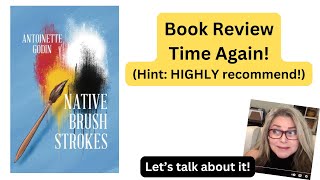
All the Stuff We Don't Talk About with NO SHAME! (WMT Podcast w Antoinette Godin)

Antoinette Godin discusses her debut novel Native Brushstrokes, a contemporary Indigenous story about a woman named Cordy navigating addiction and intergenerational trauma from residential schools. Godin wanted authentic modern representation and describes writing as a spiritual process. She's planning a future mystery thriller focused on MMIW set in the Pacific Northwest.
Chapters
Foreign.
Welcome you to Walking My Talk. For the viewers watching this, normally on Walk My Talk, I'm introducing you to people I know, people I've been friends with forever. Just highlighting that indigenous and non indigenous can work together and proving it with my amazing relationships. But today we have something different for you. This was a follower request, so I'm totally excited. Antoinette Godden is with us today, and she is the author of Native Brushstrokes. And you heard me rant and rave about this book. I love it. I'm going to do a lot of encouraging to get Antoinette to write another one today, let me tell you. But I really don't know Antoinette, so you're gonna get to know her right along with me. So welcome, Antoinette. I am so honored to meet you. This phenomenal, phenomenal.
Thank you so much. I'm so happy to hear that. And I love your show. And I really got involved with your. When you did the Pretending Buffy Saint Marie episode, I was glued. And I thought, you know what? I have got to send my novel to Sandy Boucher. I just felt were really going to understand it. And my theory and my instincts were on target. You really got the book and I'm really happy about that.
Well, for one, you just answered my question because I had no idea how our paths cross. So now I know you tripped over my videos about Buffy. And those were. Well, if nothing else, you would have seen my authenticity, because those were heartbreaking in some cases. I mean, it was. It was so. And we've discussed this in the emails. I mean, you felt the same way hearing the news, correct?
Oh, I loved her. I had all of her albums. I grew up watching her. I was so enthralled with her. And so I was shattered. And so when I saw yours, you were mirroring exactly how I felt. And I thought, Sandy really gets it, too. And I thought, I've got to send her my book. She really does understand indigenous issues really, really well. Yeah.
And. And yeah, like, I literally. I remember her on the Sesame street showing my age here. And to me, like, because I saw my mom and I saw my mom trying to disappear to stay safe. My mom understanding that other people would get upset even if she just walked into a room because of her darker skin. And to see Buffy. And of course, now I look at it in a different lens, but to see her at the time being from a child's view, so indigenous, like. Like with the beads and the hide and everything and not hiding and not being attacked, like, she gave me so much hope, only to Find out. It was a bunch of baloney. Right.
So I was very saddened by it. Yes. And you really, like I said, touched my heart with that. And I thought, you know, Sandy really understands and I thought, I've got to send her my book and get her analysis. So I was so happy when you finally opened it. I know you're busy, busy, busy, so it took you a while, but I was so happy. I just was thrilled when I saw your analysis, your review.
Yeah. And you know what? Like I said in my review, for many, many years through my career, I've met indigenous people that always say, well, I should write my story. And it's like, yes, you should, because there's so much misinformation out there and stereotypes out there, like, please, please, please write your story. But then I read your book and it was like a whole new world opened up. It's like, do we need the non fiction? Absolutely. But holy moly, we need way more native fiction writers. Because I have never related to a story as much as I did this book. Like, I, I think a couple times I was like, was she in the bar with me? Because I. I'm. I'm pretty sure. Or was I at that bar? Because the way it's described, I can totally relate to. And even down to the sayings, it's like, does anyone else say that? Because I know I've said it, I know I've heard it. It was just so real. And it wasn't until that moment that I realized I. How much that's missing in the fiction world. Right.
Thank you.
Yeah.
I decided with the book to, as they say, I thought, I've got to make every chapter really enthralling. So I worked really hard to just have a lot of, I think, excitement. And my characters started coming to life for me. It's almost as if they started doing their own thing. And pretty soon I was following them and it was kind of wild, but I was, I went on an adventure with my characters, actually. It was like I knew them. I almost fell in love with them. You know what I mean? I. I got so involved with it.
Yeah. This was definitely one of those cases where I hated that the book ended. No. Because it wasn't an amazing ending, but I didn't want the journey to end. Right.
That's the best compliment I can get, honestly.
Yeah. It was like, but do I read it again? What do I do now? Right. And. And was so like, I'm sorry. I don't think I would have trouble believing any woman if she tried to say she had never fallen in love with some idiot. Right. In this book. Loving that much that you endure. And of course that's a huge part of being marginalized and racialized. You know, we're, we're so used to horrible treatment that we take it even in our relationships. I'm a 10 year domestic abuse survivor. I am not judging. Been there, done that. She dated him. I'm pretty sure I married him.
Right.
So. Right. But it was. Yeah, it was authentic without making it sappy. Do you know what I mean? When some people try to describe things. Yeah. No, they've never walked the walk. Whereas your work sounded so authentic.
I love hearing that. That's wonderful. It really means a lot to me. Especially when you said you spent the weekend and you had chores to do and you.
Oh yeah, I read the book.
I love that. I, I kept watching that. I'm like, oh my God. She loved it that much. She just kept watching. I was so thrilled with that.
Yeah, I had. And it wasn't even chores. I had work, like deadline business deadlines to meet and caught up assuming I was going to work on my deadlines. And it took about 30 seconds to like, no, I'm not. I'm finishing that book because I knew I could come sit here in my office and I'm going to be thinking about the book. So get the book out of the way first and then I'll actually be able to go back to my life. But at that point I was, I was invested. Like, like there was no way. It was one of those. I'm actually really impressed. I put myself to bed the night before and didn't just stay up all night read.
So love it that when I read a book like that, that is like my favorite book. If I'm up all night reading, then that means I love it. I'll be up till 3 or 4am with burning eyes and I'm like, I've got to read this. I can't, I can't stop. You know, you don't carry your half away.
Yeah. And well, for total transparency here, I rarely read non fiction because I'm so busy reading business books and whatever. So it had been forever since I lost myself in a book. And, and that's what I meant. It was such a beautiful reminder, one I needed. Not only that we need that escape and have to build that into our lives, but we need authentic escapes. Not just like, I'm sorry. Yes, it was fun to read the, those romance novels that are all based in some. You Know, some time period or whatever. I mean, but it was total fictitious. It's not like I could ever identify with it. And this I so could. So I'm curious. We're going to backtrack now. We all love.
Okay. All right.
So now, what inspired you to write a book like this?
Well, okay, so I grew up reading. My grandmother went to a residential school, I might add. Actually have three generations of family who went to residential schools. Great grandmother, grandmother, mother. And I know one of the things. And people don't realize this, they're very abusive. But you will have literature beaten into you. You learn how to read and write. And so I grew up reading a lot with them. And we had, like, a library at home. We read the classics. We got into Jane, you know, Steinbeck. We were reading the Brontes. And I thought, you know what? I was journalism major, too, for a while, and I thought, I want to write a book before it's all said and done, I'm going to write a book. And I've always wanted to do it. And I finally thought, you know what? I'm heading toward the twilight, so to speak. I'm going to just write this book. So that was what inspired me. I thought, I'm really. And I want something that Native people really can relate to. I want to get those stories out there especially. We don't have a lot of those. I kept looking for stories that were. And I couldn't find any. And I thought, I'm going to do this because we just don't have enough out there. That is really, I feel authentic, like you said, and something that's in the 20th century or the 21st, something that we really relate to. And I wanted to have that for people really important to me. And to capture that time period, I might add to that was sort of a radical with the American Indian movement. A lot of stuff. I wanted to capture all of that. It was really important to kind of have it in that really interesting time period as well, which I know, Canada, you know, you're so similar to the United States that it's almost as if we're. Well, we're sisters, you know, that's how I feel.
Yeah. And I think that's what I love the most about it, that. Because there is. I mean, it's not like you can't grab a book about Indigenous culture or whatever, but it's. It's either like, horribly negative or the elders. Right. That are so beautiful and so wise and whatever. And that gap in between and what I liked about this book, like you said, the characters were so well rounded and so real that, I mean, I've definitely danced with alcohol. I had my years. But it's not something you normally talk about. It's something you're supposed to be ashamed about or whatever. So to see this in the book as part of her life, but not who she was. Right. Like environments or chapters in her journey, but not defining her. I just thought so many more indigenous people need to read that book, especially if they're still dancing with alcohol. Like, don't. Don't make that your identity, even if that's what you need to be doing right now. Like, I'm not going to judge, but that's not who you are. That's just what you're doing right now. Right, exactly.
Well, it's funny because my editor said to me, he said, there aren't bars like that. He said, nobody's going to believe you. They don't have bars like that. He said, you've gone over the top with this. You need to tone it down. And I said, no, these are real. There are bars like that and I'm not going to change it. I said, I've got to be authentic with people. And so it was really important for me not to, you know, shall we say, mow it down and make it much less vivid than it was. I wanted people to really know what's. What was out there. I don't know if this. Bars are still like that, but there are some pretty wild bars. Yeah, there's still. Yeah, I don't go anymore. But as a younger person, there were some, you know, you didn't know if you'd get out alive in some of them. I mean, they were pretty wild.
Do you probably remember that too, the way, ah. I can't even put into words how amazing your words were. Where it's especially like talking about that bar scene again, someone describing it from outside, like, it would have been really super scary and really terrifying. And it wasn't that. It wasn't. But when your life is so low and so dark, that seems to be just part of the mosaic. Right? This is where your friends are. This is what you know, this is the norm. And that's what I took from the book. It wasn't. There was no judgment, Right. It was just, this is this chapter, right. And.
And I appreciate that because I did have a friend who's not Indian who read it. And he goes, oh, my God, they were sure drinking a lot. And I'm like, you know, so. I'm so Glad you said that about. Don't judge. Because that is a reality, you know, for a lot of people growing up or younger people, even older people. And it's really important to not ignore that, you know, that that is a reality of dealing with trauma 100%.
And. And what people don't realize is, yes, again, from the outside, it looks like you're drinking a lot. You don't know what I'm running away from.
Exactly.
And this might be that escape that I need for these three hours because I got to deal with the rest of the day tomorrow. Right.
So. And I love what you said about younger people realizing some of the older ones have been through it and have survived and they've come out alive and actually have been successful. And, you know, it's an encouragement. Yes, you can. Yeah. You know, no matter what happens, you can get through it and have a really good life. Just, you know, don't give up. And that was one of the messages of the book.
Yeah, exactly. And I mean, I think. And I think it's. We all do it when we're younger. You see the older adults and especially the elders, and somehow you just assume they've always been that way. Like, they were just born that way. And, of course, that. That couldn't be further from the truth. And they all. I can remember having a conversation with my mom after my dad passed away. And, like, I was, like, 17, 18 years old. So we were just having a different type of conversation now. It was more woman to woman as opposed to mother, daughter, and share. I shared with her something. Well, I know what it was. She casually mentioned when she used to smoke, and I almost fell out of my chair. I beg your pardon? What? And she laughed so hard, and she's like, why did that shock you so much? And it's like, because you are perfect and you have never made a mess. And of course, she thought that was equally hilarious. And it was such a turning point for me because she was a woman I looked up to and valued and wanted to be like. Like. And to know she had made mistakes that, like, I was assumed. Because I had made mistakes.
Right, exactly. Yes. And I don't know. And it seemed like. Were there any characters that you particularly got involved with in the book that you were really interested in? You know, wanting to know a little more about backstories, anything like that?
Well, Cordyce, I was. I was. I was walking hand in hand with Cordy through the entire book.
Right.
That was Cordy. Like I said, are you writing about my life? Like, what what's going on here. And even the creative aspect. Of course, she's an artist and I'm an author, but I mean the creativity as an escape and the eternal hope, like I said, be the poverty. Right. That car, I was like, oh my God, what was. I had a card that I named Rusty because it was a fitting description and, and so I could so relate. Right. And every time she had to warn people they might lose their belongings to the floor. I know that, that shame and that this is me on the highway.
Exactly. Yeah.
Right.
I had an old beater too like that. And I never knew if I was going to make it home. I would park on hills and pop start the clutch. It was an embarrassment. It was such a beater. You'd hide it like in the back street. I'm gonna go to my car. And it looked like you might be going to a nicer one. And then you'd go to your beat up car and pop started. Right. And you would just pray. Dear God, get me home. Please. Just don't break down.
Praying. Yes, the continual praying on every trip. Been there, done.
So many people don't have beaters like that. But we do.
We did.
You know, it seems like. Yeah, I've noticed like in Indian country every. Well, that's what we call it here. Everybody had a beater in those days, you know, all of us did.
And even up here we call them Indian cars, right?
Oh yeah.
Description of that almost taped together and might be missing a door. And a large part. Now, I don't know if it's the same in the States, but up here, if you're in the First Nation community on the reserve, there's a lot of the rules that don't apply. They don't apply in the reserve, outside the reserve. So you wouldn't need a driver's license inside the reserve. And you.
That's wonderful.
And you don't need to have the safety on your vehicle. So you end up with these Indian cars. Then you're basically pushing around almost. Right. So. And that's where it comes from. A friend of mine has a amazing song called Indian Car that describes that situation. So yeah, that I could just. And what I loved is like we're touching on how embarrassing it was in the praying that we did and then we had these beater vehicles. But in the book made it seem like everyone has one of those. Right. And that's what I meant by the being able to relate to it. I have never heard that mentioned in any other book ever. So it almost Felt like, okay, I'm not the only one. Right. Because that is my, my memories, that is that I remember the level of praying more than any service ever. Right.
It's funny because when I had my beat up car, friend said a three legged Dober would be Doberman would be better than riding that thing. And I said, no, we'll make it. But people are like, are you sure? It feels like it's going to blow up. We'd be shaking going down the freeway. You know, it was a scary thing. Now it's funny at the time it was just really frightening when you're driving a beater like that, you know, and.
Frightening, but also representing some level of independence. Right. That at least you had that car. Right? Yeah. Which, I mean, would we have been better off or worse off without it? Debatable. But yeah, that it was, that was my car and that's how I got around. Right, Exactly.
No, my car didn't have windshield wipers. I remember they fell off in a storm and that was scary because you'd have your head out of the side to sort of see so you wouldn't crash into somebody. So that's when it was starting to get really grizzly, you know, no turn signals, etc. You know, I'd use my arm to turn and it was quite an adventure when I think back on it. But funny now.
And the one thing that again, I could so relate to and hadn't really found anywhere else and I'm going to be really super careful how I phrase this because I'm not into slamming our own, I mean, healing. I just did a video on the fact that healing is ugly and our people have a long way to go and, and if you've taken any steps on a healing path, all the kudos to you. I support that. I'm not judging. But having said that, the depiction of our men and the fact that yes, we do have those warriors that, that know how they look and, and collect women, they, they have definitely adopted the extraction mentality we see in mainstream, like they're with whoever for what they can get and, and again they come from their own poverty and their own trauma. But I, I have heard personally as an indigenous woman growing up at different stages, asking why do I date exclusively indigenous men and if I don't, why not? And I know a lot of indigenous women, women that would say I wish we could, that I wish our men were further along in their healing. Whether it's the substances, whether it's the violence, like the whole ball game of what they've inherited and their trauma. But, yeah, to see that reality. And I've been there, you see someone like, holy crap, he's gorgeous. Totally relate. But almost like the bad boy. Right? Like, it comes with that sense of, yeah, but what's the price tag to be with this person? And she found out the hard way, Right?
Well, when you're young, you don't think about the price tag. You're just looking at the handsome warrior. And I think a lot of younger women do. And this guy is just mesmerizing. And I just love this guy. And he looks like he was on a buffalo hunt. And so women do fall in love with, you know, and they're damaged Native men. And that's why I said he was Heathcliff, because Heathcliff in Wuthering Heights was a damaged guy like that. Very masculine, but damaged. And I wanted to show that, you know, and give him more dimension than just being like a cad, that he had other things going on that kind of turned him into what he was. I wanted to make him three dimensional rather than two. Is just a bad guy. Yeah.
And the other thing, that again, resonated for me and I don't know. So my non Indigenous followers. You can put it in the comments. I would love to hear your opinion on this. As an Indigenous woman, an activist is incredibly appealing. Right. Like not just the warrior, but the warrior who's advocating for change and daring to go out there and have a voice. So that was incredibly attractive. And I know, I see that in my own life, whether Indigenous or not, if someone's willing to stand up and fight for change, that is. That's. That activism that is incredibly appealing. So. And he, of course, used that to his advantage. And then of course, we have. I'm trying to remember her name. What was her name? Rose. The other. Sugar. Sugar.
Sugar, yeah.
And there's another reality, right. Ah, there was just so many. And that's why I love. So do you know who Richard Wagamesis was? I did.
Didn't he write Indian Horse?
Yes. He actually has 13 different books. If there's one I would highly recommend reading. It's called Medicine Walk. So. So. And it's a fictional book as well. And in the book, it's not so much that, of course, it's coming from a guy's perspective too. So I'm not going to identify as much. But one of the things I really identified in Medicine Walk was the Indigenous character was on a good path in doing his own life and things, but his dad was still Struggling with addiction, still impoverished, still in, like, would have been in one of those bars, like, in your book.
Yeah.
And to me, I could really resonate with that because so many indigenous people may be further on, on their healing path, but that doesn't mean their family is. And what I loved about Richard's book was because of the work I do. And I definitely up to my neck in nonfiction. Right. So I know there are certain topics or certain phrases that will get people to bring up their defensive walls instantaneously. And when I read Richard's book, I literally was like, you son of a. I thought he was so intelligent because here he was using fictional work, which. Who's going to get defensive over a fiction? It's just a story. But he was telling truth and in fact, hitting in a fictional story. And I was like, oh, that was. That was impressive. And that's what I saw in your book, too. You could read this book and just think it's an amazing story, or if you're smart, you could realize how many truths are actually in this book. And that's, of course, what resonated with me.
I love Richard Wagamese. I saw him actually speaking on YouTube when he got an award, and he had the most wonderful personality. It was. He had this subdued kind of sense of humor, kind of a tongue in cheek, but yet he was very traditional. I thought he seemed like a really interesting man, you know, Very fascinating. I'm gonna definitely read that. Definitely. Yeah.
So. But there's another indigenous man dancing with his demons. Right.
And.
And the healing path isn't linear.
Right.
It's all over the place. And it's pitfalls and three steps forward and two steps back and one sideways. And so. Yeah, but so have you.
I like what they said about healing. Yeah. I love what you said about healing, that healing's hard. Everybody thinks, oh, I'm healed. It's all great. No, it's a difficult path. You know, like you said, you do, you're doing well, and then bam, something happens and you're not doing well. It's a constant struggle in life when you're dealing with trauma, historic trauma, and other things that we all deal with.
Yeah.
It's not easy.
And that. I couldn't agree more with that statement. I. I'm not sure if you're ever done healing. Maybe when you're no longer here, that's when you graduate, but that's exactly it. You think you're in a really good place, and I've unpacked all my garbage, and then wham you meet someone, something happens, and it's like, oh, more to unpack. Yay.
And I wanted to share with you what you said. It's a female. I wanted to really relate to indigenous females because, like, we read a lot of men who. But it's women were a little different. So it was really important to capture that, you know, the feminine aspect of it.
And you just. I just realized this when you were talking. And I know I didn't mention it in the other video, but for one, yes, this appeals to indigenous women 110%. But, like, in Canada, there was huge work on missing and murdered indigenous women and girls because we're six times more likely to go missing or be murdered or worse, whatever. Or. Or her guests. Right. What I loved about this book was I never thought of Cardi Cordy as a victim. There was her circumstances. Her resilience shone through even in ridiculously overwhelming situations. And that's what I know of the Indigenous experience. Like, you don't get the luxury of what was me.
Right.
And no one's coming to save you. You're gonna jump in your beater car and figure it out on your own. Right. So that I love. There wasn't. Even though it didn't minimize how hard it was, it didn't go to that pitying. It was, this sucks. I got to figure out what to do. Right. Oh, and by Interesting.
Yes. I could have made the book dark. Very dark. As you saw, it could have gotten really dark. And I thought, I can't do that. I've got to have some hope in this book and some happiness. So I tried to blend happiness with the hardships that you have. Some hope as a reader.
Yeah. And I think that's our reality. Right. We wouldn't still be here if we didn't find some kind of hope and some kind of way to go through, even if it was laughing and getting drunk to deal with it. You figured out a way to deal with it. And tomorrow the sun will come up and I'll do what I have to do. And no, I'm not going to give away any information because I want everyone to buy this book. Because you totally should. But holy moly's. You get, like, the biggest high five ever for the. The surprise. Right.
I'm so happy. So you didn't see it? I won't. No spoilers.
I was like, I love that. Reread that. What? Seriously? Oh, like, I mean, it was the icing on the cake of an amazing cake. Right. So. Yeah. Yeah. And that's Why? I was like, you just decided to do this. Like, you were meant to do this. Like.
Oh, thank you.
Considering this is your first book, you knocked it out of the park, right?
Thank you.
I really, really hope you're writing another one because, like, I already want to buy it.
So. Honestly, you know, this may sound crazy, but the book was a spiritual experience for me. What I mean by that is my character started coming to life and I actually cried as I wrote some of the sections and I laughed in some of the sections. It was like I was in the book and one of my friends who's a writer said, writer cries, reader cries, writer laughs. You know, reader laughs. And it felt like that I got so involved and I was, like, living their lives. And it really did. It was a spiritual. It was like a growing thing for me. And I do want. I'm going to write another book and actually, mmiw. I'm going to do a murdered and missing indigenous woman book on my next one.
Okay.
That's what I'm starting to work on right now. I just feel this drive that I've got to get these messages out, you know, to the world, because I feel like we're not. There aren't enough women writing, Native women writing out there.
There absolutely are. I mean, we're talking. We got two countries between us, and they're not small countries. And still it's so hard to find. Right. So, yeah, you definitely have to. And what you just said about, you know, crying at parts and laughing at parts, I know when I go there in my writing, when I go to what? Or I'm actually feeling that, my readers feel it. And it doesn't even surprise me to hear you say that, because I know those parts, right? Like, I could tell that you were up to your neck in it. You weren't. You weren't removed from it, which is why it makes it so powerful and so authentic. Right.
So love that. Yes. Thank you. I thought about, like, Stephen King, you know, I used to love his books. Still do. But one of the. I read about being a writer, what he said, and one of the things he said is, if you don't read, don't write. And I thought that was such an amazing statement because you just. When you're reading and writing and you start doing your own writing, it's hard. I mean, you know that, too, as a writer. You go through nine drafts, you keep rewriting, you keep fixing. I mean it. But. And it's hard. Like you said, a lot of people say, I'm going to write a book, it's very difficult to get through it because there's so much you have to do as far as sharpening it up and editing and it's just. But it's. It's such a wonderful thing when it's done, isn't it? When you got it done.
I totally agree with that. It's such a process. And for me, I don't know if you felt this way, but when it was finally said and done right, all the polishing is done and it was released, I almost had a panic attack. It was like, now it's out there. And even though I'm positive that it's the way I want it to be, it's almost like standing naked in front of an audience right now. Now what's going to happen? And when I started to hear the positive feedback and the appreciation and how much they needed my book, then it was that. Only then did I start breathing again. Because you never know. It's like sending your baby out into the world. Right?
It's like you said, stepping naked in front of the world because you are bearing your soul.
Exactly.
You know, it's a pretty tender thing. And so if it gets pierced, it's quite painful. Yeah, yeah, yeah.
Unreal.
And that's scary. Yeah, that is so scary. Yeah. Yeah. My next book is going to be taking place in the Pacific Northwest and so I'm going to do sort of an MMIW type mystery thriller. And I'm really looking forward to it. I just have to get the. The who, you know, all that energy and whatnot. It's a lot of. Well, you know that it took me a few years to write that book. I just, just kept writing and writing and writing and researching and writing, you know, so it was quite a job. But yeah, this next one I hope will be better. Yeah, I hope it'll be more.
I don't think that's possible. Seriously. I know you put in a lot of time and effort and love and tears into this book and. But let me be crystal clear. Words worth every ounce of it. Because seriously, like way at the top of my favorite book lists.
And that's why I love that. Yeah.
It's like you have to write another. I need. My soul needs another. Right. And. And I hope if there's indigenous women watching this that they will start considering. Write your truths. Right. And it doesn't have to be this, this non fiction autobiography. Right. Like, because you shared beautiful truths and the hard times in authentic way in a novel that's appealing to Everyone. So, yeah.
Thank you. Yeah. Thank you so much. I'm so happy that it touched you like that, because like you said, you don't know. You just don't know if it's going to touch people or they'll be like, oh, God. And they shut it. You just don't know what's going to happen. So it's a very frightening thing. But once it's out there, you've given birth to your book and it's going to grow feet and it's going to go where it goes, as they say, and you don't know where it's going to go.
I think if I remember correctly, I don't remember how many, but the first five, 10 pages, like, I read them and then reread them because I got to the. What am I actually reading? Because I was. It was the first time experiencing that relating to the story, and I was like, like, am I putting things into this? Like, wait a minute, I gotta start again. And that's when it was like, no, I'm not putting it into it. I am reading this. I am relating on a level I had never experienced before. And now I want to keep going because, like, yeah, it was all the stuff we don't talk about with no shame and that.
Exactly. Yeah. And my character is pretty old at the end of the book, so somebody said, why don't you do a sequel? And I said, she's not going to be alive.
Yes. Yes. Let's let her rest. Right. Yeah.
We need a new and new character to relate to, but a dynamic. Yeah. You know, fighter.
Yeah. And I think that's important, too, because you would never want to put out that there is only one like that. That. Right. Like the. The reality. There's many resilient, multifaceted indigenous women out there that. That maybe our stories can become stereotypical because there's commonalities. That doesn't mean we are.
Right. Exactly. Well, and I was thinking, too, I wanted something more current because, you know, our indigenous books are really old. Like back in the 1700s, I wanted something more current.
Yeah.
Did you feel that way, too?
Yes. Thank you. Well, like I said, that's what surprised me because, I mean, the historical. Fine. Because people are still so confused about the history, but I was relating. Like I said, is she writing about my life? Like. Like, this is. I lived this. This is modern. Right. This is so. That was powerful. And I think, you know, I just realized there are so many young indigenous girls. I'd love to get put this in their hands because they're just starting into that life.
Right.
And seeing reality that no one talks about. And they need that hope. They need to see the ugly as well as the good, so.
Exactly. Exactly. By the way it's going, I'm working on an audiobook on it now, hopefully. I'll let you know when it's coming out. I really. I think it's going to be really good. I've got a reader and she's very good. And so I can't wait till it comes up because I know people aren't reading it like they used to. They're listening. So I think audiobook will probably get to more people.
Well, I'm actually. I gotta write a note to myself. I work with many. They're called education authorities, so they're agencies that support indigenous students going to school, and they work in support of the First Nation community. Right. I can think of a few that I want to reach out to because they've brought me in to talk to the young women. I'm going to reach out to them and tell them, okay, you need to buy these books. Books. And often these youth are from communities that don't have the best Internet access. So actually having a book that they could be sitting, you know, out in the bush or whatever and actually reading it or in the silence of their dorm room or whatever. Yeah, there's an audience, too, so.
Oh, thank you. That would be wonderful. Because I do want to talk to younger women, you know, and the book is written from a feminine viewpoint point. Although, like you said, the men have great stuff in their trauma, like Richard Wagamese and his great, great books. And I'm actually going to read that book you recommended because I just thought he was the most amazing medicine. I'm going to read it. But, yeah, as females, we've got to get out there and get our stuff out there and not be afraid and just do it.
And that's where they're at the age where they're just starting to silence their own voices. Right there. Cordy running into. I can't remember his name, the warrior Merlin.
Running into Merlins.
So they're. That's their reality. And that's why I think this is a beautiful time.
Definitely. Yeah. It's wonderful. Yeah.
On that note, everyone watching this needs to get this book. I will put the link in the show notes. Yeah. Holy moly's. I. I just. Yeah. I can't recommend it more. I just can't.
Thank you.
Whether you're indigenous or not, either you're going to identify with it or you're going to learn tons. But either way, it's so worth it, so.
Oh, thank you, Sandy. I appreciate that so much. I really do. That's wonderful. Thank you.
Well, thank you so much for agreeing to join me today. I was like, like, when I was talking about the book, it's like, why have I not invited her? And I'm so glad that I did, so I'm certain he's staying in touch, and I can't wait to read the next book, so.
Well, you're definitely going to be sent another book. I will. And I'll be in touch with you. My next one will be sent to you, too. All right, Sandy, thank you so much. This was really nice. Thanks a lot. I'm glad you really, really related. That is wonderful. It's music to a writer's ears. It really is. It's wonderful. Thank you.
Not only related, but just loved it. Just loved it. So thank you.
Great. I found my audience.
Yeah, you did. You did. I'm right here. Okay, until next time, everyone. Take care. Bye.
Bye. Thank you. Bye. Bye. 19.
More from Sandi

How I Handle "The Four Uglies!" (Alcohol, Diabetes, Healing & Cheap Seat Comments)



When Authors Chat ... (Radio Interview for the Launch of "Copper Stone - Glimpse of Blood Memory)



MORE PROOF of Indigenous/Non-Indigenous Relationships that Work! (Walking My Talk w Millie Gormely)