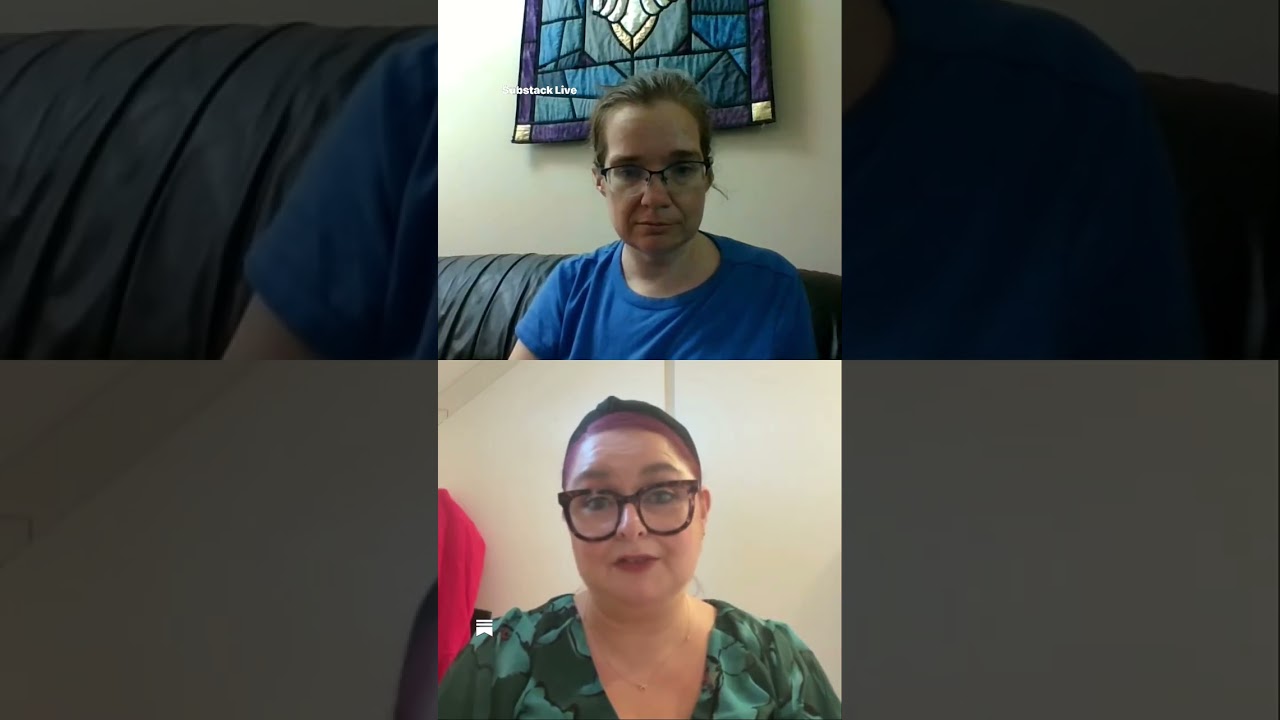
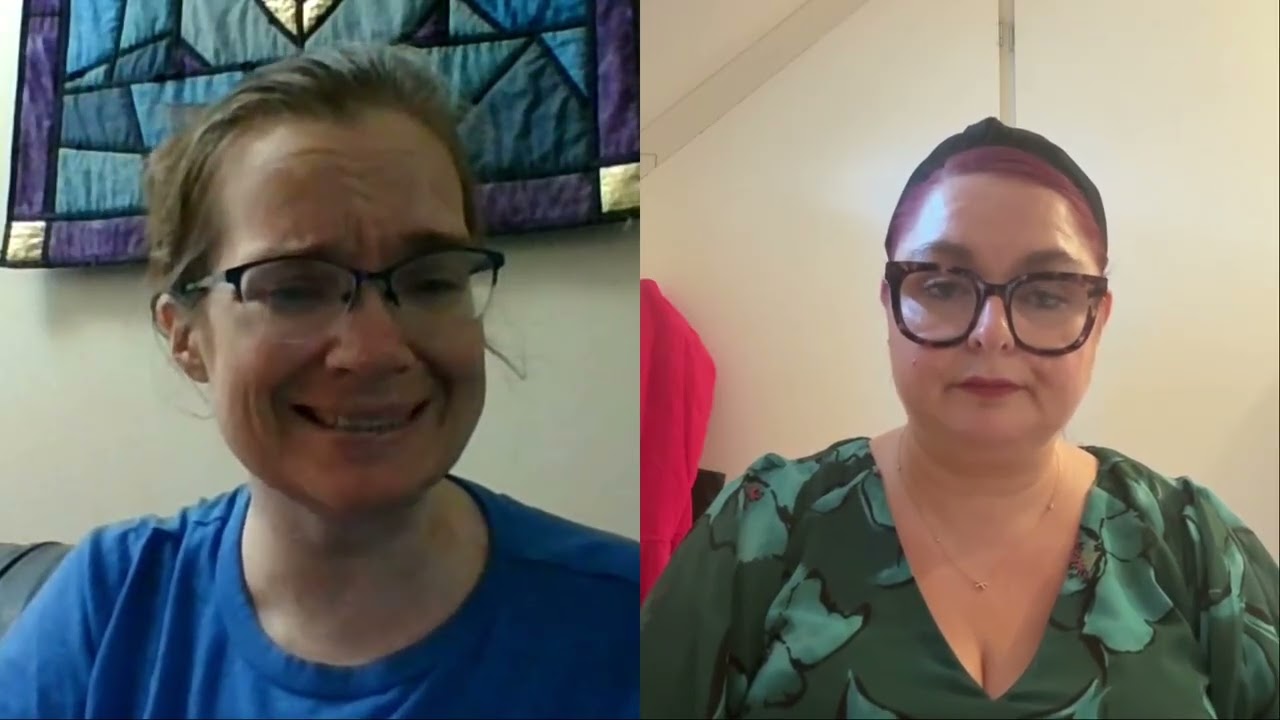
Live with Sarah Levis and Amelia Hill, July 7 2026

Disability writer Amelia Hall and host Sarah Levis discuss living with cerebral palsy and acquired disability, comparing U.S. and Canadian accessibility laws. They cover career paths in disability work, barriers in small towns, and Amelia's community projects like her Substack "Trailblazing with CP" and a Silent Book Club for disabled writers.
Chapters
Hello!
Hi!
We figured it out.
Oh, I'm so happy to see you.
I'm so, I'm so sorry about that.
No, it wasn't you. Hey everyone, it's Amelia Hall.
Hi!
And look at, look at all the wonderful people we have joining us.
Absolutely.
And, and this is the first time that Amelia and I have actually, have actually talked. So, so we get to meet each other too. I told them earlier that, that when I learned that this was Disability Awareness Month, because shame on me, I didn't know Disability Pride Month, because Shame on me, I didn't know. I thought, who do I want to talk to? Who do I want to talk to? And your name was the, was the first on my list. So I'm gonna let you introduce yourself to everyone. Sure.
Yep. So like Sarah mentioned, I'm Amelia Hall. I write Trailblazing with CP on Substack. So I write about living with cerebral palsy. I also write about disability inclusion and accessibility and all that sort of stuff. I, I am disabled myself, and I also work in the accessibility field too. So it's my lived experience, but I also do it professionally as well. So happy to be here.
Oh, thank you so much. What a wonderful job to be able to be doing accessibility professionally. I mean, I, I know I, I do, I do writing and editing and, and, and pretty much stuff people don't want to do. For my, for my day job. But, uh, um, but before that I did, uh, um, low-wage, low-security, you know, uh, admin jobs around the little town that I live in. And what a, what a, what a, what a wonderful thing to be able to do that and to raise awareness. And I was, I was telling people again before you came on that the US, for, for the things that it's failing on in disability, is, is ahead, is ahead of Canada. Absolutely.
Gotcha. Yeah, I, I didn't know that. Yeah, so interesting.
Um, lots of promises made, few, few, few kept. Um, but, but it is, it is getting better. But, um, but there are still some people that, uh, um, that, that kind of cringe when they see me coming because they, they, they're wondering Oh my gosh! What is she gonna say to us now? What have we done wrong now?
Does Canada have its own version of the ADA or a different version, or not?
Not not countrywide. No.
Wow.
Yeah.
So what so what does that mean? Like what does that look like?
Means that the provinces and the territories do what they want, and they wow. And they do things like, uh, um, you know, promise that by 2025 Ontario is going to be totally accessible.
Wow.
And then when they discovered that they'd totally fallen down on it and they weren't going to reach that goal, they started to roll it back and roll it back to, well, government buildings built from this point on will be accessible.
And then, you know, I would, I would imagine with that being the case that there are a lot of people who can't access much because of the fact that it's by territory and not countrywide.
Is—
would that be accurate to say?
Yeah, it's, uh, it's, it's the stuff that is— it's, it's the things that, that are government-run, like the, like the hospitals and the, the schools and, uh, um, anything government, anything kind of that gets kind of federal money, that, that, yeah, you can count on that being, being fairly accessible. But, but anything that's, anything that's kind of run by province, it depends on what their legislation is and how strictly they're following it. And, um, Gotcha. And then anything private is kind of Again, depends on the province, depends on, uh, depends on how close— what the government has said they wanted them to do and how closely they're monitoring it. And so, so yeah, so there are a lot of places in my town that, yeah, if you were in a wheelchair, you couldn't get into them.
And, and he— and here I thought the, the US was bad.
Um, like there's a, there's a restaurant in town where, uh, um, there's a, there's a major step up to get into it, but ring a doorbell and they will come help you. And I thought, nope.
How, how, how, uh, but like for the people who have to use that, how often do they actually come? Because if it's not used super often, then they're not going to be used to having to answer that. And I— wow.
Yeah, because I thought when I was in my wheelchair, no, not lifting. You're not lifting me out of my wheelchair into the restaurant. You're not lifting me in my wheelchair into the restaurant. Not touching me, because I'm sure that you guys aren't— I'm sure that you guys aren't qualified to do those sort of lifts. So for sure, yeah, I'll just stand out here while you— I'll just stand and wait out here while you bring me my food.
Thank you. Oh goodness.
But yes, it's always nice to talk to somebody who understands that.
More than you realize.
But tell me a little bit more about yourself. How did you come to Substack?
So I actually first started writing a blog when I was in college. And so, and what I wrote was very similar to what I write now on Substack. But basically, how should I explain this? I had my blog when I was in college, and then, and I, and I really, really enjoyed that, but I couldn't keep it up when I went to graduate school. And focused on my career and stuff like that. So I did go to graduate school and get my master's in social work and have been pretty much focused on disability since then. I tried for a stint to be a mental health therapist and realized really quickly that I didn't have the— I brought too much home with me. I had a hard time with that. Boundaries and things like that. And so it was the kind of thing where I said, look, there are plenty of people that do this for a living and that's wonderful and it's okay that it's not me. And so I realized that the disability space was where I wanted to be. And so from there I ended up— so I live in North Carolina for anybody who doesn't know. And I worked for the state for a period of time as a vocational rehabilitation counselor.
Okay.
So I, I helped people with disabilities find employment. Um, and then I moved into my current role in November of 2023, um, because I got burned out from being, uh, like, work— working with the public for 5 years. And I basically said I'd— I want to stay in I want to stay in disabilities, but I want to do it kind of in a back-of-house sort of way if I can. And so that's how I ended up in my current role. So I'm an accessibility specialist for a bank, and basically I teach the people who work at the bank about disability inclusion and the ADA and how to, um, provide support to clients with disabilities who come in, come into the bank, um, to, to get services. So.
That's wonderful. And good on your bank for having, for having somebody in that role. That's amazing.
Yeah, yeah, yeah, it's, uh, I, I really, really enjoy it, but I also recognize that it's a very niche position to be in. And so I, I do also wonder in the future, you know, what, what'll happen with positions like mine. Like, will, will they remain or will they not? Uh, obviously it's my hope that it doesn't go anywhere. But it's because it's so specialized, it's not something that just the average person can, you know, just jump into, if, if you know what I mean. So I think my, with my social work background, it helps. But then obviously, you know, when I'm interviewing for positions, especially, you know, because I work in accessibility, I do tell people, you know, I'm disabled. I have been disabled my whole life. I know what this is like in a very real way. And, you know, I've— my previous boss, you know, used to tell me, you know, Amelia, you bring a perspective into this work that not many people have. You know, there, there are often people in accessibility who they have the accessibility, accessibility knowledge, but they don't have the lived experience. And it that that makes a big difference because I literally know what it's like to not be able to get into a building because there's no automatic door opener, or not be able to access something because. Someone is parked in an accessible spot that doesn't need it and, you know, things like that.
So. It's something that I run into here too. And, um, and again, being in a small town is, uh, is, yeah, there's a, there, there is a, a, a job center here. It's a government job run job center. And, uh, there is a, a, a person that's supposed to help disabled people find jobs, somebody who's obviously very good at their work at finding jobs but doesn't have, like you said, that experience. And I went in once just to see, you know, how they kind of handled themselves in the situation. And they said, well, there's this website you can check and this website you can check and this. And I was like, I can do that on my own.
Yep, exactly.
I'm already doing that. That's, that's not what I'm here for. Yeah.
So what I've noticed is in, in the disability space as a whole, on the professional side, there aren't many people who work in the profession, but then also have the lived experience. It's usually people who are working in the profession, you know, it may be something they're interested in, but they don't necessarily You know, live with it day in and day out. And when you live with it day in and day out, you can relate in a way that people who don't live it just don't know. So.
And what, what, what kind of activities do you do for, for, for fun? How does that affect your disability?
What do I do for fun? Ooh, I like this question. I so I I like to read. I'm a I'm a really really big reader. Books are my favorite thing in the world. So I actually have a I don't know if you've ever heard of Silent Book Club before, but but it's what are those? It's like a national it's like a national organ. I think it actually may be international, but it but it's basically My group specifically, we meet every other week and we have an hour of basically reading time. You know, they're socializing before we start and then afterwards, but basically it's just a bunch of people getting together and reading quietly for an hour.
I love that idea.
Basically like my paradise. Um, and so I've, I've met a lot of people through, through that, uh, over the last couple of years, which has been incredible.
That's great.
So, so yeah, and, uh, when, when I'm not writing, I'm usually reading because I enjoy it, but also because I want to improve my writing.
So Yep, for sure. Yeah, and, uh, and you're doing, uh, and you're doing a lot for, uh, for disabled writers on Substack. You've got a series out. Yeah, yeah.
So, yeah, so, um, I started a series called, uh, Disability Unfiltered. Um, basically my idea was that I just wanted to highlight, you know, other disabled writers across Substack. I am planning to run that series through the end of, like, through the month of July, just because of the fact that, you know, July is Disability Pride Month. And I really want to take this time to, you know, lift up those people who, you know, have stories that deserve to be heard and deserve to be You know, shared with people. So.
Yeah, that's great. Yeah, and I've read, I've read all of those articles and, uh, um, yeah, very— I, I, uh, I really like reading, reading books, articles, anything by other disabled people because, uh, because there's, there's, there's so many perspectives that I haven't considered. Even being disabled as, as long as I have, you know, and that's, you know, it's 25 years for me now.
And, and I think part of what I wanted to do with the series is, you know, I, I write about my own experience with cerebral palsy. But I also wanted, especially during Disability Pride Month, I wanted other people to realize, hey, There are other disabilities in the world. They, they look different. You know, everybody's experience is different. You know, I was on a podcast yesterday where I said, you know, if you've met one person with cerebral palsy, you've met one person with cerebral palsy. And just realizing that everybody's lived experience as a disabled person is is very different. And so we deserve to, you know, give people the opportunity to share their stories and, you know, get their experience out into the world.
Absolutely. What was it like growing up with cerebral palsy? Is that the way to pronounce it?
So I— that's the way I say it. Other people say cerebral. Because like, because that, that is also the word, um, but I, I've never pronounced it that way. It kind of makes me feel weird when I hear people say it that way, even though there, there's really nothing wrong with it. Um, I've just always said cerebral palsy instead of cerebral palsy. Um, so you asked what was it like growing up with CP?
Hard. No doubt.
Very isolating, but also just— but isolating in the, I'm different and there— I don't have people around me who understand that. And so, you know, part of why I started writing Even when I just started writing in college, was I said, "I I didn't have. I didn't have a guide when I was a kid. I I didn't have somebody that I could talk to that said, "Hey, I've been through this, and I empathize with you," and and things like that. And so in a lot of ways, I I wanted to be that for other people. But at the same time, I also. wanted to use writing to work through a lot of just my feelings about living with a disability and just my, my experience, you know, living with CP. So as a kid, I had a fair amount of surgeries. I was in physical therapy starting from when I was 2 until I was 16.
Right.
My My surgeries meant that there were periods of time where I was out of school and things like that because, you know, major surgeries and stuff like that. So I, in a lot of ways, I wouldn't necessarily say that I had a typical childhood just because of, you know, the things I had to go through related to my disability. But At the same time, I also think about it and wonder, well, who in the world ever has a typical childhood?
There you go.
You know, like, it's just— no, no, nobody has it. Nobody does. It doesn't exist.
Yes. Yeah, I— and, and none of what happened to me happened in childhood, but, but people, uh, people will come to me come and say to me sometimes, you know, it's like, well, you're, you're, uh, you're very, you're very positive about this, you know, you've got such a good attitude about everything. And it's like, well, you know what, everybody's got their own set of stuff that they have to carry, um, and this just, uh, and this just, just happened to be mine. Um, I, I've probably been a lot worse.
Yeah, I've gotten I've gotten that similarly from people, you know, who, who have said, you know, wow, for having a disability, you have a really good outlook.
Exactly.
And, and it's like, okay, hold on, repeat what you just said, because you basically said you have this thing wrong with you, and if I had something similar wrong with me, I don't know if I would have a similar outlook. And, and so it's like, okay, do you realize that what you said could be seen as kind of hurtful? And, and stuff like that. But I'm not somebody— I would probably say over the last few years, I've gotten more outspoken about disability issues and accessibility and things like that. You know, as a kid, I— all I wanted to do was fit in with my peers.
Yeah.
And so I— that, that's the only thing I wanted. And so I didn't, I didn't do anything to rock the boat. You know, when, when I was in school, I, I got bullied a lot in school just because, you know, I had to use, you know, either canes or a walker to walk or just Whatever it was, but and and I I got I got bullied for that. But it was very it was subtle. It was the whole like people looking at me all the time. You know the pointing and the snickering and the you know like whispers behind my back thing. Like it wasn't ever. Like someone blatantly actively, you know, bullying me, I guess. And so, and because I wanted to fit in so badly, I never said anything to teachers or anybody because I was like, if I say something, that'll make this whole thing worse because they'll know exactly who it came from. And You know, but it's just interesting because so I have a 5-year-old son with autism. And I try to think about what, what I would do for him if he, if he experienced, if he had a similar school experience, and there's no way that I would just let it slide. Like there, there's absolutely no way. Like I, I wouldn't, I wouldn't make my son be the one to, you know, go to teachers and things like that, but you better believe that I certainly would be the one to do it. And it, it has made me think about, uh, how we advocate for ourselves often looks different than how we advocate for children or people we care about. It always seems to be much easier to advocate for people we care about, but when it's us, it's not as cut and dry.
Yep, I agree. Yeah, it's— and again, I'm getting much better at it than I used to be. I used to be a lot quieter. And I am now.
So did I.
But, but, but yeah, there's, there's still that temptation to just kind of hang back and say, you know, oh, it's just that it's not that, it's not that big a deal. I can just— hey, Fiona. Yeah, it's not that big a deal. It's not worth, it's not worth making a fuss over. You know, because I'll, because I'll figure it out. I'll figure it out.
Right, right. I, I think what can, what can be dangerous about that though, about saying, okay, I'm not gonna make a fuss over it, is thinking about how many people have said that exact same thing to themselves.
Yeah.
And have not brought up anything, and the behavior is not going to change because Nobody's speaking up. And so I, I'm not trying to challenge what you said. I'm just saying that—
Oh, no, it needs to be challenged. Yeah. I need people who will, who will call me out on that and say, you know, well, when— because I used to work at a high school with kids, with disabled kids. In the special education program. And there wasn't, there wasn't anything I wouldn't do for those kids to make sure that they were having as close to a, you know, quote unquote, normal high school experience as they could, as they could have. That was very, very important to me. And I was a real pain in the ass to the administration. But, but, but then, then there's, there's that question, why aren't you willing to be a pain in the ass for yourself?
For yourself. Yep.
You're worth it too, right?
100%. So what— so I, I know this is mainly about me, but what can, can you tell me a little bit about your, your disability experience?
Um, when I was, uh, when I was 22 years old, I had, uh, I, I, I've worked with, uh, people with disabilities Pretty much since I was, uh, since I was 15, I worked with, uh, they're, um, they're called now, they're just called, uh, associations. I don't know, what are they called now? Just community living, they're called. But I decided I wanted to be a social worker.
Yep.
So my mom said, get some volunteer experience that you're, that, uh, you're gonna need that to get into school. So there was a, an association for community living. In my town at the time, and I joined a program that they called Circle of Friends and was assigned to be a friend to a woman with a developmental disability that they supported. And we stayed friends until her death right before the pandemic. We had—
Wow.
we, we just clicked and, you know, yeah, we were, we were, we were best buds, um, and she was, she was such an important part of my life. But then after, when I went away to, um, I went out to, uh, I went out to BC for a summer and I had—
British Columbia.
British Columbia for a summer, West Coast, and I had a, uh, I had a— I discovered that I had an arteriovenous malformation in my brain, which is—
Okay.
You know, long story short, it's, you know, it's this kind of tangle of blood vessels, which is there since birth. And it—
Gotcha.
It starts to bleed. It This causes a hemorrhagic stroke. It needs to come out. So back to Toronto and, uh, had surgery to have it come out and had a major stroke 3 days later.
Wow.
Um, which they said might happen, you know, they, they said that was a possibility, but, but having the, the AVM repaired was The safer of all, the safest of all options.
Gotcha.
So, and so the next, the next 25 years were, have been, you know, trying to, and I have a seizure disorder now too, and nobody's quite sure what that's about. But I still don't have much movement in my left hand.
Gotcha.
And I still walk with a cane when I'm outside. So, so that was, so that was a, you know, all the plans that I'd had kind of, you know, took a detour because I was learning how to, you know, write and eat and walk and—
Wow.
Do my hair and brush my teeth again for for 6 months after the stroke, and then I had to come back to this little community that I'm in now to live with my dad because I had nowhere else to go.
Wow.
And here I am still. But it's— I was fortunate in that, and I try to remember the ways that I was fortunate in that the AVM wasn't deep enough. Like it was close enough to the surface of wherever it was in my head that they could operate because some of them aren't. I've got with the, with, you know, I'm pretty good at living one-handed now and I've got about 85% of my mobility in my leg back.
Gotcha.
And I've had, uh, I've had all those years back here with my— with my, uh, my dad died last year, but I had, I had a bunch of years. Thank you. Um, I had a bunch of years with him in the— this town together that, uh, I wouldn't have had otherwise because I was never gonna come back here. Never.
Gotcha.
Gotcha. So, but I, you know, I live independently pretty much. I've got, I've got, um, some, I've got some workers to come in and help with little things that it's just too hard to do one-handed. It's just not possible. And, uh, um, and I eventually, I eventually found some, eventually found some work, eventually.
Yes.
And a lot of it now in town is just kind of dealing with those kind of outdated disability narratives. Like, most of my work I do from home for different companies now, but I do work an afternoon in town in a store, and people come in and they'll say, so nice to see you out and working. And I'll be like— and I'm very polite and say thank you. And then I'll think to myself, oh, I've been working for the last, for the last 17 years. You just haven't seen me. Yep. Wow. But thank you.
Yeah, yeah. I think, um, it's unfortunate that It's almost like people, non-disabled people, will see people with disabilities doing ordinary things, like living their life, and it's this big celebratory, oh my gosh, so amazing.
Look at you out and about.
Right, exactly. And it's like, okay, Um, I, I'm literally just doing what you're doing. I'm living my life.
Um, so yeah, just that, just, just trying to, just trying to keep on keeping on, just like, just like you are.
I, I often, I often explain to people that The hardest part about being disabled is the societal assumptions. And, you know, that's the hardest part, you know. I've— yeah. I mean, for me, I deal with chronic pain also related to my disability, and that That is very, very difficult and super painful and and things like that. You know, but when when I think about it, if if I lived in a world that was actually made for disabled people, so so many of my barriers would be gone. And, you know, but that's not the reality, unfortunately. The reality is that we live in a world that's not built for disabled people.
Well, and that's, that's the thing, right? Uh, um, when people say to me, you know, well, well, when you were in stroke rehab, what, what, what, what, uh, why, why, what got you up? What got you up and doing it? And I was like, You would have done the same thing.
Mm-hmm. Yeah.
Because it was the only way to move forward. So you— exactly, you would have done the same thing. I'm sure they're like, oh, I don't know if I know. I'm sure that you would.
Yeah, I've, you know, I've had similar— I've had similar responses where people have said, you know, wow, like, you've just You've been through so much. How, how, how are you? You know, at the place that you're at, and and what I tell those people is I'm like, I didn't have a choice. In you know, like what what was I supposed to do? Just you know go go and curl up into a ball and not interact with the world. Like that that doesn't help me. That doesn't help anyone.
Yeah.
And so I, I did what I had to do.
Yeah. You know, I'm not saying it was easy. It wasn't always easy.
Oh no, of course not.
It was, but you know, it's, uh, hard, but it's like, yeah, it's, uh, I, I said I wanted, uh, I, I wanted, and, and at that very early point in the stroke, I was like, I, I, because I wanted to get back to, I wanted to get back to the way things were. Um, And eventually it became more of, you know, oh, you know, this obviously this isn't going to go away in 3 weeks, and, and, uh, um, this is going to be around, and, and, and let's, you know, that this isn't going to go away. Um, well, let's build a life around it.
Let's see what we can do. So out of, out of curiosity, because you acquired your disability as opposed to, you know, being, being born with it. Um, what was that process like to go from being able to do a lot of things to having limitations that you, you didn't have before?
Well, It, uh, it, it, it did, it did take a— I, I don't know at what point I kind of said, you know, well, well, here's, here's where we are, let's, let's kind of get on with things. But, but that, that did, that did take, uh, that, that did take some reckoning. That took, took me a while to get to that place. I—
For sure.
I'd, I'd say it probably took Um, about— it took about 5 years for me to become, you know, fully comfortable, comfortable with, you know, all right, this, this probably isn't going to get much better.
Yeah.
And, uh, but, but this is where I am. This is where I am now. Let's, let's kind of see what possibilities are there.
For sure.
For being here now, um, and, and living this life as opposed to the, to the life that, that, that kind of—
Could have been.
Yeah, as opposed to the could-have-been life. Yeah. Um, what's, uh, what's, what's going on? What's available? And then, and then I started, then I started going out for job interviews, you know, just to see how far I could get. Yeah, for sure. Not knowing that I probably wasn't going to get a lot of them, not around here, but, you know, might as well try and see how far I could get. And some— and sometimes I got further than I—
than I thought that you might.
I never really got further than I thought— I thought I would. Uh, I got interviewed for a job as an educational assistant in, uh, in the schools around here, and When I came in for, uh, when I came in for the, the interview, um, they said, uh, because I, because I was very open, you know, about being disabled, but, you know, looked for it for a while. I, you know, I think I can do this. They were like, uh, wow, you really are disabled. And I was like, wow. Yeah.
Oh my gosh.
Yeah, I told you. I told you my in my. What do you think of my left? That I can't use my. That I walked with a cane and that I can't use my left. Can't use my left hand. I did tell you that. But they did hire me.
Yeah.
But they were. But they were. But they were very surprised, and I just thought.
Even, even though, even though you told them up front, hey, I'm disabled, I have these limitations, they were still shocked that, oh my gosh, you walked in the door and you're disabled.
Yeah.
Oh my goodness.
Working with your disabled children.
Right, right, right. Goodness gracious. Wow.
Um, so, uh, so yeah, that was, uh, yeah, and that job lasted a little while, and then I worked with Community Living for a little while in the high school, like I said, doing transition planning with them. And they taught me, uh, they taught me a whole bunch, and they— and, uh, I still keep in touch with some of them, and then— and they, they teach me about speaking up. Wow.
So, so were those like Kids who are transitioning out of high school, or when you say transition, what?
Oh yes, transitioning out of high school to adulthood. So kind of in the last years that they would be spending in high school, trying to construct a plan for adulthood that would be making sure they had everything they needed before they graduated, like all of their forms for Ontario disability supports were filled out and they had a doctor and They had all the funding available to them that they were eligible to get and working mostly with their families to do that too. There were a couple that didn't want their families involved and they were over 18, so they, they had that choice. Makes it a little bit more difficult, but—
Yeah.
But that's important too, you know, that, that I'm glad the school saw that too because I was like, you know, Yeah, yeah, the parents try to call you about this. They don't, they don't want their parents to know. And they're 18, they can make that decision.
For sure. You know, it's, it's the, it's the important, you know, self-advocacy piece that is— it, it's so, so— I mean, it's, it's incredibly necessary, but it's also incredibly hard to Teach. You know, there there are still times where I—I mean, there there are plenty of times where I'm not my best advocate, and I I think back and I'm like, okay, if I was even—you know—I was talking about my son earlier and how you know I fight for him harder than I fight for myself. You know, and and I think self advocacy is kind of the same way in terms of if I'm advocating for somebody else, it's a whole heck of a lot easier than if I'm advocating for myself. But what people don't tell you about the self advocacy piece is it's it's really essential. It it it it is. The way you survive in the world. But like I said, it's not— you can't say follow 1, 2, 3 and you, you're an amazing self-advocate, you know. It's, uh, you have to sort of look at each situation that you're in and say, okay, how, you know, how can I best help myself in this situation?
Yeah, exactly. It's a, it's a, it's a, it's a difficult kind of nuanced skill to learn. Yes. You've got to kind of pull pieces of it out, you know, is, is this how I should be handling this? Or, and, and, and part of, and part of the, from my experience in the, in the school system, part of the skills training, as far as I far as I'm concerned, which, which again is, is, is why the administration didn't like me so much. I kept teaching it to the kids.
Yeah, good for you.
You don't have to do that. You can tell people.
Um, I know I don't, but I'm going to because they need to hear it from somebody.
But, uh, um, but yeah, that was, uh, that, that, that was, that was good for, that was good for me. I, I know from still talking to some of them that it was, uh, it was a good experience for them. And, uh, that's great. And, and, and like I said, a lot, uh, a lot, a lot less quiet than I used to be. Like, I wasn't— when I was in high school, I wouldn't yell if I was on fire, right?
I, uh, I can't— I can relate.
But anyways, it's, it's 5 after 8 here, and unfortunately I have to go. I'm enjoying this conversation so much, but— and, uh, can we do another one?
We, we should, yes. Uh, maybe this time, maybe next time we can not have Hopefully not have the technical difficulties. That would be nice. And, uh, it'd give us a chance to, you know, continue this conversation but also expand it, you know, um, especially with it being, uh, Disability Pride Month. So I, I would love to.
Okay, let's do that. To, uh, to continuing conversations then. Thank you so much for being here and talking with me, Amelia. Absolutely.
Thanks for having me. I really appreciate it.
And thanks so much for everybody, to everybody for coming. Like I said, I've seen so many familiar faces, and that's just, uh, it's, uh, I love it. Thank you.
And thanks everybody.
I will, uh, and I'll, I'll, I'll keep everybody better in the loop. Now I will be much more experienced at this next time, I promise.
I mean, I mean, somebody had to be your big guinea pig. I was okay that it had to be Okay, it's all right.
Thank you everybody for your patience, and, uh, we'll see you, uh, we'll see you next time. Take care.
Bye everybody. Bye.