Live with Sarah Levis and David Younger, July 30 2026
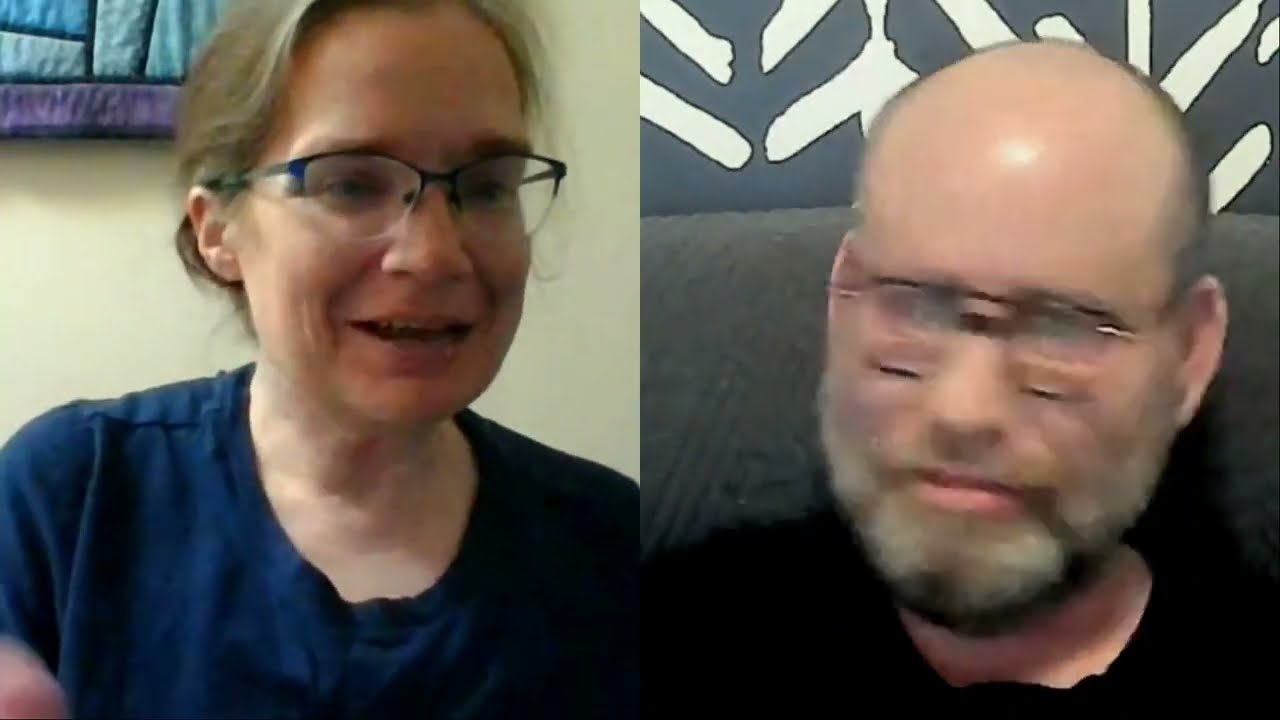
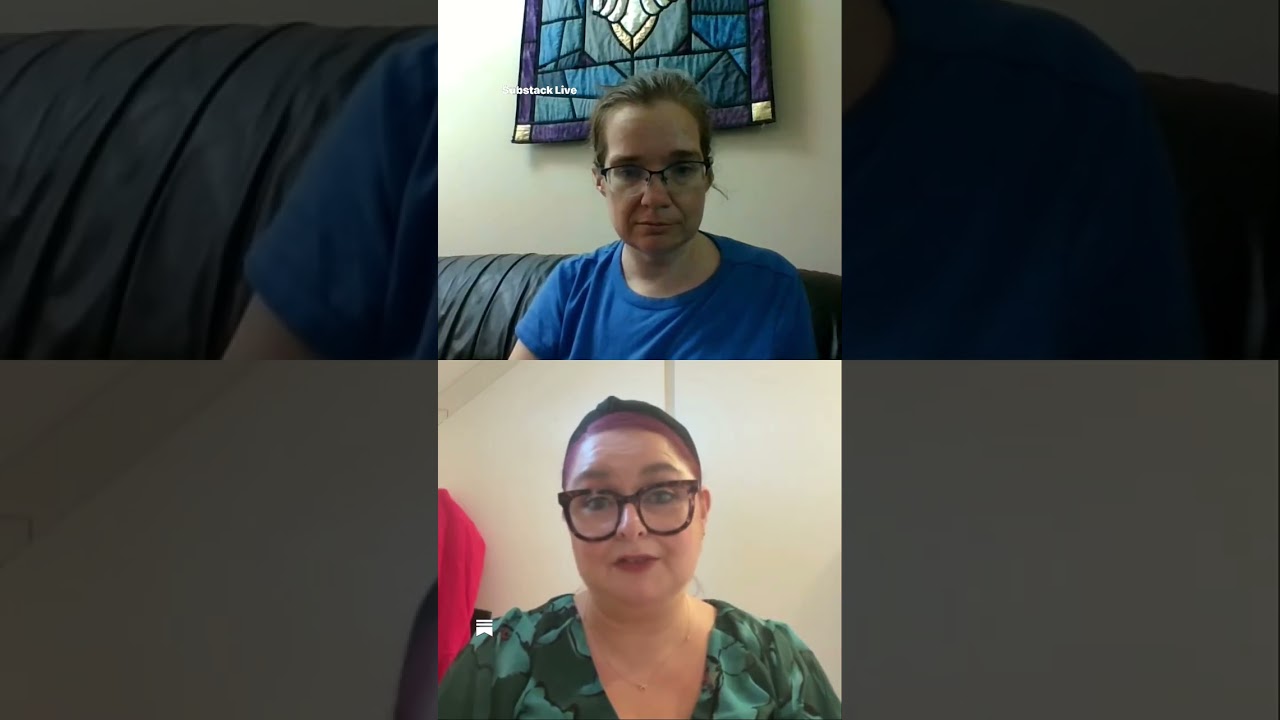
In this YouTube live interview, host Sarah Levis talks with therapist and Substack writer David Younger about living with disability, community building, and systemic barriers. David shares his lifelong experience with facioscapulohumeral muscular dystrophy, his move from New York to Austin, and how writing on Substack became a therapeutic lifeline. Sarah recounts her own journey after a stroke at 22, including a seizure disorder, loss of driving, and the challenges of rural Ontario life. They compare U.S. and Canadian healthcare, discuss the high cost of American medical care, and critique accessibility legislation in both countries. The conversation covers daily routines, caregiving logistics, winter mobility challenges, and the emotional work of grieving ongoing loss. They recount a specific accessibility failure at a university graduation, the evolution of accessibility audits in their communities, and the importance of naming shame, desire, and grief in disability discourse. The dialogue ends with reflections on gratitude, meditation, travel limitations, and plans for future live sessions.
Chapters
Well, let's get started then.
That's my wife.
Oh, great. Hi, my name is Sarah Levis, and this is my second official live. And look, the person is actually here from the very start. David Younger is here, and I got him here, you know, before 20 minutes into the actual live. So Thank you for, uh, thank you for agreeing to talk with me tonight, David. This is so great.
Yeah, no, I'm really happy to, to do this with you. It's my first, it's my first live.
Oh, okay. That's awesome.
Yeah, yeah, I'm excited.
So how long have you been on Substack?
I joined in June 2025. Oh, okay, a little over a year.
And what brought you here?
I joined as basically a place to write, and I just started posting weekly articles. I didn't join at all with the idea that I was going to meet so many people and form a community. So it really changed over time. Like after around 6 months or so, I just started interacting with people more and making friends and connections. And it's just taken a completely different shape than I expected when I joined.
I found that the same way too. I didn't expect the real community aspect of it, and I'm finding that as a person that lives in a small town and doesn't— there aren't a lot of disabled people in my town. I'm finding that great to be able to have these connections and these conversations, and I find your writing very thought-provoking. It really makes me consider ideas about what my feelings about my disability may be, even though I was— I had a stroke 25 years ago.
Mm-hmm.
And whether I've still dealt with aspects of that. Completely. Can you tell us a little bit about your disability?
Sure. I have a type of muscular dystrophy. It's called fascioscapulohumeral muscular dystrophy, and I was born with it. And my mother had it, and my grandmother had it, and my great-grandfather had it. And it's progressive, so I had very few symptoms As a kid, I could do— I played sports. I had a relatively— I mean, a typical childhood. I didn't tell anyone about it. I didn't talk about it. And I just basically lived as though I didn't have it. And I hid it from everyone until I was in my early 20s. It wasn't until college that I told my closest friends about it. And it started to progress more in my early 30s. And I started to trip. We lived in New York and I started to trip. I had foot drop. Stairs became more difficult for me. I started to get a lot more fatigued. And eventually we ended up leaving New York because it was just too— it was too difficult to navigate living there, aside from the fact that it was just so expensive and—
Right.
And we came to Austin 11 years ago. And now I use a wheelchair outside the house. I still can walk in the house. And I use a rollator in the house.
Yeah. Yeah, I used a wheelchair for about a year afterwards in my recovery. And I think— and I've written about that, how I had very mixed feelings about that in my town with people having seen me grow up. And because my family's been in this very rural Ontario town for almost 50 years now. And And didn't want people to see me in the wheelchair at first because I felt like, I felt like they were, I felt like I saw pity in their eyes.
Mm-hmm.
And I was, and I really did not like that. So I was, when I was in Haliburton, when I went out in my community, I used my cane. I only went places where I could use my cane that I still use outside. I don't Anything indoors. But when— so you knew your whole life that this was something you were going to be dealing with eventually?
I did and I didn't. You know, there was so much denial, there was so much compartmentalizing. I saw my mother getting worse over time. And I just So, and I knew I had it. So yes, I knew, but I really compartmentalized it. You know, so I wasn't talking about it. I wasn't thinking explicitly about it.
Right.
Yeah. But I knew. And the thing is, it presents differently from one generation to the next. So my grandmother was barely affected. My mother was much more severely affected. And I would say at this point, like, I'm more affected than my mother was.
Oh, okay.
But she had a lot of pain. I don't.
That's, uh, that's something that I'm always grateful for too, is that there's, there's very little pain with what I what I have to deal with. But, uh, um, so when did you, when did you feel like you could start, uh, talking the way you do on Substack about these things, about kind of, uh, kind of the, the, the grief of it, the grief side of this?
Well, I, I mean, I started— I mean, this past year has been a big year in terms of putting myself out there and talking about it. I mean, I'm quite private. I'm quite introverted. I'm a therapist. And I just felt like I spent so many years keeping stuff inside. And I just needed to start expressing myself more.
Right.
And it's just, it's turned into a lifeline for me. I just, I didn't, again, I didn't, I just expected to just start writing. I didn't know where it was going to go. And it's become so therapeutic for me and healing. And I find that, you know, the way that I'm writing and connecting is evolving and again connecting with so many other people, some of whom are here, Sam and Miera and Lisa and Debbie. So yeah, it's really— I'm so— it's been so surprising for me how it's evolved.
And you're still doing your work as a therapist?
I am, yeah. I have a private practice online and I've changed my schedule around to basically front-load my week. So like Monday, Tuesday, and Wednesday are longer days with sessions, and then Thursday and Friday I can focus on my writing.
Okay.
And it's hard, it's tiring. I love my work, but I deal with a lot of fatigue. And I mean, it's part of— I'm sure you're familiar with this too, but it's like, you know, having to pay for help and care. And my wife and I both are in private practice, so we have to pay for our own health insurance. So we're basically like working so hard to basically pay for, you know, to our like care and therapy and support.
That is something that in most ways I cannot relate to, and it makes me so sad for my friends in America and friends that I've talked to. I think the best I mean, just the surgery, just the cost for the— for my surgery alone, my brain surgery, that, uh, um, let alone all of the, uh, the stroke rehabilitation that came afterward, and there were 6 months of that, that would have, uh, would have absolutely bankrupted my family if we weren't in Canada. And, uh, I don't know. I don't know how people in the U.S. are doing it. The, uh, the best, uh, the best adjective I've been able to come up for your healthcare system is, is barbaric.
Well, and it's only getting worse.
Yeah, it just, uh, it, it really— I, I don't, I don't know if there's anything— I don't know if there's anything Canadians can do. But I've had discussions with other friends about this, other Canadian friends, and it really does. It's a true injustice and probably not one to get me started on, probably, because I don't know how people manage it. So what does a day in your life look like?
Well, I wake up around 7 and I need help getting out of bed. I— so I get out of bed and I basically get ready and go into my office and I'll work depending on the day, but I'll work Sundays. I use my recumbent stepper, which it's kind of a miracle that I'm able to still use it. But that's the only way I'm able to move my body. So if I do that, I'll use my recumbent stepper and then I'll Go into the shower, and I'll need help with that as well. So my helper will help me shower and then basically go into my office, and I'll be working online on Zoom for most of the day. And I'll have a little break. I'll meditate and basically then finish around dinnertime and then be with my family, have dinner, relax. That's a typical workday. I don't go out that much. Sometimes I'll go to dinner with my wife or we'll do something on the weekend. We spend a lot of time at home.
Right. Yes, the— I found that the US is a little more accessible than Canada is, primarily because your accessibility legislation is national. And ours isn't, but not a heck of a lot better in terms of getting out.
I'm in Austin and it's pretty good compared to other places I've been.
Yeah, Austin is pretty progressive for sure.
Yeah. I don't drive anymore so I depend on other people to To get around.
Yeah, you and me both.
Yeah, you're not driving?
No, I have, um, I have a seizure disorder that, that came along with the, uh, the stroke. And, uh, and, uh, and, and I don't, I don't know what it'd be like in, uh, obviously in an urban area that's got public transit, that, that wouldn't be such a big deal, but, uh, But being in an area where things are spread out over a long distance but with no public transit to connect them and no bus to any of the major urban centres, we lost that after COVID.
Mm-hmm.
It's the people that I work for online. In my work, they have a— They have a staff retreat or a conference every now and then in a city in Ontario. And they just know that I won't be coming because the logistics of getting to a city are— it's a mess in itself and probably means like 2 extra days of travel for me. So.
Okay.
But it's, uh, it, it— you live, you live with, you live with what you live with. I have, uh, I have some people that'll, that'll help me get to my out-of-town appointments. So, so, uh, that, that's the, that's the nice, that's the nice side of small town living is that, uh, Yeah. Is that there are, for so long, is that there are people around with, uh, that are willing to support and that know that I'm here by myself right now.
Are the winters hard for you with this?
Yeah, yeah, because my particular municipality isn't very good about keeping the sidewalks clear. And I do have to use my cane outside for balance and for speed. And when the sidewalks get icy and then snow gets on the ice and then that becomes ice again, yeah, it gets It gets pretty treacherous. And I end up taking a lot of cabs. And, and like I said, the people around me know that, that the winter, winter is a tough time for me for getting around. So they're, they're, they're pretty good about, about offering, you know, rides even into town if I need, if I need groceries, or if I need to get to— I have a little job in town. That's, uh, one afternoon a week, you know, saying, I'm going to town anyway, do you need a ride to work? Things like that.
Mm-hmm.
So, um, so, um, so I'm, I'm, I'm pretty, I'm pretty lucky. Um, it, it could be, it could be a lot worse. But, uh, yeah, winter I'm in a lot. I don't go out very much at all.
Yeah, I mean, Austin's pretty great with that, and my body definitely does a lot better with the warm weather than the cold.
Mm-hmm.
And my circulation isn't, isn't great, so that also is quite affected when it's cold. So it's a good place to be for me.
But talking about accessibility again, you had a— you wrote about an accessibility— it still really stuck with me— an accessibility story that had to do with your son and his graduation. Do you mind talking about that a bit?
Sure, yeah, he graduated from college in May And we made a lot of phone calls in advance to check on the accessibility, and we weren't able to get a lot of answers. And we ended up going— the event was in a stadium, and there was just a little section far away from the stage for people with mobility issues, but there were no seats for people accompanying the people with mobility issues. And then what— and it's a custom that after the graduation, all the families go down to the field to take pictures with the graduates, and we were asking about that because it was also a way for— to meet my son's friends and their families and take pictures, and no one was able to give us answers. So basically everyone made their way down to the field after, and we were stuck up on the concourse, and my son just kind of kept like running up the stairs and going back down and He ended up missing pictures with his friends and just felt torn, like he was worried about us and not being able to make it down. And so we ended up writing to the administration and actually just got a letter back from the president of the university, which was really But I wrote to a bunch of different people and got responses, but no one followed up. And my wife ended up following up and reaching out to the president, who wrote a very thoughtful message and said that they passed on my— the article that I wrote and all the feedback to the committee and that they would be addressing it. And and apologizing for what happened. But yeah, it was shocking that, you know, I wasn't the only one and there were other people that weren't able to go down and it feels like such a basic sort of accessibility issue that was just not taken into account.
Yeah, like I said, that writing of yours really, it really stuck with me. I thought that's something that I would expect from— I was just in Newfoundland recently. That's something that I would expect from Newfoundland, which isn't very progressive about these things. That's something I'd expect from them, not from the US, not where the— Not where your, uh, your accessibility act is— has just turned 30, is it? Um, that's, uh, it's, uh, it's simply unacceptable. I'm so sorry that happened to you.
Thank you.
And your, uh, and your family.
Thank you. Yeah, I mean, one of the hardest parts was seeing my son, you know, his reaction and how sad he was.
What changes do you see around in your area and in the US? What changes are top of the list for you that need to be made considering what you're living with every day?
Oh God. I mean, aside from—
Big question, I'm sorry.
That is a big question. I mean, on a more micro level, just awareness and accessibility, like, you know, whether it's at a restaurant or a store or You know, buildings, the way that accessibility is designed, it's often clearly not done with, by, or with people with disabilities. So like I was in a hotel room and, you know, the soap dispenser was nailed to the wall at standing height.
Yeah.
Or there's like, there's no cutout under the sink. It, you know, it's like, it's kind of like they're, you know, ticking boxes but not really doing it in a way— it's like, okay, let's— how do we make this truly accessible?
That was an issue in my town when they set a goal that all of the buildings in Ontario were going to be accessible by 2025, and they never reached it. But our hospital jumped, our little hospital here had a— has a facilities manager who jumped right on it and said, you know, yeah, we're gonna do this. But, and I was on the committee that as a community advisor in the planning for that, but I was really surprised when they said we wanna do an accessibility audit and I was, uh, there were 2 of us on the, on the committee that, that were actually disabled, and they said, and we'll, uh, we'll just go around in wheelchairs and, you know, uh, and with blindfolds and everything, we'll just do that. And I said, no, no, no, no, no, you can't, you can't, you can't do, you can't do it that way. If you're going to, if you're going to get a true report on this, you have to have disabled people doing it. Um, and that really surprised them. They were really taken aback. And that And that really surprised me. I thought, you know, I thought, I figured if you were going to go all in on this as you appear to be, that you would know that. So that, I don't know about the ones that came after that, but that initial accessibility audit was done by— with me and my cane and somebody else. Uh, somebody else who was in a, in a wheelchair that was on the committee as well. And, uh, I think— don't think he's on the committee anymore, but I think they asked him to come back to do, to do audits when they do them now. So, um, so they're learning, they're learning.
Yeah.
But, uh, but yeah, that, that just kind of slapdash, you know, we have to, we have to check in a box. So we'll just do it. That's, yeah, very frustrating.
It is. And I mean, like, in my writing, I mean, part of it is being a therapist, but part of, like, it's just what I'm most interested in is really the kind of intrapsychic, like, the, you know, what happens in all the things that we experience that we don't really get to express. And so I feel like that's what I'm most drawn to in terms of— I don't know. I wrote about it as a form, a different form of advocating for— people with disabilities is sort of trying to just keep naming what goes unnamed, whether it's, you know, shame, desire, desirability, you know, things that we don't normally talk about, that there's not space for. That's what feels most alive for me.
Yes, yeah, and that's what I— and like I said to you earlier, that's what I That's what I get from your writing is, yeah, just a focus on those, maybe those areas that even people who are disabled haven't— it hasn't really occurred to them, or maybe they haven't thought about, you know, well, I Well, yeah, I have, I have felt that way, but I, I haven't known how to talk about it, or I haven't known who to talk to about it.
Right.
I never, I never thought about grief as part of this, or, or, um, or feeling Or how I miss the body that I had and how that makes me feel. I, I, uh, I was lucky enough to have a therapist after I did my, my first, uh, after I had, uh, after I had the stroke. But so, uh, so I, I got to talk about those things somewhat, but, but it, but it took me about 6 years to kind of get to that, uh, to get over that kind of— and I'm just gonna say grief.
And it's still there. And you feel like you are? Because I don't, I'm not over, I like, I'm not over my grief at all, and it feels like it's ongoing. And like I wrote about this, it's like it's really hard to even grieve when you're like, there's— the loss is ongoing. And it's like there's no sort of stable ground to be like, okay, now I can just sort of get used to where I'm at and grieve what I lost. It's like, you know, grieving what I lost but anticipating future losses. And, you know, the ground is always moving. And I'm just realizing, like, for me, I just didn't have the space or the tools or give myself the space to really fully be in it. And I'm 50 now, and it's only in recent years that that's evolved in a place where I was like ready to put myself out there and write about it. And when I get a comment or someone write an email or a comment saying, you know, thank you, this is like, thank you for naming this, or like that feels so like it's worth so much to me. It's so deeply meaningful because I'm— I know I'm not alone with it and, you know, hearing that other people are Experiencing, experiencing that too is just, uh, yeah, it's, it's been healing.
Absolutely. Yeah. And I, and I, I think, you know, you asked me, am I over it? I think, I think probably because I'm very stubborn and very, you know, I'm, I'm, I'm gonna, I'm gonna do this. No matter what. And the best, the best way to— I've told people the best way to tell me to get me to do something is to tell me I can't. Um, but, uh, but I've noticed, and I'm approaching 50, I'm, I'm, I'm 48 now, uh, I've noticed in the past couple of years that, that, yeah, the— as I'm out in town trying to do things and trying to, trying to coordinate things and trying to keep everything together, there are definitely days where I think, you know, this— okay, this is the way life is, and this is the way I have to learn to deal with it, but It feels like it's never going to get any easier. And that's hard.
Yeah, it is. And it's so hard, like, realizing that, not to let our minds just go wild and start projecting into the future and I'm creating all these narratives. And I've like, I have a meditation practice and I think a lot about this stuff and in my writing, but in my meditation. And it's like, if I ask myself in any given moment, like right now in this second, am I suffering right now that I'm talking with you? No. But there are layers of mind and some are conscious and some are not conscious that contribute to these thoughts and narratives about the nature of our condition that really create suffering. And I'm like, I suffer. Like, I know this to be true. I know that in this second right now, I'm not suffering and I'm engaged with you and I'm happy to be here. But I also know that there's so much more going on, like these deeply held beliefs and narratives that create suffering. More suffering for me.
Yes. Mm-hmm.
Yeah, it's a practice, right? Like, it's not like we get over it.
Yes, I agree. It's a— it's a— it's a— it's— I don't meditate I don't intentionally, I don't sit down and meditate, but it is kind of a space that I have to put myself in every day to say, you know, okay, I've got this coming up and today might not be all that easy, but that's what it is. Got through it last week, I'll get through it today. And, uh, and at the end of the day, here's all, uh, here's, here's all the fun things that came out of it. I had a bad day at work today, really enjoying this. I'm, I'm very, I'm very glad for this. This has made it a really good day even though, even though my work day today wasn't so great.
Yeah, and that's amazing, right? It's like You know, these little things can happen that can completely shift the way that we think and feel about things. But even that's elusive.
It can be, yes. And gratitude. Yes, Jason. Yeah, just looking at the chat here. Gratitude. Yeah, some days, some days it's hard to find even 3 things. I try to— you've probably seen them on Substack, my Today I'm Grateful For. Some days it's hard to find even 3 things. Other days it's just— other days I have 20 things that I could put on that list.
Yeah. And it's also a tricky balance, like, between, you know, kind of— I don't know if you're familiar with the term, like, spiritual bypassing. And like, I spent years feeling like, okay, I'm okay. And I'm going to be okay and not allowing myself to really feel the pain, feel the sadness.
Yeah.
And I really like, I think it's so stigmatized, right? Like the ability, the fact that we can experience shame, we can experience pain, fear, longing, all these things. It doesn't mean that I don't value who I am. It doesn't mean that I'm not proud of who I am. But I think allowing ourselves to fully inhabit those feelings is what allows for a deeper level and experience of gratitude. And I think it's just so hard to allow ourselves in any given moment to stay with pain. Like, I think we're like, we just have so many built-in defenses against just staying with, this is hard, this is hard right now.
Um, that's like, this is hard and it's okay to feel. It's okay to feel sad. It's okay to feel— so it's okay to feel lost. It's okay to feel— it's okay to feel angry. Those feelings are okay. Yeah, that's the And to sit, yes, and to sit in that space.
Yeah.
And be all right with it. Yes, that's, uh, that's, that's hard stuff.
Yeah. Or sometimes not be all right with it, like.
Yeah, exactly.
And sitting with it also implies sitting with, like, if we really just sit with, in any given moment, We don't know what the next moments— no one knows what the next moments are going to bring. So it's also sitting with uncertainty and vulnerability. And yeah, that's the kind of stuff that excites me and what I'm drawn to in terms of writing about.
I definitely think it's a It needs to be heard and that perspective needs to be out there. It keeps me grounded. Your essays ground me.
Thank you. That means a lot.
You're welcome. Just kind of looking at the chat and seeing some of the comments that come in to see that the chat agrees with you too, I think.
Oh, I haven't been reading, I— because otherwise I would get distracted.
Um, The Present Moment Is the Only Thing That's Real, um, from, from Jason Gale. Um, he's had, uh, he's had some things to say. Thank you to everyone who's, uh, who's been, who's been, uh, been writing in the chat. I've been, I've been looking at it, but, uh, It's hard to— I wish when these things save that they save the conversation too, because I always want to go back and read it. But so I've been trying to read it as it comes up, and I'm loving all the contributions. So thank you so much. What else would you like to talk about, David? Like, we've got— it's about a quarter to, or—
I mean, I didn't come with an agenda, but I don't know why— I know that you were in your 20s, early 20s, right?
I was in my 20s, yeah. I was 22 when I had to have brain surgery. And They warned me that there was a chance of having a stroke, but they said, given that you've already had one because of this arteriovenous malformation in your head, you're going to have another. You'll have another of those. So, and we can't guarantee that it won't cause any damage next time. So. And, and there's very, very little chance of you having any permanent damage if we do this surgery. And I, I hit that very little chance. So, but it was ultimately safer. So, so yeah, that was— there you go. You never, you never know what's gonna happen. You never know what's gonna— what the future is going to bring. I didn't know that that thing was in my head until it started to bleed in the middle of a job interview.
Wow.
And yeah, so yeah, I became the youngest stroke survivor in my Wow.
And do you, do you have like visceral memories of what it was like before that? Like, can you remember?
Yeah, I can still remember everything. Um, I don't, I don't remember— the only thing I remember about actually having the stroke was, uh, um, the start of the seizure that kind of That kind of told everybody it was happening. I remembered that. And then there's a kind of really fuzzy time of, you know, I didn't, I didn't come out of it thinking, oh my goodness, I can't move anything on my left side. It kind of eased into it. The timing there is very, is very fuzzy.
Yeah.
I knew that, I knew there were a lot of nurses and doctors coming in and kind of moving things around and And, uh, you know, the doctors with their, with their, uh, with their interns and their 4th-year medical students going, and this young woman has had— and picking up my arm and me thinking, oh, I can't, I can't feel that happening. Why, why, what's, what's, what's going on? But, uh, it kicked in eventually, and, uh, they sent me off to— they sent me off to inpatient rehab for 3 months. And then because I was so young, Um, they, uh, they said you could have another 3 months. And then I— and then because I didn't have anywhere else to go, I came back to this community that I'm in now that I swore I'd never, ever, ever, ever come back to.
Where were you?
Um, it's a, it's a little town called Haliburton in rural Ontario.
No, but where were, where were you before?
Oh, when I had a stroke? And that's— I had the, I had the first, I had the first little one when I was out in BC. British Columbia, and then I had to fly back to Toronto because, uh, um, because the, the, the team that's the best for doing that sort of surgery is, uh, is, is at Toronto Western Hospital.
Mm-hmm.
Um, and they were, and they were great. They, they fixed everything. It's, uh, it's all good. There's no more trouble from there. But, but like I said, they said they were— there's a slight chance You know, given everything that's going on, that you might have a stroke afterwards, but it's the safest way to go. And I just, I just, I'm just very lucky or very unlucky depending on how you look at it.
Have you read the book My Stroke of Insight from Jill Bolte Taylor?
I did, yes. And there's a couple of other really good ones out there too, written by stroke survivors. And yeah, there's a thriving kind of recovery movement for stroke, most of which I really like. I really like the term rebirth day, which is what some stroke survivors call themselves. My rebirth day, the day I had my stroke. And I'm like, well, nothing really died except some neural pathways still. So I don't use that, but I understand why people do.
Wait, you froze for a second. You froze. I didn't catch the last thing that you said.
I understand why people do.
But it doesn't resonate for you?
It doesn't resonate for me, no. No, I'm just, I'm still me, I just walk a little slower. Angels watching over me? Possibly.
What do you miss the most about like what you were Oh, I definitely miss driving.
I miss that ability to be able to say, you know, oh, I need this, or I want to go somewhere, and to be able to get up and do it by myself without a bunch of planning. And, you know, going to the grocery store, Calling people and saying, I need to get to this place, can you help me? If I could still drive, I mean, my sister and her kids live 2 hours away. If I could still drive, I would see them a lot more often. I'd be in the running for more jobs.
I'd—
because most of the jobs in the field that I was working in before the stroke which was basically care for people with developmental disabilities. Most of those jobs now, even the office jobs, you have to have your own vehicle and you have to be able to drive.
Yeah.
That's, you know, that's a prerequisite for the job. So I'm— even if I could use my left hand, and even if I could do the the ability to do the physicality of it. I'm right out of that field now. That's— and that's really why I started my— the writing and editing business that I have, which led me to here, because no one would hire me. Except for these, um, you know, uh, minimum wage, low security, part-time jobs around town.
Hmm.
So I started my own business and, and I'm still making minimum wage. Someday, someday it's gonna make me rich, um, just not now.
But do you, do you like what you do?
Um, yeah, I've, I've always, uh, it's, uh, I'm not, I'm not doing a whole lot of writing for my, uh, for my, uh, current clients, but, uh, but I've always loved to write, you know, ever since I was a little kid. So anything writing is just, yeah, that's right up my alley. Um, and, uh, and And I'm not, I'm not, I'm, you know, I'm not half bad at it. So, uh, um, it seems to be something that people like. So I, uh, so yeah, I just, I just decided, well, freelance writing, and let's, uh, and let's see how it goes. And, uh, and it took a long time to build that business up to the point where, um, I could actually support myself at it. But, uh, but, but I make a, a modest living off of it now, and that, and that feels really good rather than having to go to the government for, uh, for supports. Um, and they're probably glad to be rid of me anyway. What do you do for your, uh, What do you do when you're not working? What do you like to do?
Write. I like to read and spend time with my family. My son is not in the house anymore, but I have a daughter who's here who's 12. And spend time with friends. My friends don't live Most of my closest friends don't live in Austin, so we're going to go— we're going to Seattle in September to visit some friends.
Great.
We went— I hadn't traveled for 5 years because it just got really difficult and we just started trying again and it's hard. I mean, it's not something we can do spontaneously. spontaneously, and it takes a lot of effort and planning. But while I can do it, we're trying to make it happen. So we went to— and I wrote about this too— we went to Mexico City in May and saw friends.
Right.
That was really interesting because I saw friends there who I hadn't seen in 20 years since we lived in London. The last time I saw them, I was walking all over London and— or 25 years walking all over London and just living in a completely different body. So it was really moving to go there and be with them. And oh yeah, I love, love, loved Mexico City. And Reconnecting with them, and they were just so, so loving and welcoming, and it was great.
So you'll have to go back?
I definitely want to go back. It's only a 2-hour direct flight from Austin to Mexico City.
That's awesome.
Yeah, but we're homebodies too. Like my daughter is a homebody and my wife definitely likes to be out and about more, but I don't need a lot of external stimulation.
Right.
I got also, I think something like it's partly is my personality, but part of it is just having a body that's so limited. Just learning stillness. And I don't get bored. And so I'm really grateful for that, that I don't need a lot of external stimulation.
That's what I tell people too. My life's pretty boring, they say. But you know what? It's all right. I don't need a lot of excitement. Does anyone have any questions for David in the chat? Sorry, David, I cut you off.
No, no, no, I was just looking. Wait, do you eat at— I— it's hard because the monitor is like a few feet from my face, and I'm going, I'm going to the eye doctor next week to get new, a new prescription. I'm, I'm struggling to read. Someone asked if I eat it, but I can't read the name of the restaurant.
Kimura Asian Texas Fusion?
I haven't, but I'll check it out.
Brisket sushi. I know, I did— I know, I know that question's not for me. There's nothing like that in my town.
That's definitely an Austin thing, that like Japanese barbecue fusion. I'll check it out.
Okay. Well, if there are, if there are no other questions, then—
Thank you everyone for joining. All these people, all these friends. I'm just so grateful for so many of the people I've met here, including you, Sarah.
Yes.
Thank you for doing this.
No, thank you. But like I said, when you contacted me, you, you were, you were next on my list to contact. So, um, and, uh, I'll be doing another one of these next Tuesday, um, at, uh, at 7 PM with, uh, with Chronic Migraine Girl.
Oh.
So, um, so look out for that one.
I will. Well, it was great connecting with you, talking with you, and yes, thank everyone for being here.
Yes, thanks everyone, and, uh, um, thank you, David, and, uh, we'll, uh, and, uh, maybe we'll do another one again sometime.
I'd love to.
Okay, okay, so we'll see you next time, everybody.
Bye everyone, bye.