Live with Sarah Levis
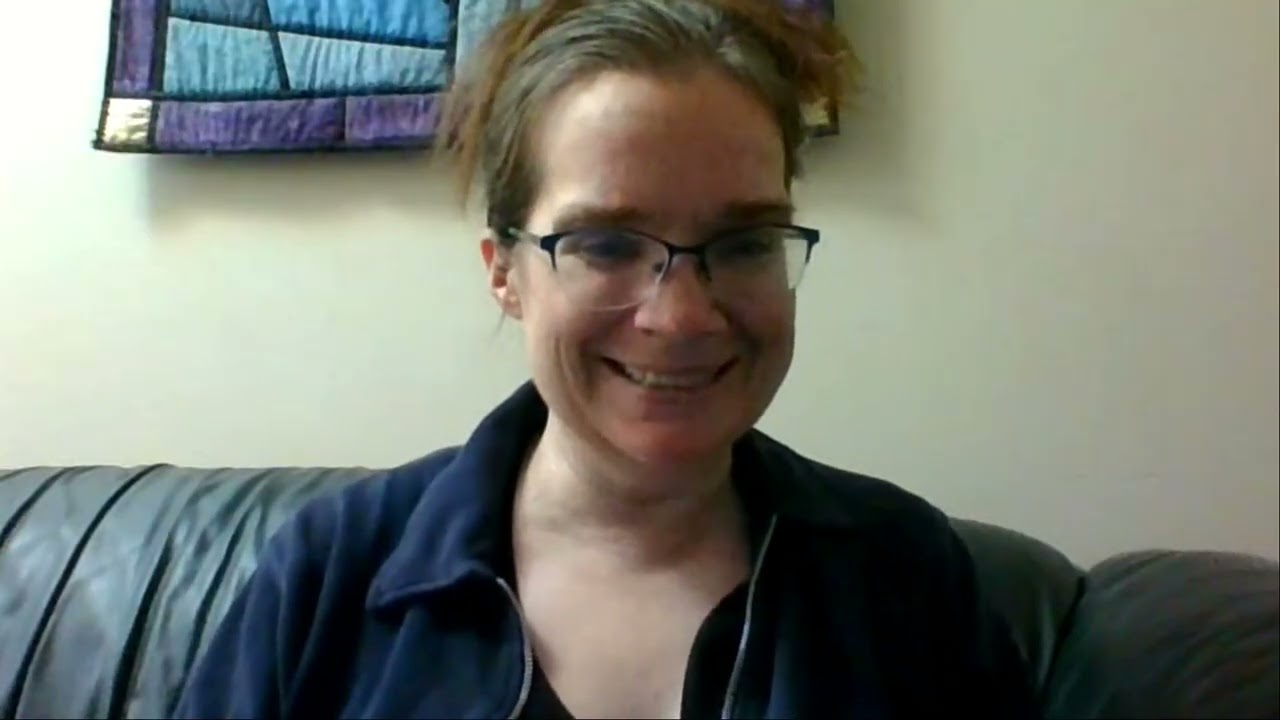
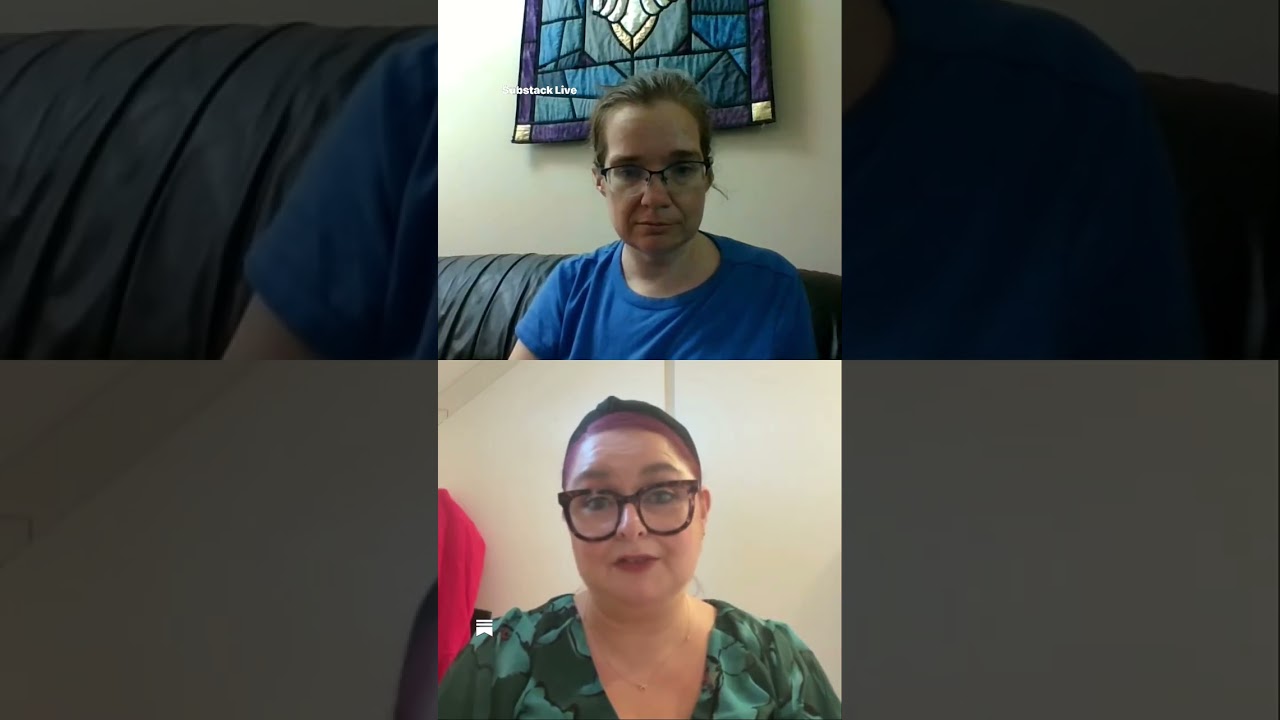
In this live YouTube conversation, host Sarah Levis interviews Jennifer, known online as “Migraine Girl,” about her experience living with chronic hemiplegic migraine. Jennifer explains how she moved to Substack after a TikTok ban and now writes a regular “Beyond Migraine” series that highlights the invisible costs and grief of chronic illness. She describes her migraine phenotype—daily attacks with right‑side facial droop, arm numbness, aphasia, and brain fog—originating at age 25 and becoming chronic 13 years ago, including two left‑sided strokes in 2020 and 2024. Jennifer discusses her care pathway: traveling from South Carolina to Dr. William Young at Jefferson Headache Clinic, the scarcity of headache specialists (900 for 40 million U.S. sufferers), and her involvement in federal legislation, the Headache Education, Access, Diagnosis, and Care Health Equity Act (the “Headache Act”), working with the Alliance for Headache Disorders Advocacy. She shares practical coping tools such as her service dog Ida, green‑light therapy, a prescription TENS‑like device, low‑heat eye masks, heating blankets, and physical therapy aimed at regaining independence (e.g., driving again). The conversation also covers migraine triggers as thresholds rather than direct causes, the “spoon theory” of energy budgeting, and the co‑option of migraine‑related language on social media. Jennifer emphasizes the stigma and dismissal migraine sufferers face, the need for better public awareness, and her commitment to advocacy and writing. The interview ends with plans for future live sessions and mutual appreciation for the dialogue.
Chapters
My name is Sarah Levis, and this is, and this is Jennifer, otherwise known as, uh, as Migraine Girl. Let's go! I love it, Tainted. She's so excited. And, uh, and I'm so, uh, I'm, I'm so excited to meet her, um, screen to screen for the first time. And to, uh, and to talk with her tonight and to get to know each other a little bit better. Um, and, uh, how long have I— how long have you been on Substack?
I migrated to Substack when TikTok was going to be banned. The big migration, right?
Okay.
Um, and I had had a blog long ago, and I stopped writing. I don't even know why. And I rediscovered writing because of that TikTok ban. I'd never really felt comfortable on TikTok. And honestly, Substack just instantly felt like home. So I started building, and then about 6 months into it, I had a really tough mental health break, I guess, and I took 6 months off, and I came back and The end of February.
Oh, wow.
And I have just been hitting and hitting with the ground running ever since February.
Awesome.
So, and I don't think I'm gonna be letting up because I'm really enjoying it.
Oh, I'm so glad that you're gonna stay. We kind of have similar journeys here. I started and then I left and then I started again and, uh, I bet I— and, and I blogged for a long time too, and then, and then quit for whatever reason. I asked my niece what TikTok was and to explain it to me, and she couldn't do it. So I said that I— Hey, Amelia. Um, so, so what do you eat? I think, I think everyone here kind of knows you and what you write about on TikTok. Can I, can I tell you? But you what I know about migraines.
Yes.
When I was in— when I was— I had a girlfriend in high school that had— that got chronic migraines. And really, all we knew about those was she had to take a drug called Imitrex that for her was almost worse than the migraine, I think. It really made her miserable. But then we all graduated and I went off to BC and British Columbia in Canada, which is the West Coast. And in the middle of a job interview, I got this awful, awful, worst headache I'd ever had just out of the blue. And I'm not a person that gets headaches usually. And I thought, well, what is this? What, what is this? While I was trying to answer the questions from the panel. And, uh, I thought it's the stress moving to the island and the job hunt and finding a place to live. It's triggered a migraine. That must be what it is. I must have a migraine. And it turned out I didn't. It turned out I was having a small brain hemorrhage. But—
Wow.
But that pain, that pain Made me think immediately, that must be what Carol was living with all through high school. And if it was anything like that, and then it really must have been horrific for her. Can you tell me a little bit about, about your migraines?
I can. I have a migraine called chronic hemiplegic migraine. It is a migraine that comes with stroke-like symptoms.
Oh.
So, um, my right side of my face droops, so I look like I'm having a stroke, and my right arm goes numb. I completely lose the use of my arm. And I will have aphasia where I can't find my words, or I'll stutter really bad. I have a really difficult time talking. Sometimes it'll affect my leg, but more often than not it doesn't. But Oh, I'm sorry. Brain fog is a thing.
No, it's okay.
Um, take your time. And then with chronic, it's I get them more than 15 times a month, so that's what makes it chronic. Actually, I get them every day. I'm in a daily— I'm daily at this point, and sometimes I have more than one a day. So that is where I'm at right now.
And how long do they last?
Anywhere from an hour to 4 hours.
Must be terribly scary.
It is. And, um, I mean, I've been having them— I was episodic for a long time, which means I had them less than 15 times per month.
Yes.
Um, I was that way for a long time. Um, I started getting them when I was 25. I'm 54 now, so I've had them for a long time. I started getting them about a month after I had my first child.
Okay.
And, um, I would get maybe 2 a year, and for a long time I didn't get the head pain with it. They were what's called a silent migraine.
Right.
I just got the numbness and the arm and no pain. Boy, if I could go back to that, I would. Um, um, But then in my 40s, everything just went haywire, and I went from episodic to chronic. And that is the danger of not treating it while it's episodic. When you're not in that chronic phase, if you don't take care of it and treat it, you run that risk of it turning into chronic, and once you go chronic, it is very difficult to put it into remission and go back to episodic. I have been chronic, um, for 13 years now.
So it's a hell of a lot to live with on a daily basis.
It is. It is.
Do you see a neurologist for this?
I do, and my readers will recognize him because I interviewed him for Beyond Migraine, Dr. William Young. He is in Philadelphia. Yes, I travel from South Carolina to Philadelphia for my treatment. He is with Jefferson Headache Clinic in Philadelphia, and I really advise people who are having trouble with migraine. And if you're not getting help with a basic neurologist, go to a headache specialist. The American Migraine Foundation has lists of certified headache specialists. Find one. There's not many, unfortunately. And this is a staggering statistic: there are 40 million migraine sufferers in the United States. There are 900 headache specialists.
Wow. That's, that's incredible.
It's staggering.
Yeah.
Um, so it's one of the reasons why I'm advocating. It's one of the reasons why I write. Um, I'm involved with, um, oh gosh, um, getting the Headache Act passed.
Can you talk a bit about that? I, I'm up in Canada. I don't, I don't hear about a lot of things like this.
Right. Um, hang on just one second. Let me look something up. Like I said, brain fog is real. I always—
Or is it state legislation or— No, it's federal legislation.
Okay, the Headache Act is the Headache Education, Access, Diagnosis, and Care Health Equity Act. It was introduced in September of 2025. It is bipartisan legislation, and it is the first-ever federal bill focused solely on migraine and headache disorders. There is no funding actually tied to this at all. It is strictly just kind of like the structure. It's basically the foundation to get the funding later.
Right.
It's very much the same thing that was done with Parkinson's and Alzheimer's funding. They structured it the same way that was done. But I'm working with the Alliance for Headache Disorders Advocacy to try to get this passed. Um, and that is our biggest thing right now because once we get that passed, then we can go in and try to get funding. And trying to get funding with that Right. And we need more. I mean, 40 million people and 900 certified specialists. That's crazy.
That— yeah.
And you think, well, I'll just go to a neurologist. Neurologists basically get Maybe 2 hours on migraine in their studies.
Total, to cover all of them, to cover all types?
Yeah, it is not a lot.
No, no, that's not, uh, not giving it anything, giving it what it deserves.
I mean, if they're interested in it, of course they can go on their own and hunt it out, but Yeah, it's not, it's not a lot. And so that's why I'm working with them. So, and they're a great organization, and anyone who has migraine or is a caregiver of someone with migraine, um, can volunteer with them. So, um—
That's great to know.
And they do a virtual one, um, Headache on the Hill, um, in the fall, and then they do an in-person Headache on the Hill in the spring where they actually go and talk to the senators and congressmen to try to get them to act on this. So, and I've— and if you want to know more, I have a couple Um, articles on my Substack about it, and I'll, I'll pin that to the top so that everybody can find it pretty easy.
Yeah, so everyone be sure to subscribe. The subscription stuff doesn't seem to be showing up.
And if you're in the United States, in that article there is a way for you to If you're in— yeah, if you're in the United States, there's a way for you to easily contact your congressmen and senators and ask them to sign on to this bill.
Yeah, absolutely.
So it's something I'm very passionate about.
And that's— and we need people to be passionate about all sorts of healthcare right now, don't we?
Yes, we do.
So can you feel when one of these migraines— when one of these migraines is coming on? Can— do you have a— do you have enough notice? That you can, assuming there is something you can do about it?
Sometimes I can. A lot of times my service dog Ida tells me in advance, which is really handy. That's what we trained her for. So she, she pulls her weight. Yeah, that's really been a game changer because, um, that allows me to get into a safe place and get my medicine, have it handy. And, um, because I live in a 2-story house, before, before I had that, I actually had, had an episode on the stairs and fell down the stairs.
Oh no. Yeah.
So, I know the results of not having her are not good. So, um, having Ida has really—
Oh yeah, especially if you're losing control on your right side, on your side. Yeah. Yeah.
So, having Ida has really made a big difference. Um, I've I stopped driving 8 years ago, and I am— this is a very big new development. I started physical therapy a couple weeks ago. Many people probably saw my post, my note about that. Um, Operation Get Jen a Little Bit of Independence is big time underway. Um, My 15th wedding anniversary was last week, and my husband bought me a new car.
Congratulations. Oh, oh wow.
I haven't driven in 8 years, and all I ever may do is drive it to my nail appointment, but that's okay. I'm working toward it. It's a goal.
Oh, I totally know what you mean because I have seizures and I don't drive. And, uh, yeah, if, if all I ever do— do when— when— if it gets to the point where I can drive again, if all I ever do is drive down the hill And backup.
Because wow, I had to drive it from the dealership home because we had the other car, and I was like, oh my gosh, I remember this feeling. It was so good. So it was, it was amazing. It was a pretty good day on Saturday when I drove that car home. I was like, this is what it feels like. Oh, yes.
This is so good.
So yeah, I called it Operation Get Jen a Little Bit of Independence. Just a little bit.
Oh, that's wonderful. Congratulations. Just a little bit. It's a little— it is just a little bit. Yeah, so I don't have to call people and say, you know, but it's raining outside and I have to get a prescription. Can you, can you get it for me while you're in town?
Yeah, well, I'm blessed and I live in an area where just across the highway is a CVS, a Walmart, a Publix grocery store, the Dollar Tree, and my nail salon. So really all I would have to do is just kind of go right across the little highway. So, like I said, well, much nicer in a car, right?
Right.
Better than walking. I could never do it walking. So, but yeah, he surprised me. He's good that way.
You can tell him he's a lot of fans here.
He's good that way. He's really good that way.
So, so you're, you're, you're moving, you're moving forward. Always, always.
Yeah, always. Can't stay in one place.
Yep, I feel, uh, I feel the same way. It's, uh, it's not— it's not— not to say that it's always easy, but there's always a little leap, a little way each day that I can— that I can do it. So, uh, so what do you— what do you, uh, what do you do when you're not, uh, um, When you're not writing on Substack or getting ready to drive again, what do you do for fun?
Honestly, my guilty pleasure is reality TV.
I was like that for a long time. I love—
right now I'm into Big Brother because that's going on right now. Um, I love Survivor.
Yep, my sister is obsessed with Survivor. She'll call and tell me what happens. I don't have to watch it, I just have to call my sister and she'll, she'll give me the, the rundown of everything that happened and I'll be like, thanks.
I love the traitors. I love, um, Oh gosh. Well, I like the traders in all of the countries. Oh, I got a VPN so I could watch Canada and Australia. I like Australian Survivor.
I've never seen that one.
Yeah, I got a VPN so I could watch all the countries. Um, but yeah, I'm, I'm big into the reality TV. I'm— I don't have a job, so I have to get my drama from somewhere.
Well, true enough, right? To see people undercutting other people somewhere.
Yeah, you know, you gotta have your drama somewhere. That's how you get your gossip.
Exactly. And do you know what triggers your migraines?
See, that's the thing. Triggers— there's a misconception that trigger means cause, and trigger doesn't mean cause. Okay. Um, there's a threshold, and every person's threshold is different. So what may be your threshold may be here, mine may be here.
So Mm-hmm.
Weather changes, which I can't control, clearly. Um, all of these things stack on top of each other. So if I've got bad weather, I'm not gonna go eat chocolate and drink red wine and eat Parmesan cheese and do all this because it's gonna stack on top of each other. So eventually I'm gonna hit my threshold.
Right.
So just eating chocolate isn't gonna do it.
Okay. Yep.
Does that make sense?
Yeah, that, that does make sense. Yeah.
So trigger doesn't necessarily mean cause. So I can't cause a migraine. So if you're having a stressful day, it doesn't necessarily cause a migraine. It's just another one of those factors that's going to help you hit that threshold. Sorry, I do a lot of talking with my hands.
No, that's okay. Um, uh, Lisa's written down here, trigger maybe equals tipping point.
Yes, each trigger is another layer. Yes, a step. Eventually you'll walk right off the ledge.
Right. Yeah, no, that, uh, that makes perfect sense. I think it's— I think it's probably the same with my— with my seizures too, because, uh, um, because, uh, no, flashing lights don't do anything to me, and, you know, Yeah, a lot of things by themselves aren't going to do anything to me. Extreme heat probably isn't gonna— probably isn't gonna do anything to me. But, uh, yeah, but if you put a bunch of stuff together and then give me a glass of wine on top of it, yes, that's, that's probably gonna—
It's exactly the same.
That's, that's probably gonna cause a seizure. Yes. So it's, uh, exactly the same. Knowing your vulnerabilities.
Flashing lights after I've been Overheated, dehydrated, and I just ate a chocolate bar and I am— I'm gonna have one. A bad one, probably.
Yeah. And then, and then all you can do is take your meds and rest?
Yes. Dark room or green light. Green light works.
Okay.
Um, and you don't have to go buy an expensive light. They were selling these alley lights and they were like $80, and it's not necessary. All of these LED lights that you can change the color to green work just as well.
Okay, that's, that's good to know.
Green light lets your eyeballs relax. It takes all the blue out of the light.
Right.
So if your eyes ever just feel tired and you have LED lights where you can change the light to any color, change your lights to green. You will just feel your eyes relax.
Okay, like, uh, we have sync light bulbs here in the chat from Allison. Um, I don't know what those are, but, uh, um, but yeah, no, that, that makes sense too because it's, uh, I hear it's the, the blue light from the computer screens.
Yeah, if you've used your computer all day, go home, turn, get you some light bulbs where you can change the colors of the light and turn them to green and sit in them— green light for a few hours or for a few minutes. It lets your eyeballs relax.
Mhm.
And you'll feel it.
Maybe something I need to do. My eyes start to hurt after I look at the computer for, for too, too long. But, but Because of the work I do from home, I'm always looking at a computer. So, but yeah, that's— oh yeah, what else? That's gone now. And do you have children? Are there children screaming at you?
No, my children are grown. Um, I have 2 children. Um, Emily is— gosh, she's 29. How is that possible? Um, and she has 2 children.
Oh wow.
So I'm an Oma. And then Lydia is 27. And she does not have any children. And then, um, my husband has 2 children and he has 6 grandchildren.
So you are busy.
Yes, yes.
Busy with, with, with migraines every day. Yes.
My goodness, yes, definitely, and I wouldn't trade it. It's awesome.
I I like hearing that. I like hearing that. You know, if I if I had to have a stroke, I wouldn't do it again. Probably. I don't think so, but.
I've had 2 strokes.
Oh, you've got— you're a stroke survivor too? Okay.
I had one in 2020, and, um, then I had another one in 2024.
Are those connected to the headaches?
Yes, they are, which is really complicated when you think, well, how do you tell the difference? Well, yeah, very— they— I knew something was different, um, because all my hemiplegic migraines are right-sided. These were left.
Okay. Yep.
And my husband's like, uh, we're going to the ER because this isn't right.
Yeah. Okay. So, and did, and did they cause much damage, those, those strokes? Tell me if I'm asking too many questions.
Oh no, you're fine. Um, no, actually I was very lucky. We got there and we were able to do the clot buster both times.
Okay. Yeah.
And I don't have any residual effects from either one of them. And we were able to do physical therapy to work through the issues that I did have, and I'm okay.
So cool.
Yeah, so, but you know, migraine, everybody thinks it's just a headache. Um, it increases your stroke risk. It is not just a headache.
No, no, absolutely not.
And I can't say that with enough seriousness.
Do you find that people, when you tell people about it, that there are people that, that just kind of brush it off? Like, oh, oh, you get migraines?
Yeah. Oh, all the time. All the time. Wow. You know, I'll say I have a migraine. I have migraine, and they'll. I get headaches too.
Like it's like it's just a headache.
You just want to go.
I I yes, I can understand why we have the come closer so I can slap you with my good hand. Um. Yeah, yes, that, that, that must be incredibly frustrating.
People are very dismissive.
So there's a lot of work to do, you're saying?
Yes, and that's why I write. That's why I write. And No, it is what it is. But I don't know if, um, you've seen my new, um, series on Beyond Migraine.
I went and I, I read some of your— I read some of your posts. Yes. I, I don't— I don't know if I read any of the series.
Invisible Things.
Oh yes, I did read one of those. Yes, yes, talk about that please.
I'm very excited about it. Um, it's the stories we never tell, the struggles we never— no one sees, and the moments that shape us in silence. And I'm just trying to put a word— put words to the things that we kind of hold You know, inside. Um, the first in the series was our Invisible Reality.
Yeah.
Um, last week I covered Invisible Grief, and this week I will be, um, covering the Invisible Cost.
I really like that you're talking about these things. I think it's very important because, uh, um, David, uh, David Younger and I talked a little bit about this last week too because, uh, because he said that when it was when he came to Substack that he began thinking about these sort of things with regards to his disability and because he didn't And he writes about the things he does partly because he never saw anyone else talk about them or heard anyone else talk about them. And that's, and that's part of why I write the right— the things that I write as well, because I don't— I mean, I had my, I had my stroke 25 years ago and I lost all of my left side. And I've got much of it back now, but And I had a therapist afterward, but I don't think anyone ever said to me, you know, I don't think the therapist ever said to me, I don't think the doctors ever said to me, it's okay to grieve over what you've lost, and you're probably gonna feel that way.
Right.
This is probably gonna happen. It just, it just didn't get talked about.
No.
So, and yeah, and these, and these little, as you said, these, these, these things, these things in our reality that bring up these— I had a moment last week, I was cleaning my apartment, I was cleaning my apartment over the weekend, and And I got some stuff into a box and I wanted to move it up on a shelf and I was like, but I can't do that, it's too heavy. I can't pick it up with my, with my, my bad hand. It's too heavy for me to pick up with just one arm. I can't do it, can't do it, darn it. Um, And, uh, yeah, sometimes it's just stuff like that that comes out of the blue. Or, or, you know, I forgot something at the grocery store, but now I'm home and I have to get a cab back to town again if I want to have it.
Right.
It's, uh, because, because I can't— because I can't walk it, darn it. It's those— if they seem like very little things, but they're— but, but they're not in that, in that space. No, they're, they're not. They're, they're disappointing. They're very disappointing.
I understand it.
Yeah, yeah, yeah, I think you do.
And then—
and I think we all understand it, you know. I think we can, I think, but how many of us had to figure it out by ourselves? As Allison says again, we are constantly negotiating with our bodies.
Yes. The economics of chronic illness.
Yeah, exactly. Yeah, if I, if I want this, I really have to want it enough.
What are you gonna give up to get it?
To put up with this.
Yep.
Um, and, uh, and, and there are some people in my life that really get that, and there are others that just, uh, that, that, that, that don't. Because they've never had to deal with that.
So how many spoons do I have left? The problem with the spoons. I have a problem with the spoons.
I'm gonna say it. Please. I'm gonna say it.
It's overdone. And now Other people who don't need the spoon theory have taken it over and now it's nothing.
I, I've, I've seen that. I've seen that that's happening. Yes, I see that people have been, um, people have, uh, and I'm trying to figure out the word because it's right at the top of my head and I can't do it. And this is what I do. People have, um, Commandeered it. Commandeered, that's the word. Commandeered the Spoon Theory. Yes, it's unfortunate.
And it angers me.
Co-opted. Yes, yeah, yes, because that was something that was— that wasn't That was something that we were using to express our energy levels and our— and yes, it has been commandeered, co-opted. Yeah.
Somebody has written about it.
This is Tommy Schatz. I'm not gonna pronounce that name. Wrote about how it's been commandeered. Okay.
Oh, I need to look that up.
Yep, for sure. Me too.
That's kind of like, oh, I guess back during the COVID times when that whole migraine Um, pose was popular on Instagram. How offensive!
How offensive!
I was highly offended. You want to see my migraine pose? Because it isn't as pretty as what y'all were making it look I'll show you mine with my headache hat and my vomit bag, and y'all got your makeup on. And I mean, really?
Well, yeah, and that's, and that's what I remember about my high school friend's migraines too, was, you know, whether she'd taken her medication or not, because like I said, the, the Imitrex was, was very hard on her. Yeah, she was, she was at her desk with her head down the whole day. And, you know, you, you would kind of—
Her energy was awful.
You all right? And, and, and she'd jump. And she wasn't asleep. She was just— I don't even know the word to describe it. Yeah. And we were like, why, why'd you come to school today? Why didn't you just Stay home. I heard there were other things behind that too. But yeah, no, it's not. It's it. No, not pretty. Not pretty, right? Not just a not just a little not just a a little thing that knocks you out for an hour or that or that keeps you from using the computer for an hour. Yes. Highly offensive.
Highly offensive.
I have to go in ten minutes. Does anyone have any questions for for Jennifer? Just pop them into the chat, and I can even leave this going after I'm gone so that you guys can chat more if you like. That's okay, Lisa.
Episodic versus chronic. Episodic is Anything between 1 to 15 migraines per month, and chronic is anything over 15 migraines per month. And I honestly do not know that much about hormonal migraine. It's just not something that I I've ever had or been am familiar with. I used to be episodic, and now I am chronic. And you can go back to episodic; it's just very difficult to achieve it once you go into chronic. And, and you say you're pregnant, your migraines were worse in pregnancy. A lot of people don't have them during pregnancy. A lot of people will go into complete remission during pregnancy. Everybody's different. And seeing a lot of people will completely stop having them during menopause. And mine seem to be getting worse the closer I get to it, so I don't know. Oh, that question.
Let's see.
I don't care for ice. So the compression hat thing I don't use. Um, there's a roll-on that I use that I like. Um, I have a Relivion device that I use that's like a TENS unit that does— um, that you need a prescription for. Um, let me see the rest of your comment. Um, and then I have a mask that I put over my eyes that does a really low heat that I like because I don't care for ice. Ice to me makes me tense up, and that's the last thing I want when I have a migraine. Other people love ice. I hate ice. So I prefer low heat. So I bought a face mask, an eye mask that has a low heat, and to me that's soothing. Um, I'm trying to see questions.
It's, uh, it's, it's, it's wild how everybody's brain is so different.
Oh, that Renpho eye massager is amazing. Yes, I have one of those too. Allison has the roll-on, the— I can't remember what the name of it is. It's good.
It just—
it feels cold. It—
Oh, okay.
It has medicine stuff in it. It has— and it feels really cold. Not— it's not like ice cold, but it's— and it's soothing. Um, I'm trying to think of what else I have. Just anything, anything and everything that will just— any blankets. I like a heating blanket because I get cold during my migraines. It's like my body forgets how to keep warm.
Also over your whole body?
Yeah.
Oh wow.
So I keep like an electric throw and I'll just put it on the lowest setting even in the summertime. Yes, keeping my feet warm. Yeah, Allison and I, I think, are on the same page. Um, let's see. I had notes. I think I hit everything that I wanted to talk about.
And, uh, I, and I, I think, I think I've got all of my questions in. I, I would, I would love to have you back again though. Uh, I'm, I'm, I'm really sorry about this, uh, this other thing that came up at 8 o'clock or else—
Oh no, that's fine.
I would stay on a bit longer, but, uh, thank you, Lisa. Thank, thank you everybody for coming out. Thank you.
We had a good crowd.
I, uh, I really, I really enjoy doing these things because I get to, uh, I get to meet so many, so many people and, uh, and learn about so many new things. Um, Like I said at the very beginning, for those who weren't here, I said I don't know anything about migraines. I thought I had one once, and it turned out I was having a brain hemorrhage. But so this has been very educational for me, Jennifer. Thank you so much for coming out for this.
Thank you for having me. This was my first time ever doing anything like this, so I was very nervous, but you, you made this very easy.
Oh, I'm glad. I just, yeah, I just wanna, I wanna have a conversation about what's going on in people's lives and about, uh, and, uh, and let's all learn from each other, right?
I think that's great.
So, uh, so yes, um, The next one of these is going to be next Thursday night with, uh, with, uh, with, with Brad, who's in the chat.
Oh yay, I will definitely hit that one.
Um, unless, unless something changes, and I don't think, I don't think that's going to happen. But, but yeah, come out for, uh, come out for that because I'm, I'm looking forward to that too. And I'm, I'm gonna try and do one of these a week, and we'll, uh, we'll, uh We'll see, uh, we'll see how long we can keep it going.
All right.
Okay, thanks again everyone, and we'll, uh, we'll talk to you soon. Thank you again, Jennifer.
Bye.
Bye.