Due Diligence on Oil Investments
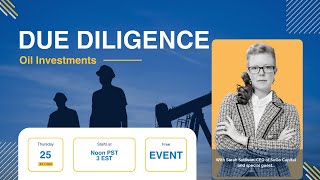
This webinar (hosted by Sarah Sullivan, July 26, 2024) teaches investors how to perform due diligence on oil & gas investments. It explains why Sugo Capital added an energy vertical, outlines a people→market→business-plan due-diligence order, and gives specific questions to ask operators (break-even barrel price, break-even production, cost to drill, fees, vertical integration, ability to pivot). The session covers tax advantages (sample K-1 and a tax worksheet showing large first-year deductions from intangible drilling costs), operator verification steps (use state regulator databases; Texas Railroad Commission operator ID), and includes guests Cotton and Joe from G2 Petroleum/Newport Operating who describe their track record and operational approach (shallow conventional wells, vertical integration). A follow-up investor presentation/data room was scheduled for August 1, 2024.
Questions this video answers
July 26, 2024
36 apartment complexes
Over $880 million (value of assets acquired)
Over 20,000 investors
2016
Chapters
Believe Cynthia. Okay, got it. Cynthia, I'm going to make you co host as well, because then I believe you can do that kind of stuff in case I forgot something. All right, beautiful. Looks like we're on a roll. So Cotton and Joe, they are our guest speakers. They're here, but I'm going to ask you guys to jump off, and then I'm going to call you back on later in about half an hour. So if you're not sure how to do that, I'm just going to stop your video. But everyone know that they're still there, and we'll invite them back later. Okay? So as I said, we got lots to cover. So it's 1202. We're going to get started. All right, so first we're going to start with a poll, because a lot of us are real estate investors that have pivoted in the last few years. Right? And so I really want to know. I'm going to pull up a poll, and I really want to know due diligence experience. Here we go. I want to know how experienced you are in doing due diligence on oil investments or oil and gas investments that will help me know how deep or how shallow to go during this recording. If it's like, hey, everybody is super, super expert in this, then we're going to bring Cotton and Joe on much sooner. If everyone's like, hey, I am really a beginner. I don't know where to start, then I'm going to stay on longer and bring you through my checklist. Well, it looks like we have two people so far who say I'm a pro and everyone else is. Let's see, it's about 70%. I don't know where to start. 30%. I could use some additional education. All right, so everyone is in the right place. This is perfect. Perfect. Let's see. Oh, we have 75% of people answered the poll, so thank you, guys. That really helps me know what to say. Over the next hour, I'm just going to pop this off. I'm going to show the results so you can see that you're in good company. If you said, I don't even know where to start, 63% of the people in here said the same thing. All right, so I'll close that down. All right. Is anyone in here? Hi, jag. Is anyone in here new to Sugo Capital? Because I'd also like to save time by not really going into my story. I'll tell you why we're doing this webinar, but I think most people are familiar. I'm looking at the attendee names. You're pretty familiar. So I wouldn't super go into Sugo Capital, but I will let you know why I'm doing. You're close to sugar. Thank you. Why I'm doing this webinar. Okay. So I've been in the multifamily space. I've been a real estate investor. Let's start there for about 12 years. I've been in the multifamily space since 2019. And everything was like rainbows and roses right until the end of 2022. And everything was the opposite of rainbows and roses. If you're in any syndications from the end of 2022, you'll know that operators across the board are struggling big time. And so there are market factors that, you know that led to this. Even the best operators out there are are losing investor capital. And so at the end of 2022, it was really apparent to me that as a business owner I needed to pivot because the glory days come and go, the market cycles come and go. Right. With all investments. And so you need to know as a confident investor, as a good steward of your money to pivot, how to shift and all those things. So I started exploring other things for my personal portfolio at that time because I realized I had correlated assets in my portfolio and they weren't diversified enough. And then I took a look at what I was offering and our investors and I was like, they're in the same boat where the majority of their portfolio is in real estate that's taking a hit. And how can we pivot to support our investors in a more rounded portfolio and get them some more cash flow, some more tax benefits when we didn't have the volume of multifamily syndications coming through. So we pivoted. We now have three verticals. So we still have the multi family. It's just a lower volume because it's harder to find great stuff for you guys. And then we added oil and gas, which we're going to talk about today. And so over the last few years, I've really, as I've made additional investments in the oil and gas space, I have narrowed the type of investments that I like to do in this space. And so I'm going to talk about that today. What have I learned are really important questions to ask when you're doing an oil and gas investment. And then our third vertical is hedge funds. It's forex trading and gold trading with algorithms. Now, given what's been going on in the last year, especially the, the first and third verticals are experiencing a lot of volatility and it's not necessarily volatility for, for the better. Right. And so we're going to bring some experts on in about half an hour who are in the oil industry and we're going to ask them how the, the economic and political landscape over, over the last year and, you know, what's upcoming over the next year, how they've seen that affect the oil industry and how they think that's going to affect the oil industry because they're in it, they, they live and breathe it. So they're much more of an expert than you know, anyone else who's on this webinar. So we'll, we'll get to that in the end. Let's see, what else do I want to say? Okay, so I really want to get into, you know, why am I doing this? So we, we are investing with G2 Petroleum and we're doing a webinar next week and they're going to show the actual investment. We're not doing that today. However, in order to prepare you to ask the right questions so you understand the investment. That's why we're doing this webinar. It's the beginning of your due diligence. It's the beginning of you creating a due diligence process if you don't already have one for oil and gas, which it looks like most of you don't. So I'm going to go through. We have a due diligence hub at Sugo Capital on our website and it's mostly for real estate. And so we're going to add this to the due diligence hub so that you have it as a resource and we have it. We're going to create a checklist out of the slides we're showing today. So you have it as a resource so that it's part of your process. And as you evaluate more and more oil and gas investments, you can add your own checkboxes, you can add your own process, whatever works for you. This is a starting point. This is a give. And then of course, this is part of this beginning of our, your due diligence on us as, as operators. So I'm not going to operate an oil and gas investment, but you know, the experts I'm bringing on at the end, they will be doing that. So before I jump in, I want to do one more poll and the poll question is, let's see, I'm going to bring it up. Maybe. Maybe I'm not. Let's see. Bear with me, guys. I'm not an expert on poll. Oh, there it is. Okay. Okay, this one is fabulous. So this is about your due diligence in the past. So if you're someone who has made an investment in the oil and gas industry, I want to know, have you made an investment in the past without doing thorough and enough thorough due diligence like you did some, but then you realize after the fact, wow, I just kind of like threw my money in there and I didn't really know what I was doing. And. And so I definitely need to learn. So a lot of us are in this, you know, would answer yes to this if you're new to an industry. Right. So don't feel bashful. So I'm seeing. Okay. Have you made an investment in the past? Yes, Jonathan. So Jonathan's asking, is this due diligence just about oil? And so it is, Jonathan. So I have lots of webinars around due diligence, and I have a due diligence hub, and it's for, in general, making private investments. It's around choosing operators, choosing real estate markets. And this one is specifically on doing due diligence for an oil investment. So, all right, looks like we've got a lot of participation in this one. So 40% of you said, yes, I made an investment without doing thorough enough due diligence in the past, and 13% of you said, yes, specifically in oil. I didn't do enough due diligence. 15% of you said, no, I always do my due diligence. So congratulations for you guys. And 30% said, I've never been in private placements such as oil. So especially if you're in that last category, that 30%, today's webinar is going to be really useful for you as a tool. And then also our due diligence hub in general will help you learn about private placements to see which one is good for you. All right, cool. So I'm going to share my screen and we will jump in. So I see some people saying, is oil passive investment? Yes, oil is usually a passive investment, but you often sign up as, as an active investor. Let's see. And as far as the question around, hey, what are the monthly distributions? We're not talking about a specific investment today we're talking about due diligence on oil, but next week we'll talk about a specific investment. So come to that one and we'll talk about a specific investment because they're all going to be a different answer to that question. Right? All right, so Sugo Capital, we connect investors to passive income opportunities. So some of your portfolio might be in active investments, you might own Airbnb and other things. And we teach about all kinds of stuff and we bring in experts. But when we actually connect you to investments, know that they will all be passive income opportunities. So, meaning, you know, you're not responsible for the debt, you're not responsible for the performance of the investment at all. You put your money in and another operator does all the work. So we are predominantly multifamily syndicators. So we've acquired 36 apartment complexes, and that's over 880 million in the value of assets we've acquired. And that's all in collaboration with our community, our investor community. So that's not straight out of my pocket. That's collectively, we make purchases together. And I'm on the advisory board of two investment firms outside of Sugo Capital. And so, you know, you're here to learn about due diligence, not because checklists are fun and not because money in the bank account is fun. It's because you want to make smart investments so you can live your dream life. And so I want to congratulate you for being here. You know, it's summertime and you're here at noon on a Thursday or 3pm on a Thursday, and you're learning about due diligence. And it's so important because great due diligence does help you live your dream life. It helps you set financial goals and achieve them. So congratulations. That's why I really love doing great due diligence, because it really leads to keeping and growing your money, which helps you live your dream life. All right, so, you know, I gave kind of numbers on what I've acquired and accomplished, but really what I'm most proud of is that we have served over 20,000 investors through education. So again, today is educational. We're not presenting investments. I love that I have this honor of educating, you know, passing on what I have learned through my over a decade of being an investor with you guys. And I love when you share things back. So this content was curated from my experience and also from other investor experiences. So I hear day in and day out stories of scams and lost money. And so I take those to heart and I give them back to the rest of the community. So please feel free to share your experiences with me because then we can share with the whole community and we become more confident investors together. So if you want to learn more about my results, my track record? You can go to stocapital.com backslash portfolio and you can see everything we've acquired and exited. All right, so we're about to jump in. Like I said, why are we here? Well, we want financial freedom. We want financial security, peace of mind. We want to live the, the life that we want to live. And, and so who's able to do that? There's, there's wealthy people we can look up to that are able to do that. And they really focus on earning more, keeping more, and growing more of their money. Today is all about keeping more your due diligence. How do you make sure that you make solid, great investments? And so something that I hit on in the beginning, I'm going to hit on again real quick is diversifying your portfolio. So you may be be a real estate investor and you're all in on real estate and it's not performing well and you're wondering what else to add to your portfolio. So I say it depends on two things. And one is taking a look at, so a family office is those who are uber wealthy. They have staff that handles all their money, all their investments, all their tax strategy, all their asset protection. And so take I, I look at what do they do and how can I mimic it? And then I look at my goals as well. So when you're doing your due diligence and you're choosing what to put in your portfolio and whether or not oil has a place in your portfolio, there are four questions to ask yourself. One is, is your exposure in your portfolio? Is everything, does everything have correlated risk? You know, so if everything is real estate, then everything has correlated risk. They have risk of real estate taxes going up. They have, they all have the same risk of insurance rates going up. They'll have risk of, um, you know, what, what is the debt market doing? So do you have enough different asset classes in your portfolio that if one is at risk, this other one is not at risk for the same reason? And that's what the uber wealthy make sure that they do. They have unleveraged investments and leveraged investments so that they have exposure to assets with uncorrelated risks. And so they also have some investments that benefit from a peaceful market, calm, peaceful market without much movement. And they have. Oh, my screen just went to someone else's screen, Cynthia. Okay, let me try to share screen again. All right. And so they have investments that benefit from calm peace. No, no activity in the economy. And they also have investments that benefit from volatility and volume in that asset class. So we're going about that, we're going to ask the experts today how they feel about that as well. And they also include assets that have government influences. So this is for the tax play and we're going to get into that today as well. So think about for yourself right now and write it down on a piece of paper. Why are you investing? What are your values? Are you investing for monthly cash flow? Someone asked what's the cash flow from oil investments? So it seems like, okay, that person cares about monthly cash flow. Someone else who you know, they're 20 years away from retiring and this is for their retirements, they might not care about cash flow. They might be, you know, net worth, wealth building stage. Some people are investing to reduce their taxes. If so this is one of the best ways to reduce your taxes in a legal way that I've ever heard of. And we use, we use these types of investments in our tax strategy very, very heavily. So think about that because that helps. You know, not only is is oil and gas, you know, how to vet an investment, but how to make sure it's right for you because that's not right for everyone. Right. All right, disclaimer before I jump into the meat and that is the summary is there are risks associated with investing, including principal loss. Always know that with every investment, nothing has guaranteed returns. Everything operators talk about and sponsors talk about our targets and projections. Okay? So jumping in. When you evaluate an investment, you always want to start with the people. Always, always, always. And then you move to the market, whether it's where they're buying real estate or drilling for oil. And then you dig into the business plan. So I do a lot of content around due diligence on people and market. So I'm not going to go so much into that today, but business plan, I'm really going to talk about that today. Like what are specific questions to ask when you see an oil investment? So people, you know, pretty typical. So you have the sponsors, the GPs, the managers of the fund. And so you know, whether this is a real estate fund or an oil and gas energy fund. Google them. People love to post things when they're angry. So you'll find stuff if there's stuff out there, right. And that's really quick and easy to do. And some people just don't even get to that point. Google them, do background checks. You can do really inexpensive ones online. I use Toltec. It's a private investigator. And so my private investigator they take a look at this. You know, anyone that I want. So the sponsor team, the geologist, anyone on the extended team, I give them their name, their address, their birthday and they go back and they dig up 20 years of life on this person and tell me everything. And they also can take a look at the track record and tell us, you know, is this accurate or not accurate? And I've seen some things come through. You know, I, I tell folks all the time, I'm going to do a background check on you with a private investigator. Anything you want to tell me. And they go, no, no, no, no, no. Everything's clean. Private investor comes back with, they were arrested three times, yada yada. I'm like, what? How could they not have told me this? Okay, off the list, not working with that person, not investing with that person. I mean, maybe there is a fine reason that someone was invested and they didn't get in trouble, but you know, do thorough due diligence. It's not, it's not that hard to, to really find this information out. Also talking to people who have invested with them, that is the best. When you know, friends, you have investor communities, you're part of your family is an investments, you know, ask them who they're invest with in what their experience has been. Because referrals is one of the best ways to get into great investments. Right. And ask for a track record. And when we bring Cotton and Joe back on today, we're going to ask them how to really verify that. So when you ask for a track record from sponsors, they could give you their like, hey, we, we own all these wells and this is the production level. And how do you go verify that? You know, they'll give you an operator number, they'll give you other information. And what do you do with that? We'll get into what do you do with that information? How do you verify it? So usually there's a geologist on the team as well. When you're working with an oil and gas fund or investment, whether it's a fund or it's a group, where you're investing in one well or something like that, usually a geologist, geologist is involved and they're the one who's going to say this is where we should drill. And I mean they do more than that, but so they're really key in, in, in hitting the right spot. Basically, you know, where you're going to find gold. So you want to make sure that they're a great person on the team as well. So you can ask for their track Record and verify it. And then the extended team. So you may be talking to someone who is on the investor relations team, a vice president within the organization. They may be telling you one thing, but the fund is going to do something else. So who you are directly talking to also do due diligence on them because you may not be talking to the geologist, you may not be talking to the manager of the fund, you may be talking to another person on the team. Right. That happens all the time when you're working with Sugo Capital. I'm not taking 500 investor calls. We have team members doing that. So what is. They're the ones telling you information that you are believing. So make sure and Google them, do a background check on them. Talk to, you know, extended team is super important as well. Okay, so let's jump into some really specific questions that you can ask. And it's usually going to be you're going to ask this to the member of the extended team when you have your one on one call with them, or it's going to be to the sponsor or geologist. When you're having, like when you're in the webinar, you can ask these questions in the chat or maybe you can find them in the, in the data room or the investor presentation. So when you're looking at investing in oil, the first thing you want to do is decide not is this a legit investment, but is oil a good idea right now? And so this is from this morning. This is the price of oil over the last five years. And so you can see that it has gone between 120 and 20. So that's a pretty wide range. And so demand has gone up and down. You know, during COVID there is definitely a dip in demand for oil which caused a dip in price for oil. You can't predict Covid, but are there other things coming up that you think would, you know, influence supply and demand of oil in the timeframe of your investment? So if your investment is 18 months, what's happening in the next 18 months that could affect the price of oil? As you can see, it goes up and down, up and down. So know that when you invest in oil, there's going to be a target return. There might be monthly distributions, but they're not going to be evenly $1,000 a month or anything like that because it's based on production, which goes up and down and the price, you know, the sale price. So if that's going up and down like you see on this chart, just know that it's not like real estate where you know, rent is $1,000 a month and you get $1,000 a month. It's the oil price can, you know, swing by 10 bucks. So it might, it might shift. So, so know that. But keeping that in mind, the question you want to ask in the investment that you're looking at. If you decide oil is the right investment for you and you like the outlook of oil in the next, say five years, if that's the term that you're going into and you're looking at a business plan for a fund, you want to ask what is the break even barrel price for your investment? That's what you want to ask the, the person that you're talking to, either the sponsor or the investor relations person, because that's going to be really important. So if we're looking at the chart and we ask the question what is the break even price? That will make, you know, that will allow you to give me the target returns you're talking about. And if they say 100 and you look at this and you go, well, okay, over the last five years we crossed a hundred for a short blip in time. If they say 60, you can go, okay, well that's pretty good. It was pretty consistently over 60 except for during COVID We don't expect that to happen in the next five years. Or, or if you're, they say 45, like great, that feels really great. 45 seems like we're really going to hit 45 for the next five years. So it feels great. So you know, ask what that break, break even prices that they need in order to hit A, the target returns to investors and B, in order to return investor capital. So say they, it's like, oh, I put 100k in. Well, if you know the price is 60, you get your 100k back over five years. But in order to hit the returns, we need it to be 80. So you want to ask these really specific questions. What's the price you need in order to return investor capital? And what is the oil price you need in order to hit returns? And then take a look and see what, excuse me, see what it's doing and see what you think it'll do. So this is Bloomberg Markets Oil also, it's really easy to Google. So another question that you want to ask is what is the breakeven production level for your well or for your fund? So say you're going into a fund and it has, you know, it's going to drill at 200 wells and they said oh, we need, you know, five to six barrels a day for our shallow wells. Okay, so that is some information, but how likely is it to hit that number then? The follow up question you want to ask is what is the average production level for wells in their size, in their location? So if they're drilling shallow wells then you want to see what's the average production for shallow wells. If they're drilling, you know, it, the, the cost to drill A well is $5 million and they're going super, super deep or wide or whatever they're doing, they're obviously going to have a different break even production level and a different breakeven production expectation. So when you're comparing that to something else, make sure you're looking at wells for, of an equal size and in their location. So I talk all the time about market due diligence in real estate and so that's really important in oil as well. And so some areas where folks drill, it's more speculation. It's kind of like a new frontier that people are going to. So there's less information on that location. And sometimes it's like I have been drilling in the same location for the last 20 years with a 96% success rate and so I'm sticking here because 90% of the time I hit oil and it's a great well. So really taking a look at, at the location and what that average production level is further side than the location and then compare that to what's in the business plan to see how feasible it is. Obviously you want the average, the question on the right to be larger than the question on the left. And so if the, the break even Production level is 5 barrels per day, but the average for wells of that size in that location is two barrels per day, it's like, well, what makes you think that your wells are going to be so much greater than anyone else's? So these are the really specific questions to ask, right? And I always, if you look at my other due diligence webinars, everything is relative, right? You can't ask a question and get one answ and know if that's good or bad. You have to compare that to other things. You have to compare that to what's going on in the market. You have to compare that to, you know, properties of the same size wells of the same size, that sort of thing. This one I love. So what is the cost to drill one well and what is the estimated break even time frame? So you know, maybe the cost to drill one well is $2 million because it's a, you know, they, this giant rig to come in and a big crew and it's being outsourced and it takes, you know, a long time to drill it. And then once production is up and running, maybe the break even time frame is two years because that was really expensive to dig. But it's going to, you know, break even in two years, but it's going to produce for the next 10 years. Or it could be a really shallow well and it takes a few weeks to drill is 250k and so maybe in six months, the break even time frame is six months to, you know, produce enough oil at the current price in order to break even on the cost of drilling that shallow well. And so this one, you know, there's not a right or wrong answer to this one. It's more think about what fits for you, what feels good for you. And again, not, it's not right or wrong. I have shifted towards operators that have a shorter break even time frame because I see that things could be shifting. You know, it's an election year and again we'll talk to, we'll talk to the oil Experts in about 15 minutes, probably and ask them what they think, how that will affect things. But with a new administration coming in, maybe, maybe not. What's going to happen in this industry? What's going to happen? You know, there's things that, that affect things. So in my mind, when there are more risks in the economic factors for a specific investment class, I like a shorter break even time frame. That's my preference. Yours may be different. So just know that for yourself and then, you know, look out for it. Then you want to ask what is your track record versus projections? And so there's, there's two things about this question. So one is not only what are the returns you've given your investors. So if they say, oh yeah, you know, we've given investors 20% annualized returns, that's our track record and our projections are 20% annualized returns going forward. It's like, okay, well seems like you've done it. You could probably do it. If they've done 20% annualized returns in the past and they're projecting 45% in the future, it's like, why, why is this so different? Why do you really think that you can get so much more this time around? It doesn't mean that they can't. It's just you want to ask those questions, right? And really understand the difference. Another question around track record is their experience in the location in the market. Because again, you know, is the geologist that they're working with, do they have extensive knowledge in the area where they will be drilling? That is super important. So track record, is it in the location where you're investing? Also their experience, is it in the size of fund that, that you're looking to invest in? So this is all about scale and ability to scale. So if it's a fund, for instance, and they say, yeah, this is a, a $10 million fund. Okay, what was the size of Your last fund? $10 million. Okay, so you did it before, you're doing it again. Seems like a good match. If they said, well, the last time you did a fund it was 5 million and now we're doing a 200 million dollar fund, like, wow, that is a big jump. Not everyone can scale and maintain the same level of excellence, no matter what industry, no matter what asset class. And so when I hear that someone is going from, you know, okay, so I have a fund and it has three multifamily units in it. And I'm creating this fund that's going to have 100 multifamily apartment complexes in it. It's like, how are you going to manage that? How are you going to scale? How are you going to expand your team and train team so that you maintain the same quality, the same returns for, you know, that increased number of investors in volume? And so I haven't seen evidence in my investment career of people who can scale rapidly and quickly. So for instance, for us, we have a fund and we were holding off on adding more money because we want to make sure that we can scale successfully before we expand it. One second, please. All right, thank you. I just had a little bit of a cough there. Didn't want to cough in your face. But that one's really, really important. Someone can be a great operator at the scale they're at and you want to watch them scale slowly enough that you think they can manage it. Right. Or maybe they're partnering with someone who has already scaled at the level they're going to, that could be acceptable as well. Another question that I now have a different opinion on, what answer I'd like to see to this question is, but are you vertically integrated? So this means, are you outsourcing to other, you have contractors, other companies that are doing the drilling, other companies that are doing the work, other companies you're renting the equipment from. This is really important because I've seen, you know, when, when large, large scale operations are taking place, people don't own the equipment, they lease or rent the equipment. So they're at the mercy of does the person who currently have the equipment, you know, finish their project in order for them to get the equipment on time? And if not, their business plan can be completely behind schedule. And it's no fault of their own, but their investors pay the price. Right. And so I really like when I hear that a team is vertically integrated or that an operator is vertically integrated, where, you know, everything is under the management of the same person or the same team. So the people you know, they're not waiting for someone else to be done with the contractors or the boots on the ground operating team in order for them to execute their project. They are really in control of their project, their equipment, their people. I like that. I think it allows them to pivot faster. And so especially when I think there are more risks in the environment, I love to see vertically integrated. It doesn't mean it's mandatory. I'm saying it's my preference. It's a good question to ask because it tells you what potential risks there may be to the timeline. So this kind of, that last question kind of goes hand in hand with this question. What is your ability to pivot? And so again, when things are more unknown in the economy or in the industry, I like to go with groups that are able to pivot faster. And so in oil and gas, this means shallow wells, cheaper wells, vertically integrated. And so I like to see that the ability to pivot is really important to me right now. So then when you ask all these questions, you know, like, are you vertically integrated? What is your ability to pivot? All these things you also want to ask, hey, do these answers, you know, based on this, does this pose risk to your business plan, your, your timeline, your investor returns, really identify the risks. Every investment has risks, right? Especially in oil. You just want to make sure you know what they are and you are okay with them. And that's true for every investment. Every investment has risks. You need to make sure what they are and if you're okay with them. Okay, so onto some fun stuff. How and when are returns distributed? Blah, blah, blah. Really understanding the returns. And I'm going to jump to the next one too. What are the tax benefits and understanding the tax benefits. So you know what we're going to do? So we're going to jump over. I'm going to bring up another screen share to answer both of these. So I am heartbroken when people don't understand how and when are returns distributed? And they Think, oh, I'm going to get 20% quarterly payout when it's 20 annualized returns and it's all paid at the exit. Because it's new development. We really want to make sure that people understand not only is this, you know, a solid investment, but is it the right investment for you based on do you need cash flow monthly? Do you need a tax benefit? So I'm going to bring up now an ROI calculator. I'm just going to stop sharing and bring it up and the, and show you how you can go into the tax worksheet as well. Okay, share again. Okay, so this is our ROI calculator. It's on our website. A lot of you have seen it before, but you know, I said in the beginning that we have three verticals, three asset classes. And so one, the first box of stuff, this first blue box hands off apartment investments. We have another webinar on due diligence for that. Forex trading. We have another due diligence webinar on that. So if you scroll down, you get to an energy fund and you can see, you know, you can plug in the numbers when you're looking at an oil investment in this green box and you can say, I want to invest 200,000 in this investment. And what does it look like? So if the target cash on cash return distributed monthly is annually 20%, but you wait six months before getting your returns, you can see this pink bar is the cash flow. It shows you how much you'll receive each year in the form of cash flow. So you just divide that by 12 to know how much it is per month. And then if there's a target equity multiple, you can put that number in here. So in this example, it's 2.5. Again, this is not an actual example in the target hold five years, this is, this is just saying like plug in numbers when you're looking at an investment. And this will calculate the cash flow. And then the capital gains from sale is this teal box. And so the yellow box is all the money that you've received plus your capital, the principal you put into it returned. What would that look like? And then you can see for this one, there's this yellow box that says, note tax benefit. Reduce your AGI by 75% reported on your K1. So what does that look like? Take this to your CPA and have them take a look at it. And Cynthia, if you would drop the link to this in the chat, that would be really great. So if you click on that, it'll bring you to this. And so if you want to practice doing some due diligence, you can get. This is what we're going to talk about Next, next Thursday, August 1st, we're going to go through this investment. But if you want to learn more about, you know, the tax benefit and how to calculate that, you can go in here, you click on documents and once you're in here, there's number two and number three. These are things that you're really going to want to look at. So I'm going to start with number three. This is an actual K1. So this is something you should ask for when you're asking about the track record. Also ask them for a sample K1. And so this has the investor private information taken out but everything else is real. So the numbers are real. So in this one you can see down in box L. So again this is a K1 for an oil investment. So you can see down in box K1 is in the lower left hand corner, it shows that the investment was $200,000. The loss was 150k. So the ending capital count is 50,000. And so a lot of people like what that doesn't seem good. But it's just a paper loss. It's the pass through tax benefits. And we'll have, we'll have Joe and Cotton talk about that more in a second as well. But that's a great thing for taxes. So in this case, this person lowered their taxable income by $150,000 in 2023. It doesn't mean they lost that money. It means it was, they reduced their taxable income by that number. And how to calculate that number? Document number two in here, Energy investing tax benefit detailed worksheet. So this is something you can share with your CPA and walk through and talk about if this is beneficial to you in your, in your tax strategy for 2024. So there's tangible drilling costs and intangible drilling costs and they both add to oh and depletion allowance so they, they all add to the tax benefits. So you can use this worksheet and you can put in, you know, actual dollar amounts for you. There's an example in here already of if you make and $500,000 per year and you invest $250,000, what would it look like for you? And so some of the tax benefits come from intangible drilling costs, some come from tangible drilling costs. And, and again this is an example. So you'd want to put in real numbers for the investment you're looking at the first year tax deduction in this example is 187,500. So depending on what your, your realized tax income tax bracket is that, you know, multiply it by that and you'll get what your actual tax savings are this year. So it's pretty, pretty powerful. And again, feel free to, to take this to your cpa, your tax preparer and take a look at it. And also so if you guys clicked on that link that was in the chat again, it takes you to this room. And so I'm going to bring up Joe and Cotton and they are from G2 Petroleum. And so that's what's in this energy room is energy investing with G2 Petroleum. So we're going to talk about, about their experience in the oil industry. And if you're interested and you want to continue to learn from them, there's an investor presentation next Thursday. So you can either RSVP here from this website or if you put in your phone number when you registered for this webinar, look at your phone right now and you'll have that come up on your phone. So at this time we got 15 minutes left, but we'll likely stay over if you guys need us to. I'm going to invite Cotton, I'm going to make you co host and Joe, I'm going to make you co host so you guys can turn on your cameras, you can, you can unmute yourself. And I'm going to do a quick intro and then you guys, if you put questions in the Q and A, then we're going to answer them. So let me do the intro. I have five questions for them and then put anything you want in the Q and A and we'll go to that. Okay, so G2 Petroleum, it's an oil and gas indication company in McKinney, Texas. We just had a multifamily acquisition in McKinney, Texas. So that's kind of fun. Same location, and then they have a wholly owned drilling company in Wichita Falls, Texas called Newport Operating. And so what's Newport Operating? How long has it been around? It's been around since 2016. And they've pulled over 246,000 barrels of oil from 150 wells, 150 wells since 2016. And their success rate is 95%. Okay, so that's, that's a great track record. Right, but how do you verify that? Okay, so Newport operator, they have a, an operator number with the Texas Railroad Commission. So we're going to ask them what is that? How does that help me do due diligence on operators.
And.
Yeah. And know that you're in good company again. So we have over 50 investors who are in the pseudo community who already are moving forward with G2 Petroleum and their fund. They just jumped in early, but we're really going to be presenting it next week. So we're not talking about the investment right now. But if you sign up for next Thursday, August 1st, take a look at your phone. You should get a text right now in order to sign up for that. That's when we'll be going over the actual investment opportunity. Today we're still getting to know Joe Cotton and how to do due diligence on oil to see if it's even right for you and to see if you know, to learn how to really check up on operators. All right, so you guys have your videos on and you have your audio on, right?
We do.
Can you hear me?
Yep, I can hear you both. All right, well, thanks for being here, guys, and thanks, you know, being patient as I'm running through and covering everything I wanted to make sure I covered before you guys got on. And I'm really excited you're here because you're the experts. I mean, Cotton, how long have you been in the energy or in the oil and gas industry?
Well, first, I want to thank you for putting us on right and inviting us to this. I think you're doing an incredible job, quite frankly. I was really impressed with the first 45 minutes of this presentation, so kudos to you. Congratulations. Good job. But I've been in this business for about 25 years, got into it on the ground floor, basically syndicating deals, learning how to raise capital through private investors to fund domestic drilling programs, which are drilling programs here in the great United States of America. And, you know, obviously there are great tax benefits associated with these domestic drilling programs. I mean, you're able to write off 100% of your investment ultimately, and that's about 75% the first year as you were going through the intangible drilling cost. But, you know, yeah, I've been doing this for about 25 years. I started G2 Petroleum back in 2008 and was simply syndicating projects and, you know, buying bits and pieces of other operators programs, you know, with my investment partners and, you know, getting, taking the tax write off, generating income, building wealth, and ultimately that grew into starting my own operating company. As you mentioned, Newport Operating, which is registered, bonded with the Texas Railroad Commission, which allows us to drill, produce, buy, develop oil and gas Wells in the state of Texas. And like you said, we started that in 2016 and you know, grew it from essentially nothing. You know, went out and bought a small lease, drilled a few wells, had success and just kept building and developing over the last several years.
Oh, someone just told me I'm still screen sharing. Am I still screen sharing?
No, no, I see, I see your background.
Okay. Okay, great. Maybe their screen froze. So I love that, I love your background. I love, you know, that you've been in it so long. And then I think this is super cute. What does G2 stand for?
Well, when I started the company back in 2008, I had two daughters. So it originally stood for two girls, you know, petroleum. But since then I've had a third daughter and I can't go and change the name to G3, so it is.
Awesome. And Joe, why don't you introduce yourself too?
Yeah, thanks, Sarah. And again, thank you. I agree. Great presentation and it's hard for me to not turn every answer back to G2, so I'm going to try to do that. I know that's for next week, but just generally speaking about the oil and gas investments, but myself I've been raising private equity since the 90s. I've primarily started with startups and have raised capital from for real estate as well and got into oil and gas. I guess it's a little over three years now. Been with Cotton over a year for a number of the reasons that you mentioned. Individual personally with, with Cotton, the way he does business, having his own operating company and so forth. But and also again for the tax advantages and the mailbox money that it can produce. So that little bit about my history.
Love it. And, and how long have I known these guys? I think Joe, you and I started talking like nine months ago. Yes. So to answer any future questions of like how long have you been doing, doing due diligence. How long have you known this team, Sarah? It's been about. Actually now it's over. No, right. About nine months. So you guys saw what I, I talked about earlier. So I want to ask you, have you invested in other since you've had your own investments or even in the lifetime of your investing career, have you invested in other operators, oil investments and if so, what's the number one thing that you pay attention to when you do that?
Absolutely. I have many different operators, many different areas all over the country. You know, North Dakota, Colorado, South Texas, North Texas. So I've been involved and that's what drove me to open up my own operating company is. Because, you know, the number one thing I look at, right, is who is the company. And then when you're looking at specific programs or specific investments, you got to look at many things. But number one is a management fees. A lot of these programs that come through the, let's say, you know, through the chain that get to private investors desks ultimately for your review, you know, you've got a lot of fees, a lot of, you know, I don't want to say promoter padding that are associated with these projects that ultimately reach private investors, but that's what I like to look at the very, you know, on the onset is who is the operator, you know, kind of what's their track record, but what are the fees associated with their management fees, but also their fees associated with drilling the wells? Because I mean, if you're going in and, and you're paying way too much for their product on the onset, that can really just disrupt or ruin the economics right out of the gate. So those are a couple of the main things I look for in particular.
Yeah, that's great you mentioned that. Because I didn't, I didn't mention it today. And that is really important. You can see anywhere between 2 and 20%, right, for those fees.
Oh, you can. And, and then some, you know, I've seen some over my years that are, that are just ridiculous. So, you know, the fees, ultimately the investors are paying for that. And so, you know, my, my, my mindset or line is, is you want to buy as close to the wellhead as you can, right? You don't want to buy, you know, from the operator or directly to it. You don't want. Or three, you know, middlemen that are patting the project and just adding cost on that that, you know, private investors are absorbing. So, you know, that's, that's some of the things I look for. And also their interest, you know, how much interest do they have in that well or in that program? Right. If they don't have any interest and they're making money off of putting the deal together and raising the capital, well, that's not really a good situation for the private investor to be in. You want the company or the operator, you want them to have a vested interest in, in that program so that their success or your success is shared with them.
On that note, for you, you could either say dollar amount or percent. How investor are you usually? Like in our real estate syndications, we're usually 5% of the money needed to get it started. What it was kind of your rule.
Of thumb G2, we, we maintain 12 and a half percent of everything that I do. Some I have more interest in those wells or those programs, but Our standard is 12 and a half percent interest in every program that I do and that's dollars that I'm allocating to that program. I have to pay my operating expenses just like the private investors. So I have, you know, skin in the game per se.
So I'm sorry, real estate. Yeah, that's great. Well, thank you for sharing. Joe, how about you? Because you've worked at a few different groups so I'd love your opinion on like what are the top three things that investors should do during their due diligence process when seeing, you know, A, if something's a good fit and B, if it's, you know, truthful, what's being presented to them.
Sure, sure. Well, agree with what Cotton was just saying. For me, I think you want to invest. I don't personally like just investing with a syndicated that's syndicating for another operator because they have no control over what that operator is going to do. And like every industry and real estate, certainly I, I could say all of Wall street, but there are nefarious people. Right. And so you're going to have syndicators, especially if oil is up, that are going to pop up out of the woodwork with no track record. The worst case is if they're just kind of drilling where they're not sure that there's oil. It's called wildcatting and it's sort of like a hit and hope. But you can also there are syndicators that, hey, we've got a piece of a really large Enron deal, $100 million deal and we're going to go take 10 million of it. But you have no control over what Enron does. They may or may not drill those wells. They can with was just talking about they can fee you to death. They could be pulling 500 barrels of oil a day, but for somehow there's no returns out of it for you. So I really like investing with a syndicator that is also the operator that has a vested interest in pulling the oil. So that's one thing. Verifying the operator's track record, which you touched on earlier, Sarah, is, is extremely important. You want to know have they really, have they drilled? Are they drilling? Like you said earlier, you hear these horror stories where you invest in a program and you drive out to the area and there are no wells out there. So are they actually drilling? Are they bonded like Cotton said fees are a huge thing. What are the, the afes or Authorization for Expenditures. So that's actually drilling the wells. And then you also have your lease operating expenses, which are called LOEs, which are the ongoing expenses to run those wells. And you were hitting on that with break evens and all of that's extremely important. And like I, I think you alluded to also. Another thing that I would look for, if you're talking about three top things are infill drilling, drilling where you know that there's oil drilling in, in on leases where you have a ton of data and a very experienced geologist to tell you where to drill. So those are things that I look for.
Yeah, the geologist is something that I didn't in the beginning I didn't think about or really know to dig into. And it's more recently that I'm like, oh, this person is extremely important. They're very pivotal. So yeah, that's why I call them out on the, the people slide is like a really important person to pay attention to. So we, we all said it, getting the track record and verifying it. So if someone gets a track record and it's like, okay, company A owns, you know, all these sites, all these wells and they've done this, this production in this time frame, how does someone take that and go verify that it's actually real and true and accurate?
That's a great question. And I'll speak for Texas in particular because that's where we're operating, drilling and developing. And every state usually has a website or an agency in Texas. It's called the Texas Railroad Commission. And this was started many, many years ago when oil and gas development really kicked off in Texas. And it was named the Railroad Commission because that's how they transported the oil out, you know, from, from the wells out to, out to market. So the Railroad Commission was in charge of, of, of, of tallying all those numbers and keeping records. And it's still true today. So the governing body for Texas is called the Texas Railroad Commission. Now, there's a couple of different ways that you can vet the information you were talking about. Number one is through that operator ID number Newport operating is 607883. You could go to the TRRC Texas Railroad Commission, plug in that number, and it will pull up all of the data for Newport operating all of the wells that we own, all of the leases that we own, and it'll show you all of the production that we've made from day one to current. And it'll also break it down into which lease made what amount of production. So in Texas, the way to vet that out is through the Texas Railroad Commission. And you can either do it through the operator ID number and, or if you're looking for an individual, well, they have what's called a, their ID number, which you can also plug in. Plug in as well. And so through those different numbers and those channels, that's how you can vet out. Number one, is the operator registered and bonded with the Railroad Commission? And number two, what leases do they own? How much production have they made? What are they making currently? What they make last month. And so in Texas in particular, that's the best way to, to vet it out.
I love it. So I encourage you guys to do that. Even if you know you're not interested in making an oil investment right now, it's great to practice and get to know the process of doing due diligence now, because maybe in October you meet with your tax strategist and they're like, well, I would suggest, you know, 200k in an energy investment this year. And you don't kind of scramble to find something you'll, you can know like, oh, I've done due diligence. I know how to do due diligence. So it's great to always practice before you need it. All right, so I saw this question in the chat. Oh, actually, we're right at one o'. Clock. So Cotton and Joe, are you good to stay on and keep going with one more my questions and then the questions in the chat?
Absolutely.
Okay, great. Thank you. Let's see. Cynthia, if you could, for those who may need to jump off, we're going to put in the chat right now just for those folks who need to jump off. If you guys want to join us next Thursday at noon for another webinar, it's going to be Cotton and Joe presenting their actual fund, their actual investment opportunity. If you click in the chat, there it is. If you click in the chat, then you can go straight to that. You can see that's the data room, Cynthia. So then if you click, I think it's sugo capital.com backslash energy. And that's the link to register for the webinar next week. And so I'll say, because I also saw someone saying, well, what's the affiliation between SUGO and G2? So the fund, the investment that they're going to present, I am not an operator, I am not a manager of the oil fund. However, it's something that I think is great for investor Portfolios. It's great for my portfolio. And so I've done due diligence on this group. As I said. I hired Toltec private investigators to verify everything. We've been talking for nine months. And so I'm simply preparing a, I guess, you know, a way for you guys to connect. But I do want to make sure everyone knows that because all the other investments that we, we discuss here, I am on the management team of, except for oil. I'm, I'm not looking to be an expert in this space. So Joe and Cotton are going to do the presentation and click there it is, sugarcapital.com backslash energy. Click on that. And you'll also get emails from me on it. But that'll be next Thursday, August 1st at noon and they'll do their presentation. All right, so back to the questions. We'll still stay on for those that can hang and we'll go through some more questions. So my next question, and I saw some people ask this is around the, the political and economic levers that are going on in the country right now. So we have an investment that Sugar Capital offers and when there is an announcement that the interest rates were going to drop, it created a lot of volatility in that hedge fund. You know, there's stuff going on with the interest rates movements that really hurt a lot of stuff in our real estate portfolio. So first I want to ask as far as debt and interest rates, does volatility in this space either going up or down affect oil, affect the oil industry or affect your investment, increase or decrease the risk of your investment?
Well, I mean, I think depending on your who gets elected, right. Things, things are, are always volatile. Right. I mean, I think this past administration has done a good job of, of keeping oil prices high, quite frankly. You know, I mean, you know, oil prices have been, you, you threw the, the stat up there from $20 back when Covid was hitting up to $120. Right. And right now with oil at, you know, call it $80 a barrel, I think we're at a really good spot not only for producers but, but, but for our nation. Right. I mean people can, you know, afford to put gas in their car and move around. If it starts getting in the ninety, one hundred dollar range, then it really starts hurting people. But as far as the administration, you know, I think if Trump comes in, obviously it's a drill, baby drill. Right. And I love that and we'll continue drilling. But you know, oil and petroleum is a global commodity, right. So it's More than just the United States. You've got OPEC and all these other countries that, that have to have it. It's a global commodity. Everybody needs it. It's in much more than fuel and diesel and gasoline. You know, petroleum is involved in so many things. But, you know, I believe that if, you know, Trump does come in, we'll drill, baby, drill and continue moving towards energy independence, which I'm a big proponent of. I'm in the oil and gas business. That's what I'm about. And so it will take time to drill wells, it'll take time to bring production to market, which means it'll take time to bring oil prices down, which I think that's what everybody would like for it to do is be in the 65 to $75 range. And at that, at that price, I think it's a nice, healthy price, you know, for our country and oil producers. And it definitely matches up with, with our programs that we put together in OPEC policies. I just, I don't want to jump ahead of you, Sarah, but I just saw the, the question about OPEC policies. You know, opec, they're a big player in the game. You know, they cut production. But at the end of the day, if you look at it, OPEC and Saudi Arabia, you know, these, the, these countries that are involved in opec, they need oil prices high. Why do they need oil prices high? Because they subsidize their, their population with oil production. Right? So they would like to see oil prices at 85, 90, $100 a barrel. And so those policies, you know, when they're cutting back production, that drives prices up. And you know, I see them sustaining those production cuts. You know, I read something this morning that OPEX there, you know, you talk about the US Strategic Petroleum Reserve, which has been, you know, depleted over the last several years as they've continued to draw on it. And so, you know, with our SPR down and you know, I read something this morning that opec, you know, their strategic reserves are down as well. They need to fill up that oil and there's only one way to do it, is produce more of it. And of course they want to buy it at a, at a reduced rate. But you know, I really don't think oil is going to go below $65 a barrel for the next several years. I just, I just don't see it happening.
And, and with that, what is the break even price? Because we got Chris Jones asking a week early, he said, what is the break even price for, for your Great question, great question.
I'll answer that. I mean, we can still produce oil at sub 30. So if oil goes down to $30 a barrel, we'll still keep producing oil and keep selling it. You know, you mentioned when Covid hit and oil prices dropped, they were negative $37 a barrel for about a day and a half. That was shocking. Right? But they did come back and I've got a revenue statement that we show to people. And I forget which month it was for, but it was for one of the few months right after Covid hit and we were selling oil for $14 a barrel. We kept our wells pumping, kept our guys in the field working, and we were selling oil for $14 a barrel. Now, granted, it wasn't my best revenue statement that I've ever produced. Right? But it was a positive distribution. It wasn't a negative distribution. So, you know, to be able to produce oil at, you know, sub 30 and generate a positive distribution, that's a great thing. You know, there were no cash calls, no assessments. And that's also attributed to the type of wells we drill and operate. But also our operating expenses, as Joe mentioned earlier, the lease operating expenses, you know, ours are around, you know, 7 to 10% of roughly the revenue. You know, it's very inexpensive to operate the type of wells that we operate. So by streamlining that, you know, minimizing our cost to drill the well and our expenses to operate the well. And again, I've got interest in every well, just like you as the partners. So I've got to pay my share of those operating expenses. So it's. It benefits us to keep them low so that we're continuing to produce oil, provide jobs, and generate positive distributions for our partners.
Love it, love it, love it. I am. Let's see, here's a question I can answer. Someone's asking, does the tax benefit recapture like depreciation? And the answer is yes, it is, yes. I see a bunch of questions that I think we answered as we continued. Okay, here's a good one from Todd. I always love Todd's questions. Thank you, Todd. What are the exposure and regulatory issues with getting oil from the wellheads in the refineries or sorry, to the refineries.
In our area. And I'll speak to that. It's very minimal simply because the oil comes out of the well. It goes into a big storage tank, a steel storage tank that can hold anywhere from 200 to 400 barrels of oil in tank. Once that tank is full, you have a transport truck just like you See these diesel trucks with huge tanks on the back of them, they pull into our leases and the only way they would be restricted from pulling into the leases, if we had some crazy weather move through and it just flooded out the leases and they couldn't physically get the truck to the tank to extract the oil from the tank and then take that, that tank truck to the pipeline, which is just a few miles down the road, and tie it into the pipeline. So in our area, we really don't have much risk of not getting the oil out of our tanks into the production pipeline. It's very simple.
Thanks for sharing that. All right, so Sid has a question. They asked, can you talk about entity structuring and contractual obligations? Because the whole thing like normally when people invest with Sugo Capital and they're in a passive fund, they're an LP investor, which is separate. So on every, you know, on their K1s, it says, you know, passive investor, non active. And so with oil, it's different. Right? In order to get the tax benefit against your active income, W2 or whatever it is, you are not a passive investor in this, but you're not actually making decisions. So can you explain that side of it? Like it's. That's unfamiliar to people. Do they stay an active or, you know, GP in the entity or did they change over to an LP at a certain time? And do different groups do it different ways or is there a standard across the industry?
Yeah, I'll. I'll answer that one. Yes. So they, the IRS does consider the investors active investors, which is why they are able to get the large write off in year one against adjusted gross income. So that's W2 income cap gains. However, they arrive at AGI with their CPA and so they will be considered part of the general partner for, let's say, this 2024. But then moving forward in 2025 and beyond, they will be converted to limited partners for the remainder of the program. And there is a little bit of a difference between being a, you know, a general partner for, with G2 and on the finance side versus a general partner for the operator and the operations of drilling. So it's one of the reasons for us, the way we're structured, we do separate Newport operating from G2 Petroleum, different entity, the employees, workers, comp, insurance policies. That's all with Newport operating. And then we have an umbrella policy to cover should there ever be, you know, someone injured, hurt in the field, which we've never had a claim against one of those policies. And I'm not even aware of a claim ever going beyond the insurance beyond that. But again, we have an umbrella policy to cover in the event for the short period of time while our partners are considered general partners.
Love it. So, Chandra and other folks who are asking about that, I didn't ignore your questions in chat, but I kind of lumped them all. So I think that answered most of them. If you still have a question about that re ask it because I think that covers most of the questions on that topic. Let's see. Okay, this is an interesting one from Archie. So this is specifically about your investment, though. Does G2 petroleum target both conventional reservoir and shale drilling, or do they limit their portfolios to just shale drilling?
That's a great question. I've been involved in shale drilling many, many years up in the Bakken Shell drilling horizontal wells. And it's quite expensive to get in that game and to stay in that game. Operating fees, management fees, you know, assessments down the line. G2 Patrolman Newport operating are mainly conventional vertical well drillers. So we'll drill vertical wellbores 2,000 to 4,500ft deep straight wells, vertical wells, and they are conventional wells. So I guess, does that answer that question?
I think so, hopefully. If not, whoever asked it, please ask again.
Okay. And we do. And. And I do have assets that are in the shale areas, the Bakken shale, the Niobrara shill in Colorado, all over the country. But what I found works for myself, my partners and our company is to drill shallow conventional wells. Like I said, we, you know, like Sarah mentioned earlier, our vertical integration with owning our own equipment, owning our own rigs and have our own crews being able to pivot very quickly, that's what works for us. So.
Yeah.
Yeah, I love that, too. I think it's like it creates so much flexibility with your investment and the way you do business and especially given the way the world is pivoting so quickly today. So I really like that about G2.
Thank you.
All right. I'm scanning through the questions, so that's why I was looking down, guys. I've been looking at the chat and going through them. I think we answered most questions. There are some. There's one more. Oh, okay. There's. There are two more. They're specific about the investment. So I do want to say we were trying to keep this educational around due diligence. So we specifically weren't trying to go into investment details. If you guys do want to know all the investment details, next Thursday, August 1st at noon Pacific time. Cynthia, if you could drop that in the chat. Again, it is sugocapital.com. Energy and you can sign up for that next week and Continental and Joe will go through the entire business plan of their fund and their investment. But to hit on the last two questions before we wrap up, Benny's asking, can you invest with a Solo 401k? And I'll add an IRA as well. Do you want to let us know if that's a possibility?
Joan, it is definitely a possibility. You'd want to check with your CPA about fully realizing the tax benefit. The IRS does require that the investment be made individually in order to get the tax benefit against your AGI. But, you know, it depends if you're doing an IRA rollover. If you're actually wanting to free up some capital, then you could offset any penalties with the tax benefit. So there's options there. I would definitely suggest chatting with your cpo.
Thanks for that. To those that joined late. Yes, we're going to send out the replay. Robbie's asking, is it monthly or quarterly distributions? G2 is monthly. And then let's answer Ty, he says, what is the exit strategy? Will the oil field be eventually completed, completely depleted, and have little value at the end for the exit?
Well, for us, you know, it really is a vote of the partners in the program as to what they want to do. These wells can produce revenue for 5, 10, 15 years or more. That's why we want to have in our program. We should end up having 30, 35 of them. And we'll talk about that more next week. But our, I would say our goal and what we'd like to do again, assuming the investors vote for it or our partners, is to roll up the production that we have in the program and, and sell it in a, in a three to five year time frame. And these leases and this production, they're, they're bought and sold all the time. We have experience with that. Our geologist has experience with that. So I would say our exit is to, is to build up a certain number of barrels per day that we can, we can then go sell.
Thank you for that. Awesome. So some people are saying, hey, if we live in the area, can we go meet G2? So what we're going to do, guys, we're going to wrap up, but I'm going to send the replay of this. I'm going to send you a link to the data room so you can look a lot of the questions you can see right in the beginning of the data room. And how do you get in touch with Joe Cotton G2. I'm going to send that as well. So take a look at the email that's going to come today from us and it'll have all that information. It'll have a calendarly link so you can book a call with Joe directly and ask him your questions and go into it. And then also next week we'll have the webinar and we'll go into everything in depth. All right. Thank you so much Joe and Cotton. It's wonderful. I'm really looking forward to next week and really diving into your investment and it's I really prefer it to so many things that I've seen out there today and I love your track record and the way you're planning to scale. So I'm looking forward to sharing that with our investor base. Thank you guys.
Thank you very much, Sarah. Really appreciate you and everybody watching. Absolutely.
All right, we'll see you next week everyone.
More from Sarah


Multifamily Real Estate Investment Webinar: The Park at Ashford - Full Presentation & Q&A
Who Are You Investing With? Mastering Due Diligence for People, Markets, and Properties
Who Are You Investing With? Mastering Due Diligence for People, Markets, and Properties

Investing in The Park at Ashford | Arlington, TX Townhome Community | Equity Growth Opportunity