Multifamily Real Estate Investment Webinar: The Park at Ashford - Full Presentation & Q&A
Webinar (May 24, 2024) presenting a co-sponsored multifamily acquisition — "Park at Ashford" — a 144-unit townhome-style community in Arlington, TX. Sponsors (Ashland Green + Sugo Capital / Sarah Sullivan) describe the asset (attached garages, washer/dryer hookups, largely upgraded exteriors, 9 of 144 units already renovated), underwriting and value-add plan (interior occupied renovations, $14k/unit capex, $246/mo rent premium assumed, $11M total value creation), financing (buy at $22.75M; $19.45M senior loan; $11.26M equity raise), investor economics (three investor classes: A ≥ $1M with 16% pref and 60/40 split; B $250k–$1M 16% pref and 50/50 split; C $50k–$250k 12% pref and 50/50 split), timeline and process (soft reserve → data room → digital subscription → wire; target wire date June 7), and extensive live Q&A covering tax (K-1s, depreciation, UBIT), IRA investing, capex timing, and market context. Sponsors emphasize occupied-renovation capability (2–3 units/day), local DFW expertise, and conservative underwriting assumptions.
Chapters
Okay, great. So I will say for those of you who are new to Sugo Capital and new to Ashlyn Green, we did a webinar last week and it is posted in the data room. And it was more of a background on our companies, our experience and where we think we gave a 2024 macroeconomic landscape. And so that's a great tool if you're looking to do some more due diligence on us as a team and how we think and how analytical and data driven we. And so that's in the data room. And then today we're going to talk very specifically about a new townhome community that we are acquiring together. And this will be the eighth property. Can you believe it? Shocked. This is going to be the eighth property that we've worked on together. Some of the raises, some of the projects were portfolios of, you know, a couple things in there.
Yeah.
So I started investing with Ashlyn Green in 2022 and I just kind of dipped my toes in. I think I did.
Yeah, that's right.
450 or half a million with you guys in 2022 of our personal funds. And then I was just really blown away by the experience and the professionalism. When I was working with Shakti's team, many of you may know, a look, and his team, Zyra, I was just like, wow, the professionalism, like, top notch. Their communications, so transparent, so real. And so I was really, I felt in alignment with the way that they put investors first. They were transparent, they were factual. They're not trying to, you know, blow up their social media presence with beating their chest. It's like we're, we're building equity for investors and that is our purpose. And so I felt in very close alignment with, with their company and the people in their company. And so that's when I said, hey, why don't we start partnering on some stuff? And, and so it's been now it's a year and a half in that we've been partnering on projects and so far, so good.
Yeah, it's been a, it's been a fun. I didn't, I didn't realize we did that many projects. And, and I just counted them up and I said, yeah, you're right. This, this is number eight. But no, it's been a really fun almost two years now since we've started working together. And you've brought, I think, a lot of ideas to us in terms of, hey, what have you thought about this? I've seen another sponsor do it this way or this worked really well for my deal and you know, somewhere else in the Sun Belt, in Phoenix or wherever. But you've brought a lot of other ideas, not just from other sponsors you've worked with, but just your background in business, which has helped us become a better company. And of course we always love talking to you and spending time with your investors. So it's been a, I think a mutually beneficial relationship and we're excited to have you partner with us on this one as well.
Yeah, I really like this one. So before I bring up the deck, I want to say high level, what this is. So it's, it's 144 unit townhome community and that's really cool. It's really rare. So it's pretty much equidistant between Dallas and Fort Worth, like right in the middle. So it's, it's west of Dallas, east of Fort Worth in Arlington. And that's a really nice community, really upscale, highly educated, great job community which we'll dive into. And, and I want to ask you in a second to share the story of how you got the property because I, I think it's, it's pretty cool story, but in, in the area. So you know, Dallas, Fort Worth, two of the most coveted amenities. What are they? Are they washer dryer hookups and attached garages? Right. And so this property has both of those things. So that's really cool to have a really unique setup, a really unique property that has two of the most coveted amenities. And we have some properties together that are similar that were acquired last year. And Shakti, you said you just can't keep those units on the shelf. They're just like going. And that property is doing really well. It's devi. And so I love that.
And those amenities just to add to that are really, really hard, if not impossible for us. A value add buyer to add. Either they have it or they don't. And so it's like being tall. You can't do anything even if you want to play in the NBA and you're short, you can't dunk a basketball, you can't play in the NBA. So luckily these property, this property was built with washer dryer connections and attached garages because it's condo spec. And that's one of the reasons it's got a rareness to it that helps keep the occupancy where it is today, which is almost a 97, 98% trend.
Yeah, love it. Some other things that I think is really cool, is that a Lot of the exterior work has already been done. And so I believe this is my opinion, that one of Ashlyn Green's, like, your biggest competitive advantages is actually your interior renovations. So it's pretty cool that the exterior is. I mean, there's still some stuff to do there to build community. But the interior is ripe for the value add, which is totally the Ashland Green competitive advantage with your day turnarounds. And we're going to walk you through, guys, how Ashland Green does. They'll renovate a whole unit in one day. Like, you don't have to wait for the tenant to move out. You just do it while they're at work. And that's a huge competitive advantage because a lot of it can be taken care of in, you know, the majority of the work is going to be taken care of in three, four months. The interior units, unlike other properties where you wait till the tenants move out and then you do the remodel over, you know, a week or two weeks. And so the business plan to remodel the interior often can last two years. With Ashland Green, it's like three, four months. Got it done. So I love that. And then also it is. The proof of concept has been complete. So nine of the units have already been upgraded by the previous owner, and the rent premiums are there. And so there's. They remodeled these nine units to kind of this standard, and they got about a $250 rent bump. And then Ashlin Green is going to renovate them to this standard. But in the underwriting, they're still underwriting at a 250. A $250 rent bump. So there's a possibility that it could be higher, but that's not in the underwriting. They're underwriting at this. So, like, really strong, strong proof of concept and conservative underwriting. And so you'll see the. The returns are really strong, and they're really strong with that really conservative underwriting and that proof of concept. So I. I really. I'm really excited about this one. It has. I told my team. I was like, ooh, this one's juicy.
Yeah, we talked about that last week. I don't know if we talked about it on. On your webcast or it was offline. But, you know, some, like, we underwrite deals all the time, and there's certain deals, like, you're inputting the numbers, and I don't do this anymore. We have a team of acquisitions guys that do this, but, you know, input the numbers, and sometimes it. It pops, and then sometimes it's like, oh, man, wamp, wamp, wamp. Onto the next this one. I mean, stress testing it. I mean, we're buying it at 6 cap on a T3 basis and unfortunately the seller's losing money on it. There's a partnership split going on. They bought it for 20. I think they're all into it for 28 million. We're buying it for just under 23. So most of the equity is getting wiped out and the lender who's actually on the deal wants to stay on the deal. So we're getting a really, really low spread. Normally a spread on this type of deal would be a 350 or 360 because it's generally speaking under a $20 million loan. The current lender is going to keep their spread at 3, 300, which is great and give us a good amount of leverage. So the story really kind of works for our competitive strength, like Sarah said. And we'll get into that in a little bit. But to her point, most of our upside is those interior value adds. We can say this unit's getting a $213 premium. This unit's getting a $280 premium. We go in and do these things. We can't always just do the interiors and leave the exteriors. So we'll oftentimes go in and have to spend 1 million to $2 million on exteriors. And you can't directly always tie a return to that spend. Of course, you extend the life of the deal by fixing a lot of the life and safety issues, you know, painting the property, making the clubhouse more inviting for prospective residents and existing residents, but harder to quantify a value on that spend. So on this one, not only are we buying it a 6 cap with great debt, but like, like Sarah mentioned, a majority of the dollars that are going into the property have a really high return on them. So that's kind of what's making the, making the returns even more conservative in our projections and gives us a lot of room on the deal. So, yeah, totally agree with, with your points there, Sarah.
Last thing before I bring up the presentation and we get into it, can you tell us how, how you got this property? It's a complete equity loss for the seller, which is too bad for them. But how did, how did this come about?
So we actually had purchased a property and you were part of that deal last year. It was called Hunter's Cove. We rebranded it Ronin. It was a group out of Canada who was very, very aggressive in kind of the run up in 21 and 22. And that deal we bought, I think, was an equity return for them, not an equity loss. And that was last year. And that deal's performing really, really well for us. We're at 94, 95% occupancy, and we're getting the rent increases. But this is another deal that was owned by that seller as well. And it's a hedge fund actually out of Canada that partnered with this. With this group. And there was a partnership split after all the exterior value add was done. They decided to go their separate ways. And that's kind of why we find ourselves in this situation now. So it's a seller that we've transacted with before. We've taken over deals owned by this seller. They're actually vertically integrated. Even though that they're from Canada, they still do a pretty decent job. They typically have pretty high expenses. So we always see a big opportunity to get expenses under control, and they just leave a lot of meat on the bone. And, you know, we are constantly speaking to them to see what other deals they have available. And additionally, we've actually transacted with. We've actually transacted with the management company as well. And so, you know, during the best and final process, that was a helpful way to kind of move our. Move our. Move our LOI to the top of the stack. So, you know, it's. It. It's a lot about relationships. And one of the big advantages of being in one market like we are. We have 21 assets in DFW. It's our only market that we're in. And so we have a lot of. Kind of a lot of great relationships with sellers and management companies and brokers. And when a good deal like this arises, that's so unique, like Sarah mentioned, and we want to be aggressive on it, we usually get kind of the last look. And that's kind of what happened on this one.
Yeah, love it. And it's a little bit smaller than some of the other stuff we've worked on. And so I want to point that out just to say for those of you who are interested, we have about 120% in soft commits at the moment, meaning we have 20% more in soft commits than we need. And so that means there's still plenty of room because usually about 50% of that turns into money coming in. So there's been a lot of excitements and we haven't even done the presentation yet, so it's really cool. All right, let me bring it up. And Shakti, what I think is Best because I tend to derail us and chitty chat about things. I think it would be best if I bring up the presentation and I let you run through it and. And give all the nitty gritty. If that's good with you.
Yeah, absolutely.
Okay, let's do that. I'll just do just the very beginning. Not that one. Let me do the. My other screen that actually has the presentation. No, still didn't do it. Right. All right, let's see. No, it's still. What is going on here? Okay, bear with me, guys. Bear with me.
Don't worry, I can answer a couple questions. Oh, you already answered the trailing.
Yeah.
See if there's anything else.
I don't know if I should get. Well, I don't know if I should give the name of the seller. Should I do that, Sarah? Guess I put you on the spot.
It's up to you. However, with that, we're here.
Perfect segue.
Yeah, perfect segue. Okay, so again, this is park at ashford. It's a 506C, meaning it's for accredited investors. We'll talk at the end about the process to invest. I might stop us right at 10:50 to go over the process to invest no matter where we are in the presentation to make sure that anyone who needs to jump off can. Can take action. Park at Ashford, 506C. Disclaimer. Most important thing is that as with any investment, you can lose 100% of your capital with any investment, including the one we're going to talk about today. If you want to go over any of the information in the slides, it is in the data. Data room. And so as I said, Shakti and his team, which he's going to show you, they have a huge team. And Sugo Capital, we're joining together to partner on this property. So Sugo Capital portfolio, you can see it's mostly over in the Sun Belt. The green are the currently owned. The ones with the yellow tag are those that we have exited. So we exited a lot in the Carolinas. And our average annualized return for investors is 33% annualized return. And then you can see it's hard to fit them all in Texas, but we have a ton in Texas. It's like over half our portfolio and a lot in the Dallas Fort Worth area. And a lot of that is due to the. The portfolio we have with Ashland Green. And you can see this tag that just says ag portfolio. 709 units because we kind of ran out of room for all the tags. So if you don't see the name of one of your properties in here. It's in the ag portfolio, and we'll figure out a way to graphically represent it soon.
Yeah, your tags are going to be going up to the Dakotas and down to Mexico soon.
Yeah.
Might as well expand to show Canada and Mexico all of North America. Okay.
Yeah. All right, so you guys are on here. You know who I am, so I'm not going to spend a lot of time going into my team. But for those of you who are new to Ashlyn Green, I'm going to hand it over to Shakti now to talk about his team and his company, because I always share in my due diligence that the team is the most important. You bet on the jockey, not on the horse. And a creative team, a team who has already scaled, a team who is vertically integrated, a team who puts transparency and investors first, is who you want to look for. And that's who I found in Ashlyn Green. So, Shakti, take it away and I'll interrupt you sometimes, but mostly I'm going to just let you fly with it.
Awesome. Thank you, Sarah. All right, let me. Can I control this or are you going to be clicking?
I'll click for you. I'll make it difficult. Oh, am I going backwards? Jeez.
So, yeah, a little bit about our company. Right. So founded the company back in, really 2016, and had been doing multifamily prior to that at a smaller scale in New York. Saw the opportunity in dfw, started buying assets here and then during COVID vertically integrated, to join a property management company, a capital and acquisitions and asset management side, and a construction side. And that's kind of what has built the platform for what is Ashland Green today. So we've got three companies under umbrella. We'll show you those in a minute. But it's Ag Living, which is our property management company, Ashland Green Construction Management, which is our construction management entity. And then, of course, Ashland Green Capital. And then fourth, but definitely not least is Ashland Green Impact, which is our 501C3. That's our philanthropic arm that focuses on giving back to the communities where we own and operate. This is our mission statement. Our number one priority is you guys, the investors. And our second constituencies that we like to focus on our employees than our residents. And if we do these three things correctly and serve these constituencies right, we'll be able to make an impact on the communities where we own and operate. There's an acronym that we like to use around Ashland Green. It's called Raise and it stands for respect, accountability, integrity, service and excellence. So what we like to say is that in all we do here at Ashland Green, we like to raise the bar for ourselves and one another. On the next slide, you can see just a few company awards. Okay, here's our vertical integration. We've transacted a little over $1.2 billion and 7, 100 units. Again, we're locally based here in DFW and we only operate and own assets here in the Metroplex. We have 21 assets here, so it's kind of our wheelhouse.
Totally. Your wheelhouse.
Kind of. Totally, yes. Yeah. Just a few awards and recognitions for the company that we're proud of. It takes a lot of effort to be recognized by, you know, industry peers and different business journals. And so just something to share with you guys that we're, that we're proud of. And I'd say there's probably a few different competitive advantages. We've touched on a little bit exclusivity and speed. That's being local, you know, having great relationships with lenders and management companies and sellers and brokers. And because of our track record of having acquired, closed, exited 27 assets here in the Metroplex since 2017, we're always looked to as the group to call when there's an off market deal where the seller needs to move quickly. And that's what this opportunity was. As Sarah mentioned, kind of middle, middle of your screen to the bottom. Proven value add formula. We do the occupied renovations. We actually go in and renovate units while the resident is living in the apartment. This is something we started back in 2021. We did about 2,500 units last year doing occupied renovations, which is something that is unheard of here in Texas. It's been done in other markets in the Midwest, we've heard, and some in the South. But this is something we pioneered back in 2021 as a way of getting into units. We get in there at 8am we renovate everything except paint and flooring, and we're usually out by about 4pm and we've gotten so good, we even got up to doing four renovated units per day.
Wow.
We've scaled down because it's become. It was a construction site. When we were doing that, we had Con X boxes. We'd have, you know, 30 to 40 people, labor crews, just all over the. All over a building. And there was a lot of moving parts. And so instead we've scaled down to do two to three units per day, down from four. But that's been a huge value add for us and kind of us building a moat around our business. We're very sensitive to basis. So you guys will see that this deal has a very favorable basis. What we like to say is that you marry the rate, you date the rate, but you marry the basis, meaning whatever you buy the deal at, that's the cost and the price that you're stuck at. So you guys will see relative to the comps and how favorable the basis is. Also, we got to put the right debt structure on the property. And in this example, we're doing a value add, like Sarah mentioned, a lot of interior value add. So what our plan is is to execute the bridge loan at the closing, complete the business plan in 24 to 36 months, and look to refinance potentially at the end of month 36 to stabilize fixed rate debt. And then last but certainly not least is our track record. Like I mentioned, our track record's not as good as Sarah's. We're only at 28%, not a 32, but we're working on it. But we do have a lot of experience here in the Metroplex and we are vertically integrated. So it gives us control over every aspect of the process, which is so critical to successfully executing the business plan. Like Sarah, like Sarah mentioned, I do.
Want to say on the track record though, part of this is for investors, when you're doing due diligence, you know, there's a number and it's on exited returns and then there's a number, another number for the performance of the current portfolio. And. And I don't think we'd have time to go through all of that today. But that's also something really important to look at. And the current portfolio at Ashland Green, there's a lot of really creative, really rigorous work that they're doing to make sure that the portfolio is healthy given everything that's going on. And so I really appreciate that about them. Yeah.
And this is just a little acronym that we came up with called the four T's. It's an easy way to remember what are the things that you want to be looking at when you're investing with a sponsor? Number one is trust. Right. Do I trust this person? Do they know what they're talking about? Secondly, what is their track record? So how have they performed on the deals? Are they leaving any deals out? Are they only showing the good deals? And what is exactly their track record? Are they doing data centers and self storage and some office and some multifamily? Right. Are they specialists, who do they have around them? Right. You guys know that Sarah and I have partnered together. This is our eighth deal. We talk on a pretty regular basis. But who else is the team that's executing? What is their experience? Who's the head of asset management, who's the head of operations, who's responsible for facilities, accounting, hr? So we have a very experienced team, not just in real estate, but in multifamily, specifically in B and C, value add multifamily and then transparency. What does their reporting look like? You know, do they do any asset management webinars? What, what is, what does the communication look like? Do they just talk to us when they're pitching the deal? How long does it take them to respond to questions? Do they respond thoroughly and accurately? So those are all the kind of the four T's that we liked our investors to look at and make a thoughtful decision before they invest. And obviously we go out of our way to ensure that all our communication, we're checking the four T's for our investors. Okay. You can see kind of what our portfolio looks like. Like I mentioned, we're specialists in DFW value add multifamily and you can see kind of different colors. You got a Fort Worth, you know, about seven properties there. And then we've got our mid cities and this is where park at Ashford is. Like Sarah mentioned, just west of Dallas and east of Fort Worth. We've had a lot of success owning in the mid cities because of its kind of geographic location. You get a lot of dual income workers that may want to live in the mid cities. And one spouse commutes to Fort Worth for work. One spouse commutes to Dallas. So right just below DFW airport on this asset and has a great, plenty of great reasons for why someone would want to live live there. And then you can see in red what our exited assets is like a lot again, once again in mid cities. So we've had a ton of experience ton success in this pocket where park at Ashford is. Okay, just a kind of recap of our track record. Our average hold time is about 36 months. Average AAR is 28%. Average IRR is 24.15%. And then just another look at our portfolio. I think the important thing about this slide and the next slide is just to look at the vintage and look at the unit count and really the capex budget. Because like Sarah said, I said kind of, she said, no, this is your wheelhouse. And she's right. This build, this property was built in the 1980s. And I'd say out of the 21 deals we have about, I think 15 or 16 of them were built in the 1980s. So very similar business plan to what we've already done in the past where we've already had success. So really not reinventing the wheel here. Just kind of staying, staying in the middle of the fairway and kind of in our lane with this acquisition.
And this presentation is in the investor portal so you guys can access it and look at the details in, in your, in your spare time as well.
All right, let's talk about the deal a little bit. So why do we like the deal? Okay, let me give you guys a quick overview. 144 units, townhome style. So smaller townhomes, not 1200 square feet, 883 square feet townhomes, but a lot of duplexes and townhome style layouts with attached garages. 93% is the current occupancy as of February. We visited the property actually on Saturday and the community manager told us they're actually 97% occupied, trending to 98.
Wow.
Yeah, great unit mix. 62% one beds, 37% two beds. And then this is a big one here. The median income in the one mile radius. It's a very quiet pocket in Arlington, kind of to the south near I20 and almost $70,000 in median income. You can see we're taking the rents from 14 or $93 to 17 $24. And that rent increase has already been demonstrated on the nine units that Sarah mentioned. And we're going to be going in a slightly higher scope. You can see our income qualification ratio is 3.78%. We're projecting a five year hold. We're buying this property for 22.75 million, which is $157,000 per unit. And this is a 6.02 tax adjusted and insurance adjusted T3 cap rate which is very high. Right now in the market we're seeing closer to maybe five and a half percent on an 80s type of asset like this. Total investment, purchase price, closing costs capex is about 30 million. And we're taking a $19.5 million senior loan and we're raising $11.2 million of equity. Here's why we like the deal. Like I mentioned at the start, it's got the very unique factors which is the attached garages and the washer dryer connections. It's all individually metered so the city bills the tenants directly. So there's no Rubs or build backs. Very low cost basis like I've mentioned, great location in the mid cities right next to I20 and 360. We're going to talk about some of the employers, but there's a huge GM assembly plant where they make, where they make, you know, sport utility vehicles and it's, it's massive. And that provides almost 10,000 employees in that Arlington area. Arlington ISD also another 10,000. We've got Lockheed Martin, Texas Health, UT Arlington and then great schools like Sarah mentioned, B plus. This is a really solid workforce housing community. It's not like buying in the nicest part of the Bay Area. This is the really, really upscale blue collar community. And that's exactly what the demographic that we serve with these properties are. And so we really liked, we really like the profile. Very, very quiet property around some great employers and in a good solid school district. And then last but certainly not least, we can't buy the property unless there's an upside. And so here we have about $11 million of value creation. It's 144 units. Nine of them have been renovated. So 135 units remaining where we're going to use about $3.6 million to take care of improving the interiors of the property. That's going to be the largest part of it. Curing a little bit of deferred maintenance, adding some amenities which we'll get into a few minutes and really kind of managing the property by burning off loss to lease and driving occupancy like it is currently trending in the right direction. But let's go ahead and flip to the next slide.
I want to point out real quick the 11 million of potential value creation and the purchase price is 22 million. So you know, that puts it in context, the kind of look at that ratio. It's pretty attractive. Okay.
So like Sarah mentioned, a lot of the exterior was done. Look at that barbecue grilling area. Look at the exteriors. The swimming pool has been done, the furniture is done, the decking has been done, the property has been painted. They've added package lockers and mail center. And then the leasing office, we typically do a, you know, large leasing office renovation and we don't have to do that here. So we're going to do some light furniture, maybe change out the drapes, maybe paint the walls. But again, it's a really small leasing office, cute little property. So there's not a big, heavy, heavy lift that's going to be required on the exteriors because all the things that we would Normally have done, have already been done. Okay.
And it creates a really nice community feel. And I know there's a couple other things that are going to increase the community feel. And so investors, what that means is that there's lower turnover, lower expenses, and that really increases the profitability of the property.
Okay. You can kind of see what the classic units look like. You can see they're in good condition, but it's got the espresso, espresso brown cabinets, and then that backsplash, which was all popular maybe a decade or 15 years, 10 years ago maybe, but has kind of fallen out of favor. But some of these units have stainless steel appliances, which we. Which we would keep. But if you go to the next slide, you can see kind of what the current owner has upgraded the scope to. Okay, so These are the nine units that Sarah mentioned that are getting that $250, $246 rent premium. You can see they've got the appliances, they've got the subway tile backsplash, they've got an upgraded lighting package. But what they don't have that we're going to do is new cabinets and new countertops. So that's going to be the big difference between our renovation scope and the existing owner's renovation scope. But we're only underwriting the same premium that the owner's getting in what we would call a partial upgrade, which is this scope. So really conservative in our. In our assumptions. And on the next slide, what you'll see is what our renovation scope looks like. This is what we call our platinum scope at Ashland Green. And you can see on the left hand side is the existing classic. And then this is a property that Sarah and I bought together back in August of last year up near the Galleria. And you can see we've done an upgraded cabinet scope, brand new shaker style cabinets, updated lighting fixture, quartz countertop, quartz backsplash. And then on the turns, we'll do upgraded flooring and painting.
And it totally takes. Sorry to interrupt, but it totally takes it from the feel of an apartment to a home. And so already with the town homes with, you know, the tall ceilings, and you could see in the last picture how open it felt. And then, you know, this, this look is so much more homey versus an apartment. It's cool.
I want to make sure everyone on the web webinar understands that what you see on the right hand side, that is an occupied renovation. So that we're able to do 3 of those, 2 to 3 of those in a day, while the Resident is living there. So we'll send probably on a kitchen that size, probably four to five guys into the property at 7:30 in the morning. We're working off of pre measured countertops, pre measured cabinets. All of that is made months in advance with a very, very detailed walk. We order all of all the materials, we have them in Conexes in the back of the parking lot. And then what we do is we, we notify the residents a week or two before it's going to happen. We have a big house, a big town hall at the property a month or two before the actual renovation begins. We work very closely with our management team to let the residents know. It's a very, very detailed process that we go through. We take pictures, we catalog everything. Before any of our construction team even touches anything in the apartment, we take, we have the residents make sure that they take all the contents in their fridge, put it in bags, so when we swap the fridge we can just move the bags instead of moving all the little contents in the fridge. So it takes a lot of coordination and a lot of planning on the front end to pull these off. But when they come home at 5 o', clock, they've got a brand new apartment. And then when their apartment comes up for renewal, we have a sheet that we send them and it says this is the cost of what moving would be. You can renew your lease, avoid all of these costs and it's just an additional $246 versus if you try to move, this is what it would cost you. And that's been really successful in terms of coordinating our renovations and our renewals. Like really our operations and our construction, our management company, our construction, getting on the same page to, to send that message to the residents. So on these renovated upgrades, we're getting closer to, on these occupied renovations, we're getting a much stickier tenant base and we're getting closer to 60% renewal ratio on these upgraded units. Because people look at it and say, you know what, like this landlord's fixed everything that I've had a problem with. And I love my new apartment. It's close to where my kids go to school, close to where I work. I don't really have a reason to move anymore. And maybe if the old management company was here and I had my old apartment, maybe I would move. So it's been a hugely successful thing for us and I think people have tried to replicate it. It's just very, very difficult to do. And just another way, we're building a moat around our business here. At Ashland Green. And it's really benefiting our investors.
Yeah, I absolutely love it.
All right, now let's get to the most important part.
Yes.
How do you make money? So you can see we've got three different classes of investors. We've got a 1 million dollar and above. We've got a 250 to 1 million category called the class B and then a 50 to 250K which is our class C. And you can see they all have the same cash on cash. But what's different about the three classes is the waterfall. So, I. E. At what point does Sarah and Ashlyn Green participate and at what point do the class A and the class B and class C investors participate and what are the rates? So you can see that's helpful. Thank you, Sarah. This is the split. So you could see the class A investor. The more you invest, the higher your preferred return is. So this is a simple preferred return. So meaning if somebody invests a million dollars and we hold the deal for five years, let's say that means that they would get 16% each year. I do some quick math, it's about $800,000, okay. On the million plus, they get their initial million back. So they'd have to get $1.8 million back on a five year hold, okay, that's 16% per year and any dollars after that would get split 60, 40. So let's say we sold the deal for whatever the number is and $3 million fell out. If you're a class A investor, you would get $1.8 million and then the GPS and the LPs would share that remaining $1.2 million. 60% to the LPs and 40% to the GPS. Now if you invest a little bit less, which is still a large amount of money, it's the class B, it's 250 to a million. You still get that 16% preferred return, which is a very high preferred return. But instead of splitting 60, 40, now we split 50 50. So really, really attractive at the class B level as well. That's probably where I'm going to end up in the class B because I love that return profile. And class C is less than 250k and that's going to be a 12% simple interest and then split 5050 with the GP. So what that basically means is the more you invest, the more dollars you grab before Sarah and I and the GP team touches any money. Okay? So that's why the returns are a little bit better on the A's than The B's and why the B's are a little bit better than the C's. It's really important though, I want to note that this is a true preferred return. It's not like some sponsors will say it's 16% and then we participate. We're not saying and then there's a, there's maybe a catch up for the sponsor. We haven't done that. So it's 16% plus the entirety of your principal and then every dollar after that is, is split. So it's not like you guys get 16% and then we catch up with 16% and then we split it 16 to you guys or 12 to you guys and then the split.
Super.
So that's very important distinction to make.
Yes. It's the most generous waterfall I've ever seen.
So the reason we do that is because we want to make sure a investors are protected before we participate and then we incentivize our team too that hey listen, if we're buying it right and we do really well on the deal, then you know there's going to be a lot of upside. And we do think that the next four quarters of acquisitions are going to have a lot of upside be beyond 16%. You know, we're thinking again, we think this is going to be. We're buying at a five and a half cap. Right. We talked about this last week, right Sarah? We were comparing.
Yeah.
If you're buying at a five and a half cap and cap rates go down, these deals could hit much more than what we're projecting right now. We're projecting an 18 to 20 return net of all the net of all the splits and the fees. But I think these deals at 6 cap, if you're buying at a 6 cap, we haven't been in a 6 cap market since 20, 2016.
So I see a bunch of questions on cash flow. Is it monthly, quarterly? And so I'm going to just back up because I skipped forward to get to that. Here's how the cash flow works you guys.
So the cash flow. So deal kicks off about 5.28% of cash on cash in year one. We're going to hold half of it. Okay. In an escrow, but we're going to release the other half. So we're going to release 2.36% in year one and then we're going to release a little more than half of it. We're going to release 4.05%. The deal generates more cash flow than we're releasing. And the reason we're doing that is because we're going to be escrowing for a future rate cap. At the closing, we're going to buy a 2 year rate cap which will take us out to month 24. And then that additional cash that we escrow in year one and year two is going to go in an escrow that's going to be available to purchase the year three rate cap so we can get to the refinance. So it's just a much more conservative way of modeling the deal. But with, with the deal the way it is, I mean the, the returns are, are still really, really strong. So you can see in year three we pick up to a little over an 8% cash on cash and then a 9.7% and 10.6%. So a million dollar investor would get $355,000 in cash flows and then they would get their $1 million of principal return and another $707,000 on the gain on sale. So a million dollars going in and then cash flows plus exit gets you a little over 2 million going out. So that's how we're getting to that 2.06x equity multiple.
Any questions on this before we go on to the next class? Okay, there you go.
Yeah, same thing here. So you can see the cash flows are the same for the A's and the B's, but the real difference is what is the gain on sale. So you can see it's a little bit, a little bit less, not much less because now in this instance in class B after 16, we're splitting 5050 versus in class A we were splitting 60, 40. So that 165,000 is about 10% less than you would otherwise get as a class A investor. But still getting a 2.02 equity multiple for an investor that puts in 250k, they're being returned 504,000. So still a really attractive return for the B's.
Yeah, there's some people asking, can you relate preferred return that you talked about to the cash flow? And like, where does the preferred return sit into this?
Oh, that's a great question. So the preferred routine, the preferred return sits at the gain on sale. So that's when Sarah and I really participate. We don't participate on the cash flows. Okay. We participate only at the gain on sale. So that preferred return is basically saying once you misses Class B investor. Hi Stacy. Receive 16% on your initial investment, then the preferred return is achieved and then you guys split with the GPS. 50, 50. You guys take 50 cents on every dollar. We take 50 cents on every dollar. So it's on the gain on sale where the preferred return matters. The preferred return is a threshold that the deal needs to achieve before the sponsors participate. It's basically, it's basically a way of keeping us out of your money until you've hit a certain return. And that return on this deal is 16. And to be quite honest, Sarah will tell you this and I'm sure there's a lot of experienced investors on the call. These are typically deals where they're usually a maybe an 8%, 7% preferred return.
Yep.
So a 16 is showing you guys our confidence in the deal, our confidence in our abilities and really not nickel and diming the investors, you know, showing them, hey, if you guys get a 30, you're going to tell all your friends. And if we make a little bit less money, like that's great. That's. I mean we're not in this to buy park at Ashford. We're in this to do deals with you guys for the next 20 years. Do deals with your parents, do deals with your kids, do deals with your cousins. And we know the higher returns we get you, the more we can grow to the goal, which is 25, 30,000 units. So that's why we're offering such great splits for our investors.
Yeah, I really love the confidence that it shows. It shows how juicy this really can be. So for those of you who asked, I hope that answers the question. If not, let us know then. One more question around the different classes. Shakti. So the investors get paid before the gp, but is there an order in which class A, B and C get their capital returned and an order in which class A, B and C receive their preferred return relative to each other?
No, that's all peri pursuit. Amazing question. No, A, B and C are all set at the same level. So money comes in to the top of the waterfall and then goes out pro rata to the A, B and C's investors.
Cool. So does that, I hope that answers. We got a lot of that question, so I hope that answers it. I like that. I mean if I'm a one million dollar investor, maybe I would want to be first. But then if I'm a B, I, I want to be, I want everyone to be the same. So I think it does, I think it is fair to everyone to do it this way.
Yeah. 16, 16% is the annual number. So in that, in that example, Agnes, we said a million dollars, 16% a year for five years would be 800 grand. So, Agnes, you'd have to get $1.8 million back, your original million, plus another 800 until Sarah and I participate. Okay. And then we're only participating at 60% and 40%. 60 for you, 40 for us.
I'm going to pop up one more because there's a lot of questions around the depreciation. So you can see on the last line of this slide, it's the same for class A, B and C. There's no differentiation that year.1 depreciation is 40 to 45%. Of what? Of the amount that you invested. So if you invest 100,000, then it would be 40 to $45,000 that you would get as pass through depreciation and then. And that's reported on your K1 for 2024. So in 2024, you'd get the amount you invested, multiply that by 40, 45%, and that'll be the depreciation that passes through to you on your 2024 K1. And then I see questions of how do I use it? I would suggest talking to your CPA because it depends on how you invest. If you invest in your name or with an LLC or with a trust or with your IRA or. Or with your solo 401k, that answer will be different. So take that question, take this screenshot, take this entire investment to your CPA and see how it will work for you. Because there's so many depends and answers to those questions. All right, cool. Yes, it does, Mark. I believe so, actually. Let me check with you, Shakti. So they're asking, is this lower than previous years? Because it already takes the 60% phase out into consideration. And it does. Right? Okay.
Correct. You're right.
Y. All right, so moving on this, I love the sensitivity analysis. So I'm going to highlight what I love most right here, the break even occupancy. So on the left, the stress test assumption, the last row, break even occupancy, and you can see the base 63%. This means that the property could be 63% occupied and it would still be okay. We wouldn't make any money. You know, cash flow. But that's really low. You know, sometimes the break even occupancy is 75% and that still feels okay. 63 is great, especially in a market where if the property is already at 95%, it's like Shakti and his team would have to really mess it up to get down this far. But I'll let you explain anything else that you'd like to on this slide, Shakti?
No, I think that's, I think you got it. I think most for us, what we do when we do the stress test is we do the entirety of the downside case. And so what you see on the left hand side is basically all of our assumptions on the downside. And what you see on the right hand side is what the results of doing all the downside analysis in one underwriting model. So meaning, like if you're, let's just go to the class B investor, 250k. If we say that annual rent growth is lower than expected, average renovation premiums are less than expected, and we go down the list and say all these bad things happen simultaneously, that's where you get that return of a 1.77x equity multiple on the downside case. And then conversely, we do the exact same thing with the upside case. We think, we look at it and say what happens if everything goes perfectly? You get the upside case? We don't really focus on that. And generally what happens in these deals is some things from the downside happen, some things from the upside happen. And that kind of returns us to our, our base case analysis.
I'm going to pause right here because we are at 53 after, so we have seven minutes left. We have a lot more information to go through. So what I'd like to say is just give investors a what's next? How do you like if you have to jump to another meeting, I want to let you know what next steps are. So Stacy is our investor relations team who will help you on team member who will help you on this deal. And Stacy, if you could put in the chat right now the link to the, the soft reserve form. So if you just click on the link in the chat, it'll bring you to a form and it says, you know, put in your name, how you'd like to invest and your email address, your phone number. You hit submit and then that will give you access to the data room. In the data room, it will have recording of last week, it will have recording of today. It will have the presentation that we're sharing. It will have three sets of legal documents, the operating agreement, the subscription agreement and the private placement memorandum. And so it is all in there. And then we also, once you get in there, there's a green button and it says subscribe. And if you click that, that begins the journey to digitally sign the paperwork. And so we love to do it all digital. You can do it any time of day. You don't have to rely on Us. But Stacy, if you can put that link in the chat, please, it goes to our investor portal. You just put in your name, your email address and you register. Please do the soft reserve form, Stacy, and then you'll get an email from us with all the links for the next steps and you can sign digitally. And then sysdig is a 506C. It means it's for. We can only allow accredited investors into this project. And so if you don't know what that is, you can qualify in three ways. You can either have an income of 200,000 or more per year, or it's an. Or you can have jointly with your spouse an income of $300,000 a year or, and it's another. Or you can have a net worth of 1 million or more. So if you check yes to one of those, then you qualify as an accredited investor. And then in order to show that to us, you can do two things. One is you can have your CPA sign a form and we give that form to you and it says, Yep, Sarah makes 200 more or more thousand dollars per year. And then you upload that during your subscription process. Or if you, you don't have a CPA who will do that, or you're trying to qualify on net worth, we have a link for you and it's really, it's really simple. You click on the link and it says, how do you qualify? You upload some documents, there's an attorney on the back side who reviews it, and they give you your letter and they send it directly to you and to the sponsorship team. So then you don't have to worry about, you know, uploading it or anything like that for us. And then we're looking to collect all the wires by June 7th. And so we have a couple weeks for that. And the reason we want to collect all the wires and all the paperwork by June 7th is because we don't want to do summer school. Stacy and I are going to go on vacation and it happens to be at the same time. And so we want to be able to help you get all your paperwork in and all your wires in by June 7th. So we don't have to do summer school while we're on vacation and so that you don't have to do summer school because you likely have family and vacations and stuff to go on. So it'll be nice to wrap this all up in the next few weeks. And that's how you get started. So any questions on how you get started? And then we'll Go back to the presentation. All right, sounds good. Hope that was clear. All right, I'll bring it back up. And we still have tons of information to go through. Shakti, do you have a hard stop at a certain time?
I think we could go. I could go a little bit longer. Yeah. Okay, this is good.
Okay, cool.
Great.
Because now we're getting into the meat, the pro forma.
So you could see on the slide here kind of what our some of our underwriting assumptions are in terms of how we're effectuating this $11 million of value creation. So top left you can see our interior renovation program and the premiums that we're generating in year one. Of course, those are interior renovations. So the entirety of the premium isn't phased in really until year two. Going forward, we're going to be spending about $14,000 per unit on those interior renovations and generating $246 a month of additional income to the property. And then you can see kind of what our assumptions are around property taxes. If you stand on the left hand side of your screen, we're using a 14.9% increase over the prior year tax, the 2023 tax. So that's a pretty healthy adjustment. It's about 95% reassessment value of purchase price. And we've talked to our third party property tax consultant and he's verified that that is the correct assumption to be using insurance. Again, we think this is a very conservative number. Our insurance consultant has told us this is kind of your downside case in terms of insurance. So it's about $1,224 per unit. And that's been a verified number by our third party insurance broker. Other income is an opportunity to add another 25 patio extensions to this deal. Costs us about $3,500 a piece to add those patio extensions. And we're going to be generating a $75 per month additional increase in other income from that amenity, which is about a 26% ROI. Our floor for ROI is about 20%. So when we're looking at do we want to add this amenity to the property, we look at the submarket and say this is what the submarket's achieving. If the property has an interior renovation, we'll look at that and say, what are they achieving? So we'll benchmark it against what's happening at the property in the submarket. And our kind of floor for ROI on adding an amenity or doing a renovation or spending money at the Property is a 20% ROI. So we used to do carports. For example, the price of carports, the price of steel, aluminum, increased postco. And instead of making Those carports for $1,800, they cost now $3,800, $4,500 to make a carport. And we're just not getting the ROI on carports. So we've stopped doing carports. That's a good example. We're going to be adding bulk WI FI cable here charging $99 per month and it'll cost us $43 with our bulk cable, Wi Fi agreement with AT&T or Spectrum. And that's a really large ROI. 230%. And then last but certainly not least is what you can see in the bottom right hand side of your screen, which is the NOI in year five. So we're growing NOI by $1.45 million. That's cash flow EBITDA. If you guys are in the private equity world, we're growing that number. That's the net operating income from 1.45 million to 2 million. And that's happening through the value add renovation program. That's happening through these other income drivers. That's happening through getting expenses under control. And if we can get to a $2 million NOI in year five and we use a terminal value of 5.15% or an exit cap rate, that's how we are able to generate the new exit value of the property, which is showing the $11 million of value creation.
I have a question. So it's 5.15 as the exit cap rate. And then on the sensitivity analysis.
All right.
Do you show if there's a different cap rate, how that would affect the profitability?
Yeah. So we show it at a 5.25% cap rate. So we have a cap rate expansion of 10 basis points there. But we're running that also simultaneously with the other downside cases as well. And you can see, depending on what class of investor you are, A, B or C, you just have to look on the right hand side of your screen in the foremost left, second foremost left column, you can see where it says downside and you can see what a higher cap rate does to the returns in addition to those other downside assumptions.
Yeah. So it's still very healthy. When I'm, when I'm looking at this, this is how I would read it. I have a question specifically on this. The item, the line item rubs income. So someone is asking if everything is individually metered, where does the rubs income come from.
There are some other items that are outside of the city that are rubbed back, but the traditional items like water and electric or not trash, for example, is still rubbed because we're providing that to their residents.
Well, thank you. All right, I'm seeing a, I'm looking over at the chat and the Q and A to see if there are any other questions related to this, the cap X. I think we're going to go through that. But asking there's questions around the roofs. What's the condition of the roof? Do you need to take that into consideration in the capex?
Yeah, we'll look at the capex budget in a second and then we can, we do have some mild, some small roof work and some small carpentry work before we go to the capex budget. Somebody asked the question in the chat, which this slide actually answers in some, some way. They said if you can exit sooner than year five like you have in your prior deals, would you take advantage of the market opportunity? And the answer is yes, of course we would. We would sell at the end of our business plan. Most of the value gets created on these properties in the first 36 months. But in the event the market is not conducive to selling I E like today, it's not a great time to sell. You want to refinance out of the bridge loan. So what this slide shows you is it takes our NOI at the end of year three and takes it out and it constrains it by 65 loan, 65% loan to cost, and it also constrains it by a 1.25% debt service coverage ratio. And it also constrains it by a five and a half cap and says what are the refi proceeds based on these constraints? And basically we have a $19.5 million loan, $19.45 million loan. And assuming this NOI, Tom, and these different constraints, we get to a property valuation of $34 million, which gets us to a refinance proceed number of 22 million. So there's potentially a $1.8 million cash out refi on this deal in July of 2027. So this is kind of what our backup plan would be. Our number one plan would be to try to exit the deal at the end of month 36 and if not, Tom will refinance it, do a cash out refi and then hold through the end of year five. The current pro forma projections on the returns. Do not assume that this happens. This would be a bonus in addition to what you're seeing in the current underwriting. But we like to always just show a five year hold with no refi and we'd like to just show that because it's more conservative for our investors.
I think that's awesome. You guys have heard a few bonuses talked about like and if this goes well, the returns could even be higher. So I, I want to call that out so you can see why I think this is a juicy one.
Yeah, quick overview on sources and uses. So like I mentioned, it's a $19.45 million bridge loan with $11.26 million of equity. So our total capitalization is 30.67 million of relatively small raise for us and have just have had a ton of interest in this one. So if you are interested, you know, follow the links that Stacy is posting and subscribe as soon as you can. Last but not least on, on the senior loan here, it's a three plus one plus one. So it's a floating rate loan. We're buying a 1% interest rate cap for two years so that we'll get protection on that until 2026. And our spread, like I mentioned is very favorable at 3%. So our all in interest rate will be 4% for the first two years and then we'll also escrow money for an additional rate cap for that last year before we either get to the refi or the sale. And you can see it's a pretty low leverage loan at 63% of cost.
Yeah, that's nice.
And then just quick comment here on fees. Like I mentioned, I most likely will be a class B investor in this deal. Sarah will also be investing as an LP. Just so you guys know, across our 21 deals, I am the single single largest investor. So I always have skin in the game. There's a 4% acquisition fee, a 1% disposition fee, a 1 1/2% asset management fee, and a 3% property management fee. I'll also say distributions are quarterly. That was one of the questions that was asked. So distributions are quarterly and I see.
Someone asked, hey, all these fees are, you know, you showed the projected returns and then do these fees come out? So no, the pro forma includes these fees and so the return projections to you already take all these fees into consideration.
And I do see a question and maybe we can go back to the pro forma to clarify where each of those fees like the asset management fee and the construction management fee show in the pro forma.
So we've got the property management fee showing here, asset management fee is below the line. So that's where that's taken just typical in, in multifamily. And then the construction management fee is included in the capex budget. So because we do so many renovations every year and we have a really large construction business, we're able to get really preferable pricing. So Even with our 6% construction management fee, our capex budget is still lower than it would be if you know then many other sponsors. So we include the construction management in the, in the capex budget, which we haven't seen yet.
But yeah. All right, I'll just say really quick because in the interest of time, since this is not specific to the deal, Dallas is amazing. Number one growth, state, tons of jobs, higher job growth than the rest of the US you can see that number down at the bottom, 6.7% job growth compared to 3.8% in the US and then tons of people are moving. Their household growth is great. I'm going to skip through the market slides but you guys, this is all going to be in the portal so you can look at it. You can look at all these stats and a lot of, you know, Dallas, you've already invested in Dallas. But if you want to see something more specific, you can take a look at this. I do want to call out Arlington because you know, that is the specific market this property will be in. The schools are great, so B plus, you know, especially in the asset class that this is a townhome, a really nice townhome. We want to make sure we have really nice schools because people with good jobs and you know, families are going to be moving in. And so the fact that the school district is great is we really love that. And then the household income averaging the 70,000 per year is creates the situation where there's a really strong ratio of, you know, income to rent. And so currently it would be around 3.8x. And then after the rents are increased it's still going to be above 3x and so that's really strong. That's where the team wants it to be, above 3x. And so even with the say in five years, household income has not increased but the rents have increased it. It still has a strong income to rent ratio. I think we went through this plan pretty comprehensively. What I do want to call out is the three to five months month three to five. You can see that's when all the interior renovations are going to take place. And we'll keep you updated. It's going to be really cool. I love watching how quickly that happens. Capex budget. Why don't we go through this? I'll let you go through this one, Shakti, because I think there are a lot of questions around it.
Yeah, sure. So you can see that it's a pretty light for us. Exterior budget, 1 million bucks. And that's just to kind of get a lot of the life safety issues, some small exterior paint touch ups. We've got some garage repairs like I mentioned. There's a small leasing center refresh and a model, the model unit. I think the furniture looks a little tired. So we got 37,000 bucks in there. But these are all a lot of asset preservation items. AC replacements, fencing and gates, dumpster repairs. You know, the golf cart, it's not kind of to our standard. So we're going to be adding two new golf carts. But really like getting the deferred maintenance on the property cleaned up, drainage, foundations. Somebody mentioned roofs. We're not doing a full roof replacement. We're just going to be replacing certain parts of the roof that are in, not, not great shape. And what we'd like to do is, you know, these are older properties built in the 1980s and there's a lot of hail and weather conditions here in dfw. So there's a lot of wear and tear. And so we just like to go in and kind of give the property a reset and a clean bill of health. So that's really what the exterior budget's for. And then on the, on the interior rehabs, you can see we, we schedule paint and flooring in our capex budget. So that's not coming out of our operations budget. So that's not going to impact your cash flow. It's coming out of the capex budget, which is a big, big benefit for you guys. But these are all the different items that are included in our interior platinum scope. And you can see this is kind of how we go through our renovations. We start in month three. We plan to close this deal in June and maybe first week of July, and we'll start the interior rehab program in August and we'll be done with our interior renovations. You can see October, November, time frame, but that 135 units at a $256 premium on an annualized basis will be generating almost $400,000 in additional income to the property. And if you take that at a 5.15 cap rate, that's $7.7 million of the value creation that was created. So almost 70%, 75% of our value creation is just through this interior program.
And it's done in three months. That's really cool. So 70% of the 11 million dollar uplift in value is done in three months. So cool.
Yeah. And we do, I'll just say this like we're able to do those units at 14,000 when we outsourced the interiors. So when we started this, we used a third party company that did labor and materials and they coordinated everything. And we were paying almost 16,5 to $17,000 per unit. And we said, you know what, what if we bought and sourced our own materials, set up our own Conex boxes and separated it out and just got our own labor crews. So we manage the supply side and the labor side. So we can still do these units for 14,000, put a 6% construction fee and still be well under the 16.5 to 17,000 that it used to cost us, which is obviously beneficial for the investors. So it's a win win for everyone.
Definitely.
And then here's just a summary. You can see where else we're creating value. It's the patio extensions. We also have 14 floor plans that are actually currently one bedrooms. And all we got to do is Sheetrock them and close them and we can market them as two bedrooms. And we're only going to charge in our underwriting 25 more. We think it's probably going to be more because it's going to be a much more in demand floor plan and we're going to be able to raise rents. But you can see it's a pretty conservative estimate of what we think those one bedrooms converted to two bedrooms are going to be. And they have windows, they have closets, and they have air conditioning units. So they truly will function like a second, a second bedroom. Perfect for an office or a den or a small child's room. But that'll be in demand, especially in this location if we can create increase the number of two bedrooms from 37% and increase it maybe to 47%. So when we go to sell the deal, the deal looks like it's got more like 50% two bedrooms and 50% one bedrooms, which again is a more attractive unit mix, especially in this, this pocket of the Metroplex. And then last but certainly not least is the bulk WI fi and cable, which will generate about 171,000. So in sum total, through these different programs, we're adding almost $600,000 of NOI. And then you cap that at a 5.15% cap rate, which brings you to the value creation of 11.57, $8 million.
Out of $2 million. Love it, love it, love it. Rent comps. So I didn't see any questions on rent comps or sales comps. So what I'm going to suggest in the interest of time is that if you are interested, these are super important, super important. So you should definitely look at them. But you can take a look and it's really easy to go into the portal, look at these slides, look at the location of the properties. And then here it spells out, okay, for a property of this vintage, this size, this is the market rent. This is the rent per square foot. And then you compare this property park at Ashford to the rents that we're showing out there. And so Shakti and his team, you know it's 170 people on the extended team and then it's about 50 people in the, in the office. Right. In Dallas. Right.
Shakti in Uptown.
In Uptown. So a portion of that team does this research and puts it together. And so there's a, there's a whole team. I did see some questions like what happens if Shakti is not available? Well, it's 170 person company and 50 people in the office. So it's definitely not a one man show. And so you know, there's a lot of people who put this together and did this analysis. So you can go in and you can research it and sales comps, same thing. Is there anything you really want to highlight from the sales comps, Shakti, you.
Can go to maybe the next slide's the best summary of it. Okay, there it is. We're buying this deal about $18,000 per unit below the comp set. So like I said, one of your investors loved it. I said we, you know, we marry the basis. You date the rate, but you marry the basis. And so we like the basis that we're, we're getting in at. And you know, that, that, that feels pretty good. And a 6 cap feels really good. And one of the reasons a deal like this can kick off a good cash flow, ramping, almost a dovetail, ramping to double digits by year five is because we're buying it at such a high yield. So it's got a lot of cushion in there. I think there's some things in the underwriting where we were very conservative. Like you mentioned, our interior renovations are probably going to be higher than what we're projecting in terms of the Premium, you know, $25 from converting a one bed to a two bed. Very conservative as well. So everyone, we've shown the deal too. And it's been a very limited subset of people. It's really your investors, Sarah, and a few others that have seen the deal. We've just gotten a lot of good feedback on how conservative the underwriting is and how great the location is and how, you know, favorable the waterfall is. And of course, as owner operators here in dfw, they love dfw, they love apartments, but then they love the fact that we're so involved in the every aspect of the management and the construction. So I think the deal just checks a ton of boxes for, for everyone. It's not a huge deal, but I think this is one of those deals that's just gonna, that's gonna hum along really well. It's not gonna give us any problems. Very low delinquency at the property.
Yep.
I wish we could have more of them, to be honest with you.
Yeah, me too, me too. I really like this one. So I think we have a couple more. Oh, is that the last slide? Okay, well that is the last slide around the actual facts around the property. So next steps is if you click in the chat, you see where I put register here. You click on that link, you put in a reserve. It's non binding, it just gives you access to the data room and it gives us an idea of the level of interest. So like Shakti said, you guys are the first to see it. So I said, hey, can we jump on it early? Can we get, you know, a lot of our investors in? Because it's a really juicy deal, it's really cool. So you guys are the first to see it. So basically it lets us know how much interest there is. So put in your name, email address and then you get access to the data room. And so sometimes I'll be answering some of your questions and sometimes Stacy Spencer, who's our investor relations team for our real estate deals, we'll be answering your questions. And so what is the timeline? I see some questions about timeline and then we'll jump into some of the other questions. So today, click the link in the chat and we will get you access to the data room. The email will come from helloukocapital.com giving you all your personal links. And then if by the end of next week you can sign the, you, you click on the green button once you're in the portal and then you sign the documents by next Friday. So that will give us a really strong feel of who's in. And then like we said, we need you to be a, an accredited investor and we need evidence of that. So we will send you a link to a letter that you can give to your CPA or a link to Parallel Passport, which is an online service, no charge to you. You put in your information, and then we automatically get your letter from Parallel Passport so you don't need to worry about sending it to us afterwards. And then we will send you the wire instructions once we have all that. That information. And if you wire your funds by June 7, we don't have to do summer school. And we will be able to. You know, some people ask, why do we need all the money in if we're not closing till later? Well, we can't have the money in at the last moment. We need to show the lender, and we need to show the seller. Hey, look, we're serious. We have all the money together in order for them to begin the closing process and take next steps on the lending process. So that's why the June 7 date for wiring funds. And if you have questions around the offering, we'll send you all the information to get in touch with Stacy and our team. And then on the wire instructions, know that it will say, hey, when you're ready to wire, you know, call this number to verify wire instructions. I always suggest that for all of our offerings, there's so much fraud about if brought out there. Right. Even though we give it to you via the portal and it's secure and everything, it's always a good idea. And so Zyra is on Shakti's team, and she'll be the one answering the phone to verify wire instructions for you. So with that, Shakti, how much time do you have left if we jump over to Q and A? There's a lot I can take, but if you need to run, we can scan through and find those that I want to make sure you take.
Yeah, maybe. Maybe another five minutes we go.
Okay, cool. I'm going to ask you. Okay, so there were questions around. Okay, so let's take this one. So it's specific to Dallas market. And Kenneth, will, I will definitely hit on the IRAs in the UBIT. So around Dallas, Dallas market, Dallas multifamily. What's the average rate cap over the last 10 years? So, Eric, I will say if you go into the portal, we have posted our webinar from yesterday where we have all kinds of graphs and data. But Shakti, if you want to give a summary of what you've seen in Dallas over the last five, 10 years and where you think it's going to go.
Yeah, I'D say probably average cap rate of the last decade. And I don't, I guess you'd have to wait it as well because 21 and 22 were kind of that stretch from spring of 21 through middle of 2022. It was the most highly transacted period in multifamily in history. There's the most sales and those are all done at 3% and three and a half caps. So you have this a lot of skewed data during that one to one and a half year period. And then I think before that going into Covid, in the five years preceding Covid, we were sort of at a 475 to a 5, 5 cap. And then things really went hyperbolic after Covid. And I think right now we're back to a five and a half cap market and then we're buying this deal at a 6 cap. So I think what the future holds is, I think right now, and I've talked about this before with you Sarah, is a lot of the deals that are becoming available right now were originated in 2021 and 2022 on, on bridge loans. And those are three year terms generally. And those bridge loans are coming up for expiration now. All the 2021 vintage deals that were bought are coming up for bridge for extension now. And it's the lender's choice if they want to extend or not. And a lot of lenders are saying, no, we're not going to give you an extension either. Or they're saying, yeah, you can have an extension but you need to pay down our loan because you don't pass the test. So you need to refi as out. And then sellers are forced with the decision to do a cash in refi or sell the deal in this market just to pay down the loan balance. So we're going to see a lot of great opportunities over the next 12 months. I think in the back half of 2025, once we're through this election year, once there's been a couple of cuts, I think a lot of the supply that's hitting the market. You have 50,000 units hitting the market here in DFW over the next 12 months. We're the only market in the country that can absorb that many units in a 12 month period. Other places like Phoenix and Austin and Nashville have negative rent growth because they have so much supply coming in and they don't have the demand to absorb it. So that's why Marcus and Millichap and CBRE have DFW as the number one investment market for multi family in 2024. So what I see happening is this kind of perfect storm of interest rates coming down in the back half of 25, a lack of supply in the back half of 25 because nobody's building anything right now. Cost of capital is too expensive, labor's too expensive, materials are too expensive. The cost of building is almost 30 to 40% higher than it was just a couple of years ago. And those returns just can't pencil. So we're going to have very little inventory in the back half of 25 going into 2026. And I think we're really going to start seeing cap rates compress and rent growth increase in 2026. And there's just so much capital that's out there right now that's waiting to get into dfw. And so that's all going to help benefit us. We don't have those aggressive projections in the, in the forecast. But when you pump $2 trillion into the economy and tell us it's, you know, you know, transitory inflation and you have $34 trillion in debt, these high rates cannot sustain themselves because what the Fed's going to have to do is continue to, well, the treasury is going to have to print more money in order to service debt at five and a half percent. And that's just not sustainable because that's going to cause more inflation. So I think we're going to be in a different environment in 18 months and I think those that are active for the next four quarters are going to be, look, are going to look back and say we were geniuses for investing when we did.
Yeah, love it. Okay, two more questions and I'll let you jump. And then everyone else who's on here, I can take all the other questions. So stay on. But two questions I want Shakti to answer. One is when do you deliver your K1s?
So we typically like to deliver them in March and some of them bleed over until maybe April 10th. We don't like to get that close to April. We've been successful every year delivering return K1s on time. We had a hit a snag this year with one of our deals called Davey, our equity partner. And, and as we had a conversation about cost segregation and we said, well, you guys told us you're going to give it all to us. Our investors are expecting it. And they said no, we don't normally do that. And we said no, we, we specified this with you guys. And they looked at the docs and they said, oh shoot, you're right. We need to change our. We need to change some. Some of our stuff on the back end. And so to no fault of our own, I guess the one fault of it is we should have flagged it in January to them. But when we didn't have the K1 in February, March, we said what was going on, and that's when that conversation ensued. But all of our other deals get.
Out on time, but everything else has.
Been, yeah, Davey will go out on time next year, but park at Ashford. There's no preferred equity here, so there will be no problem getting that done in time.
Yeah, and I love it because that is also quite unique in the syndication space. Another question I saw a lot is, was, what is the succession plan? Like, who is the team? So these two slides, this is the corporate team. It's not two, three, four people. It's a full team. And so, Shakti, can you run through who, you know, what's the succession plan if you're not available to run the company? And. And who has, you know, ownership of the company and is authorized to make big decisions?
Yeah, so I have a key man policy. And so if something happens to me, the company has a million dollars to go and find a new CEO. Alok is obviously the person that's been with me the longest. I've known him for. Since 2008, and he's been in the business for almost a decade. And so he's got a ton of experience. Our general counsel, Gustav, he was the general counsel at Steadfast, which is a REIT that sold. Jessica's been in multifamily for over a decade in hr. My wife also, Sheetal, she's our head of our Impact division, but she was an algorithm, an algorithmic trader on Wall street for a decade. Our head of asset management, Josh, has been in the business for 20 plus years. So we have a pretty deep. A deep bench of very experienced, seasoned veterans that can work together. And there is an allocation of dollars that's available in case something does happen to me, to where they can go and, you know, pay. Pay a large sum and get a new CEO.
Yeah, I think that's very reassuring. And. And it shows the level of professionalism of Ashlyn Green and the thought behind, you know, you're not just winging it. You're setting this up for the next 20 years of success, like you said. And I love that you said you want to work with not just the people on this webinar, but their parents, their children, their friends and family for generations to come. And so I love that. I know you have to run, Shakti, so I'm going to stay on everyone.
But if there's another question that you want to have me answer, I'm happy to do it.
I think that, well, let's see. I think that covered kind of the, the big ones.
A lot of UBIT questions.
Yes. Oh, can you talk about, let's talk about this because I think it's really nice the class, class of the property and class of the neighborhood. So we did hit on it, Anthony, but we'll pull it out and specifically talk about what class is the property and what class is the neighborhood. Shakti.
I'd categorize them both as B. I would say it's probably a B minus property that we're going to bring to a B plus and I think the location is a solid B. And the reason I don't say it's a, you know, a B plus is because it is still a blue collar. If it's a gray collar location where there's some white collar jobs and some blue collar jobs, kind of put it in the B plus and then I start getting into A minus. If it's a six figure income like Davy at Valley Ranch, that's probably an A and you got to marry that and look at the, the schools as well. So this is a B B schools as well. So I think it squarely fits in location wise as a B and then B minus on the, on the asset vintage and condition and bringing it up to the B plus with the, with the Capex plan that we've got.
All right, and how about this one? So if, if the deal goes longer than five years, say it's six or seven years, how does that affect the returns?
So you guys are still protected because you have that preferred return. So every additional year that, you know, Sarah and I decide to hold the deal, it's 16% that we owe to you guys before we can participate. So would be a unlikely scenario in this place, in the market that we would go seven years with this hold. I'm hoping we can exit and have a capital event after year three. But your preferred return is there to protect that, that exact thing.
All right, then a question around interest rate. So what is the max current interest rate at refi two years from now that the escrow amount can absorb given worst case rate? Would you see a required cash call?
No, I mean, I think right now what we have budgeted is a 1% rate cap and that's a very, very tight in the money rate cap. That's why it's spending almost, I think almost a million, maybe $1.2 million for that two year rate cap that we're buying at closing. And then that sweep on the cash flow is generating another 850 to a million dollars. You have to look at the exact numbers. So we're actually pricing in to buy a 1% rate cap. So what would happen is, if rates stayed higher than what we expected them to be, the cost of that cap might be more expensive. So we would buy a wider rate cap. We would never call capital. Maybe we'd buy a 2% rate cap, and instead of getting a 9% cash on cash, there may be a slightly less cash on cash because of the slightly wider rate cap. But we would not call capital. We wouldn't need to. We. We have so much additional capital on this deal.
And then Beshma is asking. And Beshma, I think going to the sensitivity analysis slide will also show you the numbers around this. But anecdotally, qualitatively, what happens if renovations cost a lot more than projected or renovations take a lot longer to complete than projected?
So the original. The question is, is what if. What would happen if renovations take longer to complete?
Yeah. What if they cost more and what if they take longer?
That is probably the one thing that I can say is, like, in all the things that could potentially happen, the least likely, and I'll say that because of our purchasing power with these vendors, we have our construction very, very dialed in. We only work with labor partners that we've worked with in the past. We don't try new labor partners. We've got three labor partners that we work with, and our vendors are all here locally in dfw. So the likelihood that there would be an increase in costs for those renovations over the next six months, because again, like I mentioned, most of that renovation is completed on the interiors by August is highly unlikely. And we really do already have pricing locked in for these. For these renovations as well.
Awesome. Okay, well, I think the rest of them are kind of easy things that I can take and just run through. They're kind of logistical investing questions, so I'm happy to take those and say thank you. Shakti, I know you have a company to run and properties to make profitable, so I'll let you jump. But attendees, please stay on. And there's several other questions I'll still tackle for you guys.
Yeah. Thank you, Sarah, for having me on. Always love joining you and your investors and the thoroughness and detail that you Go through. And, Stacy, thank you so much for, you know, supporting Sarah and for your investors being on today. Appreciate it.
Awesome. Thank you, Shakti.
Okay, guys.
Thanks, Shakti.
Have a great Memorial Day. Bye.
All right.
You, too. Bye.
Bye. All right, so I'm going to take it from the top. I'm looking at Q A right now. So what is the minimum to invest? 50,000. And how can you invest? You can invest with your IRA. Your solo 401k Trad or Roth is fine, if you guys have any. If you're looking to Invest with your IRA or your 401k, Stacy is an expert in this. In. In. How do you set them up? How do you roll over the funds? You don'. Take a distribution in order to invest in this. So it's all you need to make sure you're doing it right if you're setting it up so that you don't have a taxable event. But if you have any questions around using your IRA or your 401k or how to fill out the paperwork in the name of those entities. Stacy, if you could put that link in the chat, she is. Stacy's holding in office hours. It's an open Q A forum for investors at 1pm Pacific today. And so that's where you'll be on camera. You'll have audio. It's a meeting. It's not like a webinar like this. And so, you know, when we have 600 people attend a webinar, we can't allow audio. It just goes crazy. But in these meetings, you know, we might have 20, 30 people, maybe sometimes 10, 5 people in these meetings. So sign up if you have questions about investing with your IRA or your 401k. And specifically today at 1pm Pacific, Stacy's going to be focusing on how to use your IRA or 401k to invest in park at Ashford in this indication structure. So what tax forms are issued, it will be a K1 for everyone, no matter how you invest. So if you use your Roth IRA or you use your trust, everyone still gets a K1. All right. So, Jen, this is a perfect question. And I see that you answer. You asked it early on. So we, we did get to the answer. But I'll. I'll highlight it so it's very real. Other operators in Texas are having problems running these multifamily syndications in the current environment. So the top three issues are the debt market going crazy. So an increase in rates. Right. An increase in property taxes and an increase in insurance. And so, Jin Lee has a great question. How are you taking these risks into account? So in the underwriting that was later on, I want to say it was around. I'm not going to try to call out the page, actually, but there is a page that had the five year pro forma. So you can see that the underwriting was done at $1,250 per unit for insurance. And that was based on, you know, what currently is in the market plus a bit more. So it was a very conservative estimate and taxes, you know, all of those. Shakti and his team are in Dallas and they're seeing what's going on real time. And so they're taking that into account in their conservative underwriting. A lot of the operators who are operating in Texas and having problems, they were not experts in the Texas local market and they didn't really believe that things could have increased as much as they did. So in their underwriting, they may have been putting in increased taxes, increased insurance, but didn't think they would 3x, which is what they've done. And so, you know, no fault to them that that was pretty unexpected by everyone. But the operators who live and breathe and work in Texas, Boots on the ground had a little bit better of a sense of what was going to go on. So I hope that answers that question on those, those risks. Here's a great question from James. Thank you. So if you renovate while the current tenant is there, are you able to increase rents accordingly for the current tenant or do you have to wait until that tenant leaves and you add a new tenant tenant? So if you have a 12 month lease and you renovate it in month five, you don't then say, oh, month six. Now you owe us, you know, $250 more. You wait until the end of the lease. The lease is still valid for its lease term. So if it's a 12 month lease, you have to wait until the end of that lease and then you say, you know, now that you have a nicer unit, here is the increased rent. And I think Shakti said when he was explaining that process that there was about a 60% renewal rate at the higher rate. So most people elect to stay because they appreciate the nicer unit, they appreciate the nicer amenities and so they believe it's worth the increased cost. That great question. But it does create a situation where it's not like, okay, you know, the renovations are done in month five and so NOI goes completely up in month six. No, it still takes, you know, a rolling 12 months to do the Full to, to realize the, the value add, you know, to have that fully affect the net operating income. Beshma, I see your question, but I think if you still have questions around the returns, let me know. But I think we went through them pretty thoroughly. All right, we answered this one. This one.
And James has a question. When an exit occurs, what's the lead time that we're notified in case we want to do it? 1031.
You cannot do it 1031 out of.
It because I know Ashlyn Greene has talked about wanting to do, leaving the paperwork flexible to be able to do kind of a lift into another Ashland Green project.
So in the event that the whole syndication, the whole group, all the investors want to go into the next one, it will depends on the property and what the in the buyer and what the sale terms are. So, you know, if we're in negotiations to sell and we look like it's likely, then we'll let investors know the timing at that point. I haven't seen it where on a syndication of this size, the entire, you know, you have to have a large majority of investors want to roll over to do a 1031 exchange exit out of the property. So I don't see that as likely happening as far as being able to exchange out. But if it does, you wouldn't have, you would have enough time to make the choice. So you wouldn't have to go find the 1031 exchange project to go into because you would be basically going with this one into the next one and you'd have plenty of time to make that decision. All right. I think a lot of these. Okay, so there are questions around UBIT if you're using your IRA. Yes. So it is leveraged. This property, it was 63.5% is the, the loan to value rate. So that means that when you're, when you have an ira, the income is tax prorated based on the leveraged amount. So there will be UBIT. So if you can open a solo 401k or you have a solo 401k, that would be a better vehicle because you won't have that tax. You will have lower tax if you use a solo 401k for this investment.
Actually, Sarah, I was. John Heyer was saying that for solo K because you're investing in an entity.
Yes.
And not directly in the real estate. That you'd still probably have the same ubit that a Sdira would have. @ least that was one tax person's opinion.
Okay, well then ask your CPA because another said one CPA, said this and one CPA. Well, I've heard several CPAs say, no, you don't pay it. So I guess ask your cpa, whoever you trust. Since we've heard different things from different CPAs. If you invest in your personal account, can you change it to an LLC later? No, go ahead and invest however you want to be in for the full five years, please. There is the ability to change technically, but it involves legal fees and reporting on our side, so it's just much easier. If you want to invest in an llc, go ahead and get it set up and please do the paperwork in the name of the llc. All right, I think that's everything from the Q and A. So I'm going to go over and put my eyes on the chat. What entity do you use, Sarah, for yourself as an investor? Yes, good question, Chuck. So I have a holding company, not in California, and I have one for all of my LP investments. I have a couple for my LP investments and I have a couple for my GP ownership. And so even though I have multiple entities that have ownership in the same property, they have different, there are different classes. So the LP investors are one class and the GP investors are another class. But I have holding companies, I have LLCs that are my holding companies in states outside of California. James, thank you for asking. And no, that's not correct. A million dollar investment would not make you a GP. It would give you a higher percent of the profit. So you would get 60% of the profit and the GPs would get 40% of the profit after your 16% preferred return. So the 1 million investment gives you, you're still an LP, but you would be, you would have a 16% preferred return and 60% of profits after that. So it gives you a higher percent of the profit split. All right, for the record, if I use my solo K, would I lose the depreciation and the write off benefits? So Kenneth, you should definitely talk to your CPA about that because your, your K1 will still show your percent of the depreciation and loss. So if you invest a hundred thousand, you'll get, you know, your 40,000 depreciation and loss on your K1 even if you use your solo K. And so how you can use that, talk to your CPA about that, you'll still be given it and how you can use it. You get to go ahead and ask your cpa. Oh, Stacy, let me. I did not mean to make it so you couldn't show your camera. All right, Stacy is going to jump on camera. I didn't realize I had not given her video.
And I was sending her little messages saying, I'm blocked out and I can answer. Hey, everyone. Yeah, for those who haven't met me, that's true. I should do a little introduction. I was an investor with Sarah first before I came and joined her team. So I started investing with Sarah during COVID and said, hey, I'm done. I've sold my apartments. I'm investing with you. You do the hard work and I will be a passive investor. So I was enjoying retirement. Fully retired and retirement can be, you know, I have great things like my book club and my red hats, but they're kind of like the Housewives of Volcano and not as intellectually stimulating as working with investors. So I had made the decision. I said, gee, you know, I want to do something focused on investing, but I think I'm ready to do some work again. And within two days Sarah had sent an email saying, I'm growing my team. So I picked up the phone and said, it's like, call me. So now we're just about coming up on the one year anniversary on June 1st. I will have been working with Sarah for a year and I know and I, I blinked because that year went really fast. But I'll be here to help you with any. I'm kind of your tactical practical. Sorry, my screen is so bright that no matter what I do, we're going to get a lot of glare off of my glasses here. But I'm kind of your tactical practical. Stacy, help with how do I fill out this paperwork, how do I navigate your site? I've been there with somebody saying you have to be an accredited investor and me saying, what's that? So if you have questions about, you know, how do I show that I'm accredited, what does that mean? I'm your go to person for any investor relation questions and we have this twice weekly. Ask me anything. Let's see. Will you let me share screen or do you want to? Sarah, I was thinking I could just show everybody real quick on our website. Oh, it's gonna let me share.
I can do say I do want to mention though to get. So like when Stacy's mentioning like all the, the paperwork and all that kind of stuff, if you click the link in the chat, that's how you get started. And then the email that you receive, if you hit reply to that, that's going to be Stacy on the other side.
Yep.
So that gets you in communication. If you CL link and you put in your Name and your email address. The email that you get will be, you know, Stacy on the other side. And so that's a great way she'll, you know, she can do the, the meeting with you guys and you can come to the open Q and A that happens twice a week. And then also replying to any of the emails for this investment will, will get you to Stacy. So before you pull that up, Stacy.
I'd actually prefer to as you said that. Yeah.
Questions?
Yeah.
So I'm going to run through some more. So Kenneth is asking, is there a link I can download a form for my CPA to fill out for an accredited investor? So maybe Stacy, instead pull up your screen and show the data room for this and where people can access the accredited investor form. We can also. We'll email it out to everyone. But let's show how to navigate the investor portal. So if you click on the link.
Yeah.
And then the link in the chat, if you guys click on it, it will give you access to what Stacy is going to show.
Okay. Do you see the data room?
Yes, perfect.
Okay, great. I think this will help just to see an overview if you're not familiar with the room. The part I always found the most confusing is there's both an is these tabs are so subtle. There's an overview and there's a document section. And if you scroll down on the overview, there's a ton of information here. I'm going to go to the documents next, but I want to show you, you know, right now we'd put registering for today's presentation right up top. We're going to replace that with, you know, click here to put your soft reserve. But you've, you've already gotten here. As you scroll down, we have videos, we have a map. It has the address. You can see right where it's at. And we have your next steps to join. You can see the Market Watch webinar. I noticed a few people were asking about that. If you missed it. The recording is right here. We're going to change this register here to watch the recording here. So we're always, it's a dynamic website, but we're always keeping everything here in one place. So as soon as the recordings available, we'll have that here for you. And investor classes, some property highlights. I'm going to scroll to the FAQs we have as well, which answer some of the most common questions. What's an accredited investor? What do I need to do to show I qualify? And we have a link here to a Third party site. We also have a template, but I think I was testing it this morning, it was working great. On Tuesday, the link might be broken, so I'm going to double check that as soon as we're off of this webinar. But I have it in here in the documents too. So that's the first page. Okay, close your eyes for a second. I'm going to scroll up fast. And then on the documents, the very.
Last, at the very bottom of the page, there is a link that said book a call. And so also if you're looking at this, you know, over the weekend and you want to, you're like, oh, now I have some more questions. And you want to go to the open Q and A. That link is always going to be available for you on this site. So if you forget where it is, that's where you can find.
And then in the documents section, we have an accredited investor verification blank form. What I like about this form, I will talk about this too, because it comes up so often is it both tells you who's qualified to fill out the form as well as what qualifications do you need to have. And I realize this is super small, so.
But it gives an idea of how to access it.
Yeah, but you at least know how to access it. And this will tell you who's qualified. You do not have to use this form. If your CPA or attorney has their own form, that's fine. But this form is a handy template and they're welcome to use it. So that's where that document was. And then we also have, you know, the presentation from today. I put a couple of SDIRA help documents as well. Because investing with an SDIRA is sometimes tricky for folks. The first, second, third, fourth and fifth time, until you've really done it a lot, it can be a little cumbersome to go through the process. So I put a couple of help documents there. And then you have unsigned versions of all of the legal documents so you can send them to your CPA or financial planner or whoever you make decisions with. So there's a little overview.
And then the green subscribe button is when you're ready, like you've done all your due diligence, you've talked to any advisor that you want to talk to, to anyone you make your investment decisions with, and you're ready to go. That big green subscribe button is the beginning G to click it and show what it is.
See, now I have to sign in though, because that's the.
Yeah, so when you, you click it it brings you to a, a questionnaire and it basically begins the process. So it asks you how are you investing? So if you're investing with a trust or an ira, you would click it appropriately and then it changes its dynamic. So if you click Add Trust then it prompts you to fill it out the paperwork as a trust and you just fill out all the sections within the Juniper Square portal. And then when you're done you hit enter and you'll receive a, an email from DocuSign to sign in. And then after you sign it, it goes to Shakti, he co signs it and then we send you the wire instructions and you're ready to go. So I'm going to jump into some more questions but does anyone have any other questions on like the portal and how to find things? Have they answered the questions on how do I get the forms, how do I get templates?
And I did see a question. Somebody was asking if you could combine amounts. Kenneth was asking can I combine amounts from an IRA and a personal account? Not for no is the quick answer for the $50,000 minimum, that's really per K1 and your IRA will get a different K1 than you would as a person. So the 50,000 minimum is per source of funds.
Yeah. And so you could, what you could do though, Kenneth, is you can do one account. So you can be the main account holder and you can have one account under you for a self directed IRA and one in your personal name. As long as each of them are 50k or more, that's okay.
Yeah.
And we keep, we keep them as completely separate accounts so that you don't accidentally, you know, blend money and create a taxable account or you know, any.
Capsule and don't blow up the ira.
Is that what you are asking, Kenneth? I think that's what you were. But let us know. James is asking, Sarah, are you getting compensated for this project? Yes. So I am a co owner. I will be a co GP alongside Shakti on this project. So I am compensated by ownership for basically for services rendered. So the answer is yes, James. And then James, Stacy is asking you, are you going to invest in this one?
I might be. Sorry, my. Something is cutting out. Was it Sarah or was it. Is it my headset that's cutting out? I don't know anything.
Fine.
Okay. So I might be. I have to decide. I'm still in the process of setting up my solo K and taking my sweet time to do it, but I might be because I really like the value add on this particular project to Be determined.
To be determined. There we go. Yep. And then, James, if you want to also ask us closer to, like, in a couple of weeks, we can give you a summary of all the gps, how much they're putting in, their team members and their family. So we usually share that. Like, we'll share a list and say, you know, this is what Sarah and her, you know, family is coming in with. And then Ashlyn Green, you know, their gps, what they're coming in with. So we're happy to share that so you can see how. How we're all investing in the deal. And just so you know, usually the lender requires that at least 5% of the capital raise comes from the GPS, meaning we have to put money in as LPs as well. Let's see.
And Jeff was asking, what are the investor qualifications for an llc? And an LLC is a legal person. So the LLC would either have to be all members of the LLC qualify as an accredited investor, or the entities have a higher income threshold of having, what is it, 5 million of net worth instead of the million dollars of net worth to be an accredited investor. But as long as all of the. As long as all of the members of the LLC are accredited investors, then the LLC qualifies by virtue of the members all being qualified.
Thank you. Some other questions around. Okay, so if I have a solo K and I have personal, can I combine it to reach a minimum to bump into another class? And Jen Jinlee, I would say yes. So I'm imagining your example is, hey, I'm coming in with 150 for my solo K and 100 for my personal. So together I'm at 250K. Can both of my accounts be the class B? And if you are the beneficiary for both of those, then yes. If it's, you know, one is you and one is your brother, then it doesn't have the same beneficiary. But if it's the same beneficiary for the different accounts, then you can combine those totals together, and then you can apply the class B or the class A to all of the accounts where you're the beneficial owner. Hey, Kenneth, thanks for that. So, Kenneth said my CPA already got back to me on the solo K question. A K1 can be applied only to my solo K policy when I take distributions. It cannot be applied to my personal passive income. Well, yes, so it cannot be applied to personal passive income. So it can be applied. So you're solo K when you take distributions. Cool. All right, James, Correct this is not our first project with Ashlyn Green and Shakti. We have. This is the eighth project that we will acquire together. Our eighth acquisition. So we are in. It's about 18 months of working with each other. So we started working with each other at the end of. It was like October of 2022. And so no, there have been no exits. It's only been 18 months. So what is the summary of the projects? So half of the projects are distributions are exactly as they were in the pro forma and projections. And then a few of them have paused distributions out of, you know, a lack of caution. And those were some of those that were acquired at the end of 22 just to be really cautious because they had different underwriting assumptions at that time. But those that were acquired last year are doing great. Is a corporate four okay the same as a solo K? No, you would have to roll some amount of your corporate K into a.
Solo K. Unless your corporate K is for your own individual company and you're the only person then it could be. But no, for the most part, if you are actively working for another company and it's their 401k plan, most of them do not allow distributions or rollovers into self directed type of accounts unless you meet some of the age criteria for distributions while working. And it wouldn't be a distribution, it would be a rollover. But still even to be able to roll over. Okay, good. Thanks, Laura.
I like this one, Chuck. I didn't see it. I'm scrolling backwards. Can we make our investment via digital assets like Bitcoin or usdc? No, sorry, we only take fiat US Dollars. You know, it's a changing landscape though. We'll see what happens in a couple years. All right. It seems to be slowing down. Any other questions, you guys? Oh, this is a really, really great question. Thank you, Beshma. Do I need to register just to read all of the information? So. And do I have to invest after filling out all the forms? The answer is no. So if you, you know the link that I put in the chat, I'll put it in again. So this first form is, you know, there's not really any personal information in it besides your, your email. And so you just put that in and that gives you access to the data room. So you can download all the legal documents and you can read it first. So you, you know, Stacy showed how you can go to the documents section and then the ppm, all of that, all the legal documents are there. You can download them, you can read them. So you don't have to fill them out just to read them. You can read them offline and then say you go ahead and you fill out the forms and then you decide that later you don't want to invest, you can just let us know and we can just cancel your subscription. It is where just because you sign something, if we haven't closed now after we close the deal and we make the purchase, you can't come in or out right.
Up until then, there's no obligation. And you know, we've definitely had. And until you've completed all three steps, which is sign the documents, fund the investment, and prove your verification of being an accredited investor, you're not finalized either. So we've certainly had people and sometimes sadly, you know, didn't get their accreditation verification in time, so we had to send them their money back. But until all three steps are complete, you're not committed, you're not, and you're also not finalized.
This is a great one. Another one from Beshma. Thank you. Is the accredited info submitted kept confidential? Who gets to see it? So if you submit the form from your cpa, the people who see it are Sarah Stacy. A look at Ashlyn Green and Zyra. So those are the investor relations team at Ashland Green who are going to be doing the K1s. And, and also for all these, we have to register the information so that information will be shared with those four people. But all it says is that you are an accredited investor. It doesn't tell us your net worth, it doesn't tell us your income or anything like that. So that form for your CPA simply says that you're an accredited investor and so those four people would see it. And then if you use the parallel passports again, you submit that information to parallel passports and we don't see the information. So if you submit, you know, Your, your, your W2 information, we don't actually see that information. If you submit account statements showing that you're worth $100 million, we don't see any of that. All we see is parallel passports sends us a document that says, yes, Beshma is an accredited investor and that's all that we see. So I hope that answers the question.
And James asked a good question, said, what if you're your own cpa? Well, unfortunately you aren't an independent third party to yourself, so you would still need an independent third party verification. Great question.
Another question with the K1 show any distributions as return of capital first. So it's not subject to ubit. So the distributions are not Return of capital. But at the end, at the exit, when there is a return of capital, it will be identified.
I hope that James asked another really great event too, of I have a liquidity event come happening later in June. Can I come in at a minimum and then increase the investment a few weeks later? As long as we haven't closed on the building and filled and become full. Because that's a possibility too, I would say yeah, go ahead and fill out the subscription. And then when you have additional funds available, check and see if we still have room to bring those funds in. And if we do, absolutely, we'll just redo the paperwork at that time and increase your amount.
Yeah.
And yes, insurance covers most catastrophic events, like a tornado is covered under the wind policies. Fire, you know, the rental insurance is always based on damage from certain causes. So wind is usually included, winds included, fires included. All the usual fun stuff.
As someone's asking, this is a really common question. I already have an accredited investor signed form for my CPA or I already have one from parallel passports. Do I have to get another? And it depends on what the. If it's still valid. So it'll have a date on it and it says valid until. And so if that valid until date has not passed, if it's not expired, then yes, you can use the same one you have.
Yep. And otherwise we need one within 90 days of when. And I'm, I'm like, is it when you fund the investment or when you sign the paperwork? It at least needs to be within 90 days of one of those. So it needs to be recent. You're welcome, James.
All right, I see the question slowing down. Does anyone have any final questions?
Yeah, if we didn't answer it yet, we probably just didn't see it.
Yes, I was scrolling through and I was trying to like clump them together if they were similar with one answer.
Yeah, or we think we answered it and you're going, I don't think you did, but do again. And this is on our website, by the way. You can find this at any time when you go to sugocapital.com. yeah. But once again, I'm going to put the book a call link. And this is. We're now doing. This is actually working really well. We had the best discussion on Tuesday because we had, you know, existing investors and new investors and we're sharing ideas and questions together. It's a live Q and A. Sometimes we have one person, sometimes we have 50 people. We've been everywhere in between and the topics kind of Depend either on what's going on here. If we've recently, you know, right now it's going to be very focused on this investment, but people will call about other items as well. And you can come. Once you've filled out the paperwork, you'll go to a short questionnaire because, yes, we want to know you, we want to know a little bit about you. But after the short questionnaire, you'll go to the calendar link. Once you get that calendar link, copy and save it because you can join as often as you want. You can come. This can be your cheers, your little hangout. And you can come and join us twice a week just to see what's going on.
And there are several people who do that.
Absolutely.
The repeat investors, you know, they're trying to come up with a portfolio plan because we don't just have, for those of you who are new names, which are a lot of you who are still on. We don't just have one style of investments. We also have other alternative assets. And so you might grow really comfortable with this asset class. And then when you see something else from us, you know, it might be a good time to jump into a few of the Q and A sessions again to become familiar with the additional asset classes.
Yeah.
And then, Michelle, great question. How can you access the presentation today and the information, it is all in the portal, so I'm just checking. I see you in the portal. Perfect.
So.
Michelle, you received an email. It was just at 11:30 today. And if you click on the big blue button in that, it will bring you to the investor portal where you'll have access to all of this. Oh, thank you. Thank you, Mohan. So what made you go with Shakti with multiple projects rather than others? That is, in terms of numbers, how are they stand out? Well, it's not always about the numbers, so there's a whole bunch of things to consider. Anthony, I believe that the answer is yes, but Mohan, so there's a lot of things to consider in a partnership. So it's not just have they done well with their exits in the past, it's what is the size of their portfolio versus what is the size of their team. And so in the beginning, when I was scaling and I was new with Sugo Capital, I was also partnering with companies who were smaller and newer and we were scaling together. And so something that I learned along the way is someone can be great at a certain size and then you can infuse a lot of capital into them and they go hog wild and make a whole Bunch of acquisitions. But if they don't know how to scale a team and transfer the knowledge that's in their brain to the rest of their team, their team may not uphold that same track record, but the team is necessary with a larger portfolio. Right. So what I really like about Ashlyn Green is you saw the slide. There's 50 people in that corporate office, 170 people on the team, including people who are out in the field. Somebody was asking who's doing the property management? Shakti and his team. So he has a property management company that's one of their. Their verticals, and they're doing the property management for all the properties. So they have already scaled, and so they're no longer a toddler of a company. They're kind of like a late teenager company. They. They still want to grow. Of course they're still growing, but they got over the awkward years. Right. And so I, especially right now, when things are more uncertain, I prefer to partner with someone who has already scaled, who already has a very professional corporate team in place in order to. To reduce the risk of my investment and to reduce the risk of the investment with the investors. So I was not looking for someone who had the highest track record. I was looking for someone who had the most consistent and scalable team and looking for someone who was very honest and transparent. So that is exactly what I found in not just Shakti, but his team. I went to the corporate office and met the team. We went and looked at properties together. And. And I really feel like, you know, they tell me when things are not going well, we communicate very well together. So the communication and transparency is. Is super important because I want that for all of our investors. Right. We're not a small shop here. So if I'm bringing hundreds of clients somewhere with me, I want those hundreds of clients to feel really safe, really in the know, and really comfortable and confident as well. So I hope that answers the question. And then their numbers are great as well. Their numbers are great. They're very consistent.
Well, and really finding somebody who can compete with that same day, make ready and. And just the value of that versus the. We wait until people leave and then we update the apartment and we have all these days of vacancy in between. That's such a differentiator. It's going to be hard to compete with that. Really hard to compete with that. Yeah.
All right. Any others that I didn't get to.
And you guys can all come to the Q and A. Yeah.
All right. Well, with that, I'll give it A wrap and say thanks so much everyone. It was great staying on here for oh, over two hours. Love it. Great to see. I'm going to check everybody's names so I can try to remember them. Let's see. Oh, Cleat, you were so quiet. I didn't see you on here. Cleats, Hi Brian and Ashley and Gary. Hi. Greg. Haram, Good to see you. Lucien, good to see you. Great to see you.
Gang's all here.
You know, I might ask because there are several people on here who have made more than one investment in the co sponsored Ashland Green projects. So if anyone wants to add their answer to Mohan who asked, hey, why, why Ashlyn Green and why multiple projects with Ashlyn Green? If anyone else in the audience, I, I see several of you who have done multiple investments with them. If you would like to type in the chat and give your opinion, I think that would be really nice for the other investors who are beginning their due diligence who, who don't know the Ashland Green team yet and give them some nice comfort to know there's some experienced investors in here who are looking at this project and have gone with the past. So open invitation, you can put it in the chat or you can message Mohan one on one in the chat and give him your opinion. Anyone would be willing to do that. That would be super cool. Hi Jeff, good to see you. Hi Michael, good to see. Muhammad, great to see you. I hope you had a good vacation or good travels. I can't remember if you were traveling for vacation or for work. Hope it was well. Paul, good to see you. Prash, good to see you. Of course. Sarah, thank you for your patience. Good to see you here. I've been seeing your questions lately. We are tracking them, we're pressing them for you. Stephen, great to see you here. Todd, great to see you. And Terry and Wendy, great to see you here. Thanks for being here. All right, well, with that, shall we wrap? Stacy?
Yeah, it's a wrap. And if you guys want to talk more live because it'll be open Q A back and forth, join me on the next call.
Yep.
All right.
All right, bye everyone. Have a good night.
More from Sarah





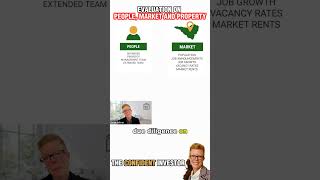
Who Are You Investing With? Mastering Due Diligence for People, Markets, and Properties
Who Are You Investing With? Mastering Due Diligence for People, Markets, and Properties
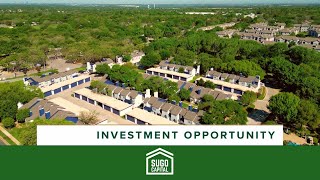
Investing in The Park at Ashford | Arlington, TX Townhome Community | Equity Growth Opportunity