Episode 1123 Scott Adams: Google Mischief, Biden on the Roof, Taiwan Analysis, Statues of Criminals
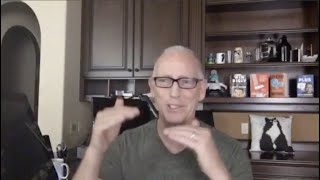
Scott Adams delivers a single-speaker YouTube monologue touching on media influence, AI-driven persuasion, election-interference concerns, and public-health responses. Key claims: AI and social-algorithmic persuasion are already controlling human attention and political outcomes; Google/autocomplete behavior may suppress or balance politically charged queries (Adams reports Google did not autofill certain queries while Bing/DuckDuckGo did); comparisons to other countries (e.g., Taiwan) are often misleading because of differing testing capacity and enforcement (Taiwan used strict quarantine measures); Adams cites a small hospital-grade vitamin D study he says sharply reduced ICU admissions and suggests broad rollout could greatly reduce deaths; and he proposes a provocative persuasion technique ("agree and amplify") illustrated by a thought experiment replacing Confederate statues with statues of citizens who died resisting arrest.
Chapters
Bada bum bum bum bum bum bum bum bum bum bum. Hey, everybody, come on in. Come on in. It's gonna be a fun week. Yeah, it's gonna be one of the better weeks. Wait till you see the news that's coming at you this week. I don't know what it is yet, but I think you'd all agree it's going to be interesting. Might be terrible, might be good, but it's going to be interesting. And in order to prep yourself to enjoy this week, all you need is a cup of mug or a glass of tanker Chelsea and a canteen jug or flask, a vessel of any kind. Fill it with your favorite liquid. I like coffee. And join me now for the unparalleled pleasure, the dopamine hit of the day, the thing that makes everything better. It's called the simultaneous tip, and it happens right now. Go. Ah, delightful. So I was just before I got on, I was reading an article by Joel Pollack in Breitbart about how the Atlantic, you know the Atlantic, the. The dumbest publication in the world, has some kind of a editorial or opinion piece that says that unless Joe Biden gets elected, there'll be all kinds of civil unrest. And therefore, if you're a Republican and you don't want civil unrest, you should vote for Biden because it's the only way you can avoid it, what does that make you want to do? Well, if I have those two choices, which is to be blackmailed into voting for somebody I don't want to be president in order to avoid civil unrest, I'll take the civil unrest. I don't think they're reading the room right because those are not even close to being similar choices. Let me put it this way. On a scale of 1 to 10, my desire to avoid civil unrest is pretty high. It's pretty high. It's like maybe an 8 out of 10. But my desire to not be blackmailed is a 25. They're not really close, you know? If you give me that choice, you guarantee I'm voting. Like, any thought I had about sitting on the couch is like, nope. If you want the riots, you want the civil unrest. So let's do it. Let's bring it on. Let's get it over with. Because I'm definitely not choosing the safe path. And anybody who thinks that Republicans would choose the safe path with those two choices, definitely reading the room wrong. I just saw a story that says that China has collected massive personal information about Australians. I assume they're doing the same thing for every other country, but we, I guess they got caught more or less red handed with the Australian data. Now, here's the thing. I feel like the days of kinetic warfare among the big countries, the countries that have nukes and stuff, it might be over, but not war. Because I think that AI and persuasion and dirty tricks and cyber stuff is now so powerful that you could take down a country and you could destroy an economy, you could cause civil unrest. It's happening right now. So I think the reason we don't have to worry too much about getting into a shooting war with some of the other big countries that are the classic ones you worry about is that shooting is the least effective weapon. The one thing you can count on is that if you're up against another military, they're going to use their good weapons as opposed to their bad weapons. And bad weapons would be anything that got them killed in return. So if they were to say, bomb the homeland here, well, their homeland would get bombed. But if all that happens is there's lots of unrest in the United States and it looks like it's domestic, but we don't know why. But it's actually because of AI and persuasion and propaganda coming in from another country, we wouldn't even necessarily know we were under attack. I mean, maybe the government would know, but the people wouldn't really quite get it. And we just think, well, we're not so gullible that a few memes on Facebook are going to change our minds. But AI and the weapons of persuasion are now so powerful that I would say legitimately, they're more powerful than physical weapons because you could wipe out a country without being attacked in return or even identified as the attacker. So way more powerful. So that's something to worry about. I would argue that the AI is already destroying civilization and that unless we figure out some way to stop it, there's somewhat of an obvious path here because as many people have noted, the algorithms and the social networks and the, you know, I guess you could say algorithms driving the news in general are designed to make us fight with each other. Now, that's not some great insight. Everybody's smart, says that at this point. But what's going to stop that? What would stop it? If you had said to me 20 years ago, oh, you know, the fake news and the persuasion will get so strong that, you know, it'll be changing politics and changing the world and all that, I don't know if I would have completely believed how good it could get. I would have worried about it. But I don't know if I would have been convinced. But now we're here and we can see that half of the country believes and literally hoaxes, that they believe our reality. They actually can't tell the difference between an obvious hoax. You know, did the President say we should drink bleach? No. How hard would it be to find out that's not true? Well, if you, if you follow conservative media, it's easy because you see the debunks all the time. If you follow the other silo of news, you've never seen it and you never will. So if you had told me we could ever get to a point where you could sell somebody literally a hoax that could be debunked as quickly as you can Google it. And yet it still worked. It could be debunked with one Google search. And yet it still stands. I don't know if I would have believed that. So how good can this type of weapon get? Well, that's the scary part. We don't really know. Here's what's scary right now. The persuasion that most of us are receiving from the social media companies and from foreign actors, to the extent that they're trying to interfere, most of that is sort of sprayed into the environment. In other words, the meme that you see might not be that different than the meme I see. Maybe look for things like your gender or your age, who you voted for, some basic stuff. But what happens when, let's say China knows everything about you, about you, you specifically. They know the names of your children, they know your hobbies, they know where you've traveled, they know all your social media posts. When they know all that stuff, the form of persuasion that they can send to you specifically is a whole different level. As a trained hypnotist, let me give you really a perfect example of this. If I tried to hypnotize all of you right now, it would sort of work. I could influence a number of you. Maybe 20% of you would be moved, 80% would not. But the limit there is that I would have to use the same method for all of you. And the same method doesn't work for everybody. It's not really a one size fits all situation. But suppose I had infinite time and I could take each of you individually, learn all about you, how you're wired, what makes you tick, what you care about, and then I design a specific persuasion package just for you, and then I stay on it. Would I be able to get more people brainwashed? Yeah, it would reverse from maybe 20% of the people getting influenced to closer to 80% if I had time to, you know, work on it individually. So it's, it's that big and going from, you know, maybe 20% getting influenced to 80% influenced, that's the next step. And all they need to do is collect enough information and have something like a tick tock or some, some other kind of social, you know, social connection. They can get a, get something going virally. So that's where things are going. There's news today that Oracle is going to do some kind of a deal with TikTok. Not buy them, but do some kind of a deal. Now I am very curious what that deal would look like because I can't see any scenario in which the code of TikTok is being programmed by Chinese programmers. And somehow we feel safe because Oracle also has a piece of the business. I need to hear details, but nothing I've heard so far suggests that would solve any problems. But obviously the magic is in the details. So I'll give you an update on my ongoing attempt to deprogram one. I call him my smartest anti Trump Democrat friend because he's legitimately very smart, but he has TDS like you've never seen. And one of the things I told you about was that he believes that Trump's campaign ads are lies and the Biden campaign ads are not. And this is a sophisticated, very well informed person who cares about politics and follows it and actually believed that the Biden campaign ads were pretty straight and the Trump ones were lies. Now I don't know what world you live in where you think that any campaign ad is true. If you think anybody is putting out true campaign ads, you should just stop right there because you should never, you shouldn't even vote. I mean literally, you should just say, oh, if I believe the campaign ads, I probably shouldn't even vote. I'm pretty gullible because they're not even designed to be true. Nobody starts with the. Nobody starts with the goal of, all right, let's put some truth in this ad said nobody because the truth simply doesn't work as well as a, you know, a, let's say a managed truth. So I sent to my friend who thinks that Biden doesn't lie a link to factcheck.org and the Biden part of it so you can see an entire list where, you know, smart people who know what's going on have fact checked his claims as false. Now here's the thing my smart friends initial. When we first started talking about Biden. His initial claim was that Biden was not a gigantic liar like President Trump. And that alone, that alone tells the whole story. Yeah, you could get into other issues, other things that he wants, but that number one thing was that you can't have a liar as a president. And then I send him really convincing proof because every, every lie from Biden is explained and the source is shown. So you can see that he's massively lied. What happens to somebody who said that was their number one reason for voting for him is that he didn't do the thing which is so clearly documented. He does a lot of. Doesn't change anything. And, you know, a few years ago when I started telling you that facts don't matter, I think you probably thought that was an exaggeration. And until you see enough examples where facts literally don't matter, they don't have any impact at all, it's hard to believe. All right, there's a story that Iran is, I guess from Politico or something, that Iran is allegedly mulling over an attempt to assassinate the United States ambassador to South Africa. And this would be some kind of retaliation for our droning of Soleimane. And here's my reaction to that. Number one, it's anonymous. Anonymous sources. So is it. Should you believe it? If that's the only thing you know is that this story exists and the sources are unnamed because they're anonymous, what credibility should you put on this? I'd recommend zero. Zero credibility would be the right amount. And again, that doesn't mean it's not true. Credibility is different from whether it's true or false. Credible means. Is this a source that you should believe to be true? And the answer is no, not even close. You should not believe it's true. But suppose this. Let's talk about it. What would be Iran's point of taking out an ambassador to South Africa? How would that be in any way equal to us taking out the most important strategic asset in Iran was their general, and they would take out our ambassador to South Africa. Now, I get that we'd be unhappy about it, and maybe it would look like, oh, you can't take advantage of us. We'll attack you back. I get that. But wouldn't we attack them if they did that? Wouldn't we have to respond? I'm trying to understand how Iran could possibly come out ahead with this plan. Does your brain come up with any reason that this would work for Iran now? Now, I don't doubt that they mulled it because a lot of Things get mulled over. In fact, Trump gets in trouble all the time for mulling things behind closed doors, and then when it gets reported, you say, my God, what a bad idea. But that's not the way you should look at it. The way you should look at it is that lots of bad ideas get mulled and then rejected. If you heard one of the mulled and rejected ideas and as if it were more serious than it was behind closed doors, you would come away with the wrong idea. So maybe they're mulling it, but I don't find it credible. Actually, The University of Edinburgh, they've renamed what was the David Hume Tower. I guess David Hume might have had some issues, might have been racist, I don't know. But they've named it after George Floyd. So the University of Edinburgh is honoring George Floyd, who may or may not have died of a fentanyl overdose, resisting arrest, and had a criminal record. And I thought to myself, well, if people are happy with that, I'm generally in favor of. Of letting people have what they want if it doesn't hurt me personally. Would you agree with that? If somebody wants something and it doesn't hurt you, it doesn't hurt anybody else. Why not? So if the University of Edinburgh and the, you know, the administration and the students are happy with naming their building after George Floyd, I don't have any problem with that, because that's what they want to do, and it doesn't make me unhappy, doesn't have any effect on me at all. So I'm cool with that. But I thought, why not do more of that? And so I suggested by tweet this morning that maybe we should replace all of the Confederate statues and any of the statues of slave owners with statues of citizens who had criminal records and had died while resisting arrest. Sort of the George Floyd model. Anybody who died while resisting arrest and had also a criminal record will just replace all the Confederate statues with those citizens. Now, again, just like. Just like the Edinburgh thing, if people are happy with it, I say, why not now? Oh, some people think that's a bad idea. I'm being corrected that the pronunciation of Edinburgh is Edinburgh Burra Edinburgh. So everything I said about Edinburgh, you can change that to Edinburgh, if that's right, who knows? Yeah, other people are saying it's Edinburgh, all right, let's call it Edinburgh even though it looks like Edinburgh. All right? And here's the thinking behind that. What is the rational way that we're dealing with the riots and the unhappiness and the police killing of black citizens. What are the actual rational things we're doing to fix that? None. Right. Correct me if I'm wrong, there are no rational plans. You know, defunding the police isn't really a plan, because even if you imagine that, it's just changing resources to something else, you got to see the details. So in. In the case where all. There are no rational plans that look like they would work, what do you do if you don't have any rational plans? If you're in a situation where all of the things that you could possibly do to get out of your bad situation are all crazy, what do you do if they're all crazy? Well, I would recommend the Mr. Spock technique. If you remember from Star Trek, Commander Spock was once, I think he was stranded in space and his ship was losing power, and he was going to die pretty soon, and he did something to cause an explosion to blow up the remaining amount of his oxygen, I think. And so he only had a little bit left, but he got lucky. Somebody saw the explosion and saved him. And when he was asked about that and they said, blowing up all of your oxygen when you don't have much oxygen, isn't that, like, the craziest thing you could do? And Spock, I'm paraphrasing because I might remember some of this wrong if anybody wants to correct me later in the. In the comments. And then Spock's comment was paraphrasing that once you've used up or once you've run out of rational paths, but you have to do something, all that's left is irrational paths. So you have to do something. So you take an irrational one and just hope you get lucky. And that's what he did, and he got lucky. So the logic of it says this. Sometimes if all the rational paths are either unavailable or there's a problem, you got to take an irrational path. Now, when I say we should build statues to people with criminal records who died while resisting rest, what is your first take on that? That's irrational. It's irrational to build a statue to honor somebody who's, you know, died in such circumstances. But a lot of people want to honor these very people. Suppose you just agreed with them, what would happen? This is actually a persuasion technique that I'm getting to. The persuasion technique is if somebody's asking for something that seems irrational, instead of debating it and saying, no, you don't want that. No, that's a bad idea. If you've tried that and it didn't work, and all it did was harden their resistance. You can sometimes try the Spock effect, which is to go the irrational direction, which is to amplify it. If somebody has a bad idea and you can't convince them it's bad, embrace it and amplify it. And they will talk themselves out of it. Because if you just imagine this, this will never happen, by the way. But it's fun to understand how persuasion works. If I were in charge of the country and I could do anything I wanted, I could get a law passed through Congress, I would actually literally. Really? No kidding. Authorize a law to replace Confederate statues with statues of citizens who had criminal records and died in police resisting arrest. What would happen? Well, some people would say that's a good idea and the other people would say, I'm not sure I want that. And they would talk themselves out of it. So you want to create a situation where people can talk themselves out of it because they're not going to listen to you. You're the other team. They just have an automatic reflex to not like what you said. So agree and amplify when it's all you have. If it's your only option. That's the way I would go. Literally. I would do that if I were in charge. I made a comment, I guess yesterday on Periscope that Google was it looked like they were filtering things in favor of Biden over Trump. But Andres Backyars noted that if you put in Trump and the beginning of the story is that if you try to search for does Biden have dementia? The non Google search engines will auto fill that question because it's asked so often will auto fill it right away. But Google will never autofill it. You have to type out the entire word, then it will do the search. And so I pointed out that that seemed like an obvious thumb on the scales of the election. But Andre's pointed out that they may just be suppressing anything that's, let's say a little extreme and maybe a little unproven about either candidate. So for example, if you do a search on Trump, it doesn't auto fill with anything about racism. But you think maybe it would, right? Because there might be enough Democrats searching for that stuff. The then maybe it would. So there's some thought that they might be just trying to suppress things that are not true as far as they're concerned. So they might say to themselves it's not true that Trump is a racist, it's only true he's being accused, while at the same time they might say it's not true, at least proven that Biden has dementia. It's just something that people accuse him of. So if they were treating those as similar, you'd say, all right, okay, that's both cases, they deemphasize something that doesn't have valid evidence for it. But would that be an absence of election interference? Nope. Because you can't make that kind of a change without affecting the election. It can't be done. Let me give you an example. Let's say with my example of searching for Trump, is Trump a racist versus Does Biden have dementia? Let's say everybody in the country had already made up their mind about Trump and racism. They'd already made up their mind. So no matter what you searched for, it wasn't going to change your mind. But let's say that the Biden dementia question was sort of fresher. In other words, there were people who legitimately wanted to search it and find out what the argument is who were not yet exposed to it. That's very different. If you stop both of them, one of them is a mature argument, one of them is fresh. That's not equal. Now, even if your intentions are just to give the best information, and maybe Google has those intentions, it's possible, but you couldn't do it. So if you don't let the algorithm just do what the algorithm does, you're putting your finger on the scale and it's definitely affecting something. It may not be affecting it the way you want it, but it's affecting something. So I thought to myself, I wonder if there are cleaner examples of this search auto fill thing. So I did a search on three big search engines, Bing, DuckDuckGo and Google. And I tried to Google find people hoax. And how long did it take for autofill to fill in the hoax part? Well, on DuckDuckGo, pretty quickly you just start typing and find peep and hoax and you get a whole page of hoaxes. And my, my debunking of the hoax is actually the top result. You go to Bing, fills it in auto fills, it shows you a whole page of the hoax being debunked. You go to Google, never autofills it. It doesn't autofill it at all. And it gives different search results. So if you do, if you do a DuckDuckGo or Bing, you'll get pretty much, this may not be 100% true, but you get mostly the debunks because you searched for hoax. Doesn't that make sense? If you search for something with the word hoax in it. It would probably give you the debunks that prove it's a hoax, not Google. Google shows you sort of a mix of people saying the hoax is a hoax and people saying that the debunk of the hoax is the hoax. So Google actually tries to balance it, like maybe the hoax is true. That is not even close to being an appropriate way to handle that question. So two out of three search engines give you something useful, and Google, Google does not. So I reject the idea that they're just trying to be good citizens and to prevent you from seeing things that maybe aren't that validated or credible. But so then. Then you do a search on. I think if you just do a search on Trump or Biden and you see what news sources come up. If you look on some, you'll get, you know, Fox News, maybe Breitbart. If you go on Google, it's nothing but enemies of the president that come up first. So the first three searches are Business Insider, a Bezos property, Washington Post, a Bezos property, cnn. Those are the top three results when you search for Trump. I think if I remember right, but not on the other search engines, they'll give you, like, a better mix of pro and con. All right, I would say that AI already, already controls humans. So if you're wondering, oh, I hope we don't get to that point where the AI is determining how civilization runs, we're past that. We're well past that. Because I don't believe there's any single individual who knows exactly what the algorithms do. They're definitely individuals who might be able to tweak it to get a certain result in a specific case. But I don't think there's anybody who understands the entirety of the algorithm and how it acts. I think the algorithm is effectively making its own decisions because it's doing things you don't anticipate and you're just getting results. For all practical purposes, AI already is running the show. And you might say to yourself, but, Scott, humans could reprogram it. They could just turn it off. They could delete the program. So really, really, it's the humans. Because if the humans were not getting the results they wanted, they would just turn it off or they would reprogram it. So logically, the humans are still in charge. Wrong. Completely wrong. If you believe that model that the humans are in charge because they can reprogram the AI, the. And you don't understand what the AI is doing. The AI was built to be indispensable. The Way it is, if they reprogrammed it, their profits would go down. And companies are hooked on profits. So the AI knows how to addict humans, to control them. Let's say a heroin addiction. Does a heroin addict have the option of not doing heroin? If you hand them heroin, here's some heroin, and you're a heroin addict, and you're jonesing for your next fix. Technically, technically speaking, does the addict have free will? And they can just decide, you know, maybe not. I think I will not take that heroin. Even though I'm an addiction, and even though I'm going into withdrawal, and even though there's no police here, nothing to stop me, it doesn't happen ever. The addict takes the heroin in that situation. So if you think that the addict has something that you think is free will, and therefore is in charge of this process, you don't understand how people work. The person is controlled by the drug. The drug's in charge. The drug makes the decision. And it made the decision that this guy's going to do some more heroin. In effect, the AI does the same thing. It addicts the creators. They're addicted to the money, the reward, the promotions, and then the people who use it. Yeah, the customers, so to speak, they're addicted in a different way. But no, there's no free will. Free will has already been removed, if it ever existed. Free will has been removed from civilization for the big stuff. We are now already responding just to addiction, and the addiction is coming through the AI. All right? And if you were to predict the long run, like where it all goes, this is different than most situations, because in most situations, the Adam's Law of slow moving disasters would kick in. And the Adam's Law of Slow moving disasters says, for those of you who might be new to it, that if we can see a problem developing from years in advance, we always fix it. So it looked like we wouldn't have enough food in the future, but we figured out how to grow more food. It looked like we'd run out of fossil fuels, but we figured out how to frack. And on and on and on. If we can see it coming, we're pretty darn good. Ozone. There's a hole in the ozone. We got time. We fixed it. Year 2000, bug in the computers. We didn't have much time, but we had enough. So if you got time, you can fix it. This is an exception. You can't fix the complete takeover by artificial intelligence just because you see it coming for years in advance, which we have. We've seen this coming forever. And the reason is that the humans are not in charge of decisions. With the year 2000 bug, the human said, hey, we don't like that bug. We better get together and do something about it. So humans could make a decision. Then they could act on it. With fossil fuels, humans could say, hey, it looks like we're not going to have enough fuel. Let's do something about it. And fracking is one of the things that came out of it. But with AI, the humans can say, hey, there's a problem. And they can't work on it because the AI won't let them. The AI controls their thoughts, it controls their priorities. It controls what they think is important. So even if we humans said, hey, that's a problem, we better work on it, the AI would talk you out of it already. That's not the future. That's. That's already the past. You were already at the point where the AI will change your mind so effectively that you cannot independently decide to rewrite the AI. The AI already programs us by its design. In the beginning, the very, let's say, the first ones, I'll use a phrase from Babylon 5, the first ones, the programmers who initially came up with the ideas for how to create algorithms and services that addict you. They had free will, and had they chosen to do something different, we wouldn't be here. But they did. They built a system that now controls them and also controls us. Once it's built, humans don't have the ability to unbuild it. We don't have the ability to work against our addiction any better than the heroin addiction. Who's having withdrawal and you're handing him some heroin. All right, what is the real story of COVID testing in the United States? It feels like the election might come down to do you believe that Trump did or did not do the right things in testing and handling coronavirus in general? But when they talk about the President's, what he did or did not do, it usually comes down to testing, doesn't it? You know, there'll be some other criticisms, but mostly if you had to pick one thing that people will really focus on, mostly it's the thought that if he'd done more aggressive testing early, we could be like Taiwan that sort of tested its way out of it. Is that reasonable? Sorry? Is that reasonable? Here's my problem with this. Why don't I know the following question? I tweeted this to see if anybody else could help me. Was there ever a time this year, after we knew the Coronavirus was a problem. Was there ever a time in which these three conditions were met at the same time? Because this is the only way we could have tested our way out of it is if all three conditions were ever true at the same time. And I don't know the answer. So I'm asking you, were these three conditions all simultaneously ever true at the same time? Number one, we had the right kind and quantity of test kits to test for contact tracing. So that's the first condition. Did we have enough of them to do what we needed to do? And they worked in the early stages at the same time. Was it before there were too many infections? Because I believe it's true that if, if you have a massive infection in your country, they're trying to do contact tracing basically just doesn't work because the numbers don't work. It's growing faster than you can contact trace. But if you had like three, three, three people who had it, maybe like Taiwan or New Zealand, then maybe then yes, contact tracing is just what you need. So has that been true? And at the same time, Trump ignoring the experts. So was there ever these three things that we had the tests, and we had plenty of them, that the number of infections were low, so low that the testing could get on top of it, and also that the experts that Trump had advising him were saying, hey, hey, get on top of this with these tests? I believe we've never had those three conditions. If those three conditions never existed, is it Trump's fault that we didn't do enough testing? Because could he do enough testing if his experts didn't tell him to because we didn't want him to do something that the experts didn't advise, could he have done it if they didn't have the tests, they just didn't exist or they didn't work? Could he have done that testing if by the time we knew about it there were so many infections that didn't make any difference, you couldn't test anyway? So why is it that I'm sitting here in September and I don't know the answer to this question that should alarm you because you think you're reading the news, but all you're reading is the left leaning news saying, we're not going to give you the details, but he sure botched the testing. And then I say to myself, botched it exactly how? What was the thing he could have done, could have done that was actually possible that he was advised to do that he didn't do? And I'm like, well, okay, if the people on the left won't give me the details. They're just going to say it was all botched. At least I can get the rest of the details from the right. So you go to the right and say, did the President botch testing? And they'll say some dumbass thing like, no, there was plenty of testing for people who had symptoms. It's not even the same topic. Right? So I'm thinking, okay, I can't get the story from the left because they're only going to say it's botched and give me no details. And I can't get the full story from the right because they won't even talk about the same topic. How do you get the news anymore? Honest question. There's no hyperbole in this. How do people get news in this situation? The single most important thing I need to know to vote in the biggest election this country has ever had, I would say the. The most important fact completely discoverable. Meaning it wouldn't be a lot of work for a reporter to say, oh, let me answer those questions for you. What were the experts telling Trump and could he have done it? Was it possible that story isn't out there? Remember I said that you're already being manipulated by the algorithm. If the algorithm were not already running the country, you would know the answer to this question. Because people who were just reporters and wanted to write stories that people would find interesting and read and meaningful, those reporters would say, huh, that's exactly the story the public needs to see. I guess I'll go write that story. Never happened. Why? Because nobody gets paid for that story. The algorithm pays you to write the story that says it was botched, and the algorithm will pay you on the other side to say it was all brilliant and everything went well. There's no. The algorithm doesn't have a payday for somebody who tells useful information to the public. We don't have that. It just doesn't exist. So. And I'll bet you'll never see that. Actually, here's case in point. So Chris Wallace was talking to a Biden adviser and was challenging him on this. So Chris Wallace asked the question very clearly, said, you know, why did Biden take until April to agree with the travel ban? If the travel ban was put on at the end of January, what happened between the end of January and April before Biden said that the travel ban was a good idea, why did it take so long? Good question. Right. And his assistant answers the question of why it took so long by saying, well, you have to understand the virus was already in the country. That's not even the same question. So in other words, you can't even get a simple answer to a question. Why did it take so long? You can't get any information about testing, banning. We are in complete darkness, we, the citizens, in complete darkness about whether our government did a good or bad job. We don't know. Oh, we think we know. We're positive. We know because the algorithm told us what to think. It told some of us to think he botched it, meaning Trump, and told other people to think he didn't. And that's what we think. That's what the algorithm told us to think. All right. And so Fareed Zakaria, whose show I really recommend, Fareed can be a little tedious at times, a little anti Trump, but if you're being objective, he puts on a good product. If I am just talking about the quality of the topics and the guests and just the job Fareed does, he's just really good. I've always appreciated his show, even sometimes if I don't, you know, like the bias on it. But he had on, I think it was the, was it the president of Taiwan who coincidentally seemed to be an epidemiologist? I don't know if it was the president or one of the, one of the top executives, but it doesn't matter for this point. And Fareed was asking him how they were so successful Taiwan and others were not. And this is what this, the leader of Taiwan said that one of the things they did is very aggressive testing and contact tracing. So here's my first question. Is there something that Taiwan could do in those early days because they had the right kind of tests that we couldn't do? I don't know the answer to that question. And it didn't come out of this. Did they have the right kind of tests and we had the wrong kind? Did they have the right number of them and we had the wrong kind? Was it that when they had a few tests or a few cases, they got on it quickly? Was that what made the difference? But here's the part that doesn't get emphasized. In order to make the Taiwan thing work, you basically went to jail if you had symptoms. Now, when I say jail, I just got a glitch on my computer, low battery messages. So that might glitch for some of you. When we talk about the success of Taiwan and how good they did, and then we say, well, why can't we be like Taiwan? Taiwan put you in jail for two Weeks if you had symptoms. And when I say jail, I mean a room with, I don't know, a television and wi fi and a bed. So it wasn't technically a jail, but you couldn't leave. So what do you call it if you can't leave? If you can't leave, it's jail. Because if you tried to leave, they'd put you in the real jail? I think so. Is there any scenario in which the citizens of the United States would have put up with, oh, you had a cough, so I guess you're going to be in jail for two weeks? I don't think so. I don't think so. So anytime we, Anytime you see anybody compare what happened in the United States to any other country, it is a lie. It's either an intentional lie because they do know how to compare things and they're choosing to do it incorrectly, or they don't know how to compare things. Because if you did know how to compare things, you'd say, what are they doing with vitamin D? How many African Americans or how many black people live in those countries because they have greater comorbidity? What is the obesity rate in those other countries? When did they start? How many international airports do they have? When did they find their first thing? Did they have tests that work? Were they prepared? And if you don't, if you don't compare countries on all of those gigantic variables, you're not really comparing anything. You're just being an advocate. All right? And then the other thing, of course, is you don't know if those other countries are going to have, you know, new symptoms, et cetera. Now, we talked about this, I think last week that there was a, apparently a high quality study. They showed that the vitamin D, the hospital grade vitamin D, not the stuff you get in your health store, but the hospital grade vitamin D basically eliminated ICU visits. It was a smallish test, but it was big enough to make me think, have we already beaten this thing? Because imagine if you got the same result as the Test did for 50 people, of which many of them would have been in the icu. It was almost none. Almost none. So now that we know that, and we know, correct me if I'm wrong, I saw Dr. Drew join here. So I know there's at least one person who knows the answer to this question. If you simply gave everybody who had coronavirus symptoms, Covid symptoms, if you just gave them all vitamin D, you know, the hospital grade vitamin D, the name brand stuff, would anybody have a bad outcome and aren't we already doing it, you know, in other words, the risk reward of the vitamin D, now that we have a high quality study saying it's amazing, don't we know that it also pretty much couldn't hurt you? So that's the part I have the question on because I think we're already past, I think we're done, right? Because if that one test was really meaningful and didn't have any errors in the test, so we really know that the vitamin D just kicks this virus in the gonads, we should be massively rolling this out everywhere. Just because the doctors would have seen the reports too. They probably would take the death count down to trivial. And shouldn't that be done by the end of this week? Let me be as stark as possible. If it's true that the vitamin D given to you in the hospital doesn't have a downside and we have enough of it, and it's true that it works according to this latest high quality study, aren't we one week away from just being done? Because if you took it from 100 problem that it is now to 2% of that problem in terms of death rate, we're kind of done, aren't we? Am I wrong? We're kind of done. So I don't know what's going to happen to the stock market, but I feel like when we start getting our stats, let's, let's give it two weeks just to have some time. Unless you hear there's a shortage of that vitamin D, the good stuff they use in the hospitals, unless you hear there's a shortage of it or you hear that they're not using it for some reason that I can't, that I haven't heard of, we might be two weeks away from effectively the end of it. Because I think in two weeks, if you don't see the death count in the United States drop to trivial levels, then probably the vitamin D wasn't everything that the test said it was. We'll find out. But just think about that. We could be two weeks away. Am I, am I being over optimistic? Because if that vitamin D thing is real. Two weeks, right. All right. Those are the things I would like to leave you with. AI is your biggest problem. Maybe you'll never know. Maybe you'll just go on with your life thinking that you're making your own decisions, but you're not. And maybe that's just as good as whatever you were doing before. I see in the comments somebody saying that Fauci endorses vitamin D. Remember who owns? Oh, is the stock market up today? Let me just take a look before I get off here. Fauci. Well, it is. Well, there we go. Bitcoin's up, Apple's up. Oh, hello. Everything's up. Looking good. Tesla's up. Somebody says Joe Rogan is hosting a debate. Is that an idea that you're suggesting or is that some kind of news? If, if Joe Rogan hosted a debate, it would be a pretty good debate. Although I would recommend myself. Can you imagine a debate that I monitor, that I moderated? It would be pretty darn good, if I do say so myself. Anyway, Dr. Fauci does recommend vitamin D, but there are two separate things. One is that everybody should have enough vitamin D, just in general, because it's good for your health, it's good for every kind of thing. So, yes, Dr. Fauci has, is, is on record with basically every other medical professional in the world, plus one cartoonist, plus most of you who said from day one of this virus, those of you who have been with me since the beginning, you know, that the moment this virus looked like it was coming at us, I told you, get some sun, get some vitamin D, get your, you know, get your health up. Do everything you can just to, you know, get your immune system up. And vitamin D was a big part of that. So the fact that Fauci says vitamin D is good in general is a little bit of a different topic than the question of giving people massive amounts to prevent ICU of the hospital grade vitamin D. That's different than the, the health store stuff. So he can say he said it. Well. Yeah, but it's a difference in extent. All right, see, Trump tweeted, Rogan didn't. All right, apparently this is going to be good enough that it's worth waiting for. So let's see, Trump, Trump, Trump. Let's see what he said about Rogan. I see he's dumping on Drudge. Oh, 51% approval rating in Rasmussen. Looking good. I don't see anything about. Don't see anything yet. How many tweets they do this morning. He's been tweeting like crazy. All right, I don't see it. So somebody said there was a Joe Rogan debate related story. I guess I'll have to look it up, but I don't see it right now. It wasn't proposed by Rogan, but he did accept. Oh, Joe Rogan wanted a four hour debate. He will moderate. And Trump retweeted. All right, I'll take a look at that. Don't you think I should still do an interview with President Trump and maybe one with Biden? They would never, they would never let me interview Biden. But President Trump is going to be, I think, in my neighborhood today, actually. Yeah. So if anybody's watching from the Trump campaign, the best interview President Trump could ever do would be with me, because I'll ask some questions that haven't been asked before, and you really get a good idea what's going on if I did that interview. So that's all I have for now, and let's enjoy the week. It's going to be off the hook.
More from Scott

The Scott Adams School - 10/14/26 The Chicks and Joel Pollack Stops By. Scott & Persuasion


The Scott Adams School - 10/09/26 AKIRA.. TAKE TWO! Fri Yay! With the Home Team



The Scott Adams School - 10/06/26 Erica & Marcela Talk France. Venezuela. Scott Adams. and More


The Scott Adams School - 10/02/26 Fri-Yay!! The Home Team closes out another amazing week.


The Scott Adams School - 09/30/26 WHITEBOARD! AI Luncheon. FRAUD. MIKE ROWE, Happiness!