Episode 171 Scott Adams: Bill Pulte Talks About TheBlightAuthority.com Helping Urban Areas
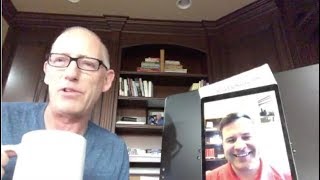
A recorded interview (Scott Adams with Bill Pulte) about the Blight Authority, a nonprofit that partners with urban communities to demolish abandoned/blighted properties and clear lots to reduce crime and enable redevelopment. The conversation describes rapid demolition pilots (e.g., 10 blocks in 10 days; 14 blocks in under 30 days; >700 lots cleared in a 14-block Detroit perimeter), media exposure (Fox & Friends) and a new website/forum (blightauthority.com/ideas) to collect community and commercial ideas for rebuilding (low-cost housing methods, geothermal, security, home-based business design, transportation). The organization is a 501(c)(3) and solicits private donations and idea submissions.
Questions this video answers
501(c)(3) nonprofit.
blightauthority.com (forum / blightauthority.com/ideas).
10 city blocks in 10 days; 14 city blocks in under 30 days.
Over 700 lots cleared in that 14-block area.
A young girl's dead body was found during the clearing activity.
Chapters
Hey, everybody, come on in here. We've got an excellent coffee with Scott Adams coming. You may already see my special guest appearing by iPad, it's Bill Pulte. We're going to be talking about the Blight Authority, some exciting updates, and they really are exciting, if you like to change the world. And who doesn't really, you know what goes well with changing the world? I'll tell you. Coffee. Do you have your coffee? Bill, do you have your coffee? You really should.
I have something.
All right. All right. It's time for. You know what it's time for? It's time for the simultaneous sip. Here it comes. Join me. That's good. We're gonna have to work on that synchronicity a little bit. So, Bill, for those who.
Good to be with you, Scott.
Good to be with you. And for those who are not yet aware of the Blight Authority, could you give us the quick run rundown? And then I'm going to tell. We're going to tell people about the exciting updates.
Absolutely. So what we do is we go into urban communities. We partner with the community first. Once we partner with that community, we bring in big equipment, big machines, and we knock down abandoned homes, and we also clear the land to make it very safe. In many of these urban communities, we've been proven to reduce crime, reduce rapes, reduce drug activity, and really, it's been quite a success in the cities we've operated in. And thanks to you and many others. But really, you, Scott, we have a new website today, blightauthority.com ideas which I know we're going to be talking about. So the punchline is we got a great urban strategy that's worked on fixing many urban communities, and we'd like to take that across the United States.
So those of you who have been following my writings for a while, and I think that's most of you, you know, I always talk about systems being better than goals. A goal is a very specific thing you want to do, whereas a system is something you would do on a regular basis to try to kick up the best opportunities and work your way toward a place of better odds of success. So when I heard about Bill's project here, the Blight Authority, and how they were clearing out these big contiguous pieces of land in these urban areas, the land is. Would it be fair to say that the land is close to free at this point, or is that an overstatement if somebody wanted to use it and had a good idea for it?
Well, let's put it this way, when a lot of these urban communities go bankrupt, for example, the creditors all argue about whether the land's a liability or an asset. So it really, Scott, depends on, you know, block by block basis, but in many cases it's below zero. So it's a loss. It's a negative thing to own this land, whereas in some cases it's up. But I think it's a fair assessment to say that a lot of this land has less value than people think it does, and therefore it can get bought at the right price. But then you got to maintain it and do a lot of other things to keep it.
So we've got these big swaths of empty lots in urban areas, and there'll be more of them. What are the plans for doing more of these in different cities, for example?
Well, we're about to announce two of our next cities. One or two of our next cities. We're going to see. As you know, Scott, I got a lot of big urban mayors calling me, saying, hey, Pulte, can you come to XYZ City? And frankly, it just requires a lot of work. And so the situation that we find ourselves in, Scott, is, you know, which city should we go to first? What we did in Detroit, we did 10 city blocks in 10 days. Boom. We knocked out 10 city blocks. Then we did 14 city blocks in under 30 days. So these can be done in short periods of time. But again, if you're talking about scaling this across the United States, you know, there are literally, you know, hundreds of thousands of abandoned buildings in urban America. So we've got our work cut out for us.
Wow. And for those who are not familiar with the word blight, B L I G H T. Blight just refers to these rundown, crime infested, useless areas that just need to be bulldozed. So you can start over with some better idea.
Yes.
And let's talk about the better idea. So what we noticed needed to, you know, the second part of the project is once you've. Once you've got it down to dirt, what do you do with it? You don't want to leave it as dirt. You know, ideally, you want to help build back these urban areas, give them something that makes sense for the people who already live there. And we decided to collect some ideas. So we, we built a page that has a forum@blightauthority.com you can hit either go to blightauthority.com and hit the forum button or go directly to it. Blight authority ideas, slash. And people already are adding Lots of ideas. What? You got a lot of attention after being on Fox and Friends yesterday morning. Did that make the website a little more active?
Oh, yeah, the website shot through the roof. That was a huge segment with Fox and Friends, really a home run segment. We had Reverend Simmons on who's a big pastor out of Detroit. African American gentleman. Really just a class act. And this gentleman and I, we went into one of the worst areas of Detroit. Worst in terms of murder, great in terms of people, but worse in terms of murder, drug activity, etc. And we literally cleared out 14 city blocks. And actually, Scott, within that perimeter that Reverend Simmons and I were in, we actually found a young girl's dead body. They hadn't found her yet. And actually one of our machines, one of our contractors, actually encountered the body physically in part of our activity. So Reverend Simmons was with me on Fox News. That was just awesome to showcase that property. The response has been just overwhelming, frankly, with people reaching out, wanting to work with us, wanting us to come to their communities, frankly, it was. You can't even keep up with the emails and stuff. So a high class problem to have. But I think it's indicative of kind of the viral nature of this project and really how much people want to see our urban communities look beautiful and frankly, be safe. I mean, a lot of these kids are not safe in these areas, Scott. And that's what we're doing, is making these kids safer.
Yeah, I've heard that safety might be the number one thing you have to get right because you can't do anything else. You know, nobody's going to put a business in an unsafe neighborhood, etc. So that, that would be one of the many elements of ideas that we're collecting at the website. And let me talk about what the, what the, the process here is. There are very few things in the world where everybody agrees, especially if there's any political element to it. And I think everybody would agree that the urban areas are in trouble, a lot of them, and that they need help and that if we had a good idea how to do it, pretty much everybody would like to do it. And I've heard, and maybe, Bill, you can tell me, just fact check this. I've heard it said just in somebody's writing that money isn't the problem you think it would be. The problem is how to, how to deploy it. So you can't, you can't attract money if you don't have a way to intelligently employ it. So there's kind of a chicken and egg you know, you need money to do things, but you need to know what to do in order to attract money. And so, partly for that and partly because we just want to create energy around ideas and focusing on the problem. The website will be collecting every idea from people who have a new product that might be good for building low cost housing, to people who have ideas about how to organize the community. Maybe some ideas about how you would handle education, perhaps something about health care, just specific to the local area, things about transportation, security. Can you think of some more categories, Bill, that I'm leaving out?
No, I think those are pretty much all of them. I think that what we've seen in the initial 24 hours is people have been pretty creative. So if you think you've got an idea, just throw it out there for us, please.
And I want to give you an example. I was just looking at the site to see some of the ideas that have been suggested. And this is not a commercial for this product. I don't know about it, but it just looks like a great idea. So there's these things called Apex building blocks that seem to be some kind of a lightweight concrete base, but something makes them light. I don't know what, but they fit together. Not quite like Legos, but they're easy to assemble. You can build an entire structure in one day, apparently. Now that's the type of idea, and again, I'm not endorsing that particular product, I'm just saying we're collecting all of those sorts of ideas in one place. And in the perfect world, people who have money and are looking for a way to make the world better might be able to discover some people who have some products that do it. Perhaps some people who would organize, maybe some people want to run a, a small project. Maybe some of these people say, hey, let's get together and talk some more. So the idea is just to concentrate energy through a lens into this one website where all the people, anywhere who have ideas can put them in one place in some easy to find way. And we're hoping that that leads to better ideas, better thinking, maybe some human connections that, that weren't going to happen otherwise. So this is one of those cases that this is the sort of thing that's showing you how the nature of the world is changing in terms of there are some things government is good at and there's some things that government maybe can help but isn't really the ideal solution. And if you see what's happening, Bill and I are not members of the government. But look what we could do, you know, we could build this website, Bill's group, nonprofit. How many people contribute? You've got a number of big donors and now some smaller donors to fund the blight authority. How many entities back that now? And they're all non government, right?
Yeah, well, we've had hundreds, and frankly, they're private entities. But one of the things that we've seen is a lot of individuals going to our website and donating. Even yesterday after the Fox and Friends segment, you know, that was fascinating to see how many people are starting to just say, hey, look, can we even write, you know, small checks, big checks, etc. So I think it very much is a private movement. You talked a little bit about deploying the funds. I think what's important to note there is specifically is somebody leadership matters, right? And you know, on this urban issue in particular, you know, you need really good leadership to talk to the city, to talk to the state, to talk to the county. I mean, you go start putting bulldozers on people's property, I mean, you better know what the heck you're doing. And in this situation, what we're doing is going and talking to all these different partners. That's where the hard work comes in. So we really appreciate a lot of these. These partners, Scott, and it's gonna be really exciting to see where we go next.
I saw a question go by that said, is it nonprofit? The answer is yes. But could you. Do you want to expand on that?
No. We are at. We are absolutely a 501c3 nonprofit. Frankly, us being a nonprofit allows us to basically bring everybody together. We want everybody to work together. I got a lot of questions yesterday from people saying, you know, why would you go on Fox and Friends? And then, you know, I get the question when I go on Morning Joe. Why would you go on Morning Joe? I think that's actually indicative of many things, frankly. But I think what it's also indicative of is the fact that people really care about our urban communities, no matter what political side you're on. And so what we've done a nice job of skills got is really being apolitical and really being focused on just getting the job done. And I think that's how we've been able to work with like Reverend Simmons from Detroit and all these different stakeholders is bringing everybody together on one page. And I think that's indicative even. Even with what you and I are doing here with the website is we're saying, you know, bring in these ideas and we'll bring them to the community. And I actually think the communities will be very open minded to new ideas. That's been my experience. They just in many cases want help.
Yeah, just emphasizing what I said before, but saying it a little better this time. There are some things that everybody agrees on. Everybody would like to see a solution to the problem. And given the choice of having the government spend, you know, everybody's tax dollars versus doing it privately with people who have, you know, an interest and the money and the time and everything to help, everybody would prefer that if it could be done privately, that that would be preferred because nobody wants their taxes to go up. Right. So we, we have one of these unique situations where there's nothing to disagree with. We're. We're in weird territory of 100% agreement. And because of the tools of the Internet, the ability to communicate and connect people and get them to focus on the same things, we can, we could do something that just would have been impossible, you know, in an earlier day. So we can leverage the power of the Internet. Anybody who has an interest in making the country better, in making the urban areas better, because that's. There's a big leverage point there, right? If, if you help the people who are in the deepest hole, that's the biggest bang for the buck, I think. Or let me, let me put this in other terms. Here's the way I like to explain it. If you had a choice between giving somebody a 10% raise who already has a job, which would be great. Everybody wants a 10% raise, so that would be great. But compare that to moving somebody from unemployed to employed. That's a huge difference. I mean, that's a much bigger difference than the 10% raise, just in my arbitrary example. Likewise, moving somebody from I can't afford my home to I can afford my home is an enormous difference. Moving somebody from I don't have the training to do a job to I do have the training, enormous difference. So you can get huge leverage if you're focusing the right resources in the right places. And the website will be at least one way to get enough energy in one place that maybe some good connections can be made. Do we have any questions about this? Oh, and by the way, you can donate privately to the, to the effort. It's a nonprofit. You can see that results are already happening. So this, this is real and undergoing or on the way. I mean, it's ongoing, I should say. What happens to the land? So that's what we're talking about. So the land is cleared. It has ambiguous ownership. It's worth roughly 00ish dollars in its current form. But we're collecting ideas on the website bladeauthority.com hit the the forum menu when you get there and you can add ideas and you can see other people's ideas that are. And we welcome commercial ideas. So you can just put your commercial there. If it has something to do with this, the area and it's useful, go ahead and put your commercial there. And if you're just individuals who have ideas, put them there. And it could be anything from how to build, what to build. It could be something about commercial building, Could be something about community organization. Let me give you a few more examples. Just to prime the pump. I saw somebody who just put an idea on the site talking about how normally you build a community and you decide where the roads are. You just do this square grid, you know, roads going this way, roads going this way. Then if you were to map how people actually live, you would find out that they're always going to the same places. You know, they go to school and back, they go to the freeway and back. And that the way, the way you design a community from the ground up is probably completely wrong. I mean, just think about that. Just the basic transportation of it is probably completely wrong and could be done, you know, amazingly better with a little thought. Might take some experimenting, that sort of thing. I'll give you, give you some more examples and maybe, Bill, why don't you explain geothermal and how that's an example of something that could be done better.
Well, I think when you have these urban communities in particular, a lot of these areas are being sucked of resources. So for example, there's a lot of arsons, for example, on these homes. People are literally going and lighting these homes on fire. So whether, you know, you look at HHAC, whether you @ look, look at geothermal, whether you look at water resources, Scott, what's happening is these resources are being sucked across, frankly, dilapidated and, you know, homes that are dangerous, and there are slaughters in these homes, et cetera. So I think what you're talking about or what some of the ideas from the website are, hey, look, let's look holistically at these urban communities and let's say, okay, what's the most efficient way that we could have these communities operate? Whether that be with businesses, whether that be, you know, with parks, I mean, you know, just something that's different. So again, you know, we're open to any all ideas. You know, I'm not giving one exact thing here, but that's the beauty of, I think where we're at right now is, you know, what are some creative ideas that we can do with these urban communities? Because they're all across the United States. I mean, there are literally hundreds of big urban communities across the United States, Scott, that haven't figured out what's this step two, three and four, what's.
Next? Yeah. Just so you can brainstorm a little bit more the audience here, imagine, if you will, a community that's built with from the ground up. It's imagined that there are security cameras basically on every corner, so that every exterior part of the community has video surveillance. Maybe every resident can look through those cameras. That may be too much. But imagine that the homes are built with interior security as well. Now, if you're a criminal, where are you going to go? You're not going to go to that community. So you can almost instantly make a community probably something like 80% safer just by designing it with what would be relatively low cost to add cameras in the original design, because.
Cameras. I'll give you an example there, Scott. So in our one area or one pilot area, Detroit, we cleared over 700 lots in this 14 city block area. And it was notorious in Detroit for people literally dumping trash on the property. In fact, we collected over £200,000. Think about that. Imagine that £200,000 of trash just being dumped on this one neighborhood. We collected over 300 car tires in this perimeter. So you imagine all of this kind of dumping that goes on. Again, it's a foreign concept for people who don't live in these neighborhoods. But literally, if people from the suburbs who are doing remodel jobs and other things, dumping their trash literally in a neighborhood. So when you talk about security, that's the whole idea of what we're doing, is making it so that way, as we say, when we turn on the lights, the cockroaches scatter. And some of these ideas, the one you just mentioned, is a perfect example of how we're trying to really help that community stop some of this stuff from happening day in and day.
Out. Yeah, And I mentioned earlier geothermal just wanted to mention that, you know, if you don't know what geothermal heating and cooling is, it takes advantage of the fact that the earth, the interior, at least underground, I don't know if you go down 10ft or whatever, is always a constant 56 degrees. So one way to lower your heating and cooling costs is, is to run these pipes under the ground. You circulate them around, you take advantage of the fact that, let's say if it's 0 degrees outdoors, it's only 50, it's 56 degrees under the ground. So you can take some of that heat up and it's sort of close to free heat. Same with cooling. So that's the sort of thing that if you were to build one house, it might be a little expensive to trench it and put in those tubes. But if you would plan the community around that, it would be easier to do. The trenching for a number of homes lowers the cost. Then suddenly the energy costs go way down. Then you imagine maybe using Elon Musk's solar panels that look like shingles, and suddenly you've got something pretty close to zero energy. Homes. So imagine building a home that's great to live in, but super inexpensive. Imagine a home where. I'll give you another idea. This is one of my favorite ones because it's my idea. All of my ideas are my favorite ideas. Imagine if some of the homes were built, and maybe even most of them, so that they have one extra room that could be used for business. And it's got a separate entrance. So let's say you wanted to be a hairdresser at home, or you wanted to be. You could be anything from a parole officer to. You could do nails. You could sell real estate. You can imagine any number of businesses where you have relatively low foot traffic. I'm not talking about a retail store, just people who have, once in a while a client coming in. And if you built that into the home with a separate entrance and let's say a separate bathroom, it wouldn't cost that much extra for the home. Maybe another 10%, 15%, depending on. Depending on the size of the home. But it would be your job. And if you didn't want to use it for your job, you would have a room you could rent out. And then you've got rent to help you pay. So if you. If you design these things from scratch to be super wired for the Internet, where WI fi works all through the home instead of just in that one room that doesn't have interference, you've got a separate entrance. You're basically freeing people from a lot of the problems of even childcare. I mean, you might be able to put your child in the house on the other side of the door and run your business. For the most part, the kid yells a little bit, but people are used to that. So you can imagine a whole bunch of ways you could, at least. And here's the bigger point. Most of these Things could be tested in a small pilot. So you could take some of these ideas and say, let's put some of these together and I'm going to fund it and build three or four houses. Let's see what happens. So there are lots of ways you could go small and learn before you get bigger. And we're trying to collect all those ideas@blightauthority.com and you hit the forum menu to add your own ideas or see what other people have added.
Bill?
Yes. Just because it's fun. What was it like being on Fox and Friends? How early did you have to get.
Up? I had to get up at, I think I got up at about 4am 4, 4:15am we had a hit time, about 6:20. But they said it might change that morning up. So I said, well, I probably got to get ready just in case. I went downstairs at the hotel and Fox was kind enough to arrange for a car and believe it or not, there was no car there. My guest, my colleague Reverend Simmons had actually taken the car because we had gotten confused. So there I was last minute hailing a cab. Totally got there on time. And I'll tell you, they have a beautiful studio there. Scott, I think you've been on Fox and Friends.
Right? Right? Yes, I have. Yeah, it's.
Nice. It was very good. They were very engaged. I couldn't believe how much just to give a little, you know, kind of sneak peek behind the scenes. I couldn't believe how engaged Brian and Ainsley were in the issue, you know, before we were going on air. I mean, it was like the producer said one minute, you know, and then all of a sudden you hear 30 seconds and here we are talking to Ainsley and Brian and I don't even think they really wanted to go on the air. They just wanted to talk about the issue, which was pretty exciting, right, to be, you know, because I'm sure they see these stories all the time. So then you hear 30 seconds and 20 seconds and 10 and we're still talking and then all of a sudden 10, nine and then you hear five and then we went on and many of the producers and other people said to me afterwards, you know, wow, they could have kept going longer. And so, you know, that's that I think is just indicative of all the energy that we have here, Scott, on this urban issue. And it was really exciting to bring it to that.
Venue. Yeah. And I think the fact that this is a private non profit and not a not a government program makes everybody a little bit more excited because it takes away the politics of it. And that's probably at least half of the problem in some of these.
Things, is that it's a human experiment. You know what I mean? It's a human experience. Rather. This is humans to humans trying to help each other. When I go on that strength and I'm standing there with an African American lady who, you know, I've never met, and she probably, you know, she probably thinks, where have these people been? Because she told me, she says, I've been wondering where people are for 20, 30 years. We've been trying to get the government to come out and help us. She goes, I don't care who you are, I don't care whether you're white. I don't care where you live, I don't care where you came from. You're just here to help me. I mean, you know, I've had many of those specific conversations doing this, and that's what makes it so.
Important. Yeah, and people also like action. They like energy and they like success, you know, and so you've created all the energy, the action, the, you know, the success record, the motion, the emotion. Now the website to give us a little bit more momentum, bring in.
A little thank you for your help. My hat off to you. You are a true genius when it comes to this stuff and. But nothing short of that on this, so thank.
You. Well, you're way too nice. But in any case, we've got a website up and I'm hoping all of you who have similar interest in making the world a better place, this is a really good way to start. You know, if you're looking for something that's real and could actually make a difference in the people who need it most, this would be an excellent place to start. And like I said, nobody. There's nobody on the other side of this. This is one of the few things you'll ever do where there's just nobody on the other side saying it's a bad idea. That just doesn't. There's nothing like that in this case. So if you want to be all together in a unifying experience, if you're sick of the, you know, the bickering in politics and the two sides, this is a one side America situation and it's, it's all for a good cause. So help out. You can donate small or small or large@light authority.com and I think we said most of what we want to say, wouldn't you say, Bill, is there anything you.
Want? I agree, I agree. Great segment we'll be. There'll be seeing more of us, too. We'll be keep going on this whole thing. So look out for a lot of updates in the coming weeks and.
Months. All right, Great. I'm going to end it here. Keep this tight and say goodbye.
Bill. Thank you. Goodbye.
Everyone. Bye.
More from Scott

The Scott Adams School - 10/14/26 The Chicks and Joel Pollack Stops By. Scott & Persuasion


The Scott Adams School - 10/09/26 AKIRA.. TAKE TWO! Fri Yay! With the Home Team



The Scott Adams School - 10/06/26 Erica & Marcela Talk France. Venezuela. Scott Adams. and More


The Scott Adams School - 10/02/26 Fri-Yay!! The Home Team closes out another amazing week.


The Scott Adams School - 09/30/26 WHITEBOARD! AI Luncheon. FRAUD. MIKE ROWE, Happiness!