Episode 1873 Scott Adams: Dilbert Canceled In 77 Newspapers, Maybe As Face Of Anti-ESG Sentiment?
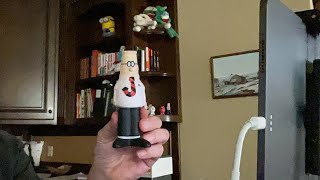
Scott Adams hosts a livestream (‘Coffee with Scott Adams’) discussing recent events: his claim that Dilbert was canceled in 77 newspapers (possible links to anti‑ESG sentiment and newspaper ownership changes), reactions on social media, immigration and migrant-relocation commentary, a viral story about a teacher with large prosthetic breasts, persuasion techniques (notably “embrace and amplify” and calling out “NPCs”), experiences of alleged workplace discrimination against white men, and speculation about moving Dilbert to a subscription/locals model. He mixes personal anecdotes, business/industry mechanics (comic syndication economics), and geopolitical observations (Russia/Ukraine mobilization).
Chapters
Good morning, everybody, and welcome to the best thing that's ever happened to you in your whole damn life. It's called Coffee with Scott Adams. And I don't think there's ever been a finest, finer moment in the history of, well, the universe, really. How would you like to take it up a level? I think you would. Yeah, let's take it up a level. All you need is a copper, a mug or a glass of tank or jealousestine, a canteen, jugger flask, a vessel of any kind, Fill it with your favorite liquid. I like coffee. And join me now for the unparalleled pleasure. The dopamine. End of the day, the thing that makes everything better. It's called the simultaneous hip and it happens right now. Go. Oh, so good. So good. Well, today only. Normally, you know, I've got two feeds going at the same time, so one from YouTube and one from the subscription service Locals. Normally I allow the Locals feed to be open to other people just during the live stream, but today I'm going to close the live. The Locals stream to everybody except subscribers because I might have some stuff for them that I don't want to share with the rest of you. Anybody notice anything trending today on Twitter? Yeah. You know, it's going to be an interesting day when you wake up and you check the news, see what's in the news. Oh, it's me. It's the damnedest feeling. Like you wake up in the morning, what's new? Oh, shit, it's me. So if you're not aware, I tweeted yesterday that Dilber got cancelled in 77 newspapers. I'll talk about that right after I talk about a far more important story. That'll be my second story. The first story. Have you seen the story about the. The woman who's a teacher with enormous prosthetic breasts? Now, you've probably already seen the story of sort of yesterday's story, so it's a little old already, but I just wanted to weigh in with this one positive thought. Now, if you haven't seen the visuals, the. The actual visual of it is sort of the story. So it's. So it's a woman who identifies as a woman, but if you were to look at this woman, you'd say to yourself, hey, that looks like a man wearing a wig. But that's unkind. And that's not the point. That's just the visual. The other part of the visual is that this woman is wearing gigantic prosthetic breasts with super prominent nipples. Now, when I say gigantic I don't mean double D. I mean, like beach ball size. Like, I don't know if there's actually any human beings who would have her body size and that breast size. So without prosthetics. So they're prosthetics and we don't know the story. So here's the best part of the story. It's either a really good prank, like a really good one. Somebody who's really committed to the prank. Now, I don't know if that's the case, but if it is the case that this is a prank, I found my new hero. I so hope it's a prank. I really do, because I want it to be the best prank ever. Because if it is a prank, it's a really good one. They fooled everybody. I mean, even people who reported it thought might be a prank. But I'm going to go with it anyway. But here's the other possibility. The other possibility is it's totally legit. And this is a person who is just living their preferred truth and doesn't give a fuck what you think about it. And, you know, if that's the case. If that's the case. Hero. Hero. There are only two possibilities here. This is either the greatest prank ever. Hero. Or this is somebody who doesn't care about what you think to such an extent. Hero. That's all I have to say about it. There are only two possibilities, and they're both hero. I love this woman. So I don't know, no matter what else you think about it and how it connects to the bigger stories in life, I don't think it does. I mean, you can make it connect to everything else. But I feel like this is a story about one person, right? It's a person who identifies as a woman. That's all I do. Anything else would just be us speculating. But I love the fact that either way you speculate, it's a win. So that's not the only one this week. Here's another one that's a win. My favorite story, maybe of the whole year would be the shipping of the migrants to Martha's Vineyard. All right, most of you love that, right? How much did you enjoy just the political theater entertainment of that whole spectacle? He loved it. He loved it. Now, what did the Democrats think of it? Did they hate it? Not really. Not really. They didn't hate it because they got to show that they could take care of them. Now they did it in their way, which the right criticizes. Hey, you have the military take care of them. But they did show empathy, they did take care of them. And then they get to complain that the, that the Republicans are all a bunch of Nazis and they're acting badly. So the Democrats got their talking point and they also got to act like heroes because they didn't reject them. I mean, not right away. The right is arguing, well, you rounded them up in 24 hours and took them to an army base. But they were all well fed and happy. Now what about the immigrants themselves? Well fed and happy? Did they feel like they were political pawns? No. I think here's the thing that the general public doesn't understand about the immigrant population, but the people who have been sort of marinating in it for years, as I have where I live, where I live, you're always around the immigrant population. And here's what I can tell you if you're not. They're awesome. They're awesome. It's some of the best people you'll ever meet in your life. And here's a perfect example. You wanted them to be all worried about wokeness and political stuff and rightness and who's right or wrong and who's using people as political pawns because that's what you're thinking about, right? They're not thinking about that. They're just, hey, everybody's being friendly to me. Hey, I made it to America. Gosh, this wasn't as hard as I thought. I'm on an airplane. I've never been on an airplane. The immigrants are in a completely different headspace than you can even imagine. You can't even imagine. Like they're, they're basically in the headspace that you would want more of, not less of. You'd want more of that. This is why I'm more pro immigration than many of you are. Because the people coming across, I get to see them up close. Now, of course there are criminals and terrorists and you need some control over who gets in. I'm not arguing that, but I'm saying that as a population, they're way more awesome than you give them credit for. Way more awesome attitude and work ethic and just a lot of ways, just this pretty awesome group of people. And let's not be NPCs. Let's not be NPCs, because what would the NPCs say in this conversation? What's the most obvious thing to say? What's the most obvious thing to say in this conversation? But, but, but they're illegal. You don't need to say that. It doesn't add anything. We all know that. Does it sound like I'm arguing for illegal stuff? No, you didn't need to say that. You don't need to say, but. But illegal. Every time there's a conversation about immigration, you really don't, because everybody gets that part. That's never the part that's, you know, in question. I mean, you can disagree on it, but everybody knows that's the question. All right, here are some more ways to spot NPCs. I tweeted this today. You could use it, too. If you see my tweet, take a screenshot of it. Because every time somebody acts like an npc, don't engage them. It would be like talking to the. Your lawn sprinkler. Oh, the lawn sprinkler seems to be moving. I think it's alive. Let's have a conversation with it. No. Now, talking to an NPC is like talking to a lawn sprinkler. Just because it's moving doesn't mean it's listening. All right, so here are the ways. 1. The NPCs have no accomplishments or stories. No accomplishments or stories. It's like their history doesn't exist. They believe art is not subjective. This is the funniest part. They believe there's something called good and bad about art or humor or movies or drama or music or books. That's not a thing. There's just stuff some people like and some people don't. That's it. If you believe that, it's a yes, no situation. You're an NPC and they're binary thinkers in general. My team good, your team bad. So they don't get any nuance. There's no such thing as nuance. They say the most obvious things one could say in this situation. So when I talk about Dilbert getting canceled in newspapers, what do the NPCs say? What do the NPCs say? When I tweeted that Dilbert got canceled in a bunch of newspapers, oh, I'm sorry, Garfield. Right. The NPC is flooded in to say, I'm sorry, Garfield. Or to say, well, I guess that's because it sucked. The most obvious things that anybody can say. All right, so let's talk about the news. Bloomberg has an article about Dilbert becoming the voice of anti ESG sentiment. Now, I didn't read the article because it's subscription, but Bloomberg's pretty big entity. And if they start talking about Dilbert becoming the voice of anti esg, then that means I got the attention of the people in the business world. So the Business world now is aware and becoming more aware that the Dilbert take on ESG is to mock it. Now, just to be clear, I love the objectives of the ESG. Who wouldn't want, you know, less CO2 if you got a choice? Who wouldn't want, you know, better social behavior? Who wouldn't want a company that represents the public in terms of its governance, et cetera? I want all of those things. Those are all great things. But what I make fun of is how people implement good ideas. Management is a good idea. You can't have big companies without management. But I mock management all the time. Is that because I think companies should have no management? No, it's about how they do it. It's not that you shouldn't have it. So same with esg. I don't mind that people have lofty opinions about how to make the world a better place and that corporations should be pitching in to do that. It's just that when you throw CO2 in with racial governance and say it's like one big score, you get some weird behavior. That's the funny part. So now Dilbert is really now the most prominent target critic of esg, which, as you know, is being pushed by the largest financial entities, big, you know, big hedge funds and BlackRock and people like that. So the big, big financial entities tend to like ESG because it gives them. By the way, here. Here's the most general problem with esg. If you know anything about business, it goes like this. You never want to insert anybody between the business and the customer. That's all you need to know about esg, because that's what they're trying to do. They're trying to essentially govern how the company works independent from that company's relationship with its customers. And anytime you put somebody between a business and their customers, you don't get a good result. Right. It's the same with government. I acknowledge that some government, you know, regulation of companies is just necessary because capitalism is messy. Some is necessary, but I think we'd all agree there's something that would be too much, too much government getting involved and getting between the customers and the company, basically. So that's the problem. You don't want to have too many bosses. Have you ever worked for a big company where they say, I'm your boss, but you're also a dotted line report to this other group? How does that work out? That never works, having two bosses. Well, what it does work for is the employee. It works for the employee because the employee can always tell each boss that they don't have time because they're working for the other boss. You ever do that in a corporation? When you had a dotted line report to somebody else and your boss gives you another project and you say, ooh, I'd love to work on that. Boy, would I. But I've got this other thing that I'm doing for the other boss that you assigned to me. Remember when you gave me the other boss? That other boss has filled up my schedule. I wish I could do something about it, but I can't. So that's the problem with the sg. It's the wrong. Wrong chefs in the kitchen. Too many chefs, coincidentally. While Dilber is being the most notable critic of ESG and while large financial entities are the biggest promoters of it, did you know that most newspapers are owned now by large financial entities? Did you know that? Hedge funds, investors, basically people just investing just for the money of it, not for any other reason. And one of those big financial entities, I don't know what kind of business they're in actually, but they own, among other things, I guess they own big chain of Newspapers, the fourth biggest chain of newspapers. And they have 77 papers that are all part of one financial entity. And they decided to revamp their comics page, make it smaller, add in some things and subtract some things. And one of the comics that got caught is Dilbert. So Dilbert won't be in 77 newspapers. Now. Some people said, my God, is that because of what you've been saying politically? To which I say, how would I know? I would have no way to know that, right? Because I, I don't have direct contact with the newspapers. Like that goes through the syndication process. So they don't talk to me. Now when a new, When a newspaper cuts a comic, especially if it's a, let's say a high profile comic, typically they give a reason. And it's an obvious reason, right? It'd be a reason like the readers don't like it. Sometimes they run a poll. The poll is highly unscientific. It's just who decides to answer the poll. So sometimes they give a reason. They'll say, oh, it was low rated. Sometimes they might say, it doesn't really fit our kind of reader. Maybe we're more rural. Dilbert is more of a urban thing. They might say something like that. In this case, no reason was given. Okay? No reason was given. No reason was offered. So that doesn't mean they don't have a reason. And it doesn't mean that the reason is anything but financial. I just know that typically I would hear a reason, but in this case I did not, for whatever that means. Now, some people said, but wait, you're making this seem as if they. They canceled you for some reason other than the comic. To which I say, I didn't say that. I'm just telling you what's happening. You should know that I was at great risk of being canceled because of the content I was putting out. And I told you that in advance. I told you in advance. My odds of getting canceled are very high right now because of the content. And you can confirm that I signaled in advance a very high, high likelihood of being canceled. Now, at the same time that I was signaling to you, there was a high likelihood of being canceled. The fourth biggest change just canceled me. That doesn't mean that one led to the other. You get that? It doesn't mean that. Not necessarily. Now, some people said, scott, Scott, Scott, I work in research. Somebody said this on Twitter. I work in research. The way these decisions are made is you do your research, you find out what the customers like, and then you get rid of the ones they don't like. Blah. Why are you complaining if the market has spoken? The market has spoken. There's nothing else to this story. Well, let me tell you how it really works. They don't have any data. They don't even try to gather that data. For 30 years I've been saying, why don't they gather some data? Because when I first started, I thought Dilbert was more popular than the newspaper thought. So I was always, if you had some data, you could see that people like my comic more than some other data. Yeah, the Elbonian revenge. Maybe. So anyway, the first thing you need to know is very unlikely that data had anything to do with the decision, because newspapers just don't use data that way. Never have. Believe it or not, they never have. So how does somebody make a decision? Who do you think made the decision about what was in and what was out? In all likelihood, one person. In all likelihood, one person made the decision. Now, it had to be confirmed by probably a few different bosses, but it's very typical in that industry that they'll trust the person that they gave the assignment to. So if they say, your job is to figure out which comics we're going to keep and which ones to go, and then they come back with a recommendation, generally the recommendation would just be accepted. I mean, that would be the normal way a newspaper would do it. So often it's just one person, right? Now, if somebody said, well, probably they got rid of Dillberg because it cost more, so they're getting rid of the expensive stuff to save money, which would make sense in most cases, right? Do you think that. Well, let me tell you about the economics of comics. They cost almost nothing to the newspaper. They're so cheap. Do you know what it costs for Dilbert to run in one newspaper for one day? Give me a number. What do you think? What do you think is the number? The dollar amount that one newspaper pays. And of these 77 newspapers, these would mostly be local, smaller markets, right? Yeah. Something like $10. Something like $10. Oh, no, I'm sorry, $10 a week. Not per day. I'm sorry, not per day. It's more like $10 per week right now. A lesser comic might be $7 per week. A big paper might be 25 or even more right now. I haven't looked at the numbers for a while. There might be a little inflation there. So, you know, maybe it's a dozen dollars versus eight dollars or something like that. But let me tell you one thing they did not do. It was not basically a cost decision. So the one thing I could tell you for sure is it wasn't based on cost, because Dilbert costs about the same as everything else, right? So it was probably one person's decision. Probably wasn't about cost. It was more about, I don't know, any number of things, who knows, But a business decision. But in terms of when I said the $7, that's for a small paper. So I don't know how many of the 77 were small and how many were big. But one of the biggest papers was the St. Louis Dispatch. I think that was probably the biggest in the chain, and they cancelled it as well. So we don't know why it happened. And I'm not making the claim that it was because of politics, but I can tell you that Dilbert was the most, probably the most popular comic that got canceled in that group. Probably. But I don't have data either. But when I say most popular, I mean probably most popular within a segment of readers. The trouble with comics is they tend to address a segment each. There are no comics that apply. Well, Calvin and Hobbes, I guess, apply to everybody. But mostly comics are like, here's a comic for a family. Here's one for, you know, about a pet. Here's one about single women, right? So comics usually go for a category. If you tell me that the category of cubicle workers has a more popular. Let me Say it this way, office workers. If you tell me there's a more popular comic among people who have, let's say, a job with an office than Dilbert, I would be very surprised. And. And the category of people who go to work in an office is enormous. So if you can explain why they would take away probably the most popular comic in one of the biggest demographics at the same time that the other ones were the ones that people didn't read. That looks like the situation. But it's possible they had some data I'm not aware of. Very possible. It's possible that they have some considerations I haven't even thought of. It's possible. I don't know. So there's no way to know what's behind it. But I will tell you that the only time it ever happened was when I did things that I told you in advance were likely to get me canceled. So I just know the timing was interesting. I don't like to give out financial numbers, so I'll say that the impact on me is substantial. It's not like get out of the business substantial. It's not like I make less money than most people substantial, but it's substantial. There are thousands of newspapers, but 177 is a big chunk. All right, there's a. I got into a conversation about this that led to the conversation about how white people are doing real well in corporate America. So there was a gentleman looks. I don't like to assume people's identification, but based on his profile, I would say he's a black professor at a college. And I told him that I lost two jobs in my corporate days because I was a white man. And that my bosses in both cases told me directly, we can't promote you because you're a white man. And he said, prove it. And then I said, how about I do this? I'll tweet this conversation and I'll let all of the other white men who have worked in corporate America tell you about their experiences. So you don't have to believe me. I will give you an avalanche of people with similar claims. Do you know what he did as the avalanche started coming in? He challenged every one of them to prove it. All of them. I think he ran out of steam after a while, but I did it just to trigger his cognitive dissonance. And I wonder which way it'll get triggered. Is he going to go away thinking that hundreds of people lied to him on Twitter? Because he might. He might go away thinking, oh, my God, hundreds of white men just Lied to me directly on Twitter, probably. I mean, he thought I lied to him, and he challenged me to prove it. And I thought to myself, I wonder if I could. I mean, I know the name. I can remember one of my bosses. The other one I might be able to find. I mean, I could probably hunt down my actual bosses and I could ask them, and I'm reasonably sure they would tell me, you know, exactly what I said. I mean, they were in the room, too. Why wouldn't they? And, you know, neither of them work for these companies anymore, so they. Nothing to lose, nothing to gain. It would be sort of interesting, wouldn't it? I'm actually thinking of hunting him down and doing it, but. But I offered an easier way to test. I said, why don't you ask any white man who has worked in corporate America? Don't believe me. You don't have to believe me. Just ask any white male who works in a big corporate enterprise. Ask them if they've been discriminated against directly. Just find out. Find out for yourself. You don't have to wonder. You can just ask. I'll bet you got a neighbor. I'll bet you got a neighbor. You can ask. So the whole prove it was obviously somebody who knew that cognitive dissonance was coming at him hard. And he's struggling to survive this, because imagine how much that would mess up your entire worldview. Imagine being a black American adult. You grew up believing that. The one thing that's clearly true is that for the last 25 years, it was a good deal to be a white man and a bad deal to be a black man. Let's say you grew up for 25 years. That was your point of view. And then you see a tweet in which hundreds of white men tell you that that wasn't the case. And they give you direct, specific examples. Yes, I did not get this promotion. They told me, because I was white. Yes, I was qualified for this, but they said I couldn't do it because I'm white. What would that do to your mind if your mind thought you had spent 25 years in one environment only to learn that wasn't where you were? You were in a whole different world that whole time and never knew it. And the reason is white people can't complain. That's part of the deal. Do you know why I can complain? Because I'm close to retirement. That's the only reason. Do you think I made a big public mess back when it was actually happening to me? Because I suppose I could have you know, could have gone to the press, could have written articles about it. No, no, it would have been suicide. The reason you don't hear about it is that people are too smart to talk about it because it makes you just sound like a whiner. Oh, white people. You would immediately be accused of being a whiner and nothing good could come from it. But do you know why I can say this full throatedly at this point? I can do this in public. It's because fuck every one of you. Not the people I like, but fuck anybody who has a problem with it. That was my truth. And do you know what I said to the gentleman? His name is. I don't know what his first name is, but IJ Bailey. And by the way, I have nothing against this person. I think that. I think he was asking exactly the right question and he was challenging me in exactly the right way based on what he believed was true and what I was presenting. So this is not a criticism of Professor Bailey. Professor Bailey is acting just the way a normal person should act in exactly this situation. It's just that he's finding himself in a situation he probably didn't expect, which is fascinating to me to just see how he reacts. Anyway, I think I had some other point there that I forgot, but that's what's happening with me. So I don't mind telling Professor Bailey what really has happened because I can take the heat now. What happened when I tweeted that the 77 papers canceled me, what do you think was the reaction on social media? Well, probably 40 to 50% of the people on social media had the following reaction. Yay, it's about time. Yeah, I'm saying that. I've seen that in the comments. It's about time. They gotcha. It's about time. Boy, you had this coming. To which I asked, what exactly did I do to have this coming? Now I know the people on, so I want to see if I can get some NPCs riled up here. So I'm knowing locals, you're friendlier, but no, Maggie isn't an answer. Tell me what I did. Don't tell me what Maggie did. I was never a maga. What did I do? Tell me. Let's say I'm just waiting. I'm just waiting for somebody. No Trump supporter. That's just a generic sentence. Well, what did I do? Had it coming. For what? Nobody. It got really quiet on YouTube. They consider you a Trump guy. Yeah, but I'm talking about people here. I'm not Talking about other people. You know that there's somebody. There are people here on YouTube who are just here to hate on me, right? So I'm asking you to tell me why. Give me the one reason. Give me the one reason that when I wake up every morning, literally with the thought of how I'm going to make the world a better place, because it's sort of the only thing I have to do that has meaning at the moment. Tell me exactly how that hurt you. Somebody says I'm anti women. No, literally nobody is anti woman. Unless you're like a psycho or something. No, but don't just say what I'm anti or what I am. Tell me what I did. What did I do to you? Was it when I made having a telehealth doctor across state lines legal when it wasn't legal until I asked the president to sign an eo? Was it your new health care that you got for free. That I give people who at least like Dilbert? Was it the fact that I wrote a book to tell people how to and they say it worked? Is it because I described politics in a way that people could understand it for the first time in terms of persuasion? Tell me what I did. Seriously, give me one example of what I did. Because most, most of the complaints are, you are right. That doesn't help. You are maga. Well, I'm not. You are anti woman. No, no, I'm heterosexual. You couldn't be more pro woman than I am. But seriously, I'm asking, quite seriously, tell me something I did that offended you. And it just got really quiet. So all of YouTube just went completely quiet. I mean, there are comments going by, but none of them. Nobody's going to take the bait because here's the thing. There are a number of you on YouTube who just had a moment. You were sure that you hated me. You were sure you had reasons. And when I asked you for any, what did I do? There were none. Do you understand how hypnotized you have to be to hate people when you don't know what they do or anything about them? You ignore all the good reasons. I'm asking for the good reasons. Nothing. Now you're lying. About what? Do you see a reason there that I don't see? You. You spread pandemic panic. All right, locals people. I spend every evening with this blanket wrapped around. Not this one, but another blanket wrapped around me specifically to tell people everything would be okay. I spent my full time energy for six months doing two livestreams a day with the Express primary, primary intention of calming people down and telling them, everything will be fine now. And somehow you went away with the impression that six months of work on behalf of the public was the opposite of what happened. Isn't that interesting? Remember I told you that people can't tell the difference between a thing and the opposite of the thing? The number of times you see that, it never is less mind boggling, right? I swear, if somebody murders me someday my reputation will be I'm a murderer. You know that, right? If somebody murders me just like randomly, like, half of the country will think, well, he had it coming. He was a murderer. It's like people literally can't tell the difference between the thing and the opposite of the thing. 40% of the country will just hear the opposite of the thing and think that's the truth forever. Just stop going to Starbucks. All right, here is the creepiest story of the day. There is some adult, you probably heard this, who ran over an 18 year old over a political. And kill them over a political problem. But here's the update. Machiavelli Zonderbelli, who I talk about all the time, his Twitter account, you must follow. Do you hear that? You must follow. It's not optional. It's Machiavelli's underbelly. And you should immediately go to Twitter as soon as you're done here, unless you have another device and follow him. Here's why. If you want to see the future, he is fucking showing it to you. And it will twist your brain in pretzels. All right, let me tell you what he did yesterday and just, just take a moment to absorb this a little bit. This actually happened. This is a real thing. This is not speculative. This is not something in the future. This fucking happened yesterday. This 18 year old who was killed, there are photos of him when he was alive. And Machiavelli's underbelly animated the photo so that you can have a full conversation with the deceased in which the deceased is describing how they were killed and why. And it looks not like a computer. It looks like the real person talking. You want to go to another level? You ready for this? Machiavelli's underbelly offered on Twitter, and I assume it's a joke, just to make a point that if somebody would pay him X amount of, huge amount of money, he would animate fetuses who had been aborted. Or if the other side wanted to pay him, he would show that the babies grew up to be assholes. So he could take either side for Some millions of dollars. He could take either side and animate any horrible persuasion you wanted. Now, let me stop you here. I'm sure he was kidding, okay? This was not serious. I'm sure he was kidding, but he did it to. To catch your brain on fire. And it worked, didn't it? This is. This is. Now, I don't know how much I can reinforce with you. He animated a dead person to talk about the circumstances of his death, and it looked real. You wouldn't know the difference if you didn't know. You wouldn't know the difference. So if you don't see how this is going to change everything, you better catch up, because you don't want this one to sneak up on you, Right? This one you got to watch carefully. So follow that account. All right? Putin, he decided to escalate with a partial mobilization. A partial mobilization. Boy, you know those Ukrainians are afraid now. Oh, no. Putin did a partial mobilization. Well, let me tell you what a partial mobilization means. It means that their reserves are being activated. Now, the reserves, I understand, are veterans who are retired from the military, but if they have special skills and stuff, they're being brought back. Now, what do you think would be the quality of the fighting force when you bring back your veterans who can't remember how they did their job? Probably they were happier being out of the army than in then. Also, they're extending the military service of the people who are in the war indefinitely, basically. So if you thought you were going to do a little war rotation and you had a few months left and then you were coming home, Putin just told you, you're never coming home. Now, he didn't say never, but he said, you're not coming home anytime soon. Got a war to win. Now, let's bash that against something. I saw today that there's John Keegan's book the Face of Battle, and I'm a terrible person because I meant to note who tweeted this. So if you know who tweeted this, give them a shout out in the comments because I'm being a bad. I'm being a terrible live streamer because I. I thought I copied and pasted that, but I missed the name of the person. Anyway, there's well established evidence, according to this John Keegan book, that shows that combat effectiveness falls off quite rapidly within 140 to 180 days. So if you're in a war zone and you're fighting every day, at the end of 90 days, you're probably at your maximum fighting ability, meaning you've sort of gotten practice, you've gotten used to it and now you're at your maximum. After 90 days, your effectiveness starts falling off sharply. And it's the sharply that's important because it's not gradual. Sharply Around 140 to 180 days, it really falls off a cliff. Basically, people just want to go home. And the ones that are already in the war, the ones that are being extended, many have been fighting for more than 200 days. So morale disappears at about 140 days to 180 in a war zone. And many of Russian troops have been there 200 days and they just extended them. This really looks like Russia is losing badly now. Of course, it's fog of war. You don't need to be an NPC to come in here and tell me that. I've been falling for Ukrainian propaganda or Russia propaganda. Don't be an npc. Don't tell me I'm falling for the propaganda of one side or the other. Because we all know it's all propaganda. We all know that anything I say on this topic is likely likely to be propaganda and likely to be overturned later. Okay. I wonder if I've stopped the NPCs because I think they're still going to do it. I think telling them not to do it doesn't make any difference to an npc. Let's just give it a moment. All right. Did that work? Wow. Maybe it did. So what it looks like is if I were the Ukrainians, this is the persuasion that I would start to use on the Russian soldiers because I'm pretty sure they can get their persuasion into the ground troops directly or indirectly. And it would look like this. You're never going home. That's what it would look like. You're never going home. That would be pretty powerful, wouldn't it? But if you come to Ukraine, we'll take care of you. If you join our side, you can come home immediately. Not home, but you'll be out of the war immediately. And we might even feed you if you want to join our side. Yeah. So I don't know what the Ukrainian fighting morale is, but I assume it's better only because they're in their home territory. So I don't know. There are too many unknowns in this to make a prediction. But it does look like the Russian army is collapsing. Yeah. And the best persuasion is one that already fits your fears and your biases. Did you know that if you want to convince somebody of something, tell them something that already fits the framework that they have in their head of how things work. Right. So you imagine that they already maybe don't trust Putin so much. So then you tell them, okay, he says it's extended, but he really means you're never coming home. Or you say, he says you're extended, but the truth is there's no escape route. I don't know if that's true, but imagine hearing that Putin is saying that your service has been extended, but he had to do that because there's no escape route. Sometimes it's better to give them an escape route, I've been told, because you don't want them fighting for their life. You want them to escape to get out of there. You've seen UK soldiers running to Russia. I'm sure it's worked both ways. Machiavelli is spelled M A C, H, N A K. Just if you ask your digital assistant how to spell it, just say, how do you spell Machiavelli? Yeah, you'll see the spelling in the comments there. M A C, H. All right. Rasmussen says that Republicans have more excitement about voting in the midterms. 64% of Republicans are very excited and only 56% of Democrats are very excited. And only 38% of unaffiliated are very excited. So what does that tell you? I think it tells me that the, the party that's out of power is probably more excited about voting. Isn't that always the case? Which is probably exactly why the midterm elections tend to flip flop. I think this is telling us what we expect in this situation. The ones who are behind are excited to get in there and try to change it. The ones who are ahead are like, we're ahead. It seems okay now, less excited. And the ones who don't have a team at all are the least excited because they don't have a team to back. And I think in a way, this perfectly tells you how much the team persuasion is worth. So if you didn't identify with a team, a Democrat or Republican, you were the least likely to be excited about voting in general. But if you identified with a team, suddenly you're all excited about voting. Now, cause and effect could be backwards here. It could be that the people who care the least are the least interested in joining a team. But I feel like it works both ways, that once you join a team, you suddenly take on the excitement and the feelings of the team and the narrative of the team, and then you can see it's the difference between 38% being very excited and 64% and that the difference between 38 and 64 is partly that the unaffiliated might be less political, but partly I think that joining a team just gets you excited about the team. Team MAGA versus Team Pedo. You know, I don't know. Do you think the pedo stuff that. Here's what this feels like. I remember in 2016 the big persuasion was cuck c u c K as in cuckold, as in, you know, we earned a bunch of stuff in America, but we're just giving it away to these other countries that didn't work for it. I guess that was the context. And I always said every time I heard that, I thought that is not persuasive. That is so not persuasive. And when I hear the pedo stuff, I have the same thing. That is so not persuasive. It's not. Because if you're a Democrat, what are you going to think? No, they're not. It sounds ridiculous. If you're a Democrat, you just think, oh, there's those Q people. Again, I think it's anti persuasive because if the best you have is calling the other size pedophiles, then you don't have a political problem. Remember, when I tell you that people come after me personally, it's them signaling that they don't have any kind of argument. So if you're doing the same thing with the Democrats and you're coming after them for whatever personal things you imagine they're doing, probably you didn't have a good enough argument. So maybe you should work on that. It's not supposed to be persuasive. Well, I think different people are using it in different ways. There are definitely some people who are just genuinely concerned about the issue and they want to float the issue and make it a bigger deal. Definitely there are people with good intentions. But beyond that, when I saw in the comments somebody said we should frame it as Team MAGA against Team Pedo. That takes the legitimate question of grooming and whatever else that takes whatever legitimacy there is in that and just reduces it to a political nothing. So if you want to take your legitimate concern and turn it into a nothing, make it political. If you really want to help children, make sure that you're cleanly going after the specific bad actors and you're not going after just Democrats. As soon as you say all Democrats are pedos, at least because they support them, well, you're just being like them. You just became them. Because what do they say? Everybody, everybody's a Everybody's a racist if you're Republican because you allow them to be in your party. So you're just doing the same thing to them. There's no persuasive ability to that. Same as calling someone an npc. Somebody says, now the NPC persuasion has a functional point. The functional point is to make them stop saying the most obvious thing. It's just my personal preference. And it worked. When I do the NPC call out, the NPC is almost always just disappear or they spin into some kind of cognitive distance. That's funny. So you can't tell me it's a bad idea if it works. And it works for me in exactly the way I want it to work. If it doesn't work on you or for you, I don't care. It's not for you. It doesn't work, comrade. Well, I observe it to work. Oh, here's the point. I forgot. Oh, I'd be so mad if I completely forgot to tell you this. So back to the story of the the black college professor who is challenging me about the veracity of my claims that being a white man in corporate America is a tough deal because you're discriminated against. And as I said earlier, he challenged me to prove that, that it actually happened to me. And I lost two careers because being a white male. And I replied back, why are you denying my lived experience? I'm just waiting because I assume there's applause. I assume that wherever you are, you're applauding right now. Possibly standing. Possibly standing. Because hasn't that been the entire argument, that when the Republicans say, hey, the actual police brutality, if you look at the stats, it's somewhat not big, but then what do black people say? Well, you can keep your statistics. Our lived experience is that the police are brutalizing us. That's our experience. Now I'm telling you that my lived experience was I lost two careers for being a white male. Does the standard not apply to me? Does my lived experience count for nothing? Remember I told you that the best persuasion is that you don't debunk the other side. You embrace their point and then you amplify it. Embrace and amplify it's deadly persuasion. As soon as you say you're wrong, you're done. Your persuasion ended the minute you said you're wrong. You get that, right? Hey, let's talk about this topic. You're wrong and we're done. We're done. There's nothing else to say. Everything you say after that is like, blah, blah, blah, blah, Blah. Because the person just heard you wrong. But if you say to that person, you know, that's a good point. That's a good point. You know, people's lived experience is important. We should not diminish that. By the way, just so you know, I am completely consistent because I do honor the lived experience of the black population of the United States. I've said that publicly. And whether or not that matches the statistical truth, I think that's interesting and we should know about it. Maybe it's important. But if your lived experience is that the police are brutalizing you, that's your life. So, I mean, that does matter. It matters, right? So I'm just using the same standard. It's exactly the one I apply to other people. So you can't get me on hypocrisy. I'm just being consistent. And I'm asking you to be consistent, too. That's all. You lost two jobs because your child drove up the group medical expenses. God, I hate that. Ugh. Ugh. That's like the ugliest, ugliest part of reality right there. Now, I do the same thing with reparations. If you say no to reparations, you lose, because then you're an uncaring bastard racist or something. So I don't do that. I say, you know, this could be a good conversation. And you have a good point. Certainly the government did bad things to black people. Nobody doubts that. So let's have that conversation. It's just that when you embrace it and amplify it, you end up with, what about the black African kings who sold those people? Do they pay some reparations? What about the people in the north who fought to free the slaves? Do they still owe money? So by embracing the idea and then amplifying it so you can see it in all of its features, you end up being persuasive. But as soon as you say no, bad idea, well, that's the end of the conversation. Embrace and amplify. I heard some people have already used the technique since I started talking about it. And with good. With good result. It's actually my fourth career that got cut short because you also have to count my Dilbert TV show that got canceled for not appealing to black audiences because upn, the network it was on, decided to have a block of black content. So it was like sitcoms of black families and stuff. And Dilber was on that night, and it wasn't a black content property, and so it got canceled. So I've lost two corporate jobs and one TV show for essentially my identity. You used Embrace and Amplify on a Million Dollar deal and it deleted their top concern. Boom. Good job. Good job. Is there anybody here who has learned a persuasion trick from me that they've used in their real life, let's say usually your career? And it worked better than you imagined, like you were actually surprised. Watch the yeses go by. Yeah. Over on the locals. So on locals, they get more of my persuasion lessons. It's all yeses. It's like a flood of yeses. So these are people who basically have learned a skill that can express itself, almost like magic. It's not magic. It's just technique. But its impact on your life feels like magic. Yeah. Now let me ask you this. Think about the little nuggets of persuasion that I've taught you and the ones you've used. And all the people who are saying yes have already seen that it made a big difference. Right. These are not small differences. In most cases, you use the technique for big stuff. Get a raised career, relationship, stuff like that. Now, imagine me, I learned hypnosis in my early 20s. I've been studying persuasion for decades. Do you have any idea what I can do at this point? You don't. You have no idea. It's the only reason I'm still alive. Because if anybody had any idea what I'm capable of, I would be killed immediately. And I can say that out loud because nobody will ever believe it. So that's the beauty of it. If I thought anybody could believe it, I couldn't even say it out loud. But nobody could believe it. It's completely beyond the human ability to hold in your head. I've been challenged someday to write sort of my biography that would be released after I'm dead so you can find out what things I've actually been involved in. If you had any idea, you would be amazed. All right. And you have to assume that people seek me out, Right? Because I do this publicly. Obviously, people have sought me out to solve problems. And sometimes I do. See what else is going on. Today we talked about the woman with huge prosthetic breasts and about Dilbert. Well, those are important things. Yeah, I think we covered it all. What does your agent think about you killing Dilbert? Well, I don't have an agent. One of the benefits of my skill stack is, is that I don't need a financial advisor because I have those skills and I don't need an agent to negotiate. Except for the book deals. That's a special industry. I do have an Agent for the book deals. Because the way book publishing works is that the agents are almost like employees of the public. The publishers. Now, not all agents, right, but the top agents, the ones with reputations and track records, they actually do for the publishers what the publishers are not staffed to do for themselves, which is find a book that's going to sell. So the publisher wants to talk to the agent, but not every agent, they want to talk to the ones that always have a track record of finding and promoting good books. So if you want to be in that industry, maybe after your first book, if you get lucky somehow, you want an agent, because the agent will get you a better deal than you could have negotiated yourself. They just know how to do it. So being good at negotiating, which actually used to be my job, one of the things you should know is when you shouldn't do it. So when I'm negotiating for a big deal, I will always hire a lawyer to be between me and the party I'm negotiating with. And it's not always because the lawyer has better ideas than I did. Because usually the business stuff, my preferences tend to rule. But the lawyer keeps a buffer between you and the other entity. And that gives you a whole different set of tools because you could ask for things through a third party that would be a little awkward to ask for in person because they could just stretch a little further than you can because they're doing it on your behalf. But if you're in the room, it's easy to give stuff up. Let me give you an example. I hired a lawyer when I first got my Dilbert comic contract 33 years ago. And so most of the things I negotiated were things I told my lawyer I wanted. But one of the things the lawyer suggested was, well, why don't you tell them they should pay for your drawing supplies, like your papers and pens and stuff. And I said, no, that's so small ball. Like I'm trying to do this big career changing contract. I'm not going to have them pay for my pens and paper. That's just crazy. And then he said, well, why don't we just ask for it? Because then it'll be one thing we've asked for, that we have to negotiate away. So we'll ask for it just so it becomes an asset to give up. And I'm like, all right, whatever. To me it was just ridiculous. But he asks for it, negotiations happen, and it gets lost in the mix. I think this indicator just sort of forgot about it. It was one of the things they talked about and, and then when the final thing was done, it was still there so that this thing actually survived through because the syndicate also thought it was so small that it wasn't something they wanted to talk about. And I forget what it was. It was something like $50 a week or something. So we just put in there that they'd give me $50 a week for the entire 15 years. And every time I would get my royalty, see that little number in there, I'd laugh and say, oh my God, my lawyer paid his entire fee. Because over the, over the years that it ran, it just kept racking up until the lawyer was free. The lawyer was free. He paid for himself just for asking that one thing that I never would have thought about. And also the lawyer push them harder than they've ever been pushed. They said, now, you know, I wasn't there. Sometimes people like to say that, oh, this was the toughest negotiation I've ever had, this sort of thing people say. But they were quite convincing that my lawyer pushed them harder than they've ever been pushed. And do you know why that could happen? It's because I know how to negotiate and I had a secret that other cartoonists didn't know. It goes like this. If you're a brand new cartoonist and the syndicate offers you a contract, it's the biggest break you could ever have. The last thing you want to do is screw up that opportunity. And so a new cartoonist would say, I'm going to give them everything they asked for because the last thing I want to do is to make them mad. And then they'll cancel the deal. And it's my only opportunity. But what I knew is that they're looking for artists and they're hard to find. It's hard to find me, right? So somebody who could turn on nothing into a major brand in the United States and the world, that's very rare. And if they think they found somebody who could do that even potentially, which is what they're looking for, they're only looking for people who could maybe do that. If they think they've got one, they're going to fight pretty hard to keep it even before the contract is signed. Because remember, they have to talk themselves into it before the offer even gets to you. So they've already talked themselves into how brilliant it would be if they hired you or worked with you. So I knew that I could push really hard and that they would give me plenty of warning if they were going to cancel the whole deal. So I just pushed and pushed and Waited for them to say, okay, this is too far, were going to walk away from the deal. And they never did, they never threatened to walk away from the deal. It was just a hard negotiation. I got a little bit more of what I wanted. I think you did your, oh, times 30 years. Yeah. No, the first contract was 15 years, so it was half of that. And I don't think the second contract didn't have that in there because I draw digitally. So I couldn't charge for my art supplies because I draw on the computer now. If it wasn't King, it wasn't King, it was United Media. So United Media sold much of its assets and my current syndicate has those. Yeah, the Cintiq is what I used to draw. Did that scare you? Did what scare me? I don't know what you're talking about. Was I scared that I wouldn't get the deal? No, no. So that's where the experience comes in. I know what it looks like when somebody's getting ready to walk away from a deal. Oh, I guess that's the most important thing. So here's the most important thing. If you're in a deal where you're sure the other person needs you or wants you, right. And you're both invested, you will get all kinds of warning before somebody walks away from the deal. All kinds of warning, Especially in a corporate setting. In a corporate setting, they've already told their bosses the deal is going to happen. They do not want to go back to their boss and say, okay, I couldn't get a deal done. Everybody else can get a deal done, but I couldn't get a deal done. So you usually have the corporate person by the nads because they've got to. Once they've said, I'm going to make this happen, and they do, they got to make it happen. And you know, that. Best episode yet, maybe. How much are they authorized to spend? Yeah, A lot of young artists get their souls taken from them. Well, I was aware of that. So there was a history of abuse by the syndication companies long, long ago. We're talking decades and decades ago, before my syndicate even existed, really. And they would do these long term contracts and once you were the cartoonist and you retired, they would just draw the comic for you with another artist and they would just keep it. So the rights to the comic actually belonged to the syndication company, not to the artist. So you could work for 20 years drawing a popular cartoon and they could just fire you and then draw your cartoon with somebody else. But that situation is no longer the Case. Oh, in terms of the direction of the comic industry, the other chains are likely to go the same way. So there's a pretty high likelihood that Dilbert will be maybe cancelled in half of newspapers in a year, maybe one to three years. It will no longer be a viable career, and I'll do something else. Now, my plan tentatively would be to continue doing Dilbert, but on a subscription service. Can anybody guess what subscription service I would use? That's right. OnlyFans. No, not only fans, but Pornhub locals. Of course. Now, I haven't made any decisions about that, but the way I would likely do it would be to have a very low subscription so that you couldn't even tell you had it, and then you could read it as long as you want. But if I did it by subscription, I would. I would be far more edgy. So subscription Dilbert would be, let's say all the controls would come off. So if you didn't think it was funny before, I guarantee you you're gonna like it after I take my. After I take the censorship off myself. Because, you know, I self censor, as any professional would, because I'm making something for a specific market. Right? If you're making something for a newspaper market, you are obliged to make a product that fits that market. I try to make a product that fits that market, but also enlarges it. So that's why I'm in the risky business. I'm enlarging the market, and that's always a little friction. 99 cents. Yeah, I was thinking of a dollar a month. Well, let me ask you this. If you could pay a dollar a month and get 30 or 31 Dilbert comics a month, would you pay it? Now, most of you wouldn't. I know that 90, 90% won't, but some of you would. Some of you would. And I don't think I would mix it with my current locals channel because I think that it just is a different audience if it's edgy. Now, the other thing I could do is put other people's edgy comics in there with me on a sort of guest basis. Not regular running, but if I saw anything that was edgy, I could put it there too. And maybe I would curate the funniest memes and comics and stuff and put them there too. You try it for a year? I mean, yeah, you could try it for a year for $12. That's not dark Dilbert. I could create Dark Dilbert. Oh, that's not a bad idea. Okay. I wish I'd never heard that idea because that's a little too sticky. Oh, my God. Yeah. If I. If I leave newspapers entirely and I go to a subscription service, I think it's going to become Dark Dilbert. I might even rename it. I might rename it Dark Gilbert so that if anybody bought a reprint book, they'd know what they're getting. In 2018. You were accepting Transcendence? I don't know what transcendence is. Yeah, the Dark and Divisive Dilbert. Oh, that's interesting. Dark and Divisive Dilbert. Yes, in effect. I could create a comic syndication company with just locals. Would you like to know how I would do it? All I would have to do is make deals with any larger entity, newspaper or whatever. And now I'd have to be out of my. This would have to be after my syndication contract expired, so I couldn't do anything. I'm currently in contract, but if it expired, I could run a syndication of Just Dilbert through locals. And I could tell any newspaper that wanted to run it that they can just go grab it off of there and run it. All right. Better get web address. Well, I own Dilbert.com, so I own the URL. All right. Am I sure about that? Yes, I am. And that's part of the contract negotiations. All right, that's all for now. I'll go talk to you tomorrow. How many people did we get here? Not too many. Is there anything contractually that would prevent you from launching a Dark Dilbert subscription service now? Yes. Well, Okay, I have to answer that more lawyerly and technically. So I have the rights to do anything that's my own property that doesn't compete with newspapers. So the question would be whether a subscription service that you had to subscribe to would compete with newspapers? I think it would, because that would just be an online offering, and I think that's covered in the contract. So I believe I can't do that under my current contract, but I only do short term contracts at this stage of my career. One to three, I can't remember, but my contract's like, I don't know, a year or two, something like that. Does anyone subscribe to the paper? Only for the comics. They used to, but I don't think so anymore. All right, that's all for now. I'll talk to you later. Bye for now.
More from Scott

The Scott Adams School - 10/14/26 The Chicks and Joel Pollack Stops By. Scott & Persuasion


The Scott Adams School - 10/09/26 AKIRA.. TAKE TWO! Fri Yay! With the Home Team



The Scott Adams School - 10/06/26 Erica & Marcela Talk France. Venezuela. Scott Adams. and More


The Scott Adams School - 10/02/26 Fri-Yay!! The Home Team closes out another amazing week.


The Scott Adams School - 09/30/26 WHITEBOARD! AI Luncheon. FRAUD. MIKE ROWE, Happiness!