Episode 1939 Scott Adams: Is The Democrat Party Basically An Ex-Wife? Hearing A Voice In Your Head
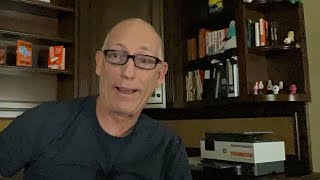
Scott Adams discusses whether people actually have internal monologues, Roland Fryer's claim that pay gaps stem from skills not racism, and his theory that US political parties map onto male versus female reproductive strategies. He also weighs in on Elon Musk's Twitter changes, the Jerry Jones integration photo, and why mainstream conservative media has largely abandoned Trump.
Chapters
To find me. Yep. We have zero. Yay. One person watching on YouTube. That's all I need. I only did one person. That's all. Oh, we got five. All right. They're fighting us. Well, those YouTube people, they're resourceful. You're so resourceful. Yeah. They're streaming back in. One of them is yay. You think if I were Yay. I would be watching my. I would be watching this today? All right. Look at you. They're almost back in, so I'm going to talk about a few things here while they're coming back in. I saw a. I've heard this story before, but I want to see how many of you fit into this category. Did you know that not everybody has a voice in their head that's themselves having a conversation with yourself? Apparently, something like half or 75% of the public doesn't have a voice in their head. So I need to ask you, how many of you hear a voice in your head all the time? I mean, I do. I continually have an actual conversation going in my head. Is. But how many people don't? Why am I only saying yes? I do. I'm seeing very few no's, so that doesn't make sense, does it? I feel like everybody would say yes to that question, but yet the research acts like it's mostly no or half of them no. Yeah, maybe we should just call bullshit on that. I'm not sure that's even true, is it? Because I don't know how you'd not have a voice in your head. Now, I do know that it is a thing, so let me be clear. I'm pretty sure it's a real thing, that some people don't hear a voice. But what I don't believe is that it's common. Yeah, I don't believe it's common. By the way, if anybody's watching on locals because the YouTube feed died, YouTube is back up. I just had to fire up a separate feed. So it's working now. There's just something wrong with it initially. So you can see that other one, and I always appreciate that you come in. All right. There are over 600 people waiting on the old link. What am I going to do about that? There's nothing I can do about that. Right. I can't kill the old link because I've got a new one that's running and it wasn't responsive when I clicked on it. All right, well, I guess I'll have to find it later. I think they'll figure out in five minutes that, that's not working. I can't give you a redo on the sip because that would be traveling back in time. But I'll give you a. I'll give you an interim sip. All right, so I'm going to call on this whole half of the people can't hear an internal voice in their head. I don't think that's the thing. Now let me tell you about a story that's in the Wall Street Journal. Not a story. An opinion piece is written by a Roland Fryer, who's a professor of economics at Harvard. So the two things you need to know about him is he's a professor of economics at Harvard. Then the second thing you need to know about him, because it's the context of the story, is he had a black grandmother. Now, I don't know if his parents were black, but he seems to be identifying with the black experience at least somewhat. And in his article he talks about studying for economics, obviously at a top level education because he was at Harvard and he was doing research to find out how much discrimination and bigotry was behind the differences in salaries. And what do you think he found out when he kept looking for the reason that there's a difference in salaries? It was completely explained by skill level. Apparently the free market did exactly what you expected and there was no indication of any racism whatsoever. The people who had the same skills had the same pay period. And his article, to his credit, his article was about how he was blinded by confirmation bias and that he couldn't even see his own numbers. Like he was looking at his own data. And he was not believing it because his grandmother had primed him that this racism is everywhere, all the time. He gave the story of his grandmother. Once there was some cashier who handed her the money without wanting to touch her. And the grandmother interpreted that as the cashier was such a racist she didn't want to have accidental contact with a black person. That was how the grandmother interpreted it. And then the grandson wasn't so sure. He was like, I think maybe she had a cold, that she didn't want to give you her germs. So basically they had two completely different worlds based on what you were primed to believe. Even with that little bit of priming, Mr. Fryer got all the way to adulthood and he still thought that the data would agree with his interpretation of the world. And it didn't. Now, here's the important part of the story. Most of you knew that, right? Is there anybody who didn't know that the free market does make salaries basically equal. I knew it. I think every one of you knew it. Here's what's interesting. Somebody who identifies as black, I believe. I don't want to over characterize him, but that seems how he presented himself. He's got a major opinion piece in the Wall Street Journal. He's got an economics degree from Harvard. I'm sorry, duh, I'm completely. I mischaracterized him. He was a professor of economics at Harvard. That's better than having an economics degree at Harvard. I don't know where he got his degree, but if he's a professor of economics at Harvard, that's even higher than being a student of economics. Right? So this is somebody who seriously knows what he's talking about. And he got, he got this opinion piece in the Wall Street Journal, you know, one of the big papers of record, and it looks like just a good opinion. Like, I don't think anybody's going to attack him. I don't think the newspaper will be forced to retract it. I feel like society has reached the point where this opinion is now acceptable. What do you think? Because it now agrees with observation. The data and the observation are now aligned for at least some of the people in the world. To me, this data exactly matches everything I've observed. To me, I've never seen, I've never observed directly any salary difference for people who have similar skills, male, male, female, black, white. I've just never seen it. So maybe the world is getting past that. I will say, however, that this doesn't help with the real source of racial inequality, which is the schools, because by the time you're an adult, all the damage is done, isn't it? You know, if you got a bad lower education, you don't have the choice of having equal skills and equal pay. It's just not an option because you didn't get the same. The same boost when you were a kid. So we still have to fix that. I'll bet Mr. Fryer would agree with that. Here's some good news. The federal FCC is going to ban new telecom and surveillance equipment made by Chinese companies. So they don't want to have Chinese surveillance cameras in American places because they're worried that the Chinese will maybe possibly use those cameras to spy on Americans or something. Is there anything missing in this story? Something maybe they overlooked a little bit? Maybe some related kind of story? Well, number one, Trump tried to do this and got some resistance. But number two, TikTok is like a gazillion cameras that are literally in citizens pockets. How do you say these other companies are the risk and not TikTok? TikTok literally has a camera in every phone, is looking at you and listening to you and making decisions and influencing you. This isn't even close. The fact that we can ban these companies I've never even heard of and it's a good idea and I'm solidly in favor of banning them. But TikToks, that's okay. It's just, it's absurd. It's absurd. But good job I would say from all the way back to the Trump administration and I'll give the Biden administration credit for finishing the job and blocking these companies. But it's time to do TikTok. People. I'm seeing. Apparently somebody asked my Musk, if Twitter gets banned on the Apple and Google app stores, would he build his own phone? He said yes. That's the sort of threat bluff that only Elon Musk can make. Try to think of one other person in the world who could tell you that if things don't work out, he'll make his own smartphone. And you would believe it, right? Jeff Bezos tried it, that didn't work out. But do you believe that Jeff Bezos could make a real competitive phone? Well, I don't know. He's very capable. But wouldn't you trust Elon Musk to make a smartphone in a way you wouldn't necessarily trust anybody else? Am I wrong? I can't think of anybody who would be more ideally suited for making a smartphone because he could pair it with neuralink and he could pair it with his cars and he could pair it with his satellites. And here's something that Elon Musk could do if he had a smartphone and satellites. So let's say his smartphone goes through his satellites. Just think about this. Someday Elon Musk could make a smartphone. That's the only one that can make a long distance call to Mars. That's like real. Now it's real if he makes the phone. Am I wrong? There's nothing technologically that would stop you from making a phone called the Mars. Except the time lag. Right? Am I right? Yeah. And so you'd say, how are you? And you'd have to wait half an hour for a response. But you could sort of make a phone call. Tomorrow's right. Like technologically that's within the realm of ordinary engineering. I'm hearing people say there's a 20, 22 minute time lag. But if you send a Voice message. Hey, hope your trip to Mars was good. You know, let me know you made it. Okay. 20 minutes later. Ring. Yeah, I made it. Okay. Is that. Oh, and you could definitely text. You could text Mars how you do. How's it, how's it feel up there? Pretty good. 20 minutes later. All right. Jerry Jones, have I ever told you that famous people have a history of being famous ever since they were kids? There are some people who seem to be around big events, like all of their life. Like famously, Bill Clinton met John F. Kennedy when Clinton was a kid. I don't feel like these are accidents. I feel like famous people keep having famous experiences just over and over again. So Jerry Jones, it turns out, not to his credit, when he was 15 years old, was one of the white men, or boys, I guess, who blocked the North Little Rock High school in Arkansas 65 years ago. Blocked it to prevent integration of the school. So basically he was an overt racist and he was participating in an overtly racist act that was not just overtly racist is one of the most famous things that's happened in the United States. Now what are the odds that one of those people was going to be Jerry Jones or would go on to be, you know, somebody who's a. It was a common name. But when he was challenged about it, I guess the photo of him there just surfaced. He hasn't mentioned it before then. He never mentioned it, which was a good move. And I was interested in the way, because he's a very high functioning, successful entrepreneur, right? So he's somebody you'd expect to be able to handle something well. And I'll just tell you how he did handle it. You can judge whether this is handled. Well, first of all, he didn't defend it. He, he said, oh, Gosh, that was 65 years ago. Now that's good framing. So the first thing he says is, gosh, that's 65 years ago. So that, that was the, that that was the best way to start the conversation. Yeah, that was what, 65 years ago? Because as soon as you hear that, you get a little bit more flexible, right? And then he goes on to say that, you know, it really reminds us that we've come a long way, something like that. And I thought, well, that was pretty good because he's admitting that that was not the way to be and that we've come a long way and he's glad that we have. But he's not running away from the fact that 65 years ago he was that kid, which on some weird Level I appreciated. I don't know why. I mean, I'm not agreeing with a 15 year old kid. I'm saying that I appreciate. He just owned it. He just owned it. Yep, I did that. Wish I hadn't done that. Now. He stopped short of saying, you know, I'm sorry, I wish I hadn't done it. But it was sort of there. Like the, the way that he dealt with it, the implication was that was some other guy. I'm not, I don't even need to talk about it. And I do, I'm very much on board with not having to explain what you did when you were 15. I couldn't do it. Could you, could you defend your 15 year old self? I couldn't do it. But I'll tell you how. The way I, the way I would have handled it, I don't know if it's better. But let's say, let's say I got accused of some heinous activity when I was 15 and then somebody says, explain it today. Here's how I would explain it. You know, I don't like that guy either. That, that 15 year old who did that thing. I hate that guy. That's it. I agree with you. Yeah, I don't like him any more than you do. But I'm not going to defend, I'm not, not going to defend somebody. I'm not, I'll defend who I am today. But if you want me to defend my 15 year old self, no, I'm on your side. I don't like that guy. And I would go further and here's the high ground, here's how you high ground that you say, I'll tell you my view and this is my actual view. So this is not, this is not like weird sophistry. This is my actual view that a life well lived is where you start very imperfect and you try to improve and that you do the best you can to improve over the arc of your life. And I would say we all started from a low place. You've got a picture of my, my starting place. The only thing I would defend is where I went. I'm not going to defend where I started and I'm not going to ask you to defend where you started either. I will ask you to defend. How you doing? How you doing? Are you improving? Did you learn anything? Are you the same person you were when you were 15? I hope not. But I'm not going to hate you for who you were when you were 15. I'm not going to apologize for it. I'm not going to explain it. I'm just going to say that was a different person, same as you were a different person when you were 15. We don't need to explain that person. We are supposed to be better than that person now. Am I? Well, I'll let you decide, but that's the only thing I'll defend is who I am now. And that's the only. It's the only standard I'll hold you to see. This helps, too. Just to make sure that you're not a hypocrite. That's the standard I'd hold you to. I'm not going to blame you for anything you did when you were 15, so. But it's interesting, and I do think this. I think the Jerry Jones story is. Is more positive than negative because it shows the evolution of thought. It shows the evolution of America. You see it in one person. And I have no reason to believe that he thinks the same as he did back then. All right, so I've said long ago that the Democrats were really the party of women, but I'm seeing more people coming around to this point of view because it's so obvious at this point. And I saw a tweet by Jason Andrews. He says, the Democrat Party is America's ex wife. The Democrat Party is America's ex wife. Have you ever. Have you ever heard a more perfect summary? Now, here's what I believe. Have I ever told you that everything is about procreation? Of course I have. Everything you do, the clothes you choose to put on in the morning, how much you eat, whether you exercise, the job you took, where you live, all of your decisions are based on your. Your procreation instinct, right? Everything from sex to success to just everything. You know, it's all about procreation. Now, you don't think of it that way because you're going through your life saying, oh, I'm just rearranging my garage. But somehow it all ties back to that. It makes sense that if there were ever two parties. See if you can follow me on this. I may be going too far. Here's my overall thought. If ever there's a situation with two parties, the most predictable thing that would happen is that one of them would become the woman party and one would become the man party. And that whenever you have a civilization with two main parties, that's the most likely thing that will happen. Because our most basic instinct is procreation. And the male and female strategies for procreation are different. So that should cause that now that's exactly what we see. In my opinion, the men who are part of the Democrat Party, some of it is just inertia. You know, your parents were Democrats, you're a Democrat. But I think a lot of it is men with different reproduction strategies. The men in the Democrat party believe their best chance of reproduction is to make women happy, Which suggests that they'll eventually all become Republicans. I've got a theory that there's a certain amount of marriage that turns anybody into a Republican. Just a theory. I don't know how many years of marriage it takes to turn you into a Republican, but it happens probably within five. So what is. What is the reproduction strategy of Republican men? What is the reproduction strategy of Republican men versus Democrat men? I do believe the Democrat male strategy is to make women happy and that they're. And then they'll have a name. And the Republican strategy is what? Act like men. Their strategy is to act like men and then see if that works out for them. It turns out it does. Because when they act like men, they attract a certain kind of woman who wants somebody who acts like a man, doesn't want somebody who agrees with them all the time. That's not exactly reproduction material there. So. So in my opinion, everything is explained by that. Now, as was also pointed out, tissues unions are like 3/4 female. The people who are doing DEI and people working human resources and you know, basically most of the groups, they're active and really make a difference in the country. They're female run. And so it really has become a male party versus a female party. Abortion being the clearest distinction. If you didn't know what the issue was, let's say you're an alien and somebody said, well, you don't even know what abortion is. But we'll just tell you this. There's one group that says we want it, and there's one group that says we don't want. That is the group that says they want it. Most likely the ones who are going to have it. Yes, it makes sense that women would want options. If I were a man. If I were a man, allegedly I'm male. If I were a man who could have a baby, I would want. I would want abortion to be legal. Not because I wanted to have one, but because I want more rights, not fewer. Every time you said, scott, would you like more rights or fewer rights? Well, I don't even know what the subject is, but how about more. How about more rights? I'll always take more rights. Now, if you're saying to me, but Scott, you would be killing children. I'd say no, no, I didn't say I would get an abortion. I didn't say that I would encourage you to get one. I would say that every time you ask me do you want to have more options or fewer options. I generally default to more options. And I think people in general do. People in general want more options, not fewer. So it makes sense to me that the woman party, the Democrats, would move toward making, giving themselves more options. And it makes sense that the, the male dominated party, Republicans would be less likely to do that because to them it just looks like murder. Right. So you don't want to give somebody the option of murder from their point of view, but you could. But you can sort of predict everything that's going to happen based on the mom and dad male and female procreation model. Now how much, how seriously should you take this? Here's how seriously. Remember I told you there are only two things you can know. The first thing you can know is that you exist because you're noodling with the question of who you are. So there's something that exists. You just don't know what that is. The second thing that you can know is that it's your impression there's some things are predictable. That's it. You know, science in particular is more predictable than most people. But if that's all you know and I, and I give you the these various models of predicting. Does follow the money predict? Well, it does, doesn't it? I don't know if it should, but it seems to. Now here's the second thing. Does follow procreation as the dominant way of understanding things that happen. Does that predict? I think it does, but I don't know if it predicts as well as follow the money. If you ever got into a situation where it was one or the other, I don't know. Does abortion follow the money? Sort of does. Because if you say to people you're going to have to have a baby that you will financially support for 18 years, that's a pretty big expense. You would expect that people would say, I would like the option of not having that expense. I would like the option of not having that expense. So even abortion follows the money. It's a very good predictive way. Now, I don't know if there's a reason for it or is it coincidence? It seems, doesn't seem like a coincidence. I mean you could come up with an obvious reason why money affects things. So, but follow this. Let's See if we can make a prediction. If the Democrat Party is the woman first party, would they nominate somebody like Joe Biden to lead them? Yes, they would, because he's not a strong male figure at the moment. Know when he was younger he was, but at the moment he's not a powerful male. And they don't really like powerful male figures. They want somebody who just looks like, you know, grandpa will watch the kids when you have a date night. So that's what Biden is. Biden is basically your grandparent parent who watches the kids while you have a date night. He's very safe. And where. Whereas Trump is scary to women. Let's see what else you could predict based on that model. Is there any other thing that you could predict? What about climate change? Could you predict that Democrats would be more concerned about it, Maybe indirectly? No. You're an idiot. Orange out. Orange out. You're out. So every time somebody imagines they know what's in my mind, you get banned. Stop imagining. You can just ask. It's not like I don't tell you my opinion. I'm the last person who you should have to try to read my mind. I literally tell you every fucking thing I think. You don't have to guess. I'll give you my reasons. And to be clear, I'm not supporting Trump for reelection. Just so you hear it as clearly as possible. Could I change my mind? Do you think I could change my mind? Yeah, absolutely. Sure I could. I'm just saying at the moment, it's not my choice at the moment, but, you know, I have to make real world decisions as well. All right, is there any prediction you would make about. What prediction would you make based on only the gender procreation model? Is there anything you would predict based on that? Socialism? I mean, you would predict that the Democrats would want more socialism, Gun control? Yeah. Yep. There was a story in the news of some woman who was getting carjacked and she just blew the head off of one of the carjackers. And the second one returned fire and she got wounded but survived. And I thought, you know, would you see women taking men's heads off? We're in a whole different world, but good for her. So Twitter amnesty is coming. So I guess Musk has said he did a poll and 72% said they wanted full amnesty. You heard my opinion that if you were ever going to do full amnesty, this would be the one best time to do it. Because then you don't say it's a precedent, you're just saying It's a once only new ownership. And you know, if you get banned again, don't expect to come back. It's a perfect time to do it. Now, will the, will the experiment work? Do you think Twitter will become a hellhole of racists and KKK and everything else? I'm gonna say a little bit. A little bit. You know, some of the bad people will come back and they'll, they'll test the system. The first thing some of the bad people are gonna do is what, they're gonna try to get banned again. So they're gonna say some shit just to get banned again. Just. And they're gonna push the, the envelope, right? So some will just get banned again. And I would be happy if all Twitter did was stick to its own guidelines for who to ban next time, because those same people will disappear if they violate Twitter terms of service. So I'm not really too afraid of it. Is anybody worried about it? I think there'll be a little, you know, a little churn and turmoil there for a little bit, but no big deal. Now if you're saying to yourself, this is a good decision or a bad decision, which one is right? It's a good decision to bring them back or it's a bad decision? Who's right? Go. In the, in the comments. Who's right? Go. How could you fool for? How did you fall for my trick? Okay, if I told you that's a trick question, it's a trick question. Now answer it again. It's a trick question. Oh, come on, come on, come on, come on, come on. Oh, I totally primed you so that you can't see it. So I created cognitive blindness in you. Here's the cognitive blindness. When I tell you the real answer, you're going to go, oh, shit, how did I miss that? This is going to piss you off. Now the real answer is he's ab testing rapidly. There's no right or it's not. It's not good or bad. It's something he's going to try. And if it doesn't work, he can immediately reverse it. If you're talking about whether it's a good idea or a bad idea, you're not even on the right page. You're not even in the right conversation. The question is, is testing it smart or not smart? And for that there's not really much debate. Of course, testing it is smart, of course. Now if you test it and it doesn't work, what would be the smart thing to do then? Reverse it. Reverse it or Put in some rules that gradually reverse it or something. So if you don't understand that what he's doing is moving fast, breaking things and then adjusting, then you're missing the show, right? The show is not. The show is not Elon Musk doing correct things. If you're looking for. Is that correct? Is that incorrect? You're missing the whole show. The whole show is that he doesn't know either. None of us know. Nobody knows the right answer. He's finding out. He's just putting it out there. Completely transparent. Here it is. Did that work? Oh, that didn't work. I guess I'll do something else. Scott waited for two years to speak up against forced masking and lockdowns. Jaina, you stupid cunt. That's not true. Completely false. Never been in favor of mandates. Boom. Stupid cunt. All right. By the way, that's something I couldn't say with full immunity before. Do you know why I can call my trolls stupid cunts and I don't get knocked off of social media. Do you know why? Not because of Elon. No, it's because I do it with respect. The reason I could call women stupid cunts is the same reason I could call men fucking dicks. Because I respect their full humanity. Like, if you come at me, I'm not going to take it easy on you. I mean, if it were a physical fight, I'd take it easy on you, but I'm not going to take it easy on you because you're a woman. You don't get that. Not on Twitter. On Twitter, it's just fuck you. That's the whole conversation. All right, so what was I talking about? Oh, the Twitter amnesty. So, yeah, it's just a good idea to try it. We'll. We'll find out later if it's a good idea to keep them there, but it's definitely a good idea to try it. And let's talk about that Mar a Lago situation and. And Nick Fuentes and Ye and Milo. All right, so in my opinion. Well, first of all, Trump responded. He said he basically had a good conversation with Ye that went well, according to Trump. And that. And just at the end of his statement, he goes, and I didn't know who Nick Fuentes was. Was. Do you believe that? Do you believe that the President didn't know who Nick Fuentes was? I wouldn't have believed it except for Axios's reporting. So Axios, if you don't know, they're not in the bag for the left or the right. Which is very unique. People always ask, hey, why can't you have a news source that's neither bigoted left or bigoted right? We have one. Axios actually does. Genuinely, I think, follows where the news goes. And Axios reports that some verbatims from it. And we do know from Axios that Trump was asking Nick Fuentes who he was. So if we know that Trump asked him who he was and even asked him if he was represented the extreme part of his party, you could see that Trump was catching on who he had at the table. Right? If. If Axios has the right reporting and they do. Before you make fun of Axios, go, go do your own research on that. I think you'll find out that they're. They play as straight. If I'm wrong, let me know. But I think they try to play as straight anyway. If it's true that Trump was asking who he was and asked him directly if he represented the ext part of the party, you can see that Trump was working through it and that he didn't know exactly who he was. So I believe that. I believe he didn't know. Now, do you think that Trump handled it well from your perspective by saying he didn't know who he was, so therefore it's not exactly a big crime or a big foul. It was just dinner. From the perspective of Trump's base, did he explain it sufficiently? I think so. From the perspective of a voter, that's kind of all you needed to know, wasn't it? He wasn't invited. Trump trusted ye. Trump trusted a black man, which unfortunately is part of the story. Right. So the whole story is that Trump trusted a black guy and that didn't work out for him. Am I right? That's one way to. Is that not an accurate interpretation? Trump's problem was he trusted a black guy and he got screwed. Am I wrong? Now, I don't think it's fair to call Kanye a black guy because he sort of transcended race in a lot of ways. But you could easily spin it that way. To me, it looks like a black guy screwed Trump. And I like ye, by the way, but it looks like he did that intentionally. Can't tell. I can't read his mind, but it looks intentional. I mean, from the outside, how does that look? So it looks like a black guy took Trump out, or tried to, and Trump's just brushing it off because now do you think people will just forget this story in two weeks? So it doesn't really matter. The base will. Yeah, the base will forget it in a day. But here's what you're forgetting. You're missing the biggest part of the story. The biggest part of the story is it doesn't matter what Trump's base thinks. It always did, but it doesn't now. Do you know why? Do you know why it doesn't matter what the base thinks of Trump? Because the media already left him. So Breitbart went at him hard. I don't know if you noticed, but Breitbart didn't pull any punches. Just Trump had dinner with a Holocaust denier and a famous anti Semite. According to Breitbart, Fox News is shutting Trump out. So Fox News will not support him, which means other Rupert Murdoch assets will not support him. And now Breitbart is gone. Breitbart isn't coming back from that. Like, they're not going to call them anti Semite and then change their minds. I don't see that happening. Do you believe Trump could win without Fox News and without Breitbart? Yes or no? Trump could win without Breitbart and without Fox News. Mostly yeses. Yet. There is a path. There is a path. And the path would look like podcasts only. So if Trump just said he won't do any interviews with the major media and said, I'll just do. I'll do all the podcasts. Because any. If you say to yourself, but wait, nobody's going to watch the podcast because they're like, low volume. No, they're not. The podcasts are much bigger than the network news. And anything that Trump does that's an interesting interview will have greater, greater traffic than ABC News would. You don't think I could get more traffic for a Trump interview? Like, if I personally interviewed him on a podcast, you don't think I would get more clicks than ABC News would get on a story about Trump? I would. Yeah, I would get more. I would get more attention than ABC News just telling a story about him. So he does have a path. And there would be plenty of podcasters who would, who would want to, you know, to benefit from the traffic. So they do it. He could start his own. He could start his own network. He could start his own network. You know, just a channel on YouTube or rumble, I guess. And he could just interview other people. Imagine Trump running for office. Just imagine this. Imagine Trump running for office, but he doesn't do any interviews. He only interviews other people. And that's his campaign. Think about it. He doesn't do interviews. He only interviews experts and Democrats. Who disagree with him, and that's it. And maybe some rhinos who disagree with him. Can you imagine how much you would like to watch Trump interview his critics? Seriously, could you avoid watching that? Oh, my God. Oh, my God. Like, it would be so watchable. It would just blow everything else out of the water. And as soon as you heard. And by the way, here's a little trick, a little trick for you for publicity. This is the most important trick for getting publicity. Nobody cares that you did something well. You can't get publicity because you did something really well. I did a good job, right? Unless it's, like, extraordinary. Here's how you get publicity. You do something that other people have been doing forever, but you do it a different way. That looks like it could work. That's what Trump could do. He could say, well, the first time I ran for office, I just did every media interview, and it was different than the way other people did it. I just sucked all the energy out of the room. Nobody ever did that before. Now he could say, all right, I'm going to do it a brand new way again. And the brand new way is I'm going to suck all the energy out of the major platforms and just starve them and just make my show the only thing that's interesting on tv. Because it would be. Nothing else would look interesting if he did that. He would immediately make everything else boring. He has that power now. What if he doesn't do that? Suppose he decides to be the Trump of the last several years and he says, I'm just going to go out there and do my thing and I'll do my rallies, I'll post things on Truth Social, I'll accept interviews when they're offered, and I'll just do it the straight way. Can he win? I don't think so, because you don't realize the extent to which opinions are assigned to the public. It's easy for you to say, you know, I'm never going to change my mind because the media changed my mind. I'm not going to change my mind because somebody else had a different opinion. But that's not how it works. Your minds are changed every day by the media. If the most influential people on the right decide not to back Trump, they have enough influence to, you know, take 25% of his support away, which makes him not viable. So it doesn't matter what his base thinks. It matters what the people who influence the base thinks. And I think they've abandoned him. I think they've abandoned him. So I Mean, I have, you know, like I said, he could win me back. I could imagine that. But at the moment, he's not offering me something I can support. So I don't think that without the most influential voices, and it's not always, not always the people with the biggest audience. Right. There are some people who are just influential. Cernovich would be, again, my universal analogy. Like every example, there's like a Cernovich angle to it. I don't know why. There's like everything has a Musk angle or a Cernovich angle. But Cernovich is, you know, not pro Trump at the moment. And how much impact does he have? A lot. A lot. You might not notice it, you might not know how he does it. You might not, you know, track his influence through other people, but a lot. Now by himself, does that make a difference? Maybe not. But there are enough other people who are, let's say, good influencers who are pulling out. Yeah. Cernovich referred to himself as a humble mom blogger, which is one of the funniest things I've seen. He's a mom blogger now. You know, he's a stay at home dad, I guess I'm not sure if that's the right term. But he's with his kids during the day most of the time. And I've always loved. How much do you love the fact that he had three daughters? That's just the simulation talking to him, isn't it? What are the odds of having three daughters? 12%. Am I doing the math right? I thought he had three. Wait, he has two daughters and a son? Oh, is the newest one a son? Oh, how did I not even know that? Okay, well, there you go. Two daughters is a son. Kind of perfect. Oh, good. You know, I love, I love following. Even though he's a mom blogger, as he calls himself his mom. Blogging is actually good blogging or good posting. I follow him on Instagram and Twitter. I like the personal stuff as much as I like his political stuff. All right, Somebody says he's a good writer. That's true. He's a good, persuasive writer. All right, what else is going on here? Let's see how many of you have seen the Netflix series Ancient Apocalypse? Netflix series Ancient Apocalypse. I recommend it. So here's my strong recommendation for super entertaining series. That's the first. This is the first series I've binge watched. I'm actually carried my iPad with me from room to room because I couldn't stop watching it. Now here, the basic idea of the show is that there are a number of, let's see, ancient ruins that suggest that everybody learned from some kind of smart prior civilization that was destroyed after the Ice age. So let me say it better. The Graham Hancock, I guess is the journalist who is delving into, let's say, the archaeological domain. And he's getting a lot of pushback because he's not an archaeologist. But he put on a good show in terms of the production quality of the show. It's really, really good. He takes you into all these ruins that are not, are way better than ruins because you're learning stuff that wasn't obvious to you. But the idea is that there must have been something like an Atlantis and that there were, let's say, building techniques and how to be farmers. That was known to some advanced civilization. And then the ice age and some major apocalypse happened and it wiped out most of the smart people. But some of them must have survived and were like missionaries that went to other civilizations and taught them the secrets of building monoliths and moving big rocks and how to, how to do farming instead of huntering and gathering. Now those of you who watched it, did you find his thesis persuasive? Just the people who watched it, did you find his and were you persuaded? Right. See him? A wall of yeses. See mostly yeses, but some nos, some no's. Okay, here's what you need to know about documentaries. Number one, documentary is the lowest level of credibility of all media. Did you know that if you have to pick one thing to not believe it should be a documentary. Documentaries are not designed to give you both sides. They are designed to mislead you into thinking that the thesis is the only thing that matters. Do you think they show the other side? Half of the content of this series was the journalist talking about how he keeps being criticized by, you know, traditional archaeologists and that they're closed minded and they refuse to accept other alternatives. You know what you didn't see? What you didn't see is his critics in their own words telling you what they disagree with. Did you notice? Did you notice there was only one side of the story? If you were convinced it's true because you watched that documentary, you're missing one of the most important things to know about how the world works. The documentary is the lowest of all forms of credibility. There's nothing lower than that. It's the number one least reliable information that is produced by humanity. Now you might say to yourself, scott, Scott, Scott, fake news is worse than that. No, it isn't. It's not even close. Fake news has a competing news business. So if you want, you can look at the fake news and you can see the other argument. You can make your own decision. And the other argument isn't hidden that much even within our bubbles. You know, you can just turn on Fox News or CNN and see the other side. Right. But if you watch a documentary, are you going to go do your own research? Probably not. Probably not. Now, if you don't believe me that a documentary is the least credible type of content, how many of the 2000 mules have you seen lately? 2000 mules? Not one of them came forward. Not one of them caught on film. It was a very, very convincing documentary, wasn't it? It's an example, not an analogy. Examples are good, analogies are bad. So if I give you several examples of where a documentary was convincing but doesn't seem to have been proven. All right, now let's say that you, you're not convinced by that one. You think that that 2,000 mules, maybe it's still to come out and it might be, could be. Now, I'm not saying that all documentaries are incorrect. I'm not saying that surely some documentaries are totally correct. I'm saying that you can't tell the difference. So if you can't tell the difference, it's the lowest level of credibility at the highest level of persuasion because they've got you for like an hour. If I can persuade you on anything and make you pay attention for an hour, I will convince you. Getting you to pay attention for an hour is the hard part. If I can get that, then the convincing is the easy part. So I would say there were many signals of low credibility in the presentation. Many, many signals of low credibility. And mostly the dog not barking situation. You know, the thing that you expect to hear, you're like, okay, you brushed over that pretty quickly, you know, that sort of thing. So I found it completely non credible. And I agree with him. That's not inconsistent. I believe his argument was just filled with things that I'm like, I don't know about that. It's a little sketchy. But his main point was this, that there may have been higher technology back during the Ice Age and that we lost the trail. Like, we don't understand why people were building. There's at least one site in his films, in the series, I guess there's at least one site where everybody seems to agree that they had the building techniques somewhere closer to the ice age, like 9,000 years ago or something. Or 12,000 years ago, and that we don't know why they knew it that long ago, that was a surprise to archaeologists. Now, if somebody knew that stuff 12,000 years ago and then there was a big disruption, which also people agree with. So the two things that he doesn't have pushback on, I think, is that there was that knowledge that somebody had. At least one civilization had the knowledge 12,000 years ago, and then there was this long period, and then suddenly, suddenly farming just like, sprung up in one little era. And all these groups seem to have an origin myth about some kind of smart strangers who knew how to do things that came from the sea and then taught them things and then went away like missionaries. Yeah. And there does seem to be some evidence that there was a massive flood. So it could be that the stories of Noah, you know, maybe are based on ancient stories that actually had something to them. So here's what I believe. I believe it's very likely there were more advanced civilizations and that some members of them shared their knowledge. And so it did make some hunter gatherers kind of quickly evolve. I think that's likely because I don't think we know much about the past. I think we know about like, 5% of the past. That's about it. So could lots, lots be hiding in the 95%? Yeah, sure. But what are the odds that, you know, what are the odds that the exact era that, you know, your humans were in was the good one? Probably it was good and then it got bad. Maybe it got good again in terms of civilization, that wouldn't be surprising at all. So I think his basic idea that there was something that may or may not have been called Atlantis, that may or may not have been an advanced civilization is proven because they found it. They didn't find Atlantis, but they found a place with building construction that was thousands of years ahead of what happened later. So I think the case is made. I just don't think. I think he added a lot more speculation than maybe I would have. Yeah. So I think his basic theme sounds pretty solid, but a lot of the specific details he forced into it. Now, what did the media say about it? Can you guess? Just a wild guess without looking. Don't do any Googling. What do you think the critics said about it, other than whether it's true or false, but beyond whether it's true or false, what do you think the critics said about it? Super racist. Do you know why? Because those smart strangers from that advanced civilization were a little bit too white. So apparently the various myths about these smart strangers. They were not brown. The smart strangers were not. Were not super brown. Apparently nobody has a story where, like, a black guy showed up and taught them how to farm and build stuff and then left. But several of them have, like, a mysterious. You know, often they're giants, they're tall and stuff, but they. They feel a little. Not brown enough for what would make sense for the time, so. So apparently it's all just a racist. Yeah, they're all bearded men who weren't brown enough. What do you think of this story you're seeing all over the Internet, but not in the major news of these weird rubber, like, clots in people who got the vaccination and then died from some reason or other? Have you seen those? You see the doctors, like, they're taking the blood clots out of the veins and like, it's clearly something you've never seen before. It's almost like. Like an alien was in the body. Have you seen. You've seen that, right? How many of you believe that this is a real thing and that there are massive discoveries of rubber, like, blockages in people's bodies? I saw a doctor on Twitter debunk this in one sentence, and then I never thought about it again. Do you want to hear the one sentence? Here's the one sentence debunked. I don't know if it's true, by the way. I don't know if the debunk is true, but here's the one sentence from an actual doctor. Every doctor knows that dead people's blood looks like that. That's exactly what a dead person's blood would look like. It's all like this rubbery, cloudy stuff. So basically it's just every dead person. Yeah, just the way it looks right now. I don't know if that's true, but that would be the only reason it's not in the major news. Right. You only see it on Twitter and then, you know, smaller publications. Yeah. The reason it's not in the major news is it would only take one doctor to say, well, that's the way it's supposed to look. It always looks like that. Yeah. I don't think. I don't think the videos where the doctors taking those are not. I don't think those are real. I don't know why they exist, but I don't think it's based on anything real. So even kim.com, famous Internet guy, he believes that this should be looked into because he saw a documentary called Died Suddenly. How many of you watched the documentary called Died Suddenly. I guess that's where this claim is made. And I'll bet if you watched the documentary you were completely convinced it was true. Right? Because you saw it in a documentary. I'll bet if I watched the documentary it would look completely convincing. So I'm not going to watch the documentary because do you know what you've learned if you watch a documentary that's completely persuasive? Nothing. Nothing? Yeah. If you watch a documentary that has lots of facts and it's very persuasive, you've learned nothing. Nothing. Documentaries are not to teach you the truth. They're giving you a narrative and that's what they do. So if you accepted the narrative that was presented in a documentary, you're not doing a good job of being a, a good consumer of information. If you haven't seen the whatever is the debunk, how hard would it be to debunk that? Let's do a live experiment. So I haven't done this yet, but if you. Here's a good thing to do. If there's anything in the news that looks sketchy, type that thing into a Google search followed by the word debunk and you'll find it. I'm going to do that. So this is called Died suddenly. Died suddenly. I'm going to say blood clots. Blood clots. What do you think I'm going to find? And then debunked. Do you think that there will be a real good debunk from a doctor saying that this is bullshit? What do you think? Make your prediction because I haven't done this. I've never done this. So I'm going to find out the same time you do. Forbes debunks it. Let's see. BBC. All right. Did embalmers find vaccine induced blood clots? So here's a fact check. Now I'm not saying that the person fact checking this is necessarily believable either. So goes. Let me just skim it. That these blood clots exist. They say it's fake news. And by number fact, number one, embalmers do not conduct autopsies. Embalmers do not know vaccination status. Well, I don't know, they might have asked it. Most of his data is not linked to vaccinations. Blood clots are common in refrigerated bodies. There it is. There it is. Blood clots are common in refrigerated bodies. That's the whole story right now. If you didn't know that, I could google this in one minute and find the debunk? Yeah, the rubbery ones. Right. If you didn't know that the debunk would pop up that easily, then maybe you learned not to trust documentaries. Right? Now, I want to be really clear what I'm telling you. I'm not telling you that vaccinations are safe. That's not what I'm saying. How would I know? The only thing I know for sure is I don't trust any information about vaccinations now. Trust? I don't. Not the plo, not the pro, not the con. I just don't trust any of it. I don't know. So I'm not even sure I have a. Like, I just don't have a dog in that race at the moment. Either way it goes, if I could find out for sure, I would accept it. I wouldn't have cognitive dissonance, because if you told me the vaccinations were hurting people, I'd say, well, not totally surprising. So there's no trigger for cognitive distance. If you told me that they actually work great, I would say, excellent. Not totally surprising. So neither of those would trigger me. I'm open to both possibilities. So when I tell you that the debunk exists, what I'm talking about is the credibility of documentaries. The only point I want to make here is stop believing documentaries. Can I ask you to do that? I'm going to ask you directly. I'll just ask you. Please stop trusting documentaries now. They might raise really important issues and they might be totally right. I'm not saying every documentary is wrong. I'm saying that you can't trust them because they were persuasive. If you say, I believe it's true because I saw a really persuasive documentary, you're talking like a crazy person. Stop doing that. I watched a documentary. Means you've been misled. Get that right. I watched a documentary. Almost certainly 95% of the time means you've been misled by a professional misleader. It's what they do. All right. And Rob Reiner, I love Rob Reiner because he gets every story wrong. He's like, I don't know, he's some kind of a symbol for the left that's perfect every time. Like, he captures everything about the left. So he tweeted. He tweeted, Nick Fuentes is an unabashed anti Semitic Holocaust denier. Donald Trump invited him over for dinner. Enough said. He didn't invite him to dinner. He gets everything wrong. If he had invited him to dinner, it would be a Different story. Like, very different. If he had invited him, then I'd say, well, that really does tell you everything you need to know. But of course he didn't invite him. It wasn't even the fact. But as I tweeted, it doesn't really matter if Trump invited him or not, because it's like the Charlottesville Fine People hoax now has a life of its own. And if you think that Trump can continually flirt with, you know, being on the edge of being anti Semitic without actually being anti Semitic, because I don't believe he is. If you think. If you think that he'll have enough support to win the presidency in that strategy, I don't see it. I can't see it happening, but could be surprised. You never know if Trump came up with a good Fentanyl plan or even if he did, all bets are off. All bets are off. So we'll probably have 300 situations that tell us, my God, this changes everything before 2024. And then we'll find out it didn't change everything because there'll be another one tomorrow that changes everything. All right, According to Tim Cast, Nick came with Milo and Milo is the presumed. Yeah. Does that change anything? I mean, if. If Nick came with Milo, you don't think he was a. That Nick was brought along to destroy Trump? Does anybody think that? Now, let's say it was Milo who did the invitation and made it happen and brought Nick Fuentes. You don't think that Milo is smart enough to know that that would destroy Trump? Of course he is. He's not a beginner. Milo didn't start politics this week. He kind of knows how this stuff works. He's very experienced. Yeah, of course he did. So if you imagine that that was accidental, like, do you think that Milo or ye. Who knows what ye was thinking? I mean, he might not even known who. Who Nick Fuentes was, but we don't know. But don't you think Milo knew exactly what he was doing? Ye may or may not have known who Nick Fuentes was. Probably did, but I don't know. But certainly Milo knew, right? Yeah. So, I mean, some of this is more about, you know, maybe the individuals than it is about a big story. All right, that, ladies and gentlemen, concludes the planned part of my broadcast. I'm going to go private over on Locals. We're going to close it down just for the subscribers for a few minutes, but I'm going to say goodbye to YouTube for now, and I'll talk to you tomorrow.
More from Scott

The Scott Adams School - 10/14/26 The Chicks and Joel Pollack Stops By. Scott & Persuasion


The Scott Adams School - 10/09/26 AKIRA.. TAKE TWO! Fri Yay! With the Home Team



The Scott Adams School - 10/06/26 Erica & Marcela Talk France. Venezuela. Scott Adams. and More


The Scott Adams School - 10/02/26 Fri-Yay!! The Home Team closes out another amazing week.


The Scott Adams School - 09/30/26 WHITEBOARD! AI Luncheon. FRAUD. MIKE ROWE, Happiness!