Episode 2037 Scott Adams: I Reveal My End Game, Andrew Tate's Good Parts, DT's Best Persuasion Ever
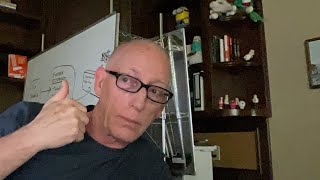
Scott Adams delivers a single-speaker livestream covering multiple topics: critiques of media and niche "woke" stories; a social-media reciprocity anecdote; praise of Trump’s recent short video advocating building new cities on federal land (including a visually persuasive mention of flying cars) as a masterclass in political persuasion; reflections on his own cancellation (Dilbert syndication) and resulting opportunities; a qualified defense of Andrew Tate’s success-advice as beneficial to young men; and Adams’ core "end game" argument that teaching practical success techniques (talent stacks, systems over goals, school choice) can help individuals "slice through" systemic barriers. He repeatedly emphasizes reframes (focus on the future, "in chaos there is opportunity") and positions his priority as saving kids via practical skill-building rather than media-driven racial politics.
Chapters
Highlight of civilization. And today, I gotta say, I'm jealous about all of you. Yeah? Yeah. We're already private. I'm jealous that you get to watch this live stream and I don't. I mean, I'm gonna have a good time just presenting, but, wow, today's gonna be a good one. I'm gonna be moving the Overton window. I'm gonna tell you that Trump just sprung the best political persuasion I've ever seen. Maybe since Kennedy. Maybe since Kennedy. Unbelievably good. I don't know if it'll make a difference, but, wow, did he nail it. I'll talk about that later. And then, just for fun, I'm going to. Well, actually, for a good purpose. I said just for fun, but really, it's for a good purpose. I'm going to defend Andrew Tate, but only his good parts, you know, not the part about being in jail and whatever he did. I don't know. He's innocent until proven guilty. But we're going to talk about him as a productive variable. And of course, I'll give you an update on me, which I think you'll enjoy because it's kind of funny. But I'm going to key up a video that I want to play here in a minute, make sure that I'm ready for that. Yeah. While everybody's streaming in here. All right, where are we? There we go. All right, first of all, I saw Mike Cernovich tweet. A lot of you had asked me why I wasn't covering that Katie Hobbs. I'm going to call it conspiracy theory, rumor kind of thing this year is getting money from the Sinaloa cartel. And I hope you remember that My take was. Oh, I forgot something, didn't I? Did I forget something? Oh, my God. Oh, my God. I think what we need to take this experience up to a new level is we need a cup or a mug or a glass of tank or chalice to sign a canteen, jug of flask, a vessel of any kind. Fill it with your favorite liquid. I like coffee. And join me now for the unparalleled pleasure. The dopamine hit of the day. The thing that makes everything better. Everything better. It's called the simultaneous sip. And it happens. Now go. Was that better? Everybody good? Don't ever let me do that again. Don't ever let me do that again. All right, Mike Cernovich, talking about the Katie Hobbs story, tweeted that he got yelled at for not, quote, covering the clearly not true Katie Hobbs Sonola cartel thing. My goodness. It has no signs of credibility. A lot of folks don't care if it wasn't true. They'll move right along to the next thing and then be upset when people don't take them seriously. So my initial take on that story was why are there no, like, top level media sites covering it? You know, not on the right, not on the left. So to me, I didn't need to know anything else. If you can't get the right or the left to cover a story, it's probably not true, or at least it doesn't have, you know, enough evidence to call it true. So I'm going to agree with Mike Cernovich, as I almost always do, because he's smarter than most of us. It's just that simple. He's just smarter than most people. So it's good to agree with him. Yeah, I don't. I don't see any evidence to that. Does anybody think that's real? How many of you think the Katie Hobbs thing is real? Okay, yeah, I think we get some yeses and no's, but, you know, anything's possible. I suppose anything's possible, but it's a little too on the nose and there's a reason the major media isn't covering it. So keep that in mind. Just because we need more outrage in the world, does anybody want some more outrage? Just for the dopamine, I'm going to give you a little outrage, see if it makes you feel better. Apparently, equestrian, in other words, horse people. The people like horses. If you're black and you have certain kind of hair, is it dreadlocks? Yeah. If you have dreadlocks, it's hard to find a helmet for your equestrian hobby or career. I guess it could be a career. So the New York Times did a story, and as you know, there are many important things in the world, a lot of important things. And the New York Times, which covers the most important things, decided that one of them was that black equestrians can't find helmets and they would like to be safe when they ride horses. Okay? So as Christopher Ruffo pointed out on Twitter, I think this is an interesting take. He said it's a sign of immense progress that in search for racism, publications like the New York Times have to invent increasingly niche and implausible incidents of supposed bigotry, such as, quote, woman with large dreadlocks has trouble finding equestrian helmet. Now, correct me if I'm wrong, is wokeness jumping every shark that you could jump? We have reached peak wokeness, have we not? This feels like peak wokeness. And what I mean by that is that the stories of Wokeness now are more funny than disturbing. Right? I mean, I'm not going to name names or specific stories, but everything from my situation, which even I think is funny, by the way. Have I ever told you that the fact that I got canceled by the people who created the fake news that canceled me, I think that's funny. And when you look at what I was actually canceled for, like, if you take the time to look at the context, it's even funnier. I mean, like, it's one of the funniest things that's ever happened to me. And when people ask me, you know, how are you feeling, Scott? Are you doing okay? I'm always thinking, I don't think I'm supposed to be laughing, but this is genuinely funny. And this story about the black equestrian helmets, I have complete empathy for black equestrians who can't get a helmet like it's a real thing. Wouldn't you agree? That's a real thing? There are black equestrians who are having trouble getting helmets, and I wish they could get good helmets. I don't think it's national news. It's probably not national news, but I'm completely on board with them protecting themselves and having fun with horses too, so. All right. Got a text or a tweet, I guess. Tweet from user whose name is Love Wright, whose actual Twitter handle is blacktallbig. Now, I'm guessing from the context and the handle that whoever tweeted this is blue, is black, tall and big, based on the name. And the text goes like this. And the context is my little situation. And the text is, I'm black, and there's a lot of white people I love hate being lumped into the hate conversation that quote, black, black, black people who do this, unquote, wish there was more all around love shown for everyone. If everyone, if anyone needs love here today, I'm down to share it. I love you already. Who's with me? So I immediately retweeted and said, I'm down. I can use some love. Like, when do I say no to that? Yeah, I like some love. So I don't know if it's possible I might have been excluded from the category, but I don't think so. I. I don't think so. I think actually I'm included in the territory now. What effect does that have on me? How did that affect me? How will it change my actions? And what exactly would be the word that describes what happened Here. What's the word that activates me from this? Positive clarity? Almost. Almost positive. There it is. Reciprocity. Reciprocity. Reciprocity, as I will teach you over and over, is the operating system for success. Watch how easily this user put me on his or her team. I can't really tell. And look how easily I was happy to retweet and send some energy in this direction. I followed this user immediately. So, you know, got to follow, got a lot of energy from my users. A lot of love back. Total love. And so that, ladies and gentlemen, is forward thinking strategy. All right, there is a person who solved racism just on his or her own. Imagine somebody in your world says, you know, it needs to be more love. Like, if you need some more love, I'll give it to you. Come on over here. How much do you want to work with that person? A lot. How much do you want that person in your life? A lot. A lot. How much do you want to hang out with them? A lot. Right. It's like. It's like somebody just randomly solved racism. Yeah, I realize that's hyperbole. Right. But this is like a big step. It's like somebody figured out how to just like slice through it like it didn't exist. You want to be favored by me instead of worrying about discrimination, I'll put you at the top of my damn list. Just show some. Show some understanding that reciprocity is your operating system. It's sort of your go to. And you are at the top of my list. I don't care about your damn collar. What's that got to do with that? It's like unrelated completely. You show me reciprocity, I'm gonna jump on that shit so hard, like, I'll squeeze you to death. And it works pretty much every time now. What doesn't work is don't expect that the immediate thing you gave you get back in the same or greater amount. It's not like that. It's a little closer to the karma idea that if you're putting out some positivity, you're looking at the future. You're not looking backwards. You're not a victim. You're taking charge. This is what else this tweet does. Does this tweet show victimhood? There's somebody who said, I don't like this conversation. That's not really victimhood. That's a. That's an observation. And then did they act like a victim? No, no. There's somebody who tweeted a positive thought, put it into the universe with no expectation that it would pay off. That's how you do it. No expectation that it would pay off. Now, this time, maybe it did. I hope it did. I'd love to know. It paid off in the sense that the right kind of love came back, got some energy maybe. But this is everything. Like this is how to solve everything. But, you know, you also saw this seemed more like an individual level. This wasn't about race. It was sort of more about people. At the people level, you can solve most of these problems with technique. This would be an example of technique. At the big social level, technique won't be enough. You know, might be government action laws. I mean, who knows? Might be some much bigger problem economics. But at the individual level, you can slice through things with technique. All right. There will be a lot more on that coming up on Real Time with Bill Maher. Russell Brand was a guest, and you have to see the video, but he just went nuts on John Heilman, who was also a guest on the panel, who is an MSNBC type. And if you want to be amused, I won't play the clip. I'll just recommend it. If you want to be amused, watch Russell Brand go off on an MSNBC person for imagining that Fox News is the one that's got the fake news. Now, Russell Brand's take is that all the media have their own bias. It's just a different bias. Now. Of course that's correct. Of course that's correct. But Heilman still lives in that weird little world where Fox News is the one who's doing it and MSNBC is not. How in the world could you possibly have that worldview? I don't even know how that's possible. So I can't judge whether it's something he believes because he's so deep in the bubble, or if it's something he needs to say to keep his job. I can't tell. There's just no way to tell. I won't be a mind reader. I'm not going to assume. I know it's in his head. I really can't tell. But you got to see it. Here's something I loved. So Vivek Ramaswamy, who's running for president, who I have endorsed. I'll say I've endorsed him specifically on one topic. The rest I'm not voting on. Or, you know, I'm not. Well, I probably won't vote anyway, but you know what I mean in terms of support. But I care about fentanyl and he's the Toughest on that. But here's something he said today. He said it's time to think on the timescales of history, not electoral cycles. Time to do what we should have done decades ago and shut down the FBI and replace it with something new and built from scratch. Here's what I love about that. The reframe. The reframe. He reframed it as not something you do the next week. But look at the whole arc of history. And then look, you know, FBI has been around forever. But there's a problem with it. And it might not be a problem you can fix by tweaking. Might be a problem you can only fix by replacing it. Now, I don't know if that's a good idea. Honestly, I don't know if that's a good idea. But I love the fact that he's thinking big. I love the fact that he's changing the frame. When you see somebody who can do that, change the frame and then make the argument you're dealing with a higher level thinker. I love that. Wouldn't you love to have a president who every time he talks, you say, all right, that president is smarter than I am. I may agree, you may disagree, but the President's smarter than I am. That's a good feeling, right? I don't feel that with Biden. I don't feel that at all. Trump's. Trump is his own animal. Because Trump is insanely good at some things that, that most of us are not good at. But then he'll say things that you say, well, I would just said that. And maybe I'm smarter in this case. So Trump is more of a unpredictable variable with moments of genius. I'll talk about one of those. Today it's a little different. But one of the reasons I supported Obama against many of your preferences was that I liked having a smart president. Same thing I liked about Bill Clinton. I just liked that he was smart and like obviously smart. I like that I didn't like President Gerald Ford because to me, he did not look smart. I feel like you got to get that first, right before you get the other stuff. Let's get smart first and then we'll argue about the details. Reagan. You know, I've been watching some old Reagan speeches and I know he got a lot of heat for, you know, people thought he wasn't like a brilliant guy, but when you hear him speak in the old tapes, he actually sounds brilliant. Has anybody done that lately? Go back and watch an old Reagan speech. By today's frame, he Looks smarter than he did in the day. He actually is getting smarter every year from a understanding reality perspective, you know, because he understands incentives and how people work and stuff like that. He was way smarter than I thought. I've completely revised my opinion of him based on how well he communicated. So the great communicator was a good label for him. All right, let's talk about the Trump video. I'm going to get to my drama and moving the Overton window a little bit. You want to, you want to stay around for that? Trust me, it's worth it. All right, but we have to talk about. Trump did a video. Number one, I love his sort of a pre campaign thing of releasing videos. That is so smart. So when I saw that he was doing these tight little videos on one topic each, I said to myself, I think he has good advisors. That was right on point. And then I saw this video and I thought, all right, honestly, I don't know if we've seen anybody do this better. So Trump's video says he wants to use a tiny, tiny part of federal land. I didn't know this, but the federal government owns like a third of the land in the country. Did you know that? I had no idea that we own so much land, the government. So he wants to take like half of 1%, that enormous thing, so little that you wouldn't even notice. And he wants to suggest building new cities from start, from scratch. Now you say to yourself, okay, first of all, that's an idea that I've been pushing for years. How many of you remember? I've been saying this for years. The United States needs to build new cities from scratch because you can't fix the old ones. This too expensive. There's too much, you know, inertia and regulation. You need to create new zones where you have, let's say only a federal building, federal building standard, just one standard, because you're going to building it on, you know, federal land. I don't know if you can get away with that. The state might actually still control it. But if you start from scratch, you can design it from scratch. And then as Trump points out in his video, you could build a home that people could afford and it would be great. That's what we know how to do. Now, if you build from scratch in a design community, you could build homes that somebody could afford like a quarter of a million home instead of a million dollar home. And it would be great. It wouldn't just be okay, it would be great. And it would be designed for your lifestyle, it would keep you healthy. And imagine that the energy cost is near zero. Imagine moving into a home that costs you a quarter million. It's an awesome home because it's all the new stuff and doesn't need much in maintenance because it's designed that way, has almost zero energy costs. And the city is created so there's either good mass transit or, or everything is walking distance. To get to your job, you're still probably gonna have to travel most of the time, but you could reduce almost every living expense. And his idea, Trump's idea, is to create a place that solves basically all of our too expensive to live problems. How do you get educated? How do you get health care? How do you get transportation? How do you afford it all? With one beautiful idea. Build new cities. Now, it creates jobs, it's training, it's, you know, creates activity. And I believe it pays for itself. You know, the government's expense would be, okay, here's this free land. So the land is free, right? And then, and then I believe they would work with contractors and, and the contractors would sell the homes for a profit. So it would be a profit making thing. The government would collect taxes, so the government would make money. The citizens who live there would make money by lowering their expenses. And the contractors who built the homes that got the contract to build the city, they would make money and then a whole bunch of people would get jobs. It's an amazing job creator. Now, Peter, you say it's a bad idea, but here's the part maybe you didn't hear. The government would not determine what those cities are. The government would let the free market decide. I do think they would award contracts, but it would be a competitive process where you'd have to really prove you could do it and make a good home for a person. But I don't think the government, under at least a Trump plan, the government would not be telling you what kind of technology to put in there. I mean, I'm sure they'd say it's got to be energy efficient, but beyond that, I think they'd let you do your thing and then different cities would compete and learn from each other, etc. So it's a massively beautiful idea. I'm going to use Trump's word. This isn't just awesome, this is like above awesome. This isn't a beautiful. That's how good that's. But I haven't told you the best part. If the only thing that Trump did was introduce this topic, it would be the best thing I'VE ever seen in politics since maybe Kennedy. You know, the moonshot was a good idea, but then Trump did the thing that only Trump can do. This is the most clever persuasion. I don't know if you could top this. Honestly, this is the best thing I've ever seen. Persuasion wise. Again, I'm not endorsing Trump necessarily here. I'm just saying his technique. Anybody who used this technique, I would be falling out of my chair for. He said, we need to build flying cars. Can you see it? Did you immediately imagine the city in a visual way and the jets and cars are going around? It's so perfectly visual. Oh, my God. Now, what's the best part about Trump? Persuasion? The best part is how people push back. The best part is how people will mock him. Do you think Trump will be mocked for suggesting flying cars when flying cars are literally a 30 year joke that, oh, everybody says we're going to have flying cars. Where's my flying car? Oh, I guess I'll go out in my flying car that they invented yesterday. That's totally practical. Well, here's what Trump knows that maybe the public hasn't figured out yet. There were maybe three reasons that we didn't already have flying cars. Number one, the batteries did not have enough power at the right weight. That's solved. To me, that's the biggest problem. So now we have batteries that can do the job of having a personal flying car. So the power source is solved. Did you know that, like the biggest problem with flying cars, it's solved the battery. It's done. You can build a flying car and it will be entirely practical and it'll go as far as you want. So the first problem solved. The second problem is you need enough, probably a little AI, I don't know, but enough computing power to keep your multiple engines balanced. We have that. It's all affordable. We have that. So that's why the drone market works so well, is that we have better batteries and we have better control of stability. And they just took that same technology that works well with little drones and they made a big one that you can sit in and fly. But the third thing is where the brilliance comes in. Do you know why you couldn't just have your own flying car? Even if the technology worked and even if you could afford it, do you know why you can't have one? Government regulations. You can't have one. There's no way you can just start flying your flying car around. That would be the most illegal thing anybody ever did in their life. Yeah, The FAA and there's a tangle of regulations. And when you get in the air, the airspace above any metropolitan area is carved out into, like, where you can be with what kind of flight, under what kind of conditions. Some people have to go around. You have to fly on instruments if you're here, but not if we're here. If you're below here, you do this, if you're above here, you do that. It's almost unlearnable. It's so hard. Like, to become a pilot in the modern world is really stupid hard only because of government regulations. I would say the actual flying of the plane, you can learn pretty quickly. That's actually not even the hard part. It's the once you get in the air, the regulations while you're in the air are just stupefying. But one thing that Trump could do, and this is hypothetical, he could get the government to cut the regulations around the new city. So he could just say, all right, the airspace over this city, everybody keep out of it, except electric cars or electric flying cars. And then you can make sure that nobody builds a flying car unless it has awareness of the other flying cars. You can't have one unless it has electronic awareness of all the other cars so that they can keep away from each other. Basically, you could take the risk. If you started from scratch and said you can't get up in the air unless you're part of the network that is controlling all of them. You wouldn't even need people. You would just need the network itself to say, beep, beep, beep, changing direction to stay away from the other flying cars. Anyway, so the fact that Trump loves suggestions which will absolutely give him mocking feedback is his perfect move. As long as people are questioning whether you can have a flying car and also imagining it. They're imagining it and questioning it. Oh, my God, you can't do better than that. Like, he's taken them way past the sale. He's made him think past the sale to how you do it. Right. If I'm talking about how you would handle the FAA regulations, he already won. The game's over. He's making me talk past the sale of whether you should do it in the first place. I'm already in the details like that. I teach you that. Right. Make him think past the sale. So he's got visual persuasion. It's a big future looking vision. It's completely practical. It shows an understanding of the future, which also takes away from the criticism of his age. Right. He's got the most like, futuristic Technical idea. And he's the oldest candidate on the Republican side. That definitely takes the edge off what you think of his age. And also the fact that it's an amazing idea. Like, this is just exciting. Frankly, this is the most exciting thing I've heard from a candidate, because it would all be practical, it could all be done. And, you know, how often do you hear that? So it's amazing. And I'd like to give you a summary theme that I'm going to come back to hard, which is Trump's vision is about the future. Did you hear Trump complaining about history? Well, he might, you know, have a passing reference to something we did wrong, and he wants to do it better, but he does not focus on the past. I mean, at the moment, a lot of people criticize him for talking about the election he lost. And I think that was all bad. In my opinion, he was looking backwards after a point. It made sense to complain at first, right when he didn't know what the situation was. It made sense. Yeah, complain at first, but once it became history, he needed to let it go. He's now reoriented toward the future. Boom. Nailed it. All right. Nobody ever succeeded. Only talking about the past. All right, here's something. Let's talk about me. It turns out I thought I was canceled, but I'm not. It took me a while to recognize the pattern, but here's the pattern. I've only been canceled by white Democrats. That's the pattern. White and black Republicans, in some cases, they were alarmed, wanted to hear more. But the ones who heard the context, if they were either black or white, as long as they leaned Republican or conservative, they were fine. I heard zero people think I should be canceled from the right, black or white. Now, some people had some complaints about the way I said it, etcetera, and those are worth talking about. But there was no energy whatsoever for canceling Dilber from the right, black or white. Now, on the left, it got a little more interesting. Again, when I talk about groups, you should know instinctively I'm not talking about every person in that group. Everybody gets that right. All this discussion of groups doesn't mean every person in the group, everybody's an individual. But one of the patterns I picked up is that black people on the left, at least the ones who are on social media, were more likely to be curious about what I have to say. To their credit. To their credit, that was exactly the right instinct. The right instinct is to say, let's dig deeper on that. If we need to cancel you, we Will. Right, let's find out more. And I can't tell. I can't tell if black America is more, let's say, reflexively distrusting of the headlines. I don't know if that's a thing, but it played out as if that were true. So the people who are most primed to cancel me on the left, who were also black, were the least likely to jump to conclusion. They were the most likely to say, you know what, that sounded terrible, but let's talk about that. To their credit, and I got to give a big, big respect for that. The left leaning white Democrats especially, canceled me fully. Now I'm going to play a video from a individual. Somebody said his name is Gu. And if somebody look for the comments, I won't be able to look at the comments, but I want to. I want to get a better identification of the creator of this video because it came from Tik Tok and then his identification got cut off, but somebody said that's what his. His handle was. I don't know if he's on Twitter, but. So this is a young man who's doing a skit which he says is about my situation. So the skit will involve a black American, a white American, my syndication or newspaper executives, and then he also plays me. So he plays the part of all these characters, but one of the parts he plays is me. And I hope he can hear it.
About the whole Dilbert situation. Shit's getting weird. Part infinity. All right, here's my skit about the whole Dilbert situation. The guy that created the comics and what he said recently. Because I used to read the comic growing up like the dog was my favorite part. Here's how I see it, right? You can correct me if I'm wrong, but this is just my perspective, dog. I don't like white people. I don't like white people at all. I hate them, too. And I'm white. Oh, I'm just gonna head over this way. What's the problem, dog? You don't like being around black people or what?
No, no.
I just heard you said you didn't like white people, so I was just gonna shimmy, shake it, skedaddle this way. No, Devon, hold on. I could taste the racism. He's racist. I'm not racist. Wait, hold up. Ain't you that Dilbert guy?
Yep.
Cancel culture. Oh, sorry. I came as fast as I could in my Maserati.
What's the problem?
This guy needs to be canceled because he doesn't want to be around black people. Yeah, And I also heard he doesn't want to live in the inner city either. Wait, no, that doesn't have anything to do not being about black people. I just don't want to live in the hood. Ah, disgusting. You're canceled. Wait, where do you live? This isn't about me. No, but let's make it about you. You're trying to cancel me because I don't want to live in the hood. But you don't live in the hood. The cancel machine has already started. We can't turn back.
Sorry.
The fuck is going on here? Comment below.
All right. That's just brilliant. That is just brilliant. But you don't know the best part. You want to hear the best part? You have to listen to this clearly because you're going to have the best laugh you've had today. You ready? So you saw the part where, where the executive who came in to cancel me drove in and his Maserati. The head of my syndicate, who was really the only one that mattered when I got canceled. Really, one person canceled me once, took me to show me his new car. It was a Maserati. True story. The primary rich white guy who canceled me drives a Maserati. And he guessed it. He actually guessed his frickin car. I don't even know what to say about that. Like, the simulation seems to be moving in my direction in a way I can't explain unless I'm authoring it. This is too good. And by the way, let me say this clearly. The individual I'm talking about, I have no idea what he thinks about the situation. It's somebody I had a long, excellent relationship with for years and somebody I like a lot, right? A really good guy. I believe that the syndicate was making a business decision which I support, which I support. So I'm not mocking, I'm not mocking the, you know, the head of the syndicate, he's a great guy and he was in a tough position, as they all were, and they made a business decision, which I think most people would say, well, you had to do that under the situation. So I'm very okay with the syndicate. Excellent, excellent company. For decades they were, you know, the, the masters of the, the entire industry. They practically created it. So. So I love those guys. But the fact that he guessed the car of my main canceller is just too good. Right? But the other thing that I loved, I saw some of you picking up when he was writing the lines from. For me, you caught this one. He goes, I'm a shimmy shake, skedaddle okay. You know, if I wanted to be woke, I'd say, wait a minute, are you mocking me for being white with this white sounding text? But it's just too funny, right? My only reaction to it is, all right, that's just good writing. That's just funny. So it's brilliant. Anyway, if anybody can find where he lives on Twitter, can you send it to me? I want to give him a follow and give, give him a little in return. All right, many of you. Have any of you been curious why Fox News is not covering my cancellation except in the news or it's not in the opinion part? Anybody been curious about that? All right, now, I don't know what Fox's internal conversations are, but some of you asked, hey, why didn't Greg Gutfeld cover it? And Hotep Jesus was on Gutfeld last night on Gutfeld, exclamation. And at the same time, Tyrus was on. So you sort of expect that I would come up. So here's something you don't know. I advise Greg not to cover it. Right? So that's the only thing you need to know. I advised him to stay away from it. Do you know why? Because I don't want to be defended by people who already like me. That doesn't help me. It only makes their life harder. Right. He would draw heat, but what good is that? It's just heat, you know? The only people I want defending me are people that the public would assume would not. That's persuasive. So when I showed you the video of this creator, I think it's Geo or Guillo. I don't know. That's. That's somebody who you might racistly believe was going to disagree with me. That's useful. That's useful. So any black prominent voices I want to, I want to hear. So I'm going on Sonny Johnson's radio show today. I think it's 11am my time, which would make it plus three hours on the East Coast. And the reason I'm going on there, even though she, she leaves conservative, is that she's black and she's not going to hold back. So if she has, you know, complaints with anything I said, oh, I think I'll hear about it. I'm pretty sure I'll hear about it. Now that's productive, right? That's productive. But Fox News, no, I don't recommend they cover it. There's just nothing in it for them. Nothing in at all. So I wouldn't want to see a friend get slimed by association and Like I say, I don't know Fox's internal conversations. I only know what I advised. Let me give you an update on how the cancellation is going. So far, I have 920,000 followers on Twitter, heading toward a million. I've never had more career options in my life. I mean, I got a lot of options. And my book, reframe your brain, I'm going to turn. I'll also publish it one way or another. One way or another, it'll be published. It's, it's, it's guaranteed to be available, you know, probably sometime in the next few months. But in addition to that, I printed the index on the Locals platform subscription site for people who want to see my special stuff. And after March 13, it's the only place you'll see the new Dilberts, which will be a little more. A little more adventurous than the past. It's called Dilbert Reborn. It'll be on the locals thing March 13th and on. But I'm turning some of those chapters into micro lessons. And the micro lessons will just be two to four minute videos on very useful reframes, things that you can improve your life almost instantly with a reframe. So I wanted to do that anyway, so that's good. All right. So as I talked about looking at the future and how everybody who looks at the future is successful, I was kind of. When I was looking at my index of that book, I was looking through it and I realized how many of the reframes in the book that I had used to effortlessly survive cancellation because it didn't feel like it was hard. I know everybody thought it was like crushing me or something, but there are a number of reframes or techniques, both for success and for anything else that I use. The most useful one was focusing on the future. That's the reframe that is absolutely the best. Because even though a door is closing, if all I do is, oh, oh, I used to have that. I used to be in newspapers. How would that help me? Like, in what world is that going to make anything better? So I can manage my shelf space, my mental shelf space, and I can change the percentage of the time that I. Thanks, bottle thrower. I can change the amount of minutes I spend looking about the past and spend more minutes thinking about my. My awesome opportunities, which are really good, I have to admit. And that just makes my brain healthier. It's just a simple technique. Think of the future instead of whatever the hell was blocking you in the past. It's what Trump just modeled and it's what I'm going to talk about again when I talk about Andrew Tate. All right, here's a writing tip that I noticed in my book, and I want to pass this along. So at one point, I was explaining something, but I knew in the explanation that people would have questions. And so I wrote this sentence, which you should borrow. So borrow this sentence for your own writing or. Or a version of this sentence. Here's what I said, talking to the reader. I said, you have a few questions, I know. Here are your answers. You have a few questions, I know. Here are your answers. That is a really strong writing technique because it anticipates what you're thinking at the moment you're thinking. And the reason I can anticipate it is I wrote the thing that made you think it. So I wrote something that had an obvious hole in it that while you're reading, you think, well, but, okay, I hear what you're saying, but how does that explain X? And then I say, I know what you're thinking. Here's the answer. And then I explain X. If you can create a specific curiosity, tell people, I know you're thinking about this with curiosity in whatever words that takes, and then you deliver it. You create a bond with their brain that regular writing does not. So that's actually a hypnosis trick ported over to the. To writing. The same trick works in conversation. So if I can say some things where I know it's created a specific curiosity, and then I look at you and say, I know what you're thinking. You're wondering how X is going to work. And then I tell you, real strong technique. All right, I'm going to move the Overton window here, make things a little more exciting. Hypothetical question. If you did a poll and you asked only white supremacists, only white supremacists, and you asked them this question, do black lives matter? What do you think they'd say? Do black lives matter? Only white supremacists. I don't know the answer to that question, but my strong suspicion is they'd say, of course black lives matter. Of course. And then they would add, but. And then the racist thing would come after. I think. Now, I'm not saying every single white supremacist. Just like I say, not every single group of anything. But I believe a lot of people would have said, oh, yeah, black lives matter. Of course, they're members of society. You know, the whole, you know, yeah, they have an impact. They matter. All people matter. But. And then they would add their racist complaint. Now, suppose you did the same thing. Reverse a little bit. So you go to black America, which I'm not equating with white supremacists. Just to be clear. This analogy does not equate them. I'm just taking you to the next situation. Mental exercise. So you go to black America and you ask them the following question. Is it okay to be white? Now, suppose you're a black American and you do harbor some bad feelings about white people. Suppose you do. How would you answer the question? I think you would answer it or many people, because people are all different. But many people, I imagine would answer it this way, yeah, it's okay to be white, but here's my complaint. Now, I don't know that they would do that, but I think even people who have pretty serious racial biases still believe that we all exist and have a right to exist. I don't think racism even gets to the question of is it okay to be you or okay to exist? Like, I'm sure there are people who are that much of racist, of course, but that's got to be like, I've never run into anything like that. Have you? Have you ever met anybody who thought a group, you know, doesn't have a right to exist? I've never even heard of that. So here's my take on the Rasmussen pole that got me in trouble when it was a small sample. That was the first complaint. But the second complaint is that the question was maybe not getting you the right answer. Here's my take on both. It's not unusual for this type of poll to have a small sample for individual groups. It's not unusual that 100 or so people would be used to represent black opinion, not just by Rasmussen. But that would be not unusual because you might survey a thousand people and maybe 130 of them were black because you're trying to balance it and you're also picking from different places around the country and I think different income levels and stuff. So if you do it right, even 130 black people polled would only give you something like an 8% margin of error, meaning that even if it was wrong, it probably wouldn't be wrong by more than 8% and it wouldn't change any conclusion. Would you agree with that? One of the things about statistics is that your common sense often will be the opposite of what is true in statistics. There are lots of examples of that. This is one. Your common sense tells you that talking to 130 black people could not possibly tell you Anything about black people. Am I right? Doesn't every fiber of your common sense say there's no way 130 people is telling me anything? Right, but statistically it actually does. But in this case it doesn't. And there's a reason I'm not trying too hard to defend the statistics. The reason I'm not trying to defend the statistics is that it doesn't matter. I didn't base my opinion on one pole. I based it on trends and my lived experience and 100 signals pointing in the same direction. I used the poll as a jumping off place for a conversation. But here's the bigger problem. The way the question was formulated, I don't think people were answering it with the same assumptions. And I also don't think it captures any kind of racial animus except such a really small, specific one. My guess is if you asked black America something like this, I'll give you a different one, different question quote. And just. This is just a mental exercise, Right? If you ask black Americans, do you have a negative feeling about white people for past discrimination as well as they're perpetuating systemic racism today, what would be the poll result? I think it would be far bigger than half, but I don't know. I wouldn't assume that. But just as with Black Lives Matter, my assumption is that even the worst racist would say, yeah, they matter. But I have this complaint, and I think that black Americans would say, is it okay to be white? Well, yeah, but I have these complaints. So if you went past the first question, which is really kind of the dumb question, do you have a right to exist? Yeah, but you need to get to how do you feel about it? And that's what I was reacting to. I was reacting to, how do you feel about it? Like, how do you feel about each other? And let me thank Greg Guffel for featuring on Guffield last night. He was. He was highlighting how the media has increased racial tensions so that we're all sort of victims of media poisoning, which makes us fight each other when we should be joining to fight them. Basically, the people in power have to divide us by race. Otherwise the poor people would get together. Am I right? If the poor people get together, the rich people are going to lose all their shit. The only way they stay in power is by making sure we don't know is poor against rich. And they keep it race against race. So Greg did a reframe. That was a reframe. It's not about us fighting with each other. It's about us Both being. Both being white and black America and everybody else. Right. It's about us all being poisoned by the same well, maybe it's conservative versus left well, but it's just all the same. Well, as Russell Brandt might say, it's all the same well. So I guess the Overton window move here is if the question had drilled down on people's feelings instead of some, I would call it a philosophical question. Do Black lives matter? That's more of a philosophical question. Right? You need the right answer, but it's still a philosophical question. All right. If you didn't, if you asked a non philosophical question, I think you'd get a much higher problem and I think that that would be from media poisoning. And the thing that people completely miss, maybe intentionally about my situation is that I'm painting white and black people as victims. I didn't paint myself as a victim. I've never called myself a victim. I've described what happened because it's a big story, but I've never called myself a victim. But I think generally that white and black people are victims of poisoned narrative. Here's something that Zuby, you all know Zuby. Zuby's great. Here's something he tweeted. Controversial. He said, in many ways, Andrew Tate is a better influence on young men than. Than nearly anyone in the mainstream. That's a good tweet, Zuby. If you want to, if you want to learn talent stack, you want to see what a good talent stack looks like, go to Zuby. Like, that guy just keeps adding skills to his talent stack. And tweeting is one of his skills. He's one of the best tweeters, which is reflected in the number of followers he has. All right, Then he went on. So let me read the same thing, because there's more to it. He said, in many ways, Andrew Tate has a better influence on young men than nearly anyone in the mainstream. He said if people don't like that, maybe they should look at the culture that has made that possible. But nah, they'll just get triggered and repeat the programming. What do you think of that? Do you agree? I agree with it totally. Yeah. Now, nobody here is going to defend anything he's in legal trouble for or anything that he's been accused of in Romania or anywhere else. I have no defense for any of that. But let me say as clearly as possible, it's not been proven. And until it's proven, he's innocent until proven guilty, if that changes, I'll let you know. But at the moment, he's innocent until proven guilty. And as Zubi points out, he may have added more to young men's potential than almost anybody else. Now, you want some news that you didn't know about this situation? Do you know all those things that Andrew Tate says to young people that they respond to so strongly? Some of them are sexist. Some of them are sexist, and I don't condone them. You know, I'm just not in that game. So he can say the sexist stuff, and if the kids are agreeing with the sexist stuff, you know, that's not the best thing. But I think what Zubi is getting at is that Tate also talks about success. If you didn't know that, you might be missing the biggest part of the story. He talks about success specifically for young men. And a lot of what he says is so good and sort of on point that he might actually be adding more to the system than he's subtracting, and he's subtracting a lot. Now, I don't know if he's guilty of anything, but. But, you know, he does cause some trouble. So there's definitely a cost to what he's doing. But here's something you didn't know. A large part of that good advice that makes him popular with young people came directly from me and from my book, how to Fail at Almost Everything and Still Win Big. When I listen to him, I can hear my words coming out of his mouth when he's talking about success pretty much comes right for me. Now, it might not be because he read my book. I don't have any information about that, but my advice has, let's say, influenced other influencers, such that I can recognize things that came out of my mouth and made the rounds. Andrew Tate's best advice is mine, by the way. He's part black. I don't know what he identifies that, but he's talked about black father, I guess, black father. I don't know what else is going on, but Andrew Tate is the most useful voice for black America and white America. That's what he does, right. What he does right is he's not black or white in his presentation. He's helping boys and men right now. Again, I'm not. I'm not endorsing any of the bad stuff that he's accused of or actually done, you know, that you could see not defending any bad. I'm just saying that his success advice is solid and most of it came from me. Now, if you haven't listened to his success advice, go Listen to it. If you're familiar with me, you'll see it right away. There also an update. It was a rumor that he had cancer, but that has been debunked. So the person who started the rumor thought it was true, but found out it was just something was removed from his lungs, but it wasn't cancer. So there was something to the story, but it wasn't cancer. It doesn't seem to be a long term problem, as far as we can tell, but would you like to go to the whiteboard? There's two of them. And this is my model of how to fix everything. Fix everything for young men, fix everything for black young men. Fix racism, fix the country, fix our inflation, fix our debt. It would do it all now. It would fix those other things just by fixing people. But let me get to the presentation. You decide. Here's how I see the world. If you fix schools, which you could do, if the black Americans and the conservatives, who largely have exactly the same opinion about fixing schools and free choice and all that stuff, if these two groups could work together and the only thing stopping it is the media poisoning. You know that, right? The only reason that these two groups have not become a superpower is because of media poisoning. That's it. Yeah. When I, when I worked, I tried to work with Black Lives Matter, you know what happened? People within the group said, now you can't talk to him. That's what happened. Yeah. Hawk Newsome. I'm going to give, I'm going to give some credit. Hawk Newsom was smart enough to know that if he worked productively, especially with conservatives, this is how I first came accustomed to, or first became acquainted with him, is that he seemed to be able to see the whole field and he could see that working with conservatives would be the lever to get something. So I was like, oh, that's brilliant. I'll be one of the people he works with to get something. He could not do what he wanted the way he wanted because of pressure from the organization. Yeah. I think he eventually got kicked out of Black Lives Matter. And probably I had more than a little to do with that because his, his mere association with me trying to do a positive, productive thing that works for everybody. I'll give you an example. So this was in the context of the police brutality. And I thought, well, everybody likes body cams on police. If black America and Black Lives Matter in particular, thinks there should be more body cams, it's probably a funding problem, I could help. That seemed pretty straightforward. If it's a Funding problem. Well, you want to get more people involved and I know people, I have some influence, maybe I could help. So that's something that nobody could disagree with. Right. Would you agree there's no black person who doesn't want a camera on a cop? I don't think that's anything. So that would have been just straightforward, easy to accomplish, in my opinion, but the media poisoning made it just impossible. Couldn't work together. But if you could and you fix schools, this is the thing I want to talk about. This is what Andrew Tate gets right, Largely, in my opinion, by being influenced by me directly and indirectly. Success strategies would give you talent stacks and systems better than goals. Goals are okay, but you need systems. That's the more important part. You know, you learn how to network, you learn how to take micro steps. This is better explained in Atomic Habits, but came from me originally, or I'm one of the, one of the people, I don't know, maybe other people talked about this focusing on the future like Trump does and like Andrew Tate does. Does Andrew Tate have a positive focus on the future kind of approach? Yeah, exactly. Yeah. He's all about. This is what you're going to do. You're going to build a talent stack. I'm going to teach you. You're going to learn some systems over goals. That's what he's teaching young men. He's teaching them to be smarter, more educated, work on systems for their health, diet, all that stuff. And even. Even had a, you know, deal with some social situations. He's obviously a networker himself. But anyway, all of this stuff and, and there's a big, etc. This is not a complete list, right. But anybody who has these individual talents, in my opinion, does not have to dismantle systemic racism. You don't have to dismantle it. You can just walk through the door because you would slice through systemic racism like it didn't exist. Let me tell you, if you come into my life and I can tell by the way you talk and the way you act that you have an understanding of just this basic stuff, right? Like I say, there's lots more to it. But if I picked up that you were a talent stack person in, let's say it was just in conversation, I'm already thinking, oh my God, I want to hire you. Okay, Yeah, I want to, I want you to be my friend, like automatically. It doesn't matter who you are, you know, black, white, blah, blah. Doesn't matter who you are. If you, if you, if you signal this understanding every White person wants to be with you and every black person, too, because people, people who have mastered just the basics of human interaction and success, which, by the way, you are not taught in school. This is why Andrew Tate is adding value, because it's not taught in school. I don't think any of this. Right, yeah, there's none of it. Literally none of it is taught in school. And these are the most important elements I see when people succeed. So there are two things that need to be done. Number one, wouldn't it be good if we work in the long run toward dismantling systemic racism? Because it's real, it has to be dismantled. But for an individual, individuals don't have to fix systemic racism. An individual can just learn how to make it irrelevant and walk right through the middle. Let me ask you this. You're corporate America. You're a hiring boss in corporate America. You've been asked to increase diversity, which is pretty much every company, they've been asked to increase diversity. You're a black man or woman, and you walk in for an interview, and you demonstrate any of these qualities enough that it's obvious that you're a student of. Of success. Do you get hired? You demonstrate these qualities, and you're a black American, and you walk into any job interview in America with a Fortune 500 company that, you know, kind of knows how to do this stuff every time, like, close to 100%. Did you know that? Like, if you're black, did you know that. That if you did the same success techniques that not just white people do, Asian Americans, Hispanics, black people do it. It's just maybe you didn't know it. So all of this racial stuff is a diversion to keep the rich people in power so that you're fighting over race. All you have to do if you want to escape from the Matrix, as Andrew Tate says, if you want to escape from the Matrix, there is a way to do it, and it's not even hard. Well, it takes a lot of work, but it's not hard to understand it. I guess it's all doable. So the idiots who want us to fight about systemic racism, which is real and needs to be dismantled, it's all diversion. We should be helping each other learn how to do this stuff. And Andrew Tate was doing that. You might have been doing some things you didn't like, and I can't defend that, but he was doing this. He was doing this. And when all the teachers. And this is Zubi's good observation. So Zubi looks at this and he's not looking at it as black or white, I don't think. Doesn't seem to have that filter. He's looking at it as why are we ignoring how to be successful when it's the biggest problem? I mean, I'm putting words in his mouth, but it feels like that, like why? Why are we like throwing away the part of Andrew Tate that would save the world, it would like save the country. And we're going to toss that out too, because he did some bad things which were. Could have been bad, I don't know. Hasn't been proven. Don't know. So thanks for standing up for racism. Somebody said, thanks for standing up for racism. So here's a simplified version of the same thing. This is you. You could be black or white, but let's say you don't have a high income, you're a low income person. Bad schools are an absolute complete stop. If the school's bad, you're basically doomed, right? So this is why black Americans and conservatives need to work together. If you work with the liberal white people, you're going to get, I don't know, trans 101 and wokeness classes and God knows whatever useful stuff. If you work with conservatives and black Americans, you're going to get jobs. You're going to get jobs and success and happiness and all that stuff. But those groups got to work together to fix the bad schools. Probably with choice. But once you've done that, then you start adding the personal success layer. That works for everybody. It works for everybody and it has nothing to do with. I always get pulled into the conversation of whether white people should give advice to black people. I am firmly against that for the obvious reason. Nobody likes advice. Did you know that? Nobody likes advice. Now that's exaggeration. Sometimes people do, but what people do like is they like to be exposed to something they could use. Is it advice that you should learn all these success techniques? Well, I'd rather say it's an observation. The observation is if you do those things, you succeed. No matter who you are or where you're starting from, if you don't do those things and you're looking backwards instead of forward, you're looking at victimization, you're looking at history. Nobody succeeds. Nobody succeeds. And this, ladies and gentlemen, is my end game. That's my end game. In case you were wondering, this is the hill I'm going to die on. Because it's worth it. I'll die in this hill. I'll leave it all out there on this Hill. If I get killed tomorrow because somebody read a headline, I'm gonna be okay with that. This is the Hill I want to die on. I will die on this Hill because it's the only thing that matters. You got to save the kids, right there. A number of ways you need to do that, but you got to do this. If you tell me that there's a reasonable Democrat who disagrees with anything I just said, I would be amazed. I'd be amazed. But the media is not going to let us work together, will it? So I join with Andrew Tate, who I don't agree with on everything, but I'll join with him saying, you need to get out of the Matrix. And the Matrix largely is the media narrative that you should be fighting about race. Just reject it. Now. Do you think I could have made this point without causing trouble? I could have, but nobody would listen. The only way you can penetrate the other bubbles is you have to explode. Right? Like, you have to blow up your own bubble and hope that there's some damage to the nearby bubbles. That's what I did. Now, clarification. I didn't think it would be this big. That part surprised me. Because the thing I wasn't counting on is that the cancel culture people would get to the choke points. The choke point being the publishers. I thought as long as there were plenty of customers, like newspapers and outlets, even if some canceled me, the others wouldn't, so I'd be safe. I thought I had diversified my bosses, but I had not diversified my choke points. And once the cancelers found the choke points, they just turned off the business. It was almost like a faucet. So I didn't see that coming. Now, here's one of those situations. I'm going to use my own technique. I know what you're thinking about my new book. Do you remember I told you that technique? I know what you're thinking. Let's see if I got it. Are you thinking that I did all this to sell a book? Because it turns out that my book is right on target for teaching people, young people especially. It's actually written for young people. It's written to solve this exact problem. Is it a coincidence that I blew up the world at the same time I had a book to sell? I mean, it's not available yet, but. Right. Sounds grifty, doesn't it? Let me give you some economic. An economic lesson. So I have a degree in economics, I have an mba, and I'm going to give you a market, let's say business success. Advice. Never brand yourself a racist to sell a book. Now, I did it accidentally. Wasn't planning to get this big, but nobody would do this to sell a book. Do you understand that? No rational person would put himself in this situation to sell a book. What would have been rational is I created a little noise within my ecosystem, and people got worked up, and that made them more curious. And then once I got them more curious and get them in fighting mode, and then I can make my case. And then they say, okay, you had me all mad, but that's a good point. That's what I was going for. You made me mad the way you said that. You know, I didn't know it was hyperbole. I thought you meant it literally. I hate you. Okay, I see what you did. Now, that would have been fine within my audience. I misjudged totally how far that would get outside my audience. And then it becomes a different kind of story. But this is the end game. Once I was cast into the situation. And one of the things that I teach as a reframe. Have you heard of this one? In chaos there is opportunity. That's a reframe. It's a classic. In chaos, there is opportunity. Now, that's one of my favorite reframes, and I keep that with me all the time. You've already heard it once today. Because when I told you how many new opportunities I'm getting, I'm actually very excited about them. I wouldn't have chosen this. I did not choose this level of chaos. I wanted a little bit, but here it was. And when you're. When you're wondering, how did I handle it mentally, the. That reframe is one of the important ones. There are a few other reframes I use, but the number one reframe is Everything fell apart. Excellent. And I honestly think like that whenever I see something fall apart, whether it's mine or, you know, anything in the world, the first thing I think is, well, that's terrible. Excellent. Because it opens up opportunity, and the opportunity might be better than the problem. So it's sort of a framing trick to simply always keep yourself in the hey, there's got to be something good in this rubble. Hey, somebody dumped garbage on my house. I'll bet there's a diamond ring in there. Now, it's not always true. Maybe some stuff is just chaos and it's bad. But if you're always thinking of it in that frame, you can spot opportunities. This is a longer topic, but if you tune your brain to, oh, everything went Wrong. I'll bet there's some opportunities here. Everything's mixed up. I got some stuff I can grab before everybody grabs it. And if you think that way, it just changes your mindset and you can actually notice your reticular activators, as they call it, will be expanded. It expands your mental filter. So you'll see an opportunity that you wouldn't have seen before simply because now you're scouting for them. It's like, oh, I expect some opportunities, and then you'll find them. If you don't expect them, if you think everything went to hell and that's your whole model, you're not going to see any opportunities. You're going to be all sad. And even if you saw one, you wouldn't have the energy to do anything about it. Like, oh, I suppose that would be a door open. But, you know, I feel so sad. So I just don't do that. I just say, oh, my God, somebody is pouring gold and shit on my house. So, you know, when it's done, my whole house is covered with, you know, shit with nuggets of gold. And I'm all about nuggets of gold. Let's get those nuggets of gold. All right. Correspondence is a better word for reciprocity now, because correspondence suggests that there's a one for one reciprocity. And I don't. I don't recommend thinking those ways. I think you should think more in a karma kind of a way, but the kind of karma that other people notice, you know, not. Not like a private karma, but. But doing reciprocity in ways that other people are, you know, benefiting from it, and you just put it into the world. You know, I told you earlier that, you know, it's. It's been my habit forever to give things to people who are not going to give me anything in return. Like, it's a very specific way of living that I have in my head. It's like, okay, there's somebody I could benefit, going to benefit that person. Nothing in return. Boy, did I get returned when. When, you know, my world blew up here for a little while. A lot of those people just came from, you know, haven't talked to you forever, but they remembered some small kindness I had done them in the past. Every one of them came to my defense, usually privately, but every one of them weighed in to make me feel better because they were worried that I didn't feel good. And so reciprocity works sometimes, like karma, sometimes instantly, but it works now. All right, Is there anything I Said that didn't sound incredible and awesome to you? I know. It's the best thing I've ever done. This, by the way, I will call the Grand Reframe. I'm going to give it a name. It's the Grand Reframe. If you can reframe this stuff into its most productive form. The reframe is racism is caused by rich people who want us to fight so we don't notice what's really going on, which is poor people are getting screwed everywhere. All kinds of poor people. If you don't have that reframe, you can't get the next one, which is, we should work on systemic racism. It's real, but if you individually want to slice through it like it doesn't exist, there is a menu for that. There's a menu for it. You just have to listen to Andrew Tate, maybe listen to some things I say. If you don't buy my book, I will tell it to you for free. Right? You know, there are lots of people who will give you, I won't call it advice, but they will observe what works and what doesn't. It's everywhere. It's everywhere. It's easy to find. Buy some books, talk to some successful people, pay attention to some videos online. It's tons of it. And that stuff works. That stuff works. When I was very young, I decided that I would use self help, let's say books and advice to break out of my tiny little town in upstate New York. And it worked. It actually worked. The things I tried, that were tried and true, recommended success related techniques, they worked. So here I am. And I've never seen them not work. Never seen them not work. Now here's an example of a system in my family, there was only one family member on either side of the family that ever went to college before my siblings and I did. It was one aunt who lived in another state and I saw her a few times. That's it. But basically I did not have anybody to influence me to go to college. But from the time we were born, kids in my family, my mother was saying, and you're going to college. Don't know how, don't know how to afford it. She had no idea how to afford it. But she said, yeah, you're all going to college. And when, when I was in high school, this is the most awesome thing she did, which really pissed me off at the time. But when I think back, the more I think back on my mother, the smarter she gets. That's the classic thing. She just keeps getting smarter. So by telling me I was going to and siblings telling us all we were going to college, one way or another, we figured it out. We all end up going to college. And that's a system. The system is. She never said maybe. It was never maybe. No, it's what you're doing, going to college. So then in my high school days, it became pretty clear at some point that I would be valedictorian, or at least, you know, top two or something. As it turns out, I was. I was valedictorian. Now, I would take my, you know, report card home. I'd show it to my mother. It'd be like, you know, best grades in the class. And she'd look at, you know, this incredible achievement, according to me, and she'd say, oh, that's, you know, that's great. And I'd say, you know what? My classmates, they get money and rewards for having good grades. So maybe we should do that system. Maybe we should do the system where, you know, I give you this good report card and then, you know, maybe I get bigger allowance or something, right? And my mother pissed me off. She said, no, this is what I expect from you. And that, ladies and gentlemen, is the end of this process for YouTube. I'm going to go talk to the locals people privately. Thanks for joining. It's the best thing you've ever seen.
More from Scott

The Scott Adams School - 10/14/26 The Chicks and Joel Pollack Stops By. Scott & Persuasion


The Scott Adams School - 10/09/26 AKIRA.. TAKE TWO! Fri Yay! With the Home Team



The Scott Adams School - 10/06/26 Erica & Marcela Talk France. Venezuela. Scott Adams. and More


The Scott Adams School - 10/02/26 Fri-Yay!! The Home Team closes out another amazing week.


The Scott Adams School - 09/30/26 WHITEBOARD! AI Luncheon. FRAUD. MIKE ROWE, Happiness!