Episode 2467 EXCERPT: Carmen Simon Interview 05/07/24
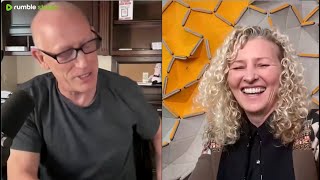
Carmen Simon discusses how attention works and why it matters for memory. She explains that contrast, surprise, and movement capture attention, and shares practical tips like using primers before key slides and repeating core themes to make presentations stick.
Chapters
All right, let's talk about this. You have a new book.
I do.
It's called made you look. Made you look. Just out now and you can buy it. And I'm going to give. I'm going to give the people a quick idea in my own words that are all wrong before you correct me. Okay?
Okay.
So one of the things you do, if you can see in this book, you see this person hooked up to all these sensors and looking at a screen on the computer. That's what Carmen does. Puts these little sensors on their body and their head. Eeg, ecg, gsr, facial coding, eye tracking. And you have them look at mostly slides, like business presentation slides. Or is it other things as well?
It could be a presentation, it could be a website, it could be a video. Anything that in somebody's view, should capture attention, which is what the essence of the book is. And the reason you even need attention in the first place is because quite often people remember better if they pay attention. I'm saying quite often because it is possible to remember something without consciously paying attention to it. But we're all here in the business of communication, and usually you like to get credit for things that you made people look at. So attention influences memory, and in turn, memory influences decision making. And the world moves around and all the great things that you've just talked about happen because people remember and decide. And attention is at the root foundation of that.
So the. The thing that surprised me as I was. I was looking through your book is how many categories of attention there are. In other words, you can, you know, there's a. Give us a few ideas, like attention isn't just simply looking at stuff. Right? Give. Give us a little sense of how complicated that is to determine attention.
It is true there are a variety of ways in which the brain pays attention. We pay attention with our brain. And in fact, as I'm looking at the comments, I'd love to know what typically attracts your attention speaking to our audience, and what would you like more attention to? And as you're reflecting on those questions, just know that typically when you pay attention to something, you pay attention in space. And quite often that attention can be very focused. Like for instance, when you have dinner with somebody at a restaurant and you try to be polite and you're only focusing in on that one person. I'm even seeing this habit now where people are putting their phones with the face down just to indicate that now everything is in focus and that focus is very sharp. So that's selective attention. But at some Point from an evolutionary perspective, we know that it would not serve us well if we were so laser focused. We have to widen our focus and we have to distract. Distribute our attention so that you can see if there are some creepy crawlies hiding in the bushes and your survival may be in danger of sorts. So it is possible to divide attention, but in that process, then you're missing some of the sharpness from the selective attention. But you have additional advantages. So those are attention in space. It's also possible to pay attention across time and that sustained attention, this is what people associate with attention span. There is a myth that I'm sure that you've heard debunked before. There is no such thing as a short attention span. As scientists, it bothers us greatly when people say, well, are you noticing that these days the attention span is getting shorter? The answer is no, it is not getting shorter. The brain hasn't changed much. No, it hasn't changed much in the past 35,000 years. We're capable of paying attention. In fact, to test this, we can ask our audience members here, what, what's the longest amount of times you have binge watched on a TV show? And I guarantee that if they're genuine with us, their answers are not going to be in the seconds, their answers are not going to be in the minutes, their answers are going to be in the hours.
So is, is the whole thing that as long as we're interested, we have.
Infinite attention, we can, we can stay definitely focused and as long as the stimulus is interesting and, or important, because sometimes you have to pay attention because something is critical, not because it's the most interesting thing you've ever seen.
All right, let's, let's give the audience some like, takeaways so they could get like some of the, the functional useful, like, how's it going to make your life better? So based on your, your data, and now you have a pretty big database of human beings looking at visual things and having certain physical, biological reactions.
Yes.
All right, so, so in theory you could give us some ideas of like, what things you found out work better than other things for attention. Is it, can you, can you break it down into some tips?
Yeah, definitely. Let's, let's consider some tips. And in the book we go beyond the multitude of attention types and we look at the intersection of two ways in which we pay attention by asking the questions, where is the brain looking? And you can look externally or you can look internally and who's doing the looking? Because sometimes you decide to look on your own. But sometimes somebody makes you look as per the the title of the book. So let's consider some techniques on when you force somebody to look. Let's just say that you want your children to pay attention to you, you want your customers to pay attention to you, you want your boss to pay attention to you. So you're forcing the looking, and you want them to look externally. And of course, you can manipulate physical properties of a stimulus. Like for instance, if you make something louder, of course you'll pay attention if something was silent before that, or if you make something brighter or bigger if something was not so bright or not so big before. So as long as there's a contrast, here's a hard number that I like to use. The brain will pay attention to physical property of a stimulus if there is enough contrast between two items. And that contrast has to be in the 30 to 20% range. In other words, for instance, a company that may not be differentiated enough is because the product that it offers compared to the competition is not that much different. The brain cannot perceive the contrast. So as you're reflecting on your own message, ask this question sometimes not the easy. It's not easy to answer. Am I different by at least 30% from somebody else? So contrast could be a good technique in terms of forcing somebody to look externally. You don't always have to make them look externally. You can also make them think. I really like communication that guides you internally and you reflect for a moment. So for instance, I was seeing this ad for an Alzheimer's organization, and they were showing the person that critically needs care, but the focus was not on that person. It was on the person that gives the care. Because sometimes we forget that those people are being taken care by somebody else. And it just gives you that small moment of thinking and the joy of getting it. So as you reflect on your own communication, are you giving others the joy of getting it?
The joy of getting it? So you can get attention by tweaking their emotions or by tweaking their contrast, which is more of an intellectual thing. So there's ways to get at them intellectually by contrast, but also biologically by what excites them.
And yes, and also you can think of it in terms of being a bit more provocative. I mean, even hearing the conversation that you had with the audience before you and I started talking, there are a lot of provocative things that are being said. Like for instance, if you were to insist on the phrase poison farmer, that's not a combination of words that you typically hear mixed Together. And unfortunately, what happens, especially if you operate in the business space, people are often way too cautious and they baby other people's brains, and they don't want to challenge the status quo. They don't want to impose any tension. And just like with that contrast and some perceptive power, like, for instance, something is bigger by 30% than something else, you can't have a contrast in emotion. In other words, not all emotions are going to get attention and be memorable. You really have to have a much stronger stimulus. And I'm noticing these days, as I've been doing a lot of these neuroscience studies, you showed the, the cap earlier, that it does take a stronger and more intense stimulus for the brain to focus and stay with you for a while.
Now, have you picked up any changes in what it takes to get somebody's attention? Now, you said that we have good attention spans if we're interested enough. But does the average person look at, let's say, a PowerPoint slide deck? Do they have the same brain that we did 10 years ago?
I'm noticing that the threshold for stimulation has changed. So even though the brain itself is still the same organ, the way that we build our habits is to now crave more and more stimulation. So we will stay with you for a while if you give us something like even our attempt to fix the microphone, for instance, it just creates this positive of stimulation so people very quickly can reach for their phone. We're only a click away from being turned off. And if you're not the source of strong stimulation, then the brain is very adept and has a lot of choices these days.
So. So here's the funny thing. For those of you who are watching the audience, when you saw me, you know, struggling to get the technology working and it looked like it wasn't going to work, and maybe I'd have to bail out and everything. What I was thinking during that period was not, oh, no, everything's going wrong. What I was thinking is, there's no way you're going to turn this off. I was, I was thinking you're going to, you're going to have to wait at least to see if I can make this work because, you know, you wanted to see me fail, like, you know, in public. Because I always say that danger is the thing that keeps people interested. So you have to have some. Like, there's somebody's going to go off the rails. You know, somebody's going to say something that gets them canceled or something. So when you were. Do you and I were trying to make this Work. The whole time I was thinking, oh, this is kind of perfect. Like, like, I. I wasn't having a care in the world because it was either going to work or not work, but one way or the other, it was going to get a lot of attention. And so I was just sort of conscious of that, that it was working even though it was a disaster. Like, the disaster worked just the way I wanted it to work.
And turning what you just said into a practical guideline for everyone, consider this a method of priming. So one of the reasons why people don't pay attention is, is because they're not ready to pay attention. And we observe this in business all the time. Let's just say that you have a sales presentation that has 20 slides, and what, something very critical for your product appears on, let's say, Slide 18. By Slide 18, you may have done something that would have diverted your audience's attention away. So right before that slide, you need a primer. You need something that says to the brain, now something important or interesting or ideally both, is about to happen.
Let me ask, what do you want to prime right before the. The thing you're priming for? Or can you prime like. Like 10 minutes before?
I love that. I love that question. And the answer depends on what we were just talking about in terms of the intensity of the stimulus. Because if I use that phrase that you're using in terms of poison pharma, that is a loaded phrase that will last a while in terms of. Of intensity. If you. If it's something that's a weaker stimulus, like, for instance, you may just use a gratuitous photo of somebody naked that may just last there for a few fractions of a second, and then it's just. It's just gone. So if you have something intense, you can rely on that primer. And what do I mean by priming is inviting the brain to react to something based on what it just experienced. And you can have a perceptual primer, you can have a semantic one, like we were doing with the phrases that you're using, that affective one or the emotional one.
Give us some examples, because the audience needs examples.
Well, so for instance, let's just think of a semantic one is one that gives you the joy of getting it. So I was just looking at an ad not too long ago, and you just mentioned the phrase dad joke. This ad was created by Durex, you know, the condom company, and it only had words on it. I love ads that only have words because they really have to make you think. And the word said, I don't need a condom. And the conclusion was our favorite dad joke. And this comes from. From the. From the Dureks company. I don't need. I don't need a condom.
Okay. It took me a while to get it. All right.
But it does. So it takes just a moment. And then you think about it. Our favorite dad joke. And. And it gives you that small aha Moment. And by the way, with the. With the EEG signal, we can calculate the Eureka effect. So we know where to look in the brain and what brain ways to analyze in order to see if the brain has just experienced that aha moment.
Yes, but bring it back to the priming on the Durex example. I get that. That's memorable, but is that priming? What's the priming part?
That would be the priming if. Let's just say I was in a business presentation and I wanted to get the brain ready. So because that was just such an incongruous moment. Moment. So something that maybe people did not expect, now I'm ready for what happens next. I'm willing to sacrifice one stimulus in favor for what happens immediately after. And that's an example of a semantic one, because you have to think about the meaning and also an affective one because it's a bit more intense than your typical business stimulus.
So is priming in this sense, it's more than just giving you, let's say, a foreshadowing of the specific content, but rather it's just gonna. Is it just rebooting your brain so you're open to anything?
Exactly. So you're in a ready state. The reason we pay such little attention quite often in business context, and we forget most of the things that we're exposed to, forget our lives almost as quickly as we live them, is because we are not in a state that is ready to receive.
Would it be fair to say that people sort of get an inertia of thinking? In other words, they're thinking in their logical. Drive this train right down the tracks, and you gotta. You gotta derail the train before you can get them to think that anything besides the train going down the tracks is gonna happen?
Exactly, yeah. So in terms of practical guidelines, if you think about this notion of habituation, which is what you just said, if you're showing people. Let's just say that you're in a business context. And slide one will have some text and charts, and slide two will have more text and charts, and slice three will have more Text and charts. After a while, your brain starts learning to predict what happens next. What's the likelihood that the next slide is also going to have some text in charts? But if you jolt the brain out of its habituation with one of these primers, we're talking about. So whether it's something perceptual or whether it's. So now you don't have a chart in text, you just have an intense photo, for example, and then you go back to your typical stimulus. The brain has to be jolted somewhat in order to reminded that you cannot predict the next moment.
Nice. So unpredictability. So in. I'm trying to relate this to my hypnosis background. So there. There's something about making people uncertain and confused, which makes them ready for any certainty that you, as a leader or a hypnotist, give them. So you want to. You want them to make them think they don't know what's going to happen or they're not in control, and then you give them the answer, because everybody wants certainty. So. So if they think they have certainty, they don't need any. But if you scramble them, they're going to be looking for certainty, and then you. You give it to them just in time. Is it. Is it similar to that? That's the hypnotist stake.
Definitely similar. And I like how you're associating with this. And of course, the moment that you give the brain a modicum of uncertainty, you can guarantee some attention, because we cannot afford to not know what happens next. If you think about the brain, the most important thing is what happens next. And the reason we enjoy that which is familiar and that which is predictable is because we can better say this is what will happen next. The moment that you introduce that element of surprise. And surprise, by the way, is always biologically bad for the brain, because what is surprise but a failure to predict? Then, of course, we're attentive. Because the difference between what the brain expected and what happens in real life is how the brain learns. I think this is a very important practical guideline for all of us to reflect on. Because as you think about the content that you create or the way that you want to grab other people's attention, often wonder, how do I create those moments where people think something is going to happen and in fact, something else does?
Surprise. Yes.
Different from novelty, by the way, because sometimes people treat those elements interchangeably. But novelty is something that you haven't seen or experienced before. Surprise is something that you have experienced before but did not expect. Like, for example, an eggshell. And suddenly it opens and a baby elephant comes out of it. You have seen the eggshell, you have seen the baby elephant, but perhaps not combined together.
Now, another thing I saw in the book that interests me in particular because it's based on something I used to do when I gave presentations in my corporate days. Before I give a presentation on the boringest subject in the world, which was like the budget, like, just impossible to keep people awake during that, I would hand out Tic Tacs, you know, the little lozenge thing, the Tic Tac. And everybody will take a Tic Tac. So that's the first thing I learned. You say, pass these around, everybody takes one. Like, nobody says no to a Tic Tac. That's the weird thing. But. But it also gets them physically moving. And. And to keep somebody awake, if they're chewing, they'll stay awake. People don't fall asleep while their mouth is moving. And so I found that you could actually keep people a little bit more awake by making them move while you were talking to them. And the movement is just eating on the Tic Tac. So you said yours was a deeper, complex thing, but you said something about getting people moving as part of the process.
I like that reminder. One of the hottest trends in neuroscience right now is this notion of embodied cognition. Because as scientists, recognizing more and more that the way we come to know things and perceive things and talk about politics or talk about the boardroom and the bedroom is not by simply looking around us and building some mental representations that are abstract. What we know and what we perceive and what we remember and what we decide on comes at the intersection of the brain and body interacting with the environment. Therefore, embodied cognition. So. So whether you give people the Tic tac to chew or what we would. Recommending business is inviting people to, like, physically take notes. I'm hoping that this conversation is useful to you, and maybe you have jotted a few things down. The more you physically write, not electronically write, the stronger the attention and the memory for those segments. If you have customers, invite them to an experience center if your products afford you to do that. But yes, getting the brain and body in motion will definitely contribute to your attention and memorability factor.
Now, here's a practical tip based on that. When I would study back in my, you know, school days, I. I would try to take the same information in as many ways as possible. So I'd read it, but I'd also rewrite it. Sometimes I'd draw a picture because the, the process of turning the idea into a picture really solidifies it because you remember the picture and then you'll work backwards to what it was. But I would also sometimes sing it or Hummit. I'd be like, you know, two plus two equals three. And I'd be drawing and stuff. So I would try to get as many physical, bodily connections to the stuff. And it really made a difference.
I think it's a smart technique. I wish more people use it for themselves. If you're here in a session like this because you want to coach others, perhaps even your children, teach them how to keep the body in motion. We are at a strange point in our society because we're used to having so many things coming come to us. Like the food comes to you. You no longer have to do that. Your friends come to you, you can meet them online. But the moment that you put the body in motion, the brain is put in motion as well, and the opposite is true as well. You keep your body still, then your cognition slows down also.
That makes sense. So, you know, the, the, the amount of information in this book is kind of. It's amazing. So I'm going to have to spend a lot more time looking at it. But there were, in the end, there's like a whole checklist of things that you could have done in your presentation to have made it better. And I, I won't read them all. But you, you've done something that, as far as I know, has never been done, which is you've captured the biological markers for attention. And it seems to me that there's some AI companies that's going to give you a billion dollars for that, because nobody else has it right. If you could teach your AI to make you a PowerPoint slide or a video, and then one of the databases they had access to was, how does this affect people biologically? Where do I put the image? How often do I mix it up? When do I surprise them? When do I give them novelty? That's all something an AI could do if it had the data, couldn't it?
If they had the data. And you're absolutely right. It's. We're sitting in a good position to have some biological markers for attention, for working memory, for motivation, to keep watching. Because it's one thing to watch something and pay attention for two minutes. It's another. We know it's possible, but it's another to pay attention for 30 minutes, for hours on end. So you have to be motivated enough and have the biological endurance to do that they're looking at how much the brain enjoys the experience and how alert and awake it is. And we do that by going beyond self reports because you could ask your audience what attracted your attention, what kept you going, what did you like? What did you not like? And people will tell you, but quite often those self reports are unreliable. So as AI models get trained, are they getting trained on survey data that quite often relies on memory that is fallible? So it's good to use these kinds of signals and also debunk some myths. Like for instance, it surprised me that complexity is actually more of an attention grabber than simplicity is.
Well, that's a double edged sword. I don't know if you heard my earlier presentation, but you can also hide all your fuckery in complexity. So it's a place to, it's a place to diversify somebody's attention until they can't find the needle in the haystack. But I could also see how complexity would attract you because you want to unravel it. Like, oh, what does this mean? I'm going to spend a little time unraveling this. I can see how it works both ways.
So true. And I really like your viewpoint and I think especially from a scientific perspective, it's good to define the terms because there's complexity, there's complication and there's chaos. And often I think in the latter two, you could probably hide a few more things. But complexity, as long as you present to the brain some items that are not only large in volume but also diverse and interconnected and you add some meaning to this complexity that keeps the brain going and you manage that complexity well, then the brain synchronizes a lot better with a complex stimulus than with a simple and quite often simplistic one. So if we turn this into a practical guideline, I would say complexify in a manageable way versus simplify your communication.
Got it. So give us, give us, let's say, what would you say if you were going to give somebody, say, the best, like, operational tip? Like what, what's the one thing out of everything you learn from, from the studies, the sensors you put on people and your data? If you're going to make a PowerPoint or a video or something, what's the one thing you're going to make sure you absolutely do?
Well, here's something that you can reflect on as we reach the end of the conversation and it will, it'll make you think. It will not necessarily be easy to implement, but it will be very helpful. I found through all this research, that one concept that comes up again and again is this notion of fractals. Are you familiar with fractals? If you insist on some elements that maintain their properties at any level of magnification? Like if you look at a tree, the shape of the tree is represented in any kind of tree branch. It has the same shape as the bigger tree. And if you look at a smaller branch, yet it still maintains the same properties as, let's call it the father tree. Or if you go to the grocery store, look at a head of broccoli, you'll see that the broccoli itself has some properties. And then as you zoom in, every single single little head of broccoli has some. Some same properties. Or cauliflower. So it's cauliflower all the way down. And as you reflect on your communication and the way that you want to attract attention and remain memorable, pick a theme, something that repeats at any level of magnification, and the moment that you have that set of properties and you keep going again and again and again. Repetition, by the way, is a struggle, sort of priming. Then as long as you make it that it's cauliflower all the way down, it doesn't matter if you're speaking to your audiences for two minutes, for two weeks, for two years. If you come back to the same theme and you make friends with fractals, you will be able to. To keep people's attention for a long time. Politicians do this very well.
So. So fractals is a tough word to wrap my head around. But let me. Let me ask you if I. If I did it right. So today, when I did my live stream before we talked about, I said I had a theme that is that the Democrats were hiding things in complexity. And then I gave five different stories where there were some complexity and maybe some bad stuff was hidden in there. Is that a fractal?
That is definitely a fractal. Because if you were to then expand on those themes, we could be here for another five minutes, we could be here for another five hours, and it would be the same set of properties, the same set of swirly equations. So, for instance. So, yes, pick your theme and some supporting points. And as long as you're very consistent with those and you believe in them and they have great impact on society too, that's always very, very helpful. Then you can keep the brain going for a while because you're giving it the best of both worlds. You're giving it some familiarity because it's the same repetition at any level of magnification. But with each elaboration, you can add some of those elements of surprises. You can complexify and you can keep the grain, the brain motivated to stay with you for a while.
I'll tell you my biggest pet peeve is when somebody wants to explain something to me and they're waiting to give me the answer at the end, and my brain can't handle that. So it'd be like, you know, Josue, my, my, my builder handyman here, he'll say, can you have a minute? You'll say, you know, over by the eaves, there's this board that covers the thing and then there's the corner. And I'm like, where's this going? Where's it going? And the answer is, yeah, there's a leak and I can fix the leak. So what I want to hear is, I can fix the leak. And then after I hear that, every detail it gives after that is now salient. I was like, oh, okay. So I'm understanding because the boards come together. That's why there's the leak. But if you start with, okay, the boards come together, I'm like, I, I have no structure, I have nothing to pin it to. So is that close to what you're talking about?
I really like what you're saying in terms of elaboration because that's what builds up the, the complexity. And especially in business, in our personal relationships as well, you have to earn the right for that elaboration. And in your relationship with, with, yeah, with the plumber, that may be a little bit different because if your plumber had been Elon Musk and he started, started with the details at first and something that maybe initially didn't make sense because your relationship is probably different, he has earned the right to elaborate first and then give you the.
No, I'd be like, Elon, no, get to the point, get to the point.
But I think what's important for people to recognize is that sometimes we are, let's say in a business context and they may have heard the guideline, well, tell a story. Because a story is just so attention grabbing and memorable and that's not the case. You to have, have to earn the right for those details and you have to earn the right for the, for the story. Sometimes you do have to start with the conclusion, depending on your, on your report.
So if you start with a conclusion, you need to back it up. But it should also be, should it be like a surprising conclusion, in other words, should have some novelty as well, such as I'm going to show you over the next 40 minutes that everything you knew was wrong. Would that. That be a good one?
Yes. So you can, you can start with something that challenges the status quo, challenges a personal norm, challenges the way that, that you're thinking in some way. Not that many people, business people, know how to do this, by the way. They want to start by not just discarding accuracy, they want to be precise and correct to talking about those budget meetings. You don't want to disregard accuracy in a budget meeting, but why not in the book? By the way, you'll learn about this notion of exaggeration and discarding accuracy whenever you can in a way that's mindful and playful. So as you think about your hooks, for instance, sure, some unusual stats could do the trick, but what about an unusual photo or something that you did not, you see, you did not predict, like we were talking earlier.
So I'll just tell the viewers that several years ago, you helped me build a presentation, a slide deck that went with my public speeches. I was giving corporate speeches, and I had an experience with that that was so uniform. I'd give my talk and usually it was a group of people who were there because they wanted to hear me. So, you know, they were a friendly crowd. Everything would go great. And then afterwards, maybe I'd sign some books or say hi to people and people would come up to me, and I swear to God, every group said the same thing. Who made your slide deck? Like, who, who did that? Because, because it was so, so different than anything that I'd ever done or even seen, really. So I, I can confirm that the, the science that you were putting into it, even a few years ago, before you did this book, was already completely lighting brains on fire. Like, like people were just like, like, what did I just see? And they would talk about it and they would come, they would act. That, that's the ultimate test, getting somebody to act. But. And they all acted the same way. Where, where did you do this? How did you do that? And, you know, I would tell them that you helped me, etc. So I recommend this book. Made you Look. Carmen Simon, PhD. And thank you so much for joining us, Carmen, and making us smarter. And anybody who reads this book is going to do a lot better in your presentations and getting people's attention and basically your life in general. So even if you're not in this kind of business, you might be interested for the, the academic, intellectual. Why does something work and something doesn't? It's really, really a fascinating drive inside the brain. It feels like taking a trip inside a brain. That's what it feels like.
Thank you so much for, for all the kind words and thank you for all the attention that we got here in the, in the chat box. And keep in mind that if you do attract attention, you can stay on people's minds. And when you do, you will live longer.
All right, great. Thanks for joining. And I'll talk to you later. And everybody, thanks for joining. And I'll see you tomorrow, same time, same place. Bye for now.
More from Scott

The Scott Adams School - 10/14/26 The Chicks and Joel Pollack Stops By. Scott & Persuasion


The Scott Adams School - 10/09/26 AKIRA.. TAKE TWO! Fri Yay! With the Home Team



The Scott Adams School - 10/06/26 Erica & Marcela Talk France. Venezuela. Scott Adams. and More


The Scott Adams School - 10/02/26 Fri-Yay!! The Home Team closes out another amazing week.


The Scott Adams School - 09/30/26 WHITEBOARD! AI Luncheon. FRAUD. MIKE ROWE, Happiness!