Episode 386 Scott Adams: The Giant Rip in the Fabric of Reality, Kamala Harris, Dale
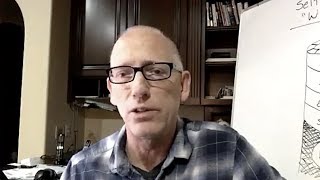
Scott Adams (YouTube episode) discusses how public perception and "reality" have shifted, arguing that people now routinely live in different "movies" (subjective realities) caused by confirmation bias, mind-reading illusions, and media framing. He uses examples including the Covington Catholic students incident, Trump’s persuasive techniques (rhymes like "build a wall and crime will fall"), AOC/Kamala Harris/media selection, and debates over climate-consensus polling to illustrate how people research and stop at agreeable points (the "self-research well"). He also reviews his own mistaken reaction to the Covington story and explains his public apology.
Chapters
Oh, bum, bum, bum, bum, bum, bum, bum, bum bum. You and you and you, come in here. Grab your beverage. Oh, I see you already have your beverage. Some of you, some of you just getting up and running for it right now. Quick, quick, grab your beverage. Do you know it's one of my favorite words in the world, Beverage. Do you know why? Beverage is one of those words that nobody dislikes. Nobody says, I think I'll never have another beverage. Nobody ever says that. You can think of almost anything in the world that some people like and some people don't like. But everyone likes a beverage. Different beverages, but they like their beverages. So grab your beverage, grab your cup, your mug, your glass, your chalice, your stein, your container, your thermos. Fill it with your favorite liquid. I like coffee. And join me for the simultaneous sip. Oh, yeah. Well, I'd like to start today with a lesson on face reading. Now, in the news, you've noticed that there are apparently some people who. Who are excellent face readers. They can look at faces and they can tell the complicated internal thoughts associated with the face. So I'm going to give you some different faces, starring my capable partner, Dale. So Dale will come on here in a moment and give you some faces, and I want to see if you can read them. All right, face number one. What is Dale thinking? Okay, do you have it? What was Dale thinking? Read the face. If you didn't see it the first time, here it is. All right, the answer is, Donald Trump is terrible. He is very orange and orange man bad. Did you get that? How many got it right? Did everybody get that right? All right, so let us go back a few years and think about a prediction that I made a few years ago when Donald Trump came on the scene. And I was just starting to write about this topic. I predicted loudly and multiple times and in public that Trump would change more than politics. I said that he would change how we understood reality. Eh, eh. Sounded weird when I first said it, didn't it? Everybody who heard me say that or read it probably said to themselves, yeah, yeah, yeah, Donald Trump is going to change reality, Scott? No, no, I don't think so. I think he might run for president, and obviously he's not going to win. But I'll tell you one thing he's not going to do. He's not going to change how we see reality. That's not going to happen. And here we are. How much has your understanding of reality changed in three years? Here's some things that I think are at least partly my influence have you seen how many people are talking seriously now about the two movies on one screen phenomenon now, they use different analogies and different words, but did you really ever see that? Maybe you've ever seen it, but did you notice people talking about that commonly prior to Trump? You did not. You did not. It is now commonplace to look at Yanni and Laurel, or to look at this situation with the Covington kids, or to look at Mueller and Russia, and I could probably come up with 10 more examples. But it is now common for people to understand they can look at exactly the same stuff and have a different opinion. It is now common for people to use the phrases confirmation bias and cognitive dissonance. Now, of course, those phrases were always around and you always heard them once in a while, but it's now the routine way that people explain their reality. That's all new. How many times are you seeing people say that the facts just don't matter? How many people have now realized that AOC, as you call her, and RPOs, as I call her, is another one of these? How many people have now realized, oh, crap, she's just female Trump and she's a Democrat. She's using the same technique? How many of you now can see clearly that Kamala Harris has been chosen by whoever is doing the choosing, the few billionaires who do this sort of thing, and that the media entities are lining up behind her and that the public will imagine they chose her for their candidate, but that nothing like that is happening. That in fact, our opinions are being assigned to us, in this case, us as the Democrats. And you can see it now, right, in a way that you could never really see it before, because before you always had another reason. Oh, Hillary's good at fundraising. Hillary put in the time. You know, there was always a reason why you thought the candidate was the candidate. But this one's really clear, isn't it? This time you can see CNN and the New York Times, etc. I tweeted a few things from Michael Tracy showing this effect, but you can see it really clearly now, can't you? And you couldn't see that a few years ago. So your ability to understand your reality is now far different, far different than it was three years ago. This. This is one of the biggest shifts in human consciousness of all time. The fact that facts don't matter because we see them differently. Your fact and my fact just don't line up. And the fact that reality is as subjective as it is, and the fact that this entire thing we call the Republic is Absolutely artificial that the real decisions are made somewhere and they're assigned to the people, and then the people imagine they made those decisions. That is, unfortunately, the universe you live in. Let's talk about some more fun things. How many of you are now seeing references to mind reading? The effect where you think you can see somebody's face just as I was talking about, and then you can imagine what they're thinking. How many times have you seen that something that I think I introduced you to, most of you, and now you can see it everywhere. Can't you? Try turning on any news story or any news channel, whether it's Fox or CNN or msnbc, and watch how many times people will imagine they could read somebody else's inner thoughts. Once you notice it, you realize that that's a big driver of why we're living in different movies. It's the illusion that we can understand what people are thinking by looking at their actions. We can't. Now, some of you may have noticed that cnn, I don't know what she would be called. CNN analyst, maybe Kristen Powers got into it with me on Twitter because I made the statement that there was confirmation involved in people's initial reaction to the Covington Boys, and especially the one with the smirk on his face. And Kirsten Powers came in and said, how do I know that she or people have the same opinion are the ones with the confirmation bias? How do I know that I'm not the one with the confirmation bias? Fair question. Fair question. And I would like to answer that for you. So let's say that you and someone else have completely different worldviews and you're trying to figure out, wait, why am I looking at this and I'm seeing one movie, you're seeing another movie, yet we're standing seemingly in the same reality. Which of our movies is the right one, which is the wrong one? And how do you decide? I'll give you a couple of ways. Now, the first rule is that you can't know for sure. All right? So rule number one, you can't know for sure. So I could be the one experiencing confirmation bias in this example. But I'll give you a couple of clues for figuring out which one is likely to be the one who is closer to reality number one on this exact situation, the Covington boys situation, I have experienced both movies. So I've lived in the world where I looked at him and said, it's obvious. It's obvious what that smirk means. It's obvious they're surrounding this poor Native American guy. It's obvious that they have bad intentions. It's obvious I've lived in that world for about a day. And then when I saw the larger context, I moved instantly from that world to a whole different reality in which none of what I first saw is either true or at least is not confirmed by anything that we saw. So if you've lived in both realities, you probably have a little bit of an advantage seeing past your confirmation bias, because real confirmation bias, the kind that you're locked into, you just can't get out of. But you saw me effortlessly, I mean, literally effortlessly, switch realities right in front of you. Now, you saw a number of other people do it too, because people were issuing their apologies, etc. So I would say the first rule is, and this one is not like 100% confirmation kind of rule, but it's a good hint that if somebody has lived in two realities on the same topic, they're probably a little bit advantaged in recognizing their own confirmation bias, but not guaranteed. Number two, here's the second way you can sort out which of you is experiencing the confirmation bias. Prediction. You've heard me say this many times. If your view of the world predicts accurately, you probably have the better view in this case. Let me give you an example. I had told you on an earlier periscope that soon after the Covington kids thing happened, and soon after we got the new video that showed the two worlds and I switched worlds, I was exposed to two photos that alleged that these kids were terrible kids, and I made a prediction. Now, I did it privately, so I can't demonstrate that I really did that for you. Well, no, I think I did it publicly. I take it back. I think I told you publicly that there were some things coming out that I couldn't even describe at the time. I didn't want to give them oxygen, but that I believe they were fake. I think I said that publicly on periscope. So that was a prediction. One of the things I said was a fake was the picture of the kids in blackface. Allegedly, allegedly in blackface at a basketball game. Now, the picture showed the coach literally right next to a kid who was alleged to be in blackface. And I said, not likely to be true. So unlikely that it's beyond belief. So here's another tell. Here's another tell. If the thing you're looking at is unbelievable by its nature, it's probably not true. Here's what would be unbelievable. A Catholic school in the year 2019. Or maybe even if you imagine the Picture was taken in the last few years. But modern day a Catholic school with all kinds of adults and chaperones and coaches allowed children to wear racist blackface costumes to a public event at a school that wasn't even slightly believable. Alright, so one of the ways you could tell you're in confirmation bias is if you believe the unbelievable. So if somebody said, hey, I saw a unicorn flying by my window, if you believe that based on all of the other evidence you had that unicorns can fly, you should ask yourself, wait a minute, wait a minute, step back. If somebody told me a unicorn flew past my window, on the surface, would you believe it? I mean, sometimes we can be surprised by amazing things, but not a unicorn flying past my window. To me, the idea that these kids would be allowed to dress in racist blackface in the modern day in front of a bunch of adults at a Catholic school, at a Catholic school, for God's sakes, right? That is a flying unicorn story. So if you're not in confirmation bias, it's kind of obvious that that wasn't real. Now, I had to wait a few days to find out specifically why it wasn't real. And it turns out that this school has a deal where all the kids dress in the same color and it's a different color on different days. They've done the white day, the blue day, the nerd day. So they have themes that they all dress up at. This one just was the color black. And there was at least one kid who colored his entire body, as I'm sure there was at least one kid who made himself entirely blue one day. So was it a good idea for that one kid to put his entire body in the color that they were all celebrating that day? Well, no, but that's still a flying unicorn if you imagine he meant it as a racist statement. Now, the second picture was allegedly the kids in basketball uniforms making a white power sign. Now, I'm not going to do that. This is me being a little bit more experienced in the media. I'm not going to make the sign because if I did, then I get photoshopped all over the Internet. But I said to myself, huh, it does look like there are a bunch of kids making the racist symbol with their hand. But my, my movie predicted that it was fake. So I told you there are a couple things coming out that I think are fake. The moment I saw them, I said, I believe these are fake. I don't know exactly why, but these seem obviously fake to me. First impression, a prediction, right? Now it turns out that the sign that they were making with their hands was a sign that all professional basketball players make when there's a three point play. So if somebody makes a long basket, if you're not a basketball player from a certain distance, you get three points. So when somebody makes it, the people on the bench as exactly what this picture was showing. The kids who were not in the game raised their hands and they made the three point play symbol, which looks a lot like the racist symbol. Now, my movie predicted that those two pictures were fakes. Someone else's movie, the person that I first saw them from, predicted that they were a bunch of racists doing overt racist things right in public and right in front of their handlers and that that was somehow okay with them all. And from that point of view, her prediction was that both of these pictures were also true and that we had discovered this pocket of overt over racist behavior in a Catholic school. Turns out that was exactly wrong. So prediction is your strongest sign that you're in the right movie or the wrong movie. And the ability to move from one to the other. Somebody saying that the hand signal is a 4chan hoax. So I'll add that clarification that it's not at all clear that there's any such thing as a racist hand signal. So that might not exist. But I'm sure that there racists who have probably tried it out just because they heard it was a hoax. So I'm sure somewhere in the world somebody's made that hand signal in the racist way. All right, next, you saw the President's tweet. He says his new slogan is build a wall and crime will fall. So people are having fun with that. Now, if you don't know, there is science about rhymes. When Johnnie Cochran was handling the OJ trial, he said, if the glove doesn't fit, you must acquit. There are a few different pieces of magic in that slogan. The first magic that Johnny Cochran, who was a persuasion genius, one of the things was he knew that rhymes register in our minds as more important and more true. So anything in a rhyme irrationally registers as a little bit more true than something that didn't rhyme. There's no reason for it, no reason for it at all. But it's a truth. You know, we can demonstrate that. So when Cochran said, if the glove doesn't fit, you must acquit, he rhymed it and was clever. Here's what else it did. What else it did was it took this big complicated trial where you could depend on the jury for getting 90% of everything they heard, which is typical, by the way, if people are presented with a big, complicated PowerPoint presentation or a trial, they actually sort of forget 90% of it. So Cochrane did this clever trick where by using the rhyme, he made us give more focus to the thing that was best for their side. That's my cat, Boo. So it was brilliant. The rhyme was brilliant because rhymes are good, but the rhyme also focused you on the one part of the case that was the strongest for the defense. And it was also visual. What if I told you about visual stuff? If you say to yourself, the timeline doesn't work out, that's a concept. You're just imagining time, which is hard to imagine. But if you imagine O.J. trying to put on this glove, that's visual. So Johnnie Cochran had the visual, he had the rhyme, and he took all the focus from the things that were hard to imagine, the concepts, and put him in this little visual rhyme. Perfect. Perfect. Persuasion. It was so strong, it probably got a murderer off. I mean, that's how strong the persuasion was. President Trump has borrowed from a well known persuasion technique to put it in the form of a rhyme. It will make you focus on the crime. And even if you say to yourself there isn't that much crime, or even if you say to yourself, they're not bringing more crime as a ratio, and even if you write about all that stuff, it will still make you focus on it. And what you focus on is what your brain will irrationally imagine is more important and more true. So the President's build a wall and crime will fall would have been brilliant had he done this earlier on. Arguably, the fact that he's doing it now might work against him because the word wall has become the biggest problem now. It could be that he's decided that they're not going to give him anything. So it doesn't matter what he says. I don't think he's thought that. My guess is he's still pushing hard. I can't read his mind. But at this point, I think you'd have to ask yourself, is use of the word wall helping or hurting? I would say it's unambiguously hurting at this point. So he's got this great rhyme, which under normal situation, let's say he'd started saying this two years ago, it would have been super. It would have been really solid. But saying it now, when the word wall is the only thing that's keeping us from getting this done, that's kind of a It's tough to score this one because it's got some plus and it's got some minus. Now, in the President's defense, I would say that the public. I would say the public has largely started to think about the wall as being a word that describes a variety of different solutions for a border barrier, but still using the wall by itself without that larger explanation. All right, let's go to the whiteboard. I've got a couple of concepts I've talked about before, but I want to give them a little more love. Here's one of the reasons that we cannot agree on anything. It's one of the biggest reasons behind why we're looking at the same information and coming to different worlds. And I'm using this example of a. Well, I call it the self research well. And the illusion that this talks about is the illusion that a person can do their own research and get an answer that's closer to the truth. I might be the only person who has ever told you this, and it might be the thing that you disagree with me the hardest. But over time, you're going to see this over and over and it's going to sink in. And someday in the future, you're going to say to yourself, damn it, that cartoonist guy was right about this. Until you see it, you can't see it. So it's invisible until you see it for the first time, and then you'll see it everywhere. And it goes like this. It doesn't matter what the topic is. If it's complicated and people are disagreeing, it's going to look like what I'm going to describe doesn't matter if it's climate science debate. It doesn't matter if it's the Covington kids. Are they good or are they evil? It doesn't matter if it's gun control, it doesn't matter if it's border control. It doesn't matter if it's almost anything. All of the big agreements where we're living in two different worlds follow this pattern. And it goes like this. You start down the well of trying to research it yourself. And let's say the first thing you do is you talk to an expert. And in this context, I'm going to say the expert's on one side of the debate and the skeptic is on the other. Again, it doesn't matter what topic. There's always two sides. Let's call it the expert and the skeptic. The expert will say, this is true. And you say to yourself, wow, that sounds Very convincing by itself, it's pretty convincing. But what do other people say? So you keep researching it and you find a skeptic and you see that the skeptic's argument is pretty good by itself. But you don't know what the expert's response to the skeptic is. So you keep going and you find that the expert has a good explanation for what the skeptic said. And then you say, but is that true? And you go back to the skeptic and you say, but what about what the expert said about what the skeptic said about what the expert said? And that sounds pretty good too. And at some point in every situation, you get to a place where one of these two things is true. As you go down the well from expert, skeptic, expert skeptic, looking at the point, counterpoint, point, counterpoint, you will always get to this point in which you reach things you can't understand, say, science, things, or economics, just something you don't understand or things you can't check and you don't have any way to check. Always. If you're watching the climate debate that I've been hosting on my Twitter feed, you're watching this happen in real time. You're watching the claim, counterclaim, claim, counterclaim, and always, always it ends up at the bottom of the well. Sometimes the well is tall, sometimes the well is short, but it has a bottom. And then the bottom is something you can't understand or you can't check, or both. Right? Once you reach this point, somebody says you're projecting, I'll get to you in a moment. The person who says, I'm projecting, your time will come. Hold tight, I'm getting to you. So what do you do if you're a human being with a human mind and you continually encounter this scenario? What you do if you're completely normal, is you default to one of these levels that agreed with wherever you are already leaning. So if you were leaning toward the skeptics at some point, you're going to stop researching at one of the skepticals at one of the skeptic levels. If you believe the expert in the beginning, before you even went into the well, you're very likely to end up wherever the last argument was that the expert made a good point. So your illusion that there's something called doing your own research, and that if you do that, you will go down the well until you found something like the truth, that's not a thing. The next thing you need to understand about reality is that reality hides from us, all things that are beyond our level to understand things we can't understand. Let's say it's too scientific, it's not. Not a field we work in, or things that we just will never have a way to check. And this is what keeps us from ever knowing the reality of anything, because we have this illusion that we can do this thing called doing our own research. It's just not a thing. It's something we imagine is a thing. Now, almost all of you should be disagreeing with me at this point. I would expect that nearly all of you are thinking, yeah, that certainly applies to other people. Almost all of you are thinking, that's not true. I can tell the truth when I see it. So if I see an argument that's solid, I can identify that that's what most of you are thinking, right? Watch for this. Watch how often you go down the well and you can see that the last person you talk to is very convincing until there's something you just can't check or can't understand. That was called pacing and leading, not mind reading. Once you learn the difference between those two things, you will come out ahead. All right, now I'm going to change to a slightly different topic. How would you determine. How would you determine the truth or the non truth of the question? Do 97% of scientists agree that climate science is big problem, CO2 is driving it all or driving most of it, and that we're all in big trouble? Many of you have said that's not true, it's not 97%. Recently I saw Tony Heller present a graph that showed closer to 50% of Meteorological Society people agreed with the consensus on climate change. So do you say to yourself, wait a minute. Well, there's a study where only 50% agreed with this climate consensus. But then you look into what's the definition of being in the Meteorological Society. It turns out you could be a student, you just have to be interested in meteorological stuff. So the fact that a bunch of people who are simply weather people and students and some scientists had some percentage of belief in something didn't mean anything. It had no meaning whatsoever. So here's the question, or maybe the challenge. How could you ask the question correctly and do a proper poll of the proper people, meaning really just climate scientists, people who work in the field and are close enough to have a legitimate opinion. Suppose you could do a poll. What would be the question you would ask? Because if you ask the wrong question, you're going to get the wrong answer. And if you say do you think CO2 is increasing warming in the planet? You're probably getting something close to 97%, I think. So. If you ask, is it true that CO2 has an impact on warmth? Probably 97% would say yes to that. Because a lot of the skeptics, probably the majority of the skeptics believe that's true to a point. But here's the question, here's the question. Suppose you ask the question this way. Is helping the poor directly more important than slowing the climate change? Now, this is the bad version of the question. The idea here is if you had a trillion dollars to spend, you, Mr. Climate Scientist. Hey, climate scientist, you personally, if you were the boss of the world and you had a trillion dollars to spend, you didn't have 2 trillion, and you'll never have 2 trillion, but you got a trillion, would it be better, in your opinion, to spend it directly helping the poor, the people who are literally going to die in the next few years for lack of resources, money, health care and food, just directly helping them, or let's say indirectly helping them by keeping the, the economy humming, which tends to lift people. The rate of, I guess the rate of desperate poor has gone from 30 some percent to down to 9% lately because of capitalism. So do you take your trillion and keep the capitalism running to take that 9% down to closer to zero, Mr. Scientist, or would you take that same trillion dollars, you know, whether it's an opportunity cost or actual expense, to really make a strong push right now to lower the risk of climate disaster? Which would you do with your trillion dollars? Do you think you could get 97% of scientists to say yes, it's very clear that for the benefit of all people, including the desperately poor, that the very best thing we could do very sure, is to put all of her money in the climate science bag. What percentage of people would say that? That's an unambiguously clear choice. Would it be 97%? Well, I don't know. I would hope that half of the scientists would say, you know, I can only talk about the science, I'm not really an economist and I think you can say some things about the science, but I don't know you can necessarily be as confident about where to put your money and the future and the economic outcome 80 years from now. My assumption would be, and this is what I'd be looking to check, is that if you ask the question correctly, and the only question that matters is not does CO2 warm the environment? Because everybody's sort of on that page. They differ about how much and how much it matters. But we certainly all agree, even the skeptics, that all things being equal, a little extra CO2 is probably going to raise your temperature a little bit at least. So at least that much we all agree on. So that's the first thing I want to know is if you ask it in terms of economics, which is the important ultimate outcome of this, what would these scientists say? Here's another thought I had. If you're trying to find the scientists who are the least biased by money, how would you identify them? How would you identify someone who's working in the field of climate science, knows enough, they're close enough to it, and they have reasonably current information and they're unbiased? Well, I would argue that the closer a scientist is to retirement, let's say this is the retirement line, the closer they get, the greater their bias. And I say that because the last, say five or 10 years of your productive career are when you earn the most and you're probably locked in the most to your prior opinions. You're least likely to change in the years when you're making your peak income and you have your peak reputation and you're locked into your old point of view. But at the moment of retirement, you still know as much as you knew the moment before retirement. So your knowledge is very similar the moment you retire versus the moment before. These people, however, have no financial incentive anymore. They already made their money, they're living off their investments or the retirement plan or whatever. I'd love to see a poll that showed the people 10 years before retirement and the people 10 years is probably too long because the way information changes. But maybe five years, five years before and five years after. Show me that. Do they have the same opinion? Because if there's a difference and it's consistent, you know, maybe you're starting to see at least a suggestion of how big the money bias part is. So I would be interested in that. By itself, it would not conclude anything, but I think it would be somebody says people don't change. Well, here's the thing I've noticed, and maybe you've noticed that the, if you look at the skeptics, climate skeptics, you would notice that there seem to be a lot of retired climate skeptics. And I wonder if that's a coincidence. Is it because they're older people and they're, you know, not as, they're not as tapped in anymore. Could it be that they're just older and that explains why they don't agree with the people who are, you know, working in the field currently, Maybe could be part of the question. But it starts to look like a coincidence to me that people who are retired and no longer have any monetary incentive are slightly more likely anecdotally. Just anecdotally. So that's why you'd want to test it. But my impression is that retired scientists are more likely to be skeptics. I'd like to measure that. Measure that. All right. I would like to also see. I'd like to see the difference in opinion with people who know the most about it. So within the climate science community, surely there are huge differences between the people who know the most and the people who know the least, even if they're all in the same field. Probably a gigantic difference. Wouldn't you imagine? The person who's been in the field for a few years and maybe worked on one. One little corner of the field versus someone who has a sweeping broad experience and is the smartest person in the field. Wouldn't you like to see the smartest people and see if they have the same opinion as the people who just entered the field? That would tell you something, right? I mean, at least it would be a hint of where to look next for getting to the truth. All right, how do we deal with the well? So the way to deal with it is to understand. Understand its nature. If you understand its nature and then you start to notice it in other realms, then you can more easily police your own confirmation bias. If you know that you're going down the well and you start noticing that. Wait a minute. The last person I talk to is always convincing and they're on different sides. So really, it's really just about the last person you talk to. That's all that's happening here. And I seem to always agree with what I started with. Surprisingly, before I went down the well, I was biased in one direction. Surprise, surprise. After all this research in my head, I came to the same opinion I wanted to come to. If that's happening to you, you're probably in confirmation bias. Scott, do you have biological children? Not that I know of. That's the answer. Older people have more skill in being diplomatic. Well, I don't know that that's been proven, but let me summarize a few things here. So. So we're seeing people realizing that they don't have the power of reading minds. This Covington kids thing has really brought that to the fore. So we realize we can't read minds, and we all think we can. That is an enormous tear in the fabric of reality, the reality you used to think you lived in, where people could look at faces and know what they were thinking, where they could look at somebody's action and knowing what they were thinking. It's now beginning to feel absurd. It's beginning to feel absurd when you see somebody pretend they can read a stranger's mind. It didn't used to look like that. Even one year ago, you would not have thought it absurd to see a pundit on TV saying, well, the President is thinking this or that or his secret thoughts are this or that. Right now it's starting to look absurd because you can understand the world a little bit better. Secondly, you also understand that when somebody is seeing a completely different world than you are looking at the same facts but seeing a completely different movie, you no longer think necessarily that they're stupid. Most of you probably still do. I would say still the dominant thought is that if somebody is seeing something you're not seeing, they must be stupid or evil or they're pretending or it's just political. But now you're seeing more and more people say, wait a minute, they might actually believe what they're seeing and they're not. They don't have low IQs. And if you're watching people believe what they see and be completely wrong, as far as you can tell. And also being smart people who normally would not be so wrong, it starts to tell you maybe your view of the world in some cases, in some cases needs a little fact checking. And the way you can check your version of the world is by predicting. So here are the predictions that I've made so you can get an understanding of this. I've predicted that President Trump's skill at persuasion would make him president. When few people thought that was the case, the other view of the President was he was a crazy old clown with no chance. I said, no, he's a clever persuader who has way more game than anybody sees coming. And then I made a prediction, therefore, he will be president. True enough. I made a similar prediction with aoc. If you can remember, right out of the gate, there were people like me, Mike Cerdovich, who has essentially the same skill set that I have, and from our perspective, with the same skill set about persuasion, the moment we saw her act, we said, uh, oh, here it comes. So Mike Cernovich and I made predictions that this was not. This is not a flash in the pan. It's not a weird little news story that's going to go away. That AOC, who I call RPOs, was going to make a big splash. And now you see that the prediction is correct. You see that her social media impact is bigger than anybody's. You see that the entire party has to respond to her, even if they're not responding to her. Alright, so that's a prediction. I have been predicting that the Russia collusion story was not real and it was based on confirmation bias and, and politics, and that President Trump himself would never be implicated in an actual Russia collusion crime. Now, predictably, people are trying to reinterpret anything from what Manafort did to what these lesser involved people did, who Talked to Russians, etc. So predictably, people are trying to make their movie work. But that was never my prediction. I certainly never made a prediction that nobody on the Trump campaign or associated in any way ever talked to a Russian who had any authority. I certainly never said that. But the prediction is you're not going to see a conviction or impeachment of this president for any Russia related stuff. All right, thoughts on the Mexico would pay forward argument? Yeah. So you see, the Democrats have started to retreat from their notion that you can't have good border security because it's not really defensible. It's not really defensible in the sense that many of them supported border security in the past. And there's no real way in a practical world to say you don't want border security, so they need something. So if you're in a political contest and your best argument is we should not protect our border, you don't have a good argument. But you've got to still make an argument. That's what the political process forces us to do. So they've retreated into a ridiculous argument, which is that the President said Mexico would pay for it. Now, unless your argument depends on it being too expensive, it's not even relevant. It's just a thing that he said as part of the fun that may or may not ever happen. But is the least important part of the question, if the President were asking for a trillion dollars or something, it probably would make a big difference if we were paying for it or someone else is paying for it. But at 5 billion, it's in the rounding. So once you agree that that dollar amount is in the rounding, it's sort of irrelevant to the US Budget. It's not terribly important who pays for it. And it's certainly not important that the President optimistically said, and I would say persuasion said, because it's a persuasion thing to say Mexico will pay for it because it makes you think past the sale. If you're talking about who's paying for it, you've already uncritically accepted that there's something like a wall going up. So they have interpreted his persuasion technique because it was fun and people liked hearing it, and it was provocative and you couldn't look away because it seemed so wrong. So it had all of the persuasion elements that, that make it powerful. But the Democrats are trying to take that literally. And the best example of confirmation bias I saw was I saw one of CNN's sarcasm packages. I'll call it a sarcasm package. So a package in TV Talk, a package is a video montage, right? So CNN did a video montage or a package that alleged to support the point that the President had said that Mexico would write a check. So the claim was that the President said, no, I didn't mean they were going to literally write a check. And they said, oh, yeah. Oh, yeah. So it's a sarcasm package, because the way they dealt with it was. So President Trump said he's not going to write a literal check or that Mexico is not going to write a literal check to pay for the wall. Did he or did he. Let's go to the sarcasm package. And then they go to the video that's a montage of President Trump talking about it as a candidate. And he says, well, they'll pay for the wall one way or another. And I say to myself, wait a minute, you just showed a video that supports the president's version, that it's sort of a one way or the other. It doesn't have to be a direct check at the same time, you're putting on sarcasm. Oh, yeah, he said. He didn't say it's going to be a check. Well, let's go to the video. And then the President says, well, they'll pay for it one way or the other. And I think to myself, what did you see when you saw this video? Did the CNN producer, when they saw it, say he's saying they're going to write a check, and then they show the video and it says exactly the opposite? I thought to myself, what's happening to me? Can they not see that the very thing they said this video would do was the opposite of what they just said it was going to do? But then they go deeper. It's like, okay, it's not just that one clip. We also found that on the campaign's, the Trump campaign's website, there was a reference that said Mexico's Going to pay for it with a check. Case closed. With a check. That's right. The small print on the Trump campaign website from back during the campaign said Mexico would pay for it with a check. Do you see any, any problem with this? Do you think that President Trump, then candidate Trump read or wrote the small print on his campaign website? Does anybody believe that President Trump, then candidate Trump ever read what somebody else wrote his website? Not a chance. There's not a chance that he was necessarily even aware that said that on the site. So they showed that. Which also did not support their claim that he keeps saying that they're going to write a check. Now, I think they did come up with one. If I recall, there might have been one video that was sort of closer to their point. But my point is that they showed at least two video segments that disagreed with their point. And I don't think that they could say, could tell because of confirmation bias in their world. In their world, it did fit. So let's call that the sarcasm package. All right, I tweeted around just before I got on here, a photo of, let's see, let me just call it up here. Alison Camerado from cnn. And I want to show you the expression she was making because it was great. So she had on some Democrat racist. I forget his name. Doesn't matter. Where are you? Hey, how come I can't find my own tweets? That's weird. My own tweet is missing. There it is. So the headline is, I don't know if you can tell that says, Democratic representative stands by remarks calling Trump a, quote, grand wizard, but says president isn't a racist. So this representative, it doesn't even matter his name. He's just a racist. I'm not even going to say his name. This racist refers to the president as the grand wizard, the head of the Ku Klux Klan as being President Trump. Now, here's the thing. If President Trump were not white, would you call him, Would you refer to him by the kkk? No, you wouldn't. So any reference to the kkk, which is a white organization, when applied to a white person in an insulting fashion, is nothing but racist. The comment itself is racist because you simply wouldn't call a black person the head of the kkk. You wouldn't call, you know, you wouldn't call anybody else the head of the kkk. So it's a racist statement. But this comes right after the media has had the worst week they've ever had. So the media is just getting slayed Just getting slayed for fake news and for bad reporting. First, there's the buzzfeed thing that they all fell for. And then there was the Covington kids, and they all fell for that. So they're just getting beaten up. And then CNN puts on their network this racist who then tries to walk it back and saying that, no, no, no, he's just calling the president of the United States the head of the kkk. But he's definitely not saying he's a racist. And I'm looking at the expression of. Can you see this expression? That's her looking at his answers. Because arguably the person she's interviewing is sort of generally on the Democrat team. And CNN is clearly on that team as well. So she's listening to somebody on her own team who's making her look like. I'm not even going to say it. If somebody on your team is this bad, it's just embarrassing. And I think so since we're all good face readers, let me not say that I can tell what's in her mind. I'm just saying it was hilarious to see that expression because it's hard for me to believe she was having a good day listening to this guy. So basically, their integrity and their reputation as news providers is just totally in the toilet. And this guy comes on making it worse. And I'm thinking, if I were in that situation, here's the face I'd be making. Why are you making me look so bad? Why are you making the news look so stupid? Why are you making Democrats look like idiots? Why can't you say something smart so I can act like I agree with it? All right. But again, we can't tell what's in her mind. I just was amused by her face. Given that the context of the day is that we can tell people's thoughts by their faces, Why do we watch cnn? Thank you for that question. All right, so I've been beaten up, pummeled, if you will. I've been pummeled for being fooled by a CNN story, the Covington kid story. And people say, scott, how could you be so dumb as to believe cnn? And let me give you the full explanation. Number one, if you're saying you won't watch CNN or MSNBC or the other side of the media, if you say that that's smart, you got a lot of explaining to do. If you're not watching how the other side is framing things, which is different from believing them. But if you're not continually monitoring how the other side is framing events so that you can compare it to how your preferred media is framing events. You don't know what's going on. So if anybody who said to me, why are you watching cnn? You're not really part of the productive conversation. You have failed in the most basic basic element of understanding the world. And you should not, in my opinion, nobody should listen to your opinion. So if you said to me, why are you watching cnn? No one should ever listen to your opinion again on anything. You've shown a level of understanding of the world so primitive that no one should ever pay attention to you again. That's different from saying CNN has all the correct stories. If you're not watching all sides to see how they're framing things, you don't know what's going on and you're not even going to ever get close. You have decided to be a puppet of one side of the media. And if you've decided to be a puppet, don't lecture me on how to think. It is a conscious decision to cut yourself off from half of the framing of the world as opposed to half of the truth. That's number one. It is a total, total thinking mistake to not look at the other side. Number two, people said, why did you believe something that was on cnn? Here again, let me remind you that the vast majority of what CNN reports as news is true. I know you hate to hear that. The vast amount of what CNN reports true. It's the way they interpret it, the way the pundits interpret it, the emphasis they put on things. And every now and then a story from an anonymous source or something, that's not true. But if there's an earthquake and CNN says, hey, there was an earthquake, is it likely to be true? Yes. If there's any kind of natural disaster and they report on it, is it likely that that natural disaster actually happened? Yes. Was there an event? Was there something that happened in a certain time? Did they report it? Yes. So the vast majority of what CNN reports, just like the vast majority of all the other networks, Fox, msnbc, the vast majority of the facts are true. So if you ask me, why do you believe something on cnn? Well, how about because most of it is true, just like the other network. Now, am I aware, Am I aware that a solid, I don't know, 5% of it could turn out to be wrong? Yes, I am. And the way that I distinguish what that 5% is likely to be is if somebody, if it's an opinion, I discount it. If it's a partisan opinion, I discount it. Twice. If it's a secret source, I don't count it at all. If it's mind reading, I don't count it at all. If somebody is speculating, well, if this is true, I don't count it at all. So there are a whole vast category of things which, whether it's CNN reporting them or any other network, by their nature, I would say, okay, I'm not going to buy that. When I saw the photographs of the Covington kids, one that purported them to be in blackface but wasn't, and one that purported they were showing some kind of racist hand signal, but they weren't. Photographs taken out of context, I know to not trust. So when I looked at the photographs, I was like, no. First reaction, No, I don't care if these were on cnn. I don't care where they are. I'm not going to buy these photographs. And sure enough, they were not true. But a video where I watch an event with my own eyes can be a lie. This one was right. This is the perfect example of something where a video, you think you're watching it with your own eyes, but it turned out to be not true. I would say most of the time, the video is going to be the truest expression of reality. And still. And still it could be wrong a lot. Now, was it my mistake that I found credibility in what I saw with my own eyes on the video? In retrospect, total mistake. Because I did, in fact, objectively speaking, got it completely wrong. So my eyes fooled me, but they're still just about the best we have. So here's my. Here's my bottom line of this. If you get fooled by something that is a good trick, you do what you can do. When you find out if it was a good hoax and you got fooled, well, you got fooled. Do what you can. Make your apologies, make your corrections, you know, make it right if you can. But there is no shame in being fooled by a good hoax. Now, a bad hoax would be the photographs I mentioned. Those were bad hoaxes. If you got fooled by them, you have some explaining to do. But if you saw the video and a context and you were fooled by that, that was a really good hoax that was really well made. That's exactly the sort of thing that nobody is smart enough. Nobody is smart enough to always get that one right. So you got to make a distinction. That was one that was unlikely to be wrong, but it was. It turned out it was completely wrong. You got to play the odds. All right? Now, to all the people who say you were not fooled by it. You cannot tell the difference between always taking your side's side and getting this one right. So to all the people who say, yeah, it was obvious to me the moment I saw this. The moment I saw this video. Yeah, the little short one. The moment I saw that short video, I knew it was a hoax. Really? Really. Now, I do believe you were confident it was a hoax. But do you also agree with your own side every time, no matter what the information or evidence is? Because I think many of you do. If you're like everybody else in the world, right? If you're normal, you agree with your team pretty much all the time. So if your team had a point of view and you agreed with it and it turned out to be right, this time, you don't have anything to celebrate about. You have nothing to hold over me. You just agreed with your team, and that's all. You know, the fact it was also coincidentally correct in this case means nothing. And it will never mean anything. And if you're claiming it as your pride, well, I got this one right, you got this one wrong. Look at me. I don't think that's reason to celebrate. Now, if you said, let's wait and see, I would say that you are just smarter than me. So I'm going to give some credit here for those of you said, yeah, I see it does. It does look the way it's being reported. But let's just wait 24 hours. If you had said that, you would have been following my own advice, which I didn't follow for myself, because this one looked too obvious to even have to wait. But that's the trick, right? So anybody who said, I'm going to wait, you were smarter than me. This topic, there's no. I'm not going to qualify that. All right? If you said, I'm going to wait, you were up here smart. I was down here not as smart. So I'm going to. There's no reservation in which I would say that you weren't smarter than me on this point. Now, one of the questions that people ask is, was I embarrassed by this incident? Now, here I took a very, very aggressive public stand based on my first incorrect notion of these Covington boyish behavior. And then I had to quickly walk it back and completely, completely say I was fooled, I was not thinking, well, I made a mistake. I contributed to, you know, bad outcome for these kids. It's 100% on me. Was I embarrassed by that? Nope. One of the reasons that I'm able to change opinions in public is that I don't have any sense of embarrassment. And I talk about this, and I write about it a lot. You can't get there easily, right? It's hard to be born without a sense of embarrassment. You might be a sociopath if you are, but you definitely can practice and you definitely can learn how to frame your impressions until embarrassment is just not a factor. So some people said to me, oh, you did it because you want to make the left love you, and that will never work. And I thought to myself, me, have you been watching me? For the last two years, I've been doing nothing but making the left hate me. If I'm the guy who's acting because I want the left to love me, I'm doing a terrible job of it. I've done three years of completely doing the wrong thing because the left hates me more than anything. It cost me probably 30 to 40% of my income because I so don't care that the left hates me. So the idea that I was doing it to make friends on. On the left just doesn't hold water. And the notion that I did it to avoid lawsuits. So that was the other thing people said. People said, you don't really mean this apology or this correction. You're just trying to do it to avoid lawsuits. To which I say, no. I deal with this world for my work, like the whole world of what is parody? What is defamation? This is my job. For 30 years, I have operated in a world in which there are such things as defamation and libel. And those things I'm pretty good at identifying when there's a problem, and this wasn't one of them. If I watch the news and it's fake news, I am fooled by it and I comment on it. My liability is nothing. Is nothing. I have no liability. If I comment on something that I believed in the news, there's no liability there because there's no intention. And especially if I corrected it, there's no intention. So I can tell you honestly that when I issued my correction apology, I'd never even thought about illegal element of it. That was never even a variable in my mind. It was literally irrelevant then. And I contend that you would never find a lawyer who would find a problem with the way I handled it. The way I handled it would never be any legal problem whatsoever. All right, I will talk to you all later.
More from Scott

The Scott Adams School - 10/14/26 The Chicks and Joel Pollack Stops By. Scott & Persuasion


The Scott Adams School - 10/09/26 AKIRA.. TAKE TWO! Fri Yay! With the Home Team



The Scott Adams School - 10/06/26 Erica & Marcela Talk France. Venezuela. Scott Adams. and More


The Scott Adams School - 10/02/26 Fri-Yay!! The Home Team closes out another amazing week.


The Scott Adams School - 09/30/26 WHITEBOARD! AI Luncheon. FRAUD. MIKE ROWE, Happiness!