Episode 936 Scott Adams: All the Funniest Stories and Good News Since This Morning
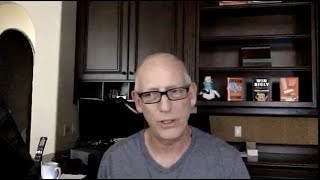
Scott Adams reacts to April 2020 news and Twitter controversies, from Trump Organization loans to Tom Hanks donating blood for COVID research. He critiques media coverage of studies, discusses emerging COVID treatments like high-flow nasal cannulas, and proposes a constrained universal basic income idea.
Chapters
And as the curtain falls on another wonderful day, here in the simulation, we gather together to consider all the funny and entertaining things that have happened since last we spoke. Alexa, turn on studio. Hey. Hey, everybody. It's good to see you. I just got a fresh tweet from Connor Friedersdorf, from Connor Friedersdorf, who is a staff writer at the Atlantic and the founding editor of the Best of Journalism. So the Atlantic, as you know, is a Trump derangement syndrome publication. And so he was responding to my tweet. So here's my tweet, and then I'm going to read you his tweet, and I want you to see if it makes any sense to you, because I've taught you to find cognitive distance, right? And the tell, for cognitive dissonance, at least the verbal tell, is that the person babbles nonsense. So if you see somebody who should be able to put a coherent sentence together and just can't the words come out, but it's just nonsense, that's cognitive dissonance. So I'm going to read this to you, and you decide what this says. All right? So first, my tweet that he responded to, I said, pro tip, if you find yourself bleeding, bleating like a sheep, but he literally said that, then you are demonstrating that you don't understand how words work. Meaning requires context. It never matters what someone literally says. It only matters what they meant, which context can help you discern. All right, so my tweet says all the people who are saying. But he literally said that are just demonstrating that they've never lived in this world. Because what somebody literally says never means anything. If I say, I think I want to kill that newspaper delivery boy, which is probably not a thing anymore and never will be, but it doesn't mean I want to kill him, right? Because I don't say what I literally mean. You have to look at the whole context. So Connor Friedersdorf looks at my perfectly reasonable statement that context must be included, and you cannot just look at the literal words. And here's what he says. See if this makes any sense to you. What Trump meant was, I'm so smart that any Covid treatment that pops into my head because based on whatever I just heard is worth airing to the nation, it rises to the level of the tiny subset of things that we should communicate from the White House. And then he says, the context is hugely damning. What? I don't even know what is. Huh? What? What does this mean? It rises to the level of the tiny subset of Things that we should communicate from the. Oh, so he's saying that it's important. Okay, so I see his point that the President shouldn't have maybe been in this topic, but does that have anything to do with my tweet? They're completely unrelated. It's just like Babel on some other topic. Anyway, so all day long I've been seeing people triggered into cognitive dissonance and just going into Babel mode or full insult mode. And I feel like on some level, this is just a replay of the fine people hoax situation in which there's. You just have to look at the transcript, you just have to look at the context. It's obvious, but we will never be able to agree. Rob o', Neill, you probably know him as the guy who killed Osama bin Laden. He's fun to follow on Twitter. And he tweeted today that Kim Jong Un is dead. Now, I don't know, maybe he has better sources than I do. He did, after all, kill bin Laden. But when he tweeted that Kim Jong Un is dead, I tweeted back to him and I said, did you do it? Because if you did, that's just showing off. I mean, save some dictators for. For the other guys. I mean, really, Rob, let somebody else have one. Here's one of the funniest stories. You know how every time Trump hires somebody new or, or even if he doesn't, even if there's just somebody who's been working for him for a while, that the game is to. To identify people on the other team and just target them for destruction. So it seems that they've targeted Michael Caputo, who was targeted before in that whole Russia collusion stuff. And they basically made him spend all his money defending himself against nothing because he was never accused of anything. But he still had to hire lawyers and stuff. So he's been probably the most. One of the most victimized people in politics. So he gets this great new job just recently as the new spokesman of the Department of Health and Human Services. And of course, that's pretty important job, especially now during the coronavirus stuff. And so the cafiles, I guess that's a CNN investigative group or something. So they look to find all the bad things he's ever said, all the very bad things. And, man, did they come up with some doozies. Well, I don't know if they came up with some doozies because they only gave one real good example. So this is the guy they've targeted for destruction, for what they say are his racist tweets. And I'm going to read you his tweet, and then I'm going to read you his response when they asked him about it. It's like one of the best responses ever. So he had tweeted, I guess, back in March 12, in response to the rumor that the United States was the one who started the coronavirus and took it to China. So he was responding to that crazy rumor, and he retorted in his tweet that, quote, millions of Chinese suck the blood out of rabid bats as an appetizer and eat the ass out of anteaters. Now, I'm only reading this because it was on CNN's website, right? So it's news. Now, I feel as though this would be more of a humorous exaggeration than racist, because it's not like he made up the wet markets. Michael Caputo did not invent wet markets. He simply humorously described them exactly as they exist. Now, is it offensive? Sure, sure. Yeah, it's offensive. Was it meant to be offensive to China, the country? Maybe. Who knows? Who cares? I offend China five times a day. I plan to offend China many more times. Is there a law against offending China? I mean, they did kill my stepson with fentanyl. I think I've got a right to offend them. So one of the tricks that CNN does and the left does is they conflate offensive with racist, and they're not even close to being the same. Offensive is what people are all the time to each other. It's called Twitter. I mean, if you took away being offensive, there would be no social media. I mean, wouldn't be enough left to be entertaining. So, yeah, of course it was offensive. He wrote it that way. That's why it's funny. It's funny because it's offensive. That's how humor works, is how social media works. The other trick that CNN does is they'll take something that's very provocative on Twitter. But because it's Twitter, everybody sort of understands what the game is. Yeah, of course you say stuff like that on Twitter, but as soon as CNN takes that thing that was on Twitter, where it was just like every other thing, right? Every other offensive thing on Twitter, humorously offensive. That's partly why we go to Twitter. The humorously offensive stuff is, if I had to admit it, sort of the main attraction, at least for me, speaking for myself. So anyway, he was offensive, but you'd have to really stretch to say it was more than that. But anyway, so this is the worst they could find is something about eating the ass out of an anteater, which to me is just funny. And of course, it made me curious. Aren't you a little bit curious now if the posterior part of anteaters are actually in the wet markets as a delicacy? Because I'm kind of curious now, aren't you? Because it doesn't necessarily have to be true. It's just sort of a random animal body part. You know, it's a funny animal. And anteater. And the anteater's ass is even funnier than the anteater, sort of double funny. So maybe. I mean, is that a thing people are saying? No, they don't think it's a thing. But what's funny is that you pause and you say, well, it's probably not a thing. But on the other hand, the things that are things, you wouldn't have thought of those being things either. So it's kind of funny that way. All right, so here's his response. So he gets busted. He's busted for this highly horrible tweet, which has since been deleted. I think he just did the wise thing, which is he cleaned up his Twitter before he took the job, and he responded to CNN's request for comment by saying, quote, fair game, dude. I don't care. Doesn't matter to me at all. Caputo went on to say that he regularly deletes his tweets, quote, because it drives people mad, and defended his past Twitter behavior by saying he was a defender of the present. Of course, is that the best. The best comment he could have possibly said is, fair game. I don't care. Doesn't matter at all. Because you know what? Doesn't matter at all. Doesn't matter. Not at all. You know, and here's the thing. They're obviously the game here. Nobody cares. There's nobody at CNN who cares about this. Do you think there's somebody at CNN who's like, you know, I made a list of all the important stories, and, you know, Michael Caputo's. That one tweet, it was, like, a little bit exaggerated in a way that you could take as being offensive. Yeah, that's what I care about. Nobody has seen it. Cares. It's the least important thing of the least important thing. So just blowing it off like that, it's like, I don't care was sort of perfect. And of course, you know, the game is to get the Trump administration riled up and say, we're gonna have to fire this guy because of this. But if you fire people for being this, this level of minor, humorously offensive, if that's what gets you fired, you're gonna have to get rid of, you know, Don Jr. You know, you're gonna have to get rid of, you know, everybody on, on the Fox network, pretty much. Pretty much everybody who's a conservative has to be fired, if that's fireable. All right, we got more fun stuff coming here. So Trump didn't have a press conference today, and I think that was the right call. I think maybe, probably he's getting the feedback that a little bit less of that would be more. So maybe that'll be a few times a week. We'll see. It could be exactly as much. He's unpredictable. We'll see. But he obviously knows that it's obvious that the entire event is just to trap him into saying something that they could take out of context. And if that's the only reason you're doing it is to bait him into saying something that can be taken out of context, why do it? All right, so the bank of China, you remember that story, they said the bank of China had loaned the Trump Organization millions of dollars, and therefore there was this big scoop in Politico. I think it was that, that, you know, Trump was beholden to China because his loans were going to come due. And I said, based on my experience as a banker, you know, I'm not even sure there is a loan, because even if the bank of China made the loan, it would be typical to package up your loans and you sell them so the bank will make the loan, but then they're not the ones who you have to pay back because they sell that debt to someone else. It's just part of their business, because they would rather make new loans and get the processing fees and the upfront stuff and then sell it off so they have enough backing to make new loans. So I had speculated that there was actually probably nothing that the Trump Organization owed to bank of China, and that was confirmed today. So that was confirmed. So it turns out that the amount of money that the Trump Organization owes to the bank of China is 0. 0. This big breaking story, big news. And I've told you before that having a good talent stack in which you've spent some time in different domains, allows you to see around corners sometimes. Here's a perfect example. Because I was a banker, I knew enough about banking. I'm no banking expert, but I knew enough about banking to say, I'm not so sure he owes them any money. You ought to look into that. And so, so I didn't know for sure, but based on my experience, it seemed likely. And so that's confirmed. That whole story was fake. Piers Morgan. What is, what is wrong with this guy? There's something going on that I don't. It's like there's more to the story. So why is Piers Morgan. He hates the president for some reason. Lately. Used to be a supporter, but he completely believed the story that Trump was asking the doctors or asking somebody about injecting Clorox and Lysol into bodies. He actually believed that and tweeted angrily about it. But it gets worse. He also believed the follow up fake story that, and it was in the New York Daily News that said there's a spike in calls to the, I guess the poison hotlines or whatever asking, let's see. Oh, yes. It simply states in the article that 30 people called the city's poison control hotline over fears that they had ingested bleach or other household cleaners. Do you see anything wrong with the study? The whole coronavirus has caused people to wildly buy and use more household cleaners. So we're using household cleaners, bleach, isopropyl alcohol, all those cleaners. We're using them at a level that's like 10 to 20 times more than ever. If you're using that stuff 10 to 20 times more, what are the odds you would get more calls about people who think they may have accidentally ingested some? Of course you will, because we're using it about 20 times more than normal. So there's just more of it in our environment. There are more reasons for somebody to say, oh, the lid is off this bottle. Does anybody know why the lid is off this bottle? I mean, it just creates a zillion opportunities for people to say, oh, did that spill on my sandwich? Or whatever. Yeah, who knows why people think they get poisoned by household cleaners? I don't think it's because they take them intentionally. So that Reason, the organization Reason, did a debunk on that and just ripped it apart. But not until Piers Morgan tweeted it. So not only did he believe the fake news that Trump was noodling about the possibility, or let's say, wondering aloud about injecting people with Clorox and what was the other thing? Clorox and Lysol. He believes that, but then he believes that this has actually caused this spike in poisonings, which was the second fake news. I mean, seriously. Seriously. All right, here's some, some good news. Trump is Reviving the US Nuclear program. I don't know exactly what it means to revive the nuclear program, but it's, you know, John Solomon reported it. It's a story. Apparently the focus, at least initially will be on opening uranium mines, I believe, so that we won't have to worry about anybody else for our uranium. Sounds like a good idea. Plus, for long term competitive reasons, we have to have a good nuclear stuff. So Vox did an article about, quote, a disturbing new study that suggests Sean Hannity's show helped spread the coronavirus. So the idea is that people, this is their claim, it's pretty ridiculous, but their claim is that people who watch Tucker Carlson, who is more alarmist if you can use that word about the coronavirus, that they had better outcomes in terms of not getting it than people who watched Hannity. And I don't know, this is just like the most ridiculous study and I just tweeted and asked people to spot all the mistakes. So first of all, it's not peer reviewed. Second of all, where's your control? There's no control group. They just compared Hannity viewers to Tucker viewers. How many of them are the same viewers? I don't know. Do they account for that? Who knows? Is there any selection bias meaning that the people who choose to watch Hannity, are they, you know, in any way? If you polled them, would they be different than the people who choose to watch Tucker? Probably. Wouldn't you say because Tucker and Hannity are different enough that you would expect over time that there would be a self selection of people who had a certain philosophical leaning would go one way versus the other. So it's the most garbage study that has no credibility whatsoever. And to even see this in the news is just laughable. So I don't know if any of our news today was real. Did we have any real news today? I don't know. It's hard to tell. So here's some more good news, kind of a USA Today poll found that 71% of minorities in this country support a ban on immigration to fight the coronavirus pandemic, which does suggest that at least the coronaviruses may be bringing us together because at least in this case, people are on the same page. Here's the weirdest cool story. Tom Hanks, who as you know, had coronavirus, his blood is going to be used to develop a COVID 19 vaccine. How much would you love to have the Tom Hanks vaccine? And you'd know, I got a little bit of Tom Hanks. I don't know. Whatever they take out of Tom Hanks. Do you get his DNA in you or what? And so I ask, is that something Tom Cruise could do? No. Could Tom Cruise turn part of his body? He could not. But Tom Hanks is going to turn part of his body, you know, the blood part. He's going to turn it into maybe a cure for a devastating world problem. Somebody says, why him? I don't know, maybe because he was easy to find and he was willing to volunteer. Maybe he was the right age, I don't know. But that's the story. Here's some other interesting stories. So doctors at the University of Chicago Medicine say that instead of using the ventilators, they're having, quote, truly remarkable results using some kind of just a nasal, nasal airflow thing. So it's just something that goes up your nostrils instead of down your throat. And it's just a. I guess it's a gentler airflow situation. I don't know exactly why it works, but they say that that plus laying people on their stomachs, which apparently is a big deal, they found out was taking people from low oxygen to high oxygen. And I think only one of them needed a ventilator. So this little trick first of all makes it a less expensive device. I think the nose thing's probably less expensive, less complicated, although we might have a shortage of them. We may have all these ventilators that we don't need, but we might have a shortage of these nasal canulas, whatever that is. They're high flow nasal cannulas. So and they blow large volumes of warm humidified air into the nose and lungs. It could be the, the warm humidified part might be the important part. I don't know. So that seems like a gigantic thing because if it turns out that there's a lower cost way to save the people who have already become ventilator sick and they don't need to be on ventilators because that seems to be closer to a one way trip these days. This could be huge. I mean, this could be one of the, this could be one of the biggest things ever. All right, here's some other funny things. There's a little mystery why people who are longtime smokers are actually having better health outcomes with the virus. It doesn't make sense. Now some people said, okay, it's because of whatever the smoke has done to the lungs over the years, makes them less susceptible. But then there's also a theory that it's the nicotine. Now don't go out and do anything about this so don't get your medical advice from cartoonists. But there's speculation that the nicotine. And there's, you know, there's a known, A known connection to the ACE2 inhibitors or whatever receptors. So there's some reason it should work that's good. Maybe that's the thing. Let's say, I think the bad news is that there's more hints that there might not be immunity that builds up. But the weird thing about that is if it's true that you can't build up an immunity to it, then there's probably no reason to not go back to work. Am I right? So is this good news or bad news? It depends who dies, I suppose. If somebody you know dies, it's bad, bad news. But if you go back to work and that's the only thing that happens is good news. So if, let's say, let's say we got confirmation in the next week or two and we got a confirmation that you don't build immunity, that is weird that way. It's like the only virus where you don't build immunity. Now, first of all, I'm still skeptical. I still completely doubt that people don't get immunity. I think they do. There might be some detail of this that's different. But if it turns out that there's no immunity and we know we can't wait for the vaccine because that would be too much of a wait, don't we just go back to work? Because if we can't count on herd immunity and we know we can't wait so long that we could wait it out to the vaccine, there would be nothing left of us, we might as well go back to work. So it'd be kind of bad news is good news, right? Help me think that through, because I'm not sure that what I'm saying makes sense. I think it would make sense if there was nothing on the horizon that was just going to stop this thing. If the only thing we had was some therapeutics and better testing and stuff. I think we just say, well, it is what it is. Let's just open the doors. Now, here's a thought that I don't know if everybody is completely, let's say, considered in their opinion of what might happen in the future. Are you thinking to yourself that. That there's a point where the public might revolt and just say, screw these guidelines, we're just going to open up our businesses? Because I'm here to tell you that can't happen no matter what we individuals do. I think individuals will probably massively disregard the guidelines pretty soon as they already are. So I think individuals are going to go to the beach, they're going to go to the park, they're going to take walks. So I think individuals will in fact, massively just say, okay, yeah, we're just not going to do this anymore. We'll be smart, you know, we'll try to keep our distance. We'll do the obvious things, but we're just going to go to the park. You can't tell us not to go to the park. You can't tell us not to, you know, not to go fishing. But that doesn't work with businesses. Everybody who has been involved in any kind of a small business knows it doesn't work. Because you could say to yourself, all right, I'm going to open my donut store. You could try. But then the police walk in and they say, we're going to pull your permit. How long do you resist if you're the donut shop and the police come in and say, you know, it's against guidelines, can't let you do it. We're going to pull your permit to do business, or we're going to, what, find you something you can't afford? It would be the easiest thing in the world for the authorities anywhere to stop small businesses from opening. It'd be really easy. And it'd be even easier to stop big businesses because you can just say to them directly, hey, you're a big business CEO, not yet. So you wouldn't get CEOs to go rogue. And the small businesses are too vulnerable. They're not going to take a chance. You know, even in desperation, the police can still shut them down easily. And you don't have to shut too many down before everybody says, ah, this isn't working. So I don't think there can be somebody says health code violations. They can always find something. So I don't think there can be an echo. We're going back to work. It's just too easy to stop them. But the individuals will. Of course, here's some other stuff that might be good. There's some indication that an existing asthma drug called Singulair. Singulair shows promise for treating COVID 19. That would be good. Now, that's, again, it's one of many things we're looking at, but there's some reason to believe that this is a strong contender. Wouldn't that be great? Then Australia has introduced today their Contact Tracer, an app that figures out who comes in contact with who and if you get, I guess it's voluntary, but if you use the app and you also get tested as positive, then and only then it becomes unencrypted. And I guess authorities can figure out who you contacted or who you were near. And then they could contact them and somebody says, they're already on that. Now, is that as good as. I'm not as informed as I should be about what Apple and Google are doing. Don't we basically have that? Is what Apple and Google are doing together, where they're, I guess, pooling their data of location information. Is that the same or as good as, or not as good as the Australian app? So I don't know. I don't know if we're doing something similar or better. So here's the thing. How long can government go without taxes? All right, I didn't want to say this, but I feel like somebody has to say it out loud. There's a few things that you just don't want to say out loud, but we can't really avoid it anymore. There isn't any scenario in which restaurants are going to get back to full revenue. You'd agree right now you could say, well, someday, yeah, like in a year or two. But I don't know any restaurant that could survive if their business went down 20% for a year. Because restaurants don't have much margin and they're kind of permanently at least as small. Restaurants especially, I think every restaurant will be pushed below the profitability line. So if they have to lose money every month just to be open, how many small restaurants are going to lose money every month just to be open? At what point do they just say, well, I better do something else because I can't lose more money. So I don't know that there's any way restaurants can survive. I don't see any path for that now. Of course, if we had enough time, things would change and adjust. And there's always a way to adjust to things in the long run. But in the short run, it's hard for me to see any scenario in which there are still restaurants in a year from now, except for takeout. Yeah, takeout will be bustling. I hope I'm wrong, and I hope that we come up with some way to do that. Now, to your question, how long can the government go without taxes? How long can we print money? Like, we've printed more money than our GDP at this point, just for this year, I think. Now how long somebody says food trucks. Yeah, maybe food trucks will be a bigger deal. How long can the country go without tax revenue? How long can we run up? How long can we print money? First of all, nobody knows. But I feel as though the only thing that's going to happen. Well, let me make a bigger story about this. The coronavirus is destroying a system that was not sustainable. Think about that. There's your mind, your mind, effing thought for the night. The system we had, the one we were living in that was doing so well and unemployment was low and everything, it was completely unsustainable, wasn't even close to being sustainable, and everybody knew it. Meaning that the debt was out of control and there were some demographic time bombs that were coming for welfare and everything else. And then the robots are going to take the jobs and of course we've got every other problem in the world. So before coronavirus, we had a system that couldn't possibly work. It was going to fail. We didn't know when, we didn't know if we had 10 years or 20. But we didn't have anything that looked like a path to stop runaway spending which eventually would crush the system. And everybody knew it. There was no Democrat, no, no Republican, no nobody. Every single person knew we were pretending to be in a system that could last, and we weren't. We were not in a system that had any chance of lasting. And now the question has been called because the coronavirus just said, hey, let me remove all of your assumptions, let me take away all your safety, let me change all the rules. And suddenly we look at it and say, hey, our system is completely dismantled. What are you going to do? And the answer, of course, will be what we always do, which is to reinvent. We will reinvent. We will come back stronger. And the reason we'll come back stronger is because of this destruction. It just is breaking everything. So you have to come up with a new way for everything. The biggest change I think will be that I think we're going to have. Let me just sort of brainstorm out loud. I'll be thinking aloud here, so don't take this too seriously. As of today, this is a brand new thought. I feel like the only way that society can go forward is with a universal basic income that everybody gets, regardless of your income. And it would go something like this, just for conversation. Everyone in the country gets $100,000, or maybe every household gets a little more if they have kids and stuff. But let's say every single individual gets just $100,000. But there's a catch. The only thing you could spend your hundred thousand Dollars on is shelter and energy and the basics. You couldn't buy a car with it. You couldn't. You couldn't buy clothes with it. So I almost think that we need a second currency. You know, one currency that's your universal basic income, and you've got it in your. Let's say it's in your wallet. Let's say it's a digital currency, and you can use it at the grocery store, you can use it to pay your rent, all your basics, but you just can't use it for luxury. And somebody says, this is horrible. I'm out. Have you heard the idea? Whoever said this? Seriously, seriously twittify. Who says this is horrible? I know. Now, are you an economist? Are you a professional economist who is also a mind reader? Because not only can you see all of the ramifications of this idea, which has never been tried, but at the same time, you can read my mind, and you know how the sentences are going to end, so you're out. How about opening your mind just a little bit? Just a little bit. So here's what I'm. I'm not even claiming that I'm proposing a good idea. I'm just brainstorming here. So settle down. So the idea would be that you need to keep free market incentives no matter what. And there would always be enough people like me who say, well, I'm not happy with a basic life. I need a real life. I need a life where I can grow and do things and make an impact and stuff like that. So I could still go do my thing and then I could earn as much as I want just like that. Now, somebody says it's socialism, but let me say this as clearly as I can. If you're. If you're dismissing it because it's socialism, that means you don't understand it, right? So let me say as clearly as possible, you're not disagreeing with it because it's socialism. You're not understanding it because we currently have a system that has all kinds of socialism built into it. This would just be a simplification of existing socialism. We. You know, if you're saying to yourself, scott, Scott, Scott, I'll never live in this system with socialism, I say to you, we're already here. The coronavirus has just made it painfully obvious that the government is going to be supporting most of the public, probably for the long run, because most of the public won't have enough skills when the robots come. This is just Andrew Yang's thing. And of course he's Right. In the long run, there will be people who have the right skills to make extra money and do extra stuff, and there'll be a whole bunch of people who just don't have any skills, they have any economic value, and we're not going to want them to die. You don't want your grandma to die because she doesn't have good economic skills. So the likelihood of a universal basic income, it doesn't matter if you think it's a good idea. It really doesn't. There's no other alternative, and I think Andrew Yang would agree with that. You can hate it all day long, it's going to happen anyway because there isn't another alternative. So you have to lose your fairytale hallucination that there's some other path where that doesn't happen, that doesn't exist anymore. And I think the coronavirus made plain that some number of people just have to have a simplified life. Now, here are some ways you could go about it. You could, for example, say there are certain states or counties or locations where the people who live there are all the people who have lower cost housing. They ride their bikes everywhere. Maybe it's a designed city so that everything's closed, you can walk to it. The housing is designed from scratch to be really low cost, but high efficiency. And those people just live there, and they can live there as long as they want. They just can't grow. So you still have your market incentives like crazy, just like now. But the people who don't really have any chance of making it in the future would also have some way to get by. And then they can also, they can move up if they want to based on their own work. All right? So remember, if you hear this idea and you say to yourself, that's impractical, it will never work. You have to finish the sentence because you can't say it's a bad idea. That's not the. You haven't finished the sentence. The rest of the sentence is compared to. And then you say what you're comparing it to now if you say no. So, Scott, I don't like your idea because capitalism, the way we did it before, works so well. To which I say, no, it didn't. It was a complete failure. We just didn't get the bill yet. The only reason that we had any economic security or economic, let's say growth is because we borrowed the money from young people who don't know it yet. So we didn't have actual productivity. We had a sort of fake financial one that felt Good for a while. So if you want to go back to the other system, that's not a pale little plan, because the other system doesn't even exist. You know, it's not like you can get on the path that takes you to grandma's house. There is no path to grandma's house. You can't get on something that was never there in the first place. We just pretended it was there. So in the long run, I think that we will figure out how to live cheaper, better lives that will be more bulletproof. You know, we'll be better in every way. I'm pretty sure that the. The golden age is still. Now somebody says, UBI is death. Is there any thinking behind that? I don't know that there is tiny houses for everyone. Someone says, I don't know. Coronavirus has shown that cities are no longer a viable concept. There's something to that. Traffic tells you that cities are no longer a viable concept. If you tried to spend time in New York City, New York City is completely broken in terms of trying to get from one place to another. You're basically trapped. Or it's just a horrible, horrible experience to get anywhere. I mean, you could go in the subways, but then you've got all those problems. Somebody says, scott, Scott, Scott, we already have ubi. It's called welfare. Well, it's not what I just described, because if you get your welfare check, you can spend on anything you want. And I do not recommend that. That would be anti. That would be a bad incentive. But you don't want those people to die. You want them to have the basics of life. But if they want a little extra, they're going to have to work for it. Where would the money come from? Where did Bitcoin come from? Where did the money come from that we just printed? So one of the weird things about money is that you can just print it. You can just make it. You can just say, we got money now. And of course, governments can do that in the way that individuals can't. And the reason that the United States can just invent money is that they can say, we'll accept it in taxes. So as soon as the government says, yeah, if you pay your taxes in this kind of money, we'll take it. Well, that gives the money value because you always have something you can buy with it, which is paying your taxes. So the government can create a currency out of nothing and just say, well, we back it. So here it is. We're going to send you some money. If you don't want it, you don't have to take it. But wouldn't it be nice? You could use it to buy some groceries. All right. Naval's opposition to UBI is very persuasive. Yeah. You know, I can see what's happening here, which is this is why. This is why we can't have nice things. If, if anything that you say about what I've been talking about here is that UBI doesn't work or that socialism is bad, then you didn't understand what I said. All right? Because I'm not recommending Andrew Yang's version of UBI because his would let you spend it on anything you want. And I think that's a flaw in it. I don't know what naval's his. I don't know what his objection is, but I would assume it's because of what it does to incentives. And I've described a situation where the people who get the basic income can only have a basic life. And if that's good enough, well, they don't need to do anymore. But most people would say, you know, I'd like a little extra. I'm going to do a little extra work. All right. Yeah. So all the things that people say about this could cause inflation, etc. Those are all true. But again, you have to compare it to a system that can't work, doesn't work, was already broken, which was our current system. So we don't actually have a system that works, nor do we have an idea for one that would work. We don't have one to go back to, and we have no idea how to build one. But we do have those skills. So I do believe that the country possesses in abundance enough smart people who could say, you know, well, let's try this. Let's print some money that we use for the basics and we use our other money for everything else and international trade and all that. And there you go. Debate Naval. I bet we would not. See, now the fact that you say that makes me think you don't understand what I'm saying, because I don't think we would disagree. I don't think I'll ask him about it. All right. Naval is about voting for more ubi. Is the problem that people can just vote themselves a raise? Is that what you're saying? Well, that's also fixed by mine because the only things I can buy are the basics. Anyway, you think the stores have been bogarted, wafer, everything, free for all. Now, of course, I'm not suggesting anything like that. So If I see some objections that show that you understand what I've suggested, I might engage with them. Oh, Nouvelle advocates for universal basic necessities. That's just what I said. So it sounds like naval and I have exactly the same plan. Why would he disagree with it? So if he's saying that we should give people necessities, that's just another way of saying you can't use this money to buy fancy clothes and a labradoodle. That's all I'm saying. I'm just saying a mechanism for doing it might be a second currency. I don't think he would disagree with that, but I'll ask him. Aren't there already rules for what you can buy with food stamps? Yeah, food stamps just being a limited example of that. That is correct. Your brainstorming has crashed. I don't know what that means. Somebody says, did the simulation create the virus to address climate change? Well, believe it or not, that was actually one of my notes and. And I skipped it because I didn't want to sound like a jerk. But now because you've asked me this question in the comments, I can blame you. So now I can talk about it. So I'll use the lawyer trick. Well, you brought it up. I would not have said this, this is just a horrible thought. But hey, you brought it up. So it's on you now. And it goes like this. You've heard the idea that the Earth is sort of somehow magically self regulating, that if the Earth gets out of balance in some way, then it will find a way, and you might not see it coming, but it'll find a way to get back in balance. Now, I have no reason to believe that's true. Right. I don't know what logic you would use to say that the Earth needs to go back to balance, because it seems to me that every planet is changed, you know, every year, forever. So I don't know that there's any reason they would be in balance. But if you take the assumption that the Earth does know how to balance itself, and the Earth being the sum of all the creatures and energy on it, it's not just the dirt of the Earth, I'm talking about the animals and creatures and everything else. And if there was one thing that could deal with the impact of humans, it would be a virus that primarily killed older people and also put such a crimp on economic activity that it cooled the planet and made sure we had enough resources at the same time. Because as you know, if you take. Let's Take health care. Yeah. There's some gigantic proportion of the total healthcare you spend for your whole life ends up happening in the last few years of your life, because that's when things get expensive. So there are going to be a lot of people who would have been very expensive. And here's why I'm glad you brought this up instead of me, who would be very expensive to the system, who, if this virus had been created magically by the Earth trying to balance itself, it would be sort of exactly the way to do it. The thing that's hard to ignore is that if the Earth were alive, I'm not saying it is, but if the world were sort of like conscious, and it just said, all right, I guess it looks like it's getting a little warm in here, around here. I better do something to adjust it. I can't think of anything that would be as effective as this. Maybe a volcano, I don't know. So it looks weirdly sort of on the nose for solving climate change, but I think the Michael Moore backed film Planet of the Humans ended green energy as an option. And I think that the coronavirus and everything that's changed about civilization, I think it just makes the Green New Deal seem, I don't know, just not important. Maybe someday we'll circle back to it, but the last thing we have to worry about now is polluting too much. Sounds like you just validated coronavirus. Well, I wouldn't call it validated. Somebody says climate models are as accurate as the virus models. That is correct. Which means that they're both useful. Only people who've done models for a living understand that the most basic misperception is that people think a model is supposed to tell you what the future will be. You can't do that. Nobody can predict the future. That's not a thing. Nobody's ever done that in any domain. You know, it just isn't a thing. What a model can do, and I've never explained it this way, so this might be the first time you've, you've heard the good explanation. What a model can do is if you try all the different variables and no matter what variable you put into it, even though they're just estimates and assumptions, no matter what you do, if it shows that the highest part of the range isn't going to kill you, well, that's good because you can't know which variables are the right ones or what to put in. But if you play with your model all day long and you've changed every variable within the Range that you think is not crazy. And there's just no situation where the world is destroyed. Well, then you've got some decisions. So that's a perfectly good use of a model. Likewise, you would do the same thing on the low side. You try every variable you can, every different assumption, even wild ones, and you say, all right, what's the best that this could be? If everything went the way we wanted to, what's the best it could be? And then you look at it and say, oh, oh, the best it could be. Under every scenario, it still gets a little bit too warm. We don't know how long, but it's going to get a little too warm. So I think the climate models do that. They do that. They tell you that somewhere in this gigantic range we might have trouble, but that's about all they can do. They can't tell you the economics. They can't tell you what we'll invent between now and then. They can't tell you how many pandemics we'll have that will rearrange society. They can't tell you if we'll all be cyborgs in 40 years. So models can't tell you what's going to happen. And as soon as you buy into the illusion that that's what they're for, they're not even for that. They're not even built for that purpose. It's only to tell you this big range of possibility. And then you look at the virus models and you say, hey, but Scott, these virus models have this giant range of possibilities and it was still outside the range, to which I say, well, that's more evidence that you don't know how models work. Because if the model said we're only, you know, the low end would be like 100,000 at one point, then it got lowered. But if the low, Low Point was 100,000 and we came in at looks like we'll blow past 60. So if we come in at 70,000 and the low part of the model was 100,000, that means the model worked. That's not missing, because that's so close to the bottom range and with full mitigation that you'd say, yeah, that was pretty close. It did tell us that under these assumptions, with full mitigation, we're going to be somewhere in this 50, 60, 100,000 range. And you would make different decisions if you're in that range than you would if it were 1 or 2 million. So did the models work completely? The models completely worked for what models can do what models did not do is tell you what the future would be, because they can't do that. They just can't do that. And as soon as you fool yourself into thinking that they can do that, that's when your world doesn't make sense anymore. Because you think those idiots. Are you telling me they closed the economy and their models were wrong? No, that never happened. Because there's no such thing as a model that's right. You can't have a model that's wrong if there's no possibility of it being right. And there is no possibility because nobody can see the future. All right? We ruined our world economy because the models. Incorrect. Completely incorrect. So everybody who thinks that the models are why we close the economy has not listened to Dr. Fauci, who said no, we were watching what was happening in China and Italy, and it wouldn't matter what the model said. If you're watching China just get decimated and then Italy get decimated and you see us coming toward you. Fauci said this directly. He said, no, we didn't need the models for that. You could tell this was some bad stuff. No model required. The models are mostly to communicate with the public. Really. That's. That's the primary thing that they do. And they mislead the. They mislead the public. Models showed that hospitals would be overwhelmed. And again, are you saying those models were wrong because they did not predict the capacity of the hospitals? Because if you're saying that again, you don't understand what a model is. The model can't tell you what it will be. Can't do that. It's not made for that. Nobody wanted it to do that. Doesn't do that. Only the range. That's it. And I think we were within the range, in my opinion. Why do you leave your cork board blank? I do that because I don't like. Lot of busy stuff behind me. I only wanted behind me. Things that I wanted to be behind me. Sounds like you're wheezing. Are you okay? My. My. My surgery to get my nasal sinus problem fixed was postponed with everybody else's postponable surgeries. So I'm actually having pretty bad breathing problems. But it's. My oxygen is fine. I test my oxygen every day, so that's fine. Do you think you had the virus in January? I thought about that all day today because now they have those home tests, and if you can talk your doctor into there's some reason you should get tested, apparently you can do it, but it would have to be Your doctor ordering the test. And I was wondering if I have a good enough reason. And I think that given the shortage of the tests, the answer is no, because there are people who need it more than I do at this point. But if there were enough tests, I would definitely take one now. Because there's so many people who had the same experience in January, and they say, I don't know what I had, but I've never had anything like that before. So that was my experience. Whatever basically took me out for almost the entire month of January. I mean, I was in bad shape in January. I couldn't walk upstairs. I would have to, like, stop and pause and, like. And I just thought it's. I don't know, cold or allergies or something. I didn't really know what it was. It wasn't. And I also thought I was taking some meds for my sinus thing, and I thought I had an allergic reaction because there was one point. You know, one of the things that supposedly happens with the coronavirus is the shakes. And I remember sitting in front of my fireplace and my body was shaking so hard that it hurt, you know, like, I was just going. And I couldn't stop it. And I was cold. So I was, like, cold and shaking so hard that, like, I felt like a baby getting shaken too hard, like it was going to kill me. And, you know, whatever it was the last two weeks. So did I have the coronavirus? I don't know, but I know I've never had anything like that. Nothing in my memory is even close to whatever the hell that was, But I don't know. Oh, my God. Somebody says your eye surgery was delayed and you're going blind. Well, I think the next week or two, we're gonna see a lot more. A lot more stuff. Somebody says that's sepsis, which it could be. Could have been sepsis. I had enough things going on. I did not have any kind of a persistent cough more than my normal, normal cough. Those scopes must have been brutal. Yeah, I mean, I was suffering. You're now immune? I doubt it. I doubt it. I would say the odds that I actually had it would be the same as the other people who got tested and thought they had it. And the answer was something like 90% don't have it. So, anyway, I will talk to you tomorrow. You know where to find me. Have a good night.
More from Scott

The Scott Adams School - 10/14/26 The Chicks and Joel Pollack Stops By. Scott & Persuasion


The Scott Adams School - 10/09/26 AKIRA.. TAKE TWO! Fri Yay! With the Home Team



The Scott Adams School - 10/06/26 Erica & Marcela Talk France. Venezuela. Scott Adams. and More


The Scott Adams School - 10/02/26 Fri-Yay!! The Home Team closes out another amazing week.


The Scott Adams School - 09/30/26 WHITEBOARD! AI Luncheon. FRAUD. MIKE ROWE, Happiness!