Gap Selling That Delivers — Revenue, Retention & AI w/ Keenan | RevIntel [Archive]

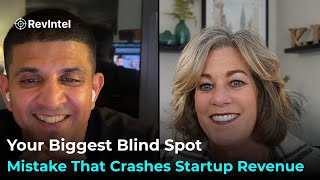
In this hour‑long interview, host Shane P. Mahi talks with Keenan, the creator of the Gap Selling methodology and founder of the Sales Growth Company. Keenan recounts his early hustler days, his rapid rise to top sales rep, and how a client‑requested training deck in 2011 evolved into the Gap Selling book, which has sold over 130,000 copies and now powers a licensed franchise model. The conversation moves through the practical challenges of scaling a consulting business—building repeatable IP, maintaining brand consistency across trainers, and the perpetual struggle of generating revenue and retaining customers. Keenan shares his personal motivation (the thrill of winning, not money), his belief that sales should focus on customer outcomes rather than products, and his view on the role of AI today: mining CRM data to surface predictive deal insights. He also offers blunt advice on entrepreneurial discipline, extreme ownership, habit formation, and how founders should align spouses and manage personal relationships while building a company. The interview ends with Keenan pointing listeners to salesgrowth.com for franchise opportunities.
Chapters
So guys, I am back today and I'm privileged to have a very, very influential speaker on here. His name is Keenan. He's written a very, very impactful book called Gap Selling. I've nagged him for a few months. I fucked up a call. He called me off. So now we'll probably jump into that a little bit too. But Keenan, I'll hand it straight over to you. Who are you? What do you do and why do you do it?
I don't know. I'm Keenan. I'm not good at that shit. I'm Keenan. I do a lot of things, man. I'm a lot of things, but I guess it relates to this. I run a sales organization called a Sales Growth Company and I help promote the concept of GAP Selling sales methodology. And we work with companies all over the world. I'm a dad of 3 girls. I do it because I love it. Right.
Okay. So, okay, so running a sales company, getting into sales, becoming good at sales, you always have to have something unique about you. At what age did you discover you had that spark, that you knew you was a little bit different from most of the others?
I don't know if I was different, but I, I mean, I know I kind of had that spark. I mean, in hindsight, you didn't know it at the time, you know, you don't know, it's all relative. You got to have some sort of comparison. But no, I mean, when I look back, probably around 4th or 5th grade.
Okay, tell me more about that.
I think I would even probably in 3rd grade. I mean, I'd be the kid who stopped at the store and buy candy and sell it at the school. I'd be the kid who would do lemonade stands all the time. If we had to sell something at school, I had to sell chocolate or raffle tickets, I'd be the kid who would always sell the most or be in the top 1 or 2 who sold the most. So I mean, I was just always a bit of a hustler, you know, just wanted to make money or compete, you know. So I was always trying to compete.
All right. But then so as a younger kid, you're finding out that you want to be, I guess, ahead of the crowd. You want to be the leader. You want to be number one. I think I was a little bit like that. But then moving forward into like your teens, into your 20s, maybe your first role, you're sitting around the room, you know, you're different. You know that you can compete much better at a different level than most of your peers. What age was that that you kind of discovered, look, Keenan's got something about him that is much better, I can do something more than just sit in this chair?
Really never. I never really looked at myself as being better or I have something better or, you know, I think sometimes I'd be surprised at the results. I'd be like, you know, my first sales job, they hired me and one other guy who had sold before and hired the other guy. Because he was supposed to be the safety net because I had never done it. So they were nervous, but they thought maybe we should give him a chance. He didn't make it 3 months, and I was the number 1 sales rep in the company in the first year. And so I was like, oh wow, look at that, these guys have been around here selling for a while and I'm the top guy. Wow, okay, that's cool. Then I got another job and went to another place. So I never really compared myself too much to other people. I liked winning Necessarily say I'm better than you, or I've got something you don't have, or I'm different. I just went out and did my job.
But what was it about winning that was different for you? What was it about that feeling it gave you?
That's a good question. I don't know. Um, it just— that was always in me. I mean, I don't know, maybe it's a benchmark, maybe it's a, a guide, like If 10 people are doing it, then the person who won did it the best. So I better do it the best.
Tell me more about that. Winning is it. So winning gives you this sense of fulfillment. So I'll give you an example, right? When I started my company, the only thing I cared about was money. I wanted to make money. I wanted to see how much I could, how quickly I could, how many zeros I could add to a deal.. But there came a time where we hit our half a million dollar mark in year 2. I didn't feel anything. Nothing was different. But one thing that was different was one of my staff came to me and he said, Shane, he's an Indian guy, but thank God for Driven. Thank God for Shane Mahi, my CEO. I finally bought my first house. And that was something very different for me. So for you, are there any type of fulfillments, different fulfillments, euphoric feelings that you got from winning that really— it always amplifies your kind of need and your desire to take it a step further, maybe into getting to a point where you wrote Gap? When I read the book, there was a lot of interesting pieces that I don't think I'm able to uncover so quickly, but you show— you shine the light on a lot of different experiences in that book. Showed me this guy is very different. When he was on the workforce, he was the big swinging dick on the team. He knew he had something very different about him. So tell me a little bit about that. What was it about winning in terms of fulfillment? What it instilled in you? What was that feeling like? What was it about that that changed you?
Man, I don't know. Look, I think I— look, I never really— I was never really motivated by money. So I liked money, and I, I remember in my first job, my second job, this is back in '96 or '97, I wanted to make six figures. Like, back in those days, that was the big deal. Like, if you could— in the mid-'90s or late '80s, if you could make six figures, you were, you know, you're in a different place, right? I remember, I think I bought my first house in '98 for $250K. I think that house now is worth like $750,000 or $800,000. So just, I mean, shoot, if you do the math, if I had a six-figure job, my house was too— wow, people want to know why America's all fucked up. There you go. I had a $100,000 a year job. My home cost $250,000. Now, granted, there was about an 8% interest rate, which is probably what it is now anyway. So, and now that same house would cost, I could probably look it up, but probably about $750,000, $800,000. And so, if I do that math, I'd have to make $375,000 a year to maintain the ratio. Does that make sense? Yeah, I'm pretty goddamn well sure that the same amount of people making $100K back then are not making $375,000 now. I'm pretty sure of that. Yeah, right. I mean, maybe making $100K back then are now making $100K, maybe $200K, maybe $225K. Like, maybe that's the new— the new six figures is $225K, $230K, but it ain't $350K. I'm pretty sure of that, you know what I'm saying? So, wow. So anyway, so what— that's why I say all that, um, So, I remember I had goals of certain amount of money I wanted to make because it sounded good. But I wasn't really motivated for money. I never really was. Money wasn't enough to get me up to do shit. I had to like what I was doing. So, it was just the thrill of getting people to say yes and getting them to buy. I mean, just the chase, I guess, right? The chase was a big deal. I just— being able to do things people said I couldn't do. I was a big— that, that— I remember my boss, I like that. My boss said to me once, he goes, you're the easiest guy in the world to motivate. And I go, what do you mean? He goes, I just have to tell you I don't think you can do it, and you're just like, fuck you, I'll show you. And off I go. I think a lot of us is trying to do stuff people said I couldn't do.
I think that's always been my biggest, biggest motivator. I was— I grew up in America from '99, it was what, September? Within 2 years, 9/11 happened. I'm in the 7th grade going into high school. I'm the Indian kid around all these big white Americans. And you got the JNCO jeans, people, oversized clothes, people are fucking giants. And I went through, what, 15 years of trying to be the good kid, the good Indian kid, to try to be a good kid to my dad. But I hit a very, very rocky road after surgery. So I had a nose surgery, I had an ACL repair, put me on opiates, codeine. Percocets. Percocets led to OxyContin. OxyContin led to heroin. Heroin led to rehab. Rehab led to jail. Jail led to 3-year prison sentence. 3-year prison sentence got me deported out of the UK to the UK. This was back in 2014. 4-time felon. I had to go into security. Fucking dead job, 15 hours a day. And everybody said, you'll fuck up again, watch. He'll fuck up, he'll be back on dope, he'll be this, he won't make it. And it gives me chills. If you could, it actually gives me chills right now speaking about it because who I am today and what I do today, I'm a half a million dollar earner. I don't, I say it proudly because I've achieved so much, but I went through those stages of earning less than a McDonald's employee selling financial service courses to banks. Where those banks would show up on a $25, a 25-person expected course, and 2 people would be in the room and they'd say, Shane, what the fuck have you just sold me? These were £3,500 courses with a $400 clawback. So you wouldn't even make any money unless you sold one of them. Then got into law and legal and compliance, then demand generation sales, cracked open oil and gas, and then I started my company. And again, people would say, you won't be able to do it. You know how hard it is to start a business? Do you know how hard it is? Do you know about tax? Yeah. And I was like, fuck you, watch, I'll show you. And I did it. And I used to show people my payslips. I used to show people my monthly revenue, $63,000, $70,000. And then they started saying, you're obnoxious, you're arrogant. I don't want to hang around with Shane. But that fueled me. And now, as much as I've separated my parts from a lot of those people, I'm so much happier, right? And I think that's some of the things why I'm so interested in speaking to people like yourself, Kevin, Jake, John Barrows. It's because you guys have achieved something significant in life and then even reading Gap Selling and it's like, so I didn't read it. I did the audiobook with your voice. So I was in the gym and I'm listening to you fucking yelling at me. It's this and this, like, just fucking figure it out. What, what got you to that point? Like, how many successes did you have to go through to the point of you building enough confidence to say, yo, look, I'm ready to write a book, I'm ready to share my message, and I believe what I'm doing can make an impact in these salespeople's lives?
I, I'm finding an interesting theme here to all your questions. I don't— it wasn't like an aha moment. I knew eventually I had to come up with a way to scale my business beyond me. So, for the first, I don't know, 2011, so the first 7, 6 or 7 years, it was just The Keenan Show. I was a consulting firm, tried adding sales recruiting to it, that bombed, but I was just a consulting business. And, um, I knew that if I was ever gonna scale this beyond me and make the asset worth something, right? I mean, I was making good money. I mean, that was not hard. I was making good money, but it was like I was still the one doing the consulting. I was still one flying all over the place. If I got sick, no money's coming in. There was no IP, there was nothing anybody would buy from the company. I was just like an individual proprietor. It was fine. I was doing great. But so I was like, all right, if I want to scale this thing, I got to come up with something. So I kept my eyes open about what I needed to do. But I had a client who asked me to put together a sales training. I said, I don't do sales training. He goes, well, put something together. He did. He goes, put something together. Like you've been out here, you've been consulting for us for 6 months, 8 months. You're coming out every month. We're doing good shit, but you gotta at least give them something. You gotta give them something. Yeah. So I sat down and I built this presentation and it basically, as I was writing it or putting the presentation together to train these guys for a half a day or a day or whatever it was, it started to be, I started to go, oh, oh. And I'm like, there's something here. And then this was in Austin, Texas. So when we had done training that night, we went, He, he has a boat. We go out on Lake Austin or whatever, doesn't matter. And, uh, we were swimming around. I had cool clients. We're swimming around the water and he's like, hey dude, that was good today. I said, you're on to something. He goes, you got something good there. You're on to something. So I went back and looked at it and I was like, all right, here's— here it is. It's gap selling. So now I gotta write— I gotta take this and turn it into a book. And then I turned it into the book. So I never said, oh, I have something I got to give to the world. I never said, oh, I got something to make me look different. It was, this can help people and I need to come up with a way to expand my business. So looks like it's a win-win for everybody.
I think that's a very interesting point because a lot of people think you got to do all these exceptional great things, but just as you've highlighted there, It didn't. It wasn't any of those things. Your book came from a presentation, a client-centric meeting, and then that spark came, right? That spark ignited something. And then from, from gap selling, the moment you wrote that book, you authored it, it sold 100,000 copies. Clearly, right behind you, I think we're at 130 now, 140, somewhere in there.
I got to look where you Yeah, somewhere like that. It's— we're still selling just as many today. Matter of fact, technically speaking, we're selling more today than we did when the— in the first came out.
Why do you think that is?
We can't figure it out. We have no idea.
I mean, look, something— you can figure it out. There's something in— there's something in there. It's maybe your only— you're animated. There's— it's not fluff.
It's— yeah, but yeah, yeah, yeah, yeah, but your question you ask is why is it selling more now than it was before? So So usually books sell, you know, like anything, it's new, everybody runs and buys it, it peaks, and then it kind of slides and slides, and over time it goes down, right? The only thing I can guess is because when I wrote it, first off, I— look, I'm not trying to be that guy, I swear to God. I didn't expect it to do this well. I figured if I can sell 20,000 or 30,000 copies, leave it with clients every once in a while, use it as a lead generator, good to go. Like, that's— I had no expectations of this level of success. So, the most books up until last month we had ever sold in a month was 3,000. If you don't know anything about book sales, that's a lot. But it's not like a bestseller. You got to sell 10,000 the first month or 10,000 the first 2 or 3 weeks to be a bestseller or something. So, we never came out like on fire and everybody writing about us and had this huge— we just came out, 3,000 people bought it. The next month, like 2,800 people bought it. The next month, 2,400. And then after the first 6 or 7 months, it settled in. Right around between 1,800 and 2,200 books every month. Just, just settled in, right? Like fucking clockwork. And it never fell below that. It just kept going, just kept, stayed there. And then last 2 months it ticked up and we got to 3,600 or 3,800 books. Like, where the fuck did that come from? And it danced around 3,000. And, and now, so I'm just guessing, you figure there are, spend, oh yeah, 7 million salespeople in the world, in the world, in the United States. When you're only selling, only selling 2,000 books a month, you're not, you know, I'm not selling millions. Challenge sold millions, right? Or over a million. So I'm just thinking it's good enough that every Peter keeps, someone reads it, tell someone, someone reads it, tell someone, someone reads it, tell someone. And we just kind of are just slow rolling our way through the entire sales world. You know what I'm saying? It's the only thing I can think of.
Well, I think, I think you're right. Like, if people are going to speak about it, I've told it multiple times before. As soon as I read it, I would do it in the gym. Took me about a week or two and I was like, guys, you got to read this. Like my team, you have to read, you have to read this book if you want to. It was always, I want to earn more money, I want to earn more money. All right. So if you want to earn more money, then start closing deals. Oh yeah, but I haven't had that training. Go read this book. That's what it was like. So for you, a lot of people that watch this are either building businesses, they're in sales, they want to get into entrepreneurship. Describe what it's like for those that want to prepare for this stage in their life. What is it like to build a business in 2024? I am taking time, dude.
I have actually been giving that a lot of thought for a while because we have, we have now licensed the Gap selling training. So if you want to start your own sales consulting and training business, you can— we'll train you in gap selling and you can license it from us and you can go market it, use our brand, use our, you know, like, and— but it's your own company. So, but you can do it, right? So we get people calling us all the time, all the time. I want to be a gap survey trainer. I want to start my own gap selling company. I'm like, great. And then, you know, 2 weeks, 2 months in, they're out. They're just like out. So that's why I was laughing. Um, Look, starting a business in 2024 is easier than it's ever been ever in the history of man. Like, you need so little capital to start a business now. I mean, I've thought about this in the '80s and '90s. I thought about this. Imagine trying to start a company in 1949, 1950. Let's do 1953 because it was a good economy. Let's fucking forget about bad economy. 1953, fucking great economy. You know how hard it would have been to start a company? Number one, in America, I don't want to be a douche, but it's just facts. Number one, if you're a man or a minority, fuck it. Unless you're starting a business in your Black community or in your Indian community, or you're a woman who's doing something from home for other women friends, you couldn't start a company. Okay? There was no— you were not starting a a universally wide company that's going to serve an entire group of people, right? Unless you're white, a white male. That's okay. But outside of that, you had to have, you had to have an office. You need to have office furniture. You needed to have equipment depending what the business was. You needed to have a location, office space, phone systems, electricity, the startup costs. I remember when I first did my, um, my very first, um, uh, business back in 19— no, I guess 1999, somewhere. Doesn't really matter. The accountant that helped me do the business plan had line items called startup costs, and they were pretty small then. But what the fuck are startup costs? Like, well, I was like, oh, the stuff I have to— I have to have up front that I have to pay to get the company going. Well, now you don't even need startup costs in most cases these days. I mean, A little, depending on what you're getting into. One of my kids has started a clothing line, so they need enough startup costs to buy their first round of inventory, but all their marketing is free, right? They all have, uh, they can basically build website on Wix for fucking $20, right? So I mean, you could get a business off the ground from nothing. 1950, you better have had the equivalent of about $20,000, between $10,000 and $100,000 at bare minimum Yeah, in 1950 to start a business. So no, it has never been easier to start a business ever in the history of man than it is right now. So starting the business isn't the hard thing, it's, it's getting this to work. People just don't understand. It's, it's not easy getting revenue through the door. It is not easy to get the revenue through the door on a consistent basis. It is not easy to leverage the profit and organically build that company from revenue or profit, feed it back in, buy more inventory or do more advertising or hire more employees. Like that whole process of growing a company organically, people don't get it. And they don't have— most people do not have the fortitude. I literally thought this the other day, literally. I thought to myself, people Most people think— watch what I do here— most people think that people don't start companies because they need the income. So, they like working for the man to get the income. And on the surface, that's right. But I realized the other day, no, no, no, no. Do you know why? Most people aren't entrepreneurs and work for the man because they don't have enough discipline to make themselves work. So if there isn't somebody standing over their head that says, you better be here at 8 o'clock, or you better have that report finished, or you better have that PowerPoint finished, or you better have sold this much money, or you better have XYZ done by XYZ time, you're fired. If they don't have that level of of oversight, supervision, people can't do it themselves. People can't hold themselves accountable. They keep saying, I'll do it tomorrow, I'll do it tomorrow. So that's why most people work for the man and don't have their own businesses because they can't get stuff done unless somebody is over their head making them get it done.
I fucking love it. So what do you see if somebody's listening to this and they're like, I love the way this guy Keenan speaks. He's really hitting home right now. But what are the problems that I'm going to see? What am I going to come up against? So what are the most common problems? Let's pick one or two that you can identify that a new business owner will step into as a business. Let's move revenue out of it because that's a given. That's it.
But there's nothing else. That's it. You can't get the fucking revenue. Like, let's keep it real. That's the biggest problem with running a business. Is you can't get enough revenue.
Okay, so you get the revenue. Now you got the revenue. So let's— I'll give you an example. I used to get— I got the revenue, but training the team, keeping them motivated when money, just like you said, money isn't enough. What's the second problem that you see? The most common problem that comes your way?
I think that depends on the business. So I don't feel comfortable, and I'm not trying to be evasive. I just don't feel comfortable answering that because I think it depends on the business. Right.
So agencies and consultancies.
Well, consultancies then. If it's consultancies and you have some type of intellectual property like a methodology like gap selling, or you have some sort of intellectual IP, right, training people to properly execute that and not dilute the, the brand. So making sure that when they go out and they train people in in gap selling, it's going to be the same across every experience, right? So no matter who does the training, because I heard— and I, look, I can't prove this, but fucking Challenger, get over it— I've heard that people love Challenger selling, but when they've hired the sales— they're not salesmen, the trainers— the trainers suck.
Yes, would they hire— so in my, in my, in my company in 2018, we had got a new managing director He thought it was a bright idea to bring a Challenger trainer into the company. I had literally just read the book and he was like, this is my methodology. I was like, well, dude, this is fucking Challenger sale. Like, you're dubbing this as yourself? And again, he couldn't even answer the questions. I put this guy on the spot in front of 50 people. So you're absolutely right. Sorry to interrupt. Carry on on that. That's a very big point.
Yeah. So, you know, again, I didn't go through any Challenger selling, so I want to be respectful, but I've heard multiple times people love Challenger, but they hire these trainers, Challenger sends these trainers out and they suck. They just don't train it very well or they don't understand the concept as well as they should. So, my point in this one, if it's consultancy or whatever and you have IP, the hardest part is going to be able to scale in a way that everybody can go out and proselytize or evangelize or train, whatever word you want to use, in the method, in the appropriate way so it doesn't look like telephone. You remember that game telephone?
Mm-hmm.
Yeah. Right, so I tell you and you tell you and you tell you and 20 people later, what did you say?
They call it Chinese whispers in the UK.
Okay, so Chinese whispers, that wouldn't go over too well in the United States, by the way. But anyways, right, so I don't want it to be like that. So I train a guy and he gets 90% of it and then he trains a guy and he gets 80 and then I get 20 trainers down the road, it doesn't even look like gap selling anymore. So that's one hard thing. I mean, again, if you're in— both my kids are starting a clothing line business. I think one of the things they're going to have a hard time with is managing inventory. How do I manage inventory? How do I know when to order? How do I know when to add new lines of clothing? How do I figure out what people are going to actually buy? So, once they get people to buy their stuff and they can sell their first small orders, their trial orders, and people start saying, "Yeah, I like this brand." One's doing ski brand, the other's doing sweatpants for tall girls. She got really long legs, can never buy any sweatpants her size. So, if she starts getting revenue and traction there, the next challenge is going to be, okay, how many more do I order? What do I add a new line? What design should that be? What are people going to like? What happens if I do design a new line, I order 100 and they don't sell? Now, what the fuck do I do? Do I do a discount, get rid of them and try something else? Do I go back? So, it just changes for every company after the revenue. And how do you scale it and what challenges are sitting in front of you? What risks are you willing to take to scale?
I think another point, so I'll touch on that on, I think number 3 for me. So number 1, yes, revenue. As soon as you get revenue in the door, that's one challenge solved. Number 2, how do you maintain the brand message? But number 3 that I think is actually really important, I think you mentioned this too, is retention. Now, as much as we were able to get revenue, we were never able to keep it because the service sucked. It was an appointment setting service. I hired low-level talent. I didn't really understand because whenever I was in a company, I'd sell it and hand it over to marketing. They deliver. And we had a decent, decent service until it wasn't so decent. But then again, that retention piece, that was always hard. So if some of your let's say the people that buy into the franchise of Gap selling, or even if they buy into the clothing line, what do you think besides— well, customer experience is an obvious one, but what do you think is the best way to keep higher retention of your clients?
Of the clients or your employees?
Clients. I would say clients because revenue—
because, oh, that's fucking easy. That's easy. Tell me. Fucking put your clients first. I don't know why this is so hard for everybody. I just don't understand why it's so hard for— So, again, to my point, now again, I don't know what Challenge is doing this today. I don't know if they're growing. I just don't see or hear from them as often as I used to, so I'm assuming they're shrinking or they're flat, you know what I'm saying? But I got to believe that part of that reason is their trainers sucked. So, right? So, the way you keep a client is you produce a really good fucking product. Over and over and over, and you're meticulous about the product you deliver. So you said you hired these inexperienced people and you threw them over the fence, whatever. Okay, not to be a dick, but you get what you get. Like, if you would recognize as an appointment setting service and you would recognize what— why do people hire appointment setters? What's so important to it? How does it affect their business? How do they want to communicate? What happens if it fails? If you understood all of that like as deep as a 1,000-foot hole, then you would have built into your hiring process a way to identify the people who could do this job in a way that's going to deliver on what I've learned about my customers.
Well, this is why I get you, people like you on the show.
Yeah, so that's what you would do. You would, you would start by hiring people that would be able to deliver to the customers in a way that would improve the value of your service to the customers. And watch what I do here, in comparison to your competition.
Right? Very good point.
Yeah. You would build commission plans that drove behaviors that benefited the buyer as opposed to benefiting them. You would come up with services, ancillary services or additional services that would increase the probability of that company achieving their outcomes. And that would make them be more inclined to want to stick with you because they felt they'd have greater outcomes than if they went with someone else. So, to me, churn, either internal employees or customers, is nothing I've ever had to worry about because I have always built everything I built on how we're delivering the best fucking service ever.
Where did you learn that though?
I don't think there was a single place. If I remember correctly, there was a book. No, it was a lifelong of examples. So, well, first here, I'll tell you, I'll tell you, I'll tell you the core.
I love when you get amped up.
I'll tell you the core. The core was, um, my own buying experience. I mean, empathy. It's fucking empathy. It's like, I fucking hate when people deliver shitty service to me. I'm pissed off. I'm like, we had an agreement. I told you I need to do X, Y, and Z. Yeah. Here, here's a great example. Marketing is a place that I don't like marketing companies. Do not like them at all. Now, I love marketing, but marketing companies fucking suck. And if I ever had the wherewithal to go build one, I would crush you because marketing companies, they're charlatans. They have figured out a way to convince people to spend money, lots of money.
Yeah.
And never have to defend the return. Right. They're like, they're like, we did what we said we were going to do. We bought the ad, we negotiated the ad for the Super Bowl. We saved you 20% on that ad. It was seen by 17 million people. And I'm like, great, but I got one order. Well, maybe we'll try something else then because we thought it was— fuck you! Like, what do you mean we'll try something else? We thought it would work. I spent $4 million and I sold it, you know, I sold one fucking $10,000 car or whatever. Fuck you. That's what, that's what marketing does. So I, I remember I, um, I bought SEO. When we switched our name from a sales— a sales guy to a sales growth company, we bought the sales growth URL. And so we knew we were going to lose some juice because we had all this stuff pointing to a sales guy. Now it doesn't point there anymore. So we hired this, uh, SEO company who had this whole SEO strategy, and they saw— I mean, they sold it brilliantly. This is how we're going to do it. We're going to find only 3 keywords. We're going to find the the keywords that have the ratio of the lowest cost but the highest search rate. And, you know, and so obviously we're never going to get you sales training. We're not going to promise you sales training. It's too busy. But we can get you this and that. And I'm like, all right, I like where you're going. So we're going to get you links. So we're going to— we have these networks and people are going to post articles and we'll get you all the link backs and blah, blah, blah. Great. So $10,000 a month for 6 months.
Okay.
The goal was to get, I think, 2 of the— we had, I think, and they even went so far as to say, I'm going to butcher this, so it would be nice. 2 of the keywords were to get to the home page. 3 of the other keywords were to get to the second or third page. So it wasn't all right. Like, they would— yeah, like, this all sounds good.
Yeah.
And, uh, by the end of the 6 months, only 1 keyword had made it to the second page. And they had the audacity to say, would you like to renew? And I'm like, like to I was like, what are you gonna do for me right now? I spent $60,000 and I don't have anything you said you were gonna deliver. And this is what they said. It's why I fucking hate marketing companies. Well, we never promised we'd get you the first page, but we did everything we said we were gonna do. We got you on these websites and this, and we did this and we did this, and we wrote these stories for you. And they did, they did, they did everything they said they would do. And I said, you fucking assholes, I didn't I didn't pay you $60,000 to do work. I did calculations. I get on the front page on 2 keywords. Those keywords drive X amount of traffic. That X amount of traffic turns into X amount of downloaded files on my website. The X amount of files downloaded on my website creates these many meetings. These many meetings create these many opportunities. And therefore, when I did the math, I could have paid for this $60,000 if you delivered. So I didn't pay you to do work. I paid you to get me leads, and those leads would have turned into opportunities, and I had money attached to this. And now what you're saying is you want me to spend another $60,000, and if it doesn't work, you're going to look me in the eye again and say, well, we did everything, maybe we should try something else. Go fuck yourself. So I churned because, again, this is, this is the long answer to your question. Yeah, you deliver on the outcomes that people fucking want. People don't want a car. People don't want SEO services. People don't want you writing fucking articles. They don't want a hat. They want what it fucking gives them. He wanted to turn into closed deals. He wanted to cover his messy fucking hair and be able to look fairly decent on a call, right? He wanted a car that would, that would get him dates and make him look cool when he cruised down the street. Okay. The other person wants a car that won't break down for 7 years. Everybody wants an outcome, not a product. And if you're building a product and people buy that product and it doesn't deliver on the outcome, they will churn. End of discussion.
You're absolutely right. You're absolutely right. I'll give you a quick example on that and why I went into being a business owner. My last straw was at the company I was working at. I was selling demand generation webinars to oil and gas service companies who are supposed to sell their services to EPCs. I took 3 years to land this one client, £7,500 deal, supposed to turn into something a lot bigger. Closed him on the deal and we started to work on this webinar. So we're building up this lead pipeline for him and he's not supposed to call the leads, but he did. Okay, the client called the leads because he said something looks fishy here, and I didn't know because we— when we sell the service, we have this much data, we expect this much of this much conversion. This is the outcome, pre-qualified leads that have been approved by you. So he's having these conversations and he calls me up and he says, Shane, what the fuck is going on with these leads? I was like, I don't know, it seems like it's going quite well, right? He said, I called some of them and some of them haven't even fucking accepted these registrations. And you're saying you're calling these people? I was like, okay, tell me more. He goes, some of them, they don't even know who the fuck you are. So I said, okay. So I called up Aneta, who was the head of marketing at this company, at this one of the, one of the biggest publishing companies in the UK. So I won't say their name right now, but you can probably figure out on my website. She said, we're delivering the leads, that's all that matters. I said, did you know that this guy has called these leads? Some of them he knows personally. They're not registering for this webinar. He said, Shane, you're a fucking liar, I'll never do business with you again. I called that marketer, I said, you're a fucking idiot, I don't want to fucking do any of your webinars anymore. I told my boss I quit. The managing director came to me, Shane, you can't be speaking to people like that. I said, dude, my integrity is on the fucking line here. I'm selling a product for a company. We're supposed to be reputable, but you guys can churn this client. It won't mean nothing to you because you've got fucking hundreds of millions in the bank. I'm on a fucking $50,000 salary. I can't ever approach this guy again. And again, all that mattered to them, the sales director and the marketing director, was they paid for X amount of qualified leads in this criteria and this criteria. This is it. So again, just on your point on the whole marketing thing, they only pay attention to one thing when it seems like there is a very big disconnect between sales. Do seem to— the right ones seem to care more about the outcome and what the customer gets. Versus what marketing just feeds into you. So you've got a credible point on that. So when people do experience tough times when they're building their business, let's say they're in their first or second year of gap selling as a franchisee, how do they stay afloat when times get tough? When that 2-month period comes in and you know that they've given up or shit's dead, how would you advise people who are stepping into this or may even come into your world to stay afloat when times get tough? Well, habits, consistency.
We try to tell them, first off, we tell them expect times to be tough. We tell them upfront, like, you just might as well expect times to be tough. There's going to be tough times where you, you're not sure you're going to make the next, uh, your next house payment or whatever if you don't have a lot of money saved. So the words we say, we won't take anybody who— so a lot of people talk in the United States is something called a qualified investor, I think is what they're called.
Yeah, yeah, yeah. $50,000 or $2 million in the bank kind of thing.
Yeah, yeah, yeah. So we're not bound by that, but what we tell people is, look, don't, don't come on with us if you don't have at least 1 year savings. You shouldn't need it, but don't come on because the pressure, the pressure on you to make this work in short order is going to be too much. And there's no room for mistakes, there's no room for errors, there's no room for, for slow growth. So if you, if you can't go at least a year not making a dime, just don't do do it. And I would actually say that about any business. I don't care what it is. If you can't go a year without making income, don't start the business because it's just, it's just too much. I mean, you know, when I started my business, I had just gotten divorced and I had to split everything we had and give half to the ex. And I had to pay the ex a certain amount every month in child support and maintenance for 4 years. So I moved into this little— I started renting. I didn't buy. She bought. That's the only regret, although I still think my business did way better than her house. But she took some of that money and bought a house. I couldn't afford to do that. I mean, I could afford to do that, but that would shorten my cash situation. Of course. So I took what we had and I was like, all right, I got a little more— I can't talk. I have a little over more than a year at this burn rate. So I got a little 3-bedroom house in this little town. I think it cost me $3,000 a month or something. I mean, I think it's cheap, but it's not, you know, I'm not paying $10,000, $15,000 a month for a house. So I got I got that, uh, and then I started my business. And so, you know, if I didn't make any money one month, I got a contract and I'm like, oh, I'm making 10 grand a month for these 3 months. So that's— that slowed the burn, you know what I'm saying? So I knew that I had a year, I had a year's amount, and that allowed me to build the business and for it to go like this, and it would push out a little and come in a little and push out a little. And until— I used to call it till the flywheel kept going, so I got critical momentum.. And then I didn't have to worry anymore. But critical momentum very rarely comes in the first year. You'll sell shit, but critical momentum never, almost never comes in the first year.
Seems like there's a kind of common thread, like you said. I like that word, the way you say that. But there's a common thread in even what you've said, as well as a lot of entrepreneurs or a lot of business owners. I went through the same experience, right? So, well, 2020, I decided to go to Morocco. Had a bit of fun, ended up meeting a woman, married her, brought her to the UK and said, look, give me 2 years, give me 2 to 3 years, I'll make everything work. Right? Just give me 3 years. Things are going to be tough. Make everything work. I paid 75 to 80% of my time and focus on people within the business. Within the third year, 3 and a half years in, separated from my wife, divorced, had a kid, second kid on the way, aborted. Because of like, just because such a big disagreement in how our relationship was. And I had to build again from scratch. So just on that point, because a lot of people seem to go through it, what would you advise people, men or even women, do if they're in relationships, starting a business, they have a bit of burn rate? Like, fortunately, my co-founder, he had got divorced. He had about $100,000 in the bank. So we used that. I saved up a bunch of money. I was able to use that. So we had a bit. But again, it wasn't enough to sustain my relationship. As much as my business took off, my relationship failed. And now I regret a lot of that, that I spent so much time on my business than I did on my wife, even though me and her didn't really work out. What kind of advice would you give to those people in those kind of situations when they're entering business ownership and they're in a relationship? How do they stay connected?
Okay. I don't know. So, I was already divorced so I don't know how to stay connected. I mean, in that regard, I guess would be like any other job. I mean, you're not starting your own company but you have a job that demands you work from, you know, 7 to 7, right? Like you're a lawyer or whatever. I mean, however you would do it there. So, I don't know that I'm the person to give you advice on how to manage it when you're in it. But what I will say is this, if you're starting a business and you're already married, you have a spouse, Um, first off, you got to make sure that that spouse has the same— is made up of the same creed. Yeah, no, not creed, that's a belief. Made up of the same stuff you are. The word will come to me in a minute. They have to be made up of the same drive and intensity that you are, because whether or not they're in the business, they're going to go through the same ride, right? So they have to be willing to to go through it and have the skill sets and the strength and the almost temerity to say, you know, I don't care what the rest of the world says, we're going to make this work. So, first off, the person has to have it. Secondly, you have to sit down and explain to them what it really means. Like, I want to start this business. Let me explain what this means. Not, oh, I'm going to make it, we're going to be millions, you got to get behind me. It's like, babe, I know you said you support me, but let me just write down what this means so that when we get here, you can say, you can say, see, remember, this is, we agreed we're going to be here. It means that we could be broke. It means that we may have to sell the house. It means that I may have to do, uh, you know, 100 hours a week for, or yeah, wait, no, yeah, 100 hours a week for months at a time, and I may not see you. It may mean with no vacations. Maybe we have to delay having kids, or me and the kids have to come out of private school. You got to sit down and say, this is what it means. Yeah. And make a business plan. But if we do this correctly, this is what we get on the other side.
And it's not— mate, that is again, but these kind of conversations and to hear somebody from a reputable established sales leader, like no brown-nosing or anything, but people need to hear this because they look up to people like you. Me 3 years ago, I'm reading your fucking book and now I'm on the phone with you. So it's very inspirational. It's a key lesson for me. So we're approaching the top of the hour. A lot of focus is in my world right now is on the development of AI and how to really—
I'm going to have to jet in about 7 minutes. I have to be somewhere at top of the hour.
Sorry. All right, cool. No, so we'll wrap this up then. So Again, a lot of things that we're focusing on are on AI, how we can amplify sales and marketing with AI. Let's just ask you this then, and then maybe we could have another one. But what are your predictions for the use of AI in sales and marketing in the next 1, 2, 3 years?
I've never been good at predicting shit.
Okay, so let's rephrase it. How should companies be using AI today?
From your view? I think the biggest value in AI, right, today is mining the CRM.
Okay, okay, dive a bit deeper into that and then we'll wrap it up.
So what people don't understand is AI is only as good as the information you give it. AI does not learn yet. AI does not know how to go find new information. AI cannot, you have to tell AI 2 2 4. You have to tell them that. Yeah. AI does not know 2 2 4. You have to tell it that.
Okay.
So now granted, I guess you have to tell a 2-year-old kid that, but a 2-year-old can also figure it out, right? Long enough, like 1, 2, oh, 4. You know what I'm saying? Right? So they can figure it out, right? Now, not every kid's gonna be able to figure out how to solve for X, right? That's, but someone did. My point is humans figured all this out. Someone figured out how to do geometry. Someone figured out calculus. No one taught them. Okay? Right now, you leave AI where it is right now, and if I'm wrong, someone DM me because I want to learn. AI ain't going any further till we tell it where to go. Yep. Right? Absolutely. At least there may be some out there that the guy quit for Google that thinks that I want to start solving people's problems. I mean, if you saw that, but It got Sentinel. It's got Sentinel. So maybe a few are Sentinel, but what we're playing with right now is not Sentinel. What we're playing with right now cannot think for itself. So why did I say that? The best salespeople in the world think for themselves. The customer says this, this, this, this, and this. The salesperson processes it, asks another question, processes some more, and they're like, oh, I understand. Here are some suggestions. We're not in a place yet where we can feed that much cost-effectively, feed that much information, that many scenarios into a system that's going to do the shit for you.
Okay, we'll definitely be having a call on that. I'll tell you how we are doing it with millions in the bank. But as we wrap it up then, where— before I ask, or, oh well, before you tell people where they can find you, tell—
come on though, the other part was CRM. In the CRM, all that data is just sitting there. So I can start getting the CRM to start saying, hey man, these 4 deals are going to close over here. These ones aren't. And here's why. Because I have all the data now. I can feed, I can deliver that data, right? I can say that all of these deals close and this is the common things in these deals. This is what they didn't have. Like I can, that's, I can give all of that. That's finite. Do you see what I'm saying? That's finite. So, but it's stuff that it would take a human forever to dig through. So, I like it from that perspective that AI can not only tell you what's going to close, it can then start telling you if you want this one to close, go do these 3 or 4 things, right? And then this will never close, so get rid of it. So, it can make the closing selling process far more efficient. It can actually be a better sales manager from that perspective than a human. Absolutely.
So, last thing then, what is one consistent habit you tell the audience to follow, inhibit in their lives to be successful like you?
Oh, well, don't— here, don't try to be successful like me.
Don't try, don't try to do that.
Okay, let's remove the 'like you.' Yeah, I think the num— the number one thing that— I don't want to be cheesy, so I think, look, I think the number one skill to be successful— habit, habit, habit, not skill, habit. Habit, habit, habits are very different from skills. Yeah, that's a good point. Habit. Oh, fuck. I don't know.
I don't have any habits. If I was in a room with you and I said I don't know, I think you'd rip my head off.
Gut feeling.
One habit.
I don't have any habits. Consistency. Ownership. Ownership. Ownership. Ownership. Ownership. Ownership is a habit. Don't do anything unless you're gonna fucking own it. And what's his name, Terry Crews, did a cool thing on this the other day. You know Terry Crews? Of course. Yeah, he said when he got cut from the NFL, he was bitter and irritated and he didn't know what he was going to do. And he told the whole story, and then one day he woke up and said, how would I sweep this floor if I was going to get paid a million dollars to do it?
You watched the—
you watched, uh, Shannon Sharp, right? Yeah, yeah, yeah, that one. Yeah, yeah. Yeah. And so, what he's describing is ultimate ownership. What he said was, if I got $1 million for sweeping this floor as perfectly as it could be, how far would I go to make this fucking floor? And he said, so I just pretend I'm sweeping every floor good enough to get $1 million or I'm writing this paper good enough to get $1 million. And so, once you get in that habit, that's extreme ownership. That's your habit. Whatever the fuck you do, you do it way better than everybody else and you have complete ownership on it. No excuses, No, no nothing. You just own it. And you do that long enough with a commitment to helping people, you will be as successful as GetUp. So extreme ownership with a commitment to helping other people.
There you go. And where do people find you if they want to know more about your buy, buy a franchise of GAP selling?
Where's the best place? You can go to salesgrowth.com or just put Keenan in, into whatchamacallit, or a sales. Yeah, you, if you can't find me, you're not serious.
All right, baby. Bye, bye.