Master LinkedIn Engagement — Pipeline & Leadership w/ Alex Boyd | RevIntel [Archive]

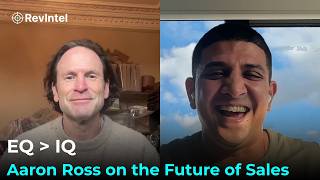
In this interview, host Shane P. Mahi talks with Alex Boyd, co‑founder and CEO of Aware, a SaaS platform that automates LinkedIn engagement for creators and sellers. Alex walks through his career trajectory—from sales and RevOps leadership, to building a profitable outbound team, founding a B2B marketing agency, and relaunching as a SaaS founder. He shares concrete leadership lessons learned while managing teams on tight budgets, emphasizing empathy, information flow, and the importance of hiring the right people and firing the wrong ones. The conversation delves into the realities of bootstrapping a business, the need for relentless pipeline development and financial literacy, and how resilience and antifragility helped him survive crises such as COVID‑19, personal hardship, and contract losses. Alex discusses the role of coaches, mentors, and peer groups in his growth, outlines his unconventional income‑focused investment strategy (real‑estate, cash‑flow businesses, diversified assets), and offers his perspective on the future of AI‑driven content tools, warning against outsourcing creative thinking. He concludes with three pillars for success—continuous sales, solid finance, and antifragility—plus a daily writing habit as a mental discipline. The interview ends with practical advice on where to find Alex online.
Chapters
Let's go for it. So guys, we're back again for the second part of today with another episode. Alex Boyd at Aware. Um, I met him just, look, again, very, very recently on LinkedIn. I followed your profile after seeing what you've been commenting on Luke's profile, which is also a previous guest. So it'd be interesting to know, Alex, what do you do, how do you do it, and why do you do it? Um, kick it off.
Thanks. Yeah, I am the co-founder of Aware, which is a SaaS platform for LinkedIn, uh, creators and sellers who just want to get all their engagement done in a lot less time and with a lot less clicking and scrolling. The reason we built this is because I previously built and sold a B2B marketing agency, and LinkedIn was continues to be a huge channel for business development for the team. And yet I was finding that I was spending a ton of time doing those things. I was, you know, building lists of people I wanted to comment on. I bought Sales Navigator, which was— didn't end up using because it's just so hard to use for this purpose. You spend even more time. Um, I just didn't want to have this, you know, enormous spreadsheet. So, uh, we were sort of working on a tool that would help people just put all their favorite creators of different types, their prospects, their partners or customers into different commenting lists, and then would automatically give me the right people to comment on. And I could just kind of go and engage with all the posts from one place. So now I'm the co-founder, CEO, chair of this company that we relaunched about a year and a half ago. And it's going well. So I'm just in, you know, early stage mode again, which feels good. After being in sort of not late stage, but like, you know, exit mode where it's focused on profitability. And now I'm focused on just like growing MRR and talking to customers and making sure we're building the right features. So yeah, I went from agency leader to early stage SaaS go-to-market guy in the last several months. So that's been fun. That's where we came from, why we're building it.
And where we are today. Interesting. So at what point did you know that you wanted to— before you actually started the B2B agency, what were you doing before that? Where did you kind of get your stripes, your experience from?
I was in sales leadership just before that, which also included RevOps and SDR leadership. So I was at a company that was semi-bootstrapped with a little bit of angel funding. So like some funding, but not enough that you could really go nuts. So I couldn't spend a lot of money. I had to build a profitable team for outbound, for growth, and for closing. So we had a quota of about $400,000 a month or so of new business. And I went from sales rep to, yes, I want to try this out. And I built a team of 20+ people in the course of 6 months. And yeah, that was a lot of interviewing and a lot of onboarding and a lot of training. And then after about a year and a half or so, I kind of felt like I was bumping up against my limits again. And so I started what would've become the B2B marketing agency that it is today. But back then it was just a kind of a consultancy and we were helping people with lead gen, with pipeline, with coaching, with whatever they needed, with, you know, growth and sales. Um, and, um, so that's kind of where I came from. So I did not start as a marketer. Um, I learned marketing on the job growing my business, um, but had more of a background in sales before.
Okay, so when you were managing teams though, I think a lot of people— I just had this conversation today— managing teams is probably one of the hardest things. And going from a place of being like an individual performer where you have a quota over your own head that you're responsible for versus or with the transition from single ownership of your own target to managing a team and being responsible for people and their problems and what goes on at home as well as what comes to work. What did you think was the most important thing for you when managing a team to be successful?
The biggest thing I leaned into not having a lot of— well, I guess that In no job have I had financial resources, not like, you know, enough money, but like venture-backed money. There's never been a big war chest that I could just sort of draw on. And I find that when you are a bad manager, you can throw a lot of money at people and paper over problems. I never had that luxury. So I had to learn to be a good manager. I don't actually enjoy being a manager that much, to be honest. It's tough, but I tended to fall pretty naturally into being a leader, into getting everyone aligned around a vision, making sure people feel, felt heard, make sure their input was being listened to and applied, if not always acted on directly in the way that they wanted it. And I found that with enough attention and what you might call soft skills, but just the empathy, the listening to your team, you buy yourself a lot of what you would otherwise had to have spent in financial compensation. People would take— one of my most now good friends and then most promising hires was making $90K a year across the country and did an interview with me and wanted to take an SDR job, which was multiple steps down for him, making $30K base. And I said, are you sure you want to do this? And he said, yep, the money, the money right now doesn't matter. I'd like to work with you and learn from you. And then 7 years after he took that job, he was managing M&A for a privately backed company, private equity backed software company, which he was the head of revenue operations and managed the whole financial process as well as the whole rev ops process. And he's just, he's like an executive, he's doing really well, which is obvious. He's just so incredibly smart. But I've always thought if I just build the right people around me, if I listen to them, and actually make sure the team is good and not let people— not take empathy so far that we let anything stand. I was quick to fire people who were just not interested in being part of the team or, you know, just clearly off. I pruned the team well, but the ones who were there, I didn't have money to throw at them, so I threw something else at them. I tried to throw leadership. I tried to give of myself at them. And just say, look, I can't pay you what, you know, San Francisco venture-backed companies might pay you. And this was back in mid-2010s. But I can give you something else. I can give you learning and give you my time. I can give you, you know, my attention. And in some cases, that worked really well. And so we were able to sort of purchase this team for, you know, a visionary price, not a mercenary price. And I think that way when you're building a team, um, is to be able to give, give what you do have.
So at what point did you kind of discover that you had these leadership traits or the traits of being a business owner? Was there ever like a distinct time in any of this learning or education that you went through that you're able to pinpoint that time where you're like, I think I could do this better than this person, or I believe I can build this business to be more than what I've seen before? What, what was that like for you?
It's a good question. It happens slowly. Um, these things, I feel like, at least for me, didn't happen all at once in a big flash of, you know, and now you shall go off and, and do this. It was more just like the— at my first ever sales job, I learned a lot of what not to do. I did not have, um, I had one extremely good leader who was not my manager, and I had some witnessed some very poor managers around me, including my direct manager, who was a very poor manager. So I was able to see just from a, from an immature standpoint, I still was able to see, okay, this is really good leadership. You know, like, like Mike, he's incredibly good leader. I wish he was my boss, man. And then these other people were like really bad managers. So I was just sort of sinking in slowly over time. I did quit that job. But I stayed in touch with a lot of people that I met that were on my team and actually hired some of them for my next job. So there was, I think, like 3 or 4 people I hired from my previous team to the next role. So that was the seeding of it, right? It's like, okay, we have some what not to do, we have some what to do, get to the next place, take a step up in maturity and, you know, in ability, capacity, and to say, okay, let's start making this a little bit more like—
I'm just going to interrupt you on that piece right there, just very quickly. So when you were able— it looks like you have a clear distinction of what to look for and what to not look for. So if on those two pieces, let's say one— make it easy— one trait of a good leader or good manager Um, well, those are different.
Um, there are some overlap, but, um, well, one trait of a good manager, um, not letting the wrong people stay on the team.
I love that. Okay, now flip it on the other side. Bad manager, one thing to look out for.
Um, a bad manager will take credit for things that you or the team has done, but he or she will take the credit for.
I love that. All right, okay, so you've identified these things. Now, now you go into the next place and go and continue from where you left off.
Exactly. So now we're saying, okay, here's a new crop of things that are good and bad, but I have a little bit more authority to kind of act on them, and I'm actually bringing over my people to help me do this. So now we have this little coalition of people from the previous place, which— and it was also an industry change. So I went from brokerage sales, you know, suit and tie, making calls to paper trading accounts to, you know, open up live trading accounts. And then I went into kind of tech-ish, but it was like accounting services slash tech. Um, so now I got my people, uh, we're, we're, you know, closing business, it's a better environment, we're building a good sales team. And it's me and a few other people. And then something happens. Then, okay, we start to get to this point where the company starts to be able to scale because we're doing well, we're adding revenue, it's growing. And then one guy takes a, like negotiates a promotion to head of customer success, which was at that point, like upselling expansion and so forth. One guy says he wants to move to New York. So we crafted over him in New York. One guy leaves. Now it's just me. So it's me. And then at the same time, there is this initiative to move operations from San Francisco in part to Portland, where it's cheaper to build a company. That's where I live now. So seeing it was just me, I was like, okay, well, this is sort of my shot, right? I'll do it. I'll go move. I'll build the team. Put me in charge. Basically. And so, you know, in charge of what? It was just me. So I just, I started hiring, uh, with the help of a recruiter and just started going. Um, and because it was such an open field now, right, like I could just build from scratch. There wasn't this like thick layers of management structure, so I could build the team largely how I saw fit within financial constraints. Um, that's what we did. And so I was able to build with a lot of latitude in my own way because I took that shot and committed. Um, and I was able to, you know, I made some leadership mistakes, um, learned from those, and, um, but also applied a ton of what I had saw done well and then poorly.
So what do you think worked the best for you? What was the most, like, easily distinguishable trait you possessed throughout your leadership?
Um, I think people always knew they could come to me with anything, with the truth, and, um, they would never be punished for the truth. Um, and I always wanted people to bring me the real scenario rather than the sugarcoated. I tried really to create that impression, which is hard to do. Um, it's hard to really create that because there's, you know, there's sort of an inherent dynamic of this person has an effect on my livelihood. So, you know, I want to kind of cater and curate what I, what I bring to them. I was conscious of that and really tried my best to offer vulnerability myself so that others would feel the same ability. And it's only when you know how everyone on your team really is doing, how your managers are doing, how what the people with them are doing too, that you can operate effectively, that you know who to promote, who to kind of cross-transfer, who's best at what, who's doing well, and if who's doing poorly, are they doing poorly temporarily or are they checked out? So by being able to be so plugged in, and I did that by, again, offering myself first, which I thought was, you know, I was trying to act courageously and say, well, I'll give first so you know you can give, everyone. And then that, that worked pretty well. It allowed me to identify a lot of like checked out underperformers, especially on an SDR team, which happens all the time. You have a lot of checked out underperformers and then you have people who need nurturing, right? So I was able to tell the difference because I gave freely of myself. So I, I mostly got the real story back and my information flow was paramount. I, I had, I had really good information flow and so I could make high quality decisions. I could forecast well, I knew which AEs would pump up their pipeline and which ones would, um, undercount it conservatively. Uh, I knew who had sandbagged a couple of deals. Um, I knew who would close consistently, who would close not a lot and then a ton on the last day of the quarter.. And I was just plugged in. I was my, I was always in the pulse of things. And that made me, I was able to forecast the monthly sales within 5 to 8% of the total every month, pretty consistently. Sometimes it was often 12, 15%, but almost always, still have the spreadsheet. It was, it was pretty close, which earned me some trust with the executive team. Like, okay, well, you can forecast 6-figure monthly sales from a team of 20, then, um, that's pretty good. And from there, that gave me the financial skills to build an agency and then build a software company and acquire businesses and invest. And so, you know, when I invest and acquire and do all these things now, it's because of those early skills I got from paying attention to my team, letting that pulse feed into my spreadsheet, not the other way around. Most managers start with the spreadsheet and then try to get the pulse. You have to start with what is actually happening. And then that feeds into your spreadsheet. Don't flip that or you will get— you sometimes can if you're at a gigantic company, but anything but a gigantic company, you have to start with the people and just be like walking amongst the action is, must be the first thing you do.
I think that's really, I think that's a powerful statement. Very, very powerful statement. So you've learned a lot in your stage, well, throughout the career and working for others. So you stepped into being an agency owner, building your business for the first time. Somebody today is watching this and thinking, wow, that's quite interesting. He had quite a good journey. I want to build a business. If you were to kind of walk a newbie, a novice through what it's like actually building a business from scratch, bootstrapped? What, how would you describe it?
Well, there's the decision to do it and then there's the early days and those are some pretty critical moments. I guess in terms of the decision to do it, a lot of people are cut out for it and don't know it. Um, many people are not cut out for it. I think some people, some people glamorize. So let's start with, you know, what it is not. Um, it's not particularly glamorous for years. So, um, you know, if, if you're somebody who is seeking like just sort of riches and ease, like, this is not the path for you. Um, with risk can come reward if you do well at it. And if you're comfortable with some level of risk, either you're willing to do a business that has early revenue, like services, consulting, and you can get a couple of clients, you'll probably make more consistent revenue than your salary that you were making early on. So it's, so it might be a good fit, or you have enough savings and you can, you can last, or you have other income and you can, you don't need the early revenue. If you're building SaaS, if you're building a product, then you won't get paid for a while because you have to build product and then sell it and takes a while. If you're starting a business, you either need to be comfortable with risk and have other ways of mitigating that, or just do a business that can pay you early, like consulting, and be comfortable with a little bit of measure of risk. For the people who are in the middle and don't know if they're comfortable with that risk, the question that I often ask is, at your job, how many clients do you have? They say, well, I don't have clients. I'm like, well, you have one client. You have your employer. That's your one client. I have many, so I can't be fired by any one person, whereas you could be fired by any one of the upper managers above you. Which is more risky? And then that sounds ridiculous when there's— economy's hot, but when it's not and there's layoffs, it sounds a lot more real and biting. Um, so I see less risk in entrepreneurship, um, in the same way that, uh, you know, a, um, a payroll clerk at a company for 20 years has more risk than a cabbie in New York, right? The New York cabbie has— can't be fired. Like, the job's not going anywhere. Um, you might have, oh, it's stable, stable until one day it's not. Um, so, so this is not to say, okay, everyone should jump and become a freelancer, but there is an element where entrepreneurship can be less risky in the right The right lens. So that's one. So what is it like? Well, the early days are very scrappy. You're going to do a lot of things that you didn't use to do at your corporate job. Yes, like bookkeeping and taxes and legal and stuff. And that's actually all pretty easy. That's not the hard part. If you're not used to selling, you'll have to sell constantly all the time to everyone, recruiting clients. You'll have to sell. The city of Portland tax auditor on why they should listen to your appeal against their, you know, judgment that you actually owe more Portland taxes, where really they didn't understand the report at all. You know, selling everyone all the time on your argument, your story, you're always telling stories about, you know, your version and your vision. And that's new for a lot of people. For some that comes naturally, that's what you want to do. That's what they're born to do. Great, go do it. But it's not glamorous. It is more risk in some ways and less in others. And that's the early days. That's making the decision is to say, am I comfortable with that risk? What type of business is this going to be? And do I have the resources to carry it through as long as I need to before I'll be able to pay myself what I need to be paid to live? If you can do that and you believe in it, then, you know, go for it. Don't think it'll be glamorous. It eventually can be kind of glamorous once you're past the first while, right? So like you're hiring people, you can actually call yourself a CEO. Maybe you've sold the company. There's, there's some glamor in that. Like, well, undoubtedly, um, it's a journey, emotional journey. There's a lot that happens. It's not straightforward. It's not nearly as stable. Um, and some people, you know, sold candy out of their locker room in high school and they're born to be an entrepreneur. That was not me at all. So you don't have to be born with it, um, but, um, difficult and rewarding would be the way I would describe it.
Um, so, all right, if I— where it is difficult, and yes, it can be extremely rewarding. I think the, the first time I ever noticed the potential of being an owner of a company and taking not in the easiest way, but not really taking all the money for yourself kind of thing. I saw that as huge and it was the first check that was— so first it was a couple of hundred bucks, then it was a couple of thousand, then it was tens of thousands. The most we reached was $63,000. And that month for me was like, oh my God, Payroll was only $18,000. Co-founder split was whatever it was, and the rest that was just now starting to kind of accumulate. Those are massive rewards. But on the other side of that, there were some heavy, heavy difficulties, some major, major challenges. Um, there was a chance where I could have sank and folded my agency last year around this time if I didn't have resilience, if I wasn't coached to manage hard times, or even just to cope with times where you feel like maybe you want to give up. So for those that are anticipating the journey, or even in the journey, and maybe times are tough now, or they will get into times that are really, really tough, how would you say that you have stayed afloat? And what, what kind of suggestions would you recommend to others stay afloat during times of trials and tribulations in the business?
I've seen a lot of people handle this in very different ways, and I know the way I handled it. I've seen people quit and go back to work and actually become happier. That's one. If you're thinking this has all been a giant mistake, what I need is more than anything is stability, There's not just no shame in that, that is a good decision. You should do that. Um, some people, uh, don't make that call and they get hard times and they stick their head in the sand, pretend like nothing's wrong, up their sales goal and just sort of wait until their line of credit is all the way drawn through. Um, and they're crying in the bathtub, drinking whiskey and slacking me at 9:00 PM on a Friday. That's a real thing. I did not know what to say to that person. I felt very bad. And I thought, how could you possibly have let this get here? The way I handle things is, like you said, you know, not just resilience, but antifragility.
How have we[No speech] I think I've lost your sound for a second, Alex. Try if you want, try to—
I think you're— Yeah, now it's good. Oh, the podcast studio connected to my iPhone randomly as the microphone. So anyway, So, yes, you're thinking, okay, what of this is my fault? What of this is other people's? Is the environment? What can we possibly cut? Remember, leaders eat last. So, one thing I did, like, during COVID right, when, you know, the rest of COVID was actually good for digital-focused people, but the first week of COVID was very, very bad. So, I immediately cut my own pay and told the team I was cutting my own pay. We cut everything non-essential and told them we were cutting everything non-essential. What we didn't do is cut anyone else's pay or lay anybody off yet. I said, here are the conditions under which we might have to. I didn't say nobody's getting laid off. I said, we're going to do our damnedest to prevent this, and I'm going to go without as long as I need to, as long as I can really. I increased transparency for the team. I showed what was going on and said, here's the plan to get out of it and we're going to keep you updated on this plan. And I posted the bank balance of the company bank account in the weekly meetings. I just said, all right, here's how much we got. Here's our financials. Here's what it looks like. That's very strong. Yeah, it bought us a lot of credibility. We ended up making no layoffs. We did do— we fired people during that time, but it was for performance reasons. Because it affected people in different ways. But the transparency bought a lot. I was able to reverse my own pay cut pretty quickly because April and May started to, I don't know if you were operating during this time, but started to have renewed interest in sales and lead gen around that time because it was like, okay, shit, we have to do something. We need to keep growing again. So like, let's do this. So that ended up being okay. But it was— I did stick my head in the sand sometimes. I played more games, like more just computer games throughout the day because I just could not think about this and I needed to like turn it off and numb out. There was nothing else to do. We were stuck at home, right? So like that was an example of a time that was externally induced that was very tough. The best advice I can give people is don't ostrich. If you stick your head in the sand, it feels so good in the early days of doing that, but it just gets worse. So, allow yourself some dedicated time to recoup every day, but don't let that infect the rest of the day. You just have to look at the trouble no matter how bad it looks. And when you do that, you can work on fixing it. And also that just you have to embrace that it's going to feel bad and not think it needs to feel good all the time. I bet that time you described was very stressful and you wanted to give up. And remember that it's a forcing function of the harder something is to do, the fewer people will continue when it gets hard. And that is why there are so few successful entrepreneurs. And you, if you just think to yourself, which one am I? You know, um, if I want to be the one of the few who makes it through, then I'll need to figure out a way of dealing with the feelings that I'm feeling, the bad feelings. So, and then going externally to fix things, to saying, okay, I'm going to deal with my bad emotions and, you know, do some client outreach anyway, which is what I did. I did client outreach when people were saying, "Now is not the time to be doing outreach." I was like, "Okay. Well, it kind of has to be. I'm sorry." You know? And I was able to make some of those choices and we grew pretty well. But the resilient times are the ones where you'll decide what you're made of.
Um, and until you've been through this, I agree. I think, I think with just resilience alone, for me it's been such a big, big part of— I would say my late 20s was when it started to start to really happen, and then into my 30s, and then building my business was— yeah, times, there were times when again we thought that the first time it happened I realized what I was capable of because we were, I think, a couple of months into the business, I think 7, 8 months. We needed money. We were tapped out of savings and it wasn't even about like— so this is how important relationships, coaches and mentorship is also in remaining resilient because you never just walk into business with just this blueprint of saying, this is how it's done. Here's this checkmark, do this, this, this, this, this, money appears in your bank, right? It just doesn't happen like that. You go through problems and you figure out, oh my God, this doesn't work. Oh my God, this doesn't work. Oh my God, this doesn't work. Oh my God, this doesn't work. And then you've, you're at that point of like, holy shit, none of this works. What do I have to start thinking of now? And it's only when you're pushed into those corners of like despair where you're able to say like, this is, maybe this will work. Let me try this. So there was a situation where I called one of the, one of our, actually one of the, how do you say it? Well, somebody, one of our vendors actually, who we bought software from, they liked us a lot. They would work with us quite heavily. And I asked him for a loan and quite a hefty loan. And he said, how about you do this? Okay, cool. Send me the invoice. I'll pay in 3 payments. My business partner was like, holy shit, how the hell did you pull that one off? Then again, we went into situations where, uh, we landed our biggest contract ever, and 3 months into the contract— the contract was about scaling their sales team, or sorry, scaling the outbound operation from 1 to 3. We scaled it from 1 to 3 by 3xing the price and 3xing the output. However, because we were new in business, we didn't, we didn't factor in the time it takes to ramp up somebody and for that time to be accounted for. So that, that client pulled the plug on our biggest contract ever, and then we had to go to court and start figuring out how can we recover money without a legal team. And I had figured out one way through a little bit of research and was— man, I managed to recover £30,000 worth of revenue, which again was game-changing. And then again, like last year, I went through a divorce, separation, split up with my team, my business partner. That was like earth-shattering, like, like difficulties. And I was alone. I was alone at a point where literally it became, I had just got rid of my house to move to another country, came back to find out nothing was as it seemed, including the house I had. So I was homeless. And I was spending all of my money on Airbnbs. And in those Airbnbs, the— you, I'm sure you've gone through it before by yourself as, as a co-founder, a business owner, the thoughts that go through your head when you're alone, nobody's in the room. And yeah, those become like quite worrying. And the podcast was the thing that brought me out of it because I, I knew, okay, I'm out of my element, okay. I'm at a place where I want to take my business from X to Y and Y to Z. The current team I have could only take me from X to Y. So what do I need to do to get from Y to Z? And the only way I knew was to— I thought the mentorship and coaching I got was always from more experienced, developed executive executives, owners, so on and so forth. And by running this podcast, again, like through— what is it, 300 now? 300+ episodes recorded. Not out, but recorded. The people I've spoken to and had these conversations and learned, like some of the things you're talking about yesterday— an AI CEO of an AI development company, SaaS companies, investors— they all have different ideas and perspectives on how they kind of weather the storms. And one thing that, uh, only one other person has identified this with me So there's a point at which you die and go to meet your maker, and you eventually see the person you were supposed to be, like the actual Terminator version of Alex Boyd, right? And if you go into that place and you're you and you see Alex Boyd 2.0, how much of a difference is there going to be in who you could have become and what you were to achieve. And you— and for me, I always want to be the absolute best I could because I know my capabilities are quite great. What I actually do with them right now, that's a different story, because sometimes you don't always match the level of commitment. So that, that for me has always been massive, and I'm glad you put that. But the question I had before I rambled on was, how important have coaches and mentors been in your growth as a leader?
Like you mentioned, very important. I had a coach through almost the entire journey of the agency, multiple, but one main one. And he started as a client actually, and then we ended up buying his company, and then he ended up coaching me and our whole executive team, all the partners, which was great. I mean, we've only, like, he's in the process of selling his company too. And then we exited, not sort of half exited ours. I'm sort of less involved now. My partners are still much more involved and active. But that was, you know, several years of working with him. And he is not a professional coach. He's just done these things, like built and sold agencies twice. So he was You know, got double my age and knows— well, he would be offended if I said that. Maybe he started close to double my age because it's been so long working together, but now maybe only, you know, a couple decades on me. And I just wanted to listen and he wanted to listen to me and offer feedback and perspective. And, you know, kind of like you said, he encouraged me to double my prices. Took me 2 years to fully get to where doubling would have been. And I looked back and I thought, should have taken John's advice earlier. And he always just kind of laughed at those things. But he is, um, I always find that he was right and I never took his advice quickly enough. Um, he never, he was always fine with, he just knew it was a journey I had to go on myself. Um, so he just allowed me to go at my own pace, but still sort of offered what he could and asked the right questions. Um, And that was paramount. You know, I've also had like business owner peer groups. Peer groups are great. It's, it's a different thing than coaching. Um, I've had a great ROI on peer groups. Um, and also just, you know, not necessarily like focused dedicated groups and, you know, masterminds, but just like the network, the support, the catch-up calls, the friends, the people who are also doing similar things. Different things, people who you can learn something from in their own way. Even the ones that are doing different things to you often can provide some of the best perspective because they're not thinking about it in the same lens as you are. So yeah, coaches and then some. I have one main coach, more kind of quasi-coaches than that, but I think people should need to have one if you are trying to grow a business. You must have one. It must be a good one. And there's a lot of bad coaches because the coaching industry doesn't always attract always the highest quality people. Many are not, but often the ones who are— I don't know how to say this, like, not even not professional coaches, but not like— really amazing coaches aren't quite so promotional about all the ways that they're amazing because they don't need to be. And whether it's a coach or a mentor, I think, you know, an entrepreneur must have that thing to be their best.
Absolutely. So to be successful, what do you think? Well, let's say even through your own kind of learnings, your own, your own kind of experiences, and then a little mix or salt and pepper it with the kind of coaches you had, some of the better leaders you learned from, what are 3 major pillars for success that you think most should adopt, inherit, or kind of live by to ensure they stay consistent with whatever path they're going on?
Um, let's do 1, um, personal development, and then 2 business. The two pillars that you just have to be conscious of and learn are sales and finance. Yes. You have to pretty much always be selling, and then you have to— you cannot skip the getting good at knowing your books, your financial position, your cash flow forecasting at all times. You have to be able to know how much money is going to be in your bank account, not including, you know, necessarily sales progress and so forth, but just from your business operations in the next 30, 60, 90 days so you can make decisions. And you must always be selling to act on increasing that balance pretty much at all times. So building these two habits of not skipping financial knowledge and literacy and then never skipping pipeline development, even when your pipeline is full, those are the two things that will save pretty much any, any good business can be saved through those things. And the third thing that sort of underlies it all, I think, is antifragility, which is the ability to respond to stress and fracture with not just a return to normal, which is resilience, but to return to normal and then some and to actually grow from all of those things. So if you can be better than you were before every time you are, you are fractured and cracked, then in the long run, those advantages will stack and stack and stack and you'll just be unstoppable. Um, if you do those things and you always build pipeline and you always watch your books, there's, there's not a whole lot that can stop you.
I think you're, you're like, you hit the nail on the head. Lack of pipeline and the stoppage of pipeline was the downfall of my business.. And that was a point where clashing heads again, I speak about it very, very openly because I don't want other business owners to ever think, oh, we've generated a bunch of money right now. We do have clients. Nobody knows, even you, when that client is going to pull the plug. Like every single thing can be rosy peachy, fire under the sun. And one manager one day, I have a change of direction, new hire. I will, I want to bring my agency in that I trust and use. Yeah, that— you get— you, you have the plug pulled on you, you're finito. So I've read on your profile that it says investor also, and you've acquired a few companies. So amongst your success, what are the— like, well, how did you step into the role of being an investor? And then what, what does an investor look out for then when companies are looking for funding?
Good question. Um, I invest very differently than most people on LinkedIn. Most people who are investors on LinkedIn are, they're either professional venture capitalists, so they are essentially account managers at a VC firm, which means you're trying to find deals to do, you're doing deals, and you're managing those deals over the lifecycle. So enterprise account management. Or they are a casual angel investor. So they put a little bit of money in tech companies that they sort of like once in a while., and they see how it goes over the long term. Um, I do neither of those things, so I am a professional investor for myself. So I, I don't currently receive any monthly wages of any kind. I live off— well, my family lives off my investment income, um, so partially from the sale of, um stock in my agency, partially from the cash flow and the investments I've done. I started by investing in real estate syndications, in hard money loans, in energy, you know, even the classic kind of like REITs and BDCs and dividend stocks type of things. But I'm at the core an income investor. I look for tax-efficient yield, One of the things I invest in is businesses, but not tech businesses. But well, I own 5% of 2, soon to be 3 agencies. And well, I guess that'll be 3, soon to be 4. And then a larger percent of other ones. So a lot of business interests in businesses that pay distributions of profits. And so if I put in, um, you know, $50,000 into a business and also help the, the founder, you know, grow as a professional and as a, as a leader, help them out when I can, and I have, let's say, 5% of the business, um, the return on that will be, you know, 3 to 4 times at least what the S&P returns, the FTSE, right? Um, and, um, so, you know, through all this together, I, I I look for cash flow, I look for tax benefits, and look for areas where I can influence the outcome of the investment positively where possible without overextending my bandwidth. And I try to diversify across areas I believe in. So, you know, things like solar, renewables, real estate, mortgage loans, a lot of different areas that pay cash flow, and I just try to stack cash flow to the point where I just have more income coming in than I need, which is now, and then I can reinvest that and continue to compound it over time. I'm not currently doing any angel investments. I have angel investments from the past that I did because I used to be like, we're just going to do this forever and nothing will ever change. Yeah, let's put some money down in all these companies. And so Yeah. One of those paid off well. One has gone to zero. One has unrealized on-paper gains of like, I don't know, enough to cover the one that went to zero. And another one is probably going to exit for breakeven in the next couple of months. So like my angel investing record is like, meh, like very meh. Volatility that doesn't match the effort and capital involved. So I'm not doing that again until I want to like play around, which I'm not at the play money stage yet. But I am at this point a professional investor where I live off my investment income. Wow, that's incredible. That's why I invest for cash flow because it's how I live.
So, okay. So in the, we're approaching the top of the hour. So a little bit about just how you kind of see the landscape of the industry we're in right now. So tech, SaaS, uh, content creation. There's a lot of companies right now, like, uh, I don't know if you know about like vidIQ and Opus that does the like repurposing of long form, um, like YouTube videos, which I've found to be incredible. And then there's a big, like, like Luke does, there's this personal branding element, social exposure. I see a place where, or I've seen a vision and believe in a vision and a potential agency where a lot of CEOs, executives that are running companies or want to be recognized, they're building more social currency. So they're building and developing a bigger presence and more exposed presence on your social handles. If it's business like we do, LinkedIn, maybe Twitter, maybe another platform, I don't know. But then you have some that are on Instagram where there's e-commerce or like lifestyle, and there's a ton of stuff that's happening there. And I don't know how much further it can go in terms of just maybe more production of content or better quality content by your own. Where do you kind of see the market in 3 years of all 3 of these industries? How do you see it kind of panning out or developing?
I see the 2 main uses, at least in go-to-market of AI, 2 main kind of like thrusts or channels. And one is the sort of I have my ChatGPT or equivalent tab open and whenever I need to create or write, I simply prompt ChatGPT to do so for me. Yeah. That I think is already starting to be more and more recognized as not useful and will continue to dwindle in usefulness, giving way, I think, to more specific applications that are more oriented toward the less human creativity-oriented tasks. Repurposing long-form video into short form is— it's drudgery. I've done it. I did it on my own videos for a while to learn. And so in CapCut, I have corrected jump cuts, added subtitles, corrected subtitles, fixed fonts. I mean, just there's so much stuff that is not things that I want to be doing or that help me do better. So I think— it's already starting to happen and will continue to happen that AI applications will go more toward that direction of saying, what are the things that— maybe this is idealistic— what are the things that don't make us better but simply make us worse and more bored? And AI infects those areas. My hope is that when it comes to the actual creative energy, we resist using AI in that way. And what I mean is when I write and the way I've always written is an exercise in thinking. By the time I've finished an article or a post, I've not written down an idea so much as thought through it. And if I become an amazing prompt engineer for writing all my LinkedIn posts, to some extent I'm losing my ability to think. And that I think is troubling because I learned to think in such a way that it let me do all these things that we talked about on the show with entrepreneurship and growth and resilience and antifragility and sales and everything. So if we outsource our thinking to AI, what are we doing? Well, let's say that happens. We outsource our thinking to AI, but certain people realize that they can't do that and they take the opposite approach and they outsource their admin to AI and enhance enhance their thinking. In theory, that would further stratify society into amazing, creative, energetic elite thinkers and, you know, even more kind of drudgery-oriented people who choose to think less. We already have Netflix, we already have Coors Light, you know. Do we really need ChatGPT to take away yet more of our faculties? Um, I hope things go in the direction that I talk about all the time and espouse. And I posted about this this morning actually on LinkedIn of saying, here's why you should not outsource your thinking, outsource your admin to AI. I sure hope that's what happens. I think the smart people are already doing that, but the market is already telling people the answer, right? Badly written sales development that has no human element and is poorly targeted, but it's simply AI spam doesn't actually result in revenue. It doesn't help. You must have a good strategy in the loop. Everyone wants to create a ChatGPT blog post. Nobody wants to read that blog post though, is the unfortunate reality. So we have to think about the output. And I think entrepreneurs like you and me, we know that no matter what you do or how you do the inputs, what matters is whether somebody on the other end eventually pays you money and you can take home profit from that. If it doesn't do that, it doesn't matter. And marketers who work at a company can lose that. They can think, well, my job is to put out these blog posts, not to make profits. So I'm just going to click, click, click, click, click and pump them all out. Because they're disconnected from profits and that, that is a tough thing for them. That's a longer answer than you expected, but that's where I think and also hope AI is going.
Oh my God. No, I agree with you. And it is about critical thinking. If people aren't able to think about what they do and everything is literally just push a button, how do you do this? Push a button. How do I do this? Where do I find this? How does this work? Uh, there's, there's never an element of like, well, let me try to figure this out. And if we have a population of people that say, how can we figure this out, you kind of end up in a world where you've got a bunch of like zombies that are just operating on command. So our generation then becomes either seen as weird that we can think and do these things, and we have this superpower to have this creative thinking as a part of us or inside us, versus again, people who are just responding to prompts, which is quite, quite, quite crazy. So last, last question then for what we're doing over here. In 10 years, it will be the 3rd of July. 2034. And a lot of people, they haven't thought about this. Some people get a kind of glimpse of it and that right now, but if you were to close your eyes and think of what your life looks like, what would you be doing at 7 PM right now in 10 years? Let's say all of your investments work out fairly well, the businesses you're operating work fairly well, to the best average possible. What does Alex Boyd's life look like in 10 years from today?
I spent a lot of time thinking about this. Um, I, uh, in, in some big ways, I truly have no idea. Business-wise, I have no idea. Intentionally. Um, I have no— most of my current plans, um, and things I'm committed to in business don't extend further than 1 or 2 years, or if they do, they're, you know, pretty low commitment. They're like 1 or 2 coaching calls a month with an agency I'm coaching that I'm invested in. So there's nothing keeping me more than a year or 2 in anything I'm currently doing. I spend a lot of time thinking about, well, what is that next thing? What is that big purpose thing? What am I, what am I doing? Um, And I've written down things I want to be when I grow up on an iPhone note. And there's software entrepreneur, men's coach, firefighter, professional cat dad. I mean, there's just— it's a hilarious variety of things that I just don't know. I will be husband, father, all these things, ideally mentor. And those things are much more clear. Where my entrepreneurial career will go beyond just sort of the continued path I am with investing for income, beyond this sort of income, I don't even know. I've spent so long seeking this place that I feel like a dog chasing cars and I finally caught the car and I don't know what to do now that I've gotten it. So, I actually do not know. And I've chosen to not try to not just find out. I've chosen to not, to not commit myself to any other things that would last more than the short term, um, until I'm at that place of being able to take some deep rest from this whole, frankly, rat race. Um, and having sort of emerged from it, um, I need to get to that spot, um, of, of deep rest from it. Because if I fear that if I choose that next project now in this current state, the one that I'll be in in 2034, that I will maybe have made the wrong choice because I'll have made it from still within the mindset of the rat race mindset. Wow.
But what would I choose if I wasn't? That's really powerful. So like, actually, last one, last one. One consistent habit that you'd recommend to others to follow to ensure they stay on the right path?
Write every day if possible.
Writing is a way of thinking.
That's a very common one. Yeah, not just— maybe not even journal, but, um, if journaling feels too private, write copy, right? Uh, write a LinkedIn post every day, honestly, if you want to just like take some good thought from your mind and try to get it understood, that's a great exercise. I wrote a LinkedIn post even once a week and it helped immensely. But if you can write something as often as possible, something good, something that's not just scribble, something that can be understood, that represents an insight or a real progression or growth or a poem or anything, write something that attempts to be good every day.
Not to write, but to think, I think would be the thing that I'd recommend. Wow, mate. Like, there's been a power, power-packed episode. Loads of it, loads of important nuggets, loads of information. So that's it. It's a wrap. For anybody that wants to find you or learn more about how you work or maybe get mentorship, find out more about your businesses, where can they kind of find more, more about you, more information about you?
My LinkedIn profile is still the best place for directing traffic of what I'm doing. I have a personal website that is small, so just find me on LinkedIn instead, and you'll see what I'm up to there. Any changes, I'll pretty quickly reflect, even small nuanced ones, of what I'm doing and what I'm focused on.
So that's the best place to find me, I think. Awesome.
And any last words before we wrap it up? I appreciate you having me. And, um, like I said, writing every day helps, but also talking and explaining and going over and, um, spending some time sharing these things helps me think through it myself. So I appreciate you giving me the opportunity to do that.
Thank you so much, mate. Well, that's it, that's a wrap on Push Stop Now. And until next time, we will see you again.