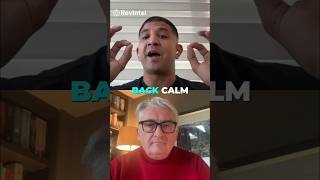
Revenue Growth That Sticks — Pipeline, Process & Coaching w/ David Kreiger | RevIntel [Archive]

In this RevIntel podcast episode, host Shane P. Mahi interviews David Kreiger, president of SalesRoads, a 17‑year‑old B2B sales outsourcing firm specializing in appointment setting and SDR services. Kreiger recounts his unconventional path from a 1999 college graduate thrust into building a call center for an internet startup, to founding a distributed, work‑from‑home call‑center model that employed military spouses. He describes early challenges, the importance of hiring and training talent, and the pivotal moment when a single client that accounted for 90% of profit left, forcing him to diversify revenue and transition the business from a founder‑centric operation to a true organization. The conversation shifts to modern challenges, especially the rise of AI in sales: ethical considerations, regulatory constraints on robodialing, and practical uses such as lead research, playbook generation, and efficiency gains. Kreiger shares leadership insights on avoiding micromanagement, using the "Multipliers" framework, and the habit of maintaining a five‑year journal for perspective. He envisions a future where he mentors other entrepreneurs. The episode offers actionable lessons on scaling agencies, leveraging AI responsibly, and sustaining resilience over two decades of entrepreneurship.
Chapters
Easy. Welcome back to another episode. Today I've got David Krager. He is the president of SalesRoads. And funnily enough, again, these stories that I have, uh, in this journey of being on this podcast, quite unique because 3 to 4 years ago when I was building my business plan off of, uh, a $30 course that I bought on udemy.com, uh, it was go map out who the best agencies are in the industry and SalesRoads was one of our North Stars. And I mentioned that to you amongst a few others. And now 3 to 4, well, like 4 years later after running my agency, having it go through a number of peaks and troughs, some of, I guess, some of the regular news or highlight reels you hear, went through a divorce, went through a separation, focused very heavily on building my dream. And neglected my home life and coming to where I am today, being able to speak to now 250+ agency owners and learn what worked for you, what didn't work, where do you see the market going, what do you see as problems in the industry today? It's very, very inspiring to be on the other end of this phone, even though we're— well, other end of the screen, even though we're 3,000+ miles away. So, David, I'll let you have the floor, have an introduction. David, who are you? What do you do and why do you do it?
Well, first of all, Shane, that I really appreciate that. That means a lot to be anybody's North Star. So thank you for that. That feels nice. And I'd love to dive into all that today and learn from each other here. But yeah, no, I run SalesRoads. We are a B2B sales outsourcing company focused on appointment setting, lead gen, and SDR outsourcing, and have been doing it for 17 years now. So we were around even before SDR was even a term, but it's been a wild ride. We'll talk about it. It's an amazing industry that's grown tremendously over the 17 years that I've been here. We're going through a lot of changes now with AI and all the other things that are happening. So we'll dive into that. Uh, but we really do— we focus on the same fundamentals for our clients since day one, and that is really helping them to build their pipeline through an organization that's not just throwing appointments over the wall, but we really integrate with our clients. We're— we are their SDR department, and we really fit our programs around their needs and become part of their organization to really deliver what we deliver.
So why did you— why did you get into this? What, why pick agency work, appointment setting? What was the driver for you?
Yeah, so I'll have to give a little bit of a backstory to get there. All right. So, so when I first graduated from undergrad, this was back in 1999, I was looking for a job and trying to figure out what to do. And it was the beginning of the internet. So I found an internet company that I was really fascinated by and got to work for the VP of sales there and the 16th employee. And on day one, he basically said, you know what, we need a call center and inside sales team, go build it. And then he flew out to California where you were in New York. What do I do here? I don't know anything about call centers or inside sales or what is that, right? Um, but what an amazing experience because this individual became a mentor of mine, really just had a lot of expectations of me and really gave me a lot of responsibility to just figure something out and go and build it. And so I had a great experience building the call center there, building the inside sales team, trying to figure out what works, what doesn't work. Um, and just getting to grow tremendously in a short period of time. And I just loved it. I loved inside sales. I loved the whole idea of finding great talent, building that talent, building the processes, corralling everyone around a common goal. And we ended up being the number one sales group that included the outside sales, the distribution partners, all those things. And so I just loved it. So that's where I got into inside sales and just sort of the, the concept of inside sales and, and, and got to really understand it and love it. And so I went back to business school a few years later, and I was trying to figure out— my goal going into business school was how do I not get a job out of business school? And so I spent 2 years trying to figure out a business plan that I could launch during business school.. And I started reading, this was back in 2005, 2006, about the distributed model of call centers. So where people work from home, which back in 2005 was not very common. Uh, though obviously today sitting in 2024, it's a whole different story. And I said, this is amazing. You know, we, we have basically built call centers and inside sales teams in a centralized location because that's basically how you had to do it, not because it was necessarily the more efficient way of doing it or the better way of doing it. It was just the only way you could do it before the internet and before VoIP and all those types of things. And so I started really researching that idea in business school, and I actually married it at the very beginning with, uh, sort of a unique concept, which was I was, you know, I had a lot of friends who had come back from the military out of and gone to business school, and they were talking about some of the issues that military spouses have finding jobs because they get moved around from base to base overseas. And basically employers, it's really hard to hire, you know, hire them and train them and then they have to go. And so I said, well, let's marry this concept of a distributed call center with, with military spouses and hiring military spouses. And so the original concept was, and we were called Homebase USA, was to hire military spouses to work in a distributed call center environment. And I got a lot of, you know, we got third place in the Wharton Business Plan Competition, got a little bit of seed funding from the school. And that was— and I was like, okay, let's turn down the job offers I have from a lot of big traditional companies and let's go, go build this thing. And originally I was going to be, you know, both inbound and outbound, but my my mentor, the one who had hired me for the internet startup, he had another company. He said, you know what, I need, you know, the inside sales team like you had built before. I need appointments, I need leads for my team. Uh, can you do that? And that was my first contract. And I said, okay, let's, let's go.
Wow, what a story. All right, now I need to unpack a few things there. When you graduated in '99 and you're thrown into that pool of water, that's a very deep, deep pool of go build a call center. I never paid too much attention or stayed in college long enough to know what really is taught there, but essentially the question that I'm trying to ask is, how were you prepared? Like, what, what tools did you have out of college that you were able to take into that corporate environment and start building that out? Or did you have to go and learn like from scratch how to build a call center?
I had to learn from scratch. And so I would say I had some amazing experience in colleges, college, and I think I learned a lot, but it was not the academics. It was the people I was around and talking to them and things like that. And I can't say that my school really prepared me at all for, for real life and for building this. The only thing I would say, and I've always been a very diligent and like, you know, organized guy, at least the organizational skills and the research skills and things like that, maybe, but, you know, economics that I learned, political science I learned, come on, none of that. So yeah, it was really just rolling up my sleeves and trying to to figure this out, talking to a lot of people, starting, which I still think is a great principle today and I still try to do it, is doing it yourself first, right? You gotta get on, you gotta get on the phone, you gotta field the calls, you gotta make the calls and really, you know, start building up. And then I had a really great hire to help me manage the teams as well. And so, you know, putting the right people in place, being curious, and then just having the gusto and rolling up your sleeves. And I worked, crazy hours. I mean, I think I worked— I worked a lot of hours building SalesRoads at the beginning, but I worked even more hours then because I didn't know what I was doing, but I was determined to make it work and to be really, really good at it.
Incredible. So in the 5 years that you did start building this operation, was there ever a point where you're like, I need to get— I want to give up, I don't want to do this anymore?
No, uh, no, never. Uh, it— and that doesn't mean it wasn't hard, right? And it doesn't mean we didn't have our, have our, uh, you know, get kicked in the butt a number of different times. But I, I, I think when you've got a clear mission and you know what you're supposed to build and you want to do it and you want to be successful, uh, I, you know, it doesn't mean that I didn't wake up in the morning or go to sleep at night anxious and worried, but I never had that thought, no, I don't want to do this.
I think that's when you do it well. It's the point of having the right type of fuel. So again, when I started building my agency right at the peak of COVID so it was March 2020, they said, go home, go sit and do nothing. I was sitting at home with my then business partner playing chess, Xbox, Halo, got tired of so many chess games and so much video games that we were like, let's just build a company. And the thrill and the rabbit holes that you go down of, all right, now you go into talent, then you go into operations, then building your leadership team, then building the operation, then learning about systems. And that takes years. So it is that never-ending kind of infinite game. What was the thing? What was the fuel to your fire though? Then what kept you going? When you was in that, in the first period? Because I want to pay attention to that. That's like your foundation, right? The first role you ever had before you built SalesRoad was enough of a foundation, which I always tell people, learn the trade that you're looking to do, learn the business. And then if you really, really believe in it and you feel it's helping a lot of people and you are part of that change, go build that yourself. If you have the courage and the balls to do it, go build that. That's usually what will work. And then you can go into anything you want. So what was your fuel that kept you going? Was it like your family? Was it something internal? Was it an obstacle you were up against? What was your fuel in those first 5 years before Sales Road?
Yeah, so it was really— I didn't have a family back then, um, which I think is important at the beginning of your career again when, you know, um, when you're throwing yourself into, to some things. And there's benefits actually, which we can get into with you know, with at least partial family or at least some, some type of home support as you're going through some of these things. So there's, there's pros and cons, but it wasn't, wasn't family. It was just, it was, it was just me back then. And, you know, it was just a lot of fun. It was a lot of fun to like figure this out, the challenge. It wasn't boring every day. Um, I actually transitioned, we can talk into this, you know, to, to a traditional marketing agency for a few years before business school after this, which I didn't like. But it was just, you know, it was just a wild roller coaster ride where I was learning every single day. And that was just— is what drives me. It still drives me today. You know, I, you know, AI, I think is going to change my whole business. But I love it right now because it's so fascinating. It's like all these new tools and things and trying to figure out how it's going to impact us, how we can do things better because of it. And when you have that in a career, whether you're working for somebody or for yourself, I don't think it gets— can get boring. I think even the stressful times, you've got, you know, a North Star, like you said, that you're just going after. And you're, you know, my North Star was to try to build, build that and figure out how to build it. And the challenge was there. It didn't— no, there was not a dull day. And so those were the things that really drove me through the ups and downs. Of, of building that. And each challenge was actually more motivating because it was like, okay, I gotta crack this thing. It's like, it's a puzzle, it's a chess game, like, like you, you, you partook. Uh, and so it's, it's that that gets me excited. And I loved building that. I've loved building Salesiers. And the only time that I really haven't enjoyed my career was with the 2 years where I worked at just a traditional marketing licensing agency where it was just like there's nothing to solve. I'm just like sort of executing on things and just doing it. And, and it was just boring.
And I hate it. I know exactly what that feels like to just be in a position. I'm in the nicest way.
I'm not—
I know I'm not as old as you. I have not been in those positions where— well, no, I've been in that position where it's just like, oh my God, what the hell is going on here? Like, it was to the point where I went through— I went through a bad drug, drug addiction back when I lived in New Jersey. Through the opiate crisis, had a normal ACL repair. They prescribed me codeine, got addicted to it, and it really, really messed a lot of things up. But what I wanted to ask you then, was there a point of confidence, supreme confidence that you were able to attain when you hacked it? Like, let's say you went, you went to that company before the marketing agency, you built the team, you built the call center, you had the systems and processes all integrated, everything's aligned, everything's working. At what point did you know, like, I've done this, I've completed this, this foundation, it's, it's set? Do you remember what that felt like?
No, because I'll tell you, you know, I don't feel like there's ever a point, at least where I get there, and I'll talk to you. I talk to a lot of CEOs. I'm in a peer group of, you know, 7 other CEOs, and we talk about our innermost fears and issues. And it's, you know, you, you unpack things in these podcasts with CEOs. So I'd love to hear your perspective. And I could sit up here and I could say, you know, I, I have all this confidence, um, and there's, there's aspects where I do, but it's amazing. And I don't know if it's the human condition or my condition where you're just always still like, can I do this? Am I going to make it happen? And in some ways That's a driving factor. You're continually proving yourself to yourself. Um, and so I don't know if I ever felt that. And sales is tough too, right? Because you have to prove yourself every single month, every single quarter, every single year. You know, you could have been in President's Club the year before, and if you have a bad year next year, you know, it's, it's, memories are short, right? So for good or for bad, but that's also part of the the motivation, going back to your past question, in trying to continue to learn and try to continue to grow. Um, you know, if I sat there and felt like I've learned everything and I'm, I know everything, both I think that that's foolish because everything changes, but secondly, it would kill some of my motivation because I, I would feel like, okay, I know it, I, I could just go sit on the, sit on the golf course. And so, um, I think it's all a lot, a lot of those things, and maybe it's just my own insecurities as well. So, but, but no, I don't ever feel that way.
That's a good way to look at it. So when you are an agency owner, there's hundreds, if not thousands of problems that you'll come up against. I can't imagine how many you've been up against over the time that you've owned your agency. What do you think, or can you describe the hardest, most challenging obstacle you've come up against as an agency owner?
Yeah, I don't have all this gray hair just for good looks. So, yeah, I mean, there are a million different things that come up every single day and you just have to expect that. But if I were to talk about the biggest one, Early on, we got a very big client, or at least what we felt was a big client back, back then. And we had, you know, a number of different seats, and it made up about 90% of my profit. And we built it, we did a great job, and I always knew that this was a bit of an issue, right? But it was, uh, a really good client obviously, and it was very consuming. It took up a lot of time, and I wasn't able to focus on growing other aspects of the business to try to make sure that we were doing the right thing for this client. But what happened, which happens obviously in agency work, is there was a point where they grew and they felt that they needed to bring it in-house. And so the good thing is that we built a great relationship, right? And they gave us plenty of notice. I can't remember how much, 3, 6 months. It was, it was a lot notice, right? Both for, for us and for them, because they wanted a good transition. Uh, they wanted to be respectful of us because it wasn't like we were doing a bad job. It was just a business decision that they wanted to bring it in-house. And so we needed to help transition them. Um, and you know, that gave us a little bit of time. But my God, when you look at the numbers and you're like, 90% of my profit is going to be going away, this is what has been keeping us afloat, and all this hard work is going to be for naught and go away. And that was the biggest obstacle or thing that I had to grapple with. But also, I think I got the most learnings and perspective from it because I think a few different things I realized. First is as an agency or as a company, You know, if a client goes away, or let's say even your whole company goes away, um, you're not left with nothing. So with the comp— first, let's talk about ourselves, right? So if, you know, we've been fortunate, Sales Rose has continued to grow over the years and it hasn't gone away. But let's say it goes away at some point, you know, that, that's scary. But, and you could say, oh, my, my life's work is gone, right? But the amount that I've learned and the amount that I have to be able to apply to other things can never go away, can never be taken away from an economic environment, with a client, whatever it is. And I have learned so much and I have gained so much perspective and I am so much better an executive salesperson than I was 17 years ago. And I can go and apply that to other things. Fortunately, that's not the case. But, but with this, where— but it was close, right? It was, it was a big client that went away. And so there were two things that I realized from that that were really important. One, the first thing I said, but also, and I said this to, to, to the individuals at a time, I would much prefer this client goes away than losing this team. And I had amazing people that were working for me, working on this project that I knew I could apply to other things. And though I told people pretty early on, because I didn't want to like hold this back from them, I told, I said that to them, I said, I would rather have you guys than this client because you guys are an amazing team and we will be able to apply what we've learned in other ways. And we were able to grow through this. So in a few different ways. One, obviously we sales organization. So I took a few folks that were, that, that were my top sellers and we started selling, you know, through this and applied them from, you know, off of that client to sales roads. And there were a few individuals who I thought could make great managers who I didn't have the courage and I should have to promote them before because they were on this program. And that was the inflection point where SalesRoads moved from being a one-man show, David Krieger running all these things, to being an organization. Um, and it was that challenge that allowed us to actually become an organization that was not just one executive running everything with one client, which is not really— that's really a job in many ways, right, where I'm kind of working for that client. And it allowed us to really become who we were. And it was because we lost our biggest client. And so, you know, I think sometimes these challenges— and it's maybe trite because I know a lot of people say it, but it's so true— you know, they can make you better for it. They can make your organization better for it. And you can grow because of it.
And I was very interested to hear about this. In a little bit more detail. And the specific point I'm talking about is I know exactly what it's like to feel like you are holding up this mountain of tasks, pressure, just this mountain of weight every day as a business owner. Because number one, you want to protect your whole team. You want to be like the guy who helps everybody, right? And when you have to give up that type of control, I'm sure you're similar sort of personality, dominant type of personality, creative, visionary, you would like to control things. How were you able to give up that control and trust in the team around you to deliver on the responsibilities they had as helping to grow the business without you being at the forefront of it?
It's really, it's really hard, and it's been a process, uh, for me, for me to get there. So a few different things. One, you've got to have people in place that you do trust and that you feel confident, or at least relatively confident, that when you give them something, it's going to get done and it's going to get done right. Second, you've got to slow down to speed up. You've got to really make sure that you take the time to, to train, go into everything, walk beside them, help them to get there. Um, and that takes time. You can't just throw somebody in the deep end. Um, well, you sometimes— I guess I got thrown in the deep end at the beginning, so sometimes you can, but I would recommend you— I would have been even better if you'd taken a little more time me as, as we, we built things up. But that— I think it's much better to really help and, and, and go through, through things. And then the hardest part, and this took a long time for me to, to really first even realize, and I had a, a coach who, who really helped me realize it, is everyone knows you shouldn't be a micromanager, but I thought I wasn't a micromanager when I in fact was. And what that means was there's, there's a book called Multipliers, and they define this trait, and it's being what's called an accidental diminisher. So we all know diminishers. We all know the type of boss who comes in and tells you all your work is crap and you should have done it this way. And this is how, you know, that's pretty— we know that's a bad boss, right? I was definitely not that, but I was what's called an accidental diminisher, which is not as bad but close to as bad. And that's somebody who is always offering trying to help, always coming in, and maybe something's not getting done on time, and I'll go in and, and help them, help them do it. But also in a nice way, like say, okay, looks like you can't get this done, let me take it off your plate, let me— let me do these types of things. And you think you're being nice, you think you're being a good boss because you're helping your team get things done, you're doing it in a nice way, but what you're basically telling them is you need me to get this done. I'm going to be there for when you screw up to be able to fix things. And that is a recipe for basically a one-man show and having everybody need to have you do it. So I had to really understand that that was the case. I had to allow my team to fail multiple times and allow that process to happen and then also realize for both of us that even if it's something doesn't come out exactly the way I would have done it, that's okay. And eventually, if not sometimes at the beginning, things start when you delegate in the right way, coming out better than when you would do it for two reasons. One, you don't have enough time sometimes to do everything. And second, you got to have people around you who are better at doing things than you are. So you've got to make sure you've got somebody. If your strength isn't necessarily marketing or copywriting, you need to have somebody who's in that, that seat. Who can do things better than you, make you smarter, challenge you in the right way, and you would rather have them do it.
There was a few, like it came towards the last stages of me owning my agency, but the first time I gave a big project to one of the co-founders and it was to build a— so a client, our normal service was appointment setting too.. And this one client, we thought they wanted appointments, but they said, no, we want you to hire and recruit— well, recruit, train, and hire an entire team. We said, how many people? They said, we want to go from 5 to 56 people in 4 months.
Oh, wow.
I was like, well, first of all, that's not going to happen. But anyways, let's pretend like it would. His name is Dan, and he built an entire video library where people would submit their applications, submit their videos. We had the library, we'd pass it over to the client, they cherry-pick the few that they want, and then they'd interview them. And this was a project where we had a vote in the company. Half the people said we don't want to do it because we think it will take us off our focus. The 3 main leaders said yes, let's do it, and against one of the other leaders. And that project ended up generating us over £37,000. In less than 4 or 5 months because of the process that Dan created. So I know, I know what it's like. Now, what do you see? For me, I think talent is one of the hardest things to work with in, in, in agency work. Having people remain consistent and motivated to the levels that you expect as a business owner, I think that's extremely difficult. But in 2024, what do you see as the biggest challenge where we as agency owners are faced with?
Yeah, I think it's understanding the things that are fundamentals and are important to be able to execute on while understanding also that the landscape is going to change rapidly in ways we can't predict. And this is something I'm trying to— I don't have answers for you today. It's one of the things I'm really trying to figure out. And so obviously AI is a game changer. It's so powerful. It is going to continue to become exponentially more powerful as it becomes more efficient and effective. And what does that mean for us as agency owners to be able to do our work better? How does it change what we do? And those are the things I'm really trying to figure out while also not taking our eye off of the ball today and continuing to deliver amazing service, deliver amazing appointments. And so that's what I'm really trying to think about in 2024. And we've taken small bites at it. You know, we've, we leverage it. To help us create better playbooks, not to automate playbooks. I think that's one of the pitfalls right now of AI. People are trying to use it just to automate everything and do less work. I think it can help you to do work better, more efficiently. So I've been really working with my team to try to find areas where we can improve things, um, and while trying to figure out what this means over the next 1 to 3 to 5 years. And that's the real challenge, um, and trying to stay ahead of the game while also not taking off the ball today because there's only so many things you can do well.
I think it's true, and I think that was one of the topics that came up. Uh, I was running a series of roundtables, and these roundtables are based on, um, just the most poised questions that are coming around in AI. So one of the major topics where we had two events on it was AI and ethics and how are you remaining ethical with your use of AI. So one of the things that we're working for and with at Mega, which is a technology-based conversational AI company that specifies or the specific niche is synthetic speech. And what they are trying to do is build an AI— well, what they are doing and have done is built an AI autonomous agent that has live interactions with the customer. Based on the first stages of the sales development process. And what that means is the ability for an AI agent to call David and say, hi David, this is Sarah. I'm an AI agent. Do you want to speak to me in the next 30 seconds or do you want me to hand you over to a human-based or a human agent? Why have you called me? Well, I noticed you submitted this contact form. Thought you might be interested in having a chat now rather than later. 'Yeah, cool, I'll speak to you.' That is what this AI agent does. Now, as much as that is only the first 30 seconds of a 4, 5, 6, 7, 8-week sales cycle, that 30 seconds that it removes in wasted time from people missing out on that chance to call that opportunity, from missing out on opportunities to have the conversation quick enough the volume of conversation of those inquiries. To be able to do these little things with the use of AI is what we're focusing on. Now, again, the ability to start an idea, again, now with the use of AI becomes very, very easy because you can just speak to it, hey, I want to build a business plan on automated salad making. Right? And I'll give you an example of this. So the normal restaurant model is we go into a restaurant, a waiter says, come, let's pick a table, take it to the table, take your order, goes to the back of the kitchen, the kitchen chefs up the food, they bring it out and serve it on the table, right? So there's this salad company now that is— they invest £500,000 into robotics integration, this enormous system that makes your salad for you. So you now go into the restaurant. This machine has a number of little cylinders that have your lettuce, tomatoes, beetroot, carrots, sauce, everything, and it just rotates in a circle, right? You go in, you pick your thing. I want 15 ingredients. In 2 minutes, you have a perfectly made salad with all of the right volumes the right quantities, everything. They are making 500 salads an hour versus what a human, a human kitchen of 10 people can do. Their maximum capacity is 270. So again, when you move this same or similar model of creating salads with the highlight of this is how can AI make our lives easier, what is the problem we're facing, not knowing how to use AI. It's the logistics on how to use it. So let's— the salad example, the salad-making company as an example. You take that out and you have AI agents that are now building your interactions with your customers. You've got a list of companies or contacts that have submitted their details. Now you have this AI agent that's working 24/7 around the clock, instantly ramps quality control is through the roof, you are now having those conversations like clockwork, perfect every time. CRM notes are perfect every time because it's taking the voice and it's putting it right in there. So that's where I'm seeing problems in people's ability to simplify the use of AI in what we have available today versus making it super complex. And that leads into the next question. How do you think right now AI is going to alleviate some of these problems that you've just even mentioned? Now, how is it going to alleviate some of the problems we have as agency owners?
Yeah, let me, let me ask you a few questions first because I'm curious on what you just said and then I'm going to tie it into some of the things I'm saying, if you don't mind. Shane, so with Mega, they are calling up and it's an AI bot that does the first part of the conversation or can take the whole conversation itself. Is that right? And first, how are they getting around the robodialing rules where basically it's a— it is a robo. Yep. Smart robo. And how does that work? Because that's one of my questions, because I have no doubt the technology is going to get there. And I've seen some amazing things. And this is part of how I'm trying to think about it for our agency. But also, we've got to stay compliant.
And the way we've understood it, we've spoken to a number of college professors, university professors, and then there was the release, I think it was about 6 weeks ago, where the FCC or the ICC, they said this is a complete ban on this. So we had to look into that because that really jeopardized a lot of the business plan. And what we came to find is there are going to be two stages of development with the use of AI. Now, the first stage of development will be where a company like SalesRoads or a company like HubSpot or Salesforce has a number of inquiries that come in every day. And where you have a strong inbound flow of inquiries, of permission-based leads that have said you can reach out to me, those can be contacted by these AI dialers. And I think then where this issue of ethics comes in is if you are having an AI agent on your workforce, then it is within your duty, it is your obligation to announce that that is an AI robot calling you for that inquiry. And I think at the first stages, it's just having an inbound lead flow where you can have AI agents that are designated to your business, to your service, to your product offering. They can call those. Then there will become a stage of outbound calling. I and the team have not looked into that fully yet because we know the opportunity at hand is only with inbound right now. The market is ready for inbound. Where it comes to outbound, again, there's a small loophole in similar to GDPR. Is it legitimate business interest? But again, I can't quote that because we have to have like solidified proof on what that exactly means. But to answer the question in short, How is Mega going to get around the robodialing element? The way to get around it or the way to work with it is it is only effective. It is only applicable to companies that have a strong inbound lead flow. Also, they are generating strong inbound lead flow through Google Ads, Facebook Ads, TikTok Ads, and that is a very cheap means to an end because social media ad campaigns and costs of those campaigns are much cheaper than building a marketing function that's going to generate those inbound lead flows as it is. So does that answer it for you?
Yeah, and that's— that makes sense. And that's what I've kind of been thinking as I've been having these conversations, but always interested to hear all perspectives, because it's amazing. It's one of those things where the technology in my mind is no doubt going to get there and it's pretty close. You know, it's not, it's not perfect yet, but it's like legislation is going to get in the way of maximizing it because I can't imagine, you know, in the States or in the UK, legislators finding reasons to reduce robodialing rules. And this is technically a row, even if it's better than our typical robodial, right? So, so yeah, so, but inbound is a great use case. And I think the ethical things are interesting because I think usually ethics and good sales practices, which at the end of the day means you're going to sell more, align. And I really do think that acknowledging, like you said in sort of the script that you just gave, that I am an AI or whatnot is the appropriate ethical thing to do because you don't want to fake it. And I think it's not going to be bad because I think, like you said, these— especially let's just think about inbound customer service, different game. But like, I think I might want to speak to an AI in inbound customer service because the accuracy is going to be perfect. It's not like there's training gaps. It's not like there's an attitude that can sometimes go or a dialect or whatever it might be. It's going to be a perfect experience. That is going to be perfectly accurate. And so, um, but I would want that inbound IVR or whatever to tell me that that's what I'm doing, but I'd be fine with it. And some people might not, but over time it would be good. And I think people will be more freaked out by it if they learn that like Target is using AIs and they're not telling people.
That transparency, again, in my opinion, I think the transparency transparency element of using AI is crucial to a business's success. If you can just be transparent in saying— even if you want to go as far as when you submit your details and you have an opt-in form, for example, that says, do you give us permission to reach out to you, you can even write in there, as silly as it may sound, do you give us permission and/or our AI system to reach out to you and have a conversation with you about this in more detail. And I think as long as you do that, again, my focus as a customer and providing for customers is speed and efficiency. I don't care about really quality, of course, but I don't care about anything else. And to be honest, when I get a call from somebody, if it is a cold call, I think I'd probably be more— I'd be less hesitant to argue with an AI agent because I know it's an AI agent and I can just have the conversation and get done with it, versus I have been that arrogant SDR that wants to fight with every, uh, PA or fight with the business owner because they don't want to buy my product. I've been that person. So again, just the right, the right use of it. And again, there's a, the roundtable that we had, we had about 10 10 different CEOs from multiple companies speaking about this. Is it going to be racist? Is it going to tell you the truth? Does it tell the truth when it's speaking to you? Is it selling you a service that is really the service, right? So I think there will be a lot of nuances to it. But again, just the ability to say, yeah, we're using AI in our business, this is what we're doing. Are you familiar with somebody called Roland Fraser, by any chance? Okay, so Roland Fraser, he runs a company and they have this one thing called the Epic Challenge. It's a $50,000 course for buying and selling businesses, leveraged buyouts. And he's recently implemented AI in his business. Have you heard of Air? Air.ai? Okay, so they just purchased a $25,000 subscription to Air to get an upgraded model. So you obviously, you upload your script into Air they have a robot that can use— that can kind of function at a very, very low level for you. But then they— if you pay the money, $25,000 or more, they'll integrate a full robot for you that's put fully designed for your business. So now he said he is applying his AI agent. He had it call 2,000 leads in a day, and out of those 2,000 leads, sales however believable it is, sales pipeline went to $383,000 in less than 24 hours. And that's, I'm guessing, because, okay, if you call 2,000 leads, average deal value is $50,000, 2,000 times 50 is, I don't even know the math, but $383,000. I don't know what the percentage of that, it might be single digits. Sounds possible. So I look at it like this: I had 10 people on the team. 10 people were roughly £20,000 for the month. Okay, if I have that same— let's say I have 2 of them, which is now £4,000 a month, I've got £16,000 freed up money. And let's say the AI agents are $500 to $1,000, right? Let's say 25% of the actual cost of a rep. Now 5, that's £5,000. So I've got 4. So for 9th, I'm saving £11,000 now. I've still got 10 agents. I've got 2 human agents. You use the, the 10 agents, the AI agents, to go for cold lead flow, research lead flow, identify the market, identify which leads are actually present. They can then pass them over to the 2 and let the 2 have at it.
They will have—
they will be the highest earning people in that company, in the history of that company. And the efficiency factor on that will be incredible just because, again, the capex versus opex cost and just the efficiency of those 10 agents being able to work around the clock against inbound leads. So again, it's going to be ridiculous how much cost problems, efficiency problems, performance problems, quality control problems you get as an agency owner. When I've hired 18-year-olds, I've hired 24-year-olds, I've hired 50-year-olds. The 50-year-olds are the best. They actually care about the work, they do it right, they do the research, they take good notes. So where do you think AI is going to have the biggest impact for us then? As agency owners in the next, in the next 365 days?
Yeah. So in the short term, I do think it's around lead research and, you know, the technology is already there and it's amazing how we can now— obviously you always could have scraped websites, but now you can take AI bots, give them prompts and ask them to go through the websites to find different things. You know, for instance, you know, a lot of times, you know, some of the things that the Zoom Infos of the world and Sales Intels of the world can't do is figure out who a company sells to. They know that a company is a SaaS company, right? Sometimes they don't even do that perfectly. But, but, but it's much easier to understand the industry that they're in, whereas understanding what they do, how they do it, and who they do it for is just not there. But now what we've started doing is deploying AI agents on for the prospects that we're calling for ourselves or for our company to understand who they are, their value prop, who they sell to, and be able to use that to refine lists as well as, you know, do a little bit of research for our team. You know, SDRs, you know, there are some SDRs that like doing the research and things like that, but a lot, you know, it's— they'll find cheesy stuff, you know. Oh yeah, yeah. Went to this college or whatever, you know, right? So yeah, bravo, well done. You know, so if you can, you know, really optimize that and have an AI do it in the way that you want, which you already can today, as long as you're good at writing prompts, that is what we've already found some amazing efficiencies.
And how do you think people can be the most— how can they get optimal success, whether they're a sales professional or a business owner in early, mid, or late stages of their, of their ownership, what are the lessons that they could be taking away from you today in using AI successfully for their business?
Yeah, so I think the first principle, and I try to really talk to my team about this, is do not use it to have it just automate your work and do it faster. I think everybody wants a little silver button that they can press and sales jump out of the sky, or your job is done for you and things like that. And, you know, if you have it, an AI can write a playbook, it can write an email, but at least where it is right now, it's not going to do it better than you. And but you with the AI will do it better than you ever did it before if you use it right. If you just click, have a prompt and click it and then have it write, it's not going to look good and people know it's AI. If you use it as now, all of a sudden for $20 a month and even, you know, some of these Claude and Gemini, they're saying are maybe as good as GPT-4, you can maybe get it for free. You've got a little assistant who can help you to brainstorm, can help give you feedback, can help you come up with 5 different versions of an email, and you figure out which one you like better, and then refine it and refine it with it. You now have your own— everybody wants to have an assistant, right? Well, now you've got one for basically free. But use them as a way to make you better, to brainstorm with it, to iterate, to come up with zany ideas, realizing most of them are going to be crap. And be able to just enjoy it and learn from it and grow it and talk to it. And just any question you have, you've got it right there to be able to engage. I was listening to a podcast yesterday. Will.i.am now has his own. He hosts a podcast. I didn't listen to his actually, but with an AI bot. And he just talks to it and they talk back and forth. And you know, he just says that it is an amazing way for him to just explore ideas. You know, sometimes people don't want to sit there and talk to you for an hour about an ethical thing that you're thinking about, or maybe a new idea that you have. But you know what, AI is going to sit there and not get bored.
I've actually gone through so many prompts, it's locked me out. Yes, me too. But I think you're right, man. I think you're right. It's just the ability— you've kind of got this you can call it as cheesy as you want. You've got a coach, you've got a friend, you've got an ally. You've got— in my ChatGPT warehouse, I have— I'm very familiar with the builder. So I've built a ton of GPTs that have helped me with analyzing 10-K reports now. So I can upload a 10-K report and I can say, find me the top 3 things to bring to the next business meeting with their CEO. And CFO. I know not many people are doing that, right? And then again, you have a number of other things with accountability. Here's my plans for the year. Here's my goals every month. Keep me accountable every week. And you check in with that. I've got a transformation coach, a transformation coach that I've uploaded my dietary plan from 4 years ago where I lost— it was my biggest weight loss ever, 25 kg. And, um, I've uploaded that in there and now I have a set template. And if I modify my meal plan at all out of the 6 meals I have in the day, it will tell me, okay, now change these meals to this, this, this, this, this. So again, it's just the— and you'd be surprised, there's sometimes a hesitancy to like type the full request because maybe you might be worried that, or you might think it might not understand the full request as I type it. But that mother— that thing is smart as shit, man.
That robot is getting smarter every day.
So David, look, a lot of people, they want to know how to be successful here. They want to know what were the pains and struggles you went through as a business owner. How were you? So how did you remain resilient? Like, how did you remain strong throughout these years? So for you, if you were to describe one habit, as we reach the top of the hour, one habit that has helped you remain successful and stay consistent the past 20 years of being— of owning your own business, what would you say that one habit is?
So I think it's maintaining perspective. Um, and the way that I do it, at least recently, is I have a 5-year journal. Um, and what that allows me to do— so basically it's a— you've got a page for, for each day, but you have a little line. It's like a line a day. And every year you can write a little something about what happened that day. And the power of that is you can look back on the past few years and see what was happening at that moment in your life. And it is amazing how many stressors I had, how many things where I thought the sky was falling, everything was going wrong, where I know how the story ended already, right? I know what happened. I didn't at that moment. And Without exception, none of those were game changers for me. There were things that we had to deal with, I had to get through, you know, employee who might quit, whatever it might be. But it just shows me, and it's still hard, even with that perspective, it's hard to maintain it. You're always worried about what's going to happen next. At least that's my personality. But it allows you to know that nothing is ever as good or as bad as it seems. Right? And I think having that even keel, having that perspective so that you don't get caught up in the day-to-day and you can enjoy or focus on the day-to-day has helped me over the 17 years that I've been building SalesRoads. It hasn't stopped me from getting all this gray hair, but it is at least keeping me somewhat level and has been important for me to continue on my journey.
Okay, and if you had a magic printer that was able to print 10 years in advance, and we get to 2034, Thursday the 14th of March, Thursday the 14th of March, 2034. What— you're in, you're in the room with me, you're in your office, we're shooting this podcast. What are you doing 10 years exactly from now on this day at this time? I'm still running agency? Are you retired? Are you on the golf course?
Are you on a boat? No, I'm not retired. Um, what I think eventually I'd like to do is, is, you know, we didn't get into it much, much today, but one of the big things that was really transformative for me was having, having a coach and having somebody who understood how to build a business, how to scale a business, how to create the right operating structure, how to create the right org chart. Create the right type of processes. And that really was game-changing for me in my life. And I would love to transition to that at some point, maybe within the next 10 years, where I'm working with entrepreneurs, working with, with folks who are trying to scale their business, and I can, you know, impart some wisdom or guidance to them as it was done for me to help them have have the same type of journey.
That's amazing. And for anybody that wants to learn about potentially being a mentee at an early stage or just learning more about you, where is the best place to have those conversations?
So I'm active on LinkedIn, so if you just hit me up on LinkedIn, uh, David Krieger, and, you know, DM me, I'd love to, to hear your perspective, questions you have, happy to jump on a call.
So So just please— well, look, guys, thank you for watching this. David, thank you for being a lovely guest on the show. And if anybody out there did get the right type of value, they did learn, they were educated, you take something away from this that you use in your everyday life, I want you to like this episode. I want you to share it. I'd love for you to subscribe. And there will be a ton of details about David and his business in the summary below. So without further ado, I will end the show today and we will see you on the next one.
David, any last words? No, just Shane, thanks so much for, for having me. This is a great conversation.
Stay on for a bit. I'm gonna just stop the show.