Sales is NOT for Everyone: Hard Lessons on Career and Purpose
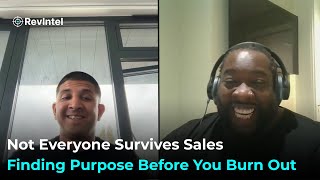
In this hour‑long interview, Shane P. Mahi talks with Kern Leon Daly (Koen) about the fundamentals of go‑to‑market (GTM) planning, partnership and reseller strategy, and why the underlying "why" of a brand is the single most important element for any sales or growth initiative. They explore how data‑driven personalization is essential for voice‑AI products, and why many AI startups fail when they rely on public or crowdsourced data instead of their own customer data. The conversation shifts to luxury brands, arguing that these brands face a conversion problem rather than a demand problem, and they identify cultural relevance, authentic storytelling, and immersive "phygital" experiences as key levers. Kern shares concrete examples of immersive tech (AR/3D, virtual showrooms, gamified loyalty) that reduce returns and drive revenue. They then discuss the chronic issues in sales organizations – over‑forecasting, over‑hiring, toxic churn culture, and the mental‑health toll of sales – and offer advice for early‑career professionals, emphasizing mentorship, purpose, and resilience. The episode closes with reflections on happiness, personal purpose, and practical advice for future selves, followed by contact information for Kern’s consultancy and charitable work.
Chapters
Koan, why should anybody stay on this episode to hear what you have to say for the next hour?
Okay, that's awesome, just throw me straight in there. Um, I think it depends on where you are. I think if you're a consultant or a business owner, or you want to think about your strategy or go-to-market, you don't know, really understand the landscape you're in around alliances and partnerships and growth and some of the mishaps that can be made, definitely stay tuned in. Stop what you're doing, take a step back, and think about why you're doing it. When they see your brand and your identity, or they work with you, how do they feel? What's the experience? If you don't know any of these things, if you can't explain that internally to yourself with your team, then there's a problem. If you haven't got any data and you're using crowdsourced data or public data, it's not based on your data, so the algorithm isn't learning from your content. So the AI isn't based on what you do, it's based on what someone does. So it's not personal. Without personalization, then your, your win rates, your click rates, your answer rates are massively reduced. So think about if you don't have data yet, and then it's too early for you to adopt AI.
Hello guys and girls, ladies and gentlemen. Today I have Koen Daly and I'm gonna jump right into the episode. Koen, why should anybody stay on this episode to hear what you have to say for the next hour?
Okay, that's awesome. Just throw me straight in there. I think it depends on where you are. I think if you are a consultant or a business owner, or you want to think about your strategy or go-to-market, you don't know, really understand the landscape you're in around alliances and partnerships and growth. And some of the mishaps that can be made, definitely stay tuned in. Also, if you are in your early to mid-careers, you don't know how to look at your salary, you don't know where you're going in regards to your vertical and your cluster that you're working in and how to really succeed in regards to your sales motion and cadence, then listen in.
So you touched on a few important things that are hugely valuable to pretty much everything I do, and that comes around Go-to-marketplace, your strategy. The strategy is great, but how to execute on that strategy is, I think, is much more important. Partnerships, again, is something that even I'm focusing on, like what are the right partnerships? Is it basically the right type of ICP and that's it? Or is there more to that partnership? Your resellers? If you were to touch on one item in each of those three areas, Just to start, GTM, partnerships, and resellers. What is the one most important thing to focus on when addressing either of those three areas? So for GTM, what's the most important item to address in doing GTM well?
Yeah, I think in all of those areas, whether it's go-to-market, whether it's your, your part, your, your partnerships or growth, there's one thing that always seems to come up that is always missed, and that's actually stop what you're doing, take a step back and think about why you're doing it. Yeah. So I'm not talking about your ICP or your logo or even your idea. It's about why you're doing this. What do you want people to feel and understand and interpret when they see you, when they see your brand and your identity, or they work with you? How do they feel? What's the experience? If you don't know these things, once you deal, you deliver your go-to-market or you want to bring on partners or alliances, they have to know your why. They have to know what, what, what you do and how you do it. If you can't explain that internally to yourself with your team, then there's a problem. So what I found is, let's strip things back. Let's go back to, okay, yes, you have a product, or you have an idea, or you have an, um, a solution. What does that solution do for who and how and why? And how is it different from everyone else in the market? Once you know these core, I would say, concepts, then you can think about your go-to-market. Then you think about who to partner and align to, because then they will have same understanding, the same core beliefs, the same strategy as you that you can align to. Otherwise, how do you know who to partner with? And that's when it gets clunky. You're partnering with the wrong people. It could be competitive. It might not be the right synergy, the right fit. And then you realize after a quarter or two that's not working. Then H1's done. Then you're in H2. Then you're gonna do your planning for Q1. The year's done, right? The revenue's over. And that applies whether you're a CEO CRO, or if you're an AE, because your forecasting is to the same board, it's in different positions. One is on the grind, you know, you're in the weeds and you really know that client and you're giving genuine numbers or you're not because of the pressure that comes down from the board that you don't understand, or you are the board and you're giving these false numbers to indicate where the company's going and then it's not gonna fall in. So it's the same problem at different ends of the stick.
I like how you put that. And I think one thing that makes this conversation very valuable for those who are listening is that keyword differentiation. And let's say even for me right now, I have worked with, let's say, a handful of companies that are in collections, and they deliver voice AI agents, right? And we've heard it all from even the beginning of like 2 years ago, it started off like, I'm going to have an SDR that's going to be able to book meetings for me. And that hasn't really happened too well because it's illegal to do that, right? And then I moved into two areas in my past 2, 3 years, which is, it just happened to be voice AI in collections. Something that I, the reason I know collections so well is because I have like thousands and thousands of amounts of money that is trying to be collected from me because when you start a business, You know how it goes. There's nothing I'm ashamed of. When you start a business, you have to prioritize your business and your home. And then like the electric bill, it's like, eh, you know, do I want to live without water or a few lights for a few days? You know, you have to do that.
It's a balancing act.
But what I want to ask you is this then. Let's say for the groups of companies that are delivering voice AI to their customers. All of them are, it's a good voice, hallucination, latency, scalable product. They're, it all sounds the same. So how would you advise a voice AI company to differentiate themselves in such a flooded market?
It is flooded market, but I think initially you don't have to have a pure math degree to understand how the algorithms work and how long language processing works and how you have to do the right prompts to get the best out of that command and that your data is king. Your infrastructure in regards to your latency and your Wi-Fi and your cadence is key as well. So you need to break it down again, go back. So think about what you're doing before and look at the white space and then look what's possible. I'd always start with a sample size. Start with someone internally that gets it. That's a bit techie that can understand the process. Start with someone small, start looking at small wins and then build out. Don't just swap out your whole entire team for AI. It doesn't work that way. And also the company that you work with, if you haven't got any data and you're using crowdsourced data or public data, it's not based on your data. So the algorithm isn't learning from your content. So the AI isn't based on what you do. It's based on what someone does. So it's not personal. Without personalization, then your, your win rates, your click rates, your answer rates are massively reduced. So think about if you don't have data yet, and then it's too early for you to adopt AI. You're just jumping on the bandwagon of something that doesn't work without the data. There's nothing it's learning from. It's using publicly sourced data, which could be any data. It doesn't work. So if you're not in the mid-market or enterprise and you're a small SMB organization, you have no data yet. Shouldn't be even having the conversation. Most people aren't honest about this. You know, it's about having the conversation saying, look, where am I based on my dataset? Where am I on my incumbent stack? Can I even have that type of loading on my system? So for example, if you don't prioritize voice and you're in your organization and you've got your voice coming on the same ISDN lines as your internet, and everything else, then how can you have a voice product? It's not— without QoS, which is quality of service, which is fixed on your ISDN lines, then it sounds like this when you talk. So you'll be like, this AI bot's rubbish. No, your internet connection doesn't work because you're not prioritizing voice. So when someone's on Facebook, someone else in back office is emailing their missus, someone else is on WhatsApp chat. Someone else is on Netflix, guess what? Your voice goes down. And that means your customers can't speak to an agent, they can't go through Q&A, and so on and so on and so forth. So I learned back in the day when I was ripping out contact centers, and we were going basically from on-prem to cloud back then, and we were doing some AI stuff, some really cool stuff about time to call, who to call, based on their persona, their job title, based on where they are in the world, based on the weather, if they're likely more to answer. We had algorithms then with big, big datasets. Our biggest deal was with a client in the US in Vegas, um, Caesars Palace. So imagine the millions and millions of data points they had the algorithm could learn from. But when I sold it to a small company in London in the West End, guess what? It didn't work because they had no data. They had thousands of data points, not millions. So you can see the difference. Same product, same pitch, totally different results.
Wow, mate. That is in— look, this is why I love these podcasts. You have no idea who's on the other side of that bloody camera. You seriously have no fucking idea. So I want to talk about luxury brands. I know luxury brands is something that you're quite good at. You are the first person to crack the luxury brand territory. Some of my cousins wear luxury brands and I think they're idiots because they can't afford them, right? Let's just say because of that reason. But a luxury brand does say a lot about an individual. How a company is able to control so much market share considering one person is actually controlling most of that market share is very fascinating. And when it is done right, it is something that's quite elegant and it is quite, it's quite inspiring to see how a design can capture so much culture. Right. So I want to ask you about the luxury conversion problem. So you've said, I think, I think this is right. Correct me if I'm wrong, but you said that luxury brands don't have a demand problem. They have a conversion problem. So for the audience of investors and founders that want you to break this down, what specific signals tell you a premium brand is struggling with conversion versus just needing more visibility?
That's great. Yeah, that's a really good point, right? So what I'm talking about there is this immersive world we're in where you get stuff that we call clickbait or likes or overperceived value based on a trend. Now, some brands can take that trend, spin it, make it worthwhile, And we will be talking, communicating that brand between us, our friends, our peers, our family. And subconsciously then we're more familiar with that brand. It also seems okay what they've done. And at some point we will either purchase or recommend that to somebody else. That costs them nothing but that trend. Others will jump on a trend and do it the wrong way. And even though we always say that there's no noise that's bad noise, right? No press is bad press. But sometimes it is because when you start talking about religion or culture or politics the wrong way. Yeah, you can get it wrong. It's a massive issue. And I'll give you an example. So me, my heritage is the Caribbean. I'm first generation British-born Jamaican. So as a kid, me and all of my African and all of my brown friends grew up with our parents using Vaseline for everything, for our hair, our mouth sores, lips, skin. Elbows everywhere. And as an advert that we can Google, and I, and Google it now if you're listening, and Google the latest, um, Vaseline ad has a Black child that is like screwing their face up because their mother or grandmother is like pulling their face apart with a big tub of Vaseline. And that's it. Yeah, immediately that evoked emotion. That was in context. It wasn't, yeah, oh, it's Black History Month, you're taking my culture and using it for yourself. It wasn't being any bias or racist at all. Yes, it was using our culture, but in a positive manner that was respectful. That campaign, my whole entire— every time I see someone I know that's Black or Brown, they say, 'We've seen that vaccine ad.' Now we already used it, but now that is now cross-trending to other people and other people talking about it. Okay, now that is a genius, smart way to use culture to make your brand trend. Now, and the other opposite example of that is when a chef, um, we all know who this is and I'm not going to say his name, but he wanted to try and be more cultural in what he did, so he made up something called jerk rice. Now, there's no such thing as jerk rice, okay, but he was trying to be cultural. He was trying to actually be positive but did it in the totally wrong way. He didn't get a consultant in. He didn't ask someone from that culture what is wrong or right or appropriate. And that then deems into the cultural appropriation world where you're taking something that isn't yours, you're using it in the wrong way. And he offended everyone. Now his restaurant chain went down after this ad. His restaurant chain went down. He's still doing okay, but his restaurants are all closed. So that was a powerful moment where he'd done something innocently and it went wrong. So they're two brilliant examples. And you can look up after, or, you know, if you're listening now, you can look up Chuck Rice, see the chef that did it. He's actually a lovely guy, but he had the wrong intent. So it shows you where it can go wrong or it can go really right. Wow.
Wow. All right. So I want to talk about how people are buying today.
Yeah.
Even versus 10, 20 years ago, I remember when I first bought— I lived in America for a long period of my life. I remember going to Macy's Furniture and buying my first— well, I didn't buy it. My parents bought it.
I love Macy's.
And it was the baddest, most amazing mattress I ever had in my life. It was like 15 inches thick, bro. I was a 12-year-old with a huge, like, amazing mattress.
Yeah.
And, um, then when I bought my Simba mattress a couple of months ago, right? Well, actually, no, it was a couple of years ago. Then I bought the Nectar mattress and then, uh, that was ordered and I said, look, I want my shit like right away. So I ordered it from August and the other day and I just got the whole house redone in the whole house. Right. And next, but what's really interesting and what stops me from making the next decisions, for example, my living room was How would my sofa look in here? Or how would a different TV look in here? How would a different bed look? So you talk about the immersive tech revolution and that Sideway, I think it is, you are helping luxury retailers get 40% fewer returns using 3D and AR. So it's not about tech, it's about making purchasing decisions, well, changing the way purchasing decisions are made. So what are the data points that prove that immersive experiences actually drive revenue over engagement?
Yeah, I mean, it's, it's a, it's quite a challenge to have these conversations with legacy leadership that, you know, are in here, are not inhibited, but based on knowledge on their old school theories and knowledge, right? So AI and, you know, WebGL, AR, 3D, these, um, types of technology stack is foreign to them. So they still think that, you know, the old ways of having a corner, a corner store moment will generate revenue, and it doesn't. There's still that age group that do that. But when you think about, um, the, the younger generation and, and the junior new leaders coming up, they understand things in a different way. In an immersive environments where you're, where you're gamifying an environment and you're having people Show their loyalty based on the brand and individualism, and it's personalized. When you log into a world that knows you, and Amazon did this first back in 2000, 2002, when the algorithm then started to get enough, when they had enough data, and this is Amazon, right? Too much data they have. But when you do your purchase list, then the next year it sends you the same list, but the upgrades and the cross-sell and upsell products. You didn't even know existed. So all you do is push a button, you click, you know, they send you all of your— oh, you bought this for your kids last year, this is the next, this is the upgrade. Yeah, and I start to go, wicked, boom, that's all I've got to do. And everyone took a while to learn from that, and people still aren't learning from that. I haven't got to look around, I haven't got to search the site, it sends me a list and says, you bought these things, this is what goes with them, and this is the upgraded software. And this is the returns policy. Boom. Called me my name. I know who it is. I trust them. Bang. Simple. In seconds, right? So now we've gone another level where we're seeing that when you can actually buy into a brand's concept, this is about going back to that why. These heritage hundreds of year old brands, you know, why were you created? Who are your founders? Why do you do what you do? People buy into that. And these immersive worlds where you can actually create your own world within their world, you can create custom objects and designs. You know, right now I'm wearing, um, uh, I'll say a famous, famous basketball, um, uh, player's design but with my own signature on it and my date of birth and, and, and my initials. And that's something that Sidewave did for this brand where you can go on, create your own colors. So I've got one pair that are Jamaican colors, another pair that are Arsenal colors. It's personal to me, but it's still within the brand framework of their design. And that's where I paid probably 3 times more than I would in the store, but I know it fits. It's my personal family's colors and it's my football team's colors who I'm passionate about. So I'm taking my passion and sharing it with this brand, and then they're letting me be myself and express myself through their product. That's another level of immersive tech and, and retail coming together with fashion, you know. And that's, that's the game changer. And everyone's going to get on that bandwagon eventually, because eventually you're not going to be going to stores, you're not going to be going anywhere, you know. We have something called phygital, which is the digital and the physical that are together, where in a capsule I can show you a catwalk show in your office right now. From Milan, from New York, for Paris, and then I could put you in that catwalk and put your clothes on there, change the clothes, see different items, put on glasses, change your shoes, change your hairstyle. Imagine if you said, right, Co, I wanna say you're getting married or you're going to an event, I'm not sure, I'm on my hair, I want this kind of jacket, this kind of vibe, these kind of shoes, and you go into the high street, it's not in stock, you're trying on stuff. It gets hot. Like, I can't stand it. I can't buy anything on the high street. It has to be either made for me or I buy it bigger and I get it tailored because of my shape. It's a nightmare. With phygital experiences, I can see it in real time, right now, in front of me, in my home.
Why do you have an F in the phygital?
Sorry?
Why is it phygital and not digital?
It's, it, well, because it's physical. And digital. So it's physical, it's in front of you, but it's digital. So it's called digital.
I like that. I like that.
It's new. Yeah. If you Google it, you'll get the terms. It's a very new technology. We're one of the first people to bring it to market. And the experiences that it brings are incredible. I mean, we have a watchmaker where you can dive into the watch and see the cogs and you can live in there. And then you can actually create an area, a space in the watch and gamify it and compete. It's crazy what's going on. Same for, um, uh, a retailer, and again, on the shoes, on the famous shoes brand, just done a global deal which is out of our space normally with the food chain, one of the famous, most famous chicken food chains in the world without saying who they are. Very famous Colonel that is associated with that brand. They just signed a global deal with us to build their loyalty program. We built an MVP that had— that nearly crashed because of the millions of users that were playing this game to earn, um, certain types of chicken. And then when you win the chicken, you get them a voucher, you get a code, you go in store, you redeem it. And these, these young people are playing these games, they're getting immersed in this world. And they're showing, you know, their loyalty to this brand and it's going global.
That is very interesting. I was— you literally nailed it where it's that experience to see what does this look like on me? Even for myself, one thing that's really hard for me is I have very wide shoulders and a wide chest and then like I'm not exactly skinny on my waist, so I don't fit like the slim fit or the muscle fit. Exactly. I do have to have the same because I have like, I got my love handles still. I like it, but it's so my shirts are different. I can't go to like Zara and wear Zara clothes. It's one way. H&M, I can't do it in that. Um, I did one brand, I forgot what it was called, but they do like tailored, they pick from like, like fairly good brands, but they'll ask you a number of questions, what your color palette is, what kind of design you like, and then they'll ship your product, which has like tops, T-shirts, shoes, jeans, like an assortment. And that really fit well.
Yeah.
But then it became like quite tedious. But what would be really good is to alleviate that entire process of I've got to try something and then return it is the ability to say, yeah, like you're saying with what you're, what you're able to offer is something that allows me to say, I want a white t-shirt, jeans, and Air Forces. I need some new brands. I want whitewash jeans. Show me what I need. And then it says it, and then I assume that you'd be able to say, all right, walk on stage so I can see what that looks like. Yeah, that's amazing.
Yeah. And imagine then— sorry, and we're talking about from an individual perspective. Imagine if we wanted to create a whole, um, uh, design for a whole wedding, or we wanted to do— if it's B2B, we wanted to build actual concept, or wanted to look at what a car would look like, you know, outside our home, and I drive, what it looks like inside. But while I'm at home. This, this can go as far as we want it to go. Not just about clothes, this could be, you know, you, for example, right, airlines lost nearly 60% of their revenue they normally make year to date over, over COVID, right? When you're thinking about where you sit and you look at an airline's website and you see those little squares, you don't know what it's like to sit in that seat. If you've never flown on the airline, you don't know what it's like to sit in that seat. You don't know what you can see or can't see, how it feels. Imagine if you could put someone in that seat, imagine if you could show them what an upgrade looks like and feels like, and they sit and they look around and they can see the, the aircraft and where, where and how it feels. They're going to exponentially sell more because people are going to know before they get there.
I'll never buy EasyJet again from that.
Absolutely.
Ryanair, mate. I do Morocco, my wife is Moroccan, so I do a lot of trips to Morocco. And in the beginning it was EasyJet because it was a £20 ticket. And then they just, they start ripping you when you get to the plane and you want 23, now it's 26.
Yeah. Then you want to have your bag and you've got to put your shoes on. Then you go, you go breathe oxygen.
Oh my God. And did you hear that they're going to be doing a bus feature? Like, are they actually going to be able to? Yeah.
That isn't true. They said that a few years ago and that was good press by Ryanair, by the way. Tick. Well done.
Yeah.
They can't do that because of the dangers and when there's certain types of weather, et cetera. It's not, but again, it's good PR, right? People are talking about it.
It's definitely good PR. So I want to talk to you about the CRO advantage, something I think you mentioned. So as a fractional CRO, I adopt that position too in terms of patterns and having those patterns across multiple brands. What do you think are the two signals, the conversion signals that separate high-performing luxury brands from those that struggle regardless of budget?
That's, that's in, that's in, that's interesting. What I would say is your forecasting is integral to that. So whether it's your stock, your rotation, how you hold stock, or whatever it is you're selling, if you over-forecast, then you're always going to be in, in, in deficit because your numbers are never going to make up. So you'll be chasing. If in Q1 you over-forecast and in Q2 you think, well, I'll make it up. Q2 you don't. Then it's just a vicious circle and domino effect. We go into Q3, you're still behind from Q1. Then what do you do? Do you think, well, we'll reduce costs or we'll do bundles, put stuff together that shouldn't go together. Then your gross profit margin gets smaller, your revenue in Q4 increases, and it looks like you've done well. When you go into Q1, you look back on the year before, your gross profit margin has shrunk and your revenue has stayed flat, then you haven't got a job anymore. That's a huge problem.
It's a very huge problem. So on that topic, how do you— I absolutely despise it where revenue leaders or leaders that hold a number overshoot their forecast, like, by 10, 20x. What's your opinion to those that are in, in the— like, so let's, let's be careful because you can be the person in the team that's listening to that optimistic founder. That could be one role here. You on the other side, there could be a founder listening to this or a revenue leader that is over-forecasting and may benefit from seeing a different perspective. And then let's leave out those two, keep it simple. You are that that and that one. What's your kind of feedback?
Everyone does that through pressure. And I've been, you know, the AE making 100 calls a day. I've also been the GM or the SVP that's speaking to the board on what we're going to forecast. And the pressure is the same. And unfortunately, we don't live in a culture where we can actually say, you know what, we're going to miss this month or this quarter, but these are the actions I'm going to take to justify that. So typically what happens is either people tend to overhire So they've got budget for 3 AEs or BDRs or SDRs or, um, BDMs, whatever you want to call the salesperson these days. It's nuts, the names that come out, whatever you want to call your revenue people. So what they do is they overhire and they say, well, if you look at the averages, right, the average close rate in the UK is 26%. I say, okay, let's get a young guy, you know, someone's more, more experienced, someone else. And they go, let's just bet on it. So we're going to hire 6, we've got budget for 3, we'll keep 3 that are okay and we'll fire 3 that don't hit the number. Even though without giving them the tools, the support, or the mentoring they need, that's what they do. Now the person that's good is either promoted because they're closing a lot, but they've got nothing to do with leadership or want to be a leader. So all their bad habits and, and ignorance that got them to where they got, which is great at closing, but they're not leaders. So then they can't manage people, and you get the official circle of churn. Why is sales the highest churn role in, in, in, in the world, right? Because of these patterns of behavior. Or, and by the way, the 3 people that you knew weren't going to work, you put them on a PIP, then you get rid of them. So this culture is toxic, and people around them see that. It's not going to make people be good leaders or want to stay in your organization. And that happens whether it's retail, whether it's SaaS, whether it's anything. All the redundancies we're seeing this year are based on overhires still from COVID You know, certain verticals did well through COVID, and they did do well even though it was a horrible thing. They then overhired for those teams in those areas in a false manner. Then what happens post-COVID? COVID goes away. What do you do with all these extra people you hired? Because your number goes up and then you've got too many people, then you don't hit your number. Then what do you do? You don't look at management or leadership because they all seem to be in this protected bubble that I call it. So then it's going to be the directors, the VPs, the AEs that all go, and some of the technical teams too, because you're just crunching your numbers. And then what, then what, then what do they do? They cut the numbers in Q1, so then their year, their year forecast looks better., then what they do in Q4, they rehire for the same roles that they just let go. It's going to take a year to onboard, you know, in the enterprise. Let's not get it twisted. It takes maybe 9 to 18 months to onboard with an enterprise organization. So these people on their CV, when they've been there a year and they've closed nothing, unless you've got a client you already had that you've brought on that's going to close, you haven't closed anything because you're building, you're evangelizing, you're networking, you're building clients, partnerships, etc. You're not closing anything. It doesn't work that way. So, you know, when we see these CVs, we know it's BS, but this is a behavior that comes from the top down. That is toxic behavior that is part of a sales culture that needs to change.
So let me ask you a question then. There are some people that watch this because they are seeing sales as an avenue or a vehicle to get them closer to exponential success, exponential rewards. Sales, I believe, is— I don't think that there is any other profession in the world where you can start with zero experience and very, very quickly become— let's just say you can increase your earnings exponentially, and then you can have one event happen. Very early in your career and that will change your whole life. Nothing else does that. A doctor, you have to go through a frigging 4 to 8 years. So fucking lawyer, you have to do the same kind of thing, right? Yeah. So it's very, it's very hard to kind of decipher then, is this an area or an avenue I want to explore? And the reason why I want to ask this is, what do you say to those that than maybe wanting to get into enterprise. So I always advise people, look, if you want to see restaurant owners or people who work at restaurants or even at the shops, they're like, Shane, what do you do? And I'm, I'm, I'm in software sales. I run an agency that, that fucking covers software sales. Um, and I say, get into enterprise sales, get into that because if you want to really achieve like $100,000 to $300,000 kind of salaries,, with bonuses. It's hard work, but there is a 5 to 10 year kind of journey you'll go through and you will recognize that and you can kind of change it if you're in your 20s or 30s, even your 40s. So what do you say to those? Like, what should they kind of expect when they're getting into territories or that environment where it is so volatile? You can be fired for something outside your control.
Yeah.
Yeah.
I mean, advice for those, it's a real tough, it's real tough. And I think there's a lot of luck involved. I think having a mentor, having someone that can guide you that's very senior in the landscape you want to get into, will protect you and will help you. Because when you get made redundant or someone takes your pipeline, someone gives you, um, a, a false role to take you from the market, which happens a lot, people aren't paying you what, what you should be paid based on your experience and your role, and your age, they're paying you what you were last paid and putting on 10%, which everyone thinks somehow is appropriate, whether it isn't. Without that mentor, that old school guy or girl that's been doing it for years, you're gonna get lost and you're gonna get punished. You might be lucky, you might be able to swim through it, but it's like swimming against the tide, if I'm honest with you. And everyone blames sales for everything, even though we keep the light— even though we keep the lights on and Yeah, listen, listen, I've earned those types of money that you spoke about, and I've earned nothing at all, and, you know, worked a year pro bono giving back, and I wasn't any more happy with that money, if I'm honest with you. And I made more other people more, more money. So it's a tough grind, but I also, I love it. I love what I do. Yeah, you know, I love sales. I've been doing it for 30 years, but I actually wouldn't say that it's the right thing to do. I would say that it's— if it fluctuates so quickly and it's up and down— I know people that are wealthy doing core, either construction or engineering, science, and they don't get bonuses and they don't get to drive the fast cars, but they have an incremental continuous income that eventually, with their pension contributions and their lifestyle, they'll be more wealthy than the guy that earns this spike of money and then has nothing for years, or has a spike of money and then made redundant, or invests it wrong. It's a type of personality, and you have to be— you can't be risk-averse to do it. So we take a lot of risks and punts with our deals, and sometimes it works out, sometimes it don't. And our personalities are like, okay, well, I'll earn it again.
But some people—
some people— some people, they have that personality type, right? And it can cause depression, it can cause stress. You know, and not to be morbid, you think about the, the highest rate of suicide is with men. It's with men under 25. So me personally, if I'm someone that has any mental health challenges, I'm not a confident person, stay the hell away from sales.
That's very true. Or face it head on and work with somebody who can help you kind of Only for strong enough to.
It's not for everyone. Otherwise, if it was that easy, everyone would do it.
I'm interested in having this debate. All right. So let me, let me ask. So there was a time in my life, okay, where let's put it this way. There was a time in my life I was heavily addicted to opiates. There was a time in my life I was heavily addicted to heroin. There was a time in my life where I had stints in rehab. I've been away for a couple of years. And I was broken down to an absolute shell, right? An absolute shell of nothing, absolutely nothing. And I had a conversation with myself, not in a psychotic way, but it was, you have a chance and an opportunity right now. You are at zero. There's no other way to go other than up. You are nothing right now. When you, when you are outside of this, or when you get through this, people will think you are some, a certain type of person, typically somebody who they don't like, they don't respect, they don't trust. All of those things that can really hamper your ability to create even confidence. The foundation has been eradicated. And for 10 years, there was these kind of boom, boom, boom. But the, the, the one thing I was able to embrace in the whole thing, number one, yes, it was strength, resilience, purpose. In some moments I had no purpose, but it was the ability to keep going. And in my head, it was nice to hear, how does that motherfucker keep bouncing back? That was my, like, that fire. So for those that may, do they not have it and it doesn't exist and they're hopeless? Or is it something they can, a muscle they can develop? And how would they develop it?
I think it's a muscle you can develop, but it's horses for courses. Everyone's truth is their own. Everything you just said is your truth. It's— truth is subjective. I think what, what we often do is say, well, oh, he did that, so I can do that. Why? I'm not you. I'm not in your shoes, and you haven't been through what you've been through. You haven't been through what I've been through. And I, for God, would never ask anyone to go through what I've been through in my life. Yeah, I never would. It would break most people, and it, it does condition you to have that fight or flight where you've gone through it because you've been in the lowest of the lowest. Some people have not been to that low yet, so they can't have that fire. They haven't got that drive yet because they haven't got that low point. Yeah, I'm like, don't get there. You don't have to get to that low point to do that.
That's a good point.
Yeah, and you know, happiness is something we can't measure. There's no measurement of happiness. There's a continuum, and some people are there, some people are there, and we all, I think, through life and culturally think, well, you know, house, dog, wife, cat, dog, Mrs., car, this job, tick, tick, tick, that makes me happy. It doesn't. Look at all these athletes that we see now, from Tyson Fury to footballers that get to this point and it plateaus and they go, but I'm still not happy. Like, what else is there apart from this thing I'm chasing? And I had that in my life where I was chasing these roles, chasing this money, and I got lost in it and thought, 'Wow, that's not what I thought. I'm not happy. Why am I happy? I've got all this stuff. I can go anywhere. I can fly where I want. Why aren't I happy?' And it's like actually looking in and finding out what is your why. What do you want to do? What does make you happy? And actually, it's not money. Money's good. It helps. It's great to have your pension. It's great to have private healthcare. It's great to have a nice car. It's great to go on holiday. These things are all nice to have, but it doesn't make you happy. Happiness is something entirely different.
How do you— I have my way of defining happiness or achieving happiness. How do you achieve happiness from where you sit?
For me, I think happiness is about being content with yourself first, being able to look in the mirror and honestly like what you're looking at. Like the man in the mirror, like MJ said, right? A lot of people don't know how to do that and can't do that and would be scared to do that. And I mean that warts and all, right? So the good, the bad. The bad, the ugly, the negativity, the biases, everything about you. Love and own it, and then you can then express and be as best you can be. That to me is happiness, being in that confident place where you know who you are and you can then do good and be the best person you can. Because without that, the handbrake's on. You don't even— if you're not being honest with yourself, how can you be honest with anyone else? I honestly believe that if you're not in that place where you have that self-love, where you can look after yourself, How can you look after anyone else?
It's very true. It's very true. I was taught, it was one of my coaches, one of my best, most inspiring coaches. He was a multiple-time CEO. I paid the most money I've ever paid to him for coaching. And he taught me, all right, Shane, what do you want? Let's cover that first. I said, I want a $100 million business. He goes, all right, let's walk through that. I'm going to show you what a $100 million business looks like. And it then started to branch out how many people are involved, how many headaches come involved, how much legal is involved, how much compliance is involved, how much, right? Like everything that comes with it. And I was like, oh my God. And he's like, let's see, what is it that you actually want? And the novelty kind of attributes came up, the materialistic things came up. And he's like, to be honest, you know, you can have all these things. You can have your supercar, you can have Lamborghini, a Ferrari, whatever. You can have a million dollar house. You can have all these things and you You need about $200,000, $300,000. You don't need a $100 million business. No, there's credit. Right. And then it became a question of, okay, so let's look at this then. Let's look at, let's say you had a million dollars in income. Is it okay that what if you had $900,000? Ah, and then you kind of tweak that. All right. What if it was $800,000? What if it was $700,000? What if it was $600,000? And then you quite, you quite quickly see like the idea behind that, that exercise and activity is to extract certain pieces of information that let you discover, I want reputation. I want prestige. I want admiration. I want recognition. I want respect. Exactly.
So the money side has gone away, right? It's about your why. What actually internally makes you feel like the person you want to be. The money comes, right? That's like an output when you know what you're doing. That comes. You haven't got to hustle for that. The hustle bit is understanding and identifying where you're actually at and who you are and where you want to be.
Absolutely. Absolutely. So wrap up on this. I always ask, what if you were able to go back 20 years to the person you were and have a conversation with them like today? What piece of advice would you give to that person in terms of how to be successful in 2026?
Wow. I think it's interesting. The best advice I ever give is never listen to any advice. Now don't get me wrong, I'm, I'm, I'm a business coach and I'm an advisor and I have, you know, over 100 mentees. However, when you know in your heart of hearts and you're passionate about something, never digress from that. Because when you have a passion for something, nothing is hard work. It's not even work. You just love what you do. You get up with a spring in your step, you walk, run. Your— you would sprint to get to it. Nothing is hardship, and then it's easier. And then when people see your passion, they relate to it and they want some of it, and they can relate, and they want to be around you because you love what you do. So what I would say is, if I could go back and speak to me as a child with all the passions and how determined I was, and I got deterred, whether it was not having the money at the time or whether I was in a situation where uh, it was racism that was involved, or whether I didn't have a mentor, and I blamed other people that I couldn't do it and not looked at myself because I didn't have the emotional intelligence to realize it was me. And I would be— and I would deter. I've got a career that's over 30 years in every vertical, selling everything from paper to cloud to pens. This— it's all over the place, even though it's all selling, because I do something, get good at it, give up on myself, do something good, give up on myself because I was all over the show. So if I could go back, it would be that thing that burns in your belly that you love to do, never stop doing it. And it may not work out, that's okay, have a plan B, but that will keep you action when you think about your why and your happiness as a man or a woman. That's what gets you there, in my opinion.
I'll dig one step deeper and then we wrap it up. But how did— so if you imagine yourself now, you're 18. So for me, when I was 18, I was thinking about how do I be, uh, I wanted to get at 18, I wanted 22-inch rims. Yeah, I lived in America. I wanted a hot Spanish girlfriend. Uh, what else did I want? I wanted to be a trader and I didn't know what I wanted. I was so stupid, right? I was buying Dean Grazioso courses back then. This is back in like 2003, 2004. If anybody knows that, that's like an old-ass dude. Yeah. Um, you don't know what you want at 18, so how do you tell— how do you help somebody discover a little bit?
Let's—
we're not going to say you're going to get the answer, but let's say how do you start cracking the code?
Because there are things at that age that you love to do subconsciously. Maybe it could be reading, could be sports, it could be journalism. Whatever it is, that's your career. That's what no one tells you. No one tells you what you love is what you do. No one says, oh wow, you're into journalism, you love reading, you love going to media, then be a sports scientist. Or if you, if you, if you love football, doesn't mean you're a football fan. If you're obsessed, obsessed with football, work in football. Yeah, you want to be a football agent, do you want to be a groundsman, do you want to be the man that the— do you want to do, do, do, do, do the sports center or advertising, media? There's a million jobs in football that pay really good money. And you love what you do, don't just go to the stadium every week and watch. If you're that passionate, make it your job. And it could be that, you know, there's always someone that's caring for people in the community, doing stuff like that. So then, okay, be, uh, be a psychotherapist, be a doctor, whatever it is. These, these jobs aren't out of your sight or mind or your attributes. You just don't know how to do it yet. So for me, what we do with, um, one of the charities I work with is get school leavers in year 10 and 11 to go and work for 2 weeks in a job they think they like. So they go and be a sport agent, they go and be working in a newspaper, they go and work in cloud, SaaS, they go to IBM, whoever, they go to Salesforce, one of my partners, they go to Google Cloud, and they work for 2 weeks and they go, ah, this is awful, I don't think I can do this. Or they go and they go, I love it, this is what I like. And we give them 2 weeks experience in all these different companies, all, and speaking to football agents, to footballers. These young boys, I want to be a footballer, they really mean it. Go to a football ground, they train every week, every day for 2 weeks, get up, have to go training. They're like, man, I don't want to do this, I just want to do it for fun. Or after 2 weeks, I love this, this is who I am, I want to be a footballer. So what we do is, for some reason, as kids, they have these dreams at 8, 10. I want to be a fireman, I want to be a train driver. I mean, go, that's right, son. Now you go to school, do English and maths and all this crap. No, how'd you be a fireman? How'd you be a footballer? How'd you become a football agent? How'd you become an architect? These dreams we have as kids that are unlimited, no boundaries, we haven't had life crap on us yet. That's what we want to keep, that passion. Why do we say no, no, no, no, no, no, go and do English, go and do geography, What's that got to do with our life and what we want to do? So it's a governmental, societal issue. As parents too, we do it. We nod. Yeah, you like gymnastics? Yeah, yeah, yeah. Now go and do English for 10 hours every day. No, go and do gymnastics. Flip, jump, hop. Then go to your national team, your international, then you're at Olympics, then you get sponsored. Why aren't we pushing our kids to do what they want to do? Why are we pushing them to do what we think is what they should do. It's bullshit. And that's where it starts for me. And I'm super passionate about that. These kids that do what they love, even if they don't do what they love, they do something around that. You know, there might be a groundsman. Groundsmen earn £70,000 to £80,000 a year. Like, this isn't silly money. Yeah, of course. They flip it to American football, to football, to a concert. They build the stages. You know, I love— part of my life I do security. So these people that build these rigs, these stadiums on the outside broadcasts, and thousands and thousands of pounds. This isn't, you know, a road sweeper, if that's what you want to do, by the way. You could do that and have your own company, work in an industry in tech, and then, you know, do it for everyone. But there's no—
it's limitless if you're passionate about it. Absolutely, absolutely, absolutely. And I think that that's a great way to wrap it up. Follow your, follow your purpose, or try to find your purpose, purpose, and, um, really see, look, those things that did drive that little or create that spark, that little fire inside you when you were younger. Like, yeah, for me, I love the whole Wall Street kind of thing. And that's the next stage. I'm going to open up my own firm and do the kind of same thing that I've always dreamed of. So any last words before we wrap it up?
No, I think, you know, if you're thinking about what drives you, what's my fire, what, you know, what's Shane and co talking about, it's something you can't give up. And think about it, when you go to that desert island and do that conversation with yourself and you can only take one thing or do one thing, what is it? That's, that's, that's what your fire is. That's what you can't give up and you never will. You know, I'm 45 now and my fire's never changed. I just ignored it, stepped around it, stepped through it, stepped over it, listened to people that didn't know what they were doing. And that's taken me on many paths. Don't get me wrong, I've been very successful. But also had a lot of hardship and challenges because I wasn't doing what I loved. You're forcing yourself to do stuff to keep the lights on. The lights come on and off, man. It's better to do something you love and have the— and then you don't worry about the lights being off.
It's very, very true. It's very, very true. I think that's a great place to kind of close it out. So where can people find you if they want to learn more?
Um, they can find me in lots of places. I'm on LinkedIn, Kern Leon Daly. My website is kernleondaly.com. That has all my contact details, my phone numbers, etc. You can Google me, Konye Onyedale, my podcast, my website, my articles that I recently published in MSN will all come up. Just won Equity CEO of the Year as well for my charity, which is Equity in Tech Group, which is where we're trying to get marginalized groups into tech. So we could talk about that offline. I'd love to have your steer on that too. We're going to try and raise some funding soon.
Yep.
Awesome.
All right. Well, that's a wrap, guys. That's the pod. I'll see you next week.
All right.
Thank you. Thank you very much for taking the time to watch this episode and staying here the whole way through. If you like what you saw, click subscribe. It'll take you 2 seconds. It helps me reach amazing guests and deliver valuable content for you. And if you ever want to find out what we do as a business, go to www.gorevintel.com. And that is the place where we help you make decisions that are backed by intelligence. And it's for founder CEOs. That's it for me for now. I'll see you on the next episode.
Bye.