The $200M Turnaround: How Mike Baron Transformed Sales Teams and Growth
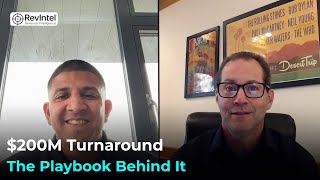
In this hour‑long Revintel podcast episode, host Shane P. Mahi interviews revenue leader Mike Barron about how he drove a $200 million managed‑service‑provider (MSP) from 9 % to 216 % new‑logo growth in a single year. The conversation covers Barron’s outcome‑centric sales philosophy (the "rented outcome" concept), the tactical steps he took to clean data, tighten the ideal‑customer‑profile (ICP), build a modern tech stack (Salesloft, Outreach, HubSpot), and create a high‑velocity lead‑generation engine. He explains how he unified fragmented sales teams after multiple acquisitions, moved people into the right “chairs,” instituted disciplined coaching, and used transparent performance plans (PIPs) to maintain morale. Barron also shares leadership traits he values—empowerment, a clear “fence” framework, and trust‑based autonomy—and discusses how private‑equity owners focus on margin, churn, and elasticity between gross and net revenue. Finally, he offers guidance on separating market‑timing signals from execution problems, emphasizing competitive benchmarking, continuous customer feedback, and data‑driven forecasting. Throughout, both participants stress listening over talking, building customer advocacy, and using concrete metrics to drive scalable revenue growth.
Chapters
You took a company, a $200 million MSP, from 9% new logo growth to 216% in your first year. I want to achieve that with Revintel. That's systematic. It's not luck.
Everything we do is based on outcomes that if you're not driving business outcomes, tangibly helping a company drive top line revenue, reduce their OpEx, cut their costs, take market share from a competitor, open up a new market, whatever it might be. If you're not doing those things, then you're really a nice-to-have solution. And a prospect could love the relationship with you, but they're arguably not going to buy and they're not going to buy consistently.
One of the most powerful phrases my sales manager taught me, and that was to shut up, ask questions and shut up, and to understand that, Shane, you are a rented outcome. Business leaders rent your outcome. Welcome back, guys. Today we have our first episode of the Revintel Podcast with our first featured guest. It's Mike Barron. I actually only met Mike about 2 weeks ago, cold outreach, asking if he wanted to share some value on our podcast network and deliver some value to the audience. Mike happily enough said yes. So Mike, I want to dive right into it. We're here to talk about you, your journey, what made your journey interesting, some of the challenges you've come up against, and some of the upside that you experienced as a result of going through those hard times. So for anybody that's watching this for the first time, they don't know who Mike is, tell me why anybody should stay on this episode for the next hour to listen to what you have to say.
Well, Shane, thanks for having me. Revenue leaders and business leaders go through all kinds of journeys. There's good, there's bad, there's the exhilaration, there's the frustration. When you've done it for a while, you find some patterns and you find some keys to your success and how you build teams and take companies, whether to exits or to some different stage of growth. I've been fortunate to have a mix of all of that. And some of those stories about how to grow teams and land big deals and work with your board and all the pieces in between are things that I think you're going to want to dive into. So there's some interesting tidbits here for sure.
I definitely think so. I've already had two calls with Mike, so I'm already blown away, which is why I think the episode should be quite valuable. Let's, let's dive into it. So you've had quite an incredible journey. When I, when I saw your headline, The first thing that stood out to me was X number to 216%. Can you take us back to the beginning? What first drew you into the world of sales and what were some of those early lessons that shaped your approach?
Sure, sure. Sales found me. I didn't find sales. Coming out of university, it seemed interesting, so I pursued it. Long story, not for now, but I wound up having success in my first couple of roles. But one of the big keys was my father, and he really helped me understand in my first couple sales jobs that everything we do is based on outcomes. And so it was ingrained in me at a very young adult age that if you're not driving business outcomes, tangibly helping a company drive top line revenue, reduce their OpEx, cut their costs, take market share from a competitor, open up a new market, whatever it might be, if you're not doing those things, then you're really a nice-to-have solution and a prospect could love the relationship with you, but they're arguably not gonna buy and they're not gonna buy consistently. So I started building business cases at a very young adult stage of my career that were rooted in as much hard dollar business case as possible, but to drive an outcome so I can have an educated conversation with the CEO, the CFO, the COO, sometimes the CIO. But to have an educated conversation with an executive about things that matter to them because they don't really care about your solution. They care about how your solution fits into helping them run their business.
And I heard something that the word outcomes is definitely the most important phrase, keyword in all of this because I always thought in the beginning of it, it was how well I could talk. When I, at a very young age, I was always told you should be a lawyer because you speak so well. You know how to sell ice to an Eskimo. And I thought it was always about being articulate, descriptive with your wording until I realized one of the most powerful phrases my sales manager taught me, and that was to shut up, ask questions, and shut up. And to understand that Shane, you are a rented outcome. Business leaders rent your outcome. So if you promise them better lead generate or better outcomes in terms of your leads, you promise to optimize their MQLs, you promise to create more awareness. If that outcome is rented for 8 months and then it dies after that 8 months, they will find a quick replacement to you, which is why these outcomes I think are so important. Now, what do you think in terms of your career? What are the two most important outcomes business leaders look for when renting an outcome from a vendor, a new vendor?
First of all, they want to know that the business case that they're signing off on is directionally correct in terms of the outcome they will drive.
Yeah.
So, if they're counting on you to help their business drive top-line revenue, they need to see that it's demonstrable. You might couch it conservatively to make sure you go through some early bumps, implementations, ironing out some kinks in the partnership. But if it's top-line growth, you can't come in 6 months later and say, "Well, hey, look, we did cut your costs 4%." That wasn't the business case.
Right?
So the only outcome that really matters, I think, is that you've done what you said you're going to do and that you've couched it in a reasonably conservative way that it's easy to digest by a prospect. Or if it's growth from an existing client, a new growth solution, that the client has already seen the relationship with you so they can bet on something new. Aiding their cause. But to get back to what you said earlier, salespeople sometimes have kind of that gift of gab, but the right ones in front of the right people at the right time, they're playing sort of an orchestrator and a facilitator. And those folks remember that they have two ears and one mouth and that you should use them in proportion most of the time.
Absolutely. How do you feel about this 80/20 listening rule? And then when you go to a call and you see 67% talking from the rep, 33% talking from the buyer, and it just keeps getting worse and worse. What do you think when you see that?
There are situations where at face value sometimes that could work only because you're doing some discovery, you're trying to pull things out of a prospect. So you might lead them with a case study example, you might lead them with something that's demonstrative, right? But if it's just talking for the sake of talking, Just don't. Just don't. Ask some open-ended questions and try to get a prospect or a buyer talking about some of their problems and lead the witness, so to speak. Ask a few questions that takes them down the path of you demonstrating that you understand their business and then even asking for validation based on the homework that you did. Is this in fact accurate? If not, can you guide me a little bit because I did a bunch of homework you know, on you before this call, etc., etc. And you get them—
sorry, Vince, what you were saying?
No, that was it.
Okay. So I'm coaching— I'm actually coaching a new client right now on their sales methodology, and it is very interesting to see. Um, 10 years ago, I started my first kind of journey through sales, selling financial services courses, and that was my first kind of was. That was my big— my first taste of, first of all, vulnerability, and then it was my first taste of actual attention. So I came into this company, I was working in security for about 7 months, I had just come here. I asked my boss at the time, who was my uncle's, like, a friend of his, a younger friend who had done quite well, and he gave me a 50p raise? 50 pence. And I just walked out. I couldn't— I, I just couldn't understand how silly that was. And I went on a recruitment site. It was the first time I've ever used a recruitment site. It was indeed.com. And I put a bunch of applications and messages out, and one company, GFI, from Marcus Evans— a few people will know it, most won't— and it was a financial services training academy. And they were selling financial training courses to banks, reputable banks across the UK and Europe. So I went and interviewed, I went and sat with the CEO. Well, I met the general manager first. He couldn't believe it. And I thought, is he pulling my leg? And he said, I'm going to call the CEO in here. He called Adnan, who was the CEO. The CEO came into the office. He had a chat with me, walked around the table 50 times telling me this story. Long story short, they hired me. And in 3 days, I had to train on the PC, on the public PC of the floor, understand my market, and gather 20 leads. And my first lead I called, I was really, really, really worried. I was really, really nervous. And I said, it's showtime. And I called the guy, and I still to this day remember how awful this call— and then I'll tell you why this story matters. But it was, hey, Mr. Polish banker, I'm selling a financial training course. It's the most amazing course, you have to buy it. It's so great. It offers this and this and this, please come to it. And he said, I love your tenacity. I love your energy. But I don't need this course right now. And I said, okay, cool. Well, let me look, let's do it though. Let's do it. Can I send you the course? $3,500. I really thought I was really great. I ended up hanging up the phone. And when I got up, the whole floor, which at this point is only 3 or 4 people in the team, they were looking at me and one of the Indian girls, oh my God, this was so amazing.
You—
I didn't know you know how to sell. And then the other people, they're looking at me and I thought, wow, this is a really nice place to be. Sales is really good. You get some recognition. And I've obviously developed my career and then I'll shut up and let you speak. But I've developed my career over learning, asking questions, being curious, following the leaders and the most successful kind of sellers I met. And today I sat in front of a very new seller that is trying to understand how to position pricing to an enterprise global group company. And hearing how he presents the information is shocking. And he must be 10, 15 years younger than me. And it just goes to show how different the times are, where you learn how to sell as a junior and kind of build that kind of that resilience, that muscle and get good at the end. And the reason I wanted to achieve so much is because there's this big thing called revenue and commission and bonuses that we all want to achieve. And I wanted I want to talk to you about that, which is your most recent success. You took a company, a $200 million MSP from 9% new logo growth to 216% in your first year. I want to achieve that with Revintel. That's systematic. It's not luck. What kind of data signals told you where to focus first and how did you translate those signals into action?
Sure, sure. Every situation has some differences, of course, right? You walk into a company and you're set up differently. The personnel are different, the tools are different, the tech stack is different, and the sellers and the whole revenue team, they're different personalities. So you have to take that into account with like, what's the hand that you've been dealt that you inherit? Some good, sometimes some changes have to be made. I inherited a team that was generally a pretty good team, but it was fragmented from a lot of acquisitions and acquisitions without having the benefit of a lot of integration between them. So the first thing was I had to get all of my revenue leaders that reported to me, I had to get everybody on the same team. I had to get everybody calling the same plays, speaking the same dictionary to each other. And so when you forecast and you talk about, boy, Bob, you've got a deal at 60% on your team. Tell me about that. Why is that at 60% probability to close this quarter? And I'm just giving you a generic example, but I did that where I compared deals at equal stages across my different sales teams, and they weren't all factoring deal probability the same way because there really hadn't been full integration. So by integrating the revenue team together and getting everybody speaking the same language, that made life a lot easier. We had to tighten the ICP tremendously because we were chasing way too many deals of all kinds of different sizes. Okay. And it didn't quite make sense because it didn't map to the customer base that we had. We also had virtually no tech stack for the sellers. When I walked in, the sellers had Outlook and ZoomInfo. Now, on paper, you could say it's a $200 million a year company, but with all the roll-ups and acquisitions, they were a little distracted. They really hadn't focused on the sellers and they thought that they'd bring in more selling leadership power and then more selling power that we bring in better AEs, more experienced enterprise reps. And, you know, like, quote, the magic happens. Well, it doesn't quite happen that way.
Okay.
When I grew up in the industry as a stellar, everything was quite manual. Okay. Yeah, we had computers and tools and various ways to track, but nothing like today where you can put an Outreach or a HubSpot or Salesloft in and provide a dashboard like a cockpit to orchestrate, as long as you're putting decent clean data in for your prospects, to orchestrate the process. You can show up as a seller, as a lead gen rep, as a marketing rep, and you could show up and just do the work versus planning the prospecting, which used to take me a ton of time and all my sellers a ton of time in really not that long ago. So tighten the ICP, implement a tech stack, Salesloft, and better tools. Built out a lead gen team from scratch because we really had a, a poor one that was focused on the wrong things and not delivering. And so we wound up taking every sales rep when I walked in the door was getting an average of 0.2 leads per quarter. Think about that. A fifth of a lead every quarter. They were doing all their own prospecting, period. After we got the lead gen team rolling, and they weren't even cranking at full tilt, but they were trending in the right direction, we started getting— every rep was receiving about 1.6 leads per month. So 4.8 a quarter, 5 leads a quarter. You know, and they're not all sales qualified, right? MQLs to SQLs. You went from a fifth of a lead a quarter to now reps getting roughly 5 leads a quarter. So it felt like wind at your back in addition to your own prospecting, in addition to attending conferences and driving interest in the field. So that created a big swell. And then the most important thing in this situation was we had a bunch of people in the wrong chairs. Okay. And what I mean by that is think of account managers as nurturing the base and upselling and account executives selling net new logo. So we had a bunch of what you'd stereotypically call farmers, relationship managers who were somewhat very good, but they were in AE roles and they really weren't comfortable putting the time in and prospecting, asking the tough questions, et cetera. So we had to move some people out of the company. We had to move a bunch of people into the right chair because they were good for the company, good people, and we just needed to see them situated in the place where they could be best set up for success and contribute to the team best. And then we wound up having to really tighten the process around the selling motions. And then we hired a bunch of new account executives from outside who were a little higher caliber seller. And you put all that together, and not just MSPs, but a lot of businesses struggle with new logo. They sell to the base over and over and over, and they're not selling enough new logo because there's not enough pipeline, there's not enough top-line outreach. But we wound up— we inherited 9% new logo growth. Not bad, it was positive. Some businesses are flat, but If they weren't distracted with all the acquisitions, they probably, I think, should have been in the 15 to 25% new logo growth range, but they were at 9. And by doing all of this, we wound up having 3 quarters in a row of record company revenue as we took 9% new logo growth to 216%, which really should set you up for tremendous success. In future years, if the company sticks to its knitting, continues to invest, implements properly, runs the operational backbone properly, and can grow that mountain of clients and revenue that came from it, especially with the references that come from that as well with all that new growth.
Wow, that's definitely a strong, heavily developed muscle that you've built. Now I want to ask you, you've mentioned two things about that, which is to have the, the right type of data to get a good reading on what is the actual current state of play in the business, how it actually looks. So what do you do when you go into a company that has a lack of data or very messy data, which makes your decision-making capability much more difficult?
That's the $64,000 question of the morning. Well, Let me tell you, it's interesting because a lot of companies today, not just because of AI and all the tools that are available, there is a lot available in terms of data analysis. So some companies have like the gold hidden below the surface in terms of better understanding their data, being able to analyze the data. They're just not doing it or they're not exposing the right data So some of that means you have to have revenue leaders and sellers that understand how to read the signals. So for example, some of it, and I'll get back to data in a second, some of it is when you walk in the door as a revenue leader, if you've done this before, it doesn't mean you've always done it perfectly. Of course, we're making mistakes every single day. There are too many things to just be perfect at it all. You have to do the best you can with the budget you have, the growth rate that you have, et cetera. But if you've done this before, a lot of this becomes muscle memory where you don't freak out when 5 new things that were not problems yesterday all of a sudden surfaced as problems today. And you can put them in perspective and you can stay calm in sort of the white-hot center where it could get a little messy. And then you have a board meeting in 3 weeks and the data's not right and you're starting to do ELT board prep and you can't even build all the slides 'cause the data's not right. So structurally, if you have a decent amount of data nowadays, there are some really good tools using some AI, but just some really good tools that give you what the naked eye can't see. So it can glean patterns from your data. It's almost like star schemas and data mining from years ago and machine learning. Now we have the compute power, which we didn't back then. I was at a company called Inquirer. We had a natural language processing engine that was fantastic, but it was a little limited in terms of being able to scale to the B2B side. But the bigger problem was returning results going through a language engine took a lot of compute power. Wasn't available really back then. Nowadays, AWS and 50 other solutions, the compute power is pennies on the dollar. And every company's got it available, you know, with virtual machines, click a button on a website. So AI would have been here 15 years ago if the compute power had been able to keep up. Now it's really raced ahead because compute power has given you that power to then glean patterns from data, evaluate your data. And so when I see a forecast, when I see a pipeline and I look at the previous 3 or 4 quarters before I walked in the door and I'm seeing results that are not even within 5 to 10% of what the pipe and the forecast showed should close, then I know there's a combination of errors and I have to dig in. One is, are the sellers either sandbagging deals or a little too overzealous? They're a little too positive about the probability of those deals closing. Is the data dirty? Is it not accurate in the system? Okay. Is it a combination of the two? And the last place that I, that I usually go when I first start is what number was projected to the board? Did the CEO project a number to the board that they wanted to sell for the year, or was the number projected to the board for the upcoming fiscal year's revenue? Was it a roll-up of socializing with the team, looking at the growth rate, seeing if you add a few ingredients and a little more on the bench and better people and a little more process, can we grow X% this year where we grew Y% last year? If that's done properly, then you got a fighting chance to have everybody on an ELT collaborating well, remaining happy and growing together. So you keep the matter, the DNA together as a, as a, as a leadership team.
So it's interesting you mentioned that. And it's, again, you have to have a lot of integrated time with members of the team, become part of it, really understand the data, understand the business and understand how information is trickling down from your leadership team to the team. And then obviously how that information is then going back upwards. When you come into a business and you have a heavy task to basically restructure a team based on what you believe is best, and they've done something X, Y, and Z for the past X amount of years, that restructuring comes with some delicate decisions that have to be made, such as moving people out and repositioning people in. How do you keep a team's morale high without damaging it when you are restructuring, let's just say, low performers versus high performers and repositioning people in the team?
Sure. I think if you're just very honest with your team, I always say everybody gets fair, everybody gets fair treatment. So, you know, running a revenue team is not a fraternity or sorority. I'm sorry, it's just not.
Okay.
I befriend my teams. I like to know what makes them tick. I want to understand about their families, the good, the bad, and I like socializing with them. But they also have to understand that the number one connection we have, regardless of being friends in the past perhaps, is we have a job to do. And if you're honest with everybody that if the job's not being done, that I may be put in a position where I have to let people go, but everybody is going to get fair. And that leads into like putting people on PIPs. Okay, I'm not a big fan of like performance incentive plans. If you have the true intention, which if I put somebody on a PIP, I have a true intention that I want them to come through on the other side having grown and now capable of owning a territory and owning a quota so they can drive profitability in that business within the business. But if the goal is to remove them from the company because they're not performing and have not been performing and you feel like there's no redeeming quality that they can get to where they need to go as, say, a seller, then a PIP just prolongs the inevitable, costs the company more money. You sometimes can't replace that person, right, until you've gotten rid of the previous person. And so honesty with your team goes a long way. And there are times when I as a leader could get removed. I might have to remove some of my team. But honesty and transparency about as much as you possibly can, that's not board confidential, of course, is paramount. And if you do that, your sellers will trust you. And I spend a lot of time talking and coaching and mentoring. I have a coaching business on the side. It's been something I've done for years. And talking with people in a way that helps them improve their game I find is really big. So when I walk in the door and I'm evaluating a company that's either doing well or not doing well and has to kind of revamp the whole story, I try to focus on who amongst my selling team is good at storytelling. Storytelling drives outcomes. Storytelling with examples from other happy clients that have demonstrated they've taken revenue from X to Y, they've cut their OpEx from A to B, right? It's tangible and it's measurable, and they can weave it into stories, not about them, not about a product feature, but about a tangible client example, especially if they sold that deal and have a good relationship and have nurtured that. I try to see who amongst my sellers that I've inherited, who's good at setting the hook in a first call, really getting themselves deep into an account where there's something real. They're good at the storytelling aspect. And then something I've taught for years, a methodology I've always called reframe the lens. It's not, having like a headbutt with a prospect where you're trying to make your point and you're trying to convince them that they're wrong and you're right, or vice versa. It's just reframing sometimes 2 degrees. Just, it's, it's the, the cartoon bubble of somebody looking up to the right and just thinking about a problem slightly differently than they were 2 minutes ago. And if you get them thinking that, yeah, maybe there is something here, I didn't think of it that way. Now you're allies, you're aligned, you're talking through that example and you're driving towards an outcome, something you've done similarly maybe with a competitor of theirs in the same industry. If I have storytellers and teams that can reframe the lens and really set the hook early in a process, Then those people can be coached, mentored with anything else they need 'cause they're usually very open to input and they want to improve their craft. The others, unfortunately, there's a lot of sellers out there that are product marketers. They can talk the color slick front and back. They can talk features and, you know, what's coming in the next version, but they don't really do a good job of creating a business case so they can tie it to an outcome and ask for a lot of money in return for driving a tangible outcome over a 1, 3, 5-year period. Does that make sense? Wow.
Absolutely. What is on that point? I'm hearing great leadership, and leadership is something that a lot of people confuse for being dominant, dictator-like. Um, too authoritative. I've learned to be more empathetic, emotionally intelligent, understanding, a team player, motivating through, let's just say, uh, happy measures, being disciplined. If you were to pick one trait you are super proud of that you have developed over your career, and has made you successful for Alita? What is that one character trait you are most proud of?
You know, today that answer is very different than, say, 15 years ago. As I was learning how to best manage teams and I tried to tailor my approach after some of the best mentors that I had, a couple of early sales leaders in my career, a couple coaches that I worked with, But today, really, it's about giving everybody a structure. We're going to have a protocol that we're going to follow. We're going to be disciplined and resilient and we're going to break through walls and we're going to demonstrate some grit because sales is hard. Driving a revenue team is hard. Managing board and private equity and VC expectations is hard. But the number one thing is I like to empower my people. So giving them a big wide fence, but within that fence, having a clear framework of how we all should be behaving, going about our day, treating our teams, how we handle adversity. Everybody gets a wide berth inside that fence. Show me that you can execute and execute well inside that fence, which is not a small fence, it's a big fence. And then when you do that, that's everybody getting fair. But then once you demonstrate that you know how to play the game the right way and be good at it, then you start earning the keys to the city. And then your fence gets wider and wider until theoretically there's really no fence left because there's infinite trust. And when that happens and my leaders and my sellers realize that there's that trust, they wind up coming to me or my leadership team more rather than less for opinions because they want to collaborate. They want to ask questions. They also sometimes are very respectful now that they understand that it's not just their decision that they call an audible in the field. That impacts just them and maybe their boss, it impacts everybody. So before you step too far out over your skis or get outside that fence, sometimes out of respect for people you enjoy working with and you respect their role as well, you go and you ask, is this a reasonable audible to call? Here are the signals I'm seeing. I'm getting blindsided. Somebody at the prospect is buying a competitor. I can't tell. I'm taking kidney shots. I feel like I'm losing, but they're telling me I'm winning. Would this be a good audible? Do you agree? And then we talk about it and that becomes coaching moments because I don't always have all the answers. But again, the muscle memory from having been through a couple of decades of the enterprise wars and selling large deals and serving as an executive sponsor to my teams with the CFOs, the CEOs, CIOs, COOs of some of the largest companies in the world gives you the comfort to sit in a room with them, ask a question, and then just pause and wait for an answer and give your teams feedback on what has tended to work in the past and what seems to be a reasonable audible. So giving that big fence and having empathy and treating people well, treating people like humans the way they want to be treated, but also expecting in return that they're going to do the table stakes basic things that you've asked everybody to do so data can flow up through pipeline reports and forecasts and I can report to the board and I can be accurate. That's when things are running really well and I step into a board meeting and I don't have to explain 10 outlier deals for the quarter. Maybe we have 1, maybe we have 2, and there's a good reason to be in those deals. We've all agreed previously. But if I have to talk through 10 or 20 or half of a pipeline and they don't really fit the ICP quite well and they're all a little bit out there in terms of why are we even in this deal and we're not even sure that we can win this deal, that's the lack of trust that has to be built. And that goes all the way back down to the field sellers.
Right.
You start—
I like, I like how you said that. I really like how you said that. And I've just come from a situation, an environment where we were running a lead gen program and we're running outreach and we are targeting high value accounts. And the question kept coming up for me, which was I'm seeing people come in and I'm like, why the hell are we speaking to this guy? 'Oh, why the hell are we speaking to this company? Do you not see it says accounting firm right here?' And he's just like, 'No, they're the right person. He referred me.' So it's funny, it's funny that you say that. But I think what's more interesting is, um, again, going over your LinkedIn page, uh, and just seeing your career, you've led, I think it's 4 companies triple-digit, 200%, 300% annual growth. You went and helped grow an $18 million startup to just shy of $300 million in annual recurring revenue. That is insane. And across all of these experiences, what would you say are only two, two data patterns that consistently predict scalable revenue growth?
Well, number 1 is, are your clients telling the world the kinds of things that need to be heard to allow growth to really compile? It's like compounding interest. Are your clients happy to the point where they're saying really positive things about you when you're not asking them to. Now, not every company has their whole customer base just screaming from the rooftops, "Boy, Shane is great. Go buy anything from Shane." It doesn't work that way, right? I wish it did. But if you're taking good care of your clients and you're implementing in a responsible way and you deliver on time and you're on budget and your previous clients are happy, then you can build on that. So when I walk in, interview a bunch of our clients, get to know why they're happy or not, and then you have to partner really well. If the person reports to me, great. If not, just partner really well with a customer success team, the marketing team. And you have to go and you take some of these interviews with clients Some will agree to be on video. Some will just write a testimonial, will be a PDF. But you have to be able to parse those out and then use that to your advantage to make the selling process easier. Because it's easier to sell to an existing client than a new one.
Yeah.
It's also easier to leverage your existing client success to help drive the next 10 new client logo wins if you do things properly. And most companies forget about the back half after the sale, especially after the, say, implementation. Okay, so the implementation is done, the client's technically live, and there's like a little token nod every now and then where they call them or they reach out, but they're not nurturing that relationship. They just chime in usually 3 to 4 months before the renewal. And that's insulting to a client. Okay.
It is.
So two things that you can do when you come in, if the client's locking in a lot of long-term deals like 3, 4, or 5-year deals because they want better revenue, you know, smooth revenue rather than the bumpiness of constantly being on the renewal train, you better make sure your clients are happy because if they're not, the best thing that you can do is just go back and focus on 1-year deals. And then you make sure your clients are thrilled and then they'll renew and you'll extend them for 3 to 5 years at a time. But there's nothing worse than booking a whole bunch of 5-year deals. Everybody high-fives, reps get a bonus, you know, for the multi-year deals. Client has guaranteed revenue that they can stick up on the shelf as deferred revenue. And then when that client terms the contract, either for cause or breach or just sloppy work and they're not being serviced properly, then the board's going to have to go after somebody's head. And quite often, that's my role. So if the client base is happy, build on it. If the client base is lukewarm, fairly happy, but not really standing out with great customer attention, you have to fix that. And then you're in a position to scale, because then that mushrooming effect, the shampoo effect of 1 client, 10 clients, 100 clients all saying positive things, getting on stage with you at a conference and doing joint presentations and things like that, it starts to build on itself. If I don't see that, we have to build that right away. And that takes some time. But that's a big, big building block towards future growth and predicting reliable future growth.
Wow. I want to shift the conversation a step ahead, and that's into the next, let's just say the next portion of the agenda. And one of the topics I want to touch on is private equity. And the perspective around private equity. And I understand that you've worked through a number of, a number of private equity acquisitions. You've seen how data-driven decisions change when financial sponsors are involved. What kind of revenue metrics do PE firms focus on that most founders miss? And how should startups prepare for that level of scrutiny?
Well, PE, a little different than the VC side. Private equity is so focused on margin, which like any business, they should be focused on margins. So one of the things I try to focus on when I walk in the door and it's private equity-based is I want to— I don't want to just drive top-line growth. I really want to try to help the company just like I try to help my company's prospects and clients. I want to increase the elasticity between gross and net. So if you can make them more efficient and slightly reduce their OpEx while also helping them grow their top line, then you're increasing the elasticity between gross and net, better margin overall. Right. And that, that's a grand slam for private equity because quite often they're focused on cutting the costs in an acquisition to make them leaner and more profitable. And then hopefully with a couple of good years of decent growth, they're in position to flip it and sell it in a 2, 3, 4 year period. But if you can increase top line and make them more efficient, which is a sales proposition you could take to the field, to your clients with many solutions, then private equity is a lot happier. I think one of the things that private equity doesn't focus enough on is churn, customer churn.
Right. Yeah, yeah, yeah.
You know, I've been a part of a couple of businesses. You walk in, I walked into one and we had 7% churn. Now, given the industry, this goes back a number of years, but given the industry, 7% churn wasn't terrible. They were one-year contracts.
What would you say is an average churn number? What is an average number of churn that is acceptable in 2025? And then carry on with that. Just so for those that don't have actual context.
I can't answer that with an easy answer because every industry and every market is different, right? So in the MSP world, 8 to 10% is not uncommon because some people want to jump to a different MSP and, you know, try if the grass is greener on a different side. Others, you put them through problems and you don't do what you say you're going to do. The contract ends, they move to somebody else. You're going to lose some that way. Some companies are bought, right? M&A, and you lose a client because the acquiring company has a different plan in mind. So, you know, if 8 to 10 in an MSP is normal, if you're at 20, that's a horrible trend. And it has to be fixed instantly. And if not, then the board should be making massive changes to the operational and executive leadership that's responsible for customer churn. But a lot of private equity is not doing that. Now, I think part of the reason there is nowadays, and this is a positive thing for PE, they get such a bad reputation. But at the same time, a lot of private equity firms have been adopting, partly 'cause of the market times and fewer M&A opportunities out there, the IPO markets had been shut down. So that whole pile is smaller and there's a lot of dry powder, so to speak. There's a ton of funding out there that they're trying to place and they can't raise their next round until their next fund until they, to fulfill the current one. But PE firms are becoming a little more hybrid, like a blend between venture capital and private equity. Instead of a VC firm looking for, they make a bet, they invest in a company, and they expect that on average it could be 6 to 12 years before there's an outcome. Whereas in private equity, it's always been anywhere from, you know, a year and a half to 5. Generally 3 years. Mm-hmm. Outcome. But now there are more PE firms, and I give them credit for this, sensing the market and where it's going right now and becoming a little more of a hybrid. So yes, they're going to invest in the business after they buy it, and they're looking for maybe a 5-year outcome, 4 or 5, 6-year outcome instead of a 2 to 3. So it's not cutting to the bone right away. It's not cutting through the bone and, and skinning the company down. It's taking a little more practical view of how to run it so you can stabilize it if that needs to be done, and then build from a position of strength versus not having enough resources to scale, and then you gotta rebuild all over again.
Mm-hmm. You mentioned market timing and execution in that last piece, and you've been through a number of IPOs, you've been through a number of acquisitions, you've been through multiple market cycles. So when you are advising startups or taking a position in a company, how do you help them separate market timing signals from execution problems? And what data do you use to make that distinction?
That, uh, that's probably a good question for us to wrap on because we're running short on time here. So first, I'll just say thanks for having me, and, you know, love to do this again. Um, when you look at market timing versus business signals, it's usually pretty clear because most spaces are getting very muddy right now. There are plenty of companies, especially on the AI front, dozens and dozens just popping up every day. Solopreneurs, one person with a tool, right? And then there's all the way up through big companies. But now, because of competition having pockets of success and each segment getting bigger and bigger, it's easy to see when companies are having some success so you can compare yourself And you can say Company A is doing really pretty well. They added 50 clients last month or quarter. You know, we added 21. Our deals are around the same size. What are we doing wrong? Right? Is the market saying that you don't have a good fit? No, because one or more players are doing quite well. So what are they doing? You really have to study your competition. And you have to talk to prospects and existing clients all the time to make sure that your messaging is current. And if you're keeping current and you're keeping up with what businesses are asking for, then you probably have controllable signals inside your business that are not market-induced. If it's market-induced and you have to pivot in a big way, then you have to make sure you have a flexible enough tool to be able to pivot without disrupting the revenue stream that can catch you over to the other side of the fence when you get there with a new product enhancement or a new solution. It's very hard to tell the difference if you're the first player in a space because you might in fact just be, you know, an early leader, but there aren't enough fast followers because the market hasn't caught up yet, isn't quite ready. So I've been a part of a couple of those. You're in early and then you have nowhere to go. You got to wait it out until the market's ready. So, um, hopefully that's a good wrap for today, and I really enjoyed being a part of your podcast and look forward to staying in touch, Shane.
Thank you very much, Mike. I really do appreciate your time, and yes, we'd be definitely very excited to have you share more on the next episode. So I know you have to jump I will end it right there, guys. That is the pod, and until next time, we'll see you again. Thank you very much.
Cheers.
Thank you very much for taking the time to watch this episode and staying here the whole way through. If you like what you saw, click subscribe. It'll take you 2 seconds. It helps me reach amazing guests and deliver valuable content for you. And if you ever want to find out what we do as a business, go to www.gorevintel.com. And that is the place where we help you make decisions that are backed by intelligence, and it's for founder CEOs. That's it for me for now. I'll see you on the next episode. Bye.