The Leadership Masterclass Every Founder Needs to Hear
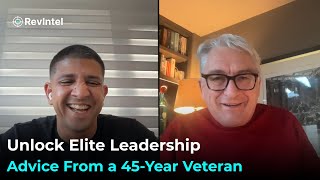
Douglas McCormick, CEO of Pegasus Group, shares leadership tactics for founders: protect thinking time, keep your word, align teams with shared incentives, and run conflict resolution in small groups of 10 or fewer. He targets $100M revenue and emphasizes culture built on repeat business and gratitude.
Chapters
And one of the questions I got asked very recently is, how can we be sure that you and the board of directors are not thinking of making us redundant given the current economic uncertainty? Redundancy is the furthest thing from my mind. We've hired 150 people in the last 12 months. For me, so I have been working for 45 years this year, and every year has been a year of economic uncertainty. Keep, keep going. And the thing about being in business is that ability to be agile and flexible and adapt.
It's a book called Profit First, and it is by a guy named Mike Michalowicz, who is basically a very rich guy— no, very successful business owner, exited his business for I think $400 million, and within about a year or two he was completely bankrupt. And it's because he wasn't watching his money. He was buying the cars, the houses, holidays, everything, and he had to basically go to his family one day His accountant called him and he said, you are needing, you are, you need to claim bankruptcy. You need to file for bankruptcy. You have no money. And he had to basically go to his house and he broke down and he told his wife and kids like, I don't have any money. And his daughter said to him, Daddy, does that mean we won't be able to go to soccer practice? And he's like, he broke down and cried and she went to the room and she got her piggy bank and she threw it on the floor and it had like $200 and she was like, Dad, I can still go to soccer practice as long as you come with me. And it's like a very happy story. But then that was that light bulb moment.
Count your blessings. Be grateful. Live a life of gratitude and thankfulness and be generous.
Guys, welcome back. It's Friday morning. It is so sunny in the UK, which we don't usually hear, that I've had to put my blinds down. And today I've got Douglas McCormick from a repeat episode about a year ago. On this occasion though, Douglas, this is completely my fault. I didn't give people a real good overview of who Douglas is, what your company does. And then let's say, and I know you solve a number of problems, but let's just say the most common problem that you are asked to solve. I'd love the audience to get a little bit of that too, so at the end of this they can come to you and understand your services and hopefully buy something from you. But can you give us a quick walkthrough of who you are, what your business does, and what problem you solve?
Yeah, so, um, I'm Douglas McCormick. I'm the chief executive of, uh, Pegasus Group, which is a boutique and niche, um, development consultancy based here in the UK. And we offer a broad range of services in planning, architecture, urban design, environment, heritage, economics, transport, infrastructure, biodiversity, and building surveying. So we employ subject experts who have deep knowledge in all of those areas. 98% of our business is repeat business. We are a people-to-people business, and people buy because of the extremely clever people that we employ, and we are fun to work with. I have to say, I've been in this role now for 18 months, and it's just been a joy. I have enjoyed working with this group of people, and my role is a strategic role to grow and develop the business. Very successful business, absolutely can be twice the size that it is, and without losing its culture, without losing the value it brings, without that losing the personal relationship that we and our clients value and is very important. So yeah, that's us and it's great fun.
So one interesting question based on like public shareholder reports, are you able to share like some high-level numbers? What is like the total annual revenue that the company does? Is there a valuation on the company right now? Let's say 2 or 3 high-level numbers that give the audience an idea of what Pegasus looks like.
So the 3-year strategy is to do $100 million revenue with 1,000 people and $20 million plus net profit, which is probably an EBITDA around $18 or $19 million. We're well on the way. We're 18 months into that plan. And we're on track for that.
Beautiful.
And there are always some headwinds, global economic uncertainty. Undoubtedly there is some impact from that on us. The state of politics around the world, again, a level of uncertainty. But it's really interesting because I do a call once a week with all my staff. And one of the questions I got asked very recently is, how can we be sure that you and the board of our directors are not thinking of making us redundant given the current economic uncertainty, which was a question. Well, it was a wow question for me because here we are, here we are, we're in growth, we're driving a growth agenda. Redundancy is the furthest thing from our mind. We've hired 150 people in the last 12 months.
Wow.
But for me, so I have been working for 45 years this year, and every year has been a year of economic uncertainty and life goes on and the world keeps turning and the sun rises and falls. And you can either panic every time there's a tariff conversation or there's a conflict conversation or there's political unrest. Or you can recognize that at grassroots economic activity, supply and demand, the laws of trading generally keep going. And the thing about being in business is that ability to be agile and flexible and adapt. And the people that all the things we've just talked about are a problem for are the ones that are rigid and inflexible and don't have a future-facing strategy.
Absolutely, absolutely. And it's interesting you say that because the path to growth is, it's always about improvement, learning, failing forward. And there's one topic I want to lean into, and it's the first question that I have. It's based on a book. I think you probably know it very well, Stephen Covey's Seven Habits of Highly Successful People. And the first question is about The Sharpen the Axe strategy. You said 45 years, and I'm in a place in my life where I've got through a few interesting stages, a few challenging moments, some character-building moments in my life. And I'm at a place right now where my peer group is, I wouldn't say insufficient, but my peer group is not at the level I can learn from or I can grow with. Like, I feel like not being arrogant, facetious, or obnoxious. I feel like I've passed up a lot of the people that I have surrounded myself by, and I'm looking for those mentors, those kind of coaches that can drive a little bit more of growth. So for you, when it comes to sharpening the axe, staying sharp, staying on point, you once shared the famous quote about spending 4 hours sharpening the axe before cutting down the tree. And for a business leader, what does sharpening the axe look like in today's market? Is it still about slowing down to speed up?
I think there are two sharpening skills that I value highly. One is thinking time. The danger of becoming a busy fool where your diary is the tail that wags the CEO dog rather than you managing your time and building in thinking time. And thinking time can be time that's spent with people who are subject matter experts in areas that you're exploring. So it's not necessarily sitting in a dark room with a cold towel on your head. Actually, it may well be spending time engaging with people who are at the forefront of different thinking on different subject matters that are relevant to what you're doing. And the other side of that coin, and these two go hand in hand, is listening. One of the skills that's really, really important in anybody, but in leaders, is that you listen, which means you have to shut up long enough to listen. And sometimes the danger is that we like the sound of our own voices too much, and we are always first to speak in a meeting, and we're always first to say what we think. And particularly as a chief exec, if you start to say, this is what I think, Nobody else in the room is going to say anything different because you're the chief exec. So actually, that inviting others to contribute and listen, I think is really important. And then for me, if I was to add a third sharpening, it's reading. So what do you read? I read the FT. Yeah, there you go. Well, that's a good book.
It's a very good book.
Yeah. What are you reading? And reading is across a wide range of stuff. So I read the FT because it has no sports pages. Now that might be blasphemy to some of your—
I don't read, I don't follow sports either. It's all dollar bills.
But where do you get your, what is the most reliable place to get solid reporting that is unbiased as it can be, recognizing that there are lots of news channels that represent a particular view and give a particular slant. What are you learning? I know that can be reading for me. I do a lot of reading to learn, but I think learning is a broad subject. You mentioned about how do I surround myself with the people? Well, go and find them. Go and find people that you're attracted to. I recently became an associate of something called VOCAL, which is V-O-C-A-L. If you have a look at them, I was delighted to be invited to join them. Have a look at their associate list. It's an awesome bunch of people. And what they're doing is looking at how do they provide really deep and meaningful training for the next generation of leaders. And very influential. And they offer a whole lot of things that are good to develop people. But the other thing with that is iron sharpens iron. So as you meet people in your peer group or in different circles, then that helps. I have a couple of non-exec roles, so I meet with people in my peer group, but not in the company that I'm CEO for. And I learned from them. And that iron sharpens iron thing as you interact with people in different circles. So get out and about a bit is part of the game plan.
So what I've found is I'm joining a few. So I tend to get a lot of invites right now, as you do, from communities, events that I went to one 2 weeks ago. And it was a very interesting event. It was positioned as a VC event and it was to match VCs and founders. And I'm like, jackpot, I've got a VC event. I'm going to this event. I drove to the event. I was late. It was just a mingling event. And I meet the owner of the event for the night. And she says, no, we just facilitate these kind of environments, but we are not a VC. So I ended up meeting two people though at the event, and one of them was, again, he was a very lovely guy, very well-versed, very articulate. He just started a book company, uh, but, and it was basically a book company where, um, he helps kids design their own books where they are the star of the story, these digital interactive books. And he's like, you can have Bella as the, as Rapunzel of her own story. And that is like super duper cool. And I was like, holy crap. Like, and then he said, um, and then he asked me, so what do you do? I do, I do whatever I do. And I've, I've come to this event and I didn't think I was going to come. And he goes, this is a great quote I heard. If you never go, you'll never know.
Yeah.
And that alone was like enough of like, all right, I'm sold on the event. Right. It was great. It was a great experience. Went home really, really happy. And that experience was good. But then joining that community, is that the right community I want to join because I met somebody cool? Yeah. Right? And then it varies across a few of these other communities. I don't know how to select the right one. So how do you kind of address that point, that challenge?
I go to very few of these events in the nicest sense, and this is a personal view and it may be a sweeping generalization, but I find an awful lot of them are just blah, blah, Rover.
It is.
And actually finding, and it's a tough one, Shane, finding events where you are definitely going to meet quality people is quite tough. So one of the ways I've done that is to look at some of the professional bodies. So if a professional body is putting on an event, you are likely to get professional people at it. And so I've got involved with some of those. I get a lot of people wanting to help me grow my business, help me to, how do I create a high-performing team, helping me to, frankly, helping me to do all the things that I do for a living. And actually, modestly, he says, I do them pretty well. And I just discount all of that. Because I'm often more help to these people than they are to me. And actually, is that a good use of my time? Not always. But it's a tough one. But when you find a group of people, and you could create your own group of people, I mean, doing what you're doing, you could say, look, I've got these 3 or 4 or 5 guests. Could we do a round table? Round tables are another good place. If it's a round table, then it's not going to be blah, blah, over.
Mm-hmm. Mm-hmm. Absolutely. Absolutely. Absolutely. So one thing I wanna talk about is a coherent strategy. Something that I am baffled sometimes where you meet a successfully exited founder or someone who claims to be successful in their previous businesses that they ran. And then when you run the business with them, they are like a chicken with their head cut off and they don't know how to manage time and they make, it seems or appears to be that the decisions are not aligned with what what you were promised in the beginning vision. Let's just put it like that. And you end up getting very confused and you lose motivation and you, a worst thing I think could happen, you could probably agree with this, is if maybe you've been through it in your, in your career, is you lose belief in the person you're supposed to follow. And that's detrimental to the success of your business. So a coherent strategy sounds like a fancy business word, but in simple language, how do you make sure that all the different parts of a company, which is what I experience— sales, marketing, product— how do you make sure that they're all pulling in the same direction?
I think you need to be absolutely clear about what your purpose is. And your purpose is not to make money. Making money is a byproduct of delivering your purpose. And if you can articulate your purpose, we're back to one of my favorite authors, Simon Sinek, Start With Why. If you can start with why and you can define and you can say very simply to people, this is what we do, this is why we do what we do, this is why you go to bed in the morning and go to work, then you can align everybody to that purpose. Now, some people call them vision statements or mission statements. I just like to have the why clearly defined. That's the purpose. And then What you can then do is look across your business and say, okay, are all the bits of my business aligned to that purpose? And if they're not, is there adjustment or change that needs to happen to get them to that place? And I think it's reasonably simple if you follow that kind of basic, why do we do what we do rule. And then of course, Sinek says you can then go on to explore how and what, and that those are the three jigsaws in his model. And actually it's a very simple model, but quite powerful. So every month we are employing probably 20 or 30 people a month at the moment, and we do an in-person induction with all our new starters, and I do the first half hour. And that's what I take them through. This is our why, this is our how, and this is our what. And is it perfect? No. But does it work well? Yeah, for me, that works well. And then the devil is in the detail. But the problem with the devil being in the detail is that people go down the rabbit holes before they've drawn the umbrella of what you're trying to achieve. And you need to know where you're going before you can before you can put in place the detail. And, you know, it's a bit like you have to put the engine in the car before you start fiddling with the tuning of it. So that's kind of how I do it.
So it's interesting you say that. So a character flaw of myself is that rabbit hole analogy. And even in my last role, like, I'm happy to share these things because I want people to learn from the mistakes I've made so that they can hopefully navigate themselves a little bit matter. Um, but let's say one of the, uh, pieces of feedback that I got in my career not even too long ago was, um, okay, so as we end this relationship, or as we move, as we part ways, what do you think is one thing you've recognized to me about as a character flaw, something I can strengthen, right? I know they say don't worry about your weaknesses or strengthen your weakness, focus on strengthening your strengths. But again, I wanted to know where I was falling short. And it was, Shane, you have a tendency sometimes to go down a rabbit hole very deep in the rabbit hole, and you may be looking to find something quite important and valuable to the business. But you get so far into that rabbit hole that you don't know how to pull yourself out.
Yeah.
And then you don't see anybody else's views and you don't understand other people's perspectives. And it is true. And unless I ask that question, how do I fix this? Or do you observe anything different? Um, I think that changes, but then also I want to ask you this. So, um, I've seen it in probably, I would say more than 50% of the companies I've, I've been at. So bigger companies. Sales and marketing, there's always this feud of I generate leads and sales, your leads are rubbish. And then again, you have a different situation. It was a little bit more of a larger contract where it was sales is delivering this and promising this against the contract. And then marketing is supposed to deliver this against the contract. Marketing can sometimes wasn't able to deliver on the contract. These are webinars specifically. And then you get this kind of feud between the teams of You don't know what you're doing. Well, you don't know what you're doing. Well, if you sold it better, then we wouldn't— like that whole thing happens. And then not even too long ago, it was a matter of the product team and the sales team not being able to find that, like, the vision is very clear. Here's where we're going. I think a big flaw of a lot of companies is just to say we have a revenue vision of what we're doing, not the why, which is quite important. But these three scenarios, let's say you've explained the vision, you've explained the why, you've identified the first circle of why, then the how, then the what. How do you— it's called, um, conflict resolution, right? It's called conflict resolution. How do you have a, like, a positive conflict resolution session when you're in those situations where two teams are disputing and it's, it's, it's really screwing up the business? How do you get them back on track, back aligned, and getting on, and getting on the right path forward?
So, so I've, I've The fundamental problem is you've got two teams. So where I've had two teams, particularly with those kind of yin and yang responsibilities like sales and marketing, I've always put them together as one team and set common incentivization goals. And then you can start to weed out what bad behaviors are Now, that probably takes a restructuring of your team, and it might mean that you lose some people or need to lose some people. But actually, having separate functions and silos will always drive conflict, and it will always be the other team's fault. It doesn't matter which team you're in, it'll be somebody else's fault. So for me, Looking at putting people together and making their incentive common. So I've had a situation where in a business I was in, the fee earners, the people who generated the money by delivering the actual services, felt that the overhead people were just a burden, just a nuisance. If only we didn't have all these people in finance or HR or IT or marketing and communications. If only we didn't have all of them, think how much money we'd make. And a complete failure to recognize that your business would crash and burn because actually you need the infrastructure to support the activity of the business. And so in my leadership team in that business, I put them all together in one room and they had to listen to each other and they learned that actually I never understood that about. So that's why you want that. And suddenly there was a whole world of understanding and the bad behaviors have reduced significantly. And actually the understanding of what is required has meant we've achieved a greater efficiency because there's clarity between the infrastructure and the information data that's required to run the business and what's required by those who deliver services to clients. So, putting people together is a great way of sorting that out. Now, I can imagine you say, well, I've got a huge marketing team, I've got a huge sales team, and it would be doubly huge if I put them all together. Well, regionalize them, split them up. Look at—
What's a happy number? While you're on that, what's a number, a good number, size number of the group? To have before it gets too much?
It can be quite challenging. I like no more than 10.
I was thinking that.
You might need to go to a place where you have more to begin with. So in the company I'm describing, I put everybody together and actually there were 17 people around the table. And yes, it was too much and yes, it was quite unwieldy, but for the first 12 months it meant they were all in the same room and they all had to listen to each other. And then the next step was to say, okay, there's too many people. We're going to regionalize this. So you take that team and you run a process and you promote somebody to run the north and the south and the east and the west, or however you decide to divide it up. And then you're back down to having 4 or 5 people around the table and they're running their teams, but they've learned from the model that you set when they were all in the room. And then what I do generally is I sit down once a quarter and I go through every business with a fine-tooth comb for half a day each, and we just go through all of that. And that allows you to set out the things that are continuously important on a quarterly basis and make sure the behaviors are right. And it still has wrinkles, but it works generally.
I think that's a great way. Um, last question on that and then I wanna move on. Uh, when you get the first dispute or disagreement and you are trying to stimulate a healthy, productive, conducive conversation, let's say the conversation, you know, when you start to feel that like a little bit of a cringe because people are talking like out of turn or they're raising their voice or they're getting animated. How do you control that? How do you, maybe not control, how do you like stop it, like eradicate the problem and then keep the conversation on the right path? Or do you stop the meeting and say, this isn't going anywhere yet, we have to revisit this?
Well, I think before you start, there need to be some ground rules. So I set ground rules for my meetings.
Okay.
So if you come to my meeting, one, you come on time. I did have a boss, so if you turned up late, lock the door and you didn't get in. I've not been that brutal.
That's a good rule.
Yeah, particularly normally if you're not at the meeting, you pick up all the actions because you're the person that wasn't there, but that's a different story.
I like that.
But so come on time, that in turn each person must be allowed to speak and have the courtesy of not being spoken over or interrupted. And I pause between people to allow for questions around the table. Make sure the person that says nothing in your meeting is asked to say something, because you will always have a few people that will just sit quietly and hope that you don't say anything to them. Well, sorry, you're not at the meeting. To be a spectator. You're at the meeting because actually, in my role as the chief executive, I think you add value. If you don't add value, that becomes a different thing. And if people interrupt, then I'll stop them and say, look, sorry, one of the rules is that you don't interrupt and that you wait until the person has finished. And when you interrupt, what you're saying is actually, I haven't listened to a word you've said, and what I've got to say is much more important than what you're just saying, even though I haven't listened to what you're just saying. So I'm pretty disciplined about my meetings and I will stop a meeting and say, sorry, we're not doing this and you are out of order. And when people know, it's like naughty children. If you discipline a naughty child in whatever way is now legally acceptable, when I was a kid, it used to be a thick ear, but I believe that's illegal these days.
I used to get a pole.
If you set boundaries for people and when I say enforce, I don't mean necessarily with a big stick, but you enforce by holding to your boundaries. People respect that and behaviors improve. And then the meeting becomes much more productive because hopefully around your table, you've got a large diversity of people., and the richness in running a business is in the greatness of the diversity that you put around your table.
I love, I love how you just so calmly put all this stuff together. You're just so relaxed about it. I really do love it. So I wanna move on to, uh, chaos, right? And, and I'm gonna call you the chaos navigator. And it's about adaptive leadership, market resilience, which I think is something that is really, really worrying for a lot of business owners right now. So you're known for adaptive leadership. Challenging, complex markets, and when everything feels really, really messy and confusing, what's the first thing a leader should do to bring back calm and focus?
I think you need to revisit your purpose, because if you've lost your way, and sometimes, I knew one organization that started out with a very clearly defined purpose. And then they got themselves into all sorts of other things. And my primary rule is stick to your knitting. What is the thing that you do brilliantly that makes you successful in the marketplace? And what's just noise at the edges of that? Now, that's not to say that there isn't a place for running a pilot to see if something else innovatively would work. I don't mean that. But if you're in chaos and you need to look at what is it that you do and how do I get back to that as fast as I can. Now, some of the things around the edge of that is you need to check your cash. If you're in chaos and your cash is a mess, then you're going to go bust.
So sort your cash.
It's not all airy-fairy stuff. It's make sure you've got cash. And if you haven't, if your cash flow and your working capital is looking dangerous, then go and sort that. And then look at the bits of your business that are— So I turn normal reporting upside down. So the top line on any report that comes to me is profit. And then after profit, I've got costs, and down at the bottom is revenue. And that's about empowering directors, managers to say, okay, look, so your commitment is you're going to provide X profit. These are all the costs we know about. You can spend them any way you like. You can add people or subtract people. You can refresh all your computers. You can do whatever you want in your cost box. But revenue less cost always equals profit. And so you need to balance that out. So your commitment is to profit. You'll need revenue to earn that. And the revenue, the level of revenue you need is dependent on the cost level that you yourself as the director manager decide to set. And I keep a watching brief on that to make sure that there's nothing mad going on in that. But then people know they've got a single goal. That's your profit goal. I also put a stretch on that because life wouldn't be fun if there wasn't a bit of a stretch. And there's rewards for, if people achieve the stretch, there's rewards for that. Absolutely. But it means too that, Sometimes I hear people talking about soft budgets, and I'm not sure that really budgets are soft. But if somebody absolutely gets to their number, what you don't want is them freewheeling complacently for whatever's left of your financial period. If you've got to your number, great. There's some stretch, go get stretch. And that keeping focused on profit is really important. And it has to be cash-backed. You have to have the cash. So I got my payslip today. Happily, I got my payslip. More importantly, when I checked my bank account, the money was in my account. And accounts without cash are like payslips without the money in the bank. No use to anybody. You have to have cash in the bank. So cash back profit is really, really important. And if you've then got bits of your business as you're going through sorting this chaos, that are just a waste of time and have no recovery plan and look like they are a threat to the business in the short, medium, or longer term, then get rid of them.
Wow. That is absolutely a masterclass. Just out of curiosity, leading with profit first, there's a book called Profit First. I don't know if you're familiar with it by Mike Michalowicz. It's actually, it's actually the, so we, I'm sure you know GAAP accounting, general accounting businesses. That's typically what every accountant and business follows, right? To manage their business, to manage their economics. And there was one, who was it? It was Marcus Kalki, one of my mentors. And I said, I'm earning this money in this business and I'm always being paid last. I don't know what's going on here. And he said, well, welcome to being a business owner, Shane. And he said, if you want to change that, he goes, there is one, like accounting practice that you can look at. It's a book called Profit First, and it is by a guy named Mike McCalloway, who is basically a very rich guy. Uh, no, very successful business owner, exited his business for I think $400 million, and within about a year or two he was completely bankrupt. And it's because he wasn't watching his money. He was buying the cars, the houses, holidays, everything. And he had to basically go to his family one day. His accountant called him and he said, you are needing, you are, you need to claim bankruptcy. You need to file for bankruptcy. You have no money. And he had to basically go to his house and he broke down and he told his wife and kids like, I don't have any money. And his daughter said to him, Daddy, does that mean we won't be able to go to soccer practice? And he's like, he broke down and cried and she went to the room and she got her piggy bank and she threw it on the floor and it had like $200. And she was like, Dad, I can still go to soccer practice as long as you come with me. And it's like a very happy story. But then that was that light bulb moment where the guy was like, look, I need to change how I operate my business. And he. He built and developed this strategy that allowed business owners to, yes, focus on pots of cash and profit just so happened to be the first pot of cash that you focus on to pay. If you are a smaller business, pay your directors. Put it this way, you get your cash and you split it into 5 pots equally. Percentage, percentage, percentage, percentage. And then what you typically get is these pots that overflow and kind of carry on and it makes a big difference. I ran my business like that and came to find I was running a 51% net profit business on a service business. And even my accountant was blown away. Yeah. I think it makes a really, really big difference. Now, team trust. I think that kind of helps us transition into the next thing, which is team trust. And the name of this podcast is Signals. So your recommendations typically mention passionate, diverse, collaborative team. How do you use— I, I think it's gonna come back to why, but how do you use clarity and strategy to build a team that trusts each other? And they trust each other enough to drive forward quickly.
So the first thing about trust is it's earned. You have to earn trust, and that takes a bit of time. And you earn trust by being true to your word. So if you say you're going to do something or not, going to do something, then make sure that's exactly what you do. And when people see that, if I say to you, Shane, this is what I think, this is what I'm going to do, and I do it, then you think, well, he said that's what he's going to do and he did it. And the continual behavior of that, so it's not a one-off, It's not, I know he said that that time, but look at all those other times when it's about recognizing the integrity of an individual who, when they say something, it can be relied on and you build trust. And if your strategy is simple, and if it's not simple, then actually nobody will remember it and You're back to you, you are back to why. If you don't know why, then people just get confused and lose their way. But if it's simple, then it's easy to be clear. And if you keep that simplicity and that clarity, then people no longer worry about that. They put their energy into making it happen. And we talked about rabbit holes. Rabbit holes are something to be delegated down your organization, because there is probably somewhere down the organization that should go and have a look at the rabbit hole.
Yeah, that's very good advice.
But at board level, you're not paid to sit at the board table and go down rabbit holes unless something from the person that was looking at the rabbit hole comes and says, here's a threat to your strategy, or here's an opportunity to your strategy that you hadn't considered before. But rabbit holes are for delegating elsewhere until they become a strategic issue. So yeah, I think trust has to be earned. That's about consistent behavior. It's about personal integrity. It's about doing what you say. And The broken record technique of repeating that clarity, this is what we're doing, this is why we're doing it, this is how we're going to do it, et cetera. That means people then feel very comfortable. They feel safe. And actually that people in your organization feel safe. So calmness in leadership is really quite important around that. And Is it Kipling who said, I think it's Rudyard Kipling's poem, when all around you lose their heads. Well, your job as the leader is not to lose your head. Your job in the midst of the storm or whatever's happening is to keep calm, and your calmness will steady your ship and keep your people safe.
It's honestly a masterclass every time, and we're only 40 minutes in, um, I might be saying something's wrong with the connection, so it might go in and out for a second, but I want to ask you this interesting question. I have typically, and, and, and this is me, so I know it's very different for me, but any organization I've gone into, I've always tried to, uh, let's just say draw myself very close to the CEO or the number 2 or number 3, very as fast as I possibly could because Having that relationship was able to give me that security and feeling of safeness because I was able to communicate and have that relationship. So I typically knew most of the things that were going on. And even in previous roles, I'm typically working with the CEO or the number two to be able to have that, like that security of knowing what's going on. You don't know what you don't know is a very big thing. And one thing I saw in a couple of roles was how a, how an effective CEO communicated with his team, especially when you're building a company. And there was one observation I had, which was you build a company with somebody and you've got a team around them, and then people in the org start calling you, hey, you always speak to this person. What's happening? I don't know. This hasn't happened. This hasn't happened. This is, I haven't been paid, for example. Can you tell me what's going on? And then I made a suggestion to say, hey, don't you think it'd be important or valuable because we have so much uncertainty that You have a cadence every Monday or Friday where you communicate with the team. You tell 'em what's going on, you tell 'em what's working, you tell 'em what we're up against, and you give people that feeling of like, all right, I know what's going on in my company versus I don't know what the heck is going on. What is the kind of happy, not too much, not too little, but that communi— what is the communication pattern a CEO should adopt with his team, whether it's 10 or 100? What is the right type of cadence there?
So for me, I do a call every Thursday morning from 9:30 till 10 o'clock. It's exactly to those times. And we've spoken about this before. I run it like a radio program. So I or somebody in my team, if I'm not around, but mostly me, and I use it to tell everybody what we're up to. We use it on a quarterly basis to share the results and to show whether we're on target for profit and for bonus. And we use it to share news and gossip. We use it to where we've added new services to illustrate that we can now offer this to our clients and to encourage cross-selling with all of that. And the rhythm of that means that there are probably two-thirds of the staff on that call every week. And those who miss it because they've got engagements with clients or they're out or whatever it is, it's recorded, it's available on the internet, so you can watch it later if you didn't manage to join live. And it has a Q&A function on it, so you can ask anonymously, or if you want to give your name, you can ask any question you like.. And there's a section of that call where I deal with Q&A. And if the call's been too busy, then we pick Q&A up. We do a whole session on Q&A occasionally. So that's the first thing. The second thing is get out of your office. I've currently got 14 offices across the UK. I'm probably in 2 or 3 of them a week. And I spend some of my time there normally when I arrive and I wander around and I talk to absolutely everybody. Why? Because you hear from everybody what's really going on. And also people, if you create that sense of being accessible, so I don't sit in a glass box with some kind of stereotypical Rottweiler outside to make sure you can never get to me. If you create that openness and accessibility to yourself, then people will come when they want to ask something or know something. And what I say to people is, look, if I can tell you, I will. There are sometimes reasons that I can't say, I can't share confidences, or I can't, if we're in the planning stage for something strategic, it's not right to be having a gossip session about that. But as far as I'm able to answer, I will. And also too, people get a place where they just get frustrated because something's blocking them. Then if they know that one of the resorts, and it needs to be a kind of last resort, but if they're really getting to that, if I don't get this fixed, I'm going to quit, then come and talk to me because I can probably get it fixed. And if there's a good reason why we're not able to fix it, then at least we can explain the rationale. So it's about that. One of my quirky things is I don't have an office. I don't have a box where I sit in. I do use meeting rooms, so I might book a meeting room, but sit amongst your people. Go and sit on the floor, sit in the office, listen to the gossip. Go and make your own coffee at the coffee machine and listen to what folks around the coffee machine are saying. In other words, just be recognize that you're a bloke, I'm a bloke doing a job. My job is no more or less important to anybody else in the business. It's just different to pretty much everybody else in the business. But I'm one of the team and we're all one. We're all in the team. So that whole humanity bit and the more hierarchical your business is, the less likely you are to achieve the success of that. Or it may be in fairness to very large organizations that you achieve that down to a certain level, but you set that pattern of behavior that you then hope exists as it's cascaded down through your organization. So that's how I do it. And then social media. Social media is great for recognizing people, for highlighting what projects you're doing, what people are doing, events that you're having. There's a whole world of ways. Use your intranet, use your training schedules. And the more, so for example, we've just introduced a new policy. We are being accredited to ISO 27001, which is to do with cybersecurity. Really, really important. So we're able to explain on the weekly call, look, there's a document coming up on the training portal that you have to read and acknowledge, and this is why that is important, rather than here's just another bit of bureaucracy that is, you know, just something else to break your back. So yeah, and you can't over-communicate, you know, you need to be in regular conversation with all of your people and that works really well.
I love that. I really, really, really do love that. Having that like that people person seat. Yeah, that's what I always strive to be and that's really what I want to be. I want to be that if I ever do choose, if I run a business again, when, sorry, when I grow my current business more, I will hire a CEO. I think there are much better people positioned to be CEO than me. I definitely believe that. One thing that I've recognized in my career is I've always been told at a young age, you're very hyper, you're always, you never stop, you're too much. My co-founders have said, I can't breathe when I'm with you. You're just, you're like always 100 miles per hour. You're overwhelming. My wife's My wife says it to me too. That's why she's in Morocco for 2 months to get away from me with my kid. So, but why I talk about that is because I feel my, let's say my, let's just say my diagnosis or symptoms of ADHD and a little bit of my addiction history in the past have led me to what I believe is success, my success today, because I've repositioned it, I've channeled it into something that's productive. So you've been quite open about ADHD awareness. How has the unique way your brain, our brain works actually helped you as an executive spot patterns, make connections, and lead in a way that others might miss?
And the whole world of neurodiversity has wrongly, in my view, been seen as a kind of black mark. It is when actually it can be seen as an enormous positive thing, subject to that you have to recognize that you may require a different management style with that individual, but properly managed and positively, and by properly managed, I don't mean constrained, I mean, just the reasonable adjustments that you need to make to set that person to be free to be themselves without them causing havoc releases a whole world of different thinking, ingenuity, innovation, all sorts of things like that. And so one of my colleagues, so it's been ADHD Awareness Week, I think it was last week. We did a whole pile of stuff on it. And so we've been doing stuff and you can read on our social media profile some of the things we've been doing around that. We have something that's called an Inclusive Champion Action Group, bit of a mouthful, ICAG for short. And each of the protected categories have a board member who is the sponsor for that and a team of volunteer staff who are passionate about it, whether it's ADHD, neurodiversity, LGBTQI, irrespective of what it is. And the whole message is that in the organizations, this organization that I'm working with, in organizations is you are welcome as yourself because every business should reflect the society of which it is a part, and the richness of that will add to the value of your business. And if all you have is all the people who think the same way and do things the same way, and there's no variety, And of course, variety is the spice of life. Then you'll be bland and dull and vanilla and not terribly exciting. If you embrace people as they are, imperfect as we all are, and you set people free to be themselves, the richness of that can't be underestimated. It's fabulous. And also too, people blossom like flowers. You know, you bring them into the sunshine of an inclusive organization and they blossom and you're the better for that and they're the better for that and the business is the better for that.
You know what? It's absolutely, it's so true that you say that. Even building my own business, I have never felt so suffocated and constrained in my life. And when I went on to, and it was because it was my first business. That's why I'm happy to share about it because I think a lot of people should understand, like you have all this gossip and rubbish online that, oh, you can make passive income, follow my course and you'll make 200 grand a year. And I'm just like, shut up, man. None of that shit works. Like it just doesn't exist. And, um, it was only until, like I said, the last role in the, in the beginning of it, one of the things was, I want you to book meetings. And I said, look, I, I built a business on booking meetings. I can book meetings, but I don't want to do that. That's not what I came to join you for. I don't want to be booking meetings. I can pick up the phone. I'm probably one of the best. I know exactly what to do. I came in here to generate revenue as a leader in your business. That's what I wanna do. And I almost left that business and it was me battling with that individual. He was saying, oh, well, if you don't wanna do it, then, uh, you know what happens. I said, go do it. Go ahead. I really don't care. And then he had a conversation with, uh, his co-founder and the co-founder, they told me the story and it was like, do you think that's where Shane's best suited? Do you think that's where Shane can leverage his strengths in the most effective way for our company and our vision?. And it came to be that the answer was no. And they gave me the opportunity to blossom. And lo and behold, in less than— they had a $10 million business without a product in less than 18 months. Like that in itself is, is huge. And that was because I was given the platform, a launchpad to really go and no barriers, no budget constraints, no, you can't do this. It was literally go and do what you wanna do. And make us successful. And I was able to do that without any kind of restraints. And it was because it's a lot smaller company, 10 people startup. So you can do that in that case. But a lot of UK leaders watch this podcast, and I think this will probably be the, what if not the last question of the podcast, but it's about a UK market advantage. I'm a British man. Okay. I've been born in the UK. I moved to the US. I've lived a very, very colorful life in the, in, in America. I've been around a bunch of success, a bunch of wow factors, and I came back to the UK to start from, uh, what I thought was nothing. And as much as people complain about this country and the government and politics and all this other stuff, I am a super duper successful man, British man, because I live in a country that has given me an opportunity, people, community, surroundings, and an environment to thrive. That is the truth of the matter. So as a leader in the UK, for you, what's one clear advantage UK companies have right now in the global market that they should be using a little bit better?
Um, well, that's, that's a huge question, isn't it?
Good way to wrap it up, right?
It's good. Let me add just one comment on, on the neurodiversity and the the whole diversity thing. The other side of the commitment from somebody like me is that you're prepared to take somebody saying, actually, Douglas, you just need to cool that, or you can't do that. And there has to be trust there and there has to be respect that they're not clipping your wings, that actually what they're doing is just, it's those reasonable adjustments and management of you. And you need to be prepared to accept that. And finding the balance in that can be quite tricky. But I think one of the things as I travel the world is we lose, and if you've not been fortunate enough to travel, then you struggle to get the perspective that actually we are greatly privileged to live in the country with the freedom that we have. And yes, there's all the stuff But we live in a world where we are free to carry out our normal daily lives without fear or hindrance or threat, by and large. Sometimes there are things that look like that might change, but by and large we are. I think the fact that we are British is is a trademark in the world market itself. London is a world-class city. The London Stock Market is an institution that stands anywhere in the world. And the fact that we are known for reliability and the quality of what we produce, I think those are selling points that are not a source of arrogance,, but absolutely mean that we are looked on as thoroughly dependable and there's a level of trust. Exactly. So I do think in the words of the old hymn, we should count our blessings, name them one by one, because we are very fortunate to live in a free society that has a democratic government, and good or bad or whatever your view of that is, there are places in the world that do not enjoy the privileges that we enjoy. And I think that gives us the freedom to be innovative and clever and entrepreneurial and all of the things that make for great business.
I love how you put that. Last question, tactical tip for the founder CEO that's watching this. And then we can wrap it up. What's one simple action a founder can take this week to bring more clarity to their team? Go and talk to them. Very simple. That is very simple. And any last words? Is there anything exciting on the roadmap for Douglas, for Pegasus in the next, let's just say before the year ends, let's kind of bring it a little bit forward. Anything exciting that you'd want to share with the the audience?
So part of changing culture, one of the levers to pull in changing the culture of our organization is to move offices. And I arrived in this organization when the cycle of leases was coming up. So one of the very exciting things is last week we opened a new London office just off Carnaby Street. We've gone from just under 1,600 square feet to 4,000 square feet. And we are holding a party in the Shard later in November to celebrate, because you should celebrate things. Life is about celebrating things. And we're celebrating the opening of our new London office and the opportunity that that offers to our clients as we are able now to provide a much wider range of services here in the capital. And it gives facilities that are fabulous for our colleagues, but also good for clients. So if folks are in London and they need a desk and a Wi-Fi connection, then always pleased to welcome folk.
And all of that's pretty exciting. That is super duper exciting. Douglas, thank you so much. This was a well, well, well-versed podcast. I'm really happy to have you again. Are there any lasting words before we end the show?
I think I think we're back to count your blessings, be grateful, live a life of gratitude and thankfulness, and be generous as you deal with your people and your customers and all the things that come your way. And that makes for a much happier disposition and enjoyment of life.
They're my final words for this podcast. I love it. Let's end it right there. I'm going to push stop. Thank you guys for watching. I hope you enjoyed it and I'll see you again next week. Thank you very much for taking the time to watch this episode and staying here the whole way through. If you like what you saw, click subscribe. It'll take you 2 seconds. It helps me reach amazing guests and deliver valuable content for you. And if you ever want to find out what we do as a business, go to www.gorevintel.com. And that is the place where we help you make decisions that are backed by intelligence, and it's for founder CEOs. That's it for me for now. I'll see you on the next episode.
Bye.