The Man Who Changed Social Media Speaks Out About AI and the Future
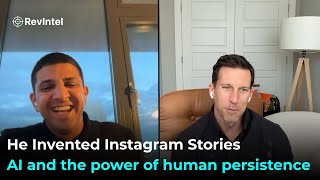
Sean Everett, who created the stories format for Instagram and Snapchat, discusses how AI is shifting the internet from human-driven to machine-driven. He proposes "AI paywalls" where users get paid for their data through on-device AI models, and shares how founders can use custom GPTs to automate sales and content creation.
Chapters
Yeah, I got a monster living inside me. So, um, I've decided after about 31 years in this business to let it out. So it's going to be an interesting couple years ahead. Um, so that's one of the reasons I decided to do the pod today.
So you invented the stories format, which is crazy. That's now on Instagram, Snapchat, Facebook. It's used by billions of people every day. But when you created it, how did you know that people would want that.
It took off. It helped Instagram grow, helped Facebook grow, but they're still missing the soul. They got the product mechanics right and the business model right, but they got the soul all wrong. You're not the greatest if you become a billionaire. You're the greatest if you create a billion billionaires. The machine use of the internet already is dwarfing human use. So I call it AI paywalls. Every company is a taker. Give me money. Pay me. Give me money. I can hold in my mind like, all right, whatever happens, I'm just going to take that step. I'm going to get out of bed. I'm going to sit down at a computer. I'm going to pick up the phone. I'm going to go for a walk. I'm going to take one step, then the next step.
That's it.
Next step, the next step. I'm going to keep getting back up. And I think that's how we beat the AI because the AI is going to go, damn it, this, this planet just keeps getting back up no matter what I throw at them. Like they're weaker than me. They're slower than me. They're apes. They're dumb. They're dumb.
Guys, we're back. I have a dope episode today. I've done a significant amount of research on this man, and he was, let's just say, one of the first half a dozen interviews I had when I first started my podcast about 2 years ago. And over the time I've seasoned myself. I've got more developed and now I think I have probably the best episode I've ever run on the series so far. So, Shawn, give us a 30-second intro to who you are, what you're about, and why anybody should listen for the next hour.
Yeah, I got a monster living inside me. So, I've decided after about 31 years in this business to let it out. So, it's going to be an interesting couple of years ahead. So, that's one of the reasons I decided to do the pod So I'm glad you're like, you're in the game. I see another fisherman. That's great. Background. I got started really young at 13 years old. I'm 44 years old now. So palindrome, 31 years. And it all is at the intersection of capital computing, business product, high tech. I studied theoretical mathematics and actuarial science at the University of Iowa. Today they call that AI. I have advised, I started my first boardroom of a Fortune 500 company was when I was 19 years old. And I've advised the Fortune 1000. I've advised tier 1 private equity firms on enterprise SaaS, AI strategy implementation. I and we, others I've worked with, have invented foundational things, worked on M&A that has driven impact across the global internet. And so we can get into that stuff if you'd like, but yeah, I've been pretty quiet and humble about it over the past, and now I'm just going to sort of tell the truth about everything and just let it all out. And now I'm on to building new products and I'm going to upgrade the world. That's the goal. So let's do this, man.
Let's do it then. I'm excited to see what this comes of then, because the first thing I wanna do every day, every single day, it is terrible or not, my habit is I will go to Instagram, uh, I will go to TikTok and I will click something called stories. And you invented the stories format. So, which is crazy. That's now on Instagram, Snapchat, Facebook. It's used by billions of people every day. But when you created it, how did you know that? People would want that? Like, what made you think this has got some legs?
Yeah, I can tell you the founding story because it wasn't just me. It was a small group of people that we— it was the thing that we were working on in the center of all of us. So, um, I had moved to New York after business school and, um, founding my own like mobile app SEO agency. This is right after the App Store launched. Shout out Steve. And I ended up working for this startup. It was called Plife. It was a gamification ad startup with some folks in New York City. And the first day there, I walked in, I actually interviewed with Uber at the same time. I was going to be employee 19 at Uber, or I was going to go work for Plife. And looking back, people go like, well, you could have been a billionaire. And I go, yeah, but I didn't want to just spend my time calling up black car drivers and saying, hey, do you want to use this app in New York?
Yeah.
That wasn't going to use my skills. I wasn't going to learn anything. So I chose this thing on gamification and figured out the S-curve of how consumers adopt products. So the first day I walked into this thing, I opened the sliding door in this like coworking space in New York City. And I looked down and there's this crazy dude looking up at me. His name's Craig. And he's, he's a bar— he's an intergalactic bard from like the third dimension. Used to be his like tagline on his, on his email. So he's like a creative worldbuilder guy. And then one of his best friends that he grew up with and went to animation school with, his name's Jared Treco. He now makes billion-dollar animated movies. And Tragg went on to do like a bunch of stuff at Hasbro with toys and like Transformers and then Amazon, and now they're on to their own stuff. And so it's rad shit. So anyways, That startup didn't work out, but the 3 of us got together with another gentleman named Chris Fong, who's in New York. He's still in the startup space, product person, awesome stuff. And we sat down and we went to Central Park in New York City and we looked around and we go, why is it that in the craziest, most aggressive city in the world, you can go to a park and you see dogs, you see every human of every age, every culture, every religious background, every belief system. They're smiling, they're happy, there is no violence, there is no conflict. What is it about this place? And cut to a long story, we got to this place where it was like, you have a story, everybody has a story. And at the time, Facebook was trying to do this stories thing and it was like, here's just a line of like a text blurb and a text blurb and just lines linking them. And it's like, No, that isn't a story. And I knew this because Jared was making billion-dollar films with his friends, and he knows what story is. His job title is literally a story artist. Okay. And then we had a world builder in there too. And so as we played around with this concept, what we realized is how do we get people to feel good and share their stories in this selfish world of social media, what we realized the mechanic was, is it has to be selfless. It has to be the I understand button, not the like button, which is like, give me love, give me like. So social took this and they went the wrong vector, right? So what we ended up doing is we said, here's a photo. Take another photo, stitch them together. Now add audio as your voice telling the story over the top of that. Export that into a movie, and now you can share that across the internet. And so we ended up doing that. We created a character named Kiiy, K-I-I-Y. This was in 2012, mind you. This is 13 years ago. Kiiy was an artificial intelligence that understood the emotion from your voice. It was an animated emoji who had different character features. Because why? Because we have an animator. Working on this. We had a story artist working on this. We had product people working on this who actually gave a shit about humanity. It wasn't just like, let me extract this and like sell ads and like make me a billionaire and be rich. It wasn't about us. It was about the people, right? And so we took all of that together, and then all of a sudden we had a character who would interact with your story and give you positive reinforcement, whatever you're going through, right? So we had users from like 25 countries around the world, tens of thousands of users after launch. We did story chat. Instagram copied that and it became the first time when Instagram launched DMs, they would send a photo. Before that, we already had like story chat where you'd send stories back and forth. So anyways, Snapchat then took it, copied it. So I put every, we put everything as we were building it on Quora. All this stuff is still up there. All of our notes. I had a podcast back then. We had hundreds of thousands of listeners. Of us just talking to people. It was like early Joe Rogan days, right? So, we did all of this stuff and then Snapchat took it and then Instagram took it and then Facebook took it and then like yada, yada, yada. But they missed the key element of this stuff, which was this selfless ideal of how do you like help people and improve their lives rather than just like making a couple people rich and billionaires. So, to me, it's like, And this is what gets into today. It's like, you're not the greatest if you become a billionaire, you're the greatest if you create a billion billionaires, right? So like, let's do that. Let's do that instead. You know what I'm saying?
Yep. Yep. Yep. Yep. Yep. So on that question, then there is that element of, yes, how do you make it? It's actually funny. There's a guy called Douglas McCormick. He's the first man who told me, and I learned it on a podcast, which was Your job as a CEO is not to be rich yourself, it's to create wealth for your team. And that completely like flipped everything on how I worked and how I operated because it was how do I make my team like wildly successful? But then even from the customer standpoint, you always think like, how do I make a customer very successful? But if you actually, I hear it, but I never linked it together. Like how do you make everybody the star of their own movie?
Yeah.
And that is literally it. So I think that is the answer to the question. What, why did you think it was going to be huge or what made you think it was going to be huge? Everybody could be the star of their own movie. So you've built product.
Yeah, it was actually one other thing. We actually started from the other side of this, which was one of our users was a woman. She had 2 or 3 young children. It was just giving birth to another one. Her husband had died. She had cancer and wasn't going to be along anymore. And to, and to us, we took that very seriously and we said, how do we capture your story such that your children, when you're gone, can have something to remember you by, to keep you by? And what's Apple doing now with Apple Vision Pro? They're giving you that 3D perspective. It's built into the iPhone. That is the reason. That is the purpose. It's not just for ego. It's like, real human connection between like family members. And that's what drove us. That's why we did what we did. And so it was like, we just wanted to get the spark out there. We open sourced it, right? We didn't protect this stuff. We put it out there and the world took it. And now it, you know, it took off. It helped Instagram grow, helped Facebook grow, but they're still missing the soul. They got the product mechanics right and the business model right, but they got the soul all wrong.
Well, you're good at predicting the future, and that probably leads, like, it's probably a great segue into the next question, which is, as you've built a lot of products, like billions of people, actually billions of people from UK to USA to India to Indonesia to Malaysia, they're using your product. You seem to have an ability to spot the trends though before they happen. And it'd be really interesting to hear, we're in 2025, obviously the noise is around GPT. Pushing beyond that, Agentic AI. Now they've got like the agent builder and you can, it like just the ability of what you're able to push in terms of output. Like I can get most of my tasks to 80 to 90% and then have it filled the last 10% filled. But how do you actually see what's coming next? Everybody's focused on what's happening right now. How do you actually figure out or actually see what's coming next? So let's say in the next 2 to 3 years.
Yeah, I felt this way for a long time, the convergence of emerging technologies. So spatial computing, augmented virtual reality, whatever, also self-driving things moving around a 3-dimensional world, 3-dimensional objects. AI obviously is the logic layer. So that was the interface layer. This is the logic layer. And then digital assets, blockchain, Bitcoin on the database and monetary layer. So I actually named my company Evergence as the convergence of emerging tech and the business models that emerge from them. So that's it. So then you have to extrapolate what happens. And what's funny is you don't get there by looking at the tech, right? The best product people work backwards from humanity and the needs. So you have to do two things. You gotta work backwards from humanity. You also have to work backwards from the machines now. Because the machine use of the internet already is dwarfing human use.
Yeah.
And you think about AI agents going a million miles a second and even Google search now, they have this thing called query fanout. So you type in a search on Google, it then hits 10 other searches the minute you hit that search bar. So it becomes machine use of the internet becomes exponential, like super exponential, like a power law. Compared to human use. So how do machines think? How do machines make decisions on the internet? At each moment in time, each millisecond, they're doing a vendor selection process against all of these tool calls. And I'm going to choose the one that's faster, that's better, that's cheaper at every point in time. And I'm going to pay a tiny microtransaction, a.k.a. digital assets and currencies, because dollar bills won't get you there. You need a decimal point this long. And so, I call it AI paywalls. So, that's number one. But the big thing about this whole space that all of Silicon Valley, and I don't see anybody in the world talking about, which is the thing. So, here it is for free, everybody. It's get consumers paid. Stop taking from consumers. Every company is a taker. Give me money, pay me, give me money. What's your subscription fee? Video streaming, Amazon Prime, groceries, every enterprise SaaS app, pay me every month, pay me, pay me, pay me, pay me. 70% of the economy in this world is income paid by consumers. Consumers are getting their jobs taken from them from AI, right? That's the big media thing. So where are they going to get the money now when they're unemployed because AI took their jobs because you ran a more efficient company? Your company's going down because upstream from that are the consumers. So this business model, which is the consumer pays the companies, the company pays the consumer to do work, and then around this way, what we have to actually do is we have to reverse that flow of money and go to the consumer first. Instead of being a global economy of takers, we need to switch the polarity and become a global economy of payers. So that then begs the question, where's the money going to come from? Okay, where did it come from from the beginning? We live on one planet. This is one system. It's closed. There's no aliens. We invented money. Yeah. Right. We invented the US dollar. We invented the yen. We invented the pound and the euro. We invented Bitcoin and ETH. So, you know, like it's here. It's just the flow is backwards. And so who's going to pay the consumer to do all this work? And so that I think is going to be the next major unlock. So mark my words, you're going to start seeing every single app on the App Store, every single enterprise SaaS company, every single business, their headline is going to be, we pay you, get paid. You know who does it today? Upwork, Shopify, and then like other talent marketplaces. That's it. Upwork and Shopify are the biggest ones. Everyone, everything else is a job. Those are platforms to get you paid. And guess what? The people who are using Shopify, they look at their phone every morning and they wake up to money and they just see all the e-coms, right? Like you're on TikTok or Instagram and you see these like these e-commerce founders. They're like, ah, I started a t-shirt business and like, look at my thing, ding, ding, ding, ding, ding, ding in the cash register.
It makes me so mad.
It makes me mad, but guess what? 8 billion people on this planet, they want that. Of course. And you know what? The people in the tech industry haven't been good enough and they haven't pushed the bar far enough. So wake up, tech industry. Like, give that to all 8 billion people and watch how big you grow, how fast you grow. You think $4 billion? Mark, $4 trillion market cap is a lot of money. Watch you go to $100 trillion in no time. That growth rate from here to straight up and down, 'cause you're paying 8 billion people. You got the data, pay 'em for the data that you give them.
That's a very good point. So how would you structure that kind of transaction where let's just say a consumer was able to be paid for their data?
Yeah.
How would you structure that? What's like the gut feeling idea? How would you do it?
Yeah, it's new. I'm still working through it, but I think it's— no, I think it's something like this. We already have everything built in, right? So let's take a look at all these big tech companies. I have an internet access device. Apple actually is best positioned in the world to do this because of the trust that they've built, the distribution they've built. The capability of privacy on this application. They can now do large language models, foundational models on device, not calling out to the cloud. They have secure enclave. I'm an Apple guy through and through. Everything I own is Apple ecosystem. So here's what they do. Yeah, buddy. Cosmic orange. Go Bitcoin. So, so basically you pay. So it's, it's Spotify., right? It's Apple Music. I pay musicians every stream. It's a hundredth of a cent per stream. Drake makes a shit ton of money off streams, right? And him and his Super Bowl arch nemesis, like they're going back and forth and they're getting their streams on, right? And so they're making a lot of money for the company and Spotify is paying them on a per stream basis. Okay, so Apple can do the same thing, right? Like, every time I tap on here, I'm doing data. Every time I interact with Facebook, I interact with website, I'm capturing data. They can then train a model from that data, and then people want to get access to that model. Insurance companies want to get access to that model. They've got a, a boatload of cash. They're worried about the big one coming in. Healthcare companies want to get access to that data. Advertising companies want to get access to that data. Basically every marketer on the planet and every single company and every single organization wants to get access to that data. So they can pay a subscription fee and chat with ChatGPT that's wrapped secure Apple GPT around this thing. They pay their $20, $50 a month, $40 of that $50, you know, I don't know, $10 goes to Apple, another $40 goes to the consumers. And then I think that's a good model. And then you've got the API. So now you don't just want to chat with it on an individual basis, 'cause what did I say? Machine use is going to dwarf human use. So open up that real-time API where you're just getting streaming data from that model, and that little AI agent that's accessing all the data on the internet through your system now is paying you a sub-Bitcoin, a Satoshi, every time they access a tiny piece of your data. And guess what? I'm on the beach, I'm living my life, I'm looking at my content, I'm working on my mission, I'm working on my health, and I'm just watching. I'm living my life and I'm getting paid and everybody's getting paid. Apple's getting paid. The marketers are getting paid. Now we use the internet what it's for, which was a gigantic marketplace to match the person who has a real need with the person or the company that has a real product or service offering to match that need. I just broke my leg. Hey, guess what? It's already in the model. Here it is. This is the doctor. Perfect for you in your vicinity. Here's the opening. They get paid, you get paid, everybody gets paid. Everyone shares everything. Like, this is the model that needs to operate. This selfish— we can use selfish human behavior to hack the system and create a selfless system. It's there for the taking. We just need some people with some damn vision to make a product decision, write the code, and release it into production. It takes as much as me write— there's the requirement. I gave the internet this requirement. Write it in some code, git push, go. Go. This is easy. It's all set up. The internet's here. ChatGPT's here. We got billions of devices, billions of users. People hungry for data, put 'em together. It's free. If you're not gonna do it, then I'm gonna fucking go do it.
That's it. Look, it, it makes sense. Like, and, and, and you, you always will get those few who are like, I don't wanna give up my data. I wanna be private. I would say, all right, so opt in. If I have a subscription, I have probably 60 subscriptions across my life right now. And if every one of them was a situation where Yeah, like you said, we were paid 20, 30, 40, 50 bucks. Let's say it even was as good as 100 bucks over 60. That's 6,000 in like a month. You would be decent. £6,000 in the UK. You'd be quite decent right now. And you could be like, and, and then it does open, like, and I think people miss where it is like, then it does open up more opportunity. So what I've found is. Like maximum, like how far and how hard can I push my usage of AI has put me in a position where it just propels you forward, like these massive leaps and these massive strides forward. And for the first time, like last week, I got to the point where I was like, I don't have anything to do. I really, I'm done with everything. Like I'm literally done with everything right now.
Yeah, man.
You're doing so much work. And yes, and then it does leave room and then you're like, hmm, do I want to take a quick little, uh, like appreciation moment and be like, holy shit, like I can finish all my work in all of these areas of the business. And then imagine, mate, like if you can, if you can manifest or help others visualize what that plan looks like, a simple token that says you give us your data And we'll give you a token of credit back for it. And, and, and we're gonna use it like this and this and this to make you have better products and sell your products easier and make more money as a business. Like, I think it adds up altogether. So you've got something called a pattern recognition superpower, and, and you say that your secret weapon is a pattern recognition across domains. And, um, look, for me that sounds pretty fancy, but does, what, what does it actually mean? Like if I wanted to get better at spotting patterns, what would I actually do? Yeah.
And one final point on the privacy thing, because it's so good, just put up a sheet every day or however often in the settings screen that says anonymize this, don't give it at all, or yes, you can say this is tied to my identity. Yeah, I'll say give it away. Yeah, and that's it. And then you, every single person can decide exactly for them, and you remind them, per Steve Jobs at the D3 conference, whatever, So yeah, so pattern recognition, you know how you do it? Your brain is a pattern recognizer. All you have to do is feed it more data. So you're in this one zone, this one area. Now do take that same kind of attention, focus, interest, and then step adjacent, one adjacent area, or go crazy and go perpendicular. So not parallel, perpendicular. So like maybe I'm always in tech. What's the complete opposite of tech? Nature, gardening, right? So if I want to do pattern recognition, all right, let me go to the original source of all technology, which is nature. We just don't understand how the tech works yet. And then go stand in nature and look like, oh shit, actually that tree, the way it's like branched out in the fractal nature, that actually does look like a brain. And maybe that is encoding an LLM's neural architecture in a physical dimension, and I can see it. And that's the same thing with the leaf. And then I'll give you, I'll give you an example. So I, I'm running a lot these days. So I went running what yesterday, I think it was yesterday. I don't know. I run like a 5K every other day now because I got a bunch of energy. So I'm running, I'm running by this little pond and the sun's shining down and, you know, like in the grass and a pond, all of a sudden you see these like little gnats. You ever run through them sometimes, you're walking up, you're like, oh God, where did these come from? And I'm looking and the sun's in such a way where I can see there's like these filter streams and there's like 20 of them. And what I've noticed, and there's nothing else, there's no wind, there's no like wires to hang on, there's no cobwebs. It's just these little like invisible poles of energy that these little like gnat things are swarming around. And there's like 50 of them in different placements. And I'm like, shit, man, there's so much in this universe that we can't see from our little feeble sensors in our eyes and our ears and our smell. And I'm like, I'm literally witnessing it. Like these little gnats are making real what isn't real. And then it's like, there's structures and subsystems that exist in the real world and it's like all the stuff that I've studied, it's like instantaneous pattern recognition. And then you just start to notice stuff. And what you'll notice is it's like, it's the same structural system over and over and over again. It's just a different like user interface or veneer. So as you start to pattern recognize, what you'll find is it's like the same structure. It's the same cobweb. It's the same, like, Timbers and bricks and layout, and you can look at, and people call it a framework sometimes, or a mental model, right? It's like, oh, actually this thing here, like this coffee business is the exact same as like this crazy technology business. And you're like, wait, but they're doing this thing. Oh shit. I should actually, oh wow. That's nuts. Look at that. And, and so, And then it just starts happening a lot more.
Yeah.
But you just have to like step out your own window and then like view other windows.
I heard patterns began or stop. The first pattern recognition in the history of time was the pattern recognition of the seasons, and it was because hunters were finding it difficult to hunt in colder weather, and they realized that in the summer they were able to hunt more. And gather all their meat and store it. And then in the winter, they knew it'd get darker quicker. So hunting would be less and the time to hunt would be lower. And then they were able to marry that up and understand that fall, summer, winter, spring, and not obviously in that order, but that's how it came together. I don't know if you follow Patrick Bet-David, but that's where I got that from. He put that one together. That's a decent one, right? So the stars—
And then they invented the fridge. Cause they need to store that food from the summer into the winter.
Look at that. Bright ideas all over the place, right? Yeah. That's the future.
Let's have it. That's how it happens. It's very true. I gotta solve my own problem.
It's very true. So look, on the big company side, um, I've had my fair share of experiences now in a few startups and, um, it'd be interesting to get your perspective as we go through the episode, but, um, on the private equity side, but one thing I've seen is there is a huge cultural difference in how startups operate versus a big, big company operates. And you've worked with Fortune 100 companies, you've also worked with smaller companies, but when a big company like an AT&T has a massive problem versus when a startup has a problem, like the product maybe isn't final already as it should be, do you look for different patterns or are the patterns the same?
It's the same problem. It's like, I need new logo growth. Like I need to go faster. Like how do we go faster? The problem is like the bigger you get, the harder it is because complexity, and then you're trying to move a giant ship and the organizational velocity and the organizational design and how information moves and how you manage that and how you incentivize that. So the levers change because it's all indirect rather than direct manipulation. So startup, you're just like, oh, I want to go do this thing. You have, you don't have the force of the vector, but you've got the speed. In the big companies, you have force, but you don't have like speed. So it's like a train. It's like trying to start this giant heavy train. Versus like, oh, I'm on roller skates, like, we, you know, I'm just off to race, but I'm powering myself, so I can't go that far. So it's all the same. It's all the same thing, like build the stuff faster, get it to market faster, remove inefficiency. But the one thing about the smaller companies, which is magic, is distribution channels. Distribution channels are absolute magic. You can— it's like, uh, it's like 20 years of building systems in a day because you can essentially incentivize a much larger— like, take AT&T's global sales team, thousands, tens of thousands of people. You stand in front of them. I've actually done this before. You give them a one-pager, you give them a sales deck, and you give them a commission structure, and you go, I want to be at the top of your rip list. And I'm going to tell you why. You're going to be able to sell this faster. You're going to show quicker ROI and you're going to get commissions paid more often. And I'm going to make you go over your highest year. I'm going to do that today. So listen up, let's go. Here's all the materials. Give me a shout if you have questions. And they're like, am I going to make money with this? And so they'll shoot out a few feelers and then it's like, then you got a different problem. This is like Chomps. If you watch the story about Chomps, you know, the little like beef or turkey, like beef sticks, they blew up. Like they got put into like a big store and their buyer was like, oh yeah, this is supposed to last like 5 months. It lasts like 5 days. And then they're like, oh snap, how do we get, how do we restock this inventory in real time? Which is why software is so interesting because quote unquote marginal cost is zero, notwithstanding the token stuff on AI, um, but then you don't have the, it's like real-time duplication and distribution. It's more about like, can you create something that actually has a much higher ROI for the user?
So, so another area I found wildly interesting, and I think you have a lot of experience in this area too, is the private equity space. One thing I want to do is create a massive amount of wealth. Uh, not for myself, not for selfish reasons. There are— a nicer life is something I'm accustomed to. It's something I enjoy and it's something I want to continue having. And creating that type of life only comes with a decent amount of capital events in my life. So I've, I've taken the route of, um, I finished with Mega recently and that ended up being a very, very good exit for myself. And that has led me to another company. That is their biggest competitor. So I'm selling Voice AI Collections again, but this time, this is a massively VC-funded startup. They're back, they got money, and they've got a solid team. And it's a very different— it was a very different assessment going into that. But before I did that, I invested a decent amount of money into something called the Harbour Club. And that's basically an M&A course. I paid about £10,000. In that course, you get access to one of the 3-day events, and then they also book you like a shitload of meetings with business owners that they qualify that are interested in selling their business. So my idea right now is to go into acquire collections agencies that are heavily human operated. Their cost is about 80% human cost anyway. Take about a 40% cost, keep 40% there, put AI in. Obviously transform the companies as much as I can and sell 'em in 6 to 12 months. And then hopefully I could do a 5 to 8x increase on all of them because I've got the vendor company. I know the, the, the strategy of companies I want to help. I know the market is exploding and where the opportunity is. So I want to go down that route. But why I ask you this next question is that there was a problem I discovered in one of my previous clients. Basically their sales environment. And the problem was they had a pipeline that was unqualified. So they were going through hundreds of deals and those deals weren't closing. And come to find out the deals weren't closing because there was no budget, uh, budget, uh, uh, like understood or identified. The authority, the guy who was the freaking decision maker was in like Singapore. We're speaking to a guy in Europe. Uh, the, the guy sending contracts. To people and they've never asked for a contract. There's no timeline. Like the simple, the guy didn't even know what BANT was. And I was just like, wow, we are in a huge amount of shit right now. So I built this thing where CRM and Fireflies, which is the call recording software, put them together. And I said, AI, tell me what these two are saying when they're combined. And it basically said, this guy's bugging out. He's bugging out because this pipeline ain't going nowhere. So cut a long story short, one of the, one of the advisors in this community said it'd be a great idea for you to use this tool to go into companies you plan on acquiring and run an instant due deal check and see if they're telling the truth on their numbers. Right. And that would be like a good, a good radar, an indication of if that company's doing good. So you do due diligence for private equity firms. And we know why they do it. It's because it's to decide whether you want to buy a good company or not. And what patterns do you usually look for though, that tell if this company's going to grow versus this company is going to tank and don't buy it?
Yeah. I mean, we go through a process, right? So we know what good looks like, got all the data and have done so many of them that it's just like, you just kind of know, right? I mean, everything we see is like a high-quality asset, like upper quartile anyways. So like before you, like if you get to us, you're already in the game.
Yeah.
Like you're a, at minimum, like a rule of 40. I've seen all the way up to like rule of 90 companies, which is revenue growth plus EBITDA margin equals 90, which is crazy. And this is like mid-market companies. It's not like a large public company or a small startup. So we'll go through a process, right? I mean, it's like, And AI is on everyone's mind, every investment committee's mind. It's like, shit, what's the strategy for our portfolio company? Like, what's the roadmap? Like, what do customers want? So we'll look at closed one rates, we'll look at top of funnel, we'll look at their roadmap, we'll interview experts in the industry, we'll do a competitive analysis of features, go-to-market, all of that sort of thing. And then we'll do like a technical deep dive. And look at the architecture, look at, you know, the database, look at how the thing works, get the demo. Like we actually prove that they have like the product that they have. And we talk to the executive team, we, you know, the founders, if they're still there, if it's that kind of company or exit. And then we write up an assessment report and then sometimes it leads to post-close value creation because no company's perfect. And so every company is strong in this dimension or weak in that one and other ones are strong here and weak there. And so, you know, nobody is ever 100% across the board on this like 360-degree review. But to your point, what you're doing is you're right on the money. I mean, a roll-up strategy where you know the space really well, you can take cost out of the business through automation and then, and through just combination, because there's efficiencies there. Synergies, the old word that no one likes to use, which I don't know why. It's like everyone knows what it means. It's like, yes, we make fun of it, but it's like, it's a good one. What else are you going to use? Should we come up with a new name for database? Should we call it a snarkapoo or like, I don't, Like, just call it synergies. Like, I don't know. So, so anyways, like, I think you are, you're onto something really strong. Like, you have, you know what the thing is. So you just need to find the businesses and then roll them up, integrate the operations, get rid of the excess cost, automate as much as you can through AI. But to your point on the pipeline, pipeline's always bullshit. No matter what, it's always like, yeah, I don't know. The only thing that I've learned, I mean, it is, it's a probability. Like, you know, we could have another COVID event and the pipeline just like is completely different. So the only thing that I've found ever matters is new top of funnel leads that you can control and the absolute bottom of funnel conversion where you get them from I'm about to close to closed one. Everything in between is a waste of time. Like let them be, let them be. You can't move them down the funnel any faster. Like other than, you know, like your standard marketing stuff, like you got to hit them if it's consumer a couple times. But you're not going to force someone who's like, yeah, we're maybe going to buy a car in like 6 months. I'm not going to show up at your door every day going, hey, you're going to buy a car today? You're going to buy a car today? They will never buy a car from you, ever. They will never buy a car from you. Like, I wouldn't. It's like, it's like, Chad, leave me alone. I'm sticking with my car because I don't want to deal with this. So anyways, I think the funnel, I think what you're doing on funnel is right from a diligence perspective. It's, but then you also go do a market study where you reach out to existing customers, former prospects, and you look at reasons for loss and you look at gross and net dollar retention rates. I mean, all anybody cares about, all anybody cares about, what's your growth rate? What's your retention rate? Are you keeping the customers that you paid money, time, effort, and energy to get? Or are they leaving? And then are you getting more customers? And that's it. That's all this thing is on any business. So if you can crack the code on, I found an efficient way to get new customers and I found, and they really like what we have because it solves a real utilitarian need for them every day, week, month, year, whatever, and they don't leave. And then you've got some defensibility, which is like, we're, and for some reason, the customers like us because of these things more than they like them because of those things. We're just a better fit for this kind. And over there, it's a different fit. And that's all you're looking for in this world is like, let's just find that good fit. And then we're good. We'll find— and there's a— and then we look at the market and, hey, there's plenty of room to run. There's plenty that look exactly like this that have this exact puzzle piece and we fit in perfect and there's 10,000 more of them. They just don't know about us. All right. Well then let me just go talk to them and be like, hey, you got your shape looks like this. My shape looks like this. Let's just do this. Yeah. And that's it. Like that's the whole ballgame. So you're right on the money. Like I'll probably do diligence on one of your companies someday. If it's software, I'll be like, hey dude. Like, don't bullshit me because I'm going to get under the covers and I'm going to find it. It's going to be in my report. So you're going to have to shoot me straight, man.
So one thing that I think is important right now is, like, I am on it too. And I've had my finger on the pulse for the past 2 years. And it's obviously marketed now more so than ever to say this is this AI gold rush. And this is the time to capitalize on the opportunity. And this is where everybody's becoming rich. It just so happens to be that this is the year I've made the most like personal income for myself and had the most kind of capital events, which is really cool. And I'm talking significant six-figure events that for the first time in my life, I was like, let me go hustle again. And then I'm still going to hustle, but it was, yo, chill the fuck out. You don't have to do nothing right now for a couple of months if you don't want to. So I booked a holiday, went to Morocco. 5-star resort, chilled out for a, had some fun with the wife and kid. But on this timing where people, maybe they're looking to you right now and saying, this guy knows his stuff. I feel like I could probably execute after I listen to this. You've been early to mobile apps, social media, AI, now big trends. How do you know when it's the right time to jump on something new versus when it's too early and you might end up wasting money?
Oh yeah. I've failed on that one because I'm super gung-ho about the possibility of technology for good because I've seen the transformation it can have. The love of the game. I mean, this is the love of the game for me. It's not a money thing for me. And I will tell you, I have completely, and others around me who feel the same have failed because it's too early is the same as wrong. So that I've learned that exact question, which I'm going to answer. I've learned the hard way. So this comes from a lot of scar tissue. So the diffusion of technology, it's this bell curve, right? That like the normal distribution of bell curve. So that you talk about like super innovators, the early adopters, the early majority, and the late majority, the laggards. You've heard these things, right? So there's this famous book called Crossing the Chasm.
Ooh, I love crossing the chasm.
Yeah. Right. So for anybody that doesn't know, there's this, the innovators and the early adopters, and then there's a space before you get to early majority. And it's a space, man. Like if you've ever like jumped off that and like fallen to your death, it's for real. So yeah, it's not for the weak of heart. Like this isn't You know that, you know, Indiana Jones and the Last Crusade at the very end of the movie where he like walks out onto the platform and he's like the penitent man and like, I got to trust God. No, I've fallen straight off that cliff. There was nothing under there. So, so anyways, it's real. I can attest to that. It was real. All this gray in my beard and like starting to appear. Yeah. That's from dying. Like luckily I can't, I got Mario lives. So anyways, what I found is like, you have to look at that. So we got 8 billion humans on the planet. You got to get past like 1.3 billion, a couple billion people. Like that's the chasm. The chasm is it has to cross a couple billion people. So if you go backwards from the right, think about what has 100% adoption, food, water, healthcare, right? Like things you need. Oxygen is 100% adoption as a technology for humanity. If you go a little bit further down, it's like, what's the technology? It's electricity, which is like 6 billion people. And right after that, what's interesting from the right to the left, SMS. SMS is the most adopted technology. Now think about ChatGPT with almost a billion users. Why did it become successful? Because it's using SMS interface that 6 billion people already know how to use it.
I agree with that. I agree with that.
100%. So here's a, here's a, here's a hack. If you want to commercialize your product in emerging technologies, wrap it in an interface or in a technology like TV that's already distributed across the planet and people know how to use and interact with. So the question then is like, now that chasm at like a billion, billion and a half people, have we crossed it? It. So AI, ChatGPT, right now, as we sit in October 2025, has 800 million weekly active users. That's what they reported. Google AI Overviews on the Google homepage probably has like 3 billion more users, right? That gets them across the chasm, right? There's billions of users who have seen a little bit of AI. They've interacted with it. So we're— AI has crossed the chasm. Forget the media reports. Forget the money being spent. Consumers have interacted with AI, greater than a billion people. It's crossed the chasm. You are— it's not going away. You are good to invest in AI. Yeah. Behind that major macro trend. Now think about spatial computing, the Apple Vision Pro, the Meta glasses, VR, AR. Does it have a billion users yet? It doesn't. Waymo cars driving. It's not past a billion yet. So you're in dangerous territory still, right? Digital assets, Bitcoin. It's, uh, the whole digital asset community is like $3, $4 billion. Bitcoin's like $2.5, um, yeah, Bitcoin's $2.2 trillion right now. So the whole digital asset ecosystem is about $4 trillion. Money movement every year is $250 trillion. So 4 divided by 250, you're at a percentage point. There's maybe 400 million wallets, maybe a couple hundred million users of digital assets today. It's not a billion. So that means you have plenty of room to run. The United States regulatory framework, the current sitting president, it's all tailwinds now. So I truly believe that. So what came first was AI. Right behind that is digital assets. And right behind that is your spatial computing. And then behind that is robotics because the phone, the wearable, the watch, then the cars, then the humanoids, right? So you have to think about this diffusion of emerging technologies as it comes across. So you bet. So now what's happening, and I see this every day, is Fortune 500 companies I'm building products for them in AI. Private equity, every single private equity conversation over the last 2 years, every single portfolio company, whether they want to or not, is getting forced to build AI into their products or transform their business into an AI-first business. It ain't going away. And Bitcoin fiat debasement is real. In the US, we don't feel it as much, but you go to like a second or third world country around the world and like, what are you talking about? I'm going to use the government money? Like, it's not even worth me. It's crazy. Like, it's cheaper for me to burn your currency than to buy logs to put in my fireplace to keep me warm. And you can't tell me that Bitcoin's not going to be a thing. So yeah, so what's happening is, AI, and then Bitcoin digital assets and tokenizations coming right behind that for all physical assets. That's going to ramp really big. And then right behind that, now we're saying, now I have a new interface and you're going to put on those glasses for everything you do, which is going to train the better self-driving cars, which trains the robotics. This thing is going to start compounding like nothing we've ever seen on the planet before. And so all you need to do is you need to bet behind these major trends and find the market leadership position while you start getting smart about working with and building and productizing these things.
The end. Wow, dude. So I'm— look, it's very interesting that you've put that together. And I had a look at the Apple Vision Pro glasses. And I'm the type of guy that I love having loads of screens. When I was young, And I watched Wall Street for the first time and I saw all the screens, the trading screens. I was like, I want that. I want to be him.
Yeah.
Yeah. I wanted to be that guy. And even now, like I've, I'm, I'm at home right now, but I got 3 screens in my office and I love like that whole feeling of like that being immersed in work and being surrounded by it. And then if you're in this Vision thing, Apple Vision, you can actually see you are in your living room and these screens are everywhere. And it's like, this is absolutely insane. And it dawns the question that I've heard, I'd love for you to clear this up on, it's about competitive moats, right? And you've got Apple Vision, which is again, immersive technology. Then you've got the Meta glasses, then you've got all these other companies and they're all kind of doing the same thing. So what is the competitive moat there? But the real question is you help companies design strategies that competitors can't replicate. I'm even having this question with my team right now. How do we build something that is like defensible? So what patterns do you look for that tell you a company has built something their competitors will struggle to copy?
Yeah, the big one's brand. That's— so I'll start there. So brand is the one at scale. Cornered resource is the one at the very end of the other side, which is like you, you're a founder, right? You in that world that you just described, you have you have intrinsic value knowledge that nobody else has. It's not out on the internet in public space. I mean, you can probably like get there and find it, but you have a nuance where you can like weirdly guide a needle through these crazy little threads that nobody else can do. And that's defensible, that's defensibility. And you've built that up over time through like, rote knowledge and learning. So the other side is brand. So take like Apple. Apple— so Johnny Ive partnered with Sam Altman, and they're trying to get a cornered resource. Everybody wants Johnny Ive to build their, you know, industrial hardware product. But yeah, OpenAI has them as a cornered resource. But brand, right? AI, all this like Hollywood shit. Who do Here's a question. This is a funny one. You have a small child, right? Yeah. Name the tech company that you trust to put a humanoid robot in the house with your young daughter or son and you leave for a week and you trust that it's going to be okay. Which rank them?
Apple, Meta, Google, Tesla, Elon.
Who do you trust? I'll tell you who I trust. I trust Apple because I know where their soul is and I know how deeply they care about their product where they said, we screwed up on AI. It doesn't meet our guidelines. Beat us up, beat up our stock price. We're not releasing it. We're pulling it back. Beat up Siri. I don't care. Beat us up. We're not going to put it out if it's shit. Do you trust them? Yeah, I trust them. Like secure enclave privacy. Like, are you kidding me? I'm not giving my money to another tech company for headphones, for a phone, for glasses, for a car. Like, and so that's a defensible moat. When you stick a robot in someone's home, who do you trust? That new startup? I don't know you from the man in the moon, man. This is my baby. This is my dog. This is my wife. This is my husband. This is my family. This is like things I really care about. Screw data. Like data, fine. All of our social security numbers and everything are out there anyways because companies suck at cyber and tech. But there's no coming back from that robot fell on something, someone I care about. There's no coming back from that. There's no lawsuit. That protects you from that. So, so we can get into all the like, like heady competitive strategy, like all the design and network effects and yada yada. But to me, that's the one, it's a feeling. And you, you go to New York City and you stop on the street and you ask 1,000 people who they trust to take care of their baby as a robot, what brand, maybe it doesn't exist. And they'll say nobody. And then that's when the hard work comes, which is like, Shit. Well, what are the actual product requirements, the business requirements, the brand requirements that prove that this is trustworthy? And that especially as healthcare turns into medicine, turns into like drug discovery to delivery through AI, and I'm going to put like medicine and microbots in my body and I'm going to trust that as well. Brand is going to be the thing. So who are you? Who's the people at the top? Who funded it? Who controls it? Why are they here? What's their mission? What have they built into the product? What have they built into the team? What have they done in the past? What are their like things they're trying to hide? Like what's the worst thing they've ever done in life? Because the people who build tech, take themselves and put it into the technology. So if your values are shit, your product's value is shit and your brand is shit. That's why I say you can't build a values or mission statement in a community, in a committee on a whiteboard. You're lying. Yeah. Who are you? Who are you? Yep. When you're by yourself alone at night, like, I mean, I'll ask you, That, I mean, maybe this is too personal for a podcast.
No, I'm all, I'm fully open to all questions.
Yeah. At your core, man, like all, throw everything away, strip yourself down to when you were 5 years old as a kid, like that fire in you. Who is that? What is that? Where does that come from? What's driving them? That says everything to me about you.
Who are you? Me, for me, it is honestly. I have, I'm a person who has a lot of resentment, a lot of anger inside me. I'm a person that has dealt with a lot of betrayal and trust. And it was actually, again, AI who helped me realize this the other day. And it's this recurring thought that I have in my mind, which is, why do I think of all these bad things? Why do I feel like sometimes I'm going to lose my family or lose a lost loved one? And it's because I've gone through betrayal. I have lost loved ones in my life, and it brings me to a place of, I think I'm resentful. I think I'm dealing with anger, but I'm actually someone who's just very hurt and is trying to really prove something big to myself and achieve it so that, like, I can look in the mirror. And yes, there's an element of, I want to be the guy that everybody said he will fuck up, and I shit on them. Like, it's not about that.
That's not what I'm about.
Dad, this is me. It's how do I believe? How do I keep staying resilient? And how do I prove to myself? And like, at the end of the day, my daughter, like, my dad is a G. Like, I want to be like my dad, right? My husband, my wife, I want her to be like, my husband is dope. Like, he is the coolest fucking husband in the world. And I want people around me to enjoy that excitement, that fun energy. But this is the surface, right? What you get on Shane Mahi's surface is this very energetic, humorous, lovely kind of guy. But then there is this deep, dark, demonic side of me that has dealt with, let's say, I'm not going to say trauma, but I've dealt with some serious shit that it does affect me. It does affect who I am on the inside. And that is why I present myself in a certain way to the world. Which is because those values, again, once those values like on this side of the fence in the frontal view, and then obviously within that and deep inside, if that deep inside is exposed and it's not something you can like vouch for or somebody can be proud to be around, or, you know, then you got a bigger problem on your hands. So it's better to be true to yourself. And that is kind of my story or what I am about.
You have a story, man. See, I'm telling you. Powerful, you know, because you give first in this way and it opens people up. And I say, I understand because I know exactly what you're talking about. I've been through betrayal. I've been through like letdowns. Everyone has. And it's this like, yeah, I was screwed. Like, I was going to say the F word, but we're not doing it. This is not French language appropriate. So we don't have the translation going. So, but yeah, man, it's it. It's like, I want to prove something. And at first you're like, ah, I'm going to prove it to all of them and everyone. And what you realize when you're quiet and it's like, no, actually I'm proving it to myself. And what you do, what happens, and I think you're there, is you look backwards and you go, well, shit, like I went through that and some people were there for me, but ultimately it was me that picked myself up. But then I did that thing and then like I did that thing and no one was there. Like no one else did that for me. I chose in my mind to do that, and I did that thing. And then that's where your source of your power is, because then you're like, then you can stop being afraid because you go, you look backwards and you go, well, whatever the world throws at me, it's going to suck and I don't want it. And I really am dreading this because I know what life is and something's going to happen. It's not going to be all roses, but I can hold in my mind like, all right, whatever happens, I'm just gonna take that step. I'm gonna get outta bed, I'm gonna sit down at the computer, I'm gonna pick up the phone, I'm gonna go for a walk. I'm gonna take one step, then the next step. That's it. The next step, the next step. I'm gonna keep getting back up. And I think that's how we beat the AI. 'Cause the AI's gonna go, damn it, this planet just keeps getting back up no matter what I throw at 'em. Like, they're weaker than me. They're slower than me. They're apes. They're dumb. They're dumb. Why are you so dumb? Why do you keep getting back up? It's this great line from The Matrix, and he goes, because I choose to. And it's like, yeah, because I choose to. Yeah, man. So I'm with you there. I've been through that. Like, we've all been through that. So yeah, it's— and I'm trying to stay in that space too. It's hard.
It's hard. It definitely is. It definitely is. But I think one thing that I've learned is as much as all the hard times do come together and you can learn to be grateful and appreciate, and it sounds, it is like, it really does sound cheesy sometimes, but being grateful does change how you see things. Uh, it takes away all the kind of comparison kind of things that you look at in your life, uh, when there is, if there ever has been a point like that. And even for the first time in my life, It was actually, it was Saturday. It was Saturday or Sunday, and I was sitting on the sofa and I, again, I had nothing to do with work because everything is fucking finished. And I'm reading a Dalai Lama book and it's about achieving happiness and unlocking like this different set of happiness and perspectives in life. And I really just want to focus on how do I make my life just really enjoyable right now? How do I get like absolute peace? Right? How do I be compassionate and really caring about everything around me? It, it makes a massive difference. So I wanna give the audience one key takeaway. We've hit the top of the hour. Um, I think there's a ton of value in this, and I think we gotta do this again. But what's something that people can do every day to train their brain to see patterns for opportunity better?
I think you just gotta, you just gotta get in the game. You know, you gotta play the game. You gotta get out there. You gotta put your mind into it. You gotta interact with things. You gotta think about things. Heck, throw up ChatGPT and put a prompt in and just be like, hey, I saw this thing and like this thing. And what do you think it means? To me, it's a thought partner, right? I mean, it's like, I want to explore this space. I don't quite know What it is like, help give me some answers, help me refine my thinking. And then like, you'll get some nuggets that you weren't thinking about. And so that's great. It just fills in blanks a lot faster. And so, yeah, I think, you know, even less than pattern recognition, I think it's more important to just be back on the thing you said, because ultimately, like, what drives you? What is your mission? Like, where are you headed? Like, once you define your mission, that's great. And then you just keep making steps toward it and there's going to be wandering pathways along the way. But yeah, it's like I use this mental model where it's like I split myself in half and there's two Shauns. There's one who just sits in a chair and just hopes and does like, oh, I'm in alignment and I attract, it's like the law of attraction. And then there's the other Shaun who gets his butt out of the chair And he goes, runs a 5K, he lifts heavy, he starts emailing people, like he grinds through work as high quality as he possibly can at the speed of AI. And it's like, which one's going to get more done? Which one feels more fulfilled? And it's like, which one has less stress? Which one goes to bed at night and feels better about themself and removes the anxiety and the worry? Well, it's the one who just like got up from the chair. So it's like, get up from the chair, like do something, do anything. Like just sit, open that computer up, sit down at the keyboard every day for 3 decades and just keep typing.
Like good things will happen. The best quote to end this then is the journey of a thousand miles begins with a single step. That's right. Everyone.
Well, that's it. That's the one, everybody. Portals. And then we do portals and then it's just one step.
That would be nice. Well, that's it. Anything, any last words for anybody watching? Where can they find you? Where can they learn more?
What's coming up next? Yeah, yeah, just you can search Sean Everett on the internet and you'll come across some stuff. I don't know, there's always, there's always new stuff popping out as I iterate through stuff in real time. But, uh, yeah, I want to hear what are your last thoughts?
My last thoughts, my last thoughts is get like, if you're not, I assume most of the viewers of this episode are watching or using AI to their best ability. My last thought is it would be go and find a tool called Manus and go and push your thinking to find out what opportunity is behind Manus and what, let's say the first few things that come to mind. I have a call with a sales prospect. I finish that call and I say, Manus, document that wholesales call, make the proposal based on what he said, draw a diagram and a presentation that covers his problems and put it in an email and I want to send that at 8 PM tonight. Done. Make me my web— so then I have a custom GPT that has all my company information. Make me— again, just here's all the information. Make me a landing page. Great. Make me a reseller page. Make me a partner page. Make me a system integrator page. Make me my about page. Make my investor page. Make me my ROI calculator. Oh, let's do a ScoreUp assessment form. Like 9 pages of shit that just created, like, all done. And then the sales guy, make me all of my podcast collateral. How should the podcast be done? How Sean's podcast is today. Make me my podcast questions for Sean. Go and do research on him, his company, and bring me the best questions of 45 minutes. We did an hour and 5 minutes because you talked a little bit extra, but we got it done, right?
We're doing it. That's right.
We're here. Learned, buddy. So that's for me. Go get your feet wet in some juicy AI, and Manus is the one that I recommend. Giddy up. That's it, dude. That's a wrap, everybody. Peace out. Thank you very much for taking the time to watch this episode and staying here the whole way through. If you like what you saw, click subscribe. It'll take you 2 seconds. It helps me reach amazing guests and deliver valuable content for you. And if you ever want to find out what we do as a business, go to www.gorevintel.com. And that is the place where we help you make decisions that are backed by intelligence. And it's for founder CEOs. That's it for me for now. I'll see you on the next episode. Bye.