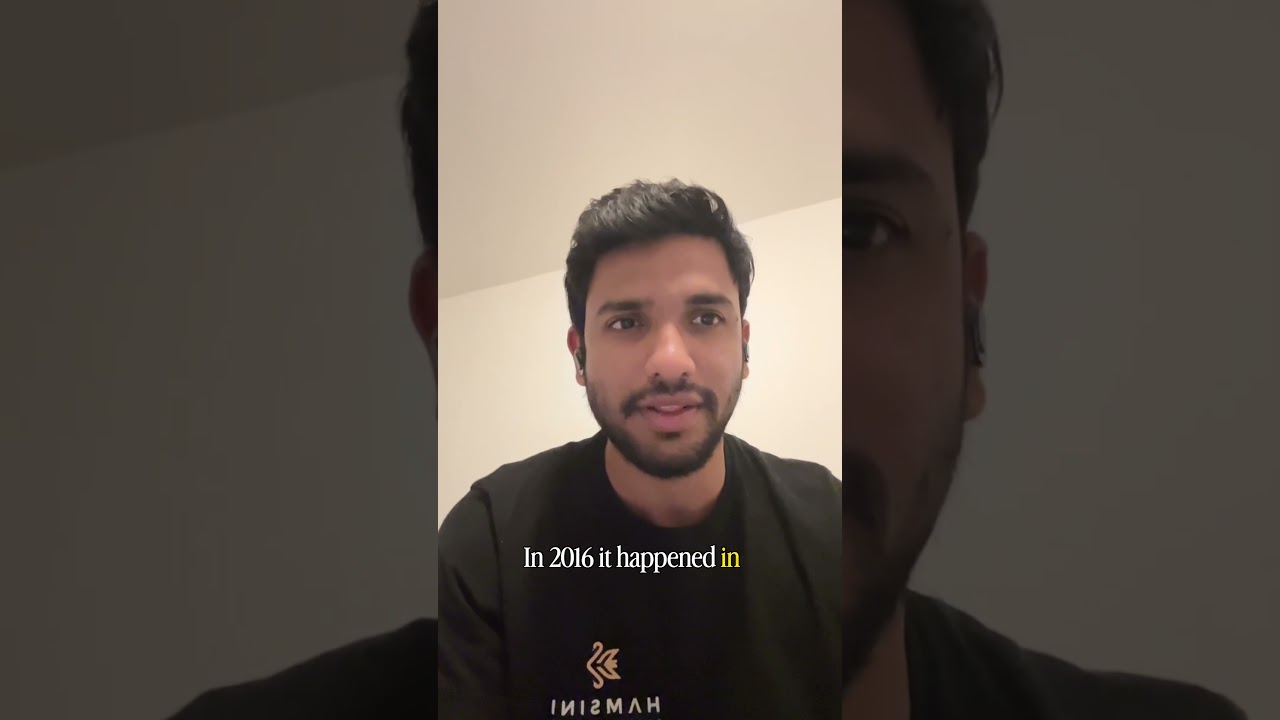
Paani with People | Ep 2 | Being and Becoming: Manzer on Identity, Impact & Imperfection

Manzar, a policy manager at J-PAL South Asia, talks about growing up in Chhattisgarh, his path through Oxford and TISS, and co-founding Bridge, a platform that crowdfunds scholarships for underprivileged students now scaling as a Section-8 company. He discusses his marriage, parenting, and the fear of not contributing enough.
Chapters
Thank you so much for making the time.
No worries. I'm so sorry for rescheduling it.
No, no, that's okay. I understand. Even like I had run from office that day because I wanted to make it on time, but even I was feeling very tired. So I was relieved when you said let's just reschedule.
Okay.
Yes. But yeah, I'll give you some context of what I'm doing and why I'm doing. So essentially the podcast is just a format. It doesn't really matter what format I do it in. The idea is to talk to more people, and that's multi— there are multiple objectives on it. First is that I want to be able to talk to more people because I feel like I haven't done a lot of that in the recent past, and this just helps me talk to more interesting people, make connections with them, just become friends. And then second is that I believe that my story is the most important story in the world. And I also realized that I'm not the only person to think that way, which is why I want to acknowledge the stories of other people. And if not be a participant, then at least a witness to their stories, which is why— which is where this whole thing has come from. I just want to hear their stories, find the person, not just people who are generally Like in podcasts, people invite celebrities, people who've already reached success, but I don't have a particular criteria apart from the fact that the person who has recommended you thinks that you're one of the most interesting people they know. And that is Kanika for you. So I talked to her.
Yeah.
The first guest, and then she, um, recommended you to me. So I just wanted to know, uh, how you feel about Kanika, what your relationship with her has been like.
To answer your first question, how I feel about Kanika. So I don't know if there's one thing that can describe Kanika is this bundle of joy and energy always, always. I don't know like how she manages to pull it off every time, but so you'll be surprised to know that we do not have any. I don't know. We we haven't studied together. We haven't worked together. It was just a sheer coincidence that I just reached out to her for one of. I was asking a favor from her. I was, I was studying last year. I was in the UK that time. I just reached out to her saying, hey, you, this is, your work looks interesting and would like to know more about it. And she just responded immediately and we, we just had a, we had a call and then things kicked off from then. So we have been in touch since last 2 years now. I mean, yeah, it's been 2 years almost. I was in the UK 2021. Yeah. So that's how I know her. But if there's one thing I need to, I can tell about her, like she's this person with with immense energy, passion, drive, zeal, everything. And whatever she does, she gives her 100%, I would say 200% in it. That's how I know her. Um, and obviously, like, we, uh, I mean, we have hardly met, uh, I think twice or thrice, but then it never feels like that with Kanika.
Hmm.
So that's, that's my relationship with her. If we definitely try that at least once in a month, we can catch up virtually. because we do live in different continents as of now. So we do try that once in a month, we do catch up, um, see what we are doing in our respective lives, and if there's any way we can support each other, uh, and she does. I mean, yeah, that's, that's about Kanika and my relationship.
Yeah, it's been actually very similar, um, with me because we, we haven't met yet apart from that one time that we were both in the same compartment in the tube. And we're looking at each other like we know each other, but we didn't talk. So, but we've talked virtually a little bit and, and then now we're writing a research paper together. So just, I think exciting things happen when Kanka is around you, I suppose.
I know. I know. Yeah. And then it turns out that we have a lot of common friends already and the sector is already so small. Yeah.
Feel like oh wow great small world and then Kanika has been that particular person who connects with people if you need something and she's always there so yeah I mean hats off to her energy and perseverance I would say yeah yeah okay I'll get to the podcast now yeah so it's called Pani with People which is just a play on other podcasts with similar names where they have coffee and other things but the idea is also To just be plain as water, and for people also to be just that. But I would request you if you have water alongside you for branding purposes.
I'll get it. Do you want me to get it quickly?
Yeah, yeah, why not?
Give me a second.
Yeah.
Just realized. I mean, I've been living in Patna since I don't know how long. I never had a glass cup. I never had a— I only have coffee mugs. I don't know if that's the purpose or not. I don't think so. No, no, that's—
as long as there's water in it, everything else is fine.
Then I have— then I have this. Yeah, cute cup.
Wonderful. Great. So the idea is also to feel healthy while talking. I generally drink a lot of water, and water Has been my favorite drink.
मुझे लगता है पानी से अच्छा कुछ नहीं हो सकता जिंदगी में। हाँ, मैं only if we have fresh water left यहाँ पे तो मुश्किल। That's true.
Yeah, it's it's been weird for me to fill water from the tap even now. Like I've been in the UK for two years or so. पर इतना अजीब लगता है कि कैसे तुम पानी पी सकते हो?
हाँ हाँ। वो मुझे मुझे एक incident याद है। So I was studying Manchester में social work. So Medha Patkar had come for a conference. So I'll keep this topic. मैं रखता रहूँगा मैं। Please bring me back. She was talking about again. I don't know this topic was around land rights and housing and stuff. And then she had this Bisleryka bottle in front of her. She literally picked it and she she was she wanted to throw it, but obviously it was a conference and she did not want to. Then then she just said like we have to think that we have as a civilization, we have literally come to a point where something which was open, something which was so natural, it was for everyone, and we have just kept it in one bottle. We have priced it, we have labeled it, and this is what we have done to this Earth. But yeah, anyway, water should be— I mean, everything which is natural should be accessible to all, not— it should be seamless. But yeah.
Yeah, of course. And मतलब इट्स वेरी डिफिकल्ट टू ट्रैप एयर, बट दे हैव स्टार्टेड ट्रैपिंग प्योर ऑक्सीजन। सेम्स। आई थिंक दे डेली में व्हेन पापुलेशन ना पापुलेशन ऑब्वियसली पापुलेशन है सेल, बट पोल्यूशन लेवल गोज़ हाई, दे नाउ दे हैव दिस ऑक्सीजन मास्क और सम समथिंग जिस दे हैव प्योर। या कैन फ्र Yeah, anyway, uh, so the first question that I want to start with is, is a very generic question, um, and, and also a general question, which is, who is Manzoor, um, and, uh, what defines your identity?
Okay, first one is always a difficult one. Um, yeah. I don't know if there's one thing I can talk about who Manzar is. I think it's the most confused person ever, and who just to find the answer, I keep trying. I mean, I keep, I don't know, I keep looking for answers everywhere. Okay, so maybe through my work, maybe through my relationships, maybe through, maybe through just being through loneliness, but This whole idea is trying to find who I am, what is my purpose in life, and what am I meant to do. That is, so if Manzar is a confused human being and with the constant pursuit of, uh, answer, knowledge, happiness, love, whatever you may, you may call it. So confusion and along with this journey of pursuit, that can define my identity. Um, not in a bad way confused, but I don't want to just settle down with one thought that this is ultimate, or this is what it is. I always feel that there's something beyond. So the whole confusion actually comes from this. Is it what I want? Is this what I want? So that's why the confusion, and then the quest to, okay, no, let's find something else. Let's go beyond this. But at the same time, also finding, you know, living my life in those pauses where I can just sit down, reflect back, and then plan ahead. So yeah, that's, that's the philosophical answer. Apart from that, The professional answer is it's— I'm a development professional with more than 6 years of work experience, currently working as a policy manager with J-PAL South Asia. I'm based out of Patna in Bihar, where I support the government of Bihar in one of their poverty elevation programs from the policy and research front. Prior to this, I studied in UK from University of Oxford, where I pursued an MSc in evidence-based social intervention and policy evaluation. That was luckily on scholarship that's named Chevening Scholarship. Um, and yeah, and prior to that, I also hold— excuse me— another master's in social work where I specialize in livelihoods and social entrepreneurship from TISS Mumbai. And I, I call it, you know, in a funny way that I, in my previous life, I was an engineer and did my engineering in computer science.
Yeah.
So Yeah, from the Kadoon. So yeah, that's about me. I come from a place named Ambikapur. Very few folks know about it. I hope through this medium more know through this podcast more will know about it. But I come from this place named Ambikapur. It's a small town in Chhattisgarh. And yeah, it was it is I think one of the cleanest city in India with population less than 2.5 lakhs or 2 lakhs somewhere around that. But It was, it used to be. I'm not sure about the recent survey, but yeah, that's it.
What language do you speak at home? Hindi.
Hindi with obviously some Urdu seeps in from my mother's side, but yeah, Hindi mostly.
Right. And so what is Ambikapur like? I've never been.
So the sad part is the connectivity to Ambikapur is very challenging. So now after, I think, Last, last to last day, we finally got a train which connects to New Delhi, else there is nothing. So you have to travel to Raipur. So from geographical point of view, um, it's in the north part of Chhattisgarh. It's closer to the Jharkhand border. Okay, so that way you can either go to Ranchi, take a flight to Delhi, or go, go down to Raipur, which is again 12-hour train journey from Ambikapur, then take a flight. So connectivity-wise, it's very difficult. To reach Dombigapur, it's a small town. Green lush forests around. We do have recently Hasdev Reserve Forest was also in news because of the whole protest going around that. So Hasdev is near. Hasdev River is nearby. Not very, I would say not very modern city, but it has that tier three. a peri-urban kind of touch. So it has what it— what everything you need is there. But, um, yeah, that's it. That's— it's a very small town. Hardly— you— I mean, you can just fill a petrol of ₹100 and just travel the entire town easily. That's it.
Uh, I haven't traveled much in Chhattisgarh, but one of the most beautiful places that I've been to in India has been in Chhattisgarh, which is Manpot. I don't know if you've been.
Oh, it's closer to Ambikapur. Oh, so you might have. So if you had been to Manpard, you would have gone to Ambikapur first.
Maybe I would have crossed through.
Yeah, there's no other way. So yeah, it's oh Manpard. Yeah, Manpard is closer to Ambikapur. It's it's it's it's a hilly region as compared to Ambikapur. It's at a high. It's at a height and yeah, it's chilly. It's cold. A lot of place called Dalda.
Which is a field, and like that's I haven't experienced something like that before, which was just a plain field. Once we jump करो तो it had it it turned into waves.
Yeah, I know, I know. So Dal Dali and there's this place where you say that the river flows in the opposite direction. I don't know the scientific the magnetic.
I couldn't see it, but I did hear कि यहाँ पे है। Yeah, Manpat is close to Ambikapur, like I think ninety kilometers if I'm not wrong. Nice. So maybe I would have been then.
Yes, you have. Yeah, but छत्तीसगढ़ again, um, it's still, uh, comparatively a newer state. Do you mind if I take this call?
Yeah, of course.
I gave my bike for servicing, so I thought it might be that person, but it's someone else. Sorry, still waiting for their call.
Yeah, sorry, no problem. Uh, so what was, what was school like for you, and then how did engineering happen?
Okay, so I did my schooling from Holy Cross Convent Senior Secondary School. It was a convent school. So at that time, it was one of— I mean, I still believe it's one of the good schools in Ambikapur. So school life, I mean, difficult— not difficult, I would say I had a very different school life. I mean, I had phases of school life. So I believe in the initial few years, I was a good, decent student. Who used to study, who was obedient, who used to follow all the rules and regulations. Uh, then there came a time like, oh no, this notorious who used to— I don't know, who used to not— there comes a time, right?
You lost you for a second. I can hear you still moving. Yes, I can hear you now.
Sorry. Yes, I was saying there comes a phase in your school life where you get deviated from your path. You start I mean, it's natural. Yeah, I became that kid who used to not focus on his studies, who used to fight, who used to do all this nonsense. So I, I think teachers were fed up of me. There was a time teachers were literally fed up of me. And my sisters also studied in the same school. So we are 3. So I'm the, I'm the elder one and I have 2 younger sisters. So all of, all 3 of us studied in the same school. So it was this pressure always there, right? So your elder brother is there and then you have 2 younger sisters as well. I remember there was a time I was so notorious, one of the faculties called my sister, uh, the younger one, says that I want to meet your mother, please call her separately and I'll meet her. And they invited her, my mom, to her place. And then she was like, oh, your son needs some direction, he's lost, he's notorious, what to do? And my— I think my pa— my parents have had a very different style of parenting. Very different. I haven't seen such style ever, and I really— I don't know, hats off to them how they managed to do it. They never used to scold me, or, you know, I never got any— I would, I would say never. They have never used this approach of iron fist towards me. They have always used this approach of talking to you politely, uh, expressing, uh, concern. Uh, if they're upset, they'll say that this has actually made them upset. They have made— it has made them feel sad about it, and that would eventually shape my views. So I think, but after, when the faculty invited, my mother was like, okay, fine. She just talked to me normally that, okay, this is happening, you are not doing good in your studies, why don't you focus? Unlike typical person, you know, image of an Indian parent that, oh, they'll start beating left, right. No, that did not happen with me, clearly. So, but yeah, it's, I think till 8th, I was this very notorious kid. And I think, and it was, I could see my parents trying hard to, you know, make sure my education is from one of the best institutes because both my parents do not come from affluent backgrounds. So my mother is a government teacher. She teaches in a government school in Ambikapur, that too in the rural part of Ambikapur. My father runs an NGO on skill development. So there was no, I would say, strong backing, financial backing to either of my parents.
Hmm.
Um, so I could see they, they, they're trying really hard for our education. So I could see this every day. My mother taking a bus full of men just to go, uh, teach in some government school in, in Nambikapur. Uh, my father trying, trying hard day and night to run his NGO. Still, it's going fine. So all of these things I could constantly observe, and that shaped my desire to do something better, do more, you know, do better, excel in my profession as well. So that's how I think after 8th class I decided to, uh, I mean, I'll change my ways, I'll become a better person. So I think after 8th, I started having a good time. Um, I think then I started focusing on my studies. Tried really hard to score good. Tried a lot, and then eventually after trying so much, I could only score seventy-five percent in my tenth tenth grade. That's it. After all these efforts, but still my parents did not say a word. They were like, "No, it's fine. It's okay." I was like, I was shocked to see this. I mean, they were like, there were friends who got eighties and nineties in their boards, and here I was with seventy percent marks, and they were like, "It's okay. No worries. There's no there's no end to this world." They would obviously say that, "Ha, अच्छे marks लाओ. अच्छी बात है." We would want, but ऐसा नहीं कि नहीं आया तो वो चिढ़ गए इस बात से या नाराज हो गए। या पिटाई हो रही है, दसर कभी नहीं हुआ। टेंथ के बाद फिर क्या? सब टेंथ वाज एक्चुअली अ वेरी, आई वुड से दैट शेप्ड माय लाइफ। दैट वाज द फर्स्ट टाइम आई डिसाइडेड तू स्टैंड फॉर इलेक्शन। सो वी हैड दिस हेडबॉय इलेक्शन्स इन अवर स्कूल। एंड नाइंथ, या आई टोल यू राइट, एट्थ तक and then one of the faculty said why don't you nominate yourself for any of the positions? I said ठीक है house leader के लिए nominate करता हूँ मैं खुद को. I said max house leader तो बन ही जाऊँगा. Then I think staff room में they said कि नहीं इसको nominate करते हैं school captain के लिए. And that was a shocker for me as well कि भाई out of मतलब ये सारे faculty जिन्होंने nominate किया मुझे कभी न कभी मेरी पिटाई लगाई होगी and अब they are saying कि इसको school captain बनाना है. So but it happened elections हुए voting हुआ tenth class में luckily I became The head boy. I don't know how, but I became the head boy.
Then tenth class. So tenth में head boy बनते?
Because हमारे school में उस time boys सिर्फ tenth तक पढ़ते थे। So it was only till tenth. Tenth में head boy बन गए because that was the last batch. That actually made me believe कि भाई leadership skills हैं मेरे में maybe है कुछ मुझे नहीं पता। है नहीं है मुझे नहीं पता and I always remember this principal she was she had just come to the school her name was doctor sister Usha and she brought this whole idea of elections and leadership and everything into me and they were like you can do this you should be a good leader and everything blah blah blah I always credit it to her that whatever I am today especially in terms of my leadership skills if I have to lead something that was the seed that she that she sowed so yeah tenth happened and अच्छा luckily we were the first batch who जो tenth के बाद boys के लिए बढ़ा दिया गया तो eleven twelve भी हमने वहीं से कर ली okay so हम पहले batch हो गए and then लगे eleven twelve में things were fine everything was great but the only issue here was हमारे पास options नहीं थे we only knew about या तो हमारे पास accounts का या commerce का होगा या आप bio पढ़ेंगे या आप math लेके engineering की तैयारी करेंगे अब information access नहीं था हमारे पास, unlike other cities I don't know बाकी जगह कैसे होता है but हमारे teachers को भी नहीं idea था कि क्या-क्या venues हैं क्या-क्या चीज़ कर सकते हो तो सब कुछ बस यहाँ वहाँ भेड़छाड़ की तरह कर रहे हैं अच्छा math ले लो math ले लिया bio ले लो bio ले लिया तो कुछ पता नहीं है क्यों ले रहे हैं but लिए जा रहे हैं तो ले लिया अब बो हर कोई बहुत कर रहा है कि इंजीनियरिंग करने बाद आईआईटी जाओगे। अरे बट आईआईटी जाओगे तो बट लेकिन वहाँ पहुँचना भी एक डिफिकल्ट टास्क है, उस वहाँ की लाइफ भी अलग है। हर कोई शायद वो नहीं करना चाहता हो। आईआईटी के अलावा भी कॉलेजेस हैं जिसमें हालत अच्छी नहीं है लोगों की। तो वो सब and we just and everybody was like यहाँ तो doctor बन जाओगे aim से या engineer बन जाओगे IIT से life set है तुम्हारी but कोई बताता नहीं है कि उसके अलावे ही बहुत बड़ी दुनिया है उसके अलावे ही बहुत options हैं और जो उसमें हैं वो भी खुश नहीं है कभी-कभी कुछ ऐसे होते हैं वो खुश हैं because उनको पसंद है उनका passion है वो passion develop कर लेते हैं time के साथ हर कोई नहीं मैंने बोला कि कोचिंग एक साल का ड्रॉप नहीं लेंगे। फिर मैंने एक, फिर मैं चला गया भिलाई भिलाई में कुछ महीने की कोचिंग क्लासेस होती हैं क्राय आईआईटीजेए के लिए। सो आई आई प्रिपेयर्ड फॉर नॉट आईआईटी एआई ट्रिपली आई रिलाइज़ दैट आईआईटी इज़ नॉट माय थिंग क्लीयरली नॉट माय थिंग। आई क Around all India rank was state rank was 500 something. I was getting that's decent, that's decent. State rank was 500. I was getting an IT rapper for biomedical, not biomedical if I'm not wrong. But then someone suggested कि this rank में you can go to some good universities, private universities. And one fellow who was from Pantnagar, he was teaching in that you know in that coaching class. He said why don't you go to DIT? It's in Dehradun. It's a good university. That said, I applied and they said, "Huh? Why don't you come? We can give you a seat." I got. I went to Dehradun and then the engineering life started. No idea why I'm doing this. Just because I got twelve. नहीं बहुत मेहनत करके I got seventy seven percent. I have no idea. Just following what was going on in life. No direction. Parents were also not aware of these options. They did not say that you should do this. They said. you explore. If you feel this is right, do it. They were also not imposing it on me. They were hoping that I would find it out, I would do more research on it, or maybe this is the right option as per them. Even they were not aware, and I don't blame them. They also come from very, very humble background. They don't know about it. And that's when school life led me to engineering, and I ended up in Dehradun pursuing computer science engineering.
Wonderful. Okay, before we get to the engineering, I'll just, uh, quickly bring you back to the parenting bits that you talked about. I was having a conversation with my friends a couple of weeks ago and just trying to figure out what does it mean to be a good parent? How do you parent? Like, by my age, my parents had 2 sons who were both in school, right? और और I was just in the age of getting to school somewhere around that and and I can't imagine like I how I would be as a parent क्यों मुझे लगता है मुझे खुद को ऐसे तीन बार मील खाने में बहुत मेहनत करनी पड़ती है कि मैं breakfast lunch dinner खा पाऊँ how would I feed a child how would I manage a family it feels so distant to me as a concept but I know that my parents had done it And all of our parents, in fact, would have had kids at this age at that point. And we were wondering, what does it mean to be a good parent? And you said that you've had an unconventional parenting style, which hasn't been hinged on punishment, and it's primarily communication-based. And I was wondering, does that come through education? What is it that— how does one become a parent like that? Become a parent that we would want to be?
Uh, not necessarily education for sure. It's, uh, it— I don't know, not education for sure. I have seen people who are really educated. I have seen my friends whose parents are really educated, but then their parenting style is very different. They impose things. They do not understand the feelings of the child. Education, for everything in the world, education plays a very minute role these days. It's a lot to do with how you are as a human, and how you are as a human cannot be defined only by education.
Hmm, good question.
It plays a role. It also depends on how you have been raised as a human, your surroundings. Despite that, how you have shaped your I would say your heart, your emotions. And because whatever you are as a person, that you transfer it to your child, or let's say people around you. Okay, so my mother has always been this calm, quiet lady into poetry, into writing, and always being this kind person. My father has been this patience, uh, person who has all— I mean, he has always showcased strong patience, who's always been this Person who has strong resilience, so that he transferred it to me. He spoke very less, you know. So I think, but unlike his brothers, he's different. So I will not say that it's the surrounding only because I see his brothers, my my father's brother, my my uncles, they are different. I see my mother and I see my uncle as well. He they are different. So it has to do a it has a lot to do with. you as a human being, how you are as a human, because that is all you transfer. And education plays a very, very, very, very minimal role in this. Uh, it's the surroundings, the upbringing, it's, it's your nature, it's the amount of love you have inside you. That is all translates to— that's, that is all translates to parenting. And I don't, I don't know how will I— I even, this question comes to me like, how will I manage if I, if I ever become a parent? How will I manage? I don't know. I also feel During their time, the number of options—they were quite straightforward. Like okay, we get a job, we earn decent, we save some money, we send our we get married, send our kids to school, make sure they are happy. Limited options—they were happy. Whereas in our case, we have tens of tons of things to do. Ten different things. We want to do a PhD. We want to do a doctoral degree. We want to do this. We want to do a startup. I don't know. Like we are so. Overloaded with information that it becomes difficult for us to even make an informed choice. So I don't know how this is, but yeah, education does does play a very minor, very minor role in you as a parent. I think it is a lot to do with you as a human being.
I'm very curious about that because I've always I've always wanted to become a father and a young one at that, and I often wonder if I am. ready yet, or how do I become better at it? And I don't know how I do that. I don't know if I'd ever be ready.
I wish I had answers. I wish I had answers. I have also same questions if I'm ready. I mean, I feel I'm— I never feel I'm ready, but I think you'll never be ready. Um, it will always be something you feel like you're not good at. That, that, I mean, that's again How we we as we always want more. We always want to be better. I think there's we should just go with it. Like things will fall in place. Here we are talking about parenthood. I don't know. I have zero idea. Do you want to be a parent? I'm not sure, Vikesh. I'm really I'm really not sure. Um, I'm not sure. You want to get a phone me? Oh, I am actually. It's been, uh, surprisingly it's been 5 years for my marriage.
And I had no idea.
Yeah, yeah. And sadly, uh, we have only stayed together 1 year during our marriage.
Oh no.
Yeah, it's been long distance most of the time. It's been long distance. Uh, it's difficult. It's very difficult. Um, yeah, this June will be, will be like 5 years of my marriage, but It's difficult. We are trying our best to stay together. Um, we're trying our best to, you know, stay in the same city, in the same country at least. So yeah, here we are. But we don't know about parenthood. Both of us are still exploring if you, if you want, if you don't want.
So tell me a little about them, your partner.
So I, my partner, I mean, she's, she is my Best friend, I would say. So friendship transfers into love. Our love stories—I don't know—it's fine. So we—we were both born on the same date, 10th of May. We share the same birthday, and I think she played a very major role in my life after this. So we have always been—I mean—we were friends since 26. We are friends since 2016. Um, we used to be like— we are good friends, but then after a point we decided, okay, we should think about each other as partners. How do we do that? Uh, so she was the one who went to Oxford a year ahead me, uh, defying everything. Um, I mean, people— I mean, she also comes from this very challenging background where women do not go out for education or job and everything, but then she did. Then she went to Oxford. Looking at her, I also got motivated. She inspired me, she motivated me. I never believed that I can get into Oxford. Then she guided me again. She has been this— when I say it, it may be cliché, but she has been this guiding light for me always. For every big or small challenge, she has been there. So she ended up— and then it was during my study at Oxford only we stayed together. In UK for one year, and then I had to come back because of my achieving role. So she's she was working in UK as a civil servant. Her name is Saharine Shamim. So and now she's in India for some time. But let's see what next. We are trying our best to stay together. Wow!
That's I think that's another one of my concerns with marriage or relationships. Like I am the My love language is generally very proximity-oriented. So I feel very weird when people that I love, not just my partner, but friends, anyone is away from me. I, I feel like for me, marriage has always been the turning point where you just come together and then stay together forever.
Oh.
But, but yeah, the challenges that come with it in terms of distance and time and space, are all things I, I don't know how people do it, but it gives me inspiration then.
Yeah, I mean, I was— I used to be the same person before I started taking things seriously with Sahreen. Um, I used to also always believe that, no, if you have to be in the same city, uh, it affects a lot to your relationship. But after this, I realized that See, we all— love is one component of your life, like your companionship is one component of your large universe. You have other things also which, you know, makes you as a human being. So your career choices, your, your education choices, all of this will be coming, and then you'll have to maneuver through it. So the decision of my partner going to UK and studying, then me going back I mean, me following her, and then maybe I coming back to India. So I feel it's it's it has a lot to do with the whole understanding understanding that love or companionship will be one component, and then you have you have to always keep pursuing other things as well, and that will be staying there constantly. But after a point of time, that is now for me, like पांच साल तो हो गए. Now we want to stay together in this one city and we at least have a base together. So initial years, mate, will be fine. But I have, I have seen people who have, who still live in long distance. I don't know how do they manage it, but there comes a time you want to just stop doing it. You want to just get back together.
Yeah, very interesting. I, I had no idea you were married in 5 years, and I think we must be the same age.
Yeah, yeah. Um, I will turn 30 in next, um, 2 months.
Okay, I'm, I'm 27. I turned 28, so, so 2 years or so. Yeah, I would say I have another— I'm just 2 years late then.
No, again, another, another way how society built constructs. So we— I have always thought that there's a certain age of— for getting married. So, but you never know, right? The whole idea of marriage should be at this particular age is also, I think, It's, it's when you feel you want to get married, just get married. It's, it's not like you should be married by 28 or 29 or 30. I have seen people who are living their life beautifully, but they are 40, 42, and they're yet not married. It's fine, it's their choice eventually. So this idea of society setting construct, and then they're saying that if you are getting education, do it by 25, get married by 28, get your kids by 31— I don't think that's, that's how we should you're doing it. But yeah, you know, you're never too late. Whenever you want to do it, just do it.
Once I find someone, I will think about it.
Yeah, yeah, yeah.
Uh, from, from engineering to this Oxford, what would you say were the differences in terms of the institutions that you went to? Of course, your experience would have been different, but how did the institution define that experience?
So, um, Dehradun was— so I did my engineering from DIT, Dehradun Institute of Technology, a private institute. Um, obviously lots and lots of rules and regulations, and there's a certain way of behaving in classrooms and out in campus and everything. And obviously a person coming from a small town like Ambikapur, coming to a beautiful town like Dehradun Um, it— everything was shaping my perspective towards life. I was fascinated by McDonald's. I was amazed by how KFC— thing like KFC can exist. So, uh, these are all additional things which comes to you in your engineering life, right? But then the— this one, one thing that happened which shaped the entire course of my life, I would say My friend Shardul, I mean we're still friends. He introduced me to an initiative. It's he said it's a volunteering initiative. On weekends we go and you know spread awareness on environment conservation. We spread awareness against open garbage disposal disposal and we like and we clean we do clean up drive. So why don't you join us? And I was like, "Ha, ठीक है, let's do it." Like it's. weekend stuff. Why don't I— I mean, I have nothing else to do. So I started joining these, uh, you know, cleanup drives. And, uh, so there's this— and this was an informal group named Making a Difference by Being the Difference, not the mad one that's Make a Difference. This was an informal group, not registered, and they used to do this stuff. I was like, this is exciting. I would, I would come again and again, like doing something good. And then my engagement started happening more with them. Every weekend I used to go spend time with these these folks, so much so that I started you know thinking how this this organization can expand, how this initiative can expand. So the founder was also he was pursuing his law from NLU Jodhpur. I became friends with him as well, and we thought that how we can work more on this. And that's when my inclination towards you know social work or development sector or this started happening. Like okay activism we used to. file RTIs on, let's say, for to know how many dustbins were installed in this particular, um, let's say, colony. And using that RTI response, we used to, you know, just demand it from the local pasha that this is what it's supposed to be, why aren't you doing it? So using RTI as a medium. So along with me gaining information on technology and everything from my engineering degree here, this was this informal institution. which was shaping my idea of activism, social work, social change, and everything. And that's when I realized that my strength lies more on working on these issues, working with people. So I should do something. I— this thought came, but I still, I still wasn't sure that what next. So we got the organization registered in 2015. I was one of the founding members when it got registered. I initially joined as a volunteer, then I became the co-coordinator, then I became one of the founding members. Then obviously I left Dehradun and things had changed, and now I'm just one of the advisory board members. So, uh, I think that, that institution, the folks there, Shardul, Abhijay, they, they played a very major role in, you know, helping me find myself, um, realizing that my true potential lies not with laptop and not with softwares and, you know, machine language or Programming language, but with the people and working with them, working for them. But still, I wasn't sure what next. I ended up taking a job with Wipro. I worked with Wipro for almost one and a half to close to two years. Then I quit my job, and that's a different story. But yeah, that's how. But again, Dehradun was an eye-opener for me. First time coming out from Amritpur, it was definitely an eye-opener. That's where I realized the, I would say, the whole essence of male friendships as well. My, I never count my school level friendship because I don't know this at school level. It, none of the folks I have studied with, I am, you know, in good relations with. I, I, I, I still believe that the whole male friendship thing started happening when I was in Dehradun. There it was a very different— I don't know, uh, toxic friendships we had in schools. I don't want to even revisit that. I do talk to them, but I don't think I have friends from school. Sad, but yeah, very few, but sad story. But then, uh, Dehradun as a place, college as a place, it helped me find good friendships. I'm still friends with them, but yeah.
And then, so how was TISS different from DID?
Oh, TISS was very different. TISS was, uh, it just felt like an open space for you. Like, you— I felt like this is how a college life— I was surprised to see that you can actually just raise your voice, you can actually just, um, stay late out of campus, um, do things how you want to do, uh, share your opinions very, you know, easily in the class, in the classroom. If you, if you do not agree with, you can have debate, dialogue around it. This was a very different institute as compared to DIT. DIT being a private institute, they had like, they had rules and norms for everything. Uh, you won't believe, there were students who were getting punished like openly, like 20, 20-year-old kids getting slapped by the dean. And, uh, it's— I still believe it's happening there. I still believe it's happening there. And we, we normalized it like, oh, it's normal. Like we they are teachers, they are entitled to, you know, give us punishments, and it's fine. But even at the university level, this is happening. Whereas at TISS, you cannot imagine someone raising your voice at you. And that's how, that's how civilization, that's how society should be, right? You talk in a civil manner, you talk, you convey your message. If you do not agree, there's a particular method for it, there's a particular way to it. If something you feel is not right, you take action as well at the institute level, but you do not start beating them up. That happened at Dehradun. TISS was completely different. I felt this helped me a lot. I always say that my Oxford experience is not as good as my TISS experience. So this was a— I mean, it was an eye-opener. It helped me. I don't know, it brought me close to the ground realities. It helped me get away with all my privileges, to at least acknowledge my privileges, and then, you know, find my own path.
Hmm, sounds very interesting. I, I wonder what my life would have been like had I gone to TISS, because this has just been— I think I've been flirting, I had been flirting with TISS for a while. In 2018, I wanted to go for the CODP program, which was the Community Organization. Oh wow. And, uh, and that was also when— so I remember I was traveling in the Northeast And the same day, I got the result for the test exam. I've been selected for the interview, and I also got a call from one of the managers at WWF who asked me to interview for this job. And I hadn't applied for the job, so that was like almost certain that I would get it. And then I was just so confused. Should I study? Should I get the job? This sounds and it was a senior role, so I thought maybe this would be a jump board for me. So I was very confused, and then. So during the trip, I thought I'd give myself this time. I'll think about it. And then I did decided. I did decide to go to WWF. However, I thought कि मैं interview देने तो फिर भी चले जाता हूँ क्योंकि मैंने सोचा था कि करूँगा। And then I told myself that I will not go, but I just want to experience what the interview is like. However, I really wanted to get in and then be able to choose. पर मैंने अपने दिमाग में खुद को बोला कि नहीं मतलब मुझे करना तो है नहीं एनीवे ये वो एंड हॉनेसली आई डिन प्रिपेयर आज मच पर इन द इंटरव्यू आई वाज सो नर्वस और द द इंटरव्यूअर्स लुक सो इंटिमिडेटिंग मैंने उनको उन्होंने मुझसे पूछा डब्ल्यूएफ में क्या काम करते हो ये वो मुझे एक महीना कुछ हुआ था और मैंने बोला कि हम ल and I want to talk about shark fins but इसकी जगह मैंने dolphin की नोटिस वो मुझसे पूछ रहे थे कि अच्छा ऐसा भी होता है कैसे होता है ये वो और मैं बोले जा रहा हूँ कुछ भी बोले जा रहा हूँ बिना सोचे और do you remember who who was there in the interview panel no sorry I I not at all but yeah that was my first this interview and that was terrible फिर मैंने सोचा छोड़ो भाई अभी मैं काम ही करता हूँ फिर before going to Before coming to UCL, a year before, I gave the TISS exam again for development studies. मैंने सोचा कि मुझे development studies करना है and the other that I gave was MSW in mental health at TISS and I got through both of them in the for the exam and then to the interview round and I felt very prepared कि अभी तो I worked with the UNDP, I know everything about development, I can Easily get through. The day of the interview, again I got very nervous. और मैं ऐसे कुछ-कुछ ना when I fail ना तो मैं I've had a habit of to heal from that pain. मैं ऐसे बहाने बनाता रहता हूँ. And this is something that I've just realized now while talking to you. कि मैंने पूरा बहाना बनाया कि उस दिन तो मेरा बहुत खराब दिन था. मेरी life में ऐसा हो रहा था. इसलिए I couldn't get through. But I think just it was a bad interview. And I think I was too confident कि I've got good names on my CV, I've got a great experience तो मैं हो ही जाएगा। So development studies interview I didn't get through. I did get through the MSW mental health program। पर फिर मैंने सोचा कि mental health because I've been in the mental health industry for very long but I didn't want it the only thing that I wanted to do। तो फिर I had to take the difficult choice of not doing that। फिर मुझे ऐसे मेरा ego hurt हुआ। कि मुझे डेवलपमेंट स्टडीज़ में टिस ने रिजेक्ट कर दिया, तो मैं दुनिया के बेस्ट में जाऊँगा। and that's when I started applying and I got through the Sussex Development Studies Program। पर and मैंने डिपॉजिट वगैरह पे कर दिया था, but UCL का कोर्स was the was my dream course that I wanted to do। yeah life changed but yeah this the other two interviews were online but the first one that I gave was at the campus And when I entered the campus, I recognized it as something that I haven't seen before.
I know, I know. It's a different vibe, man. I, I, every time, I don't know, like it's everything about that place, everything, like teaching staff, non-teaching staff. I mean, we even have, uh, so dogs and cats in the campus, they have names and they are, I don't know, man, that place is I owe it to them. I would— that's why I continue working on Bridge, like, despite having full-time job, despite EduAccess. I don't leave Bridge because I feel I owe it a lot to TISS and I just need to give it back somehow.
Okay. While we're at it, why don't you tell me a little bit about— I know about EduAccess. I've been a mentor before. But we couldn't talk earlier. uh, while I was at EduAccess as well. But, uh, Bridge was something that I'd seen on your profile before, but I still don't know what it does and how it's different.
Yeah, yeah, I'll tell you. So, um, as I mentioned, right, so coming to TISS was, uh, an eye-opener in terms— in a lot of sense, right? Like my privileges and everything. The fact that, uh, I thought I'll be able to afford— so I, I'm lucky that my parents said that, okay, we'll afford the fees and everything, and The fees was not much when I entered TISS. For 2 years, you have to pay around ₹2 lakh for a master's degree. But again, this— the way I said it's not much is also a very privileged statement, right? There are people who cannot afford this education. Colleges like Jamia, DSSW, they don't have such high fees. Whereas TISS, being a, you know, having the degree of TISS is actually expensive. But then again, I went this idea— I went with this idea that, okay, it's not expensive because my privilege. So all of these notions started, you know, I started unlearning them because I made friends who were, who were really, I would say, really passionate about social work, social change. But then they come, they come from these backgrounds where the ability to pay such fees, such high fees was not there. Like their parents, they were either shepherds, they were either farmers who were suffering because of the drought season and everything. And that's when I started feeling that it's not just everyone who can pay these fees, right? And then there were protests going on because the scholarship which was meant to, you know, come in from the central government, it's not coming. So a lot of issues were going around when I entered TISS. One of my friends, he was also under the direct brunt of it, like he was facing the direct brunt. And he started, you know, then I started talking to him about the whole issue of scholarships, like what's going on. Then he gave me an overview of the entire scholarship issue and how there are students who can actually drop out because they don't have finances to support their education. And that was there. Still, I did not act upon it. I was like, ठीक है, I mean, this is sad and everything. But then I came to know this friend of mine, what he used to do is, so in this you have Monday, Tuesday, you have fieldwork. So you have to go to different locations. So some, let somebody gets in somewhere closer to your campus. So you just take a bus or auto and go there. This person had to go to a distant field location, and that cost him ₹25 for train journey and everything, the local train. So, but then what he used to do, he started skipping his meal, his lunch, and that lunch would cost how much? ₹40. So he used to save that ₹40. And then, you know, then when I asked like why is he doing this, and the reason was that He used to save money so that he did not— he does not cut from the monthly, uh, you know, expenditure he has, because again, the whole financial burden comes to— goes to his father. And that's when it actually struck that for us it's just ₹40, but for someone it's like a lot. And then— and that was this trigger when I felt like, okay, we need to do something. And that's when the whole idea of Bridge came into picture, that why don't we look off— look at an initiative where we crowdfund from this huge network of TISS alumni and then support college or support student directly so that they do not drop out. Very naive idea initially, and we were not sure how it, how it will shape. So it took me almost 6, 7 months to do research, talk to college, look at institutions and everything. And after months and months of discussions, participation with, you know, in different meetings, we finally came to a model where we said, okay, we will run a student-led initiative. In TISS, which will raise funds from alumni and other sources. We will get the money, we'll make the entire process transparent, let college do the disbursement. So TISS has a own mechanism called a student aid mechanism, which is unique to TISS. What they do is whatever funds they get it from, let's say donors and CSRs and alumni, they bring it to their corpus and they give it to students who are not getting any scholarship. Let's say someone gets a scholarship. sorted for them. But someone who is not a recipient of a scholarship and they want to get support, TISS gives the amount to them. However, with time, number of courses have increased, number of students have increased, so the demand on that corpus has increased. So they are unable to cater to a larger audience.
Yeah.
What we said that we will raise money, we'll get you the funds, you have your own process. They— so they have a panel from— panel with— in which the alumni— sorry, faculty is there, Office of Student Affairs is there, student union is there, and From that panel, they interview and they give the money to the student. We said we will not be part of the disbursement process. We'll just get you the money. You do it. You let us know the numbers, who's getting how much, not the name, the number. So that's how the model was designed. And so in a nutshell, uh, Bridge was the student aid initiative. I said was because I'll come to it now. Bridge was a student aid initiative which used to raise funds from different sources and, and support the college, uh, or the student aid mechanism. And that's how we support kids. In last 3 years, so in 2020 we did our first pilot. In last 3 years, 4 years now, we have supported exact close to 65 students, and 65 students have been supported from this, and we have helped them graduate debt-free from TISS. So this is what we have been doing. This year we got it registered, last year we got registered as Section 8 company because a lot of Constraints are also coming. So I was unable to set our own website because it was under test. We did not have the UPI because it was under test. So a lot of challenges came. Despite the challenges, we were able to support 50 kids. But this year we got like 15 more, so 65 in total. Now it has shaped in a way that after my return from Oxford, one of, one of my, one of the alumni who, who do not want, who does not want to be named because he wants to stay anonymous, he said that he wants to you know, help build bridge now in a way that we can scale it, uh, you know, and we can support more students. So he gave me an idea that why don't you build it in a way that you allow alumni or group of alumni, um, or individuals to set up scholarships? Okay, so you become that mediator. You have a good connection with the institute. You get money, you build scholarships, you can allow alumni to set their own criteria unless it's arbitrary, unless it's very, you know, uh, regressive. So you take a check on that, that there are— let's say someone wants to support a girl, girl child from Maharashtra who is pursuing mental health. Simple. So we ensure that we set up the scholarship for them in the institute. You get the money and you provide the financial aid for the child.
Right.
At the same time, also look at their overall support system. Like you build connections for them, you look internship opportunities for them. So So we have come up with this scholarship scheme where anyone can come and they can start a scholarship for any student they feel they want to support. We will help set it up for them. We will manage it completely end to end. So right from identifying to shortlisting to disbursement, post-disbursement, post-scholarship, everything will set it up. So in last 9 months we have raised, um, so we have around 9 scholarships being set up at is. Out of 9 scholarships, we have results for 8 already there. 9th will come soon. So we'll have the first cohort of Bridge Scholars coming up maybe next month.
Oh wow, that's great! Is the website up now?
Yeah, yeah, you can just write. I'll just quickly show it to you. One second.
Wonderful. I will look at the website. Sounds very exciting. And if there's anything that I can do to help, let me know.
Ah, just spread the word. I'm now— I'm And also doing this part-time along with, um, so every year we select students who run this from campus and we want to expand it beyond TISS now, uh, not just— yeah, I've just sent you the website's link.
Got it.
Yeah, so yeah, it's— I mean, Bridge, I feel it has a lot of potential because there's money out there and there's no such initiative. Uh, just let you know, letting you know that it allows people to come set up a scholarship and we can be their mediator and we just Support a student along with their overall supports development.
Yeah, that that sounds wonderful. And congratulations on it. It's it's great work. It sounds like an excellent idea as well. I'm sure it'll go way more than this, and hopefully all across the world in its own time. Yeah, I'm sure that. Yeah, I'm also mindful of time, so I'll just do some. questions now. Yeah, uh, just to get to know you a little better. Um, is there a habit that you've struggled with for a long time that you've been wanting to change? Um, no.
I mean, I, I was addicted to sugar. I have tried to change it. It's been 10 days of straight— it's been 10 days now I haven't had sugar. But apart from that, 10 days a lot, like 10 days only. It's been 10 straight days I've just have— I haven't had sugar. Um, apart from that, I think I need to be a bit more patient. Patience is not my suit, I would say. It's not my forte. Um, so I'm still trying a lot on it. I'm still trying to learn from my father, uh, trying to learn from my partner, my mother. But yeah, patience is— I need to be more patient.
Hmm. And what you— what would you say is your biggest fear?
Um, I guess fear is if I'm leaving this world without contributing enough to it. What is enough? I don't know. But biggest fear is just dying as an unknown or someone who hasn't done enough, contributed enough, or changed lives.
And if you die today, would you think you haven't done enough?
Uh, no. I— a few days back I got a text which actually, uh, made me believe that, okay, I've done something. I— even if it's just one person, it's fine.
Yeah, that's a good feeling to have, to know that even in your limited capacity you've been doing what you think is your mission in life.
Yeah.
Uh, are you reading something right now?
Oh yes, there's a— there's a book, um, Walker. I don't know if I haven't read it. I'll quickly show it to you. One second. It's not getting here.
I can look it up if you just tell me the name of the author or whoever, or what it's about.
Author, I forgot. It's a long name, but it's someone gifted me, this friend in Oxford, and I had this habit of walking in, you know, in new places. I just keep walking and exploring places. So she said that, okay, you should read about it. So the, the book is about, again, while you walk, you go across cities and you go across emotions and how people just, you know, it's, it's more about how you navigate through different emotions in the city, uh, and what walking is all about. And as you walk, you're not, you're not just find different parts in the cities, but you also find yourself, like, where you are as a person, where do you belong. So I'll send the link as well, it's really nice. The second book is Sense and Solidarity by John Dres. Must read, I would say. He— so he's, uh, he's a, he's a Belgian professor, but now Belgian national, but now he's more Indian, I feel. He, he teaches in, um, Raj University, and he's an active advocate for right to food campaign. So he has covered, uh, he has different field stories from India where he talks about economics, uh, right to food and everything. That's Sense and Solidarity, is the second book I'm reading right now.
Wonderful, I'll put it on my list.
Yeah, you should. It's a really nice book. It's a really nice book.
Is there a reason why you don't use a second name?
Oh yeah, I mean my my full name is Syed Manzari Imam Hadi. Very tokenistic, but again I do not. So Syed is the caste I come from and the whole thing around caste. I don't how in Islam caste does not exist. It doesn't exist nowhere in Quran. It's written about caste. So Islam caste does not exist, but we have started being cast into everything. So I deliberately try to avoid that and just keep my name Manzar everywhere.
Um, do you think you're at your physical ideal, or is there something more?
Yeah, yeah, always ideal, always ideal, always ideal. I mean, I've started getting gray hair now, my beard is also turning gray. I don't know, but I don't care. It's fine. People say that, oh, you should dye or something. It's fine. Uh, physically, I, I have started I mean, in Patna, I have no life apart from work, so I started going to the gym as well. As long as I'm happy with, you know, me being able to sleep properly, not being anxious, I think I'm at my physical best. And ideal, whatever you call it, but it's always fine. And I think what I have also realized is there was a point where I was very worried about this whole adulting phase that, oh, my glow is going, oh my, I'm losing my hair at a faster rate now, what to do? I think सोल एक्सेप्टेंस दैट यू नो देर विल बी अ टाइम यू विल ऐज वी विल ऐज यूथ इज़ नॉट फॉरेवर एंड इट्स फाइन इट्स इट्स कंपलीटली फाइन हम्म अह व्हाट्स इट लाइक लिविंग इन पटना आई एम फ्रॉम बिहार अह वो व्हिच प्लेस अह मुजफ्फरपुर ओके आई डोंट हैव गुड न्यूज़ फॉर यू बाय द So, but I have always lived in Ambikapur. I was born and brought up there because, because my mother's job and my father also started his NGO there. So we have stayed there only. I used to come to Bihar during my, you know, summer vacations when we were kids. Never liked it because of the extreme heat, frequent electricity cuts. Now it's not that frequent. If you ask me honestly, I think this is a This must be a bye-bye.
Yeah, hopefully. Hello, HDFC.
And what is wrong with bank loan? Sorry, I hope— yeah, uh, Bihar, living in Bihar is not easy, Ambikesh. It's not easy, especially after coming back from the UK. I don't want to sound like this UK returnee person, but after COVID, I have realized what I like. I like quiet, calm, uh, places. I, I prefer spaces where I can just sit in a park and just do nothing. I don't find that in Patna, sadly. I don't find it. It's very crowded.
Yeah.
Uh, it's chaotic, man. It's chaotic. It's not easy. The only good thing is I don't have to pay, you know, hefty rent just like Delhi NCR. So the rent is decent. Um, office is nearby. I just— it's 5-minute bike ride. But it's not easy. Do you understand भोजपुरी मैथली? Slightly, no, not मैथली I don't think so. भोजपुरी decently but not that great.
And is that is that a deterrent in understanding?
No, no, no, no, no, no, not at all, not at all. I mean, my Hindi is good. I believe so. My Hindi has been good. So all the documents and everything which comes to me from the policy point of view, I'm able to understand. So, and I think with the government, it's more than language, it's about body language, I would say, how you manage with them, which is difficult working with them, but they have been supportive to date. Yeah.
Yeah. Okay, wonderful. I think, uh, this conversation can keep going on and on, but I am mindful about time, so we'll, we'll try to end it here. But before we do, um, I do want to ask you for a recommendation of the next person Who you would?
I yeah, I spoke to two folks yet to get confirmation. I got this soft confirmation. One obviously I would want you to speak to Sahreen, amazing person. I mean, I wanted to know if there will be a conflict of interest. If not, oh then definitely I'll she'll be coming to Patna tomorrow. I'll speak to her in detail. I think her life story is much more inspiring. I don't, I don't think mine is inspiring anyway, but her story is really, really inspiring. Um, she had to do a lot to what she has now, to get what she has now. So I think, uh, Sehrin will be one person. Sehrin will be definitely interesting. She has a more nuanced understanding towards life than me, I feel.
Yeah, that'd be great. Well, yes, Manzoor, thank you so much for your time. No worries, thank you. To just talk to someone. No, no.
Anyway, we have the edu extra session coming up in forty minutes. So I have to prepare for that anyway. But thank you for having me, and it's such a nice initiative. I must say, like, I mean, the free flow is actually something I really liked it. So all the best, and I really hope to see you soon in UK, Ambikesh. I'm I'm also now onto idea that I should look for jobs in the UK.
मुझे तो मन कर रहा है इंडिया वापस आने का. I'm on the opposite end of it.
Yeah, maybe for initial, initially, if you— initial few years I will. But let me know, when are you planning to come back?
I don't know. I have a sponsored job here now, though it's very difficult to think of leaving it. But I, I want to come back to India. I think I've made up my mind.
Okay, okay. Where are you working, if I may ask?
Uh, I manage a well-being network here in Hounslow. In London.
Okay. Okay.
It's it's with the NHS and the council. Okay. Very interesting job, but I just miss India too much.
Okay, fine, fine. I won't say a word then. Then you should then you should come back.
Yeah. Okay. Anyway, very nice talking to you. Let's stay in touch. I'd love to know what bridge and the other things.
Definitely. Thank you, Ambikesh, for your time. Yeah. Thank you so much. Bye bye.
Bye bye.
More from Ambikesh
Promo | Paani with People Ep 6 | Siddhi Kalbhor | Blabber, pauses, and thoughts


Promo | Paani with People Ep 5 | Adya Jha | On anger, memory, individuality, and freedom


Promo | Paani with People Ep 4 | Neeraj Shetye | On Elections, Identity & Future in the UK


Paani with People | Ep 3 | Partnerships: Sahreen on marriage, migration, and ambition