College & Career Launch: Helping Teens Plan for Success with Kolby Goodman
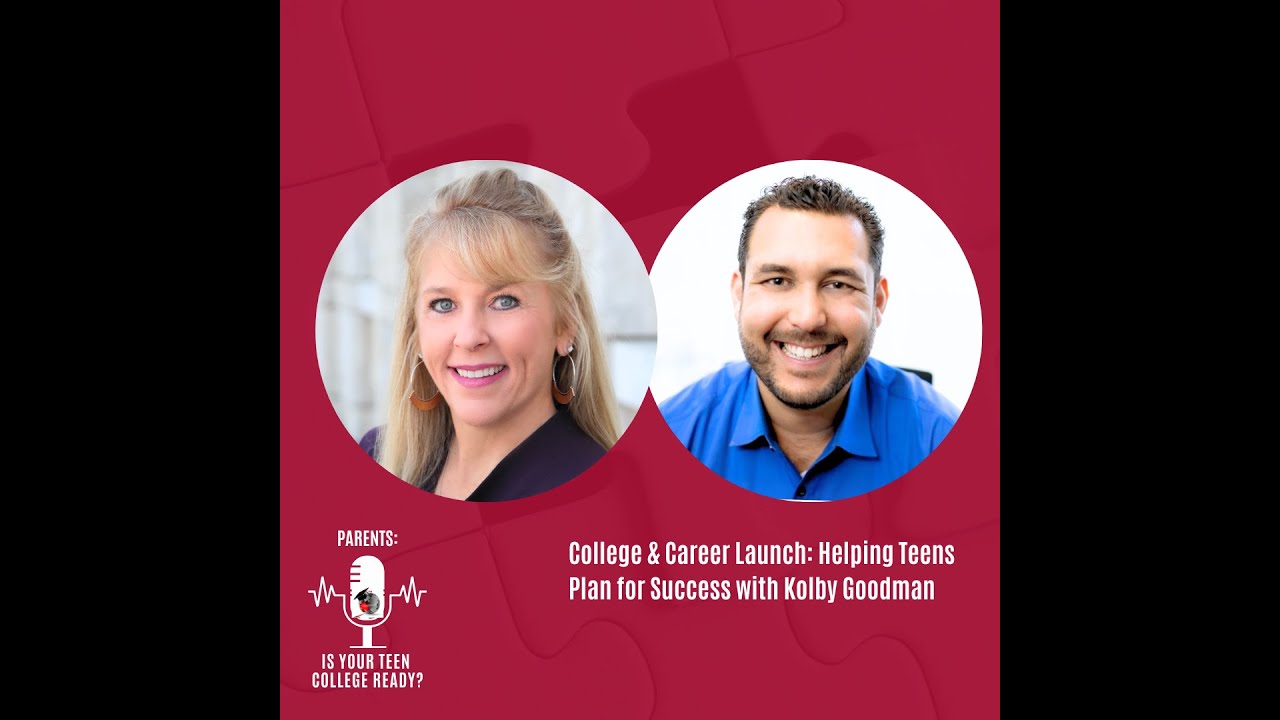
Career coach Kolby Goodman says parents should start college and job conversations with kids around 4th or 6th grade, focusing on real-world sampling like paid jobs, volunteering, and tutoring rather than just grades. Over 12 years, he's helped 4,000 people build resumes that tell a story employers actually want to hear.
Chapters
Hello, listeners. Parents, is your teen college ready? Today I have a wonderful guest I cannot wait to share with you. I'd like to welcome Mr. Colby Goodman. Welcome to the show.
Shellee, thank you so much for having me. I really appreciate it, um, and I'm excited to be here today.
Outstanding. So parents, this affects every single one of us. Not one person is going to get out of learning what Colby has to say because it's all things preparing for a career. So you've raised your wonderful children and they are super excited to be grown up. And then we get to talk about Colby. So Colby, can you go ahead and, and share with our, our listeners a little bit about yourself and how, you know, what it is that you do?
Yeah. So for the last 12 years, I've been a career coach and a resume writer. In that time, I've helped over 4,000 individuals find more meaningful, more resonant, better-paying jobs that contribute to not only a bigger wallet, but a happier life in general. On top of that, I've given over 200 keynotes and workshops at various organizations around the country, including great, great universities like the University of Southern California, multiple CSUs here in, in California., as well as a multitude of private institutions, especially down here where I live in San Diego, which is US, uh, U— University of San Diego. Um, and on top of all that and helping all these great people and inspiring all these great families and students, have most recently published my first book titled Start Now and 49 Other Things You Need to Be— to Do, excuse me, to be Employed by Graduation, which is, I think, why I'm here today.
Yes, that is why you're here today. As I get students ready to, uh, apply to college, get accepted to college. We call it a standout strategy. We call it positioning. What you do is you take, uh, and take it to a whole nother level, is what I understand. So let's just focus on, you know, the first question that pops up to in my mind is when should, as a parent, we start having these discussions about careers and their future and What does that look like in your world?
So I think the earlier the better, right? As we mentioned before we started recording, I have a 3-year-old, and I'm sure if I asked him what he wanted to be when he grew up, when he was like, "Dad out one day," he would be, you know, football player, race car driver, right? We're really big into cars and the NFL right now in my home. So it might be a little young there, but I think as they get into kind of later stages of elementary school, 4th, 5th, 6th grade, having those conversations, getting them to explore and really understand not simply what it is they want to do when they grow up. Um, I always joke that if we were all— if our job titles were all we did all day, a lot of us would be professional meeting attendees and email responders.
And so it's— oh yeah, I, I agree with you. I do a lot of that.
But I think what brings meaning to our careers is the problems that we like to solve, right? So for me, my parents had an inkling that I was gonna be, uh, somewhere in the, in the technologies. I was the kid that took apart the VCR and put it back together. I was the kid who knew more about the family computer when it came in the house than my parents did after a couple of weeks, right? I was always that kid. And that's where the first big chapter of my career came into. And it was them encouraging me there, you know, buying me the, the tools and the, and the softwares and, and sending me to computer camp that helped really spark this in me. And I think the more that we can talk about some of those things, the better, just so that when you enter college and you pursue an investment of, of time and energy and money into getting your degree, you come out and you have an understanding of what is this, how do I want to leverage this experience and this knowledge versus, unfortunately, a lot of young professionals that I encounter, they come out and they say, great, here's my very expensive piece of paper that I've earned over the last 4 years. Now what?
Yeah, well, so parents, I mean, we really saw this come to life when the kids were at home during the COVID era because my phone was blowing up. Everybody thought the high school counselor was preparing their child for not only college but for a career. And as most of you realize during that time, that is not what they get to do. They have a lot— they're amazing and they have wonderful jobs, but that's not truly part of it. So in our program, that's the very first thing we start with is assessments to help them get clarity about who they are and what matters to them. So say you have maybe a freshman or a sophomore and they're still feeling— even a junior— and they're still like, I have still no idea. I'm good at math, I'm good at English, I'm good at science. I, I'm really quite good. But I have no idea what to do with all of that. How could you help that child, the one that's just like so good at so many things that they are struggling to pick a thing?
Yeah, it's a good question. It happens a lot. Um, I, I, it's, it's a bit of an overachiever syndrome, which I think you probably deal with on a daily basis as well, is the kids who try to do everything and be the best at everything. What I recommend to them is to go out there and start applying these skill sets in the quote unquote real world. So don't confine skill development and skill discovery to the classroom. Go out there in a traditional working environment and start to understand. Those pivotal years between, you know, 15 to, you know, 23 is where our young people need to be going out there and doing more sampling from the career buffet, right? I think a lot of young people these days, I see it all the time, is that they feel like they need to make their first choice the right one. And there's so much pressure in picking the right major or picking the right career or the right college that there's anxiety, there's analysis paralysis around there, and it really delays and stunts that growth. What I say is do the opposite. Go out there and get a job at the pizza place. Go and, and work at you know, The Gap, go and heck, even, you know, do Uber Eats. It doesn't matter. Just go out there and start experimenting and figuring out what you like, but also knowing that if you find something you hate, that's so important too, because it all contributes to this equation of how do I want to spend the rest of my life? What problems do I want to solve? And what difference in value do I want to put into the world? Hmm.
Yeah, you know, I, I couldn't agree with you more. We, we, we see that a lot, and it could just be that we have very high-caliber students that have a big want and a desire for their life. But what I do also agree with is students don't want to fail. This generation is very interesting in that they would rather not do it than take a chance at failing at it, which is a new concept that I've learned about this, this group of students going through high school right now. So we have them do community service where they think they're helping somebody, and really they're starting to learn, do I like people? Do I not like people? Right? Do I like math or do I like music? So when you talk about sampling, I— that's a great word. I'm gonna use that. I'm gonna, I'm gonna borrow that word.
Please.
Please talk about sampling. When is a good time to start? And, and the feedback that I get from the students is the adults are taking my first job. Like, I want that first job, but there's adults that are taking my first job. So I would love your perspective, or even something that I could say, I understand, but this is what we know to be true.
Yeah. So the starting of that sampling, I love the idea of also doing it in the community, right? You don't have to go out there and get paid to do it. Just exposure, right? Like for me, it was a little bit of money, but it was more of me going out there and just filling my days was I was a referee for youth soccer, right? And it was, it taught me a lot. It got me up early. It made sure I had my uniform. It taught me all these things. It didn't pay me a lot of money. I was also, you know, was a tutor for younger kids in my elementary school. Like there's all these things, right? So I think as early as possible to start some of that sampling. And I think also looking at what are the things that your child is doing when they have no obligation, right? Is, you know, is your son in the back room with his headphones on, like trying to finger at the, you know, at the keyboard or at the guitar? Like, is your daughter a seamstress just when she's got nothing else to do? Like, or like, you know, are they drawing? Are they singing? Like all these things, right? I think looking at where the free time is being spent is a great hint at what might be out there, but also understanding too, forcing you to go out there and do things that they're not 100% bought into when they start. I know that's really hard as a parent. Trust me, I have a 3-year-old. Making him do anything we want is a struggle. But I think it's about, hey, like, we're going to try this chapter of our— this season of our life, you're going to try tennis, right? Or we're going to go and volunteer at this organization, or you're going to go get a job in this industry. And just as like, we're going to experiment. This is just a temporary experiment to understand. I think framing it like that is helpful and doing it as early often is helpful. I want to tackle your— hopefully that was— does that make sense there? Yes. Perfect. And now for your second part of your question is like, okay, well, I come out of college and like all the good jobs are taken, right? And I agree, like the term entry level, has been completely confounded and has lost all meaning. And so I think that's an even more prominent reason to get your children to think about these things earlier because I think, you know, a lot of an older generation, you know, my generation, I'm a little bit, you know, on the younger side in terms of I applied for everything digitally. I didn't submit a single, you know, piece of paper anywhere. I think a lot of the parents' parental advice is a little bit outdated and they don't understand the game these days, right? And it's, you got to start early, you got to get meaningful experience and exposure, and you have to do your best to put yourself out there to be that positive squeaky wheel, right? Because the, the college degree is no longer a get-a-job-free card like it used to be, right?
That's— I mean, that's so helpful. Uh, there's a couple of challenges, right? As the parent, you're saying, do your homework, do your chores, you know, get good grades, do all of this stuff, and then you add one more, and I want you to do this. So parents, I always recommend think about how you would receive another thing to do instead of just hanging with your friends. And so a lot of times I will say to the students You know, when's the last time you did something for somebody that did not benefit yourself? Sometimes we get so wrapped up in Instagram and Facebook and TikTok, and they look at everybody's best day and they're like, well, I want that life. And until they're really out in the real world and having to face— you made me laugh when you said soccer referee because my son was one, and I remember sitting on the sidelines wanting to protect him from the parents. And so he learned a lot about negotiation, communication. And as a parent, I learned to keep my mouth shut, but it was not easy.
Sure.
That was a great example where I forgot that that was just in— he loved the sport, he was already on the soccer field. So what a great way to build that up. That, that's perfect. Let's talk a little bit about some mistakes that are made. What, what are the potential pitfalls of not doing this or doing it wrong?
I think a lot of the energy that a lot of parents put into this process tends to be solely focused on classroom performance, right, or how it looks on a college entrance exam, right? So yes, you need the 4.0, you need all the AP classes, you need to be captain and valedictorian and all this stuff, right? But I think it's also important that you integrate things about how are these people, how are your young adults being exposed to life outside of school, right? Again, because it will give them an advantage of making sure that they're very clear what their career north star is as early as possible. But also too is they become more trustworthy in the circumstances of hiring, right? Because a resume that is a 4.0 and, you know, has the right classes says one story, but I would argue a resume that says I have a 3.3, but I was, you know, I worked here, you know, I volunteered here, I was a prominent leader in this organization. Here are all these people skills, business skills, just exposure that I've had. That then the manager says, okay, student 2 is way more trustworthy because student 1 tells me they can sit down and memorize and regurgitate and follow directions. And a lot of employees— employers want to hire that employee. But if you want your child to have a flourishing career from 22 to 65, we don't want to send them out there as a learn— as a know-it-all. We want to send them out there as a know-it-all and a continual pursuer of lessons and knowledge. And so you can give them an advantage by saying, you know, I want you to do good. I want you to try hard in school, but I also want you to try hard in things that happen out here in the real world so that you get a sampling of it like we talked about already. And so that you become more trustworthy and people will take a greater risk on you versus your competition. Yeah.
And that's what we're seeing right now, even applying to college. Right, is we're seeing that it's no longer a GPA and a test score. Of course you need those. You cannot not have them and expect to get in, but that's no longer the, okay, you're in.
That's it.
Yeah, they need the sampling of the leadership, the extracurriculars, the letters of recommendation, the essay topics to write a good essay about. I tell parents all the time, applying to the Common App, they have to list 10 activities, honors, and awards. On the University of California app, it's 20. And they're just shocked because they're like, how is this child supposed to get all of this done? Well, I promise you they are, or their competition is. And it's not that they're sleeping less. They're just being more efficient with their positioning. So I love that you tie in that. Fact that it's the same way for a career, right? Is they want to see more than you just have a diploma. What did you do while you were there? Did you lead people? Did you go to school? Did you go to work? Like, what was that? That is huge. Now, what kids are coming out of college, and how important is the major and the school, because I get this question all the time because my son went to Harvard. And so everybody wants to argue with me that, you know, it's not worth the title or the piece of paper. And I would love to hear from your professional perspective, you know, based on maybe different majors, different careers, what does that look like in the reality of these kids that are graduating?
Yeah, yeah. I think in a vacuum, right, solely as the school you go to and the degree that you get, I don't think there's a ton of difference. Where the difference comes in outside of that vacuum is things like exposure, notoriety, and network, right? So, you know, you get your degree, you know, I got my degree from a state college and a lot of— a lot of the jobs that I went to after graduation, just wanted to make sure I could check that box on the application, right? What made the difference for me, again, were those extracurriculars, were all that job history. I think it's less about the, what is the title on the piece of paper you get when you leave versus what did you do from day one to the last day? And I think that's more of, are you engaged on campus? Are you being social? Are you engaging with not only your peers, but admin and professors, right? It's about, it's not about who you know, it's about who knows you as you come out of college. And so while, again, I don't want to say that the college itself and the degree itself does not matter, but it definitely will not matter if you're not doing anything else outside of the classroom. So it's ensuring, like, again, is the school you're going to, does it have a robust student life? Right? Do they offer things that your child can get involved in and get passionate about to meet other people and to learn more and to engage with alumni to then give themselves an advantage as they cross the stage into adulthood?
I think that is— it's really profound in the fact that how similar it is just getting into college. It's the same thing. Colleges are a business. They're not looking for a student to come sit, take an education, and leave. That's not going to make their college desirable for the next group of students. What about— I've had, uh, parents had to make judgment calls on to have a sport or not have a sport. When it comes to getting a career, having a career, is it more beneficial for a student to be a student athlete or just a student?
I think student athlete, definitely, right? And it, it's about then also equipping your student to be able to tell the story of how their student athlete status actually makes them better prepared to do the job and to make an impact post-graduation, right? Because there are things, I mean, I think a lot of jobs will appreciate that you're juggling all these things, but it's up to you as the candidate, as, as the children of the people listening.
Okay.
How does playing softball, you know, D2 relate to this HR entry-level job that I want to apply to? It absolutely can. And you can definitely connect those dots, but you cannot assume the person making decision about your employment is going to do that for you. So I think having that and really I think it boils down to the life experience your child has going into the quote unquote real world.
Yeah.
Right? It's not simply just, yeah, I went to class, I studied hard, I got good grades. It's also, yeah, I played for this team and I got involved here and I went abroad or, you know, I was an au pair or whatever it is. The minimum threshold for an interview is simply be interesting. Right? And so if you have nothing more to talk about as an app— as a 23-year-old applicant than the things you did in the classroom, it's going to be really hard to differentiate you versus the other 250+ applicants that are coming in the door. Which is— I say that very specific number because that is the average number of applications that are coming down the pipeline for entry-level jobs in 2023. We're waiting on 2023's results, but as the number of total degree earners increases over the next 10 years, that number is going to jump astronomically. So I'll say it again for those in the back, um, life experience and being interesting, even if it has nothing to do with the major or the degree. The right leaders you want your children working for in those pivotal post-graduation years are championing a nonlinear and untraditional experience being young. Like I said, going abroad, playing a sport, getting involved somewhere, like starting a business, like it doesn't matter. They see those who are hunkered down in the books and getting a 4.0 and nothing else more of a liability than an asset.
I've heard that time and time again. That's interesting. Listening, uh, you know, to students who've been in our program after doing this 17 years, right? Not only have they gone in, they're, they're now out, and they say, Shellee, it's exactly what you told us to get in is what we had to do in college to get the, the job. And so that is so reassuring that, that it is still true that being interesting and having something to share— I tell students the hardest thing for a teenager is to brag and boast. Because we have taught them as a parent, do not brag, do not boast, people don't like it, you won't have friends. And now to get into college and a career, we're telling them, whoa, whoa, whoa, you better have a really interesting story. And so you're saying exactly the same thing as I say, just getting them into college, that is so crazy. Now how would somebody work with you? Like I have, you know, um, my, my oldest is graduating from college. At what point would we engage you? What would you do? What does it look like? Because you're kind of new in our world because we're all focused on college. What does that look like? How do you help students and young adults?
Yeah, so a majority of my, of my clients come to me in junior and senior years, and Their parents come to me and then I go to them. That's usually a parent introduction. And it's about strategizing what are the actions that need to be taken and providing some accountability into what are the small steps, the small mindset shifts, the small changes that need to happen so that ideally you are employed by graduation. I love to celebrate with my clients when they're able to go into that graduation weekend and they get their caps and gowns and all the family flies and drives in. And they cross the stage and everybody yells and screams and they go get dinner or they go to the backyard party. And every time they get asked the question, because we all did, oh, college is over, what's next? They say, actually, I have a job secured. But before that, I'm taking a month off. I'm going to Europe. I'm going to backpack. I'm going to do nothing. And they don't have to face the stress and the anxiety of, okay, now the real work starts. And so what I work on with my clients is clarity on not simply what you want to do, but what problems do you want to solve? Because that's how we're going to be selling you to your next employer, not as a job doer, but as a problem solver, because that's what every good boss wants is a problem solver, not simply just a job doer. And what do you need to do to either acquire the right skills to be in the top percent of those looking to solve that problem? And then, like you said here, Shellee Howard, how do you communicate about yourself in a way that showcases to a stranger that they should trust you and that they're going to know your value and appreciate your impact enough to take a chance on you to hire you full-time?
Wow, that was a lot. So parents, what I got out of it for my 4 kids is what problem do you want to solve? So honestly, when you're sitting around the dinner table, and hopefully you'll have at least one night of that, ask your teenagers, start asking them, what problem do you want to solve? Because if they don't hear it until they're a junior or senior in college, they're going to be like, what do you mean problem? And the sooner they can start getting clarity, I'm really good at solving this problem. That's going to give them a lot more focus and confidence that they're going in the right direction. That's brilliant. So Colby, if a parent was listening and they're like, I so— wow, I wish I had met Colby earlier and I would say the same. But Colby, how can they reach you if they have a student in this position?
Yeah. So the best way to get a hold of me is through my website, employedbygraduation.com. Um, they can reach out to me there. And if your listeners let me know that they, um, found me on your show, um, I'd love to send them a complimentary copy of my book, Start Now and 49 Other Things You Can Do to Be Employable After Graduation, that they can give to their child. Um, I'd love to talk to them more about what struggles their child is having and what, you know, as early as I would say 14 or 15 and as late as in their 40s by chance, if they're still there, if you have any trouble, because I said the earlier you can have these conversations. The more clarity they can have now, and the more they look at their careers as this joyous opportunity versus, like we talked about before, fearing they're going to screw it up. And I can tell you, I've done this for long enough that those who really see real success are trying to win, and those that struggle and put themselves in more pain and suffering than need be continue trying, trying to not lose. And those are very two different ways of going about this process.
So we skipped over something so very important, and that is your book. What is the title of your book?
Yeah, so it's called Start Now and 49 Other Things to Do to Be Employed by Graduation. Out right now on Amazon. You can Google that. It's a mouthful.
Just—
or you can Google, or you can search my name, Colby Goodman, on Amazon. It'll be the first one that shows up. And it is, uh, designed to be a daily action-oriented program. I see it— I, I, I initially wrote it as a sympathy letter to my 23-year-old self who was coming outta college in 2008 and who was facing at that point the worst financial crisis the world had ever seen. And since then we've, we've had a few more. But what did I need to do? Know and what I need to do at that point so that I could avoid that depression and that anxiety and that lack of self-worth and that total vacuum of confidence that I faced at as my friends were getting great jobs, who were backpacking across the world, who were still in school and had some structure and some purpose while I was literally— and there's a picture in the book that depicts this— rotting on the couch of my crappy, you know, little college apartment. And so I, I wrote this book to myself and every other early 20-year-old out there who is good at school and is good at the thing, but nobody's taught them what it takes to make a life and a career based on all of that. And so it's there to be this tangible, ingestible, actionable process so that your, you know, your young professional knows, and as the comments there, that they're taking continuous forward progress to getting a post-graduation job that they really do love and that they're simply not settling for because it's just the next thing that comes across their plate.
Yeah, I, I mean, there's such need. That's why I wanted to highlight it again. My second best-selling book was just released last week, and it is The College Admissions Plan Simplified. So the whole thing is about simplification, and that's what you're talking about. It's like this whole thing is so noisy and so crazy, but it doesn't have to be. So parents, if you're feeling like you're child is, is not launching, uh, or ready to launch, I highly recommend you reach out to Colby. Uh, any last words of, of advice, Colby, before I let you go?
Yeah, I, I think it's, you know, to the parents out there— and trust me, I'm just getting into this, I'm trying to do my best for my kid and he doesn't always know it, he's only 3, but it's only going to get worse, I know— um, is that I think it's about having the conversation Right. And getting curious with your children. What do you want to, what do you think you want to do? Why that? Like, could you do that now? What's missing? I think really leveraging curiosity and understanding what's happening in your own children's heads about the careers they want to build is going to be helpful. And then you helping them take action. Um, because I think too, like you said, I don't think we get asked these questions enough at an early enough age. And then we're expected to know the answers. Without ever being asked the question when we magically cross that stage, turn that tassel from one side to the other, and throw our hats in the air, right? So the earlier you can start having this conversation and asking these questions, everybody is going to be so much more happy and excited than looking at having a career or finding out what they want to do as this punishment, or like you said, this kind of continual repeated failure to launch. Because trust me, I see that too, too often in my line of work.
I bet, I bet you do. Parents, Colby, thank you so much for tuning in today. And until our next show, please sit down with your child and start these conversations wherever they're at. And I hope you have a wonderful day.
More from Shellee




The 3 Questions Every Parent Should Help Their Teen Answer Before College | Featuring James McLamb

Helping Your Teen Stand Out for College Through Purpose & Impact | Featuring Aishani Sheth


From Robotics to Cornell: A Father-Son Blueprint for College Success with Aarav & Ritesh Kumar

The Hidden College Credit Strategy That Could Save Your Family Thousands with Josh See

The Truth About Financial Aid: Why Some Families Pay Less for College Than You Think with Jack Wang

Human Skills Every Teen Needs for College, Careers & an AI Future with Rob Heller
