College...where do I even begin? Interview with Shellee Howard CEO of College Ready
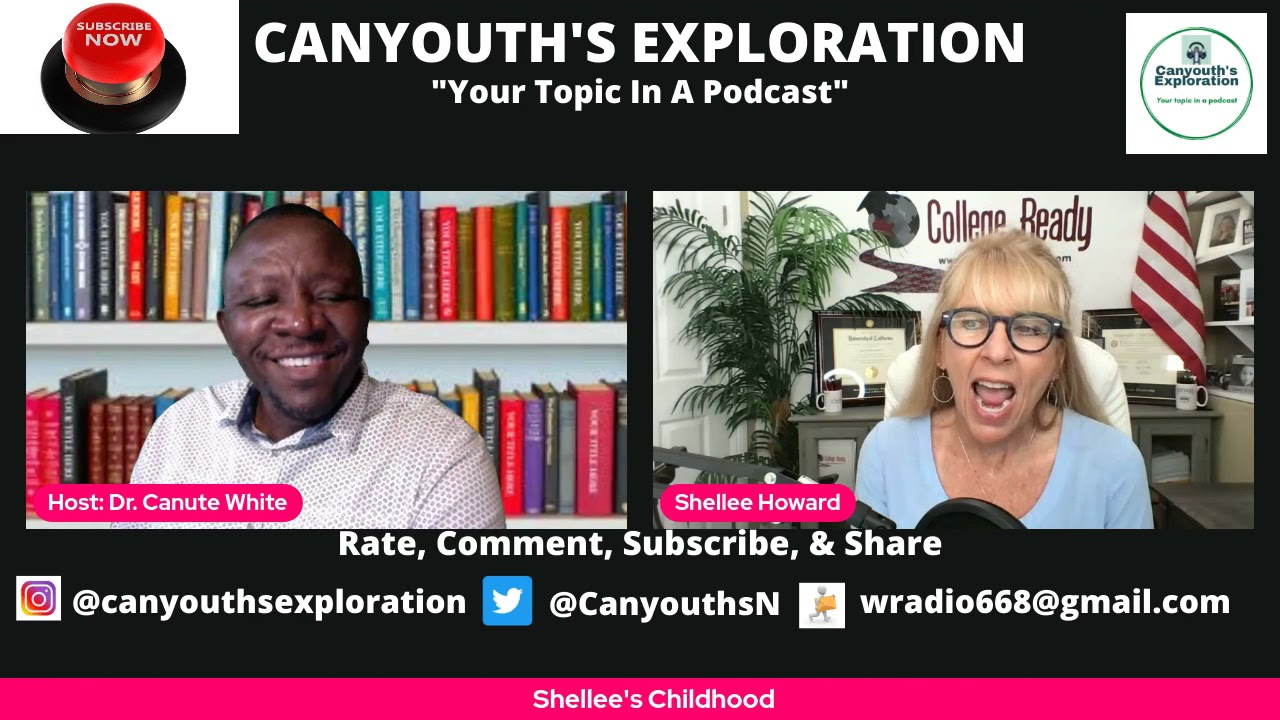
Shellee Howard, founder of College Ready, explains when to start planning for college (middle school), how scholarships connect to grades and test scores, and why early planning matters globally. She covers financial aid, the "Passion with Purpose" service project requiring 200 hours, and College Ready's consulting services for essays, test strategy, and FAFSA applications.
Chapters
Good day, good day. This is Kenyute Exploration. I'm Dr. Kenyute White. Kenyute Exploration, your topic in a podcast. I just want to say welcome to those persons listening to me on their favorite podcast platform and watching also on your YouTube channel, our YouTube channel, that is Kenyoots Media. Welcome to those persons from Jamaica, the United States, Canada, Russia, Cayman, Brazil, Denmark, the UK, France, Germany, and other parts of the world. By data, we realize that a number of persons have been listening from those those regions on their favorite podcast platform and naturally watching us live. Yes, but you do know that we will continue to be on YouTube and the Facebook as you continue to watch Kenyute Exploration. I am Dr. Kenyute White. Look, there are many of you youngsters who may be listening, watching who wants to get into college. We'll be talking to a very, very important guest today, and before we do that, I just like to talk to you about what's in the news today, July 11, 2021. We realize that there is a space launch today. Billionaire Richard Branson Billionaire Richard Branson actually reaches space in his own ship, bringing astrotourism a step closer to reality. That, that's important. I, I'd watch that and, and CNN, the, the press conference, very interesting the way how he, he described the, the view. He said that it's indescribable though, but you know, he tried to as, as best as possible to tell us what's going on. And, um, we realize that it's really a, a sort of an avenue to launch what we call space tourism. And in fact, it is aimed that space tourism should be launched through Virgin Group in 2022. 200,000 to 250,000 $50,000 for a seat to go to space then. But you know, persons are saying eventually that that cost will be reduced because how many persons would be able to pay that over time to maintain the business of space tourism. So it will actually decrease according to some critics. And the fact that The airplane, commercial airplane, um, has started like that, and, um, commercial airplane travel started like that, and eventually the price, you know, the cost was decreased, and, um, and it gets safer. So therefore they're expecting this to get safer and we pay less for it. So those of us who cannot find $250 $100,000 for a trip will be able to do that, um, a number of years ahead of us, right? Um, but, but well done. Congratulations to, to the Virgin Group and to Richard Branson, and I am wishing them all the best as they continue to, to strive for commercial space travel. The exploration question that I like to ask is is what is that one high school experience that you will never forget? I hope my guests will be prepared to answer that. But for me, I went to St. George's College down in Kingston, Jamaica, and I remember one September morning. We call it the first day of school in September, right after the summer holiday. And I was sitting on the on the campus, and this boy and his mother, apparently he's a first form, I was in fifth form, they came up to me and he was pointing me out and saying I actually hit him somewhere in the face because I saw something on his nose, like his nose had been broken by someone who had hit him, and he decided that, hey, it was me, you know, he was adamant that it was me, but As Shaggy would say, it was me. And until this day, I keep saying it was me. But eventually, after school, after graduation, I ended up working in a place where his mother was supervisor. And it was surprising to me. And I called his mother and I said, hey, remember this incident? It was me. Honestly, it was me. But apparently, the child just entered the high school and everybody seems to look alike. But hey, big up to Kevin. Wherever he is, um, he had done well for himself as well, um, you know. But Kevin, I keep saying, I had written it in my book Soaring Through Turmoil, that it wasn't me. And I keep saying that, but I hope to, to hear from you soon one day, Kevin. I haven't heard from you since, um, graduation— your graduation, my graduation— but I still remember. I just like to also, before I go to my guest, to also big up, as we say in Jamaica, a number of colleges as we'll be going into this thing about college entrance and so on. A number of colleges I want to big up: Nova, NSU in Florida. I'd also like to lift my hat off to UWIA Mona and the other campuses, Cave Hill, and also NCU in Jamaica, Mandeville, Kingston campus, UCC in Jamaica, College of Insurance and Professional Studies, and Excelsior Community College in Jamaica, Miami Dade College here in Florida. They have been doing a good job educating, oh, um, not only children but, you know, adults. Because children, to say that, you know, sometimes persons who are under 18, um, will be able to attend some of these institutions, but adults education, higher education, what they actually do. So continue to listen to Kenyatta Exploration, your topic in the podcast. I am now going to be inviting my guest into the studio. Shellee, let me invite Shellee in. Shellee Howard, how are you doing?
I'm wonderful. Thank you so much.
You will not miss my question, Shellee Howard. Um, the high school question, please, before you answer, who is Shellee Howard? That high school question, that experience, that one experience you have in high school, tell us about it.
Uh, the one that came to my mind is, uh, when I was in high school, the girls played football and the boys wore the cheerleader uniforms. And the girls played on the field and the boys were the cheerleaders, and it was quite, quite an experience for sure. Yeah, a memory for sure.
Switch roles, right?
Yes, we switched roles and the girls were mean.
Oh, interesting, interesting. Shellee Howard, who is Shellee Howard?
Who is Shellee Howard? I am a mother of 4. I am a college graduate and I am currently the CFO of College Ready.
Okay. What is Shellee's— what was Shellee's childhood like? What type of childhood do you have? Things that you'd like to share.
Yeah, I had a wonderful childhood. I was fortunate. I got to grow up in Laguna Beach, California, one of the most beautiful places around. And it was a pretty non-eventful, pretty easy childhood. Um, I was fortunate that I got to do a lot of travel, and so I've always had a huge heart for international travel and continued to enjoy that to today.
Yeah, that's great. Is there anything from your childhood that you'd like to mention that would perhaps be motivational for those children listening now, those young Shellee listening?
I would definitely say, uh, do things that scare you. Join the sports team, run the race, don't let fear hold you back, and learn everything you can. Be a sponge and just ask lots of questions.
I love that, I love that. It's important. The why question, you know, the why, why, why. A lot of us kind of feel a bit apprehensive about the why, but you know, whys should be asked by our children. And you would appreciate that, you know, in your field.
Absolutely. The why is important because if you do it without the why, it's just another thing you have to do.
Yeah, yeah, definitely. Shellee, when should a student start to plan for college? I mean, a lot of us have become complacent. Even, even for me, I mean, you know, growing up, I decided, should I go to college? Should I just go to work? What should I do? What's your take on that?
I encourage everybody who has the opportunity to get educated to take that opportunity. Now, I realize not everybody loves school. That is, that is okay. But if you enjoy learning new things, The best time to start really planning for college is when they promote from middle school going into high school. That's the best time to get really starting to think about it and explore what that might look like and start asking the questions about who am I and why does it matter?
But Shellee, you have said that, but in our society where I grew up back in Jamaica, Naturally, I'm coming to you from out of Miramar, Florida now, but where I grew up back in Jamaica, college was sort of a distance to a number of us, especially back when in my primary school days, we see college as something for the elites, the businessmen, you know, children, right? And preparing for college is something like perhaps sixth form or fifth form, we might decide, oh, should we go to college, but not at the elementary level, the primary school level. Is it different? A question to you. Is it different in all the regions as it relates to how important it is to be prepared? What would you say?
Well, so I do a lot of international travel. And I volunteered in Kenya, Africa, in Argentina, in Peru, and I served in the local schools and try to help students understand that education is an opportunity to change what could potentially be, um, another generation of doing the same. So gaining knowledge is gaining the opportunity to change their future. So regardless of anywhere in the world, it, it never hurts one to become educated so they can make decisions based on knowledge, not on fear.
But Shellee Howard, and I'm putting, you know, this to you because in many societies, right, especially in the third world, it's for men in particular. Why education? I need a job. I need money now. I have a baby mother, right, um, so to speak, right? I, I, I don't need to go to school. So why is Shellee telling me about school? What's your advice?
My advice is, of course, if you can do both, if you can work and go to school, that would be wonderful. If you have to choose, I understand in third world countries they're just trying to provide for their families, but I also know that I've worked with, um, you know, the, the head of the school, and he went to university, even in Kenya, Africa. I've been to Jamaica and Antigua and, you know, South Africa. I've been to so many different schools and there's always going to be that student who's gifted and talented and with just a little encouragement. I mean, we were giving these, these students chalk and a chalkboard and just letting them to learn how to educate themselves. And I think it's just empowering them at a young age and them learning that if I get educated, my future will be so much easier.
Yeah, yeah. And, um, I agree. This is Kenyouth Exploration. You're listening to Dr. Kenyouth White, your host, and I'm sitting in with Shellee Howard from College Ready. Um, we're talking about you being ready for college, and, and if you're a parent, your children being ready for college. And, um, and I, I, I know that she has a lot more to say to us, but the question for you, Shellee Howard, is, um, how do you find schools that are a good match for, for your child? Um, you know, talk to parents about that.
So depending on the family situation, I ask every family 3 things. What would be an academic fit In other words, where would the students be amongst their peers? Do they want to fight for every A, or are they not that kind of student and they don't want that kind of pressure? So academically, are they looking to challenge themselves and go on to become an MD or PhD, whatever that is? It all needs to be thought out. And then the second piece is socially, where are they going to enjoy because anytime you are happy, you do better in school. And then lastly, what can you afford? And then matching the academic fit, the social fit, and the financial fit allows families to have opportunities of what college can potentially provide for them, because there are colleges that are completely free if a, if a student wants to work at the school, or if they want to provide different services at that school. So if there's a will, there's a way.
Yeah, I like that. There are colleges that are completely free. Shellee Howard, a lot of us, well, perhaps even me, but we don't understand that completely free. Is that happening in today's society, today's world, 2021?
Shellee Howard, absolutely. And the, the challenge is people would never go up to a house and pull out the flyer and say, yep, that's the price I'm gonna pay. Or they would never go buy a car and look at the price tag and go, yeah, that's the price I want to pay. But for some reason with college, they look at the price tag and they go, I guess that's what I'm gonna pay. And I'm like, but you would never do that for a house or a car, so why would you do that for college? So it's helping my families understand that's just the asking price. That's not the price that colleges typically have a student pay. There's a ton of free money that's available if you just go and look for it.
Yeah, yeah, yeah. And I understand that. And as you say that, it— this question comes in very, very, um, you know, timely. Where should you look? Where should we look? Where should parents look? For the best scholarships?
So the scholarships themselves come from picking the right colleges and universities. And what I mean by this, if your student has a very large resume, they are going to be wanted, and therefore colleges will pay for them. If your student has a very small resume or no resume, it's like a job. You're not going to get the big dollars with a small resume. So the goal is help the student be the best they can be with a beautiful experience on their resume, and colleges pay huge for that.
Resume? What are you talking about? You mean that, um, there was sportsmanship, sportsmanship, so to speak. You're doing well in high school, so the college would want you to represent them. What are you saying?
Resume?
What do you mean?
So your resume would be your grade point average, your test scores, your community service, your leadership, your extracurricular. Those things make up who you are and why colleges would want you on their campus. The more desirable, the more money they give.
Yeah, so, so Shellee Howard, are you saying to us then that, um, a child who perhaps not, not a sports type of person, and, um, the average may be not very competitive, right? Are you saying that child might not see college doors?
What I'm saying is colleges are— may not give them as much scholarship to attend there.
Okay. Yeah, I got you, Shellee Howard. I got you. Just wanted you to clarify that so that our listeners could understand. So it's important for the children to do well prior to college because it's a competitive thing. Are you saying that it's very competitive?
Is it? And it gets more competitive every year. Absolutely. There's always somebody who is going to have a better grade point average, somebody who's going to have a better test score. For. But what colleges really want to know is who are you and why does it matter. They want people to be successful, graduate from their college, go into the world, wear their, their, uh, college clothing, and everybody's like, wow, where did you go to college? Because I am so impressed. And then you're pre-selling people to come and apply to their school. So it comes down to helping families understand that a student can only be as good as they can. But if they're nurtured and encouraged and loved and supported, their opportunities are going to be so much greater all the way through life.
How much, how much part my personality play in my acceptance into college? Does that matter?
Uh, can you—
my, my personality, in the sense that if the child is— yeah, personality, extrovert, introvert.
Yeah, not, not at all. So colleges are looking for diversity, not in just skin color or age. They're looking for— they can only have so many business majors, they can only have so many engineers. So it's not about the personality, it's about Who are you and why would it be good to put you at our school to add to that diversity, which will make everybody's education so much better?
Um, there, there's this thing that we use in the United States, all right, um, this, uh, financial assistance, federal assistance, right? It's unique to the United States, um, it Therefore, many persons around the world, you know, besides the United States, would not understand what this is all about. I'd like you to explain the, the, the, the, the financial assistance process— well, what it is really, not the process— and, um, and, um, and, and just tell us, should all families regardless of income complete this, um, FAFSA, um, application?
Absolutely. So the U.S., um, government offers something which is called The acronym is FAFSA, and what it is, it's available to every single person in the US that is a US citizen. And I highly, highly encourage every single person to complete this very short form because all that it does is it takes the taxes that you've already sent to the government And it connects them to the universities that you want to apply to. It then does an algorithm that tells the family what are they going to be expected to pay and how much money they can look for, for Pell Grants, Cal Grants, need-based money. And so you can't get any of that unless you apply for this opportunity.
Right. Citizen meaning slash residents, because yeah, right, I understand. You just want to clarify that for those who might be wondering, how we know that, that is a distinction there, right? So being a permanent resident and a citizen, you, you are eligible for it. Um, so, so that's a great thing. Uh, but you know, this thing about student loan, I want you to touch on that since you're in the college ready thing. But college ready, yes, but it's also out of college ready. Let's call it that. Is it that many persons are afraid of the student loan thing? And what's the implication after college? What do you think?
So student loans usually come from the student or family not picking the right college for the student. And how I help students, young people understand is I ask them, how long do you want to work for free? And they look at me and they're like, what? I don't want to work for free. And I'm like, that's called a loan because you're going to have to pay it back, which means you will be working for free because you have to pay back your student loan. So they don't quite understand that concept at 15, 16, 17 years old until I say, do you want to work for free? And so loans, student loans can be helpful, but they can also be a big problem for a family because a student has no collateral. Therefore, they have nothing to give for the loan. So then the family must cosign for the loan. And now the family, if the student doesn't pay, the family still has to pay. So the loan, even if the student passes away, the parents still have to pay for the loan. So I tell families, if you're not going to college to do something that is going to bring you a lot of income, do not get a loan because you will be upside down. You'll owe more than you make, and that's no way— you can't afford a house, you can't afford a car. It's not a situation. There are some good examples of people who are taking themselves from a third world country into a better position where that loan gives them that opportunity to be able to do that. So it's not this or that, it's what is best for you and your family.
Yeah, yeah, interesting, very interesting. But, um, before, um, we look at that question, what is a, um, Passion with Purpose project, let, let me, let me ask you this, this whole thing about, um, the, the, the student loan concept and the, the, the They're doing something, as you had said, to ensure that you get some return, right? Return on investment, if you may, right? But how do we know, do students know that, okay, if I do this, zoology, I mean, I picked that because I know that it's well, right? Zoology, how I know that I will get a job? Talk to me, how do I identify that possibility before I start the program?
I wish every student would look at that potential or that possibility. I was just on a call right before this one, and the student says, you know, I wanted to do this major. And I said, well, how much money will that major make you when you get out of school? What kind of job opportunity will you have? And in 5 years, how much will you make? The student had no idea about any of that. And I said, until you know that, do not pick that major because you're setting yourself up for a life that you may not ever be able to achieve if you pick a major that does not give you a return on your investment. I always tease with students, I say, you know, basket weaving does not pay much, and therefore you should probably pick your major wisely. So zoology is another great example. There's some wonderful zoos and there's some much-needed zoologists, but I don't know how many we need.
That's the thing. And I note that in Jamaica there was some challenge as it relates to how many lawyers we are turning out. And recently I heard that there is also a challenge as it relates to how many doctors we are turning out because it becomes so packed, saturated, you may say,, right? A number of these disciplines. So there needs to be some due diligence as it relates to choosing your discipline. You would think, you would say you appreciate that. But what is a Passion with Purpose project? I guess that's awesome. What's that?
So that is a unique thing that I created as part of College Ready. I started it about 13 years ago. And what my belief is, is that every 16 through 18-year-old, if they did 200 hours of community service, that our world would be a much better place in the end. Okay. So it is my mission, if a student or family wants to work with College Ready, which we love, we support them in finding their passion. Figuring out what they want to see changed in the world and then leading others to do it. So it is their passion with a purpose. And so I can, you know, I have hundreds of ideas that I could share, but a real quick one. My, one of my students saw third world little girls with not, no dresses, just dirty old t-shirts, and she was very upset by that. And she said, how will that affect them when they grow up? I'm going to make them pretty dresses. And so she got pillowcases donated, learned how to sew, made them into pretty dresses, sent them all over the world, and got to see what it was like when these little girls in third world countries got to put on their very first pretty little dress.
I love it. I love it.
That's passion with purpose.
Yeah, I love it. I love it. Shellee, I keep going back to Jamaica because that's where I'm from. That's my original country. And there are many bright students, bright children in Jamaica. Trust me. I mean, you would understand that they are college ready. I use your thing, right? And I mean, college ready, but not seeing college door. It's just distance. Remote for them. I can recall this one girl I know, she's in Waterhouse, we call it in the back community named Waterhouse. She was admitted to law school and she's having challenge paying her fees. And how can College Ready help someone like she back in Jamaica? You know, if she pick up the phone and call Shellee Howard, what can Shellee Howard actually do for her?
So we offer many different opportunities. I scholarship 2 people a year, one boy, one girl. All they have to do is write an essay about how this would change their life, and I bring them into my program at my compliments.
Okay.
Beyond that, I also have a bestselling book, How to Send Your Student to College Without Losing Your Mind or Your Money. And I am happy to gift that to any student who reaches out to me as my gift. They could buy it on Amazon, but if they hear it on your show, I'm happy to give that to them.
Right.
And then after that, I have online opportunities where family— where students can go online and do classes via online. And then we have private clients. So I really try hard not to make it about the money. I mean, obviously it's my job and how I get paid, but that my, my heart and my mission is to help families above all else. And so I believe that the more I give, the more people are able to change the way that their life is.
Yeah. Yeah. This is Kenyute Exploration. I'm Dr. Kenyute White, CEO of College Ready. Shellee Howard. Howard talking to us about how you can get your children into college, or perhaps how you can get into college as a young adult, you know, without damaging your mind, you know, getting stressed, or your pockets, right? So Shellee, this thing about my students standing out, you know, how will my students stand out in all this?
So the important thing right now with colleges being so competitive is teaching individual students how they can stand out. Students go about it, they try to, they pick a name of a school and then they try to guess what that school wants them to be like, and then they, they try to be that student. It never works out well because the, the college can see right through it that that is genuinely not the student. So we, we do it different. We focus on helping that student be the best they can be. And then we find colleges that value their core values, value their leadership and their community service and all the other things. So we go with the mindset of just be you, just be genuinely you, and we'll find you. There are thousands of colleges out there that would love to have students who just work hard, who are just willing to do the work.
So again, I, you know, I know College Ready is in the United States. We're all here in the United States, but, um, we want to spread College Ready around the world, right?
Yes.
Oh, well, maybe I've alluded to that, but I, I just keep company because we want to spread this around the world, right? How will students from around the world benefit from College Ready? What type of benefit can I get from you? Is it possible for me to come to the United States, hypothetically when I say, right, to come to the United States and go to college because College Ready is able to help me, was able to help me?
Yeah, so about 4 years ago, I, I decided to take the company international, and that's because I, I believe there's so much value in the diversity that that brings. And the other part is my students here had relatives internationally, and they are like, well, I want help too. So I, I did it for 2 purposes. But yes, how I can help is I understand, outside of the COVID thing, I understand what it takes to go both ways. I have students in the US that study abroad. I have students internationally that want to study in the US. And so we have an opportunity, and because we're based in the US, we have a lot of knowledge that maybe they just don't know what they don't know and the steps it takes to get accepted into college. It's very different than it is in Australia or in South Africa or India. I mean, the, the process is insanely different. And so that's the value that I bring, is I know what it takes to have a student go both ways.
Right, right. Yeah, interesting. Before I look at the SAT and the app, I would like to ask you something. Yes, college-ready in two contexts I'd like to look at it. College-ready, the student being ready for college, but is the college ready for the student? Is the college ready for the industry? Is it using competency-based training? I like to say, at Southall Excelsior Community College back in Jamaica, starting to look at competency-based training, calling the industry to participate in the curriculum building process. What do you think? Are colleges ready?
Ah, that's a really good question. I think some are. I think some are still trying. I don't think they've mastered it yet. Um, the world is changing, and I think the education has to change with it, or it's not going to serve our next generations. Technology has changed. I mean, online school 10 years ago, that would not even have been a thought. Like, we wouldn't have even— so to answer your question, I think some are, but not all.
Okay, fair, fair answer. Fair, fair enough answer. Um, the, the SAT We have this thing going, the SAT and the— okay, let me get it there. Is taking the SAT or the ACT optional? What's going on with that? Can I do either?
So the question people are asking right now is, should I take a test, the SAT or the ACT, or is it really test optional? And the way that we approach it with students is if you can safely take a test, take a test. If you're a good test taker, take a test. If you can't do it safely for medical reasons, don't take the test. And if you're not a good test taker, it may not benefit you to show you're not a good test taker. So again, it comes down to the individual strategy of the student where they're going to apply, what major they're going to apply to, and will they even need the test. But I will tell you, our students earned $10.7 million in scholarships this year, and every one of them submitted a test score.
Oh, cool. You see, these tests, we do that back in Jamaica, um, you know I didn't do it because I started my higher education back in Jamaica. You know, I came to Florida and do my doctorate though. But the point is that the students in Jamaica, they're doing SATs, right? And I need the ACT as well. But perhaps they might want to ask you Right? Yeah, it's either, either, but are these relevant any at all?
Yes, so that most schools still find value. And what I mean is, on the college application, there's a box that says SAT. You can either put it in there and they're going to see it, or you don't put it in there and now they have one less thing to compare you by. Okay, so if somebody has a 36 ACT, which is the highest score, why would you not show them that? So yes, it's relevant and it can be hugely helpful, but it's only one of the 7 things that they're going to be judged upon. So it's not all or nothing, it needs to be— doesn't make sense for the student strategy.
Yeah, yeah, you know, this is important for me to ask you. College Ready, what is the function of College Ready as it relates— we know the general function, but, um, do you help us to help students to take the SAT and the other exams? Do you actually have classes online for them? What do you do?
That's a really great question. We do a lot, um, and I know our time is limited, so I'll hit the, the high points, right? So basically, College Ready is independent college consultants. That's one area. So we, we help the student pick their classes, understand how much rigor, how much difficulty in classes, when to take them. To take them at their high school or at college, community college. Then we help them with their test strategy, when to take it, how to take it, how many times to take it, which test to take.
Yeah.
Then we help them with their passion and purpose community service project. And so we're helping them to understand how to make the change they wish to see in the world. And then we're helping them understand leadership and extracurricular and how to balance academic and social time. Then we help them to pick their colleges, we help them to pick their major, then we help them to figure out what are the best essays to tell their story. What topic should I write about to get my message across? So then we're helping them with that. We're also helping the family with their FAFSA, their CSS Profile, their Expected Family Contribution, and the whole financial side of the academics. We help them interview. Bottom line is everything that you can think of, we help the student be the best they can be.
College Ready.
And you're ready.
Shellee Howard, um, CEO of College Ready. And, um, this is Dr. Kenyute White on Kenyute's Exploration, your topic in the podcast. And all those persons listening on their favorite podcast platform, Amazon Apple Podcast, Spotify. Um, we, you know, we are with College Ready and, uh, Shellee Howard. Shellee, GPA— what, what do I need in terms of GPA to go to, to those top schools, you know, those Ivy League, um, thing?
Yeah, so for a student who wants to go to a top-tier or Ivy League school, they need to take the most difficult classes and do well that they personally can. It is an individual thing. Not everybody is gifted in every subject. So I don't tell students they need to take every AP class or dual enrollment class because they may be really good at English and not at math or history and not at science. So they, in the areas that they're gifted at, the ones that come easy, they need to challenge themselves and show the university, I like this, I'm good at it, and this is what happens when I, when I put my mind to it. So taking the individual and challenging them at the level that they're going to be successful, and then you find a college that, that can support them. Because otherwise, a student gets into a college and they are fighting for every A, and it is really hard on them.
Yeah.
And it may not be a good fit socially or financially. So the amount of hard work they put in is what colleges want, but they also want them to be successful at it.
Yeah, that's important. I, I, I doubt that. And being in academia myself, as a lectured a lot. I doubt that colleges are not interested in students' achievement, academic achievement. They do, because it's a reflection on the college. Yeah, if I do not do well, it would be a reflection on the college that I attended, right? So it's important. Okay, that's fair enough. But, um, how many AP classes do I need to take? And what are AP classes?
So AP classes are Advanced Placement, and they allow a student to get a bump in their, their grade point average if they do well. So if a student has an opportunity— and this is school by school, and internationally they may not even offer it— so that, that's the challenge. In the U.S., AP classes are very important to the amount of rigor or, or making it a challenging academic year. The number is truly what the student can handle, right? If a student is really good at science, they can take APs in their science, but they may not do well in APs in other subjects. So it really has to be based on We analyze this information based on the student, not on a generic, this, this is what you have to do.
You know, I, I, before I go to my, my, my two final questions to you, um, tell me, is it that these classes— yeah, we know the AP classes and so on, but is it that these, these, these colleges, these, these students, they're actually um, they actually participated in this, they want to do it, or they give up at times? What happened? What are you seeing?
So, well, prior to COVID, prior to online school, students— there are students who want to challenge themselves. I had a student that I had for 4 years who was in my program And I would tell her, "Are you sure? That's a lot of work." And I would try to like pull her back and she's like, "But no, I want to." And I'm like, "Okay." And then I have other students who are maybe not as academic, maybe their gift is athletics or music or the arts. And so for them, it's not the same love of academia. So for somebody who enjoys reading and who enjoys learning, I love to just let them go and expand and absorb it. The other ones who don't really like school but have to go, I try to make it as least painful as possible for them while still getting through high school and off to college.
Yeah, I am an education freak. I believe that education— I think I've said it to you— the only thing that we'll go to our grave with. I do not put my brain on the wheel. Nothing that I've learned on the wheel. I go with it. So what? It's a good investment, guys, right, Shellee Howard?
100%.
I agree, I agree. Uh, tell me though, what are the best extracurricular activities to participate in, um, for college? What do you suggest?
The student needs to find what they're gifted at, what, what is their thing. I remember when my son was younger and there was a young man playing soccer, or football they call internationally, and he came out at 3 years old and he was scoring goals all over the place. There is no doubt he should be playing that sport, right? So extracurriculars, it's best if a student loves music, let them play the piano. If the student loves track, let them run track. There's not one better than another to get into college. It's whatever that student can be happy at to balance out their academia.
Yeah, yeah. Shellee, if you could say something, talk to a child now, be it here in the United States or anywhere in the world, you know, in 30 seconds, what would you say to that child? Talking to that child personally, having a conversation?
Depending on the age of the child, for sure. Assuming that they could read, I would encourage them to pick up every book they can find, pick it up and just spend time getting to explore the different genres, the different topics. The, the easiest way to learn is to pick up a book. And when a student falls in love with reading, their vocabulary increases. When their vocabulary increases, they do better on testing. When they do better on testing, they get into great colleges. So it all stems from that initial love of reading. Makes a massive difference.
Yeah. And then stop typing LOL. And yes, I know, right? As what? I-K-R and so on. Type the thing, all right? Yeah, yeah, use up that vocabulary. Um, your, um, website, your Twitter, it's not a jumble here, um, those persons watching, but, um, tell us your Twitter and your Facebook, your Instagram, tell us what they are.
So any social media, you can type in College Ready or College Ready Plan and we will pop up. We've been doing this 13 years, so we've been on social media a very long time. Um, I hate to share that, it kind of makes me feel old, but, uh, College Ready, um, we're very active. We post a ton of free information at no charge. You can join our private groups, you can join our pages. Please follow, like, and encourage us to share with you what you want. We want to post with what you need. So don't hesitate to say, I have a question about, you know, raise your hand and ask the question.
Yeah, Shellee, say for instance, the school, as I say, I keep going back to Jamaica, school in Jamaica, high school in Jamaica, um, want to call Shellee and say, Shellee, can you send a representative down? Or, well, this is COVID, can you um, do a Zoom so that my student presentation for my student— tell me, is that possible?
Yes, and I would love to go back to Jamaica.
You should.
Yeah, just call me, give me a reason to come back to Jamaica. Um, yeah, I mean, this year, um, I am— I'm headed to the Mediterranean, uh, Croatia Egypt, and then I'll be back in Africa in February. So you call me and I would love to come and support and help and really provide what is needed to get you to that educated level.
Yeah. And that's 949-235-7350. And it goes straight to you, I suspect. Right.
Absolutely. That's my personal cell phone. It is in the US, so you would have to add a +1.
Okay, 1-949-235-7350. Shellee Howard, I should have asked you this before. What's the cost that involves? What do we pay? What do you expect students, parents to pay College Ready, you know, for anything? What's involved there?
So, um, like I mentioned before, we scholarship 2 people a year, and then from there, the next level is my book. And for somebody who's not listening and they hear about it, you can go on Amazon. I think it's $15 US. From there, it just— the more private one-on-one time, the money obviously goes up, but those are the 2 entry-level ways for people to learn at a reduced rate.
Yeah, I go on your Facebook page. I mean, it's fascinating. I mean, you know, I love it. I really do love it. And I realized that that College Ready thing, don't think I forget that you did that. You're very talented. All right.
I painted that. Yes, I did.
You're very talented. And So, so besides being in management at College Ready, you also dabbled into other talents, other things.
Yeah, so I am the visionary, um, but I also have students because I love students. So as much as I enjoy the business part and sharing my message, I also really enjoy just laughing with the students and dreaming. A lot of what we do is talking about their dreams and what they want for their future. And when they get into college, the first person they call is me. We just got in. I'm like, we did. I'm so excited. So I love my job and or my career. And we have consultants all over the world. So it's not just me. I could never do this alone. I have a wonderful group of certified college consultants. That are also a very big part of this journey.
Yeah. Is there any in Jamaica that you have a consultant in Jamaica as well?
I don't, and it's not because I don't want one.
I know, I know. Trust me, we talk about Jamaica and I know that you have this love for Jamaica.
Yeah, yeah, yeah. So, but with Zoom, we've been doing Zoom online calls for about 4 years, way prior to COVID. And so it made international help so accessible because I could get on a call like this with a student and be talking about what their day's like across the pond. And so I think that, you know, anybody can be a client at this point.
Yeah, yeah. It's 5 o'clock there where you're at, right?
I believe so. Yep. We're real close to 5:00 PM.
Yeah. And we are close to 8:00. That's the time we are having here. I keep having guests with time difference here in Canada. I was in a few hours, and then I had somebody in Sydney. It was morning for them and it was almost night for me. Oh, boy, I tell you. But I am good at it. And you know the funniest thing? We're both in the United States. And there's still this, you know, length of time difference, but that's okay. Shellee Howard, it's so nice talking to you and to hear about College Ready. I assure you that this will be spread through Kenyouth Exploration, and feel free to call me up and say, hey, there's some new project, there's something else I'd like to share. That is going on. And yeah, we're here to give you the opportunity as you continue to work with students and to believe in education, because I'm an advocate for education. I'll do anything to ensure that people are educated, not just youth, not just children, but adults, because I am an advocate, a freak in terms of education.
I like that. I like that. We need more of you in the world for sure.
Yeah, yeah. Hey, so, um, I, I thank you for coming, and, um, it was nice talking to you, and we'll keep in touch, definitely.
Thank you so much for having me. I hope it helped families all over the world.
Yes, it will. We'll spread it. All right, thank you, Shellee. Bye-bye.
Bye-bye.
That was Shellee Howard, College Ready. Be sure to contact her. It's, um, if you're out of the United States, 1-949-235-7350. And, um, type in College Ready, um, in your Google search engine, and, um, you will see it come up. Visit her College Ready Facebook page, Instagram, Twitter, and, um, be a part of the process. Ensure that your children, your child, are ready for college, right? Um, children are ready for college. And Shellee is an important person in that regard. She is ready to ensure that your child or children are ready for college, the best college too. She'll talk to you about scholarships, she'll talk to you about GPA and some of the tests that you need to take and naturally support them through the book that is on Amazon. You could go online and go on our social media and you find out more about the books. And it's important to make College Ready one of your go-to place as it relates to getting ready for college, getting your child, children ready for college. And ensure that you call 1-949-235-7300. Sorry, 1-949-235-7350, College Ready. And give Shellee a call, right? Shellee Howard of College Ready. Thank you for listening. And remember, we're still in a pandemic. Remember, wash your hands, the hygiene thing, we have to do it more than ever, right? Keep your distance and remember your mask. Also remember the vaccine, that I've actually gotten my two doses of Pfizer, and I'm not telling you to do it, but I'm encouraging you to do it so that we can go on with our life. You know, this sudden thing come upon us, and we need to shake it off as soon as possible. Thank you for watching Kenyute Exploration, your topic in a podcast. I'm Dr. Kenyute White. Goodbye.
More from Shellee




The 3 Questions Every Parent Should Help Their Teen Answer Before College | Featuring James McLamb

Helping Your Teen Stand Out for College Through Purpose & Impact | Featuring Aishani Sheth


From Robotics to Cornell: A Father-Son Blueprint for College Success with Aarav & Ritesh Kumar

The Hidden College Credit Strategy That Could Save Your Family Thousands with Josh See

The Truth About Financial Aid: Why Some Families Pay Less for College Than You Think with Jack Wang

Human Skills Every Teen Needs for College, Careers & an AI Future with Rob Heller
