Future-Proofing Your Kids: Financial Literacy, College Savings, and Debt-Free Strategies with Robert
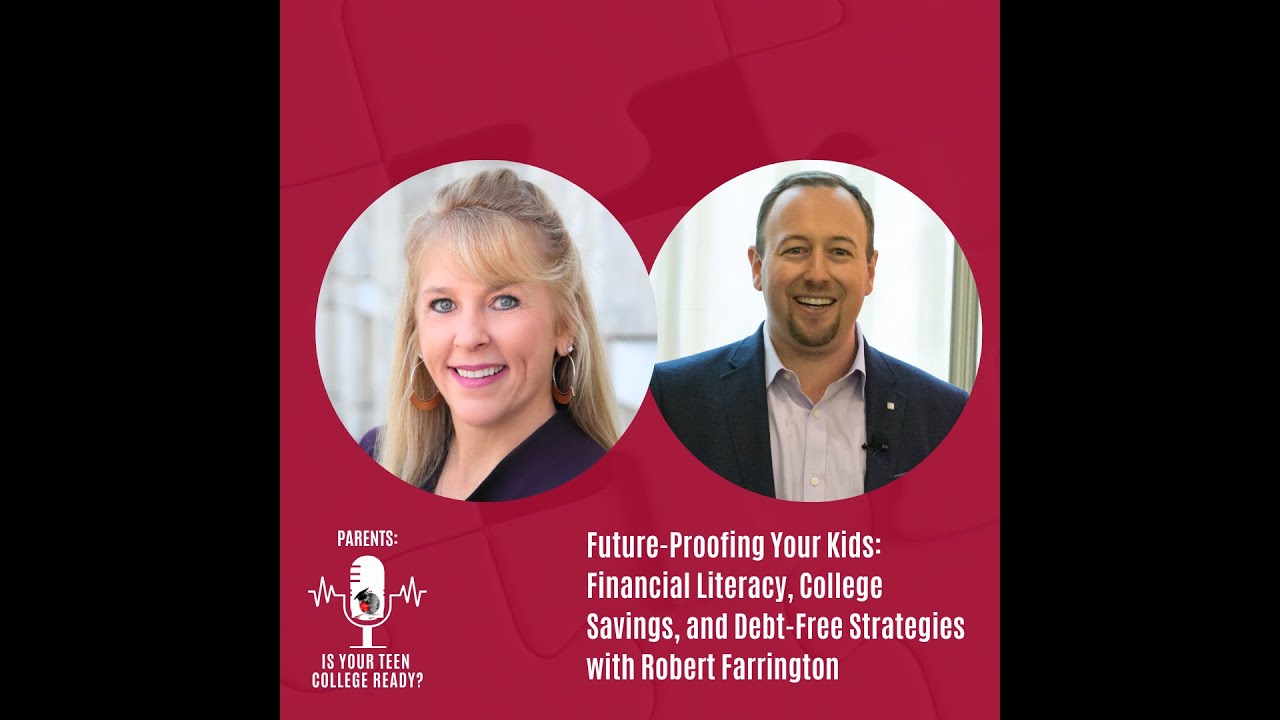
In this interview, host Shellee Howard talks with Robert Farrington, founder of TheCollegeInvestor, about how families can protect their children from overwhelming student‑loan debt and build financial literacy early. Robert shares his personal story of working at Target, accumulating $42,000 in student loans, and turning that experience into a media platform that helps parents navigate college costs, savings, and debt. The conversation covers practical tactics such as starting 529 plans early, redirecting birthday and holiday gifts into college accounts, evaluating colleges through a return‑on‑investment lens, and having honest career‑and‑money conversations with teens. They discuss the importance of work experience, internships, community service, and parental games like the “Millionaire Game” to teach money concepts. The episode also highlights resources like the College Ready certified financial‑literacy program and the role of social‑media role models. Throughout, Robert emphasizes using math, realistic career earnings data, and alternative education pathways to keep higher‑education affordable and debt‑free.
Chapters
So parents, today I have a wonderful guest and I can't wait to share him with you. But before I do, I just wanted to thank you for listening. Um, the resources I bring you are supposed to be there to help you. So today I get an opportunity to interview Robert Farrington. Welcome to the show.
Hey, thanks so much for having me. I'm excited to be here.
Outstanding. So can you tell our guests a little bit about yourself and what it is that you do so they understand who they're listening to.
Absolutely. So my name is Robert Farrington and I'm the founder of thecollegeinvestor.com. And we are a media company that is focused on helping families navigate the intersection of money and education. And that means everything from saving for college to paying for college and really escaping student loan debt, but also like, how do you help your teen with money? And how do you help that college student with their, you know, first checking account when they get that job? So anything in that space, that's what we're talking about at The College Investor. And I started this thing 15 years ago. 15 years ago now, we just had our anniversary. So we've been talking a lot about that because it's kind of my story. And I started this when I was finishing college because there are not a lot of great money resources for young adults. And now that's changed. Like we've come a long way in 15 years, but I was really trying to put that content out there to help people navigate this, navigate their first checking account, navigate getting out of student loan debt so you can get to the fun stuff of building wealth and saving for the future. And that's really a lot of the things we talk about.
Oh, this is gonna be good, I can tell you right now, because my listeners, we love scholarships, we love staying out of loans. So let's first talk about your experience when you were in high school. Did you have any idea that you would be on a podcast talking about college, um, money strategies?
Not in the least. I am the clear unintentional money journalist, I guess you can say. So when I was in high school, I actually I got a job at Target. My mom had this great idea. She bought me a really old used car for my 16th birthday. And she said, hey, congratulations, I got this for you. But if you want to drive it, you need to go get a job and pay for the gas and the insurance and everything else related to it. And she's like, I'm more than happy to drop you off at the mall and call me when you get a job. So I went store to store and I finally got a job at Target pushing carts. And guess what? I actually ended up staying at Target for 17 years, all the way through high school and college. And I ended up being a store manager and running a lot of stores, building stores, fixing stores, creating new stuff. It was a great company to work for, but that was really the trajectory I was on. But side hustling and making money and talking about money was always a passion of mine. So when I was in high school, I'd get my $300 paycheck, and which I thought was amazing money, and I was starting to save it. And then you start earning interest, and it was like eye-opening. It's like, you mean if I put like $100 in this bank account, I would get $5 for doing nothing? Like, it was really fun. And so that kind That thing really inspired me to start talking about money and taking money very seriously. And when I was in college, I was also kind of nerdy. So I loved websites. I love tech and it all kind of came together. I started talking and writing about this kind of thing of how you can take your money, invest it, save it, start growing it to build wealth. But, uh, you know, I didn't know how to pay or save or anything for college. Um, so I graduated with $42,000 in student loan debt. But cause like, that's what you did, right? You just sign up. The financial aid office says, here, this is how you pay for college. And so I clicked the button, paid for college, and guess what? I ended up with $42,000 in student loans. And so as any good blogger would do, I started writing about my journey of paying this off and how to navigate it. And this was well before there was a student loan crisis today. So I actually had problems with my loan servicer. They messed up my direct debits and like all my loans got messed up. So I wrote about it and that was one of my first viral articles. I had over 800 people chime in and say, me too, this is a problem. No one is talking about how terrible these student loans are. And everything has since snowballed from there. Wow.
So it, it's really started from your first eye-opening, uh, personal situation, which most pe— most entrepreneurs start with. There's a problem. I need a solution. How did you decide that you wanted to leave Target, the comfort that you've known, and go out and, and be an advocate for helping families navigate this so they don't end up like you did?
Absolutely. For, for good or bad, uh, the website and our business continued to grow because it is a topic that is so important to so many people from navigating their student loans to navigating saving for college to paying for college and, and everything in between. And so the growth of our business. And the growth of our website just continued to propel it to the point where it was, uh, I was doing more on the side than I was doing at work. And even though it was a great cushy company, it was starting to have to do those priorities of where do I spend my time and spending more time with my family and being able to do this virtually, um, was a lot more beneficial for me. And it's been great ever since. And honestly, it's a great, I love this mission too, to help people navigate this journey. I love talking about this stuff. I think it's so important to get this message out there to help people avoid that student loan debt, but still get that education that they need.
So I don't think anybody would disagree that we don't have a problem with student loans. I don't get too many people who are like, you know, I don't mind taking on student loans. Everybody I talk to is like, I want to avoid it at all costs.
Sure.
The problem is they have no idea how, because if you go On social media, everybody's just throwing up their hands and saying, I make too much money and this is disaster and it's wrong. And there's a lot of negativity. And I, I'm doing everything I can, like you are, to say it doesn't have to be that way. So can you maybe share some antidotes or some recommendations, simple things that would be a good first start to not end up in that situation? Sure.
Well, we can also say that the student loans themselves aren't bad. It's like any debt. It's a double-edged sword and it cuts both ways. If you take out a very small amount and it propels you to earn a lot more money in your career, that's probably a good investment, just like you'd think of a house that way or other things. But if you borrow too much and you end up underwater, that's the crisis part, what we see today. And the hard part is, is we're not talking about an asset like your house. We're talking about you as a person. And you don't necessarily know how life is going to turn out for you. I think that's the hard part, is you don't know what career path you're going to take, or if there's an unexpected thing like medical problems or anything, you can go down different paths. And that's what's so hard with student loans and borrowing. But it's also the problem with future— trying to plan your life. You just don't know. So what I always recommend for families is it really depends on what season of life you're in. If you have young children, now's the time to really start thinking about saving, right? Like, how do we take advantage of a 529 plan? How do we start planning for those future expenses? And that really applies all the way through, but it's a lot easier to get momentum if you have younger children. As we get to those high school children, uh, let's start thinking about ways that we can navigate paying for college and what do they want to do and what does that look like for where you go to college? Because there's two sides of it. There's both the costs of it, but there's also meeting your goals. In a way that works. And I think we kind of skip some of those questions with a lot of the families I talk to. It's like, well, what do you want to do when you grow up? And telling a 17-year-old to make that decision is, whoa, it's very challenging, right? Um, and so like, unless you're such a clear shot, like I want to go to med school to be a doctor, like, you know, let's kind of play the field and maybe take a different path that gives you a broad stroke of options for a reasonable price. And so Then we kind of start talking about an ROI-based approach to college. And what I mean by that is, is looking at college through that return on investment, because I think as parents, we just, we want our kids to be successful both financially, but also like happy and fulfilled lives and things like that. And so the return on investment is you don't want to spend all this money and then they go off and they're struggling to pay back loans and struggling and they're unhappy. And they, maybe they're in a career that they hate. Because they have no other option because of what they did. And so it's really, before we get to that part, how do we have those conversations about what does your future investment look like, what do you want to do, and then how can we get there in a really, um, savvy way?
Oh man, right? I'm a parent of 4, and thank goodness all of mine will graduate debt-free. So it is very real and it is possible. So I just want to let parents know First went to Harvard debt-free, second went to Alabama debt-free, third went to San Francisco debt-free, and my fourth is in the Czech Republic of Prague, which is by far the least expensive education yet. So if you have a plan, this is possible. And just like you started when they're super young, there's the other challenge of you may not have as much money as you do as they get older. So you're like, well, Do I feed them or do I put away for college? Right? And so those are real struggles. And I understand that. What's even more frustrating is when I work with families who didn't save a dime, and it is an advantage because now, now they're like, well, wait, I have lots of opportunity, which really upsets the people who've been saving for their whole life.
So But I also say you got to put that into context because honestly, if they did struggle to save for that whole point in time and they don't have assets, because assets are also a very big criteria, like, you know, they also probably struggled a little bit. Um, I will say though, on the thing about saving for college, I will tell you one of my, my favorite pieces of advice for families that they don't know how to add money to those 529 plans or your college savings account is look at the whole— and family gifting is one of my favorite things. Now I'm a millennial, and what that means is I hate all the stuff and the clutter. And I think every parent can relate to this, is that when your child has a birthday or a holiday like Christmas or whatever you celebrate, they're gonna get a gift from Mom and Dad, maybe times 2. They get a gift from their sibling, and then, you know, Grandma and Grandpa give a gift, and pretty soon you got 30 gifts there. You know, they all cost between $20 and $50, and the child Picks one and plays with one or two or the box. They don't even play with the gift. Right. Right. And so in lieu of giving a lot of stuff, one of the things I like to encourage families is, you know, don't give them nothing, right? Maybe mom and dad gives them a gift and the siblings do, but maybe you ask your parents, say, hey parents, like, I know you love the joy of them opening gifts, but it would be so much more beneficial if you took that $50. $100 and you put it in that 529 plan for them instead, um, for the same dollars you were going to normally spend, but still come over on Christmas morning and spend it with us. Right. And so I think that can go a really long way to have the family not throw away money that you're just going to donate or throw away after the party. And instead it can go towards their future.
Yeah. I mean, there's so many different, so many opportunities, right? If the biggest one I think I'd like to address with you is, um, My favorite story, I had a parent call me up and say, hey, I'd like you to talk to my, my daughter. And I'm like, okay. And they weren't clients. And he's like, because I know the return on investment of an education is something that is important. And I said, absolutely. I said, why can't you talk to her? You know, like, why do you need me? And he says, she will not listen to me. And I'm like, I get that. I understand. I have 4 kids. They hear me, pick up your clothes, you know, da da da da da. So I met, got on the phone, met with her and her parents. And her dad says, so tell Shellee what you would like to do for your future. And I'm like, oh, this is a loaded question. I feel it coming. And she goes, well, I'm really excited. I want to be a botanist. And I'm like, that's great. I go, Can you share why botany? What, you know, what, what is it about that that gets you excited? She goes, oh, it's environmentalism. I really, I am just super passionate about the environment. And I'm thinking, so it's not really that you want to be a botanist. It's really that you care about your environment. And dad's like smiling bigger and bigger and bigger. And I said, so what about if you went into business and open multiple nurseries would our environment be better? And she's like, that's perfect. And Dad was like, home run, you're hired. And that's just a small example of children don't know financial literacy. They just are passionate or an advocate, and that's what they lean into. So in your sharing, do you help students They're not getting it in high school. They're not getting it in college, right? They're, they're getting people giving them credit cards for, for nothing. How can you help a teenager understand the consequences?
I think you know, I mean, that's such a great story and it's so true because I also think that a lot of kids, what I've realized is they don't know what they're not exposed to. They also just—
there's—
I learn new careers all the time and I'm in middle age at this point in time, and there's so many jobs and career paths and things you can do in this world that like we have no idea exist. And it's really hard to help them find that path. So what I really do is really try to show them the math to help them understand it. So in that situation, I'd say like, what kind of jobs are in botany? Like, where would you like to go? What kind of work does that look like? What do those people start paying when they graduate? Because I don't want to smash anyone's dreams either. Like, we need botanists, we need nursery owners, we need every job in our society, but some jobs don't pay pay much, some jobs pay more, some jobs require certain special skills, or some jobs don't require a degree but maybe training or different certificates. So it's like, how do we get them on that path? And then what does it cost, or how do we pay for it? And if loans are involved, what does loan repayment look like for you? And so that's one that I really like to share is, you know, if you're going to go to college and you want to be a teacher, depending on your state, Your entry-level job could be somewhere between $35,000 to $40,000 or up to like $50,000, kind of, you know, it varies. So what state do you want to live in? And then what does that look like? And then you can start saying, well, what does the cost of living look like and wherever you want to be? Because just as you're making more, rent in California is going to be higher than rent in other parts of the country. And if you want to be a teacher there, they're going to pay you $52,000 a year, but a lot more is going to go to that. And you start helping them build. The math in, and then when you start adding loans into it, you're like, well, you know, if you borrowed $60,000 or $70,000 for that education, you could also be paying $450 a month, every month for 10 years or whatever that looks like. And then they're like, well, I got like nothing left. And you're like, yeah, but you know, if you only spend maybe $25,000 or $30,000 for college, or if you go on some alternative paths, like maybe free community college for 2 years, transfer to the state school. Do the certificate program to become a teacher. It's all wrapped up in one and you're out for 12. Like, how does that look for you? And they're like, oh, I can start meeting some more of my goals earlier and really helping them start to understand that, you know, the careers and jobs are great and we want to have you do the passion you want to do, but you also want to live. I also think you might want to go like Hang out with your friends sometime, or like maybe take a trip. I don't know. Like everyone's got their own goals, but like that takes money. And how do we bring money into the equation to help them navigate that? I also try to tell them that, you know, you got your job, but you also have your life. So I share my story a lot that I worked at Target and I side hustled my passion. And I did it on nights and weekends because I enjoyed it. Uh, you know, there's not really a job for teaching financial literacy. Like, I mean, I guess there kind of is, but there's not. And so, you know, I would talk about it on nights and weekends and I'd write articles and things would spark my interest and I'd go research them, but I worked 40 to 50 hours a week full-time while doing that. And that's also a very viable path for people, especially if you're passionate about something. Uh, you know, I don't want you to do a job you hate, but like, it is just work. And if it's good enough, but you're getting to spend time doing something you love as a result of it, that can also be super fulfilling in your life.
It's so powerful. You know, the first thing we do when a student comes into our program is we sit down and we have that conversation about their gifts, their core values, their advocacy. Like, who are they? Nobody's even— you know, financial literacy is important, but who are they? They don't know because they, they see social media and they're like, well, I'm not that. Or they watch a sports professional game and they're like, well, I'm not that. So they, they're getting all of this feedback that they're not. Usually good enough. And I flip it on its head and I'm like, well, wait a minute, let's talk about what you are really good at and lean into that. And then we're able to show them what would be a good match for the career, what major they would take in college. But where it gets really fun is we can show them if a robot will be doing their job in 5 years. How amazing is that?
Yeah, no, it's, it's kind of a scary world we live in, right?
Yeah. And so I think what you're saying is so important. But if, if nobody's doing the work, that leaves it up to us parents. So I'm going to share with you and our listeners a little game I love to play with my, with my students. And it's called the Millionaire Game. There's only two rules. First rule is you cannot roll your eyes. They all laugh. They think that's hilarious. I'm so funny. And the second rule is your parents have to have a completely straight face. They cannot react to what you're about to say. Okay, that's the only two rules, and everybody buys into it. And I said, so if I gave you $1 million cash, if they don't smile, then I'm like, wow, you're expensive. What about $2 million? And they're like, yeah, that's awesome. And I said, but you have 24 hours to spend it or you have to give it all back to me. What would you do? And I've had students buy a yacht, take all their friends on these elaborate trips. Every now and again, I'll get a young person say, well, I'd buy a rental, I'd fix it up, I'd flip it. And I'm like, are your parents— a lot of it comes from what they're exposed to, just like you mentioned.
Yeah.
So parents, if you don't have a lot of table time to play these silly games and your child may not want to do your career, Robert, what would you recommend for that type of family?
I would encourage them to get work experience themselves. So I do see that's a gap of a lot of our young adults today, is education is very important, but education combined with experience is like powerful. And so when you're 15, 16, like go work those retail jobs, go work in fast food, but then like see what you like and what you don't like. I really do not like engaging with customers, but I really like the tech stuff over here. Or, you know, I love actually talking to the general public, but I really don't like handling cash. Like, learn a little bit about yourself and then, you know what, next year get another job. When you're 16, 17, 18 years old, no one cares if you bounce around every 6, 8 months, 9 months. Like, do it, get that exposure. When you get into college, get those internships, find things that you're really excited about, um, and try them. I tried, uh, interning at a financial services brokerage firm. I was like, because I'm very passionate about it, but I learned very quickly that, you know what a big part of financial services is, is sales. And I do not like selling people and trying to get clients. I actually like helping them with their money, but I don't want to like schmooze them and try to get that in. But you don't know that until you're there. In high school, I thought maybe I wanted to become a doctor. So I volunteered at the hospital as a candy striper. And I learned that, you know, medicine's really cool. I like the science. I do not like the work environment. I think hospitals are kind of icky. Like you gotta realize what you to do, but it's really hard if you don't put yourself out there to get that exposure. And so if you can't, if you don't have exposure in your family, like you said, or the parents or relatives, like really encourage them to go out and get those jobs, make it happen for them. Because that will add a lot of value to them. And then plus they'll learn a lot of skills that school does not teach you how to communicate in the business workplace. Sometimes they do, but definitely not the same. They don't necessarily teach you what business problem solving means when your boss is like, just get that done. You gotta just get it done. Like, that's not necessarily a skill you learn in school. So by also working and getting out that experience, you can really build a powerful resume for whatever career path you're getting into.
So, uh, to piggyback on that, the other thing we highly recommend is community service, because when teenagers are serving their community, their, their defenses are down. And because they think, well, I'm doing this for somebody else, so it doesn't really matter, and they'll try things, right? They'll, they'll step into an opportunity that maybe they would have never have tried otherwise. So I really encourage students. One, it's good for your community. Two, you get to test out your skills and really help yourself while helping another human being. And then third, it's a great thing to put on a resume to get your first job.
Right?
Because getting that first job, let's get real, is not the easiest thing if you wait too long. So if you don't have a job all the way through high school and all of a sudden you're like, hey, I think I need a job, they're like, well, what have you been doing? And so it's important that even as young as middle school to start serving your community and start building those skills. Like, I enjoy working with children, therefore I am a good babysitter. Type thing, or I want to work in a preschool. So I love the, the recommendation of, of going to work, but even a precursor is until you're of age to work, is it still 15 and a half?
It depends on your state, but us in California here, it's 15 and a half. But I completely agree, get out there and volunteer and try different things as well. Like, these organizations are always looking for help. Even the organized ones, Boy Scouts, Girl Scouts, different ones. Um, you know, there's so many great opportunities there.
So if a parent's listening and they're like, oh, I've tried to talk to my, my child about money and it just turns out to be in a fight, or they just, they think they know it all, or whatever they're thinking, what is it that you can do to help, or what resources are available? How can somebody get support?
It's really hard to find it, right? I mean, we try our best on our social media channels to engage and inspire, but also educate. And I think that's the hard part of the world we live in, this social media-driven society where I call it infotainment now. And if you can hook them on the entertainment piece or the aspirational piece, you know, be on your yacht. I don't have a yacht, but, you know, be on that yacht as you were saying, but then show them like, this is how you actually can get there. It's really fun to see the responses, and that's really what we try to highlight. So find those role models for them, find them those resources that they can identify with. You know, they exist out there. I know they're harder to find, but if you can meet them where they're at, which I'm a big believer in, meet our young adults where they're at, whether that is social media, whether that's not on social media, in a classroom or in a platform like connect them with people and resources that, um, they can see and visually and relate to that this is a thing that it's possible. It's possible to be financially successful doing these career paths, or it's also possible to have a regular job because I was just a general business major, but because I have a 40-hour-a-week set schedule, I have all this time in the world to do my passions and hobbies and interact because We all have different vibes and different ways that we like to do things and different styles and personalities. I always say, too, personal finance is personal. Everyone's got their— there's the analytical spreadsheet-driven people and there's the app-based people and there's people that still love pen and paper planners. And it's all valid ways to go about doing things. But once you realize that's your strength, you can play on those. But you want to find those role models that align with your passion and your strengths and how you do things.
Outstanding. And for parents who just want something, we do at College Ready have a certified program on financial literacy. So if you're like, you know, I just need something to give them, I don't have time to figure it out, just know it's available and we're happy to share it. So Robert, thank you so much for being on the show. Is there any last words of encouragement or thought you'd like to share with the listeners?
Yeah. I mean, you guys know it, you know, your kids the best, but I really encourage you to look at the math of whatever path you're thinking about doing, because I started this because I saw too much of the damage on the back end. I saw these families that were struggling with student loans. I saw parents that were afraid to have the tough conversations with their children. So they took out $60,000, $70,000, $80,000 in student loans in their own name to pay for their children's education. And they thought they were doing their children a service, but then as they're approaching retirement, they don't have any way to retire because they can't afford it. So now they're having to call up their kids and have an awkward conversation because they didn't want to have one 10 years prior about how to navigate college. So please look at the math. Education is super valuable. It is, but we live in this day and age where there's a lot of paths to get good education. And it doesn't all cost hundreds of thousands of dollars. Like you can do it for free. You can do it for very inexpensively. You can do it in alternative ways, but there are definitely paths to get to that end goal. Um, just please, please, please be financially savvy about doing it.
Thank you so much for the words of advice and encouragement. And parents, until next time, please think, how can you help your child be college ready?
More from Shellee




The 3 Questions Every Parent Should Help Their Teen Answer Before College | Featuring James McLamb

Helping Your Teen Stand Out for College Through Purpose & Impact | Featuring Aishani Sheth


From Robotics to Cornell: A Father-Son Blueprint for College Success with Aarav & Ritesh Kumar

The Hidden College Credit Strategy That Could Save Your Family Thousands with Josh See

The Truth About Financial Aid: Why Some Families Pay Less for College Than You Think with Jack Wang

Human Skills Every Teen Needs for College, Careers & an AI Future with Rob Heller
