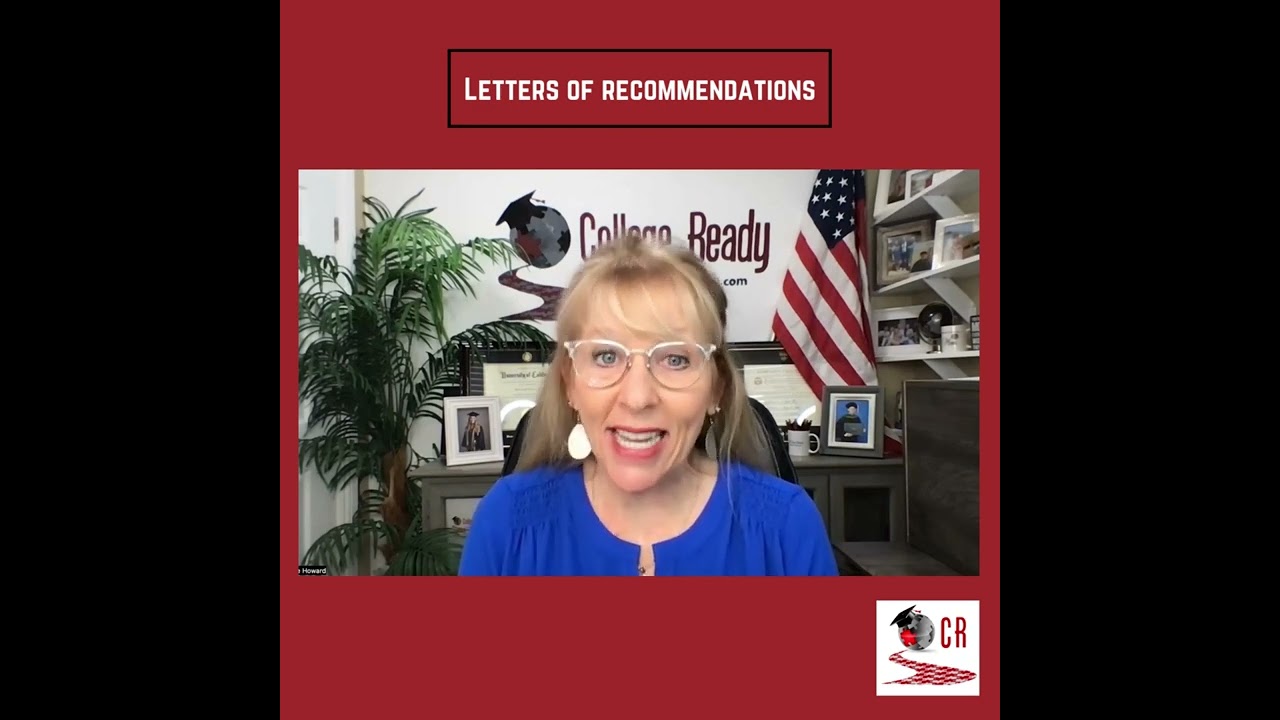
In this instructional video, Shellee Howard of CollegeReady explains how high school students should strategically choose and work with teachers to secure strong letters of recommendation for college applications. She emphasizes selecting recommenders who know the student well and whose academic focus aligns with the student's intended major (e.g., engineering or pre‑med). Howard advises students to build relationships with teachers through after‑school interactions, tutoring, and club involvement, and to request letters early, providing necessary information and follow‑up thank‑you notes. She recommends having multiple recommenders as a backup in case one becomes unavailable, and stresses that at least one academic recommender is essential even for students with extensive community‑service experience. The video also covers etiquette such as not reading the recommendation before it is submitted, to avoid signaling lack of confidence. Finally, Howard offers CollegeReady’s free discovery session for personalized support.
Chapters
Hello, this is Shellee Howard with CollegeReady. Today I have a very important subject I want to speak with you about, and that is letters of recommendation. We are in the thick of college admissions season, and it's important to realize why your student needs to really think out which teachers they will ask to write a letter of recommendation. Remember, teachers do not get paid to, to write these, and so your student needs to be thoughtful. In other words, does that teacher really know them? Did they spend time with them before school, at lunchtime, after school? Were they a student advisor? Did they have a club together? What is the connection? If it's just a, a teacher that the student just kind of knows, that letter of recommendation is not going to be as impressive. So really strategizing— does it fit with your student's overall strategy? If they want to be an engineer, if they want to be medicine, does that make sense? And can that letter— or that teacher who's going to write that letter of recommendation take the time and will write a great letter? Now your students can do things to make the letter better. They can spend time with that teacher before school, after school, during study hours. They can volunteer to tutor other students that teachers may be having to struggle with. They can help that teacher understand, "Hey, I'm heading out to lacrosse. Can I get this to you right after that?" So the teacher knows the student more than just somebody in seat number 22. Now, we recommend that your student has multiple teachers or recommenders because if one of them gets ill, leaves the school, decides they have too many students to write for, that leaves your student in a very precarious position. So picking the teachers early, asking them early, getting them the necessary information early, and then following up with them and a thank you note. So who are the best people to ask? I get this all the time. And how many? Well, it really depends on your strategy, because if you are somebody who spent a ton of time doing, community service. You may know that person better than you would any of your teachers. The problem is you're applying to academia, and therefore you want at least one, if not two, in the academic world. If you have questions on who is the best teacher, what is the strategy, how to get the teachers the right information, how to connect. Many people don't understand you don't get to read the letter, or you don't want to read the letter before they send it, because then that shows the universities you're not confident that they're going to write you a great letter. So there are strategies that you want to be mindful of in order to have a really successful letter of recommendation. And if you need help, I'm here, our team is here. To support you. You can go to www.collegereadyplan.com, and I'm happy to gift you a free discovery session so we can talk about your student's needs. Thank you.




