Masterclass- Parents of 9th-11th Graders: What You Should Know About College Planning
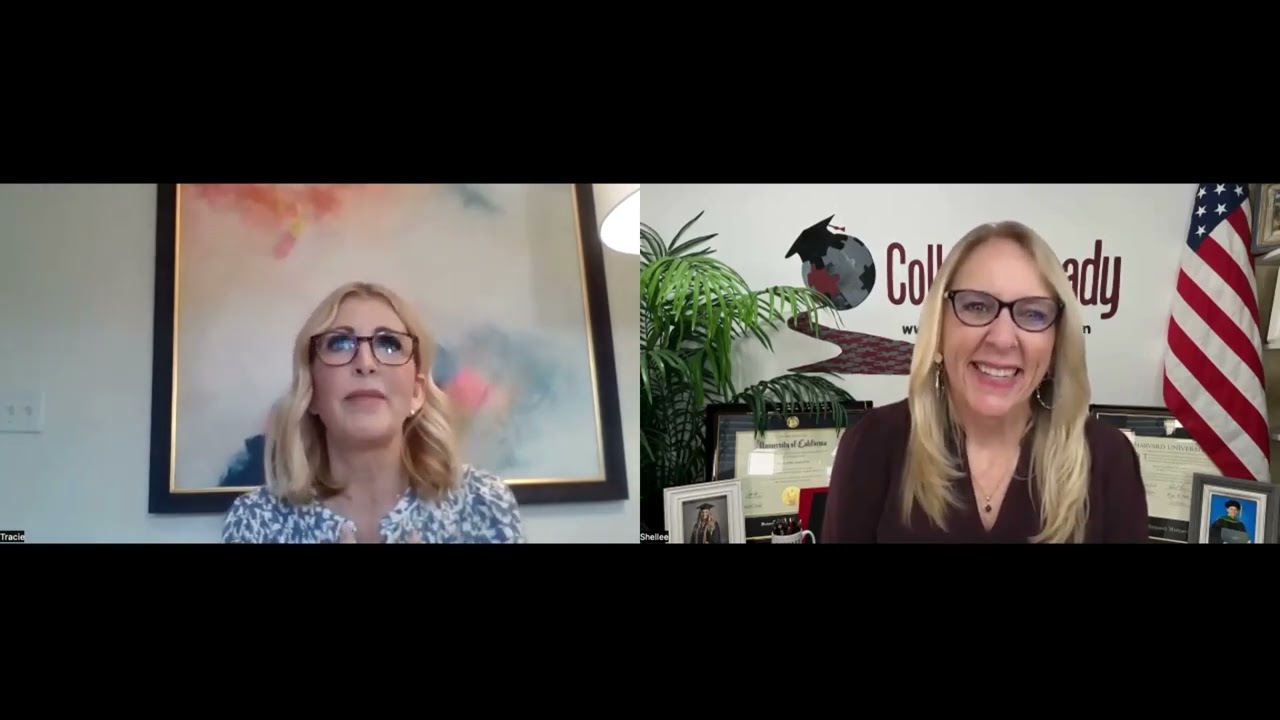
In this live masterclass Shellee Howard, founder of College Ready, guides parents of middle‑ and high‑school students through the entire college‑planning process. She opens by emphasizing the need to reduce overwhelm and to prioritize family fit—academic, social, athletic, and financial. The session outlines why the optimal start time is 8th‑grade, when students choose their first high‑school courses, and describes a step‑by‑step timeline for the next four years. Shellee explains the mechanics of financial aid (FAFSA/Student Aid Index, 529 accounts, CSS Profile) and how families can negotiate aid and avoid hidden costs. She introduces College Ready’s custom portal that tracks college lists, reach/safety categories, GPA and test‑score targets, essay deadlines, extracurriculars, and leadership projects. The conversation with guest parent Tracy Bulbreath illustrates real‑world challenges: late start, lack of school counseling, the value of early planning, and the impact of community‑service “Passion with Purpose” projects. Shellee discusses test strategy, the volatility of test‑optional policies, and why test preparation remains a financial lever. She also covers AP/honors course selection, scholar‑athlete considerations, and how to evaluate and hire a college consultant. Throughout, she promotes resources such as her bestseller “How to Send Your Student to College Without Losing Your Mind or Your Money,” a complimentary 30‑minute discovery call, and the EmpowerEducation.World passion‑project program. The masterclass blends personal anecdotes, data‑driven advice, and actionable resources to empower families to secure scholarships, minimize debt, and align college choices with each child’s strengths and family priorities.
Chapters
Outstanding. We are so excited that you have joined us this evening. Um, I have a wonderful special guest, Miss Tracy. Tracy, welcome.
Thank you, Shellee Howard. I'm happy to be here.
Outstanding. And like I mentioned before, Carrie Anderson will also be answering questions for you if you have any struggles, you have any needs. There she is, and we're gonna go ahead and get started. We do want you to ask questions because we know this can be incredibly overwhelming, and that's why we're here tonight, is to really to take down the overwhelm and try to simplify the process. So I'm going to go ahead and get started with our presentation, and then that way you all can follow along. All right, we are going to Start from here. Excellent. So this evening we have moms, dads, maybe grandparents in the room, and I always start with why, why are we here? And it's because we care about our children. So I just want to put that in the context of Our goal tonight is to help you and your child find out what is important to your family. Academic fit, social fit, athletic fit, financial fit. Yes, we all want it all. But if you had to prioritize, what would that be for your family? And I'm hoping you can open up discussion at some point where you can get some clarity. So these two beauties on my screen are my why. My name is Shellee Howard. I am the founder of College Ready, and I'm so excited you're here. The, the two young adults on my screen have made it through college. My son went to Harvard, 4 years pre-med, graduated with zero debt, and I did not pay a dime. So it's not that mommy footed the bill. It's that he got in and we were able to do it. With some financial negotiations. He then went on to UCLA Medical— or sorry, UCSD Medical School, and now he's an orthopedic surgeon at UCLA. And his path was his path. I have 4 kids and they're all very different. My daughter graduated from the University of Alabama and she graduated debt-free as a registered nurse. And so I have a doctor and a nurse, and I am terrified of hospitals. Go figure. Our goal tonight is to share with you how to decrease the overwhelm and how to increase the scholarships. That is a very important thing that I like to share with families. So I'm gonna just hit this one head on before I introduce my guests. I wanna make sure that everybody's on the same page, discovering the right path for your future. We want you to feel confident. When is the best time to do that? It's— if you have multiple kids, you probably understand that it's different for each one of them. And so there's not one time to start, but if we had to pick the best time, it would be right now when the students are in 8th grade going into 9th, picking their very first classes, because that's when they get on or off the right or wrong path. If they start down the really easy classes trying to convince the high school that they can handle the rigor, the challenging classes is really hard to sell. Trying to do the opposite is just as challenging. So we tell families it's never too early, it's never too late, um, but really the ultimate time is before the students have set off on their very first classes. So we're meeting with a ton of 7th and 8th graders right now whose parents don't want to mess up, they don't want to have regret, and they don't want to have debt. We'll talk to Tracy in just a little bit about her experience so you can hear what it comes from a different perspective. But I just thought we would start there because everybody wants to know. I also want to mention this is about you and your child's future. Our goal tonight— we didn't charge anything for you to be here— is to provide education so you can have the choice to make the right decision for your child. It does not have to be overwhelming. It honestly, if you start this process and you go through it with a timeline and a strategy, it's actually enjoyable. My second child and my fourth child, so much easier because I knew what the process was. So please know, if you're feeling overwhelmed, it doesn't have to stay that way. As I mentioned, our goal is to take away the overwhelm. If you have questions, Miss Carrie Anderson is going to be answering them for you as we go. So tonight, this is our goal. Miss Tracy and I are going to share important lessons for your 7th, 8th, 9th, 10th, and 11th graders because we have figured out that the earlier they start this process, the easier it is on everyone. I'm going to outline some strategic success strategies that will help you navigate this process, and then we're gonna talk about if you're gonna hire someone, how to evaluate them and know the difference. So our first guest, we're gonna do interview style. I'm gonna take off the slides, and Tracy and I are gonna have a conversation. So as you are listening and something's triggered for you, please don't wait. Put it in the Q&A and let's not forget about it, because as you know, it can come in and it can leave just as quick. So welcome so much to the show, Tracy.
Thank you, Shellee Howard. I appreciate it.
You got it. So let's start with, why are you here? What, what was your experience? I know maybe the listeners don't even know who you are, so maybe share a little bit about yourself.
Absolutely. So I am Tracy Bulbreath. I am a mom of 4 daughters. I have 3 seniors in high school. Yes, 3 and a sophomore in high school. And I found College Ready after doing a lot of research and listening to a lot of webinars just like this one. And that just really stood out to me in terms of what they offered, the services, the financial aspect. I mean, obviously going to school debt-free was very, very enticing. Again, as a single mom, I really am overwhelmed. It's a very daunting process, and I did start very late. Unfortunately, I did not know of the college advisor was really a thing. It's much different when I went to school and handwrote my application and sent it in the mail. But it was very, very daunting starting the process and being so late to get into the process. So Shellee Howard has really, and team, has helped us to navigate that fairly quickly. I am doing something much different with my sophomore, obviously, and getting her involved in other things that the girls were not involved with or had no knowledge of at, at that time. So that is where I am. We have gone through the application process. Um, we've had very wonderful, um, results so far. We have a lot of options that, um, we're deciding over and contemplating. And, um, yeah, that's where we're at right now.
So let's take a step back to— I mean, having 3 of any age You're a brave woman, right? So I always honor, right? That is not easy. I had mine 4 years apart because I was terrified of— what do they call it? Some kind of twins.
I know what you're talking about. Yeah.
I can't think of the name of it. Irish twins. Irish twins.
Yes.
Like, they're so close that it's more challenging. So when they were in 8th grade, since that's where I kind of want to take people back to, What were you even thinking about college then?
Oh my gosh, no, absolutely not. That was the last thing I was thinking of. I was thinking of survival, just getting through middle school again with 3, 4 daughters going through anything is a lot. But no, I mean, the senior year in high school or even high school seemed like a very far away future for us. And believe me, especially for those of you listening that do have middle schoolers, it goes by in a flash, in an instance. And I really was not prepared to, in the beginning of the senior year, take, you know, tackle this and take this on and really realized how far behind the 8-ball I actually was. And it was, you know, very upsetting for me. I felt like I dropped the ball as a parent. I didn't really know, you know, wasn't prepared. And I've always prided myself on being pretty prepared and being the room mom and the team mom and all of those things I was very involved with. But this really caught me by surprise for sure.
Yeah. So take a few steps forward now to when you researched, you found me. Why did you choose College Ready? What was that thing? You were obviously feeling overwhelmed and frustrated and all of those things we feel as parents, but What made you reach out to, to seek help? Were you not getting it in the high school? What, what was going on?
You know, the high schools are so impacted at this point, especially we're in the San Francisco Bay Area. There are so many children in schools in the different classes. We were not getting that guidance from the school. The girls had reached out to their guidance counselor a couple of times, but unfortunately they just weren't getting what they needed. I talked to a few of my mom friends, and they had mentioned different college advisors that they were speaking with and working with. And again, started doing my research, really starting to watch all the webinars and sat on quite a few. A lot of them were saying the same things. But as I mentioned before, what really, you know, stood out and jumped out at me was the fact that it was a process. College Ready talked about really putting together a plan and a process and having that in place and implementing that from, again, an early, earlier age than junior year or senior year. And it was, again, the debt-free. When you mentioned debt-free and putting 4 children through school, that's unheard of. And it's shocking to me, even a state school, the expenses that, you know, lie ahead for us. And again, I cannot wait to get into the negotiations once we know where we're going to land. But that really spoke to me just because because it's such a huge aspect for me, um, you know, to take on those expenses with 3 at one time. Um, my 4th is right behind them, um, and she'll be in school in 2 years. So that is a huge, huge component to the decision-making for me. Um, I know that you do have a partner that you— a financial advisor that I had met with a few times to talk about what we need to do and really walking me through— is it that— I might get this wrong, but the SAI?
Uh-huh.
Good. Um, and that index, and really knowing based on, you know, my income and assets what I most likely would be paying for, and then how we can go back and negotiate that. And another thing that really stood out was the fact that you were talking about how private schools— you could actually go to private schools cheaper than you could actually go to state schools, which was actually surprising, very, very surprising to me. So I would love for you to talk about that a little bit because I think, you know, the private schools are so unattainable in terms of monetarily speaking for a lot of families, especially with multiple children. I mean, the thought of spending $60,000, $80,000 for tuition for one year is very hard to grasp. So tell us more about really how you kind of approach that process with the private schools.
Yeah, I'm happy to help. And it is counterintuitive, right? You see the price tag and you're like, I don't think so, or don't look at that. I remember telling my son, just don't look at that. And it wasn't until I started digging in deeper at what the numbers really look like. So for families who are listening, the best way I can help you think about it is If you go to buy a home and you walk up and you see the sheet and the sticker price on there and you're like, I don't think so, but we can negotiate, right? This is not the price we're going to pay. Or even go on to a car lot, your child's first car, used or not. You look at the sticker and you go, hey honey, don't worry, we don't pay that price. But for whatever reason, families think that just because on a college website or they've been told this is the amount, they just feel like, okay, I guess I'm going in that much debt. And that is what we try to do by educating. So what you were speaking to, the Student Aid Index, SAI, it used to be EFC, but what it does is it looks at your finances. We have a, a calculator. You put in the data, it looks at your finances, it looks at where your assets are, it looks at your financial picture.. And then it tells you what colleges think you should pay. And I have never in 18 years of doing this had anybody tell me, yep, I am happy to pay that. Not one. Even my multimillionaire families, they don't want to pay that. That's why they're multimillionaires, right? They know I'm not going to pay sticker price. Who pays sticker price? So it's all about education. We want our families to know the FAFSA is a government-free form. It tells you, if you look at the details, just like our taxes, the FAFSA looks at this and they don't look at this. So they're telling you the wealthy are going to do it this way, and the people who feel like they're not going to get money anyway are not going to look. So they're just not going to— they're going to just bury their head in the sand. So we start if, if money is important, and it's not to everyone. I do have clients who are like, just get them in there, my alumni, I'm happy to pay for it. It's rare, but there are people in the world that are of that mindset, and that is okay too. But what I tell families, even if you could pay for it, how great does it feel for your teenager to get that accolade? I remember when my firstborn He got accepted to USC, and I'm currently in Southern California, and I'm thinking, great, that will lock him into California. He won't meet a girl out in another state. He's going to be close to mom. Like, I'm like, yeah, this is great. I didn't know the fight song. I never— I mean, I've done campus tours. Like, I'm not alumni, but I'm thinking, hey, that's an hour from home. I'm good on that. And then it wasn't a week later that Harvard sent him this beautiful package. Back then, it wasn't all just like fireworks online. It actually was packages in 2012. And he said, Mom, I think somebody is playing a trick on me. Will you call and see if it's real? Because he honestly never thought that that was even on his radar. That was his dream reach. And sure enough, He, you know, they're like, come out and visit, see what you think. And I remember walking along the Charles River thinking, I don't want him here and I don't want to pay this because I was terrified. I'm like, who has an extra $75,000 a year? And even if I wanted to, I don't know how I would have done it. And I definitely didn't want to put him in debt because he wanted to go to medical school. So I asked him, I said, you know, what are you going to do? And he said very simply, Mom, it's Harvard. I will figure it out. And just around that same time, he ended up getting the presidential scholarship for USC, which is a full ride, and Harvard matched it. So when I say I understand all of this, it's because I personally was touched By all of it. To take it to another level for the families who are listening is that same young man, I had saved about $250,000 in a 529. I was that parent. I was so proud of myself. I had done it right. And as soon as Harvard found out, they wanted that money. And so I moved that to my second child and I said, I don't know what you're talking about. So just know Sometimes what we don't know will cost us.
So, Shellee Howard, interrupt you for a minute there. Talking about the 529s, and that was another thing that really stood out when I was listening to your webinar initially. Everyone thinks it's great to put away money for college, to have that, that fund for college. My parents have the fund for the girls, and to hear that a 529 could be a detriment to getting additional aid. Can you kind of talk to that and, and what that might mean for, for financial aid?
So first, I have to share, I am not a financial advisor. I do not sell a financial product. I think that's very important for families to know. Please do not go ditch their 529 without speaking to a professional. I'm saying from the college side of things, the FAFSA include your 529 because you can— that money you save for college. And they're saying, yes, thank you, we would like that money. Okay, so even if you get these awesome scholarships, they're going to assume you are going to give them the money that you saved. Now, they're not going to ask for your, your house equity on the FAFSA. They will on the CSS Profile, but not on the FAFSA. So keep in mind, right, because you have to live there. It's not liquid where you're— they're going to make you be homeless, thank goodness. But the 529, you did such a great job, parents. Thank you very much.
Right.
And that is so irritating to people because they're like, I was responsible and now I'm being penalized. For some families if you have a student who may be a low performer, GPA, test score, or a student or a family that makes a ton of money, a 529 may be your only option, right? Because it still has to be earned. It's not a freebie kind of thing. Not everybody can get a full ride. And so I tell families, I say, you know, by the age— I usually say 7th grade— how that student's going to do academically. You have a pretty good inkling. Gifted comes easy, works hard but fights for it. Like, we always have these students in our, in our world. And start to strategize ahead of time because the FAFSA looks at the second semester of the sophomore year and the first semester of the junior year.
So why you repeat that? Because that is very, very important. Again, having a sophomore right now, and I know there are a lot of younger, you know, parents of younger children on here. Sophomore, second semester of sophomore year, they start looking at your grades, right?
So for your daughter, it's right now.
Right now. Yeah.
And the thing is, parents, you may not feel like you're going to qualify for a dime. But the FAFSA opens up the world of all money, grants, scholarships, Pell Grants, Cal Grants. I mean, it's, it's the whole scope. So unless you are for sure happy to just write a check, you definitely don't want to take yourself out of it, because if you don't complete the FAFSA their freshman year and something happens tragically and now you can't afford it, you're out of the game. So what you don't know is going to cost you dearly, and that is what we're trying to save you from. I don't want to make it all about scholarships because we do so much more than that. Let's talk about— for— I know that's important, and we can come back to that, but there's so much more. How about your girls? They were doing this with you, or by themselves, or with their high school counselor, and all of a sudden, I'm sure in your home, the the stress started rising. And, and so that you got them help. How did the girls feel about getting help?
Amazing. Well, I think there— we, we all felt relief just because the dynamic of, of course, the mother-daughter or father-daughter or son, whatever it may be, you know, your kids listen to you, but they begrudgingly listen to you. Um, when there's a third party that you can bring in, an biased person that is there to help, they realize that, okay, this person is really invested in my success. That's what they do. So that was hugely beneficial for us just to be like, okay, let's not work on this together, even though I was very much involved in the process. But their advisor's name was Deb, and she came in the portal for CollegeReady is amazing. And Shellee, I don't know if you want to speak to that, but I can kind of talk about it for a few minutes. But they were given a portal where they logged into all of their colleges that they identified that they would like to go to and attend and apply to were added. When they were talking to their advisor, other colleges and options were brought into the picture. Some they had no clue about based on their majors, based on their likes, dislikes, location, you name it. Schools, some private schools we'd never heard of. And, you know, upon researching a lot of those options, they were added to, to the list. The portal gives you a bird's-eye view of everything that you are managing, all of the tasks, all of the deadlines, all of the colleges again that you're looking at, the, the I don't know what the appropriate term is, Shellee Howard, but the risk of getting in or the success rate of getting in. Some might be a reach for them, some might be their safety school. This lists all of it. It will show and itemize all of their schools by their reach, by their safeties. And it is a great tool to be able to utilize on a daily basis to check in, to check for deadlines and tasks that are upcoming, our advisor would, you know, notify them. They would also have weekly calls with the advisor to really do a touch base and go through their portal and everything that is upcoming. Essay help. Essay nightmare. I mean, 3 of them writing essays, and we can kind of talk to that in terms of what schools require essays and what schools don't require. It's a whole involved moving, moving, you know, vessel and part. And a lot of pieces. And knowing kind of what school requires what, it was so helpful to have someone to navigate that process with you and really, you know, help you understand what you need to be doing. So I'll— I don't know if you want to kind of add to that in terms of the portal, but— Indulge, please. Yes.
Yeah, so the portal is nothing like anybody's ever seen. I actually had it custom built because with my firstborn, we had 33 Google Drive sheets and it was overwhelming. It was daunting and it was a place we fought nonstop and it was something I didn't want for, for the families that I was helping. So the custom portal really helps you understand what colleges are looking for. So there's a place for test strategy. There's a place for leadership and extracurriculars and community service, and it even tells you what GPA and test score you need to get to get accepted. So there's so much data in there that it's a very powerful tool, and it keeps them organized as they're applying. We provide the link, they click on the link, they apply, they send it to the application editor, the essay editor. It's a very supportive environment, and And so the girls absolutely thrived with their consultant, it sounds like.
Absolutely. And it was very easy to navigate. I mean, they're very savvy on different tools nowadays, but it was very, very easy and simple to navigate and access the information that they needed. And we're still looking on that now as they're getting acceptances or if they're waitlisted, you can go in and update that information just to keep track of of everything. I mean, we want to say Emma and Bella— oh my gosh, between the three of them, they probably applied to over 30 schools. So there's again a lot to keep track of, and this is just a great view. Just plug in, you know, pop it open, and you can kind of see all of the status of, of where you're at. So that was very, very helpful.
Were you shocked as a parent how many essays were needed per school, or did you, did you know that was I mean, I, in talking with our advisor, I knew it was coming.
She prepared us for it, but, you know, doing them and, and we have the deadlines, right, looming. Did you do your essay? Are you working on your essay? Are you? And again, it wasn't just me following up with them. It was their advisor, which they were accountable to. So that was very, very helpful. It wasn't me constantly nagging. Okay, I probably did nag a lot, but it was also Dad helping me, you know, in a non-nagging mom way. Do that and really helping them to stay on task and on target because those deadlines are deadlines. I mean, you need to get all of your— in a lot of early decision schools, you need to have all of your paperwork, your application, your essays, everything in by a certain date, not the regular date that most applications are due. State schools, private schools, a lot of them have different deadlines. So again, just keeping track of that was huge. But yeah, the essays, I mean, they're a little daunting. I don't know if you want to dig into that. The essays are very— probably the most stressful, I would say, just because you want to tell your story. And how do you, you know, portray a person or your student or, you know, how can they write about themselves that hasn't been told before or, you know, what makes them unique? And I think we can segue into the extracurriculars too, and really talking about, you know, how it's important to really be that well-rounded kid, right? And present yourself as a well-rounded individual. Again, I have 3 very different personalities. I have, you know, a child that's a 3/2 up to a 3/8. They all differ, but my 3/2 was in leadership. She was the vice president of her student body in high school. Currently, that was a huge decision maker factor, at least what I recognized. And the difference between, you know, my 3.8 and the 3.2 who was in leadership, she got accepted to every school she applied to. So I don't know if you want to speak to that. Sports, you know, all of my girls play sports, leadership, they all work. So they do have a well-rounded story. However, they weren't able, because we didn't get involved in this process soon enough, for like the passion project and doing some type of— is it, is it the philanthropic? What do you call it? Community service. Community service. They do have volunteer hours that they need to fulfill through high school, right, in order to graduate. But why don't you talk a little about that and how important extracurriculars are and to really be able to present yourself as that well-rounded individual to these colleges.
Absolutely. So when you speak of all the counselor did, right, our certified college consultants are amazing. We have— I mean, you got to work with Deb. She was the dean of students for the Claremont McKenna Schools. Like, her accolades are amazing. So we hire the very best at what they do. And the gift of that is you know exactly what needs to be done. And I think that that's a big piece because I get asked every day I talk about college planning and I mentioned my firstborn went to Harvard. Everybody wants to know just the how. Don't, don't tell me anything else. Just tell me what it, what it took. And as much as people, um, don't want to hear it, his community service was the icing on the cake because his GPA was not perfect. His test score was not perfect. They were good. His leadership was pretty awesome. His extracurricular— he was an athlete, but, you know, he, he didn't go on to play pro. And so people are like, well, what was it? And it truly came down to him utilizing and finding himself through community service because he was able to speak about it in his interview. He was able to write about it in his essay. It was life-changing for him. So maybe for those who are— have not heard, uh, of College Ready Passion with Purpose projects, what that is, is we use community service for a student to figure out their gifts, their talents, their core values, their advocacy, and do something with it. What does that do for the student? It teaches them, do I like people, do I not? Do I want to go into finance? Do I want to go into marketing? Do I want to be a doctor? Do I want to be a lawyer? And it's— they get to test the water without the pressure of failing, because if they fail, they're no worse off because it was a gift to the community, so they're willing to try and test out those skills. Our students in this past year have put together a, a beautiful opportunity where they have built 3 schools in Uganda. They have furnished the schools. They are now putting passion, passion projects inside each classroom. They are doing things virtually without ever having to put themselves in another country, working with our students all over the world because we are global. And it's really phenomenal to watch them lead other students. So these students are earning 8 nationally recognized awards and honors and 4 leadership certifications by being part of this program. Unfortunately, the later you start in the process, the more you miss out. If you start in 8th grade, you start gently, you scale, you scale, scale, and then you lead. And then that is really the secret sauce. So my son, um, he didn't have much time for community service, nor did he really particularly want to do it. He was a very busy young man who loved his sports. And so I told him, I said, listen, this is the difference between um, a UCLA-type school, which is phenomenal, don't get me wrong, or your dream of an Ivy League. And he said, I'll give you 2 weeks. That was his comment to me. And so we went to Kenya, Africa together, and he lived in the slums of Mathare, and he helped children who had no parents, and he fell in love with serving people. And so in his essay, he was able to articulate why he wanted to be a doctor, because he experienced what it was like. Then he came back to the United States and he kept it going. He raised funds. He made a difference in the world. You do not have to travel to a third world country to do this kind of work. Why did we do that? Because I was the mom worried that he wanted to be a doctor just for the DR, and I wanted to save him a lot of time and headache and give him opportunities. So the passion project is a core piece, and parents, if you want to try it on your own, the most important thing I would, would encourage you to do is to help your child figure out who they are and why it matters, because that's ultimately what colleges are looking for. And that's a huge help when you do the interviews and the essays. Did I answer that okay for you, Tracy?
Absolutely. And I think that, you know, emphasizing that you can do that virtually is huge. I mean, obviously some of us can't take our child to Kenya, which we'd love to do someday. But knowing that they can get that experience virtually through the program is huge. So let's segue into testing again. I know that's a hot topic for a lot of parents. My children, obviously coming out of the pandemic, they did not take the SATs or ACTs. They decided they did not want to do that. A lot of schools these days and a lot of the ones that they applied to, they had it as test optional. Can you tell us a little bit more about the trends you're seeing with the testing, if it's something that you recommend and what College Ready, you know, how they support that.
Yeah, so we have always been— testing is a good thing, and I'll explain why. There's many reasons, and being a mom of 4, I saw all of them come true. The first thing I would tell families is just because it was test optional yesterday doesn't mean it will be test optional tomorrow, which is what's happening right now. Colleges are saying, you know what, it didn't work out. We're not— it's— we need another indicator. And if you went the process, or if you have a freshman right now and they're thinking it's going to be test optional forever, and they get to their senior year and now it's test required, you are seriously behind in all of that. So it is a risky proposition. And what it— the other thing that's important about testing is the same testing strategy and skill they learn from a test strategist will help them on every college class, every college class test they take. And if they want to go into law or medicine or accounting or nursing, those are all test certifications. So if you learn these strategies early, My son said, Mom, I'll save you a bunch of money, or you can give me the money. Well, you'll save— you know what he was really trying to tell me. And he's like, I'll self-study. I'm a good student. I don't need anybody. Don't, don't waste your money. And I said, all right. So he bought the book and slept in it a lot and took the test and literally cried. He said, I've ruined my chances. I'm stupid. Da da da da da. This awful. I don't know how to test. And I said, well, you do it my way now. And yes, mama, do it your way now. And you know, he worked with my test strategist and he increased his SAT by 300 points. He went from a state school to an Ivy League with just working with a test strategist, because what they taught him is how to beat the test. It's not an IQ test, it's all about strategy. So Don't have your child self-study because they can't teach them how to do better on timing, on making silly mistakes, on understanding how to answer these questions properly. The last thing I will say is test scores equal money. The PSAT can get you a free UC education if you score well enough. So if that doesn't incentivize you, that is a massive thing. The junior year PSAT, you can become, you know, a scholar. And with that, that's when all the colleges get all your scores from the PSAT. It's like you're coming out into the world and college— that's when colleges start sending you, apply here, free applications, they want you. And if you don't take it, there is no money. So test scores are very much an opportunity, another way to show your greatness. Now I will say, because there's going to be somebody thinking like me, my second child had massive test anxiety and she would study, uh, determined, study, study, study, same test strategies. She'd go and she said, Mom, it went blank. Like, I sat down Nothing was there, and I was just in tears. We tried everything. We tried different strategists. We tried different tutors. We tried teachers. We tried peers, and we finally did hypnotherapy, and it was the only thing that worked. So I have an incredible hypnotherapist who teaches them how to get control of their thinking. And allows them to do well. So that same student, my same second child who was bombing— I mean, not low, like bombing— um, after 2 sessions got a good enough score to get a free ride at University of Alabama. But more importantly, she used that same strategy to pass the NCLEX to become a nurse.
Wow.
It would have kept her from being a nurse because she was terrified of testing. So it opens up opportunity and prepares them for their future. It's not a bad thing. And so I know students don't like it. I get it. Nobody likes to test prep. How boring. But if you can look at all the benefits, the financial benefits, the testing benefits, future benefits, it's actually a really great opportunity for kids. And I don't sell test prep.
Right. Well, and I wish I would have known that 3 years ago with the Biggs for sure, because again, they, they didn't test and now I wish they had. And I had no idea about the financial aspect of that as well. Right.
And so a lot of the, you know, why we thought this would be helpful for our listeners is because you're a perfect example of I didn't know what I didn't know. And now I do. And I want, I want to tell people, I want to share what I— and I was the same way. I never started out as a college consultant, right? This has happened to me with my firstborn because everybody is like, how did you do that? How can we do that? What do we— and I would just share my knowledge. And then people are like, will you help us? And then it just grew and it grew and it grew. And, you know, the beauty is I still love it today like I do yesterday because When a student gets into a school, they'll be like, Shellee, we just got into Yale. And I'm like, yes, when do we go? Oh, I wouldn't have got into Yale. And so we have a good giggle. And, you know, it's, it's a really quite inspiring position. Students tell us things about their dreams and what they want and their major and what's important to them, because all we want to do is get it for them. And as parents, you want the same thing, but unfortunately you have to make their bed and do the laundry and all, you know, like I said, I have my own children, so I get it.
Yeah, for sure. Absolutely.
Is there anything else that you think would be helpful for parents on the call to hear?
You know, I can't stress enough just starting earlier and having that time. I wish I could take that time back. For mine, um, and obviously Ava, my youngest, has that, you know, advantage, if you will. Um, she's actually has her interview, I think, tomorrow for leadership. So she's, you know, following in her sister's footsteps with getting further involved in, in school and, um, you know, clubs and whatnot. Um, but why don't— I mean, I would love for you to share with our listeners, you know, how they can kind of take the next step and, and learn more from, um, College Ready and your services and, and, you know, how to get their children involved.
Yeah, I'm happy to. So first and foremost, thank you for spending your evening with us. The goal is always to let you know what may be hidden. And so College Ready, we help families from my bestselling book, How to Send Your Student to College Without Losing Your Mind or Your Money. And I wrote that book because I made a bet with my son that if he got in and out of Harvard, in and out of an Ivy League, um, debt-free, that I would write a book on how to do it. So at minimum, that is something— $12 can save you a ton of information, ton of, ton of time and mistakes. Beyond that, we— our programs start at $495 and go up depending on what the needs are of the student. So we really don't ever want anybody feeling like we can't afford it. Last year over— well, actually in '22-'23, oh, we had 51 seniors who earned over $23 million in scholarships. Our goal is for families to get into their dream school, but most importantly, to graduate without massive debt. And it is important for families to realize just because you hear on social media, my child had a perfect GPA, a perfect test score, and didn't get in anywhere. That's because they didn't do it right. And it's not as hard as it has to be. I mean, look at your girls. They've had such massive success since they've been working with us. And it is possible. It's just what, what the world is saying is not matching up with what we're, what we're seeing. We know where the generous colleges are. We know how to build the resume. We know how to get parents prepared. It really isn't as easy as it used to be years ago. I remember I applied to 2 schools, wrote 2 essays, and got into both, and then I had a big decision. Now the average student applies to 12. They write an average of 5 to 18 essays per school, and they're taking tests. Um, I always tell families, the more community service and what they're passionate about, is very important. Leadership, extracurriculars. So if you're feeling like, wait, you were supposed to take the overwhelm away and now you're like, oh my gosh, I had no idea and now I'm super overwhelmed, please, please reach out to Christy— or sorry, Carrie— and she can answer your questions about your specific situation. Everybody's child is different. You can't do— even if you have 3, right? You can't do the same with each child and expect that something's going to change. So, um, tonight we'd like to offer, um, the listeners a complimentary 30-minute discovery call. What you'll find out is what will set your student apart. You'll find out what colleges are looking for. And you'll find out, can we help you? And if we can, is it a good fit? It is not 30 minutes of us selling you. That's not a discovery call. It's 30 minutes of helping you figure out, are we college ready? And so that is my gift, and I will be happy to put that in the chat. I do believe we have a couple of questions. Do you mind if I answer those, Tracy?
Oh my gosh, please do. Yes.
Okay, perfect. So question: do UCs consider National Merit PSAT given that they are test blind for SAT? Yes, they do consider it. Yes. So again, I want the person who wrote that to think about how test blind is it. If my student is writing how hard they prep to get a 36 on their ACT, in an essay. How blind is it? Can you really unread that? I want to believe as professionals they can. But I also know that if they've read that and it's a close tie, the tie is going to go to the person who just showed that they're working hard to test prep and they did well. So it is— I don't, I don't know if the UCs are going to stay test blind, test optional, whatever you want to call it today. And it's a risky proposition to think they will because they honestly can change tomorrow and it will affect every one of the students on this call if they're applying to the UCs. Any other questions? I'm looking in the Q&A. Um, let's see a few in the chat.
Did you—
is that just Somebody wanted to open up the chat. What position can a team put themselves in so they have leverage to negotiate? Ah, beautiful question. Back to finances, one of my favorite. This is my favorite. You know, CollegeReady is very unique because most college consultants, they'll say, oh, your child's good at math, go to MIT, call it a day. I don't believe that is a good fit for them. In the long-term future, because if that student can't afford MIT, now they're in a really tough position. Either they're gonna put themselves, their family in massive debt because a child cannot get a loan for that. So financial negotiation, picking the right colleges is the only way to do it. If your college list is not reach, comfort, and safety, generous and stingy, there— this will not work. So that's why, do you see, we like to start with younger students because we're helping them to understand. Well, great, you like NYU, love NYU, they have your major, awesome, they're $90,000 a year. Does that make sense for a botanist? I'll let you decide that. To your family, it might. To my family it may not. So if we know our child wants to do something like teaching, do they really need to go into $300,000 worth of debt? These are the questions we have with students because the financial literacy is not being taught in high school, not in middle school, not even in college. So we have to help them understand Yes, I love plants. But what about plants do you love? Oh, you wanna save the environment. So really, environmentalism is where your passion's at. Got it. Let's open up what that looks like. So a lot of times students just don't know the questions to ask. So working with us, we're able to bring that out. We also use 8 different assessments. Where we're able to unpack them and help them get clarity about what do I do with my gifts and my talents to make a living so I can move out someday. So the negotiation, to wrap that up, when my son got into USC, right, and he got the presidential for full ride— Harvard doesn't offer merit scholarships, but they do have $38 billion in endowments. So when they want a student, they just throw money at them. So because they're like, we need a West Coast kid who is pre-med, who is this, that, this, this, and this to finish up our class at Harvard to make it a diverse, equitable class, we're going to offer him that money. If he lived in Boston, it may not have worked. Right? So you, you want to be thinking, you don't understand that it's not just the color of our skin. It's they can only have so many accountants, so many marketing peoples. And that's hard for parents because if a friend gets into School X and they know their child's a way better candidate, they're like, how in the world did that happen? It's because they have to keep all the teachers employed. And so if everybody was a music major, what would the finance teachers teach? They have to have diversity of major, right? So it's very hard to understand how this all comes together. But after doing it 17 years, going into my 18th application year, it blows me away how every student ends up at the exact school they're supposed to. We're 100% success fulfill, and we, we make it simple for the family, and we're able to explain what's going on. All right, next question. Um, what activities, sports, community service, etc., should a teen be involved in so they may negotiate? It depends if they're a scholar athlete, if they're D1, D2, or D3. That's a whole nother thing. Think about this: 2% of scholar athletes get a full ride. 2%. Okay, academic scholarships are given at every school. So would it not make sense to not pay for hockey for 18 years— that's $10,000 a year— to get a hockey scholarship when a tutor would be probably a more valuable proposition? I was a scholar athlete. I played softball for the USA. I'm not saying it's a bad thing. My son was a scholar athlete. He was a D1 soccer player, decided he didn't want to play anymore his senior year, walked on Harvard and started rowing crew, never rowed a boat before. So keep in mind that there's no one path to answer the question because I want to answer specifically. Is have your student do what they love to do. I know it sounds so odd, but if your child loves bowling, there are bowling full-ride scholarships. There's equestrian. There is, I mean, figure skating. That it, it doesn't have to be, but I want you to think about this. If it doesn't generate money for the university, How much money do you think is available for a full-ride scholarship? That's where it gets tough. So all the sports that don't generate an income have a lot less to give than football and basketball. Okay, Anonymous, so to clarify, you reported the $529 amount annually in the FAFSA but then took it back? No, no, no, no. Nope, nope, nope. There was no 529 put on the FAFSA. As soon as I found out that the FAFSA was gonna look at the 529, I called my financial advisor and I say, what can I do? And he said, based on everything we know— this is, remember, not financial advice— we need to move it to the second child because he is getting huge scholarships. So I never— it was never declared on the FAFSA in the first place. So hopefully that clarified that. Um, got it. Thank you. Yes, thank you. Hi, Carrie, will you be able to send us this recording? Yes, we will. Um, what's the name of the Passion Project program? Oh my gosh, I love this. So these students I mentor the leaders who then lead the group. And they're— the students are from all over the world, so they're getting the chance to meet people in China and India. It's just fantastic. Go to— the group is called Empowered— EmpowerEducation.World. EmpowerEducation.World. EmpowerEducation.World. The students came up with the name, and when I write it out, it all kind of blends together. Um, I will tell you, there's no cost for your child to come and play with us in this group. There's absolutely no— nothing involved. This is my gift because I think that if every teenager did 200 hours of community service, our world would be a better place. So I do this out of the kindness of my heart. I welcome in all of your children. The group is incredibly welcoming. The only caveat is I cannot certify their hours or give them leadership certification, so they can just participate. In order for them to receive my signature and be part of national recognition, they have to be a college-ready student because my name's attached to it. So that's the only caveat. The cost to do that is $495. So again, there's no bait and switch. I tell people from the very moment because I want you to know, I want everybody in the project who wants to be there, and you never have to sign up for a thing that's college ready unless you want me to certify their hours. So hopefully that answers that. Um, let's see. Good, good, good. Do UCs consider national? Okay, we got that. Same as the— same one as the FAFSA question. Thank you. Also, what is the name of the book? It's How to Send Your Student to College Without Losing Your Mind or Your Money. I'm like, where is it? Oh, chapter 9 lists 10 colleges that are tuition-free, tuition-free. So if you're like one of those families who are like, we truly can't afford any of this— oh, thanks, Carrie. Um, I want you to know there are schools, all they have to do is go there and work. Okay, they do have to do something to get the education, but it is their work for free education. 10 of them are in my book.. I also have like 20 different massive scholarships in there. Um, let's see. Also got the book. Do you advise kids who play sports on how to get onto a college team? Yes, we do help scholar athletes. I have right now, um, at, uh, UPenn, I have the kicker. The football kicker was a student of mine. And I am so proud of him because there's one kicker, right? There's not like a whole team of them. So getting him into a really good school in a really hard position was really challenging and fun. I don't think his parents thought it was as fun as I did, but I do help students in every sport and there is a strategy. The first gift I'm going to give you is sign up for— it just went blank right when I was gonna say it. Um, I will email you, or Chris or Carrie will get back to you. Um, if you do not sign up for this website, you can be in serious jeopardy. You will jeopardize their chances for a scholarship in a sport. Darn if I can't remember the name of it at the second. But yes, we help a lot of scholar athletes, and it's important to know if they're D1, the college can pick their major. So just know how important that is. If they're D2, they'll get less money, but there's more flexibility. And in D3, it's kind of like playing club sport as compared to high school. And always remember, if a student is really good and they want to keep playing, there's always an intramural at colleges as well. So we help students understand, hey, let's go get the one you want, and then we have a backup plan. So thank you all so much. It has been my pleasure. And Tracy, thank you. I just want to share that it's been a pleasure working with your 3 daughters, and we are looking forward to hearing more of their acceptances.
So thank you for being here.
Thank you, families, very much. All right, have a wonderful evening.
Shellee, can we do one more question? Sure, sure.
Yeah.
I didn't know how to answer this one. How important are AP honors courses? How soon should they start taking those if available?
So it depends on what your school offers. I'll say that first. Some schools don't offer an AP until the sophomore, and some don't offer it till the junior year. But that doesn't mean they can't take college classes from the very beginning. So how important is it? Well, look at it this way: if they don't take any and they still get good grades, they can go to college, but the college will pick them. The more rigor they take and the more evidence they want to learn and do well, they get to pick where they want to go. This is the simplest I can put it. Because the child should show they want to learn and they can learn while being challenged. But be careful not to overload them and sink their ship, right? Mental health is real. We don't— I mean, some of my students drag me along. They're like, what's next? What's next? What's next? And some of them are not like that. And so knowing that child and their gifts and their talents is really the best place to start. It's not this or that. It is what is right for child A versus child B versus child C. And we put together a 4-year academic plan the day they start with us. So we help navigate all of that so you don't have to guess. Carrie, did I do all of them?
Yep, we're good. And then I heard a few too, so that was great.
Wonderful. Thank you so much, everyone. Have a great evening.
Thanks, Shellee Howard.
Uh-huh. Bye-bye.
More from Shellee




The 3 Questions Every Parent Should Help Their Teen Answer Before College | Featuring James McLamb

Helping Your Teen Stand Out for College Through Purpose & Impact | Featuring Aishani Sheth


From Robotics to Cornell: A Father-Son Blueprint for College Success with Aarav & Ritesh Kumar

The Hidden College Credit Strategy That Could Save Your Family Thousands with Josh See

The Truth About Financial Aid: Why Some Families Pay Less for College Than You Think with Jack Wang

Human Skills Every Teen Needs for College, Careers & an AI Future with Rob Heller
