College strategist Shellee Howard and confidence coach Tammy teach parents and students how to graduate debt-free through strategic planning. They cover the FAFSA (which has a 91% error rate), positioning for merit aid, and applying to 10-12 schools across reach and safety categories. One student secured $30,000 in aid by aligning her profile with Pepperdine's algorithm.
Chapters
Outstanding. Welcome everyone. I am Shellee Howard, um, and I am going to start off this webinar in just a few moments. Um, people are still jumping on the call, so please get something to drink, get something to take notes. Tammy and I are going to pour into you tonight, but it is going to be a bit of drinking from a fire hose because we know a lot needs to happen. So welcome, we're excited you're here. Tammy, you want to add anything to that?
I'm just excited to be here with you and combining forces because I think our two worlds, um, have a lot of similarities that can really help our youth out there and parents out there. So I'm excited for this opportunity.
Outstanding. All right, we're gonna get going in just one more minute. Everybody's kind of hustling in, and then we will get started.
Okay.
Here they come. All right. Pammy, can you see my screen? Okay, I can. Excellent. Okay, let me— whoa, back up, getting ahead of myself. Oh, it's going the wrong way. That's never good. Technology.
This is good.
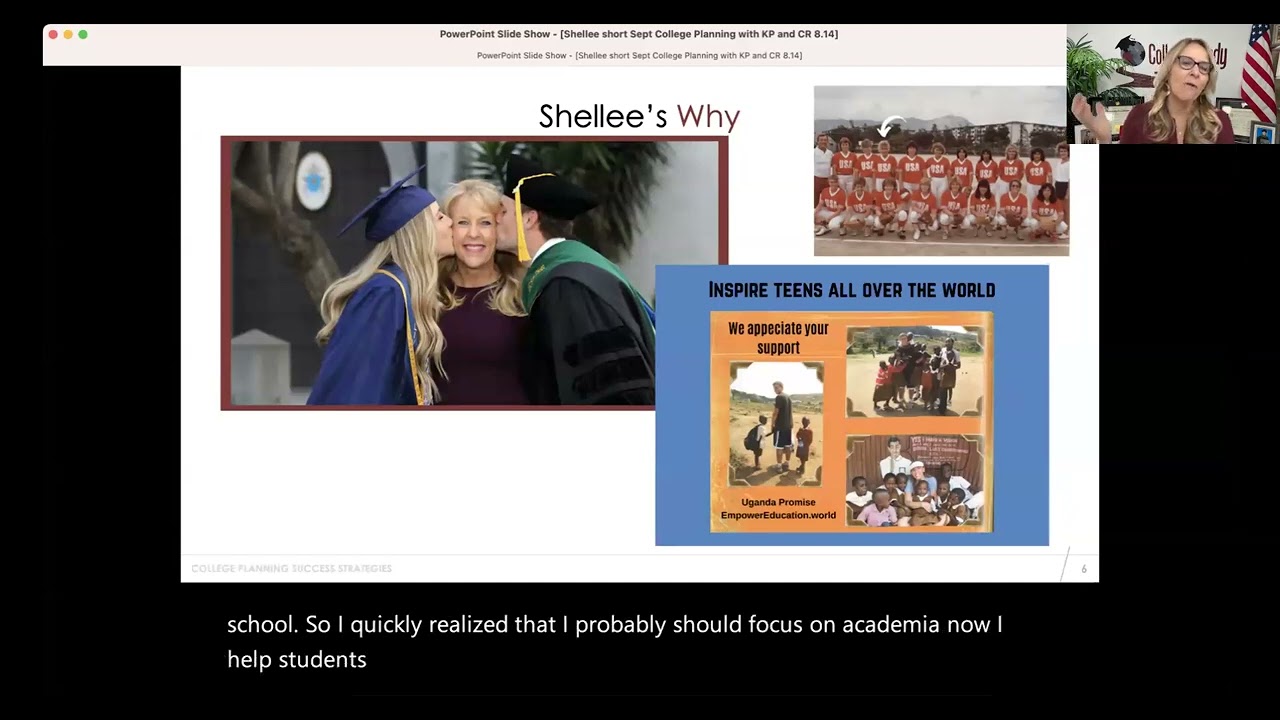
Technology is just always so much fun. Okay. Here we go. So welcome everyone. My name is Shellee Howard. I am the founder and CEO of CollegeReady. We are going into our 17th application season because I love to apply to college so much. Not really, but I do really enjoy helping parents and their families navigate this process. So tonight I'm joined by my special guest, Refuse to Lose. We're gonna Tammy and I are going to give you everything we can in a short amount of time, and then we're going to open it up for questions. So if you have questions, feel free to put them in the Q&A as you think of them, but know we're gonna first finish the presentation because we might answer your question, and then we'll come back and we'll go through the Q&A. So All right, let's go ahead and get started. Tonight we're going to talk about 3 things you need to know if you want to go to college for reduced or free, and some really cool ways of doing that. Tammy, I don't want to, I don't want to, I don't want to give away too much, so let's just go ahead and jump in. The first thing I always like to help students and parents do is get your minds in where we're at right now. And that's always helpful for a quiz. I won't grade it. I'm not going to give you an A, B, C, or D. I just want you to start thinking about how much do I really know about preparing for college and as it applies to debt-free, because that's always a big emphasis for us. So number 1, what is the term COA in college planning? Okay. Answer is C, cost of attendance. How much will it cost your family? Number 2, how many pieces of the puzzle are there in college planning? Is it 1 piece, 3 pieces, 6 pieces? I don't know, maybe hundreds of pieces, but the answer is there's 3 main pieces, and I'll dive in deeper on that. If a student has a high GPA and a high SAT score, they are assured of being accepted into their desired college. That is false. No longer is the GPA and test score an entry into your dream school. We'll touch on that. I or we earn too much money to qualify for grants or assistance, so therefore we're not going to get any money. That is false. We will touch on that. What is the ideal number of colleges to apply to for admission? I get this question every single day. And the answer is a balanced strategic list somewhere between, between 10 and 12. Anything more than 15 is absolutely going to water down the student success rate, so be mindful. It's not how many can you put out there, it's how many good ones can you put out there. Number 6: The SAI in college admission stands for Student Aid Index. This is taking the place of the Expected Family Contribution. Number 7: What is the average time for a student to graduate from a 4-year undergraduate college? You're not gonna like this one, you guys. It's closer to 5.5 years and some students 6 years to get a 4-year degree if you don't know your major and if you don't know that the college that you're applying to has a very low graduation rate in 4 years. Number 8: It does not matter what lender you borrow from for a college— for your college needs. A loan is a loan. False, false, false, false. We don't like loans, but if you need them, we want you to have the right ones. From 1981 to 2023, tuition costs have increased by C. 533%. Ouch. I know it feels like D to me. I have two out of college and two in college. I'm like, it's got to be the highest one. Number 10, is it possible to pay less for a private college than a public college? Definitely yes. Number D. So if you were shocked on any of those, you are going to love our presentation tonight. My name is Shellee Howard. I am an independent college strategist. I am more than a counselor. I am more than a college coach. I am more than a mentor. I help students and their parents navigate this process so the student not only gets into a name of a school, they get in and they graduate without debt. Our goal is a return on investment for your education. I founded College Ready in 2008, and that is when my son was going into high school and said, Mom, I know exactly what I want to do when I grow up. And I'm like, oh, All right. Because, yeah, I want to be a brain surgeon and go to one of those top-tier school things. And I'm like, okay. And then I panicked. That's the reality. I went back to school and I got my master's, and then I went back and I became an independent certified college consultant from UC San Diego. And then I started touring 25 colleges a semester on top of my full-time job. I spent 30 to 35 hours a week on top of my full-time career for 4 hours Sorry for 4, 4 hours, for 4 years. And when my son graduated, he had 7 top-tier college offers, and he ended up going to Harvard pre-med, graduated debt-free. That is how College Ready got started, because he didn't have a perfect GPA and he didn't have a perfect test score. He had a standout strategy. He had something unique that was truly him. It wasn't that we were making stuff up. He just was genuinely himself, and we capitalized on his strengths. We minimized his opportunities, and ultimately he got into Harvard, graduated in 4 years, got 1B, and then decided he wanted to try a job because the idea of more school after Harvard was a bit daunting. So he at the last minute decided, ah, I'm gonna wait on going into medical school. He then started applying for a job, and he ended up getting to work for the third largest consulting firm in the world called Bain Consulting. Why do I mention that? Because my son never had a J-O-B at all, ever in his life. And I asked him, son, how are you consulting at the third largest consulting firm in the world? He said, Mom, Harvard taught me how to think. And I'm like, interesting. Okay. I should mention his first job, he made over $100,000 a year at 23 with no debt. This kid then decided It's time to go to medical school. He applied to, I think it was right around 19, and got into 3. He had a— scored 98% on his MCAT, and he graduated from Harvard. And I was shocked. I was like, there's no way that's possible. It was possible, but he ended up exactly where he needed to be, and that's back on the West Coast with me. So he went to UC San Diego Medical School and decided he wanted to be an orthopedic surgeon. So he interviewed again and he got his dream pick. He is now an orthopedic surgeon at UCLA. He's a third-year resident and he has in total for medical school and undergrad $30,000 in debt. He will make that in his first year as an orthopedic surgeon. So money is important if you think about how that will stall them once they graduate. And I just want you to realize that that's one of my children. My second one, her dream school was University of Alabama. I said, why Alabama? What's wrong with California? She's like, duh, I'm on the football team. And I'm like, oh, I got you. I said, I'm not paying for out-of-state tuition for you to go and watch a football team. She goes, well, if I get in for free, can I go? I said, absolutely, you can go. I will pack your bags. And she did. She actually had 5 schools that she would be able to attend debt-free. And so she headed off to University of Alabama, and then she graduated. She's now a registered nurse in a pediatric ward, um, in an emergency room. And she loves it so much. So I have a doctor and a nurse, and I'm needle-phobic. My second two are a little more like me, and that is my third, my son. He, uh, my stepson is in, uh, news and broadcast journalism at SFSU. And my stepdaughter, absolutely love her strategy. She's like, wait, Harvard, Alabama, public state school. I am going to go international and get a dual degree. So she's at AAU in Prague. She will get in and out with a European and U.S. degree for $27,000 in total and be able to work either there or here. And on the weekends, she gets to travel all over Europe. Anyway, enough about me. I'm gonna get jump right in because this is about you. So tonight, housekeeping: the more you participate, the more you lean in, the more questions you ask, the more you will get. Please send your questions into the Q&A. We will address them towards the end. The workshop is not 80 minutes. I just wanted to put that in there and see if you're paying attention. It is actually maybe 45 to 60 minutes depending on how many questions, and then we'll ask you for an evaluation at the end because We want to, we want to know how you think we did. I talked about my 2 who have graduated, but my why is because I did this process all wrong. I went on a, I thought I was going on an athletic scholarship. I played softball for the USA, and I thought that was my path to a full ride. What I didn't realize is there's no money for softball. And it is not a money-generating sport. And I wasn't good enough for a D1 school. So I quickly realized that I probably should focus on academia. Now I help student athletes. I help visual and performing artists. I help, you know, academic fit, social fit, financial fit. I really want the student to be the best version of them. The other thing that really inspires me is to helping students find their passion. Because when they find their passion, they do for others, which is brilliant, but they also learn what they're really good at and what they're passionate about, which helps them pick their major, college, and career. I'll share more about that. As far as my experience goes, I am a bestselling author. Um, I have a book that I will be happy to gift you at the end of this presentation. It's How to Send Your Student to College Without Losing Your Mind or Your Money. And that is truly what it's all about for us. We want you to have it all. I'm an international speaker, and I am part of an ethics organization, which I am very proud of. We have a high standard of helping students be successful. Let's dive in to why you're here. This may shock some of you. But I have to set your mind in the right place because I promised you 3 things that would help you graduate without debt. The first thing you have to know is college is a business. They need you as much as you need them. It is so important to keep that in mind. I know it's emotional. I want— I know we want the best for our child. I know we want them to do better than we did. I know there's a lot of things wrapped around it, but I just want you to realize they need your child. No tuition, no college. And you want to pay the least you can because, right, the more money you save, you can help put a down payment on their first home, or you can retire early, or whatever you want to do with that extra money. It's not up to me. I bought a new car, but shh. Um, then I want you to realize schools have huge endowments. Huge. Harvard's not the only one. There's a lot of money out there. And so when they want your child, they throw money at them. And that is the story of my firstborn. Let's talk about some common challenges because I don't want everybody— I don't want to paint the picture that this is all sunshine and roses. All right, I am realistic. I am. I do realize that every student has their own path. But here are some things that when I get on a discovery call, people want to know. They're, they're just frustrated. They do not know the process. Common as parents, we went to college. If we went to college, I did. But if you didn't, that was a long time ago. There were usually, we maybe applied to 2, 3 colleges and you know, sent it in, used a typewriter maybe, and hope the post office got it there, and maybe took an SAT, ACT, and that was it. Good GPA, good test score, you were, you were pretty much in. And that's not the case anymore. So the number one thing families are stressed about is the process. It is incredibly confusing, right? There's AP, IB, dual enrollment. There is Do I take the AP test? Do I take the SAT? Do I take the ACT? There is so much confusion. Is there test optional? That's a whole nother story. Don't have time to coach my child, or maybe your child doesn't want to be coached by you. I had that with my fourth child. I get it. Our high school counseling system is overworked. Let's be honest, they're great people, great counselors, But they have an entire school to support, and those are the kids who are naughty, not just good. I do not have the time to do this myself. The process has changed. It's competitive for dream schools. Yes, it is. How to get more money? That's what I want to talk to you about. We have not saved enough. Sometimes that's okay. We do not know how to fund college. I want to teach you how. Don't want to reduce our lifestyle or ruin our retirement. Good on you. I'm right there with you. So I'm going to talk about the number 2 most important thing. So number 1 is realizing college is a business and they have money to negotiate. That's number 1. Number 2 is if you don't complete these forms, you are getting rid of 70% of your chance to get free. Okay, so I'm just going to throw it out there. You don't do these, that's okay. You just have to write that big old check. The first one is the FAFSA. This Free Application for Student Aid is going to be different this year. They have changed several things not in our benefit as a parent. So you want to become very familiar or work with somebody who's very familiar with the FAFSA because it will affect the scholarships that you receive. Not need-based, all scholarships. Very important. This year the FAFSA will open in December. They haven't given us the final date yet, but we do know that it's always been October and this year it's going to be December, which means, it's going to be harder to get all of the information in time. So be the first to apply in December. The next one is Apply Early. Use, use it for every college. Grants are on a first-come, first-served basis. The soonest you can complete it this year is December. There are 46 questions, 91% error rate. 91% error rate. You want to know why people don't get scholarships? 91% error rate. All right, next one, CSS Profile, College Scholarship Services. This is typically for your private top tier, but there are other colleges, and we can happily tell you which ones are which. These schools would be like Stanford, Duke, Rice, Yale, St. Thomas, If you, if you do not complete this, you lose 70% of grants from colleges. Again, if you don't play their game, they're not going to play the game of money. Even high-income families can get merit aid and institutional aid. School-specific applications, right? There's the Common Application, the Coalition Application, the UC application. The school application, the essays. There are so many forms, it can be overwhelming. We've created a whole password-protected portal. I'm happy to show you at a later date. There's just not enough time in this meeting. If you schedule a discovery call with me, I show you how all of this goes together. But let's keep going. So how many colleges should you apply to? I mentioned 10 to 12, but let me dive deeper. It's very important that you have reach, comfort, safety, and competing colleges. And competing colleges. Okay. Because if one says yes and gives you a boatload of money and the other one says yes and gives you no money, we're doing some financial negotiations. Okay, this is how it's done. So admissions officers do not make the final decision. The people who make the decision are called strategic enrollment managers, and they oversee this process because they need East Coast, West Coast, South, North, East. They need ethnic diversity. They need diversity of major. Artists, business, law. They need it all. They can't just bring in a whole bunch of business people, then the school is out of whack, and the college professors are not going to be happy when they lose their job. Real brief, I want to talk to you about the U.S. News and World Report. I don't know if you've ever dug into this, but let me share exactly what this is.. So admissions yield is the business term or thought for if every student applies to School A and School A only takes 100 people, they look really impressive, like everybody wants to go there. But the sad part is, is A lot of those people should never have been applying there. And so these numbers are very skewed, and it's all about facade. It's all about what colleges want you to think. It's not a real thing. And this typically happens in the student's junior year when they take the PSAT and they get the score, and then they get the results, and then they get flooded with all of these applications. Apply here, free application, we want you. And the student's going, yes, School A wants me. I don't know why, my GPA doesn't make sense, but they want me. So they apply, and we know what happens. It was not a good fit from the beginning, but now they just messed with the whole yield. So really be careful you know, when you Google it or when you look at some of these periodicals, that you understand what this is really talking about. All right, so let's talk real quick about positioning, and then I'm gonna pass it on to my partner, because all of this— you're probably sitting here going, wow, how am I going to navigate all this? How's my student going to do all this? This is the part I really want you to understand when it comes to reduced or free tuition, because somebody will have the same GPA or higher, the same test score or higher, and then you start to think about how is my student going to stand out, right? They're going to stand out with either their community service passion project, which we help the student build, their internship, their research paper, maybe their leadership, their extracurriculars, maybe their letters of recommendation, for sure their essay. But I want you to think of this now as a business. All right, put on your business hat, take away all the emotion. This is going to help you understand if you position your student well, money comes. Okay. This is Natalie. Her dream school is Pepperdine. She's Hispanic. She lives in California. She has a 3.7 GPA, a 1050 SAT, and she wants to be a biology major and then chemical engineering minor. So our team of admissions officers met with Natalie, and we analyzed the algorithm from Pepperdine. Who do they take? What percentage? What majors? All of that's important. Then we position the student for success. What happened is we realized at Pepperdine, for Natalie, she would have a much better chance of getting into engineering with a minor in biology than she would have because more women apply to biology at that school than men. Interesting. Then we look at— Natalie was accepted. My favorite part, we got her family $30,000 in free money. So I hope you can see that just by looking at it as a business, having knowledge, Positioning your student. This is how we're going to help you navigate the process. So at this time, I'm going to turn it over to Tammy, and Tammy's going to share with you how she can help your students position themselves to be the very best they can be.
Well, thank you, Shellee Howard. That was some good stuff. I needed you many years ago, but I appreciate that. While I'm talking, if you would like to follow me, here are my social media contacts and emails. I love responding to questions. I know sometimes questions pop up later, so if something does, please email me. I love to engage and interact. But what Shellee Howard has said is so important for our athletes. Everybody's looking for that money, and often money can become a major obstacle. And there are ways. That doesn't mean it's always going to work out exactly how we want, but there are ways. But my foundation, what I believe in, just like everything else in life, it really comes down to confidence and how we handle and think about what's in front of us. I was going to ask you guys a question, but Shellee already stole my thunder here. Forbes magazine did a research study. I think it was about 12 years ago, and they studied what the successful people in every possible area of life did, from doctors, lawyers, business, athletes, artists, musicians, you name it, they studied it. And there were some common characteristics that popped up, but the number one trait was that they control their thoughts. Just like her son learned at Harvard, he learned how to think. If we can help you start to think about this in accepting that challenge in a positive, productive way, helping your athletes do that, then that's going to be part of the game. The game's already going to be won. I'm going to start off with a quick story. A lot of my athletes call it Tammy Time. I believe in stories. There was a young man just graduated from high school, and his parents threw him a graduation party. All of his friends and family were there, and he had a rich Uncle Paul that was a multimillionaire that traveled the world that he rarely saw. Well, Paul shows up and he's catching up with him and, well, now you've graduated from high school. What are you going to do now? Going to college. Okay, well, what are you going to do in college? Eh, I'm going to do enough just to get by. No, I want you to do more than that. I want you to graduate in 4 years with honors. He's like, that doesn't sound like much fun. No, if you do that, I'll buy you anything you want. Your parents will have another college graduation party for you now, and I'll be here with whatever you want. He's like, all right, I want a brand new sports car like you have.
Deal.
Buy you an $85,000 sports car if you go in 4 years, graduate with honors. Make a long story short, the young man goes to school. Gets his priorities in order, does what he needs to do, comes back and they have the graduation party. Everyone's there but his uncle. So he's a little bummed and he keeps looking out the window, you know, just to see if there's a car outside or his uncle's late, maybe. No uncle, no car. Well, he's again bummed and kind of down. He's helping his mom clean up, party's over. Takes the trash out into the garage, and there in the garage was a brand new $85,000 sports car. Well, he is pumped. He calls his best friend up on the phone, says, you know, it's late at night, I know, but I'm coming to pick you up. We're going to test drive this thing. So they find a place where it's kind of deserted, and they're going to see how fast they can get this car to go. Well, he starts it up, puts the pedal down the metal, Car's going about 90 miles an hour. Now that's pretty fast for my car, but his friend was like, dude, man, this— go faster, come on! He's like, I'm going as fast as I can, I've got the— I've got the pedal all the way down. No, this car is meant to go faster. And he couldn't get it to go faster, so his friend's like, stop, let's trade places. So the best friend gets— they trade places, best friend gets behind the wheel, starts it up. Hits the pedal down, nothing else changes. It still won't go beyond 90 miles an hour. He's like, dude, your car is broke, you need to fix it. And so he takes it into the dealer the next day, tells the dealer what's going on. Dealer says, let me have my mechanic look at it. Mechanic comes back after 5 minutes, whispers in the dealer's ear, and he said, okay. So he turns to the young man and says, let me get this straight. You just graduated with honors and you've been driving for about 6, 7 years? Yes, sir. And you mean to tell me you didn't know you can't drive an $85,000 sports car with the emergency brake on? So I hope I had some laughs out there, but when I heard the story, I thought, isn't that what a lot of us do?
We're functioning.
Maybe we're having some schools reach out to us. Maybe we're having some success that helps us stand out. But we were created and made to go even faster, stronger than we were. And it's often because we have mental emergency brakes on. And 9 times out of 10, that, that dials back into confidence and controlling our thoughts. Learning to think at a higher level can help us achieve a lot more in life. So I'm going to give a strategy that I like to use to help you. You can apply it to anything, you know, have your athletes or your students apply it. But it's just a little strategy anytime you're facing uncertainty, adversity, or when you just need a boost of confidence. And the acronym I use is BOUNCE. And so the B is for just breathe. Sometimes we're faced with these adversities, challenges, thinking about college, thinking about this or that, and we just need to take some deep breaths. When you breathe, you're cleaning out your body and allowing your brain to work in a better way to function on a higher level. And the O in BOUNCE is for opportunity versus threat. Nothing is good or bad until we decide it is. And a lot of times we think, oh gosh, there's a threat. I just talked to, uh, one of my clients today. Uh, she was a junior in high school and she was so stressed about all of this with college process. And I said, wait a minute, what's the opportunity in this? And she started sharing with me all of the opportunities and it was amazing how the stress and anxiety just left her. And so whatever it is that you are facing, just breathe, take a second, and ask yourself, wait a minute, what is the opportunity in this moment? And the U is for unite. And I love that Shellee Howard shared her why. And my why is to help as many athletes as possible get off the confidence roller coaster. And You know, it's important that we find our why as parents, but also what is our child's why? Why do they want to go to college? What's the bigger picture? What's the bigger end goal? And making sure that they're living that why, they're being united. Most of our issues with ourselves when we don't feel confident, when we feel insecure, is because our actions are not aligned with our why. With our bigger picture, with our big purpose. And so taking some time, why do you want to go to this school? What's the bigger picture? Why do you want to go to this type of college? Um, and this can apply to anything, you know, again, I mainly work with athletes and I always want to know what is the athlete's bigger why. It helps put things in perspective and helps give you more of a direction and guideline. The last thing I'll say with this, I'm all the time having parents say, hey, can you encourage Jim or Barbara or whoever to reach out to admissions, to reach out to college coaches? I've been on them for weeks. And 9 times out of 10, when the student is not doing what they need, it's from— it's lack of confidence, it's insecurity. It's not that they're just being lazy. But they're wondering about the what-ifs. And so they're not really being aligned with their why. But put the why on the forefront of their brain. Hey, this is why you want to go. So now these are the steps you have to take. And that can really help jolt the student. The N is for negate the negativity. And we all— I mean, I have to catch myself daily and I make a living doing this. And I think I'm one of the most positive, productive thinking people out there. But I do have to catch those negative thoughts. We cannot control if a negative thought comes on our brain, but we can control how long we let it stay there and live there. And so we want to negate it. We want to tell ourselves better stories when those question marks pop up. What if I'm not good enough to get in such and such school? What if they don't want me? What if— why is one of my friends getting all of these offers and I'm not? 'Cause that's a big issue that creates negativity. And so you have to say, stop, stop talking about the negative and flip it to how can you use it to fuel you? Or how can you respond back positively or productively? I heard a new technique that I, I know some of you, I work with your children on here and I haven't even shared this with anyone yet, but it, a great technique is to when you make a statement like, I'm not smart enough or good enough to get into a certain school, then put a question mark behind it and really make yourself debate that. Like, really, you're not that good? Tell me why. And then you start finding evidence to put this negative thinking down. So negate the negative. We can't have two thoughts at one time. So the antidote to when you have a negative thought is to kick it out with a positive or productive. Now, you notice I said positive or productive. I don't think everything's positive, but instead of beating ourselves up, oh, I didn't get what I wanted from this school, or this isn't happening, think of productive comment instead of dwelling on the negative or just trying to be rah, rah, rah, and it's not real or genuine. And the C is see the confident you. And this is an exercise I, I have my family do. I have every client that I work with, and I ask them to think about what do they look like at their very best self when they are confident, when they feel good about themselves? What does it look like? What does it feel like? Describe it. And I give them time to think about that. And then I want them to write it down. Sometimes maybe it's just bullet points, or maybe it's in complete sentences. But then you start using this as a confidence boost. When you start to feel insecure, when you start to doubt yourself, then you go back to that image and you put that picture of the confident you. I start every morning out with about a minute of just closing my eyes and seeing what I look like at my best self. And it really does just help my day start a lot stronger. If I start to have, you know, a little bit of anxiety or concerns or doubts, then I go back to that image. And then last but not least, we have to bring the energy and we've got to show up how we need to be for that circumstance, not how we feel. You know, if you're going on a college visit, sometimes maybe we're anxious or nervous. You've got to show up with the energy, with the confidence of— not cocky, but with the confidence of— and you do that taking a deep breath. Ask yourself, hey, what's the opportunity in this? Making sure you're aligned, united with yourself, getting— negating any negative comments and seeing that confident you.
Boom!
You are ready to go now, and you've really warmed up your brain and given yourself a boost of conf— lots of boosts of confidence. So I want to challenge you and challenge your students, your children, your entire family out there. No matter what you're going through, bounce through it, and I guarantee it gives you a greater chance of being successful. And even if you're not, It's a lot easier to pick yourself up and look for the next opportunity. So I hope you guys enjoyed Bounce, but I do want to finish with a story. Before I do that, if you're not, if you don't apply to my confidence calendar, it's free. You can sign up at my website, r2lc.com, but it just gives a daily tidbit to think about confidence because confidence is created by what we say, do, and think on a daily consistent basis. But I want to finish. If you've heard me speak lately, you've heard this story because I'm bound to, I'm determined to share it with everyone that I possibly can because I think it's just gold. And I think it helps just sum up everything that we've talked about. There's a junior in high school and he was flunking all of his classes and he came from a single mom. She was working 3 jobs just to keep them afloat. And he had just accepted the mindset that life would never be any easier, so why try? And so one day his mom comes home from work and she says, honey, I want you to take the SAT. And he said, why, Mom? That would be a waste of time and money. No, please take the SAT. Okay, Mom, whatever, fine. He goes and takes it, doesn't think much about it, gets his test score back. A few weeks later, opens it up, and he made a 1480. So he's getting in some top schools there. I mean, this is a guy flunking out of high school. And his mom grabs the paper and says, oh my gosh, did you cheat? He said, no, I didn't know how to cheat on this test. She's like, hmm, okay. But he looked at it and he thought, I am smart after all. And he started thinking as if he was smart. Well, those thoughts changed his behaviors, and he started showing up in class, paying attention. The teachers noticed it and started changing their attitude toward him. Classmates changed their attitude toward him. And every day he was thinking, I am smart. And he had that vision. He saw himself as a smart guy. Well, before you know it, he gets his grades up enough to graduate from high school. Goes to a junior college for a year. Grades are good enough, so he transfers to Wichita State. This is based off a true story, by the way. And from there, graduates with honors and goes to an Ivy League school for grad school. Graduates, starts his own company, and within a few years is a millionaire. Well, 15 years after he had taken SAT, he gets a letter from the Princeton Review Board who put on the SAT. And he opens it up and it says, every 15 years or so we review our test procedures. Well, we realized the year you took the test, we made some mistakes and sent the wrong test scores to people. You really only made a 480. And he said all he could do was laugh because it did not— that test score did not matter now. But what had changed— he really wasn't smart according to the test score, but what changed was he started changing what he said about himself. He started changing his behaviors, his actions, and he started changing how he saw himself. And when we do that, then we can— we are capable of doing anything if we want it bad enough. So it starts with how you see yourself, how you talk to yourself, and your actions. Those 3 things will get you anything that you want in life. So I hope you enjoyed that story as much as I do. My mind always wonders too. I wonder what happened to the young man that really scored the 1480, that got the, you know, 480. But hopefully he was confident enough to go retake the test. That's the story I'm going with. So Shellee, do we want to open it up for questions now?
Absolutely. So if you have a question, even if we didn't cover it tonight, um, please put it in the Q&A. Uh, I will start it off. Um, oh, I can't. I have to wait until somebody puts in a question. Sorry, we're, we're in Zoom webinar. It's different. So if you have a question, please feel free to put it in the Q&A. Because you did register for this, uh, master class, we will be sending this out to you. So if there's any particular thing, um, that you wanted to review, that's available. All right, we have our first question. What balance of public and private colleges should a student apply to? You want to take that, Tammy, or you want me to take it?
I'm gonna let you— I think that's more your forte.
Okay, wonderful. So it's, it's not about public and private imbalance. It's about what is the best fit school academically, socially, and financially. And I'll explain a little bit because it is true that you can graduate from a private school cheaper than a 4-year public— or yeah, a 4-year degree public school. Um, it, it's not a matter of how many you should have, it's what school is the best fit for the student. If the student has a high GPA and a high test score and they are going to set the bar for all the A's, you can apply to as many as you want. Public and private are not only different in the cost of attendance but where you're really going to see the uniqueness is how many years it takes to get a 4-year degree. At most private schools, you will find small classroom sizes, which mean more attention, and the student will learn and they will not have to retake that class again. The other thing is they don't overpopulate, so they only have as enough room for enough students to get them out in 4 years successfully. The problem that we're faced with in many geographies, not all, is that everybody thinks it's cheaper to go to a public school. So they apply. They— I'll pick on the UC schools because that's a very popular one— is they will apply to every UC school, and then they're so overcrowded, they're busting at the seams, and the freshmen can't get the classes to get them to be the sophomore, that can't get them to be the junior, that can't get Then all of a sudden they're going and they're starting to take classes at community college during winter break and summer to just try to get enough units to graduate. So instead of looking at, um, public and private, look at what does my child ultimately want to do? Do they want to go on and get another degree? Do they want to graduate? Do they want to have work experience in there? So the, the balance of schools is really more of reach, comfort, and safety. And inside of those, what is what it's going to take to get the student out. Now, not every college has every major. This is a shocker for a lot of adults. It usually makes them fall out of their chair at this point. The student says, I want to go to UC Santa Barbara, and I'm like, 'Awesome, love this school.' 'Why?' Asking the why, Tammy. 'Because the dorm view is amazing. Have you seen the view from the dorms?' And I'm like, 'As a matter of fact, I have. It's nicer than the house I live in.' And then I say, 'But why do you want to go there?' 'No, I just told you, that's why I want to go there.' And so we have to get clarity. Do they even have the top 3 majors that you want? Do they have an opportunity for you to do research or work at the, the, uh, connected hospital? What is it about the school? Do you want a theory-based school or do you want a practical school? Do you want to go and learn about the theory of engineering or do you want to go build a, a rocket and let it fly through the wind tunnel? That's how we pick colleges. So, and it is unique to each student, and that is the beauty of having the balance list. Okay. You want to take the second one?
What extracurricular activities would you best recommend in order to stand out when applying for college? I don't think that— it's kind of like Shellee Howard said, there's not a standard answer there. What are your interests? And making sure that you're active. If you're an athlete, then yes, definitely being an athlete. Or a musician or volunteer work. Um, you know, that has to be again kind of aligned with your child and what they feel is true to themselves.
I, I—
Shellee, you may correct me, but I think one of the worst things to do is just making our children do just tons of stuff just so it looks good on the application. Um, we need to be using this as a life example and getting them to find things that they do enjoy while at the same time will help them stand out.
I love that. The other thing I like to let families understand is don't do what everybody else is doing. Really, that's the most painful thing. Students say, well, Shellee, I'm tutoring. Okay, every one of my students has tutored at some point. That's not going to go, oh my gosh, we need this kid. Feeding the homeless. Now, if you love to feed the homeless and you, you're really into like maybe mental health or nutrition or I don't, whatever, that's good. But don't do it because it's easy to sign up and show up. That's not good. So it really comes down to colleges want to look at your extracurricular to learn about you. So if you're doing tutoring and feeding the homeless and you don't like either of those, you are misrepresenting yourself. That is what you don't want to do. So we put together activities, honors, and awards, and we help our students rank them based on what colleges are looking for. So I'm going to go a level higher, Tammy, and I'm just going to give these people what they came for. Colleges want your student to lead 5 things. Okay, Tammy talks about leadership. What if they're not ASB president? What if they're not captain of the basketball team? That doesn't matter, but they still want them to lead others to do something or create change. Confidence, like Tammy talked about. That is why we partner together, because there's so much synergy in what we're trying to help families do. So it's not one particular thing, but I will tell you, an international project is better than national, that's better than regional, that's better than local, that's better than school, that's better than a club at school. So without saying what is better, I want you just to kind of put that in your mind. We are certifiers for 8 nationally recognized awards. And 4 leadership certificates. So we know what colleges are looking for, and it's not the easy thing.
Can I jump on that really quick? Because I just had a great example when you said international, national, regional. But I had a young lady, she will probably have some offers in soccer, but she has a servant heart. And it wasn't just for college, but she knew it would help her. Well, she started this Feeding the Needy drive that became national this year, and it reached across the nation. And there was a lot— she didn't create the publicity, but she got the publicity without even trying. And it's amazing now the feedback that she's getting from coaches and from universities. And everyone wants someone that is an initiator and a leader like that.
Mm-hmm. So true. All right, the next one. Do you base reach, comfort, and safety on test scores and GPA or something else? So because every student is unique and every college is unique, you look at the top 7 factors and then you have to— you also have to look at athletes, scholar athletes, and you have to look at visual and performing artists. But academically speaking, you look at test scores— or sorry, GPA with rigor. Okay, so it's not taking all the easy classes and getting all A's. That's not going to impress them. And then you look at, um, testing. Not every college has a test box, but every college has a place to write an essay about a challenging opportunity that you faced and you did well in. That would be test prep with a perfect 36. How optional is testing is the question I ask everybody in this room when you look at the reality of what these children are faced with. So when you think of how do we decide, how do we base it, we have who got in last year. So because I'm part of an ethics organization We have access to who got in every school last year, so I can show you the GPA, I can show you the test score, I can show you how many service hours. So it's not a guess for me. How would the average person do it? I have no idea. It would be awful, and I'm so sorry, that's not what you want to hear. When I did it, I built 33 spreadsheets, and I went on every school's website and I deep dove hours and hours and hours to figure out who is the candidate they're looking for. Does my child fit into that bracket, and are they at the top end, the middle end, or the low end? That's all you can do, but you still have to factor in maybe that child wants to go into accounting and they need an accountant from the East Coast who is really good at soccer. Whoa, how do you factor all that in? We can get you so close, but there's still that edge nobody knows, and we will never cross that line to say that we do. You want to add anything, Tammy?
No, you perfectly said it there. Okay, yeah, that's more your forte.
I'm gonna let you take this theory-based college because I may not get this exactly right.
I'm waiting to hear this.
Okay, um, wonderful. So what is a theory-based college? So think about engineering. Think about if your child wants to be an aerospace engineer, right? I have one right now. I have lots of them, but one in particular. And when we were building their college list, I asked, are you more interested in the theory of flight physics, the theory of physics, the theory of, um, propulsion, right? Or do you want to build a paper airplane and send it through a wind tunnel and see if it crashes or makes it all the way through? That's the difference. One of them is conceptual and one of them is doing. So a lot of times students will say, I want to be an engineer, and I say, why? And they said, oh my gosh, I've loved Legos since I can remember. That is a practical-based school, a doing school. If they said, you know, I just want to learn about it, I think it's fascinating, that's, that's a totally different student. So there are colleges that are theory-based, and there are colleges that are practical-based. You want to make sure that your child picks the right one so when they get there, they're not like, This is not what I thought it would be. That's how you know the difference. Good questions.
Yes, very good.
Anything else? We have 4 minutes.
And, and if you think of one later, then please, by all means, email either both of us or either one of us.
Absolutely. So I would like to gift each and every one of you my bestselling book You can go to freebook.collegereadyplan.com, freebook.collegereadyplan.com, and I am happy to gift that to you for your time this evening. And we are just super grateful, and hopefully this was beneficial. If you have any other questions, we're available to you. Tammy, anything else you want to add?
I've just enjoyed partnering up with you. I learned a lot that I think can help my athletes as well, but You know, it is an important stage in your lives and your athlete's or student's life. So we just hope you're prepared mentally and knowledgeably as much as possible.
Thank you all very much for attending, and you will receive the recording. Have a good evening. Thank you, guys.
More from Shellee




The 3 Questions Every Parent Should Help Their Teen Answer Before College | Featuring James McLamb

Helping Your Teen Stand Out for College Through Purpose & Impact | Featuring Aishani Sheth


From Robotics to Cornell: A Father-Son Blueprint for College Success with Aarav & Ritesh Kumar

The Hidden College Credit Strategy That Could Save Your Family Thousands with Josh See

The Truth About Financial Aid: Why Some Families Pay Less for College Than You Think with Jack Wang

Human Skills Every Teen Needs for College, Careers & an AI Future with Rob Heller
