New podcast episode with Ann Kaplan: Parenting Can Be Hard, But it Doesn’t Have to Be
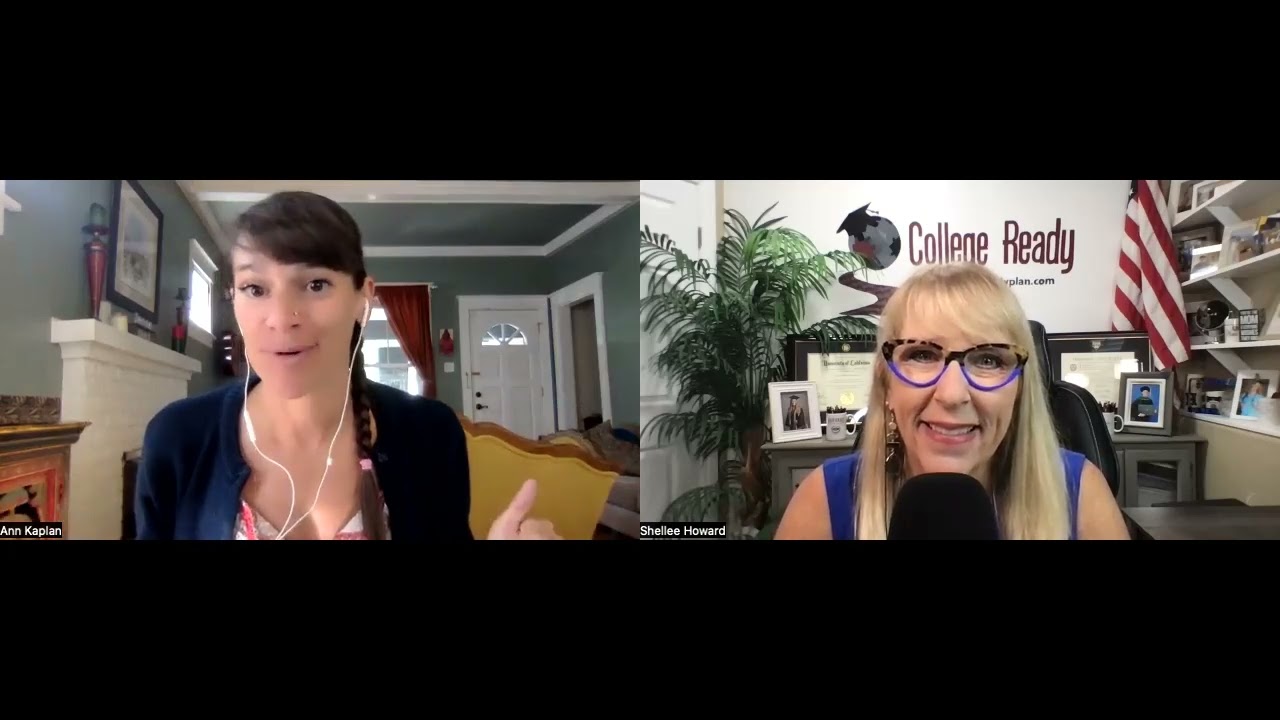
In this episode of the College Ready podcast, host Shellee Howard interviews parent coach Anne Kaplan, a mother of four and certified Love & Logic facilitator. The conversation explores what makes effective parenting, emphasizing the authoritative model that blends high emotional connection with clear leadership and boundaries. Anne shares how her own abusive childhood motivated her to break the cycle, leading her to develop a holistic coaching approach that integrates emotional regulation, nervous‑system management, and relationship‑based discipline. They discuss practical age‑specific guidance—from infants’ cognitive shift around four months that opens the door to early attunement, through middle‑school planning for college, to teen challenges like emotional roller‑coasters, risky decision‑making, and the need for consistent consequences. Anne explains the difference between punishment and constructive consequences, the importance of “disentangling” parent identity from a child’s behavior, and why parents should seek coaching proactively rather than waiting for crises. The episode concludes with concrete resources: Anne’s website (annkaplanparentcoach.com), a free workbook on getting kids to listen (bit.ly/kidsholistn), an email newsletter, and a complimentary one‑hour consultation.
Chapters
Hello, this is Shellee Howard with College Ready, and the podcast Parents: Is Your Teen College Ready? Today I'm super excited to share with you my guest, Anne Kaplan. Anne is a mother, and her, um, she actually has, uh, gosh, 4 children. I was reading that I have 5, so I'm like, I'm right there with you. Um, she's lived the dream and difficulty of parenting through every childhood stage. So for those parents out there who maybe can resonate with, it would be really nice just to have a book on how to do this, our guest is going to help you skip the book and go straight into success. She understands not only the joys but the difficulties and worries of becoming a parent, um, that you, you might experience as a parent. And Anne has a unique holistic approach to parent work that includes emotional support, home management skills, and effective discipline. Woohoo! Can't wait to share her with you. Welcome, Anne.
Hi, Shellee. Thanks for having me.
All righty. Well, you know, I love to share, um, on this podcast everything that prepares a child for launch. And launch could be college, it could be a trade school, it could be a gap year or traveling. Um, so let's kind of, um, start the discussion with how do you actually help parents be parents?
Oh my gosh. Could you be more broad? Oh my goodness. Well, I can say that, I mean, I work with parents of kids of all ages, but what's universal is the cornerstones of effective parenting, which never change. So we talk a lot about boundaries and relationships. We use a relationship-based approach, and we're really striving for that authoritative parenting model, which means to say that you have a high degree of connectedness and emotional intelligence with your child at the same time that you have a high degree of leadership and authority in your family. And so most parents are like nailing it in one department and not in the other. So we might wind up being like super connected to our kids, but not so great in the leadership department. And we wind up being this kind of permissive parents, or what sometimes I hear parents describe themselves as being a pushover or something like that. Or we might be really, really great in leadership and boundaries, but we're having a really hard time staying emotionally connected to our kids. And then we become— and not authoritative, but authoritarian instead. That's that kind of like drill sergeant, or, you know, kind of, uh, my way or the highway kind of parent. And neither of those, the permissive nor the, um, authoritarian, are really great for kids. We really want to have that like happy a medium that's like, yes, and, um, and so that's what we're working on all the time. So that's a very general answer to a very general question of like, what is a good parent? I mean, that's what we know from research and experience and anecdotally and, and all of those things. And from our own experience being children, like, we really do need our parents to be leaders and be the grown-ups, and we also really need to feel connected and safe and cared for by our parents at the same time.
I think it's so fascinating what it is that you do, because when you got pregnant, there was What to Expect When You Expect, like this big, huge book, and it was like, yes, I can do this. And then they're born and then there's nothing. Yeah, there's a lot of different ways of doing it. I shouldn't say there's nothing, but when you're in the trenches, when your child goes this direction or that direction or or one of the— a mixture of. Maybe we should start with why should parents listen to you as the expert?
Like, what makes me so good at this job? Well, obviously, like you said, I have 4 kids of my own, so I definitely boots on the ground, trial and error, doing all of this stuff myself. I'm living exactly what I'm teaching every day. But in addition to that, I'm a Love and Logic independent facilitator. I'm an IPEC trained life coach, and I've been working with families for 13 years now, I think. So, yeah, I know what I'm talking about. I promise.
How did this all get started? Did you happen to have one of your children like, I need a little extra? Yeah.
You know what's interesting is I think sometimes that's the journey to doing this kind of work is like, I just really have my hands full. I don't know what to do. And sometimes it's more about, like, I know for sure that I want to be this version of myself with my kids, and I know I'm not there yet, and I know I need help. And for me, it was probably both of those things. I had a very abusive and toxic childhood, and I knew for sure I did not want to do that. I wanted to be a chain breaker. But then when I actually had my kiddo and he got to be about, I don't know, like 10 months old or maybe, maybe a little bit older than that, I realized like I'm completely just reenacting the cycle of parenting that I inherited because I didn't know what else to do. So I knew what I'm doing is not what I want to be doing. And I don't know what to do instead. And I also really didn't appreciate until I had kids how much of good parenting was managing my own emotions. And I realized like that was a skillset I also lacked.
Right.
And so, um, you know, I did what I like to say, I saved my clients the trouble of doing, which was like cobbling together a patchwork of all the things and information and resources and support that I needed to actually do that transition and uplevel my parenting instead of, you know, my clients now, they don't have to go take a bunch of parenting courses and read a bunch of parenting classes and get this certification and also work with a therapist and also do, you know, like I did all of that stuff for you. So now I'm like your one-stop shop of like, let's talk about emotional regulation. Let's talk about not just how do I set boundaries and discipline my child. That's that leadership element. But then also like, let's talk about emotional intelligence and a relationship with our children. Like, how do you actually be, just be with your child and be present with them and see them truly, which is the like nugget that everything else of effective parenting grows out of, which is attuning to your child. Right. How do we do that too? And you know, when you work with me, we're doing both of those things and learning, um, a lot about processing our emotions and managing our nervous systems and then helping our kids do that stuff too. So that whatever challenge our kids throw our way, whether it's in the teen world, I, we were talking right before we started, uh, recording, like the two kind of categories I would say about parenting that I face the most with my teen, my parents of teens clients, um, is the kind of emotional roller coaster that teenagers are going through and how do you support them emotionally. So those kind of hurdles that get thrown our way of like, my kid is depressed or maybe even self-harming or Seems like they can't make friends, has social anxiety, all of those kinds of things. Or, and then the other area that we find a lot with teens is my kid is not making smart choices. I'm having a really, really hard time holding a line and letting them kind of fall on their face because the stakes are really high now. And so those kinds of hurdles get thrown our way too. And we need to talk about like, yeah, boundaries are important in relationships, even when they are really, really hard to maintain.
Absolutely. I'm just thinking back to my 5, and my firstborn, he raised himself. He was like that one kid, like, yeah, just his pediatrician said he's just an old soul. Like, it was super simple. So I was on my mommy high box thinking I'm a really great parent, and he's accelerating, and he's this and he's that and he's this. And then I had my second child. And it was very humbling. Oh yeah, I always say I, I thought it was me until number 2 came, and then I realized that was just 2 different children. So I'm sure for you, it, it— you would give different advice to different children is my guess, right? In the— in that order. When my first came home and said he wanted to be a brain surgeon, I was a little intimidated. We had no medical, you know, in our family. And then, you know, number 2, she was great, but she had totally different challenges. And then, you know, 3 and 4, my stepkids, they had their own challenges. And so I guess the question I'm asking is, when is the best time to connect with somebody like you? If— do you wait until there's a problem, or do you just go, you know what, I don't really want to have a problem, how do I be proactive?
I mean, I wish, of course, all of us were proactive, including myself. I wish I had been proactive, right? So I mean, I would say there's no wrong answer to that question. Like, if you're struggling right now, don't wait to get help. And don't let your stinking thinking stop you from reaching out or tell you that you shouldn't have this problem or any of that stuff. And if you know that you have some pretty high standards for yourself as a parent and that you need help to reach them, whether you've already, quote unquote, screwed up yet or not, don't wait. Here I am. And I'm not the only person like me. I think I'm probably one of a very small group of people, but there are more than one parent coach out there.
Right. So then when you think about what age do you see Is there a common denominator or a certain age group that you're like, this would be— everybody asks me, Shellee, when is the best time to start planning for college? And I tell them, when you promote from 8th grade, because you haven't made any mistakes, you have all of that time for community service and leadership and extracurricular, and it's just slow and gentle. So I ask you a similar question. When is the best time to start working with somebody like you. Yeah.
I mean, honestly, a lot of parents don't really realize this, but right around the age of 4 months old is when kids make this pretty big cognitive shift where they are actually able to start learning and associating cause and effect. That's why sometimes we see this, like, 4 or 5, 6 months sleep regression in babies. They're like, oh, wait, I'm connecting the dots here. When I do this, I get this. So I'm just going to cry all night and then you'll hang out with me. This is great. Right. So, but that's actually— I love when my clients tell me about the sleep regression because I'm like, oh, that means your kid's ready to learn stuff, which means you can start teaching them stuff. So the real— I mean, you can start this from the get-go. I mean, this can be the soup your kid is cooked in. And how wonderful is that for them to have been cooked in this, like, amazing soup of attunement and emotional intelligence and all of that stuff. So that's great. And I have clients hiring me all the time who have made it this far, but now they're in the teen years and, you know, the you know what's hit the fan and we can't go on this way anymore. And that's totally fine and normal too. And I, I think the most important thing for people to know is like, it's never too late. So like, just like in your analogy, Shellee Howard, like, yeah, would it be great for us to be starting in 8th grade, laying the groundwork and stuff for college? Absolutely. And that doesn't mean that someone who's maybe not had their eye on the ball until their kid's a senior in high school can't benefit from hiring you. You know what I mean?
Right, right. Absolutely. I, I use the analogy, it's either like drip dropping gently the information while they're 8th, 9th, 10th, 11th, and 12th. It's the fire hose, and then turn it on full blast when they're a senior because it's a lot of information to process. You know, what, what does the college list look like, and the essays, and that all comes really rapid fire at these students. And, um, So that's why I was wondering, in your world, so because the majority of my clients are, you know, between 13 and 20, what can a parent— what advice can you give a parent for that age range? Just gentle or specific or anything you can do to help us navigate the super high highs, the super low lows. I mean, after raising 5 teenagers, I feel like I definitely have a degree in it. But there's also, you know, every one of them so unique and so different, and you can't treat them all the same. But is there any, you know, for parents who are listening right now who are thinking, I don't know if I can fix what is broken, right?
And I think that's the answer. It's not our job to fix our kids' quote unquote brokenness. Like, Every single person in this world comes earthside with their own grab bag of challenges and their life's work. And at this point, which is one of, I think, one of the amazing things about parenting teenagers is you can really start to see, like, I can see this person for who they are becoming and, and for better and worse, right? Like you can see the amazing tremendous skills that they have and gifts that they have and the challenges that they have that they're probably gonna have for a really long time. Right. And if we're coming at parenting from the perspective of like, how do I I fix this in my kid, then we are— we've lost before we've even begun, truly. Instead, there's a much more effective approach which involves like really disentangling yourself from your child so that you can be this kind of coach and help meet to them while they figure out how to help themselves with these challenges that they have and to quote unquote fix their brokenness, if you want to think about it that way, you know. So that's where things like boundaries and consequences come in, because when you set Let's say we're talking about curfew, for example. Oh, okay. Curfew's 10:00 PM. Your kiddo's going to come home at— your kiddo's going to be late for curfew at least once. That is normal right now. We can approach that in so many different ways. We could be warning them and cajoling them and like sending them texts at like 9:25 saying, hey, just so you know, remember 10:00 PM, I expect to see you, or it's 9:55 and you're still not home. What's up with that? Right. That's kind of like rescuing and also kind of accidentally giving the message that like, I don't believe that you can tell time.
Right.
Or another way that sometimes parents do it is they wait for their kids to make the mistake and then they get really angry and punitive about it. You were supposed to be home at 10:00 PM. Look at me now. Now I've missed my bedtime because I'm waiting for you. That's it. You can't go out with your friends for a month and blah, blah, blah, blah, blah, blah. Though, that punitive aspect. Some of us will like totally take it and swallow it hook, line, and sinker, all the excuses the kids have when they get home at 10:15. Instead of all that nonsense that is totally undermining our kids' like autonomy, self-confidence, learning skills, like everything, if you are setting boundaries and really once again like disentangling yourself, like it's not a problem for my child to make a mistake It doesn't mean anything about me. It doesn't mean anything about them even. It's not a problem. It's just humanity. We all make mistakes. When kids come home, now there's a consequence for your mistake. Hey, you know what? When we miss curfew, no worries. Tomorrow your curfew is an hour earlier or whatever your consequence scenario is. But you hear even in the tone of my voice, like, it's no biggie. I'm not upset that you're late. Why should I be upset about your mistake? It's kind of like when kids are in school and they have their homework missing. Every age of my kids, I have— they have heard me say like, well, that's a bummer for you that you didn't turn your homework in. Like, I already went to third grade, so I'm good. But let's see what you decide to do and how you decide to make your third grade year turn out. It's your life, not mine. You know, that messaging is like, I love you no matter what you decide. I love you no matter how many mistakes you made. It's no biggie to me. My relationship with you, my connection with you is sacrosanct. Nothing you do is going to fix, you know, set that on fire or ruin that. And I also love you enough to set some limits here. And you chose, you actively chose to not come home on time. I totally respect your choice. And when you choose to come home late, this is what you're choosing. You're choosing to have an earlier curfew tomorrow or for the rest of the week or whatever it is. But you can hear like that disentanglement is the first step in being able to do any of this stuff.
Mm-hmm.
Because even though, like in the example of that angry parent where I was like, that's it, you're not going out for the rest of the week. But the consequence is the same, but because of the anger and emotional intensity, it's not really a consequence. It's a punishment.
Mm-hmm.
Because there's a huge message of shame and a message that my feelings are your job. I'm upset and it's your fault. And your job is to make sure that I'm not upset. And so now we're sending all of these like foundational elements for codependency and not a whole lot of autonomy and all that stuff that we don't mean to be doing at all, but it's happening anyway. That disentanglement is like step one. It's, hey, you're on your journey. Maybe you will get bad grades and that'll be a bummer for you because you might not get to the college you want to go to, or you might have to do a gap year or do your first you're in community college, like, that's too bad you chose that. But if you're happy, you do you. I already went to college. I'm good.
I love that. I mean, it's so simplistic from the mindset of— yeah, I mean, it's the opposite of wanting to be their best friend, right? And obviously, I deal with teenagers all day long. I have for the last 15 years. And I get the whole scope of them. But I, I love my job. I couldn't imagine anything more fulfilling. My, um, question for you is, say you are an aunt or you are a family member, and I'm thinking in my case, I have, um, a student who is yes, yes, yes, yes, yes, and does nothing. And I hear that a lot from my parents. Sure. So what would be your recommendation? Would you take that student on, or would you work with the parent, or is it a combination of?
Well, for me personally, I always work with parents and not kids, so that's what I would do. But my kind of approach, I mean, obviously, after finding out a lot more and asking a lot more questions, would my initial suspicion would be like, there's a reason why this kiddo is saying yes when they clearly don't actually feel the intention or the drive that they're indicating they do. Something's going on. It's probably relational between the parents and the child where it's, you know, I want to say what you want to hear because I'm afraid of you or because I feel responsible for you or because I really want praise or because I don't feel good enough about myself to actually advocate for myself or I've advocated for myself in the past and that hasn't gone well. If, if what I'm advocating for isn't in alignment with what my parents want. Do you really want to make sure— like, the bottom line is, in a case like that where kids are just people pleasing, saying what people want to hear but not following through, in some way, which we need to investigate, this kid doesn't feel safe in that relationship. They don't feel safe to be themselves. Now, it could totally happen in a situation with, like, a kid with with you, Shellee Howard, or something like, you're not their parent. They might just say they're being people, trying to be amenable or whatever. But if this kid felt safe with their parents, they would be telling their parents what they really think. Do you know what I mean? So it wouldn't be something where it's like they just say everything that everybody wants to hear but never follow through. And I want to also be really clear when I say they don't feel safe, I'm using that in a very broad way. There's a million ways in which people don't feel safe, not necessarily because they actually aren't safe, but because that's just the way their brain sees the situation. Sure. Kids who have a really, um, big problem with honesty, they often don't feel safe to tell the truth, not necessarily because of anything a parent has done, but because of something that's going on internally for them where they have, for whatever reason, a belief that the honest truth is not a safe thing for them to share. It's not going to work out well for them. They're going to have to— I can give you an example from my own experience. My eldest son, who's about to go to college, actually, um, he had a very tumultuous um, high school career. And for any parents out there whose kids didn't have the traditional track, I can't recommend hiring someone like Shellee Howard enough. There's, you know, my kid's gonna have 4 different transcripts to explain when he applies to college because he had to go to wilderness therapy. He spent some time in a residential, like therapeutic boarding school. And so 4 years, 4 different places. It looks like a hot mess on paper. But one of his challenges was telling the truth. And it certainly was not because of anything my husband and I did. He just believed that being wrong or having made a mistake meant something really bad about him, and he would lie instead. So my point is, obviously, my son Elijah was always safe to tell us the truth. And my husband and I did all the quote unquote right things. But for whatever reason, that wasn't because of us. He didn't feel safe to be honest. Or in the scenario you, um, hypothesize, like that kid doesn't feel safe to say, I'm not so sure I wanna do this, or actually I'm way overpromising right now, or this is what I can actually commit to giving you by the end of the week or whatever. You know, it's, it's hard for kids to say no to parents or to adults and things like that. And if if we're not doing everything we can on our end to, well, first of all, create a safe space and then get curious about, okay, I know for sure this actually is a safe space, yet still my kid doesn't feel safe. What's that about? Let me start actually— remember like that whole, those two different areas I talked about in the very beginning of like emotional intelligence and connection versus leader and leadership in your family. This is one of those connection moments where it's like, Hey, something's going on with you and I can tell, you know, spill it. Let's, let's hear what's going on. And with no agenda, with no me contradicting you or trying to convince you otherwise, I just wanna know about you.
Mm. Just a safe place to talk.
Exactly. Mm-hmm.
I love that. So as we look at, um, helping children, students, and the approach that you're suggesting, how do they know when it's time to seek help versus manage it themselves? Like, at what point do they just throw up the white flag and just go, I, I just can't do this anymore? Or like we said, be proactive versus reactive. Like, what, what would your advice be for families who are listening?
Well, I mean, this is maybe a little bit of a tongue-in-cheek answer, but like, if you've listened to this podcast or, I mean, feel free, there's so many ways to get info from me for free, be either, be it through my blog or being on my email list or whatever. But if you've done all of that kind of stuff and you are totally bought into these ideas, but you really just can't implement them, then that's probably when it's time to get help. Not because it's an emergency necessarily, although it may be, but because like you are trying to achieve something that on your own, you're not being successful at achieving. So most people, like, how many parents out there have read zero parenting books? Like at this stage of our lives, we've probably read a few books, but books are usually not enough. It's like you said in the very beginning, like skip the book and go right to success. Like if just learning this stuff on a theoretical level was enough to make change in our lives, everyone would just read a book when we'd all be amazing, phenomenal parents, and I would have no job. But the truth is, like, you could understand everything that I'm saying. You could be 100% like, yes, preach, sister. And still, when you get to the place where boots on the ground, you're trying to implement that cool stuff you heard on a podcast today, it just doesn't really work out. And the reason why is because of what's going on emotionally for you. It's that disentanglement piece of like, I'm— I know I want to be really calm and just like, whatever, when my kid gets home late from curfew, just like that lady said on that podcast. But guess what? When I actually happens and you feel yourself getting stirred up about it, it's really hard to stay calm. And that's part of my job is to say like, okay, well, what's stirring you up? What would you need to think and believe about your kid to not be fazed by the fact that he made a mistake or she came home late or whatever?
Yeah, that's such great— that's a great way to approach it. And so as, um, our listeners are contemplating, is it time to read a book? Is it time to implement? Or is it time to seek help? Um, if it's help, how could they reach out to you? What is the best way for them to connect?
Well, the best way to find out all of the things about me is to go to my website, of course, which is annkaplanparentcoach.com. Um, if you want to like just get a really tasty nugget of this stuff and start using it today, the probably the easiest way to do that is to get my free workbook on getting kids to listen the first time. And that's a super easy hyperlink. It's a Bitly link. It's bit.ly/kidsholistn. And if you decide to get that guide, you're going to also be put on my email list, which means once a week you're going to get great parenting tips from me. I do my absolute best to make sure all my emails are actually worth reading. And I have a lot of people who come to me and say, you know, I've unsubscribed from everything this year except your email list. And I'm like, yes, that's how I know I'm doing it right. So I love it. Yeah. So those are probably the best ways to get in touch with me. And if you ever wanna learn about working with me or you're curious to see if what I do is what you need, just set up a free consultation. It's like an hour of free coaching. Why would you say no to it?
I love it. Well, I am super excited to share this with all of my listeners. Thank you for being our guest today. And we are so grateful for all that you do.
Yay. Thanks, Shellee Howard.
More from Shellee




The 3 Questions Every Parent Should Help Their Teen Answer Before College | Featuring James McLamb

Helping Your Teen Stand Out for College Through Purpose & Impact | Featuring Aishani Sheth


From Robotics to Cornell: A Father-Son Blueprint for College Success with Aarav & Ritesh Kumar

The Hidden College Credit Strategy That Could Save Your Family Thousands with Josh See

The Truth About Financial Aid: Why Some Families Pay Less for College Than You Think with Jack Wang

Human Skills Every Teen Needs for College, Careers & an AI Future with Rob Heller
