New podcast episode with Sidra Morris: Is Homeschooling Right For You?
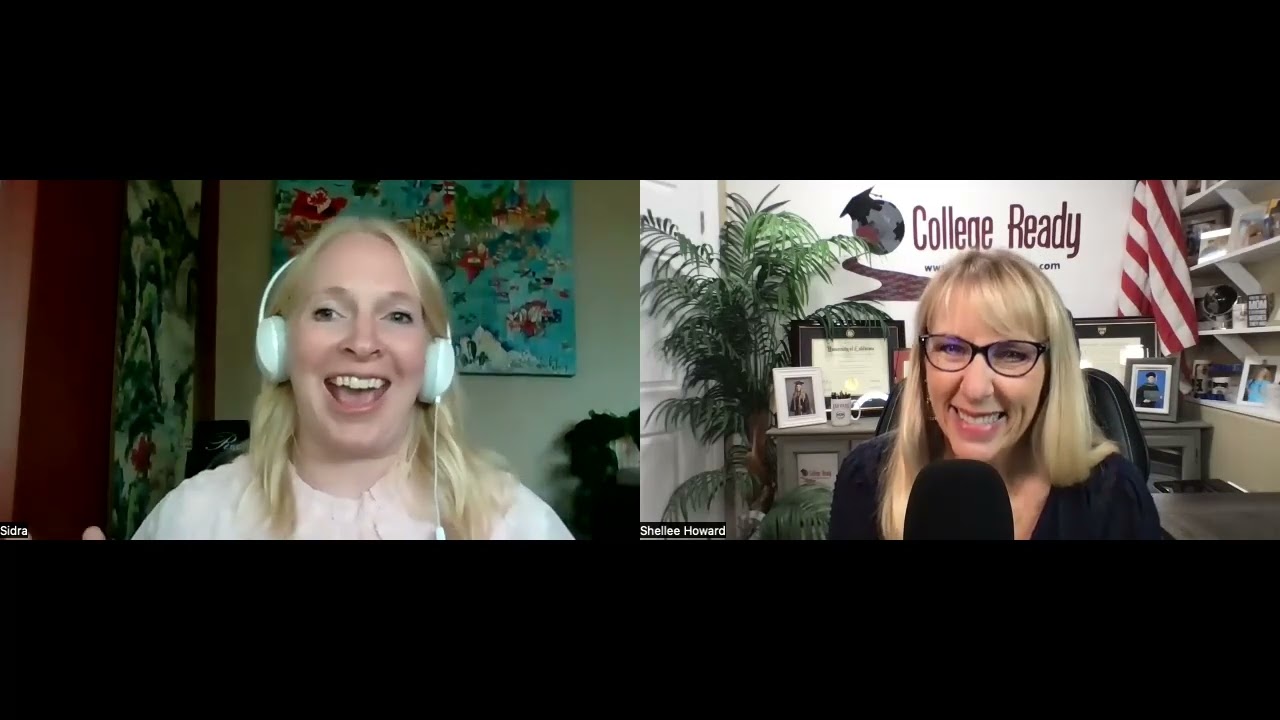
In this YouTube podcast, host Shellee Howard interviews homeschooling practitioner Sidra Morris to explore the practicalities, motivations, and resources surrounding homeschooling. Sidra shares how her family, dissatisfied with traditional schooling, created a part‑time community school in 2016 to offer project‑based, student‑led learning while keeping college and technical pathways open. They discuss the legal landscape of homeschooling across states, emphasizing the Homeschool Legal Defense Association (HSLDA) as a key resource. Community support, co‑ops, and online materials are highlighted as essential for families feeling overwhelmed or lacking teaching credentials. Sidra describes a typical homeschool day—slower mornings, structured learning blocks, project work, and half‑day schedules—while noting that older teens may transition back into public high school, successfully entering honors and AP classes. The conversation moves to Sidra’s role as a homeschool coach, helping parents navigate curriculum selection, neurodiverse needs, burnout, and resource curation. Listeners are directed to her program, Knox Academy of Making (knoxacademyofmaking.org), for further support. Shellee concludes by announcing a new division, See Our Future Now, aimed at guiding students of all backgrounds in post‑secondary planning, whether college, technical school, or entrepreneurship. The episode serves as a comprehensive guide for parents considering or currently homeschooling, offering actionable advice, legal pointers, community connections, and coaching services.
Chapters
Hello, this is Shellee Howard coming to you from Parents, Is Your Teen College Ready? Today I have a special guest, Sidra, and Sidra is going to share with us from a homeschooler's perspective. So for all of you guests listening on the show today, you know, our goal is to make all students college ready if that is their plan and their purpose. We know there's lots of plans and purposes, but there's no one way of getting there. So I'd like to introduce Sidra. Can you please share with our guests a little bit more?
Sure. Thanks for having me, Shellee Howard. I'm so excited to be here. So my husband and I, we— my, my husband's background is in education. And when our children started entering school, we really saw, okay, it's not quite what we had hoped it would be, their experience that they were having. And my husband was teaching at a collegiate level and was also concerned on that end, like people were like struggling with education a little bit. They're struggling with wanting to learn. And so what we decided to do was, you know, we pulled out our kids out of homeschool, was the choice that we made. And then we created a part-time school in our community that really geared towards homeschoolers so that they had an option to go to a couple days a week where they could have classes together and, you know, project-based learning, some of the type of learning we wanted our kids to experience. And really our goal for the school was to help these kids have a great idea of who they were and what they were interested in as they were getting, as they were growing and as they were starting to get into the teenage years so that they knew, okay, was college right for me? Was a tech school maybe more the path I should go? But we for sure, we are huge lifelong learners and we did not want to make, we wanted to make sure that we weren't shutting that door for anyone that really wanted to go the college route as well. And so we always made sure that that was on our radar, that the kids kids were being prepared for college as well, or if they decided to do a tech program or something else, that they felt confident in that. So that was clear back in 2016. And now most of my focus is on coaching homeschool parents through this whole process, helping prepare them for what learning could look like in their home. But then also a piece of that puzzle is preparing them for adulthood. So what does that look like for them? And for a lot of them, it still is college. Um, and so helping them know, okay, what do I need to do since I'm out of the system so that I can still prepare my child so that that door isn't shut for my child? So that's a big part of what I do.
That is so amazing. I know there's a lot of, you know, talk about the fear around homeschool, and that's part of the fear. Once we pull them out of the system, can we get them back in the system? Right. And at College Ready, we work with a lot of homeschoolers. We love them. Their essays are so fun, by the way. Um, so, you know, one of my consultants, um, she has 4 boys who've all been homeschooled by her. She's a UCLA graduate, and they're very successful, and they have done a great job of integrating back in. I think the success came from exactly what you're saying, is keeping it on radar regardless of if We don't know when they're 8 what they're going to want when they're 18. And so if we don't help them prepare for Plan A, Plan B, and Plan C, we may choose a disservice to them regardless of public, private, or homeschool, right? I mean, we all need to be on that, that same keep your options open. And so what you're doing is so incredible. I know from my own family, I would tell my kids, you know, you better be good in school or I'm going to homeschool you. Because they— I was— it was my way of having the joke, like, you don't want that. I would be way worse than any teacher. Um, so what is it really like? Like, you have 5 kids, 8 to 18.
8 to 18. Yeah.
Maybe for those people who don't understand the world of homeschooling that are listening, maybe they're on the fence. Maybe, you know, COVID and maybe some things started percolating. What would you tell those people who are like, I don't even know where to start? Like, how does this whole thing work?
Yeah, absolutely. So, um, there's a lot. First of all, I used to threaten my kids with the opposite. Like, if you don't do school at home, I'm gonna put you back in public school. So we all have our tricks with— as parents, right? We know what we'll like hit our kids and get them motivated. But, um, so first of all, with like a lot of families, I think there's as many reasons why families choose to homeschool as there are families, but they all can kind of go in a couple categories. And one of the big ones is, um, freedom. A lot of families were like, I just want freedom. I want freedom, more freedom to travel, more freedom to, you know, our family lifestyle. Maybe the husband's work makes them move quite often, and it's just, it's really difficult then to homeschool. Another one is just philosophy. Like sometimes they just don't quite like what they're seeing at the school. They don't quite like seeing, like, you know, maybe there are like even safety issues with their kids, and so they, they think, you know what, let's, let's try this at home. And one thing that's kind of just new with, um, with pub with COVID there's kind of a whole new group that are looking at it lots differently, right? Because they were forced home. So like, maybe this is doable. Some might be thinking, definitely not, never again, for sure, right? And I totally get both sides. But some of them are like, well, actually, I really like this family time. I liked how our family grew closer together. And so there's just— there's a lot of reasons why people choose it. And some, yeah, there is somewhere it's like, well, I don't feel like it's quite hitting the needs of my, of my child as well. Um, so yeah, that failure to reach their child, whether their child's, you know, got a neurodiversity, or, um, maybe they feel like they want to go at a different pace with their child. There's just lots of reasons. Um, but one of the things is just what this can look like for a family is, um, for any family that's actually considering it, I would say, you know, look at your and your state's laws because that is different state by state by state. Some states are more homeschool friendly where you don't have to do much. Others are a lot more like there's a lot more regulation and, you know, answering in. And some, some it's like really actually difficult to homeschool. You have the whole spectrum in between. So a good website for that is called hslda.org. It's the Homeschool Legal Defense Association, I believe is what it is, and that you can look up state by state what your legal requirements are for your state. So that's a good place to start. Um, another thing for most of us, you know, this isn't maybe the homeschool of 20 to 40 years ago where you're really isolated. Um, community is huge with the homeschoolers now. Like, very few are actually isolated, truly isolated. There's so many other homeschoolers where finding a community within your area was key for me as well. Um, and then there's just so many resources online where it's not that, oh, I'm gonna have to be the teacher for my 5th grader and my 3rd grader and my 1st grader, and I have 2 babies too. That's where I started. And it's, and it's not quite like that. Um, there's just a lot of ways, there's a lot of paradigm shifts that you kind of have to have where it's like, okay, I don't need to be a 5th grade teacher, 3rd grade teacher, 1st grade teacher. We do a lot of family learning. And also there's a lot of resources in my community that can support me as well through that process. And so I know that's a big one where people are feeling on the fence, where they're like, this feels overwhelming. Like, I'm not a certified teacher. I'm not— like, I stink at math. So how am I supposed to teach my kids math? Like, these are real fears. And so just know that there's a lot of support, and especially with COVID COVID, it even opened up even more possibilities online. There's a lot of free resources, but yeah, there's also in most communities, I'd say throughout the United States, there is some kind of a co-op or some kind of a homeschool group or community that you can be a part of so your kids can still be around other kids. They can still work together and learn together, um, go to museums together, and there's there's still a lot of support for both your kids and for you. And I think that was a big one for me because I— it was actually my husband's idea, and I was like, no way am I doing this homeschool thing at first. But as we got into it and stuff, we saw, wow, there are so many ways that homeschoolers can be supported now. Um, and even in my state there's a lot of opportunities. And you would have to look, but different states have opportunities where you can still partner with the schools and still be part of like the school sports or orchestra and some of those things where you can still be part of the school system to some degree as well. So there's still opportunities like that where you're like, where maybe, you know, you love sports and that might be the reason where you're like, well, I still want them to experience some of these things. Either through the school or through the community, there's still a lot of opportunities for homeschoolers and for kids to be involved in things like acting and music and cooking, or, you know, just some of the things where you need a little help filling in some gaps where you're like, I can't create a football team out of my, like, 2 kids, you know. And so there's a lot of things in the community that can support those things as well, not just the academic learning and stuff.
So you make it sound so much easier than I anticipated.
So it actually is, and that's the fun part.
Let's talk about a day in the life. Okay, what does a day in the life look like for you?
Yeah, so I work. That's another one that can be, um, kind of a barrier. Um, so I work as well as homeschooling, so I'm kind of— I might be slightly unique, maybe not. But I'm lucky enough to have a job where I have flexible and I can work from home and stuff. So, but what I like to do is in the morning we just do probably what everybody else does. But the key for homeschool that I loved is it's slower. Like the frantic find your shoes, find your backpack, you didn't finish your project. That's gone. And that's kind of nice for me. So it's just a little bit of a slower morning, but we do still keep a routine. You know, so it's the same things for my younger kids. I, you know, I have an 8 and 10-year-old that are still, you know, fully homeschooled. But it's like, you know, get dressed, do your chore, let's have some breakfast. And then we kind of have a gathering, like, activity that might be reading, like, where I'll read to them on the couch. And then we're very big on project-based kind of learning, hands-on learning. And so We might get into a project. Some days we actually do a little bit of like book learning or something like that where they're like practicing math facts and stuff like that. But it does look different a little bit every day, but we have a little bit of a routine that we go to where they're like, we know after breakfast it's learning time until lunch, and that's kind of our routine. And then after lunch, it's free playtime for them. So we actually get it all done in a half day, which is actually a surprise for a lot of homeschool— not, I mean, you know, parents who aren't homeschoolers— is that, you know, when you are doing it at home with your kids and it's one-on-one, it doesn't go clear till 3 o'clock, and it doesn't need to. And then actually, like, it just can happen so much faster. And so we do it for about a half day. Now, for my older kids, because I have teens, Um, after COVID, they decided they had had enough isolation and they really needed peer friends, and so they decided to do high school at our local high school this year— well, last year, this last year. And so they actually are on a regular high school schedule, um, and I think that was one of the things that you brought up where people wonder, okay, how after they've been homeschooled their whole journey through junior high, through, through a sophomore, junior. My sis, my daughter jumped in as a senior in high school, and this is the first year she'd been in. How does that work? And so it works. And in fact, it was kind of amazing how, you know, the school, the school, the school was a little bit nervous because they, we didn't have the quite, we had to do a little bit more showing what we had done. Than normal, and they're a little bit more nervous to like bring us on board because they're worried we're going to throw off their numbers. But pretty quickly they realized, okay, your daughter can go in the honors class and she can go in the AP class. Okay, we see what level they're at. And, and it was amazing. They did. They jumped right into honors classes. They jumped right into AP classes. And that's not just my kids, but a lot of the kids that we've had at our school. School as well. I think one of the tricky things was just learning the routines of high school, but a lot of them have jumped right into high school, and they were kind of nervous for their first math test, and they didn't quite know, like, they weren't used to filling in bubbles and timed things and stuff. But other than that, academically, they did well. One of our, one of the students at our school, she jumped in in her first high school math test, she told she was so nervous, so, so, so nervous. And she's like, but guess what? I got 100%. And so it was, and it was so fulfilling for her because I think, you know, homeschool kids, there often is a point somewhere in their journey where they wonder that too. How do I, how do I like measure up to my peers? Like, am I really okay? I felt like I'm okay. I've learned a lot, but really, am I okay? And, and so like getting that satisfaction, that like validation, wow, I really am, I'm really, I'm really going to be okay. And so we— and that's what we've noticed for the most part across the board, that all of our students have jumped in either to a tech school or into high school or even switching, get just getting their GED and jumping straight into community college classes. They've all done fine and done really well, done great on their testing with their ACTs and, and stuff like that. And so, um, you know, learning can look differently, but it's still in a good, rich environment. It can still work and still get them ready for that next phase of adulthood, for sure.
Can you talk a little bit about your school? Like I'm listening as a parent and I'm still okay. I mean, it all sounds really awesome, but I hang up and then I'm still alone. So can you, can you help bridge that? Like, can they call you? Like, where do they even start? I say that because I have all 5 of mine have graduated from high school, so like I'm good. So, but I know a lot of people are sitting there going, well, it sounds interesting, but then you hang up and I don't, still don't know what to do.
Yeah. So if they're just looking for like, so we just have a local program here. So unless you lived here, you know, yeah. What does it look like if you're in the middle of Missouri or, you know, what does this look like for me? And I've, when in our RV travels, I met people from all over the US and had conversations with them. And sometimes it was a little bit more of a distance, maybe they had to travel to have some of those meetups. But, um, that would be a big one for me is, you know, other than finding out the legalities of what it looks like in your state, also finding that community group is big because they can be an amazing support system for you figuring it out as well. Um, because usually there's homeschoolers of all levels, like more seasoned veterans like me, and then just people who are just trying to figure it out with their 4-year-olds, you know. And, and so there's all kinds of— so if you can find some kind of a group, a lot of them are on Facebook. So if you look in your community and just kind of type that in search, um, but then a big one is to also find out, okay, what's my philosophy? And, um, You know, and as you just start to do searches, figuring out like, okay, what kind of learning works for me? Am I more outdoorsy? Like, and not just you, but your family and especially your child. Like, how are they learning? How are they loving to absorb information? Um, we chose very project-based, student-led learning. Um, that was just something that we loved, and, um, and one of the reasons we loved it was because the kids loved it. And they— it was something that because it was driven by them, um, they never asked the question like, why am I learning this? And stuff. But I know that that's not necessarily for everyone. Some really love more classic learning, classical learning. Um, there's lots of different philosophies, so researching some of those philosophies, um, will really help as well. Um, you know, that's one of the things I also do is I'm here as a coach to help parents as they're trying to figure this out and trying to figure out, okay, well, wait a minute, what about— I have 4 kids, how do I do this? Or I have a baby, a newborn baby, like, how do I homeschool my older kids? I have a neurodiverse learner, like, how can I focus on them and help them but still pay attention to these other kids? Like, and that's why I— what I do with my coaching is I really help them to find the resources that they have and to figure out tips of how to do family learning. I help them find kind of their groove of like, you know, not only do some of our children have ADD and ADHD, but some of us parents have that as well. And so helping them find a routine that's not a one-size-fits-all, but helping them find a routine that works for them and for their kids and for their family so that they don't also have that like, but they're doing it this way and Oh, I'm doing it, they're doing it this way, and just finding something that works really well for them, helping them to find curriculum and resources that also fit their learning style and stuff. And that's one of the things I do is really try to help them see, okay, what can learning look like that's not just public school at home, but how can I, you know, do this in a different way to reach my neurodiverse learner, to help my dyslexic child? What resources do I have? What is the right curriculum for us and for them? And that's really one of the things that I really help parents with is all of those things, is helping them through those like, okay, wait a minute, when it— this was fun for 3 months or 2 months, or maybe it was 1. We're all out of ideas, like, and everyone's fighting and no one— everyone's saying, I don't want to do it anymore. Like, How do you get— then get past that hump? And how can you find something that really is— can help so that you don't get burned out, your children don't get burned out, that really can be a joyful experience for your whole family through the whole process, through 18? And, you know, as they reach different ages, how do you adjust? And how do you help them adjust? And how do you find new resources every single year? That's one of the the funnest things, but one of the trickiest things for homeschoolers, like readjusting every year because the needs are different, or even more often than once a year sometimes. And, um, so that's really— that's what I do as a homeschool coach is really help parents through that process. So that's something that's like, oh, okay, now my kids are in 4th or 5th grade and I'm starting to get nervous, like, how can I still meet their needs as they get older. Oh, algebra! I suck at algebra. How can I help my child be prepared with algebra? So helping them through those stages and seeing that this is really— it really is doable because you don't have to do everything. You don't have to be the teacher. You're really more of a curator, um, as the homeschool parent where you're finding resources for them. You're finding Mathnasium or some other math tutoring service in your community or Khan Academy Online is an amazing math program online for kids. And so helping them find those resources that are available to them that can support them as a homeschooling family.
So if somebody wanted to reach out to you, what would be the best way for them to do that?
Yeah, so we have a website. It's called Knox Academy of Making, and that's knoxacademyofmaking.org. Is our website right now. Yep.
Excellent. So parents, I hope you are enlightened. I, I just— that is such great, valuable information. You know, we work with homeschool families, we work with all families. We truly see the benefits of every student in every education. Um, at this point, I wanted to announce to my listeners we just started a new division. It's called See Our Future Now. And we are now helping students figure out— not just students, everyone, all, all ages— figure out who they are and why they matter. So See Our Future Now is something that we're offering our families to get really clear on what do you want to do after you become an adult? Is that college? Is that a tech school? Is it being an entrepreneur? So if you would like further information, please reach out to us because we want to help you. Homeschooled, private school, public school, you all matter to us. So thank you for listening, and thank you, Sidra.
Yes, so fun to be here. Thank you, Shellee Howard.
You're welcome.
More from Shellee




The 3 Questions Every Parent Should Help Their Teen Answer Before College | Featuring James McLamb

Helping Your Teen Stand Out for College Through Purpose & Impact | Featuring Aishani Sheth


From Robotics to Cornell: A Father-Son Blueprint for College Success with Aarav & Ritesh Kumar

The Hidden College Credit Strategy That Could Save Your Family Thousands with Josh See

The Truth About Financial Aid: Why Some Families Pay Less for College Than You Think with Jack Wang

Human Skills Every Teen Needs for College, Careers & an AI Future with Rob Heller
