New Podcast: Sandi Schwartz from Ecohappiness Project
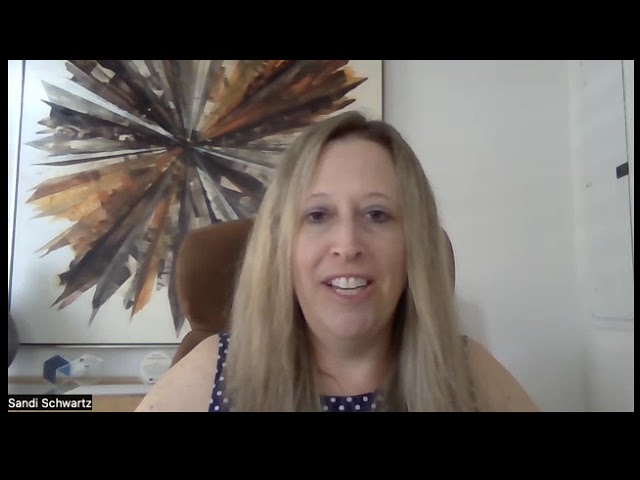
This content was created by Shellee Howard. This content was uploaded by Shellee Howard. This is a YouTube podcast episode titled "New Podcast: Sandi Schwartz from Ecohappiness Project" (published October 11, 2022). It is an English interview-style conversation hosted by Shellee Howard with guest Sandi (Sandy) Schwartz, founder/director of the Eco Happiness Project and author of Finding Eco Happiness: Fun Nature Activities to Help Your Kids Feel Happier and Calmer. The discussion covers Sandi's background, the concept of "eco-happiness" versus eco-anxiety, practical ways teens and families can connect to nature (volunteering, citizen science, beach/park cleanups, outdoor sports, nature-based arts and yoga), strategies to reduce screen time using bridge activities, and resources Sandi offers (ecohappinessproject.com, a free quiz, a 30-day Eco-Happiness Challenge calendar, and her book available via her site/Amazon). The episode is presented in the context of helping students find passion-with-purpose projects and improving mental health through nature.
Chapters
Hello, this is Shellee Howard, and I am so excited to introduce to you our guest today. So I would like to introduce Sandy Schwartz, who is the founder and director of Eco Happiness Project. Does that not make you curious? When I read that, I was like, what exactly is she doing? She's also the author of the parenting book Finding Eco Happiness: Fun Nature Activities to Help Your Kids Feel Happier and Calmer. I mean, her bio is so extensive. I'm gonna let her share her mission and what she is gonna share with you today. So welcome, Sandy.
So great to be here. Thanks for having me.
You're welcome. So our listeners out there, can you help them understand How did you get started down this path?
Yes, so I like to share as a writer, we write the books we need the most. And I have just a history from a young child with my own struggles with stress and anxiety. And I also was a love— had a big love for the environment, was very active starting in high school in my— Nature Defense Club. Actually, a little tidbit people will be interested in, that experience I had in 10th grade, which was cleaning up a polluted local river, really changed my life. And I ended up writing my college essay about it and then went on to college to study environmental studies. So you never know, like, how, how different activities are going to affect your life. And so it was kind of this trajectory of my own personal struggles with love of the environment. And one day it hit me that, you know, you could combine these two and that, you know, there's so much amazing new research over the last couple of decades that link your time connecting to nature, even looking out a window, as simple as looking out a window, from, you know, gardening to going on a huge ecotourism vacation, you know, all of the above. All of that can help us with our mental health. And you know, I'm also, you know, of course very attuned. I have my kids myself, but very attuned to, you know, the mental health crisis that children and teens and young adults have been facing. Really all of us, especially. It even got kind of worse during the pandemic. So this is one way that we can address, address it. And guess what? Nature's free. Free and it's available and it's right outside.
That's brilliant. So it, you know, when I was talking to you, I had an aha moment. I have so many students who are very into, um, the, the eco, the, the ocean, the parks that they're worried. They're very worried about our environment. They're on fire. And so when I saw your title, I'm like, oh my goodness, This is perfect because I, I need to understand that world better. But what really intrigued me is how you're using it to make happiness happen. So you had mentioned, I believe you have a 14-year-old and a 10-year-old. So you are a mom, you went to college, you've had this love for the environment. How do you connect teenagers' love and environment and happiness? How does all that come together?
Yeah, well, I think a big factor is how kids are being raised and the lives they're living now. Just comparing it to a generation ago, when I grew up, we still ran freely till dark, till it was dark. We didn't have cell phones to call our parents. They literally yelled at us, like, come home. We need you inside now. We would spend, you know, hours outside catching lightning bugs. And I used to— when I think about where I used to bike, crossing highways, going to the library, to friends' houses, and hanging out at ballparks, I can't even imagine my kids doing that. You know, like I said to my mom, like, did you even know where I was? Because there wasn't a cell phone, right? I was just out and about for hours. And so, you know, you couple that with So this constant connection to technology, and a lot of that also means they're getting the news, the constant news, the 24/7+ news that, you know, from gun issues to global pandemics and then to these environmental crises. And there's this whole concept of eco-anxiety. And so part of what eco-happiness is, is sort of the opposite of eco-anxiety. And a big part of the way to address eco-anxiety is actually volunteering. So I have a whole entire chapter in my book about environmental volunteering and all the benefits of that. As we know, it boosts our happiness and helps us connect to our communities. So, you know, lots of books about volunteering in general for teens and college students, but I honed in on the environment specifically.
So, um, in our program, the College Ready Plan, we help students, um, put together a passion with purpose project. So we start with what they're passionate about. So that would be my, my students who care about the environment. Um, obviously there's different passions. Some is fashion, some is, you know, science, whatever. And then we help them find— figure out what do they want to see changed in the world. So all of that negativity going on, I'm like, instead of letting it affect you mentally, let's go change it. And they're like, we can't change it. I'm like, we can. And then I help them learn how to lead others to create that change. So that part of your book, I am absolutely going to read cover to cover because my job is to help those kids do what you did. You took your experience you wrote a brilliant essay, and you got into college in your major. So what are some examples that parents out there may, you know, if, if they're like, it's summertime, I need this now, I don't have time to read it, what, what might be a few that you can share with them?
A few activities that they can do?
Yeah, a few things that, that they can volunteer that would help the eco and the happiness.
Well, it's interesting. I wonder, I would love the challenge of, you know, if you said, okay, my, this student is interested in this, I bet I could twist it into something that helps the environment because you just said fashion. Well, one of my hobbies, actually, a few years ago, I committed to trying to buy sustainable clothing as much as I could. And so that fashion design designer, you know, could develop, you know, through recycled materials or other sustainable materials. There's, there's a lot of new research on that, you know, coming up with new ways, healthier ways, yeah, you know, to create fashion. So, you know, that's an example. The child is into science, there's this whole world of citizen science projects where you can volunteer to collect scientific data for universities, other organizations, government entities. And I mean, there's— the options are endless. And that's a great project to do, you know, like you're saying, what do you call it?
The Passion with Purpose Project.
Yes, Passion with Purpose Project. Exactly. And that actually, when you do citizen science, it marries technology, science, but also outdoor time, because a lot of time you're connecting the data, but you're spending time outside even though you may be using an app. And oh, volunteering. Uh, and it depends where you are. If you have access to a local farm or a community garden, or there's tons of these, you know, gardening clubs and programs that are increasing trees, so tree plantings. I live near the beach, so there's lots of opportunities for beach cleanups. If you have that, lake cleanups, if you're not necessarily on the ocean. So there are so many opportunities and hey, if you're into sports, right? Sports connects you to the outdoors. If you want to be a coach or raise money through a site, you know, a run or cycling. So there's really lots of opportunities. And the point I want to make too is, You know, they're getting that ability to connect to nature and the environment, so there's all the positive aspects from that that help you feel happier and calmer. And it's, you know, it builds that hobby and builds that skill that they can take forward throughout their lives.
It's so amazing. I know that during COVID our students, the motto was turning lemons into lemonade. And so we kept doing all of our service projects and they started really getting environmentally friendly because that was the only safe place, right? We did beach stuff, we did stuff in, in the forest. We did things that typically students might not have been aware. So how do you help students, you know, in this world? Like, do they, do you work with them one-on-one, in a group? Like, how can you help them?
So I am not a practitioner. I am a writer, a researcher, and my, my whole purpose was to be able to educate and inspire people on this topic. I really— what I did with this book and with my blog and on all my writing is to highlight what other people are doing on the ground, pulling it all together into one toolkit. And that was also kind of goes back to my original purpose you know, when I said I wrote the book I Needed the Most is because I was, you know, doing this research for myself and realized this could help other people. You know, this is, is a handbook I wish my kid, my, um, my parents had for me, and I hope it helps other people. But there are just so many incredible organizations out there that you can get involved with, and more and more are focusing on organics and sustainability Lots of businesses too. So, you know, you could have a passion project where you're volunteering at a business, maybe a sustainable clothing brand or a vegan restaurant. You know, so you can build those other skills, business skills. I was also thinking too, like, if you were, let's say, doing a literacy program, instead of doing it inside the library, you could do it outside, you know, and a walk and talk book club. All of that helps us feel better while we're going, you know, through these activities.
That is fantastic. I'm just— my mind is spinning with all these ways students can do this because I think the number one frustration when I talk to parents right now, I can't get my kid off their phone during dinner, during, you know, when we're watching a family movie, like it is 24/7. And these parents are worried they're frustrated. And these students, honestly, some of them are struggling with that— I'm not as good as the Instagram girl, you know, or that athlete. Or it's the, the syndrome— I'm not as good as— even though we, we tell them it's not all real, right? Some of it is kind of enhanced. And so the fact that you're combining the two, I think, is brilliant. Like you, I was out on the street until the lights came on. That was like our cue— okay, lights are on, time to go home. So now students are spending so much time on their phone. How can parents encourage them or just straight up get them off their phone and in the environment? You have to maybe share some of your techniques.
Yeah, I like to look at it like a bridge, that there are these bridge activities that we can get them, you know, from a technology without necessarily pulling it away completely. Especially, I mean, not so much with, with the teens because, you know, if you tell them, look, you have an addiction, you need to stop, you know, it's a little harder with the young kids where when you say just go out and play, if you don't kind of give them those skills, you know, they don't understand what that means, you know, the way they're being raised. So some of these bridge opportunities would be something like the citizen science project, Sports, you know, I just been getting into pickleball. I know that's like a huge thing, the big rage right now all over the country. But you know what, when I was playing pickleball, I forgot I even had a phone, right? Like it, you are so focused on whatever it is you're doing. My daughter, I have a whole chapter on creativity. And one example is creative arts. With nature. My daughter, who I said is 10, she will spend hours in the backyard painting. It is the greatest thing. And, you know, it just sort of happened. It wasn't like I told her, go outside and, you know, you must be in nature and paint. It just sort of happened one day and it became her, her hobby that she enjoys. So it could be things like yoga. If some— if a student's really into yoga, well, instead of again being kind of stuck stuck in a stuffy classroom type, you know, studio. What about if you can get on the— to the beach, beach yoga or backyard yoga, anywhere that you can really just get that habit going, do some homework outside, have meals outside, think about ways that they'll even forget that they're outside and they're— because they're engaging in another activity.
Makes so much sense. I, you know, I had a client contact me 2 days ago. It was a mom and she was at her wit's end. She's a working parent. When she goes to work, she is terrified, fearful that her child's going to be on the gaming thing all day long or on their phone having access to pretty much everything. And those are some of the concerns that I hear time and time again. And so what I'm hearing you say, I just want to make sure I got it clear is start with a bridge, not a cut them off situation. So instead of doing an activity in the house, can they take it to outside and start there? I love that. One of our students last year created a Passion with Purpose project where she led other students to understand healthy minds and what a healthy mind is like. And what she found is sports and activity that's outside led to that healthy mind. Can you speak to how does it affect a child's brain and their happiness?
Well, and that's what's so incredible about this area, um, is that the research is now finally backing this up. I mean, this is something that has been, you know, typical in indigenous cultures, right, for thousands of years. That, you know, or we just think about where do you vacation? When you choose a vacation, where are you going? You know, you're not, you're not choosing to sit inside and staring at a brick wall. You want to be by the ocean or, you know, by the lake or in the mountains and seeing the beautiful, you know, scenes around you. And so The research shows when there's a big difference between looking at the brick wall and looking at the tree and other greenery, your cortisol level, your stress hormone, actually lowers. And so that is huge. That help— will help kids, you know, feel better so they could concentrate better, deal with their other issues. You know, just taking that break. It could be that walk after school to unwind. And again, I'm a proponent for Even if they take their computer or their iPad and they do some homework outside, you know, that's better. I like to take my laptop and sit outside. You know, you can't be a purist all the time. I think it's important, again, to allow that to happen naturally. You know, I was also thinking photography is a wonderful bridge, you know, kids who are creative, whether they like to paint or they like to put together slideshows or even TikTok videos. If they're doing it of nature and they're going outside and taking these walks or taking pictures of flowers, all of that process allows them to focus. And a lot of the benefits involve the colors and the scents and the patterns and the temperature, the wind we feel on our skin, the fresh air we're breathing, all of those benefits of nature. And again, and the science now is like parsed it up. That that is what helps us feel happier and calmer.
Oh my gosh. You just saying that, in my mind visualizing it, I could feel the stress leaving my body. So I'm sure that every listener at some point is like, yes, I need to do more of that. And you know, when I, when I tell parents that the, the passion with purpose, or they need leadership, to prepare for college, or, you know, they want to know what is the secret magic, how our students received over $10.7 million in scholarships. It all comes down to finding their passion. And a lot of people don't realize that they do have a passion for being outdoors. They just don't experience it as much as they might have years ago. So I love that you're, you're a proponent to get people outside and decrease their stress levels. It makes so much sense to me. So if a family was like, yes, I, I wanna do that, but I don't know where to start, how could they follow your blog or how can they get a copy of your book?
Yes. So the best thing to do, everything is over at my website, ecohappinessproject.com, and that's E-C-O happiness. Um, and so on there I actually have a free quiz. That they're welcome to take. It is written for a little bit younger kids, but, you know, I think it's fun for adults to take it too. It asks questions like, you know, what would the theme of their child's bedroom be, or their favorite birthday party, or what do they enjoy most on the weekends. So there's 10 questions, and then you'll get an automatic response via email saying what category your child fits best in, right? So are they like adventurous type or the mindful type. And then there's a list of ideas as far as activities that they can then try. And so that's a great way. I think it's fun for everyone in the family to do it. And it'll give you all kinds of ideas to plan new fun activities on the weekends and vacations. And then I also have an Eco-Happiness Challenge calendar that's free. And this is all on the home page. And this is an interesting story. So, that's 30 days of some, you know, easy outdoor activities or not all outdoor, but any way you can connect to nature. And this came out of when the pandemic started, I said, how am I going to get through this, right? And at that point, I didn't know how long it was going to be. None of us did. And so, I challenged myself and my family, they kind of came along for the ride, to do 100 days consistently of some sort of way to connect to nature. So even there were days, you know, it was raining outside and we did like a virtual tour of Ireland and saw, you know, like the beauty, you know, on the screen. So there's so many opportunities. And, um, so I'm excited to share that with them as well. And lots of blog posts and articles that they can peruse.
That's fantastic. So that's usually the most challenging part. I know there are some parents who have hired us because their student won't listen to them. We've had that before. Teenagers are a unique breed. I love them more than any other age, but having many of my own and you have your own, sometimes giving them a blog to read such as yours or a calendar of ideas that didn't come directly from the parent's mouth sometimes is received a little bit better. So I would encourage you parents, if you're stuck, if you just can't figure out how to get your child to get outside and, and get happy, please, please, please reach out. Sandy has these free resources, and I'm so grateful to have you on the show. Thank you so much for being here and what your mission is.
Of course. And before I go, I will just show the book as well, and that of course you can find Amazon and everywhere books are sold. Um, and it's all on, you know, all this places you can purchase on my website as well.
That is so perfect. And as always, do not forget, listeners, you can get a copy of How to Send Your Student to College Without Losing Your Mind or Money by going to freebook.collegereadyplan.com. Thank you so much. Until our next episode, have a wonderful week.
More from Shellee




The 3 Questions Every Parent Should Help Their Teen Answer Before College | Featuring James McLamb

Helping Your Teen Stand Out for College Through Purpose & Impact | Featuring Aishani Sheth


From Robotics to Cornell: A Father-Son Blueprint for College Success with Aarav & Ritesh Kumar

The Hidden College Credit Strategy That Could Save Your Family Thousands with Josh See

The Truth About Financial Aid: Why Some Families Pay Less for College Than You Think with Jack Wang

Human Skills Every Teen Needs for College, Careers & an AI Future with Rob Heller
