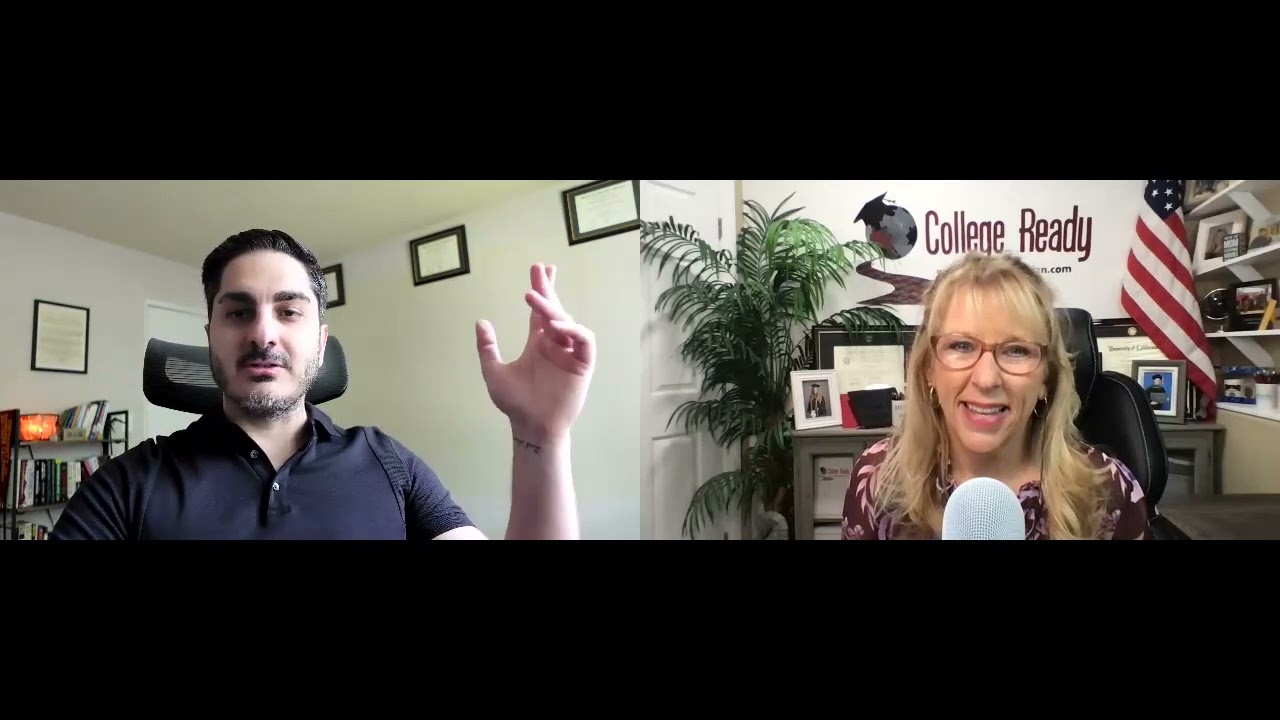
In this episode of the College Ready podcast, host Shellee Howard interviews personal and business finance consultant Tavon Asaturia. Tavon shares his challenging childhood, early self‑education in budgeting from age eight, and a 30‑year career spanning banking, consulting for Fortune‑500 firms, and wealth management. Motivated by the lack of financial education in schools and homes, he founded Asaturia and the Money Mastery University (MMU), an online financial‑literacy program offered in Basic and Elite tiers. MMU covers mindset, banking fundamentals, loans, investments, retirement accounts, and high‑level topics like crypto and NFTs, with the Elite version diving deeper into loan structures and fund types. Tavon discusses his outreach to Southern California high schools, his role as president of the NAF academy within LAUSD, and efforts to embed MMU into school curricula. He emphasizes ultra‑low pricing for schools and individuals, a pre‑sale discount through the end of May, and a special 40% promo code (CR40) for College Ready listeners. The conversation also touches on his academic background (UC Irvine, USC MBA, Northwestern AI/Data Analytics certification) and his consulting achievements (hundreds of millions in company savings, over a billion in sales, $100 M+ wealth management). Listeners are directed to his website, asaturi.com, for program details, scheduling calls, and social media links.
Chapters
Hi, this is Shellee Howard with College Ready, and I have Tavon with me. Tavon, how are you today?
I'm doing great, Shellee. Thanks for having me on, uh, on the podcast here today.
Oh, my pleasure. Can you tell our listeners a little bit about yourself?
Uh, sure. So I'm a personal finance and business, uh, finance consultant. And I've been in this realm for probably a combination of close to 30 years, um, and that's just because I've done a lot of overlap work. Um, when I've done one thing, I've been simultaneously doing another. And how I ended up doing what I'm doing today is really a result of my childhood and my obscure upbringing So in brief, I had a difficult upbringing, born in an obscure environment, and I decided at an early age, I don't want to live like this in my adult life. And I started to learn about budgeting and money at about the age of 8 years old. And it's all history from there. It's all been working at banks or consulting firms or consulting Fortune companies. I've worked with poor individuals. I've worked with rich individuals, and I'm really just trying to learn and understand as much as I can. I continue to do so and to give back in terms of financial consult.
I love that. Can you share the name of your company and what your mission is?
Yeah, absolutely. So the name of my company is my last name, it's Asaturia, and our mission is to really challenge the individuals who we partner with or who are our clients, challenge their growth mindset and help them create a clean and clear vision where we can then execute a financial strategy for this individual or family, if it's a business, right, to then be able to exceed their financial goals that they might not have even known they, they had or had no clarity to, to begin with.
And what is your why? So you talked a little bit about maybe your upbringing, but why do you— I mean, lots of people have tough upbringings. Why are you on a mission to do something about it?
Sure. Interesting, interesting question. I'm on a mission because growing up, I realized very early, right, like this money stuff isn't being taught to me. My parents didn't know, way over their head, right? They hardly spoke English, so they couldn't teach it to me. They didn't know. They had just come in as immigrants to the States. They were just trying to make the dollar to get by. And I figured maybe they'll teach me in school, right? So I went on to middle school, then high school. I'm like, no one is talking about money. No one is teaching anyone. No one— like, you're either rich or you're poor. And that's about it. We're here dissecting frogs and we know all these things. But like, We leave high school, even college. I mean, you'll leave Stanford without knowing how to budget, right? But you might leave as a doctor, but they're not going to teach you the fundamentals of financial literacy. So this pain, it was pain filled with anger. It's like, why is this not being taught? And I was living that life of the person who was never taught this stuff and I was going and getting it, right? After high school, went off to undergrad, did business economics. And again, anywhere I went, I realized more and more the places I was trying to go to find the people who teach me this, or the people who would— I would be surrounded by who would know these things, it just didn't happen, right? I was in banking and I worked with some of the richest people, um, and I realized some of the richest people don't have any idea what they're doing with their money. They did something, it worked, or they got an inheritance, or They have a business and it's running and they have the money, but they have no idea what to do with it. They're either extremely scared of losing it, and that's because they have no idea how to manage it, or scared of even trying to go for growth because they don't want to have change or anything like that. It's just static balances sitting in basic accounts. On the other end, from the educational side, for the individuals who might need it and don't have the money, There's absolutely none of it, right? There aren't courses, there aren't classes. This isn't something that's a requirement. It's starting to slowly become a requirement actually, right? So for high schools at least, to teach financial literacy. So I suppose that's a little bit longer version of the answer, but the shorter one is I have this passionate anger about information that people need to know about. And without that information, they live painful lives. And I've lived a painful life, and I don't want that for anyone else. So that's why I do what I do. And that's why I give back however which way that I can.
I love that. That is truly— I can see that it's something that you're passionate about. Um, can you maybe tell the listeners what it is that you do. So on the positive side, so you saw all of this missing and you got fired up. And I always, I always sign my book, Be the Change You Wish to See. Be the change you wish to see in the world. You matter. And it's like I wrote that for you. So what do you do or how do you help?
You know, that saying should and does apply to everyone, right? If we all behaved in a way where we'd like other people to behave, then we'd all be behaving the right way, right? Or the optimal way. So it's a great concept, and I wish one day we can all learn to follow it a little more. The question is, what is it I do? What is it I give back? Shellee, is that—
Yeah, so I'm trying to, for the listener, so you found this outage What are you doing about it?
Got you. So, uh, for the last few years I've been going to high schools. I've been teaching financial literacy myself, uh, trying to partner up with the education system, especially in Southern California. So I have ties with larger LAUSD. I sit on the president— I sit as president of an academy called NAF for the school district I live in. So I oversee subcommittees, and the intention of this academy is to put students in front of professionals and to give them real-life experiences and to start to implement courses and programs in the educational system that are actually helpful. Um, and one thing I've done in regard to that is I've created a uni— I've created an online program for financial literacy, more so virtual program. It's called the Money Mastery University. And the intention of the creation of these programs goes way back to when I was 8 years old, right? It's the same, it's the same story. But now I have spent a lifetime since then learning about money and getting my degrees. As you can see, there's more of these, they're just not framed and hung up. And like, these don't even essentially matter, right? I've helped companies make hundreds of millions of dollars. I've sold over a billion dollars in deals. I've managed over $100 million in wealth, right? So all of that's come from that anger and passion from 8, and all of that experience and education was used to put into this program, the Money Mastery University, right? And in this program, you can learn, you do learn everything from how to think about money. And that's actually where it starts, right? The program starts with mindset. That's your first chapter. Because if you don't know how to start thinking about money or shift your mindset, right, there is a poor way of thinking and there is a rich way of thinking. Most people who think either which way, they don't realize that they're thinking that way, right? But there is a way, and there are tons of studies on, on these things. So we start with a mindset and try to help you reprogram your mind. And we talk about everything from banking to what a bank is, how the checking, the savings, those work, right, to cumulative interest. And we get deeper into things like loans. We have everything from student loans to home loans. Should I rent a car? Should I buy a car, right? All of these things are things we don't— we think about, but we don't necessarily know. And it gets also into investments, different kind of retirement accounts, student accounts. I mean, it's everything. There's nothing out there that exists like this today. Which is why I created it. And I, I created it with all the love, and it's available today. Um, we, we have this course online for individuals to take, but we also partner up with education systems and businesses. So my school district will be taking this course in fall.
Okay, yeah. So if a listener is going, yes, yes, yes, yes, and they may be superintendent of a school district, or they may be a parent, what, what can you offer them as far as suggestions, recommendations? You've obviously put a lot of time and energy into this. You know, in College Ready, we teach return on investment for their college degree. Everything has to make sense. You know, you didn't just pick a school because of the name. You pick it because will it further your education and does it make sense for your future? So what would you tell that parent or that superintendent about, you know, how they can do something like this?
Yeah, um, I would first say just wanting to, right? I think, I think it's incredible if you're listening and you, you want to do something like this, or you want to learn, you want to learn this. If you're a parent, a teacher, Somebody in the district, if you're listening, it's— and if you're not implementing financial literacy in your systems, in about a very short period of time, you're going to be behind. I mean, the whole world is behind, right? It's always been behind in this field. But the thing is, now, people— more and more people are talking about it. The pressure is kind of on, right? And more and more states are now saying, okay, in high school there has to be at least one class or half a class or something, right? The pressure is kind of— the pressure is kind of on. So if you're not at the quote-unquote forefront, um, of implementing these things, the school next to you is going to do it next week, and the parents of the school that you run or that you're a teacher of Right, how are they going to think and what are they going to feel and how are those students going to think and feel, right? Then you're going to be pressured to get something up and running yesterday. So I would recommend start working on how to get these courses applied to your school or for something similar to these courses applied to your school or your educational system, whatever it might be. We do partner with education systems, actually, that's, uh, One of our largest targets is to get this in high schools. It's not— it's the last— in business terms, I'll tell you this, just so maybe this, this gives a little bit of emphasis on the amount of passion I have for this. And I want this in front of everyone, right? Not because it's mine, but because this has to be in front of everyone. That's the reason my courses are priced ultra low. That's the reason why the contracts we run with educational systems or businesses are ultra affordable because we want to put this in front of everyone. Um, and high schools are actually the bottom of the list of driving revenue, but they're the top of my list in implementing the programs in, right? Because these are the people who need it the most. They're coming out of school into the world like, okay, I know how to open a checking account, but that's about it. But I'll dissect the a squid in front of you right now. But whether I should save this much or that much, or if I should pay off my debt or invest it, I have no clue. But I can dissect the frog. I think that's wrong.
Yeah, I can hear that in your voice. So what made me think about— I had a little giggle because one of the things I do with potential new clients or new clients is I ask the teenager— well, first I ask their family not to make comments, and then I ask the teenager If I gave you $1 million cash today, you had 24 hours to spend it, or you had to give it all back to me, what would you do? And a good 50% have no idea. I have had one young man ask Siri what he would do with his million dollars, which is a little terrifying. Recently, I was really quite excited. I ran into a young man who said, well, first I'd buy a fixer-upper. And then I would fix it up and I'd flip it and then I'd buy 2. And I'm like, is your dad in the business of flipping real estate? And he's like, yeah. So the nice part is, right, it's not, it's not that nobody's talking about it. But I would say a good percentage of students don't know how much a new car, their dream car would be, how much a home costs, let alone how much college debt will set them back. And so we teach a lot— the way I put it to teenagers is, how long do you want to work for free? And they're like, I don't want to work for free, my parents can work for free. And I'm like, well, I don't want your parents to work for free, right? Right. So I'm with you on this. And that's why I thought I have to have you on my show, because I want to give parents resources so their students can make wise choices about what is a good return on investment in their career, in their major, in their college. Balancing, you know, we don't do a checkbook anymore, but we still should balance our quick inner quick books. So, um, if a family wanted to learn more about this, or how can they get a hold of you in case that they know people who could implement this?
Yeah, absolutely. So the website would be the best place to get a hold of me and also find more information on, on me and the Money Mastery University. And the site is just my last name, it's osaturi.com. Okay, when you're on there, if you're looking specifically for more information on this financial literacy program, there's a tab called Money Mastery and it'll be right under that tab. If you have any, any additional questions, if you want to chat, more than glad to get on a call with you. And there's also a button there where you can schedule a call right on my calendar for anything that works best, and, and we'll, we'll figure it out, right? Whether you need some, some help with your own finances, or you're looking to implement this program in your organization. I'd be more than excited to talk about it.
Outstanding. Well, that is a very kind gift, and I know that there's a lot of parents out there who are just frustrated, right? I remember I did not take my first, um, financial class until I was a sophomore in college, and it was only because I sought it out. It wasn't a mandatory— it was I wanted to learn Finances. Now, do you get at all into crypto or NFTs or any of the new finances? Do you, do you talk about that? I know a lot of teenagers are really curious.
Yeah, great question. And yes, absolutely, right? We want to stay not only with the fundamentals but with the current times. NFTs, crypto, We don't get deep into the conversation because again, this is a— it's a full course, right? There are courses that teach you just how to pay your debt or just how to invest, and they'll— they get deep in, in, into the weeds with those courses some of the time. Think of this as more of a broad spectrum, but within each point, uh, we do discuss the fundamentals of it, the uses of it, the future of it, if it's currency that's currently happening now, like crypto and the other tokens. And we do have two versions for specifically this reason, right? A lot of people, maybe most people, they want to learn, they want to be confident in their financial future, right? And that's what we guarantee. We guarantee confidence in your financial future. So if you take the two versions are called Basic and Elite. The basic will cover everything from beginning to end. The primary differences are the elite is for the people and probably more so for adults who are interested in, I want to get into weeds of loans. What kind of home loans should I get? What about a 15-year versus a 3-year? Right? What about a HELOC? Should I take a loan out to make this conversion or not? So we get deeper into things like loans and the different kind of loans. We'll get deeper into investments. In the elite, where we'll actually talk about the different kind of funds, what the different kind of funds do, what some of them are. In the basic, we'll go over it, right? These are the different kind of funds, the different kind of investing opportunities, but we don't dive deep into the weeds. For example, the lending, we won't go into comparing 15-year loans and 30-year loans. And I don't think like someone just wanting to understand finance needs to know these things. At a deeper level. So we do offer two versions for, for that matter. And for any of the listeners, if you want— if you do go on there, you want to privately make your own purchase, right now it's pre-sale prices. It'll be pre-sale through the end of May. But because you're specifically high school and we're on this College Ready podcast, I want to give everyone 40% off on top of the presale prices. So the first 250, um, people, they like to go and sign up for either version, uh, we'll give you 40% off. And, uh, the coupon code for that will be CR40, so CollegeReady40.
Outstanding. Well, thank you for that kind offer. I just have one more question for you. As I look at your accolades, my students are always wanting to know a little bit about your experience at either— you can speak to Northwestern or USC, but now we're talking to the student. I'm sure the parent's curious too, but my students in my program, if they don't know anybody at those schools, it's very hard to get a genuine take. So can you share about either or, or both about your experience in college.
Yeah, absolutely. So my undergrad was UC Irvine, and then I went to grad school at USC, where I earned my MBA and certification in technology commercialization. Northwestern was also graduate certification for AI and data analytics. Uh, so my experience when I was an undergrad, To be honest, I wanted to study psychology. I've always been so interested in the mind, and this is a field where I can get deep into, but the economics of my life wasn't changing. And I remember a high school economics teacher, the first day of— I can't tell you anything more about high school classes that I remember, honestly, but he said, "If you want to get rich, you need to understand economics." And some stuff kept on happening and life was still hard while I was going to undergrad, I decided to switch to Biz Econ. In terms of experience, I went to undergrad, uh, right out of high school, so I had the dorm life experience. I lived on campus. Uh, I, like I mentioned, I took some classes in on mindset and psychology, and I kind of exposed myself. I took a year-long worth of classes on women's studies. I kind of exposed myself to the different fields And I focused on business economics for my degree. I would say for graduate school, that might be, you know, it seems like far out to you if you're a student and you're listening, like graduate school, that's when I'm 90 years old. Well, the time comes and you may change your mind about it. In my mind, I had lingering for years, should I get an MBA And the third year came around and that question was still in my mind, and I figured I am not going my fourth year questioning this, because if I do, I just lost all of my time, right? I could have been in school. Going to grad school is a little different. It's focused on specifically what you want to do, right? After undergrad, you really start to hone in on what you like and what you want to do and If you go to grad school, it's a lot more specific. You might hear this from a lot of folks, you know, who've gone to grad school as well. For me, it was a lot more exciting. I enjoyed it a lot more. It wasn't school to me. It really wasn't. I had fun doing everything because everything was business and finance, and we did negotiations projects and things, you know. So that was all all a little more, a lot more specific than undergrad might have been, but both of them, you learn, you have your own experiences. If you can go to undergrad and you can, you can live on campus, I'd recommend that because you learn a lot about yourself and life as well, as opposed to just going to get a degree and getting a job after, right? And I think a lot of the experience weighs on that personal side, not just education.
That's a great way to say it. I tell students all the time, you learn more than just what's in books your first year away from home. So I know for my son, when he was at Harvard, he called home the first week and said, Mom, how do you make my, my whites turn pink? And I'm like, was there red in that laundry? And he's like, ah, yes. So those are some fun memories. Well, thank you so much for your time. I'm truly grateful. And Listeners, um, how can they get a hold of you? What's the website one more time?
The website is asaturi.com, and all the information about me and this university and to even schedule a complimentary call with me is all on there. My Instagram and social media is also on the site, so that, that would be the, the hub to, to find more information.
Outstanding. Thanks so much for your time.
Thank you so much, Shellee Howard.
More from Shellee




The 3 Questions Every Parent Should Help Their Teen Answer Before College | Featuring James McLamb

Helping Your Teen Stand Out for College Through Purpose & Impact | Featuring Aishani Sheth


From Robotics to Cornell: A Father-Son Blueprint for College Success with Aarav & Ritesh Kumar

The Hidden College Credit Strategy That Could Save Your Family Thousands with Josh See

The Truth About Financial Aid: Why Some Families Pay Less for College Than You Think with Jack Wang

Human Skills Every Teen Needs for College, Careers & an AI Future with Rob Heller
