Podcast: Raising College-Ready Citizens: Empowering Teens with Civic Education and Engagement
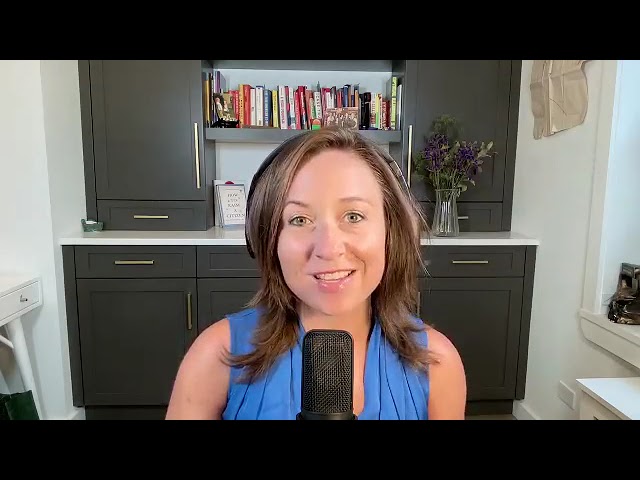
In this episode of the "Parents, Is Your Teen College Ready?" podcast, host Shellee Howard interviews political science professor and author Cormack. Cormack shares her personal journey from Kansas to New York, her role at Stevens Institute of Technology, and the motivation behind her book How to Raise a Citizen and Why It's Up to You to Do It. The conversation highlights systemic gaps in K‑12 civics education—no national curriculum, late‑stage teaching, and low AP U.S. Government scores—prompting the need for parental involvement. Cormack outlines practical strategies for parents: treating civic education as a parenting responsibility, starting conversations with neutral prompts like “What have you heard?”, modeling balanced political discussion, and avoiding negative framing. She addresses the challenge of teens’ social‑media consumption, recommending parents view and discuss the same content to bridge algorithmic gaps. Concrete civic skills are emphasized: teaching voter registration (including pre‑registration nuances), explaining federalism, reading the Constitution, and practicing respectful political dialogue. The episode also connects civic engagement to college readiness, noting how community service, political internships, and in‑person socialization strengthen college applications and student confidence. Finally, Cormack provides resources—her book (available on major retailers), a website (howtoraisecitizen.com), Instagram videos, and email support—for parents seeking further guidance.
Chapters
Hello parents, this is Shellee Howard and we are on the podcast Parents, Is Your Teen College Ready? with a special guest, Professor Cormack. Welcome to the show.
Thank you so much for having me. I'm excited to talk with you today.
Excellent. So before we get started, maybe you can share a little bit about you, your background. I know you have a teenager, so many of our listeners just knows she can relate. Why don't you tell our audience a little bit about you and what we're gonna talk about today?
Sure. So I think something that I always like to start with is that I was born and raised in Kansas, but now I live in New York. And the reason that that sort of matters to my story is Kansas is politically very different than New York, and I've been able to see life in two different ways. I ended up going to the University of Kansas for undergraduate and then to NYU for my PhD. And now I'm a professor, and I have been for 10 years at Stevens Institute of Technology, which is a primarily an engineering-focused university in Hoboken, New Jersey. It is a wonderful job for me. I love being with a bunch of students. Engineering students are a particular type, and they're really fun to be with. And I've just recently written a book called How to Raise a Citizen and Why It's Up to You to Do It. That's sort of the culmination of my work in the political science sphere, as well as my work as a professor among young college students.
That is so great. So parents, I hope you hear, she's a professor, she's got some pretty awesome degrees. I think it'd be fun to find out, when you were in high school, did you think you were going to be a professor and be studying what you're studying?
No, I really didn't. I thought I wanted to be a lawyer, and I thought that all the way until I went to DC after I graduated from undergrad, and I got to sit right next to to a woman who was a lawyer. We like would go, our commutes were the same, but then every night I'd go home by myself because she'd be working really late. And I was like, oh, I don't know if that's going to work for me. And that's when I decided to think about pursuing a PhD.
Yeah, so for those parents who are listening and you're concerned your 17-year-old doesn't know what they want to do yet, I love having guests on Right? And so let's talk a little bit about your work at the university. You're a professor, and what are you teaching currently?
So this upcoming semester, I'm going to teach two sections of Intro to American Politics, and that's a course that I teach every fall. It's actually my favorite course to teach. I think a lot of professors really like to teach upper-level or niche classes, but I very much like this basic, like, here's the lay of the land. Does everyone understand that the game that we're getting ready to play, it's— It's my favorite class to teach. And because we're at a small university, I do a few other things there. I also run our Diplomacy Lab, which is a partnership with the State Department where students get to do a real-world sort of research activity for a semester and then go present to the State Department. And then I also am our voter turnout, voter registration liaison, all things civics on campus. And so that's like one of the perks about being at a small school is you get to touch a lot of different pieces of the enterprise.
Oh my goodness, my mind is spinning how many which ways I'd like to take this, but let's start out in the most basic. What was the reason you wrote the book?
I love this question because I get to think about, you know, what, what started this all. And really, I was working at Stevens. I'd been there for about 5 years, and I was teaching this class, and I have a very simple sort of intro quiz on the first day. It's just a pre-test, it doesn't matter, and it asks some very basic things. And I have students who are so bright— Stevens is a hard school to get into— they go on to do great things, but they oftentimes wouldn't know very, very simple things about American politics. And one year I brought my daughter because her school started a week after our school started, and she herself was surprised that she knew more than our college students did. And I was like, something's wrong here. And I thought I would go write a book about how some school curriculums are preparing students better than others, and that's true, some schools are. But what it kind of morphed into is this nationwide project with 5 research assistants interviewing teachers across the United States and realizing that there are a lot of things that are hard to get done in the current US school environment. And so it's really up to parents to sort of step in and fill this void.
That's so fascinating because I work with teenagers every day, and I obviously get to hear straight from the mouths of a teenager what life is like in AP Gov, right, which is where this would, I would guess, would be taught. And they're telling me that they're just basically learning from the AP book and the teacher kind of fills in the gaps, but they don't really bring it to life. Is that what you're finding?
Yeah, there's a lot of challenges. I mean, one of the, the first thing that's hard about understanding civics and government is that we don't have one set curricula around the United States. We have 50 different states who all handle it differently, and a lot A lot of times they devolve that down to a school board or even an individual school. And so it's really hard to study what's happening in an individual classroom. But it's also true that unlike every other subject, we don't start K through 12 and sort of like layer or scaffold or build. Most of the time, what we do is we teach government in the second semester of the senior year of high school. When, I don't know what you were like then, but I certainly wasn't like, oh, let me go learn and retain a bunch of new things. It's a hard time to get this really critical information into their brains. And on AP US Government, there's some really interesting things there too. Only 2% of our students take AP US Government in the United States, but it is one of the lowest scoring AP score— it's AP tests out of all of them that are administered. It should be the highest. We all graduate into AP US Government. You know, not everyone goes on to physics or advanced calculus or Chinese, but those score way better than American government, which is something that we learned in the research. And I was like, oh, this is a bit troubling.
Oh my goodness. So that makes sense. So what my students are telling me is the teachers are teaching to score well on the test, but they don't feel like they're really learning about the subject or how they can participate. Not all, but some of them. So what— tell me a little bit about the book, maybe the chapters, or, or who would be a good person to read this book? Is it the parent, the student?
Yeah, so the, the book is called How to Raise a Citizen and Why It's Up to You to Do It. And it really is aimed at parents and caregivers and educators to kind of rethink what we're not doing correctly now. And one of the reasons that I think it's sort of like a broad appeal book is I don't really know anyone who likes how our politics feels or functions, no matter where they come at it from. But things will only get better if we sort of understand our processes more. And I fundamentally don't think it's fair that we run kids through K through 12 and then have them go out into a system that they're not equipped to participate in. And I don't know any parent who wants their kid to go out into the world under-equipped or under-understanding what they're getting into. And so this is a book that says, you know, to parents who want their kids to be as powerful as possible. And there's mental health benefits to sort of understanding the system you're in. And there's college-bound benefits to understanding the system you're in. It's for people who want to give their kids those sort of leg up, both on life and all the other pieces that come before, you know, voting, everything else that's built in there.
Wow, I actually got chills because I was thinking of my own experience, and I, I was not prepared other than what my parents talked about at the dinner table. And that, that could be more than most students, right? Um, not everybody sits around a dinner table. So my limited, uh, understanding made me as a parent really help have that conversation with my children. And I— before we got on the, the call, you were saying that you— or, or during the call, you were saying that your 12-year-old is very knowledgeable about this because it's something you talk about. How would a parent start this conversation? How would they navigate it without butting heads?
Sure. So, so I think something that we all sort of think is, um, this might not be a parenting responsibility, or maybe we don't have to wade into this, but I would challenge this. I kind of think we are showing our kids something about politics Even if we don't talk about it, we're showing them that maybe it's not important, that maybe we don't care and they shouldn't care, or maybe we're afraid to do it, and so maybe they should be afraid of it too. And so I think the really simple first step is recognizing that this is a parenting responsibility and it's something we should be proud to do. One of the incredible things about living in a democracy is that we get to shape the government into how we like it. We just have to know how to do that. And so I think step one is just like being willing to take it on. And step two is actually really easy too. And this is something that a lot of parents hear and they're kind of like, oh, that might be me. Me, which is we have to make sure our kids don't just see us talking about the negatives of politics. If we come home and we say, you know, politics is crooked or it's rigged and it's all egomaniacs, they're in it for themselves, they're liars. It's not surprising that our kids don't wanna learn more. It's not surprising that they don't aspire to those things. And so that's, that's like the second piece that I always caution parents. And that starts really young. That starts when, you know, kids are little sponges just sort of trying to make sense of their world. And then As they get older, I understand this fear of conflict. People are like, you know, I don't want to get into a debate with my kid. And I have a few strategies that I lay out in the book. And the first one is just sort of setting the tone, saying like, hey, I want to talk about this with you. And the first question I always use is, what have you heard about this? And the reason I like that question is it releases them from the responsibility to like be defensive or say, you know, I think this, or it's my opinion, or I know that. It's just, what have you heard? Let's set the table. Let's figure out what we're working with. And I think if you can come at it with that perspective, you know, you're not trying to convince them, they're not trying to convince you. You're just trying to like feel out what's in their ecosystem. I think that's a great way to start and it usually doesn't lead to a confrontation.
So as you know, most of our teenagers spend significant amount of time on their cell phone and on social media, and that's really hard to block them from some of the political stuff that's going on in that arena. What is a good way that, that you can approach this conversation? Say they did. What have you heard? Well, on TikTok, so-and-so and so-and-so. And then how do you respond without it again becoming a battle of is TikTok right or is TikTok wrong? That's not going to be helpful. But from a parent's point, how would you handle that?
Yeah, I think there's a really big thing at play here, which is we are not seeing the same content, you know. You know, like the kids that— the things that your kids are going to see are not the same things that whatever algorithm you have is going to feed you. And so I think it's really important and healthy to be able to exchange that. And that's why I like, what have you heard? And then let them show you the video, and then, you know, you can take it in and say, oh wow, that's not at all what I see. And then you can say that. But it's important to do that with them because, like, you know, really complicated topics like drugs or sex or alcohol, they're gonna get that content.
It's out there.
It's getting pushed to them. And we have to be a place that they can try these things out with us, not just so we understand what they're learning, but so they can sort of practice that discussion muscle, that like working through complicated or maybe controversial ideas thing. Because something that I find with my college students is that they're very underpracticed and they're really scared to have those sorts of conversations. And that inhibits a good form of politics because then you just get people who are extreme or people who are like willing to yell versus people who like maybe have sort of reasonable middle-ish thoughts, but they just aren't used to talking it out. And so I think it's a lot of that modeling behavior. Our kids don't need us to be like experts. They need us to like show them that we can care and that we can learn together. And that's really like all I can ask for is like, take it on as a responsibility. Do just a little bit more. You and your kids will be better for it.
It's so fascinating. I had a student 3 years ago and her dad was a district attorney, and her goal was to be a in, in politics of some level. They all thought she'd be the first woman president. So she's graduating from Cornell this year, going on to Harvard Law, by the way. But she and I would have the best, deepest discussions, and without talking about what political party we were associated with, we would just have really great conversations. And I remember sitting down with her talking about her main essay. And I would love your thoughts on this as a professor, because where we came to, uh, helping her get to is she used to be one of those cold calling students, um, for a politician, and that's how she volunteered her time, and she really took it serious. And obviously she got yelled at and she got hung up on and, you know, all of those brilliant things that happened. And so she wanted to really talk about what that felt like to her. And so without drawing out which party, because I, I told her we don't know who's reading your essay, right? We have to be mindful. She was able to put together the most powerful essay talking about what she learned from calling a total stranger about politics. So interesting. What about the students who have a huge draw or interest in law or politics. Does your book speak on that?
Well, it doesn't, it doesn't single them out because I know that like, you know, no matter what your interests are, you're in this system. But what you're pointing to is something that I think a lot of college admissions people really sort of like, kind of like, like they like to see someone who learns from these sorts of things. There's just so many benefits. And like you said, regardless of which party you're kind of working for, the fact that you're working for a party or the fact that you're working for a candidate shows you care. It shows you like community responsibility. It shows you're willing to talk to strangers, so you're socially oriented. It shows that you're willing to like look things up and figure out arguments and respond. All of these things are what make a great college student, or like someone who's really good for the college experience. And so it's a neat skill to be able to highlight in your essay or any other sort of like application material that you can, because it signals something very powerful to a college.
I love that. Her mom— I remember her mom reading it and calling me, and she goes, are you aware she's writing the essay, and I'm like, yes, we, we did a lot of talking about it, and she was concerned, but it was in such the light— the focus was what did I learn and what can I use while I'm in college, right? So from a professor's perspective and working with students, what can a parent do to help prepare their child for that next step to be a great citizen, to be a good college student?
Yeah. So I think, you know, step one is doing it early and then making sure it's not all negative. But I do think there are some critical things that parents of kids who are going to leave the home soon, so those with 15 to 18-year-olds, really ought to do so that their kids can hit the ground running, prepare in the ways that they want, and sort of like be rooted in the system that they're in. And they're kind of straightforward. One is we really have to teach them how to register to vote. It's something where we kind of think schools are going to do it, but on average they don't. If we look at 2022, 2022, only 18% of our 18- and 19-year-olds voted, and that only goes up to 24% when you bump it up to that next age band. And part of it is they just aren't used to these things. They don't know how to do it. And so that's a little bit of handholding that I think parents really can do to help their kids become a part of the process. And it's so empowering, you know, you know, when you're 18, you can vote. Except for a lot of times when I take my 18-year-olds in class, we like do a little Ducks to the Polls Day. That's our mascot. We all go many of them get turned away because they're either not registered or they're not registered in that county. And that's a really sad thing, but it happens all over the country. So I think, thing one, make sure your kids know how to do this. They might not get it anywhere else. Thing two is, I think it's, it's nice to push your kids to really think about the political process more than just the presidential election. And I know that that's hard because that's what we're all focused on every 4 years, but it's so much bigger than that. There's so many other things. Primary elections versus general elections are things that our schools don't really cover. The third thing that I think is important is for parents to have conversations about the notion of federalism, which is just the word that means there's different things that happen at the local, state, and federal level. And a lot of times our media is all federal politics, this, the Congress, this, the president. But so many of our quality of life things happen at the state level. So many of our quality of life things happen at the local level, like zoning or speed limits or what time your school starts. And so it's important to appreciate that. That all of that's politics, and then they can get kind of interested in any one of those avenues. The fourth thing is I think everyone should read the Constitution at least once. And I think if you have a 15 to 18-year-old, unless they're taking AP Gov, they're probably not going to get it in school. It's not that hard to read. It's about 20 pages. And the idea is no one likes to play a game that they don't know the rules to. The Constitution is simply the rules of this game. It's a nice thing to have under your belt. You're less likely to be susceptible to misinformation or disinformation if you're like, hey, wait a second, that's not how this works. You can't know it unless you do that. And then the fifth thing that I encourage parents to do is have them practice doing conversations with you, because that's really the hard piece. And it's something where we all know our kids are going to gravitate towards people who mostly share the same views as theirs. But politics isn't that. It's all of us in this together in a sort of collaborative environment. And so we have to be understanding how to talk to other people who might not hold the same opinions that we do.
Wow, that was so brilliant. Thank you for sharing that because I'm going, did I do that? Parents, if you're listening like me and you're going, wait, I missed that one. Maybe, guys, is it too late for me to do that one? I love this because this opens up a whole nother conversation that's not drugs and sex and, you know, that there's all of that conversation, but this is actually a conversation that you can have that will prepare them for their future. Part of College Ready, we help students to create Passion with Purpose community service projects. And that is our way of really encouraging students to lean into their passion and to do something for somebody who doesn't have what they have. And so a group of students have come up with an organization called Empower Education World, where they are providing education for children in Uganda. Who otherwise would not be educated. So here's another opportunity. Like, what you're saying is they may just not know what they can do. Absolutely. That could be the, the number one starting point. So getting them— so what, what if you're a parent listening, you're like, you know what, I don't even— I don't remember how I first signed up to vote. Like, What is the process these days? Is it electronic? Maybe you can just kind of throw us a bone, right? And say, parents, this is how simple it is.
You know, I wish I could just tell you this is how simple it is, but it is different in all 50 states. And most states have electronic voter registration. In the time that I've been at Stevens in New Jersey, we switched from paper to electronic. But some of our big states like Texas doesn't have electronic voter registration. And, you know, That's teaching our teenagers how to fill out a form, how to address an envelope, where to put a stamp. And you and I both know a lot of young kids don't know that because they're just not asked to do it in their daily life. And so it's showing them those things or taking them to, you know, like a government building that they've probably never been to, a registrar's office. That's stuff that's hard to expect them to do. They're not going to figure that out on their own. And so it's just sort of like getting online, Googling your state name, register to vote, and then it's very easy to figure out from there. But it's different in every state.
That makes sense. Just like it's different applying to every college. I understand that. So when you are navigating as the parent and you think it's a wonderful idea and you've been having these conversations and, and opening up this communication line, at what point do you say, hey, would you like me to take you down to the local registrar office and get you signed up. Is that how you recommend?
Yeah, I mean, it depends on your state, but in some states that can happen as early as when they're 16, and it's called pre-registration. And so you just get it done and get it on the books. But something that's important to think about there is a lot of students won't be able to cast their first ballot until they've moved to their new location. And I always encourage students to register where they live, not to register where they live in the summer or where they used to live. And that's because It's very hard on a Tuesday to be like, oh, you know what? I'm gonna go back home. They have classes, they have a brand new life that they're excited about. And so it's just way less likely to get done if you have more points of friction. And so it's important. And when I send my daughter off to college, this is something that I do when my friends move. I send them like whatever the voter registration form is in their, in their area. Just like, just so you know, you have a new address, which means you also have to have a new registration. And it's like, small and annoying, but it's kind of what I do and I like it.
You know, and that really ties in, right? You're truly passionate about this subject. And I think that's what intrigues me so much. You have found you get to love what you do and also impact the world. So thank you for that. I also want to encourage parents as you're listening to this and you're thinking, you know, my child has talked about they want to be a lawyer. And, and ask them questions not like, why do you want to be a lawyer? Or, you argue really well, I think you should be a lawyer. But ask them questions like you're bringing up. In other words, have you read the Constitution? Do you want to uphold the Constitution? What kind of law would get you excited? So you said you wanted to be a lawyer until you heard or you saw how hard and late they work. Do you wish you would have had an internship prior to that point, or were you too young to know?
You know, I did work at a law office one time in high school, and so I had a little preview. And I— the first job that I was doing was another lesson in something I didn't want to do. I was working as a lobbyist at a chemical trade association firm, and I thought it was going to be great. And so, you know, taking those sorts of opportunities to try something out, even if you just learn you don't want to do it, is, is very valuable, I think.
Absolutely. We've had great essays about those lessons that we learned early on, thank goodness. So from a professor's perspective, as you see new students come in every fall, is there anything else you'd like to share with families, um, how this being a citizen and preparing your child would make that transition just a little bit earlier or easier as they be our freshmen transitioning to college? College.
Yeah, here's something that I think we're all sort of turning the tide on, but really gets close to this. A lot of us are struggling with the idea that our kids are too addicted to social media, or they're on their cell phones too much, or they're in sort of their own algorithmic individualistic world. Something that's really nice about encouraging them to care about local or state politics or some community organizing in, in your area is that it thrives on sort of the routine in-person interactions. And those are things that help you in college, because college you get thrown into like a whole new ecosystem. You don't know anyone. But if you're practiced at showing up in person, talking to people you don't know, doing things together, you're much more likely to find a new friend group in college because you just have— you've used those skills. And so I think that sort of practice gets you off of the phone, gets you into real life, and then it translates into something that makes it easier to kind of get into a college situation that might feel scary and new because you've done scary and new and you've been around people before. And that's something that I think is a benefit.
Oh, it's a huge benefit. We call that socialization, probably, right? And, and that is when we help them to get outside of their little bubble of their close friends. It's not comfortable and they're not overly excited to do this, but wow, hearing it from another person makes me feel so good because that's exactly what I want them to do. Now, other than your book, is it on Amazon? Can they find it on Amazon?
Yes, it's on Amazon and Barnes Noble and Bookshop and, and anywhere you buy books.
Awesome. Where else might they find you if they had questions or would like any kind of support?
So I do little quick videos on Instagram at How to Raise a Citizen, and then I also have a website that's howtoraisecitizen.com, and I'm decently responsive on email. I'm like a 2-day turnaround on email, so I'm always open for questions and happy to support parents in this.
Outstanding. Thank you so much, Professor Cormack. I really appreciate you being on Parents as Your Teen College Ready.
Thank you for having me. This was really fun.
You're welcome.
More from Shellee




The 3 Questions Every Parent Should Help Their Teen Answer Before College | Featuring James McLamb

Helping Your Teen Stand Out for College Through Purpose & Impact | Featuring Aishani Sheth


From Robotics to Cornell: A Father-Son Blueprint for College Success with Aarav & Ritesh Kumar

The Hidden College Credit Strategy That Could Save Your Family Thousands with Josh See

The Truth About Financial Aid: Why Some Families Pay Less for College Than You Think with Jack Wang

Human Skills Every Teen Needs for College, Careers & an AI Future with Rob Heller
