Podcast: Summer Enrichment Programs for a Sneak Peek Into College
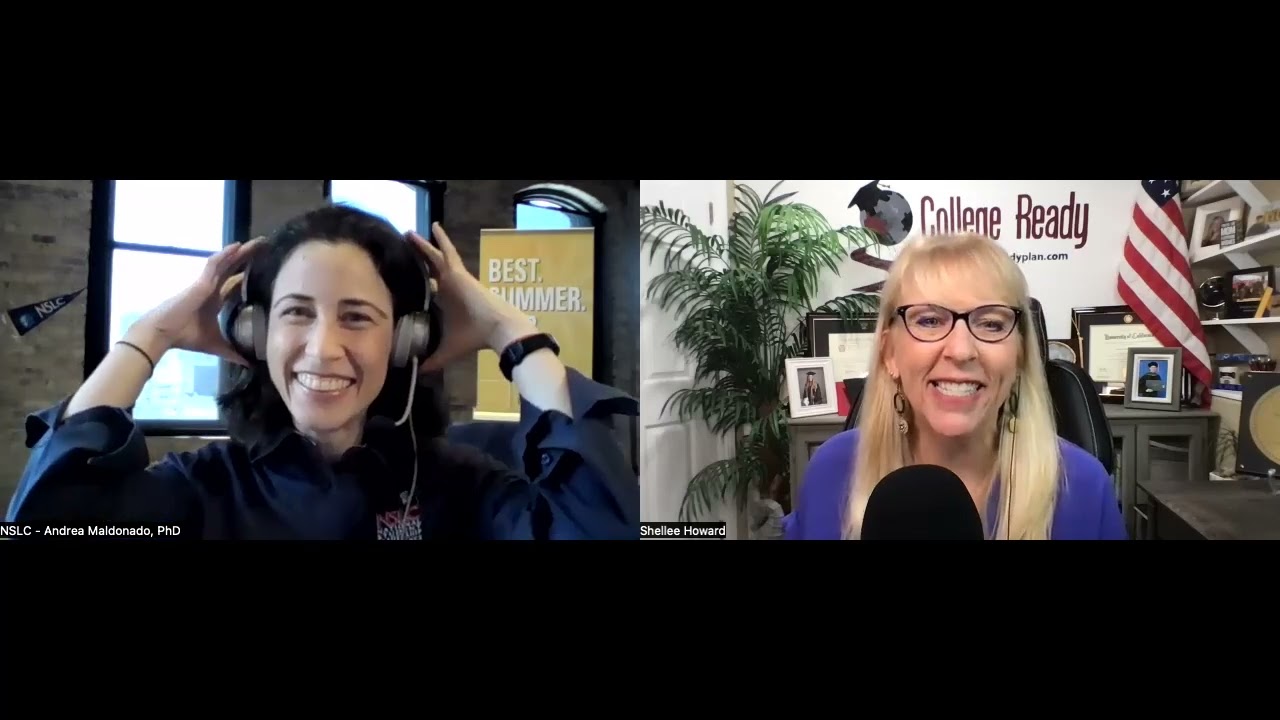
Dr. Trey, Director of International Admissions for the National Student Leadership Conference, explains how NSLC runs intensive summer programs on college campuses like Berkeley, Duke, and Georgetown. Students get career exploration, independent living, and leadership training in a structured day that runs 9 am to 10:30 pm. About 85% of applicants receive scholarships.
Chapters
Hi, this is Shellee Howard, and I am so excited to share with you our next amazing guest. Dr. Dre, as she's known, brings a wealth of professional experience in higher education to her role as Director of International Admissions and Director of Education— Educator Relations. Listen to her bio. It's amazing. So she did her undergraduate studies at Colgate University. She served as a teaching fellow for AmeriCorps in Texas. Her board experience in college counseling, admissions, student affairs, as well as 20 years— she's not even that old— 20 years history with the NSLC, which she will describe, has made her a leading expert in pre-college enrichment programs in the United States. After receiving her doctorate degree in anthropology— can't wait to dig in that— from Brown University in 2014, she joined NSLC full-time as the founder and director of international and overseas admissions. Here, she has worked with hundreds of schools across the globe to promote life-changing leadership experiences at conferences to outstanding middle and high school students. Dr. Trey was born in Mexico, raised in South Florida, and currently lives in Chicago. Regardless of where she is in the world, her mission is the same. She is driven to make a positive difference in the lives of young people, helping them to discover and share who they Are with Others. So excited to have you. Thank you so much for joining us.
Thank you, Shellee, for that, and thank you for having me. It's really an honor to, to be a part of this experience with you.
You are welcome. So I always like to start my every episode with what are you passionate about? Can you share with our audience? It'll tell a little bit more about what's important to you.
Sure. Well, I think you kind of got a sense, and I think the audience got a sense of what I am passionate about, um, and that is really making a difference in young people's lives. And I think one of the things that really, um, is missing right now, especially— I mean, today I just read an article in the New York Times about the mental health crisis, um, among teenagers and adolescents, um, really Just, it's very sad what's going on. I think young people really need to feel not only that they matter, but their voice matters, their identity matters. And through the programs that we facilitate every summer, we're really trying to get that message across that you matter. For many years, I think young people have been kind of put in boxes and shown that they don't matter. And so that is something that I'm very, very passionate about, about making young people really believe that they matter.
Right there with ya. So for our listeners, can you maybe share a little bit about NSLC and what exactly it is?
Of course. So the National Student Leadership Conference, the NSLC, is an educational organization. We've been around for over 30 years. And our mission is to provide pre-college career-focused leadership programs. So we have a few objectives. The first objective, which most of the students come to our programs for is this career orientation. It's this opportunity to test drive their career interests before having to make those important decisions for college, university, and beyond. So that is the— that's the first objective. The second objective is the— is, is an opportunity to get away from mom and dad for a little bit and get some independence and live on campus of a top-ranked university in the United States. And, and, you know, kind of see what it's like to be a college student. Um, you know, uh, so that is number 2. And the 3rd objective is the leadership component. And this is why I worked for, for the NSLC. It's, it's this personal growth and personal development work that we, we get a chance to work with students. I mean, in our middle school programs as early as 12, and then in our high school programs as early as 14. And really, I mean, giving young people an opportunity to sit with who am I and how do I want to contribute my gifts to the world? And so that is, I call them some often soft skills, skills, right? The social and emotional piece. But it's so crucial. They're, they're, they've got, there's maybe soft skills, but with a heavy presence and impact in, in, you know, in the lives of young people.
I love your mission. It's so aligned with what we do here at College Ready. And as a parent of 5, my question to you would be, What do they do when they get there? Is it supervised or is it just total chaos? Like what, what would a day in the life of, so I can kind of get a glimpse as a parent, are they safe? Are they running around with unlimited opportunity with their cell phone? Like help me understand what does that look like? Wow.
First of all, kudos to you, 5 children. Happy belated Mother's Day. Wow. What a test, you know, it speaks to who you are, you know, with everything that you've been able to accomplish, including raising your children. So parents often ask about safety and security. They want to know that their children are safe. And one of the things that I think distinguishes the NSLC from some other summer enrichment programs is that we don't give a lot of free time. So student— the parents are investing, you know, thousands of dollars into a, a program for their children. And we have very structured days. Um, the programs start around 9 o'clock in the morning and finish at around 10:30 at night every single day. Weekends are included, um, in that. And that is not to say that they are in a classroom all that time. No, they, you know, mealtimes are, are where we, uh, designate sort of free time. Um, so they're in cafeterias or they're eating, you know, on an excursion, but they're outside of campus. But, but that's more of where we, we build in the free time. But we, we know that adolescents, you know, their brains have not fully developed yet. And so they actually thrive with structure. You know, we have over 30 years of experience and scientific research that shows this. So The students will take part in these hands-on simulations throughout the day around a specific career. So if a student is studying in our Medicine and Healthcare program, they may learn how to suture with a doctor of medicine who is one of our professors on campus, maybe a dermatologist who's teaching them how to do surgical knots, or there may be a diagnostic simulation where they are going around working with patients and, and trying to determine, uh, what illnesses, um, uh, they might have and then coming up with a treatment plan. So those are the hands-on simulations. They also have leadership activities throughout the 9 to 18 days that our program lasts. Um, so leadership workshops are dynamic workshops that are facilitated by TED Talk type, uh, folks that we hire. And then there are excursions, like I mentioned, off campus that are related to the career, and then sometimes social or cultural events. You know, if they're visiting New York City, for example, we will take them to Times Square. If they're in Washington, D.C., we take them to the Smithsonian and to see the monuments. So that's all built in. And then, of course, there's social time as well. In the evenings, we may have a casino night or a pizza night or an ice cream social, those kind of things, so that the students gets some downtime, but again, in a very safe and structured manner.
So I'm listening and I'm like, I want to go. I want a do-over. I'd like to attend camp this year, please. What about if you have a student or a child that is more shy and you know they need leadership to survive in this world? Will they feel part of your camp or is this not a good fit for them?
No, they absolutely will feel included. That's actually one of the things— it's incredible. We— one of the things that again distinguishes us is that we don't really take groups of students from the same schools that go to the same exact program because we want to avoid cliques, right?
We—
most of our students, if there's 50 students in a session on business, for example, Most, probably 95% of those 50 students do not know each other at all. So they're all coming in, in some ways a little shy, right? And that's where the leadership component of our programs really helps facilitate the team building. We spend the first 2 days really building a sense of team. And it's incredible. It's the program again is only 9 days or 18 days depending on the length that the students select, but it's kind of incredible how much you can get accomplished if you utilize all of the time. And, and they build trust, and they build confidence in themselves.
And that's—
by the end of the, the program, students are really transformed. I mean, I hear that over and over from parents, you know, wow, my kid is shy, but I don't even recognize this student. And that's really just students kind of allowing themselves, their, their true nature to come out because they don't have the normal barriers that prevent that from happening.
Amazing. I can see how that would hugely benefit somebody who may not feel part of a clique at school or at home. So can you speak to like Where do you find the students, or how do the students find you?
Sure. So we have a few ways that students come to us. So I think the most popular way, or the most common way, that often students within the United States find us is through their performance on a College Board exam, like a PSAT or an AP exam. We do not invite everyone, but there is a select group, probably around 3% of, of test takers who get invited every year at different times in the year, usually in the fall as well as in the spring. And they have been preselected to attend our program based on their performance on one of these exams, their self-reported grade point average, which has to be at least a 3.0 GPA, and an interest in a career that we offer. So for example, if they scored really well on a PSAT, they had over a 3.0, but they checked off fashion design as a career interest, we may never meet them because we don't offer a career exploration program in fashion. But that is the number one reason students get these invitations in the mail. And I'm sure some of your viewers have received, receive that. The second most popular way, and this is the way almost predominantly with our students overseas, is through educator nominations. So we have very, very close relationships with lots of schools, some in the United States, but very, very close relationships with schools overseas. Because you can imagine, students are coming thousands and thousands of miles away. We want to make sure that this is a very good fit for a particular student. And so educators at these schools would nominate their students based on interests and based on whether they think that their student is a good fit for our programs. And then finally, some students find us, you know, on the internet, just Googling us, or through friends, you know, who have attended in the past. And if that happens, they can go ahead and register online, but they will need to provide the name and contact information of a teacher at their school who can verify their grades and, uh, behavior.
Fantastic. So what I'm hearing you say is if I sent my child to your camp, they could meet an international student, they can meet students from all over the United States, and therefore again learn by culture, by diversity, skills on just people. Just loving people. So that's super exciting. Now, as I think, um, you know, where are these camps? Like, uh, can you give some examples of location maybe?
Sure. Um, they're all across the United States. So we, um, we kind of take over, um, many of the university campuses that we're located. So, um, in California we're at, you know, the UC system, UC Berkeley, UCLA. Um, uh, our newest locations this year are UT Austin, Duke University, and Johns Hopkins University. Uh, and then we've got a lot of East Coast schools, um, Fordham University, uh, American University, uh, Georgetown, uh, Georgia Tech. So they're spread throughout the United States, and students get to live in the the university dorms, um, you know, uh, eat in the cafeteria, go to different classrooms. We kind of take over a certain space, you know, uh, at these universities. We're also at Northwestern in Chicago, which is where I'm connecting from. So, okay.
And then what are the counselors— uh-oh— how do you find the counselors? And, you know, um, I'm just curious, like, where do you get the people who are doing the leading?
So yeah, that's a great question, Shellee Howard. So we hire hundreds of college-age students every single summer to staff our programs and to facilitate small groups. One of the things that you asked earlier about, you know, will a shy student feel included? Yes, because the group may be between 50 and 100, students in a session, but we divide that group into very small groups between 12 and 15, 16 students, and that small group is facilitated by what we call a team advisor, who's a college-age student studying that specific career. So, you know, maybe they're pre-med or pre-law or medicine, you know, or, uh, business or engineering. Um, and, uh, Many of our staff members are— were former students, so we definitely give preference, uh, in the app— in the job application process to former students because they know the culture of, of our organization and our mission. Um, but really, uh, if, if you are a college-age student out there, you know, we welcome applications. This is a great summer job opportunity, um, for, uh, for college-age students, because they actually get to take part in the program, but they're teaching it. Now, we also hire adults, like a little bit older adults, to, you know, who are professionals— the doctors, the lawyers, the engineers— who serve as the professors. Now, those professors may or not be associated or affiliated with the university where we're located at. I get that question a lot, Shellee, you know, are are your professors, professors at the university. Sometimes they are, and sometimes they're not. But what I will guarantee is that if we are located at a university, we will have opportunities to interact with specific departments of medicine or business or, you know, whatever that might be at that university. So they will be— the students will be engaging with university officials and professors. At the university as well.
So the last question I have is, does every student who apply get in? And is there an interview process? And, you know, what does that look like? I get that question all the time. And to follow it up, how will this help them prepare for college?
Sure. So students, as long as they meet our minimum requirements of a 3.0 grade point average, some leadership potential, and, and there's space in the program, they should be accepted. There are some cases where students may fall just below our minimum grade point average, and I might go ahead and, uh, communicate with an educator at their school just to make sure there are no disciplinary issues. You know, we have under the CARE hundreds of adolescents. We want to make sure— we just don't have time to waste in the sense of, you know, working on disciplinary issues. We don't have months, we have, you know, days. So we want to be very careful about, you know, who we're accepting. So I will, you know, our admissions team takes the extra step to make those calls if a student falls just shy of the 3.0 grade point average. Students who apply for scholarships do have to go through a little bit extra application measures, so they will have to write a couple of essays to demonstrate both academic merit and financial need, and they will need a letter of recommendation from a teacher or counselor at their school. But I will say about 85% of the students who apply for scholarships do get something. So that's excellent.
Excellent.
And then I think the benefit, I mean, the benefit of attending any Summer Enrichment Program is, you know, and really any Summer Enrichment Program is, should be beneficial because it allows students wherever they are to come out of their comfort zone and to experience something new. And sometimes they have those opportunities and, you know, and that might be, you know, working. I mean, oh my gosh, can you imagine? Like, I know we worked probably as adolescents, but that— I mean, that is valuable as well, just doing something that is outside their normal routine, um, you know, which is, you know, uh, a lot of the times Snapchat and Instagram. So, you know, if we can get beyond that, it will be beneficial, I think, for the NSL see students— what I've been told is students write more compelling essays for their personal statements after doing a program, um, with the NSLC, especially if they're interested in studying at that university. They can actually write, um, more compelling and vivid, um, descriptions of why Northwestern is their first choice or why pre-med is, is what they want to study, you know, they can with more certainty. So, um, that, that is often helpful. But it should be noted that if anybody— and this is really important— if any summer program says that, that their admission to their program is a ticket into that university where it's located, they are lying. They are lying. No summer program, no matter where it is— I mean, we have programs at Harvard Medical School— does that mean students that go to our our Harvard Medical School program are going to get into Harvard University?
No.
And it's—
no.
Even if— even there are programs that are organized by the universities, I get this question a lot. Well, is that a better program than your program? Because we are the ones responsible for organizing our programs. We're hosted at the universities or hosted by the universities, but we are responsible for, for putting together the curriculum. Even universities that host their own programs, oftentimes those are a little bit more academic in nature, so research-based, and— but that is also not a ticket into a highly selective university. However, by participating in a summer program, again, students can write more compelling essays, weaving that experience into who they are as individuals.
Excellent. So if a parent wanted more information or a student wanted more information, how would be— how would they reach you to get that information?
Sure, so there are a couple of ways. The best is our website, right? So it's it's nslcleaders.org. So nslcleaders.org. And then Instagram is great.
We keep—
we, you know, are really blasting a lot of information on Instagram daily. And so that our handle is @nslcleaders. And then if they want to email our Admissions Department. I'm happy to help. It's admissions with an S, so plural, admissions@nslcleaders.org.
Excellent. Thank you so much for your time. Very appreciative.
My pleasure, Shellee. Thank you.
More from Shellee




The 3 Questions Every Parent Should Help Their Teen Answer Before College | Featuring James McLamb

Helping Your Teen Stand Out for College Through Purpose & Impact | Featuring Aishani Sheth


From Robotics to Cornell: A Father-Son Blueprint for College Success with Aarav & Ritesh Kumar

The Hidden College Credit Strategy That Could Save Your Family Thousands with Josh See

The Truth About Financial Aid: Why Some Families Pay Less for College Than You Think with Jack Wang

Human Skills Every Teen Needs for College, Careers & an AI Future with Rob Heller
