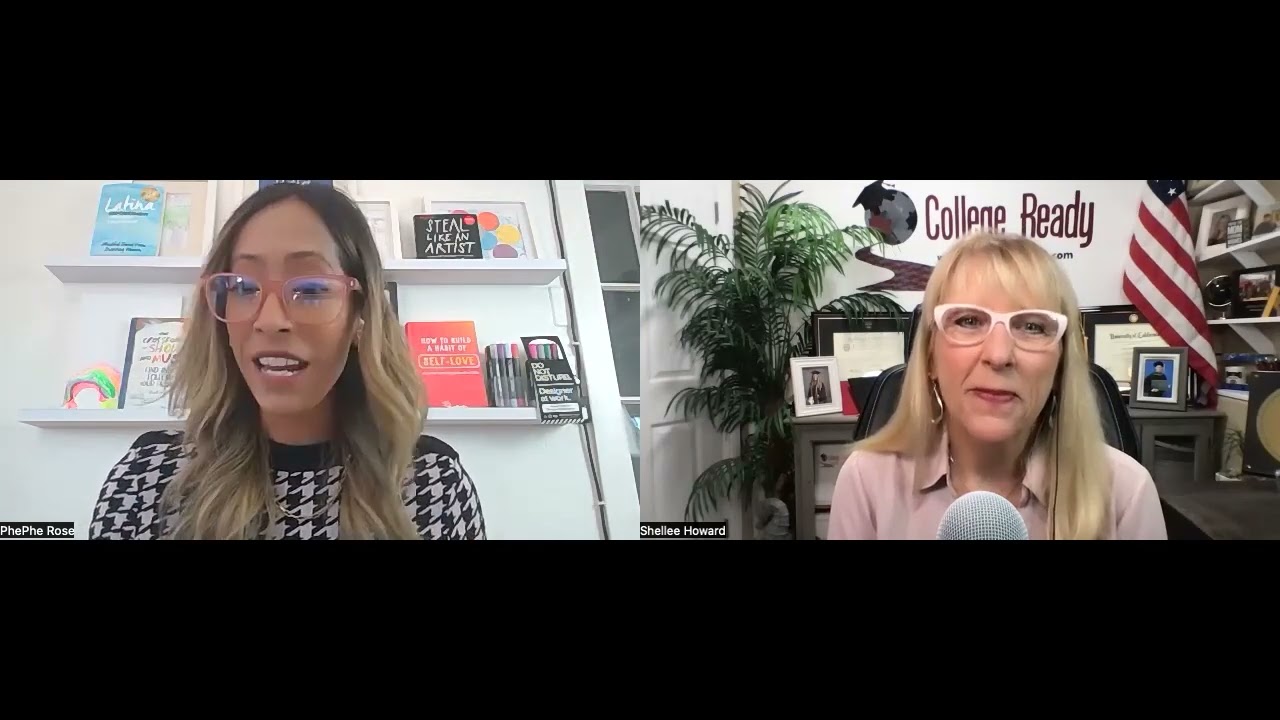
Artist-entrepreneur Fifi Rose went from shy art student to running multiple creative businesses. She studied architecture at USC, worked in property management, and launched Brush Up Your Brand in 2016 for real-estate branding and design. She advises creatives that introverts can succeed in business with practice and networking.
Chapters
Hi, this is Shellee Howard, and I have the honor of speaking with an entrepreneur and inspirational speaker. So who here doesn't like doodling? My guest today grew up loving to draw and decided to attend the University of Southern California, known as USC, for her Bachelor of Architecture. In 2012, she quit her job in property management and has been an entrepreneur for almost 10 years. She built her brand as an artist and founded Brush Up Your Brand and Brush Up Your Space. Her mission is to inspire creativity in our next generation. I love it. Welcome to our show. Can you please tell our guests— or sorry, our audience, um, a little bit more about what an artrepreneur is?
Yeah, hi everyone, so I'm Fifi Rose, and, um, what I consider an artrepreneur is pretty much living and building yourself as an artist as well as being an entrepreneur and creating that into a business. It really takes both sides, and it's that merging of both sides that makes it very unique and, uh, very fun to be a part of.
I cannot wait to share. We have so many artists in our space, and we have a lot of this generation who wants to jump right into being an entrepreneur. So I think you're going to be able to help both sides of those students. I call this podcast an opportunity to lean into who you may want to be when you grow up. And so I am so excited for to have you on the show. I do like to start with 2 questions. First question is, what are you passionate about?
Yeah, I mean, my passion, and this was said kind of in my bio, is to inspire creativity in our next generation. Um, the creative arts and creativity just play— has played a major role for me growing up, and obviously it played an impact that it's about my life now as an adult and what I built my career around. And I just feel like the arts is an area where it gets taken away in education and gets de-tiered in terms of creative path— creative career paths. And so I just want to be a voice, and I'm passionate about being a voice to share that and to share and inspire creativity and to show how you can build your life around that and build a successful life around that.
Ah, that's so inspiring. I love that. And second thing is briefly share what you are an advocate for. What would you like to see changed in this world?
Um, I mean, I definitely— and this, it all kind of goes together with my passion. Like, I am an advocate for the creative arts, and, um, I'm part of a couple organizations that just support that and support that in public schools. And I would, I mean, I would just love that to be the forefront of a lot of parts of education. I think creativity and imagination is so important, and it, it's a leader in how we innovate. And even since we're moving into technology now, like, that starts with creativity and, and what you can build and what we see our future in. And I just think it's so important and wish that there was more things centered around it, more funding around it, and it was a central part of what we kind of teach our children.
Wow, this is going to be a great interview. Let's now take you all the way back to high school. Remember what life was like, and can you share a little bit about the kind of student you were?
Yeah, I, um, so to start off, I had never imagined myself as an entrepreneur and speaking to you today and doing any of that. As a student, as a young kid, I was very shy and quiet. I think I only spoke in class when I got called on, and I tried not to raise my hand. But I did get straight A's. I did do very well in school. I just, you know, kind of stood back in terms of being, you know, someone who stood out or was very social. I did play sports, so, you know, I was active and involved, but I remember just being very quiet and just not wanting to speak when being spoken to. But I did love school. I tried really hard. I, I was very very fortunate that in middle school and high school there was a creative arts program. And again, this is why I advocate for these. And I, in my first art class was in a community center, I think in grade school. And I remember going to, it was like a cartoon drawing, learn how to cartoon drawing 101 class. And then when I went to middle school, I want, there was a program for visual arts. And so technically I was a visual art major. Through middle school and high school. And so my electives were all centered around art classes. And so that really cultivated that interest of drawing for me that a lot of, I think, young kids have growing up. Is everyone, you know, grows up loving to draw, and we pretty much carry a crayon before we start using a pencil. And eventually that starts to fade. And so I just, you know, had opportunities where I can just kind of keep that crayon in my hand.
You know, you, you say that as a true artist because not everybody grows up with a crown or a pencil in their hand. I will tell you, I have, um, not a great, uh, ability to draw. And so for me, it was a bit terrifying when, uh, somebody in school would say, oh, can you handle the drawing or the art piece? And I'm like, ah, that's bad.
Yeah. I mean, I, now that you say that, I'm like, I always did get stuck with those roles, but then sometimes that was a little intimidating because you're like, oh no, she can draw, so give her that job. And you're just like, oh no.
When did you first realize that you wanted to use your gift and talent of drawing and art to go into your future? Like, did you know in high school what your path would be? Because this is where our students are really confused, right? Maybe you can help them to see what your path was and what maybe you wish it could have been. Either one of those?
Yeah, so I— okay, so the one thing is I knew I loved art, um, but the— I didn't have a lot of exposure of art careers, creative careers, and so my only understanding of art was a gallery artist, and that was something I did not want to do. I didn't envision myself just making art pieces in a gallery, and— but I didn't know really what else there was out there. And within my family, we, like, there wasn't just a lot of exposure to any of that. And then, because I took art classes, I got exposed to kind of different things. And there was one project that involved architecture, and this was in 11th grade, and we did a drawing based on an architect, and you kind of interpret your own thing. And so I kind of learned of that career. Didn't quite really fully understand it, and I don't think I never did until I was really in my major at college. But I did grow up around construction. My dad is a carpenter and has been in construction for his whole career. And so I kind of thought, okay, construction art equals architecture. Like, that must be what I'm meant to do. And so I blindly applied to architecture schools. I kind of looked them up and blindly went for it. Not again, not really knowing much and really what that entailed besides, oh, you design buildings. You can make cool houses, you know. I'd see these buildings my dad had worked on and be like, okay, that's— there's somebody that put that together. And so I just— yeah, that is as little as I knew really about it. And I think it was a blessing that I kind of pieced that together and kind of chose that major, but it was completely kind of by chance. And looking back now, I mean, I've kind of followed this journey that was just like became certain things one after the other, but I've been introduced to other creative careers and I kind of always wonder, like, I could see myself in a lot of different categories, you know, like working in toy design with Mattel or doing shoe design with Nike, in different certain advertising avenues, in children's publishing and children's illustration. There's so many things I started to learn about later as an adult that I've kind of been intrigued about that I'm like, I wonder what I could have been doing that. However, I'm very happy where I've built my life now, and I've kind of still chose to a path. But one thing I do wish was just having more exposure and doing more research about all the options. There's just so many creative options. I mean, you can still like go work for Elon Musk and design space things and cars and, and stuff like that and be in the technology world. But find the creative side of those careers too.
That's fantastic. So how did you come upon deciding which college that you were going to pursue?
Yeah, so I, I was born and raised in San Diego, California, and I am the first person to kind of go to college, move away to college within my family. And, um, if you— if I look back at the schools I applied to, I didn't go stretch too far away from home. They were all California schools. And I was very nervous about moving away from home. And I ended up picking USC, which is 2 hours away. And I was looking between USC and Berkeley. They both had architecture programs. USC had one that was undergraduate, and Berkeley, you had to do graduate school. So it'd be compared from 5 years to 6 years. And then Berkeley was a 6-hour flight versus a 2-hour drive. I, again, I didn't know a lot about the different colleges besides you got pamphlets in the mail. At least we did. Maybe you guys get newsletters now, but we got these pamphlets in the mail. And I was looking at Cal Poly too. I believe Pomona or one of the Cal Polys had an architecture program. And then, I don't know, I just, I started talking to a couple of professors and our teachers and they knew of USC. And I kind of then just got excited about that school. It's like, okay, it's not too far, I could have my independence, it's an undergraduate program, which means, you know, last years in school. And so then I just kind of narrowed it down to that, and then that got in my head and that became my first choice. And within that program, in a lot of art programs as well, is you do have to put together a portfolio. You have to be accepted into the school, as well into the program that you want to be into. So you kind of had to get both sides to get kind of in there. And I actually had a couple teachers that helped me put that portfolio together because this whole process was new and I had no idea what I was doing. But again, there was a couple of key teachers that kind of supported me and they were like, we're going to help you navigate this. We want you to go to USC and get into architecture. So they helped me put together a portfolio and I applied, submitted it. One teacher, she even walked me to the post office to submit this package. And yeah, so I waited and I waited. And at this time we got the letters in the mail. And you see either a small envelope or a big envelope. And I got the big envelope from USC. And it was definitely one of the best days that I experienced.
So what was life like at USC for a student who may be considering that as one of their colleges? What was that like for you?
Yeah, so I, so I went to USC around, this was 2004 through 2009. And another amazing coincidence is USC had an amazing football team at the time. So USC in general, like my high school is very spirited, very spirited around sports and football. And so when I got to USC, it had that same vibe. That same community essence of spirit and the Trojan family and, you know, fight on. And so I just loved that. I loved— people just loved the school, and you see that through, through everything that they do. Um, it's not a quiet school, you know, and they're very active in their programming and all the things they want to do with the school. Um, so I did go into the dorms, which I highly recommend for anyone going Even if you're at home in your home city going to college, I highly recommend moving out and going into the dorms at least your first year. It helps you bond with other students and classmates, and you start to get into a routine of going to classes together and just build that bond. Where I know a lot of my high school friends and relatives who commuted to school and stayed in San Diego, a lot of them dropped out. They didn't feel a connection. I'm one of the rare few that kind of stuck it through, and I believe a huge part was that because I laughed and I was there and I immersed myself into the whole college experience. But it was a lot of fun. I mean, I can go on for hours about college. I was part of organizations, I was in a— I joined a sorority. I studied abroad. I tried to do all the things that the college experience is there for, going to sporting events, you know, doing college parties, but, you know, also, you know, sticking to my major and getting through those. Architecture is a very tough major, and it has a big reputation of that, and so it takes a lot of dedication. So I fully kind of just immersed myself into the college experience.
So then the question is, if you had one memory, G-rated, that you could share with the audience, just the one thing that you look back and you're like, that was an amazing opportunity, experience, what was that one thing that you would share about that time you spent at USC?
I mean, the most memorable honestly was my study abroad experience.
Where did you go?
I went through Southeast Asia. So it was through the architecture program. So it was quite unique. It wasn't like you go to one city and stay there at a college. We actually traveled through 8 different countries. And it was like going on a field— if you imagine elementary or grade school, you go on a field trip and you go to this cool thing. That was fun. We did it for 3 months of going to like a daily field trip every day to a different architectural landmark. And you bonded with— we went with a group of USC students. There was around 20 of us. And you just kind of bonded with that group and that experience on going out there and experiencing that. And I think that just really created the whole thing. Like you would never kind of get that opportunity again in that way. But I think in general, like with USC, the whole thing was just amazing. So there wasn't one moment within that, but I do think I'm so glad I did the study abroad.
I have heard that time and time again. Were you worried or scared or intimidated? Oh, I love your cup. That's just perfect. Couldn't have played that better.
Yeah, yeah. It's for those listening, it's a USC Mug.
Oh, I forget that not everybody is seeing but listening. So then take us from when you graduated from college. How did you know? Did you just want to go into architecture? When did you make that, that pivot as to I'm now graduate, what do I do?
Yeah, so I, I was, to be honest, I was pretty intimidated by the architecture community and all that entailed and within the Los Angeles vibe of architecture. And there is some ego around it, and it was just a very intimidating experience. So I got actually comfort in— I started working for a property management company my last semester in college, and I got comfortable there. I didn't look for architecture jobs. I stayed within that. I mean, I was kind of in the field within real estate, but it wasn't architecture. And I got comfortable working for there. I worked there for about 3, 3 and a half years maybe. And, but then I realized it wasn't what I wanted to be doing. And that kind of ties into how I got into entrepreneurship. And so I had a very close friend and mentor who had another business, and she wanted to kind of go off with me and create something. And so we did that. And I learned a lot from her. And that experience, I felt like, was my business school. Like, we kind of just jumped in. She knew a little more than me. And we started about 3 businesses, um, 2 of which failed. And the 3rd was another property management company because we knew that industry well, and it succeeded. And again, though, I got restless. And I was like, I'm not meant to be doing property management, even though I was at this time, I was handling the branding, the marketing, any creative piece that I can get within that I was doing. But there was something more that with— from me that I could create. And within this whole time, though, from kind of in 2009, when I graduated college, and now we're getting gearing toward— then 2012 is when I quit working. And then By 2016 was when I went on my own. So, you know, so there's what, 7 years there, if I do the math correctly, that I was actually building my brand as an artist and a creative under Fifi Rose. And what that meant was just I started to draw and I started to share my drawings. I tried selling my drawings. Like, at the time there's only Facebook, so I put my art on Facebook. People bought art prints. Then Etsy came around and I created a shop on Etsy. And then people started to ask me, can you design this flyer? You know, can you design this logo? Any like creative, can you do this? I started saying yes to within that entire time. So while I was kind of just learning business in these other avenues, I was also building myself as a creative and kind of became that person, like the creative person people knew. Like social media wasn't so huge that You know, you weren't— you couldn't easily search on Instagram, you know, different artists and see, oh, let me message them. It was kind of just who, who was around you, and, and that was me. And so I let people know, like, who I was, and I shared it, um, to people. And so I kind of grew that name and grew that brand and, um, slowly started to learn, okay, I'm learning business over here, how can I apply these same principles to me selling art or art prints or any other kind of creative thing I wanted to make at the time. And by 2016, by the end of 2015, I left property management from the second company we had built and decided to create a creative studio and just go creative, not knowing exactly who I was servicing or what I was going to do, what was my niche, you know, all those things. I was just like, I need to get out of here. And now I'm confident enough. I know enough that I can do this on my own. I never would have imagined though I would have once started a business to do business as a solopreneur. That was— I like, ask me from graduating when I graduated, would that— this is where I'd be at? I'm— yeah, and that I would do this again. We talked about speaking and like, I built my confidence over time too, of like how to communicate, how to network, how to talk to people. It's like, okay, you're gonna start a business, you gotta learn to sell. And you got to talk to people. Like, most creatives are introverts, and so that's not always easy to do, but it takes time. Again, this is a 7-year journey from, you know, graduating school and starting a business on my own. And so it took a lot of evolution and growth within myself to kind of get to that point.
Such a great story. So in summary, I tell students, be the change you wish to see in the world. If you live that out, what would that be for you?
Yeah, well, so now, like, I'm fortunate that I've kind of figured it out, like, how to marry art and how to, you know, with business together. And I— every day I'm trying to live that change that I want other creatives to be comfortable building creative careers, becoming entrepreneurs, and going off on your own. And I know that it starts with me as being that example. And so I've literally kind of experimented in different areas. I've created the artist brand. It's very boutique and commission-based, and it's not where I get majority of my income, but it's there and I've made it work. And I, you know, there's certain— like this book behind me is like an illustrated book. It's called How to Build a Habit of Self-Love with a company called Hatch Brighter, and I was able to illustrate the whole thing. This was last year, and it's a really cool project. So I was able to do that. Um, I went— within this time I've gone back into architecture. So that's where Brush Up Your Space comes in and I'm doing design projects. And I've also built Brush Up Your Brand, which involves branding and graphic designs for real estate properties. And so I've kind of figured out different paths and created businesses within those paths to really, at the end of it, show others that they can do those type of careers. And those are 3 different examples. Of how creative can build the business through that. And so every day I just try to live as a living example and to keep striving higher and to grow the businesses higher, you know, is to scale them, to just show you that it can be done and artists can thrive and not only survive.
That is brilliant. So if somebody wanted to get a hold of you, do you have a website that they can reach out to?
Yeah, so, um, so again, my name is Phi Phi Rose and the website is phiphirose.com. That's spelled P-H-E-R-O-S-E, and all my social media is under that name. So whether I'm— I'm an active social media as most millennials, and so you can find me on Instagram, Twitter, uh, LinkedIn, Facebook, on TikTok as well. All under that name, so you, you can't not find me, and I try to make it easy to be searched.
It has been a pleasure, Fifi. Thank you so much for sharing, and we look forward to your success.
Thank you so much, and I'm just, I'm so happy I was able to kind of share with you all about everything.
All right, bye for now.
Bye.
More from Shellee




The 3 Questions Every Parent Should Help Their Teen Answer Before College | Featuring James McLamb

Helping Your Teen Stand Out for College Through Purpose & Impact | Featuring Aishani Sheth


From Robotics to Cornell: A Father-Son Blueprint for College Success with Aarav & Ritesh Kumar

The Hidden College Credit Strategy That Could Save Your Family Thousands with Josh See

The Truth About Financial Aid: Why Some Families Pay Less for College Than You Think with Jack Wang

Human Skills Every Teen Needs for College, Careers & an AI Future with Rob Heller
