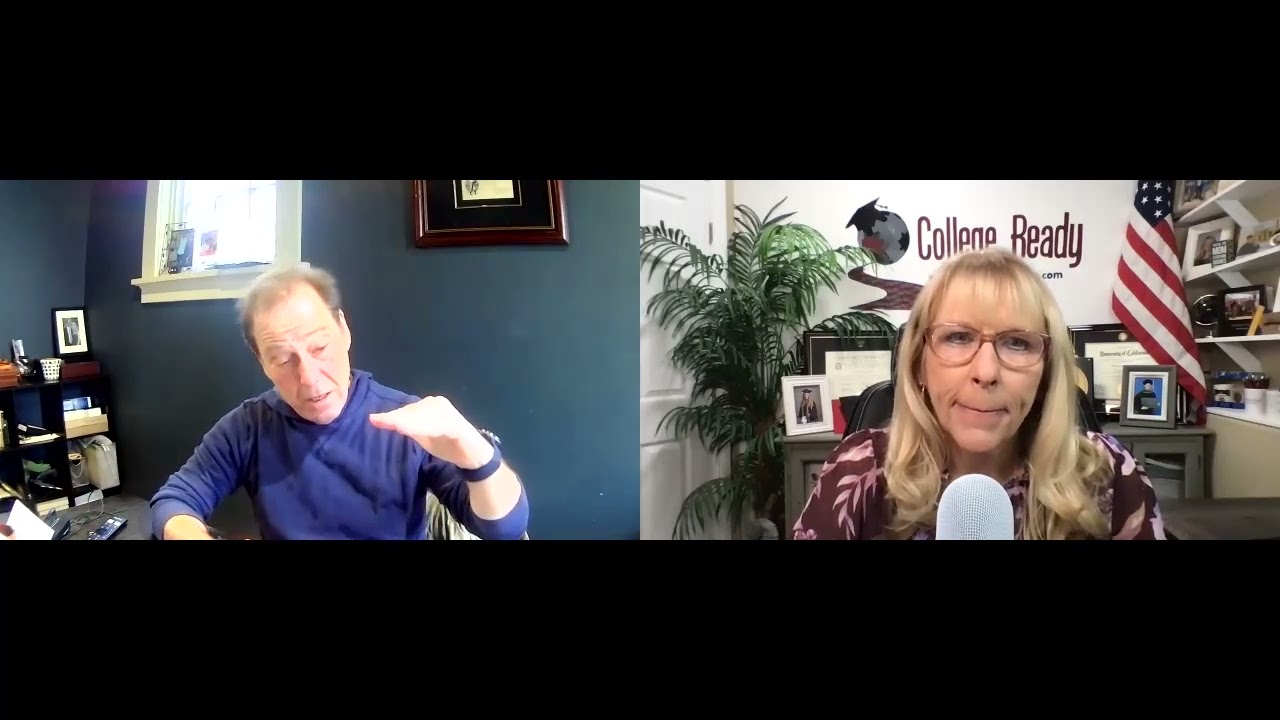
In this interview, host Shellee Howard talks with Alan Katzman, founder of Social Assurity, about how social media—particularly LinkedIn—can be transformed from a perceived risk into a strategic tool for high‑school students, parents, and educators. Katzman explains how he recognized early that colleges were beginning to review applicants’ online presence and developed a methodology to help students craft a professional digital portfolio that differentiates them beyond grades and test scores. He outlines the services his company offers, including self‑paced online courses, personal consulting, and a "LinkedIn Fast Start" program, emphasizing that a well‑curated LinkedIn profile can serve as a storytelling platform, showcase character, community service, and extracurriculars, and even provide data on demonstrated interest and likelihood to enroll. The conversation covers practical advice for families—overcoming fear of social media, teaching students to present authentic yet strategic content, and using LinkedIn analytics to gauge college engagement. Katzman also highlights the broader impact of this approach on scholarship eligibility, graduate school applications, and the overall college admissions landscape, arguing that the process is broken and that technology can reduce student stress by allowing authentic self‑presentation. The episode concludes with a call to action for families to visit socialassurity.com for consultations.
Chapters
Outstanding. Well, today we have a special guest, Alan Katzman, and he is a pioneer in developing and advocating techniques to teach students how to use social media. For those people who didn't go to college or those who went a long time ago, We didn't have to worry about this type of thing, but he is going to help us understand how this will play. He helps teams build a compelling and reflective digital presence as a game-changing tool for creating academic and career success. Alan is a sought-after speaker for high school students, parents, and educational professionals, while frequently participating in education-related events nationwide. Alan has been featured in the New York Times, the Wall Street Journal, CNN, ABC News, NPR, USA Today, Forbes, Business Insider, and Social Media Today. Alan made his foray into social media education with the launch of Social Assurity in 2013 and has licensed its social media courseware to thousands of students nationwide. Before forming Social Assurity, Alan served as an executive legal counsel for several startups and Fortune 500 technology companies where he managed the law compliance and administrative functions. Alan received his BA from the University of Albany and his JD from Albany Law School. Wow. If that doesn't per— present, I don't know what does. So welcome, Alan.
Thank you, Shellee Howard. It's a pleasure to be here.
So can you take that awesome bio and make it into something that we understand as parents, what it is that you do for families and how you do it?
Yeah, sure. I mean, as the father of, uh, uh, two, two daughters, uh, who have gone through the process and are now on their own. We applied this. It was as a father that I was seeing what my daughters were posting as high school students and in their early years, and realizing and looking into it and seeing that colleges were looking back in— this is 2011, 2012, before I started Social Assurity. And also the position I was in when I was working was the chief administrative officer of a company that owned many companies. And we were actually looking at social media when vetting candidates through the process. So I was— I actually viewed the world through my daughter's eyes. And at that point, everyone was saying, just assuming that social media is a negative, that had to be eliminated from the equation. And where I was sitting and where I was perched, I saw it very differently because I was saying that social media can be a differentiator, right? In, in, in the world of college admissions, when, um, everybody's trying to get into a very good school and, and, and, and there's very little differentiation between grades, right? It's hard to get differentiation between a 3.5 and a 4.0. It's, it's, it's, it doesn't mean anything. And the same thing with test scores. So in that, in that frame, I saw, I saw social media as an opportunity. And while most students were scared because they were posting to an audience that was not college admissions officers, it was friends and colleagues that they were trying to impress, which is very different content than if they were trying to impress colleges, right? I saw this as an opportunity, but I also saw it as a learning experience. That this, this kind of communication, to use social media rather than to socialize with your peer group, right, than to present yourself, uh, and tell your story to someone who's never met you but is about to make an important decision about your future.
For sure.
Something that needed to be taught. They have the digital— they're digital natives. They know how to tell their story digitally, but we had to like shift their focus towards a different content. And that's what we've been able to do. And we want to— we alleviate the fear. I think there's very few things that a teenager can actually post on social media that will prevent them from gaining access into a school that they're qualified to get into. But a crafted social media presence that gives— that supplements the college education— college application, right, that can take a deeper dive and, and, and let me tell you more about what I'm really proud of, can help to differentiate and really be a positive and a different— a difference maker in getting into a school or getting a scholarship. And, and that's what we've, we've been successful over the past— hard to believe me saying this— but about 8, almost 9 years That's outstanding.
Now, I've been following your work for probably close to 4 or 5, and I will tell you, um, my firstborn, he graduated in 2012, so I was right there with you as a concerned parent. I'm like, what is this whole social media new craziness? Because the kids were not really understanding how to navigate it for their parents, their grandparents, and for their friends. It was kind of like I just don't know what is safe. And so I remember having this conversation with my own firstborn and saying, don't post anything you wouldn't be proud of your grandmother looking at. That was like our benchmark for, for what we knew at that point.
Right.
And then we went through the whole Snapchat stage where kids really thought it disappeared. And then we had to teach them a screenshot is very quick.. And so we went through that stage. So you've had to navigate some definitely challenging waters, but like you, I've been coaching my students to use it to their benefit. So using LinkedIn to help them tell their story, to use social media about their community service. So how do you get this out to families and, and what does it look like for them? To be part of your world?
Well, we, we offer a variety of services and support. We've, we've come up with online training programs that students can self-teach, and we bring them step by step. Again, we're big believers in LinkedIn. We think that for almost every high school student who is looking to get into college, LinkedIn is a great supplement or complement to their college application. It enables them to go deeper into presenting who they are. And, you know, we're also— we understand that colleges, although the surveys will indicate that it seems to have hovered at about 35% of college admissions officers have indicated they'll look at social media, but two-thirds, 66%, to 70% are willing to look. So we make sure our students understand that the link is in their application. If you want to learn more about my work with Habitat for Humanity, for example, please check out my LinkedIn profile and then put in the URL.
Right, right.
And then we are seeing that about, you know, anywhere from 50 to 60% of the times our students, they're getting, they're getting the click-through. LinkedIn is great because LinkedIn will tell you. It may not tell you exactly who's looking, but it will tend to say someone at Harvard College looked at your profile, right? So, so we're getting, um, we get that kind of feedback. So we know that, um, that, that, that 60% or so of, of college admissions officers that are willing to look, we think that's accurate. And we see the, the, the difference between 35% who will look versus the 60% who are willing to look. Okay, we see that gap as opportunity. Draw them to it, right? Um, and, and so we do it through the courses. We also have, um, some very, uh, uh, personal, uh, service, personal consulting. We have a LinkedIn Fast Start, which is very, very valuable. Um, most students, most 16-year-olds don't understand that LinkedIn is— it can be their digital portfolio, that LinkedIn can be a storytelling tool. They think it's just for old people like myself who are looking for jobs. They don't have a right— it's not an online resume. I think the people who view LinkedIn as just a cut and paste of their resume are, are missing the power of LinkedIn. Um, we've, we've mastered, right, uh, what, what LinkedIn can be for a high school student looking to get into a good college, or to separate, distinguish themselves for a good college, or even a college grad who's looking either to get into graduate school or to get into the workplace. Um, because you're— you can't leverage, you can't make an entry-level job or a school job like pouring coffee at Starbucks, and there's nothing wrong with that, but you can't make that into more than it is. And I think when you just focus in on taking a professional experience and really exaggerating it, it loses credibility. But there's so much more than these students do, whether it's family contributions, activities within their community, within their church, extracurricular, what they do over the summer. Volunteering, we kind of pull out or have them through our methodology, have them show their character side. And I'm sure in your podcast, you know, you're tracking too this element of character assessment in college admissions.
For sure.
And it's, it's becoming much more mainstream. You know, schools are looking holistically at students. They want students who are going to engage, that are going to be able to collaborate with their peers, who are going to be able to contribute to the campus. It, you know, there's so many different aspects of this. So if we can use LinkedIn, you know, if a student can use LinkedIn to get that, you know, I'm hardworking, I'm persistent, I'm resilient, I'm a team leader, you know, to talk about those elements, of who they are as a person and what kind of personal attributes they can bring to the campus community. It becomes a real, again, a real differentiator. And then there's another side that we also are, that works with the social media. And that is this element of likelihood to enroll.
Yeah.
And you're an expert on this. And for the parents who are listening, It's— when I speak to the students, it's like, would you ask someone to the prom that you knew would say no?
Right.
And they would say never. And I would feel, you know, I would— no. And I said colleges are the same way. And maybe not the Harvards and the Stanfords, because they know if the chances of their asking you to dance, you're going to say yes.
It's like the prom king, prom queen.
But there's a lot of schools underneath that who are competing against Stanford. So say a school like Emory, for example, you know, they could be competing for the students who have a chance to get into Harvard or Stanford. So, you know, they are trying to assess, well, if I accept the student, what's the chances of them enrolling, right? Demonstrated interest, it, it, it means something You know, there's 4,000 schools, there's 4,000 definitions of demonstrated interest.
Sure.
But, you know, schools do look at this and they try to measure it through data. One of the best ways is that to do that is to follow schools on social media. Right. In addition to going to visit, right? But they are tracking, they all have these tools that can track engagement on social media. And it's not even a human interface. There's algorithms that are doing this. That lead up to a likelihood to enroll quotient. So it's important that students understand, and parents, that you need to— you can't be a ghost applicant these days. That means that the first time a school's going to hear about you is when you submit the application, right? You want them to know your email address. They, they want to know that you're following them. And you can do all this through LinkedIn. LinkedIn has so many wonderful features. Every college has a presence on LinkedIn. They use it to, to share updates. It's, it's incredible the amount of information and data that's there. And when we work with students and parents, they are shocked to see how much relevant insight you can actually track on LinkedIn. People who've graduated from that college who are on LinkedIn, of course. Sure. Because we tell LinkedIn where we went to school, what we majored in, yeah, where we work and what we do.
Oh, they know our life.
And they aggregate all that. So they'll know, you know, um, so you can see if you want to get a marketing degree at, you know, uh, Drew University in, in New Jersey, you can see where the— where a marketing degree is taking those people. So you can actually see the value of the degree and maybe, and And I don't know this, I'm just making this up, but maybe you'd see that a marketing degree from Drew is not that valuable if you plan on relocating or starting a career in Atlanta, right? Maybe there is, there, it doesn't travel well. And so you can make those assessments through LinkedIn and it's not subjective data like US News. It is real aggregated data. Correct. So, so there's a lot of different elements of value. That help a family assess where to go, you know, what the best school is for their, for their child, and enable the child to present themselves in the best light. When I say child, young adult, the student, right?
All of that, I love how you're taking a positive spin on it because so many people just want to go after the negativity of it and the, uh, how students are comparing themselves. I look at the same way as you do. If a student wants to know their competition, they need to look at who got into that school last year. Well, an easy way to find that is on LinkedIn. So we can use it in a bunch of different ways. So I love how you've taken that negative connotation of posting the wrong thing on social media can hurt. Well, yes, it can, but there's also so much good that can come from it. So I love the, the positive element to it.
Yeah. And we have, again, we've, we've developed the methodology, uh, to, um, separate the, the, the personal, uh, from let's call it professional, you know, be college and career. Um, and, and there is ways to make sure again, that the colleges are gonna see what you want them to see. And by creating content for them, that, that goes a long way to helping. Right?
Right.
Like I say, if you have a bad entry in Google, the best way to push that down is create new, more compelling content. Sure. And we know, like, for example, LinkedIn gets priority indexing on Google. So if you have a LinkedIn account, and we do, we have techniques that will make sure your name is captured in the URL cleanly. It will be the first or second item that comes up on a Google search. Twitter right after that. And well, who knows where Twitter is going to be, but be that as it may, they're going to see a LinkedIn profile, right? So they're going to see, and that's going to satiate them. Because one of the things we said early on, Shellee Howard, colleges are not looking at social media to find reasons to reject qualified students, right? That was not why they were looking. As I said before, this— so many qualified students apply to these schools, it's very hard to distinguish between them. So if they're looking, they're looking to learn more about the student, and we might as well then give them something to see. Absolutely. And, and, and so, you know, with that is the, the, the mindset, right, that, that social media can help Right, because I speak to so many students, or before the pandemic spoke to so many students, but it was always like, oh, I knew that, I knew colleges were looking, so I never posted anything that would embarrass me, so I'm okay. And I would say, well, no, nothing to hide does not equal something to show, first of all. And then you have to dig deeper because they may think they never posted anything that would embarrass them because they posted, as you said earlier, Snapchat, Snapchat, it disappeared, or I went under an alias on this other site. They're saying, I never posted anything that could embarrass me on, you know, the big, the big platforms, on Facebook, on Twitter, on, on, but, but it could be there. Bottom line is, and we've seen this, you know, through, through the years, unless it's a really, um, threat of violence racist, intolerant, you know, or illegal drug use, as we've seen. You know, a teenager being a teenager, socializing, right, is probably not going to hurt or impact. But if you tell your story and if you can express yourself, show writing samples, show if you have an Instagram account, if you're interested in, uh, more visual fashion design or architecture, you can create distinct portfolios.
Oh, it's amazing.
And put that out. I mean, all this to supplement your application. Shellee Howard, you know, you know how valuable this could be to bring this to life and to bring color to an application. And that's what we do. And that's what we help families do.
I love that.
And this is not just for Ivy League schools. I mean, this applies to pretty much any school. It's going to help for merit aid, it's going to help to get in, it's going to help for scholarships.
Absolutely. When we talk to students about a standout strategy, we often include the benefit of including that strategy into their social media, and it's just another layer of consistency. So it's just proof of— again, that it's not just in your application, but you've been doing it a while and you're passionate about it, and it's going to help them stand out. So what is the mission? What is your overall mission? What do you hope to accomplish?
We want to change the world.
One student at a time.
One student at a time. We want to— we think where we are standing, we think the— well, there is no such thing as the college admissions process, right? As I said, every school has its own definition of demonstrated interest. Every school has its own needs. It's hard to say this is what you need to do to get into college because each one is different, right? And whether they're selective or large, public, private, small, liberal arts focus— everybody's different, right? But we think the whole process is broken, right? Students shouldn't be this stressed out at 17. 18 and, and, and start worrying about college at age 12. So we think that, um, the technology is there to express yourself, whether it's video. I mean, sure, you have your grades and test scores, whatever those mean these days, but you can present yourself in a very different way that, that wasn't even possible 10 or 15 years ago.
Right.
I think colleges are beginning to see this. And grad schools, graduate schools definitely see this because they don't even hide. They— law schools, medical schools, business schools— we are looking at your social media, right? You know, several business schools says we'll let you apply with your LinkedIn. So whether it's for— whether it's going to play a big value-add in the high school to college step it's a good, it's a good time to start learning because it will certainly pay dividends. What we teach will certainly pay dividends for them, for their ability to find an internship while at college, prepare themselves for graduate school or for work after college. So this whole mindset of showing your expertise, presenting yourself, and I hate the term but people are using it, but your personal brand. As you said, consistency, that this wasn't conjured up just to impress an admissions officer, but this is something that I've been interested in for years. Look at my social media, look at how I've mastered X and I've grown into a leadership position, or this is what I've accomplished. And it's a, it's a, it's an incredibly powerful storytelling tool. And in the end, that's what we all have to do, right? This day and age.
So if you were gonna leave parents that are listening with one thing they can do, or something you recommend, just that one thing that can— might make a difference, what would that be?
Do, do not fear social media. Um, uh, learn about it. And there is probably not one high school student who could not benefit from getting on LinkedIn. And I'll leave it simple as that. I mean, it's, it's, it's, it took 8 or 9 years for me to really, um, embrace LinkedIn for what it is and, and, and what it's not. But it is not their resume. And if they have never worked a day in their life, that's fine. This is— it's about presenting them in what they've done the last handful of years that has prepared them to take the next step. And, and that could be anything. That could be family service. That could be, you know, um, what they're, what they're proud of, an accomplishment in school. It's a very simple story to tell, right? But it really works, and it can be presented. And, and I would invite the parents to— we have online, you can, you can do it on a 15-minute session. We can show you examples of students who really got it. If you see their presentation both visually, right, because LinkedIn, believe it or not, is a very visual platform, right? Um, you know, it's, it's, it's kind of, um, for students, once they see how others present themselves, then their digital nativism takes over Yeah, really can— they do a wonderful job of, here's who I am, right? And they're very proud to append that to their college application, for sure.
Yeah. So if, if a family wanted to get in contact with you, what would be the best way for them to learn more about you, about, you know, the, the programs, that type of thing?
They can go right to our website at socialassurity.com.
Okay.
And the call to action on the website is book a consultation. And we'll get up a screen share just like this that we're using here, and I will talk to them and show them examples and take it from there, either myself or my colleagues.
Outstanding. Well, thank you, Alan. We really appreciate all of the information and helping us prepare our students for success.
Shellee Howard, thank you so much for having me. It was great talking to you again.
My pleasure.
More from Shellee




The 3 Questions Every Parent Should Help Their Teen Answer Before College | Featuring James McLamb

Helping Your Teen Stand Out for College Through Purpose & Impact | Featuring Aishani Sheth


From Robotics to Cornell: A Father-Son Blueprint for College Success with Aarav & Ritesh Kumar

The Hidden College Credit Strategy That Could Save Your Family Thousands with Josh See

The Truth About Financial Aid: Why Some Families Pay Less for College Than You Think with Jack Wang

Human Skills Every Teen Needs for College, Careers & an AI Future with Rob Heller
