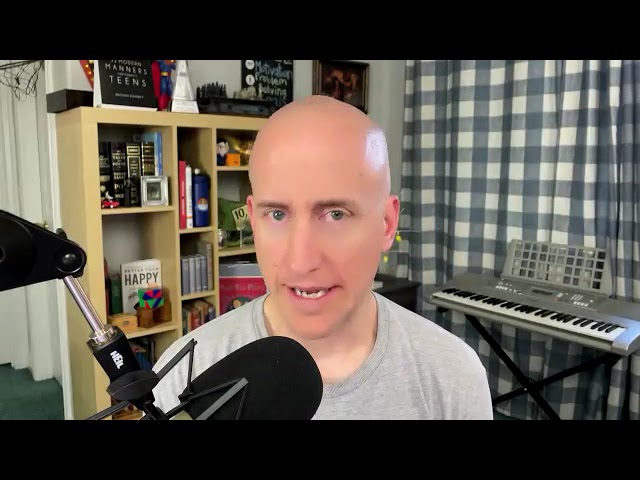
In this episode of the "Parents, Is Your Teen College Ready?" podcast, host Shellee Howard interviews Joey Mascio, a former middle‑school teacher, Disney performer, and now a certified life coach for teens. Joey shares his unconventional career path—from playing Darth Maul and the Mad Hatter at Disneyland to teaching theater and English, then moving into the school discipline office where he discovered a natural talent for coaching troubled students. A personal crisis involving his wife’s postpartum depression and a recommendation from a friend led him to formal life‑coach certification. During the pandemic his coaching practice exploded, prompting him to launch two businesses, one of which is the gamified web app Sidekick to Hero (sidekicktohero.com). Joey explains his coaching model: a 45‑minute one‑on‑one session where teens set goals, identify “sidekick” thoughts, and adopt a heroic alter‑ego name to reframe thinking. The app extends this model through four “hero arenas” – headspace, emotions, relationships, and objectives – awarding points for real‑world challenges and providing weekly livestreams. He describes the types of teens who benefit (low confidence, bullying, procrastination, depression) and the signals parents should listen for before referring a teen. Joey also recounts a bullying episode from his own middle‑school years (the “Moonhead” nickname) and how self‑coaching helped him reframe the experience. The conversation ends with practical details on how parents and teens can contact Joey via his website (joeymassio.com), Instagram @sidekicktohero, and the upcoming mobile versions of the app.
Chapters
Hello families, this is Shellee Howard with Parents Is Your Teen College Ready? And today I have an amazing guest, Joey Massio. Welcome to the show.
Wow, thanks so much for having me. I'm so excited.
All right, well, let's just dive on in. I would like if you could share your greatness with our listeners and, and see how they can connect.
Yeah, so I'm a life coach for teens. I specifically work with, uh, teens, middle school, high school, on everything from building confidence, developing social skills, mental flexibility, achieving their goals, things like that. I was a middle school teacher for 7 years. I was a, um, trained performer, an improviser. I worked at Disneyland as a comedian and actor for many, many years. All throughout my college years, uh, I was a performer at Disneyland. I'm the only one in Disney history to have played both Darth Maul, and the Mad Hatter.
Wow, how's that for some random trivia right there, right? I like it, I like it. So there is one question I ask every guest because it is one question on the minds of all of my preteens and teens, and the question is, are you doing now what you thought you would be doing while you were in high school? So in other words, When you were in high school, did you think you would be doing what you're doing?
So no, most, mostly no. All right. And I'll, I'll say it that way because in all throughout high school, I'm like, I, I'm gonna be a famous actor. Like that's just what I'm gonna be. You know, I got into Chapman University's, uh, theater program for acting. It was very prestigious. And I was working at Disneyland at the time. I had an agent in Hollywood. Same agent that Justin Timberlake and Usher had when they were teens. And I'm like, yep, this is— I'm, I'm gonna, I'm gonna make it, you know. Um, but, uh, over the course of the past 20 years and so many twists and turns, um, I still, I still perform. I perform on the weekends at the local comedy club for fun, but I'm a full-time life coach. I, I teach. I use my performance in a way. But no, I, I thought I would be starring in movies and television shows and all that. And I am, uh, now I I run 2 businesses, actually. My coaching business is just one of them.
Oh, you know how great that's probably makes students feel because they have this weight of everybody else knows what they want to do except for me. And I help them understand that, you know, they may say they do, but most of them probably don't. And the first thing we do in our program is to help them find their core values, their gifts, and their talents. So they can start figuring out what is it that I'm good at and how do I use that? So you're now using your ability to lighten up a heavy subject. So let's talk a little bit about how did you get into life coaching for teenagers?
Yeah. So I became a middle school teacher, got my master's in education, and I'm working— I'm teaching theater and English and it's— I'm having a great time. The position to be the teacher in the school discipline office, the Student Success Center. Right. Which is where teens go when they're, you know, being expelled or in trouble or whatever. They needed a certified teacher in that room. And I raised my hand and I said, Principal, I would love to do that. And she was like, I have to beg people for this, you know, like to take this role on it. And you're volunteering. Are you nuts? And I'm like, well, I am nuts, but that's a completely different conversation. And I would love to, to be in there. I think I can help these teens. So I'm in there. I'm— I didn't know it was called coaching at the time, but I'm coaching. I was always a coach and I coached my parents through their multiple marriages and divorces to each other all throughout my teen years. And so that was kind of where I started. So I had a really good knack for seeing the actual cause of somebody's problem, which was the way that they were thinking and helping them. About the same time, my wife was experiencing postpartum depression after our second child, and therapy wasn't helping her. Excuse me. And a friend of ours said, hey, there's this life coach that has a podcast. And my wife starts listening to it, and she'd come up and tell me, she's like, oh my goodness, this life coach said this. It was so helpful. And I'm like, babe, I said that to you like 3 weeks ago, you know? And she'd be like, oh yeah. And she also says this is how people should like do their thoughts. And I'm like, well, that's how I do my thoughts. Like, what do you— and so I'm like, wait a minute, am I secretly a life coach here? And I studied and I like, I did research and I'm like, you know what? This sounds like something I want to do. So I got certified, just as expensive and rigorous as my master's program. I got certified as a life coach. I started my own business on the side, and a week later the pandemic started. And my— like, I was sent home. I didn't really teach very many classes. And I was just at home and my life coaching business just took off because so many teens needed help with their thoughts. And I, unfortunately, I never went back to the classroom after that because I was in California. It was in distance learning for a year and a half. And I didn't know, I, I loved my job. I just didn't know life was gonna take me in this direction. And I'm glad it did cuz I'm having a lot of fun.
Oh my gosh. That's just meant to be. It's so cool. So how, how would a parent find you, or how, other than your website? Like, is it a lot of, um, kids that are talking, or is it parents that are talking, or how, how do you enter into a conversation that my kid needs a life coach?
Yeah, so usually it's through parents who are already familiar with life coaching, who, uh, have a life coach, listen to a life coach, or are a life coach. A lot of my clients are children of life coaches. They don't want to hear it from mom, right? And so, uh, they'll, they'll listen to me and it's, uh, it's been great that way. So that's the main way somebody finds me is that a parent has discovered, hey, there's a new way to, to like live life here. I, I've been like limiting myself and not questioning these unhelpful thoughts that I'm having. I'm just kind of like, I was believing them. But man, now that I'm, I'm, I have this metacognition power, my relationships are better. I feel happier. This is great. And they turn to the people they love, their teens, and they're like, you gotta do this. And their teens generally, no, mom, no, that's your stuff. I don't wanna talk to some old person, you know, or what, or your coach or whatever. And then they find me somehow through whatever life coaching channels with my background as a middle school teacher, performer. Comedian and all that, a storyteller, uh, they're like, oh my goodness, I found this guy. And then their teens are like, all right, I'll meet with them and see what it's like. And usually after they meet with me, they're like, okay, this isn't at all what I thought it was going to be. I thought it was going to be like boring, unhelpful, you telling me what to do, and it's not that at all. And I'm like, yeah, because this is awesome.
So that, I mean, your passion just shows through. You obviously love what you do. And I say I speak teenager because I truly love every conversation, and I've never met a teen that I don't adore. Some are more challenging than others, but I love them all so much. So, you know, what, what would, what would I listen for to help to, to guide somebody to you? So I'm listening on this podcast and I'm like, I think Jimmy Jimmy needs some, some of this life coach stuff. And as a, as another mom to go, hey Susie, I think Jimmy needs to speak to Joey. Like, what does that look like for a parent who may not know of you, may not know this is a thing?
Yeah, so be listening for a parent talking about their teen in this way, saying Man, I know my teen is so awesome. I know they're capable of shining more than they are, of doing more, but they're always down on themselves or feeling a lack of self-confidence, and they want to improve. And that's the difference. They've tried various things and nothing seems to be working. They even went to try to talk to new people and it fell flat, and they're like, man, and you know, like, it's I work with teens who want to improve, and I discovered this very early on. You cannot coach someone who does not want to be coached. And I'm very clear in my messaging where I'm like, if your teen is like, I don't want this at all, Mom, go away, they're not ready, and don't push it on them. If you, if, if you're there long enough, your teen will get to a point where they go, I don't know what to do. There is nothing I can do. And if there was something, I would totally do it, but there's nothing I can do. Ah, now they're humble. Now they're ready. And, and some teens need to kind of be compelled to be humble, but others kind of just know, like, I, I recognize I, I, I want help. I, I need some training in how to be myself in, in front of other people, or how to stop procrastinating. I would love to. Is there a way? That's when it's like, okay, you got to talk to Joey. He'll teach you the way.
That is so helpful because, you know, at what point do you cross the line? And you may see it before. I was one of those parents who, with my firstborn, he could erase himself super easy. I would look at other parents and go, I don't know what your parenting style is, but it definitely is not working. And then I had child number 2 and I'm like, Oh, it wasn't really me. And so I have teenagers in my program, you know, after 17 years of working with teenagers. Yeah, dates me a little bit. What I have learned is they are so incredibly unique, and if you can embrace that uniqueness, there's so much to offer in all of them. So what might a session look like with you for somebody who has maybe never had a life coach or know what a life coach is, or do you like— is it like a lot of voodoo and stuff like that? Or, you know, like, help us out here.
Yeah, there's definitely— I do have a voodoo doll for every one of my clients. No. So right now there's two ways to work with me. There's, there's the one-on-one coaching, and then I just created and launched a gamified mindset training app for teens because my one-on-one coaching, I only had so many hours in the day. And I'll explain kind of quickly what both look like. The one-on-one coaching is a 45-minute session, and I sit down with the team. Session 1, it's all right, what are your goals? What do you want that you don't have yet? And they'll write 'em down. It could be, man, I'm not sleeping right. I'm not eating right. I wanna work out more. I wanna do my homework better. I wanna be more confident. I wanna stop being so negative. And I'll, we'll write 'em all down, right? And then I come up with what I call their hero name. All right? This is some alter ego psychology. It fits your name, the blank. My hero name is Joey the Creator. And whenever I'm struggling, I can stop and go, hold on, these thoughts are not from Joey the creator. They're from, from my sidekick self. 'Cause my business is going from sidekick to hero. My sidekick self is Joey the lazy, and he doesn't wanna write his podcast and do that this week. He doesn't wanna be, take the time to be a good dad. But Joey the creator, what would he think right now? Oh, then I can kick myself into hero mode. So I do that session one. And I go, awesome. All right, what, what's your number one goal of all the goals we set? And they're like, oh man, it's dating, for example. I go, awesome. What's the problem? What's going on? And they tell me, and my job as their coach, I'm sitting on the sideline of their brains and I'm watching for all the sidekick thoughts that come up. And I'm like, okay. And, and I'll write 'em all down. And then when they're done, I'm like, okay, here's your sidekick thoughts. Are you aware that all these thoughts are optional? And also not helpful. Let's take one and see what it's getting for you. And they're like, oh, I, I thought it was girls that were the problem, or I thought it was my teacher that was the problem. And I go, we can't change them. Let's look at, uh, what these thoughts are doing for you and what results they're, they're giving you. And let's now create a hero thought. And sessions like that repeat. I took that model and everything I teach and I put it into this gamified app where when a teen signs in, The very first onboarding process is they create a hero name and that becomes their username. And then there's a bunch of awesome stages for them to play through in the 4 hero arenas that I call them, because these are the 4 things all teens need, in my opinion, to be ready for life after high school. They have to master the headspace, emotions, relationships, and objectives. And conveniently, that spells out hero. So if you master the 4 hero arenas, then you're ready to rock and roll. And so the whole, you know, system, the Sidekick to Hero app is set up where they earn points and, uh, by doing challenges in real life, you know, they'll watch a short funny YouTube video that I've created, a YouTube-like video. They're not on YouTube because that would be so distracting. Uh, but they're there in the app, they go watch it and they can't fast forward or skip cuz I blocked that on this. I, I built it from the ground up. You know, and when they're done, they get some experience points and now they go get a challenge. Go talk to 3 new people, right? Write down 3 negative thoughts that you have about yourself now, and now replace them with 3 hero thoughts. And they get experience points and coins for completing those challenges as well. And we have a, a weekly livestream that's a lot of fun and it's, there's so much in there for every type of learner as well. And, um, My hope with that is that, that now that can reach more teens than I could reach one-on-one.
I love it. Um, I'm actually part of a creation of an app that is, um, financial awareness. It's called Gravy Stack, and it's to help students understand about, uh, chores and earning money and life skills. And, and this sounds like the next step once they like get to that mastery of, wait a minute, if I want something and I work for it, I get something. So it just made me think when you said app, that it's, it's amazing all the resources out there that you just never hear about. And so what a gift. What is the name of the app?
Sidekick to Hero. And right now it's, you can only find it at sidekicktohero.com. It's a web-based app first because I knew not every teen has a smartphone, nor should they, in my opinion. Um, but the Android and iPhone apps are— versions are currently in development.
Okay, excellent. Now let's look at maybe the, the harder, the, the more challenging side. What if a student's being bullied? What if a student is not making friends? What if they're like, they're, they're almost depressed? Is that somebody that you can work with and help?
Oh yeah, 100%. If, if they need to see a therapist, right, and medication would help, or some kind of like deep therapy, then I can usually catch on right away. And that's not my jam. I'm not a therapist in that way. I'm more of a, of a motivational speaker and encourager, you know, that can inspire teens to realize that they're awesome, especially when it comes to bullying and being depressed because of bullies. That was my middle school experience. I have a giant head. Those listening on the podcast, you can't see it. I got a giant head and a pointy chin, and in middle school, uh, a group of boys realized that I looked like a character from a McDonald's commercial. At the time, in the '90s, there was a guy with a moon, a crescent moon for a head, playing the piano, singing about how you should have a Big Mac tonight. Do you remember him?
I do.
I got him right here for those of you who can see the video of it.
But right here, I remember that.
He's called Mac Tonight. And they, they saw, they saw me and they said, dude, that kid looks like that guy from the McDonald's commercial, the one with the moonhead. Hey, moonhead. And that was my nickname. And they started calling me Moonhead and I hated it. And I started feeling that unpleasant feeling of nervousness of seeing them, the depression that I look weird, I'm ugly, I'm not fit to be out in the world. I started having all those thoughts. And this is where the moment I, I started self-coaching, even though I didn't know it was called that at the time. One day I saw them, and this is what I teach teens to do. One day I saw them and before they saw me, I, I saw them interact and one of them called his friend. He was like, hey, shut up, Twig. And I was like, oh yeah, that, that guy is sickly skinny. And the other one's kind of large. And the ringleader, the one who made up the name Moonhead, he's really hairy for a 13-year-old. Wait a minute. And all of a sudden I rewrote my world. I, I had all these new thoughts, some of which were, we all look weird and that's okay. Right? And these guys, that this is just how they communicate. They find a perceived flaw and they just focus on it. And maybe that's all they know how to do right now. That is, that's a really easy way to do it. And maybe that's okay for them. It doesn't mean anything about me. And then the big one was. Yeah, you know what? I do have a big head and I'm still freaking awesome. And that acceptance allowed me to go up to them and when they were like, what's up, Moonhead? I'm like, what's up guys? And it threw them off and it took them a couple days to get used to it, but eventually it was like, yo, it's Moonhead. And I'm like, what's up? You guys want a Big Mac? Ah, ah, you know? And I was able to keep going because I had separated their actions and their words about me from who I actually was as a person. And I thought I was just cheating. I thought I was like, well, I'm allowed to lie to myself and tell me that— and tell myself that I'm still awesome. And I did it until I believed it, and then it just became true. Because I went from this scrawny kid with a giant head who would always look down as I walked to a slightly less scrawnier kid with the same size of a head. But my senior year, I was voted most humorous, and most spirited. I was the only senior to get two senior most. I was starring in all the plays. I thought I was going to be this famous actor. I had a lot of stuff going for me, and I didn't change really how I looked at all. I just changed how I thought about how I looked.
Oh, that's so beautiful. I love that. So if somebody was looking to learn more, to reach out to you, how— what would be the best way for them to do that?
Best way, uh, follow me on Instagram @sidekicktohero. Uh, my website has everything that I have going on right now. If you just go to joeymassio.com, uh, my last name is a little tricky, it's Italian, M-A-S-C-I-O dot com. Um, and that will take you to everything that I'm doing, my app, my coaching, my Instagram. Uh, that's probably the best way to go.
Outstanding. Well, Joey, thank you so much for being on the show. We are grateful for your insight.
Thank you so much for having me.
You got it. Listeners, we look forward to our next guest. Until then, just remember, every time your student serves another person, they're learning a little bit more about themselves. Have a wonderful day.
More from Shellee




The 3 Questions Every Parent Should Help Their Teen Answer Before College | Featuring James McLamb

Helping Your Teen Stand Out for College Through Purpose & Impact | Featuring Aishani Sheth


From Robotics to Cornell: A Father-Son Blueprint for College Success with Aarav & Ritesh Kumar

The Hidden College Credit Strategy That Could Save Your Family Thousands with Josh See

The Truth About Financial Aid: Why Some Families Pay Less for College Than You Think with Jack Wang

Human Skills Every Teen Needs for College, Careers & an AI Future with Rob Heller
