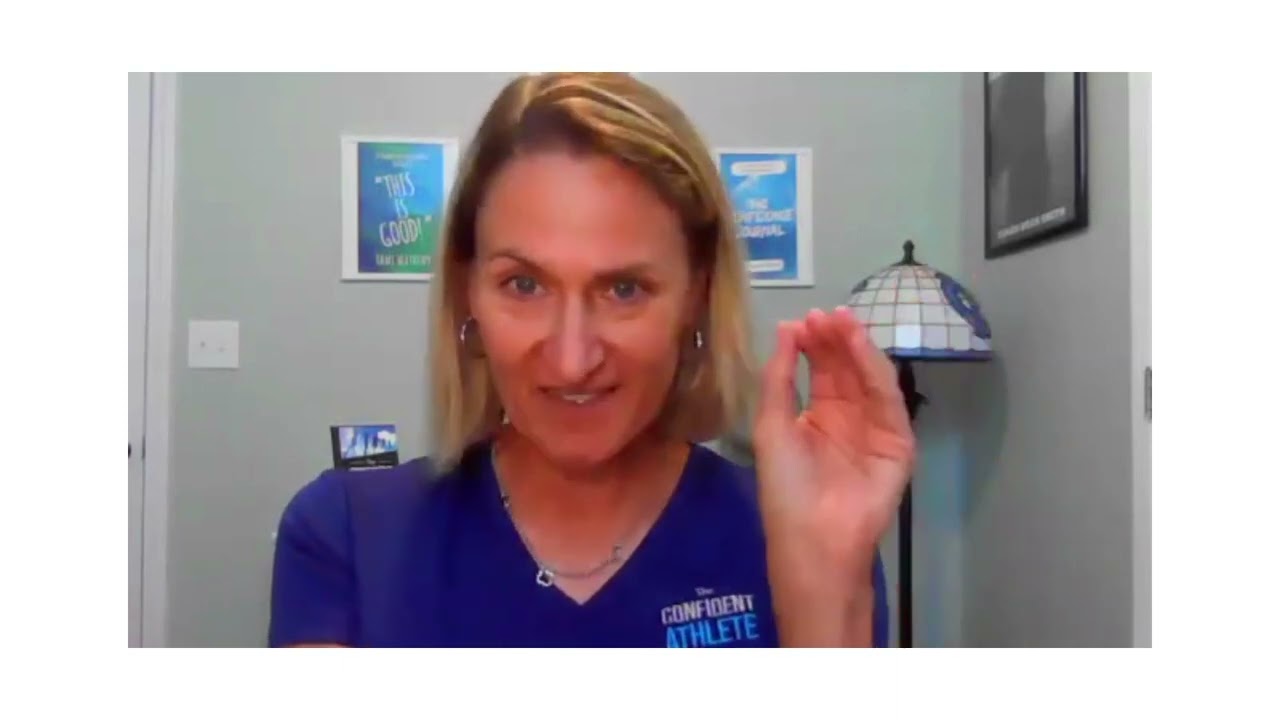
In this episode of the "Parents, Is Your Teen College Ready?" podcast, host Shellee Howard interviews mental‑game coach and author Tammy Matheny. Tammy shares her journey from a struggling student to a certified mental‑game coach, explaining how she blends psychology with athletics to build confidence, focus, leadership, and resilience in athletes and their families. The conversation covers the importance of self‑talk, narrative rewriting, and visualization; practical tools for parents such as a five‑minute daily writing exercise, rubber‑band cueing, and body‑language modeling; the need for athletes to choose environments that fit their personality and goals; how coaching can be delivered in group, team, or one‑on‑one settings; strategies for handling overbearing parents while empowering teens; the central role of asking “why” to align purpose with sport or academic pursuits; and concrete advice for parents to support their teen’s mental game. Tammy also provides contact information (email, Twitter, Facebook group) for listeners who want further guidance.
Chapters
Parents, is your teen college ready? Are you feeling overwhelmed, stressed out, or excited about your teen applying to college? Do you know what colleges are looking for? And if your kid gets in, do you know what you'll pay for it? College admission has never been so competitive or expensive. Shellee Howard will take you on a journey to help you and your teen get college ready. Now here's your host, Shellee.
Hello, this is Shellee Howard with Parents, Is Your Teen College Ready? And today I have an amazing guest, Tammy Matheny. Welcome to the show.
Well, thank you for having me. I'm excited to be here.
Outstanding. So as we get to know our guests, listeners, I think you're going to have a few aha moments, but before we do, Tammy, can you please share a little bit about yourself with our audience?
So I'm an author and a mental game coach. And what that looks like is I work with athletes, parents, teams, administrators on the mental skills. Um, we spend so much time practicing our physical skills that the mental side's often neglected. And so I'm trying to help fill in that piece of building confidence, of helping with focus, leadership, how to be a good teammate. And sometimes that is working with parents. And again, sometimes that's working with athletes. I tell everybody I have the best job in America.
I think you have the second best because I, I have the best job in America. Actually, I say the world because we have gone global now. So I like to take it to that next level. And we do, right? We get to give these young people all the skills to be an amazing adult. I think it's the best job ever.
I would definitely agree. I wish we would have these resources when I was coming through, especially learning how to create confidence for myself. I was on that roller coaster. I had a good grade or did well in something. I was at the top, had a bad one, boom. And it was pretty exhausting. And so my why, why I do this job is to help athletes learn these and people in general, not just athletes, but learn these skills sooner than I did.
So let's go to my favorite question. In high school, did you know exactly what you wanted to do when you graduated?
No, no, no, no. It's interesting. I just gave the graduation speech at my high school. I guess it was about 2 weeks ago, and I mentioned that, that I had this blueprint. I was at the top of my class, right? So I had to go to a prestigious school, and I needed a career that looked good, sounded good, and it just— I wasn't unified with myself on the inside. And it took me some years of realizing that and coming to terms and making some pivots. But no, I If you would ask me in high school, I was going to be a lawyer. Now, some of my friends think I still should be because I can argue and debate about anything. But that wasn't what— where my passion and desire really was.
You know, interesting enough, when I have a student who tells me everybody says they should be a lawyer, I said, just because you know how to debate doesn't mean you're a lawyer, you're an advocate. And so if you connect your, your why to your what that you want to see changed in the world, you can be that.
I love the way you put that there. I'm gonna have to steal that. But yeah, I, I feel like I'm, I'm trying to convince people they have to create their own confidence and not let it be based off others. So I am debating that and trying to give them reasons, um, you know, to see that. So that— I love that. I'm, I'm an advocate, not a lawyer, right?
And that's what I tell my, my students, because sometimes when you don't know what you want to do, you just pick something and you hold on to it because at some point somebody told you you would be good at it, right? Right. And so that probably happened to you in high school where you're like, You're a good arguer. You need to go and be a lawyer. What they didn't know is you had a heart of service to advocate for others, not necessarily that you wanted to go to law school and do that day in and day out. So fast forward, how did you decide that this was your thing? Yeah.
So we want the— well, we have a short version here. It could take an hour in telling that there were a lot of different turns and some dead ends. Uh, so I went to my dream school, University of North Carolina, and was absolutely miserable there. Um, I was this small little fish in a big pond all of a sudden when I had come from a small high school, um, and was used to knowing everyone. So I lasted a semester. And so, you know, I'm always telling athletes that as well, make sure the environment is for you, because again, I think we have in our brains, maybe we're a fan of that school, or our parents want us to go there, and we're not aligned with ourselves again, just like selecting our major. So I went to North Carolina, lasted a semester, uh, transferred to a small little, uh, school in North Carolina, Lenore Rhyne College, and just really started studying psychology. And I loved how the brain works and trying to figure that out. And then I had a passion in sports. I played basketball and tennis in college as well. And just like how I used what I was learning to help me with sports, didn't realize there was a career. Sports psychology had not even started at this time. But ended up, my dad had been a coach. He said, do anything you want, but don't coach. Okay. So I wasn't going to coach. Well, I ended up coaching and I became a, um, men's and women's tennis coach at a small Division II school and loved it and just started using psychology without having a game plan or just seeing how I could add it to my athletes. And then I thought, you know, I could make a career out of this. So I went back, got some certifications and studied and became a mental game coach. Now, the author, becoming an author, that's a whole nother story in itself. But I, again, I made really good grades except for anything involving writing. And I was always told, you can't write, Tammy. I had a book report that I was going to do a knockout job on, spent a lot of time, couldn't wait to get the grade back. Teacher hands it back. It was a big red F that said, too good to be mine. And so that just fed this narrative that I couldn't write. And I did. I hung on to that till 4 years ago. Um, and part of me writing my first book was to show myself that, you know, I had to let go of, of that stereotype I had kept, that chain I had kept around me. So that's how I became an author, and that's how I became a mental game coach.
You know, I, I find that so interesting. I remember when I— my oldest, I was going into being a freshman And I took him to his high school counselor in the summer and I said, now you tell her what you told me because I don't want to be that parent. And he very simply goes, I want to be a brain surgeon. I want to go to Harvard. And she looked at him like, why would you waste your time doing that? They don't make money anymore. And we both were shocked. Like she said it out loud. And just like that one person said that one little thing to you. I believe he's been fighting against that. I mean, he got 1B all the way through Harvard, scored top of his class at medical school, and is now an orthopedic surgeon. I think that little thing gave him this huge drive, like, really? I'll prove you wrong. So you had that, that little thing. What is your favorite part of what you do? What do you enjoy most?
The interactions and connections that I make and making a difference. That to me is my wins, when I know I helped someone overcome a fear of failure or help them develop confidence. And I really do just love interacting with people.
Now, do you have a—
Those two things, sorry.
Yeah, it's okay. Do you have a favorite client or a favorite age group?
No, I don't. Um, I've asked that a lot because sometimes I'll have two teams that may play against each other and, hey, who's your favorite? And my answer is the ones that are always using the skills I give them. That's who I, I tend to favor because they're listening and trying to apply.
Wow, that's brilliant. Because you could help anybody, but they have to want it. You can't force what you do on it. Like myself as well, you know, We're very particular. We ask students, do you want to go to college? And 3 times I've had students say no, and the parents are like, I know. And so it's really important, right, that there's this yes, I see value, and then anything is possible. My brother was a professional bike racer, and he had a mental coach. And I remember back then they gave him a cassette tape where he listened to it with his headphones that were wired to his cassette tape, and it did positive affirmations. It helped him to see himself going over this and around this. And is it still that kind of work, or has it, you know, evolved over time?
There are a lot of affirmations that are used, visualization, To me, the foundation to get to the root of issues is learning and teaching everyone— when I say everyone, because it's not just athletes, often it is the parent as well— helping them change how they talk. Because the student, child, athlete learns it from the parent. If the parent tends to talk negatively, then subconsciously, the child is. And I call it rewriting your narrative. We all have these narratives like I had that I couldn't write. And, you know, we have to rewrite them. And it's not always saying, yes, I'm the greatest writer in the world. It's I can write. If I take my time, I can write. Or, you know, an athlete, I'm not good with my left hand. It could be I'm working on getting better with my left hand because every time we say a negative about ourselves, we're just reaffirming that, and it's just becoming more stuck in our psyche.
Wow. When you were saying that, I could just hear myself talk. I'm a very positive, optimistic person. You would think I would be, I don't know, Queen or something, the way my brain talks to me. But I have one of my 4 kids, and she is always her little— we even have a name for her. We call her Sasha. Where her little negativity comes out and we're like, whoa, Sasha. I like the little alter ego there because she doesn't catch it on her own. She's like, no, I don't talk negative. And we're like, well, yeah, you kind of do. And so when we would thought stop her, she would be like, whoa, you did catch me in it. Are there any helpful hints that you can give parents of teenagers that maybe they can support their student with? Anything that might be helpful?
I think number one is for the parent to become aware and intentional about how they talk, um, because again, children are learning it from somewhere, um, and obviously not you with your child. And sometimes we learn it from friends or shows we watch, but I think it's important that parents model the behavior, the self-talk, the body language, because our body language plays into our self-talk. How we carry ourselves sends messages, and that influences the way we do talk. So helping with body language, which I know when I was in high school, my parents said, pick your shoulders up. I would roll my eyes like, why? Why is that important? I get it now and understand it, but modeling would be number one. Another activity that I have athletes and suggest to parents to do well is a 5-minute writing exercise. For 5 minutes at the end of the day, just think about some of the thoughts that you had that didn't fuel you, and then write them down and under it rewrite it how you could change that story, that narrative. And we're getting in reps by doing that and just kind of training our brain to think on a different, higher level. Um, the last tip I'll throw out there is I often have my athletes and even parents when they're watching games wear a rubber band. And so when they have a negative thought, they have to pop themselves and it just helps you start to become more aware. So I love that.
I often, um, one of my favorite things to do with students You know, all my students, all my— the kids in our program are all mine. Everybody's like, how many kids do you have? I'm like, I have a lot of students, a lot of children. But when I'm talking to a young person who I can see has the I can't or I'm not good enough or something like this, I play a millionaire game with them and I'm going to share it with you because I want to make sure I'm on the right track. Okay. All right. I tell a student, I said, if I gave you $1 million cash, And if they're not smiling, I'm like, okay, $2 million. And they're like, okay, okay, $2 million. $1 million cash. You have 24 hours to spend it or you have to give it all back to me.
Go.
And I'm trying to find where their mind is mapping. Is money important? Is it not important? Do they even know what they would do with it? Do they have a clue about financial literacy? Like, we have a lot of discussion around that topic. Can you, can you see that that tool would be a benefit to helping them think that positive?
Oh, I definitely do. I might have to put that in my toolbox there.
Oh, it's a good one. Parents are blown away when their child says, well, first I buy a jet airplane and then 2 yachts. I take my friends to Hawaii for the year, and their parents are like, what did we do? And, and sometimes, right, we don't often talk to our children about the cost of gas or electricity or the little things, let alone the big things. So when you meet with students, what does it look like? Is it one-on-one? Is it with a group? Like, how does the how work into it?
So both. I do group, I do teams, and then one-on-one. You know, people ask me what do I prefer, and I love my job in that it's so diverse and every day looks different. So I like having a combination. I do think one-on-one is often more effective, um, just because you can zoom focus on the, the needs of that child or that parent. Um, you know, our brains are all wired very differently, and some things may, you know, ignite your brain where I may need it said another way or use another tool. So I think one-on-one is by far the most effective.
I just came across a potential client following through my mind, and I have to ask you, how do you handle a parent who really means well? I'm not kidding about that. They really mean well. The student is being squashed. That's, that's rough waters, right? Like, how, how do you go about that, Tammy?
For me in my job, it depends on who is my client, because sometimes the parents want to be the client. Other times it's like, go work with my child. So if the parent's the client, then that's easy to have some challenging conversations with them. And when I have, it's surprising. 9 times out of 10, they're not aware, just like your daughter. I, I wouldn't know where, but, and they don't catch themselves of how overbearing or how they're squashing their child. Mm-hmm. Um, if it's just the child that I'm working with, then it's teaching them. It can't, it might not always change that, but I like to empower the athletes to make sure that they are staying focused and that their energy is on what they can control. We can't control parents, we can't control coaches, teachers, professors. But we can develop tools to learn how to deal with those scenarios or people that we can't control. So I take a different avenue, obviously, with if it's the child that I'm working with.
Yeah, because I, I mean, I've been there, right? And you're like— I, it was this past weekend, parent made the child cry right in front of me, a teenager in tears, and I'm sitting there like I want to advocate for the child, but I can't do it to the parent. And it was like, oh my goodness, how do I help this situation? And I, I think I would have loved to empower the child. I didn't have the skills or the words to say. So having somebody like you in that child's mind, I think, would be hugely beneficial.
That, you know, we, we all need to learn that, you know, at times I would've thought my parents kind of squashed me, not to that degree. Um, and I, I felt helpless. And that's when we focus on things we can't control, we do feel helpless. So the best way to get some power back is to be able to learn to shift your focus to one thing, even if it's just one thing, one thing that you can control about the environment, about the situation. And helping them have, know their response ahead of time, like their practice and their response when they're in those situations. The last thing I will say about that though, that both if I'm with the parent and the child and this happens, it's going back to, we both mentioned it early on, your why. And why are we here? What is the ultimate goal? And so putting aside what you think is the right way to do, or what the child may want the parent to do. And let's both, let's make sure that our main focus and priority is our why. And sometimes that can help people, you know, step back. But one of my favorite sayings, and if you're around me enough, you probably would eye roll, but do you want to be right or successful? And sometimes, you know, we just, a parent, we want to be right. We've got to show we're right because I know I'm right. And I'm very guilty of that. Again, you know, I admitted that people thought I should be a good lawyer because I wanted to prove I was right. But I realized how that kept me from having success. And, you know, we do that in relationships, parent-child relationships, you know, romantic relationships. We know we're right, you were wrong, you shouldn't have done that, and we'll argue to the end. But then it's You know, it doesn't help our relationships be successful.
Oh my gosh, I had to write that one down. We're stealing nuggets. No, we're just really using the greatness in this room right now. So when you are working with families or teenagers or students, how do you help the student, let's say teenager, who really wants to be an athlete but it just doesn't have that gift. Are you honest and you direct them to maybe we should do rec or, you know, intramural, or do you say anything is possible and let's go get it?
You know, I've never had that situation. I think most that have, you know, that seek me out are already at a level where now they may not be where they want to at that level. So I guess I can speak to that. But before the parent's ready to invest in the mental game, the child usually has some kind of talent. And again, there— I work with a lot that are on the bench. They're not happy with their role. But my first question is always your why. Why are you doing this? Why do you want to play this sport? You know, sometimes it is because of mom and dad, and I get to that point. Sometimes it's because you want to be a part of something bigger than you. And so then I can come back and remind them, okay, you didn't tell me you want to play for playing time or to be the best on the team. We've got to stay true to your why. And mapping out some goals that are realistic of where they want to go. I have had a few conversations with athletes telling me, yeah, I want to go Division I. And I'll say, I don't think anything is impossible. But let's talk about the physical and emotional commitment that will take for you to even have that opportunity. And often that helps them decide maybe a smaller level might be good. So I don't know if that really answered your question, but again, I, I, if I haven't learned anything from my childhood, it's that we need to have difficult conversations. And be able to. But if people know where you're coming from and they know you're coming from a place you want to help, then they're more likely to be able to listen even if they don't like it.
That's brilliant. I just interviewed a women's basketball coach, D1, and she is now doing consulting work. Um, she talks a lot about finding that fit the social fit like you had mentioned. And I don't think we put that much emphasis on it. I know when I work with my scholar athletes, I help them understand, is your goal the Olympics? Is it professional? Like, what is the goal? And I think that's the same as you're asking, what is the why? And, you know, after working with D1 athletes, they have to be ready for what's in store. Um, it is not an easy path, but if the student wants it, if that's their why, ah, it's amazing. But if it's not, they get there and they're like, no, I want to pick my major. No, I want to go out with friends Saturday night. And there's a lot of the boom boom boom boom. And so I'm sure you, you deal with that, correct?
Yes, definitely.
Yeah.
And, and it, it really is, again, too many high school athletes like I did myself. We have these like dream goggles on. That's my dream school without really thinking about what all of that entails. And so again, just having the conversations or challenging them to talk to athletes that are on that journey or that same path. Empowering them to find out and to do some research.
So if my listeners wanted to get in touch with you, if they're just like, oh my gosh, we need this, what would be the best way for them to do that?
Probably email Tammy, T-A-M-I, at R2, the number 2, lc.com. That stands for Refuse to Lose Coaching. Okay, um, but email is the best. I'm pretty active on Twitter, uh, Tammy L. Matheny. Um, also I do have a Facebook group, Parents and the Mental Game, um, that I try to stay pretty active on. And so any of those, would love to connect. I love hearing parents reach out with questions or suggestions or anything.
Excellent. Well, Tammy, thank you so much for being on this show. And listeners, Stay tuned for the next guest. Thank you.
Thank you.
More from Shellee




The 3 Questions Every Parent Should Help Their Teen Answer Before College | Featuring James McLamb

Helping Your Teen Stand Out for College Through Purpose & Impact | Featuring Aishani Sheth


From Robotics to Cornell: A Father-Son Blueprint for College Success with Aarav & Ritesh Kumar

The Hidden College Credit Strategy That Could Save Your Family Thousands with Josh See

The Truth About Financial Aid: Why Some Families Pay Less for College Than You Think with Jack Wang

Human Skills Every Teen Needs for College, Careers & an AI Future with Rob Heller
