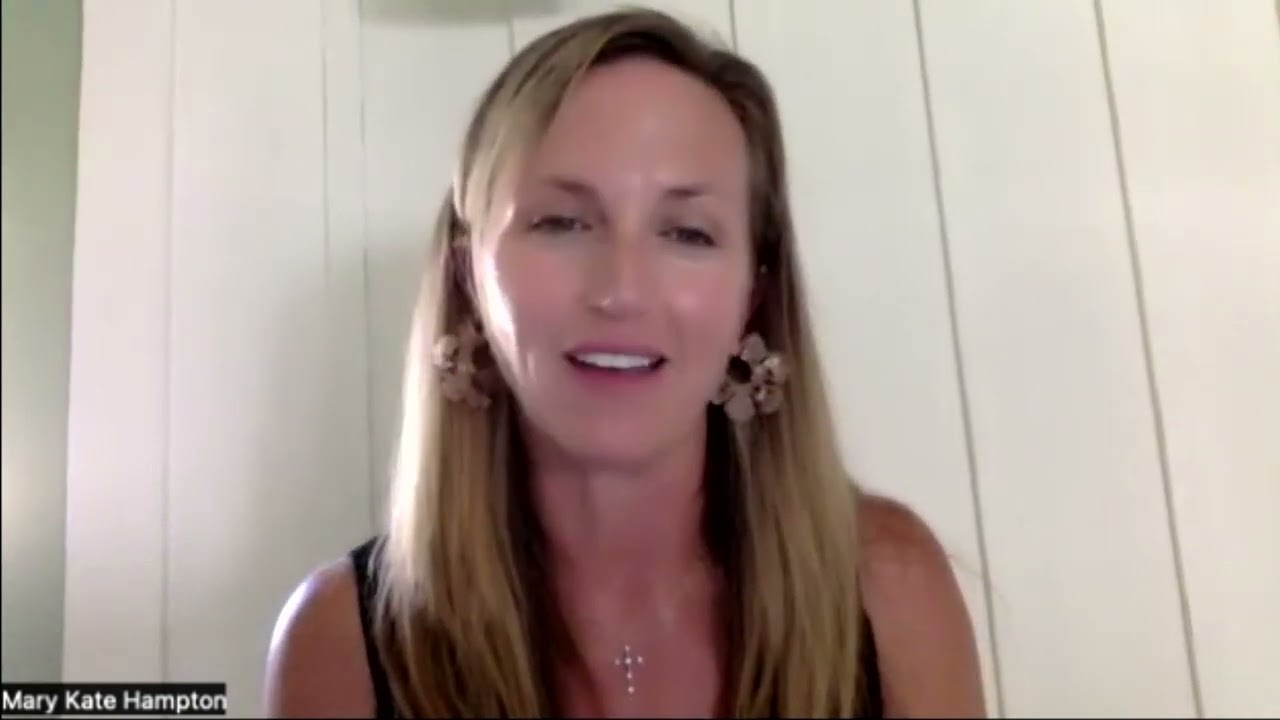
Mary Kate, a college essay coach and former editor, explains how personal essays differentiate students beyond grades and test scores. She walks through her coaching process: brainstorming, extracting real stories from a student's life, free-writing, and multiple rounds of revision. She warns parents not to ghost-write essays, which kills authenticity.
Chapters
Parents, is your teen college ready? Are you feeling overwhelmed, stressed out, or excited about your teen applying to college? Do you know what colleges are looking for? And if your kid gets in, do you know what you'll pay for it? College admission has never been so competitive or expensive. Shellee Howard will take you on a journey to help you and your teen get college ready. Now here's your host, Shellee Howard.
Hi parents, and welcome to Parents, Is Your Teen College Ready? I have an outstanding guest I can't wait to share with you today. Miss Mary Kate is on the call. Welcome, Mary Kate.
Hi, thanks Shellee. Thanks for having me.
You're welcome. So today's topic is the college essay, but before we jump in, I definitely want to give them a little bit of background. Now, I've known Mary Kate for, I don't know, so many years now. She actually was the one to edit my best-selling book, so she knows this college stuff inside and out. But it even goes further for her. She was a teacher. She liked school so much she went 3 different times. But I'm going to let her share. Tell us a little bit about your background.
Yes, I always talk about that, how I love college so much. I attended 3 different universities. Um, education's a big value of mine, but, uh, I started out in the world of publishing and academic publishing. So I worked with a lot of professors on their books that they published, and I marketed that, and that was exciting. I lived in New York City, but I was missing something. I was really missing working with kids one-on-one, and I didn't have any kids. I had never been a teacher, but I started volunteering in Harlem and worked at this children's zone, and I said, this is it. Publishing is changing to ebooks. I need a new career, and I started to study at NYU to become a teacher. Before all that, Villanova University had launched me with my English major and communications and language minor. Into New York City and into such great job opportunities. But with the changing industry, I focused on education. And then I had even gotten a master's degree after Villanova at Emerson College in Boston for writing, literature, and publishing, which was so specific and so— it brought so much to the table for personal writing, for professional writing, and publishing books like Shellee Howard's. But I really just wanted to connect with people. So that's what brought me to education. And I started teaching in New York City right after I got my NYU education degree in English education. I loved working with high schoolers in the Bronx. It's, it's one of the parts of my life where I tell the most stories from, and I'm still connected to a lot of those students thanks to social media, and just their stories continue to be great. So after school, when I was a teacher, my hobby was helping students who maybe needed a little extra time. There wasn't a College Ready in the Bronx, New York when I was there, and that's what I spent time doing was mostly essay editing, which is definitely my favorite part of just getting kids to tell stories and showing their values and and their voice.
Well, we are so fortunate to have you. So we call Mary Kate in our college-ready world our secret weapon. What do I mean by that? Well, so students, they work so hard, right? They have their high GPAs, they have their test scores, they have these solid things that you can look at and be like, okay, yes, there is a potential for a student to go there. But the secret sauce is really in their essay and telling their story. And so it's really important that families understand you can't get into a top-notch school anymore with just a GPA. And now that some schools want you to believe that it's optional, there's another, you know, uh, gray area. So let's talk about and deep dive into the college essay because our rising seniors are really in the thick of it right now. We at College Ready have them working on their two biggest essays and preparing for what's ahead. So let's put on our parent hat. I have, um, two biological kids, two stepkids, and an exchange student, and Mary Kate has all of her own children. Um, and as a parent, there's certain questions that I hear all of the time, and so maybe you could answer some of them. The first thing I get parents to ask me is, you know, my son or daughter has an English teacher, why can't they help them do this work? Why would they need a professional essay editor?
Oh, that's— I love that question, um, I— because I have to address this with students all the time. This isn't an essay about Wuthering Heights or Pride and Prejudice or one of those texts that you read in an English class. It's also different than those AP courses. This, I like to tell students, it's almost as, as if you're writing this profile piece, this magazine article or story about yourself. And it's typically one page. And when the admissions officers, because there's a team of them, when they're reading that one page, you want that little figure of you to jump out of that paper and tell a story. And you're going to use your own voice. You're going to use figurative language. You're going to use only truth and facts from your life that you know, and it's so different than just the academic writing in an English class. I love English teachers. I was an English teacher. I think they're some of the best people on the planet because they connect with kids. But it's even different. It's a little more polished than journal writing in an English class. So not an Again, not an evidence-based with intro and conclusion in the traditional way, but more almost like journalism writing. And that's something else that I worked in and studied. And just pulling those details out of a student is part of the job that I do. That's part of what I work— it's almost like a therapy session. We're like, tell me more. Oh, would— did anyone say— anything to you about that? I like to get some quotes or have them really reflect. Um, another thing about these essays is that I like to tell students they have done this work by living their life up to this point, and try to find a story in those 17, 18 years that you've lived. I promise you have them, even if it seems boring. There's got to be life lessons that you've learned. With college-ready, sometimes it's a passion project and the leadership skills or the great results you got from those projects. So it's just absolutely—
yeah, so it makes so much sense. And, you know, I have well-meaning, um, you know, parents ask, well, can't I just write the essay for them because I'm a really good writer? And as, you know, obviously unethical as that would be, it's actually a really bad idea. And why would that be a bad idea, Mary Kate?
Oh my gosh. Well, I touched on these two words before, and I always use them when I'm editing, when I'm talking to students. There's voice and values. And I know I have a teenage daughter now. My voice and values are extremely different from my daughter's, even at this stage as a young teen. So presenting yourself in an authentic way to universities that you as a student want to attend is essential. And unfortunately, I have experienced where parents get in the way of that. There's an obstacle, and they're like, I really think this daughter of mine should be writing about her soccer experience, not fashion and art.
Well, she does—
she didn't, she didn't decide that. She didn't choose to represent that part of herself, and she was applying to some really creative schools. So I, I really I think authenticity is key. And I know from being a mom in a suburban area in the US that there are services that even offer a more invasive, we'll help you write, and they almost ghostwrite essays for you. Then you're going to show up on a campus and not be who you thought you were, or it's not going to be what you thought it was because it's not, the true you with your voice, your values, what really has like sent you to this college. Um, because these essays— you talked about it a little bit, Shellee Howard— but these essays are so valuable, even more now than anything, because they can make— they can make you stand out if we're dropping test scores.
And yeah, it's the secret sauce. It's the one thing that can set you apart. We have a strategy, or what we call a standout strategy in College Ready. And so that is the, the final bow, right? That's the thing that brings it all together. So think about a student who's a rising senior and they've done all of these amazing things, and they realize for the very first time that each college could have anywhere between zero and 18 essays for one school. So they start to take a look at, oh my gosh, how am I possibly going to have enough to say? That is where having somebody like yourself, I personally think with my own children, was so incredibly valuable. So when you sit to do a one-to-one with a student, what would that look like?
Oh, I like this question too. Okay, so I like to say that there are some steps for your college essay. I've done a lot of one-on-one sessions, and again, that's my favorite work to do. It's usually on Zoom now these days. We brainstorm, we get an idea of what the prompts are, but I also like— students come to the table with knowledge and experience already, and I say, do you have anything that you're already thinking of? And I would say it's probably 60/40. Yes, 60% do, and 40% are like, I have no idea, which is also fine. It's fun to have a blank canvas sometimes. Sometimes fitting a topic like Taekwondo into an essay box can be tough, but it could also work out in your favor. There's so much, um, potential in certain topics. So I would say we brainstorm Um, when you meet one-on-one with me, we kind of write freely and see— I ask a lot of questions and get a lot of feedback, and I type a lot of just straight quotes. And I guess in a courtroom setting or something, you would call that leading the witness. I am leading you because that's my job. I gotta pull some— I'm almost like a writing coach at that point, more than an editor. The editing comes later once you've written freely and gone a little deeper and thrown a lot of material onto a draft, then you can choose from all that material that you produce. Like, did we brainstorm sports, or did we brainstorm your leadership activities? And then we're like, ooh, tell me about this position that you had in that, that fundraiser that you organized, or tell me more about this challenge that you face when you quit your sport. 'Cause everybody's read the quarterback at the last second of the game throwing the final touchdown. We want— that's so boring to admissions officers. We're going to look for those gems. I'm working with a student right now that's talking about her journey in fencing, and I am so fascinated by it. And I believe that a demographic like mine is what the college admissions officers are, and I think that they would just love this. It's almost like an underdog story.
So, so then let's jump from that coaching to the editor. So when one of our students sends in their draft to you, do you just tear it apart and tell them start over? Do you rewrite it for them? Like, what does that process look like?
Oh, I love this question too, because it makes me think about my process. Um, I will— I would like to say that I've been classically trained in editing. I worked at the writing center at Villanova University. I was in charge of a lot of coordinating there, and we were trained in this specific process that Students come, their ticket to come in is an essay, which that's what happens in College Ready often. If we're not doing a brainstorming session, I'm just getting your essay without having met you. And so the step that I would take is get that essay and I have no red pen and I just read it. That might take me 2 minutes tops, right? It's 650 words or less. I get a general sense of it from reading it once. Sometimes I read it again with no red pen, but I don't dive right in and tear it apart. So I like that question because you want to get a feel for what am I working with here instead of like, oh, comma, capitalize, oh, that's misspelled. You have to get a sense of the whole person. It's almost a holistic look. And then I come in with comments. And I like to give at least one comment per paragraph. We're usually working on Google Docs together, so it's a live document. You can see the history of it. If I took something out that you didn't like, or, you know, added a word that doesn't work for you, sometimes I make comments on that, like, your word choice here is boring, or your word choice is too complex, you know. So there's everything from the grammatical stuff to this, the content and the structure of your essay. Again, it's different than English class. But I also, after comments on each paragraph and seeing how it all fits together, I will do a proofread and a grammar check. That happens over and over again. I talk about these different steps of an essay, and you let it sit, and then you reread it, and then you revise it, and then you proofread, and then you reread, and then you proofread. You know, it's just At the end, you want to do that a couple of times. But the final thing I do when I'm sending your essay back is just an overall, like, what's working well? Because there's always going to be something that you have right at the first time and the second time, what you can improve. So I give you action items like really try to bulk up your conclusion or point yourself. I say this all the time, but point yourself towards the future if, if you don't have anything Sometimes the endings can just be solid on their own, but yeah, you get a final kind of note as an overview of the essay.
Outstanding. So, you know, I tried with my first child to edit their essay, and I believe he threw a book at me and said, and said, I don't know anything. And that's when I knew it was time to hire you. Um, because right as a parent, we're also the authoritarian, the one that says, is your homework done? Is the dishes And so I learned personally the value of having, um, somebody like yourself. But where I really see the value is you're reading it as an admissions officer without knowing the student. As a college consultant, I get to know the student really well, and I, I know them so well that I can fill in the blanks. We've talked about it so many times. And so when I read their essay, I may just, without realizing it, fill in the blanks. And you read it and you say, help me understand where this is coming from.
Yeah.
And as a parent, I think we have the same situation going on, is you were there, you experienced it. And then the second part I like to let families know is we've taught our students to be humble. Don't brag, don't boast, it's not nice. And now we're telling them you must tell colleges why you're so amazing without being shove it in their face type of thing. So this is really a skill that they've never learned before, right? And the ability to work with somebody like yourself is such an incredible gift. And so I just wanted to thank you for being part of the College Ready team and So for families who would love the opportunity to brainstorm with you or to have them edit essays, the best thing to do is have them reach out to Michelle, who is our gatekeeper of all essays. And so her email is Michelle, M-I-C-H-E-L-L-E, @collegereadyplan.com. And she will get you set up on Mary Kate's schedule. Thank you so much for being on the podcast, Mary Kate. We are so excited to have you. Thanks.
Thanks for listening to Parents, Is Your Teen College Ready? with Shellee Howard. Make sure to check the show notes for our expert guests' contact information, links, and more details on how to get Shellee's free best-selling book, How to Send Your Student to College Without Losing Your Mind, or your money. Thanks again for listening.
More from Shellee




The 3 Questions Every Parent Should Help Their Teen Answer Before College | Featuring James McLamb

Helping Your Teen Stand Out for College Through Purpose & Impact | Featuring Aishani Sheth


From Robotics to Cornell: A Father-Son Blueprint for College Success with Aarav & Ritesh Kumar

The Hidden College Credit Strategy That Could Save Your Family Thousands with Josh See

The Truth About Financial Aid: Why Some Families Pay Less for College Than You Think with Jack Wang

Human Skills Every Teen Needs for College, Careers & an AI Future with Rob Heller
