Raising Confidence, Living Authentically: Shellee Howard in Conversation with Christina Lecuyer
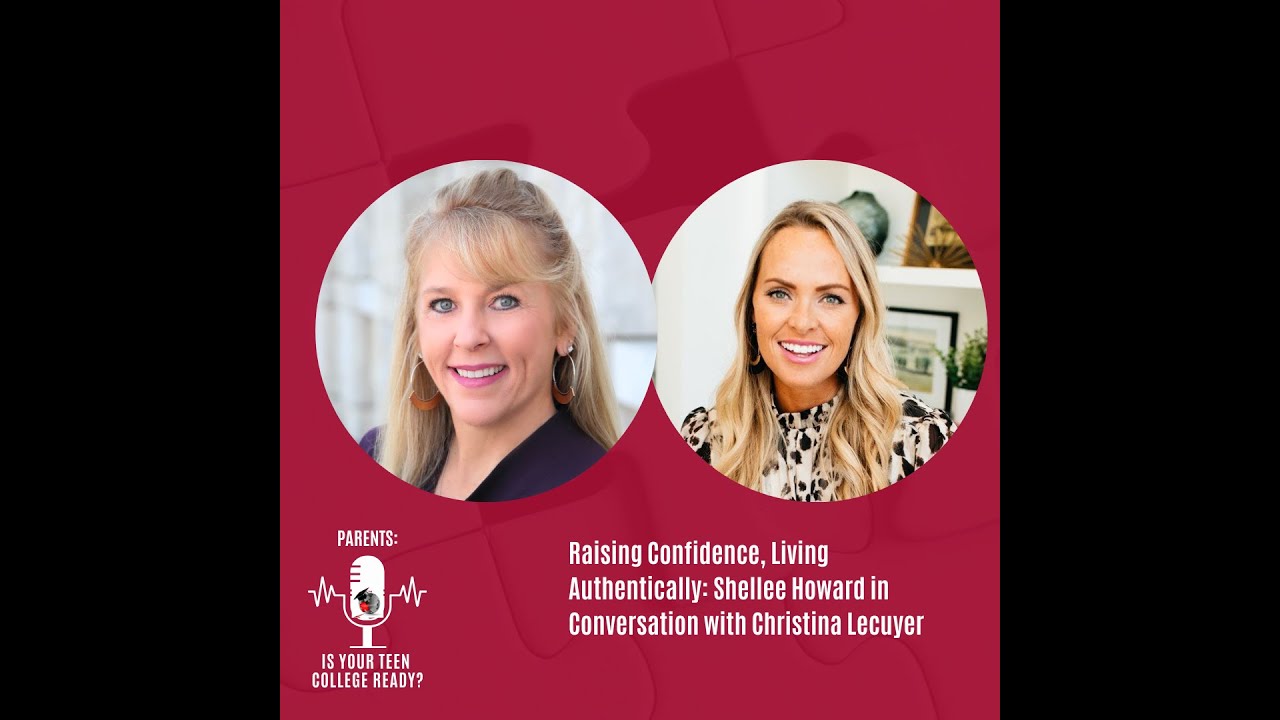
In this episode of Parents: Is Your Teen College Ready? host Shellee Howard sits down with Christina LeCure (known as BChristina on Instagram), a former professional golfer turned confidence and mindset coach. Christina shares her personal story of early success, external validation, and a deep personal crisis that led her to a decisive turning point and the creation of her brand “Decide It’s Your Turn.” She outlines her core coaching formula—Decision, Faith, and Action—and explains how reprogramming limiting stories, patterns, and habits (using a computer‑brain metaphor) can transform confidence and self‑trust. The conversation delves into the impact of social media on teens, advocating for authentic use, limited exposure, and modeling healthy behavior. Christina offers practical advice for parents: discover and support a child’s genuine interests, allow them to experience failure and “hard things,” and recognize that habits are caught, not taught. She stresses the importance of parents healing themselves first, as personal responsibility ripples to children. The episode concludes with concrete resources—Instagram @bchristina, the “Decide It’s Your Turn” podcast, a website, and a direct text line—for listeners seeking coaching.
Chapters
Hello families, this is Shellee Howard with Parents as Your Teen College Ready, and I'm so excited to share our guest for today. I want to welcome Christina LeCure to the show.
Hey girl, how are you?
I am so excited to let our guests know a little bit more about yourself. Uh, can you share a little bit about your background so they know who they're listening to?
Yeah, absolutely. Well, my name is Christina LeCure. I go by BChristina on Instagram, uh, mostly due to the fact because I encourage everyone to be themselves. And the fact that my last name is really hard to say and spell. So be Christina. So be Shellee Howard, be Christina, be you. That is like my mission in life is to help people know that they have something inside of them to be themselves. And if you're trying to be anyone else, you're, you're making a mistake. But I am a former professional golfer. I kind of have a little bit of a different story. I always like to share it on this podcast or on any podcast. When I was 18 years old, I always kind of joke and get a chuckle that two things happened to me. One, I got very good at golf at 18, and I also got very good looking at the same time. And most people always laugh. Yes. And they're just like, well, why do you say that? Well, when I was 18 years old, those two things happened to me. And for the next, oh gosh, it was almost 10 years, I really went on a downward spiral because my life externally got really good on the outside. Everyone was like, you're so pretty, you're so good at golf, your, your life is gonna be amazing. And for the next 10 years, I was really dominated by external validation. I wanted that next atta girl. I wanted that next. Modeling contract, television contract, winning the golf tournament, losing the next pound. And I became so fixated on the external that I really— outside, I looked like I had a perfect life. I was in college, I was a 5-time All-American, um, I won 5— or I was a 4-time All-American, won 5 times in college, turned professional. I had television contracts, modeling, and I was truly miserable. I hated myself. I had a horrible eating disorder. And at 27 years old, I didn't know if I wanted to live anymore. And so I tell that story because now fast forward 17 years or however long it is, I'm 42. I truly have one of the greatest lives ever. And, um, it all started with a decision. So my brand is called Decide It's Your Turn. You know, you and I were, uh, talking earlier and your business became very organic, uh, started by a need. Well, my business has become very organic over the years too. I just really set out on making a decision that, uh, there was other people who were happy and content in life that had a lot less than I did. And I had to figure out how they did it. And so that's really when I dove into personal development, mindset work. And over the years, I became one of the most confident, positive people that there is, and people wondered how I did it. And so for the last 8 years, I've been working with high achievers, high performers to help them figure out what is causing them to perhaps feel overwhelmed and stuck and not really have the greatest life ever. And, you know, have the business and the lives that they've truly want. And I truly believe everything is a matter of decision. And my formula, whether my clients know it or not, is decision, faith, and action. Because I truly believe with a decision, a shit ton of action, and some faith, believing in something greater than yourself, you can do anything that you want. And I believe that you have a responsibility to do it.
Wow. We're going to have fun, right, parents? Like, we're— Laura, wouldn't it be great if our kids just came out like that, right? Or even ourselves. Let's just forget the kid part. No. You know, because I have the opportunity to talk to teenagers all day, every day, I look at life through their eyes sometimes. And, you know, back when, when you were growing up and I was growing up, we didn't have the stress of the social media, the perfect life every single day. And so can you talk a little bit about how that's impacted the work that you do and how you've been able to overcome as you work with clients and they're looking at everybody else's best day?
Yeah, absolutely. I think that, you know, you have to really be able to filter what it is that you, you know, consume in reality. I mean, I— a lot of my clients come from social media. I have a podcast as well, Decide It's Your Turn. And, you know, I think people just get the highlight reel on a lot of social media. I do believe that, you know, ever since I started about 10 years ago, I don't know how to not be organic. I don't know how to filter myself. I don't know how not to, to cry or cuss or tell you it's really hard. Like I have always been like that. I definitely feel like the pendulum in social media is changing where people are becoming a little bit more authentic, I guess is what it's called. I mean, I definitely don't go to the full side of the pendulum where it's like, woe is me. And like people like liking me because of that. But I do try to show the reality of being a human being who is successful and who is, you know, wanting great things out of life. I try my best to do that, but I also think too, you know, social media is this weird thing where everyone is just getting these little snippets and, you know, even though a lot of my business comes from social media, I also tell people, get off social media, limit yourself. Do not be on there as much because, you know, real life, being yourself, you know, I started this by saying Be Christina is my social media handle and, you know, being yourself and being outside and doing things that you love and being a good human and doing things for other people, that is way more fulfilling than it could ever be watching social media all day or consuming social media. So we, you know, it is a beautiful tool as well. There's so much that you can learn from social media. There's— it's amazing to be connected with people as well. I mean, it's one of the great— we live in the greatest time ever where basically anything and everything you want is in the palm of your hand. But I also think too, you know, learning how to You know, I am not a parent by choice, so I definitely don't know how to navigate that with my parents, which is so funny because a lot of parents hire me because of the external— that I, I think I bring a different perspective in the fact that I don't have kids. I think I can give a different type of perspective. You parents are way too hard on yourselves, and kids are much more resilient than you give them credit for sometimes. I think they're, they're going to be all right, even though you want to make sure that they're good at all points in time. I think making kids struggle a little bit is a good thing. I think teaches them a lot, especially when it comes to social media. I, I personally think that nowadays kids who are resilient and build self-confidence and build self-trust— I've built myself on my reputation on confidence. It's one thing that I believe is one of the most important characteristics we can all have. And confidence comes like a muscle. The more that you use it, the stronger it becomes. And a child learning how to trust themselves and to rely on themselves, that person is going to be— in my personal opinion, that person will be extremely extremely successful in life.
So that goes hand in hand with the quality of leadership, the quality of who are you and what matters to you. So when you look at working with a teenager, they come in all shapes and sizes, so it, it's not a, a flat statement. But can you give some words of wisdom or encouragement to parents who maybe have this shy child maybe the one who is not confident. What do we, as parents, as, as supporters, how do we help that child step into their light, step into the opportunity at an earlier age than you did?
Yeah, you know, I think that something that you and I were talking about on my podcast that I think is really helpful is figuring out what your child actually enjoys, what that child actually wants. You know, you definitely do not have to be— you know, I'm very outgoing, I'm like an extrovert-introvert, like I'm I'm extremely extroverted. I, you know, I talk to my clients all day, I speak on stages, I do all the things, but like, I totally recharge as an introvert. So there's not one that's more successful than others, but I would figure out what does your child enjoy, who are they authentically, and allowing them to step into that and allowing them to be seen in that, that can build their confidence. Perhaps I think a lot of times parents, we put what we want on our children instead of really listening to like what they want. And it may not be— and it, that is a hard thing. I was just hosting a retreat, uh, for 12 women, and one of the moms actually said that, how she's learning to really communicate with her daughter. She's much different than she ever thought she was going to be. And, um, it's— that's a hard thing for parents because you want the best for your children. But I think sometimes, you know, we don't know exactly what is best for our children. And for able to support them and figure out what they enjoy, that can build their confidence along the lines. Let's say that, you know, I come from a golf background, but let's say you just wanted your kids to be a professional athlete, but if they don't like athletics and you're pushing them into that, no wonder they're struggling in their self-confidence and their self-trust, you know. But maybe they love art, maybe they love hair, maybe they love, you know, mechanical engineering. So really helping your child figure out like what they're passionate about and encourage them and support them in that, because I do believe that, you know, self-trust and confidence is built by doing something hard over and over again. And that's another thing that I would say too, is that I think ultimately we live in a society, and hopefully it's changing, but you know, we don't want our kids to fail. And yet I think failure is one of the greatest things. I don't even think failure is such a thing. I think it's just a lesson, right? Make a decision, and if it's the wrong decision, you know what to do next time. And I think we do need to fail. I think we do need to do hard things. You know, one of the beliefs that I have, and my husband and I have a, a family kind of motto and affirmation is, we do hard things. Because when you do a hard thing, you get over that hard thing, you build your confidence, you build your self-trust. So that's another thing that I would tell parents too, is like, let your kids fail a little bit, let them do hard things. And, uh, I, I actually think that that helps them in the long run.
Gosh, I met with a family yesterday, you will appreciate this, and the young man, when we, we met in person, mom and dad were at the table and he was fidgeting so much, just squirming. You could just see he was so uncomfortable. And so, of course, I, I speak teenager because that's who I love. And before you know it, you just kind of watched him kind of settle into himself. And the parents said to me, what did you just do? Like, I had just done— I just had a really great conversation and was inspiring. So how do you say you have a student as a parent, I have a student who is not confident, who really kind of shrinks back, who is a little socially awkward maybe. How can— is that somebody you can help take from that to confidence? What does that look like?
Absolutely. So the thing that I, you know, people always ask like, what is it that you actually do? So what I really truly do above all else, this isn't like a good marketing, but really what I help people do, and whether it be a teen or an adult or CEO or whatever, stay-at-home mom, is I help people reprogram stories, patterns, and habits. Because basically, we are all computers. Our brain is like a computer. It is programmed a certain way. And I often tell adults, we are no longer our parents' stories, patterns, and habits. Got a lot of good things from our parents, but we are all quote unquote— and this is in quotes because, you know, people don't like this word— but we are all traumatized in some regard. We all have some version of trauma from our upbringing. Most of the time, it's from our upbringing. Our parents could be amazing people, but there is a couple— every single human being, whether you admit it or not, you have been traumatized by your parents. And you parents, you've done things wrong, and that's okay because you're a human being doing human things and you're gonna screw things up. So we as adults or teens or whatever it is, we have to decide what it is that our parents did, what stories, patterns, and habits they had that are no longer serving us, and we have to reprogram those things. Again, our brain is kind of like a computer, right? So it's programmed a way. To get a different result, you're going to have to do something different. The work that I do is actually quite simple. It's just that it's not easy reprogramming something you've done for, I don't know, 18 years, 45 years, 70 years, whatever it is. That's hard. It's hard to do that. But in order to get a different result, you're going to have to program it a different way. So I would really probably tap in to see like, why is your child acting the way that they're acting? What is the thing. I call it the thing under the thing. And once you can kind of figure out what the thing under the thing is, then we can figure out, okay, what do we want to change here? What pattern do we have? What story do we have? What belief do we have that is no longer serving us? And reprogram that to get us a different result. And that's truly what we're all doing as human beings. In order to get something different, we have to just program it different.
Wow. Yeah. So as a parent, I'm sitting here going, okay, so how do you do that? Right? Do I just bring my child online and you just can fix them? Because that would be great.
Yeah, exactly right. No, I mean, there is some work behind it. You know, one of my clients, they're basically, uh, the tagline he always says, you're like a therapist who's not a therapist. You just help me make money. And like, that's why a lot of my CEOs said, I'm like kind of like a therapist, but I'm not at all a therapist. I say the difference between a coach and a therapist is this. A therapist, we can kind of figure out like why you are the way that you are. We can talk about it over and over again. The difference between what I do and what a therapist does oftentimes is I say that like I can find out why you are the way that you are within the first call, but then we have to take action and reprogram the thing that you want to change, because nothing changes unless something changes. And it's hard to get out of that pattern. It's hard to reprogram something. So I would really kind of figure out like, let's say hypothetically, a, a teen or whatever, I would figure out, okay, like why are Why are you doing what you're doing? Perhaps you just believe that this is the thing that you have to do. You know, I use a simple one all the time for myself personally. I've talked about it on my podcast for years, is my parents, amazing people, but my parents had really, really shit, if I'm allowed to swear, really, really crap money mindset. It's not that my parents didn't have money, it's just that my parents had stories around money. Well, I always have been able to make money, But up until I was like probably 25 years old, I didn't believe that I could like add avocado to a sandwich. I didn't believe that I could spend money on, because that's what I was programmed. It was what I was told. And we smile and joke, but like there's deep-seated programming that people have in money in particular. There, I mean, there's a few hot topics that a lot of people have, but money in particular is such a hot topic. People have such visceral reactions around money. And so like I had to reprogram that I don't have money problems. I've never had money problems. I've actually always been able to make money. I'm good with money, but I had to reprogram the way that I started to think about money. And so like, that's a really simple example, but I had to figure out, okay, like, why am I the way I am? Well, duh, I'm why I am the way I am because this is why my parents acted. But then I realized that it was no longer serving me. Like, I hated feeling the way that I felt around money. I'm like, this is miserable. Why in the world would anyone want to do this? So then I started taking the stories, the patterns, the habits that I had with money, and I started reprogramming them for what I actually wanted. And it was wild that, like, once you witness it, once you can see it, and then you start reprogramming it, it's wild what happens. Because our brain is like— we're truly like— our brain is a computer. We are wild people. It's, it's amazing what we can do. But once we start programming it for the way that we want, it's amazing how, like, money is not an issue to me. Like, I can make money, I can hold money, I can handle money. Like, I have money, I'm not scared of money, I can make money, money's easy. Like, all of these things. And now I'm using money as an example, but you can do this with your health, you can do this with your relationships, you can do this with body image, you can do this with all sorts of things. But it does take figuring out, like, what is your belief, what do you want to believe true, and how do we reprogram that in order to get you what you want.
Wow. I mean, imagine giving that to your child. That's why I think having you on the show is so powerful, because parents, we haven't potentially messed up yet. Like she's saying, like, parents do this stuff. So as a parent, I'm thinking, well, I don't want to do that stuff. So how do we not mess up our children, uh, Christina? What, what do we do as parents so they don't look back and go, oh, it's all that Oh, well, there's two things.
Number one, you're gonna mess up your parents. You've messed up your kids in some regard. You have, because if you really got a lot of the work that I do, you kind of get vulnerable and all the things. Obviously that's the reason why it's like a confidential space, but we've all been wounded by our parents. We've all been screwed up in some way or another, some on a really big scale and other on just these small little small scales. But in order to, in my personal belief, the best things that you can do is number one, take care of yourself. As parents, the number one thing that you can possibly do is start healing yourself and taking care of yourself. It is an absolute ripple effect. Something that I believe to be true when it comes to parents is that habits are caught, not taught. So you can tell your kids all bloody day until you're blue in the face to do something, but if you are acting in a different way your child will take that on. Habits are caught, not taught. So if you tell your daughter— let's say you have a daughter and you are overwhelmed, stressed out, never put yourself first, always worrying about something, X, Y, and Z thing— and yet you tell your daughter to do something different, I guarantee you your daughter is witnessing in you what you are doing to yourself. And until you make the change for yourself, I think the greatest thing that every person on planet Earth can really truly realize is that personal responsibility is one of the greatest things on planet Earth. The minute you decide— for myself, perfect example— the minute I truly took personal responsibility for my life, I didn't blame my parents, I didn't blame my situation, I didn't blame people around me. I was just like, this is me. The only thing that I can change is me. So I started changing myself, and my surroundings started to change, my life started to change, my relationships started to change, the way that I viewed myself started to change. I mean, I had a 10, 12-year eating disorder. Horrible, horrible, horrible. And I'll tell you, today I like myself, love myself more than anyone that I know. I, I literally brand myself on saying I have the greatest life ever because I decide it every day. It doesn't mean that I don't have problems. It doesn't mean that I, you know, I'm, I'm, you know, whatever. It just means that I make a conscious decision every day to decide that I have the greatest life ever.
Yeah. Can you imagine waking up as a teenager thinking, I have the greatest life ever? I mean, you could— that would be unstoppable. So when you were talking about the mom taking care of them, so I'm like, guilty, guilty, guilty. So listeners, are you, are you also with me going guilty, guilty, guilty? Because yeah, Yes, I have told my child, uh, my, my daughter several times, you know, I'm stressed out because I'm trying not to hide it from her that life can be stressful. But at the same time, I'll also tell her I went and got a nice massage today and it was amazing. So she has that healthy way of looking at life and that balance of— well, these teenagers right now are having to work harder than they've ever had to work in, in their life. And it's not going to get easier anytime soon. So is there— I know affirmations are a thing. Is there anything that you would recommend that these parents can do? Their child has to listen. I understand that. But if they had a willing child, something that they can do as a first step to see if what you're saying will work for their child.
Yeah, I would start with yourself. I would literally start with yourself. You really— it's a hard, like, you know, I, I don't work with a ton of parents and children, but like spouses, business owners, employees, and it's like, do it for yourself first. If you literally want to make a change, start doing the thing. Because moms in particular, let me tell you, I work with men and women, but moms in particular, this is a really hard thing for you guys to take care of yourself. And congratulations for going to get that massage. You should. But, um, But take— do whatever it is that you want your child to do. Do it for yourself and start allowing them to witness in you what you want to do for them. You know, if you want them to be less overwhelmed and stressed out and spend time on their, on their phone, start doing those things. Start being an example for what you actually want. Is it a guarantee? No. But in my personal opinion, you'll have a much better chance at it than if you don't. And let kids fail. Let kids, you know, make some decisions on their own. You know, I, I've, I've seen it like Decide It's Your Turn. It's the name of my brand, the podcast, the whole thing. And a lot of people unfortunately have a wildly hard time making a decision cuz they're so afraid to make the wrong decisions. Well, indecision is still a decision and it's unbelievably exhausting to not make a decision. But oftentimes people who have a hard time making a decision, it was because either A, they were told that they were always wrong when they were a child, teen, whatever. So they, they have this like system in their brain that says like, I don't know how to make a decision because I was always wrong. Or they had a parent kind of follow behind them and like always like tidy up after them, or always take care of them, or never let them make it just like make a wrong decision. Like, you know, making the wrong left, whatever it was. If you had that parent that was always following you telling you to make that wrong, or that you were making the wrong decision, or maybe you should do this. They never learned to truly trust themselves. And so like that whisper is in their brains until they're— and I've, I have clients who are in their 50s that are still dealing with this stuff because that is like the belief that they had growing up. And so they just— and maybe they carried it into their relationships, maybe, maybe they carried it, carried it into their parenting. It's wild some of the stuff that we as human beings have to deal with. And so, you know, really learning how to take care of yourself, but to me would be your absolute biggest, you know, try this first. It's like, change yourself, take care of yourself, and witness how it actually changes. One of the greatest compliments I can ever hear from my clients is when my— especially my moms, my mom clients— say that, like, when I started working with you, I knew it was an investment in myself or my business, but I never really realized what it would do to my family and how it would impact them. And that's literally one of the greatest compliments that I can receive. And so it is true that, you know, I may not have children, but I've worked with hundreds of clients over the years, and that is something that they all say of how when they really started doing the work, quote unquote, the work for themselves, it really translated to their children.
So a few things, parents, practical things that I've done with students, children over time, is a no, no phone zone. So in other words, everybody, including adults, and this may be part of the struggle, is everybody puts their phone on mute and put it in a drawer. And we have a meal where we have a conversation. I know, so bizarre. Or when you go out to a meal, no phone zone, and really lean in and listen to what they have to say. And you'll get that huge aha. The other thing is it's a monkey see, monkey do. And I tell parents this all the time. When your kids are little, if they're in the bathtub and you're sitting next to it, instead of being on your phone, open up a book, put your phone in the book if you have to. So that child sees, oh, Mom and Dad, they love to read. This is good. I want to do that too. And, and again, the mirroring of what Christina is saying. So Christina, if you have a mom or dad listening who are like, oh my gosh, I need that, I need to hear from Christina, how might they contact you?
Yeah, absolutely. You can find me on Instagram is probably the easiest, @bchristina, or the Decide It's Your Turn podcast. You can always go to my website, which is extremely hard because it's my last name, Christina Lakeira. But you can send me a text message, 501-222-3362. It is me, it is my phone, I am the one who replies, not my assistant. Um, and I do free clarity calls. So I, I'm one of the only coaches in my position, so I only do one-on-one coaching. It is an extremely bad business model, but I am very blessed in life that I stay, um, full most of the time. I, I only take on 30 clients at a time. It is the one-on-one coaching model that no one loves, but I love it so much. It, um, it fills my cup. I'm so grateful. A lot of my clients stay with me for many years. But you can find me, like I said, probably the easiest thing is BChristina over on Instagram. I'm on LinkedIn too. My last name is Lecure, which is again hard— L-E-C-U-Y-E-R. Send me a text message, but you, you can find me.
Fantastic. We will put all of this in the show notes as well. And parents, you know, as you look at preparing your child for college. That's why it's called, you know, Parents, Is Your Teen College Ready? Are You Ready? I want to just kind of pause there because I've had lots of parents who— the empty nester thing is real. Christina could help you through that, and that's another resource I want you to have in your bag of tricks. Because I look at when we launch our child as you are successful beyond imagination if they're leaving for college, right? But it may, it may hurt a little bit inside because you, you feel you're missing something. Christina can help you fill that gap and really live your best life. So thank you, Christina, for being on the show.
Thanks so much for having me.
More from Shellee




The 3 Questions Every Parent Should Help Their Teen Answer Before College | Featuring James McLamb

Helping Your Teen Stand Out for College Through Purpose & Impact | Featuring Aishani Sheth


From Robotics to Cornell: A Father-Son Blueprint for College Success with Aarav & Ritesh Kumar

The Hidden College Credit Strategy That Could Save Your Family Thousands with Josh See

The Truth About Financial Aid: Why Some Families Pay Less for College Than You Think with Jack Wang

Human Skills Every Teen Needs for College, Careers & an AI Future with Rob Heller
