Strategies for Academic Success: Teaching Life Skills for the AI-Driven Future with Nitin Gour
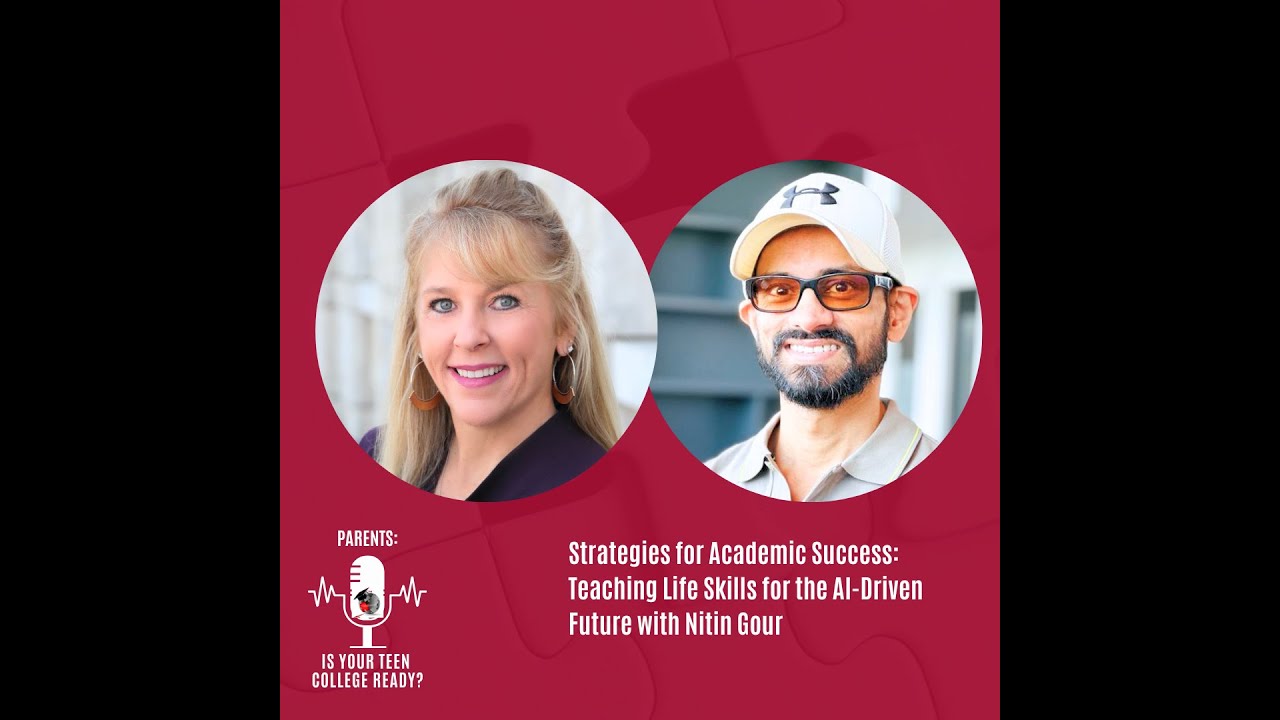
In this YouTube interview, host Shellee Howard talks with Nitin Gour, founder and CEO of Bloomster, about preparing teens for an unpredictable, AI‑driven future through social‑emotional learning. Nitin shares his unconventional career path—from computer‑science graduate to tech roles, then 18 years at Citigroup, culminating in a pivot to education technology. He explains how he identified a critical gap in traditional schooling: the lack of systematic teaching of self‑awareness, confidence, conflict resolution, mindfulness, leadership, and related skills. To fill this gap, Bloomster created a holistic growth model that organizes 25 life‑skills into five dimensions—social, emotional, intellectual, mindfulness, and physical. The platform delivers content via animated, story‑based lessons, interactive knowledge‑checks, and reflective exercises, all designed to build habits rather than just convey concepts. Nitin discusses the rapid acceleration of AI, citing World Economic Forum data that over half of U.S. jobs will be significantly altered, and argues that teens need resilience, growth mindset, and responsible decision‑making to thrive. He offers practical advice for parents on balancing AI use (e.g., avoiding AI‑generated college essays) and emphasizes authentic, self‑driven work. The conversation also covers how Bloomster supports parents—free 30‑day trial, downloadable e‑books, life‑event‑specific course bundles, and direct mentorship. The interview ends with a call to action for parents to start using Bloomster to equip their children with the life skills needed for future success.
Chapters
Hello parents, is your teen college ready? Today I have an incredible episode for you and I can't wait to share our guest. Welcome Nitin Gore.
Hi Shellee Howard, thanks for having me on the show. I'm really excited to be here.
You got it. So Nitin, can you please go ahead and introduce yourself and maybe share why listeners would want to, uh, stay tuned?
Sure. Thanks for that question. I'm Nitin Gore, the founder and CEO of Bloomster. My journey has been all over the place, like with so many twists and turns, but I feel like those twists and turns have shaped who I am and brought me to where I am today and specifically to do what I am doing today. I mean, it took me several years to get to this point, but I feel like that's well spent, a great journey in my opinion. And I'll take you back from my graduation and all. That's where it all started. So I started in technology right after earning my degree in computer science. And after 6 years in tech, starting from junior level, from a program analyst rising up to project manager, I pivoted to finance where I spent nearly 18 years. So I have a total of like, you know, over 2 decades of corporate experience. And in finance, I worked for Citigroup, as I said, for almost 18 years. I started again at the junior level as an analyst after pivoting. Because that was a new world for me with no finance background. And then I left Citi while I was serving as a director in its capital markets division. So all these years, like, you know, with tech and finance experience gave me the opportunity to work in high-stakes environment, make complex decisions, work with teams, lead teams in a global and fast-paced environment. So all that was great. Specifically, I'd focus more on the finance career because that was a long career, 18 years at one firm. And you can look at it in two halves. The second half was specifically the last 4 or 5 years. That was where the transformation happened. I spent a lot of time thinking through because I was rising through the ranks. Work was great because initially, as I said, I had to roll up my sleeves, learn everything from scratch. Working 60, 70 hours a week was a norm and I really enjoyed it. I would do it all over again because of the fast-paced environment. And that's the kind of energy I like. Living in Manhattan, taking clients out for dinners and whatnot, social events. It was all great. But then, despite the prestige and success of working at one of the top financial institutions in the world, I felt a persistent void, a feeling that perhaps there's something more to life, something more meaningful, something beyond that corporate hustle. So I embarked on a personal journey of discovery, and what I found led me to create Bloomster, a platform designed to equip children with essential life skills. They need to try. Because after thinking a lot, and as I said, that's my last 4 or 5 years, maybe 6, I got to a point where for me, in my opinion, success isn't just about career milestones or material achievements. It's about how we navigate through life and how joyful and meaningful that journey is. I mean, that certainly holds true for me. And believe me, it wasn't— still wasn't that easy because to leave that security of that paycheck and everything, that life brings, being on Wall Street, it was hard, still hard, but I finally decided to quit and start building this platform. So that's like in a nutshell what happened. There were a few key findings if you want, like I can go into that or we can go ahead and get into it later, like depends on how you want me to handle this.
You can just keep going. Fascinating. We're right with you.
Thank you. So in this, like in the last phase, I mean, I focused first on my own learning as well. I was working as well at the same time. So I did my MBA from NYU. I did CFA as well at that time. So, and a bunch of other courses and also focused on learning. I consider myself a lifelong learner. And in that phase, there were two big things and I'll focus more on the education side as that's the focus, your focus, and maybe your audience would appreciate that more. And then there's a technology side to it, which I'll mention as well. So on the education side, because my career gave me the exposure to work with top professionals, like, you know, working at top financial institutions, people who are coming from top universities, Harvard, Stanford, you name it, and I had global exposure. So Citi has offices in 100 countries. So I was working with people in UK, Singapore, Hong Kong, and various other jurisdictions. And with my tech background, so I was connected with technology, I was coordinating with top accounting firms, law firms, tax firms. So I could see that everywhere these professionals had their academics, meaning like the, the, the whatever they needed, their craft for that job was handled, was taken care of. But then I found, and this was through a lot of observation and all, and I put myself in that bucket, that social and emotional bucket was still empty at that time. And what I mean by that, and I'll cover that, is how to manage yourself, like, you know, what, like, have a good handle on your own emotions. We don't focus on that. And I could clearly see because I was looking at my friends, my colleagues and their kids and what they were learning in schools and how it was contributing towards their growth and development. And I could clearly see that, yes, schools have this academic sorted out. They're doing a great job on that. But no one is looking at these skills like self-awareness, self-confidence, conflict resolution, effective communication, mindfulness, leadership. I mean, on and on. So at that time I was like, you know, thinking that's needed. And I said I would put myself in that bucket because I had no idea. I mean, I mean, it's okay when you're starting up, you're doing most of that work, like call it grunt work in a sense. But as you rise through the ranks, you need these skills. And I'll cover more of this as we talk more. But that became my focus. And then I came up with a list of 25. I named a few there.. And then I organized them into 5 key dimensions: social, emotional, intellectual, mindfulness, and physical dimensions, I call them on the platform on Bloomster. And then I organized these 25 skills into these 5 dimensions because as humans, it's hard to remember these, like, you know, if I just throw these names at you of these skills. But if I organize them in some sort of framework, we tend to remember more. So that became my holistic growth model. And by no means I'm saying academics not required, absolutely needed because all these professionals, as I said, were top of their game. So needed, but we need to complement it with this holistic learning because that will be absolutely required even now, but in the future, really in the future. The technology side is the second side I identified. With my tech background, I could clearly see the way that things have progressed. Let's call it after the turn of the century, with social media, smartphones and all, the pace of change is what was concerning to me. And it's becoming faster and faster. And with AI, I mean, it's gone to a whole different level. It's like a paradigm shift. We're not even on the same planet. I'm not painting a doomsday scenario here. The future with AI is incredible, but we know what it's capable of doing today and how rapidly it's advancing. With that, we can see how that future looks like. We can safely predict that that future will be dominated by intelligent machines, constant change, and extraordinary unpredictability. So what would happen in that world for that individual? And maybe that's where I think your audience can, like, you know, look into that direction. That individual would need to continuously learn new things, will have to continuously adapt to change, be resilient, have a growth mindset. So there are these— a lot of these skills that would be required. Take risks. Make conscious and responsible decisions. So these skills in that kind of environment where things are changing very rapidly would be needed. And that is the second thing. So I thought that something needs to be done. And as I said, it still took me several years, like 3 or 4 years, and that COVID was happening at that time. But I finally decided, okay, you know what, something needs to be done for this. This is in a way my calling, I'd say. And then I like quit my job. And I started building this platform after that. So I mean, wow. Yeah. So that's my, my journey. Yeah.
So parents, if you're listening, what I'm hearing is so fascinating because when your child graduate from college, not even high school, but from college, the job they may acquire may not even be available right now. Like it, it may, it may not We may not even know what it's going to be called. So I thought looking at this from the eyes of tech and social-emotional, you know, challenges, how do we prepare our students? How do we prepare our children for what this unknown future looks like? So can you talk a little bit about the platform? How did you come up with the platform and how is it going to help navigate this process?
I mean, you're absolutely right. First of all, Shelly, the way you put it, that we don't know, that's that unpredictability. I mean, right now, the way things have happened in the last few years, we don't know exactly, like, you know, in 2 years from now that trend is going to continue exponentially faster and we won't even know 6 months from now what's going to exist because AI is— I mean, there are ample reports out there which are showing us that more than 50% of the US jobs will be either significant, either will be fully automated or will be significantly influenced by either algorithms or robotics, because machines will continuously optimize business processes and then they will drive or generate insights beyond human imagination. What that will do is that will continuously change like new, new way of looking at things and disrupt a lot of industries and jobs. So you're absolutely right. We won't even know because we can't even think of like what kind of patterns exist in the data. But AI can figure that out pretty quickly. You can see that even today. So that trend— and there's a report by World Economic Forum, it's called Future of Jobs. If you look at that report that recently came out, that's showing us that exact thing. And they're saying that as humans, we should look to enhance our skills acquire new skills for the future that would be required. And they're already saying the hundreds, more than hundreds of millions of jobs would be affected by AI. How do you prepare? As you, as your question, that's the thing. If you don't know how the future is going to look like, all we can do is just to prepare ourselves to deal with those changes. We know that we'll have to adapt to things. We know we need to build that resilience muscle to deal with those setbacks that are going to happen. We know we need to make some decisions in that fast-paced environment. I don't want my child, I have a 4-year-old, when she grows up and ready for college, for her to deal with this where world is dictating because world is going to be continuously changing. And then if she's not prepared, she doesn't know what she truly wants to do in her own heart and mind. She hasn't done that work beforehand. While she was growing up, then that environment would be difficult because she'll have to do those things, meaning professionally, and figure out these things. What we have done, but because in our time the change is not as fast, it is fast because you've seen I pivoted from tech to finance and now back to edtech. But that trend in that environment, she'll have to deal with a lot more things happening at a much faster rate. So instead, I want our kids to start preparing in early adolescent years. And that's what I've chosen. Think of them as middle schoolers, they'll have plenty of time in middle school and high school. Ultimately, I want to cover high school as well. I mean, I want to cover K through 12, so I have to decide which one should I focus first. So I decided based on even biologically, like, you know, our prefrontal cortex where all the executive functions like decision-making, impulse control, and all resides, that starts building up when we are 10, 11-year-old. It doesn't exist before that. And, um, that human brain is fully matured— brain is formed when you're 25, but majority of that prefrontal cortex is developed from 10 to 19. Um, so that's your, um, middle school and high school age primarily, uh, when you're going to college, when you're like, you know, forming long-term planning and all that kind of stuff is happening. So that's why I want to focus on, uh, early part of that. Let's plant those seeds, let's let them do this exercise of like this self-awareness, that's my number one skill. Like everyone should focus on that. Why? Because that's where you spend a lot of time thinking about who you are, meaning your thoughts and emotions, your values and beliefs, your strengths and weaknesses, what matters to you, why it matters to you. So once you've done that kind of exercise, you know what you want. You don't care. Like, okay, yes, things are changing, but you can step back. If you are even mindfulness is one of the skills on our platform. You know how to step back. Think through clearly. There's responsible decision-making skill. There's a beautiful course on that, impulse control, and a bunch of courses. If you've done all that work, then you can like sit back, think through, okay, what do I want and how the world is changing? Do all of that analysis and then make your conscious decision. Okay, this is what I want. Then you can like charge ahead with that. So that's how I feel like, you know, all parents should think about what's coming our way. I think everybody knows what's happening. It's just that we're so mesmerized by this AI technology that we're just in that phase. Like, however, think about when we were like, you know, we had the social media come out, how excited we were. We were like, okay, share our pictures with friends, connect with them, poke this and that. Little did we know, we even named them social networks. But later on we learned they were not a social network. They were making us antisocial. It took us like several years to figure that out. And in many cases, unhappy and depressed. We've seen Apple report showing us that same thing is happening with AI right now. Where every few months we're getting a newer and newer version and we're just like, you know, getting used to, you know, getting so addicted to it, using it. Nothing wrong with that. As I said, we just need to learn how to use it with care for our own benefit because it's very easy to slip, slip away in that and then consumed by it. So that's how I would prepare our kids just to be prepared and use it for our benefit.
And it's interesting when you think about AI and how it can be used for good and also not so good. And I have to help my, my students understand that if they use AI to write their college admissions essays, they will get kicked back. Like, their students don't realize that, yes, there's an AI tool that we can use to help us, but that same AI tool can actually hurt you. So how, how do you help students understand the good and the bad, um, technology?
Right. Great question. And that's a perfect example that you've hit there of how AI can lead us into a wrong path. And I'll take this essay example. If you remember, like in our days, like, you know, I clearly remember when I wrote my essays and all, you start with the— like, you have that question, whatever you need to write on, and then it's basically a blank slate, blank Word document that you're staring and trying to, like, you know, push your creative muscles. Right. I mean, it takes you a while to get started. Yeah. Once you get started, that first paragraph I felt like was the most difficult one. But then you get into a rhythm and then you can like go on from there. But now for our kids, it's just writing that one small prompt, maybe like some prompt, and then it spits out like 1,000 words, beautifully written 1,000 words, as you said, like, you know, but which could get you in trouble. That's a separate story. But even if you step back and see, our kids would not build that muscle, that creative muscle at all the way things are going if they get too used to just writing that prompt. It's just that they need to learn to balance this thing. But to get to your question specifically, yes, like, you know, I think that is a big problem. As I pointed out, our kids need to learn to like, you know, push those creative muscles and just write something. And then refinement and all. And I won't say that stay away from that. We need to embrace this change. There's no way, no way to put this genie in the bottle back. So somehow we need to figure out the balance. Maybe the right way to approach it is to start something with your own draft and then help it to refine and like, you know, maybe structure it in a slightly different way with your advice and professionalize you and all. But certainly like not start with the prompt because that's clearly— and I've seen that, like, you know, I work with so many people and I see what kind of output that I get. I can clearly tell you if somebody is generating this through ChatGPT, the way it formats, the way it structures, I can like glance at it and see, okay, this is ChatGPT generated. So and I'm sure there are multiple softwares that these universities are going to be using to parse that out. So it could definitely be negative.
Yeah, this year we had, I would say, maybe 25 students when we ran their essay through the AI checker, they were flagged, and then I had to take the essay back to the parent and the student, who— that was kind of an awkward conversation. Of course, they said, oh, it was just to reduce the, the letter count or the, the word count, right? Does it matter if, if a college suspects AI, it's an automatic reject. So how do we help our students control themselves? Even as simple as, you know, Grammarly. A lot of students will have a very simple Grammarly check. Like, they have to be really, really careful. Like, you as a human being can pick it up. There's actually programs that can pick up So how do you help students to navigate or balance embracing AI? Because it is the future, and I, I, it can be amazing with a human touch, but, but also don't just shortcut it and not develop that part of their brain. Yeah, to be able to, you know, be an effective adult who can think. So what is your take on how do we do that?
One thing I certainly recommend is that, and I learned it in my, this Bloomster while running Bloomster, is that the more authentic you are in terms of whatever you are presenting, for me it's like Bloomster brand that connects well. So I think if that message is clear to anyone who's writing these messages, sort of these essays, I think that's what will work for them in terms of getting into these universities, even if it's like not that polished. I mean, we know what ChatGPT and these AI softwares are capable of. I mean, it's amazingly beautifully written and I see that. But maybe as humans, it's clear that we can't get to that level, especially like we're talking about 18, 19-year-olds., or 17, 18-year-olds. So it's okay to submit a draft, at least like to you as a professional, like so you can work with them in terms of refining. There are some basic grammatical stuff, like, you know, if let's say even Grammarly is an issue, then just do your best in terms of like, you know, going through your grammar checks and, uh, and then like, you know, work with the professionals like you and then just get it submitted. I mean, the odds of Succeeding with that essay versus an AI-generated, even for, as you were saying, shortening it and getting the word count and all, would get you into trouble. So that's what I would say. At least just get whatever you can, the best you can out there, because that's what matters actually, how authentic you are. It's the content, not how nicely it's written and all. If you've done your work, there are basic things. As you're the professional, you know what the essay should include. In terms of experience and whatnot. If that's covered, I think, yeah, they should be good.
So I'm gonna switch gears just a little bit and, and dive into your tech side. I have a lot of young students who are coming to me saying that they wanna do computer science as their major. And when I ask them why, They just say because they like the computer. So you've done the tech, you've done the finance, you've lived the different platforms. What would you say to your younger self back in high school as you're figuring out, wow, this kind of tech stuff is kind of cool? What would you say if you had a high schooler right now to them as they're trying to navigate What's next?
That's a great question. And yes, like I pivoted, but the situation— and I highlighted that even earlier. So if you remember, there was a time when finance was the cool thing, and I'm talking about before the financial crisis. If you look at it from 2003 to 2008, man, finance was at the top. Tech— nobody was asking about tech. But then over years, tech became the thing. So we don't know what the cool thing is going to be at that time. So let's say even if we do know, I think what's important to me, and again, this happened in that research phase last few years before I quit and started building Bloomster, is it became clear to me there are two things that are important to me, meaningful work and meaningful relationship. So whatever you do, this first part, let's talk about the meaningful work. That you should focus on. What is meaningful to you, what you really like to do. There are two aspects to this in my mind based on how I think about it. It's finding your lane and then walking that lane. Both are equally difficult. And you might have heard, Shellee Howard and I clearly did, that everyone is born with a unique talent. You just have to find yours and then, like, you know, just focus on that. And I was in my early 30s and I would send a probe in my head, okay, what am I good at? I would get no answers. Literally, I mean, if you've not done the work and all, and I'm doing this thing, but what am I really good at? So I feel like a lot of, and I would talk to my friends and a bunch of other people and all of them, we tend to start thinking in those terms when we are in our 30s, early 30s, let's say, because 20s just go by like you're straight out of college. Trying to figure out, get your footing in this professional world. So you're like, you know, so focused on that side. And then once you start progressing, like, you know, rising up the corporate ladder and all, then you are thinking about all those things. And that's truly happened, what happened with me. So I highly, highly recommend and would encourage all your listeners to help your kids find their lane first, as early as possible. And that's why I said, like, even like in middle school and all, help them do these exercises of figuring out, like, you know, who they are, like self-awareness. I'll come back to that because that allows them to know what matters to them, what their values and beliefs are. And they can do that exercise with you. In our courses, we have a bunch of activities, workbooks and all, and we encourage all our learners to coordinate and work with their parents. So let's say you've done all that work. Then it becomes easier. They know their strengths and weaknesses to find their lane. But believe me, even finding the lane is not easy. Michael Phelps didn't become Michael Phelps until like he was in that swimming pool 4 AM every day in the morning for years. So you have to work on your craft also. Let's say whatever you're good at, you figured that out. That also would take some time. And I would think like if, as I said, like you start early, you'll get there by the time you're in college. 'Cause this is one more thing. As I said in the beginning, I was observing my friends and their kids and all, and I would ask them like, you know, what are you thinking of doing in college? I don't know, I'll figure it out. And that was a common theme that I got, and that concerned me. Nothing wrong with that. I mean, obviously I did the same thing, but I felt like in my 30s, I wish somebody had guided me early on. That was the constant thought that I had. I wish somebody had told me about these things. I would have worked very differently. If I'd go back. It's a very inefficient process. Yes, you would argue life is about experiences. Yes. But you would see that— and I've seen this— kids would start something like they would do a year of college and they would then figure out, okay, you know, this is not for me. Then they'll look at credits and whatnot, how they can transfer to some other college, some other domain specialization. So that happens. So why deal with all that when you are already in college. You can do all of that work. You have like, you know, 10 to 17, like, you know, those good years to slowly work on these skills and get to a point where, you know, you know what, this is what I want to do. And even then you have those college 4 years, so you're focused on— because you know what you want to do, and then you are very much focused there. And then after that also, you continuously need to do that same thing so that in 10 years from that point, you are at a point where, you know, okay, yes, you know what, This was my thing. I figured it out. And even in that environment, fast-paced environment, you'd be able to figure out what to do, even if you have to pivot somewhere. So that's how I would look at it. And to answer your question.
That's perfect. So I really noticed that during COVID a lot of this came out for students because I think parents thought that the high schools were doing this kind of work. And then when they were at home, they realized Nobody was doing this work. And so I started a program called See Our Future Now, and it is actually going through step by step, helping them find their gifts, their talents, their advocacy, those things that you're speaking of, because it's, it's huge. They're spending so much time on the computer and their phone. They're really not spinning out, you know, am I the fastest on the street? Like what? You know, those simple things that we learned by doing, they're not doing, they're just consuming. Yes. So I think that that gift, right, of that intelligence would be amazing. So, right, if a parent wanted to learn more, how might they find you or the program? Sure.
The best way is to just go to our website, bloomster.com. And just sign up. That's the quickest way to get started. We give free 30-day trial because I had to decide, like a lot of softwares online, subscription-based, you would see that give 14-day and all. I feel very confident if you really want to go in this direction, I want you to really immerse yourself. Everything is open for you for those 30 days. You could take all our courses, but I highly recommend you take one or maybe two at the max and really immerse yourself. And this is for parents as well. Learners obviously will be going, will be going through those courses, but parents can also join them in their journey through these courses because the child will want some sort of support while they're taking those courses. And we have amazing resources while they're going through, as I mentioned, like there are a bunch of workbooks. We've divided our courses into 4 modules and all our courses, let me mention briefly about our courses. So I mean, when I started thinking about, so I had that holistic model, 5 dimensions and those 25+ skills that I organized, but then it was about, let's take again, self-confidence or self-awareness. So we have a course, Confident You, Believe in Yourself for self-confidence. How do I teach this skill? If you just give them like a blank book sort of a thing, like an article online, if you're talking about online system with some images here and there, like we have in our books, they will check out within a few minutes. We're talking about, let's call it like 12-year-old or 11-year-old. And on the other side, if you put them on a video game, they're playing that, they can play that for hours. So I knew, okay, we need to make something engaging, but obviously not a video game. We're here to teach the skill. So after like talking and doing some research with PhDs and teachers, whatnot, I thought the stories could be that medium. If we can teach this skill in the form of a storybook and now think of a comic book, that's how we started. I launched like, you know, dabbled with 14 or courses and that was my beta version that I launched. And quickly after that, getting feedback where like, you know, because it limited me in terms of what I can write in those thought bubbles, speech bubbles, think of those colorful pages with those characters. So there was a limitation on what we can type in those, on those pages. But the idea was the child is going to flip through those comic pages and those characters are going to go through some real world, real life situations where they would need— if you're talking about self-confidence, let's say those characters need to present. Sam and Sarah are presenting something or there's a debate competition they're struggling with, like with confidence. So how do they deal with it? How do they present and all? So we teach them through the story, through the situation, so that when they are actually in those situations in the real world, they are quickly able to relate to that. So that became the model. And then quickly we migrated to animation. So all our courses right now are built and there are over 1,000 lessons that we have in 32 courses. 32 might sound small, but there's enough content for any learner to go for a year, 2 years. If they go sequentially and take all our courses. So that's the model that we have, animation. So they're engaging, relatable, practical, practical and fun. And we have gone to extra lengths to make sure that our characters are so relatable to this age group and the situations that we are painting in those animations, they are relatable to this age group. So a 12-year-old would relate. Yes, this is what I deal with on a daily basis in school or in personal life. And now I'm getting all these tools how to deal with those real life situations. So it's very engaging, even so much so that our questions that we have, we call them knowledge checks. Every course is divided into 4 modules and each module we have 2 more knowledge checks. And the last lesson is always a module exercise. In knowledge checks, we have questions which are again scenario-based. There is nothing on Bloomster where we're trying to teach a concept. It's all about building habits and giving something to our learners so that they can apply those things in the real world. So it's not about just learning resilience or effective communication. It's about living those skills in the real life, in their daily experiences. That's the model that we try to implement in our courses. So when they are taking those knowledge checks, there's another thing there. So how are we going to teach these skills to our kids? And I've seen this over and over again, and I would do the same. Let's say there's a— in the real world, there's a situation happening. I'm out on a soccer field with my daughter and something happened, and I feel that's a learning opportunity for my child. I would teach them there and then that, you know what, this is the right thing to do in this situation. And here's the rationale. Here's the reason behind it. So that my child truly understands why, um, he or she, she should make this decision. And I would also point out, okay, you know what, if something didn't go the right way, you know what, this is not how to handle the situation, and here's the reason behind it. Same way, if we're painting a scenario for confidence, there's a scenario, okay, you, you're in the situation now, you think about what you've learned so far and apply everything in this situation. And there are a few options, there are 3 options in our questions. When the learner clicks on any one of those, they will get to— we call them nuggets— they will get to learn, okay, if let's say from A, B, and C, A is the best answer, C is something that you won't recommend your child, and B is like somewhere, somewhere in the gray area. We give the rationale behind each one of them so that they learn. If they clicked on A, great, they already got, but here's why it is the right answer. That's how you should deal with it. So now they learn. So that's the kind of tools that we're providing them in addition to what they're learning in the animation and all, which looking at those characters, looking at those situations and all. So that, and then module exercise is a point where they've gone through like 7 lessons. The 8th lesson is always a module exercise. That's where it's the time for them to reflect on what they've learned. There are workbooks in there and there are essay type questions where they can type in their responses. And then really reflect on what they learned from it. And those workbooks, we encourage them to actually work with their friends and their family members if there's something that they can work with them. So that's how we're approaching our courses and making it engaging for them.
That's amazing. So if you have a teenager, middle or high school, that could benefit from the social emotional learning, I highly recommend— I will put in the show notes, how you can reach out, how you can get more information. Check out the, the cool animation. Um, any last words of advice or recommendations for the parents?
Um, I mean, just that, uh, get started. I think, um, it's the leap of faith. And, um, I mean, I encourage everyone to go to our website. We have a resource section where you can download our ebooks. Ebooks is a great way to start. And these skills, like if you're interested in impulse control or responsible decision-making, our courses are designed by PhDs and teachers with, with years of experience. And each course is reviewed and vetted so I can stand behind the content. And in those ebooks, those are also created by these professionals where we again give you certain 5 scenarios. So let's Take Responsible Decision Making, that ebook, if you download the free resource, has 5 scenarios and we tell you about what the skill is so that you truly understand that and how you should approach discussing those scenarios with your child. That's basically for parents to assess if, you know, decision making, my child makes poor decisions all the time. If that's your concern, go through that ebook, those scenarios, like engaging that, like, you know, conversation with your child with those scenarios. Those are fun also. And see how your child responds to those. That will give you a good idea. You know what, I need to help my child take these courses so that he gets some sort of framework how to make the right decisions. So that's a good way to start. There are blogs if you want to read about social-emotional learning, how it benefits. And there's ample research outside of Bloomster. There's CASEL framework, very well known in the education world. Is collaborative for academic social emotional learning. It has 5 tenets, um, self-awareness, self-management, responsible decision-making, relationship skills, and social awareness. It's a well-known framework, and they, they talk about how— and there's ample research on their website which shows how social emotional learning contributes to academic success. I mean, there's no doubt in my mind. I mean, any very simple example, if you take If your child knows their strengths and weaknesses and values and beliefs— let's talk about strengths and weaknesses— because they are so vulnerable in this time period, they are just coming out of their parent-centered world. Because, because before 10-year-old, parents are everything. Mom and dad, mom and dad, right? And then at that time, when they go to middle school, that's hard. And they are going into that social-centered world, and now they're looking outside for social proofs and stuff like that. So, and they are so vulnerable at that time. Now it's our job to help them through that phase. If they have done this, this exercise of strengths and weaknesses with some workbook that we have in our course, it becomes much more easier for them. So let's say like your teacher gives them a critical feedback on something that happened in class, and immediately it could trigger a thought in their mind that I'm terrible at this, and they could be like very demotivated. Or if they know, okay, this is one of his or her weakness, then they would be like, you know what, I know 'it's just a matter of me focusing on it. I can work on it. I just need help.' When they are in that space, they are also very open to ask for help. So I think I would highly encourage to at least like, you know, give it a shot. Free 30-day trial. A lot of platforms would ask for credit card and after like that 14-day trial period when it finishes, I mean, yes, you can cancel, but if you don't, you'll be charged right away. We don't do that. You don't even need a credit card to sign up on Bloomster.com. You just need to go create your account, add one child and get started. Take a few of our courses. Our website is also nicely organized. You go to course library. We have 3 different options where you can select a particular course if you're interested in that, or you can select a live event because that's also one of the things Shellee Howard learned while talking to some moms. I tried to like coordinate or at least connect with our users as much as I can.. And I learned that a lot of parents specifically, like, it's— I mean, it just so happened that data also shows me that moms are the ones taking the lead in terms of like, you know, they're trying to figure out what needs to happen. Dads, yes, but let's call it like 20%, 80%, it's all moms. And when I speak to them, a lot of them are pointing out that, okay, they're going through some sort of divorce, they're moving from one location to the other location, like East or West Coast. The kids are going through some or some deaths in the family. There's a lot that's happening. At the parent level. We are like, you know, mature, so we can deal with that. But think of a 12-year-old, 11-year-old, them also, they're also part of this whole journey. So we have a way on our website where you select this life event, and then we have, we've created with these professionals that we have, uh, with us, we've created these plans of with 4 courses to help your child through those tough times, uh, situations. Not just tough, tough times, there's like, you know, happy moments like a new sibling that comes in The older one gets like all insecure, man, I had all the attention, now where is it? So just helping the child through that also is, is something. So that, and then we have like, let's say you have specific things, okay, I'm concerned about my child making poor decisions, he has issues making friends or some relationship management stuff or leadership. So you select like 2 to 4 of those and then ask for recommendation. We recommend a plan for you. There are multiple ways that you can get started, but just get started and immerse your child and yourself. Just take 1 or 2 courses at the max. We also send you a few emails and you can connect with me. There's a way in that to connect with me or a mentor at Bloomster. I'd be more than happy to help you through that platform because I also want to know good or bad of how I can optimize and like, you know, continuously refine my courses. I'm not claiming that I have it nailed down everything, and I have evolved in the last year or so based on the feedback that I received. And as I said, this feature never existed like a few months back. This whole life event stuff, but because what I talked to so many and I think that makes sense, we should implement it. Likewise, inside the course also, if something doesn't work for you, I'd be happy to listen to you. And if it's a common thing, I'm like all for it. Let's make that change because it's all about our children getting to a point that they're ready for that future. I'll stop with that. Wow.
So much information. We can go for days on this. So parents, if you are intrigued, You need to reach out, and thank you so much. Thank you for all of your knowledge and all of your heart to serve our kids. Until next time, parents, please help your teen be college ready. Thank you.
Great. Thank you, Shellee Howard.
More from Shellee




The 3 Questions Every Parent Should Help Their Teen Answer Before College | Featuring James McLamb

Helping Your Teen Stand Out for College Through Purpose & Impact | Featuring Aishani Sheth


From Robotics to Cornell: A Father-Son Blueprint for College Success with Aarav & Ritesh Kumar

The Hidden College Credit Strategy That Could Save Your Family Thousands with Josh See

The Truth About Financial Aid: Why Some Families Pay Less for College Than You Think with Jack Wang

Human Skills Every Teen Needs for College, Careers & an AI Future with Rob Heller
