The College Admissions Edge How to Stand Out & Succeed in the New Testing Era
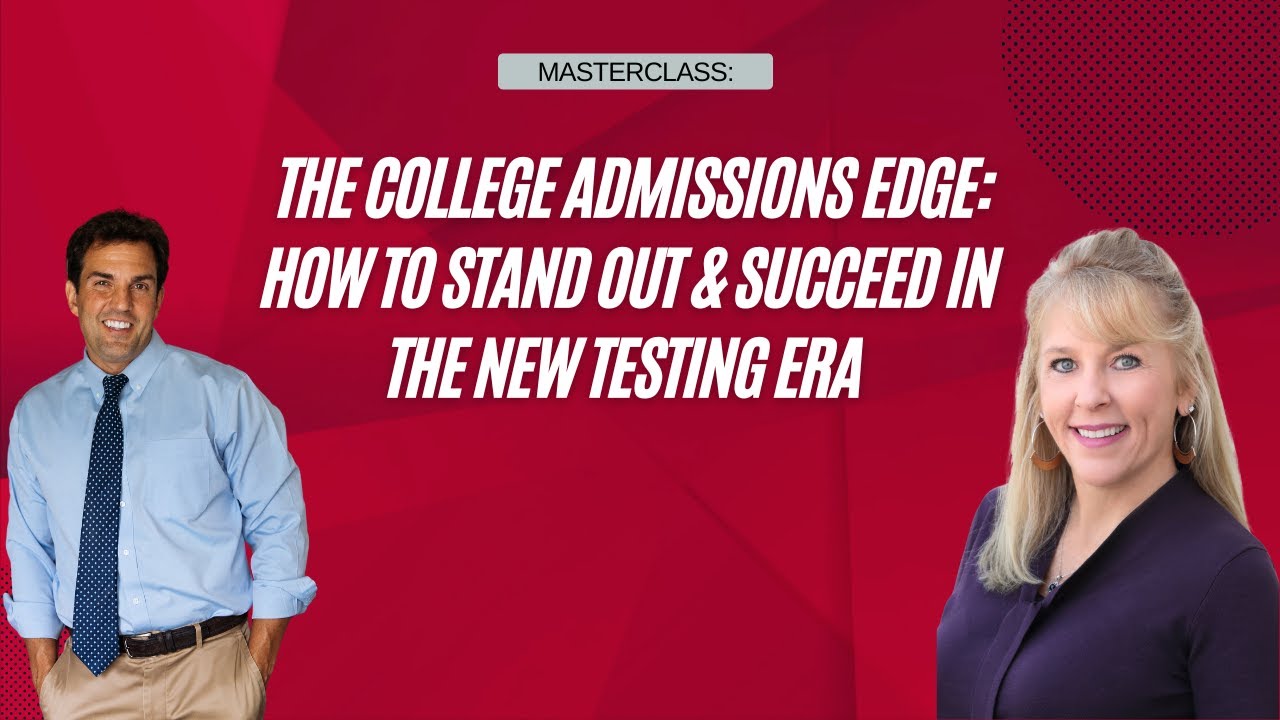
In this live webinar hosted by Shellee Howard, Matthew Pietrofetta, founder of Academic Approach, walks parents and students through the most significant recent changes to the SAT and ACT, including the SAT’s shift to a fully digital, multi‑stage adaptive format and the ACT’s transition to the Enhanced ACT—shorter duration, optional science section, and integration of the Desmos calculator. He outlines a three‑pillar framework for test preparation—efficiency, insight, and growth‑mindset—emphasizing the importance of taking diagnostic practice tests, using concordance tables to compare ACT and SAT scores, and personalizing the test‑selection decision based on student strengths and preferences. The webinar also covers modern testing policies such as score choice, superscoring, and self‑reporting, illustrating how they reduce pressure and provide flexibility. Through multiple anecdotes (e.g., a student’s journey from a disastrous self‑study to Harvard admission, scholarship wins, and long‑term skill gains), Matthew demonstrates how strategic test prep can boost college admissions and scholarship outcomes. He answers live audience questions about the optional science section, the appropriate testing timeline for advanced freshmen, and how to prepare for the PSAT when a student leans toward the ACT. The session concludes with a promotion of the College Ready platform, offering a free digital ACT, practice tests, an ebook, and personalized consultations via academicapproach.com/college-ready.
Questions this video answers
Colleges differ: some (e.g., University of Pennsylvania) accept applications without the optional science, while others (e.g., Boston University) prefer it. Opting in benefits STEM‑oriented students whose narrative emphasizes science; opting out may be better for humanities‑focused students. The decision should align with the student’s story and the target schools’ policies.
No. Once a student has completed Algebra 2 and trigonometry, they are mathematically ready for the ACT/SAT. However, other skills such as reading comprehension and grammar may still need development, so timing should consider the student’s overall readiness, not just math.
Begin with practice ACT and SAT tests to determine the best fit, then use a concordance table to see which test yields a higher score. Peak the student for the PSAT in junior‑year October to target National Merit eligibility, while continuing SAT preparation if the SAT is the preferred college‑submission test. The PSAT can serve as a benchmark even for ACT‑strong students.
Chapters
We have a full house tonight, and I am excited to introduce our guest to the College Ready platform, Mr. Matthew, and he'll say his last name because I just don't want to mess it up. But please welcome to our webinar, and parents, you are in for a real treat. So go ahead and take it away.
Thank you so much, Shellee, for having me here tonight, and thank you so much, College Ready families. For having me. Um, I'm Matthew Pietrofetta, and I'm founder of Academic Approach. I'm just about to share a PowerPoint with you. Okay, now do you see a PowerPoint?
We're good.
Okay, great. Excellent. So thank you all for having me. Thank you, Shellee Howard, so much for having me tonight. So I've been in test preparation for about 25 years. I founded a company called Academic Approach. It's a test preparation academic tutoring company. Founded it in 2001, and this is probably the most radical time of shifts and change in the standardized tests that I've seen over that. What definitely is the most radical time of change in shifts, though there have been a lot of them over those 25 years I've been in test preparation. What I will say is that we want to share a lot of information with you to empower you about understanding these changes tonight. And that these changes are largely positive. Having worked with students and still working with the students every day around standardized testing, I know how they've experienced these tests and I've known some of the challenges of them. And some of these changes are very favorable for students. These tests are friendlier than the tests that we took when we were younger. And they're moving in the right direction. So the overall spirit, nice presentation. This is really positive change. I put together a bunch of information for you on a page. If you go to academicapproach.com/college-ready or scan this QR code here, if you can see it, there's a digital ebook about the new ACT that gives you all the highlights, many of which I'll be sharing with you tonight, and also allows you to sign up to take complimentary practice ACTs. The new ACT, we've got it, and also the SAT. And do a compare and contrast, which I'll talk about tonight as well. So the main themes for tonight's presentation really come down to 3 things. I want to share with you ideas about how to approach this process and be efficient, use the process to be insightful, to learn about yourself as a student and what you can work on that can improve both your scores, your standardized testing scores, and your skills as a, as a high school and college student. And to take a growth-minded approach to see the opportunities that sometimes test preparation can present to actually be— become a better student and be more prepared for college and career. And then, of course, I'm going to be talking about these changes to the ACT and SAT. So first, the changes in the ACT and SAT. Here's a— I'm going to give you several different snapshots of how these changes can be represented. One is this: the SAT went through a monumental change in 2023, going from a paper exam to a fully digital multistage adaptive exam. And, you know, gosh, when I took this test back in the, um, oh, they don't even want to say, I guess in the '90s, in the '80s, did I? Yes, I did.
Wow.
Okay. Yeah. Um, um, it had analogies on it and all sorts of interesting things. It's been through— the SAT's been through 3 major revisions over, um, the time that I've been in test prep, but this is the most significant one. I'll talk more about it but it became shorter and digital and is reading, grammar, and math on it. The current ACT that's been the same thing for the past several decades hasn't changed at all, really much at all, is changing tremendously now. It's happening right now as we speak. Beginning in April, it started to change and it's gonna— and the current one is gonna be retired in July and it's gonna be a whole new world as of September for just the new ACT. Enhanced ACT, they call it. And the changes are it got shorter and science became optional. You have— it went from 2 hours and 55 minutes to 2 hours and 5 minutes. So students are singing across the country about that one. They're happy because the test is very long. And, and science became optional. It's going to no longer be part of the composite score. The composite score now is made up of English, math, reading, and science. Add them up, divide by 4, and get your ACT score. Now soon it's going to be English, math, reading divided by 3 and get your ACT score. And if you take the science, it will be a little subscore, an optional section that you can take with the subscore that comes along, but doesn't affect your composite score. That's huge. So why are they doing this? ACT has been receiving feedback for a long time from students. And if you work with students or listen to any— if you have a child that took the ACT or took practice tests, you will hear things like this: the test is too darn long, I run out of time, the science section is scary. Or you'll hear, I like the science, you can hear that too, but it's— but the opinions really cut in opposite directions. You either love it or hate it, it seems. There's very few that are neutral on it. And so ACT listened and they reacted. They made changes, and the changes can be represented here in this detailed. The English still has an English section, but it went from 75 items in 45 minutes to 50 items, if you look over on the other, on the other side, in 35 minutes. So significantly shorter, um, but not taking away that much time. So one of the changes here is they've reduced the overall length, but they've increased the time per question. And as an educator, someone who works an awful lot with students, I hear all the time, and it's And I feel for my students empathetically around this, is they'll say like, "I just can't get the test done. I can't finish it. I understand and, you know, I've learned these things, but I can't get to the last 5 questions." And that's a real bummer, 'cause we care less about how speedy you are and more about what you know, what kind of content knowledge and skills you've acquired to make you college ready. And the ACT has always blurred that because so many students might have a score It isn't because they can't do it, it's just they can't finish it. So that's a big theme. The reading went from 40 items in 35 minutes to 36 items in 40 minutes, 5 more minutes for reading with 4 fewer items. That's pretty cool. Kids are pretty excited about it and they ought to be. Math, from 60 items in 60 minutes to 45 items in 50 minutes, so fewer items but more time per question. And then science, from 40 items in 35 minutes to 40 items in 35 minutes, 40 minutes, they give you 5 more. They didn't shrink the number of questions but gave you 5 more minutes. That's meaningful. If you ask any student you bump into on the street who took the ACT, how do you feel about the science, even those who love it will say it's pretty fast and it's hard to get it done. So 5 extra minutes means a lot. And that section, that, that science section is optional now. So here are some of the other changes they've made in both digital and paper form, which I'll talk about in a bit. But some of the changes they made, if you're a test nerd like me, you really appreciate. Um, here's an English item, and in the paper form they will, um, you know, number the line that you're supposed to look at, and the question matches the line. You have to go looking for line 17 for question 17. Um, and students sometimes are just in the wrong place. They just go to the wrong area and make a mistake because it's just scanning and they get confused by the way the test is constructed. Now they highlight the line that you're supposed to go to. You can't miss it. Um, little things like that, uh, it may not seem like much, but these are favorable changes for the test taker. In the digital form, these are really nice and students appreciate it, and they make fewer silly mistakes like just being in the wrong place. That's a good thing. A huge thing in math is both the SAT now and the new ACT, the enhanced one, not the current but the new one, Integrate in the Desmos calculator, which is just very, very cool. If you've ever seen it or used it, you're a student who uses it in the classroom. Here's a really hard final ACT math item that requires either— if you do this by hand, it'd be synthetic division, which is not really fun for a lot of students. But if you put it into Desmos and use a slider, you can graph it and solve it. It's very cool, and it opens up a whole new set of problem-solving strategies for students. That are really great, highly visual, and very fun. So this— both SAT and ACT now have the Desmos calculator. There's a huge change, makes the math problem solving much more flexible and creative. So here's the big picture of what's happening. The ACT, the current one, the one that's been around for decades, is going away. Hey, this July. So if you're a class of 2026, you're a junior, And you're taking the test, you get another shot at the current if you're taking it in June, and then your last shot in July. And then it goes the way of, yes, that's a dodo bird, it goes extinct and it's getting retired. Weirdly, they're rolling out the enhanced ACT at the very same time, which is confusing when you're trying to find a test center, 'cause some test centers won't offer the enhanced one, they'll just offer the current. So if you're a junior right now, you've been probably experiencing this. But then, um, as of September, then it's only the Enhanced ACT going forward forever, and this current one is gone. And that is, um, going to be offered in both digital and paper form, but it will depend on the test center and what they're doing. So we're working with our class of 2027 students, um, when registration opens up, to guide them and to talk to them about which form they prefer. And, um, I think the digital tools are incredibly compelling. Like I mentioned, the Desmos calculator, you wouldn't half that if you took the paper form. So we are, we are fond of some of these digital tools and advising many of our students, and many of our students enjoy them, to take a digital when you can. And then the SAT is, you know, they always— each test has about 7 or 8 administrations per year, and they always go on a similar cycle. The SAT has been stable for over a year now, and we know that form. That form has been released and studied and tons of it released. This enhanced ACT is new, just kind of coming out and getting released now. And so the SAT has been stable and will continue to be, and that's available all those test dates. So I'll just take a moment before I get into maybe another 10 minutes of the presentation, then we can go to Q&A. I just want to take a deep breath and say relax for a moment and share with you a few policies around test taking that have maybe changed parents since you took the test. And like I said, this is a favorable time to be a student taking standardized tests, um, and, and these are some of the policies that make it more favorable. There's something called score choice now. You can take a standardized test, an SAT or ACT, several times and then just choose to report your best score to schools. There are very, very few schools, only one that I know of, that says please disclose all of your scores to us, how many, however many times you've taken it. Um, but the rest will be like, send us whatever score, you know, you, you, you like. So let's say you took it 3 times and your first 2 were okay, you were emerging, and then you really reached your peak on the third one. You just send the third score. That's called score choice. Super scoring is relatively new, and, and most colleges honor it, which is, let's say you take the test— I'll say the SAT— in, in May, and you take it again in June. In May, you do awesome in the math, but not so great in the reading. In June, you do great in the reading and the math drops. Well, they superscore. Take your high math from May, match it with your high reading from June. That's your superscore. And that's how you can report your score to school. Well, that's— to schools, well, that's very cool because it takes the pressure off. You don't have to have a perfect day. There's such a thing called self-reporting, which is— and this is great— a few years ago, you had to send, when you applied to college, and to send your transcripts to all the colleges you apply to from ACT or SAT. And it costs a lot of money and it's just kind of tedious and you had to show them all your scores. Now you just write it into the Common App what your score is. And if you get accepted to the school, they ask you to send a transcript of it to prove that it really was the score that you reported. And that's called self-reporting. It saves you a lot of time and money. And so that's a favorable policy. So what are all these policies about? They give you some privacy. They give you some choice, they give you second chances. So take a deep breath, and it's not that bad. These are good things. You're protected and you have multiple shots at it to become the best that you can be on these standardized tests. So with that in mind, I'm going to go into the 3 key themes of the process: making it efficient, making it insightful, and making it growth-minded. Um, and the first, to make it efficient, well, You can choose whether you want to focus on the ACT or SAT, and this importantly leads to a myth that, you know, I certainly had growing up. When I grew up in Boston, I thought there was only an SAT. I'd never heard of an ACT. And there used to be regionalism that certain schools wanted an SAT and certain schools wanted the ACT. That's been gone for years. Any college or university that wants a standardized testing score will accept either or. So no bias, no, no preference. So what's significant about this? It empowers you to make the choice as a student about which test you like better. And just because a neighbor took the ACT or a cousin or an older sibling or— and they loved it doesn't mean that you will, or vice versa with the SAT. It's your choice. So part of what this is about is talking to you about a process for making a really informed decision and picking that from the beginning so you're not barking up the wrong tree. There are significant differences between these tests. So in short, we never start a program without having a student take a practice test in each, and then we do a complimentary meeting and analysis and score them and talk to the student about what they preferred, and then design a program around the test that features them better. And if you look at a high level, they're pretty different. The current ACT, 2 hours 55 minutes, 215 questions. The Enhanced 2 hours and 5 minutes, 131 questions, 40 more if you do the science. And the SAT, 2 hours and 14 minutes, 98 questions. SAT is really, really short, 98 questions. You have a lot of time per question. And there, as we go through, you'll see there's some differences, and I want you to kind of think and reflect just looking at these differences. Would you immediately have a preference, like, I, I like that ACT ACT better or the SAT better for these reasons. There's no replacement for taking practice tests, though, which I'll close with at the end. So a little bit on each of these tests. The SAT is now a multi-stage adaptive test. What does that mean? It means that Module 1 in reading and writing, if you do well enough on it, you go up to another module, another stage, uh, to a harder one. Or if you don't do well enough, you go down to an easier one. It's not item by item. Adaptive. It's not like if you get one wrong, you get an easier one. If you get one right, you get a harder one. Those are the graduate exams like GRE and GMAT stuff that are adaptive. Not this. This is a multi-stage adaptive test. Same with the math. You then do Module 1 and you go up or down. And there's a lot of myths out there. I was talking to a student who, who said she watched a TikTok the other day, and the TikTok was this girl saying, oh, that feeling you get when you get a really easy math problem after you answer a question on the SAT and you know you're doing terribly. And that's just not true because that's not the next item. If it's easy means you got the one before it wrong. That's not how this test works. So understanding that is important, getting over some of those TikTok myths, though I know, you know, lots of students use that to get information, that's for sure. Um, another way to look at these tests, uh, is the order of the sections and the timing can really affect you and how you feel about the tests. So if you take the ACT, you're starting with English, you're then going to a math, you're then going to a reading, and a science section— mandatory now, but soon to be optional. And that's always how those sections go. The SAT goes reading and writing, reading and writing, math, math. This matters. Some students who, like, say they prefer math, they really like it, they might like ending on math SAT allows you to do that. Some students that really love science, they might love ending with the science section. But this is very personal. You can't predict it. You have to experience it. And it's different for every student. One of our lines from— that I trademarked from the beginning is, uh, tests are standardized, students are not. And so you really want to think about this individually as a student, and we want to help you do that. So just to go through quickly, I'll give you a high-level difference to ACT or SAT and how this might affect you differently. Here's the reading. The reading is, you know, currently on the current, on current tests, you've got 4 long passages, 40 questions. On the enhanced one, you're going to have 4 longer passages with 36 questions. On the SAT, you have 33 really short little paragraphs with a unique question on each of them. So that can affect you differently. So how's that look? Well, here's ACT. You read a long passage and then you answer a number of questions on that one passage. But here's SAT. You have one little paragraph, one unique question, and then another little paragraph, another unique question. Some students like to dive into a passage and answer a bunch of questions on it so they can really concentrate. That is the ACT. Others like not to, and they like just little bite-sized, um, pieces of text, analyze it, move on to another one. That's very, very unique and personal to the student. But it's different enough that it can make a big difference on your performance. And that's why it's so important to assess this before you just start preparing for one test or another. The English and writing— both tests have grammar. Both tests assess grammar. And you wouldn't really pick between the both tests, you know, either tests on grammar, because they both have it and both looks pretty much the same. So they have a passage, they underline a portion in it. They give you 4 options and 1 of them is correct and 3 of them are wrong. And you're editing like you would copy edit or proofread a paper for grammatical errors like run-on sentences, misplaced modifiers, comma use. It's a wonderful section to study for because it really does flesh out a student's toolkit as a writer and as a reader and as an editor. And often grammar isn't taught necessarily systematically in schools. So this tutoring supplement raises your score and really gives you a lifelong toolkit as really understanding like what is the difference between a semicolon and a colon, which a lot of students don't know until they do test prep. But you wouldn't really choose between the tests on this basis because the, the content is pretty similar. The math, you may choose between certainly now the current ACT, 60 minutes, 60 questions, no Desmos, paper. The SAT is 44 questions in 70 minutes. You have so much more time per question, 95 seconds per question on the SAT, only 60 on the current ACT. That's, that is meaningful right now to a lot of students. It's going to get a little more similar though with the enhanced, 45 questions, 50 minutes. It's still not as much time as the SAT is giving you, 67 seconds per question., but you both have Desmos. And so where now the math tests really affect students differently between current ACT and current SAT, and there, that Enhanced ACT is going to become more like the SAT in this regard. There's still a couple differences, um, for the most part, you know, they both have, um, ACT has all multiple choice, and with the Desmos calculator, it's going to be just like the SAT. But the SAT has multiple choice, 4 answer choices now, just like the, uh, ACT, the new ACT will. But they also have these student-produced responses where they don't have multiple choice and you have to grid in or write in your answer. And a lot of students don't love the grid-ins or the student-produced responses on the SAT because you don't have the multiple choice to check your answer against, and you can't know if, oh wow, I came up with this answer and it's not even in the answer choices, I must be wrong. You don't know that. So you could argue that the SAT is a little bit more rigorous because it has this question type that's a bit more challenging without the multiple choice. That's something to experience, and that's something to think about as a student. Of course, the biggest, um, difference is the science section. SAT doesn't have it at all. If science is a really non-preferred topic, it has been to date 1/4 or 25% of your score because you— it's English, math, reading, and science. And the SAT hasn't had it. So students that do not like the science will find their way over the SAT oftentimes. But now with the enhanced, you can opt in or out. If it's an advantage for you, you can choose to take it. If it's not, you can choose not to. So it gives you a lot more flexibility with science going forward. But it is one of the biggest differences between the exams because ACT has it, even though it's going to move out of optional, it still has it. SAT does not. The science section is experimental data presented on all topics from earth science to physics and multiple choice questions on it. Tables, graphs, charts. It's really data analysis. Some students love it. It's not a ton of content knowledge. It's mostly just interpretation of graphs, charts, and figures. So if you're— if you are comfortable with data, comfortable with scientific idiom, this is a really favorable section for you. If not, you're going to soon have the ability to opt out of it and still take the ACT. So with that, it gives you a big overview of some of the major differences. And you might already— and we'll talk about the Q&A shortly— if you have a strong opinion about it and why, I'd be curious to hear if one already appeals to you more than another. But there's no replacement, which I'll talk about in the end in a few minutes. For just taking a practice test, feeling it, score, you know, experiencing it, scoring it, letting an expert on our team walk you through the analysis and forming your own decision based on the experience and the data and the comparison. So just 2 more quick points. You want to be efficient, pick either ACT or SAT. You only have so much time, so you should be focused on the test that favors you better. And then make the process insightful and take a growth-minded approach. And the process can be very insightful, and in part because you'll find— but don't let this discourage you— is that you may take a test, a practice test, and the score in a certain section— English, the math, reading, and science— might be lower than how you're doing in school. And what that may expose to you is that there's some material that you forgot. And it doesn't mean that you're not good at math, it's you forgot 9th grade geometry or something. Or that there are some additional skills for you to develop to be able to deal with more challenging problems, problems that maybe you haven't seen presented that way before, and there's an opportunity to become a more flexible, more resilient, and resourceful problem solver. So that— I think it's important to realize that that score always doesn't equal your GPA at first, but if you have a strong GPA, you're a successful student in the classroom, with preparation, most certainly can can lower that gap between your GPA and the test. And I would argue develop skills that strengthen you in the classroom too, and maybe improve that GPA as well. So we, we always talk about personalized pathways of learning. Tests are standardized, students are not. And, you know, the best way then to gain insights is take a practice test and, you know, in the ACT and SAT and then put them on something like this concordance table, which we have., which, you know, features, you know, the SAT on the 1600-point scale and the ACT on the 36, and you put your scores on there and you see which one is comparatively higher. And sometimes you see a big difference, like you're several rungs above and higher on the ACT or SAT. So quantitatively, one test clearly tells you a story that you should prepare for it. And then you want to dig down below that top-level number and try to gain some insights about, well, what do I have to learn to get better? And we tag all the items to the lessons that they relate to. This student here in the English section, out of 10 sentence construction questions— they test sentence construction on both tests a lot— fixing run-ons, fragments, and misplaced modifiers, very common student writing, frequently assessed by both SAT and ACT, and teachers care a lot about it. When they're editing your papers. This student got 3 right and missed 7. That's a lesson that that student needs to be taught right away and could conceivably give them 7 extra points or more correct items on this test. So, hey, that's a great insight. I need to study that anyway. I always feel a little bit not so confident when editing my papers. That doesn't surprise me that I don't really know exactly what a run-on is. My teacher mentioned it once, but I'm not, you know, I don't really get it. So great, that's an insight. Let's focus on it. Let's learn it for the test, but also learn it to make you a better student in the classroom. And it's important to drill down and look in some detail, look for these insights, because you can't judge a student just based on their composite ACT score. Both these students have a 26, but they're very different students. One has an English 32, one has an English of 20. One has a math of 20, and the other is a math of 32. So you don't want to be taught the same way. You want to personalize the analysis for you. And in a thorough, you know, practice test with me, with one of our directors, and doing the analysis allows you to see, make these sorts of insights. And then we go through kind of a decision-making process. Okay, based on the quantitative analysis, like which score was higher, and my qualitative experience of it, like which one I preferred and for what reasons, this one wins. Okay. Let's go prepare for that. And putting some of that thoughtful time in on the front end before just jumping into a prep class because your friend is taking it is wise so that you spend your time really strategically. And you don't have all the time in the world. And as Shellee will tell you, as clients of hers, you know, you need to be focusing on your— doing so many things to enrich your experience, to increase your performance in the classroom, in school.. And so you don't want to be doing anything inefficient with your time when it comes to standardized testing. Last point, I think having, you know, taught this for over 25 years, that there's just a great opportunity to gain growth for students, both by raising scores and developing skills that will last through college and career. And, you know, I remember years ago getting a letter from a student that You know, got an A on her first paper in college. She went off to Cornell and wrote me a note and with a copy of the paper and said, "I learned all this grammar from you and I really got enthusiastic about English working with you and my teachers in school and you're just a big part of my success." And, you know, I knew then that there's an opportunity to use test preparation to gain skills that last through college and career and make you even better in high school while you're preparing for it. So I— this is from a blog on our website where I go through all the skills that are absolutely relevant to performance in the classroom that the reading section can teach you, that the English and writing sections can teach you, that the math sections can teach you. And so I encourage you to— it's easy to get kind of cynical about standardized tests and say, oh my gosh, another hurdle to jump through, but they are an opportunity to feed two birds with one seed. That is, grow your scores and grow your skills as a student the classroom. So this whole thing can get very overwhelming. Oh my gosh, SAT, ACT Current, ACT Enhanced. Oh my. Shellee Howard, you're in great hands, obviously, with Shellee guiding you through a program of understanding how to navigate and prioritize and what to pace in what order. We want to be here for you as well to, you know, make the process efficient, insightful, and growth-minded. Take practice tests, compare and contrast results. Create a personalized plan. There is no average student and grow scores and academic skills. And, you know, just to note on academic approach, I founded it in 2001. We've been committed to raising scores and skills through what I call skills-based test prep. Since then, we do a lot of work around the ACT and SAT with students all across the country, and we're really proud to work with our students and support their success both on and beyond the test. With us now, you can take a new digital ACT just as soon as you like. It's online. It's easy. It's free and you can take an SAT as well. The, our ACT app has the Desmos calculator and it has all the enhanced items and the interface like the ACT's full score report, all the insights, the actionable insights, and it's complimentary and you get a consultation with us as well. No commitments to go through and make sense of this. So with that in mind, the URL is academicapproach.com. College-ready for folks who want to go and download the document that explains more about the ACT and sign up for the practice test, schedule a consultation with one of our directors. And I want to thank you for your time and for listening to me. And now I'm happy to open it up with Shellee to any questions you have.
Outstanding. I will tell you, Matthew, that is the most thorough presentation that I've had yet. Like, I feel so So, so enlightened. Like, it has changed so rapidly, and you did such a great job. Um, let's go ahead and, and, uh, go back to the main room. I want to open up very briefly before I get into how do we use testing as one of the 7 critical factors to standing out. And, but before I dive into that, I want to take a few questions. So, um, I'm happy to ask them. Um, I had a few people who couldn't make it tonight and they left me with some questions, but I'd rather do it because you showed up here. So here's the first one. What are the benefits or negatives of opting out of the optional science portion?
Yeah, well, so it's interesting. It's such a great question. And it's a bit of a moving target. We're going to be putting up on our website a tracker that will track all the various statements that colleges are making. So, just in this very past week, we heard from University of Pennsylvania that said, we don't need— on the new enhanced ACT, we don't need the science. You can opt out and apply. While BU, Boston University, in the same week said they want to see it. So there's going to be some differences in, and we'll track it and, you know, keep families apprised of it as the policies come out. I think Penn coming out and saying that they'll take optional science, that you don't have to take the science, that was a pretty strong statement. And I thought very important. There's some other schools that have come out with that position as well. In general, the way that— and this is where Shellee working with you will, you know, sort of put this into the narrative of the student's application. But if you're a STEM student and you are very interested in sciences, it would probably make a lot of sense to opt in and to try to do your best on that science portion. If you are a humanities student and you want to, you know, you're bent on studying poetry and that's your passion, then it's probably going to be less significant. And probably the English and the reading sections and doing your very best there are probably most telling. Or they fit with your narrative of what you're passionate about, who you are, what your story is. So I think it can get— the decision can really be driven, as so many decisions ought to be driven, by the story of the student, uh, and, and the story they're trying to tell.
So good, so good. So what Matthew is saying is it has to be unique to your student. There's no one-size-fits-all across the board, and that's the the most important thing, parents, as you're considering, one, should my child take the test? Because they're probably saying, just guessing, but it's optional. I don't need to test prep. It's, it's not even required. Just be very careful of listening to your teenager because I've not met— maybe I've met 2 in 17 years who are like I really want to take the test. I really want to ace it. I want to get a perfect score. I'm super pumped. Most of them are like, ooh, another thing that I need to do. So they're not going to typically come running and saying, yes, I want to do test prep all summer. I will tell you, I'm going to start my section with a story while somebody's thinking of one more question. Before I jump into how do we tie this in to the college application, because that's my role. I brought in Matthew because test strategy played a massive part in why my son got into Harvard. And everybody wants to know, just tell me how he got in, just, just that one secret thing. And as much as I would like to say it's one secret thing, it really wasn't. So here's how the story goes. My son was really good at math, came very easy to him, and he loved English and he loved to read. So his vocabulary was pretty solid. So he said, Mom, I think I can test prep on my own. I really think if you just buy me one of those books, like, you know, really thick books, I can do this. And I'm like, wow. Sounds great to me. And so found him asleep 3 times, 3 different times, head in the book. And I'm like, son, that's not how it works. It's just not going to like seep in there. And he's like, I know, Mom, but I've got this. And so he took his first test, prepping his way, and it was a disaster. It was worse than a disaster. It was embarrassing to him. He literally had tears in his eyes. I'm stupid. I can't believe my classes must give easy A's, like something's wrong with me. And I'm like, whoa, whoa, whoa, slow down. Will you prep my way? Now, not with me as the tutor, let's be clear, but let's get you some support and some help. And he's like, all right, fine. My way didn't work. And so I set him up with a test strategist. This was 17 years ago. So I don't even know if that person's still in business. It was a long time ago. Maybe like you, Matthew, he's still in business. But anyway, he, um, he did exactly what he was told. He was very compliant, and he test prepped. He took the diagnostic test. He knew the test score he needed to get into Harvard. He fought for it. He increased his score So significant that his first score would have got him into a local public school, and his score after test prep got him into the Ivy League. That is the difference, parents. If you're wondering, is it worth their time? Is it worth your money? Because that was me as a parent. I'm like, whoa, whoa, whoa, they don't have time and I don't have money. Absolutely, I would say 100%, and it's not why you would think, because yes, it got him into school, but it got him massive scholarships. I mean, massive ones, right? He got a full ride to USC. That was because he had it all. It wasn't just a, a test score, let's be clear, but that calculated into the whole reason why he was so successful. Now, we've had students over the last 17 years who have proven that time and time and time again. I had a student get into Brown this past year. He wants to be an astronaut. So into the black hole, so into everything that is so scientifically nerdy. It was so fun talking to him, but his test scores did not match his GPA. And here we go. I'm like, what is going on, Jonathan? He says, well, Miss Shellee, I, you know, I have more time. They teach me at school to slow down and get every answer right, but I don't have that same ability when I go to the SAT or ACT, and I don't know what's wrong. Nobody can seem— they just keep teaching me the same thing over and over and over again, and I already know that. And I said, you need to work with my test strategist, right? This is somebody who just comes in at the very end, right, Matthew? Just at the very end and just the last little things that can absolutely boost your score. So he did, and he got into Brown, and he is on his path to being an astronaut because that test was the extra thing that got him noticed. It got him that the benefit of, well, it's— you're more than just a GPA, right? Long gone are the days you just need a GPA and a test score. Let's be clear, those are the foundation. Those are when, when schools have zillions of students applying and they're just going, yes, check, yes, check, or no, no, or maybe. Like, there's many different paths to this. So We can't just think that just the test score is going to do it, but it, it could, it could hurt you. I'll tell you another story. This was the first year, 2025, that COVID students really saw what happened during COVID when they believed that testing was optional, and they chose to believe that it would stay optional. And what happened is Schools pivoted at the last second and said to our students, "Oh no, it's now required." And I told these students time and time again that this could happen, and they didn't believe me. And sure enough, they were trying to figure out how to get test prep in, how to get a test at the very last second, because their dream school was now on the line. I bring this to you with stories and stories and stories because I get to hear all of the wins and all of the losses. Now I want to explain to families, here's something that nobody really talks about. Many, many people think of college admissions prep as, here's the school and I'm going to shove my student into that school. And hope they fit. CollegeReady is very unique in that we first look at the student. How are they unique? What are their gifts and their talents? How are they going to stand out? And then we find the perfect match school. Why is that important? Is because if your child wants to go into medicine, they're going to need the MCAT. Guess what gets them in there? A test. So if they're having test problems now and you think, oh, we're just gonna go test optional and we're not gonna deal with it, and then your child has to take the MCAT, the LSAT, whatever that is, they are in dire straits. And this again happened to my personal family. My second child had massive test anxiety. Straight-A student, worked hard. Like, she was that, that student who never stopped fighting for that A, right? My firstborn, he saw it, he heard it, it was done. My second works so hard, right? And here's the thing, she knew it. She sat down to take the test and she said, Mom, it's like somebody erased it all from my mind. Like, that anxiety just ripped it out of her., and we tried everything. We tried taking it in the morning. We tried taking it— we tried taking it on the East Coast, on the West Coast. Like, we tried everything, and that poor young lady was so frustrated. We ended up looking at it very uniquely and helping her see that this is not just to get into a school or a scholarship. This is something that's going to help you out for the rest of your life because she wanted to be a nurse, which is the NCLEX. You can go to school all you want to be a nurse, and if you cannot pass that test, you are not going any further down that path. And she wanted bragging rights to pass it the very first time. She did not want to be one of those nurses who had to take it, take it, take it, take it. One and done was her strategy. Guess what? When I explained to her, this is not just to get in, this is not just for a scholarship, this is for your dream. She upped her test score because it was inside of her. She got into her dream school, which is University of Alabama, graduated debt-free nursing, passed the NCLEX the very first round, and now she's a pediatric emergency room nurse. So parents, I just hope you can see that it's not just a one-and-done or doing it just to get in. It really is a strategy for success. They're going to use the same strategy when they're in the classroom in college, the same strategy when they have to take that next level MBA, PhD, whatever that is. My son, he's had to take so many tests, I can't— I've lost count. You know, while he was applying, the, the, the, the first test, he got a 98% on his MCAT, and he self-studied because he used the same properties he learned when he test prepped for the SAT and the ACT. Who does that? He really was able to do that because of the work he did early on. So I just want to encourage you parents. Here's how I'm going to pull it all together for you. I had slides. I had all kinds of juicy stuff that I was going to share, but sometimes I think we miss the mark of help me apply this to now. My child has swim. They have, you know, community service. They've got leadership. They've got extracurriculars. They've got AP, IB, dual enrollment. Their head is gonna explode. As a parent, you're worried, when are they gonna sleep, right? That's the conversations I have with my, my families. My job at College Ready is to simplify this all for you. It's to take away the overwhelm and the guess. And that's what I wanna do for you tonight, because I don't want you to leave here going, Oh my gosh, now I gotta do that. No, let's just simplify this, right? The number one most important thing is the GPA with rigor. There's nothing ever that's gonna surpass that. So if your child's trying to decide, do I, you know, play varsity 5 sports and let my GPA sink, it's very easy to say no. Protect that GPA and help your student really be successful. Number 2, testing, testing, testing, testing. If you want scholarships, if you don't want scholarships and you truly believe that testing is optional, if you believe, I want you to think about this. I live in Southern California and Most students I know applied to UCLA this year. My son's an orthopedic surgeon there, and I will tell you that on their website it says it's optional. And I will also tell you that I've had many, many students who've talked about how hard they work to get a perfect 36 on the ACT. Please help me understand how it is now optional, because that reader cannot unhear that, cannot unsee that. I know that you— they want to tell you that and they want to believe that, but as a human being, it's really hard to let that go. And if you score well on the PSAT, you become a National Merit Scholar. Ding, ding, ding! Money, money, money all over the place. So I want you to think of testing as an important step It's number 2. Number 3 is your essays and your standout strategy, right? On the Common App, you will have to list 10 activities, honors, and awards. 10. And did you lead them? Whoa, now we're talking leadership on top of that. But guess what? When you apply to the California UC schools, it's 20 activities, honors, and awards. So for those of you who are like going, whoa, what? Yes. So if your child is just focused on their grades and that's it, somebody else is going to have a higher GPA, a higher test score, and now they're going to have higher, better activities, honors, and awards. So it's not about quantity per se. It's about doing something that they get multiple touches on. And I'm gonna end with this, and then I'm gonna open it up for questions. When people ask me, how is it that all 4 of my children have gotten into their dream school and graduated without debt? I love the question, because what it is is it's helping them to be the best version of them. What a concept that we, we want our children to be the very best version of them before they leave our home. Because I'm a mom, I think of this, and this is how we're able to help the students not only get into their dream school, not only get the big scholarships. And oh, by the way, I posted today we hit the highest scholarship year ever. Class of 2025, 32 students, $10.8 million in scholarships. That is a boatload of money, and you can do the division, and it's way better than the stock market. Just saying. We want to make sure that your student has all of this. So we help your student be the best they can be. Then we pick the best fit college. Then we help your family understand how to lower your student aid index, to understand how to make the numbers go up in your favor. We help you do financial negotiations, reconsiderations, and that, my friends, is how my— all 4 of my kids got into college and graduated without debt. So if that sounds like something that you would like more information on, or you're like, but what about— let's open it up to Q&A. If you're one of those people like I am, I hate to ask it in public. I'm going to put in the chat how you can ask it on your own. And so I'm going to send here. If you go to college ready plan dot info, if you go to college ready plan dot info. I'm gifting you 30 minutes to ask those questions. But I promise you, if you ask them now, there's gonna be other people who are gonna be like, oh, that's a great question. I wish I would have asked that. So if there's no more questions, I have several. I have about 6 more minutes that students who couldn't be on here wanted me to ask. Is that okay? Matthew, is that okay with you?
Absolutely.
Okay, here we go. The first question is, if my student has taken Algebra 2 and they're a freshman, do I need to wait until their junior year like my high school is telling me to take the test? Because it seems like they're going to have to relearn that subject.
It's, it's such a great question, and there is And this is why it's so great to have Shellee Howard on your team, family, is, and, and why, you know, our, our phrase, test or standardized, students or not, resonates with me to this very day, is that you, you can't give wholesale advice. And when you're a college counselor, especially in a large school, there's a tendency to kind of give wholesale advice to the class. Our typical students should test in junior year, right? That may be true, but students are different and you need a personalized plan. I've had many freshmen who are in advanced math and have taken Algebra 2 and trig complete the test at the end of freshman year or the beginning of sophomore year. And it really is, uh, you know, the tests don't go up to calculus or even, uh, much pre-calc content at all. So once you're through Algebra 2 and trig you're ready to go. And there may be other reasons to wait, other areas that you may need to spend more time developing, like the reading or the grammar skills. But the math is not— is not a— it's not a— there's no need to wait any longer. And in fact, it is true that, yes, when students come in and they're in significantly advanced math and they're going back to the center and they're taking standardized tests at the same time, they're taking Calc BC, they have forgotten You know, more, more than they, than they remember of what's on those tests. So there is a point in time that is more favorable, and it is tied to Algebra 2 for sure. So if you want to take practice tests to validate it too, I'm going to just put in the chat that URL where if you want to sign up and take these and see, do I need preparation or am I getting pretty close to ready to go, then you can see through the practice tests. Immediately and through analysis. But yes, good question. You do not have to wait for junior year when you're advanced in math.
Okay. Question number 2. So these, these students love to challenge me, right? They're like, oh, you don't know it all. And I'm like, and then I say, oh, maybe a little bit. Okay. So students are— they have the opportunity to take the PSAT. And obviously that's the pre-SAT. So one would think that they should just prep for the SAT to be ready for the PSAT. How do you advise somebody as they're preparing for the PSAT if maybe they're really stronger in the ACT?
Yeah, it's, it's a great question. I'll answer it in two. 2 ways. One is that, you know, in general, begin wherever you are— freshman, sophomore, junior, wherever you are at the point in the journey— begin with the practice ACT and SAT. Let's put them on that concordance table that compares them and see which one is quantitatively more favorable. My second answer to that is one of my favorite strategic program designs is when I have When I can begin with a sophomore, we can begin with a sophomore, prepare them for the PSAT, which they're all going to take as juniors, third week of October of junior year. And as Chad was mentioning earlier, can be tied to National Merit and Major Merit dollars that go along with that, and a huge feather in your cap. They have time to prepare. It's not too late to prepare the student if SAT is a favorable test and we want to go for it. For the PSAT, and then roll right in after that. I showed you those test dates earlier. There's SATs in October and December and so forth. Roll right into an official SAT. So you're prepping for the PSAT, peaking the student for it so that the best chance of being National Merit, and then while they're fresh, continuing the preparation on for some weeks or a month or two into official tests, and then you could be done in the fall or winter of junior year with testing, with a great PSAT and a great SAT, and you're done. Um, there is also then what I refer to, and we call, um, an academic approach, the trifecta, the Holy Trinity, or, um, we call it different things. But then there's the student who's so darn good at standardized testing that you say, okay, let's do that, and you're also great at the ACT, so later in junior year maybe we'll plug that in. And we'll schedule it. And you have a PSAT and National Merit, you have an SAT that's submittable and an ACT, and you are able to demonstrate that you are just a powerhouse with standardized testing. So there's, there's that possibility in there too. But if you are pursuing the, the, the PSAT, um, it's, it's nice to design your preparation to peak you for October of junior year and also for an official SAT. 'Cause you can't— it's worth just clarifying— you can't apply to colleges with a PSAT score. You have to take an SAT or an ACT on a national test date. That's what they're looking for, not a PSAT score.
Wow, that's a lot of information. Thank you. Thank you. Thank you, parents. Thank you, students, if you're on the call as well. We are at the top of the hour and I want to honor your time. So thank you again, Matthew, for, for being here and all of your amazing knowledge. And parents, please take him up. Those diagnostic tests can be very expensive, and it comes with somebody to explain what in the heck it all means. So until next time, thank you all, and I hope you have a safe, wonderful evening.
Thank you, families, and thank you, Shellee Howard, for having me so much. I appreciate it.
More from Shellee




The 3 Questions Every Parent Should Help Their Teen Answer Before College | Featuring James McLamb

Helping Your Teen Stand Out for College Through Purpose & Impact | Featuring Aishani Sheth


From Robotics to Cornell: A Father-Son Blueprint for College Success with Aarav & Ritesh Kumar

The Hidden College Credit Strategy That Could Save Your Family Thousands with Josh See

The Truth About Financial Aid: Why Some Families Pay Less for College Than You Think with Jack Wang

Human Skills Every Teen Needs for College, Careers & an AI Future with Rob Heller
