Tyler Moulton: Artificial Intelligence Is The Future
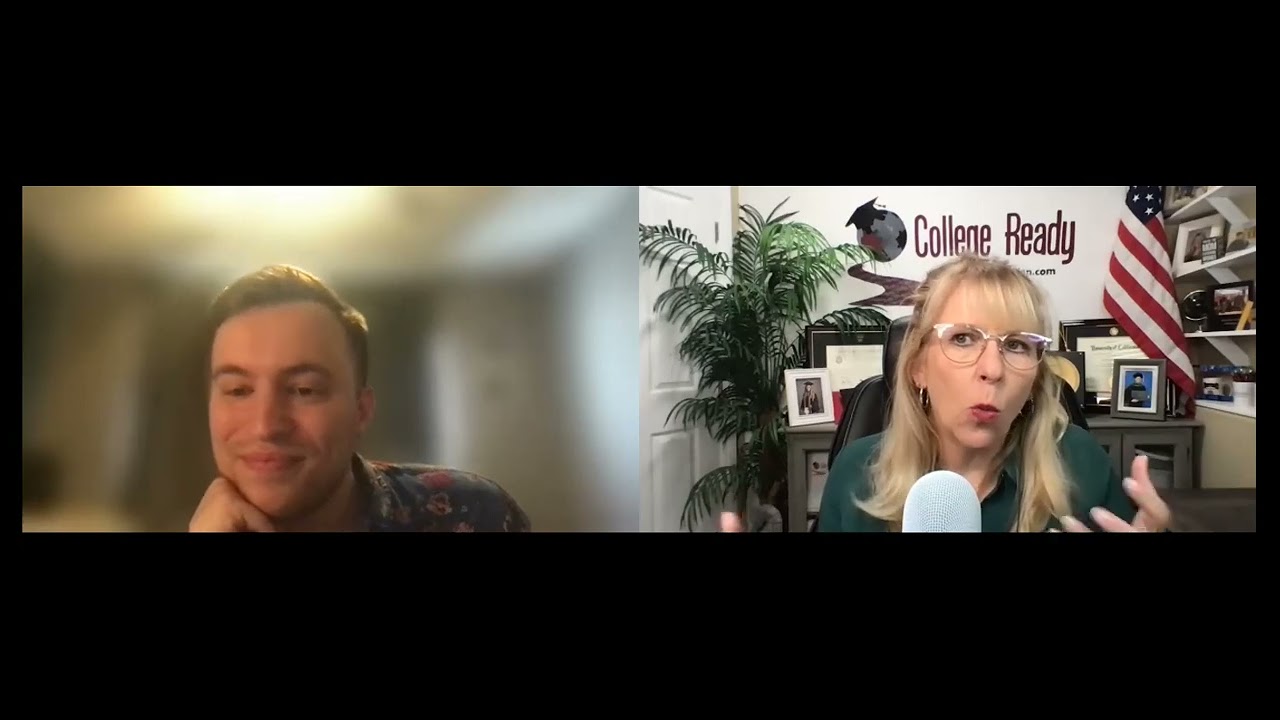
In this interview, College Ready host Shellee Howard talks with Tyler Moulton, a 2020 Harvard graduate and program manager at Veritas AI, about his personal journey from astronomy to self‑taught machine learning and his passion for making AI education accessible. Tyler explains why AI is a universal toolkit that any student can learn, and he describes Veritas AI’s two flagship offerings: the AI Scholars Program, a 10‑session, 2.5‑hour‑per‑session boot‑camp that teaches Python for data science and core AI concepts to beginners, and the AI Fellowship, a 12‑15‑week, mentor‑driven research experience for students who already know basic Python and have a defined domain interest. He outlines the programs’ structure, target ages (middle school through college), selection criteria, and the diversity of mentors across fields such as medicine, finance, and visual arts. Tyler shares concrete student project examples—including an AI‑driven Van Gogh style image generator, stock‑price prediction, and medical image classification for ALS—illustrating the cross‑disciplinary potential. He emphasizes the tangible outcomes (code repositories, research presentations, possible publications and awards) and provides contact information (veritasai.com, personal email). The conversation concludes with a strong call for all students to engage with AI as an essential future skill.
Chapters
Yes, hi, this is Shellee Howard with College Ready, and today I have the honor of introducing you to Tyler. But before I do, I want to leave you with a little bit of his bio. So Tyler Moulton is a 2020 Harvard graduate with a passion for education, mentorship, and research at the intersection of machine learning and astronomy. Whoa. Um, that's kind of crazy in itself. As a program manager at Veritas AI, um, they help students and mentors collaborate on artificial intelligence projects across every discipline from medicine and finance to studio art and literature. I am so excited to talk to you, Tyler. Welcome to the show.
Yeah, thank you so much for having me today, Shellee Howard. The honor is all mine. It's just a thrill to be chatting with you a bit more about young students, high schoolers, and all they can do with artificial intelligence.
Outstanding. Before we jump into that, I love to hear a little bit about your story. So take me from high school through college, and how did you end up where you're at?
Yeah, absolutely. So starting with high school, definitely going to have to put a refresher in my brain to get back there. So in terms of high school, I was always one of those, like, as I'm sure you guys can guess, having gone to Harvard, a huge nerdy kid, just really loved coursework and kind of just did everything under the sun. Went to a tiny little public school in Massachusetts about an hour south of where I ended up going to college. It was a great little town where there was not a huge offerings, but There was like 10 clubs, a couple sports. Actually, sports was our biggest thing, couple sports for me, I should say. And I basically just did everything I can and came to Harvard really excited to explore and without any predefined sort of passion, which is crazy to think about because in just the last 5 years, that's radically changed in the college admissions game, but we can get into that later. But yeah, so coming to Harvard, I was super excited to explore. Just knew I had a passion for math and science, but no defined direction quite yet. Stumbled into astronomy coursework my sophomore year and absolutely just fell in love with it. Thought it was just so fascinating, the idea of being able to study and create knowledge around things like stars and planets and the cosmos. So, drank a little bit of the astronomy nectar sophomore year and got deeper into coursework throughout college. My junior year, I had the incredible privilege and opportunity to do a summer program at the University of Cambridge in the United Kingdom. I was working at the Institute of Astronomy there and while just doing the basics of research, learning about literature review, coding in astronomy, all of that, I stumbled upon machine learning and artificial intelligence for the first time. And as I'm sure everyone else feels like, I knew what AI kind of was, you know what I mean?
Sure.
We all know that it's like in search engines, autonomous self-driving cars. We know what it is qualitatively. But until that point in time, I never have been exposed to it at a grander scale. So my senior year, I decided I wanted to continue doing that project from Cambridge as a thesis, and I taught myself machine learning.
Whoa.
In the process of doing that, I realized, A, how accessible it is. If you know how to code, you can learn machine learning fairly easily. I will say the ins and outs of the mathematics and the technicalities get more and more complex the deeper you go. But as a baseline, I don't think it's something that any high schooler, for instance, can't access. And I realized when I was learning two things. A, I realized like this is the type of information that students can access at all ages and should have the opportunity to access given how omnipresent it's becoming in society. And the second thing I realized is how omnipotent it is in society. Like AI is everywhere in this day and age. It's in marketing, it's in astronomy, it is in medicine, anything or any application you can think of, any field you can think of, AI is being used. And the realization of how important it was towards the end of my college career really inspired me to incorporate more of it into my research, think of it as something really important. Alongside all of this astronomy work and AI work in college, I also became really passionate about teaching, mentoring, social justice. So kind of that passion for working with students and this passion for AI research is what now post-grad has brought me to Veritas AI, where I'm a program manager. And I love working with students to develop their AI skill sets and basically just build on a research portfolio that most kids don't have the chance to do so at that age.
Wow. I'm just, I'm in awe. That is amazing. So I'm not sure if you had a chance to look at my bio. My son actually graduated from Harvard and he graduated in 2016. So he's a bit older, but he had quite a similar experience where he just, figured it out once he got there. He kind of had an idea what he liked, but it wasn't like, I know exactly what I want to do. And so it sounds like you had a similar experience. Um, I have students who are so passionate about AI already and about— I have one student who is just so brilliant at astronomy, and he, he would absolutely love to hear your story because that's kind of what he wants to do. Maybe you can take our listeners, which are students and parents, maybe some grandparents, maybe aunts and uncles, but can you take us through what does it look like for a student to raise their hand and say, yeah, I'm curious, can you tell me more, Tyler?
Absolutely. Yeah. So before I give that quick walkthrough for any and all family relatives, regardless be them nuclear, uh, extended, et cetera, Quick note I want to make is if you want to put that astronomy student in touch with me, please do so. I love chatting with young students about their trajectories, what to think about in the fields. But going into the broader scope of things for all your kids and all the families you're working with, I would say in terms of engaging with artificial intelligence or learning a subject like this, I think a lot of us across fields, across ages, before learning what AI is, think it's kind of this inaccessible toolkit. It sounds like there's a lot of barriers to start to learn it. And it seems like it's this kind of like advanced skills that you only would want to use or only need to learn if you're a computer scientist. And I think what's important to emphasize is that AI is a toolkit that's being used in every field and is a toolkit that is not as difficult to start learning or start getting a grapple on as people think. So for instance, at Veritas AI, we have two programs that give students the ability to, for the first time or as a continuation, venture into this field. Our first program, which is always a great fit for students who have no computer science background or a bit younger, is our AI Scholars Program. And the Scholars Program is a very rigorously defined set of classes, 10 2.5-hour sessions, where we start off in those first 2 sessions teaching the students Python for data science. So students can come in with absolutely no skill set. In 5 hours, we will focus on teaching them the key Python language they need in order to use data science with that. With that particular coding skill or with that coding language. And from those 2 lessons onwards, weeks 3 through 6 are learning all the basics of AI. And weeks 7 through 10 is a deep dive into some of the most complex topics and buzzwords like image classification, sentiment analysis, all these things that we hear on Twitter and on Google across the internet. And when we Google search sort of these terms, and we give students a chance to implement in the AI Scholars class in a group project, a, as I just kind of already gave away, a group project in one of these deep dive topics. And what I kind of just want to iterate there is those first 2 sessions of learning Python for data science, a student can replicate that for themselves by going on Coursera or MITx and doing, you know, a simple 15-hour online course in Python. And from that standpoint, they'll be ready to dive into AI. So that's a note to the fact that students don't need to think of this as kind of like an insurmountable field. It is one that with a little bit of legwork, they can definitely dive into, even with an intro program like the one we offer. Our second—
oh, that one question on that, I'm just blown away. So you said that's 10— what was the breakdown, 10 sessions?
Yeah, so it's 10 sessions, okay, each being 2.5 hours, so 25 hours of class time.
Got it.
Uh, each of our sessions is 15 students with 3 instructors, where our instructors are across diverse academic fields. Yes, they're all AI experts, but we have AI experts in medicine and in engineering and in public policy. So the diversity of those mentors means that they'll be able to speak to different interests in the student group in that class. And across those 10 sessions, they'll be learning Python and they'll learn Python to implement AI, where in those first 5 hours, those 2 sessions, they'll walk away with enough Python expertise to be able to move on to other data science projects or continue in the program. So I think it's important. Yeah. And I think it's important to highlight that even if a student doesn't want to do the Scholars Program, maybe they have a lot more independent time management skills. They're a bit older and want to venture into a passion project. For that purpose, they could do our second program, or other program, I think I could call it, the fellowship, or the AI fellowship. And this is a program where students, we expect to already come in knowing Python. Again, that's as much of a 10 to 15-hour course that they want to take in beforehand or take the Scholars Program. And from there, they'll jump into immediately over the course of 12 to 15 weeks working with a top mentor from universities like Harvard, Stanford, Columbia, one-on-one to implement a novel AI model of their field of interest. Just want to double back on the fact that we have AI experts in every field. So whatever field your students are passionate about, be it medicine, be it finance, be it even visual arts, we can match them with a mentor who perfectly fits applications of AI in that field. That mentor will have their finger on the handle of what's new in this field, what is innovative, and can guide them towards creating a project that is meaningful for them, that they want to work on, meaningful for their future career prospects and their movement forward. Forward in life, and just ultimately meaningful, even just for its contribution to the world and the way it innovates.
That is amazing. So I'm sitting here as a parent, I have 4 adult children, and an Italian exchange student living with me. But as a parent, I'm still trying to wrap my mind around how will I know if my student is a good fit for this program?
Yeah, okay, I think that's a fantastic question to be asking. So I would say it's, uh, comes down again to this difference between the Scholars and the Fellowship program. So I would say any student who has, you know, an inkling of an interest or a desire to get into artificial intelligence, be that because they already have a background in computer science, they just find the application so fascinating, I would say any student like that is going to be a great fit for the Scholars program. And part of that is that we give them that rigid course structure. We're giving them the toolkits they need from the beginning to be able to learn advanced topics later. By contrast, I would say the fellowship program is a better fit for students who already predefined their passions in some way and have that baseline computer science skill set already built. To be clear, they don't need to have taken like 2 years of classes or anything crazy like that. They just need that intro Python. But with that intro Python in hand, what we're really looking for is students who have that predefined interest, be it in economics, be it in medicine, be it in another field. Because what we need from the students in terms of succeeding in this program, which is important to us and part of our selection process, is knowing that they have an idea of where they'd like to apply the AI, even if they don't know what that application looks like yet.
Okay, okay. And what about the student's age or grade, or, you know, how do you know when is a good time to introduce this? Is it middle school, high school, college? All the above, none of the above?
Yeah, so I am— so, oh my God, I'm going to be a broken record here and go back to the two programs point every time. I would say probably because I'm biased and I believe students should, whether it's this program or another, gain exposure to AI. I think the Scholars Program is a good fit for students of any age, be it middle school, earlier if they've got a little bit of CS savviness, through college, postgraduate, ever, because Learning AI is just such a fundamental toolkit in this day and age, and we are focused on giving them the toolkit from start to finish. The fellowship program, I would say, is something that we can give a bit more definition to, like, you know, when and in what context the students are better prepared. And I would say I always recommend the fellowship for rising juniors and rising seniors because it's a perfect time where students have built those independent time management skills they'll need to succeed in the fellowship. They've built an interest in a particular field because that is what high school really gears students to do by the end of high school these days. So by having built those time management skills, by likely having some exposure a little bit to CS in high school, and by having to find the passion they have that they would like to carry forward as a college major or for a project like this, those are the best fit students that I would say could take on the fellowship.
So that leads me to— you said it's not just one particular major, it could be cross. Can you give me an example of maybe a yin and a yang, like a student did this and this student did this. Like, maybe I, I'm just trying to think from the mind of the parents, what, what are examples of maybe students who have been successful in this program?
Yeah, absolutely. Happy to give you a sense of that. Unfortunately, the podcast audience might miss out on this slight visual I'd love to show you, if that's okay. Sure. But I think it'd just be super helpful for kind of giving you a sense of the breadth of the program. So this is just a slide I developed for a webinar we were doing separate to today's podcast. But I just love sharing it because I think it speaks to how dynamic our students are and what— how success can look in very different fields. So I have 3 projects off the top of my head. The first one here is my favorite that I want to show, and the other 2 I'll just discuss. So one wild field that one would never expect to see AI being applied as you know, being introduced to the field is visual arts.
Okay.
One student we had in the past, an 11th year, did a project on AI and visual arts where she took applications of AI to feed into what's known as an image classifier. This image of Van Gogh's Starry Night. The image classifier then learned what are the stylistic elements? What is the genre of this art? How can we define this from almost like a data standpoint, the characterization of this image? The student then fed the pictures, uh, such as her friends or this Grecian temple photo, into the classifier and it outputted it in the exact same style. So she could make pictures of her friends look like they were made by Van Gogh or that they were portraits in the same style. She did the same thing with pieces by Picasso, pieces by other artists. She was incredibly successful in her research paper that she decided to write and her applications, ultimately because This was a novel, incredibly innovative idea that one wouldn't expect from an art student. But she— and a big thing I want to emphasize is this sounds like she did like kind of a crazy amount of work. She came into the program not knowing quite what she wanted to do other than she wanted to get some artwork done. So that's a kind of nod to the fact that students can go from 0 to 100 here. Some other ideas that I'll run through a little bit quicker because I belabored that art piece, but I think it's so fun. We've seen students do stock price prediction for those who are interested in economics and finance, which just requires acquires taking online stock data and then making predictive measures with machine learning. We've had students use another image-based project. A student used medical images she got approval from hospitals to acquire. Some of these medical images had ALS or other diseases or other issues, and she used classification via AI to identify in new image datasets what, where ALS was, so she could do diagnosis of medical diseases just by training on previous datasets. So really, from science to social sciences to arts, you students can run the full gamut of application areas or fields to explore with AI.
Outstanding. So if a parent wanted to learn more, how would they either get a hold of you or, or get more information?
Yeah, absolutely. So if a parent wanted to get a hold of me, we have a website, veritasai.com, which has, I think, a lot of contact info there. I'm also more than happy for anyone to have my email, which I'll be sending over to you now in the chat. But any parent can get in touch with me via my email, which is going to be tylermoultonh20@gmail.com. I also have another email that I can provide, which is for a sister company that Veritas AI is connected to. So a couple different contact means to get to me from there.
And then as far as timing goes, it sounds like they're group classes. So is there a few different over the summer, or when do they start, and how would one go about signing up?
Yeah, absolutely. So for the Scholars Program, which is the group class, throughout the year in fall, winter, and spring, we offer the Scholars Program as a 10-week boot camp, where each of those 10 2.5-hour sessions takes place on the weekend. We have multiple timings that we offer to work around the student's schedule, so that shouldn't be an issue. During the summer, we offer the same boot camp in two forms. We offer a couple of those 10 weekend, uh, versions, and we also, for students who are doing a lot of other busy programs or can't fit it in, what we call our 2-week sprint boot camp, which is exact same content, exact same materials, same instructors, just squeezed into 5 weekdays over 2 weeks— or sorry, 5 weekdays in each of 2 weeks.
Outstanding. Wow. So you're opening up this world of AI to students from middle school and up, really across all different platforms. And it also will be something that they can use to help them stand out on their college essays or in their applications. On activities, honors, and awards. Now, uh, do any of these research projects get published, or would some student who pours into it have the opportunity to win an honor or award doing this?
Yeah, I'm glad that you asked. So in terms of our program's focus on outputs, we focus on making sure that students walk away from both the Scholars Program with that group project, or the Fellows Program with the individual project, a coding repository, or rather an algorithm in code that they have that it works, has been debugged with them and their mentor, and is implemented. And second to that, we make sure that every student walks away with a finished research presentation that they can take on to apply to conferences, research contests, and the like. For students who are advanced in our program, we also have, as a kind of research-centric AI program, additional resources for writing and for research content for students who want to pursue research papers. We've seen students pursue research and publications at the high school level, undergraduate level before, with a lot of success at the high school level especially. So from that perspective, while our main focus on outputs is the coding algorithm and the presentation, we're also happy to support ambitious students with our resources, which are deeply institutionalized in research.
Amazing. You are doing some great work. I hope it's more than just you. It, it sounds like there's a brilliant team of you. And so, um, parents, you can reach out to tylermoultonh20@gmail.com, and we'll put it in the show notes. Tyler, if you could leave parents or students with one very important thing, what would that be?
Yeah, one last very important thing that I would like to say, independent of our program at Veritas AI, is that whether or not we like it, AI is definitely embedded in the future of this world. And no student is incapable of learning this toolkit. And because no student is incapable, and it is an inevitability in this world, it is something that I think through our program, through other programs, through your coursework, I encourage you to learn. Because getting your, uh, getting a handle on AI will put you ahead in terms of your career readiness, your understanding of the technological digital era around us, and just your ability to make contributions. So Big fan of AI and big proponent that students get involved.
Thank you so much, Tyler, for your time. And we appreciate all of the information.
Yeah, thank you so much, Shellee Howard. It's been so lovely chatting with you.
More from Shellee




The 3 Questions Every Parent Should Help Their Teen Answer Before College | Featuring James McLamb

Helping Your Teen Stand Out for College Through Purpose & Impact | Featuring Aishani Sheth


From Robotics to Cornell: A Father-Son Blueprint for College Success with Aarav & Ritesh Kumar

The Hidden College Credit Strategy That Could Save Your Family Thousands with Josh See

The Truth About Financial Aid: Why Some Families Pay Less for College Than You Think with Jack Wang

Human Skills Every Teen Needs for College, Careers & an AI Future with Rob Heller
